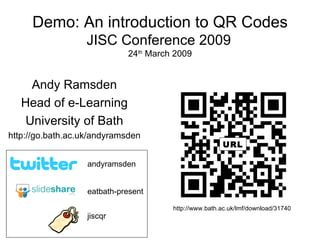
Demo: An introduction to QR Codes JISC Conference 2009   24 th  March 2009 Andy Ramsden Head of e-Learning University of Bath http://go.bath.ac.uk/andyramsden eatbath-present andyramsden jiscqr http://www.bath.ac.uk/lmf/download/31740 URL
The aims The intention is to answer the following questions; What is a QR Code?  How do I generate and/or read a QR Code? How might it be used in Teaching and Learning? Where do I go for more information?
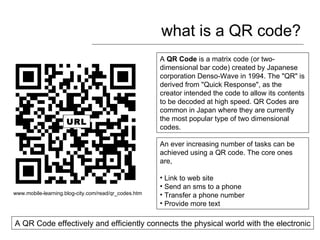
what is a QR code? A  QR Code  is a matrix code (or two-dimensional bar code) created by Japanese corporation Denso-Wave in 1994. The "QR" is derived from "Quick Response", as the creator intended the code to allow its contents to be decoded at high speed. QR Codes are common in Japan where they are currently the most popular type of two dimensional codes.  An ever increasing number of tasks can be achieved using a QR code. The core ones are, Link to web site Send an sms to a phone Transfer a phone number Provide more text www.mobile-learning.blog-city.com/read/qr_codes.htm A QR Code effectively and efficiently connects the physical world with the electronic URL
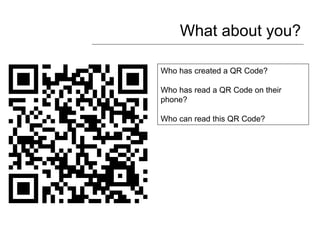
What about you? Who has created a QR Code? Who has read a QR Code on their phone? Who can read this QR Code?
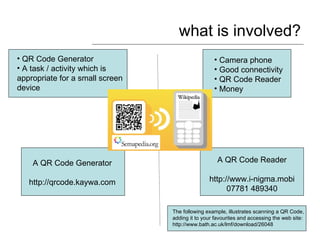
what is involved? QR Code Generator A task / activity which is appropriate for a small screen device Camera phone Good connectivity QR Code Reader Money A QR Code Reader http://www.i-nigma.mobi 07781 489340 A QR Code Generator http://qrcode.kaywa.com The following example, illustrates scanning a QR Code, adding it to your favourites and accessing the web site: http://www.bath.ac.uk/lmf/download/26048
QR Codes in T&L http://go.bath.ac.uk/qrcode URL
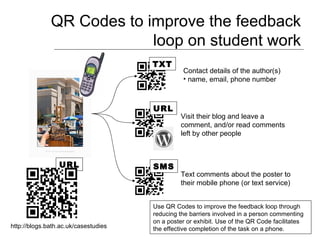
QR Codes to improve the feedback loop on student work Contact details of the author(s) name, email, phone number Visit their blog and leave a comment, and/or read comments left by other people URL TXT Text comments about the poster to their mobile phone (or text service) SMS URL http://blogs.bath.ac.uk/casestudies Use QR Codes to improve the feedback loop through reducing the barriers involved in a person commenting on a poster or exhibit. Use of the QR Code facilitates the effective completion of the task on a phone.
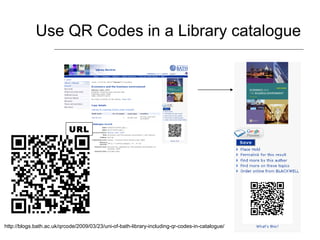
Use QR Codes in a Library catalogue http://blogs.bath.ac.uk/qrcode/2009/03/23/uni-of-bath-library-including-qr-codes-in-catalogue/ URL
are students aware of QR Codes? Do you know what a QR Code is? Yes: 13.8%  with 95% confidence interval, then 12.34% - 15.26% of total student population are aware of QR codes. URL http://opus.bath.ac.uk/12782 Have you accessed a QR Code? Yes: 2.2%  with 95% confidence interval, then 1.58% - 2.82% of total student population have accessed a QR code. The most common action was Web site – 33 responses Read more text – 28 responses Phone a number – 19 responses Send a pre-written SMS – 12 responses?
thank you Andy Ramsden  [email_address] eatbath-present andyramsden URL http://blogs.bath.ac.uk/qrcode jiscqr

Demo: Intro QR Codes - JISC2009

  • 1.
    Demo: An introductionto QR Codes JISC Conference 2009 24 th March 2009 Andy Ramsden Head of e-Learning University of Bath http://go.bath.ac.uk/andyramsden eatbath-present andyramsden jiscqr http://www.bath.ac.uk/lmf/download/31740 URL
  • 2.
    The aims Theintention is to answer the following questions; What is a QR Code? How do I generate and/or read a QR Code? How might it be used in Teaching and Learning? Where do I go for more information?
  • 3.
    what is aQR code? A QR Code is a matrix code (or two-dimensional bar code) created by Japanese corporation Denso-Wave in 1994. The "QR" is derived from "Quick Response", as the creator intended the code to allow its contents to be decoded at high speed. QR Codes are common in Japan where they are currently the most popular type of two dimensional codes. An ever increasing number of tasks can be achieved using a QR code. The core ones are, Link to web site Send an sms to a phone Transfer a phone number Provide more text www.mobile-learning.blog-city.com/read/qr_codes.htm A QR Code effectively and efficiently connects the physical world with the electronic URL
  • 4.
    What about you?Who has created a QR Code? Who has read a QR Code on their phone? Who can read this QR Code?
  • 5.
    what is involved?QR Code Generator A task / activity which is appropriate for a small screen device Camera phone Good connectivity QR Code Reader Money A QR Code Reader http://www.i-nigma.mobi 07781 489340 A QR Code Generator http://qrcode.kaywa.com The following example, illustrates scanning a QR Code, adding it to your favourites and accessing the web site: http://www.bath.ac.uk/lmf/download/26048
  • 6.
    QR Codes inT&L http://go.bath.ac.uk/qrcode URL
  • 7.
    QR Codes toimprove the feedback loop on student work Contact details of the author(s) name, email, phone number Visit their blog and leave a comment, and/or read comments left by other people URL TXT Text comments about the poster to their mobile phone (or text service) SMS URL http://blogs.bath.ac.uk/casestudies Use QR Codes to improve the feedback loop through reducing the barriers involved in a person commenting on a poster or exhibit. Use of the QR Code facilitates the effective completion of the task on a phone.
  • 8.
    Use QR Codesin a Library catalogue http://blogs.bath.ac.uk/qrcode/2009/03/23/uni-of-bath-library-including-qr-codes-in-catalogue/ URL
  • 9.
    are students awareof QR Codes? Do you know what a QR Code is? Yes: 13.8% with 95% confidence interval, then 12.34% - 15.26% of total student population are aware of QR codes. URL http://opus.bath.ac.uk/12782 Have you accessed a QR Code? Yes: 2.2% with 95% confidence interval, then 1.58% - 2.82% of total student population have accessed a QR code. The most common action was Web site – 33 responses Read more text – 28 responses Phone a number – 19 responses Send a pre-written SMS – 12 responses?
  • 10.
    thank you AndyRamsden [email_address] eatbath-present andyramsden URL http://blogs.bath.ac.uk/qrcode jiscqr