LECTURE 1: INTRODUCTION TO
DEEP LEARNING
Practical deep learning
WHAT IS ARTIFICIAL
INTELLIGENCE?
Artificial intelligence is the ability of a computer to
perform tasks commonly associated with intelligent
beings.
WHAT IS MACHINE LEARNING?
Machine learning is the study of algorithms that learn
from examples and experience instead of relying on
hard-coded rules and make predictions on new data.
WHAT IS DEEP LEARNING?
Deep learning is a subfield of machine learning
focusing on learning data representations as
successive layers of increasingly meaningful
representations.
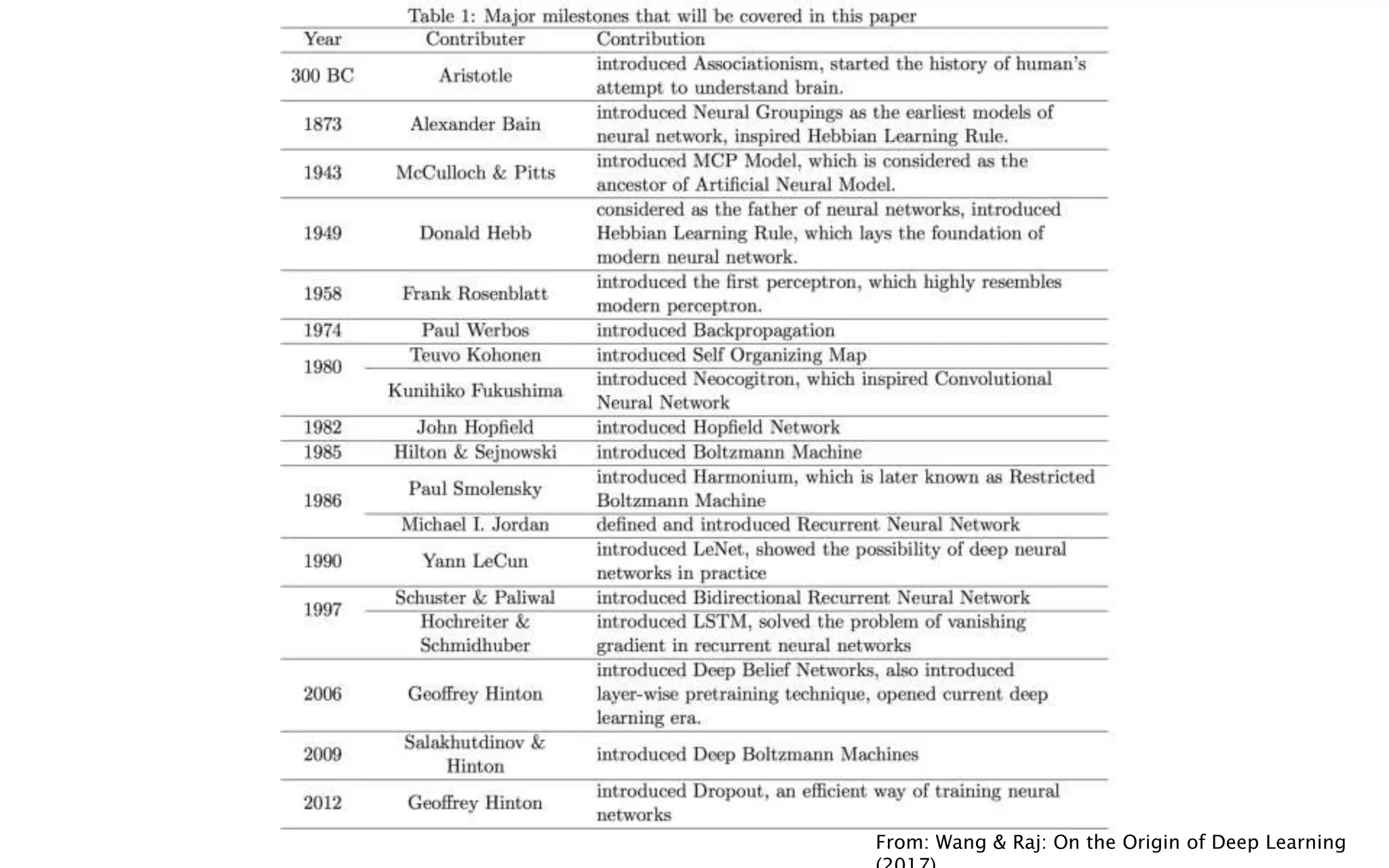
From: Wang & Raj: On the Origin of Deep Learning
MAIN TYPES OF MACHINE
LEARNING
MAIN TYPES OF MACHINE LEARNING
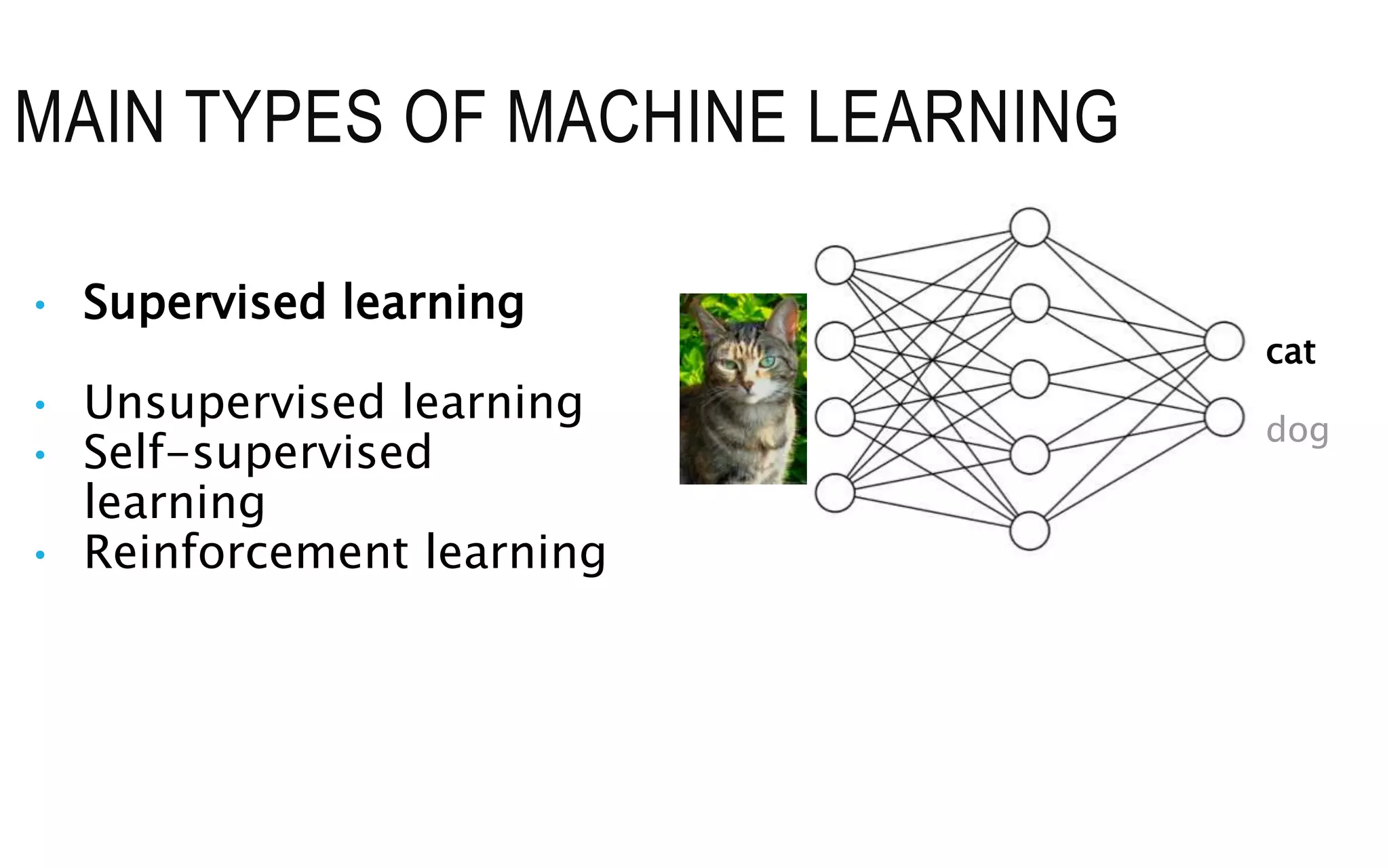
• Supervised learning
• Unsupervised learning
• Self-supervised
learning
• Reinforcement learning
cat
dog
MAIN TYPES OF MACHINE LEARNING
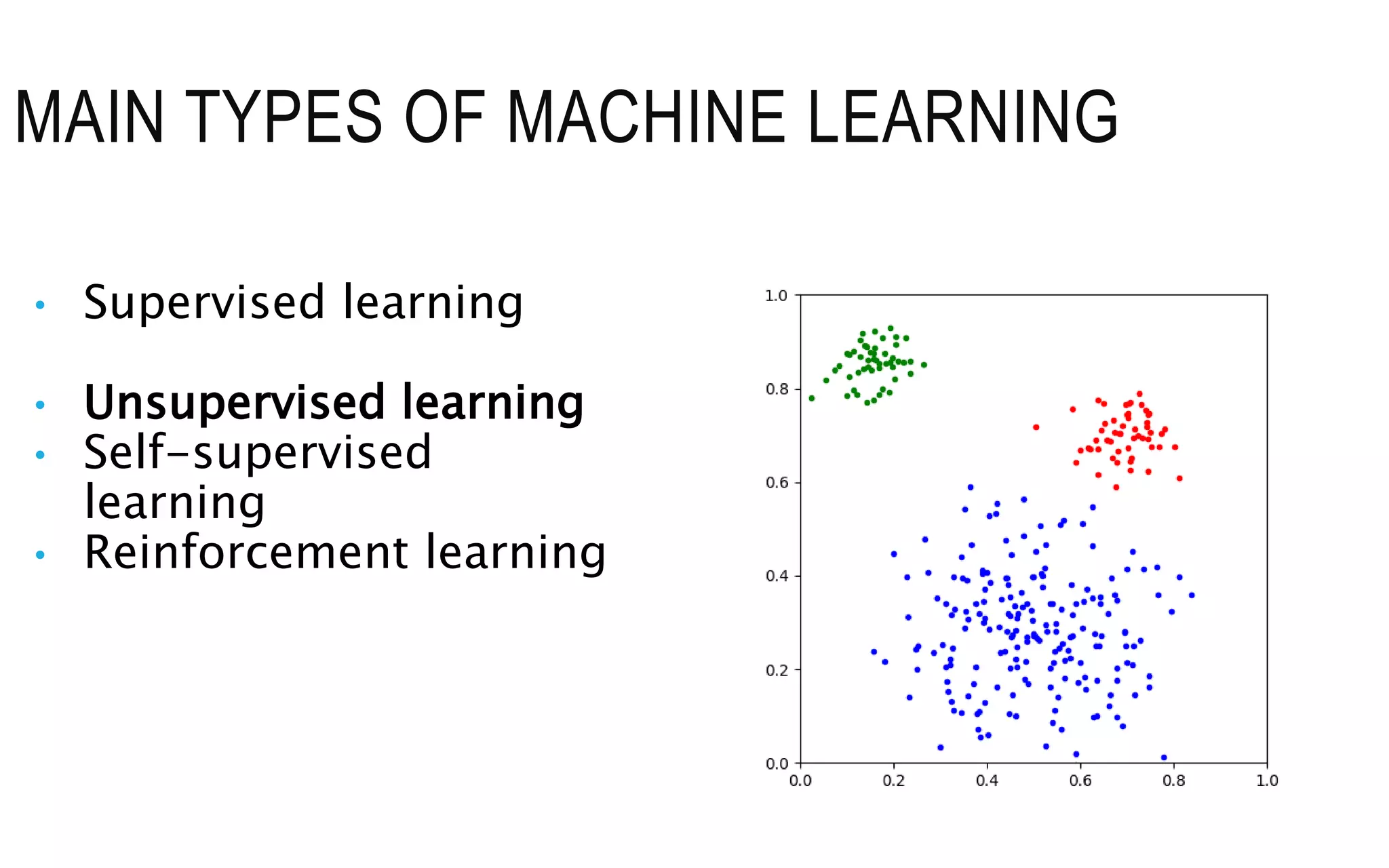
• Supervised learning
• Unsupervised learning
• Self-supervised
learning
• Reinforcement learning
MAIN TYPES OF MACHINE LEARNING
• Supervised learning
• Unsupervised learning
• Self-supervised
learning
• Reinforcement learning
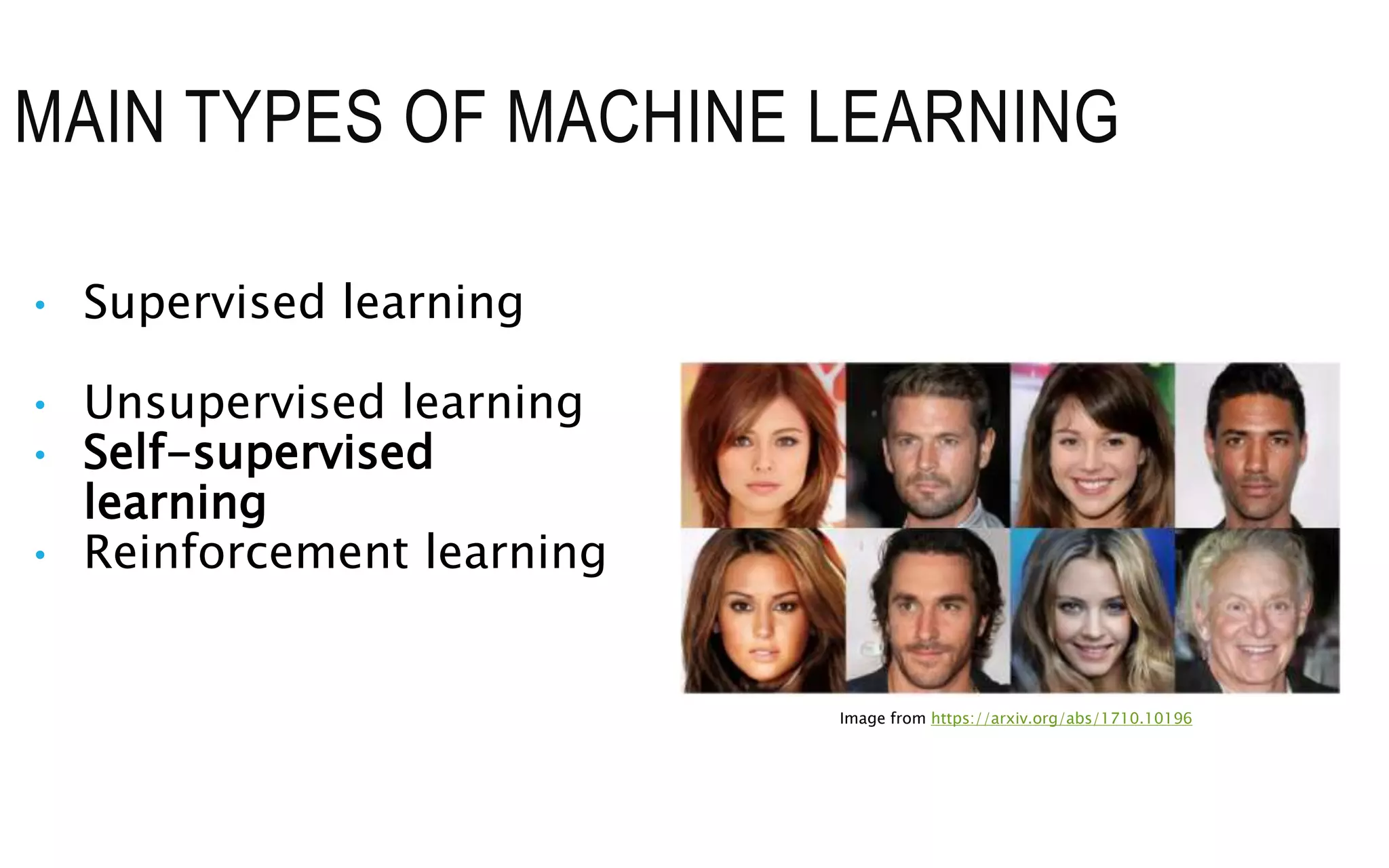
Image from https://arxiv.org/abs/1710.10196
MAIN TYPES OF MACHINE LEARNING
• Supervised learning
• Unsupervised learning
• Self-supervised
learning
• Reinforcement learning
Animation from https://yanpanlau.github.io/2016/07/10/FlappyBird-
Keras.html
FUNDAMENTALS OF
MACHINE LEARNING
DATA
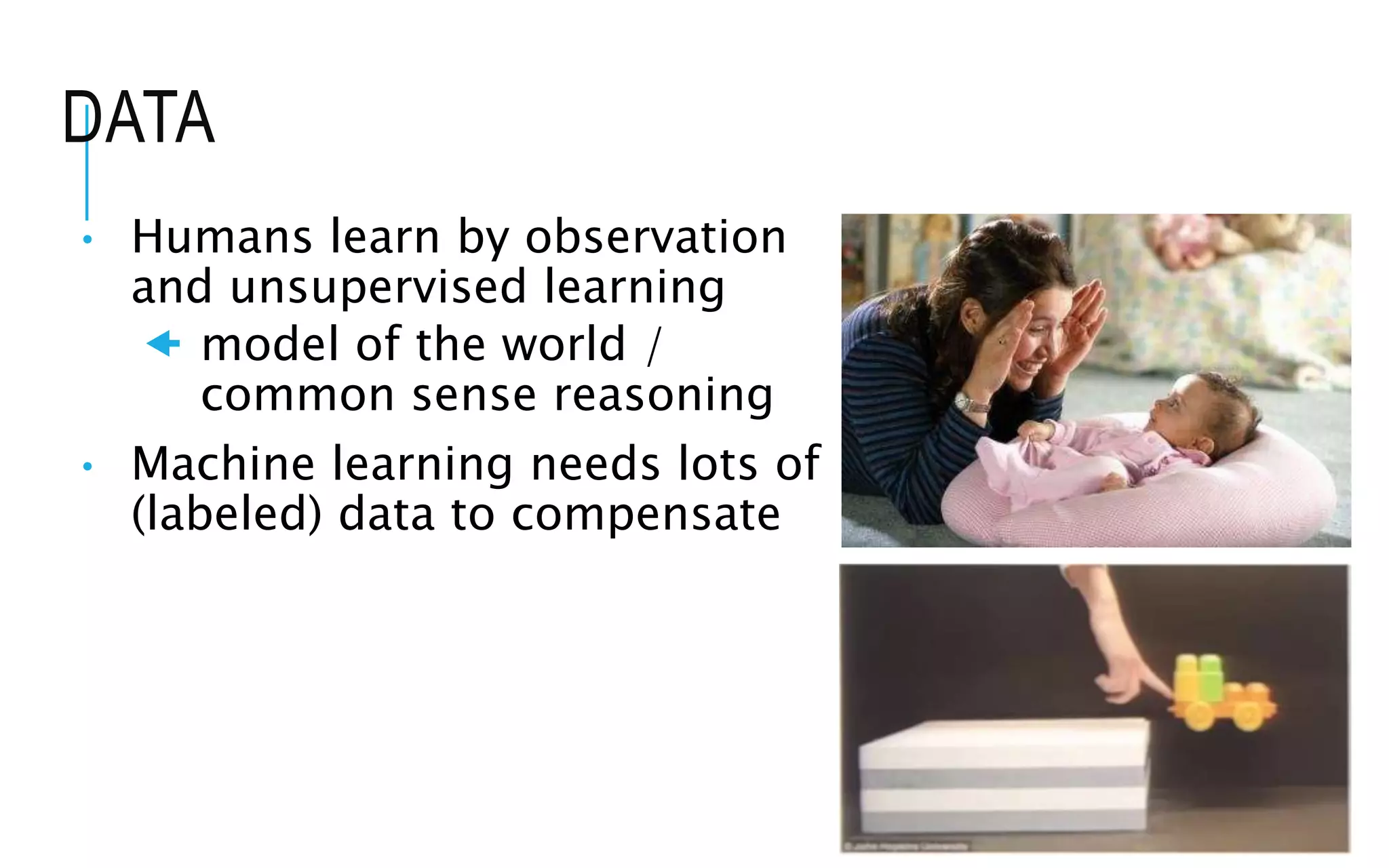
• Humans learn by observation
and unsupervised learning
 model of the world /
common sense reasoning
• Machine learning needs lots of
(labeled) data to compensate
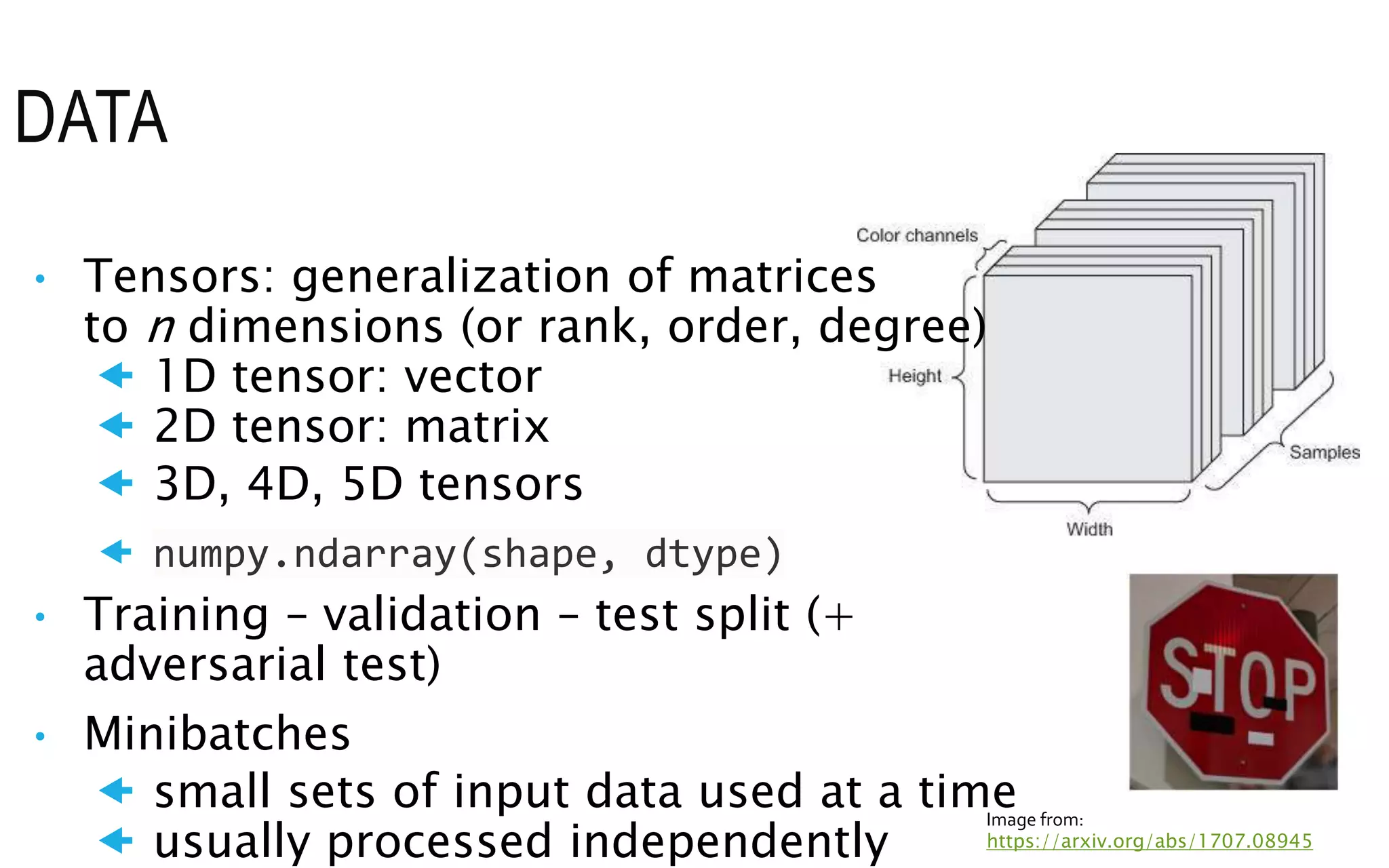
• Tensors: generalization of matrices
to n dimensions (or rank, order, degree)
 1D tensor: vector
 2D tensor: matrix
 3D, 4D, 5D tensors
 numpy.ndarray(shape, dtype)
• Training – validation – test split (+
adversarial test)
• Minibatches
 small sets of input data used at a time
 usually processed independently
DATA
Image from:
https://arxiv.org/abs/1707.08945
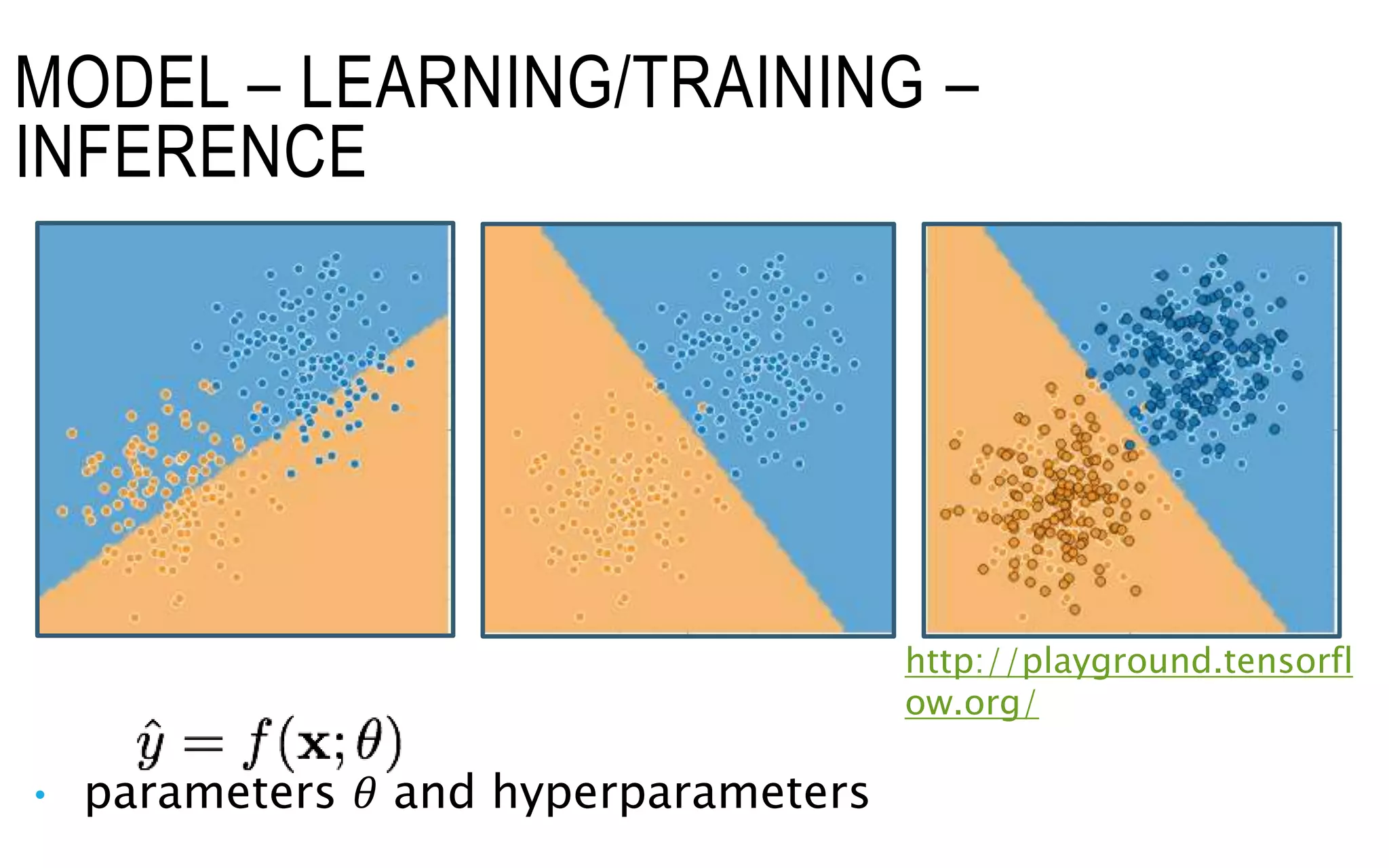
MODEL – LEARNING/TRAINING –
INFERENCE
• parameters 𝜃 and hyperparameters
http://playground.tensorfl
ow.org/
OPTIMIZATION
• Mathematical optimization:
“the selection of a best element (with
regard to some criterion) from some
set of available alternatives”
(Wikipedia)
• Main types:
finite-step, iterative, heuristic By Rebecca Wilson (originally posted to Flickr as Vicariously) [CC BY 2.0], via Wikimedia
Commons
los
s
regularizati
on
• Learning as an optimization problem
• cost function:
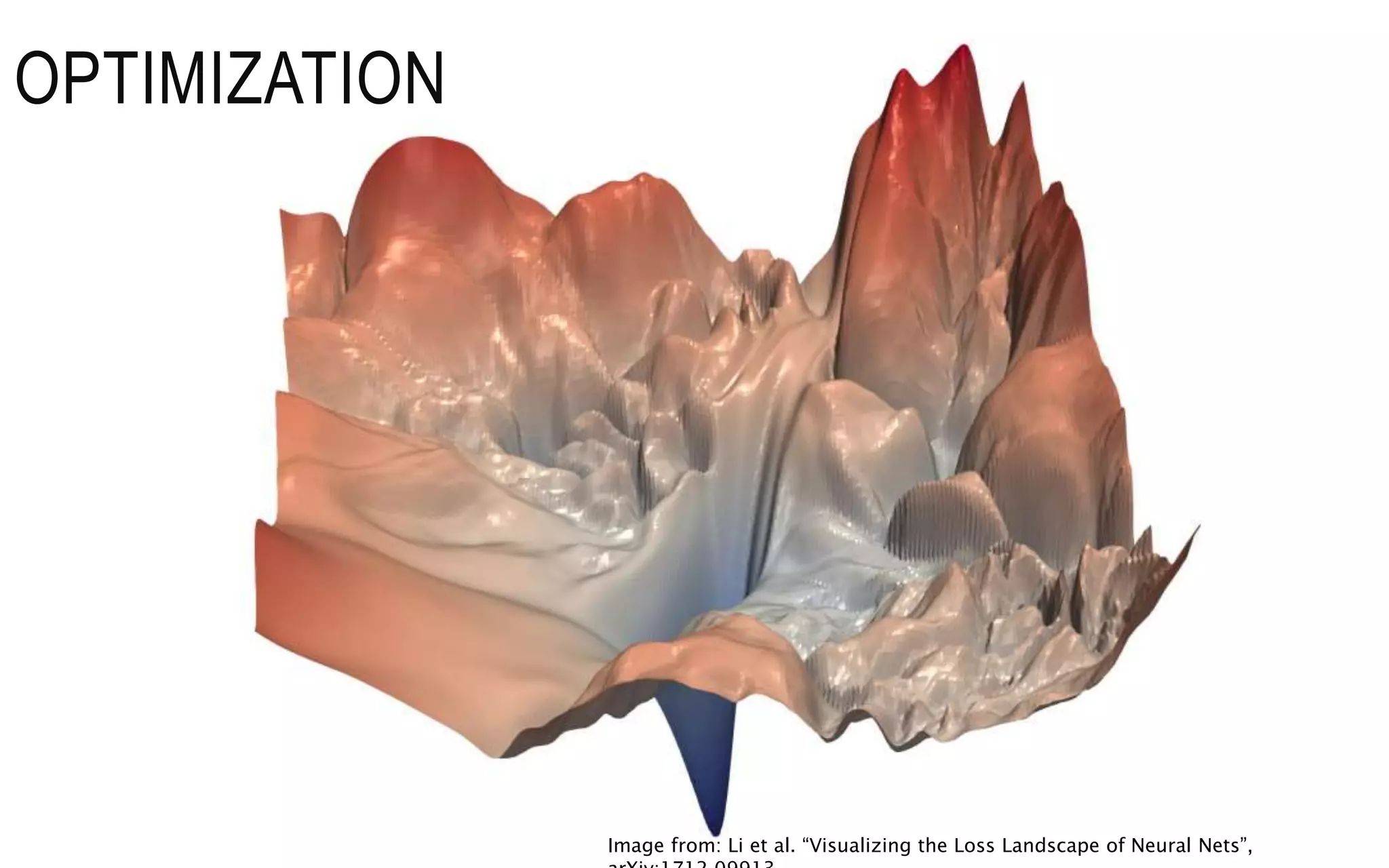
OPTIMIZATION
Image from: Li et al. “Visualizing the Loss Landscape of Neural Nets”,
DEEP LEARNING
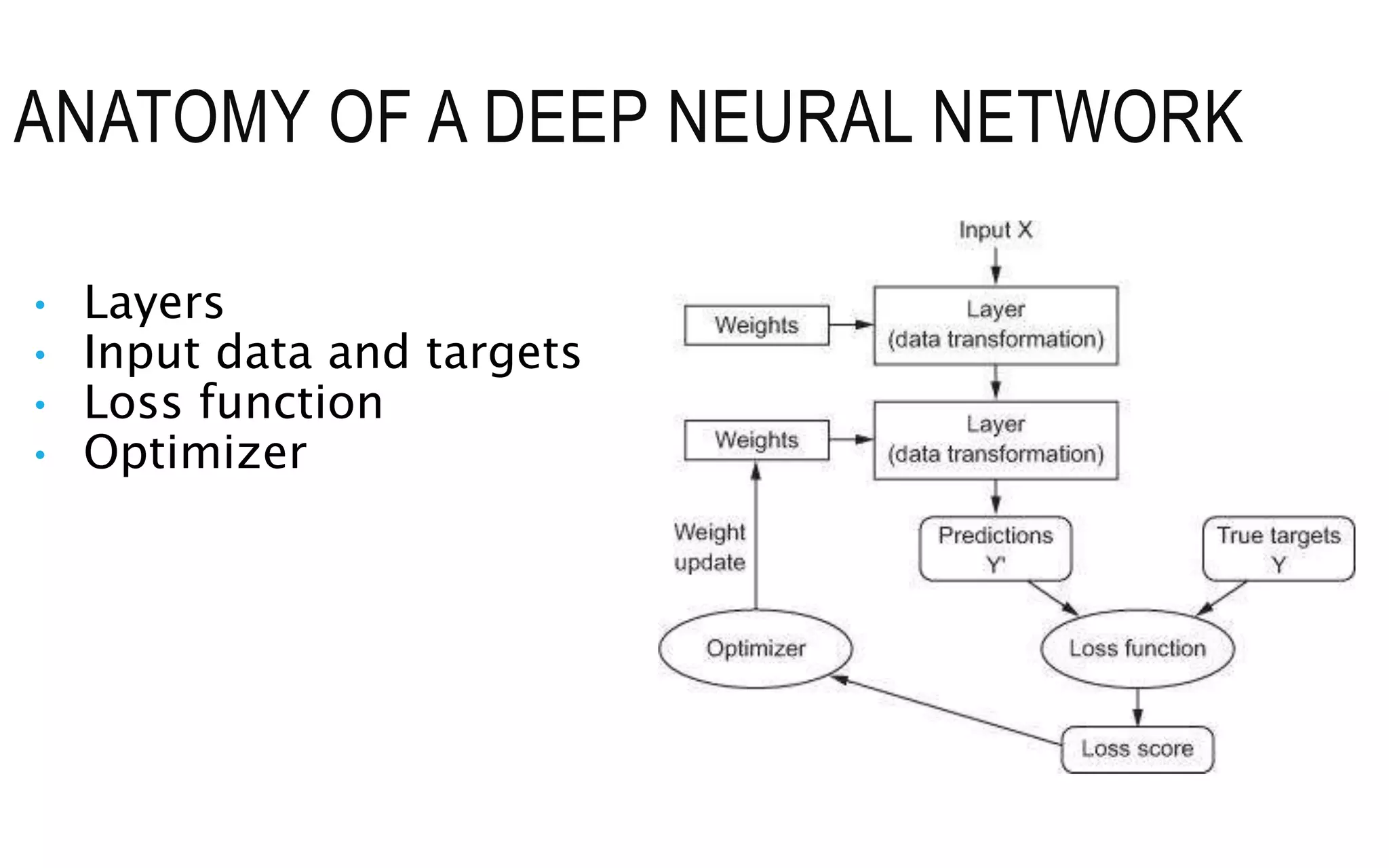
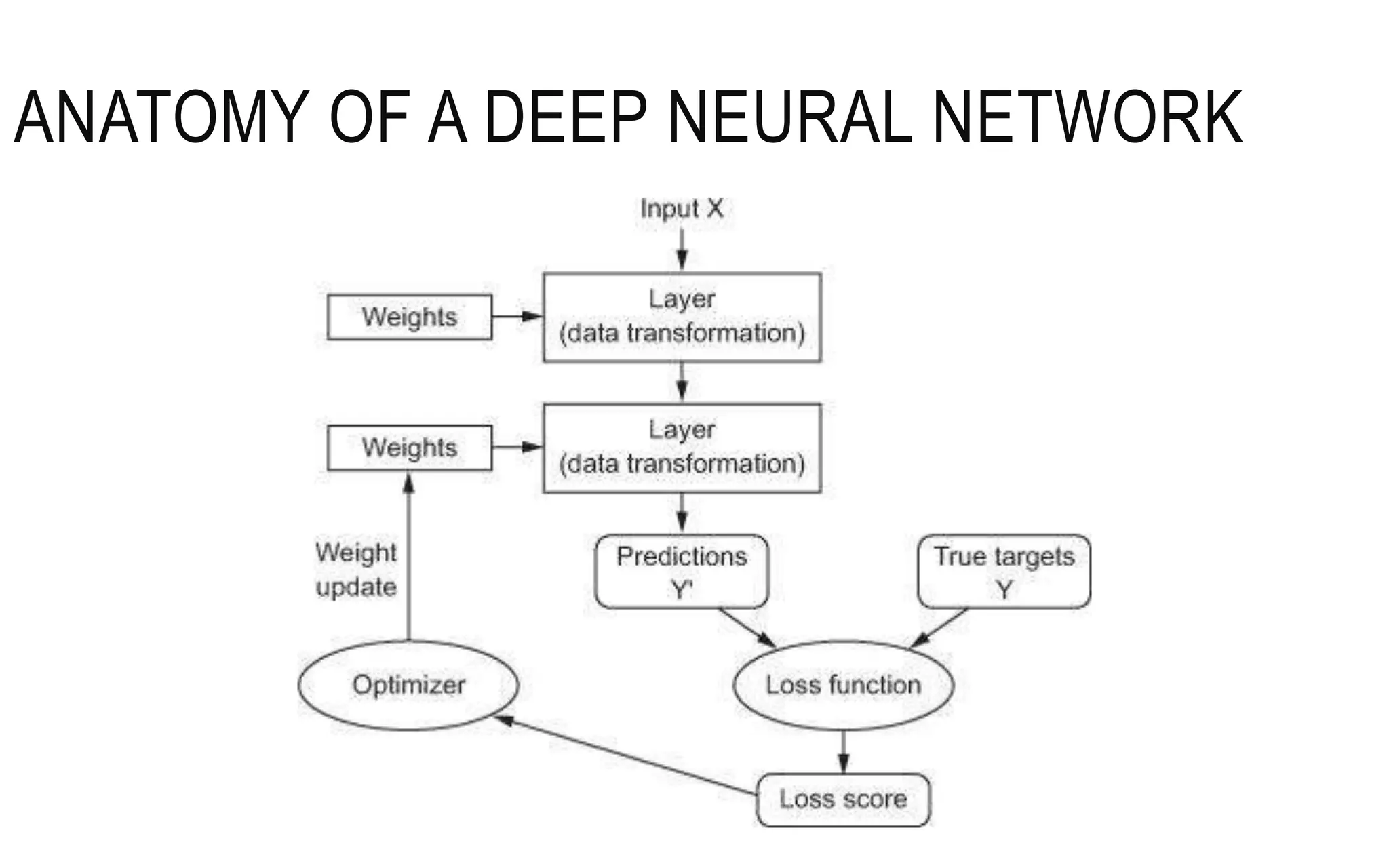
ANATOMY OF A DEEP NEURAL NETWORK
• Layers
• Input data and targets
• Loss function
• Optimizer
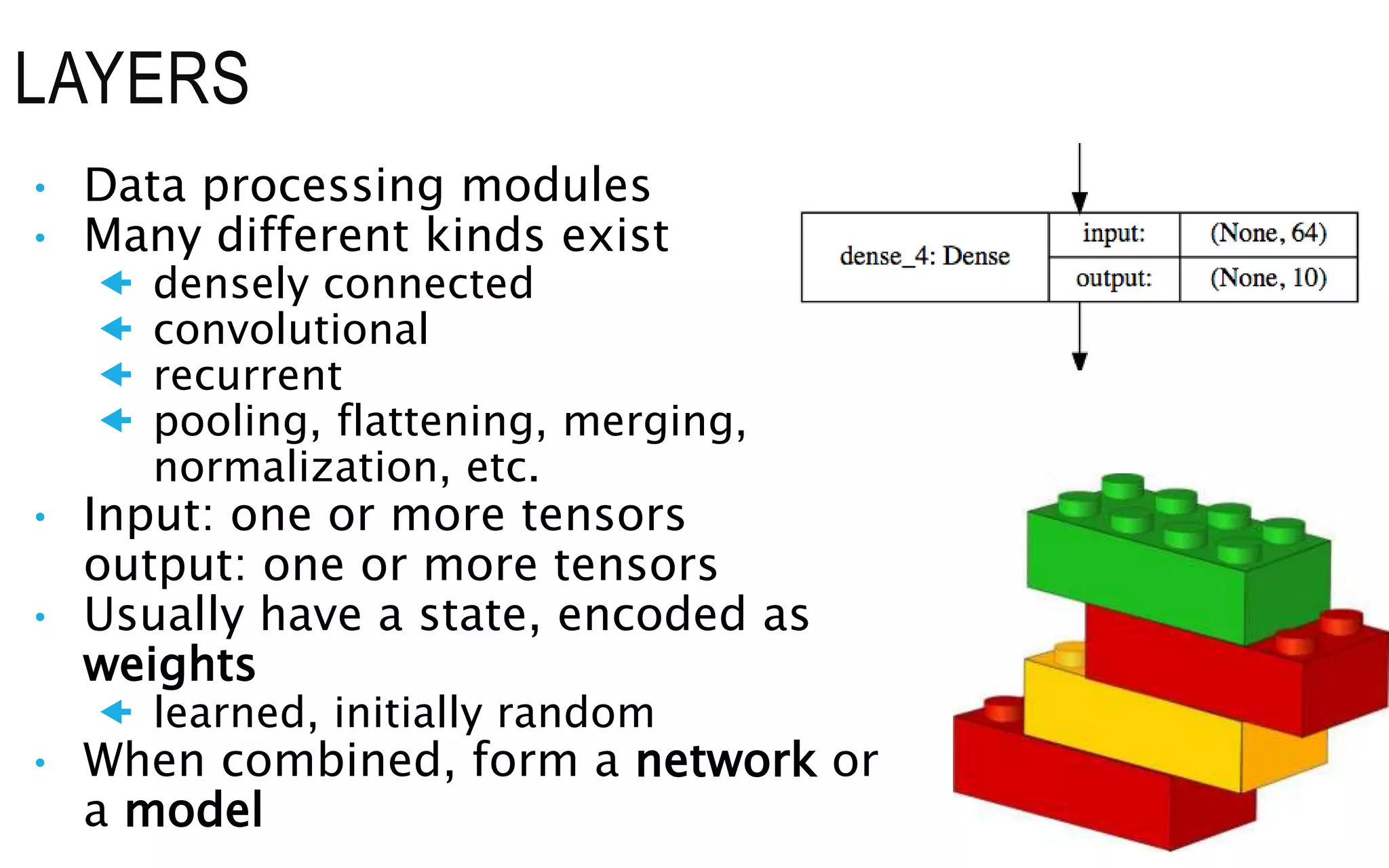
LAYERS
• Data processing modules
• Many different kinds exist
 densely connected
 convolutional
 recurrent
 pooling, flattening, merging,
normalization, etc.
• Input: one or more tensors
output: one or more tensors
• Usually have a state, encoded as
weights
 learned, initially random
• When combined, form a network or
a model
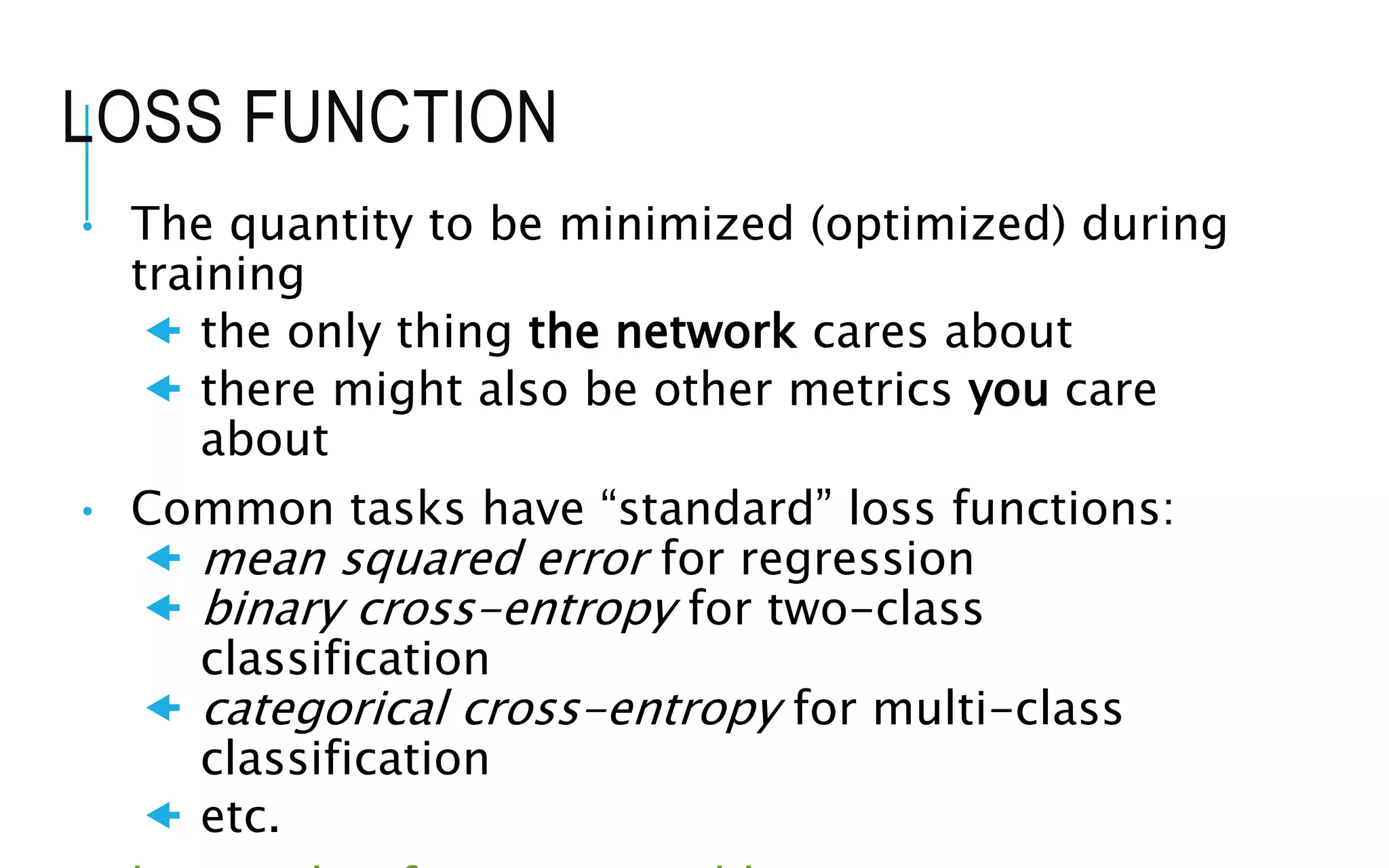
LOSS FUNCTION
• The quantity to be minimized (optimized) during
training
 the only thing the network cares about
 there might also be other metrics you care
about
• Common tasks have “standard” loss functions:
 mean squared error for regression
 binary cross-entropy for two-class
classification
 categorical cross-entropy for multi-class
classification
 etc.
ANATOMY OF A DEEP NEURAL NETWORK
DEEP LEARNING
FRAMEWORKS
DEEP LEARNING FRAMEWORKS
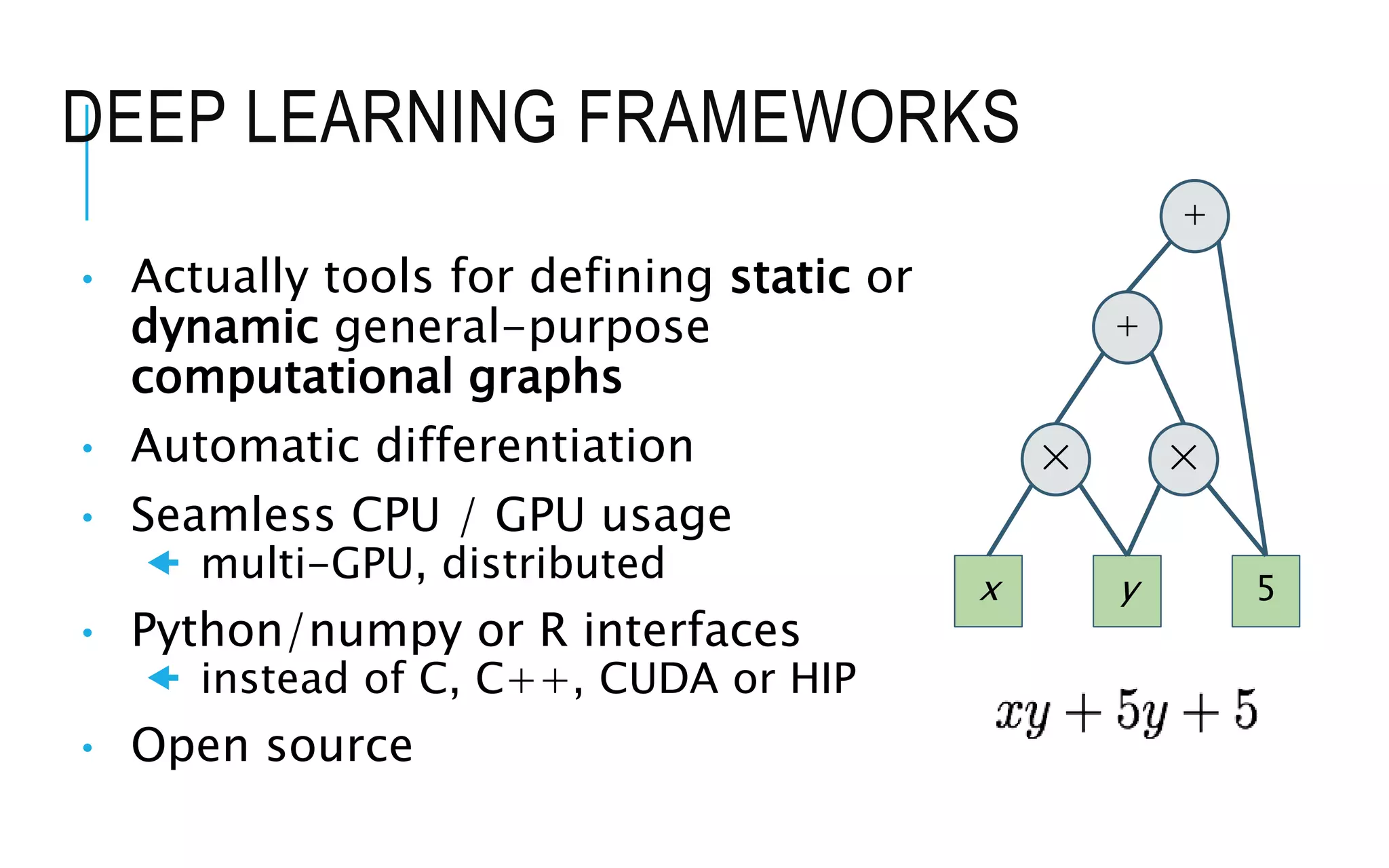
• Actually tools for defining static or
dynamic general-purpose
computational graphs
• Automatic differentiation
• Seamless CPU / GPU usage
 multi-GPU, distributed
• Python/numpy or R interfaces
 instead of C, C++, CUDA or HIP
• Open source
✕
x y 5
✕
+
+
DEEP LEARNING
FRAMEWORKS
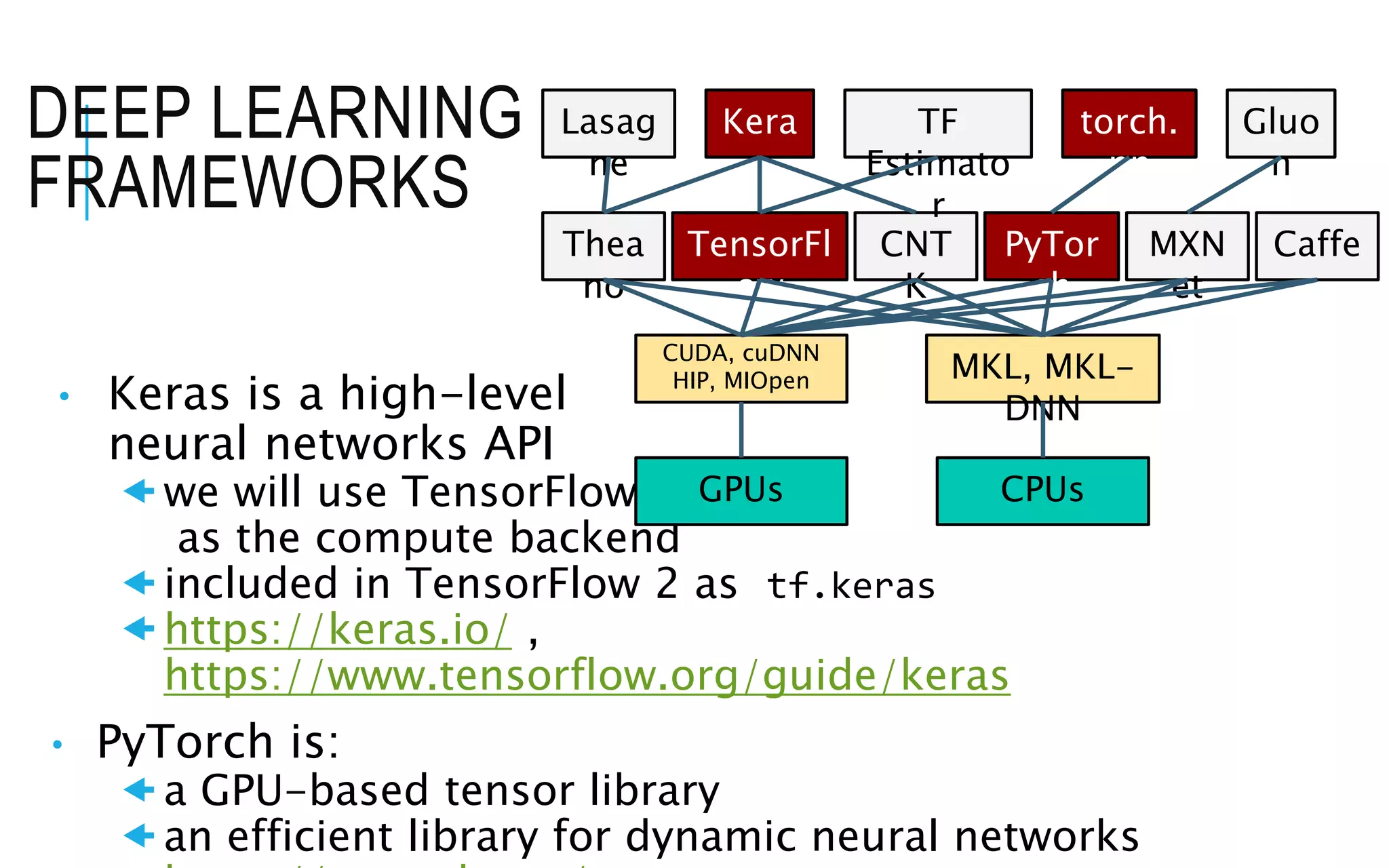
• Keras is a high-level
neural networks API
we will use TensorFlow
as the compute backend
included in TensorFlow 2 as tf.keras
https://keras.io/ ,
https://www.tensorflow.org/guide/keras
• PyTorch is:
a GPU-based tensor library
an efficient library for dynamic neural networks
Kera
s
TensorFl
ow
Thea
no
CNT
K
PyTor
ch
MXN
et
Caffe
CUDA, cuDNN
HIP, MIOpen MKL, MKL-
DNN
GPUs CPUs
TF
Estimato
r
torch.
nn
Gluo
n
Lasag
ne

deep learning.pptx

  • 1.
    LECTURE 1: INTRODUCTIONTO DEEP LEARNING Practical deep learning
  • 2.
    WHAT IS ARTIFICIAL INTELLIGENCE? Artificialintelligence is the ability of a computer to perform tasks commonly associated with intelligent beings.
  • 3.
    WHAT IS MACHINELEARNING? Machine learning is the study of algorithms that learn from examples and experience instead of relying on hard-coded rules and make predictions on new data.
  • 4.
    WHAT IS DEEPLEARNING? Deep learning is a subfield of machine learning focusing on learning data representations as successive layers of increasingly meaningful representations.
  • 5.
    From: Wang &Raj: On the Origin of Deep Learning
  • 6.
    MAIN TYPES OFMACHINE LEARNING
  • 7.
    MAIN TYPES OFMACHINE LEARNING • Supervised learning • Unsupervised learning • Self-supervised learning • Reinforcement learning cat dog
  • 8.
    MAIN TYPES OFMACHINE LEARNING • Supervised learning • Unsupervised learning • Self-supervised learning • Reinforcement learning
  • 9.
    MAIN TYPES OFMACHINE LEARNING • Supervised learning • Unsupervised learning • Self-supervised learning • Reinforcement learning Image from https://arxiv.org/abs/1710.10196
  • 10.
    MAIN TYPES OFMACHINE LEARNING • Supervised learning • Unsupervised learning • Self-supervised learning • Reinforcement learning Animation from https://yanpanlau.github.io/2016/07/10/FlappyBird- Keras.html
  • 11.
  • 12.
    DATA • Humans learnby observation and unsupervised learning  model of the world / common sense reasoning • Machine learning needs lots of (labeled) data to compensate
  • 13.
    • Tensors: generalizationof matrices to n dimensions (or rank, order, degree)  1D tensor: vector  2D tensor: matrix  3D, 4D, 5D tensors  numpy.ndarray(shape, dtype) • Training – validation – test split (+ adversarial test) • Minibatches  small sets of input data used at a time  usually processed independently DATA Image from: https://arxiv.org/abs/1707.08945
  • 14.
    MODEL – LEARNING/TRAINING– INFERENCE • parameters 𝜃 and hyperparameters http://playground.tensorfl ow.org/
  • 15.
    OPTIMIZATION • Mathematical optimization: “theselection of a best element (with regard to some criterion) from some set of available alternatives” (Wikipedia) • Main types: finite-step, iterative, heuristic By Rebecca Wilson (originally posted to Flickr as Vicariously) [CC BY 2.0], via Wikimedia Commons los s regularizati on • Learning as an optimization problem • cost function:
  • 16.
    OPTIMIZATION Image from: Liet al. “Visualizing the Loss Landscape of Neural Nets”,
  • 17.
  • 18.
    ANATOMY OF ADEEP NEURAL NETWORK • Layers • Input data and targets • Loss function • Optimizer
  • 19.
    LAYERS • Data processingmodules • Many different kinds exist  densely connected  convolutional  recurrent  pooling, flattening, merging, normalization, etc. • Input: one or more tensors output: one or more tensors • Usually have a state, encoded as weights  learned, initially random • When combined, form a network or a model
  • 20.
    LOSS FUNCTION • Thequantity to be minimized (optimized) during training  the only thing the network cares about  there might also be other metrics you care about • Common tasks have “standard” loss functions:  mean squared error for regression  binary cross-entropy for two-class classification  categorical cross-entropy for multi-class classification  etc.
  • 21.
    ANATOMY OF ADEEP NEURAL NETWORK
  • 22.
  • 23.
    DEEP LEARNING FRAMEWORKS •Actually tools for defining static or dynamic general-purpose computational graphs • Automatic differentiation • Seamless CPU / GPU usage  multi-GPU, distributed • Python/numpy or R interfaces  instead of C, C++, CUDA or HIP • Open source ✕ x y 5 ✕ + +
  • 24.
    DEEP LEARNING FRAMEWORKS • Kerasis a high-level neural networks API we will use TensorFlow as the compute backend included in TensorFlow 2 as tf.keras https://keras.io/ , https://www.tensorflow.org/guide/keras • PyTorch is: a GPU-based tensor library an efficient library for dynamic neural networks Kera s TensorFl ow Thea no CNT K PyTor ch MXN et Caffe CUDA, cuDNN HIP, MIOpen MKL, MKL- DNN GPUs CPUs TF Estimato r torch. nn Gluo n Lasag ne