The Decentralization of Knowledge 
Harry Halpin (W3C/MIT) 
Alexandre Monnin (Inria, expert Etalab)
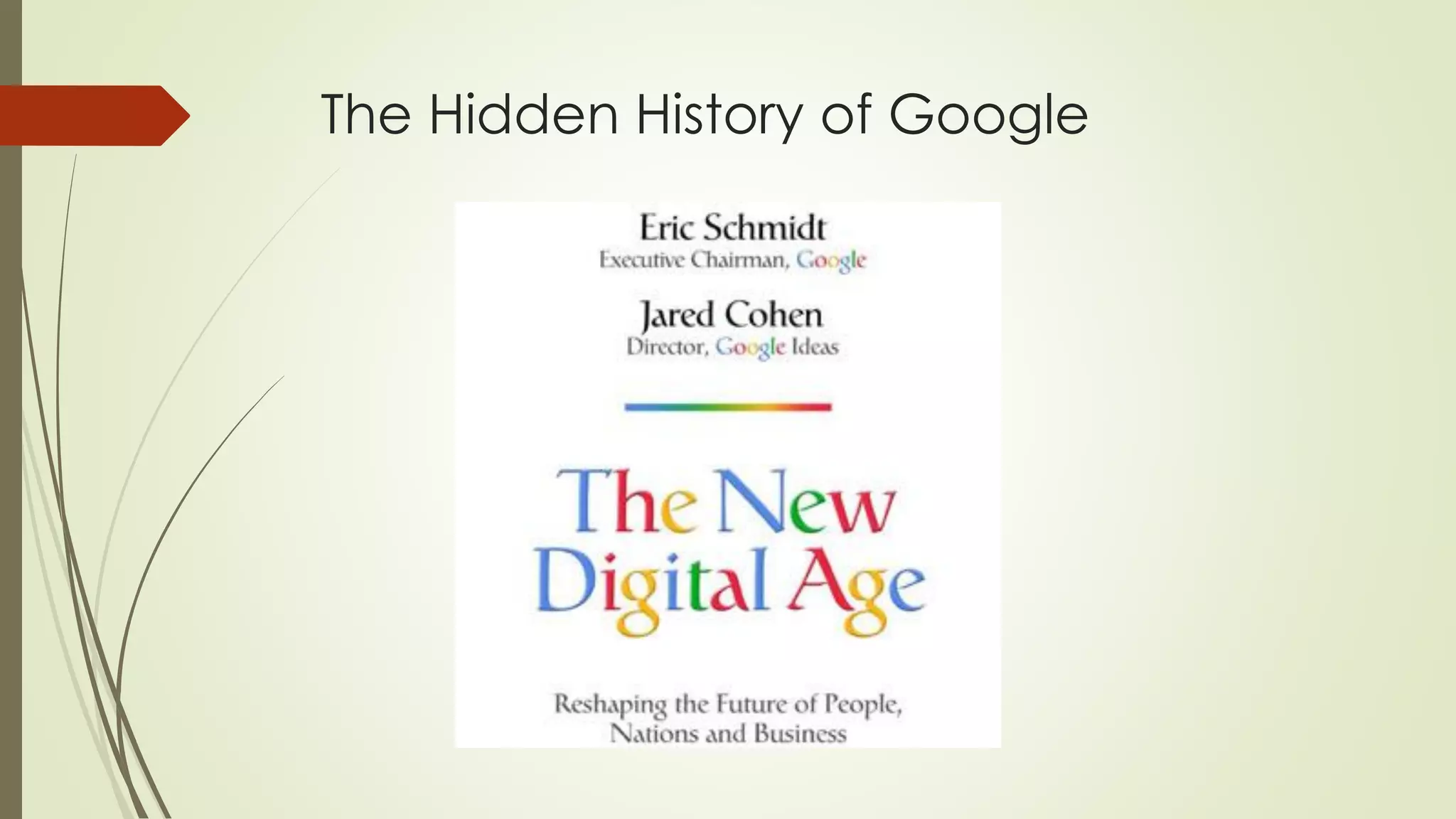
The Hidden History of Google
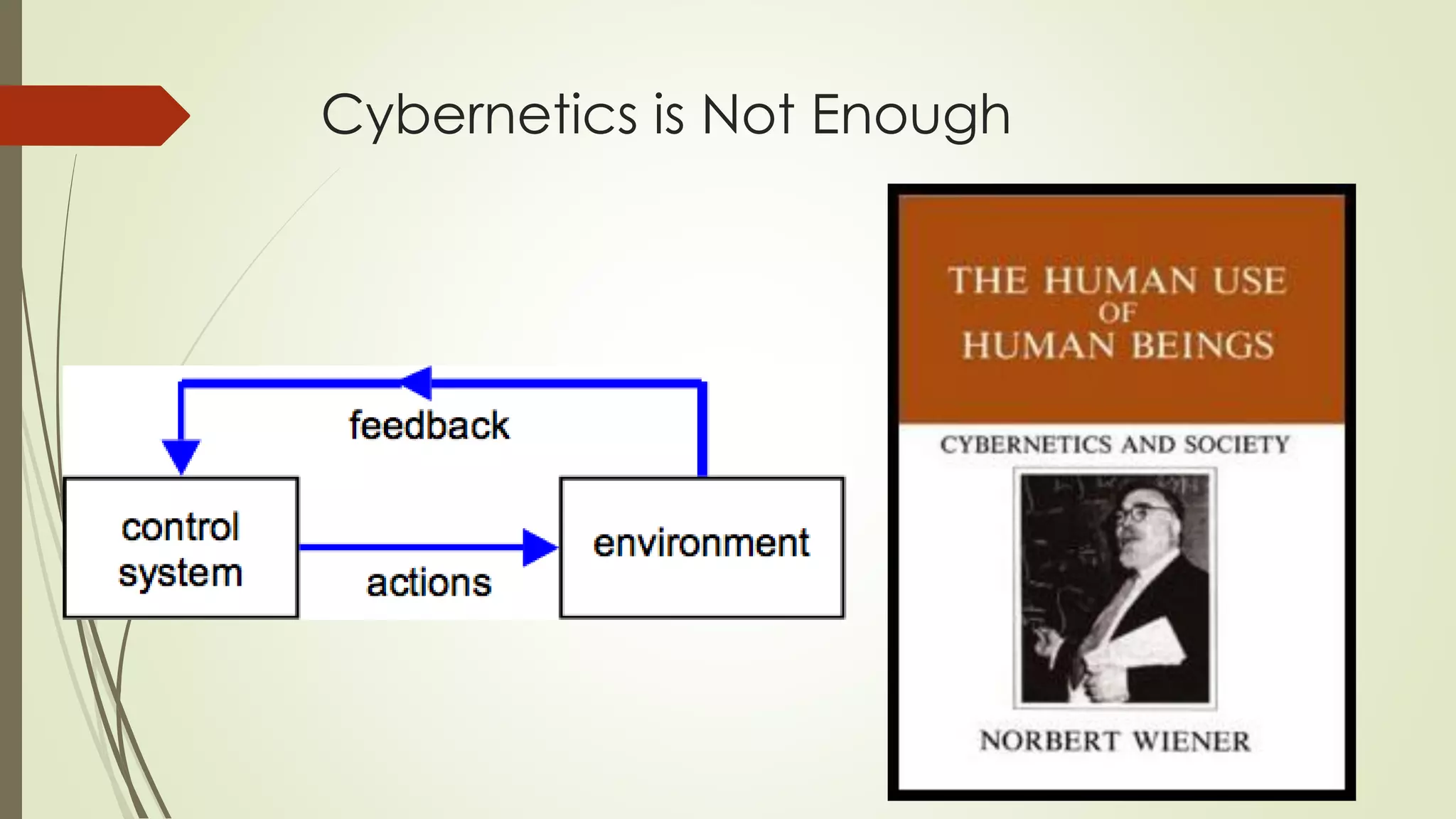
Cybernetics is Not Enough
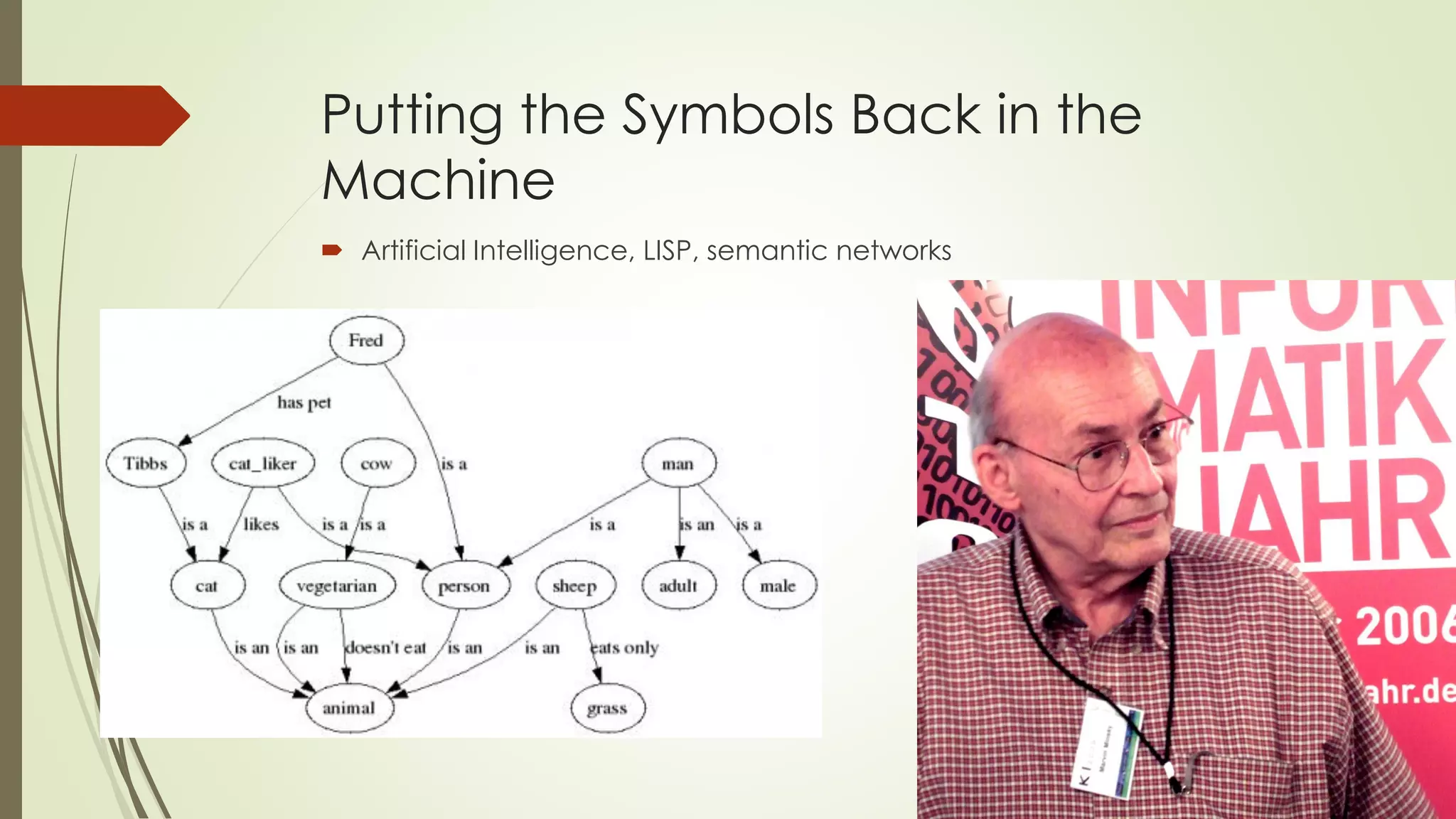
Putting the Symbols Back in the Machine 
Artificial Intelligence, LISP, semantic networks
Knowledge Representation Hypothesis 
Anymechanicallyembodiedintelligentprocesswillbecomprisedofstructuralingredientsthata)weasexternalobserversnaturallytaketorepresentapropositionalaccountoftheknowledgethattheoverallprocessexhibits,andb)independentofsuchexternalsemanticalattribution,playaformalbutcausalandessentialroleinengenderingthebehaviorthatmanifeststhatknowledge[Smith,1982].
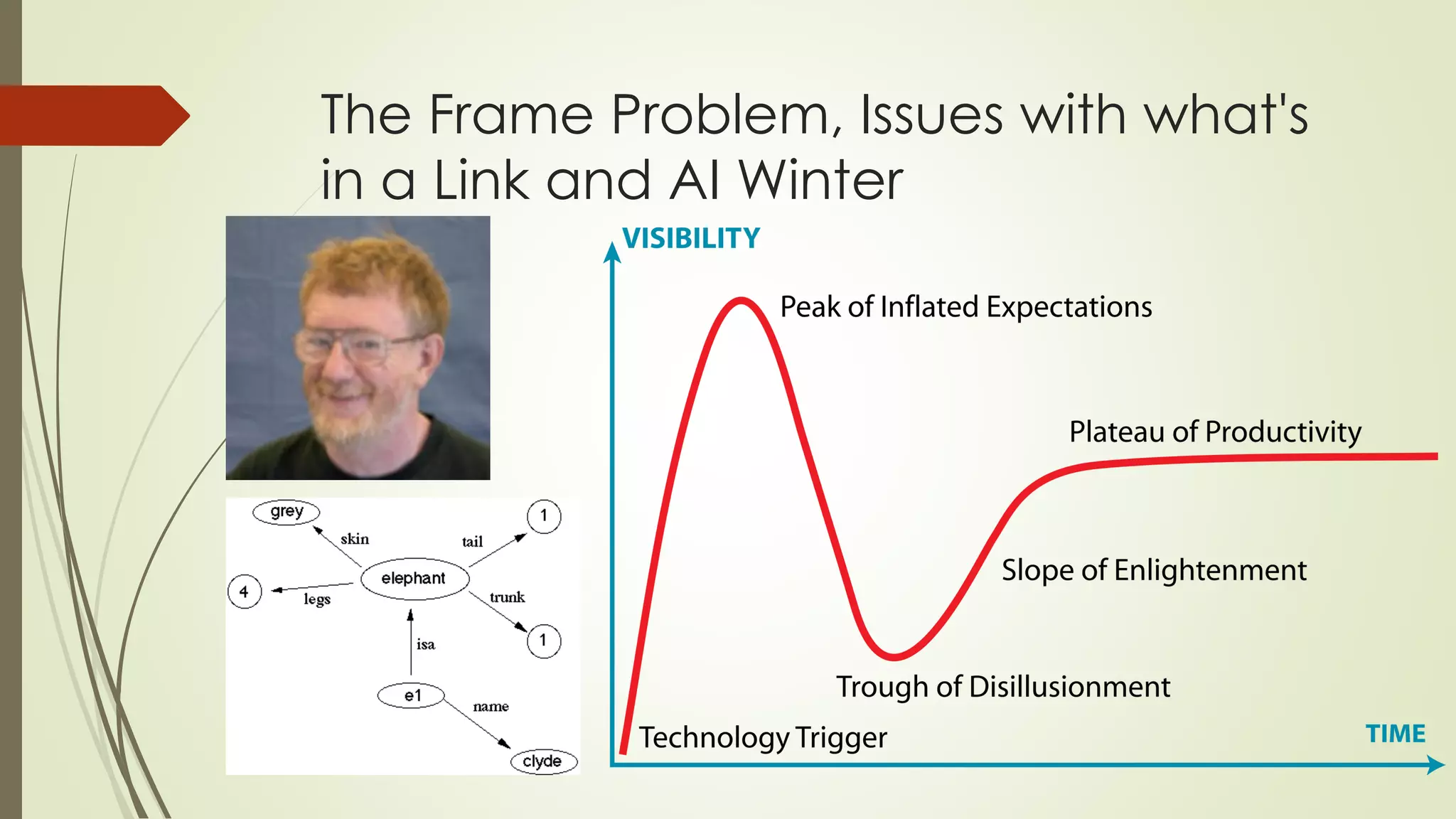
The Frame Problem, Issues with what's in a Link and AI Winter
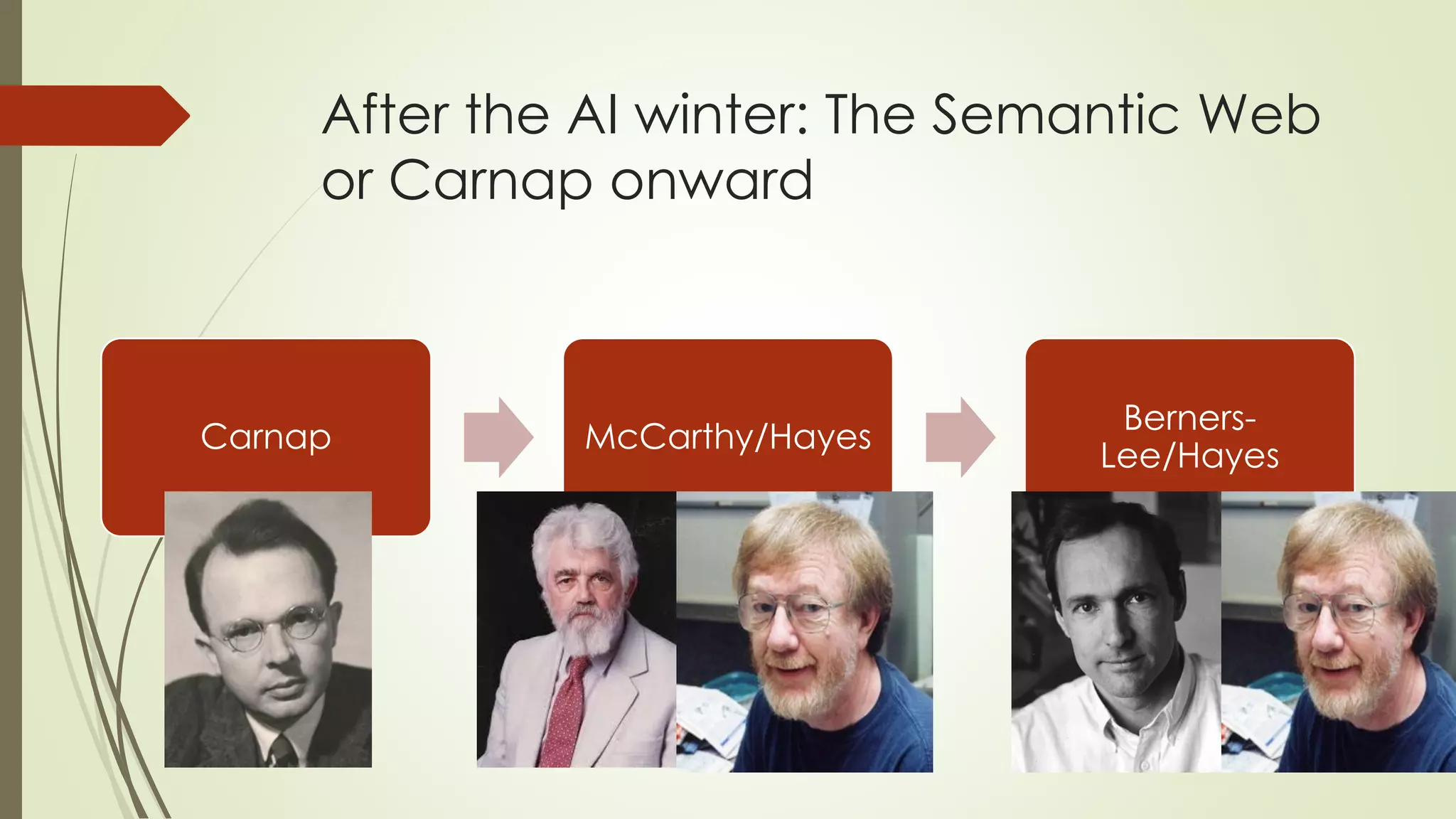
Afterthe AI winter: The SemanticWeb or Carnap onward 
Carnap 
McCarthy/Hayes 
Berners- Lee/Hayes
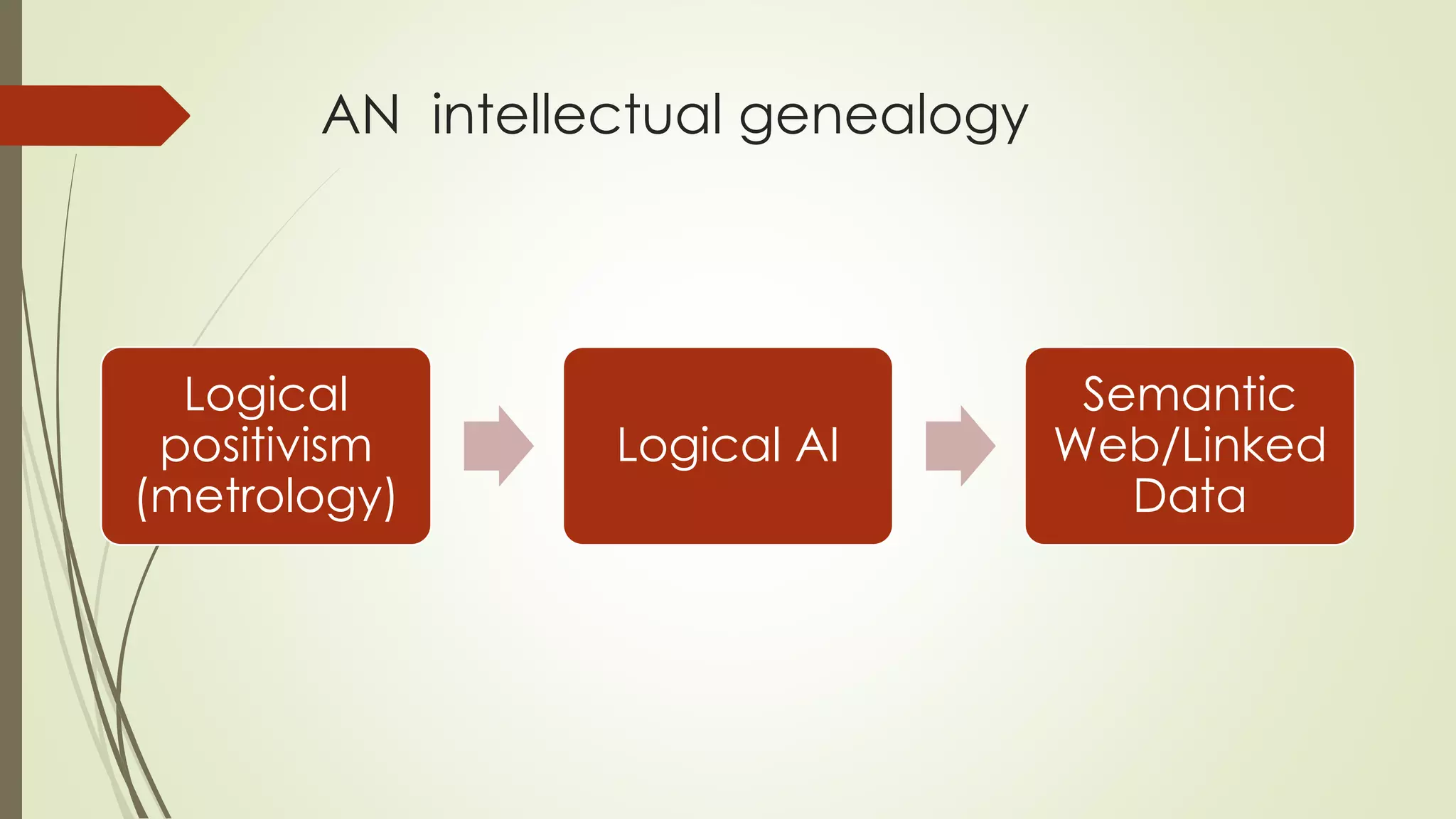
AN intellectualgenealogy 
Logical positivism (metrology) 
Logical AI 
Semantic Web/Linked Data
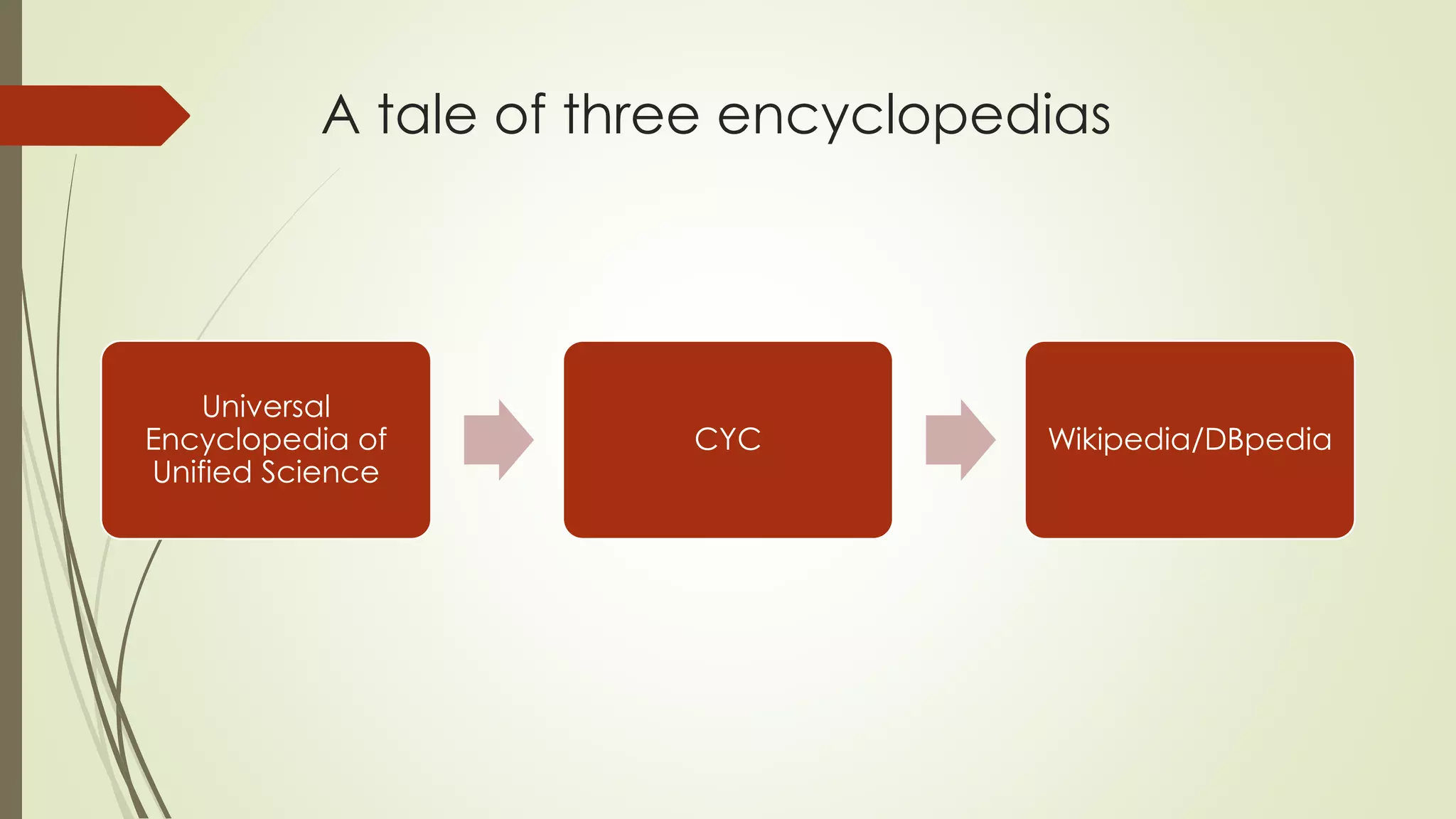
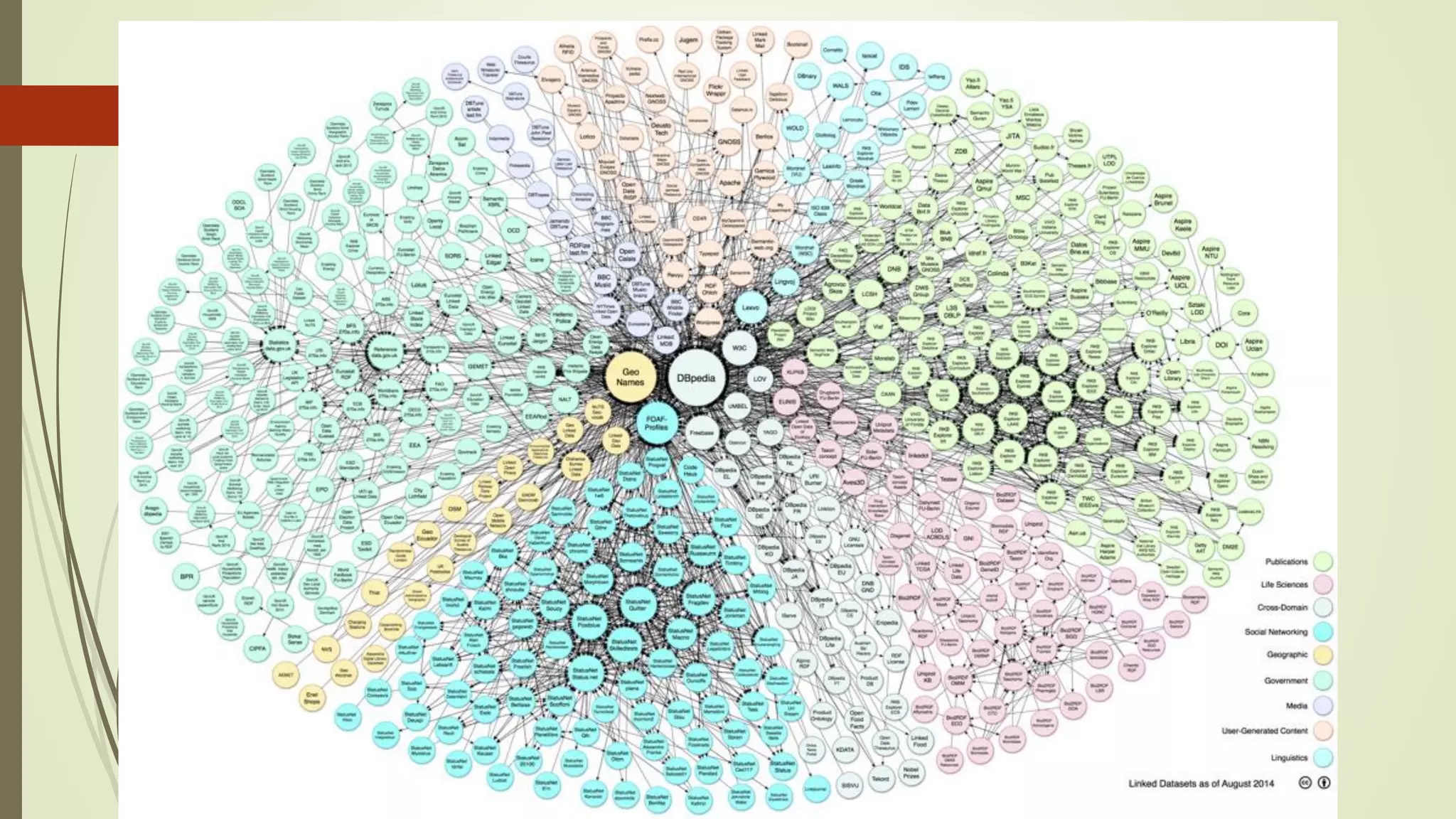
A tale of threeencyclopedias 
Universal Encyclopedia of Unified Science 
CYC 
Wikipedia/DBpedia
The Web and decentralized knowledge
The Web, the Semantic Web and Wikipedia/DBpedia 
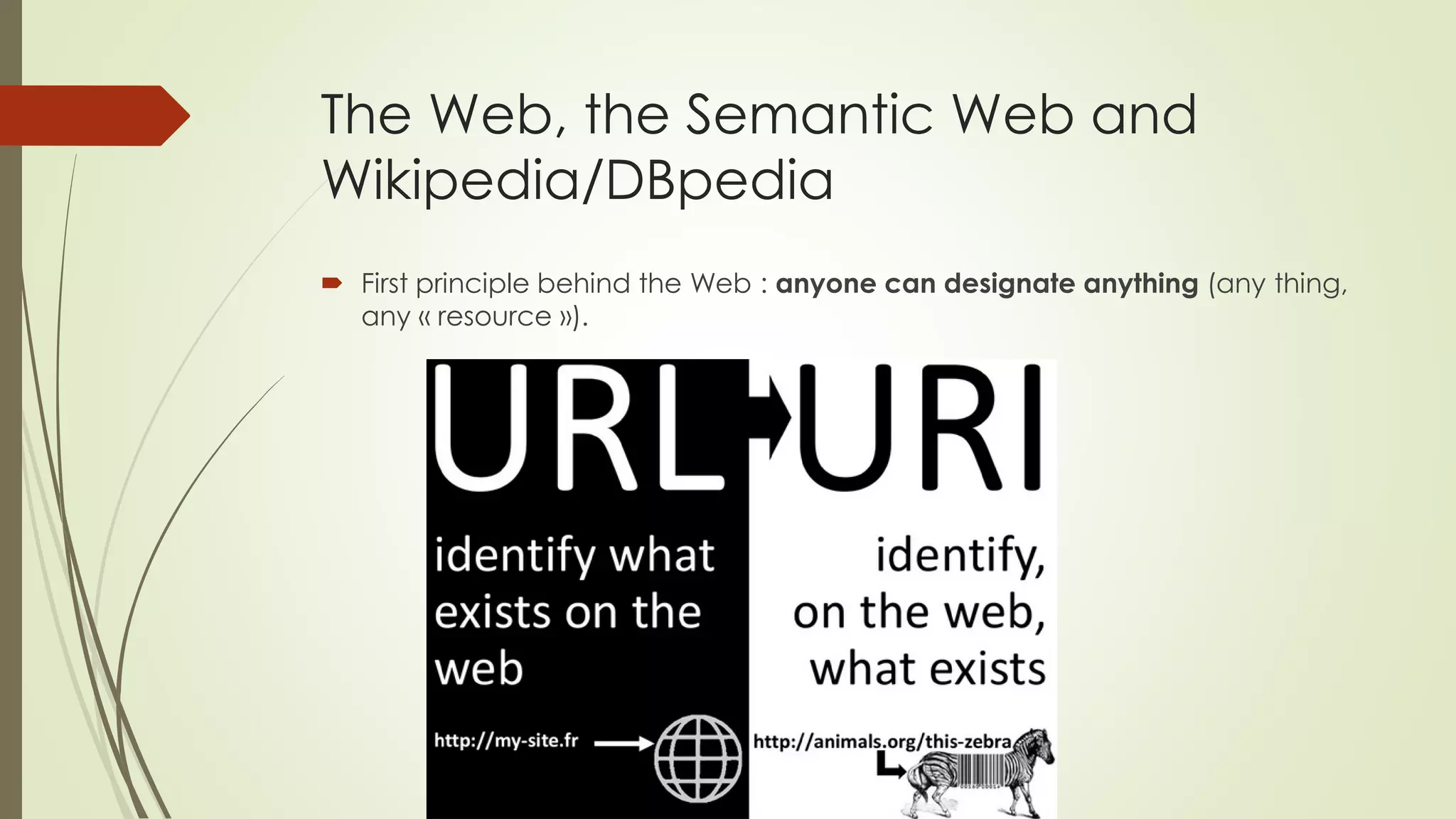
First principle behind the Web : anyone can designate anything(any thing, any «resource»).
The Web, the Semantic Web and Wikipedia/DBpedia 
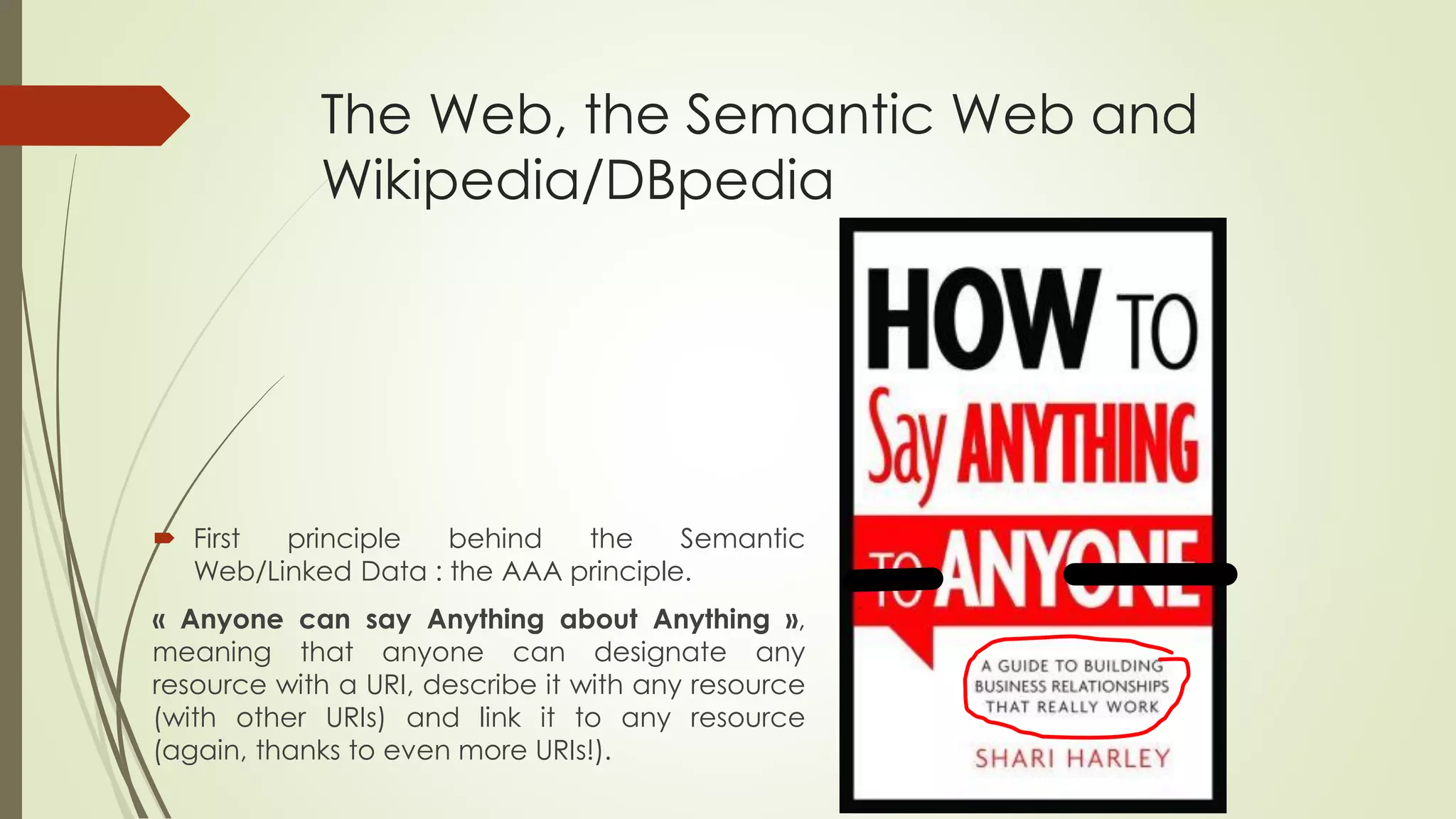
FirstprinciplebehindtheSemanticWeb/LinkedData:theAAAprinciple. 
«AnyonecansayAnythingaboutAnything», meaningthatanyonecandesignateanyresourcewithaURI,describeitwithanyresource(withotherURIs)andlinkittoanyresource(again,thankstoevenmoreURIs!).
The Web, the Semantic Web and Wikipedia/DBpedia 
how do wecome to an agreement, wheredo wefindthe constituentsof a sharedworld? Wheredo wefinda «parliamentof things» (Latour)? 
Short answer: Wikipediafor the Web, DBpediafor the Web of Data. 
A centralizedplatformfor decentralizedcontributions
The re-centralization of the Web of knowledge
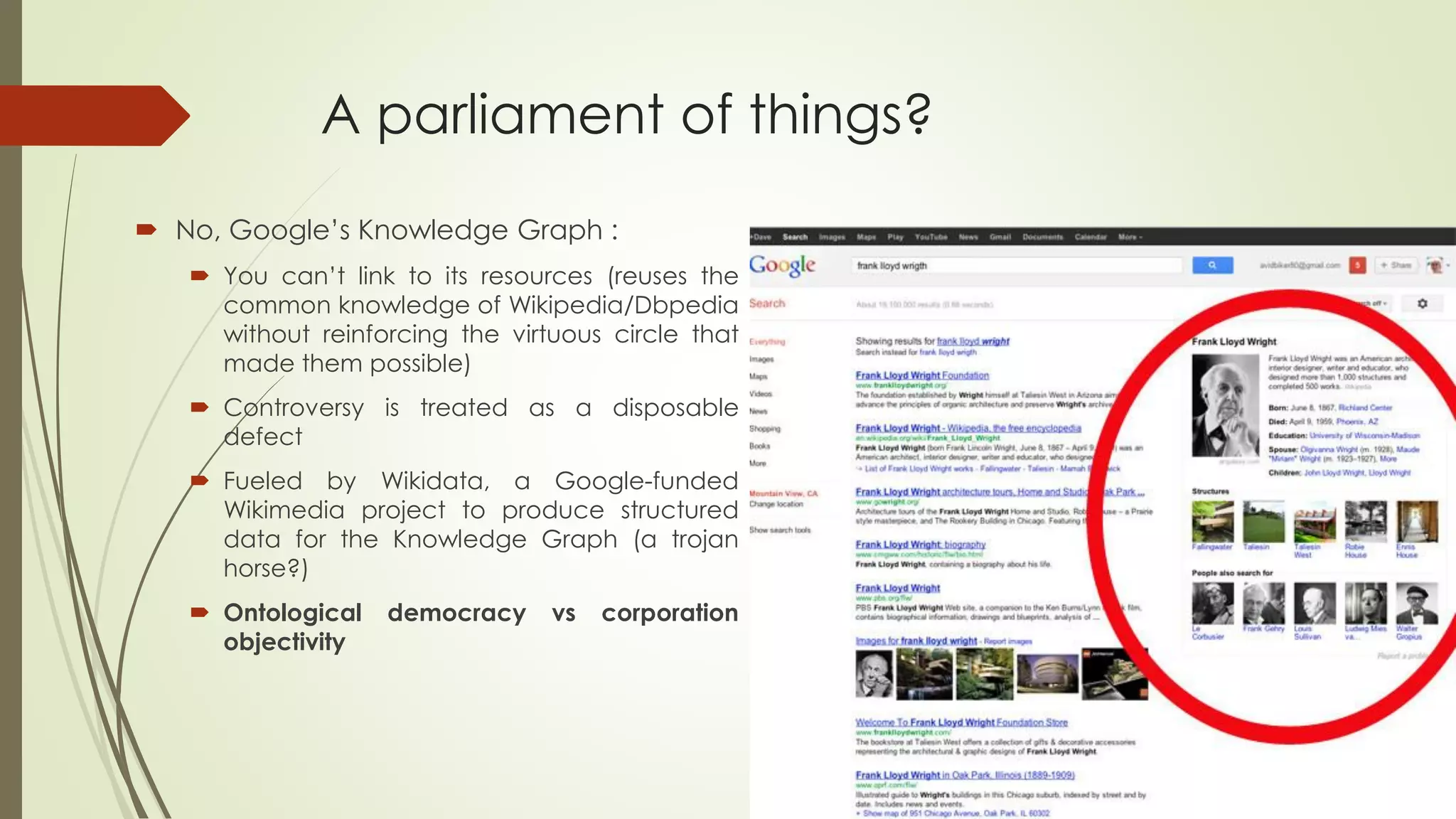
A parliament of things? 
No,Google’sKnowledgeGraph: 
Youcan’tlinktoitsresources(reusesthecommonknowledgeofWikipedia/Dbpediawithoutreinforcingthevirtuouscirclethatmadethempossible) 
Controversyistreatedasadisposabledefect 
FueledbyWikidata,aGoogle-fundedWikimediaprojecttoproducestructureddatafortheKnowledgeGraph(atrojanhorse?) 
Ontologicaldemocracyvscorporationobjectivity
The Semantic Web? 
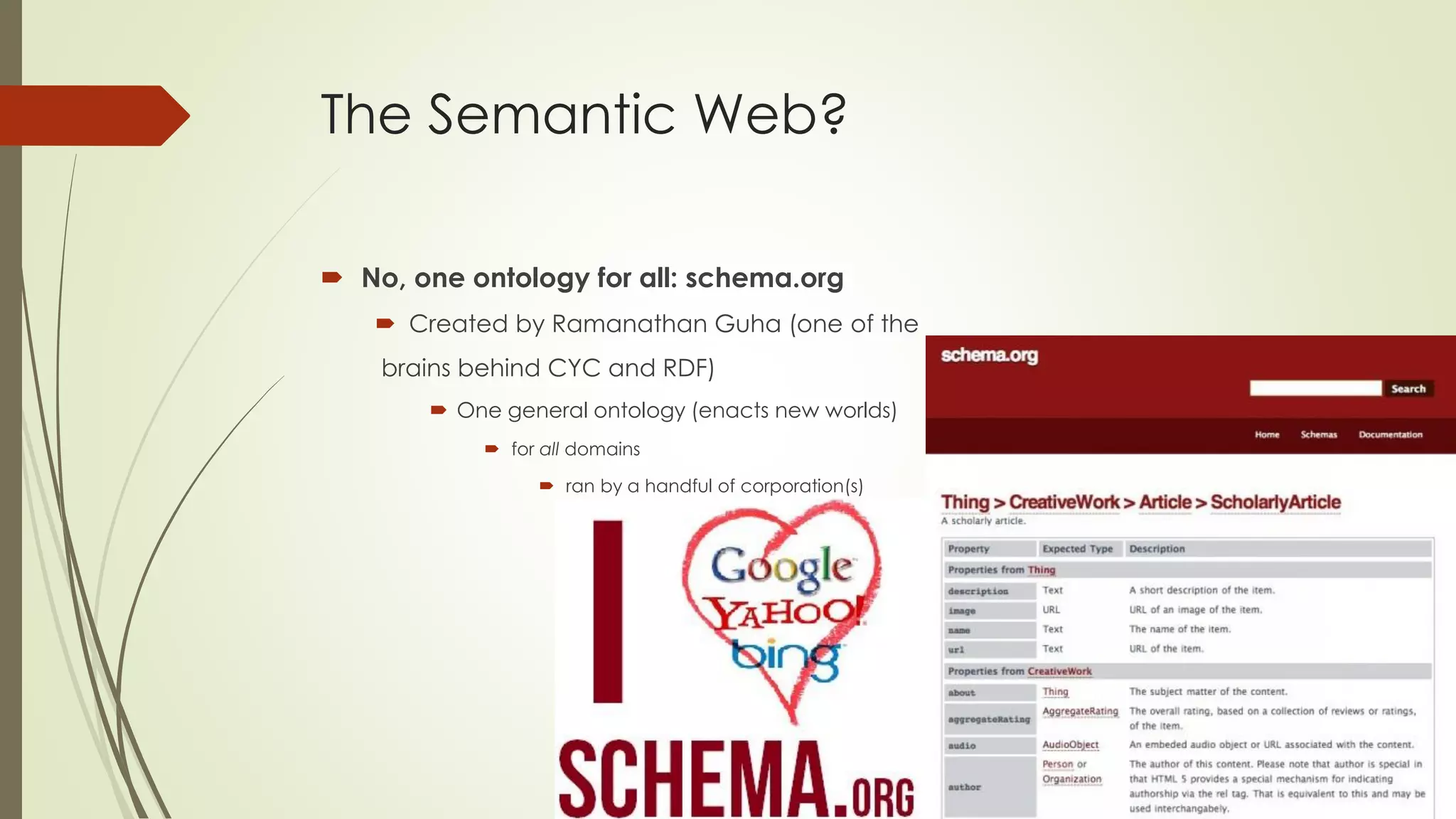
No, one ontologyfor all: schema.org 
Createdby RamanathanGuha(one of the 
brainsbehindCYC and RDF) 
One generalontology(enactsnew worlds) 
for all domains 
ranby a handfulof corporation(s) 
…
Reclaimthe Web, re-de-centralizethe Web: not justa telcoissue 
A deeply, democraticand philosophicalone 
#webwewant

The Decentralization of Knowledge

  • 1.
    The Decentralization ofKnowledge Harry Halpin (W3C/MIT) Alexandre Monnin (Inria, expert Etalab)
  • 2.
  • 3.
  • 4.
    Putting the SymbolsBack in the Machine Artificial Intelligence, LISP, semantic networks
  • 5.
    Knowledge Representation Hypothesis Anymechanicallyembodiedintelligentprocesswillbecomprisedofstructuralingredientsthata)weasexternalobserversnaturallytaketorepresentapropositionalaccountoftheknowledgethattheoverallprocessexhibits,andb)independentofsuchexternalsemanticalattribution,playaformalbutcausalandessentialroleinengenderingthebehaviorthatmanifeststhatknowledge[Smith,1982].
  • 6.
    The Frame Problem,Issues with what's in a Link and AI Winter
  • 7.
    Afterthe AI winter:The SemanticWeb or Carnap onward Carnap McCarthy/Hayes Berners- Lee/Hayes
  • 8.
    AN intellectualgenealogy Logicalpositivism (metrology) Logical AI Semantic Web/Linked Data
  • 9.
    A tale ofthreeencyclopedias Universal Encyclopedia of Unified Science CYC Wikipedia/DBpedia
  • 10.
    The Web anddecentralized knowledge
  • 11.
    The Web, theSemantic Web and Wikipedia/DBpedia First principle behind the Web : anyone can designate anything(any thing, any «resource»).
  • 12.
    The Web, theSemantic Web and Wikipedia/DBpedia FirstprinciplebehindtheSemanticWeb/LinkedData:theAAAprinciple. «AnyonecansayAnythingaboutAnything», meaningthatanyonecandesignateanyresourcewithaURI,describeitwithanyresource(withotherURIs)andlinkittoanyresource(again,thankstoevenmoreURIs!).
  • 13.
    The Web, theSemantic Web and Wikipedia/DBpedia how do wecome to an agreement, wheredo wefindthe constituentsof a sharedworld? Wheredo wefinda «parliamentof things» (Latour)? Short answer: Wikipediafor the Web, DBpediafor the Web of Data. A centralizedplatformfor decentralizedcontributions
  • 15.
    The re-centralization ofthe Web of knowledge
  • 16.
    A parliament ofthings? No,Google’sKnowledgeGraph: Youcan’tlinktoitsresources(reusesthecommonknowledgeofWikipedia/Dbpediawithoutreinforcingthevirtuouscirclethatmadethempossible) Controversyistreatedasadisposabledefect FueledbyWikidata,aGoogle-fundedWikimediaprojecttoproducestructureddatafortheKnowledgeGraph(atrojanhorse?) Ontologicaldemocracyvscorporationobjectivity
  • 17.
    The Semantic Web? No, one ontologyfor all: schema.org Createdby RamanathanGuha(one of the brainsbehindCYC and RDF) One generalontology(enactsnew worlds) for all domains ranby a handfulof corporation(s) …
  • 18.
    Reclaimthe Web, re-de-centralizetheWeb: not justa telcoissue A deeply, democraticand philosophicalone #webwewant