Middle Potomac Watershed Plan Implementation
Dead Run Stream Restoration Project
Public Meeting
McLean Community Center
April 23, 2014
Stormwater Planning Division
Department of Public Works and Environmental Services
Meeting Outline
• Fairfax County Stormwater Management
• Countywide Watershed Plan Implementation
• Project Introduction and Objectives
• Existing Conditions
• Proposed Improvements - Options
• Example Projects
• Questions?
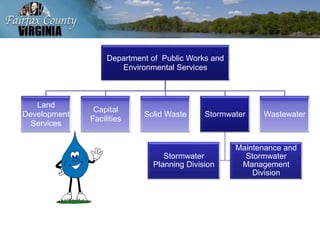
Fairfax County Department of Public Works
and Environmental Services (DPWES)Department of Public Works and
Environmental Services
Land
Development
Services
Capital
Facilities
Solid Waste Stormwater
Stormwater
Planning Division
Maintenance and
Stormwater
Management
Division
Wastewater
Stormwater Infrastructure
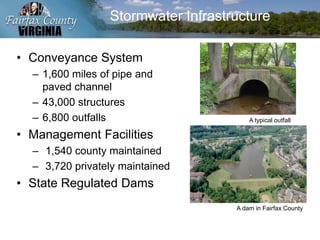
• Conveyance System
– 1,600 miles of pipe and
paved channel
– 43,000 structures
– 6,800 outfalls
• Management Facilities
– 1,540 county maintained
– 3,720 privately maintained
• State Regulated Dams
A typical outfall
A dam in Fairfax County
Service Drivers
In response to The Clean Water Act of 1972
 National Pollutant Discharge Elimination System (NPDES)
 Virginia Stormwater Management Program (VSMP) Regulations
 Municipal Separate Storm Sewer Permit (MS4)
 Total Maximum Daily Loads (TMDLs)
 Chesapeake Bay
 Local Streams
Countywide Watershed Planning
“Healthy Watersheds,
Healthy Communities”
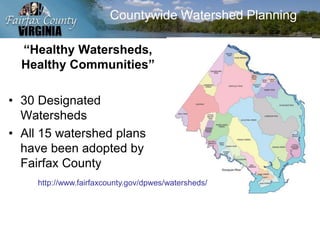
• 30 Designated
Watersheds
• All 15 watershed plans
have been adopted by
Fairfax County
http://www.fairfaxcounty.gov/dpwes/watersheds/
Middle Potomac Watershed Plan
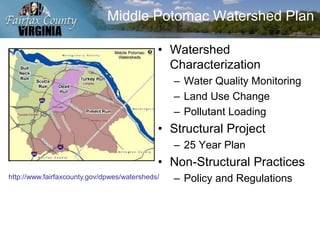
• Watershed
Characterization
– Water Quality Monitoring
– Land Use Change
– Pollutant Loading
• Structural Project
– 25 Year Plan
• Non-Structural Practices
– Policy and Regulationshttp://www.fairfaxcounty.gov/dpwes/watersheds/
Dead Run Watershed Plan
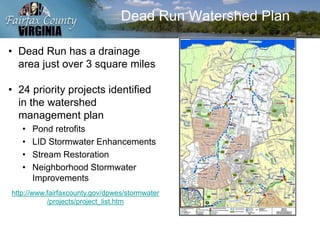
• Dead Run has a drainage
area just over 3 square miles
• 24 priority projects identified
in the watershed
management plan
• Pond retrofits
• LID Stormwater Enhancements
• Stream Restoration
• Neighborhood Stormwater
Improvements
http://www.fairfaxcounty.gov/dpwes/stormwater
/projects/project_list.htm
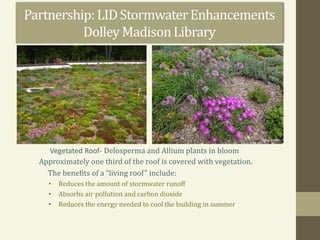
Approximately one third of the roof is covered with vegetation.
The benefits of a “living roof” include:
• Reduces the amount of stormwater runoff
• Absorbs air pollution and carbon dioxide
• Reduces the energy needed to cool the building in summer
Partnership:LIDStormwaterEnhancements
Dolley MadisonLibrary
Vegetated Roof- Delosperma and Allium plants in bloom
Partnership: LID Stormwater Enhancements
Dolley Madison Library
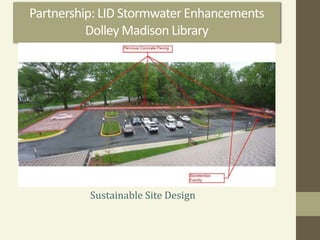
Sustainable Site Design
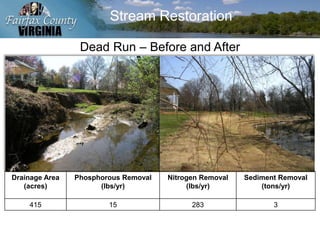
Dead Run – Before and After
Drainage Area
(acres)
Phosphorous Removal
(lbs/yr)
Nitrogen Removal
(lbs/yr)
Sediment Removal
(tons/yr)
415 15 283 3
Stream Restoration
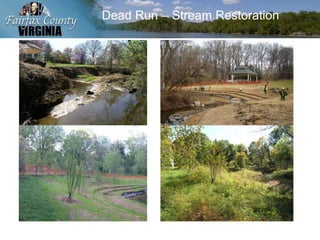
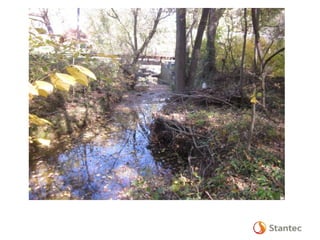
Dead Run – Stream Restoration
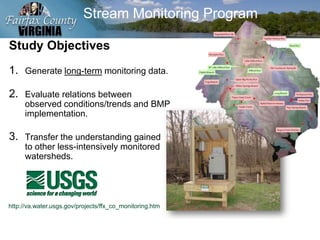
Stream Monitoring Program
Study Objectives
1. Generate long-term monitoring data.
2. Evaluate relations between
observed conditions/trends and BMP
implementation.
3. Transfer the understanding gained
to other less-intensively monitored
watersheds.
http://va.water.usgs.gov/projects/ffx_co_monitoring.htm
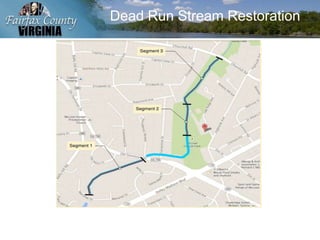
Dead Run Stream Restoration
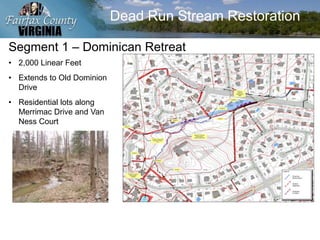
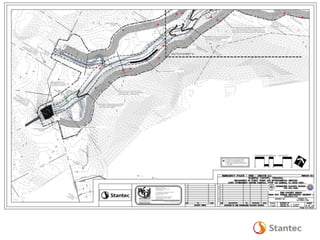
Segment 1 – Dominican Retreat
• 2,000 Linear Feet
• Extends to Old Dominion
Drive
• Residential lots along
Merrimac Drive and Van
Ness Court
Dead Run Stream Restoration
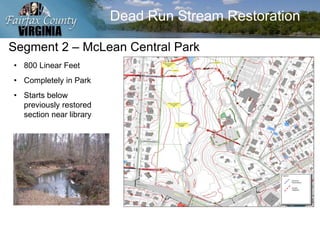
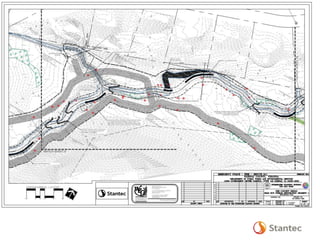
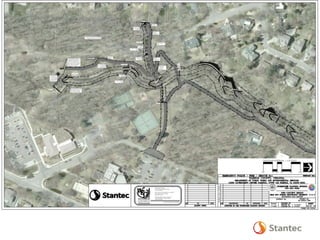
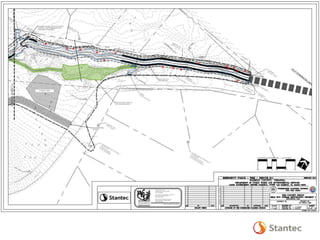
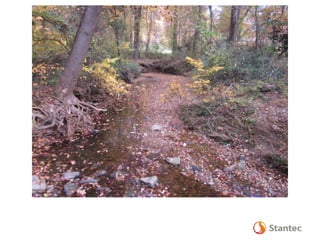
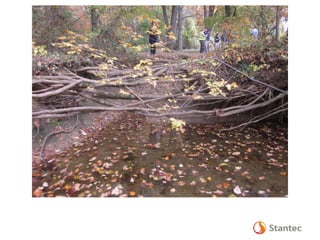
Segment 2 – McLean Central Park
• 800 Linear Feet
• Completely in Park
• Starts below
previously restored
section near library
Dead Run Stream Restoration
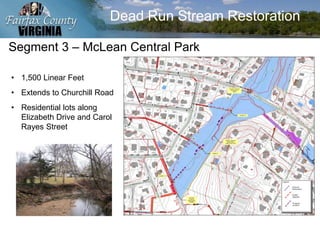
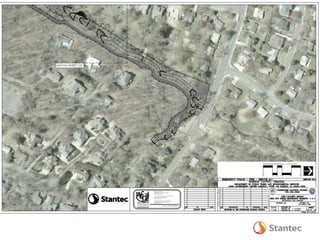
Segment 3 – McLean Central Park
• 1,500 Linear Feet
• Extends to Churchill Road
• Residential lots along
Elizabeth Drive and Carol
Rayes Street
Next Steps
• Conceptual Design
• Land Acquisition/Coordination
• Preliminary Design
• Public Meeting
• Final Design
• Project Construction
• Funding FY2016 and FY2017
• Community Coordination: Pardon Our Dust
• Maintenance and Operation
Natural Channel Design
Background and Design Approach
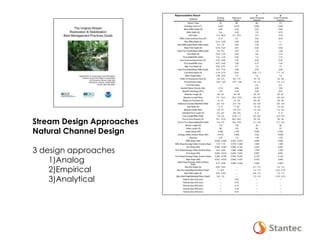
Stream Design Approaches
Natural Channel Design
3 design approaches
1)Analog
2)Empirical
3)Analytical
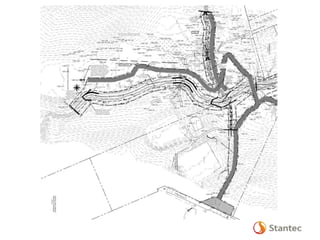
Segment 1
Dominican Retreat
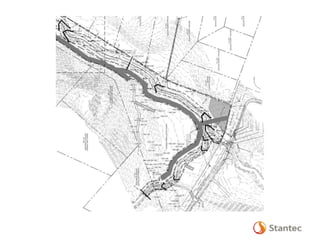
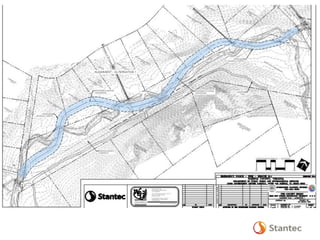
Segment 2 & 3
Mclean Central Park
Dead Run Stream Valley Park
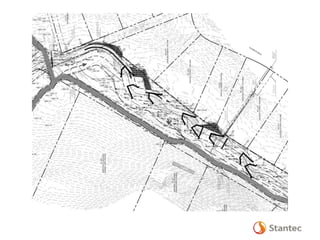
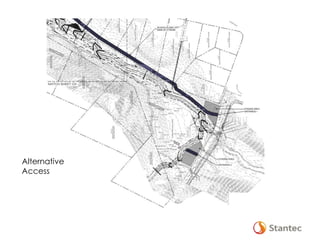
Alternative
Access
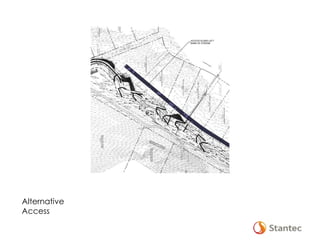
Alternative
Access
Instream Structures
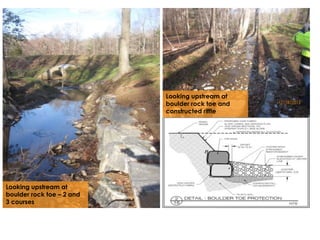
Looking upstream at
boulder rock toe and
constructed riffle
Looking upstream at
boulder rock toe – 2 and
3 courses
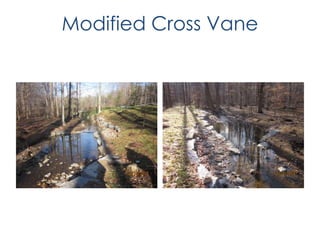
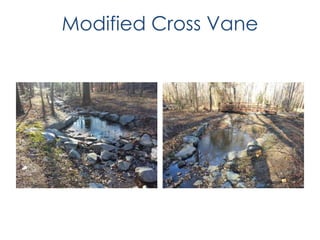
Modified Cross Vane
Modified Cross Vane
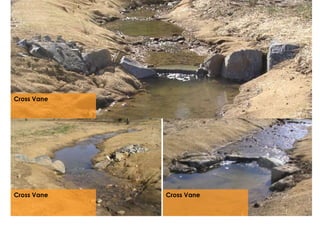
Cross Vane Cross Vane
Cross Vane
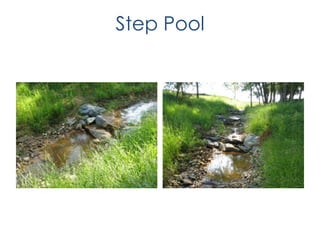
Step Pool
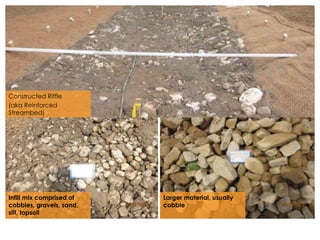
Infill mix comprised of
cobbles, gravels, sand,
silt, topsoil
Larger material, usually
cobble
Constructed Riffle
(aka Reinforced
Streambed)
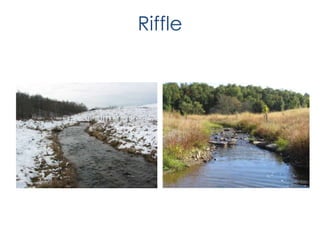
Riffle
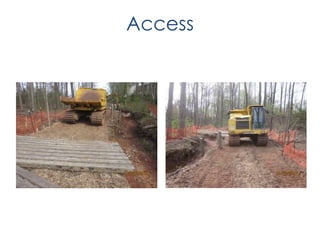
Access
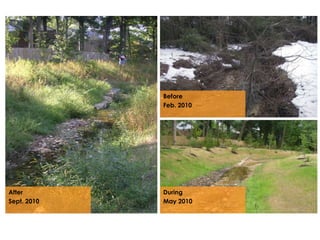
During
May 2010
Before
Feb. 2010
After
Sept. 2010
John Palmer
John.Palmer@fairfaxcounty.gov
Dipmani Kumar
Dipmani.Kumar@fairfaxcounty.gov
Matt Meyers
Matthew.Meyers@fairfaxcounty.gov
Stormwater Planning Division
Department of Public Works and Environmental Services
Fairfax County
12000 Government Center Parkway, Suite 449
Fairfax, Virginia 22035
Questions ?
Contact Information
A Fairfax County Publication, April 2014
To request this information in an alternate
format call 703-324-5500, TTY 711
www.fairfaxcounty.gov/dpwes/
stormwater
Thank You!

Dead Run Stream Restoration May 2014

  • 1.
    Middle Potomac WatershedPlan Implementation Dead Run Stream Restoration Project Public Meeting McLean Community Center April 23, 2014 Stormwater Planning Division Department of Public Works and Environmental Services
  • 2.
    Meeting Outline • FairfaxCounty Stormwater Management • Countywide Watershed Plan Implementation • Project Introduction and Objectives • Existing Conditions • Proposed Improvements - Options • Example Projects • Questions?
  • 3.
    Fairfax County Departmentof Public Works and Environmental Services (DPWES)Department of Public Works and Environmental Services Land Development Services Capital Facilities Solid Waste Stormwater Stormwater Planning Division Maintenance and Stormwater Management Division Wastewater
  • 4.
    Stormwater Infrastructure • ConveyanceSystem – 1,600 miles of pipe and paved channel – 43,000 structures – 6,800 outfalls • Management Facilities – 1,540 county maintained – 3,720 privately maintained • State Regulated Dams A typical outfall A dam in Fairfax County
  • 5.
    Service Drivers In responseto The Clean Water Act of 1972  National Pollutant Discharge Elimination System (NPDES)  Virginia Stormwater Management Program (VSMP) Regulations  Municipal Separate Storm Sewer Permit (MS4)  Total Maximum Daily Loads (TMDLs)  Chesapeake Bay  Local Streams
  • 6.
    Countywide Watershed Planning “HealthyWatersheds, Healthy Communities” • 30 Designated Watersheds • All 15 watershed plans have been adopted by Fairfax County http://www.fairfaxcounty.gov/dpwes/watersheds/
  • 7.
    Middle Potomac WatershedPlan • Watershed Characterization – Water Quality Monitoring – Land Use Change – Pollutant Loading • Structural Project – 25 Year Plan • Non-Structural Practices – Policy and Regulationshttp://www.fairfaxcounty.gov/dpwes/watersheds/
  • 8.
    Dead Run WatershedPlan • Dead Run has a drainage area just over 3 square miles • 24 priority projects identified in the watershed management plan • Pond retrofits • LID Stormwater Enhancements • Stream Restoration • Neighborhood Stormwater Improvements http://www.fairfaxcounty.gov/dpwes/stormwater /projects/project_list.htm
  • 9.
    Approximately one thirdof the roof is covered with vegetation. The benefits of a “living roof” include: • Reduces the amount of stormwater runoff • Absorbs air pollution and carbon dioxide • Reduces the energy needed to cool the building in summer Partnership:LIDStormwaterEnhancements Dolley MadisonLibrary Vegetated Roof- Delosperma and Allium plants in bloom
  • 10.
    Partnership: LID StormwaterEnhancements Dolley Madison Library Sustainable Site Design
  • 11.
    Dead Run –Before and After Drainage Area (acres) Phosphorous Removal (lbs/yr) Nitrogen Removal (lbs/yr) Sediment Removal (tons/yr) 415 15 283 3 Stream Restoration
  • 12.
    Dead Run –Stream Restoration
  • 13.
    Stream Monitoring Program StudyObjectives 1. Generate long-term monitoring data. 2. Evaluate relations between observed conditions/trends and BMP implementation. 3. Transfer the understanding gained to other less-intensively monitored watersheds. http://va.water.usgs.gov/projects/ffx_co_monitoring.htm
  • 14.
    Dead Run StreamRestoration
  • 15.
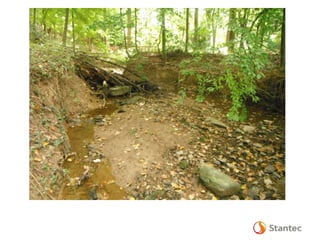
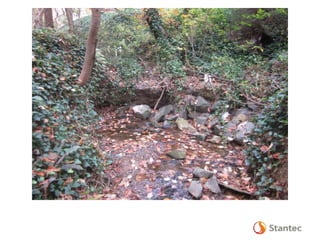
    Dead Run StreamRestoration Segment 1 – Dominican Retreat • 2,000 Linear Feet • Extends to Old Dominion Drive • Residential lots along Merrimac Drive and Van Ness Court
  • 16.
    Dead Run StreamRestoration Segment 2 – McLean Central Park • 800 Linear Feet • Completely in Park • Starts below previously restored section near library
  • 17.
    Dead Run StreamRestoration Segment 3 – McLean Central Park • 1,500 Linear Feet • Extends to Churchill Road • Residential lots along Elizabeth Drive and Carol Rayes Street
  • 18.
    Next Steps • ConceptualDesign • Land Acquisition/Coordination • Preliminary Design • Public Meeting • Final Design • Project Construction • Funding FY2016 and FY2017 • Community Coordination: Pardon Our Dust • Maintenance and Operation
  • 19.
  • 22.
    Stream Design Approaches NaturalChannel Design 3 design approaches 1)Analog 2)Empirical 3)Analytical
  • 26.
  • 36.
    Segment 2 &3 Mclean Central Park Dead Run Stream Valley Park
  • 49.
  • 50.
  • 51.
  • 52.
    Looking upstream at boulderrock toe and constructed riffle Looking upstream at boulder rock toe – 2 and 3 courses
  • 53.
  • 54.
  • 55.
    Cross Vane CrossVane Cross Vane
  • 56.
  • 57.
    Infill mix comprisedof cobbles, gravels, sand, silt, topsoil Larger material, usually cobble Constructed Riffle (aka Reinforced Streambed)
  • 58.
  • 59.
  • 60.
  • 61.
    John Palmer John.Palmer@fairfaxcounty.gov Dipmani Kumar Dipmani.Kumar@fairfaxcounty.gov MattMeyers Matthew.Meyers@fairfaxcounty.gov Stormwater Planning Division Department of Public Works and Environmental Services Fairfax County 12000 Government Center Parkway, Suite 449 Fairfax, Virginia 22035 Questions ? Contact Information A Fairfax County Publication, April 2014 To request this information in an alternate format call 703-324-5500, TTY 711 www.fairfaxcounty.gov/dpwes/ stormwater Thank You!

Editor's Notes

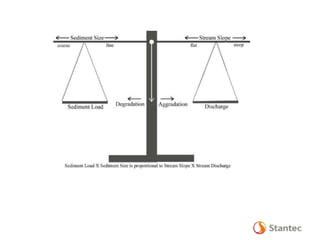
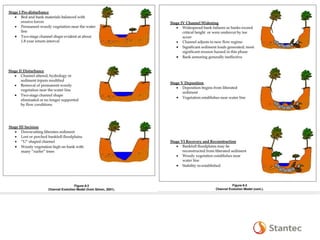
  • #21 Fluvial Geomorphology Principles Lanes Balance Equation Changes in one variable tip the balance and must be accounted for by a shift in a combination of the other variables. Streams adjust their width, depth, slope, and pattern through erosional and depositional processes to accommodate changes in discharge and sediment load. When discharge and sediment load are not significantly changing, stream adjustment processes shift toward stability. Streams that transport sediment loads and convey flows without significant erosion or deposition are in balance and have achieved dynamic equilibrium. Dynamic equilibrium represents a state of natural stability. Streams in dynamic equilibrium maintain a consistent dimension, pattern, and profile in the current environment, although some change may occur in the short term. Changes in watershed hydrology or sediment supplies (i.e. current environment), may result in changes in the dimension, pattern and/or profile, as the stream adjusts to a new state of equilibrium.
  • #22 Conduct Geomorphic and Watershed (HH assessment). CEM Incision (also know as downcutting or headcutting) can occur independently or simultaneously with meander migration. The bed is eroded and the base level of the stream is lowered. Downcutting increases bank height, which can eventually lead to bank failure and channel widening. Widening and downcutting continue until equilibrium is regained. Aggradation occurs when sediment supply exceeds transport capacity and the stream deposits sediment in the channel. Aggradation can be triggered by an increase in sediment supply due to upstream channel erosion or land development, or by a decrease in discharge, which reduces the transport capacity of the system. Deposition continues until a new state of dynamic equilibrium is achieved.
  • #23 Stream Design Approaches – Natural Channel Design – 3 design approaches 1)Analog 2)Empirical 3)Analytical. All 3 are part of the NCD process. Analog approaches use a stream in dynamic equilibrium as a template for design. This approach represents one of three approaches to NCD. Empirical design uses equations derived from regional data sets of various channel characteristics of dynamically stable streams. Analytical design makes use of hydraulic equations and sediment transport functions to derive equilibrium conditions. These three approaches must be given equal validity if the end product meets the above definition of stream design. 1- Analog / Reference Reach 2-Empirical: e.g. Regional Curves 3-Analytical:
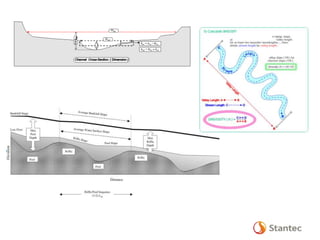
  • #24 NCD process Dimension Plan Profile
  • #25 NCD process Hydrologic Analysis Hydraulic Analysis Bankfull Discharge
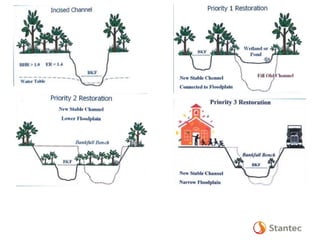
  • #26 Design strategies Priority 1 establish new channel at historic FP elev. Priority 2 Create New Floodplain and Stream Pattern Below the Historical Floodplain Elevation but Above Current Stream Elevation Priority 3 Widen FP at existing BF elev. Priority 4 Stabilize channel in place
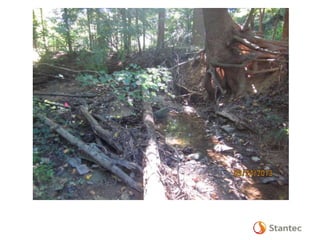
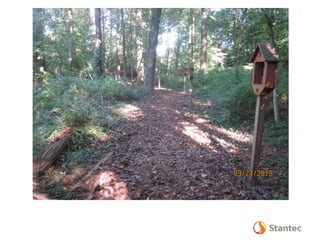
  • #28 Ex Cond Seg 1
  • #29 Ex Cond Seg 1
  • #30 Ex Cond Seg 1
  • #31 Ex Cond Seg 1 – special features
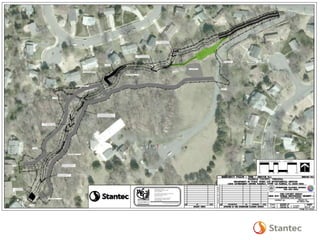
  • #32 Seg 1 Aerial overview
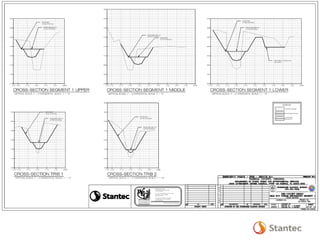
  • #33 Seg 1 XS
  • #34 Seg 1 Upper Rest
  • #35 Seg 1 Mid Rest
  • #36 Seg 1 Lower Rest
  • #38 Ex Cond Seg 2-3
  • #39 Ex Cond Seg 2-3
  • #40 Ex Cond Seg 2-3
  • #41 Ex Cond Seg 2-3
  • #42 Ex Cond Seg 2-3
  • #43 Seg 2 & 3 Upper Aerial
  • #44 Seg 3 Lower Aerial
  • #46 Seg 2 Rest.
  • #49 Alt Alignment
  • #50 Alt Access 3 lower
  • #51 Alt Access 3 lower
  • #56 Goose Creek – small trib
  • #58 Selma Estates constructed riffle
  • #61 Taft Ave. Riffle and modified CV aka Jhook