Cracking the “Day trader’s crack.”
Nikki Yu, CMT
Human beings, at heart, are wild animals in
love with the thrill of the hunt.
Cracking the “Day trader’s crack.”
• This workshop is designed for gunslinger day
trading, as traders try to profit by predicting
how the market will act in short bursts.
• Traders in this course could skip out on doing
intense stock-specific research and just focus
on getting the prices right. In order to get the
market right, one needed to pay closer
attention to technical analysis.
The Speculative Wind
• The speculative wind is priced based on what
the last guy paid for it (as are equities) — but
without any other frame of reference. There
are no earnings or yield, so it is strictly a
function of last price paid. There is no rational
explanation -- beyond pure speculation -- why
the stock is so expensive.
• It depends on further speculation and sheer
volatility
What Speculative Stocks Are
• Speculative rallies are the bane of securities
analysts. No matter how sound their fundamental
analysis, they look bad if they tell clients to sell a
stock that keeps rising. For years, Stock XYZ was a
stock that kept on rising despite a perennially
high valuation. But once it hit a speed bump this
summer, the stock lost three-quarters of its value
in a few months.
• There is something reckless about recommending
a stock fueled largely by speculation, while
downplaying the risks.
The higher the price goes, the higher the price
targets we'll hear. Often, the ones producing
such lofty targets are the ones who are
already long on the stock. So take them with a
grain of salt.
Speculative Wind Principles
“Defense wins the game” when it comes to
the market. I cringe when I see the risks an
inexperienced participant will accept. When
the bets of these people pay off and they
make a nice score in the market, their
confidence builds. They believe they have
“cracked the code” of the markets and dreams
of riches inflate their heads. I know because I
have had (and still do have) those dreams.
The Market Blinked First
• The stock market is bipolar creature, driven by
sentiment and irrational expectations. One
day, it is an ingenious forward looking
mechanism that anticipates and discounts
future events beautifully. Another day, it is a
stubborn schizophrenic that can’t see further
than its nose. It is what it is. You either adopt
or leave the scene.
• Good traders blink and exits were hit.
You’re a Day Trader But Trade only
on Easy Days
• The challenge for every trader is keep their capital intact during tough
times so that they will be around to profit during better times.
• You just have to be careful about making such bold assertions about what
is to follow. While trading can offer us a lot of freedom we must also stay
connected to the markets and ready to trade easy opportunity.
Follow Stops
It is good to have conviction in your investment thesis, but
discipline should always trump conviction.
-8% Cutloss Point from Entry Initiation
+2% Breakeven Stop Point from Entry When Winner
+8% Profit Point from Entry Initiation + Hold Winners for
Jackpots
Cash is Better Than Dead Money
• Stock prices run in cycles. Periods of re-pricing are usually
quick and powerful and then they are followed by
trendless consolidation.
• When the market averages consolidate, there are stocks
that will break out or down, revealing the intentions of
institutional buyers.
• Traders’ attention (and market volume) is attracted by
unusual price moves. Sudden price range expansion from a
consolidation is often the beginning of a powerful new
trend.
• Opportunity cost matters a lot
• Be in stocks that move. Stocks in a range are dead money
Trading Breakouts
in a Cost Effective Manner
• Most recent price action play a particularly
important role in developing moods of mass
optimism or pessimism.
• The overall market conditions will never be
perfect and when they seem so, it is probably a
good idea to decrease exposure and take profits.
With that in mind, you don’t have to be in the
market all the time. When you don’t see good
setups, it just makes sense to watch from the
sidelines.
The Market Day (Overall)
• Are they cutting back on their selling and
upping their buying?
• Are they cutting back on their selling and
upping their buying?
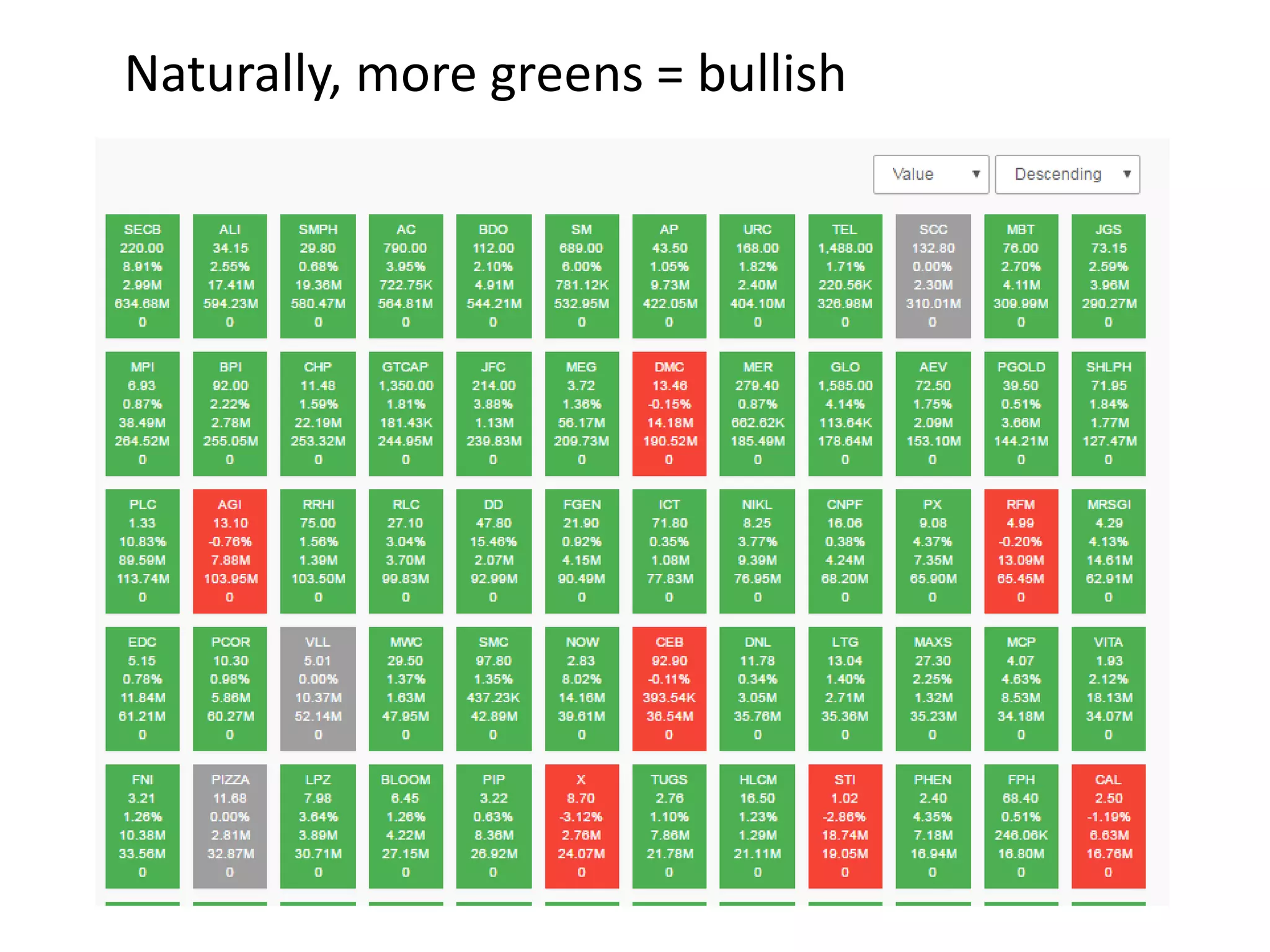
- Heat Map of Most Active Value Trades Should
Show This Clearly
Naturally, more greens = bullish
What to Do When the Market is in a
Correction Mode
• Watch and wait for that fat pitch to come. It
always does
• Opportunity cost is a huge factor in my
decision making and I change my stand
quickly. Such market approach requires being
very nimble and willing to stay in cash when
you have to.
• If you understand people’s incentives, you
can predict their behavior.
Trade Breakouts Properly
• Some stocks can really move fast after they
pass their tipping point. When that happens,
many traders feel like a deer in headlights and
are not willing to pay the market price. They’ll
put a limit order, hoping that the desired stock
will come back and their order will be filled.
The best stocks don’t come back. Don’t be
afraid to pay the market price for proper
breakouts.
Bottom Picking for Day Traders
• Sharp declines are often followed by short-
term bounces. Potential reward of knife
catching often does not justify the risk taken.
Continuation Follow Throughs
Find Stocks that hold the best and buy them
as they break out from their recent
consolidation
Finally, if you are wrong, it’s no big deal
because it won’t be the first or last time it
happens.

Day traders crack

  • 1.
    Cracking the “Daytrader’s crack.” Nikki Yu, CMT
  • 2.
    Human beings, atheart, are wild animals in love with the thrill of the hunt.
  • 3.
    Cracking the “Daytrader’s crack.” • This workshop is designed for gunslinger day trading, as traders try to profit by predicting how the market will act in short bursts. • Traders in this course could skip out on doing intense stock-specific research and just focus on getting the prices right. In order to get the market right, one needed to pay closer attention to technical analysis.
  • 4.
    The Speculative Wind •The speculative wind is priced based on what the last guy paid for it (as are equities) — but without any other frame of reference. There are no earnings or yield, so it is strictly a function of last price paid. There is no rational explanation -- beyond pure speculation -- why the stock is so expensive. • It depends on further speculation and sheer volatility
  • 5.
    What Speculative StocksAre • Speculative rallies are the bane of securities analysts. No matter how sound their fundamental analysis, they look bad if they tell clients to sell a stock that keeps rising. For years, Stock XYZ was a stock that kept on rising despite a perennially high valuation. But once it hit a speed bump this summer, the stock lost three-quarters of its value in a few months. • There is something reckless about recommending a stock fueled largely by speculation, while downplaying the risks.
  • 6.
    The higher theprice goes, the higher the price targets we'll hear. Often, the ones producing such lofty targets are the ones who are already long on the stock. So take them with a grain of salt.
  • 7.
    Speculative Wind Principles “Defensewins the game” when it comes to the market. I cringe when I see the risks an inexperienced participant will accept. When the bets of these people pay off and they make a nice score in the market, their confidence builds. They believe they have “cracked the code” of the markets and dreams of riches inflate their heads. I know because I have had (and still do have) those dreams.
  • 8.
    The Market BlinkedFirst • The stock market is bipolar creature, driven by sentiment and irrational expectations. One day, it is an ingenious forward looking mechanism that anticipates and discounts future events beautifully. Another day, it is a stubborn schizophrenic that can’t see further than its nose. It is what it is. You either adopt or leave the scene. • Good traders blink and exits were hit.
  • 9.
    You’re a DayTrader But Trade only on Easy Days • The challenge for every trader is keep their capital intact during tough times so that they will be around to profit during better times. • You just have to be careful about making such bold assertions about what is to follow. While trading can offer us a lot of freedom we must also stay connected to the markets and ready to trade easy opportunity.
  • 10.
    Follow Stops It isgood to have conviction in your investment thesis, but discipline should always trump conviction. -8% Cutloss Point from Entry Initiation +2% Breakeven Stop Point from Entry When Winner +8% Profit Point from Entry Initiation + Hold Winners for Jackpots
  • 11.
    Cash is BetterThan Dead Money • Stock prices run in cycles. Periods of re-pricing are usually quick and powerful and then they are followed by trendless consolidation. • When the market averages consolidate, there are stocks that will break out or down, revealing the intentions of institutional buyers. • Traders’ attention (and market volume) is attracted by unusual price moves. Sudden price range expansion from a consolidation is often the beginning of a powerful new trend. • Opportunity cost matters a lot • Be in stocks that move. Stocks in a range are dead money
  • 12.
    Trading Breakouts in aCost Effective Manner • Most recent price action play a particularly important role in developing moods of mass optimism or pessimism. • The overall market conditions will never be perfect and when they seem so, it is probably a good idea to decrease exposure and take profits. With that in mind, you don’t have to be in the market all the time. When you don’t see good setups, it just makes sense to watch from the sidelines.
  • 13.
    The Market Day(Overall) • Are they cutting back on their selling and upping their buying? • Are they cutting back on their selling and upping their buying? - Heat Map of Most Active Value Trades Should Show This Clearly
  • 14.
  • 15.
    What to DoWhen the Market is in a Correction Mode • Watch and wait for that fat pitch to come. It always does
  • 16.
    • Opportunity costis a huge factor in my decision making and I change my stand quickly. Such market approach requires being very nimble and willing to stay in cash when you have to. • If you understand people’s incentives, you can predict their behavior.
  • 17.
    Trade Breakouts Properly •Some stocks can really move fast after they pass their tipping point. When that happens, many traders feel like a deer in headlights and are not willing to pay the market price. They’ll put a limit order, hoping that the desired stock will come back and their order will be filled. The best stocks don’t come back. Don’t be afraid to pay the market price for proper breakouts.
  • 18.
    Bottom Picking forDay Traders • Sharp declines are often followed by short- term bounces. Potential reward of knife catching often does not justify the risk taken.
  • 19.
    Continuation Follow Throughs FindStocks that hold the best and buy them as they break out from their recent consolidation
  • 20.
    Finally, if youare wrong, it’s no big deal because it won’t be the first or last time it happens.