Steve Spencer
Partner
SMB Training
July 18, 2013
SMB TRAINING is NOT a Broker Dealer. SMB Training engages in trader education and training.
SMB TRAINING offers a number of products and services, both electronical (over the internet
through smbtraining.com) and in person. SMB TRAINING also offers web-based, interactive
training courses on demand.
The seminars given by SMB TRAINING are for educational purposes only. This information neither
is, nor should be construed, as an offer, or a solicitation of an offer, to buy or sell
securities. You shall be fully responsible for any investment decision you make, and such
decisions will be based solely on your evaluation of your financial circumstances,
investment objectives, risk tolerance, and liquidity needs.
This material is being provided to you for educational purposes only. No information presented
constitutes a recommendation by SMB TRAINING or its affiliates to buy, sell or hold any
security, financial product or instrument discussed therein or to engage in any specific
investment strategy. The content neither is, nor should be construed as, an offer, or a
solicitation of an offer, to buy, sell, or hold any securities. You are fully responsible for any
investment decisions you make. Such decisions should be based solely on your evaluation
of your financial circumstances. Such decisions should be based solely on your evaluation of
your financial circumstances, investment objectives, risk tolerance and liquidity needs.
SMB Training and SMB Capital Management, LLC are separate but affiliated companies.
No relevant positions
Please note: Hypothetical computer simulated performance results are believed to be accurately
presented. However, they are not guaranteed as to accuracy or completeness and are
subject to change without any notice. Hypothetical or simulated performance results have
certain inherent limitations. Unlike an actual performance record, simulated results do not
represent actual trading. Since, also, the trades have not actually been executed; the results
may have been under or over compensated for the impact, if any, of certain market factors
such as liquidity, slippage and commissions. Simulated trading programs in general are also
subject to the fact that they are designed with the benefit of hindsight. No representation is
being made that any portfolio will, or is likely to achieve profits or losses similar to those
shown. All investments and trades carry risks.”
 Price moves above/below an important price
 Intra-day breakouts
◦ Opening Range
◦ LOD/HOD
◦ Large Buyer/Larger Seller
 Multi-day breakouts
◦ H/L of established ranges
◦ Intermediate Breakout vs. Full Breakout
It trends until there is sufficient supply
to end trend then it establishes a new
trading range
 An imbalance of supply/demand causes a
breakout
◦ Either buyers or sellers become more aggressive as
their isn’t sufficient supply to meet demand
 Therefore a breakout should be a signal that
a large move is about to occur
 There isn’t a sustained imbalance of supply
 How do we spot these failures? TIME
◦ The simplest way to judge a failed breakout is a failure
to hold above/below the breakout price for your trading
time frame
 Mispricing when the market opens
◦ These quickly correct
◦ A lack of liquidity in the first 15 minutes causes stocks
to move through important levels until more orders
enter
◦ This has become extremely prevalent in past decade as
HFT are primary market makers and don’t want to risk
capital right on market Open
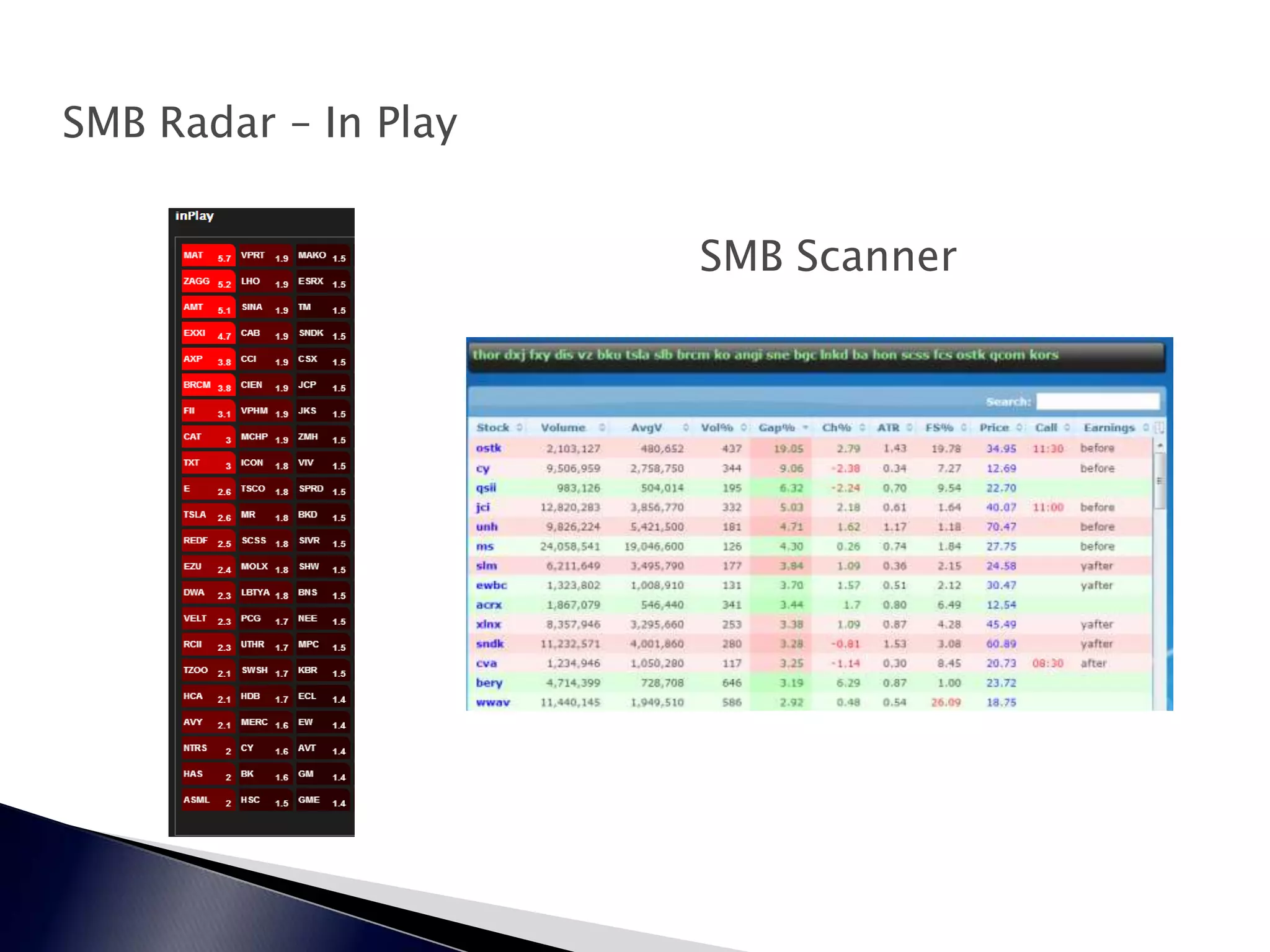
 Stocks In Play
 I have 3 resources
◦ SMB Scanner
◦ StockTwits
◦ SMB Radar
 I also have my “MoMo” list of stocks
◦ LNKD, NFLX, GMCR, FSLR, CREE
SMB Radar – In Play
SMB Scanner
Let me offer a few things for you to
consider prior to committing to a
breakout trade.
1. How significant is the level that the stock is
about to break through?
The significance of the level is determined by how many
market participants are focused on the level.
2. Is the breakout occurring from a base or has
the stock been trending in the direction of the
break for several days already?
• A break that occurs after an extended move may offer
less upside initially, but over time match the magnitude
of a break from a base
• A break from an extended move is far more likely to
fail initially
• A break from a base that has a surge in volume will
follow through 80% of the time
3. How much room is there to the next significant
support/resistance area?
If the next S/R area isn’t at least 3X the risk of entering
trade than not particularly good opportunity
4. What type of market are we in?
Uptrend/Downtrend/Range
Uptrend is best market for sustained breakouts in either
direction
5. What is the price action history of the stock on
prior breakouts?
• This is such an important factor as stocks will continue
to have the same many of the same participants over
time and traders like most human beings are repetitive
in their behavior
• What does the stock typically do on the first day of a
breakout, second day, third day etc....
6. How much time above/below a breakout level is
sufficient to consider the breakout successful and
thus worth committing additional risk?
• For intraday breakouts right on the Open 2-3 minutes is
sufficient
• For intraday breakouts after the Open the minimum is
10 minutes
• For swing trade breakouts look for a daily close through
the level
7. How should the stock behave when it breaks
through the support/resistance level?
There should be a surge in trading activity
8. How many times has the stock failed to break
through the breakout level?
If a stock has failed to breakout from a level after 3-4
attempts I become very skeptical
 If I am skeptical I really want everything to line up just right
to put on significant risk: aggressive buying, bids holding,
good surge in volume
 The flip side is if a S/R level has not broken many times and
the stock has traded significant volume at the level traders
would be trapped on a successful break
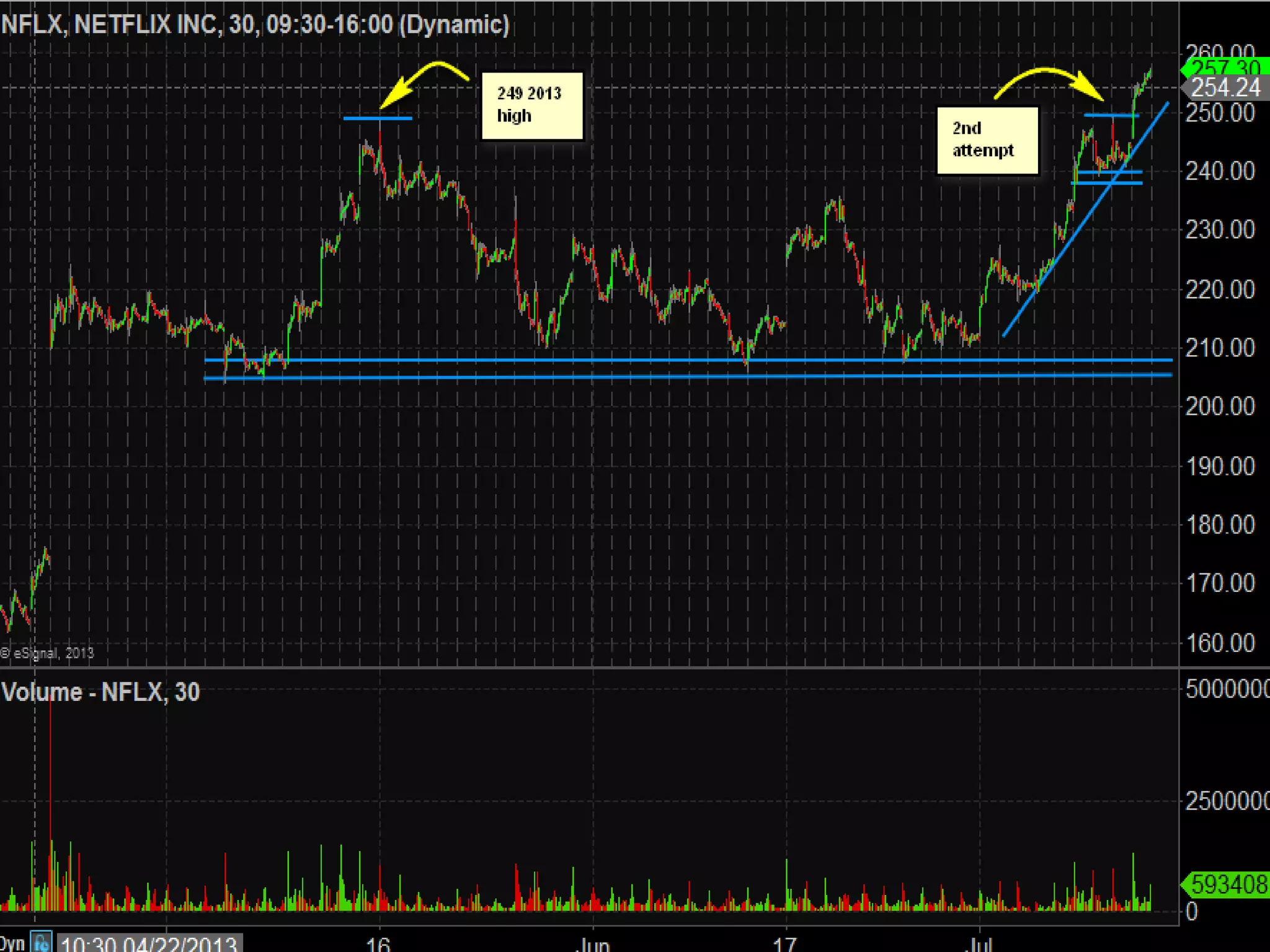
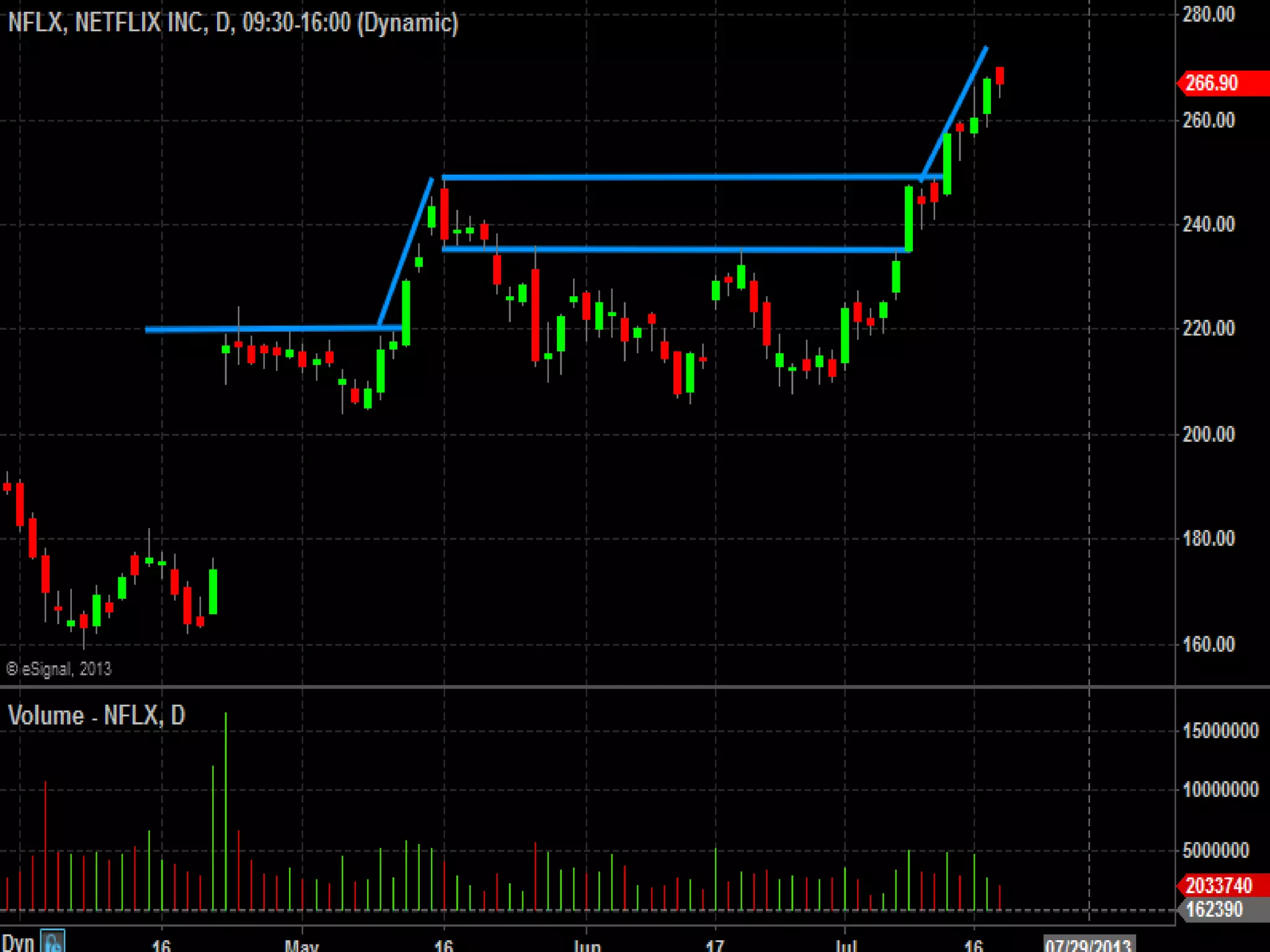
 #1 Momo stock
 Uptrend on every time frame
 History of 10-20 point breakouts
 Intermediate and full breakouts
 In a “momo sector” 3D printing
 Several recent failed intermediate breakouts
 Large multi-month consolidation
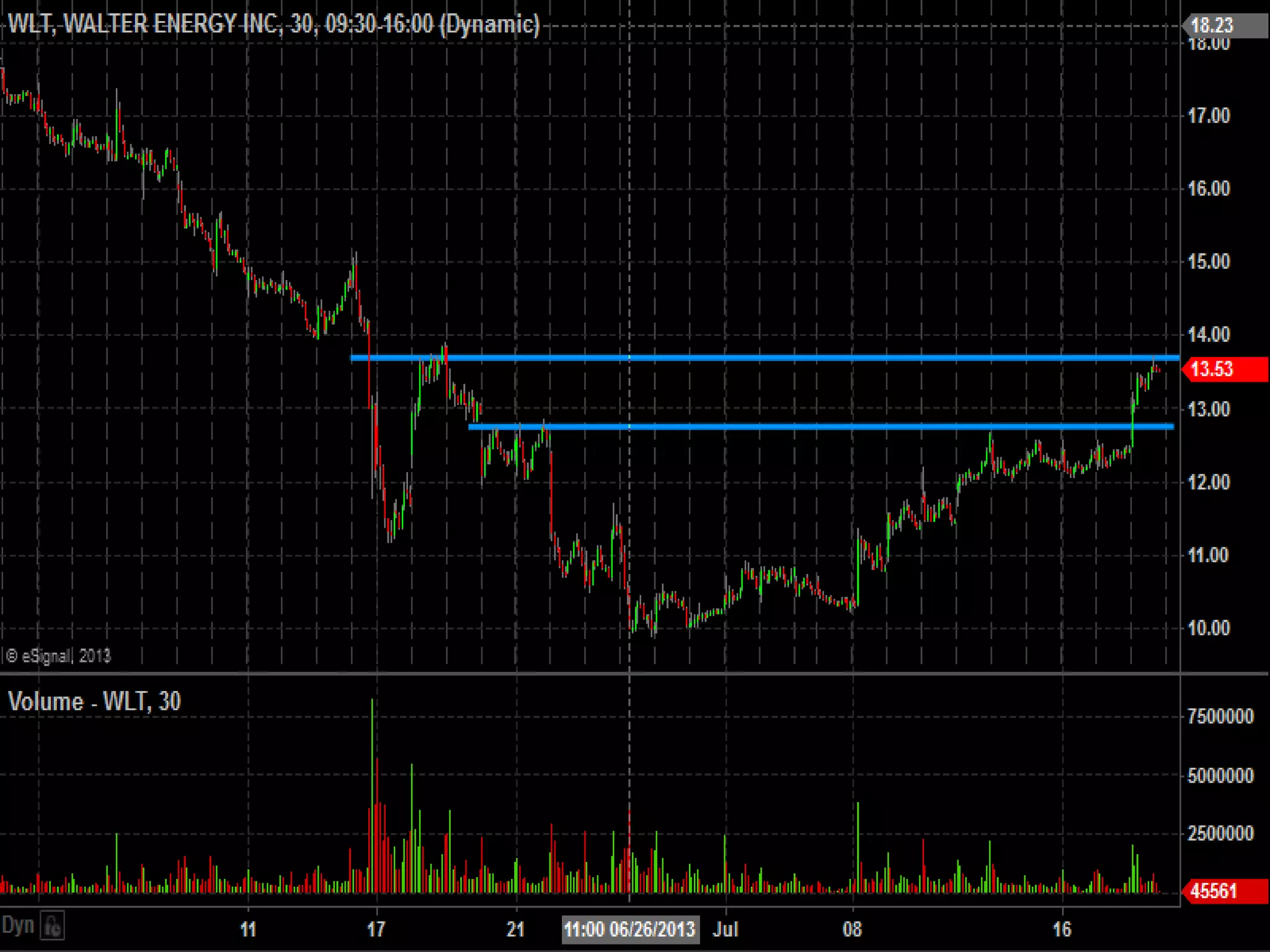
 Broken stock/Broken sector
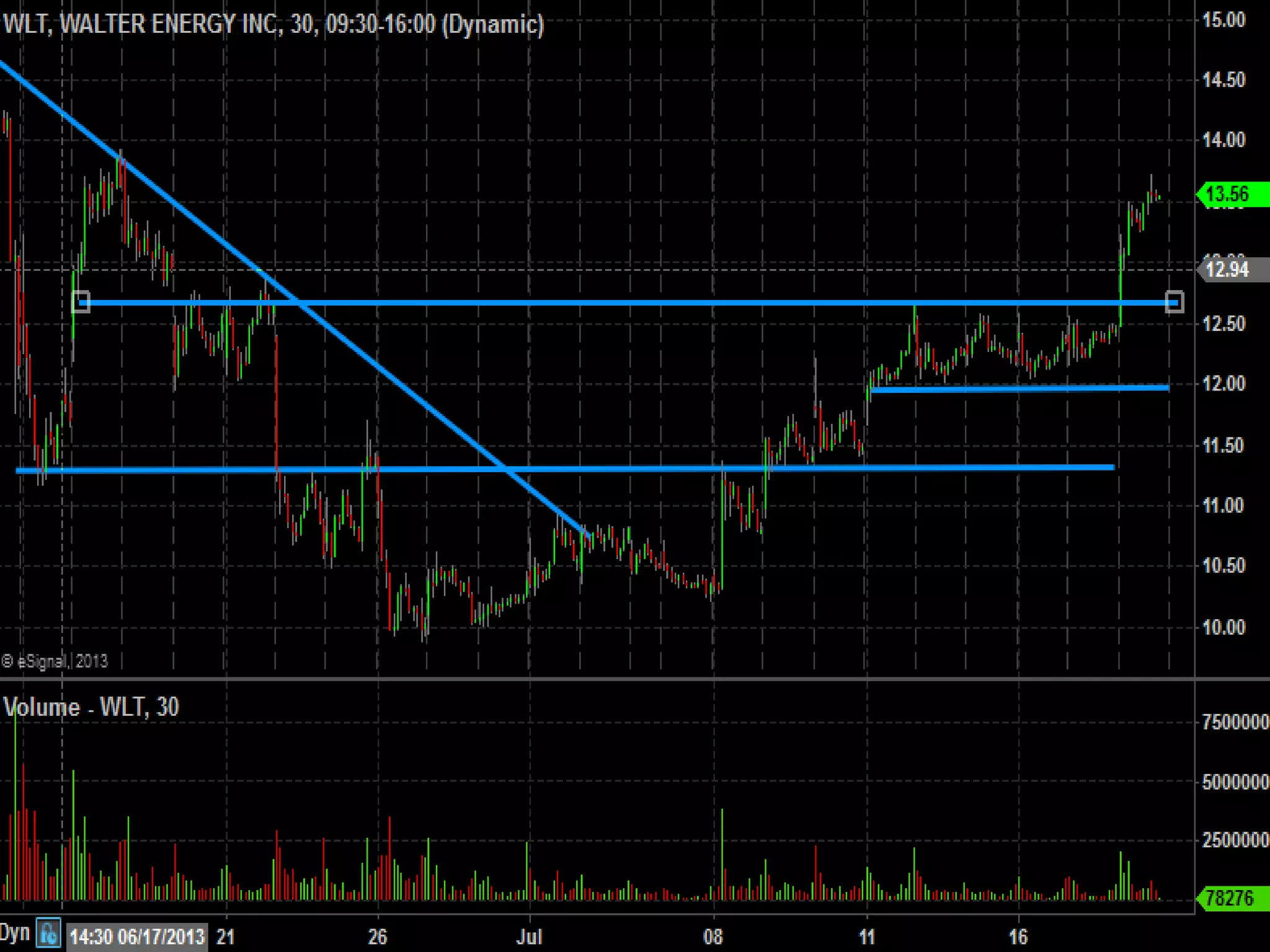
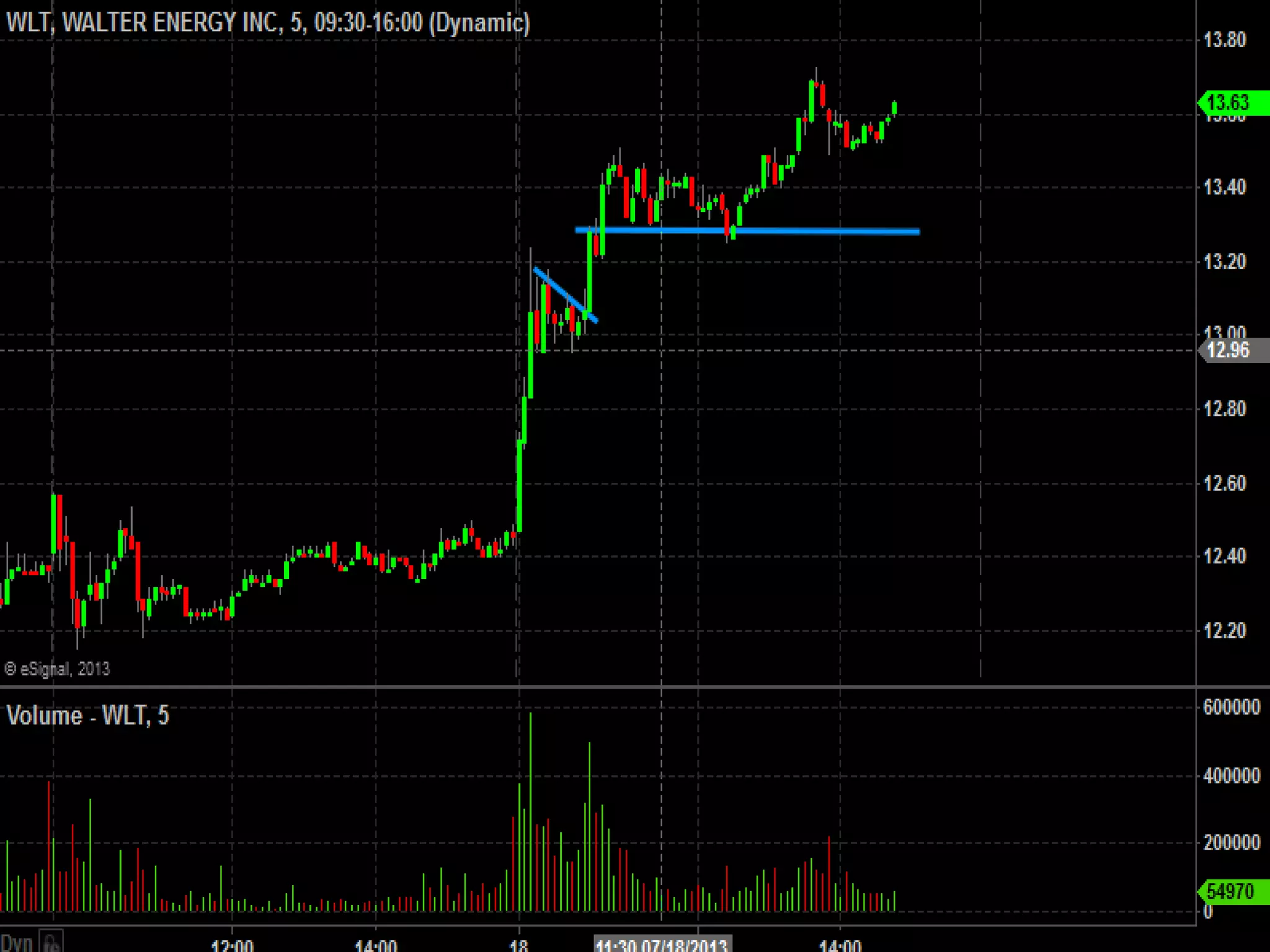
 Formed a recent base
 Broken recent most recent downtrend 2
weeks ago
Create a system to trade breakouts by Steve Spencer

Create a system to trade breakouts by Steve Spencer

  • 1.
  • 2.
    SMB TRAINING isNOT a Broker Dealer. SMB Training engages in trader education and training. SMB TRAINING offers a number of products and services, both electronical (over the internet through smbtraining.com) and in person. SMB TRAINING also offers web-based, interactive training courses on demand. The seminars given by SMB TRAINING are for educational purposes only. This information neither is, nor should be construed, as an offer, or a solicitation of an offer, to buy or sell securities. You shall be fully responsible for any investment decision you make, and such decisions will be based solely on your evaluation of your financial circumstances, investment objectives, risk tolerance, and liquidity needs. This material is being provided to you for educational purposes only. No information presented constitutes a recommendation by SMB TRAINING or its affiliates to buy, sell or hold any security, financial product or instrument discussed therein or to engage in any specific investment strategy. The content neither is, nor should be construed as, an offer, or a solicitation of an offer, to buy, sell, or hold any securities. You are fully responsible for any investment decisions you make. Such decisions should be based solely on your evaluation of your financial circumstances. Such decisions should be based solely on your evaluation of your financial circumstances, investment objectives, risk tolerance and liquidity needs. SMB Training and SMB Capital Management, LLC are separate but affiliated companies. No relevant positions Please note: Hypothetical computer simulated performance results are believed to be accurately presented. However, they are not guaranteed as to accuracy or completeness and are subject to change without any notice. Hypothetical or simulated performance results have certain inherent limitations. Unlike an actual performance record, simulated results do not represent actual trading. Since, also, the trades have not actually been executed; the results may have been under or over compensated for the impact, if any, of certain market factors such as liquidity, slippage and commissions. Simulated trading programs in general are also subject to the fact that they are designed with the benefit of hindsight. No representation is being made that any portfolio will, or is likely to achieve profits or losses similar to those shown. All investments and trades carry risks.”
  • 3.
     Price movesabove/below an important price  Intra-day breakouts ◦ Opening Range ◦ LOD/HOD ◦ Large Buyer/Larger Seller  Multi-day breakouts ◦ H/L of established ranges ◦ Intermediate Breakout vs. Full Breakout
  • 4.
    It trends untilthere is sufficient supply to end trend then it establishes a new trading range
  • 5.
     An imbalanceof supply/demand causes a breakout ◦ Either buyers or sellers become more aggressive as their isn’t sufficient supply to meet demand  Therefore a breakout should be a signal that a large move is about to occur
  • 6.
     There isn’ta sustained imbalance of supply  How do we spot these failures? TIME ◦ The simplest way to judge a failed breakout is a failure to hold above/below the breakout price for your trading time frame  Mispricing when the market opens ◦ These quickly correct ◦ A lack of liquidity in the first 15 minutes causes stocks to move through important levels until more orders enter ◦ This has become extremely prevalent in past decade as HFT are primary market makers and don’t want to risk capital right on market Open
  • 7.
     Stocks InPlay  I have 3 resources ◦ SMB Scanner ◦ StockTwits ◦ SMB Radar  I also have my “MoMo” list of stocks ◦ LNKD, NFLX, GMCR, FSLR, CREE
  • 8.
    SMB Radar –In Play SMB Scanner
  • 9.
    Let me offera few things for you to consider prior to committing to a breakout trade.
  • 10.
    1. How significantis the level that the stock is about to break through? The significance of the level is determined by how many market participants are focused on the level. 2. Is the breakout occurring from a base or has the stock been trending in the direction of the break for several days already? • A break that occurs after an extended move may offer less upside initially, but over time match the magnitude of a break from a base • A break from an extended move is far more likely to fail initially • A break from a base that has a surge in volume will follow through 80% of the time
  • 11.
    3. How muchroom is there to the next significant support/resistance area? If the next S/R area isn’t at least 3X the risk of entering trade than not particularly good opportunity 4. What type of market are we in? Uptrend/Downtrend/Range Uptrend is best market for sustained breakouts in either direction 5. What is the price action history of the stock on prior breakouts? • This is such an important factor as stocks will continue to have the same many of the same participants over time and traders like most human beings are repetitive in their behavior • What does the stock typically do on the first day of a breakout, second day, third day etc....
  • 12.
    6. How muchtime above/below a breakout level is sufficient to consider the breakout successful and thus worth committing additional risk? • For intraday breakouts right on the Open 2-3 minutes is sufficient • For intraday breakouts after the Open the minimum is 10 minutes • For swing trade breakouts look for a daily close through the level 7. How should the stock behave when it breaks through the support/resistance level? There should be a surge in trading activity
  • 13.
    8. How manytimes has the stock failed to break through the breakout level? If a stock has failed to breakout from a level after 3-4 attempts I become very skeptical  If I am skeptical I really want everything to line up just right to put on significant risk: aggressive buying, bids holding, good surge in volume  The flip side is if a S/R level has not broken many times and the stock has traded significant volume at the level traders would be trapped on a successful break
  • 14.
     #1 Momostock  Uptrend on every time frame  History of 10-20 point breakouts  Intermediate and full breakouts
  • 17.
     In a“momo sector” 3D printing  Several recent failed intermediate breakouts  Large multi-month consolidation
  • 20.
     Broken stock/Brokensector  Formed a recent base  Broken recent most recent downtrend 2 weeks ago