Jay Ann Toledo Pilar
Subject Teacher
• Contemporary- Current, now, the present.
• Art- Art is creation. Creating something
new, something original and something
different. It is doing something to change
a subject, to build. Art is life. It is creating
life on a material and making inanimate
objects to have life. To create art is to give
life (RAMON ORLINA-Glass Sculptor)
• B Group-
• A Group-
RUBRICS
CRITERIA PERCENTAGE
Content 50%
Creativity 50%
What is
Art?
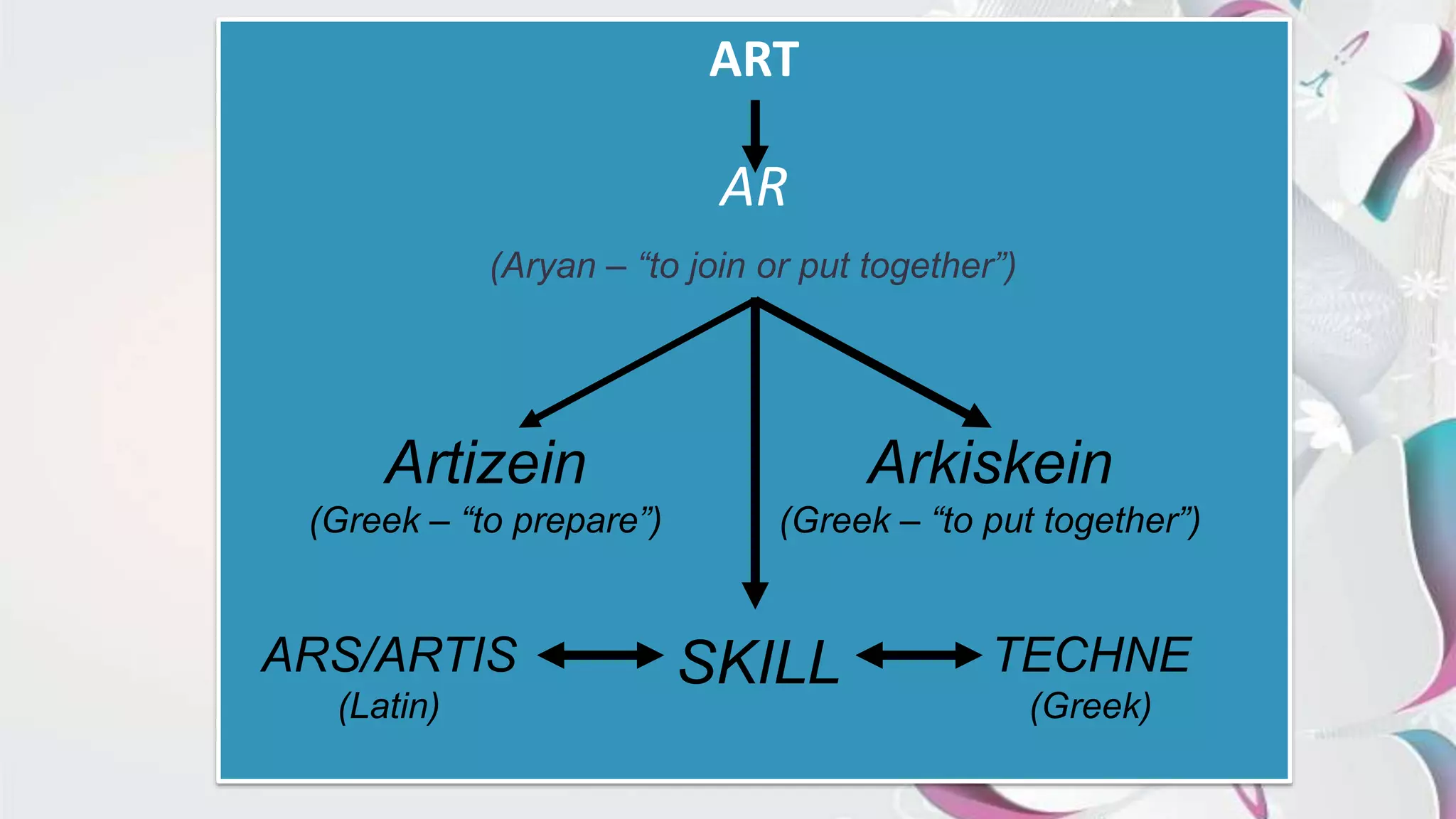
ART
AR
(Aryan – “to join or put together”)
Artizein
(Greek – “to prepare”)
Arkiskein
(Greek – “to put together”)
SKILLARS/ARTIS
(Latin)
TECHNE
(Greek)
Contemporary Art
•Produce by living artist and
contemporary to us.
•Contemporary Art may become
Traditional and Academic art at some
point.
GREEK
PERIOD
ROMAN
PERIOD
CHRISTIAN
PERIOD
RENAISSANCE
PERIOD
MODERN
PERIOD
ROMANTIC
PERIOD
CONTEMPORARY
PERIOD
Instruction: Activity for 3 mins
Group of male and female.
Fill up the timeline using the ART CARD.
GREEK
PERIOD
ROMAN
PERIOD
CHRISTIAN
PERIOD
RENAISSANCE
PERIOD
MODERN
PERIOD
ROMANTIC
PERIOD
CONTEMPORARY
PERIOD
T
I
M
E
L
I
N
E
Skill
Technique
Craftmanship
Genius and
Design
Fine Arts
Self Expression
New Art FormsARTS through the Ages
1050 – 31 BC 753-509 BC 350 -1450AD 1400-1500 1700 - 1800 1800 - 1900 20th – 21st Century
HISTORICAL OVERVIEW:
PHILIPPINE ART
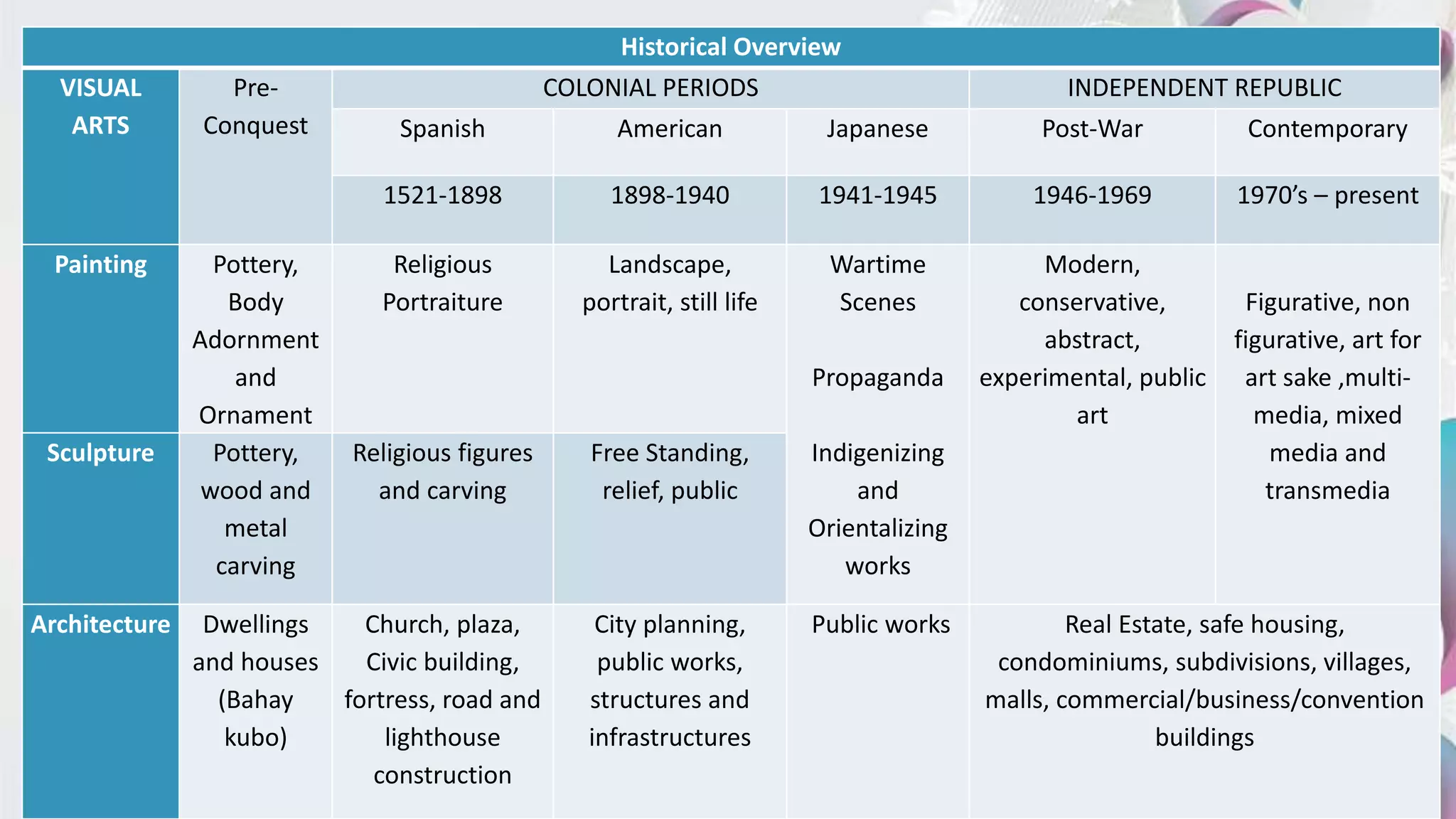
Historical Overview
VISUAL
ARTS
Pre-
Conquest
COLONIAL PERIODS INDEPENDENT REPUBLIC
Spanish American Japanese Post-War Contemporary
1521-1898 1898-1940 1941-1945 1946-1969 1970’s – present
Painting Pottery,
Body
Adornment
and
Ornament
Religious
Portraiture
Landscape,
portrait, still life
Wartime
Scenes
Propaganda
Indigenizing
and
Orientalizing
works
Modern,
conservative,
abstract,
experimental, public
art
Figurative, non
figurative, art for
art sake ,multi-
media, mixed
media and
transmedia
Sculpture Pottery,
wood and
metal
carving
Religious figures
and carving
Free Standing,
relief, public
Architecture Dwellings
and houses
(Bahay
kubo)
Church, plaza,
Civic building,
fortress, road and
lighthouse
construction
City planning,
public works,
structures and
infrastructures
Public works Real Estate, safe housing,
condominiums, subdivisions, villages,
malls, commercial/business/convention
buildings
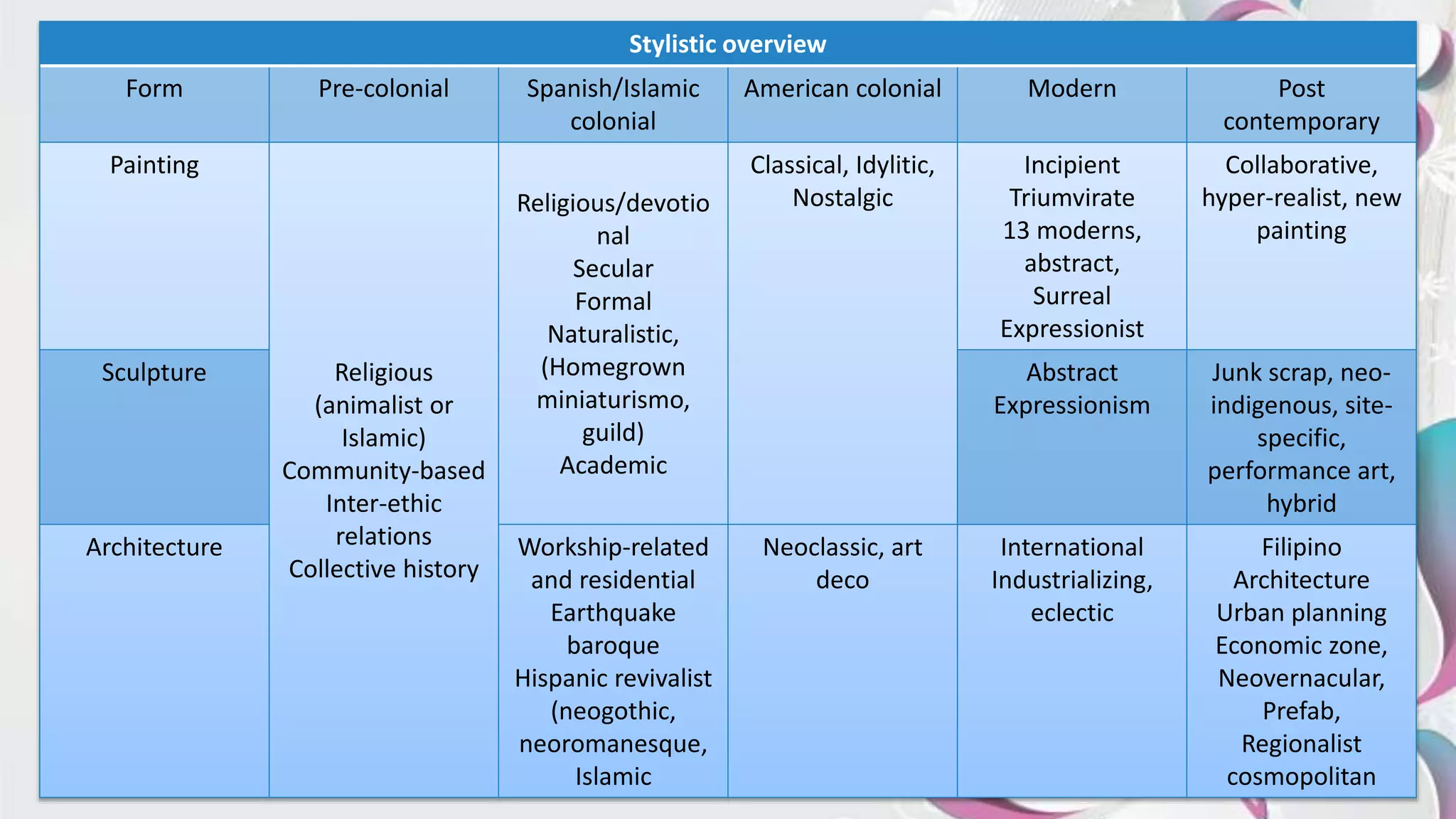
Stylistic overview
Form Pre-colonial Spanish/Islamic
colonial
American colonial Modern Post
contemporary
Painting
Religious
(animalist or
Islamic)
Community-based
Inter-ethic
relations
Collective history
Religious/devotio
nal
Secular
Formal
Naturalistic,
(Homegrown
miniaturismo,
guild)
Academic
Classical, Idylitic,
Nostalgic
Incipient
Triumvirate
13 moderns,
abstract,
Surreal
Expressionist
Collaborative,
hyper-realist, new
painting
Sculpture Abstract
Expressionism
Junk scrap, neo-
indigenous, site-
specific,
performance art,
hybrid
Architecture Workship-related
and residential
Earthquake
baroque
Hispanic revivalist
(neogothic,
neoromanesque,
Islamic
Neoclassic, art
deco
International
Industrializing,
eclectic
Filipino
Architecture
Urban planning
Economic zone,
Neovernacular,
Prefab,
Regionalist
cosmopolitan
Cultural Overview
Form Indigenous
southeast Asian
Islamic or
Philippine Muslim
Folk or lowland Fine or world-
based
Popular or urban
and mass based
Painting
Rituals and governance
Colonial and post
colonial
Museum-
circulated, artist
centered gallery
distributed
Mass produced
market oriented
Sculpture
Architect
Painting
The Philippine artist Fernando
Amorsolo (1892 -1972) was a
portraitist and painter of rural
landscapes. He is best known
for his craftsmanship and
mastery in the use of light.
Lavandera
Lavendera (1957)
Amorsolo's bather represent the
epitome of Philippine beauty.
The wet drapery on this young
woman is both revealing and
sensuous. The flower is symbolic
of the woman herself.
Sculpture
Sculpture in the Philippines mirrors its culture –
complex and diverse. The art in this area has been
influenced by many different cultures, the most
prevalent being the east Asian nations, such as
China. In Islamic traditions began to be shown in
these areas in the Philippine Islands near the 14th
century. However, its culture began to expand in
the recent decades from influences in the United
States and other western nations.
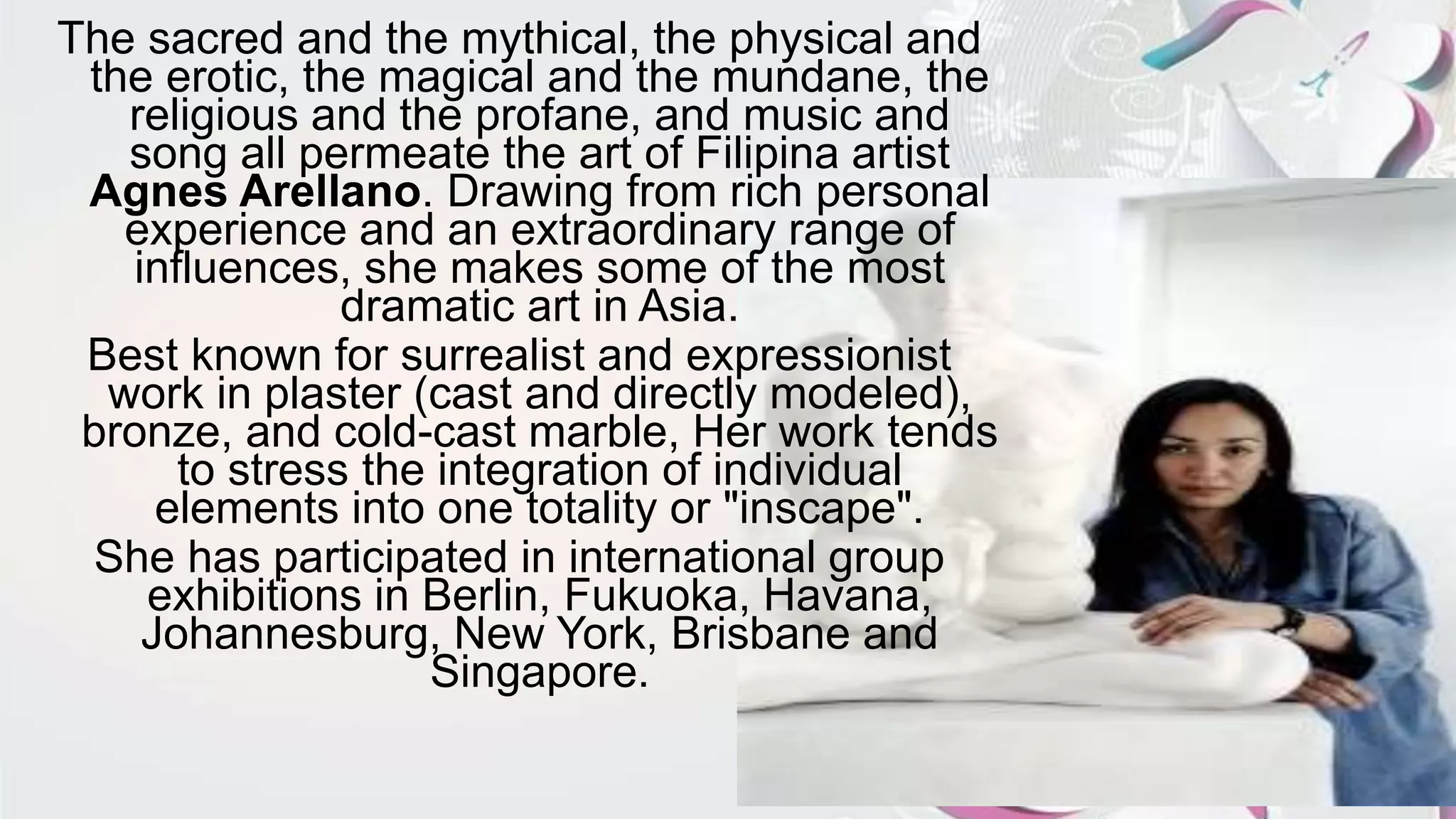
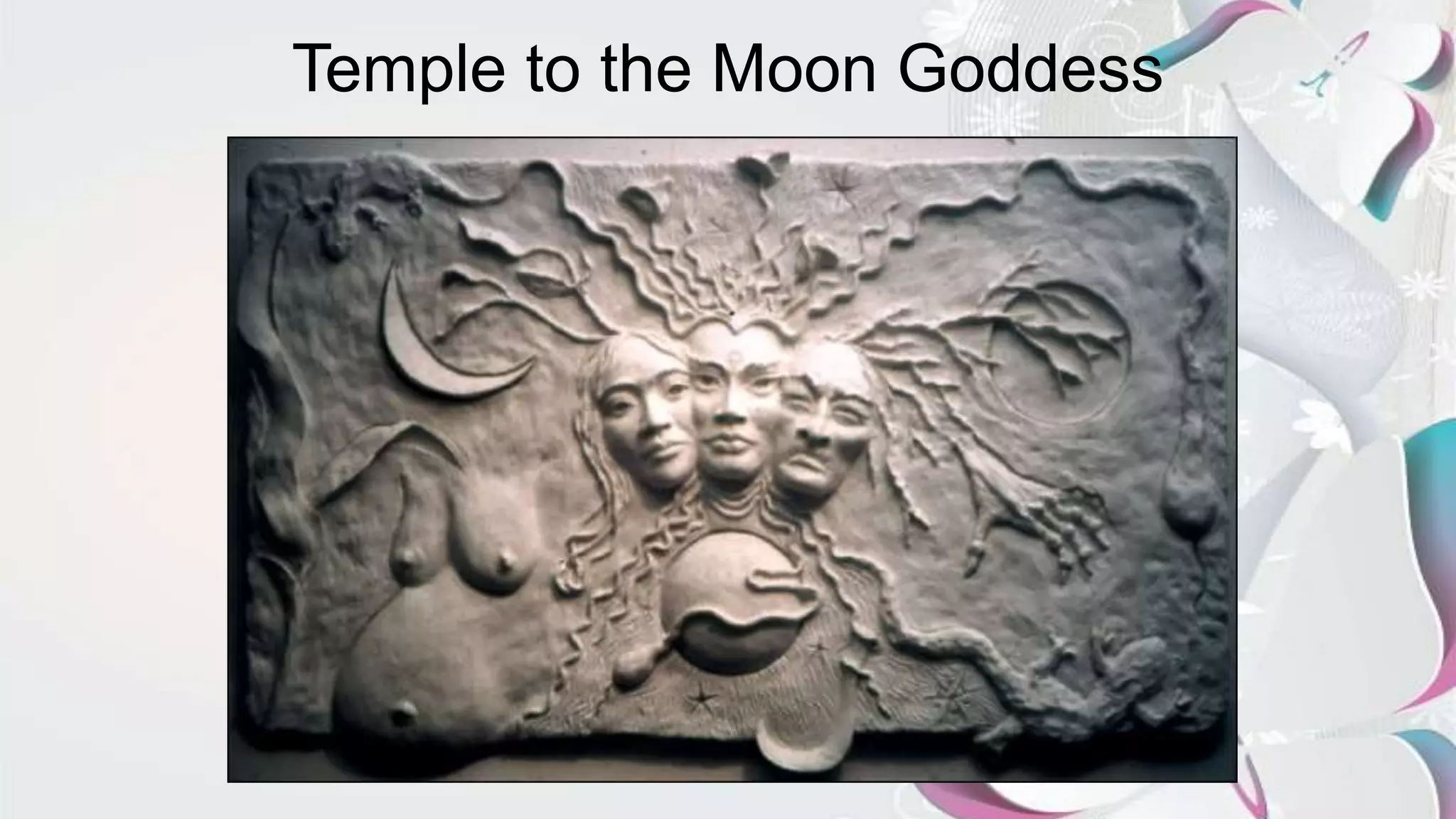
The sacred and the mythical, the physical and
the erotic, the magical and the mundane, the
religious and the profane, and music and
song all permeate the art of Filipina artist
Agnes Arellano. Drawing from rich personal
experience and an extraordinary range of
influences, she makes some of the most
dramatic art in Asia.
Best known for surrealist and expressionist
work in plaster (cast and directly modeled),
bronze, and cold-cast marble, Her work tends
to stress the integration of individual
elements into one totality or "inscape".
She has participated in international group
exhibitions in Berlin, Fukuoka, Havana,
Johannesburg, New York, Brisbane and
Singapore.
Temple to the Moon Goddess
Architecture
Tausug House: To the seafaring Tausug, Sulu, a house built on flat dry land or a
site that slopes towards Mecca is lucky. The one-room, gabled roof house is
known as “bay sinug” has a separate kitchen accessible through a side porch.
Ivatan House
Ivatans’ houses are up
made of limestone walls,
reeds, and cogon roofs
In your own opinion, what is your impression to the
given picture sculpture. (50 words)
“The privileged dwelling of beauty in
our universe is the HUMAN
PERSON with its perfect body,
marvelous memory, capacity for the
arts, its love, virtue and wisdom.
For what do we praise in bodies?
Nothing else but beauty.”
St. Augustine
Bishop and Doctor of the Church
Assignment
1. Give five(5) examples of Art in
Region 2.

Day 1. 6.12.16

  • 1.
    Jay Ann ToledoPilar Subject Teacher
  • 2.
    • Contemporary- Current,now, the present. • Art- Art is creation. Creating something new, something original and something different. It is doing something to change a subject, to build. Art is life. It is creating life on a material and making inanimate objects to have life. To create art is to give life (RAMON ORLINA-Glass Sculptor)
  • 3.
    • B Group- •A Group- RUBRICS CRITERIA PERCENTAGE Content 50% Creativity 50%
  • 4.
  • 5.
    ART AR (Aryan – “tojoin or put together”) Artizein (Greek – “to prepare”) Arkiskein (Greek – “to put together”) SKILLARS/ARTIS (Latin) TECHNE (Greek)
  • 8.
    Contemporary Art •Produce byliving artist and contemporary to us. •Contemporary Art may become Traditional and Academic art at some point.
  • 9.
  • 10.
    GREEK PERIOD ROMAN PERIOD CHRISTIAN PERIOD RENAISSANCE PERIOD MODERN PERIOD ROMANTIC PERIOD CONTEMPORARY PERIOD T I M E L I N E Skill Technique Craftmanship Genius and Design Fine Arts SelfExpression New Art FormsARTS through the Ages 1050 – 31 BC 753-509 BC 350 -1450AD 1400-1500 1700 - 1800 1800 - 1900 20th – 21st Century
  • 11.
  • 12.
    Historical Overview VISUAL ARTS Pre- Conquest COLONIAL PERIODSINDEPENDENT REPUBLIC Spanish American Japanese Post-War Contemporary 1521-1898 1898-1940 1941-1945 1946-1969 1970’s – present Painting Pottery, Body Adornment and Ornament Religious Portraiture Landscape, portrait, still life Wartime Scenes Propaganda Indigenizing and Orientalizing works Modern, conservative, abstract, experimental, public art Figurative, non figurative, art for art sake ,multi- media, mixed media and transmedia Sculpture Pottery, wood and metal carving Religious figures and carving Free Standing, relief, public Architecture Dwellings and houses (Bahay kubo) Church, plaza, Civic building, fortress, road and lighthouse construction City planning, public works, structures and infrastructures Public works Real Estate, safe housing, condominiums, subdivisions, villages, malls, commercial/business/convention buildings
  • 13.
    Stylistic overview Form Pre-colonialSpanish/Islamic colonial American colonial Modern Post contemporary Painting Religious (animalist or Islamic) Community-based Inter-ethic relations Collective history Religious/devotio nal Secular Formal Naturalistic, (Homegrown miniaturismo, guild) Academic Classical, Idylitic, Nostalgic Incipient Triumvirate 13 moderns, abstract, Surreal Expressionist Collaborative, hyper-realist, new painting Sculpture Abstract Expressionism Junk scrap, neo- indigenous, site- specific, performance art, hybrid Architecture Workship-related and residential Earthquake baroque Hispanic revivalist (neogothic, neoromanesque, Islamic Neoclassic, art deco International Industrializing, eclectic Filipino Architecture Urban planning Economic zone, Neovernacular, Prefab, Regionalist cosmopolitan
  • 14.
    Cultural Overview Form Indigenous southeastAsian Islamic or Philippine Muslim Folk or lowland Fine or world- based Popular or urban and mass based Painting Rituals and governance Colonial and post colonial Museum- circulated, artist centered gallery distributed Mass produced market oriented Sculpture Architect
  • 15.
  • 17.
    The Philippine artistFernando Amorsolo (1892 -1972) was a portraitist and painter of rural landscapes. He is best known for his craftsmanship and mastery in the use of light.
  • 18.
  • 19.
    Lavendera (1957) Amorsolo's batherrepresent the epitome of Philippine beauty. The wet drapery on this young woman is both revealing and sensuous. The flower is symbolic of the woman herself.
  • 20.
  • 21.
    Sculpture in thePhilippines mirrors its culture – complex and diverse. The art in this area has been influenced by many different cultures, the most prevalent being the east Asian nations, such as China. In Islamic traditions began to be shown in these areas in the Philippine Islands near the 14th century. However, its culture began to expand in the recent decades from influences in the United States and other western nations.
  • 22.
    The sacred andthe mythical, the physical and the erotic, the magical and the mundane, the religious and the profane, and music and song all permeate the art of Filipina artist Agnes Arellano. Drawing from rich personal experience and an extraordinary range of influences, she makes some of the most dramatic art in Asia. Best known for surrealist and expressionist work in plaster (cast and directly modeled), bronze, and cold-cast marble, Her work tends to stress the integration of individual elements into one totality or "inscape". She has participated in international group exhibitions in Berlin, Fukuoka, Havana, Johannesburg, New York, Brisbane and Singapore.
  • 23.
    Temple to theMoon Goddess
  • 24.
  • 25.
    Tausug House: Tothe seafaring Tausug, Sulu, a house built on flat dry land or a site that slopes towards Mecca is lucky. The one-room, gabled roof house is known as “bay sinug” has a separate kitchen accessible through a side porch.
  • 26.
    Ivatan House Ivatans’ housesare up made of limestone walls, reeds, and cogon roofs
  • 27.
    In your ownopinion, what is your impression to the given picture sculpture. (50 words)
  • 28.
    “The privileged dwellingof beauty in our universe is the HUMAN PERSON with its perfect body, marvelous memory, capacity for the arts, its love, virtue and wisdom. For what do we praise in bodies? Nothing else but beauty.” St. Augustine Bishop and Doctor of the Church
  • 29.
    Assignment 1. Give five(5)examples of Art in Region 2.