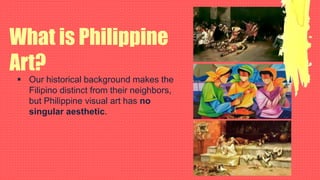
Philippine art has evolved over time through different periods and movements. [1] Pre-colonial art featured traditional forms like pottery, carvings, and textiles that incorporated local symbols and designs. [2] Under Spanish rule from the 16th-19th centuries, religious and royal art in a Baroque or Neoclassical style became prominent. [3] During the American period in the early 20th century, art nouveau, art deco, and genres like landscapes were popular. Key art movements like expressionism, cubism, and social realism reflected the times. Notable artists played roles in developing Philippine identity and styles through their works.