Lethal Drug Interactions
And How to Avoid Them
June 24th
, 2015
Dave Juurlink
Toronto
@davidjuurlink
Frontmatter
 Drug-drug interaction (DDI):
 Effect of one drug altered by use of another
 Two types
 Pharmacokinetic
 One drug alters the level of another time ->
Drug B
[DrugA]
Frontmatter
 Drug-drug interaction (DDI):
 Effect of one drug altered by use of another
 Two types
 Pharmacokinetic
 One drug alters the level of another
 Pharmacodynamic
 No change in drug levels
time ->
time ->[DrugA]
Drug B
Drug B
[DrugA]
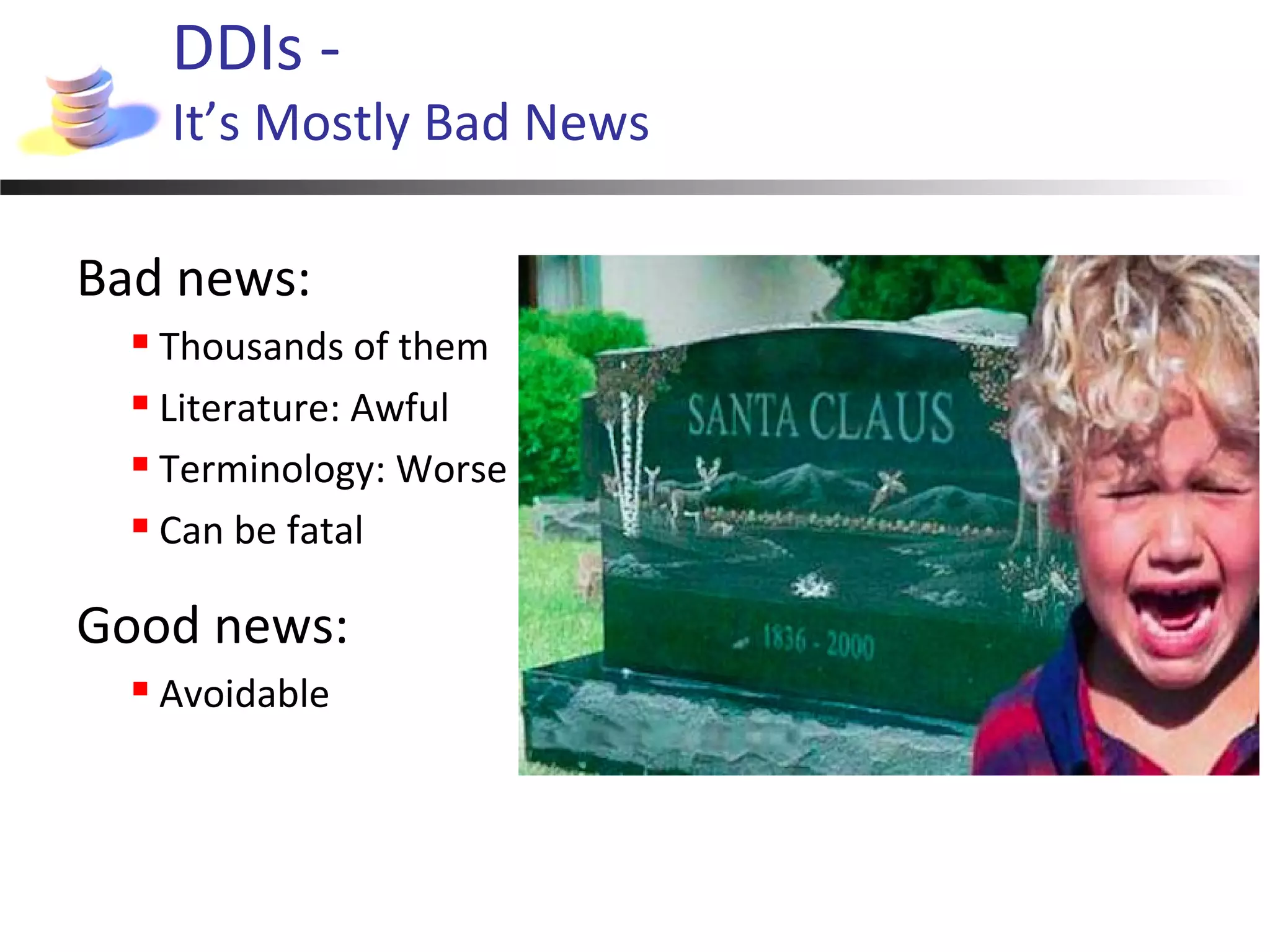
DDIs -
It’s Mostly Bad News
Bad news:
 Thousands of them
 Literature: Awful
 Terminology: Worse
 Can be fatal
Good news:
 Avoidable
Case 1
 72 y.o. woman
 Type 2 DM, hypertension
 Metformin, glimepiride, chlorthalidone, ramipril
 Symptoms of UTI
 Rx: SMX/TMP (Bactrim, Septra)

One DS tablet B.I.D. x 7 days
Case 1
 Day 5:
 Confused
 GTC seizure
 EMS: Capillary glucose low
 What happened?
The Cytochrome (CYP) P450 System
 A group of enzymes
 What they do:
 Modify some drugs

Substrates
 Can be turned off

Inhibitors
 Can be revved up

Inducers
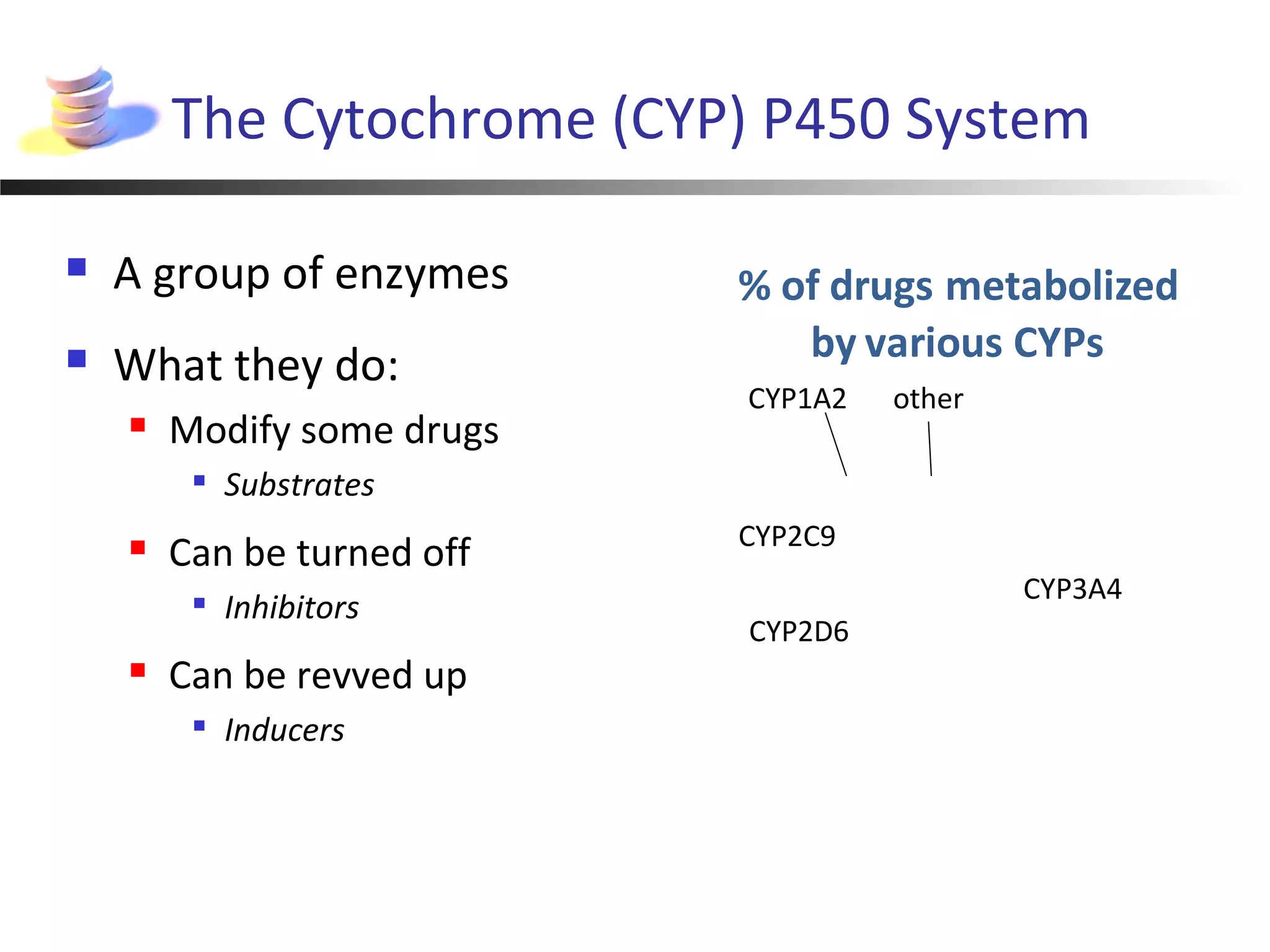
% of drugs metabolized
by various CYPs
CYP3A4
CYP2D6
CYP2C9
CYP1A2 other
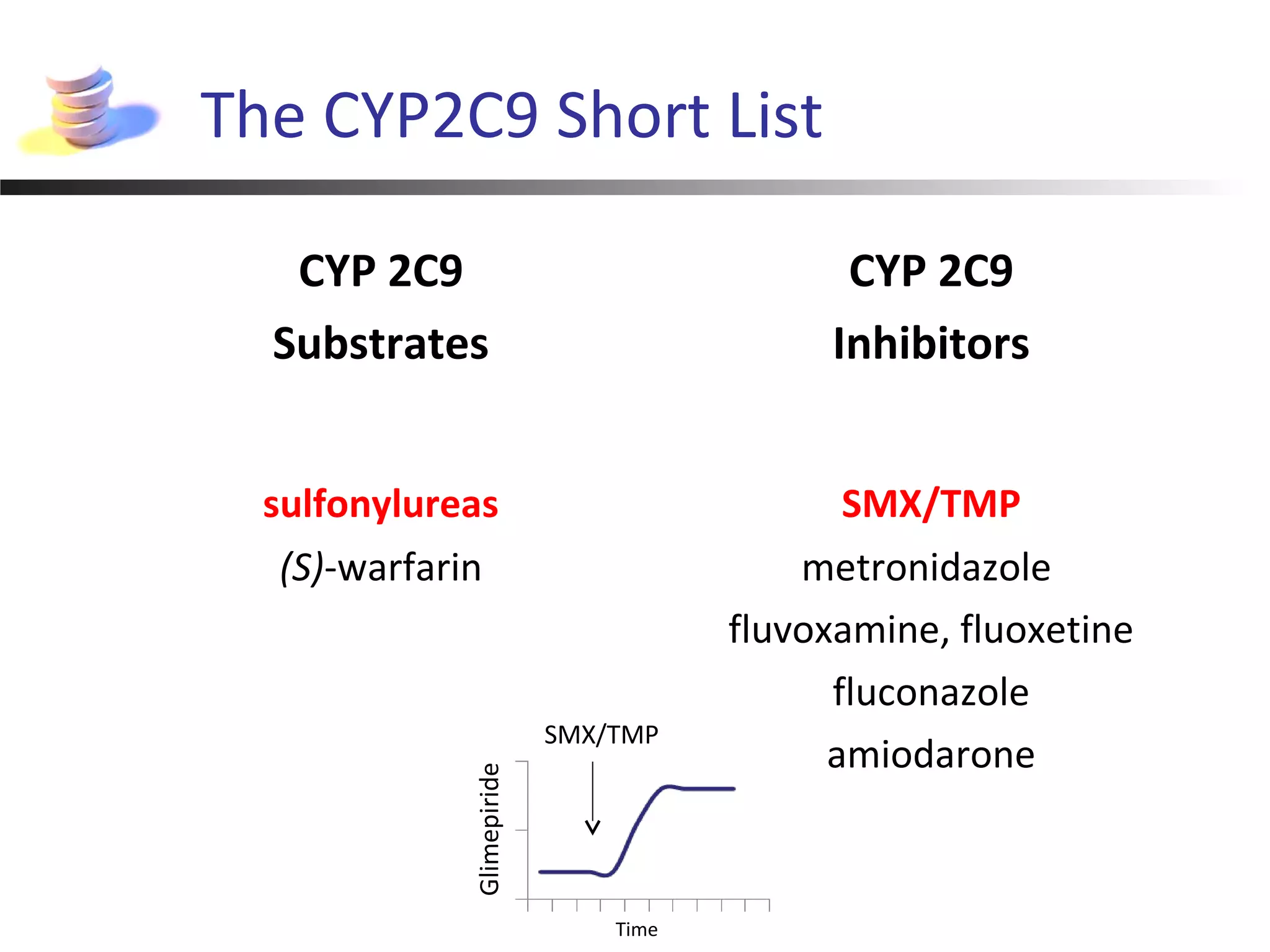
The CYP2C9 Short List
CYP 2C9
Substrates
CYP 2C9
Inhibitors
sulfonylureas SMX/TMP
(S)-warfarin metronidazole
fluvoxamine, fluoxetine
fluconazole
amiodarone
Glimepiride
SMX/TMP
Time
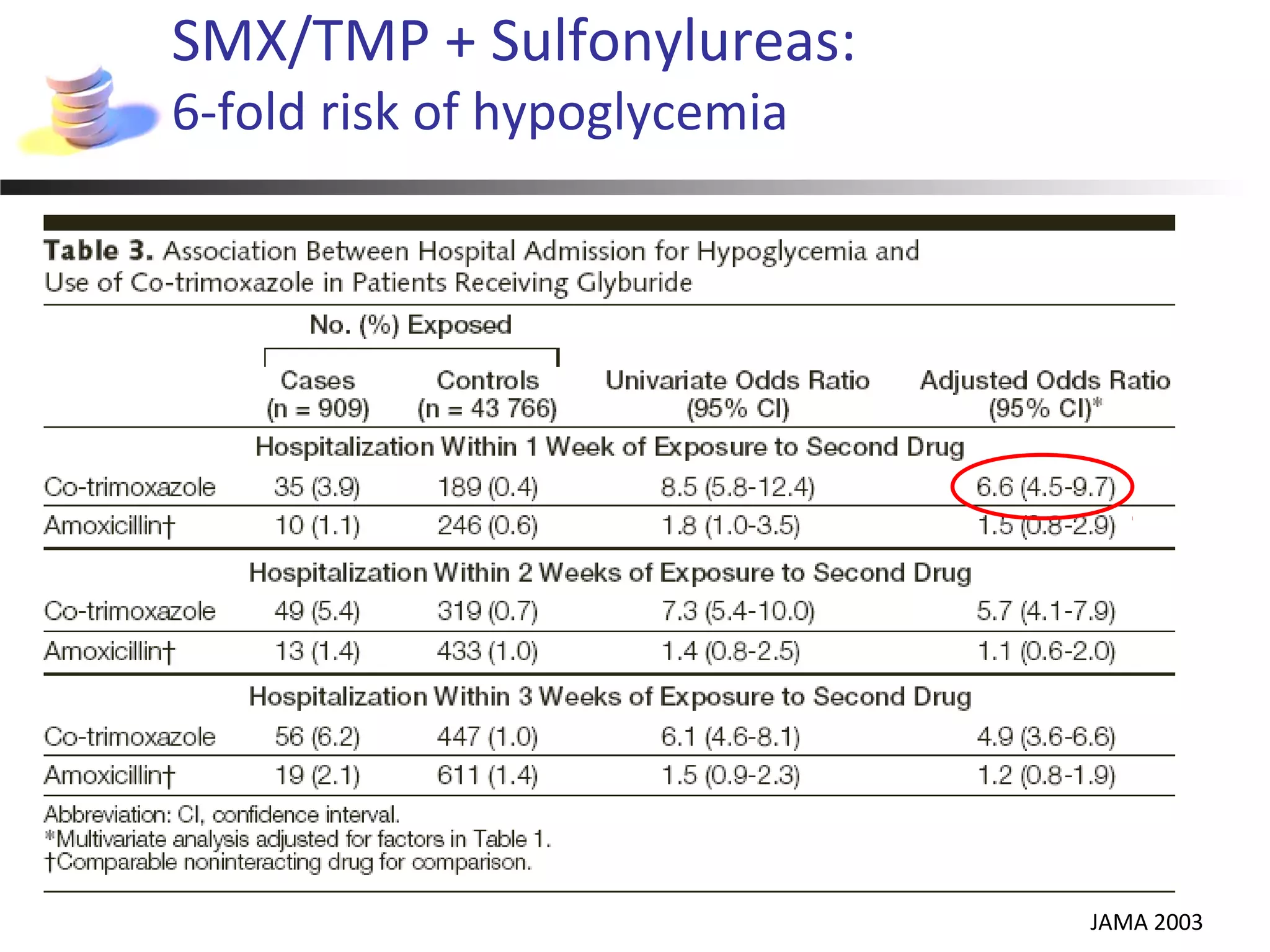
SMX/TMP + Sulfonylureas:
6-fold risk of hypoglycemia
JAMA 2003
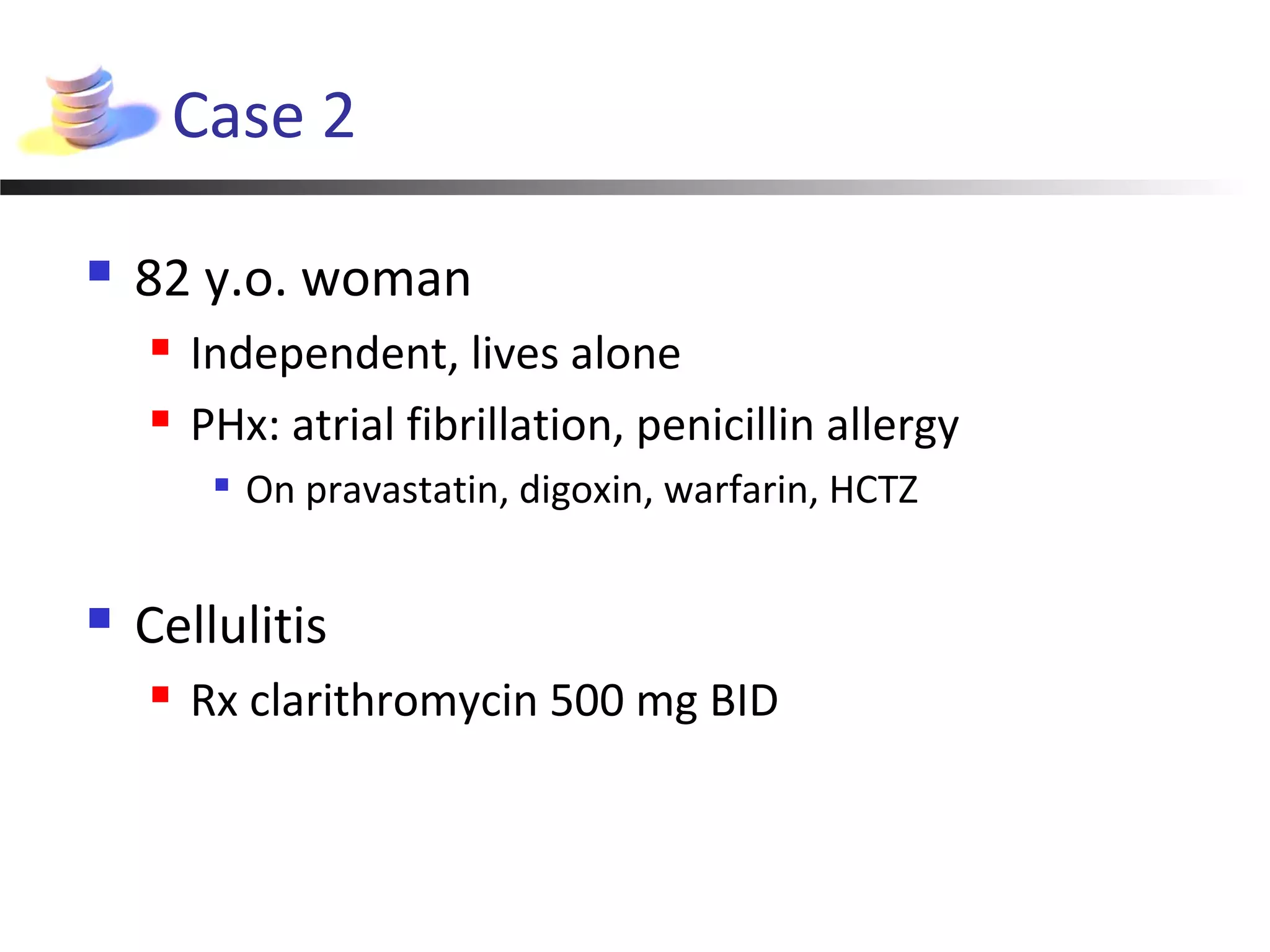
Case 2
 82 y.o. woman
 Independent, lives alone
 PHx: atrial fibrillation, penicillin allergy

On pravastatin, digoxin, warfarin, HCTZ
 Cellulitis
 Rx clarithromycin 500 mg BID
[digoxin] 5.1 nmol/L (3.6 ng/mL)
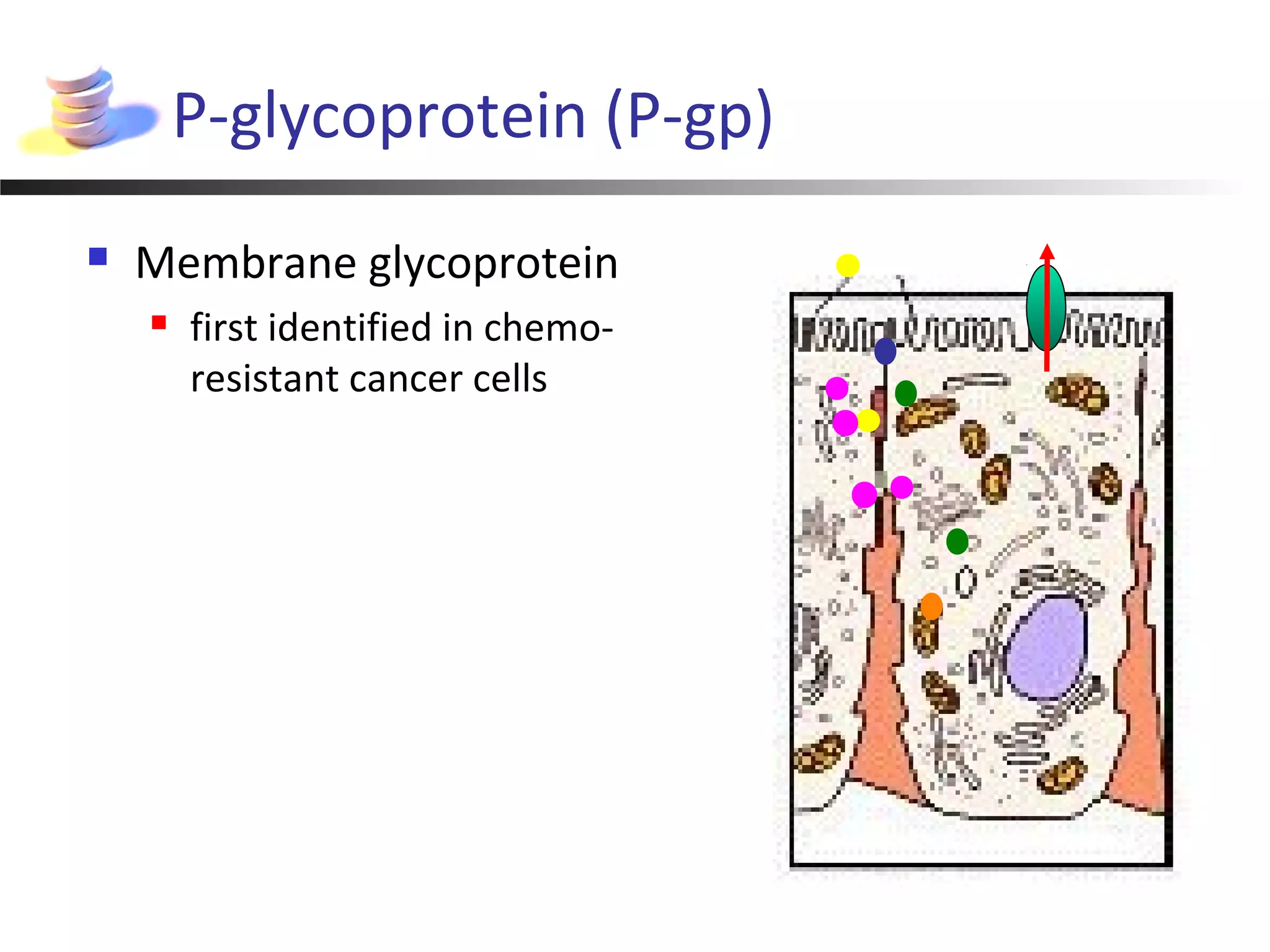
P-glycoprotein (P-gp)
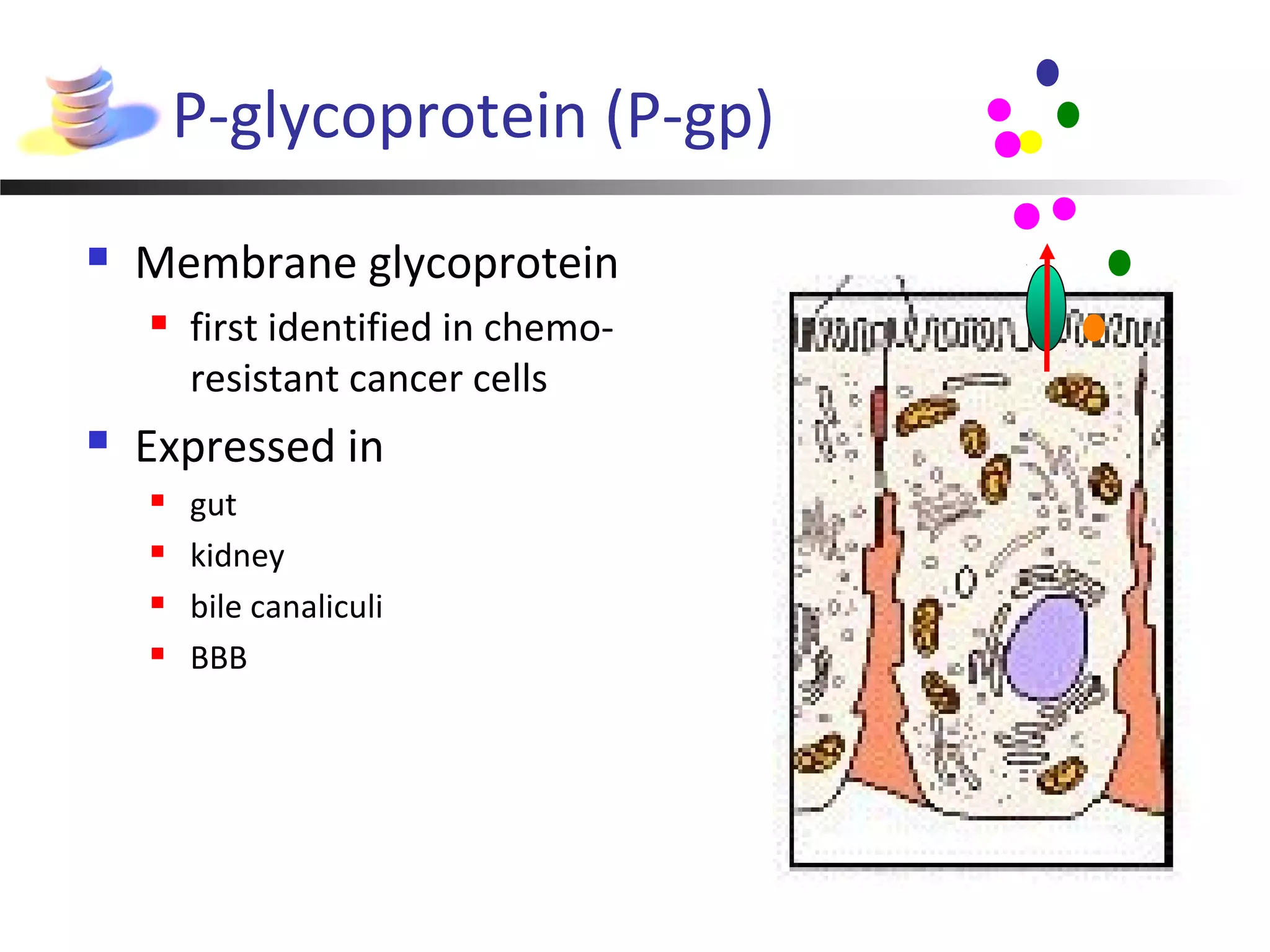
 Membrane glycoprotein
 first identified in chemo-
resistant cancer cells
P-glycoprotein (P-gp)
 Membrane glycoprotein
 first identified in chemo-
resistant cancer cells
 Expressed in
 gut
 kidney
 bile canaliculi
 BBB
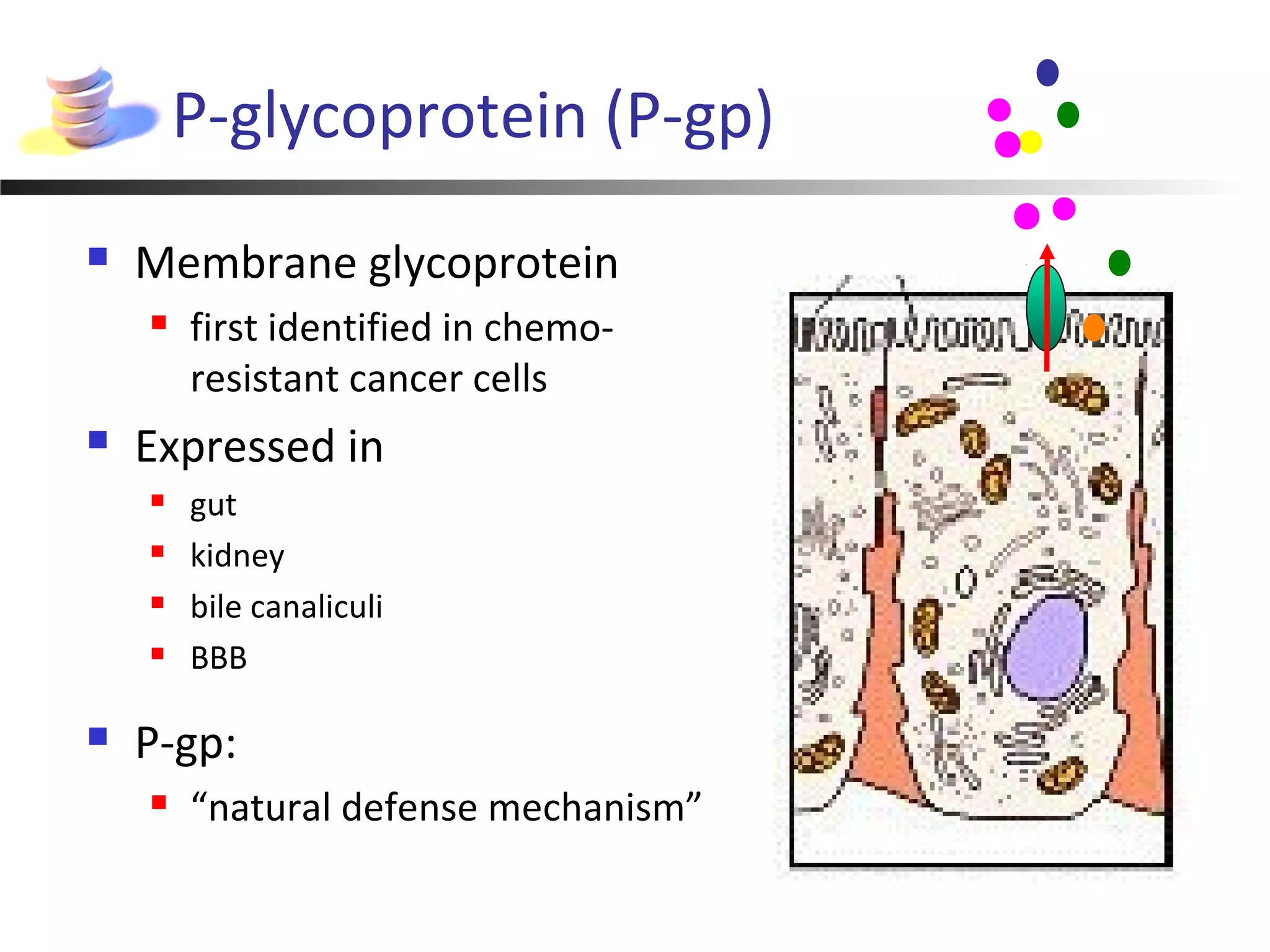
P-glycoprotein (P-gp)
 Membrane glycoprotein
 first identified in chemo-
resistant cancer cells
 Expressed in
 gut
 kidney
 bile canaliculi
 BBB
 P-gp:
 “natural defense mechanism”
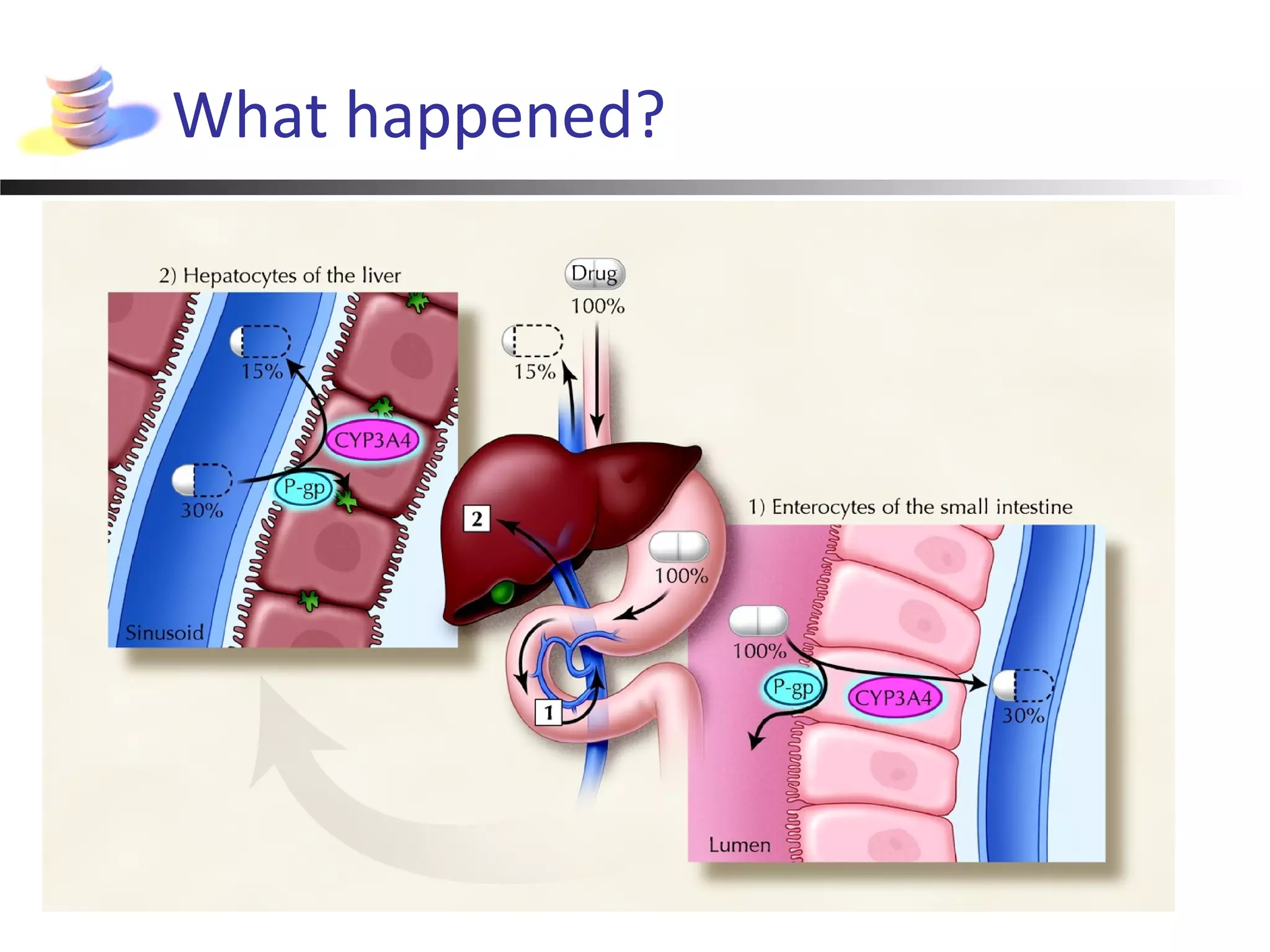
What happened?
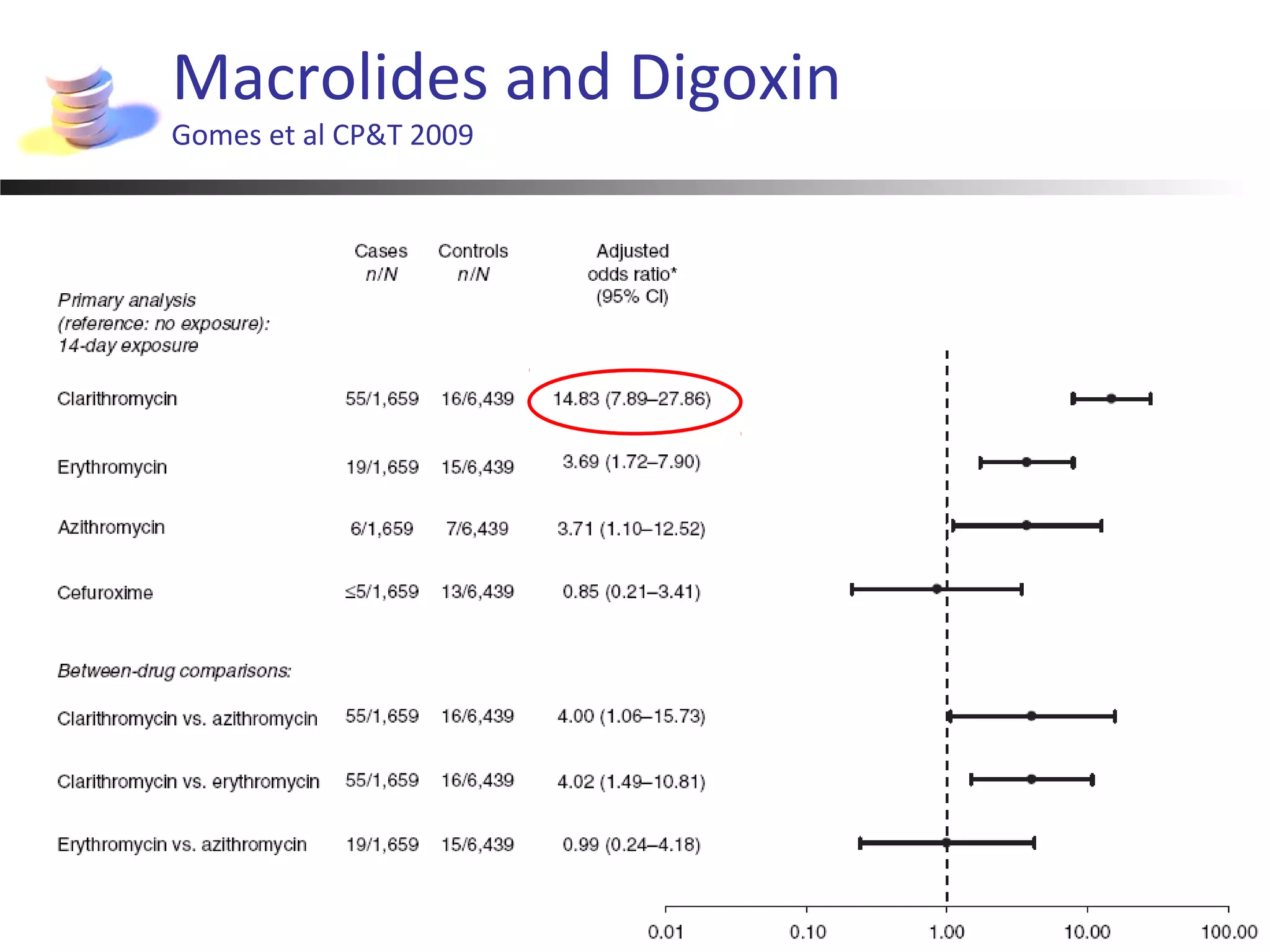
Macrolides and Digoxin
Gomes et al CP&T 2009
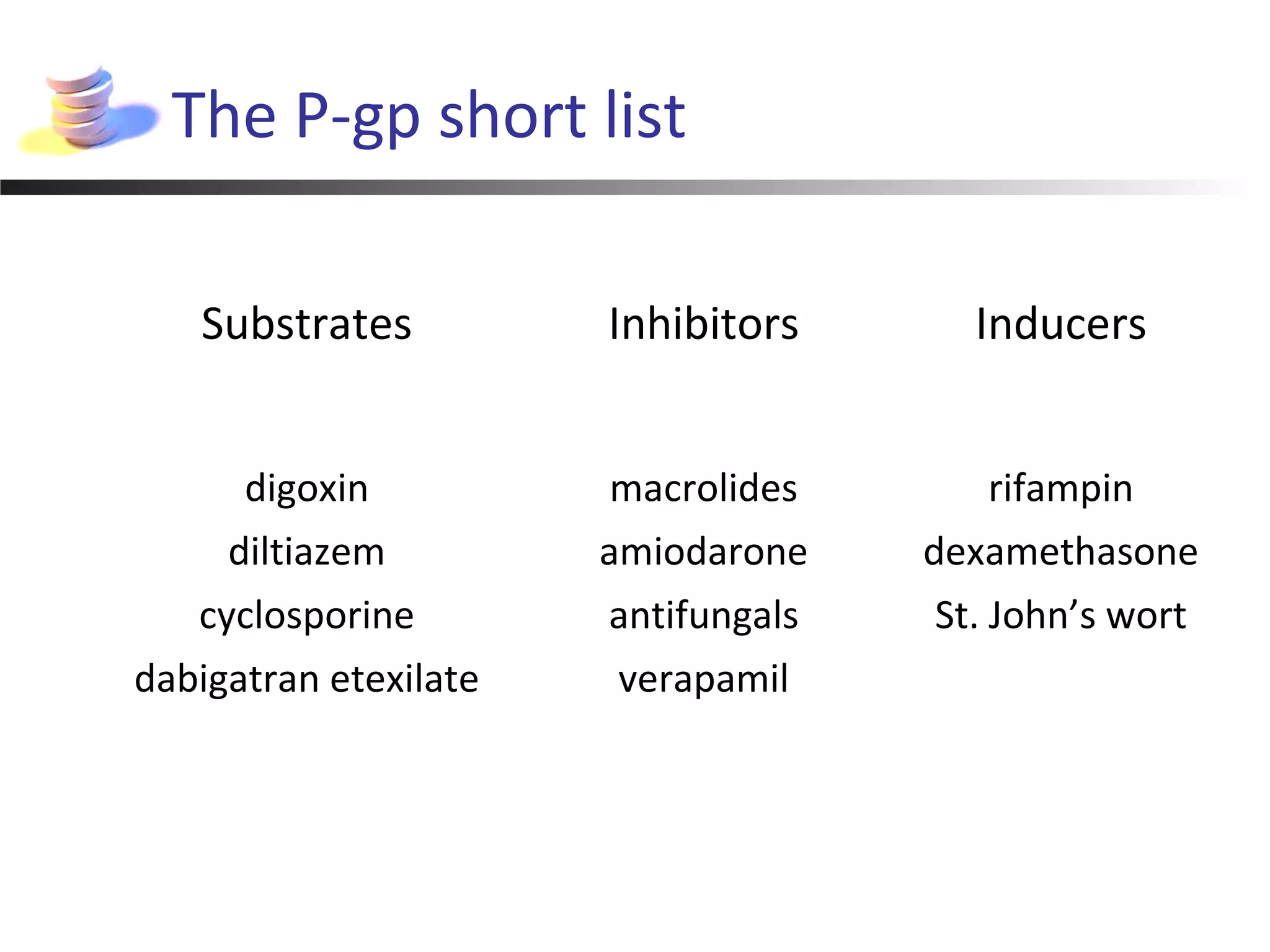
The P-gp short list
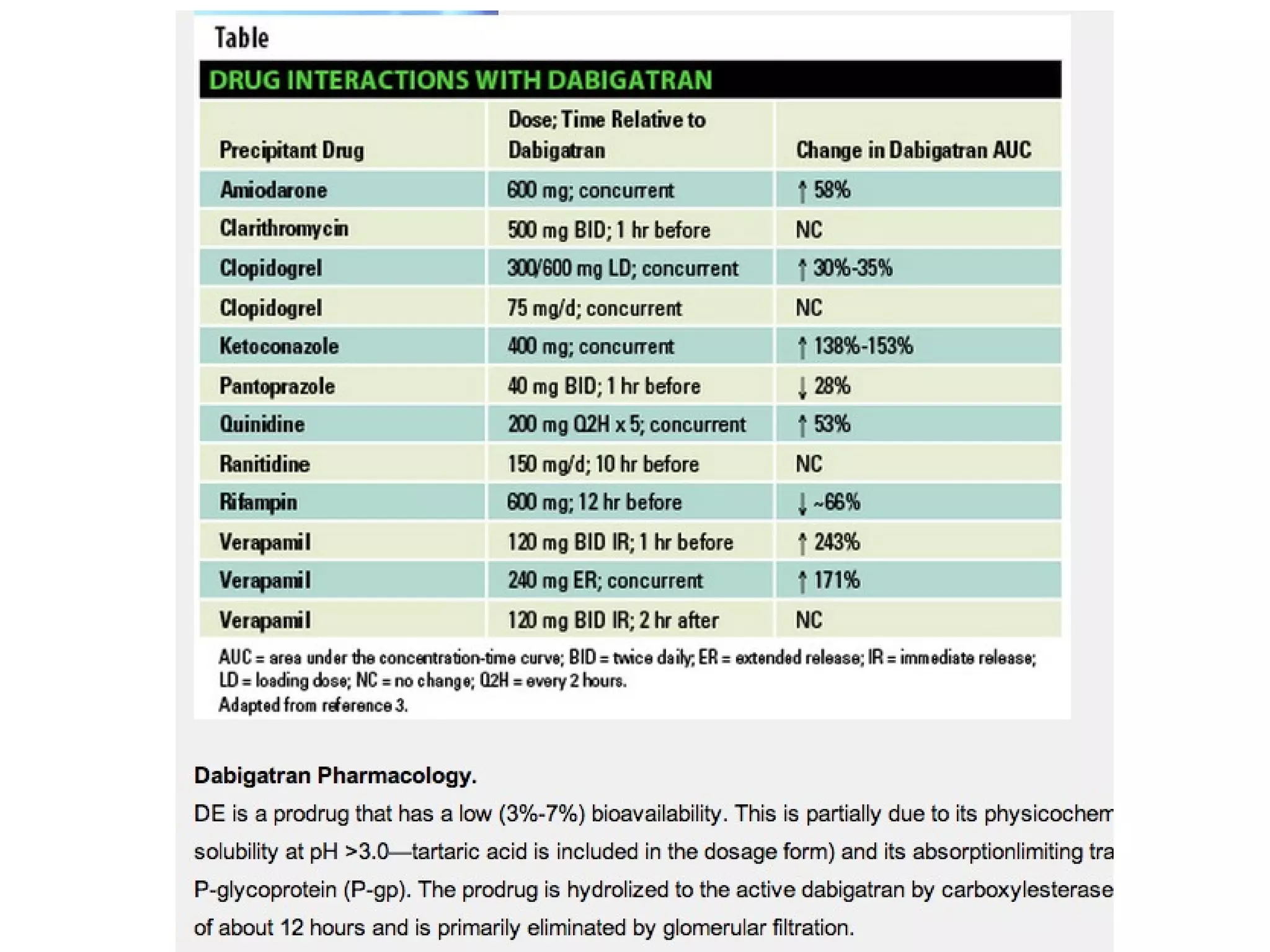
Substrates Inhibitors Inducers
digoxin macrolides rifampin
diltiazem amiodarone dexamethasone
cyclosporine antifungals St. John’s wort
dabigatran etexilate verapamil
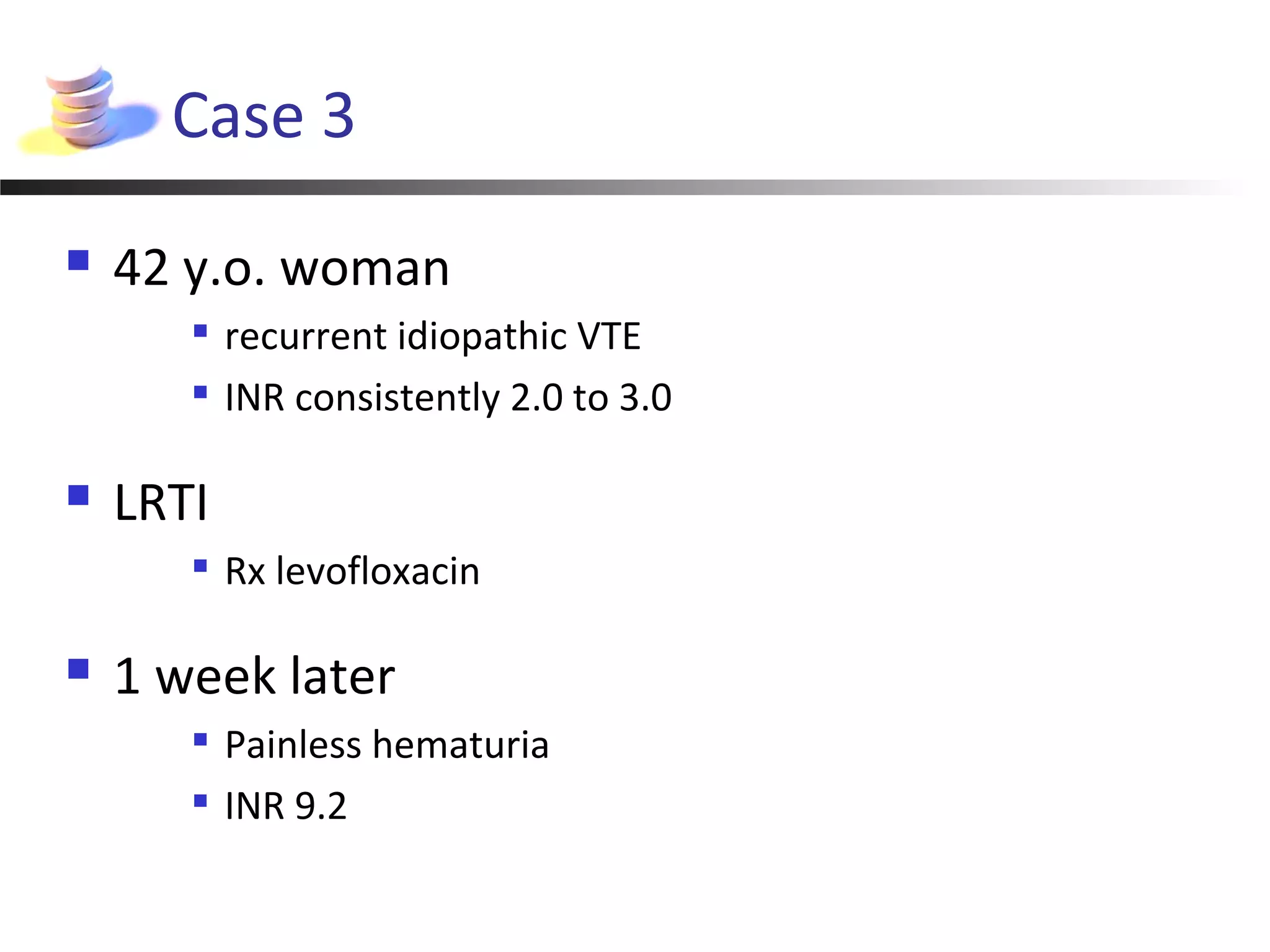
Case 3
 42 y.o. woman

recurrent idiopathic VTE

INR consistently 2.0 to 3.0
 LRTI

Rx levofloxacin
 1 week later

Painless hematuria

INR 9.2
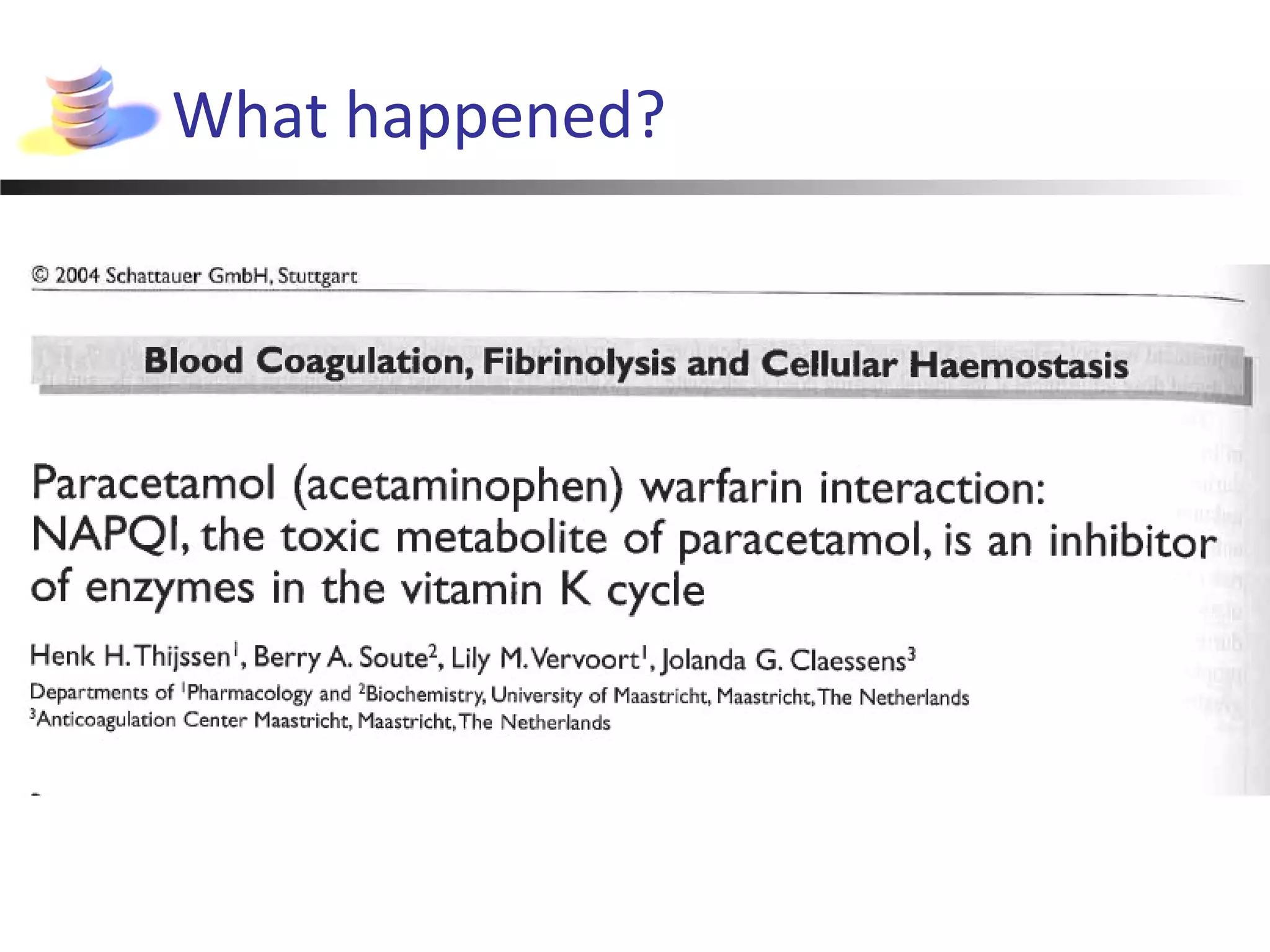
What happened?
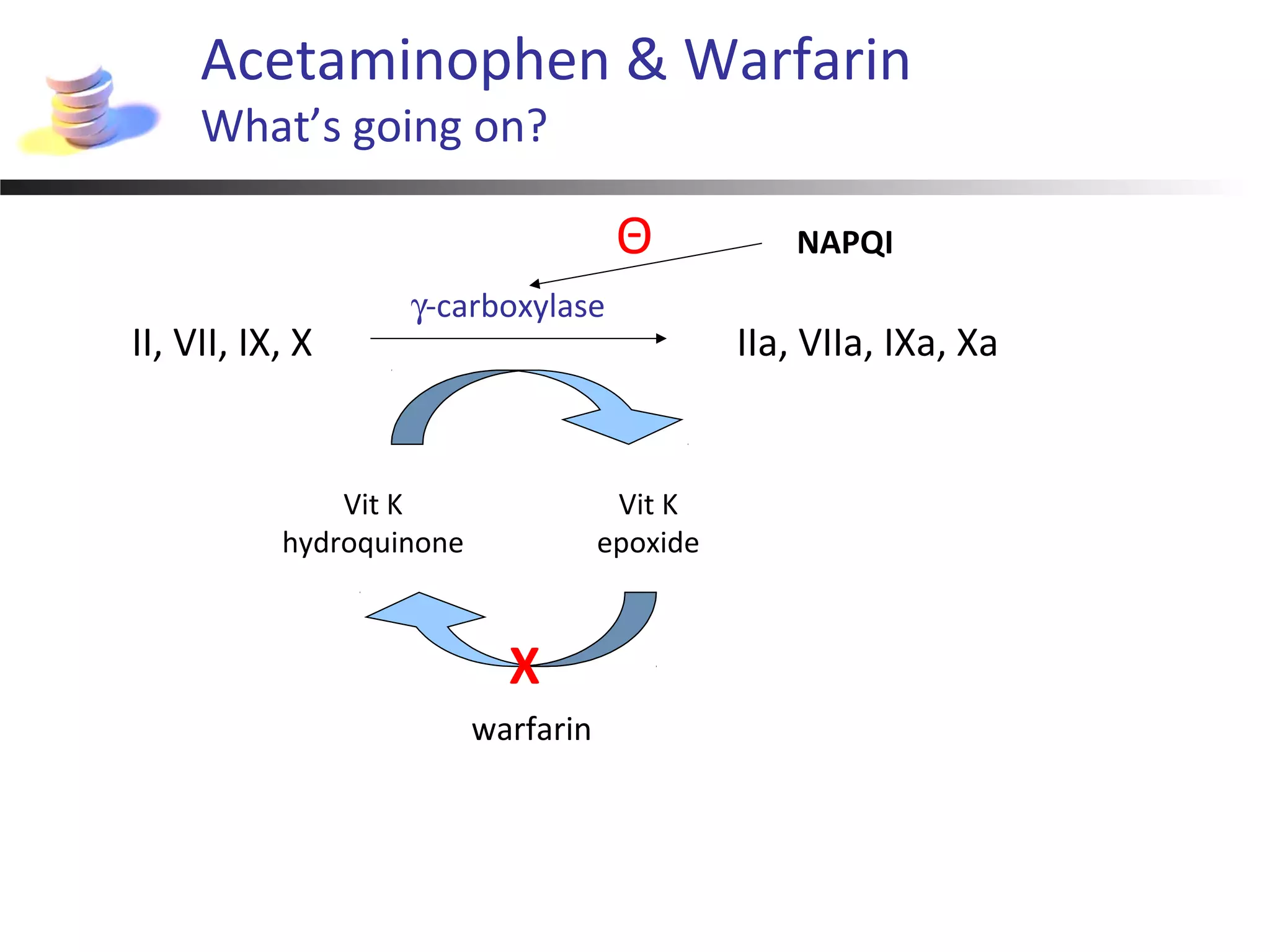
Acetaminophen and Warfarin?
Acetaminophen & Warfarin
What’s going on?
II, VII, IX, X IIa, VIIa, IXa, Xa
γ-carboxylase
Vit K
hydroquinone
Vit K
epoxide
warfarin
X
NAPQIΘ
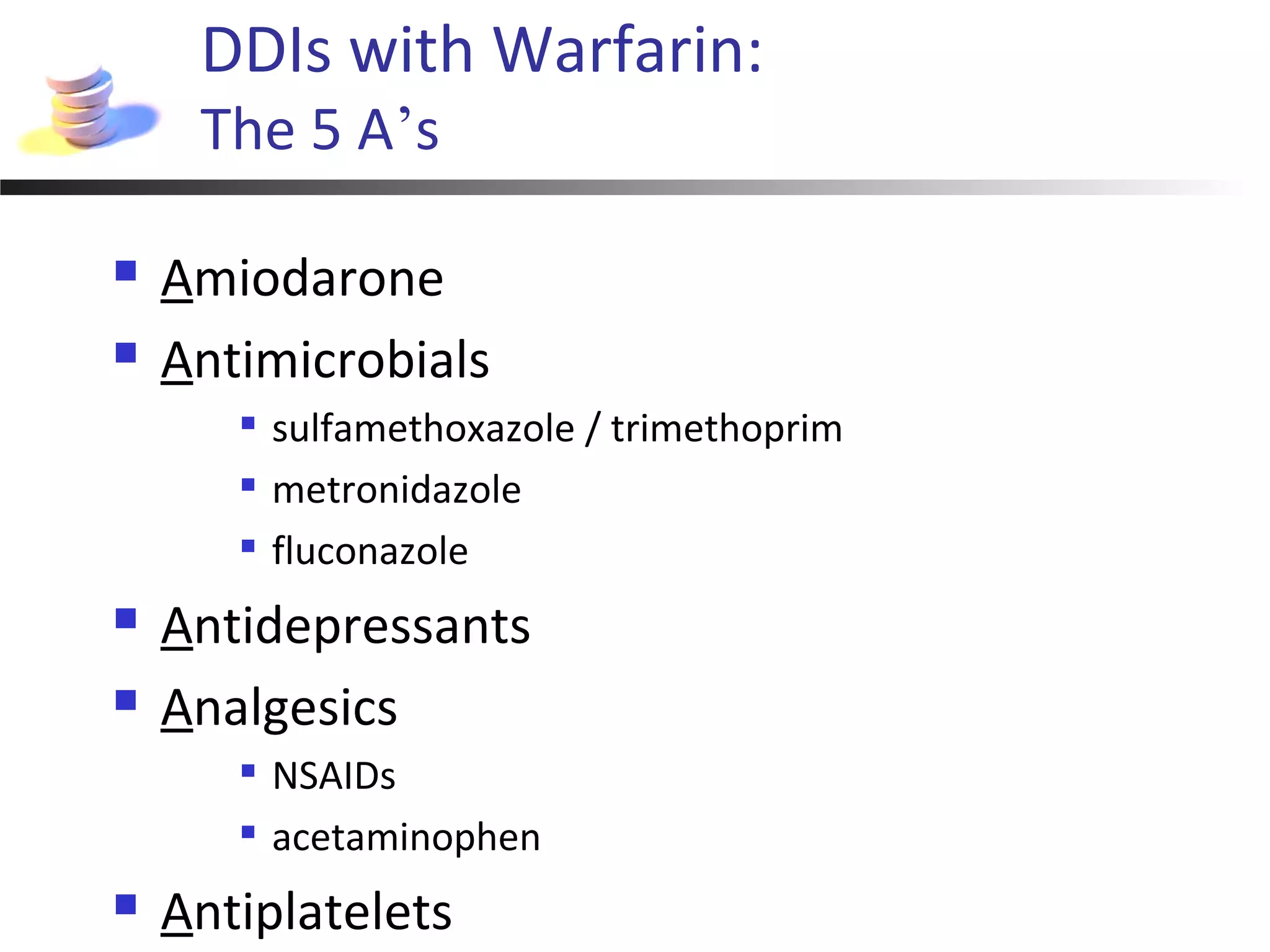
DDIs with Warfarin:
The 5 A’s
 Amiodarone
 Antimicrobials

sulfamethoxazole / trimethoprim

metronidazole

fluconazole
 Antidepressants
 Analgesics

NSAIDs

acetaminophen
 Antiplatelets
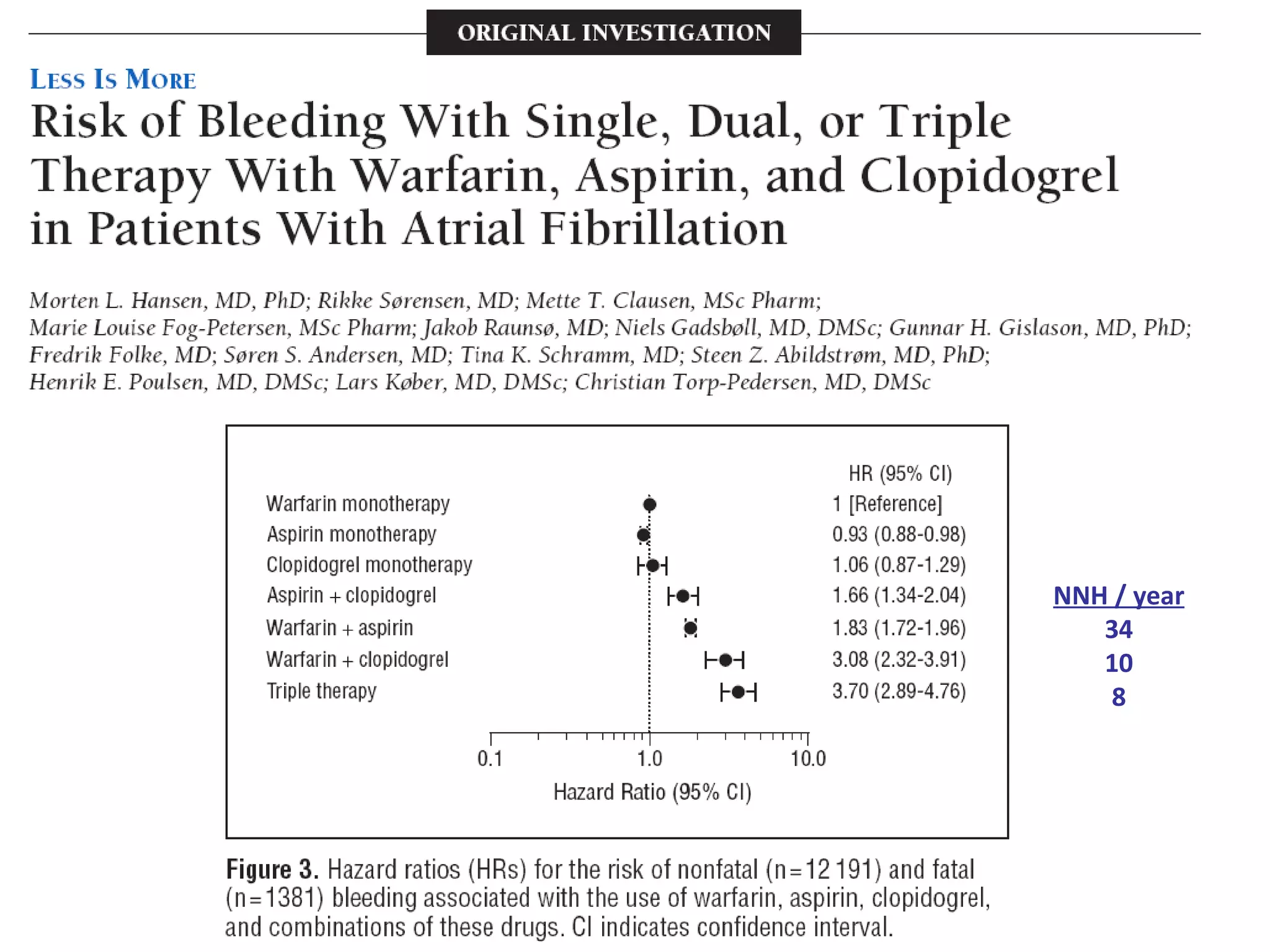
Warfarin and Antiplatelets
NNH / year
34
10
8
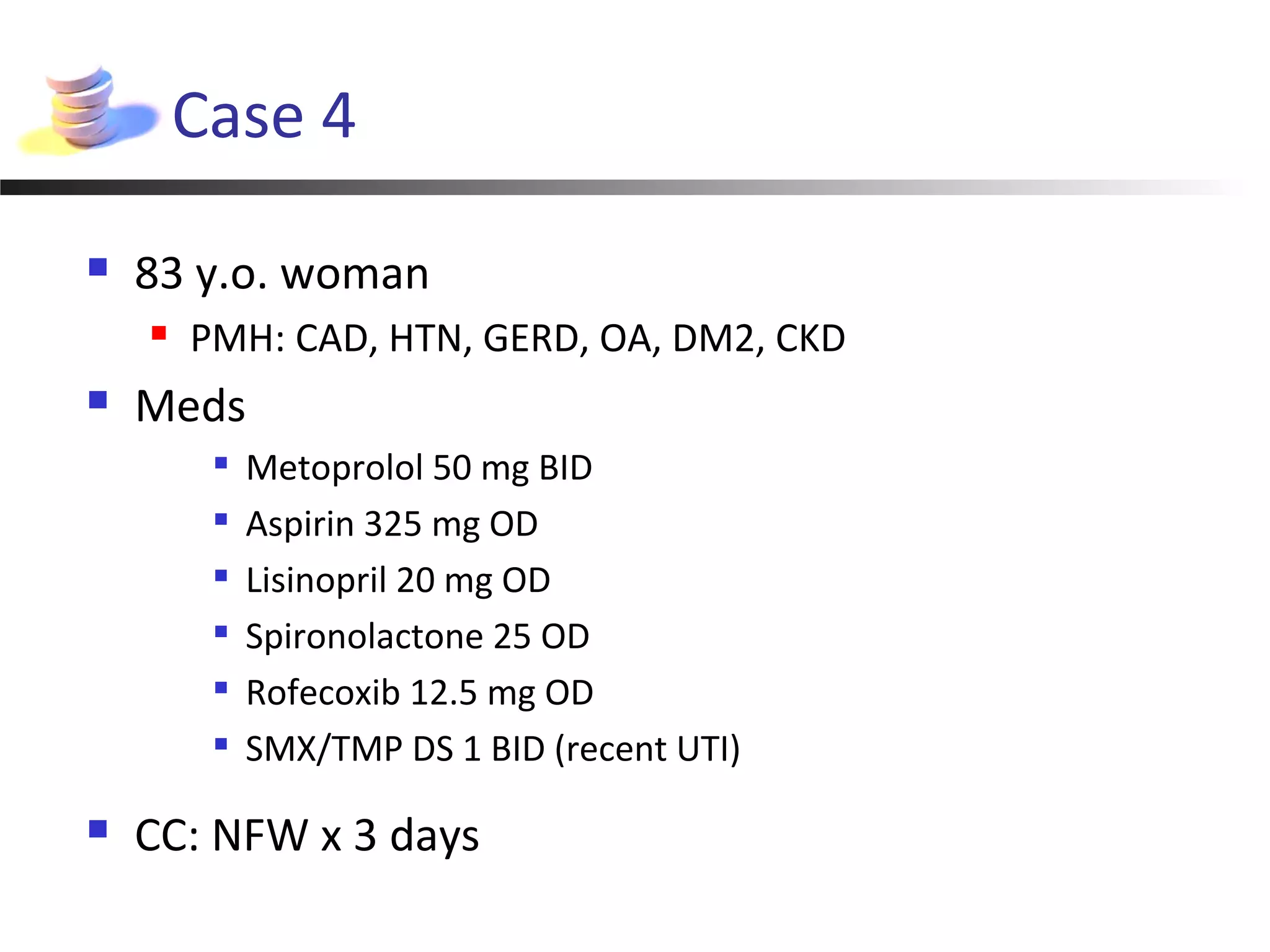
Case 4
 83 y.o. woman
 PMH: CAD, HTN, GERD, OA, DM2, CKD
 Meds

Metoprolol 50 mg BID

Aspirin 325 mg OD

Lisinopril 20 mg OD

Spironolactone 25 OD

Rofecoxib 12.5 mg OD

SMX/TMP DS 1 BID (recent UTI)
 CC: NFW x 3 days
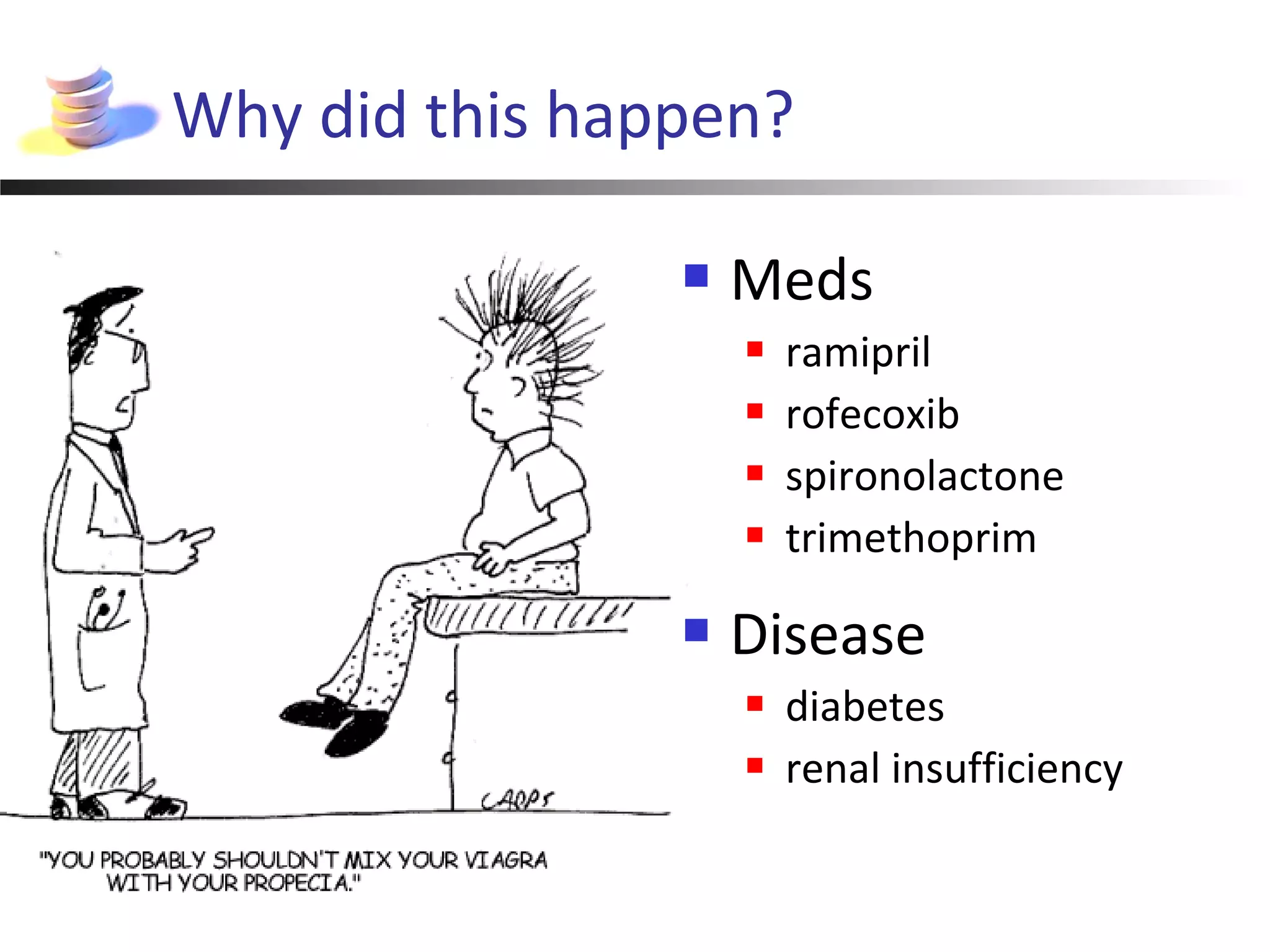
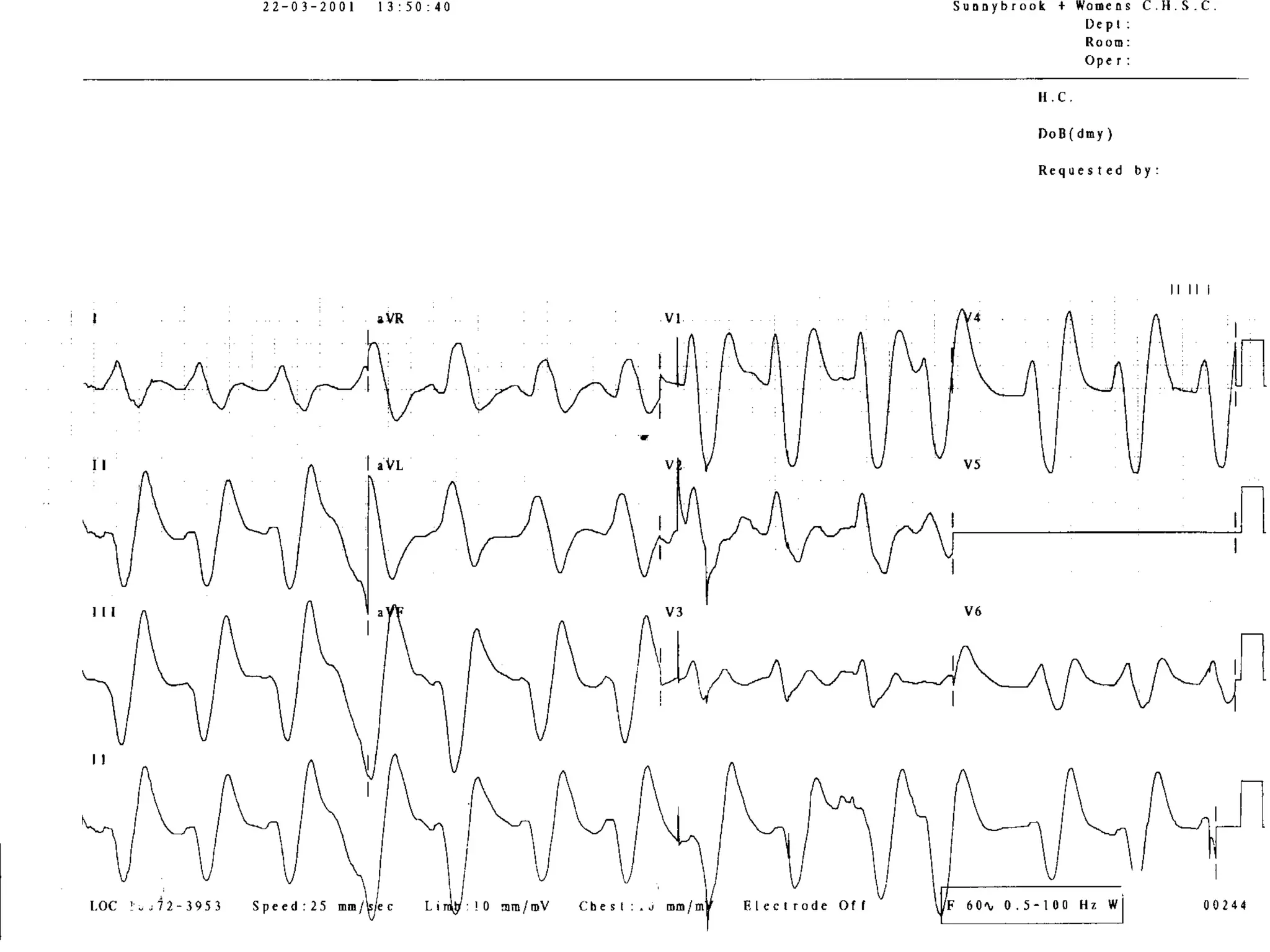
Why did this happen?
 Meds
 ramipril
 rofecoxib
 spironolactone
 trimethoprim
 Disease
 diabetes
 renal insufficiency
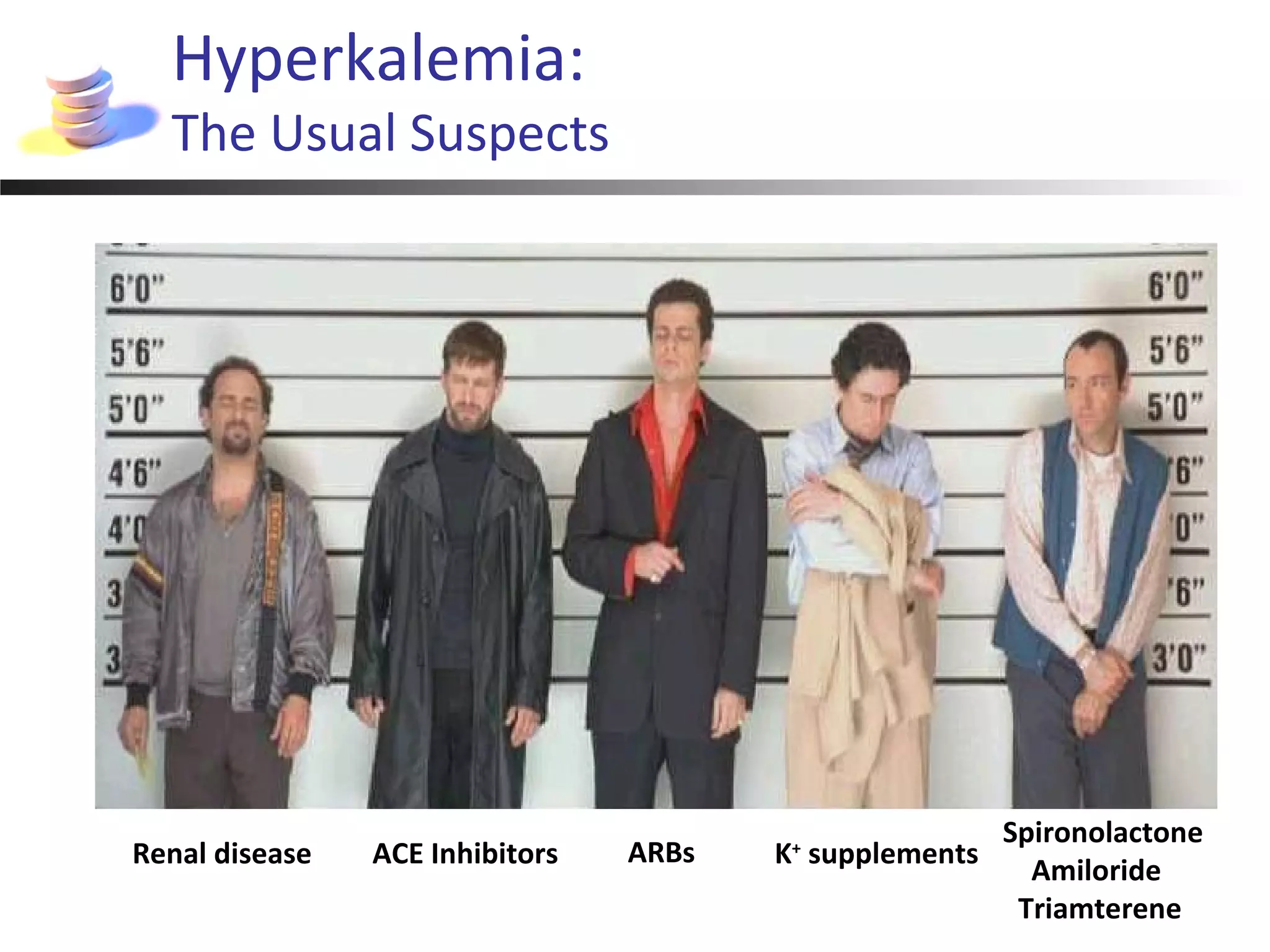
Hyperkalemia:
The Usual Suspects
Renal disease ACE Inhibitors ARBs K+
supplements
Spironolactone
Amiloride
Triamterene
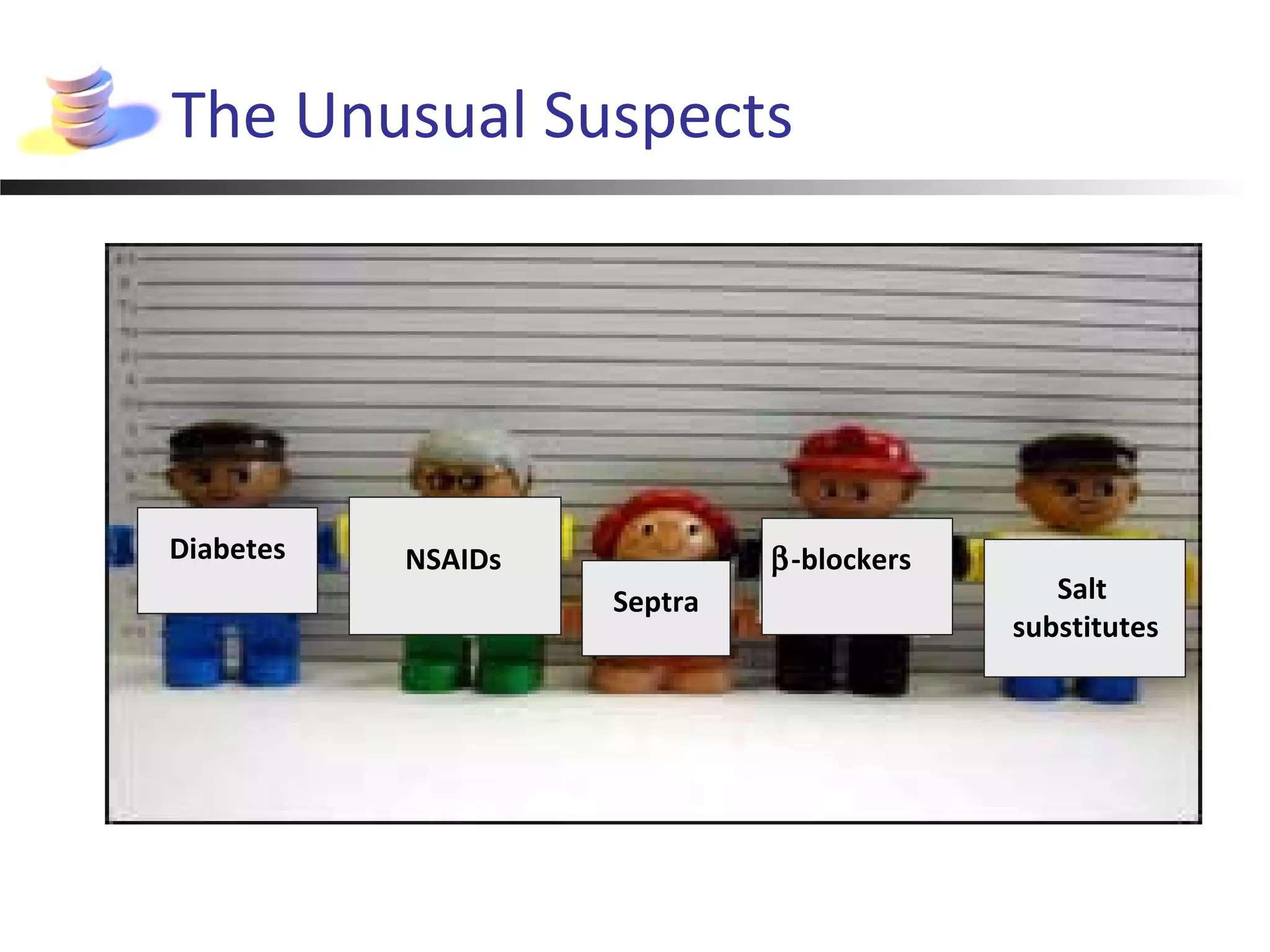
The Unusual Suspects
NSAIDsDiabetes β-blockers
Septra Salt
substitutes
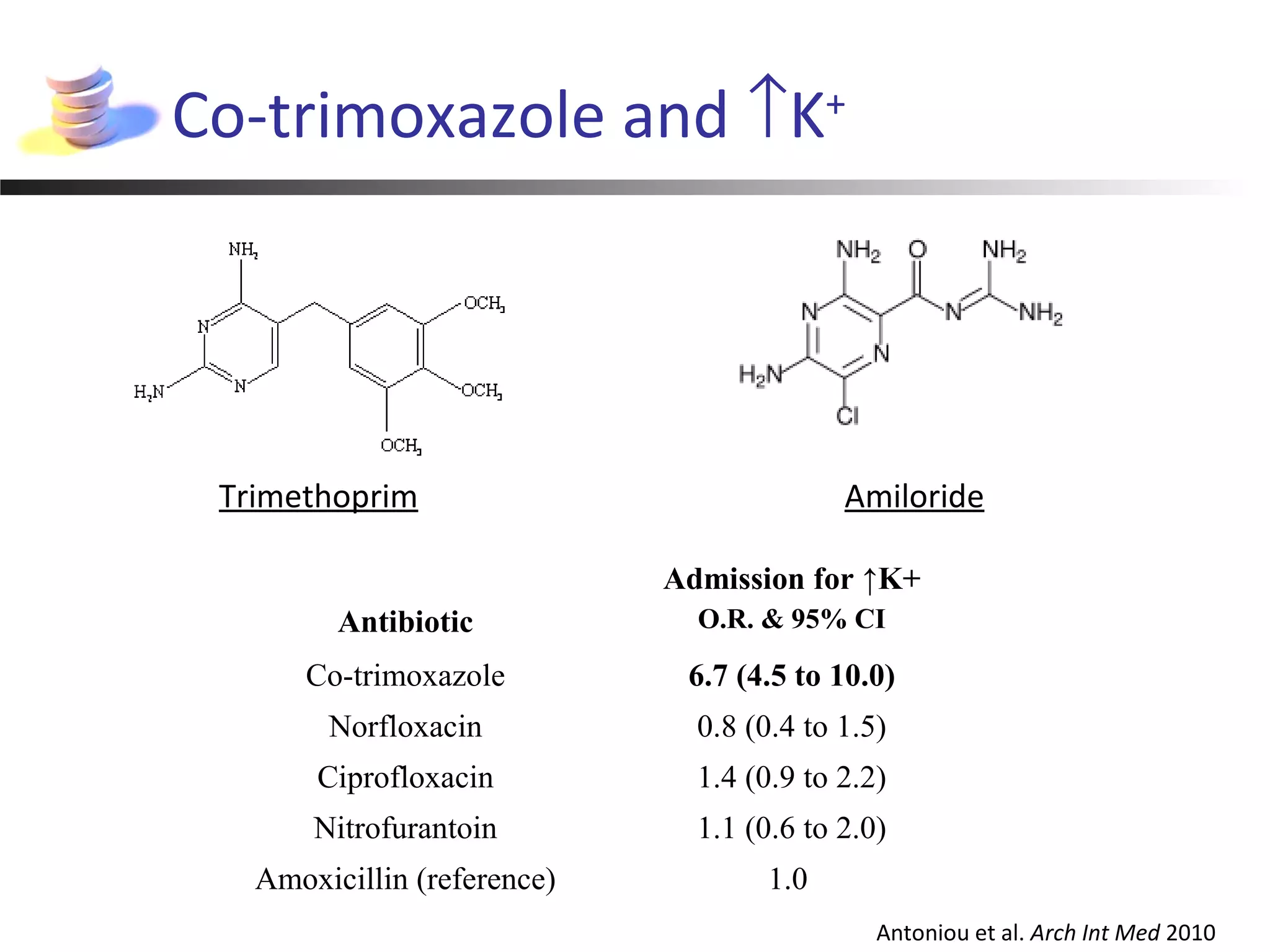
Trimethoprim Amiloride
Antibiotic
Admission for ↑K+
O.R. & 95% CI
Co-trimoxazole 6.7 (4.5 to 10.0)
Norfloxacin 0.8 (0.4 to 1.5)
Ciprofloxacin 1.4 (0.9 to 2.2)
Nitrofurantoin 1.1 (0.6 to 2.0)
Amoxicillin (reference) 1.0
Antoniou et al. Arch Int Med 2010
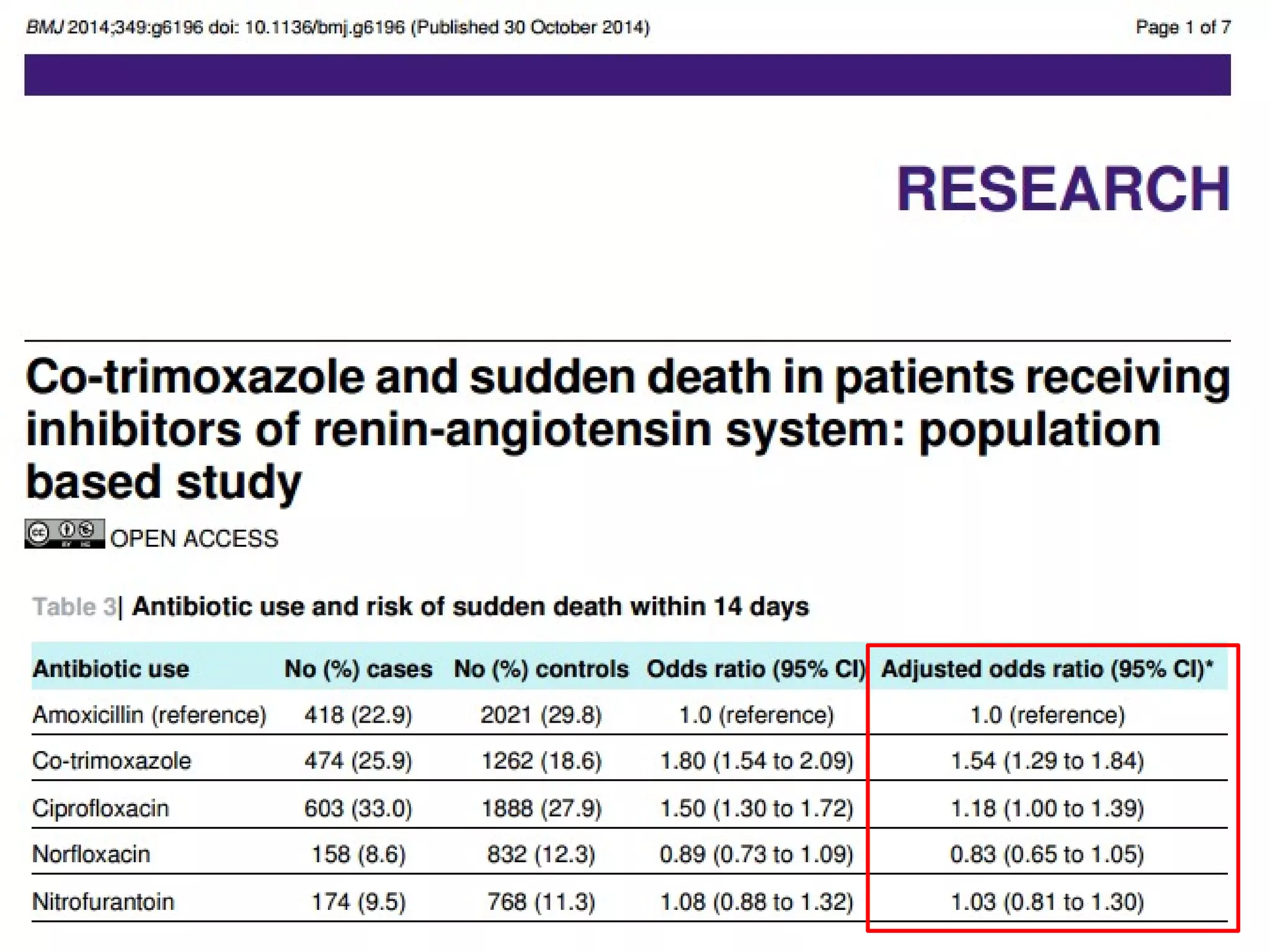
Co-trimoxazole and ↑K+
Avoiding DDIs
(a.k.a How to Not Kill People)
1. Keep a short list of “triggers”
 antibiotics
 verapamil, diltiazem
 amiodarone
 CNS depressants
2. Some meds warrant extra caution
 anticoagulants
 digoxin
 sulfonylureas
 opioids
 miscellaneous

anticonvulsants

lithium

immunosuppressants
3. Is there a safer alternative?
 Maybe
 macrolides -> azithro
 SMX/TMP -> almost anything else
 β-lactams
 pravastatin, rosuvastatin
 citalopram, venlafaxine
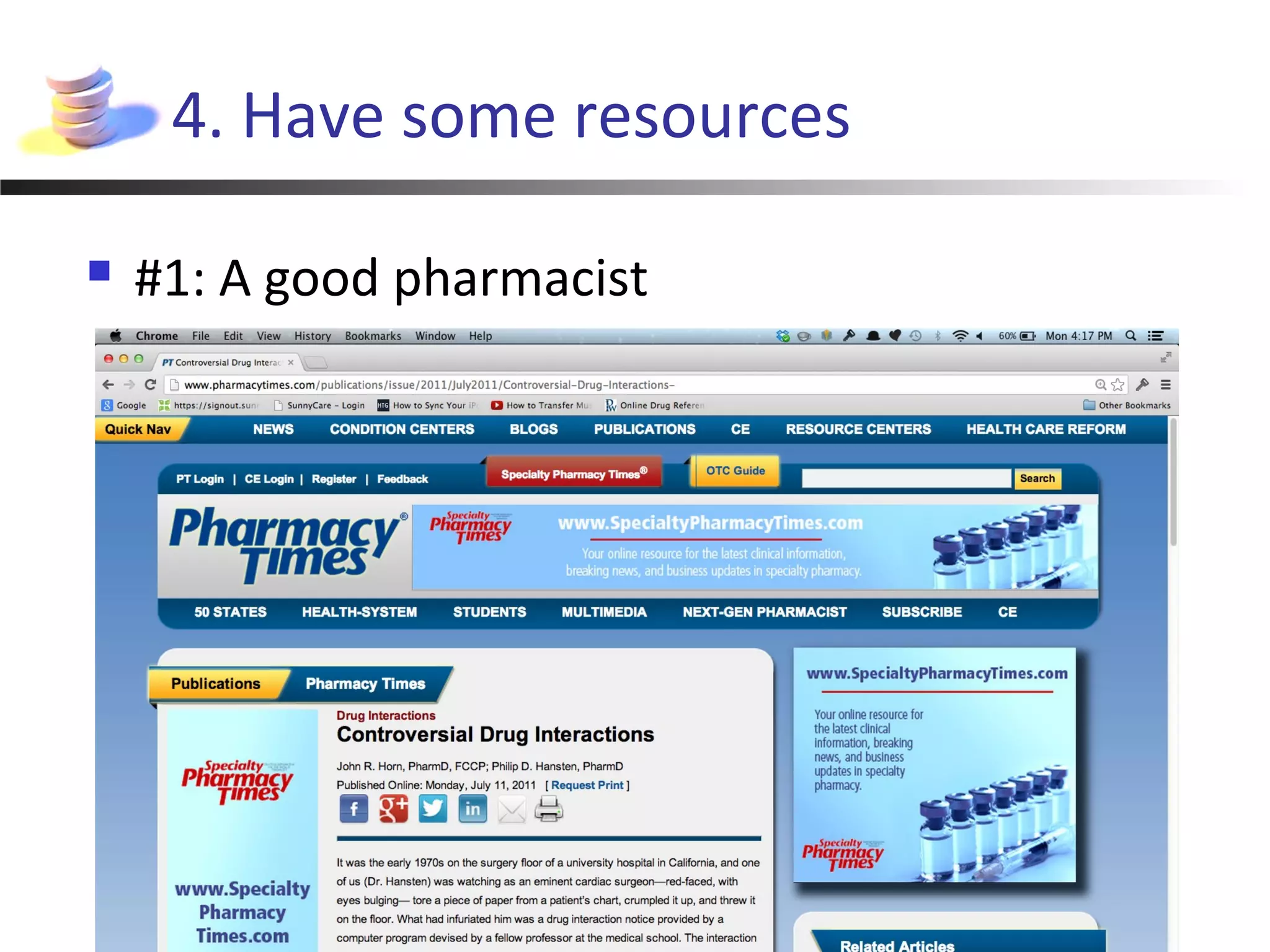
4. Have some resources
 #1: A good pharmacist
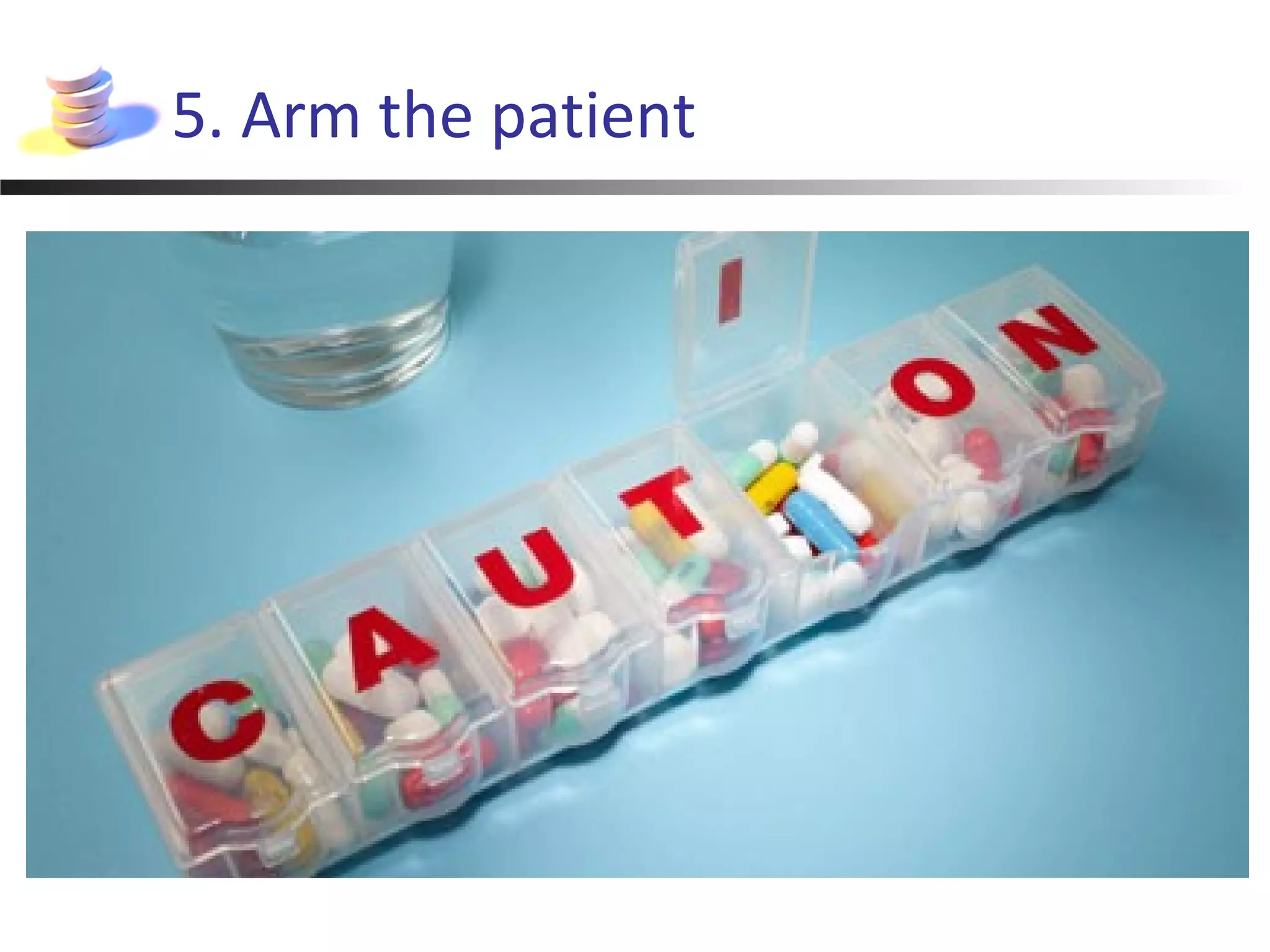
5. Arm the patient
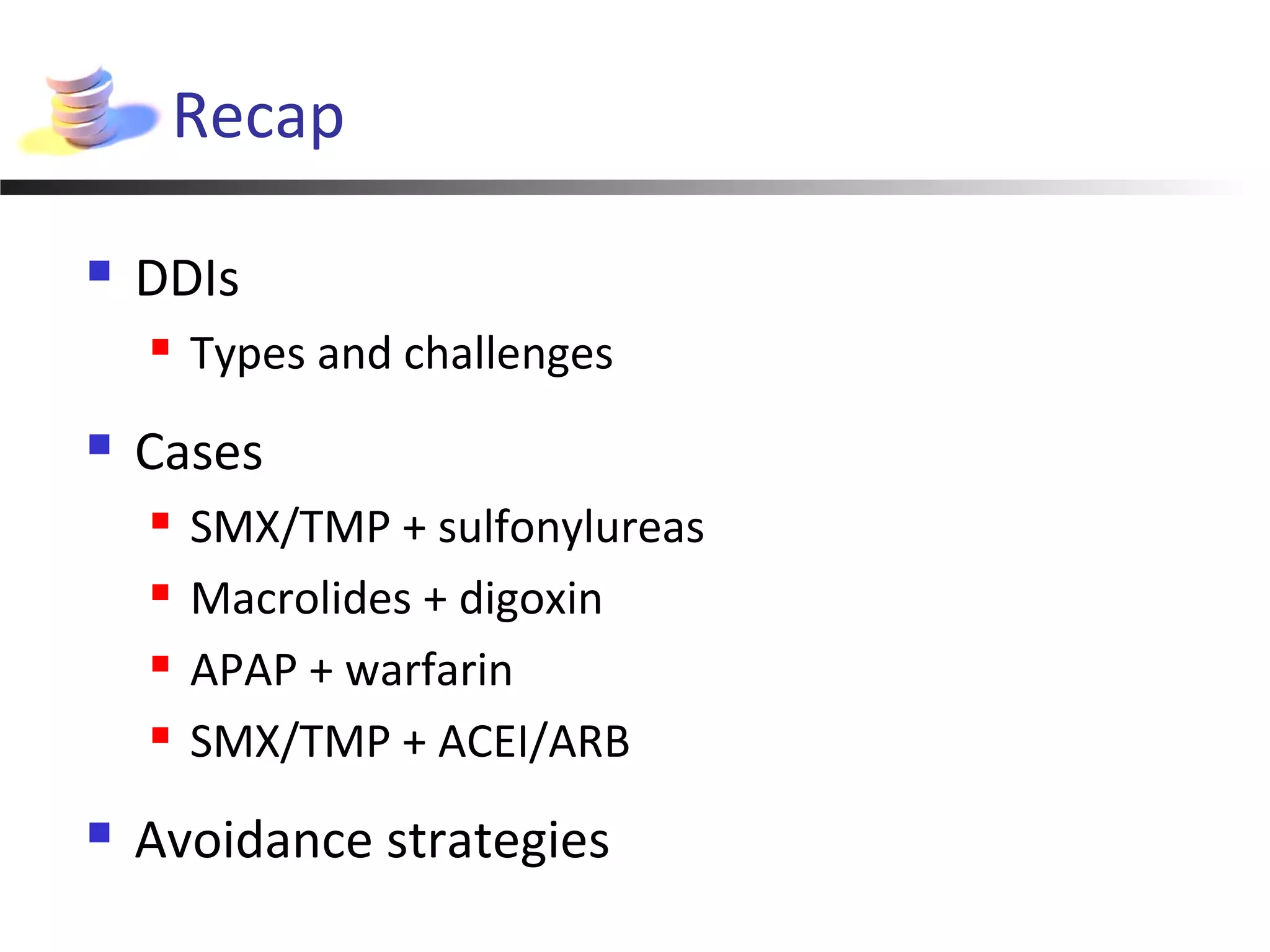
Recap
 DDIs
 Types and challenges
 Cases
 SMX/TMP + sulfonylureas
 Macrolides + digoxin
 APAP + warfarin
 SMX/TMP + ACEI/ARB
 Avoidance strategies
Thanks

David Juurlink - Drug Interactions That Can Kill (and How to Avoid Them)

  • 1.
    Lethal Drug Interactions AndHow to Avoid Them June 24th , 2015 Dave Juurlink Toronto @davidjuurlink
  • 2.
    Frontmatter  Drug-drug interaction(DDI):  Effect of one drug altered by use of another  Two types  Pharmacokinetic  One drug alters the level of another time -> Drug B [DrugA]
  • 3.
    Frontmatter  Drug-drug interaction(DDI):  Effect of one drug altered by use of another  Two types  Pharmacokinetic  One drug alters the level of another  Pharmacodynamic  No change in drug levels time -> time ->[DrugA] Drug B Drug B [DrugA]
  • 4.
    DDIs - It’s MostlyBad News Bad news:  Thousands of them  Literature: Awful  Terminology: Worse  Can be fatal Good news:  Avoidable
  • 5.
    Case 1  72y.o. woman  Type 2 DM, hypertension  Metformin, glimepiride, chlorthalidone, ramipril  Symptoms of UTI  Rx: SMX/TMP (Bactrim, Septra)  One DS tablet B.I.D. x 7 days
  • 6.
    Case 1  Day5:  Confused  GTC seizure  EMS: Capillary glucose low  What happened?
  • 7.
    The Cytochrome (CYP)P450 System  A group of enzymes  What they do:  Modify some drugs  Substrates  Can be turned off  Inhibitors  Can be revved up  Inducers % of drugs metabolized by various CYPs CYP3A4 CYP2D6 CYP2C9 CYP1A2 other
  • 8.
    The CYP2C9 ShortList CYP 2C9 Substrates CYP 2C9 Inhibitors sulfonylureas SMX/TMP (S)-warfarin metronidazole fluvoxamine, fluoxetine fluconazole amiodarone Glimepiride SMX/TMP Time
  • 9.
    SMX/TMP + Sulfonylureas: 6-foldrisk of hypoglycemia JAMA 2003
  • 10.
    Case 2  82y.o. woman  Independent, lives alone  PHx: atrial fibrillation, penicillin allergy  On pravastatin, digoxin, warfarin, HCTZ  Cellulitis  Rx clarithromycin 500 mg BID
  • 11.
  • 12.
    P-glycoprotein (P-gp)  Membraneglycoprotein  first identified in chemo- resistant cancer cells
  • 13.
    P-glycoprotein (P-gp)  Membraneglycoprotein  first identified in chemo- resistant cancer cells  Expressed in  gut  kidney  bile canaliculi  BBB
  • 14.
    P-glycoprotein (P-gp)  Membraneglycoprotein  first identified in chemo- resistant cancer cells  Expressed in  gut  kidney  bile canaliculi  BBB  P-gp:  “natural defense mechanism”
  • 15.
  • 16.
  • 17.
    The P-gp shortlist Substrates Inhibitors Inducers digoxin macrolides rifampin diltiazem amiodarone dexamethasone cyclosporine antifungals St. John’s wort dabigatran etexilate verapamil
  • 18.
    Case 3  42y.o. woman  recurrent idiopathic VTE  INR consistently 2.0 to 3.0  LRTI  Rx levofloxacin  1 week later  Painless hematuria  INR 9.2
  • 19.
  • 20.
  • 21.
    Acetaminophen & Warfarin What’sgoing on? II, VII, IX, X IIa, VIIa, IXa, Xa γ-carboxylase Vit K hydroquinone Vit K epoxide warfarin X NAPQIΘ
  • 22.
    DDIs with Warfarin: The5 A’s  Amiodarone  Antimicrobials  sulfamethoxazole / trimethoprim  metronidazole  fluconazole  Antidepressants  Analgesics  NSAIDs  acetaminophen  Antiplatelets
  • 23.
  • 24.
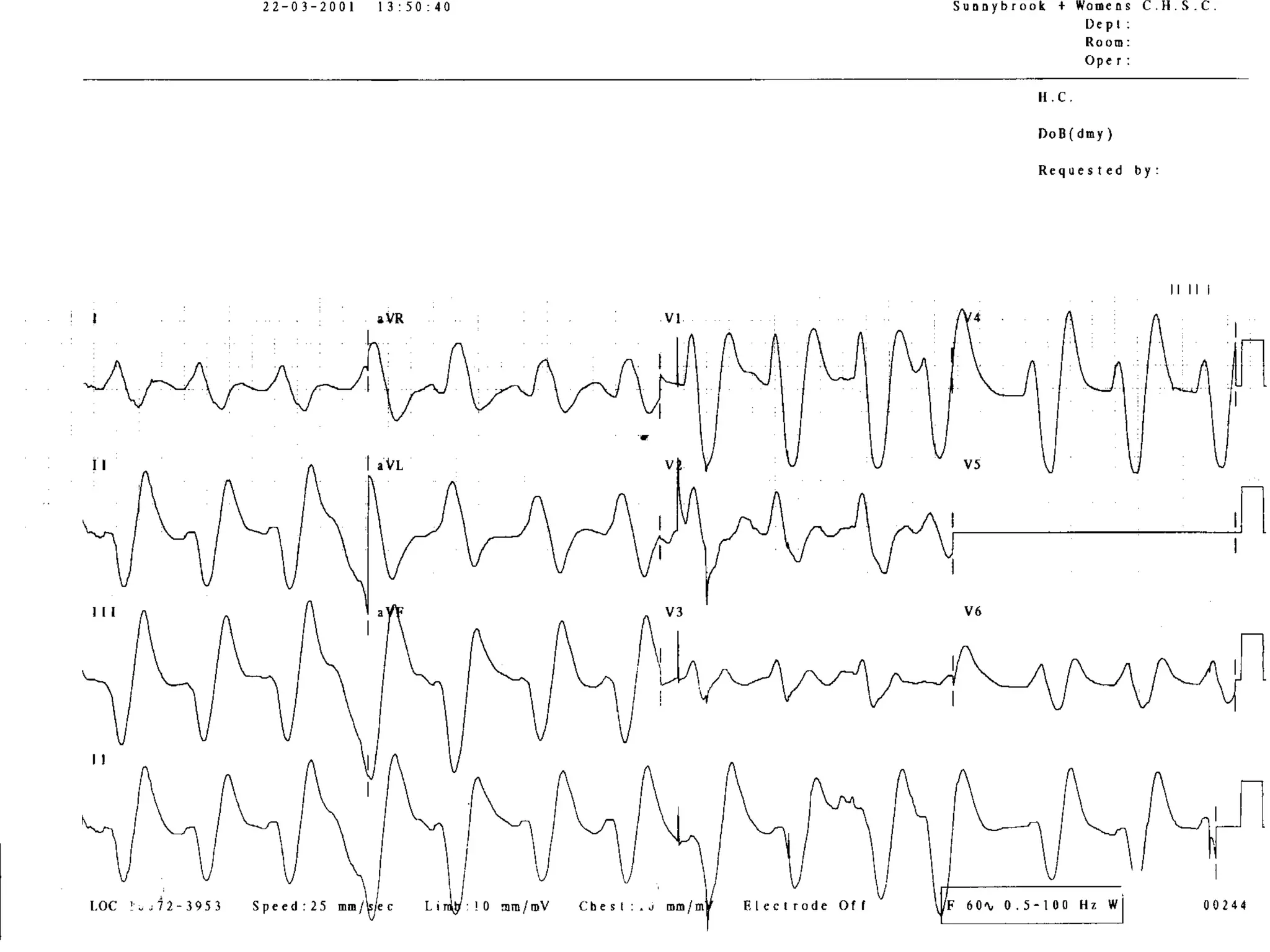
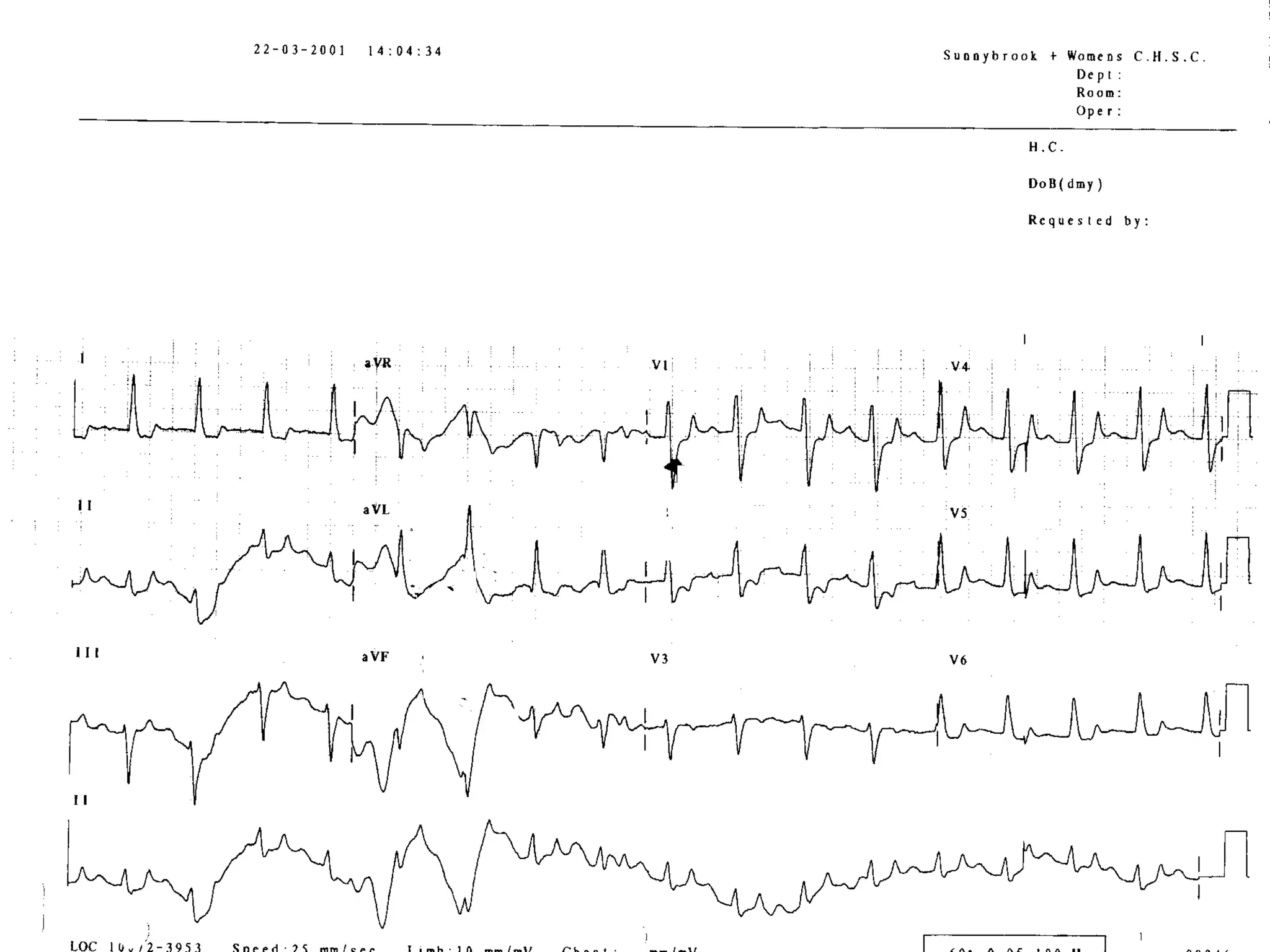
    Case 4  83y.o. woman  PMH: CAD, HTN, GERD, OA, DM2, CKD  Meds  Metoprolol 50 mg BID  Aspirin 325 mg OD  Lisinopril 20 mg OD  Spironolactone 25 OD  Rofecoxib 12.5 mg OD  SMX/TMP DS 1 BID (recent UTI)  CC: NFW x 3 days
  • 27.
    Why did thishappen?  Meds  ramipril  rofecoxib  spironolactone  trimethoprim  Disease  diabetes  renal insufficiency
  • 28.
    Hyperkalemia: The Usual Suspects Renaldisease ACE Inhibitors ARBs K+ supplements Spironolactone Amiloride Triamterene
  • 29.
    The Unusual Suspects NSAIDsDiabetesβ-blockers Septra Salt substitutes
  • 30.
    Trimethoprim Amiloride Antibiotic Admission for↑K+ O.R. & 95% CI Co-trimoxazole 6.7 (4.5 to 10.0) Norfloxacin 0.8 (0.4 to 1.5) Ciprofloxacin 1.4 (0.9 to 2.2) Nitrofurantoin 1.1 (0.6 to 2.0) Amoxicillin (reference) 1.0 Antoniou et al. Arch Int Med 2010 Co-trimoxazole and ↑K+
  • 33.
    Avoiding DDIs (a.k.a Howto Not Kill People)
  • 34.
    1. Keep ashort list of “triggers”  antibiotics  verapamil, diltiazem  amiodarone  CNS depressants
  • 35.
    2. Some medswarrant extra caution  anticoagulants  digoxin  sulfonylureas  opioids  miscellaneous  anticonvulsants  lithium  immunosuppressants
  • 36.
    3. Is therea safer alternative?  Maybe  macrolides -> azithro  SMX/TMP -> almost anything else  β-lactams  pravastatin, rosuvastatin  citalopram, venlafaxine
  • 37.
    4. Have someresources  #1: A good pharmacist
  • 39.
    5. Arm thepatient
  • 40.
    Recap  DDIs  Typesand challenges  Cases  SMX/TMP + sulfonylureas  Macrolides + digoxin  APAP + warfarin  SMX/TMP + ACEI/ARB  Avoidance strategies
  • 41.

Editor's Notes

  • #3 I underscore that although we think about pharmacokinetic DDIs most often, this is only one type of DDI and that pharmacodynamic DDIs are also s msjor concern. And probably even more common.
  • #4 I underscore that although we think about pharmacokinetic DDIs most often, this is only one type of DDI and that pharmacodynamic DDIs are also s msjor concern. And probably even more common.
  • #9 The lists are longer, but shorter is manageable Pretty much all SUs Only (S) warfarin is 2C9 (R is 3a4) but S is where the money is Phenytoin is complex but has some 2C9 and it should probably be under warfarin
  • #10 An example of a real world study, from my thesis. I often tell people The translation of this is that IF you have an older patient on glyburide and you Rx Septra, their risk of hospital admission FOR hypoglycemia in the next 7 days is about 5 to 6 times higher with Septra than with Amox
  • #12 Surely someone will guess this
  • #18 You might want to shorten this list / lose the HIV stuff. Up to you
  • #19 I made this case up. Maybe you want to tweak it
  • #21 Clearly doe s not happen to some people (many) Expression varies I have seen several instances of INR > 6 with APAP < 4 g per day Maybe influences by GSH, 2e1 activity, Gilbert’s disease, who knows But bottom line is that it is wrong and dangerous to assume APAP is safe in a patient on warf
  • #22 Clearly doe s not happen to some people (many) Expression varies I have seen several instances of INR > 6 with APAP < 4 g per day Maybe influences by GSH, 2e1 activity, Gilbert’s disease, who knows But bottom line is that it is wrong and dangerous to assume APAP is safe in a patient on warf
  • #23 Amio – 2C9 Abx - any, by virtue of gut vitamin K (you can make a case for closer INR monitoring in anybody starting Abx while on warf) - Septra and Flagyl have dual issue of 2C9 inhib - Paper not yet submitted looks at RR of UGI bleed in patients on warf Septra ~ 4 fold risk Other UTI drugs zero to minimal increae risk The APAP interaction should make people sit up and listen
  • #25 I think Septra was the last straw here
  • #28 Cartoon makes a joke about Drug A x Drug B. The reality is that patients often have multiple drugs and diseases that conspire together
  • #35 Short list for ER docs should be antibiotic heavy.
  • #36 Short list for ER docs should be antibiotic heavy.
  • #37 Short list for ER docs should be antibiotic heavy.