Who can benefit from Dave's experience?


 Executives that are frustrated with the endless promises of their sales and
marketing groups and long for a strategy that they can understand and count on.
They often have a desire to establish best practices around management processes
that will allow them to take their companies to the next level.

 Entrepreneurs & Founders who have come to the realization that they require solid
executive talent in order to help them realize their vision.

 Angel and Venture Capital investors who want to see a more robust management
team to help the venture move to the next step. Often a focus on best practices as
the company transitions from start-up to early stage. These groups are also often
looking for someone to evaluate current business processes with a view of providing
recommendations and solutions in an advisory or consultancy capacity.
Who can benefit from Dave's experience?



 Board of Directors looking to add sales and market focused talent as they transition
the company from a focus on the technology to a focus on sales. Looking for an
inspirational leader that will champion the next level of growth and financing for the
company.

 Capital Pool Companies requiring assistance with the identification and evaluation
of qualifying transactions. There is also often a need for a market focused executive
to join the team of the target QT.
Go–To–Market Strategies
Transaction
Efficiently meeting customer product or service
  requirements based on price, performance,
  availability, and lack of risk criteria.
Solution
Selling and delivering creative solutions to the
  customer’s business process challenges and
  opportunities
Go–To–Market Strategies
Adding Value
Collaboration with the customer to identify, size, scope,
  and execute new approaches to delivering
  measurable business value
Strategic Partnership
Identifying and pursuing new market-based
  opportunities that you jointly attack with one or more
  selected customers.
Corporate Culture
Leaders must also consider and manage the culture of
  the company they are running. If specific attention is
  not paid to the company culture it will have a
  tendency to gravitate towards the primary activity of
  the company. An engineering based company is more
  likely analytic in nature while a start-up tends to have
  a clan or expressive culture.
If revenue growth and market penetration are the
   primary focus of the company the leader should drive
   the company culture towards a Market-Driver based
   model.
Hierarchy - Analytic

A very formalized and structured place to work.
  Procedures govern what people do. The leaders pride
  themselves on being good coordinators and
  organizers who are efficiency-minded. Maintaining a
  smooth running organization is most critical. Formal
  rules and policies hold the organization together. The
  long-term concern is on stability and performance
  with efficient, smooth operations. Success is defined
  in terms of dependable delivery, smooth scheduling.
  The management of employees is concerned with
  secure employment and predictability
Market - Driver

A results-oriented organization whose major concern is
  with getting the job done. People are competitive and
  goal-oriented. The leaders are hard drivers,
  producers and competitors. They are tough minded
  and demanding. The glue that holds the organization
  together is an emphasis on winning. Reputation and
  success are common concerns. The long-term focus
  is on competitive actions and achievement of
  measurable goals and targets. Success is defined in
  terms of market share and penetration. The
  organizational style is hard driving, focused,
  determined and quite often perceived as tough.
Clan - Amiable
A very friendly place to work where people share allot of
  themselves. It is like an extended family. The leaders,
  or heads of the organization, are considered to be
  mentors and perhaps even parent figures. The
  organization is held together by loyalty or tradition.
  Commitment is high. The organization emphasizes
  the long-term benefit of human resources
  development and attaches great importance to
  cohesion and morale. Success is defined in terms of
  sensitivity to customers and concern for people. The
  organization places a premium on teamwork,
  participation, and consensus.
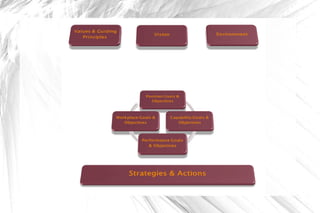
Strategic Planning Model (cont'd)

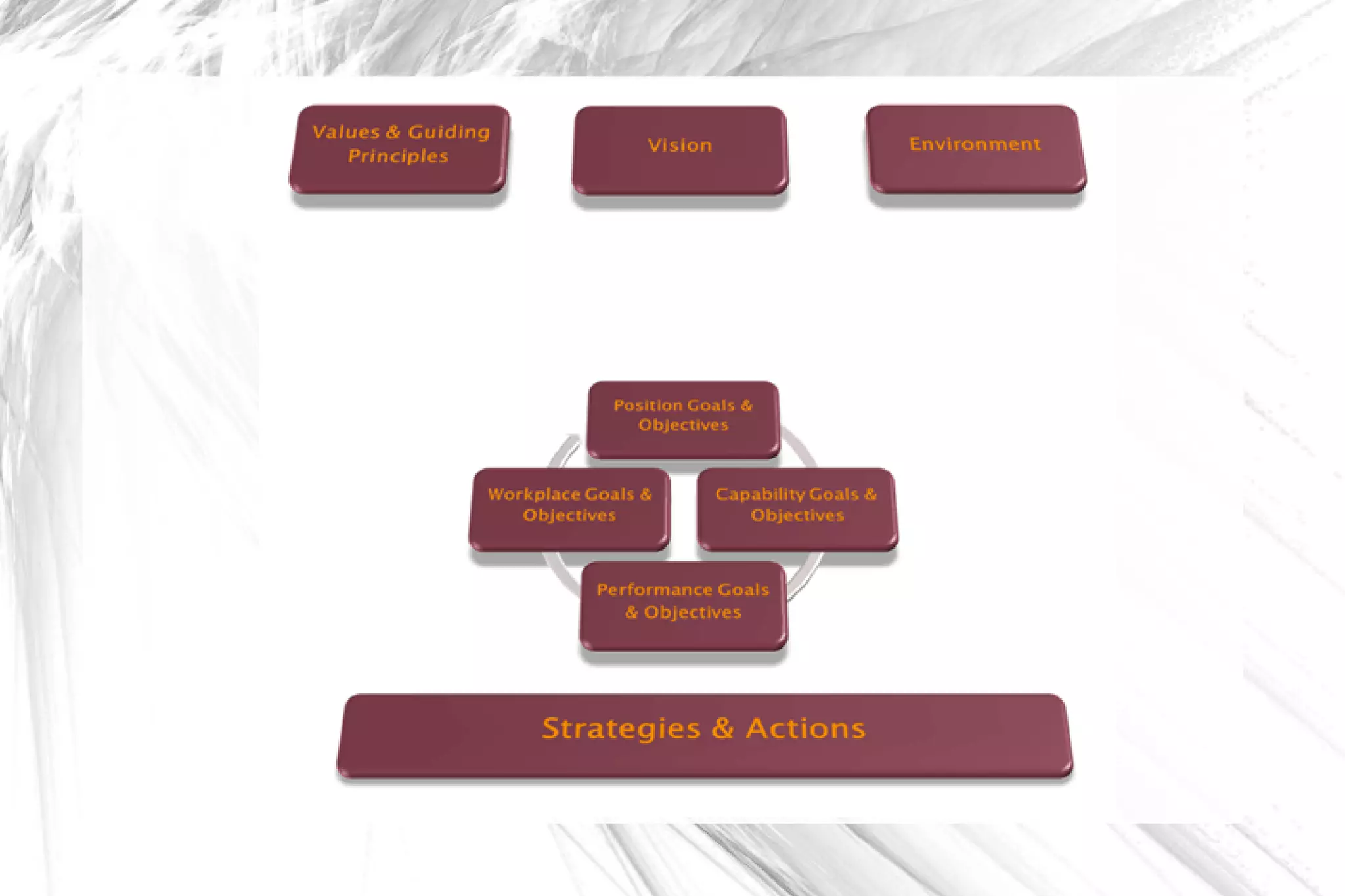
Strategies and Actions will include department specific
   programs, projects and specific activities required to achieve
   the goals and objectives of that department. A reliance on
   Key Performance Indicators and Management by Objectives
   models is a key component to the success of this model.
Strategic Planning Model
Most company leaders acknowledge the importance of a clear
  vision. These leaders then place the emphasis on
  developing and articulating the vision and the importance of
  ‘banding together’ to achieve the promise of the great vision.
  These same leaders are often frustrated when what they
  believe is a clear vision is not embraced and followed with
  business process and models by the executive team and
  managers mandated with achieving the vision.
The ‘Alignment Strategic Planning Process’ is a model that
  ensures linkage of the vision with other critical components
  of the strategic planning process. The result is a roadmap
  where all stakeholders in the organization are clear on their
  expected contribution in achieving the overall vision of the
  enterprise.
Dynamic - Expressive
A dynamic, entrepreneurial, and creative place to work.
  People stick their necks out and take risks. The
  leaders are considered innovators and risk takers.
  The glue that holds the organization together is
  commitment to experimentation and innovation. The
  emphasis is on being on the leading edge. The
  organization’s long-term emphasis is on growth and
  acquiring new resources. Success means gaining
  unique and new products or services. Being a product
  or service leader is important. The organization
  encourages individual initiative and freedom.

Dave King

  • 2.
    Who can benefitfrom Dave's experience?  Executives that are frustrated with the endless promises of their sales and marketing groups and long for a strategy that they can understand and count on. They often have a desire to establish best practices around management processes that will allow them to take their companies to the next level.  Entrepreneurs & Founders who have come to the realization that they require solid executive talent in order to help them realize their vision.  Angel and Venture Capital investors who want to see a more robust management team to help the venture move to the next step. Often a focus on best practices as the company transitions from start-up to early stage. These groups are also often looking for someone to evaluate current business processes with a view of providing recommendations and solutions in an advisory or consultancy capacity.
  • 3.
    Who can benefitfrom Dave's experience?  Board of Directors looking to add sales and market focused talent as they transition the company from a focus on the technology to a focus on sales. Looking for an inspirational leader that will champion the next level of growth and financing for the company.  Capital Pool Companies requiring assistance with the identification and evaluation of qualifying transactions. There is also often a need for a market focused executive to join the team of the target QT.
  • 4.
    Go–To–Market Strategies Transaction Efficiently meetingcustomer product or service requirements based on price, performance, availability, and lack of risk criteria. Solution Selling and delivering creative solutions to the customer’s business process challenges and opportunities
  • 5.
    Go–To–Market Strategies Adding Value Collaborationwith the customer to identify, size, scope, and execute new approaches to delivering measurable business value Strategic Partnership Identifying and pursuing new market-based opportunities that you jointly attack with one or more selected customers.
  • 6.
    Corporate Culture Leaders mustalso consider and manage the culture of the company they are running. If specific attention is not paid to the company culture it will have a tendency to gravitate towards the primary activity of the company. An engineering based company is more likely analytic in nature while a start-up tends to have a clan or expressive culture. If revenue growth and market penetration are the primary focus of the company the leader should drive the company culture towards a Market-Driver based model.
  • 7.
    Hierarchy - Analytic Avery formalized and structured place to work. Procedures govern what people do. The leaders pride themselves on being good coordinators and organizers who are efficiency-minded. Maintaining a smooth running organization is most critical. Formal rules and policies hold the organization together. The long-term concern is on stability and performance with efficient, smooth operations. Success is defined in terms of dependable delivery, smooth scheduling. The management of employees is concerned with secure employment and predictability
  • 8.
    Market - Driver Aresults-oriented organization whose major concern is with getting the job done. People are competitive and goal-oriented. The leaders are hard drivers, producers and competitors. They are tough minded and demanding. The glue that holds the organization together is an emphasis on winning. Reputation and success are common concerns. The long-term focus is on competitive actions and achievement of measurable goals and targets. Success is defined in terms of market share and penetration. The organizational style is hard driving, focused, determined and quite often perceived as tough.
  • 9.
    Clan - Amiable Avery friendly place to work where people share allot of themselves. It is like an extended family. The leaders, or heads of the organization, are considered to be mentors and perhaps even parent figures. The organization is held together by loyalty or tradition. Commitment is high. The organization emphasizes the long-term benefit of human resources development and attaches great importance to cohesion and morale. Success is defined in terms of sensitivity to customers and concern for people. The organization places a premium on teamwork, participation, and consensus.
  • 10.
    Strategic Planning Model(cont'd) Strategies and Actions will include department specific programs, projects and specific activities required to achieve the goals and objectives of that department. A reliance on Key Performance Indicators and Management by Objectives models is a key component to the success of this model.
  • 11.
    Strategic Planning Model Mostcompany leaders acknowledge the importance of a clear vision. These leaders then place the emphasis on developing and articulating the vision and the importance of ‘banding together’ to achieve the promise of the great vision. These same leaders are often frustrated when what they believe is a clear vision is not embraced and followed with business process and models by the executive team and managers mandated with achieving the vision. The ‘Alignment Strategic Planning Process’ is a model that ensures linkage of the vision with other critical components of the strategic planning process. The result is a roadmap where all stakeholders in the organization are clear on their expected contribution in achieving the overall vision of the enterprise.
  • 13.
    Dynamic - Expressive Adynamic, entrepreneurial, and creative place to work. People stick their necks out and take risks. The leaders are considered innovators and risk takers. The glue that holds the organization together is commitment to experimentation and innovation. The emphasis is on being on the leading edge. The organization’s long-term emphasis is on growth and acquiring new resources. Success means gaining unique and new products or services. Being a product or service leader is important. The organization encourages individual initiative and freedom.