Introduction To Data Science
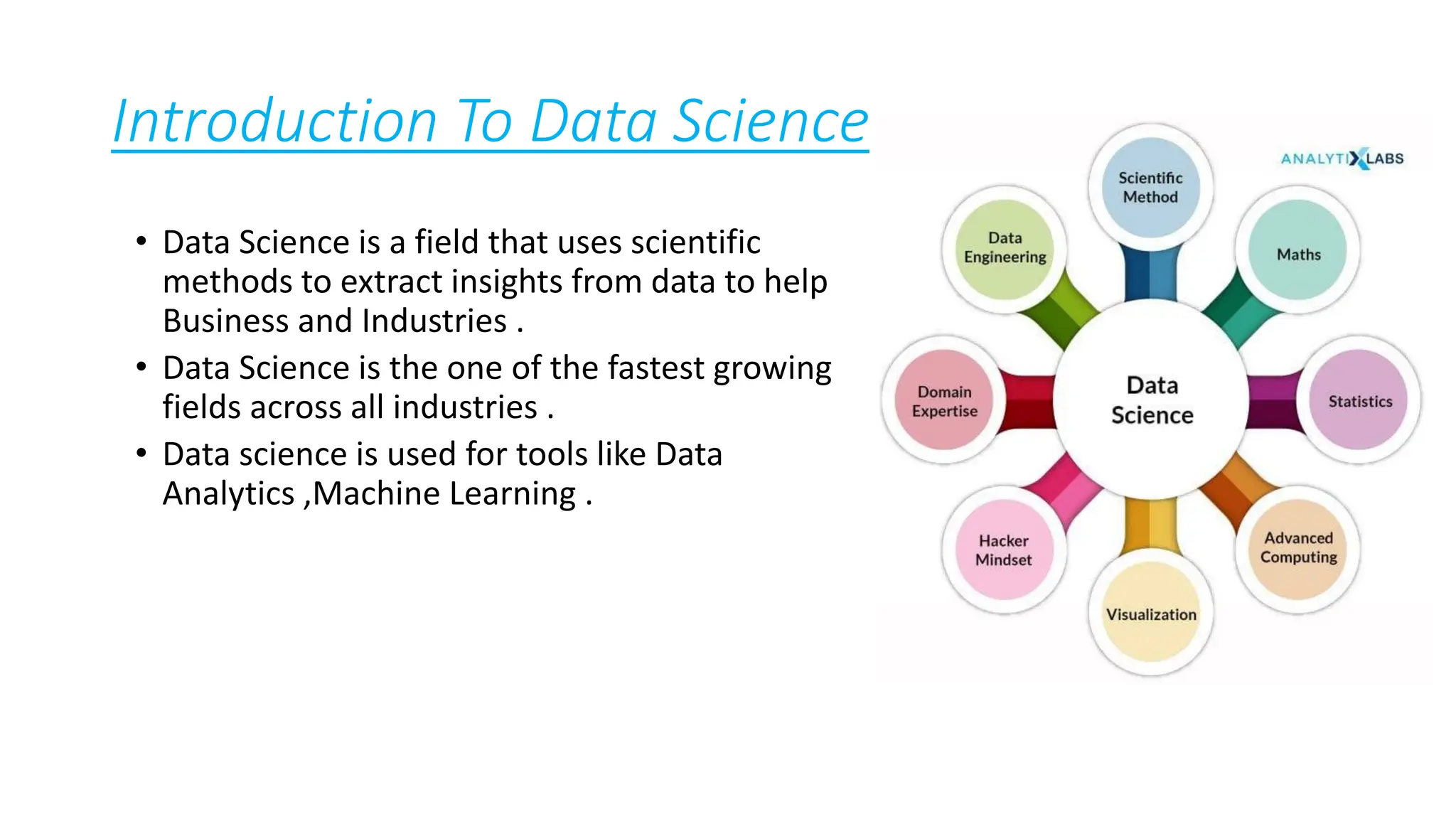
• Data Science is a field that uses scientific
methods to extract insights from data to help
Business and Industries .
• Data Science is the one of the fastest growing
fields across all industries .
• Data science is used for tools like Data
Analytics ,Machine Learning .
Data Science Process
• The initial step of gathering raw data from
various source, like Surveys, Sensors and
Data bases .
• Cleaning and organizing raw data by
removing errors and handling missing
values .
• The process of extracting patterns,
insights and trends from large datasets
using Machine learning techniques.
Data values chain
Data Acquisition
• Process of gathering , filtering and cleaning
data before it put in data warehouse or other
storage solution on which data analysis can
be carried out.
• Data Acquisition is one of bag data challenges
in terms of infrastructure requirements .
• Infrastructure required to support the
acquisition of big data must deliver low.
Data Analysis
• The raw data acquired amenable to use in
decision making as well as domain specific usage
.
• Data analysis involves exploring , transforming
and modelling data.
• From a business point of view synthesizing and
extracting the hidden information with high
potential.
Data Curation
• Data curation processes can be categorized
into difference activities such as a content
creation, selection ,validation and
preservation.
• Data curation is responsible for improving
accessibility and quality of data.
• Ensuring that the data are trustworthy and
fit their purpose.
Data Storage
• Data storage is persistence and
management of data in scalable way that
satisfies needs of applications.
• Relational database management systems
(RDMS) are majorly used.
• NOSQL technologies have been designed
with scalability goal in mind and present
wide range of solutions based on
alternative data models.
Key Data Science Topics To Explore
Big Data Analytics
• Big data analytics helps in
organizations harness their data
and use to identify new
opportunities .
• It leads to smarter business moves
higher profits and more efficient
operations .
Sources Of Big Data
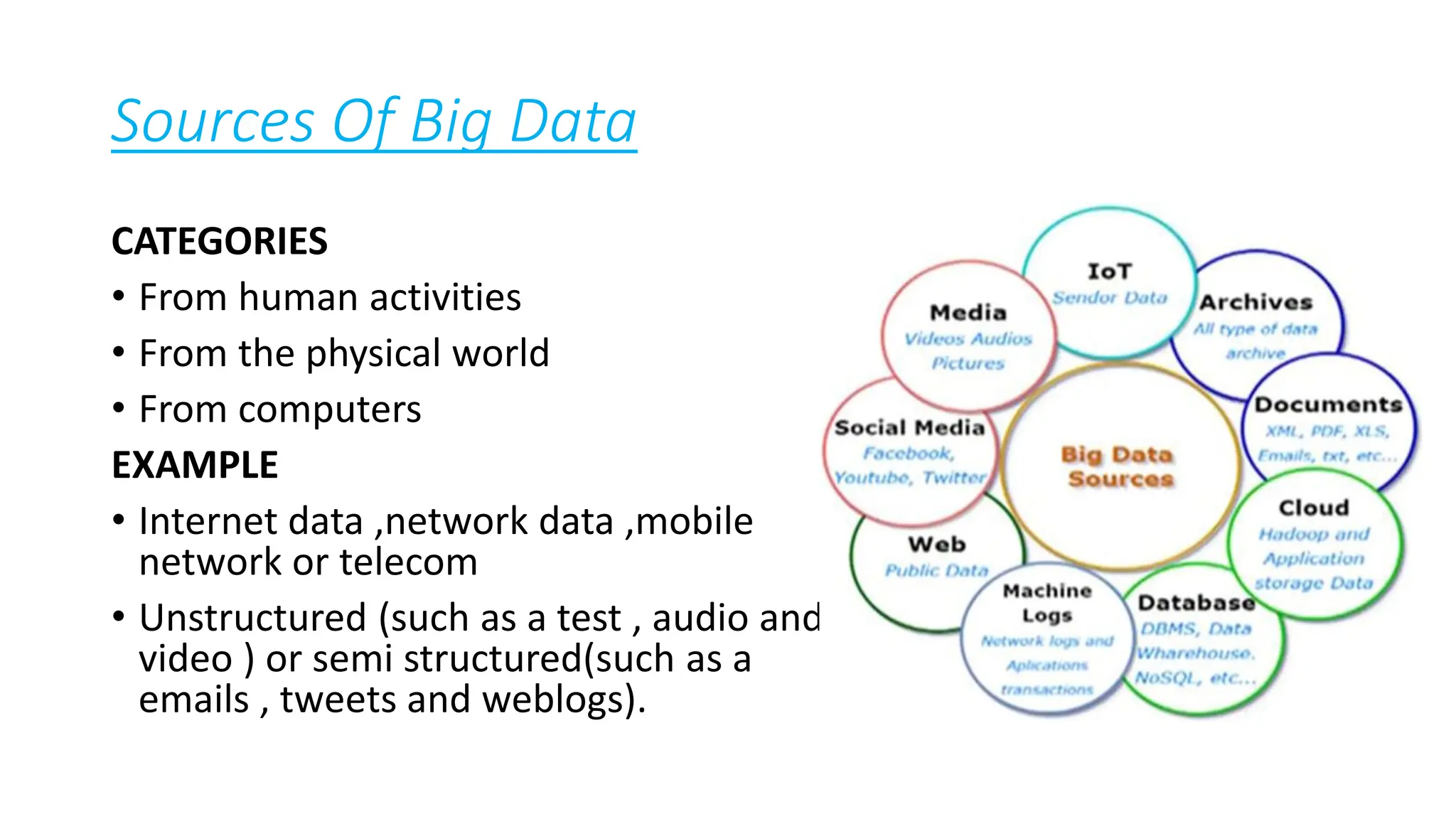
CATEGORIES
• From human activities
• From the physical world
• From computers
EXAMPLE
• Internet data ,network data ,mobile
network or telecom
• Unstructured (such as a test , audio and
video ) or semi structured(such as a
emails , tweets and weblogs).
Big Data Processing
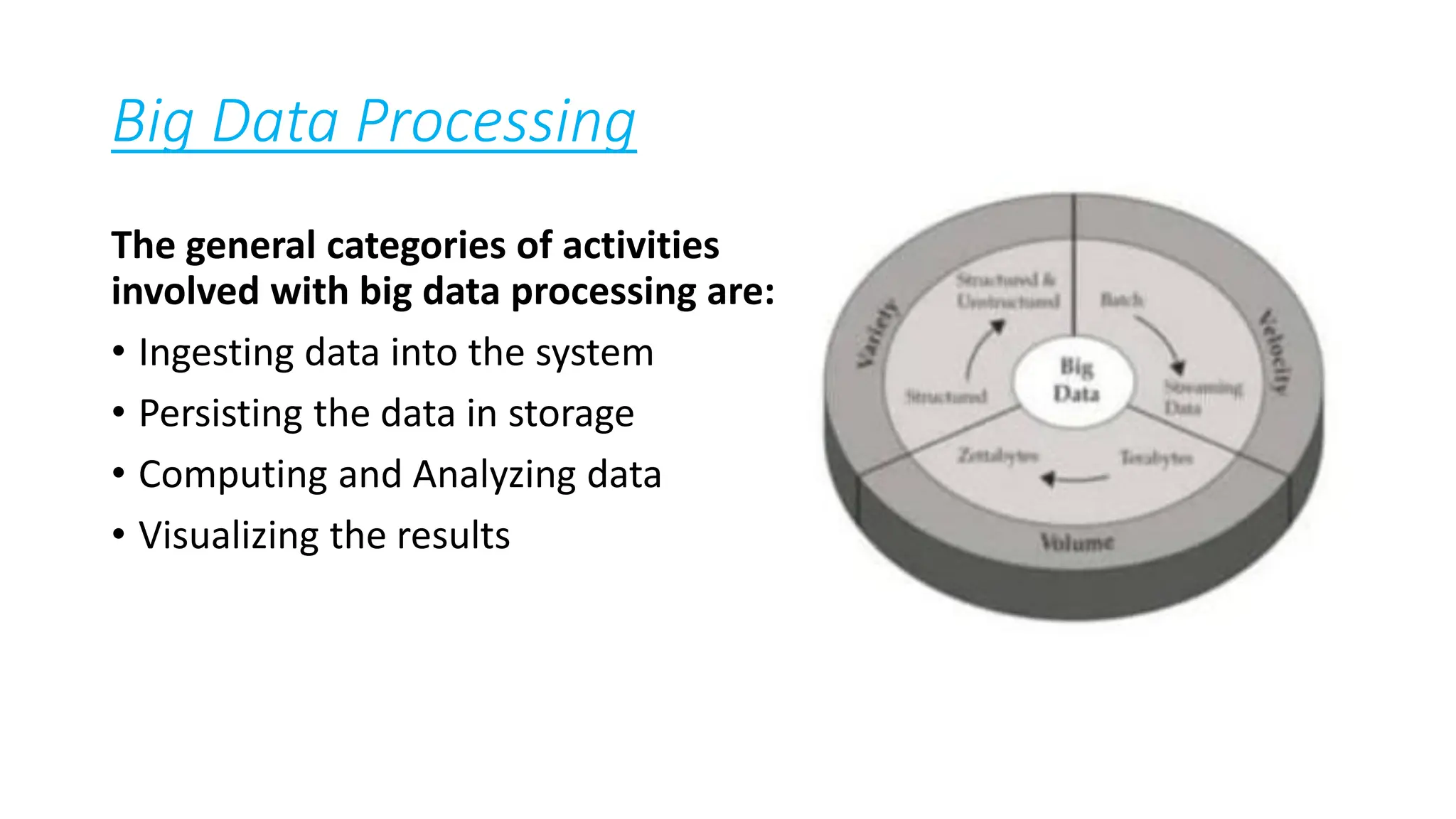
The general categories of activities
involved with big data processing are:
• Ingesting data into the system
• Persisting the data in storage
• Computing and Analyzing data
• Visualizing the results
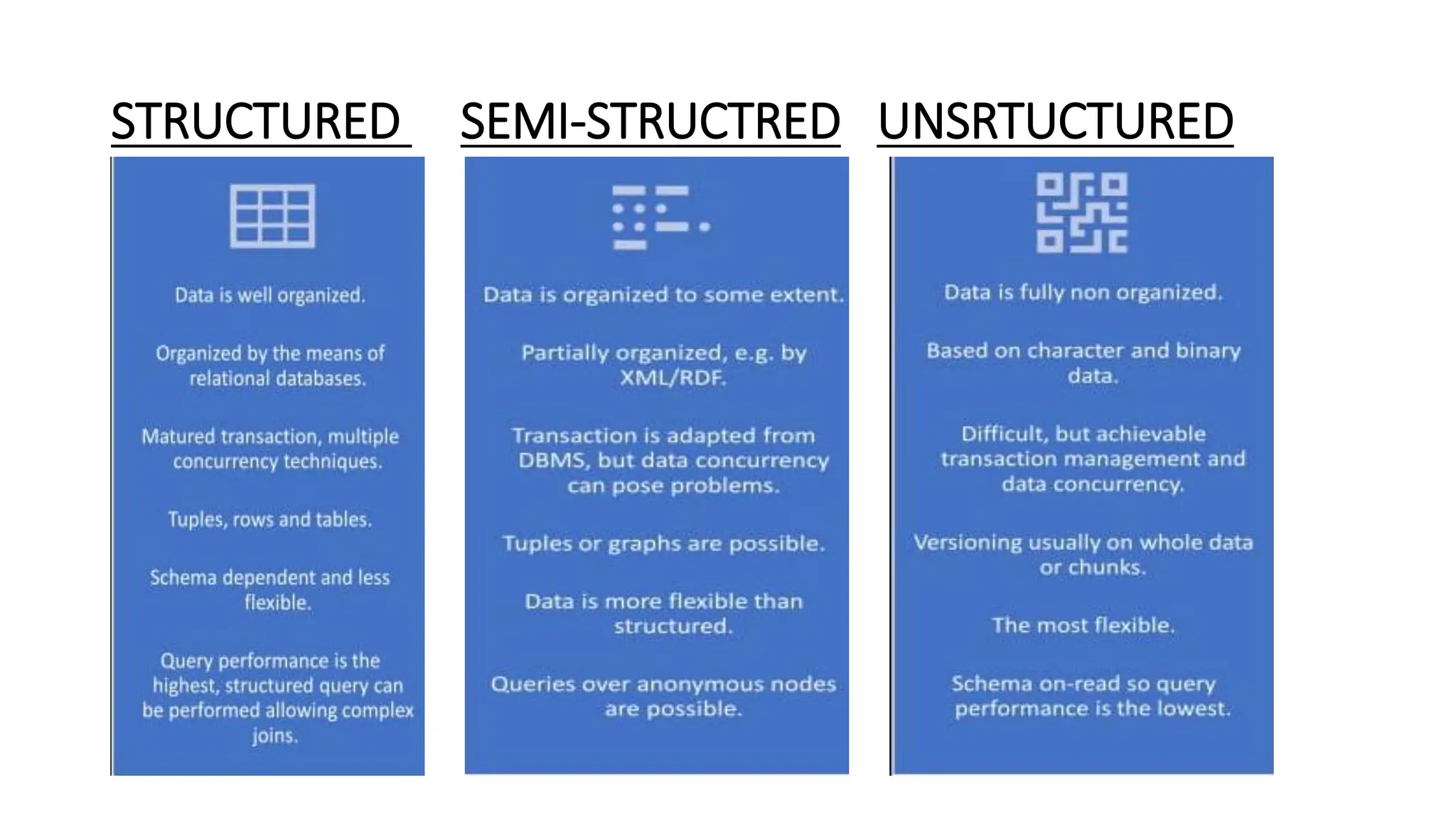
STRUCTURED SEMI-STRUCTRED UNSRTUCTURED
Conclusion
• Data science is a crucial field that helps organizations make decisions
and drive innovations across many industries.
• Data Science can help businesses gain insights, optimise process and
make better decisions.
• The Data Science process is structured but it’s important to be
flexible.
THANK
YOU

DataSciencePowerPointPresentationFull.pdf

  • 2.
    Introduction To DataScience • Data Science is a field that uses scientific methods to extract insights from data to help Business and Industries . • Data Science is the one of the fastest growing fields across all industries . • Data science is used for tools like Data Analytics ,Machine Learning .
  • 4.
    Data Science Process •The initial step of gathering raw data from various source, like Surveys, Sensors and Data bases . • Cleaning and organizing raw data by removing errors and handling missing values . • The process of extracting patterns, insights and trends from large datasets using Machine learning techniques.
  • 5.
  • 6.
    Data Acquisition • Processof gathering , filtering and cleaning data before it put in data warehouse or other storage solution on which data analysis can be carried out. • Data Acquisition is one of bag data challenges in terms of infrastructure requirements . • Infrastructure required to support the acquisition of big data must deliver low.
  • 7.
    Data Analysis • Theraw data acquired amenable to use in decision making as well as domain specific usage . • Data analysis involves exploring , transforming and modelling data. • From a business point of view synthesizing and extracting the hidden information with high potential.
  • 8.
    Data Curation • Datacuration processes can be categorized into difference activities such as a content creation, selection ,validation and preservation. • Data curation is responsible for improving accessibility and quality of data. • Ensuring that the data are trustworthy and fit their purpose.
  • 9.
    Data Storage • Datastorage is persistence and management of data in scalable way that satisfies needs of applications. • Relational database management systems (RDMS) are majorly used. • NOSQL technologies have been designed with scalability goal in mind and present wide range of solutions based on alternative data models.
  • 10.
    Key Data ScienceTopics To Explore
  • 11.
    Big Data Analytics •Big data analytics helps in organizations harness their data and use to identify new opportunities . • It leads to smarter business moves higher profits and more efficient operations .
  • 12.
    Sources Of BigData CATEGORIES • From human activities • From the physical world • From computers EXAMPLE • Internet data ,network data ,mobile network or telecom • Unstructured (such as a test , audio and video ) or semi structured(such as a emails , tweets and weblogs).
  • 13.
    Big Data Processing Thegeneral categories of activities involved with big data processing are: • Ingesting data into the system • Persisting the data in storage • Computing and Analyzing data • Visualizing the results
  • 14.
  • 16.
    Conclusion • Data scienceis a crucial field that helps organizations make decisions and drive innovations across many industries. • Data Science can help businesses gain insights, optimise process and make better decisions. • The Data Science process is structured but it’s important to be flexible.
  • 17.