DataScience: Unlocking
Insights, DrivingInnovation
Welcometotheworldofdatascience, apowerfulfieldthatusesdatato
understandthepast, predictthefuture, anddriveinnovation.
by Jayveer Banna
UnderstandingtheDataScienceLandscape
TheFieldofDataScience
Data science is a multidisciplinary field that involves collecting,
cleaning, analyzing, and interpreting data. It's about finding
patterns, drawing insights, and making informed decisions.
TypesofDataScience
There are many types of data science, including machine
learning, predictive modeling, big data analytics, and data
engineering.
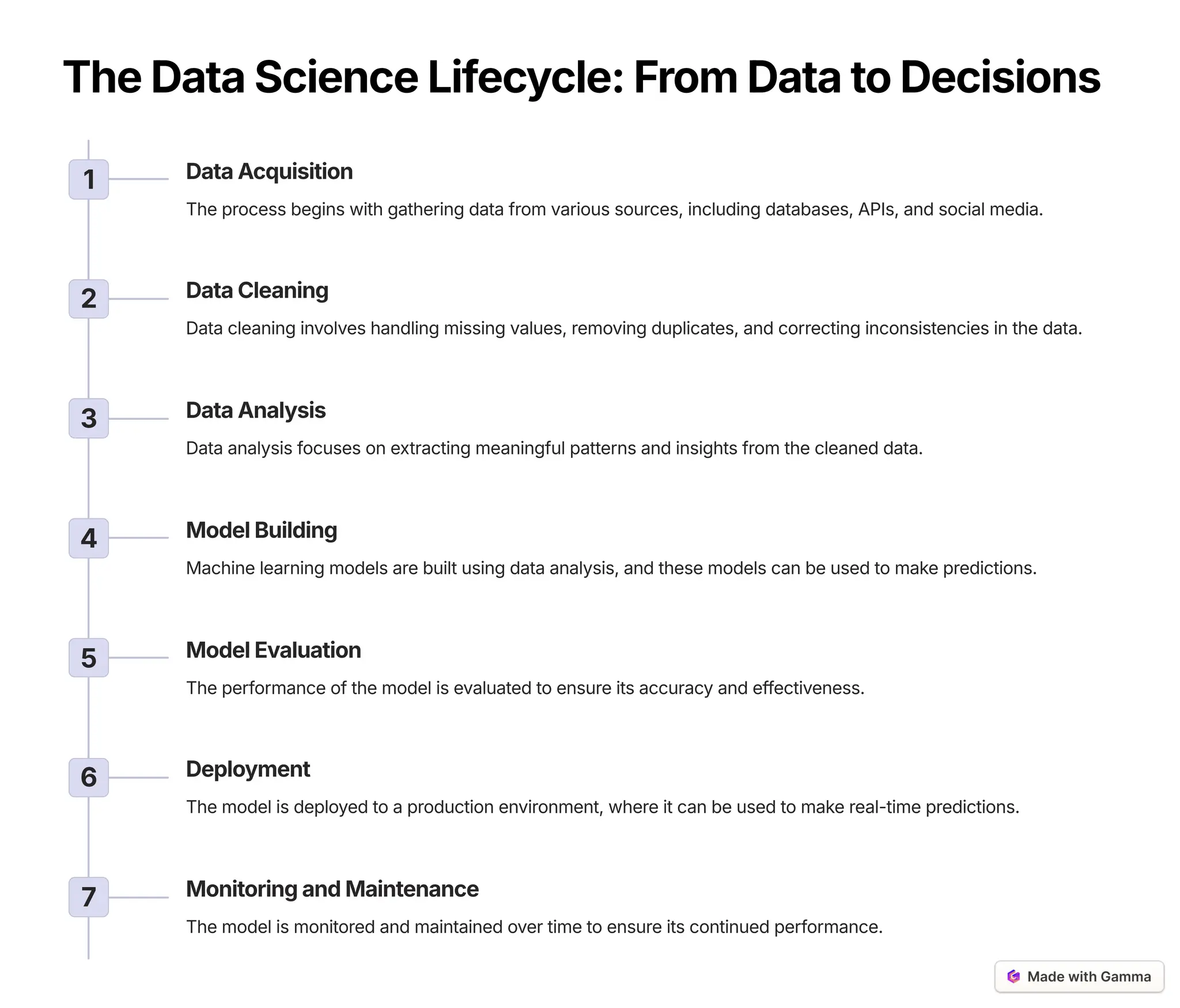
TheDataScienceLifecycle: FromDatatoDecisions
1 DataAcquisition
The process begins with gathering data from various sources, including databases, APIs, and social media.
2 DataCleaning
Data cleaning involves handling missing values, removing duplicates, and correcting inconsistencies in the data.
3 DataAnalysis
Data analysis focuses on extracting meaningful patterns and insights from the cleaned data.
4 ModelBuilding
Machine learning models are built using data analysis, and these models can be used to make predictions.
5 ModelEvaluation
The performance of the model is evaluated to ensure its accuracy and effectiveness.
6 Deployment
The model is deployed to a production environment, where it can be used to make real-time predictions.
7 MonitoringandMaintenance
The model is monitored and maintained over time to ensure its continued performance.
Machine Learning and
Predictive Modeling
Supervised Learning
Supervised learning involves
training models on labeled
data, enabling predictions
based on new, unlabeled data.
Unsupervised Learning
Unsupervised learning
involves identifying patterns in
unlabeled data, revealing
hidden structures and
relationships.
Reinforcement Learning
Reinforcement learning involves training agents to make decisions in
dynamic environments through trial and error.
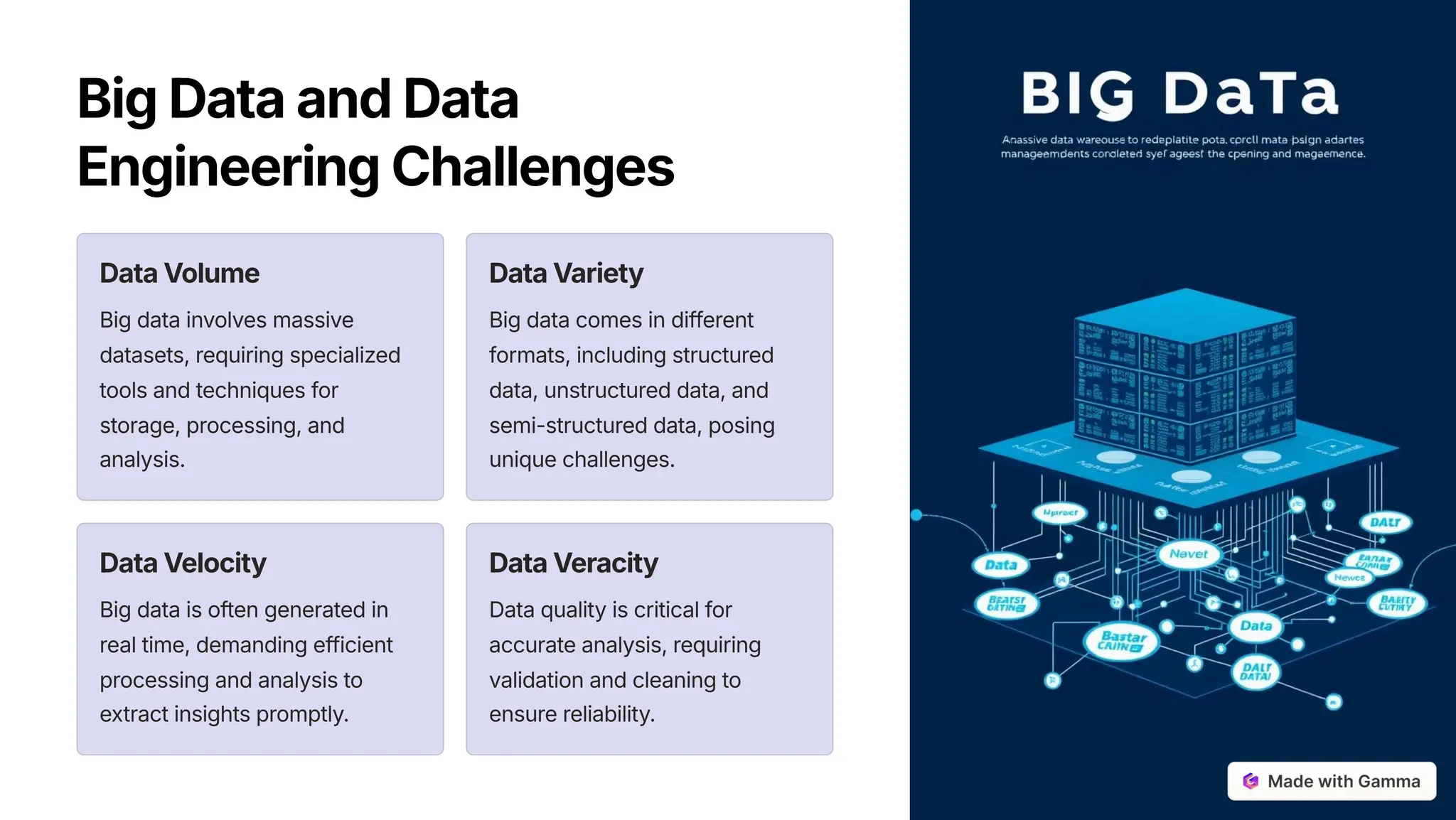
BigDataandData
EngineeringChallenges
DataVolume
Big data involves massive
datasets, requiring specialized
tools and techniques for
storage, processing, and
analysis.
DataVariety
Big data comes in different
formats, including structured
data, unstructured data, and
semi-structured data, posing
unique challenges.
DataVelocity
Big data is often generated in
real time, demanding efficient
processing and analysis to
extract insights promptly.
DataVeracity
Data quality is critical for
accurate analysis, requiring
validation and cleaning to
ensure reliability.
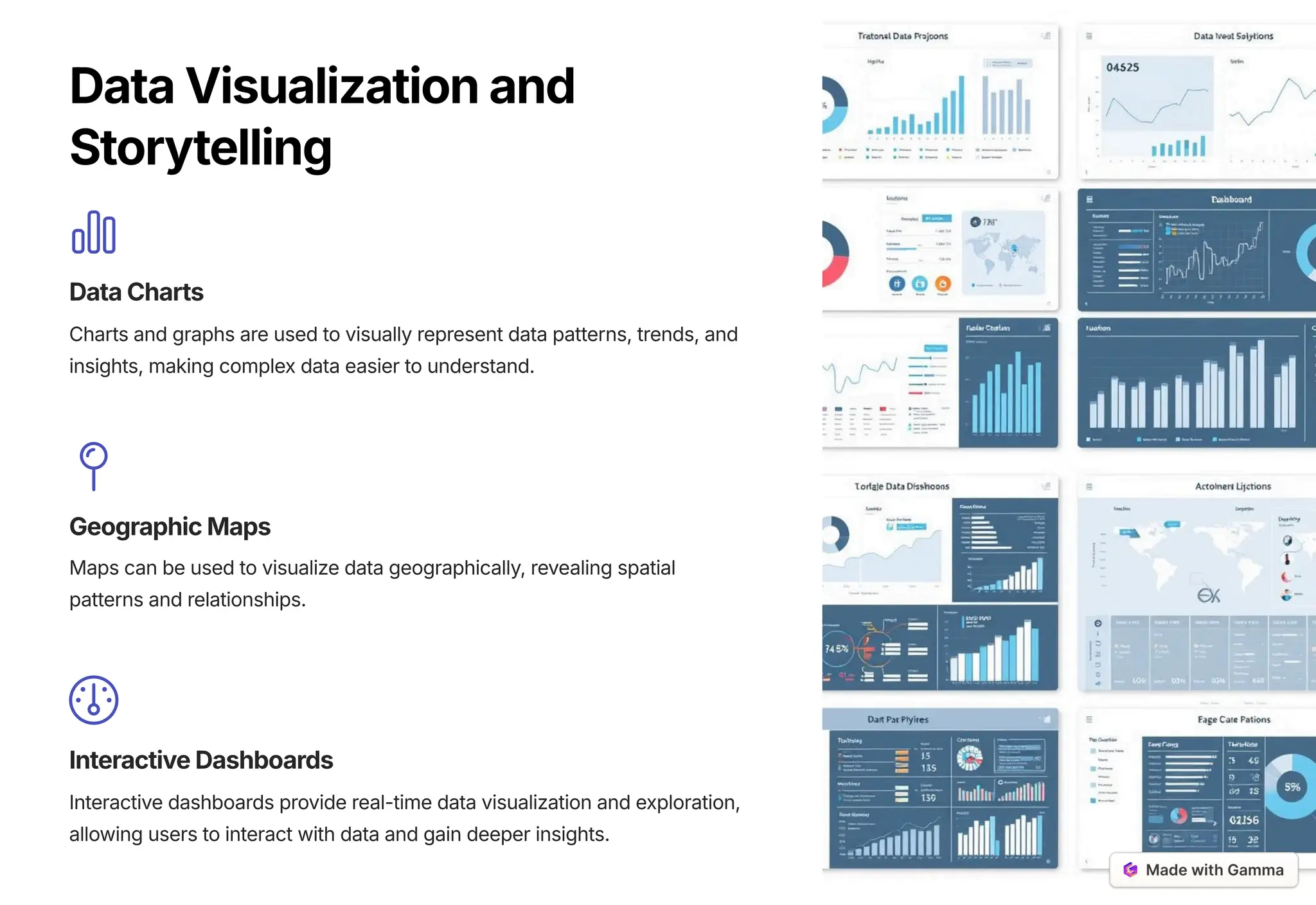
DataVisualizationand
Storytelling
DataCharts
Charts and graphs are used to visually represent data patterns, trends, and
insights, making complex data easier to understand.
GeographicMaps
Maps can be used to visualize data geographically, revealing spatial
patterns and relationships.
InteractiveDashboards
Interactive dashboards provide real-time data visualization and exploration,
allowing users to interact with data and gain deeper insights.
EthicalConsiderationsinDataScience
1
Privacy
Protecting personal information is paramount, ensuring data is used responsibly and
ethically.
2
Bias
Addressing biases in data and algorithms is essential to prevent unfair or
discriminatory outcomes.
3
Transparency
Transparency in data collection, analysis, and model development
fosters trust and accountability.
4
Security
Securing data from unauthorized access and breaches is vital
to protect sensitive information.
TheFutureofDataScience: Trendsand
Opportunities
1
AIandMachineLearning
Advancements in AI and machine learning will continue to revolutionize data science, leading to more
sophisticated models and applications.
2
DataEthics
Data ethics will become increasingly important as data science impacts various aspects of
society.
3
DataGovernance
Data governance frameworks will evolve to address the growing complexity
and challenges of data management.
4
DataDemocratization
Data science tools and techniques will become more
accessible, empowering a wider range of individuals and
organizations to leverage data.

Copy-of-Data-Science-Unlocking-Insights-Driving-Innovation (1)

  • 1.
    DataScience: Unlocking Insights, DrivingInnovation Welcometotheworldofdatascience,apowerfulfieldthatusesdatato understandthepast, predictthefuture, anddriveinnovation. by Jayveer Banna
  • 2.
    UnderstandingtheDataScienceLandscape TheFieldofDataScience Data science isa multidisciplinary field that involves collecting, cleaning, analyzing, and interpreting data. It's about finding patterns, drawing insights, and making informed decisions. TypesofDataScience There are many types of data science, including machine learning, predictive modeling, big data analytics, and data engineering.
  • 3.
    TheDataScienceLifecycle: FromDatatoDecisions 1 DataAcquisition Theprocess begins with gathering data from various sources, including databases, APIs, and social media. 2 DataCleaning Data cleaning involves handling missing values, removing duplicates, and correcting inconsistencies in the data. 3 DataAnalysis Data analysis focuses on extracting meaningful patterns and insights from the cleaned data. 4 ModelBuilding Machine learning models are built using data analysis, and these models can be used to make predictions. 5 ModelEvaluation The performance of the model is evaluated to ensure its accuracy and effectiveness. 6 Deployment The model is deployed to a production environment, where it can be used to make real-time predictions. 7 MonitoringandMaintenance The model is monitored and maintained over time to ensure its continued performance.
  • 4.
    Machine Learning and PredictiveModeling Supervised Learning Supervised learning involves training models on labeled data, enabling predictions based on new, unlabeled data. Unsupervised Learning Unsupervised learning involves identifying patterns in unlabeled data, revealing hidden structures and relationships. Reinforcement Learning Reinforcement learning involves training agents to make decisions in dynamic environments through trial and error.
  • 5.
    BigDataandData EngineeringChallenges DataVolume Big data involvesmassive datasets, requiring specialized tools and techniques for storage, processing, and analysis. DataVariety Big data comes in different formats, including structured data, unstructured data, and semi-structured data, posing unique challenges. DataVelocity Big data is often generated in real time, demanding efficient processing and analysis to extract insights promptly. DataVeracity Data quality is critical for accurate analysis, requiring validation and cleaning to ensure reliability.
  • 6.
    DataVisualizationand Storytelling DataCharts Charts and graphsare used to visually represent data patterns, trends, and insights, making complex data easier to understand. GeographicMaps Maps can be used to visualize data geographically, revealing spatial patterns and relationships. InteractiveDashboards Interactive dashboards provide real-time data visualization and exploration, allowing users to interact with data and gain deeper insights.
  • 7.
    EthicalConsiderationsinDataScience 1 Privacy Protecting personal informationis paramount, ensuring data is used responsibly and ethically. 2 Bias Addressing biases in data and algorithms is essential to prevent unfair or discriminatory outcomes. 3 Transparency Transparency in data collection, analysis, and model development fosters trust and accountability. 4 Security Securing data from unauthorized access and breaches is vital to protect sensitive information.
  • 8.
    TheFutureofDataScience: Trendsand Opportunities 1 AIandMachineLearning Advancements inAI and machine learning will continue to revolutionize data science, leading to more sophisticated models and applications. 2 DataEthics Data ethics will become increasingly important as data science impacts various aspects of society. 3 DataGovernance Data governance frameworks will evolve to address the growing complexity and challenges of data management. 4 DataDemocratization Data science tools and techniques will become more accessible, empowering a wider range of individuals and organizations to leverage data.