Project: 
Pan-European Data Centre Academy 
Esther van Bergen
Agenda 
• Overview and Background of PEDCA 
• Aims and Objectives 
• Consortium Members 
• Research methodology 
• The JAP “Steer” thus far 
• Next steps
EU Data Centres: Strategic Issues 
Six issues raised at Digital Agenda Europe 
• Huge growth 
• Critical for the Digital Economy 
• Pressure on Energy Efficiency 
• Pressure on tighter SLAs and regulation 
• Still an emerging and fragmented landscape 
• A skills problem 
• Changing global competition
About the project 
• The first strategic Research & Development FP7 
grant dedicated to addressing the data centre 
sector 
• Strategic EU investment of €1.7 Million Euros 
• 18 month duration from 1st July 2013 
• A result of a collaborative initiative between UK, 
Netherlands and Germany 
• The first partnership between Academia, Regional 
Government and industry for the sector
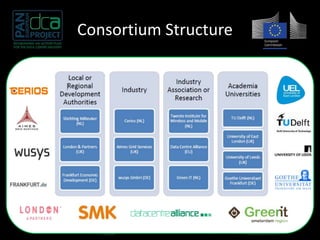
Consortium Structure
The Aims and Objectives 
• To leverage the expertise and skills starting with three of EU’s 
data centre “hotspots” 
• Widen participation across EU 
• Identify the research requirements of the data centre industry 
• Develop an independent sustainable research platform to 
meet the industry future needs 
• Identify the skills, education and training requirements of the 
data centre industry 
• Develop a Joint Action Plan (JAP) to provide an agenda for 
Europe’s data centre sector
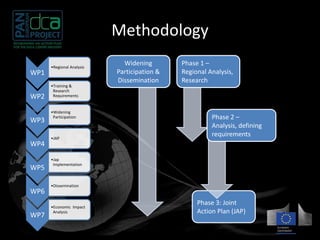
Methodology 
WP1 
•Regional Analysis 
WP2 
•Training & 
Research 
Requirements 
WP3 
•Widening 
Participation 
WP4 
•JAP 
WP5 
•Jap 
Implementation 
WP6 
•Dissemination 
WP7 
•Economic Impact 
Analysis 
Widening 
Participation & 
Dissemination 
Phase 1 – 
Regional Analysis, 
Research 
Phase 2 – 
Analysis, defining 
requirements 
Phase 3: Joint 
Action Plan (JAP)
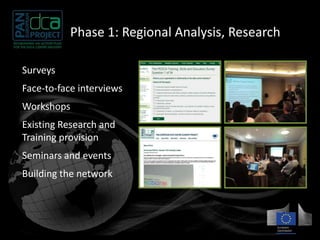
Phase 1: Regional Analysis, Research 
Surveys 
Face-to-face interviews 
Workshops 
Existing Research and 
Training provision 
Seminars and events 
Building the network
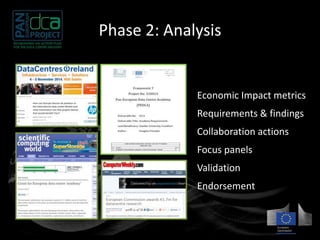
Phase 2: Analysis 
Economic Impact metrics 
Requirements & findings 
Collaboration actions 
Focus panels 
Validation 
Endorsement
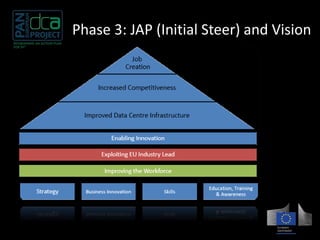
Phase 3: JAP (Initial Steer) and Vision
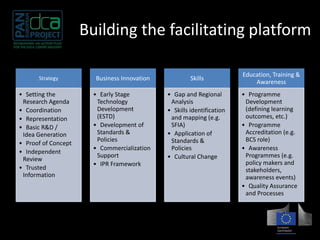
Building the facilitating platform 
Strategy 
• Setting the 
Research Agenda 
• Coordination 
• Representation 
• Basic R&D / 
Idea Generation 
• Proof of Concept 
• Independent 
Review 
• Trusted 
Information 
Business Innovation 
• Early Stage 
Technology 
Development 
(ESTD) 
• Development of 
Standards & 
Policies 
• Commercialization 
Support 
• IPR Framework 
Skills 
• Gap and Regional 
Analysis 
• Skills identification 
and mapping (e.g. 
SFIA) 
• Application of 
Standards & 
Policies 
• Cultural Change 
Education, Training & 
Awareness 
• Programme 
Development 
(defining learning 
outcomes, etc.) 
• Programme 
Accreditation (e.g. 
BCS role) 
• Awareness 
Programmes (e.g. 
policy makers and 
stakeholders, 
awareness events) 
• Quality Assurance 
and Processes
2014 Actions 
• “Academy Requirements” End Feb 
• “DCA Bootcamps” UK (Aug), Netherlands (April) and Germany (May) 
• “Focus Panels” x 4 (Validation of PEDCA vision for JAP) 
 London July 15 
 Warsaw September 9 
 Amsterdam October 16 
 Frankfurt November 11 
• Working in “new” regions – Poland in September 
• Sustainable model for JAP (Oct) 
• Final JAP (December)
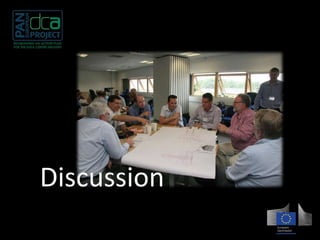
Discussion
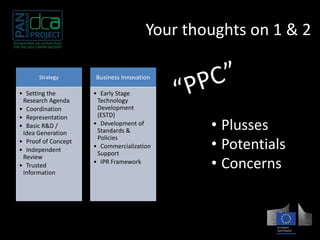
Your thoughts on 1 & 2 
Strategy 
• Setting the 
Research Agenda 
• Coordination 
• Representation 
• Basic R&D / 
Idea Generation 
• Proof of Concept 
• Independent 
Review 
• Trusted 
Information 
Business Innovation 
• Early Stage 
Technology 
Development 
(ESTD) 
• Development of 
Standards & 
Policies 
• Commercialization 
Support 
• IPR Framework 
• Plusses 
• Potentials 
• Concerns
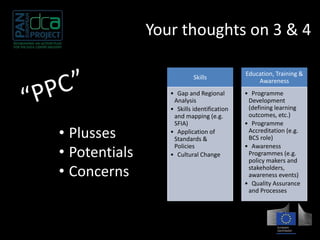
Your thoughts on 3 & 4 
Skills 
• Gap and Regional 
Analysis 
• Skills identification 
and mapping (e.g. 
SFIA) 
• Application of 
Standards & 
Policies 
• Cultural Change 
Education, Training & 
Awareness 
• Programme 
Development 
(defining learning 
outcomes, etc.) 
• Programme 
Accreditation (e.g. 
BCS role) 
• Awareness 
Programmes (e.g. 
policy makers and 
stakeholders, 
awareness events) 
• Quality Assurance 
and Processes 
• Plusses 
• Potentials 
• Concerns
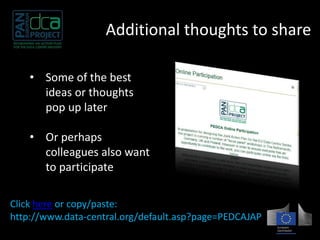
Additional thoughts to share 
• Some of the best 
ideas or thoughts 
pop up later 
• Or perhaps 
colleagues also want 
to participate 
Click here or copy/paste: 
http://www.data-central.org/default.asp?page=PEDCAJAP
More information and ways to connect 
www.PEDCA.eu 
www.data-central.org/PEDCA 
@projectpedca 
Project PEDCA group

Datacenter event - PEDCA general presentation - esther van bergen - 15-09-14

  • 1.
    Project: Pan-European DataCentre Academy Esther van Bergen
  • 2.
    Agenda • Overviewand Background of PEDCA • Aims and Objectives • Consortium Members • Research methodology • The JAP “Steer” thus far • Next steps
  • 3.
    EU Data Centres:Strategic Issues Six issues raised at Digital Agenda Europe • Huge growth • Critical for the Digital Economy • Pressure on Energy Efficiency • Pressure on tighter SLAs and regulation • Still an emerging and fragmented landscape • A skills problem • Changing global competition
  • 4.
    About the project • The first strategic Research & Development FP7 grant dedicated to addressing the data centre sector • Strategic EU investment of €1.7 Million Euros • 18 month duration from 1st July 2013 • A result of a collaborative initiative between UK, Netherlands and Germany • The first partnership between Academia, Regional Government and industry for the sector
  • 5.
  • 6.
    The Aims andObjectives • To leverage the expertise and skills starting with three of EU’s data centre “hotspots” • Widen participation across EU • Identify the research requirements of the data centre industry • Develop an independent sustainable research platform to meet the industry future needs • Identify the skills, education and training requirements of the data centre industry • Develop a Joint Action Plan (JAP) to provide an agenda for Europe’s data centre sector
  • 7.
    Methodology WP1 •RegionalAnalysis WP2 •Training & Research Requirements WP3 •Widening Participation WP4 •JAP WP5 •Jap Implementation WP6 •Dissemination WP7 •Economic Impact Analysis Widening Participation & Dissemination Phase 1 – Regional Analysis, Research Phase 2 – Analysis, defining requirements Phase 3: Joint Action Plan (JAP)
  • 8.
    Phase 1: RegionalAnalysis, Research Surveys Face-to-face interviews Workshops Existing Research and Training provision Seminars and events Building the network
  • 9.
    Phase 2: Analysis Economic Impact metrics Requirements & findings Collaboration actions Focus panels Validation Endorsement
  • 10.
    Phase 3: JAP(Initial Steer) and Vision
  • 11.
    Building the facilitatingplatform Strategy • Setting the Research Agenda • Coordination • Representation • Basic R&D / Idea Generation • Proof of Concept • Independent Review • Trusted Information Business Innovation • Early Stage Technology Development (ESTD) • Development of Standards & Policies • Commercialization Support • IPR Framework Skills • Gap and Regional Analysis • Skills identification and mapping (e.g. SFIA) • Application of Standards & Policies • Cultural Change Education, Training & Awareness • Programme Development (defining learning outcomes, etc.) • Programme Accreditation (e.g. BCS role) • Awareness Programmes (e.g. policy makers and stakeholders, awareness events) • Quality Assurance and Processes
  • 12.
    2014 Actions •“Academy Requirements” End Feb • “DCA Bootcamps” UK (Aug), Netherlands (April) and Germany (May) • “Focus Panels” x 4 (Validation of PEDCA vision for JAP)  London July 15  Warsaw September 9  Amsterdam October 16  Frankfurt November 11 • Working in “new” regions – Poland in September • Sustainable model for JAP (Oct) • Final JAP (December)
  • 13.
  • 14.
    Your thoughts on1 & 2 Strategy • Setting the Research Agenda • Coordination • Representation • Basic R&D / Idea Generation • Proof of Concept • Independent Review • Trusted Information Business Innovation • Early Stage Technology Development (ESTD) • Development of Standards & Policies • Commercialization Support • IPR Framework • Plusses • Potentials • Concerns
  • 15.
    Your thoughts on3 & 4 Skills • Gap and Regional Analysis • Skills identification and mapping (e.g. SFIA) • Application of Standards & Policies • Cultural Change Education, Training & Awareness • Programme Development (defining learning outcomes, etc.) • Programme Accreditation (e.g. BCS role) • Awareness Programmes (e.g. policy makers and stakeholders, awareness events) • Quality Assurance and Processes • Plusses • Potentials • Concerns
  • 16.
    Additional thoughts toshare • Some of the best ideas or thoughts pop up later • Or perhaps colleagues also want to participate Click here or copy/paste: http://www.data-central.org/default.asp?page=PEDCAJAP
  • 17.
    More information andways to connect www.PEDCA.eu www.data-central.org/PEDCA @projectpedca Project PEDCA group

Editor's Notes