HIGHER DATABASES
RELATIONSHIPS
WHAT IS A DATABASE RELATIONSHIP?
• A relationship is the way we describe how data is related or
attached to each other.
• For example we can say in a database of a school. Pupils and
teachers are related as a pupil is taught by teachers, and a
teacher teaches pupils.
ONE TO ONE RELATIONSHIP
•In a one – to - one relationship, each entity
occurrence in an entity is associated with one,
and only one, entity occurrence within a related
entity.
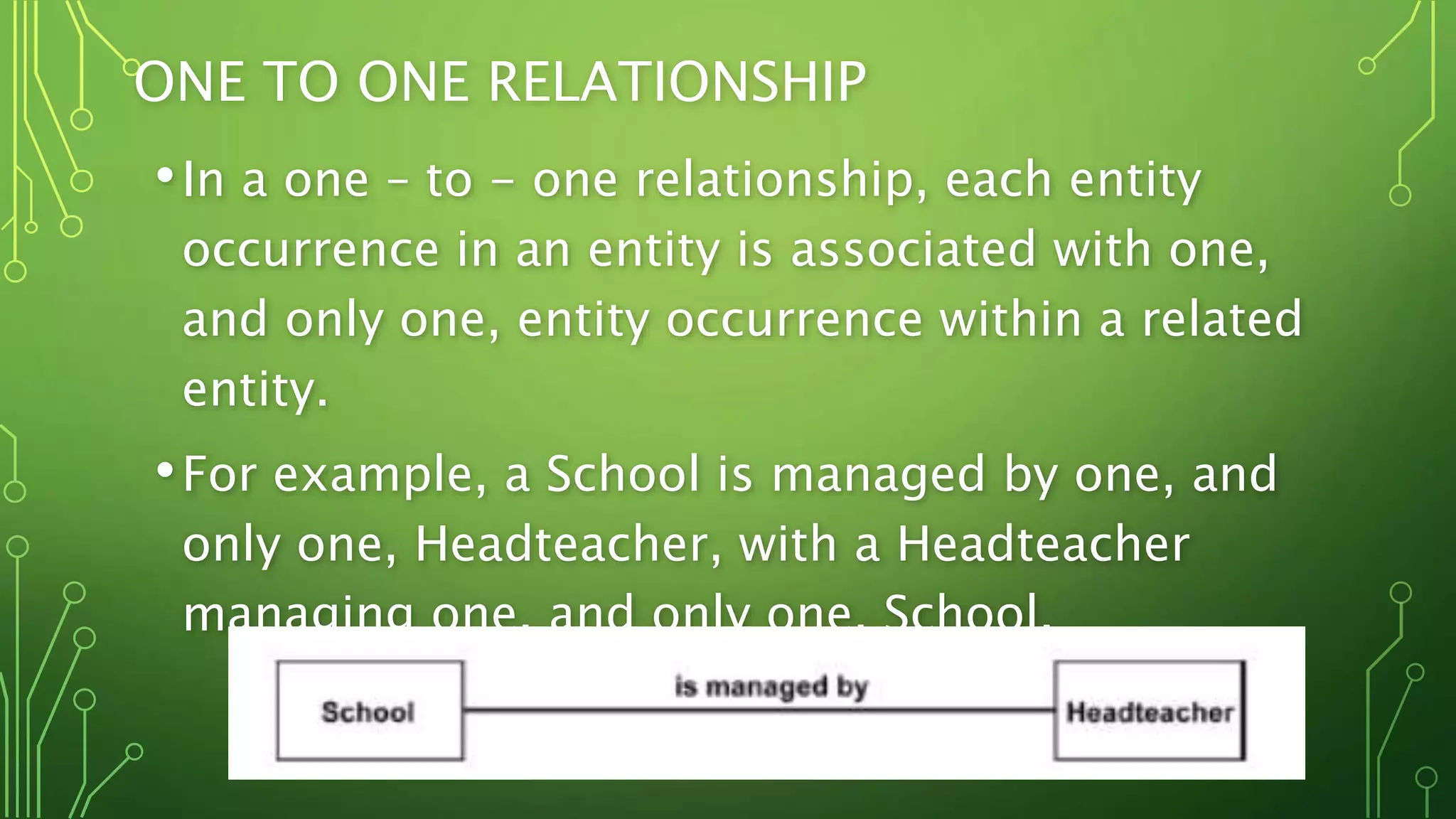
•For example, a School is managed by one, and
only one, Headteacher, with a Headteacher
managing one, and only one, School.
ONE TO ONE EXAMPLES
• A football club will only have one manager. A manager will only
work for one football club
• A pupil will only have one candidate number. A candidate
number can only be used by one pupil.
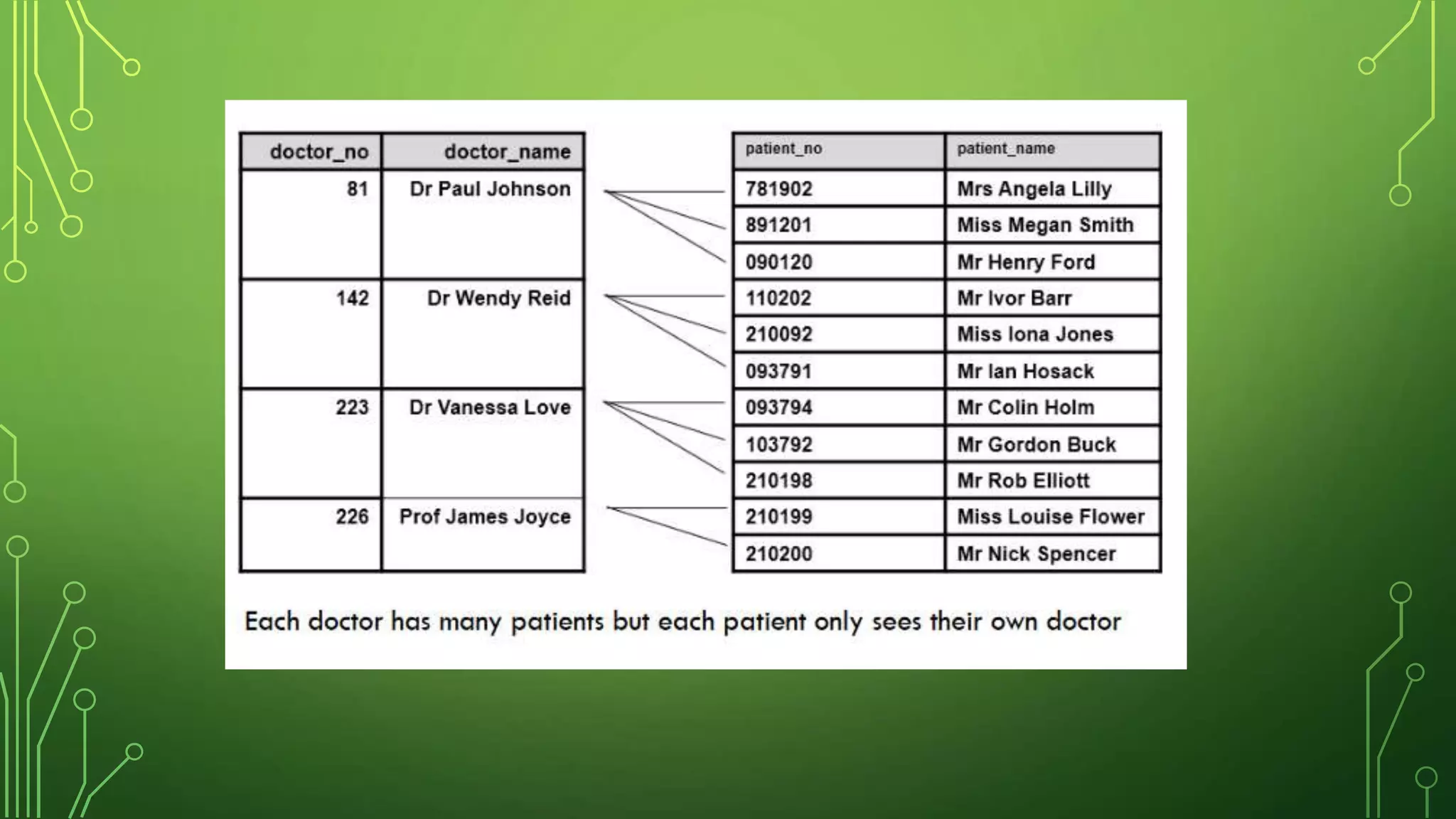
ONE TO MANY RELATIONSHIP
• In a one -to-many relationship, each entity occurrence in an
entity can be associated with one or more entity occurrences in
a related entity.
• For example, a School employs many Teachers and each of
those Teachers is employed by one School.
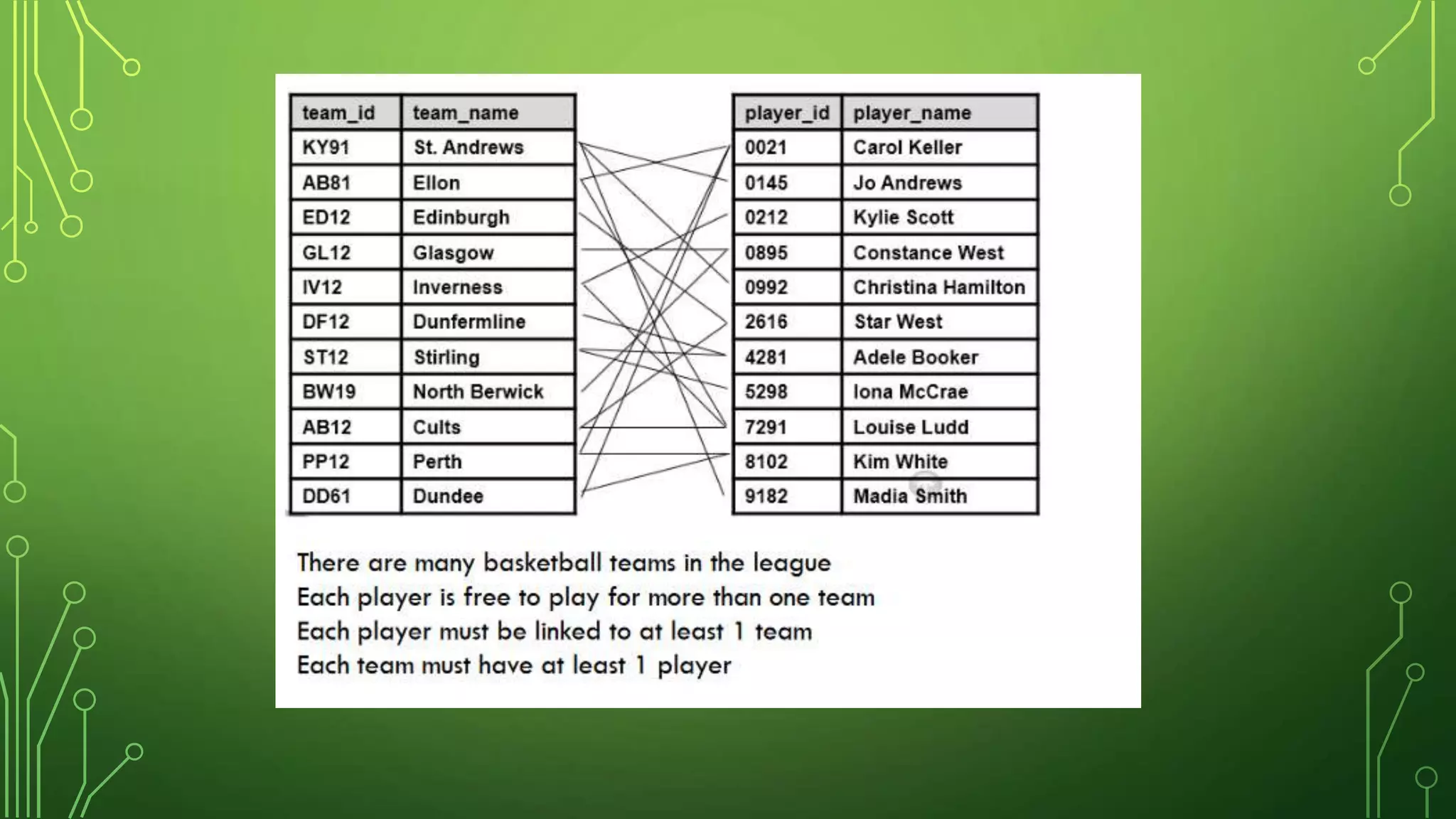
MANY TO MANY RELATIONSHIP
• In a many-to-many relationship, several entity occurrences in
an entity can be associated with multiple entity occurrences in a
related entity.
• For example, many Students study several different Subjects
and each of those Subjects is studied by many Students.
• Direct many-to-many relationships between two entities
cannot be implemented by a relational database system. To
overcome this many to many relationships are resolved to one
to many relationships
Database Relationships

Database Relationships

  • 1.
  • 2.
    WHAT IS ADATABASE RELATIONSHIP? • A relationship is the way we describe how data is related or attached to each other. • For example we can say in a database of a school. Pupils and teachers are related as a pupil is taught by teachers, and a teacher teaches pupils.
  • 3.
    ONE TO ONERELATIONSHIP •In a one – to - one relationship, each entity occurrence in an entity is associated with one, and only one, entity occurrence within a related entity. •For example, a School is managed by one, and only one, Headteacher, with a Headteacher managing one, and only one, School.
  • 4.
    ONE TO ONEEXAMPLES • A football club will only have one manager. A manager will only work for one football club • A pupil will only have one candidate number. A candidate number can only be used by one pupil.
  • 5.
    ONE TO MANYRELATIONSHIP • In a one -to-many relationship, each entity occurrence in an entity can be associated with one or more entity occurrences in a related entity. • For example, a School employs many Teachers and each of those Teachers is employed by one School.
  • 7.
    MANY TO MANYRELATIONSHIP • In a many-to-many relationship, several entity occurrences in an entity can be associated with multiple entity occurrences in a related entity. • For example, many Students study several different Subjects and each of those Subjects is studied by many Students. • Direct many-to-many relationships between two entities cannot be implemented by a relational database system. To overcome this many to many relationships are resolved to one to many relationships