UDL CLASSROOM
ASSIGNMENT
By: Daisy English
Structure
My school would be catered toward both middle school and high school students.
• Will include ramps to enter the building from the parking lot.
• There would be stairs to have more floors of classes.
Multiple elevators will be equipped in the school for equal access to all students.
• Elective courses will be downstairs on the right side of the building with the P.E gym as well.
• English, science, and history courses will be found upstairs with the library and computer labs.
The left side downstairs will be the math and science courses with a cafeteria in the middle.
• Special Education courses will also have their own wing downstairs with open easy access to the rest of the school as
they may also have general education courses.
Classes
Students will be grouped in courses by ability level
with a maximum of 10 students per classroom.
• This way students who are in upper level courses
can continue to excel and have teachers that
facilitate knowledge growth and work well with
their learning types.
Those whose learning ability is average will have their
own courses catered to their learning style and those
who struggle with learning will also have their own
courses and teachers to better assist and focus on each
student in their class.
• Those in special education classes will also be in
some general education courses, if eligible, and each
student will have a chance to succeed with a teacher
trained to help facilitate learning with all types of
students.
Personnel
Staff will consist of teachers
able to teach all learning
types for upper level, average,
and lower level ability
students and teachers
specially trained for the
special education students.
Special education classrooms
will also have two
educational aids to further
assist with the students
throughout the day.
There will be a principal, at
least an assistant principal
and counselor for each ability
level, a front desk secretary,
two librarians (one as an
assistant), janitorial staff, and
cafeteria staff.
Elective courses will have
teachers certified in areas
specific for that elective. For
example, an art teacher who
has a degree in art, a robotics
teacher who has experience
in engineering and
technology, etc.
Instruction
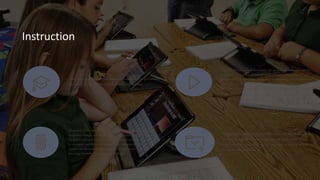
The most recent technological advances in media will be provided to
the students in the classroom to facilitate more learning.
Teachers will have access to the student’s file on their own tablet and teach the
curriculum based on how all students in the class can learn collectively.
Students will learn some topics in a group and other topics will be presented on
a tablet in front of them that is personalized to their ability level and caters to
their learning style. The teacher will monitor their progress according to their
goals.
All networks of the brain will be involved with their learning assignments:
recognition, strategic, and affective based on the subject they are learning and
the student’s strengths and weaknesses. The student’s processing type will also
be considered, and different techniques will be automatically generated until it
matches with the students highest preferred or most successful way of
processing information being presented to them.
Assignments will be completed on the tablet and directly turned into
teachers through their learning software and projects will be
completed with a free choice of how they wish to present it, if all
criteria for the project are met.
General Curriculum
The curriculum for each student will be
personalized. Every student will have their own
curriculum that the teachers will have access to.
Every student will have clear, personalized goals and the curriculum will
be written based on their current abilities and abilities they will need to
learn during the school year based on general curriculum goals for all
students.
Their tablet will personalize their learning
activities with a good balance of the student’s
strengths and weaknesses according to their
personal curriculum goals.
This keeps the curriculum and teaching flexible and
current.
Each student will also have recognition,
strategic, and affective related goals
based on their ability.
Special education students will have a more focused personalized plan
with academic and behavior goals with data to be rewritten every 6
months to track their progress closely and ensure they are close to their
general curriculum goals as well.
Technology
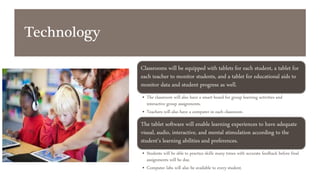
Classrooms will be equipped with tablets for each student, a tablet for
each teacher to monitor students, and a tablet for educational aids to
monitor data and student progress as well.
• The classroom will also have a smart board for group learning activities and
interactive group assignments.
• Teachers will also have a computer in each classroom.
The tablet software will enable learning experiences to have adequate
visual, audio, interactive, and mental stimulation according to the
student’s learning abilities and preferences.
• Students will be able to practice skills many times with accurate feedback before final
assignments will be due.
• Computer labs will also be available to every student.
Assessment
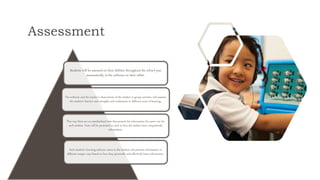
Students will be assessed on their abilities throughout the school year
automatically in the software on their tablet.
The software and the teacher’s observations of the student in group activities will assesses
the student's barriers and strengths and weaknesses in different areas of learning.
This way there are no standardized tests that present the information the same way for
each student. Tests will be presented to cater to how the student best comprehends
information.
Each student’s learning software caters to the student and presents information in
different unique ways based on how they personally and effectively learn information.
Works Cited
• Rose, D. H., Meyer, A., Strangman, N., & Rappolt, G. (2002).
Teaching every student in the digital age: Universal design for
learning. Alexandria, VA: Association for Supervision and
Curriculum Development.
• Murawski, W. (2019). What really works with universal design for
learning. Thousand Oaks, CA: SAGE.
Thank you for viewing my presentation!

Daisy English UDL Project

  • 1.
  • 2.
    Structure My school wouldbe catered toward both middle school and high school students. • Will include ramps to enter the building from the parking lot. • There would be stairs to have more floors of classes. Multiple elevators will be equipped in the school for equal access to all students. • Elective courses will be downstairs on the right side of the building with the P.E gym as well. • English, science, and history courses will be found upstairs with the library and computer labs. The left side downstairs will be the math and science courses with a cafeteria in the middle. • Special Education courses will also have their own wing downstairs with open easy access to the rest of the school as they may also have general education courses.
  • 3.
    Classes Students will begrouped in courses by ability level with a maximum of 10 students per classroom. • This way students who are in upper level courses can continue to excel and have teachers that facilitate knowledge growth and work well with their learning types. Those whose learning ability is average will have their own courses catered to their learning style and those who struggle with learning will also have their own courses and teachers to better assist and focus on each student in their class. • Those in special education classes will also be in some general education courses, if eligible, and each student will have a chance to succeed with a teacher trained to help facilitate learning with all types of students.
  • 4.
    Personnel Staff will consistof teachers able to teach all learning types for upper level, average, and lower level ability students and teachers specially trained for the special education students. Special education classrooms will also have two educational aids to further assist with the students throughout the day. There will be a principal, at least an assistant principal and counselor for each ability level, a front desk secretary, two librarians (one as an assistant), janitorial staff, and cafeteria staff. Elective courses will have teachers certified in areas specific for that elective. For example, an art teacher who has a degree in art, a robotics teacher who has experience in engineering and technology, etc.
  • 5.
    Instruction The most recenttechnological advances in media will be provided to the students in the classroom to facilitate more learning. Teachers will have access to the student’s file on their own tablet and teach the curriculum based on how all students in the class can learn collectively. Students will learn some topics in a group and other topics will be presented on a tablet in front of them that is personalized to their ability level and caters to their learning style. The teacher will monitor their progress according to their goals. All networks of the brain will be involved with their learning assignments: recognition, strategic, and affective based on the subject they are learning and the student’s strengths and weaknesses. The student’s processing type will also be considered, and different techniques will be automatically generated until it matches with the students highest preferred or most successful way of processing information being presented to them. Assignments will be completed on the tablet and directly turned into teachers through their learning software and projects will be completed with a free choice of how they wish to present it, if all criteria for the project are met.
  • 6.
    General Curriculum The curriculumfor each student will be personalized. Every student will have their own curriculum that the teachers will have access to. Every student will have clear, personalized goals and the curriculum will be written based on their current abilities and abilities they will need to learn during the school year based on general curriculum goals for all students. Their tablet will personalize their learning activities with a good balance of the student’s strengths and weaknesses according to their personal curriculum goals. This keeps the curriculum and teaching flexible and current. Each student will also have recognition, strategic, and affective related goals based on their ability. Special education students will have a more focused personalized plan with academic and behavior goals with data to be rewritten every 6 months to track their progress closely and ensure they are close to their general curriculum goals as well.
  • 7.
    Technology Classrooms will beequipped with tablets for each student, a tablet for each teacher to monitor students, and a tablet for educational aids to monitor data and student progress as well. • The classroom will also have a smart board for group learning activities and interactive group assignments. • Teachers will also have a computer in each classroom. The tablet software will enable learning experiences to have adequate visual, audio, interactive, and mental stimulation according to the student’s learning abilities and preferences. • Students will be able to practice skills many times with accurate feedback before final assignments will be due. • Computer labs will also be available to every student.
  • 8.
    Assessment Students will beassessed on their abilities throughout the school year automatically in the software on their tablet. The software and the teacher’s observations of the student in group activities will assesses the student's barriers and strengths and weaknesses in different areas of learning. This way there are no standardized tests that present the information the same way for each student. Tests will be presented to cater to how the student best comprehends information. Each student’s learning software caters to the student and presents information in different unique ways based on how they personally and effectively learn information.
  • 9.
    Works Cited • Rose,D. H., Meyer, A., Strangman, N., & Rappolt, G. (2002). Teaching every student in the digital age: Universal design for learning. Alexandria, VA: Association for Supervision and Curriculum Development. • Murawski, W. (2019). What really works with universal design for learning. Thousand Oaks, CA: SAGE.
  • 10.
    Thank you forviewing my presentation!

Editor's Notes

  • #2 NOTE: Want a different image on this slide? Select the picture and delete it. Now click the Pictures icon in the placeholder to insert your own image.