The fiscal sustainability of
long-term care and its impact
on health systems
4th Meeting of the Joint Network on
Fiscal Sustainability of Health Systems
16-17 February 2015
Tim Muir
Policy Analyst
Health and Social Policy Divisions
Directorate for Employment, Labour and Social Affairs
• “Care for people needing support in many facets of
living over a prolonged period of time” (OECD, 2011)
• Typically this refers to ADL care, but it can also mean
IADL care and other things (meeting social needs,
some medical care).
• OECD distinguishes “health” components (ADL,
nursing care, palliative care) from “social care” (IADL,
residential care) for accounting purposes.
What is long-term care?
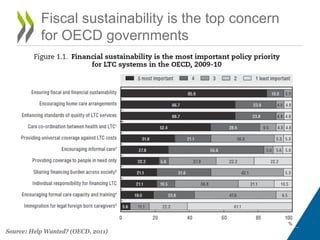
Fiscal sustainability is the top concern
for OECD governments
Source: Help Wanted? (OECD, 2011)
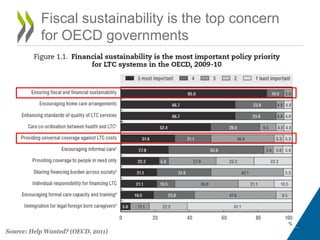
Fiscal sustainability is the top concern
for OECD governments
Source: Help Wanted? (OECD, 2011)
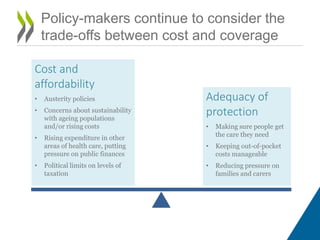
Policy-makers continue to consider the
trade-offs between cost and coverage
Cost and
affordability
• Austerity policies
• Concerns about sustainability
with ageing populations
and/or rising costs
• Rising expenditure in other
areas of health care, putting
pressure on public finances
• Political limits on levels of
taxation
Adequacy of
protection
• Making sure people get
the care they need
• Keeping out-of-pocket
costs manageable
• Reducing pressure on
families and carers
TRENDS IN LTC SPENDING
AND KEY DRIVERS
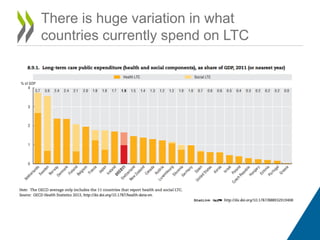
There is huge variation in what
countries currently spend on LTC
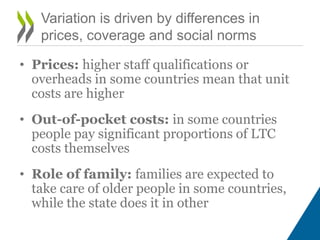
• Prices: higher staff qualifications or
overheads in some countries mean that unit
costs are higher
• Out-of-pocket costs: in some countries
people pay significant proportions of LTC
costs themselves
• Role of family: families are expected to
take care of older people in some countries,
while the state does it in other
Variation is driven by differences in
prices, coverage and social norms
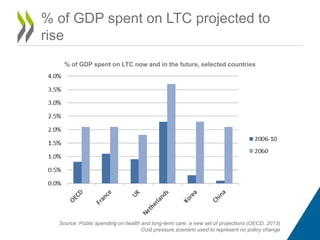
% of GDP spent on LTC projected to
rise
% of GDP spent on LTC now and in the future, selected countries
Source: Public spending on health and long-term care: a new set of projections (OECD, 2013)
Cost pressure scenario used to represent no policy change
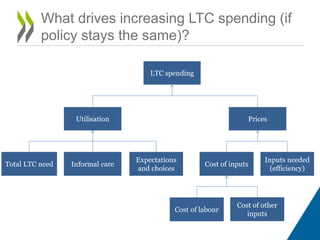
What drives increasing LTC spending (if
policy stays the same)?
LTC spending
Utilisation Prices
Total LTC need
Expectations
and choices
Informal care
Cost of labour
Cost of other
inputs
Inputs needed
(efficiency)
Cost of inputs
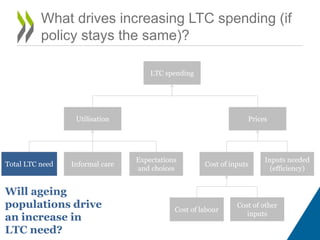
What drives increasing LTC spending (if
policy stays the same)?
LTC spending
Utilisation Prices
Expectations
and choices
Informal care
Cost of labour
Cost of other
inputs
Inputs needed
(efficiency)
Cost of inputsTotal LTC need
Will ageing
populations drive
an increase in
LTC need?
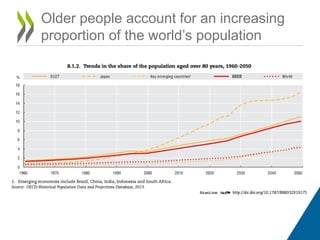
Older people account for an increasing
proportion of the world’s population
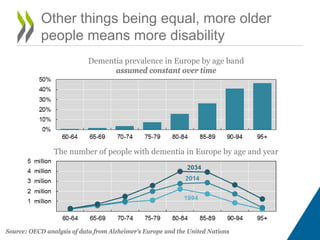
Other things being equal, more older
people means more disability
Dementia prevalence in Europe by age band
assumed constant over time
The number of people with dementia in Europe by age and year
Source: OECD analysis of data from Alzheimer's Europe and the United Nations
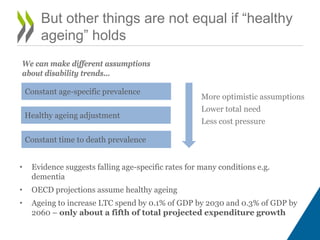
But other things are not equal if “healthy
ageing” holds
Constant age-specific prevalence
Healthy ageing adjustment
Constant time to death prevalence
We can make different assumptions
about disability trends…
More optimistic assumptions
Lower total need
Less cost pressure
• Evidence suggests falling age-specific rates for many conditions e.g.
dementia
• OECD projections assume healthy ageing
• Ageing to increase LTC spend by 0.1% of GDP by 2030 and 0.3% of GDP by
2060 – only about a fifth of total projected expenditure growth
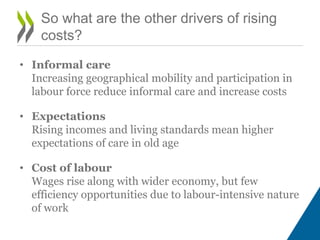
• Informal care
Increasing geographical mobility and participation in
labour force reduce informal care and increase costs
• Expectations
Rising incomes and living standards mean higher
expectations of care in old age
• Cost of labour
Wages rise along with wider economy, but few
efficiency opportunities due to labour-intensive nature
of work
So what are the other drivers of rising
costs?
IMPLICATIONS OF LTC
BUDGETING DECISIONS
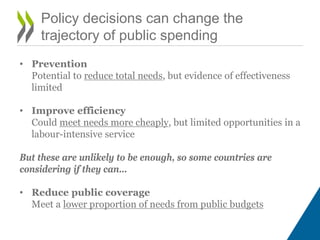
• Prevention
Potential to reduce total needs, but evidence of effectiveness
limited
• Improve efficiency
Could meet needs more cheaply, but limited opportunities in a
labour-intensive service
But these are unlikely to be enough, so some countries are
considering if they can…
• Reduce public coverage
Meet a lower proportion of needs from public budgets
Policy decisions can change the
trajectory of public spending
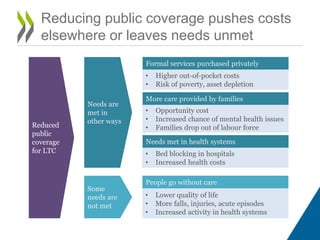
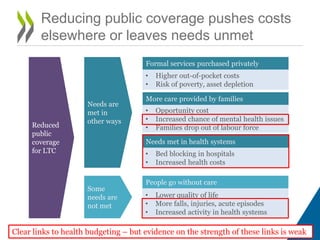
Reducing public coverage pushes costs
elsewhere or leaves needs unmet
Reduced
public
coverage
for LTC
Needs are
met in
other ways
Some
needs are
not met
Formal services purchased privately
• Higher out-of-pocket costs
• Risk of poverty, asset depletion
More care provided by families
• Opportunity cost
• Increased chance of mental health issues
• Families drop out of labour force
Needs met in health systems
• Bed blocking in hospitals
• Increased health costs
People go without care
• Lower quality of life
• More falls, injuries, acute episodes
• Increased activity in health systems
Reducing public coverage pushes costs
elsewhere or leaves needs unmet
Reduced
public
coverage
for LTC
Formal services purchased privately
• Higher out-of-pocket costs
• Risk of poverty, asset depletion
More care provided by families
• Opportunity cost
• Increased chance of mental health issues
• Families drop out of labour force
Needs met in health systems
• Bed blocking in hospitals
• Increased health costs
People go without care
• Lower quality of life
• More falls, injuries, acute episodes
• Increased activity in health systems
Clear links to health budgeting – but evidence on the strength of these links is weak
Needs are
met in
other ways
Some
needs are
not met
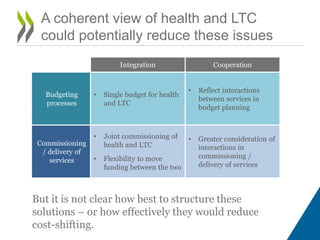
A coherent view of health and LTC
could potentially reduce these issues
Budgeting
processes
Commissioning
/ delivery of
services
Integration Cooperation
• Single budget for health
and LTC
• Reflect interactions
between services in
budget planning
• Joint commissioning of
health and LTC
• Flexibility to move
funding between the two
• Greater consideration of
interactions in
commissioning /
delivery of services
But it is not clear how best to structure these
solutions – or how effectively they would reduce
cost-shifting.
• Is your country experiencing rising demand
for long-term care, is this sustainable under
current models and what can (and should) be
done to control costs?
• Given the links between health and long-term
care services, how does your country ensure
that budgeting processes take a coherent view
of health and long-term care?
Questions for discussion

The fiscal sustainability of long-term care and its impact on health systems - Tim Muir, OECD

  • 1.
    The fiscal sustainabilityof long-term care and its impact on health systems 4th Meeting of the Joint Network on Fiscal Sustainability of Health Systems 16-17 February 2015 Tim Muir Policy Analyst Health and Social Policy Divisions Directorate for Employment, Labour and Social Affairs
  • 2.
    • “Care forpeople needing support in many facets of living over a prolonged period of time” (OECD, 2011) • Typically this refers to ADL care, but it can also mean IADL care and other things (meeting social needs, some medical care). • OECD distinguishes “health” components (ADL, nursing care, palliative care) from “social care” (IADL, residential care) for accounting purposes. What is long-term care?
  • 3.
    Fiscal sustainability isthe top concern for OECD governments Source: Help Wanted? (OECD, 2011)
  • 4.
    Fiscal sustainability isthe top concern for OECD governments Source: Help Wanted? (OECD, 2011)
  • 5.
    Policy-makers continue toconsider the trade-offs between cost and coverage Cost and affordability • Austerity policies • Concerns about sustainability with ageing populations and/or rising costs • Rising expenditure in other areas of health care, putting pressure on public finances • Political limits on levels of taxation Adequacy of protection • Making sure people get the care they need • Keeping out-of-pocket costs manageable • Reducing pressure on families and carers
  • 6.
    TRENDS IN LTCSPENDING AND KEY DRIVERS
  • 7.
    There is hugevariation in what countries currently spend on LTC
  • 8.
    • Prices: higherstaff qualifications or overheads in some countries mean that unit costs are higher • Out-of-pocket costs: in some countries people pay significant proportions of LTC costs themselves • Role of family: families are expected to take care of older people in some countries, while the state does it in other Variation is driven by differences in prices, coverage and social norms
  • 9.
    % of GDPspent on LTC projected to rise % of GDP spent on LTC now and in the future, selected countries Source: Public spending on health and long-term care: a new set of projections (OECD, 2013) Cost pressure scenario used to represent no policy change
  • 10.
    What drives increasingLTC spending (if policy stays the same)? LTC spending Utilisation Prices Total LTC need Expectations and choices Informal care Cost of labour Cost of other inputs Inputs needed (efficiency) Cost of inputs
  • 11.
    What drives increasingLTC spending (if policy stays the same)? LTC spending Utilisation Prices Expectations and choices Informal care Cost of labour Cost of other inputs Inputs needed (efficiency) Cost of inputsTotal LTC need Will ageing populations drive an increase in LTC need?
  • 12.
    Older people accountfor an increasing proportion of the world’s population
  • 13.
    Other things beingequal, more older people means more disability Dementia prevalence in Europe by age band assumed constant over time The number of people with dementia in Europe by age and year Source: OECD analysis of data from Alzheimer's Europe and the United Nations
  • 14.
    But other thingsare not equal if “healthy ageing” holds Constant age-specific prevalence Healthy ageing adjustment Constant time to death prevalence We can make different assumptions about disability trends… More optimistic assumptions Lower total need Less cost pressure • Evidence suggests falling age-specific rates for many conditions e.g. dementia • OECD projections assume healthy ageing • Ageing to increase LTC spend by 0.1% of GDP by 2030 and 0.3% of GDP by 2060 – only about a fifth of total projected expenditure growth
  • 15.
    • Informal care Increasinggeographical mobility and participation in labour force reduce informal care and increase costs • Expectations Rising incomes and living standards mean higher expectations of care in old age • Cost of labour Wages rise along with wider economy, but few efficiency opportunities due to labour-intensive nature of work So what are the other drivers of rising costs?
  • 16.
  • 17.
    • Prevention Potential toreduce total needs, but evidence of effectiveness limited • Improve efficiency Could meet needs more cheaply, but limited opportunities in a labour-intensive service But these are unlikely to be enough, so some countries are considering if they can… • Reduce public coverage Meet a lower proportion of needs from public budgets Policy decisions can change the trajectory of public spending
  • 18.
    Reducing public coveragepushes costs elsewhere or leaves needs unmet Reduced public coverage for LTC Needs are met in other ways Some needs are not met Formal services purchased privately • Higher out-of-pocket costs • Risk of poverty, asset depletion More care provided by families • Opportunity cost • Increased chance of mental health issues • Families drop out of labour force Needs met in health systems • Bed blocking in hospitals • Increased health costs People go without care • Lower quality of life • More falls, injuries, acute episodes • Increased activity in health systems
  • 19.
    Reducing public coveragepushes costs elsewhere or leaves needs unmet Reduced public coverage for LTC Formal services purchased privately • Higher out-of-pocket costs • Risk of poverty, asset depletion More care provided by families • Opportunity cost • Increased chance of mental health issues • Families drop out of labour force Needs met in health systems • Bed blocking in hospitals • Increased health costs People go without care • Lower quality of life • More falls, injuries, acute episodes • Increased activity in health systems Clear links to health budgeting – but evidence on the strength of these links is weak Needs are met in other ways Some needs are not met
  • 20.
    A coherent viewof health and LTC could potentially reduce these issues Budgeting processes Commissioning / delivery of services Integration Cooperation • Single budget for health and LTC • Reflect interactions between services in budget planning • Joint commissioning of health and LTC • Flexibility to move funding between the two • Greater consideration of interactions in commissioning / delivery of services But it is not clear how best to structure these solutions – or how effectively they would reduce cost-shifting.
  • 21.
    • Is yourcountry experiencing rising demand for long-term care, is this sustainable under current models and what can (and should) be done to control costs? • Given the links between health and long-term care services, how does your country ensure that budgeting processes take a coherent view of health and long-term care? Questions for discussion