photo- Kasia Stepien

Distributions and Conservation
Concerns for Crop Wild Relatives of
the United States
Colin K. Khoury, Stephanie Greene, John Wiersema, Nora P.
Castañeda-Álvarez, Chrystian C. Sosa, Vivian Bernau, Harold A.
Achicanoy, Alex Castañeda, Larry Stritch, Jan Schultz, Karen Williams,
Andy Jarvis, and Paul C. Struik
ASA, CSSA & SSSA International Annual Meetings, November 6, 2013, Tampa, FL
photo- Kasia Stepien

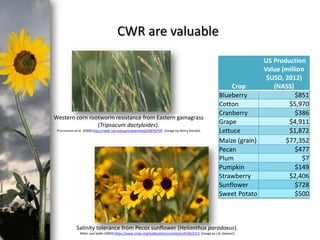
CWR are valuable

Western corn rootworm resistance from Eastern gamagrass
(Tripsacum dactyloides).
Prischmann et al. (2008) http://naldc.nal.usda.gov/download/29879/PDF. (Image by Henry Domke)

US Production
Value (million
$USD, 2012)
Crop
(NASS)
$851
Blueberry
$5,970
Cotton
$386
Cranberry
$4,911
Grape
$1,872
Lettuce
$77,352
Maize (grain)
$477
Pecan
$7
Plum
$149
Pumpkin
$2,406
Strawberry
$728
Sunflower
$500
Sweet Potato

Salinity tolerance from Pecos sunflower (Helianthus paradoxus).
Miller and Seiler (2003) https://www.crops.org/publications/cs/articles/43/6/2313. (Image by J.N. Stewart)
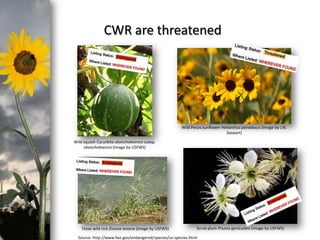
CWR are threatened

Wild Pecos sunflower Helianthus paradoxus (Image by J.N.
Stewart)

photo- Kasia Stepien

Wild squash Cucurbita okeechobeensis subsp.
okeechobeensis (Image by USFWS)

Texas wild rice Zizania texana (Image by USFWS)

Scrub plum Prunus geniculata (Image by USFWS)

Source: http://www.fws.gov/endangered/species/us-species.html
photo- Kasia Stepien

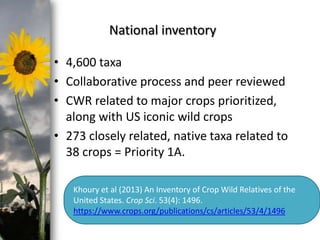
National inventory
• 4,600 taxa
• Collaborative process and peer reviewed
• CWR related to major crops prioritized,
along with US iconic wild crops
• 273 closely related, native taxa related to
38 crops = Priority 1A.
Khoury et al (2013) An Inventory of Crop Wild Relatives of the
United States. Crop Sci. 53(4): 1496.
https://www.crops.org/publications/cs/articles/53/4/1496
photo- Kasia Stepien

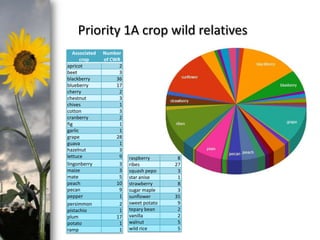
Priority 1A crop wild relatives
Associated
crop
apricot
beet
blackberry
blueberry
cherry
chestnut
chives
cotton
cranberry
fig
garlic
grape
guava
hazelnut
lettuce
lingonberry
maize
mate
peach
pecan
pepper
persimmon
pistachio
plum
potato
ramp

Number
of CWR
2
3
36
17
2
3
1
3
2
1
1
28
1
3
9
3
3
5
10
9
1
2
1
17
1
1

raspberry
ribes
squash pepo
star anise
strawberry
sugar maple
sunflower
sweet potato
tepary bean
vanilla
walnut
wild rice

8
27
3
1
8
3
35
9
2
2
5
5
photo- Kasia Stepien

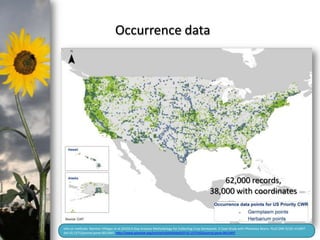
Occurrence data

62,000 records,
38,000 with coordinates

Info on methods: Ramírez-Villegas et al (2010) A Gap Analysis Methodology for Collecting Crop Genepools: A Case Study with Phaseolus Beans. PLoS ONE 5(10): e13497.
6
doi:10.1371/journal.pone.0013497. http://www.plosone.org/article/info%3Adoi%2F10.1371%2Fjournal.pone.0013497
photo- Kasia Stepien

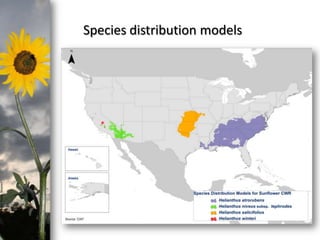
Species distribution models
photo- Kasia Stepien

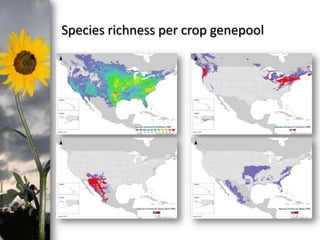
Species richness per crop genepool
photo- Kasia Stepien

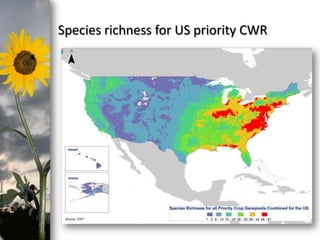
Species richness for US priority CWR
photo- Kasia Stepien

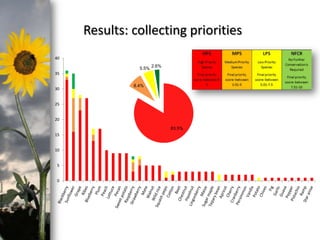
Results: collecting priorities
40

5.5%

2.6%

35
30

8.4%

25
20
83.5%
15
10
5
0
photo- Kasia Stepien

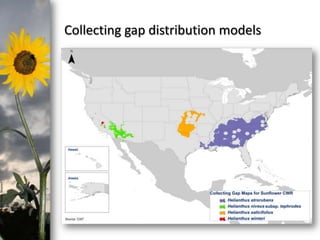
Collecting gap distribution models
photo- Kasia Stepien

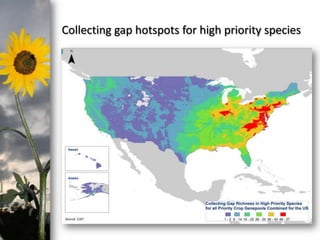
Collecting gap hotspots for high priority species
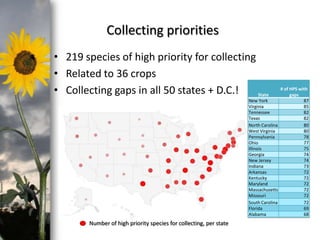
Collecting priorities
• 219 species of high priority for collecting
• Related to 36 crops
• Collecting gaps in all 50 states + D.C.!
State

photo- Kasia Stepien

# of HPS with
gaps
New York
87
Virginia
85
Tennessee
82
Texas
82
North Carolina
80
West Virginia
80
Pennsylvania
78
Ohio
77
Illinois
75
Georgia
74
New Jersey
74
Indiana
73
Arkansas
72
Kentucky
72
Maryland
72
Massachusetts
72
Missouri
72
South Carolina
72
Florida
69
Alabama
68

Number of high priority species for collecting, per state
photo- Kasia Stepien

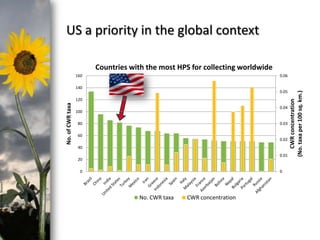
US a priority in the global context
Countries with the most HPS for collecting worldwide
0.06

140

0.05

No. of CWR taxa

120
0.04

100
80

0.03

60

0.02

40
0.01

20
0

0

No. CWR taxa

CWR concentration

CWR concentration
(No. taxa per 100 sq. km.)

160
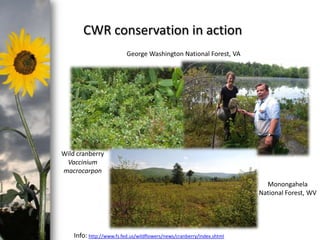
CWR conservation in action
George Washington National Forest, VA

Wild cranberry
Vaccinium
macrocarpon

photo- Kasia Stepien

Monongahela
National Forest, WV

Info: http://www.fs.fed.us/wildflowers/news/cranberry/index.shtml
photo- Kasia Stepien

• http://cwroftheus.wordpress.com/
• www.cwrdiversity.org
• Colin Khoury CIAT c.khoury@cgiar.org
• Stephanie Greene, ARS Stephanie.Greene@ars.usda.gov
• Larry Stritch, USFS lstritch@fs.fed.us

Thank you!
We acknowledge with thanks, the contribution of the project "Adapting Agriculture to
Climate Change: Collecting, Protecting and Preparing Crop Wild Relatives" managed by
the Global Crop Diversity Trust with the Millennium Seed Bank of the Royal Botanic
Gardens, Kew, in making data, methods and expertise available for this work.

CWR US Presentation ASA/CSSA/SSSA Tampa 2013

  • 1.
    photo- Kasia Stepien Distributionsand Conservation Concerns for Crop Wild Relatives of the United States Colin K. Khoury, Stephanie Greene, John Wiersema, Nora P. Castañeda-Álvarez, Chrystian C. Sosa, Vivian Bernau, Harold A. Achicanoy, Alex Castañeda, Larry Stritch, Jan Schultz, Karen Williams, Andy Jarvis, and Paul C. Struik ASA, CSSA & SSSA International Annual Meetings, November 6, 2013, Tampa, FL
  • 2.
    photo- Kasia Stepien CWRare valuable Western corn rootworm resistance from Eastern gamagrass (Tripsacum dactyloides). Prischmann et al. (2008) http://naldc.nal.usda.gov/download/29879/PDF. (Image by Henry Domke) US Production Value (million $USD, 2012) Crop (NASS) $851 Blueberry $5,970 Cotton $386 Cranberry $4,911 Grape $1,872 Lettuce $77,352 Maize (grain) $477 Pecan $7 Plum $149 Pumpkin $2,406 Strawberry $728 Sunflower $500 Sweet Potato Salinity tolerance from Pecos sunflower (Helianthus paradoxus). Miller and Seiler (2003) https://www.crops.org/publications/cs/articles/43/6/2313. (Image by J.N. Stewart)
  • 3.
    CWR are threatened WildPecos sunflower Helianthus paradoxus (Image by J.N. Stewart) photo- Kasia Stepien Wild squash Cucurbita okeechobeensis subsp. okeechobeensis (Image by USFWS) Texas wild rice Zizania texana (Image by USFWS) Scrub plum Prunus geniculata (Image by USFWS) Source: http://www.fws.gov/endangered/species/us-species.html
  • 4.
    photo- Kasia Stepien Nationalinventory • 4,600 taxa • Collaborative process and peer reviewed • CWR related to major crops prioritized, along with US iconic wild crops • 273 closely related, native taxa related to 38 crops = Priority 1A. Khoury et al (2013) An Inventory of Crop Wild Relatives of the United States. Crop Sci. 53(4): 1496. https://www.crops.org/publications/cs/articles/53/4/1496
  • 5.
    photo- Kasia Stepien Priority1A crop wild relatives Associated crop apricot beet blackberry blueberry cherry chestnut chives cotton cranberry fig garlic grape guava hazelnut lettuce lingonberry maize mate peach pecan pepper persimmon pistachio plum potato ramp Number of CWR 2 3 36 17 2 3 1 3 2 1 1 28 1 3 9 3 3 5 10 9 1 2 1 17 1 1 raspberry ribes squash pepo star anise strawberry sugar maple sunflower sweet potato tepary bean vanilla walnut wild rice 8 27 3 1 8 3 35 9 2 2 5 5
  • 6.
    photo- Kasia Stepien Occurrencedata 62,000 records, 38,000 with coordinates Info on methods: Ramírez-Villegas et al (2010) A Gap Analysis Methodology for Collecting Crop Genepools: A Case Study with Phaseolus Beans. PLoS ONE 5(10): e13497. 6 doi:10.1371/journal.pone.0013497. http://www.plosone.org/article/info%3Adoi%2F10.1371%2Fjournal.pone.0013497
  • 7.
    photo- Kasia Stepien Speciesdistribution models
  • 8.
    photo- Kasia Stepien Speciesrichness per crop genepool
  • 9.
    photo- Kasia Stepien Speciesrichness for US priority CWR
  • 10.
    photo- Kasia Stepien Results:collecting priorities 40 5.5% 2.6% 35 30 8.4% 25 20 83.5% 15 10 5 0
  • 11.
    photo- Kasia Stepien Collectinggap distribution models
  • 12.
    photo- Kasia Stepien Collectinggap hotspots for high priority species
  • 13.
    Collecting priorities • 219species of high priority for collecting • Related to 36 crops • Collecting gaps in all 50 states + D.C.! State photo- Kasia Stepien # of HPS with gaps New York 87 Virginia 85 Tennessee 82 Texas 82 North Carolina 80 West Virginia 80 Pennsylvania 78 Ohio 77 Illinois 75 Georgia 74 New Jersey 74 Indiana 73 Arkansas 72 Kentucky 72 Maryland 72 Massachusetts 72 Missouri 72 South Carolina 72 Florida 69 Alabama 68 Number of high priority species for collecting, per state
  • 14.
    photo- Kasia Stepien USa priority in the global context Countries with the most HPS for collecting worldwide 0.06 140 0.05 No. of CWR taxa 120 0.04 100 80 0.03 60 0.02 40 0.01 20 0 0 No. CWR taxa CWR concentration CWR concentration (No. taxa per 100 sq. km.) 160
  • 15.
    CWR conservation inaction George Washington National Forest, VA Wild cranberry Vaccinium macrocarpon photo- Kasia Stepien Monongahela National Forest, WV Info: http://www.fs.fed.us/wildflowers/news/cranberry/index.shtml
  • 16.
    photo- Kasia Stepien •http://cwroftheus.wordpress.com/ • www.cwrdiversity.org • Colin Khoury CIAT c.khoury@cgiar.org • Stephanie Greene, ARS Stephanie.Greene@ars.usda.gov • Larry Stritch, USFS lstritch@fs.fed.us Thank you! We acknowledge with thanks, the contribution of the project "Adapting Agriculture to Climate Change: Collecting, Protecting and Preparing Crop Wild Relatives" managed by the Global Crop Diversity Trust with the Millennium Seed Bank of the Royal Botanic Gardens, Kew, in making data, methods and expertise available for this work.

Editor's Notes

  • #2 Thank you for comingHonor to have the opportunity to present some results to this communityCollaboration between national agencies, international research centers and academic institutionsReinforce two points then ask a question
  • #3 CWR of the US are no exception- many cases of use in breedingPhylloxera resistance grapes from N. American wild grape rootstockEnglish walnut rootstock- JuglanshindsiiCWR native to the US are related to a sizable list of crops of significant importance to US agriculture
  • #4 Habitat degradation, urbanization, pollution, invasive species, climate changeFederally listed Endangered:Okeechobee gourd (FL),Scrub plum (FL), Texas wild rice (TX)Federally listed Threatened:Pecos sunflower (NM, TX)
  • #5 Native and introduced species (12% of inventory) includedClosely and distantly related CWR includedAvailable as a download from GRIN website, and will be incorporated into GRIN interactive site eventuallyNecessary to prioritize
  • #6 who
  • #7 whereOccurrence data from global dataset- herbaria and genebanksFor information on methodology, see Phaseolus paper
  • #8 Maxent models based upon occurrence dataConstrained to native areas (state level)Cross validated
  • #9 where
  • #10 where
  • #11 How well conservedConservation analysis from a national perspective- priorities analyzed for US distributions.
  • #12 Collecting gap maps = distribution models minus areas where collecting has already occurred (CA50)
  • #13 How well conservedCollecting gap richness maps for HPSReminder this does not pertain to conservation status in situ- upcoming analysis. 28% of the US is owned by the US Federal Government.
  • #16 Ongoing CWR collecting by USDA ARS NPGS- national germplasm system- largest in nation and service provider for the world’s plant breedersUSFS- nation’s largest landownerGenetic diversity analyses underway- Juan Zalapa ARS Cranberry Genetics and Genomics Lab Madison, WisconsinConservation ex situ- Kim Hummer, curator of the National Clonal Germplasm Repository in Corvallis, OregonIn situ planningNext steps:Expert inputsIn situ conservation analysesMaking data useful for on the ground effortsCollaborating with diverse agencies, land owners, organizations
  • #17 Contact us to get involved