NURSING MANAGEMENT OF
PATIENTS WITH CARDIOVASCULAR
DISORDERS
Jemal B. (Msc)
12/20/2024
1
By: Jemal B.
CORONARY ARTERY DISEASE (CAD)
I- CORONARY ATHEROSCLEROSIS
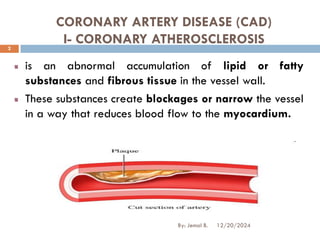
is an abnormal accumulation of lipid or fatty
substances and fibrous tissue in the vessel wall.
These substances create blockages or narrow the vessel
in a way that reduces blood flow to the myocardium.
12/20/2024
2
By: Jemal B.
Risk Factors
Non modifiable Risk Factors
Family history of coronary
heart disease
Increasing age
Gender (heart disease
occurs three times more
often in men than in
premenopausal women)
Race (higher incidence of
heart disease in African
Americans than in
Caucasians)
Modifiable Risk Factors
High blood cholesterol and
triglyceride level
Cigarette smoking, tobacco
use
Hypertension
Diabetes mellitus
Lack of estrogen in women
Physical inactivity
Obesity
12/20/2024
3
By: Jemal B.
Pathophysiology
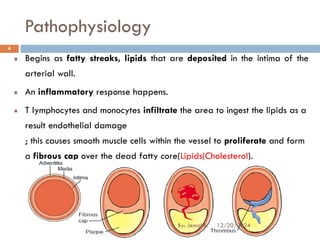
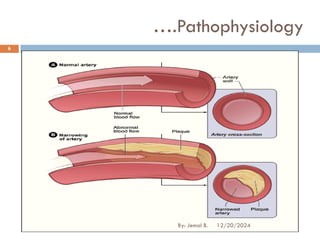
Begins as fatty streaks, lipids that are deposited in the intima of the
arterial wall.
An inflammatory response happens.
T lymphocytes and monocytes infiltrate the area to ingest the lipids as a
result endothelial damage
; this causes smooth muscle cells within the vessel to proliferate and form
a fibrous cap over the dead fatty core(Lipids(Cholesterol).
12/20/2024
4
By: Jemal B.
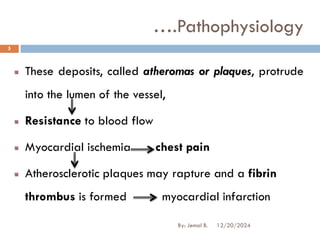
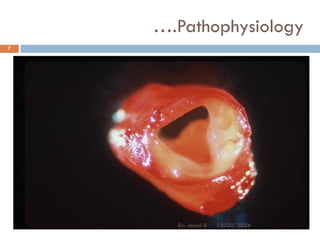
These deposits, called atheromas or plaques, protrude
into the lumen of the vessel,
Resistance to blood flow
Myocardial ischemia chest pain
Atherosclerotic plaques may rapture and a fibrin
thrombus is formed myocardial infarction
….Pathophysiology
12/20/2024
5
By: Jemal B.
….Pathophysiology
12/20/2024
6
By: Jemal B.
….Pathophysiology
12/20/2024
7
By: Jemal B.
Clinical Manifestations
Angina pectoris (acute onset of chest pain due to
myocardial ischemia)
SOB
Nausea
Unusual fatigue
12/20/2024
8
By: Jemal B.
Common types of Angina
a) Stable angina
Predictable and consistent pain of short duration,
easily relieved
Precipitated by effort or some activity (running,
walking, etc.)
Typical presentations are that of chest discomfort
b) Unstable angina "crescendo angina;“
symptoms occur more frequently and longer lasting
>10 min, more severe,
may not be relieved by rest/nitroglycerin
12/20/2024
9
By: Jemal B.
c) Refractory angina
severe incapacitating pain;
Do not respond to conventional therapy including drugs
and pt may suffer severe chest pain
d) Variant angina
Pain at rest usually at night
e) Silent angina
objective evidence of ischemia (such as ECG changes),
but patient reports no symptoms
…..Common types of Angina
12/20/2024
10
By: Jemal B.
Diagnosis
History
Physical Examination
Serum lipid levels
Exercise stress test
ECG
12/20/2024
11
By: Jemal B.
Prevention
Can be by the control of the following four
modifiable risk factors of CAD
Increased Cholesterol
Cigarette Smoking
DM
Hypertension 12/20/2024
12
By: Jemal B.
I. Controlling cholesterol level
Desired goal is to have low LDL and high HDL
values
The desired level of LDL depends on the patient:
 < 160 mg/dL for patients with one risk factors
 < 130 mg/dL for patients with two or more risk factors
 < 100 mg/dL for patients with CAD
HDL > 40-60 mg /dL
…..Prevention
12/20/2024
13
By: Jemal B.
Non-Drug Management
Dietary measures
Weight reduction
Increased physical activity
Promoting cessation of tobacco use
Early detection and treatment of hypertension
Controlling DM 12/20/2024
14
By: Jemal B.
Drug Management
Medications that decrease LDL, triglycerides and that
increase HDL
Niacin : Decreased blood lipids
lower LDL and triglyceride levels, and increase HDL
levels.
12/20/2024
15
By: Jemal B.
Fibric acids: primarily inhibits triglyceride synthesis.
Fenofibrate
Colofibrate
Bile acid sequestrates: lowers LDLs
Cholestryramine
Colesevelam
Colestipol HCL
……Drug Management
12/20/2024
16
By: Jemal B.
MYOCARDIAL INFARCTION
Coronary occlusion, heart attack, and MI are terms
used synonymously, but the preferred term is MI
MI refers to the process by which areas of myocardial
cells in the heart are permanently destroyed.
12/20/2024
17
By: Jemal B.
Causes:
Reduced blood flow in a coronary artery
Decreased oxygen supply and
Increased demand for oxygen
.....Myocardial Infarction
12/20/2024
18
By: Jemal B.
Risk Factors
Hypercholesterolemia - high LDL, low HDL
Tobacco smoking, Alcohol, OCP
Air pollution: CO,
Advanced age
Gender (men)
Diabetes mellitus, Obesity (BMI >30 kg/m²)
High blood pressure, Lack of physical activity
Family history of ischemic heart disease or MI
.....Myocardial Infarction
12/20/2024
19
By: Jemal B.
Pathophysiology
Atherosclerotic plaque in coronary artery
Plaques can become unstable, rupture, and
additionally promote a thrombus that occludes the
artery
As the cells are deprived of oxygen, ischemia
develops, cellular injury occurs, and over time, the lack
of oxygen results in Ischemic cascade: death of the
heart cells near the occlusion
Infarction or cell death
.....Myocardial Infarction
12/20/2024
20
By: Jemal B.
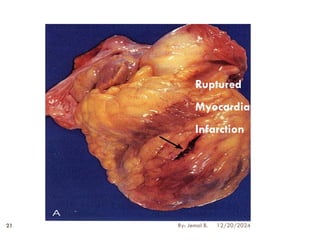
Ruptured
Myocardial
Infarction
12/20/2024
21 By: Jemal B.
Clinical Manifestations
Chest Pain
Occurs suddenly & not relieved by rest or nitrate
Locations: retrosternal, radiating to the neck, jaw, and arms or
to the back
May occur while the patient is active or at rest, asleep or walk
Commonly occurs in the early morning
Usually lasts for 20 minutes
Palpitations.
Heart sounds may include S3, S4, and new onset of a
murmur.
Increased jugular venous distention 12/20/2024
22
By: Jemal B.
❑ Shortness of breath
❑ Cool, pale, and moist skin.
❑ tachycardia and tachypnea.
❑ Dysrhythmias
❑ Anxiety, restlessness, light headedness
…..Clinical Manifestations
12/20/2024
23
By: Jemal B.
Dx
❑ PATIENT HISTORY: the description of the presenting
symptom (eg, chest pain) and the history of previous
illnesses and family health history, particularly of
heart disease.
❑ ECG
❑ LABORATORY TESTS: increased Creatine, increased
Myoglobin, increased Troponin
12/20/2024
24
By: Jemal B.
Non-drug treatment (General
measures)
Bed Rest
Bowel
→ Constipation
Stool softener & Laxatives
Diet
Low fat, low Sodium , high fiber diet.
Sedation
↓Anxiety & ensures adequate sleep
Diazepam 5mg 3-4x/day , Additional dose at bed time
12/20/2024
25
By: Jemal B.
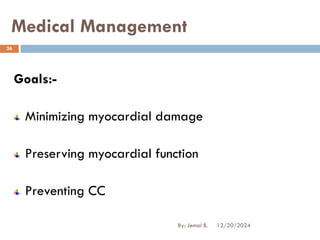
Goals:-
Minimizing myocardial damage
Preserving myocardial function
Preventing CC
Medical Management
12/20/2024
26
By: Jemal B.
Medical Management
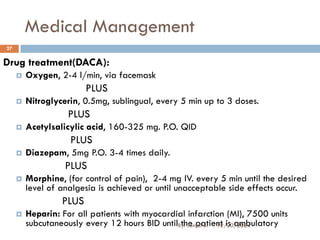
Drug treatment(DACA):
 Oxygen, 2-4 l/min, via facemask
PLUS
 Nitroglycerin, 0.5mg, sublingual, every 5 min up to 3 doses.
PLUS
 Acetylsalicylic acid, 160-325 mg. P.O. QID
PLUS
 Diazepam, 5mg P.O. 3-4 times daily.
PLUS
 Morphine, (for control of pain), 2-4 mg IV. every 5 min until the desired
level of analgesia is achieved or until unacceptable side effects occur.
PLUS
 Heparin: For all patients with myocardial infarction (MI), 7500 units
subcutaneously every 12 hours BID until the patient is ambulatory
12/20/2024
27
By: Jemal B.
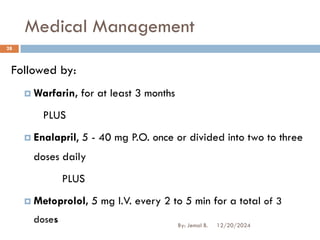
Followed by:
 Warfarin, for at least 3 months
PLUS
 Enalapril, 5 - 40 mg P.O. once or divided into two to three
doses daily
PLUS
 Metoprolol, 5 mg I.V. every 2 to 5 min for a total of 3
doses
Medical Management
12/20/2024
28
By: Jemal B.
HEART FAILURE
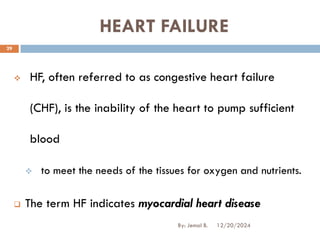
❖ HF, often referred to as congestive heart failure
(CHF), is the inability of the heart to pump sufficient
blood
❖ to meet the needs of the tissues for oxygen and nutrients.
❑ The term HF indicates myocardial heart disease
12/20/2024
29
By: Jemal B.
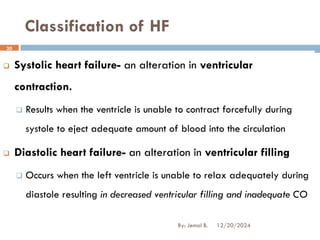
❑ Systolic heart failure- an alteration in ventricular
contraction.
❑ Results when the ventricle is unable to contract forcefully during
systole to eject adequate amount of blood into the circulation
❑ Diastolic heart failure- an alteration in ventricular filling
❑ Occurs when the left ventricle is unable to relax adequately during
diastole resulting in decreased ventricular filling and inadequate CO
Classification of HF
12/20/2024
30
By: Jemal B.
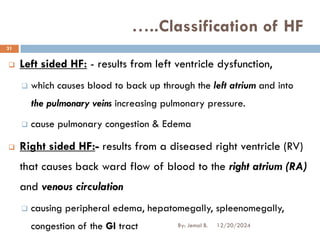
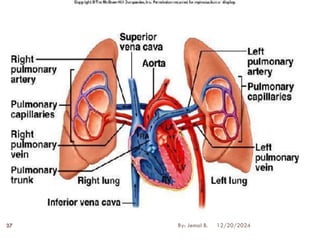
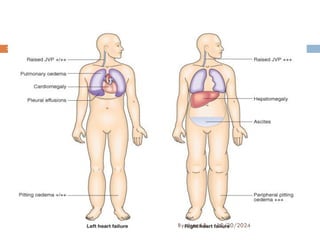
❑ Left sided HF: - results from left ventricle dysfunction,
❑ which causes blood to back up through the left atrium and into
the pulmonary veins increasing pulmonary pressure.
❑ cause pulmonary congestion & Edema
❑ Right sided HF:- results from a diseased right ventricle (RV)
that causes back ward flow of blood to the right atrium (RA)
and venous circulation
❑ causing peripheral edema, hepatomegally, spleenomegally,
congestion of the GI tract
…..Classification of HF
12/20/2024
31
By: Jemal B.
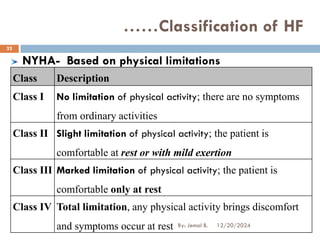
NYHA- Based on physical limitations
Class Description
Class I No limitation of physical activity; there are no symptoms
from ordinary activities
Class II Slight limitation of physical activity; the patient is
comfortable at rest or with mild exertion
Class III Marked limitation of physical activity; the patient is
comfortable only at rest
Class IV Total limitation, any physical activity brings discomfort
and symptoms occur at rest
……Classification of HF
12/20/2024
32
By: Jemal B.
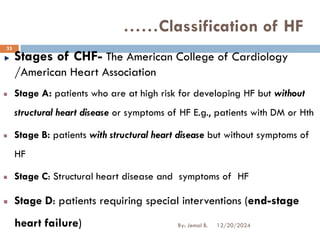
Stages of CHF- The American College of Cardiology
/American Heart Association
Stage A: patients who are at high risk for developing HF but without
structural heart disease or symptoms of HF E.g., patients with DM or Hth
Stage B: patients with structural heart disease but without symptoms of
HF
Stage C: Structural heart disease and symptoms of HF
Stage D: patients requiring special interventions (end-stage
heart failure)
……Classification of HF
12/20/2024
33
By: Jemal B.
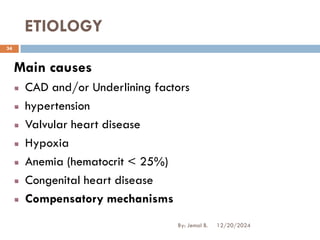
ETIOLOGY
Main causes
CAD and/or Underlining factors
hypertension
Valvular heart disease
Hypoxia
Anemia (hematocrit < 25%)
Congenital heart disease
Compensatory mechanisms
12/20/2024
34
By: Jemal B.
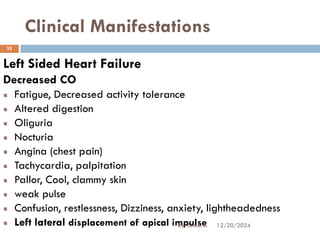
Clinical Manifestations
Left Sided Heart Failure
Decreased CO
Fatigue, Decreased activity tolerance
Altered digestion
Oliguria
Nocturia
Angina (chest pain)
Tachycardia, palpitation
Pallor, Cool, clammy skin
weak pulse
Confusion, restlessness, Dizziness, anxiety, lightheadedness
Left lateral displacement of apical impulse 12/20/2024
35
By: Jemal B.
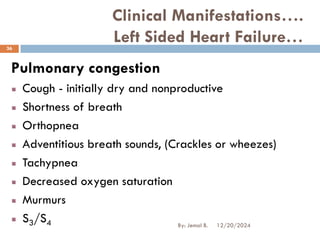
Clinical Manifestations….
Left Sided Heart Failure…
Pulmonary congestion
Cough - initially dry and nonproductive
Shortness of breath
Orthopnea
Adventitious breath sounds, (Crackles or wheezes)
Tachypnea
Decreased oxygen saturation
Murmurs
S3/S4 12/20/2024
36
By: Jemal B.
12/20/2024
37 By: Jemal B.
Because of systemic
congestion:
Jugular vein distension
Hepatomegally &
spleenomegally
Ascites
Anorexia, nausea,
abdominal pain
Dependent edema -legs &
sacrum
Nocturia &Oliguria
Weakness
Weight gain
Right Sided Heart Failure
12/20/2024
38
By: Jemal B.
12/20/2024
39
By: Jemal B.
Dx
History
Physical Examination
Chest X-ray
ECG
Echocardiogram
Pulse oximetry
Laboratory studies : serum electrolytes, blood
urea nitrogen (BUN), creatinine, complete blood
cell count (CBC) 12/20/2024
40
By: Jemal B.
FRAMINGHAM CRITERIA FOR THE DIAGNOSIS OF
HEART FAILURE
MAJOR CRITERIA
PND or orthopnea
neck vein distention
cardiomegaly
S3/gallop
Acute pulmonary edema
12/20/2024
41
By: Jemal B.
MINOR CRITERIA
Bilateral ankle edema
Night cough
Dyspnea on exertion
Hepatomegaly
Pleural effusion
Tachycardia(heart rate >120 beats/min)
The diagnosis of chronic heart failure requires the
simultaneous presence of at least 2 major criteria or 1
major criterion in conjunction with 2 minor criteria
….FRAMINGHAM CRITERIA ..
12/20/2024
42
By: Jemal B.
Management
General Measures
Activity
❑Heavy physical labor is not recommended
❑Routine modest exercise for class I–III HF
within limits of symptoms
Diet
Low sodium diet (< 2g -3g /day)
Avoid excessive fluid intake
12/20/2024
43
By: Jemal B.
Main Goals Of Therapy
To eliminate or reduce etiologic or contributing
factors
To reduce the workload on the heart (preload ,
contractility & after load)
12/20/2024
44
By: Jemal B.
Pharmacologic therapy
1. ACE - inhibitors (ACE-Is):
 Promotes vasodilatation & diuresis by decreasing
preload & after load
 Include: captopril, enalapril, lisinopril
2. Hydralazine– Decreased systemic vascular
resistance
3. Beta blockers: reduce the constant stimulation of
the sympathetic nervous system E.g. propranolol
4. Digitalis e.g. digoxin 0.125, 0.25, 0.5 mg
- slow conduction through the atrioventricular node
12/20/2024
45
By: Jemal B.
5. Diuretics: increase the rate of urine production and
the removal of excess extracellular fluid from the body
❑ Thiazides e.g. chlorothiazide, hydrochlorothiazide
❑ Loop diuretics e.g. furosemide (lasix)
❑ Potassium sparing e.g. spironolactone
❑ Combination agents e.g. spironolactone +
hydrochlorothiazide
….Pharmacologic therapy
12/20/2024
46
By: Jemal B.
According to DACA of Ethiopia
First line
Digoxin 0.125-0.375 mg po daily
Plus
Furosemide , 40-240 mg, po divided in to 2-3 doses daily
Plus
Enalapril 5-40 mg po once or divided in to two dose daily
And/or
Spironolactone 25-100mg po once daily or divided into
two doses
12/20/2024
47
By: Jemal B.
Nursing Intervention
1. Maintaining normal body fluid
 Evaluating degree of peripheral edema
 Daily measurement of abdominal girth
 Monitoring intake & out put and daily body weight
 Restriction of sodium diets & fluid
 Avoid diet high in fat/cholestrol
12/20/2024
48
By: Jemal B.
2. Improving activity tolerance
❑ Avoid prolonged bed rest
❑ Emotional & physical support to reduce oxygen consumption
❑ Moderate physical exercise for a total of 30 min with 3-5
times per week
❑ Monitoring patient’s response to activity
3. Maintaining skin integrity
❑ Monitor signs of edema
❑ Meticulous skin care
❑ Pad bony prominences
❑ Passive ROM to extremities every 4 hours to facilitate venous
return of the fluid
❑ Turning & repositioning the patient every 2 hours
…..Nursing Intervention
12/20/2024
49
By: Jemal B.
12/20/2024
By: Jemal B.
50
Blood pressure is the product of cardiac output multiplied by peripheral
resistance. Cardiac output is the product of the heart rate multiplied by the
stroke volume.
HYPERTENSION
12/20/2024
51
By: Jemal B.
HYPERTENSION
is a systolic blood pressure greater than 140 mm Hg
and a diastolic pressure greater than 90 mm Hg over
a sustained period, based on the average of two or
more blood pressure measurements taken in two or
more contacts with the health care provider after an
initial screening.
12/20/2024
52
By: Jemal B.
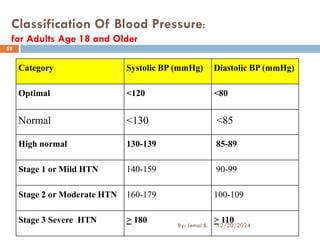
Classification Of Blood Pressure:
for Adults Age 18 and Older
Category Systolic BP (mmHg) Diastolic BP (mmHg)
Optimal <120 <80
Normal <130 <85
High normal 130-139 85-89
Stage 1 or Mild HTN 140-159 90-99
Stage 2 or Moderate HTN 160-179 100-109
Stage 3 Severe HTN > 180 > 110
12/20/2024
53
By: Jemal B.
Types of hypertension
1. Primary (Essential) hypertension
❖ Accounts for about 90-95% of all cases
❖ Has no known causes
❖ Onset usually between the age of 30 & 50 years
❖ factors that may contribute for the development include:
Genetic predisposition: the exact mechanism has not been established
Environment:
Dietary salt intake and Salt sensitivity
Obesity
Occupation
Family size and crowding
Stress and increased serum lipid level
Pregnancy-induced hypertension: Toxemia of pregnancy
12/20/2024
54
By: Jemal B.
2. Secondary hypertension
❖ In 5-10 % of patients with hypertension, the hypertension
is secondary to identifiable disorder
❖ Identifiable causes include:
 Renal vascular & renal parenchymal disease
 congenital abnormalities of aorta
 Cushing syndrome
 Brain tumors
 Encephalitis
 Medications
• Glucocorticoids
• Mineralocorticoids
• Sympathomimetic
12/20/2024
55
By: Jemal B.
Pathophysiology
Hypertension may be caused by one or more of the
following:
❑ 1. Increased sympathetic nervous system activity
❑ 2. Increased activity of renin-angiotensin-aldosterone
system
❑ 3. Decreased vasodilation of the arterioles
❑ 4. Structural and functional changes in the heart and blood
vessels 12/20/2024
56
By: Jemal B.
Clinical manifestations
Hypertension is often called “silent killer” because it is
frequently asymptomatic especially if the hypertension
is mild or moderate.
Headache: Is the most common symptom, Occurs in the
occipital region, Worsen on the morning on arising
kidneys involvment:
Nocturia
Increased BUN & serum creatinine level12/20/2024
57
By: Jemal B.
Cerebrovascular involvement
Speech & vision alteration
Dizziness
Stroke
Weakness
Faintness (sudden fall)
Sudden hemiplegia
Vascular complications
 Blurring of vision
 Epistaxis
Occasionally, retinal changes
 Hemorrhages
 Cotton wool spots (small infarction)
….Clinical manifestations
12/20/2024
58
By: Jemal B.
Diagnosis
History
Physical Examination
Measuring blood pressure (at least 1week apart)
Ophthalmologic examination
Lab tests
 U/A – e.g. urine catecholamine
 Blood chemistries (level of Na+, K+, Cl-, LDL etc)
 Creatinine, BUN
 ECG, Echocardiography & chest X-ray
12/20/2024
59
By: Jemal B.
Management
The managements of hypertension include:
Lifestyle modifications
Pharmacologic therapy
12/20/2024
60
By: Jemal B.
Lifestyle Modifications
Weight reduction
Moderation of alcohol in take
Regular physical activity
Reduction of salt intake
Smoking cessation
Life style modifications are indicated for the person
with either border line or sustained hypertension
➢ If the BP remains > 140/90mmHg after 3-6 months
of life style changes, drug therapy is indicated.
….Management
12/20/2024
61
By: Jemal B.
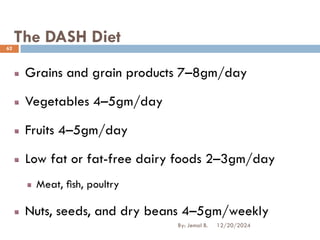
The DASH Diet
Grains and grain products 7–8gm/day
Vegetables 4–5gm/day
Fruits 4–5gm/day
Low fat or fat-free dairy foods 2–3gm/day
Meat, fish, poultry
Nuts, seeds, and dry beans 4–5gm/weekly
12/20/2024
62
By: Jemal B.
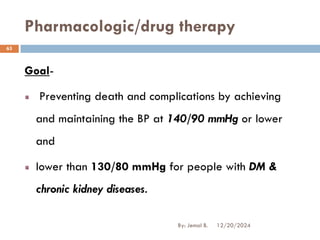
Goal-
Preventing death and complications by achieving
and maintaining the BP at 140/90 mmHg or lower
and
lower than 130/80 mmHg for people with DM &
chronic kidney diseases.
Pharmacologic/drug therapy
12/20/2024
63
By: Jemal B.
Pharmacologic/drug therapy
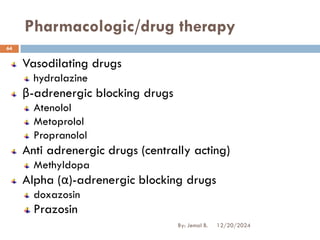
Vasodilating drugs
hydralazine
β-adrenergic blocking drugs
Atenolol
Metoprolol
Propranolol
Anti adrenergic drugs (centrally acting)
Methyldopa
Alpha (α)-adrenergic blocking drugs
doxazosin
Prazosin
12/20/2024
64
By: Jemal B.
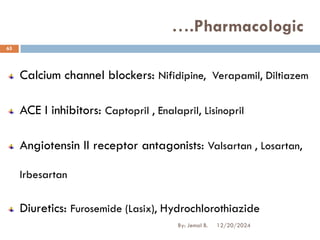
Calcium channel blockers: Nifidipine, Verapamil, Diltiazem
ACE I inhibitors: Captopril , Enalapril, Lisinopril
Angiotensin II receptor antagonists: Valsartan , Losartan,
Irbesartan
Diuretics: Furosemide (Lasix), Hydrochlorothiazide
….Pharmacologic
12/20/2024
65
By: Jemal B.
DACA of Ethiopia
drugs used as first step agents
Diuretics
Beta Blockers
Calcium antagonists
ACE-Is
12/20/2024
66
By: Jemal B.
First line drugs for non-emergency conditions
Hydrochlorothiazide, 12.5-50 mg/day PO And/or
Nifedipine 10-40 mg, PO TID And/or
Propranolol 40-160 mg PO divided in to 2-4 doses
Alternative
Enalapril, 2.5-40 mg PO, once or divided in to two doses
daily And/or
Methyldopa, 250-2000 mg PO in divided doses. OR
Hydralazine, 10-20 mg, slow IV can be given in severe
hypertension. OR
Atenolol, 50 – 100 mg p.o daily
…..DACA of Ethiopia
12/20/2024
67
By: Jemal B.
Hypertensive Crises
Blood pressure elevation to such degree can
cause vascular damage, encephalopathy, retinal
hemorrhage, renal damage and death.
1 –2% of the hypertensive population develop
this complication.
12/20/2024
68
By: Jemal B.
HYPERTENSIVE EMERGENCY
❑ is hypertension with acute impairment of one or more
organ systems in which there is acute impairment of
target organ
❑ It generally occurs at the blood pressure is severely
elevated [180 or higher for systolic pressure or 120 or
higher for diastolic pressure], ,
❑ but can occur at even lower levels in patients whose blood
pressure had not been previously high
❖ In these conditions, the blood pressure should be
lowered aggressively over minutes
❑ Progressive end-organ dysfunction.
12/20/2024
69
By: Jemal B.
HYPERTENSIVE EMERGENCY
❑ The nurse may think that taking vital signs every 5
minutes check vital signs at 15 or 30 minutes intervals if
the situation is more stable.
12/20/2024
70
By: Jemal B.
HYPERTENSIVE URGENCY
❑ urgency is a situation where the blood pressure levels
exceeding 180 systolic OR 110 diastolic but there is no
associated organ damage.
❑ No progressive target-organ dysfunction
❑ Treatment of hypertensive urgency requires readjustment
and/or additional dosing of oral medications,
❑ but most often does not necessitate hospitalization for rapid
blood pressure reduction
12/20/2024
71
By: Jemal B.
Clinical Manifestation
The eyes: may show retinal hemorrhage
The brain: headache, vomiting, and/or subarachnoid or
cerebral hemorrhage
shows manifestations of increased intracranial pressure
The kidneys: hematuria, proteinuria, and acute renal
failure
CVS: Patients will usually suffer from left ventricular
dysfunction
Other : Chest pain, Arrhythmias, Epistaxis, Dyspnea,
Faintness or vertigo, Severe anxiety 12/20/2024
72
By: Jemal B.
Treatment of Hypertensive Emergency
❑ Hydralazine, 5 mg IV every 15-min should be given
until the mean arterial
❑ blood pressure is reduced by 25% (within minutes to 2
hours),
❑ furosemide, 40 mg IV can be used according to
blood pressure response
12/20/2024
73
By: Jemal B.
Treatment of Hypertensive Urgency
❑ Nifedipine, 20-120 mg p.o in divided doses per day
could be used. OR
❑ Captopril, 25-50 mg p.o three times daily
12/20/2024
74
By: Jemal B.
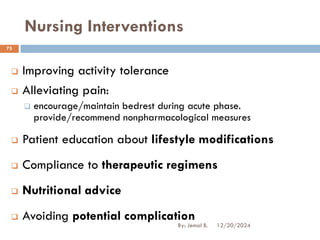
Nursing Interventions
❑ Improving activity tolerance
❑ Alleviating pain:
❑ encourage/maintain bedrest during acute phase.
provide/recommend nonpharmacological measures
❑ Patient education about lifestyle modifications
❑ Compliance to therapeutic regimens
❑ Nutritional advice
❑ Avoiding potential complication
12/20/2024
75
By: Jemal B.
RBC Disorders
12/20/2024
By: Jemal B.
76
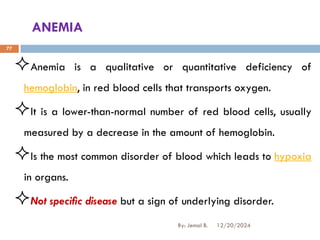
ANEMIA
Anemia is a qualitative or quantitative deficiency of
hemoglobin, in red blood cells that transports oxygen.
It is a lower-than-normal number of red blood cells, usually
measured by a decrease in the amount of hemoglobin.
Is the most common disorder of blood which leads to hypoxia
in organs.
Not specific disease but a sign of underlying disorder.
12/20/2024
By: Jemal B.
77
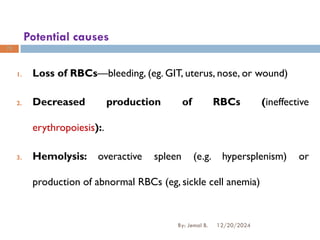
Potential causes
1. Loss of RBCs—bleeding, (eg. GIT, uterus, nose, or wound)
2. Decreased production of RBCs (ineffective
erythropoiesis):.
3. Hemolysis: overactive spleen (e.g. hypersplenism) or
production of abnormal RBCs (eg, sickle cell anemia)
12/20/2024
By: Jemal B.
78
Specific Types Of Anemia
1. Vitamin B12/ Cobalamin Deficiency Anemia
Also called Pernicious anemia
Vitamin B12 is essential for normal nervous system function
and blood cell production.
For vitamin B12 to be absorbed by the body, it must bind to
intrinsic factor, a protein secreted by cells in the stomach.
➢ Source: Dairy products, eggs, fish, meat, and poultry
79
12/20/2024
By: Jemal B.
Causes
Diet low in vit B12 (e.g. strict vegetarian)
Chronic alcoholism
Abdominal or intestinal surgery
Intestinal malabsorption disorders
Tape worm
12/20/2024
By: Jemal B.
80
2. Folate-deficiency Anemia
Referred to as megaloblastic anemia
Folate, also called folic acid, is necessary for RBC formation
and growth.
Folate is not stored in the body in large amounts,
Occurs in about 4 out of 100,000 people.
➢ Source: Green leafy vegetables and liver.
81
12/20/2024
By: Jemal B.
Cause/Risk factors
Poor dietary intake of folic acid
Eating overcooked food
Malabsorption diseases
Certain medications e.g. phenytoin
Third trimester of pregnancy
Alcoholism
12/20/2024
By: Jemal B.
82
3. Iron Deficiency Anemia
it is the most common form of anemia
Decrease number of RBC in blood result too little
iron.
RBCs are not providing adequate oxygen to body
tissues.
Source: meat (liver), fish and poultry
12/20/2024
By: Jemal B.
83
Causes
Too little iron in the diet
Poor absorption of iron by the body
Loss of blood (including from heavy menstrual bleeding)
Risky groups
♣ Women of child-bearing age
♣ Pregnant or lactating women
♣ Infants, children, and adolescents in rapid growth
♣ People with a poor dietary intake of iron
♣ Blood loss: peptic ulcer, long term ASA use, colon ca
84
12/20/2024
By: Jemal B.
4. Hemolytic Anemia
Inadequate number of circulating RBCs caused by
hemolysis greater than erythropoiesis.
The bone marrow is unable to compensate for premature
destruction.
85
12/20/2024
By: Jemal B.
Causes
➢ Abnormal hemoglobin: Sickle cell anemia,Thalassemia
➢ Enzyme deficiencies: Glucose-6-phosphate dehydrogenase
deficiency
➢ Transfusion reaction
➢ Autoimmune hemolytic anemia
➢ Infection: malaria
12/20/2024
86
By: Jemal B.
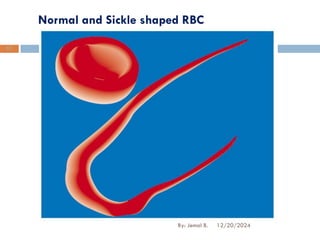
Normal and Sickle shaped RBC
12/20/2024
By: Jemal B.
87
5. Idiopathic/Aplastic Anemia
Also called pancytopenia
Is a failure of the bone marrow to properly form all
types of blood cells
Results from injury to the stem cell
Cause is unknown, but is thought to be an
autoimmune process.
12/20/2024
By: Jemal B.
88
Common Clinical Manifestation Of Anemia
 Paleness
 Yellow eyes/skin
 Fatigue
 Breathlessness
 Rapid heart rate
 Delayed growth and puberty
12/20/2024
By: Jemal B.
89
▪Susceptibility to infections
▪Ulcers on the lower legs
▪Jaundice
▪Bone pain
▪Fever
Assessment and Diagnostic Findings
Physical Exam & history
CBC
Hgb concentration, Hct,
ESR, folate level, serum vit B12
Iron tests (serum level, binding capacity, % saturation)
Bone marrow aspiration and biopsy
Elevated bilirubin
Erythropoietin levels
12/20/2024
By: Jemal B.
90
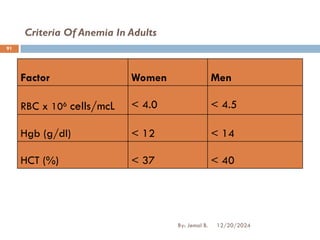
Criteria Of Anemia In Adults
12/20/2024
By: Jemal B.
91
Factor Women Men
RBC x 106 cells/mcL < 4.0 < 4.5
Hgb (g/dl) < 12 < 14
HCT (%) < 37 < 40
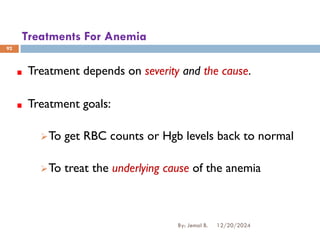
Treatments For Anemia
Treatment depends on severity and the cause.
Treatment goals:
➢To get RBC counts or Hgb levels back to normal
➢To treat the underlying cause of the anemia
12/20/2024
By: Jemal B.
92
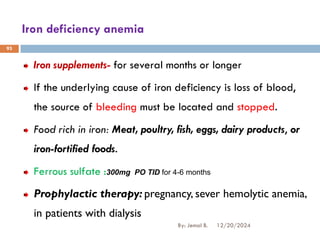
Iron deficiency anemia
Iron supplements- for several months or longer
If the underlying cause of iron deficiency is loss of blood,
the source of bleeding must be located and stopped.
Food rich in iron: Meat, poultry, fish, eggs, dairy products, or
iron-fortified foods.
Ferrous sulfate :300mg PO TID for 4-6 months
Prophylactic therapy: pregnancy, sever hemolytic anemia,
in patients with dialysis
12/20/2024
By: Jemal B.
93
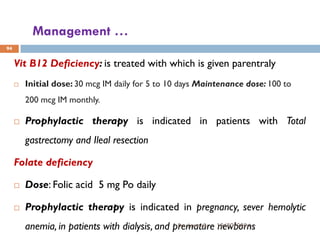
Management …
Vit B12 Deficiency: is treated with which is given parentraly
 Initial dose: 30 mcg IM daily for 5 to 10 days Maintenance dose: 100 to
200 mcg IM monthly.
 Prophylactic therapy is indicated in patients with Total
gastrectomy and Ileal resection
Folate deficiency
 Dose: Folic acid 5 mg Po daily
 Prophylactic therapy is indicated in pregnancy, sever hemolytic
anemia, in patients with dialysis, and premature newborns
94
12/20/2024
By: Jemal B.
Anemia Of Chronic Disease
It can be focused on treating the underlying disease.
Iron and vitamin supplements don't help
If symptoms become severe, a blood transfusion or
injections of synthetic erythropoietin, may help stimulate
RBC production.
12/20/2024
By: Jemal B.
95
Sickle Cell Anemia
 Rx for this incurable anemia include:
♣Cancer drug hydroxyurea (Droxia)
♣A bone marrow transplant
♣Blood transfusions
➢Supportive:
♣Administration of oxygen
♣Pain-relieving drugs
♣Oral and intravenous fluids
96
12/20/2024
By: Jemal B.
Prevention Of Anemia
➢ Eat foods high in iron
➢ Make sure to consume enough folic acid and vit. B12
➢ “Don't drink coffee or tea with meals”.
➢ Talk to doctor about taking iron pills (supplements):
ferrous and ferric.
12/20/2024
By: Jemal B.
97
Thank you!!
12/20/2024
98
By: Jemal B.

CVD for midwifery.pdf for the second year

  • 1.
    NURSING MANAGEMENT OF PATIENTSWITH CARDIOVASCULAR DISORDERS Jemal B. (Msc) 12/20/2024 1 By: Jemal B.
  • 2.
    CORONARY ARTERY DISEASE(CAD) I- CORONARY ATHEROSCLEROSIS is an abnormal accumulation of lipid or fatty substances and fibrous tissue in the vessel wall. These substances create blockages or narrow the vessel in a way that reduces blood flow to the myocardium. 12/20/2024 2 By: Jemal B.
  • 3.
    Risk Factors Non modifiableRisk Factors Family history of coronary heart disease Increasing age Gender (heart disease occurs three times more often in men than in premenopausal women) Race (higher incidence of heart disease in African Americans than in Caucasians) Modifiable Risk Factors High blood cholesterol and triglyceride level Cigarette smoking, tobacco use Hypertension Diabetes mellitus Lack of estrogen in women Physical inactivity Obesity 12/20/2024 3 By: Jemal B.
  • 4.
    Pathophysiology Begins as fattystreaks, lipids that are deposited in the intima of the arterial wall. An inflammatory response happens. T lymphocytes and monocytes infiltrate the area to ingest the lipids as a result endothelial damage ; this causes smooth muscle cells within the vessel to proliferate and form a fibrous cap over the dead fatty core(Lipids(Cholesterol). 12/20/2024 4 By: Jemal B.
  • 5.
    These deposits, calledatheromas or plaques, protrude into the lumen of the vessel, Resistance to blood flow Myocardial ischemia chest pain Atherosclerotic plaques may rapture and a fibrin thrombus is formed myocardial infarction ….Pathophysiology 12/20/2024 5 By: Jemal B.
  • 6.
  • 7.
  • 8.
    Clinical Manifestations Angina pectoris(acute onset of chest pain due to myocardial ischemia) SOB Nausea Unusual fatigue 12/20/2024 8 By: Jemal B.
  • 9.
    Common types ofAngina a) Stable angina Predictable and consistent pain of short duration, easily relieved Precipitated by effort or some activity (running, walking, etc.) Typical presentations are that of chest discomfort b) Unstable angina "crescendo angina;“ symptoms occur more frequently and longer lasting >10 min, more severe, may not be relieved by rest/nitroglycerin 12/20/2024 9 By: Jemal B.
  • 10.
    c) Refractory angina severeincapacitating pain; Do not respond to conventional therapy including drugs and pt may suffer severe chest pain d) Variant angina Pain at rest usually at night e) Silent angina objective evidence of ischemia (such as ECG changes), but patient reports no symptoms …..Common types of Angina 12/20/2024 10 By: Jemal B.
  • 11.
    Diagnosis History Physical Examination Serum lipidlevels Exercise stress test ECG 12/20/2024 11 By: Jemal B.
  • 12.
    Prevention Can be bythe control of the following four modifiable risk factors of CAD Increased Cholesterol Cigarette Smoking DM Hypertension 12/20/2024 12 By: Jemal B.
  • 13.
    I. Controlling cholesterollevel Desired goal is to have low LDL and high HDL values The desired level of LDL depends on the patient:  < 160 mg/dL for patients with one risk factors  < 130 mg/dL for patients with two or more risk factors  < 100 mg/dL for patients with CAD HDL > 40-60 mg /dL …..Prevention 12/20/2024 13 By: Jemal B.
  • 14.
    Non-Drug Management Dietary measures Weightreduction Increased physical activity Promoting cessation of tobacco use Early detection and treatment of hypertension Controlling DM 12/20/2024 14 By: Jemal B.
  • 15.
    Drug Management Medications thatdecrease LDL, triglycerides and that increase HDL Niacin : Decreased blood lipids lower LDL and triglyceride levels, and increase HDL levels. 12/20/2024 15 By: Jemal B.
  • 16.
    Fibric acids: primarilyinhibits triglyceride synthesis. Fenofibrate Colofibrate Bile acid sequestrates: lowers LDLs Cholestryramine Colesevelam Colestipol HCL ……Drug Management 12/20/2024 16 By: Jemal B.
  • 17.
    MYOCARDIAL INFARCTION Coronary occlusion,heart attack, and MI are terms used synonymously, but the preferred term is MI MI refers to the process by which areas of myocardial cells in the heart are permanently destroyed. 12/20/2024 17 By: Jemal B.
  • 18.
    Causes: Reduced blood flowin a coronary artery Decreased oxygen supply and Increased demand for oxygen .....Myocardial Infarction 12/20/2024 18 By: Jemal B.
  • 19.
    Risk Factors Hypercholesterolemia -high LDL, low HDL Tobacco smoking, Alcohol, OCP Air pollution: CO, Advanced age Gender (men) Diabetes mellitus, Obesity (BMI >30 kg/m²) High blood pressure, Lack of physical activity Family history of ischemic heart disease or MI .....Myocardial Infarction 12/20/2024 19 By: Jemal B.
  • 20.
    Pathophysiology Atherosclerotic plaque incoronary artery Plaques can become unstable, rupture, and additionally promote a thrombus that occludes the artery As the cells are deprived of oxygen, ischemia develops, cellular injury occurs, and over time, the lack of oxygen results in Ischemic cascade: death of the heart cells near the occlusion Infarction or cell death .....Myocardial Infarction 12/20/2024 20 By: Jemal B.
  • 21.
  • 22.
    Clinical Manifestations Chest Pain Occurssuddenly & not relieved by rest or nitrate Locations: retrosternal, radiating to the neck, jaw, and arms or to the back May occur while the patient is active or at rest, asleep or walk Commonly occurs in the early morning Usually lasts for 20 minutes Palpitations. Heart sounds may include S3, S4, and new onset of a murmur. Increased jugular venous distention 12/20/2024 22 By: Jemal B.
  • 23.
    ❑ Shortness ofbreath ❑ Cool, pale, and moist skin. ❑ tachycardia and tachypnea. ❑ Dysrhythmias ❑ Anxiety, restlessness, light headedness …..Clinical Manifestations 12/20/2024 23 By: Jemal B.
  • 24.
    Dx ❑ PATIENT HISTORY:the description of the presenting symptom (eg, chest pain) and the history of previous illnesses and family health history, particularly of heart disease. ❑ ECG ❑ LABORATORY TESTS: increased Creatine, increased Myoglobin, increased Troponin 12/20/2024 24 By: Jemal B.
  • 25.
    Non-drug treatment (General measures) BedRest Bowel → Constipation Stool softener & Laxatives Diet Low fat, low Sodium , high fiber diet. Sedation ↓Anxiety & ensures adequate sleep Diazepam 5mg 3-4x/day , Additional dose at bed time 12/20/2024 25 By: Jemal B.
  • 26.
    Goals:- Minimizing myocardial damage Preservingmyocardial function Preventing CC Medical Management 12/20/2024 26 By: Jemal B.
  • 27.
    Medical Management Drug treatment(DACA): Oxygen, 2-4 l/min, via facemask PLUS  Nitroglycerin, 0.5mg, sublingual, every 5 min up to 3 doses. PLUS  Acetylsalicylic acid, 160-325 mg. P.O. QID PLUS  Diazepam, 5mg P.O. 3-4 times daily. PLUS  Morphine, (for control of pain), 2-4 mg IV. every 5 min until the desired level of analgesia is achieved or until unacceptable side effects occur. PLUS  Heparin: For all patients with myocardial infarction (MI), 7500 units subcutaneously every 12 hours BID until the patient is ambulatory 12/20/2024 27 By: Jemal B.
  • 28.
    Followed by:  Warfarin,for at least 3 months PLUS  Enalapril, 5 - 40 mg P.O. once or divided into two to three doses daily PLUS  Metoprolol, 5 mg I.V. every 2 to 5 min for a total of 3 doses Medical Management 12/20/2024 28 By: Jemal B.
  • 29.
    HEART FAILURE ❖ HF,often referred to as congestive heart failure (CHF), is the inability of the heart to pump sufficient blood ❖ to meet the needs of the tissues for oxygen and nutrients. ❑ The term HF indicates myocardial heart disease 12/20/2024 29 By: Jemal B.
  • 30.
    ❑ Systolic heartfailure- an alteration in ventricular contraction. ❑ Results when the ventricle is unable to contract forcefully during systole to eject adequate amount of blood into the circulation ❑ Diastolic heart failure- an alteration in ventricular filling ❑ Occurs when the left ventricle is unable to relax adequately during diastole resulting in decreased ventricular filling and inadequate CO Classification of HF 12/20/2024 30 By: Jemal B.
  • 31.
    ❑ Left sidedHF: - results from left ventricle dysfunction, ❑ which causes blood to back up through the left atrium and into the pulmonary veins increasing pulmonary pressure. ❑ cause pulmonary congestion & Edema ❑ Right sided HF:- results from a diseased right ventricle (RV) that causes back ward flow of blood to the right atrium (RA) and venous circulation ❑ causing peripheral edema, hepatomegally, spleenomegally, congestion of the GI tract …..Classification of HF 12/20/2024 31 By: Jemal B.
  • 32.
    NYHA- Based onphysical limitations Class Description Class I No limitation of physical activity; there are no symptoms from ordinary activities Class II Slight limitation of physical activity; the patient is comfortable at rest or with mild exertion Class III Marked limitation of physical activity; the patient is comfortable only at rest Class IV Total limitation, any physical activity brings discomfort and symptoms occur at rest ……Classification of HF 12/20/2024 32 By: Jemal B.
  • 33.
    Stages of CHF-The American College of Cardiology /American Heart Association Stage A: patients who are at high risk for developing HF but without structural heart disease or symptoms of HF E.g., patients with DM or Hth Stage B: patients with structural heart disease but without symptoms of HF Stage C: Structural heart disease and symptoms of HF Stage D: patients requiring special interventions (end-stage heart failure) ……Classification of HF 12/20/2024 33 By: Jemal B.
  • 34.
    ETIOLOGY Main causes CAD and/orUnderlining factors hypertension Valvular heart disease Hypoxia Anemia (hematocrit < 25%) Congenital heart disease Compensatory mechanisms 12/20/2024 34 By: Jemal B.
  • 35.
    Clinical Manifestations Left SidedHeart Failure Decreased CO Fatigue, Decreased activity tolerance Altered digestion Oliguria Nocturia Angina (chest pain) Tachycardia, palpitation Pallor, Cool, clammy skin weak pulse Confusion, restlessness, Dizziness, anxiety, lightheadedness Left lateral displacement of apical impulse 12/20/2024 35 By: Jemal B.
  • 36.
    Clinical Manifestations…. Left SidedHeart Failure… Pulmonary congestion Cough - initially dry and nonproductive Shortness of breath Orthopnea Adventitious breath sounds, (Crackles or wheezes) Tachypnea Decreased oxygen saturation Murmurs S3/S4 12/20/2024 36 By: Jemal B.
  • 37.
  • 38.
    Because of systemic congestion: Jugularvein distension Hepatomegally & spleenomegally Ascites Anorexia, nausea, abdominal pain Dependent edema -legs & sacrum Nocturia &Oliguria Weakness Weight gain Right Sided Heart Failure 12/20/2024 38 By: Jemal B.
  • 39.
  • 40.
    Dx History Physical Examination Chest X-ray ECG Echocardiogram Pulseoximetry Laboratory studies : serum electrolytes, blood urea nitrogen (BUN), creatinine, complete blood cell count (CBC) 12/20/2024 40 By: Jemal B.
  • 41.
    FRAMINGHAM CRITERIA FORTHE DIAGNOSIS OF HEART FAILURE MAJOR CRITERIA PND or orthopnea neck vein distention cardiomegaly S3/gallop Acute pulmonary edema 12/20/2024 41 By: Jemal B.
  • 42.
    MINOR CRITERIA Bilateral ankleedema Night cough Dyspnea on exertion Hepatomegaly Pleural effusion Tachycardia(heart rate >120 beats/min) The diagnosis of chronic heart failure requires the simultaneous presence of at least 2 major criteria or 1 major criterion in conjunction with 2 minor criteria ….FRAMINGHAM CRITERIA .. 12/20/2024 42 By: Jemal B.
  • 43.
    Management General Measures Activity ❑Heavy physicallabor is not recommended ❑Routine modest exercise for class I–III HF within limits of symptoms Diet Low sodium diet (< 2g -3g /day) Avoid excessive fluid intake 12/20/2024 43 By: Jemal B.
  • 44.
    Main Goals OfTherapy To eliminate or reduce etiologic or contributing factors To reduce the workload on the heart (preload , contractility & after load) 12/20/2024 44 By: Jemal B.
  • 45.
    Pharmacologic therapy 1. ACE- inhibitors (ACE-Is):  Promotes vasodilatation & diuresis by decreasing preload & after load  Include: captopril, enalapril, lisinopril 2. Hydralazine– Decreased systemic vascular resistance 3. Beta blockers: reduce the constant stimulation of the sympathetic nervous system E.g. propranolol 4. Digitalis e.g. digoxin 0.125, 0.25, 0.5 mg - slow conduction through the atrioventricular node 12/20/2024 45 By: Jemal B.
  • 46.
    5. Diuretics: increasethe rate of urine production and the removal of excess extracellular fluid from the body ❑ Thiazides e.g. chlorothiazide, hydrochlorothiazide ❑ Loop diuretics e.g. furosemide (lasix) ❑ Potassium sparing e.g. spironolactone ❑ Combination agents e.g. spironolactone + hydrochlorothiazide ….Pharmacologic therapy 12/20/2024 46 By: Jemal B.
  • 47.
    According to DACAof Ethiopia First line Digoxin 0.125-0.375 mg po daily Plus Furosemide , 40-240 mg, po divided in to 2-3 doses daily Plus Enalapril 5-40 mg po once or divided in to two dose daily And/or Spironolactone 25-100mg po once daily or divided into two doses 12/20/2024 47 By: Jemal B.
  • 48.
    Nursing Intervention 1. Maintainingnormal body fluid  Evaluating degree of peripheral edema  Daily measurement of abdominal girth  Monitoring intake & out put and daily body weight  Restriction of sodium diets & fluid  Avoid diet high in fat/cholestrol 12/20/2024 48 By: Jemal B.
  • 49.
    2. Improving activitytolerance ❑ Avoid prolonged bed rest ❑ Emotional & physical support to reduce oxygen consumption ❑ Moderate physical exercise for a total of 30 min with 3-5 times per week ❑ Monitoring patient’s response to activity 3. Maintaining skin integrity ❑ Monitor signs of edema ❑ Meticulous skin care ❑ Pad bony prominences ❑ Passive ROM to extremities every 4 hours to facilitate venous return of the fluid ❑ Turning & repositioning the patient every 2 hours …..Nursing Intervention 12/20/2024 49 By: Jemal B.
  • 50.
  • 51.
    Blood pressure isthe product of cardiac output multiplied by peripheral resistance. Cardiac output is the product of the heart rate multiplied by the stroke volume. HYPERTENSION 12/20/2024 51 By: Jemal B.
  • 52.
    HYPERTENSION is a systolicblood pressure greater than 140 mm Hg and a diastolic pressure greater than 90 mm Hg over a sustained period, based on the average of two or more blood pressure measurements taken in two or more contacts with the health care provider after an initial screening. 12/20/2024 52 By: Jemal B.
  • 53.
    Classification Of BloodPressure: for Adults Age 18 and Older Category Systolic BP (mmHg) Diastolic BP (mmHg) Optimal <120 <80 Normal <130 <85 High normal 130-139 85-89 Stage 1 or Mild HTN 140-159 90-99 Stage 2 or Moderate HTN 160-179 100-109 Stage 3 Severe HTN > 180 > 110 12/20/2024 53 By: Jemal B.
  • 54.
    Types of hypertension 1.Primary (Essential) hypertension ❖ Accounts for about 90-95% of all cases ❖ Has no known causes ❖ Onset usually between the age of 30 & 50 years ❖ factors that may contribute for the development include: Genetic predisposition: the exact mechanism has not been established Environment: Dietary salt intake and Salt sensitivity Obesity Occupation Family size and crowding Stress and increased serum lipid level Pregnancy-induced hypertension: Toxemia of pregnancy 12/20/2024 54 By: Jemal B.
  • 55.
    2. Secondary hypertension ❖In 5-10 % of patients with hypertension, the hypertension is secondary to identifiable disorder ❖ Identifiable causes include:  Renal vascular & renal parenchymal disease  congenital abnormalities of aorta  Cushing syndrome  Brain tumors  Encephalitis  Medications • Glucocorticoids • Mineralocorticoids • Sympathomimetic 12/20/2024 55 By: Jemal B.
  • 56.
    Pathophysiology Hypertension may becaused by one or more of the following: ❑ 1. Increased sympathetic nervous system activity ❑ 2. Increased activity of renin-angiotensin-aldosterone system ❑ 3. Decreased vasodilation of the arterioles ❑ 4. Structural and functional changes in the heart and blood vessels 12/20/2024 56 By: Jemal B.
  • 57.
    Clinical manifestations Hypertension isoften called “silent killer” because it is frequently asymptomatic especially if the hypertension is mild or moderate. Headache: Is the most common symptom, Occurs in the occipital region, Worsen on the morning on arising kidneys involvment: Nocturia Increased BUN & serum creatinine level12/20/2024 57 By: Jemal B.
  • 58.
    Cerebrovascular involvement Speech &vision alteration Dizziness Stroke Weakness Faintness (sudden fall) Sudden hemiplegia Vascular complications  Blurring of vision  Epistaxis Occasionally, retinal changes  Hemorrhages  Cotton wool spots (small infarction) ….Clinical manifestations 12/20/2024 58 By: Jemal B.
  • 59.
    Diagnosis History Physical Examination Measuring bloodpressure (at least 1week apart) Ophthalmologic examination Lab tests  U/A – e.g. urine catecholamine  Blood chemistries (level of Na+, K+, Cl-, LDL etc)  Creatinine, BUN  ECG, Echocardiography & chest X-ray 12/20/2024 59 By: Jemal B.
  • 60.
    Management The managements ofhypertension include: Lifestyle modifications Pharmacologic therapy 12/20/2024 60 By: Jemal B.
  • 61.
    Lifestyle Modifications Weight reduction Moderationof alcohol in take Regular physical activity Reduction of salt intake Smoking cessation Life style modifications are indicated for the person with either border line or sustained hypertension ➢ If the BP remains > 140/90mmHg after 3-6 months of life style changes, drug therapy is indicated. ….Management 12/20/2024 61 By: Jemal B.
  • 62.
    The DASH Diet Grainsand grain products 7–8gm/day Vegetables 4–5gm/day Fruits 4–5gm/day Low fat or fat-free dairy foods 2–3gm/day Meat, fish, poultry Nuts, seeds, and dry beans 4–5gm/weekly 12/20/2024 62 By: Jemal B.
  • 63.
    Goal- Preventing death andcomplications by achieving and maintaining the BP at 140/90 mmHg or lower and lower than 130/80 mmHg for people with DM & chronic kidney diseases. Pharmacologic/drug therapy 12/20/2024 63 By: Jemal B.
  • 64.
    Pharmacologic/drug therapy Vasodilating drugs hydralazine β-adrenergicblocking drugs Atenolol Metoprolol Propranolol Anti adrenergic drugs (centrally acting) Methyldopa Alpha (α)-adrenergic blocking drugs doxazosin Prazosin 12/20/2024 64 By: Jemal B.
  • 65.
    Calcium channel blockers:Nifidipine, Verapamil, Diltiazem ACE I inhibitors: Captopril , Enalapril, Lisinopril Angiotensin II receptor antagonists: Valsartan , Losartan, Irbesartan Diuretics: Furosemide (Lasix), Hydrochlorothiazide ….Pharmacologic 12/20/2024 65 By: Jemal B.
  • 66.
    DACA of Ethiopia drugsused as first step agents Diuretics Beta Blockers Calcium antagonists ACE-Is 12/20/2024 66 By: Jemal B.
  • 67.
    First line drugsfor non-emergency conditions Hydrochlorothiazide, 12.5-50 mg/day PO And/or Nifedipine 10-40 mg, PO TID And/or Propranolol 40-160 mg PO divided in to 2-4 doses Alternative Enalapril, 2.5-40 mg PO, once or divided in to two doses daily And/or Methyldopa, 250-2000 mg PO in divided doses. OR Hydralazine, 10-20 mg, slow IV can be given in severe hypertension. OR Atenolol, 50 – 100 mg p.o daily …..DACA of Ethiopia 12/20/2024 67 By: Jemal B.
  • 68.
    Hypertensive Crises Blood pressureelevation to such degree can cause vascular damage, encephalopathy, retinal hemorrhage, renal damage and death. 1 –2% of the hypertensive population develop this complication. 12/20/2024 68 By: Jemal B.
  • 69.
    HYPERTENSIVE EMERGENCY ❑ ishypertension with acute impairment of one or more organ systems in which there is acute impairment of target organ ❑ It generally occurs at the blood pressure is severely elevated [180 or higher for systolic pressure or 120 or higher for diastolic pressure], , ❑ but can occur at even lower levels in patients whose blood pressure had not been previously high ❖ In these conditions, the blood pressure should be lowered aggressively over minutes ❑ Progressive end-organ dysfunction. 12/20/2024 69 By: Jemal B.
  • 70.
    HYPERTENSIVE EMERGENCY ❑ Thenurse may think that taking vital signs every 5 minutes check vital signs at 15 or 30 minutes intervals if the situation is more stable. 12/20/2024 70 By: Jemal B.
  • 71.
    HYPERTENSIVE URGENCY ❑ urgencyis a situation where the blood pressure levels exceeding 180 systolic OR 110 diastolic but there is no associated organ damage. ❑ No progressive target-organ dysfunction ❑ Treatment of hypertensive urgency requires readjustment and/or additional dosing of oral medications, ❑ but most often does not necessitate hospitalization for rapid blood pressure reduction 12/20/2024 71 By: Jemal B.
  • 72.
    Clinical Manifestation The eyes:may show retinal hemorrhage The brain: headache, vomiting, and/or subarachnoid or cerebral hemorrhage shows manifestations of increased intracranial pressure The kidneys: hematuria, proteinuria, and acute renal failure CVS: Patients will usually suffer from left ventricular dysfunction Other : Chest pain, Arrhythmias, Epistaxis, Dyspnea, Faintness or vertigo, Severe anxiety 12/20/2024 72 By: Jemal B.
  • 73.
    Treatment of HypertensiveEmergency ❑ Hydralazine, 5 mg IV every 15-min should be given until the mean arterial ❑ blood pressure is reduced by 25% (within minutes to 2 hours), ❑ furosemide, 40 mg IV can be used according to blood pressure response 12/20/2024 73 By: Jemal B.
  • 74.
    Treatment of HypertensiveUrgency ❑ Nifedipine, 20-120 mg p.o in divided doses per day could be used. OR ❑ Captopril, 25-50 mg p.o three times daily 12/20/2024 74 By: Jemal B.
  • 75.
    Nursing Interventions ❑ Improvingactivity tolerance ❑ Alleviating pain: ❑ encourage/maintain bedrest during acute phase. provide/recommend nonpharmacological measures ❑ Patient education about lifestyle modifications ❑ Compliance to therapeutic regimens ❑ Nutritional advice ❑ Avoiding potential complication 12/20/2024 75 By: Jemal B.
  • 76.
  • 77.
    ANEMIA Anemia is aqualitative or quantitative deficiency of hemoglobin, in red blood cells that transports oxygen. It is a lower-than-normal number of red blood cells, usually measured by a decrease in the amount of hemoglobin. Is the most common disorder of blood which leads to hypoxia in organs. Not specific disease but a sign of underlying disorder. 12/20/2024 By: Jemal B. 77
  • 78.
    Potential causes 1. Lossof RBCs—bleeding, (eg. GIT, uterus, nose, or wound) 2. Decreased production of RBCs (ineffective erythropoiesis):. 3. Hemolysis: overactive spleen (e.g. hypersplenism) or production of abnormal RBCs (eg, sickle cell anemia) 12/20/2024 By: Jemal B. 78
  • 79.
    Specific Types OfAnemia 1. Vitamin B12/ Cobalamin Deficiency Anemia Also called Pernicious anemia Vitamin B12 is essential for normal nervous system function and blood cell production. For vitamin B12 to be absorbed by the body, it must bind to intrinsic factor, a protein secreted by cells in the stomach. ➢ Source: Dairy products, eggs, fish, meat, and poultry 79 12/20/2024 By: Jemal B.
  • 80.
    Causes Diet low invit B12 (e.g. strict vegetarian) Chronic alcoholism Abdominal or intestinal surgery Intestinal malabsorption disorders Tape worm 12/20/2024 By: Jemal B. 80
  • 81.
    2. Folate-deficiency Anemia Referredto as megaloblastic anemia Folate, also called folic acid, is necessary for RBC formation and growth. Folate is not stored in the body in large amounts, Occurs in about 4 out of 100,000 people. ➢ Source: Green leafy vegetables and liver. 81 12/20/2024 By: Jemal B.
  • 82.
    Cause/Risk factors Poor dietaryintake of folic acid Eating overcooked food Malabsorption diseases Certain medications e.g. phenytoin Third trimester of pregnancy Alcoholism 12/20/2024 By: Jemal B. 82
  • 83.
    3. Iron DeficiencyAnemia it is the most common form of anemia Decrease number of RBC in blood result too little iron. RBCs are not providing adequate oxygen to body tissues. Source: meat (liver), fish and poultry 12/20/2024 By: Jemal B. 83
  • 84.
    Causes Too little ironin the diet Poor absorption of iron by the body Loss of blood (including from heavy menstrual bleeding) Risky groups ♣ Women of child-bearing age ♣ Pregnant or lactating women ♣ Infants, children, and adolescents in rapid growth ♣ People with a poor dietary intake of iron ♣ Blood loss: peptic ulcer, long term ASA use, colon ca 84 12/20/2024 By: Jemal B.
  • 85.
    4. Hemolytic Anemia Inadequatenumber of circulating RBCs caused by hemolysis greater than erythropoiesis. The bone marrow is unable to compensate for premature destruction. 85 12/20/2024 By: Jemal B.
  • 86.
    Causes ➢ Abnormal hemoglobin:Sickle cell anemia,Thalassemia ➢ Enzyme deficiencies: Glucose-6-phosphate dehydrogenase deficiency ➢ Transfusion reaction ➢ Autoimmune hemolytic anemia ➢ Infection: malaria 12/20/2024 86 By: Jemal B.
  • 87.
    Normal and Sickleshaped RBC 12/20/2024 By: Jemal B. 87
  • 88.
    5. Idiopathic/Aplastic Anemia Alsocalled pancytopenia Is a failure of the bone marrow to properly form all types of blood cells Results from injury to the stem cell Cause is unknown, but is thought to be an autoimmune process. 12/20/2024 By: Jemal B. 88
  • 89.
    Common Clinical ManifestationOf Anemia  Paleness  Yellow eyes/skin  Fatigue  Breathlessness  Rapid heart rate  Delayed growth and puberty 12/20/2024 By: Jemal B. 89 ▪Susceptibility to infections ▪Ulcers on the lower legs ▪Jaundice ▪Bone pain ▪Fever
  • 90.
    Assessment and DiagnosticFindings Physical Exam & history CBC Hgb concentration, Hct, ESR, folate level, serum vit B12 Iron tests (serum level, binding capacity, % saturation) Bone marrow aspiration and biopsy Elevated bilirubin Erythropoietin levels 12/20/2024 By: Jemal B. 90
  • 91.
    Criteria Of AnemiaIn Adults 12/20/2024 By: Jemal B. 91 Factor Women Men RBC x 106 cells/mcL < 4.0 < 4.5 Hgb (g/dl) < 12 < 14 HCT (%) < 37 < 40
  • 92.
    Treatments For Anemia Treatmentdepends on severity and the cause. Treatment goals: ➢To get RBC counts or Hgb levels back to normal ➢To treat the underlying cause of the anemia 12/20/2024 By: Jemal B. 92
  • 93.
    Iron deficiency anemia Ironsupplements- for several months or longer If the underlying cause of iron deficiency is loss of blood, the source of bleeding must be located and stopped. Food rich in iron: Meat, poultry, fish, eggs, dairy products, or iron-fortified foods. Ferrous sulfate :300mg PO TID for 4-6 months Prophylactic therapy: pregnancy, sever hemolytic anemia, in patients with dialysis 12/20/2024 By: Jemal B. 93
  • 94.
    Management … Vit B12Deficiency: is treated with which is given parentraly  Initial dose: 30 mcg IM daily for 5 to 10 days Maintenance dose: 100 to 200 mcg IM monthly.  Prophylactic therapy is indicated in patients with Total gastrectomy and Ileal resection Folate deficiency  Dose: Folic acid 5 mg Po daily  Prophylactic therapy is indicated in pregnancy, sever hemolytic anemia, in patients with dialysis, and premature newborns 94 12/20/2024 By: Jemal B.
  • 95.
    Anemia Of ChronicDisease It can be focused on treating the underlying disease. Iron and vitamin supplements don't help If symptoms become severe, a blood transfusion or injections of synthetic erythropoietin, may help stimulate RBC production. 12/20/2024 By: Jemal B. 95
  • 96.
    Sickle Cell Anemia Rx for this incurable anemia include: ♣Cancer drug hydroxyurea (Droxia) ♣A bone marrow transplant ♣Blood transfusions ➢Supportive: ♣Administration of oxygen ♣Pain-relieving drugs ♣Oral and intravenous fluids 96 12/20/2024 By: Jemal B.
  • 97.
    Prevention Of Anemia ➢Eat foods high in iron ➢ Make sure to consume enough folic acid and vit. B12 ➢ “Don't drink coffee or tea with meals”. ➢ Talk to doctor about taking iron pills (supplements): ferrous and ferric. 12/20/2024 By: Jemal B. 97
  • 98.