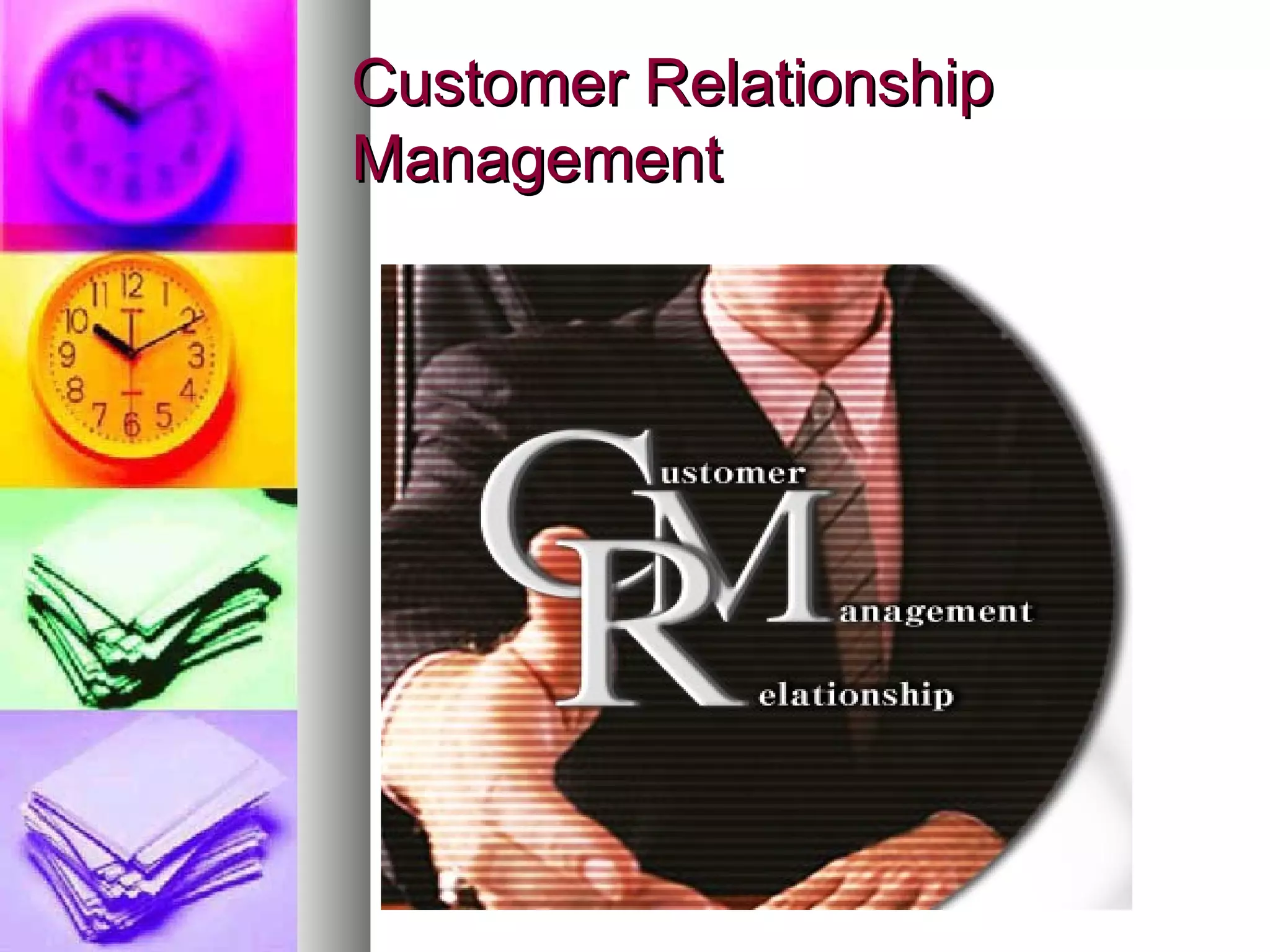


Customer Relationship
Management
Introduction
   Changes in customer expectations can be
    identified throughout the world. CRM
    strategies have become increasingly
    important worldwide due to these changes
    in expectations from customers as well as
    changes in the nature of markets.

   Customer Relationship Management
    (CRM) is a managerial philosophy that
    seeks to build long term relationships with
    customers.
Meaning

   This is a process of managing detailed
    information about individual customers and
    carefully managing all the “touch points” to
    maximize customer loyalty.

   Touch Points are the time of direct contact
    with customer.
Four-step framework
   Don Peppers and Martha Rogers outline
    four-step framework that can be adapted in
    CRM marketing :

       Identify your prospects and customers
       Interact with individual customer to know about
        individual needs
       Differentiate customers as per their needs and
        their value to your company
       Customize products, services and messages to
        each customer
Increasing the value of your
company’s customers base

   Reducing the rate of customer
    defection
   Increasing the life of customer
    relationship
   Enhancing the growth potential of
    each customer through “share of
    wallet,” cross-selling, and up-selling.
   Making low profit customers more
    profitable
Attracting, Retaining, and
Growing Customers
   Search for new customers.
   Identify actual prospects.
   Retain the customers
   Emphasis on customer after sales
   Complaints and suggestion.
How to handle customers
complaints

   Set up 7 day, 24 hour toll-free “hotline” (by
    phone, fax, or e-mail)
   Revert back as quickly as possible.
   Empathy, Sympathy and apologize
   Resolve the complaint swiftly.
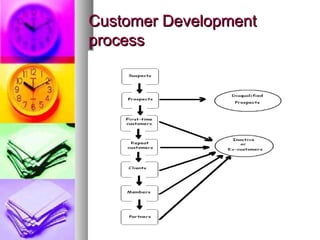
Customer Development
process
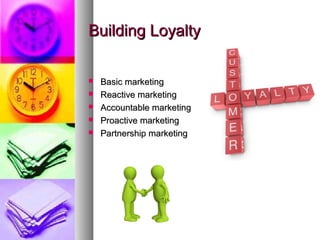
Building Loyalty

   Basic marketing
   Reactive marketing
   Accountable marketing
   Proactive marketing
   Partnership marketing
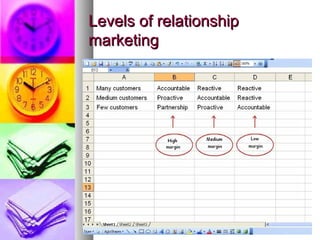
Levels of relationship
marketing
Examples
   Apple

    Apple encourages owners of its computers
    to form local Apple-user groups which
    keeps a contact with management of the
    company so that it may help them in
    correcting the faults. By 2009 there were
    more then 600 groups.
Examples

   Harley-Davidson

    The world famous motorcycle company
    sponsors the Harley Owners Group (HOG),
    which now numbers 650,000 members.
    The first time buyer of the bike gets
    benefits like free one year membership of a
    magazine (Hog tales), a touring handbook,
    emergency road service, insurance
    program, discount on hotel rates etc.
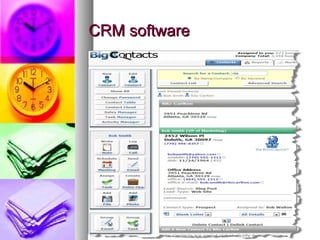
CRM software
References

Book :
Marketing management (Philip kotler)
Questions??
Thank You!


   By : Saksham Duggal

Customer relationship management

  • 1.
  • 2.
    Introduction  Changes in customer expectations can be identified throughout the world. CRM strategies have become increasingly important worldwide due to these changes in expectations from customers as well as changes in the nature of markets.  Customer Relationship Management (CRM) is a managerial philosophy that seeks to build long term relationships with customers.
  • 3.
    Meaning  This is a process of managing detailed information about individual customers and carefully managing all the “touch points” to maximize customer loyalty.  Touch Points are the time of direct contact with customer.
  • 4.
    Four-step framework  Don Peppers and Martha Rogers outline four-step framework that can be adapted in CRM marketing :  Identify your prospects and customers  Interact with individual customer to know about individual needs  Differentiate customers as per their needs and their value to your company  Customize products, services and messages to each customer
  • 5.
    Increasing the valueof your company’s customers base  Reducing the rate of customer defection  Increasing the life of customer relationship  Enhancing the growth potential of each customer through “share of wallet,” cross-selling, and up-selling.  Making low profit customers more profitable
  • 6.
    Attracting, Retaining, and GrowingCustomers  Search for new customers.  Identify actual prospects.  Retain the customers  Emphasis on customer after sales  Complaints and suggestion.
  • 7.
    How to handlecustomers complaints  Set up 7 day, 24 hour toll-free “hotline” (by phone, fax, or e-mail)  Revert back as quickly as possible.  Empathy, Sympathy and apologize  Resolve the complaint swiftly.
  • 8.
  • 9.
    Building Loyalty  Basic marketing  Reactive marketing  Accountable marketing  Proactive marketing  Partnership marketing
  • 10.
  • 11.
    Examples  Apple Apple encourages owners of its computers to form local Apple-user groups which keeps a contact with management of the company so that it may help them in correcting the faults. By 2009 there were more then 600 groups.
  • 12.
    Examples  Harley-Davidson The world famous motorcycle company sponsors the Harley Owners Group (HOG), which now numbers 650,000 members. The first time buyer of the bike gets benefits like free one year membership of a magazine (Hog tales), a touring handbook, emergency road service, insurance program, discount on hotel rates etc.
  • 13.
  • 14.
  • 15.
  • 16.
    Thank You!  By : Saksham Duggal