ADTPM 
Mandhu college 
Semester 2, 2014 
Curriculum Studies, 0710 
Content knowledge in the 
National curriculum of the 
Maldives 
By Yuzna Mohamed (5337) 
Aminath Muhisina (5372)
Contents 
• Introduction 
• Content related to our 
topic 
• Our opinion and 
Justification
Introduction 
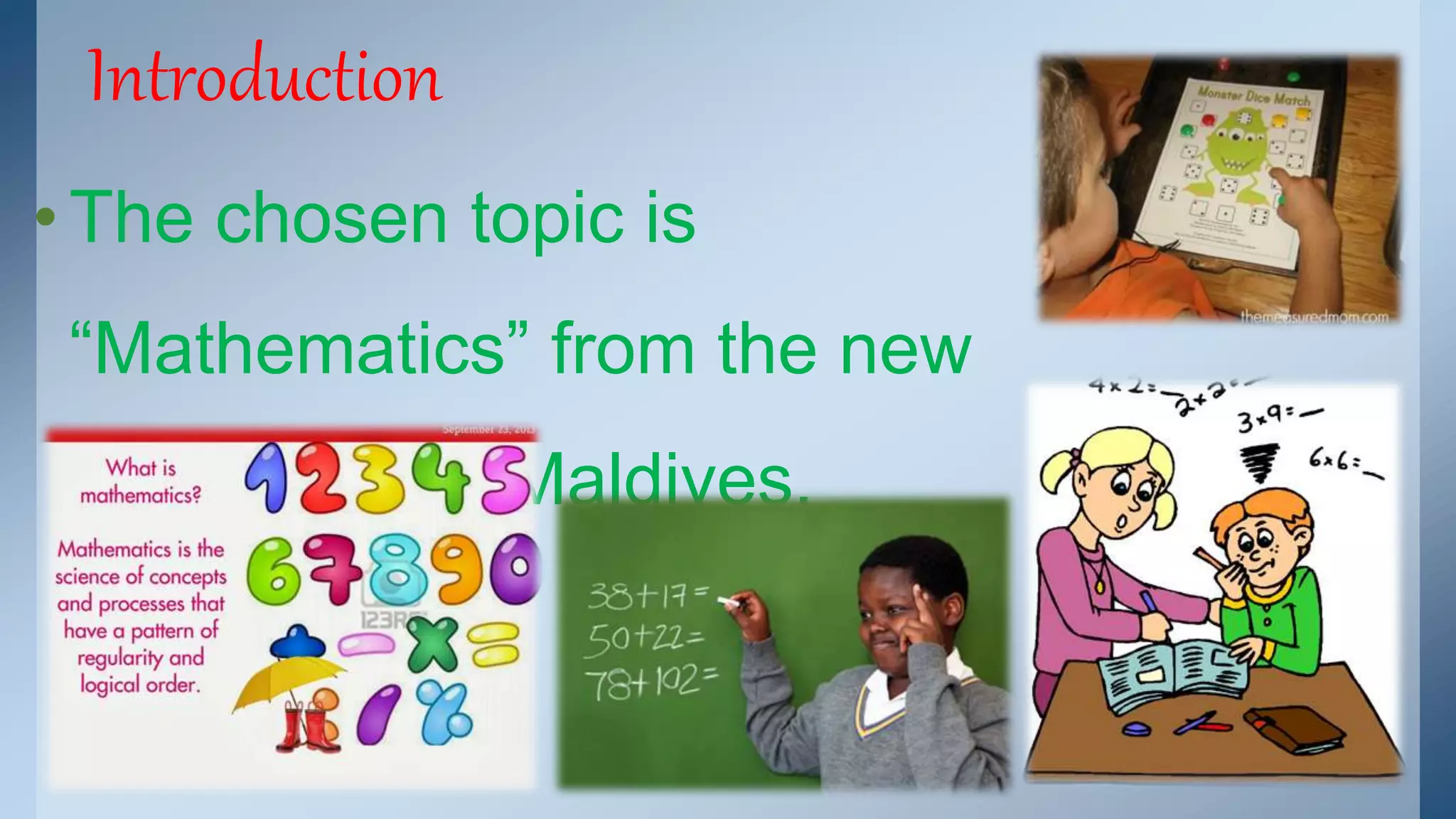
• The chosen topic is 
“Mathematics” from the new 
curriculum of Maldives.
Content 
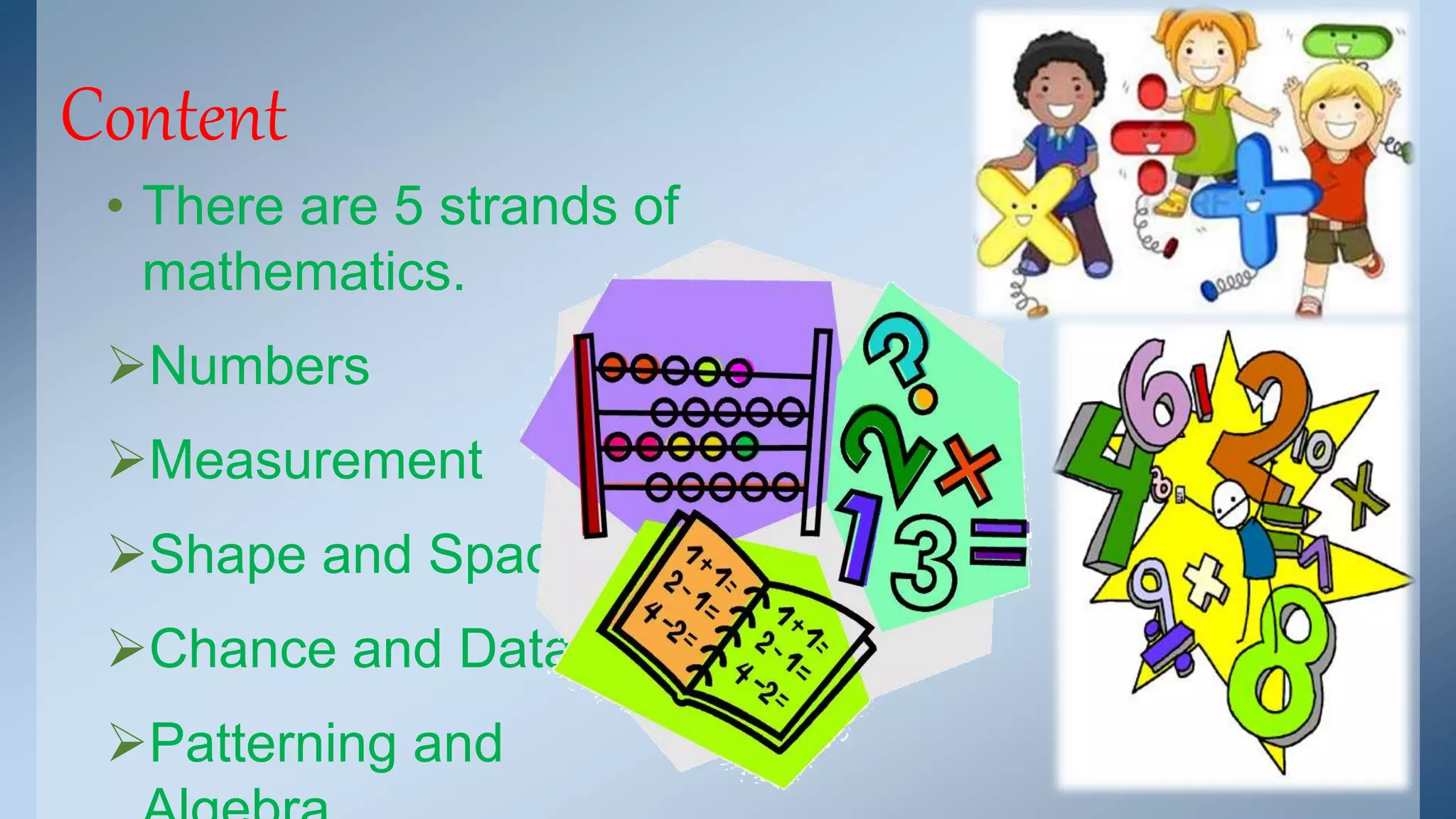
• There are 5 strands of 
mathematics. 
Numbers 
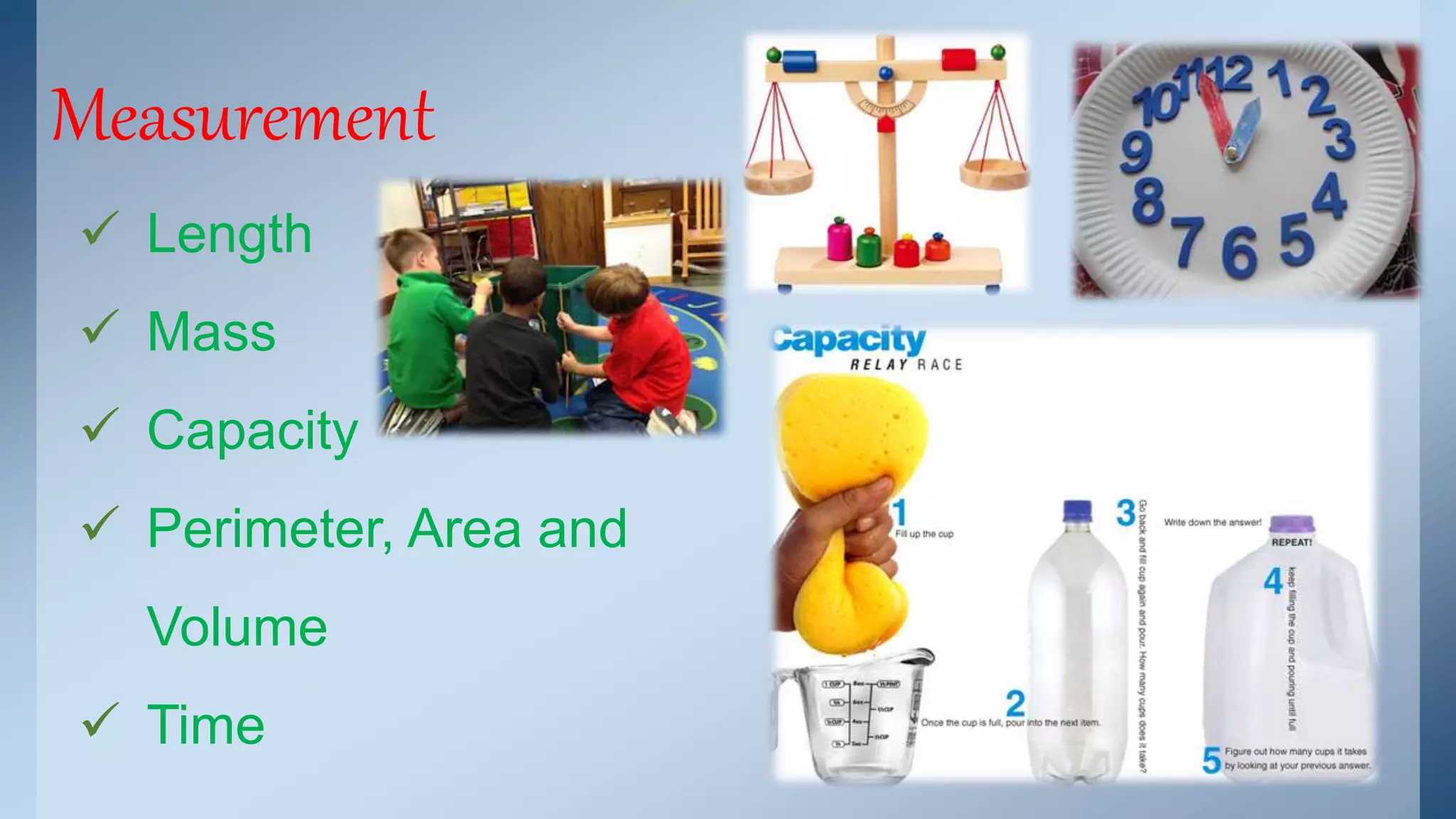
Measurement 
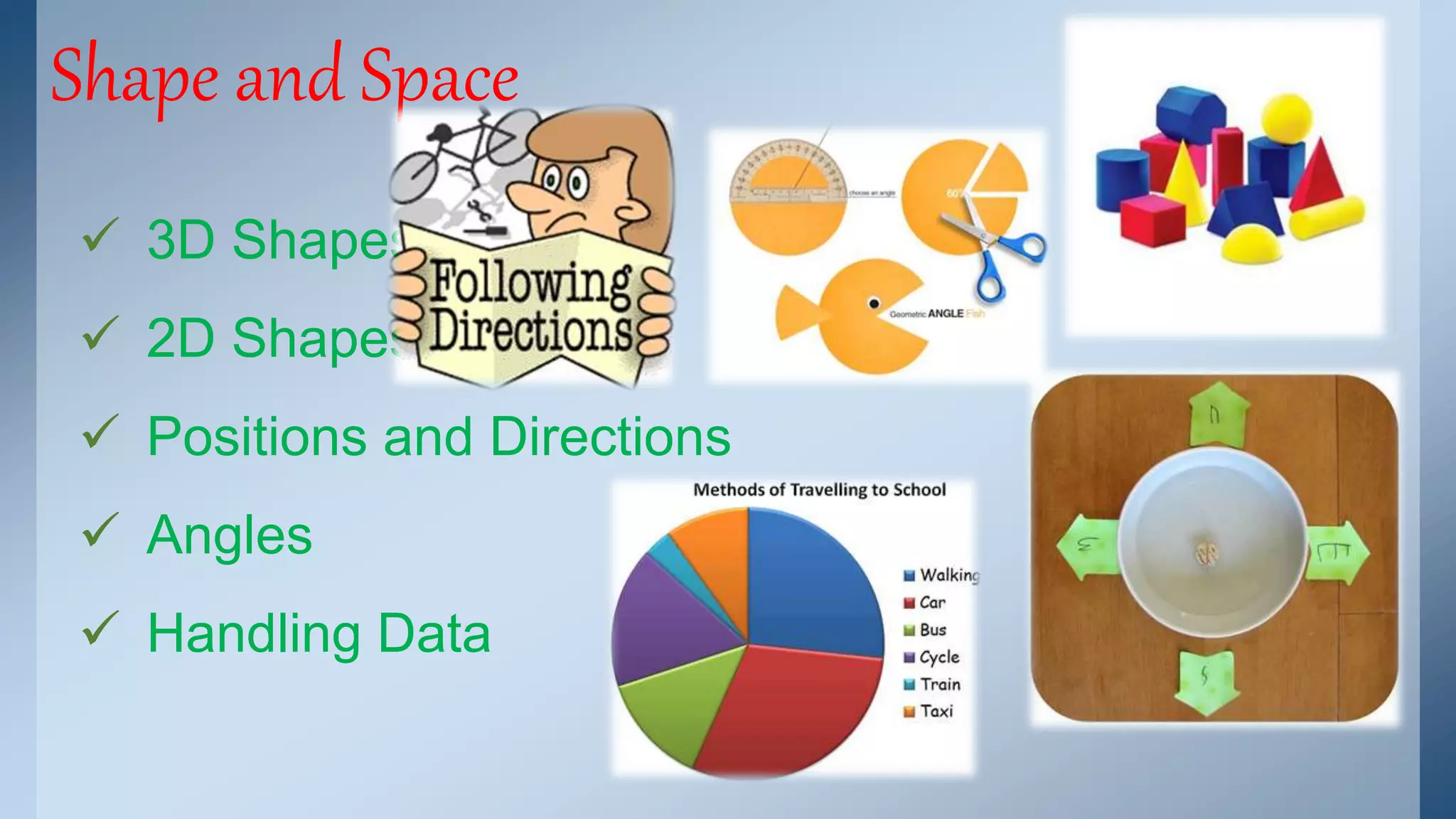
Shape and Space 
Chance and Data 
Patterning and 
Algebra
Numbers 
 Number Concept 
 Addition and 
Subtraction 
 Multiplication & 
Division 
 Money 
 Fractions, Decimals
Measurement 
 Length 
 Mass 
 Capacity 
 Perimeter, Area and 
Volume 
 Time
Shape and Space 
 3D Shapes 
 2D Shapes 
 Positions and Directions 
 Angles 
 Handling Data
Chance and Handling Data 
 Handling Data 
 Sequences and Properties of 
Numbers 
 Investigations, Puzzles and 
Problems
Patterning and Algebra 
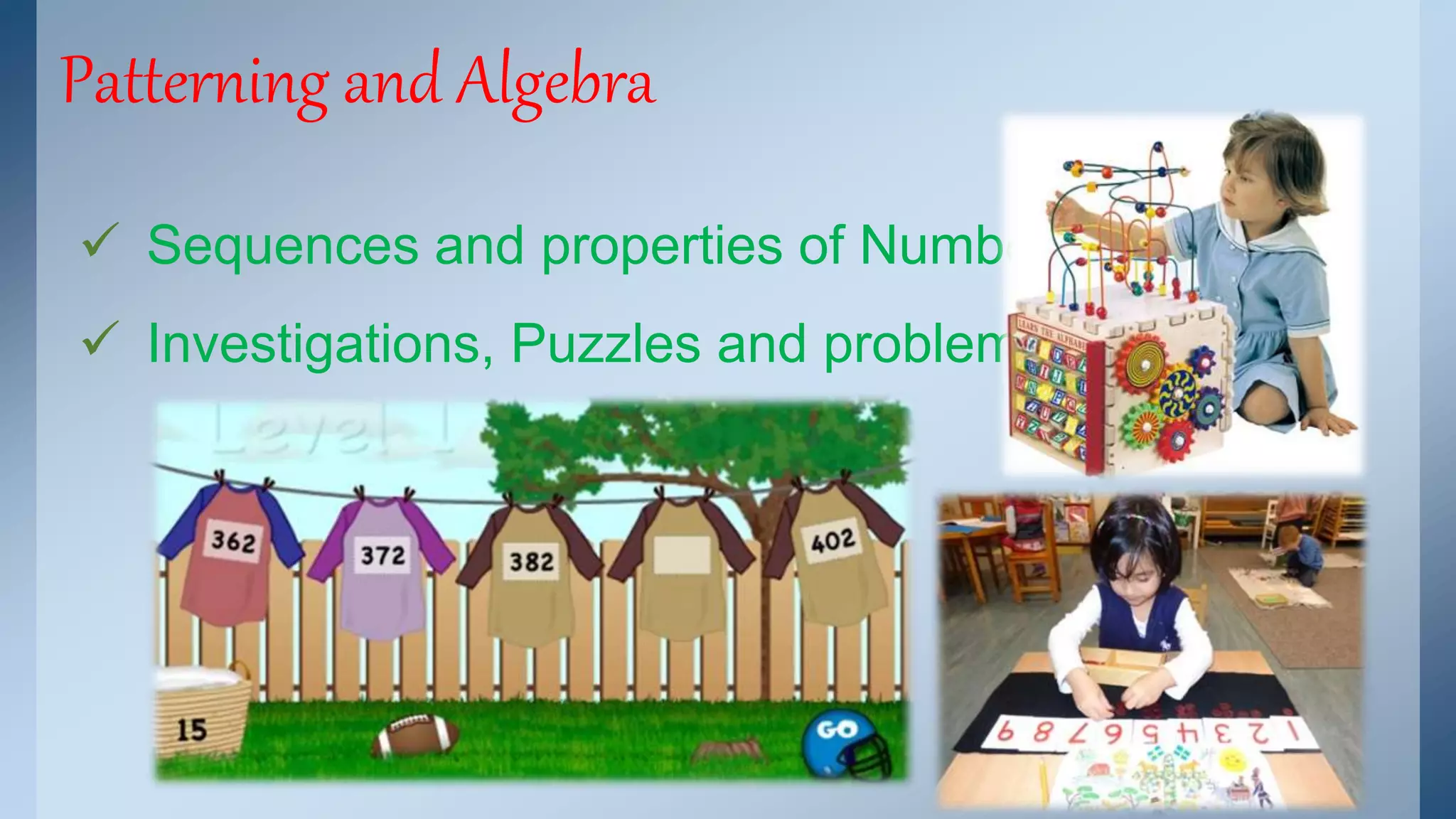
 Sequences and properties of Numbers 
 Investigations, Puzzles and problems.
Our opinion and justification 
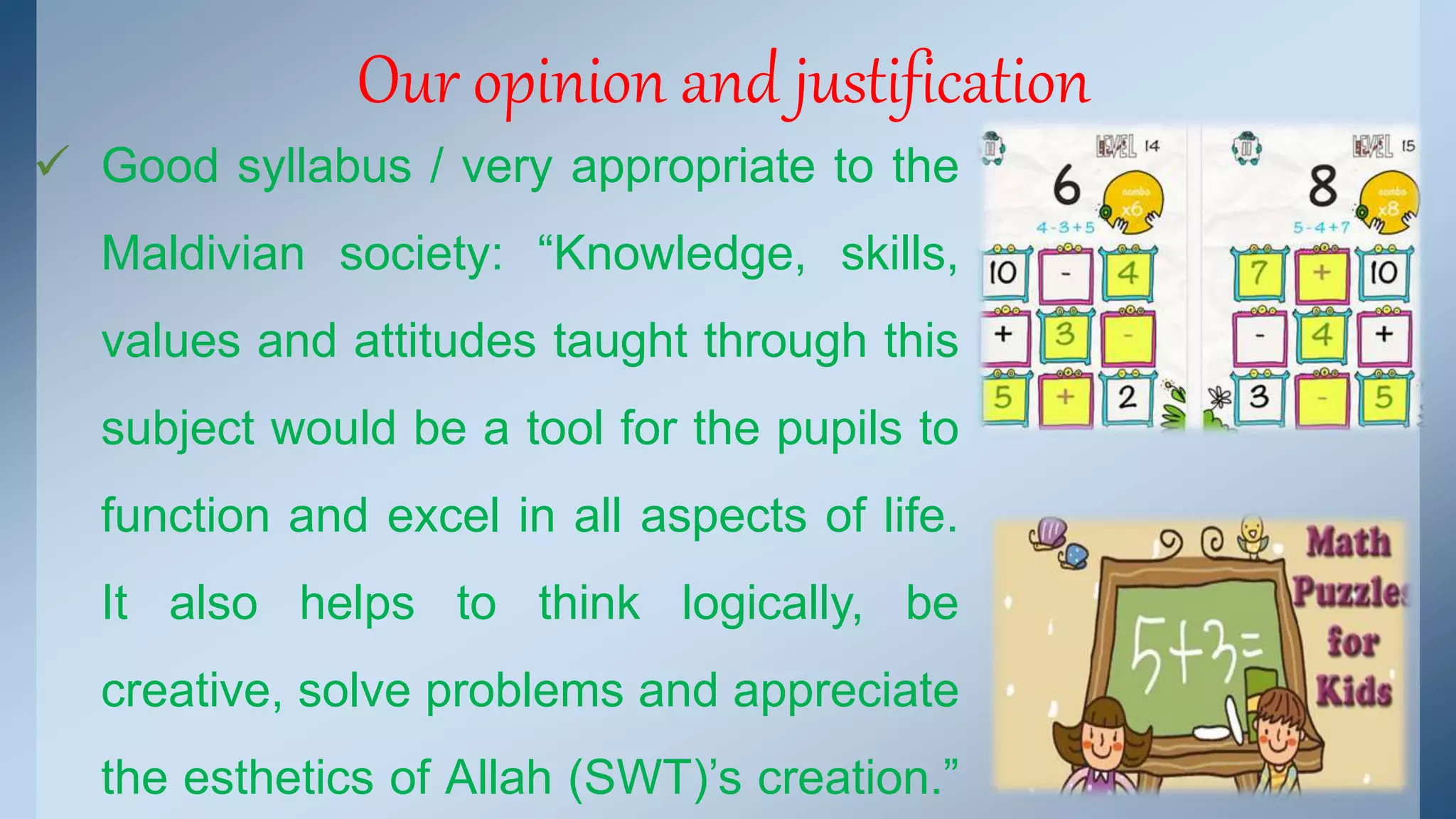
 Good syllabus / very appropriate to the 
Maldivian society: “Knowledge, skills, 
values and attitudes taught through this 
subject would be a tool for the pupils to 
function and excel in all aspects of life. 
It also helps to think logically, be 
creative, solve problems and appreciate 
the esthetics of Allah (SWT)’s creation.”
Our opinion and justification 
 Principles: 
 No gaps in-between the grades. 
 Interesting (investigations, puzzles) 
“number system, computational skills, and 
the ability to solve simple problems related 
to their day to day life. Emphasis is also 
given to practical understanding of the 
ways in which information is gathered and 
presented” (NIE, 2014, p.6)
Our opinion and justification 
 Cross-Curricular and Integrated 
Learning 
 learn the process of enquiry, discovery and 
verification and to apply mathematical 
ideas, rules and procedures to particular 
situations and problems. 
 Students will explore, estimate and 
manipulate numbers to carry out day to day
Our opinion and justification 
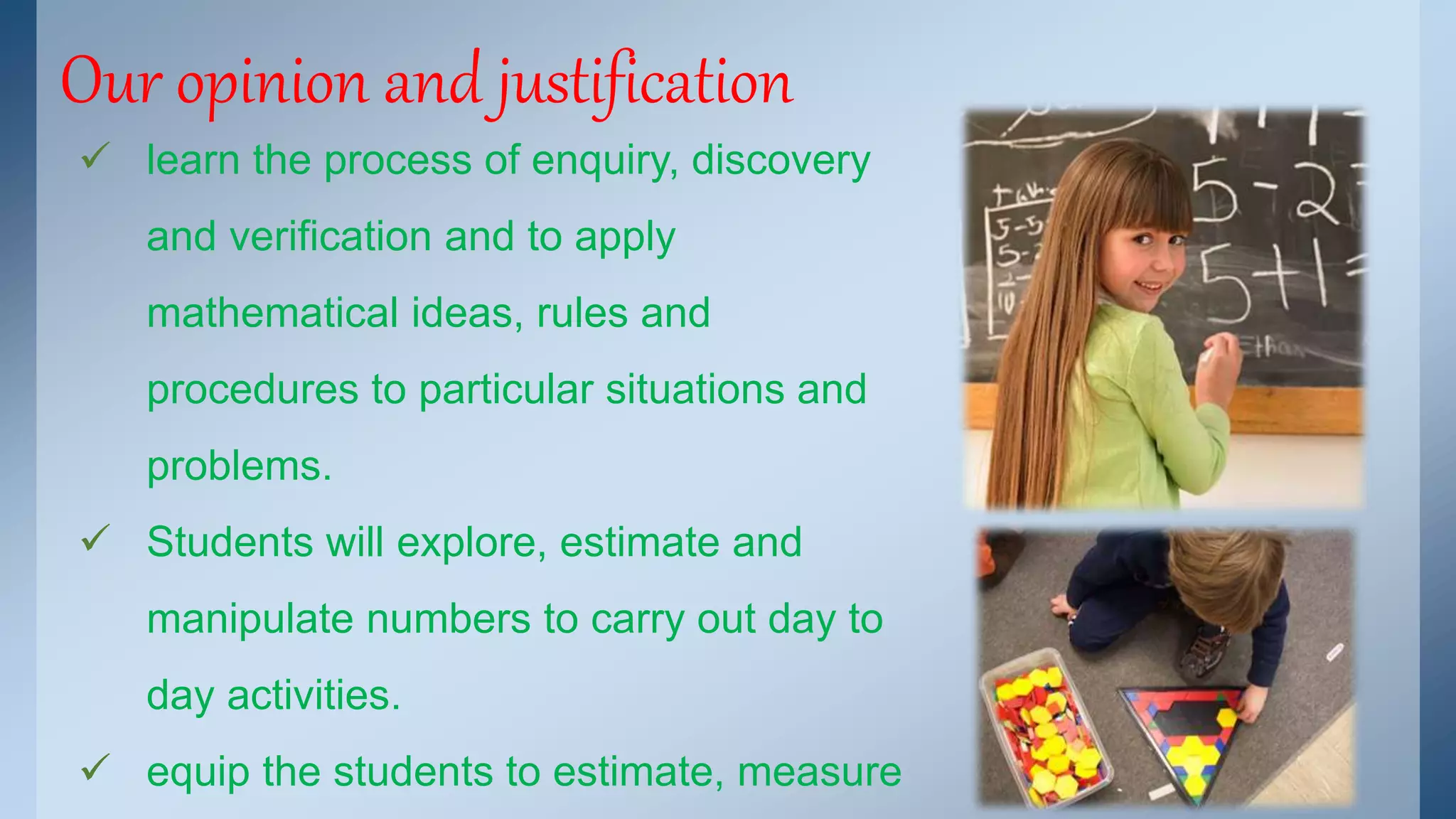
 learn the process of enquiry, discovery 
and verification and to apply 
mathematical ideas, rules and 
procedures to particular situations and 
problems. 
 Students will explore, estimate and 
manipulate numbers to carry out day to 
day activities. 
 equip the students to estimate, measure
Our opinion and justification 
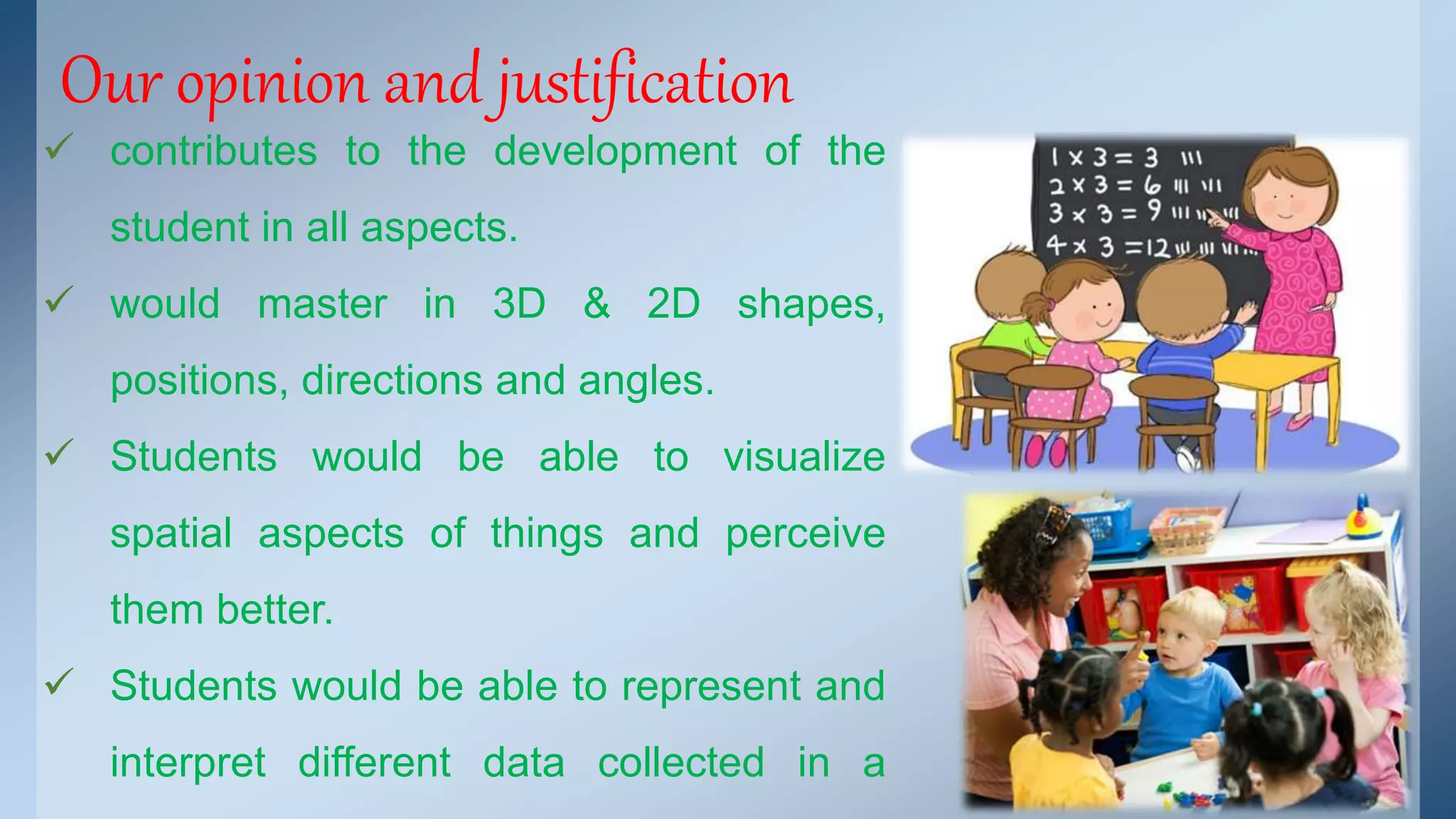
 contributes to the development of the 
student in all aspects. 
 would master in 3D & 2D shapes, 
positions, directions and angles. 
 Students would be able to visualize 
spatial aspects of things and perceive 
them better. 
 Students would be able to represent and 
interpret different data collected in a
Our opinion and justification 
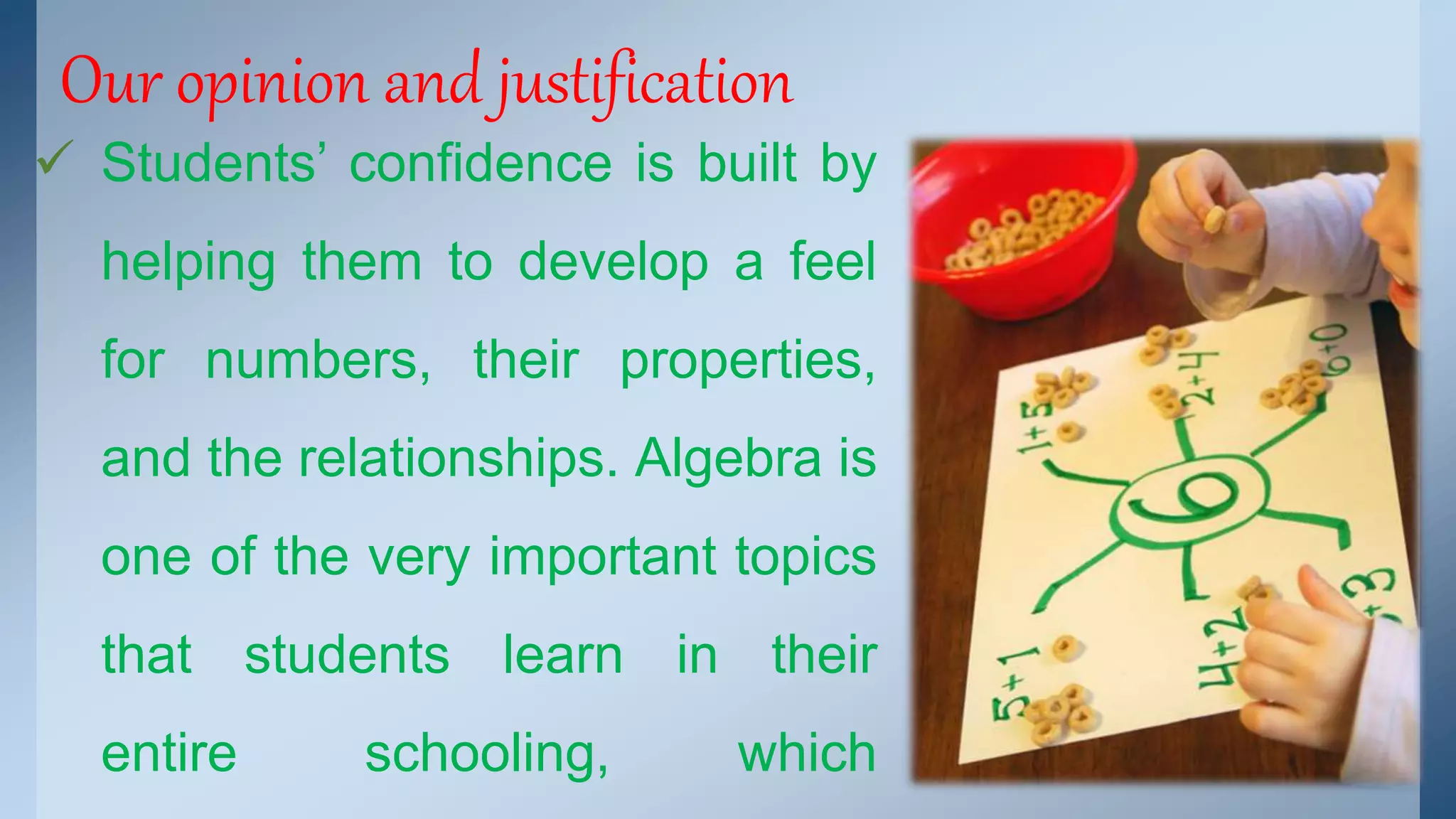
 Students’ confidence is built by 
helping them to develop a feel 
for numbers, their properties, 
and the relationships. Algebra is 
one of the very important topics 
that students learn in their 
entire schooling, which
Conclusion 
 There are five strands 
 Sub-strands and topics. 
 Difference in each level but no gaps in-between. 
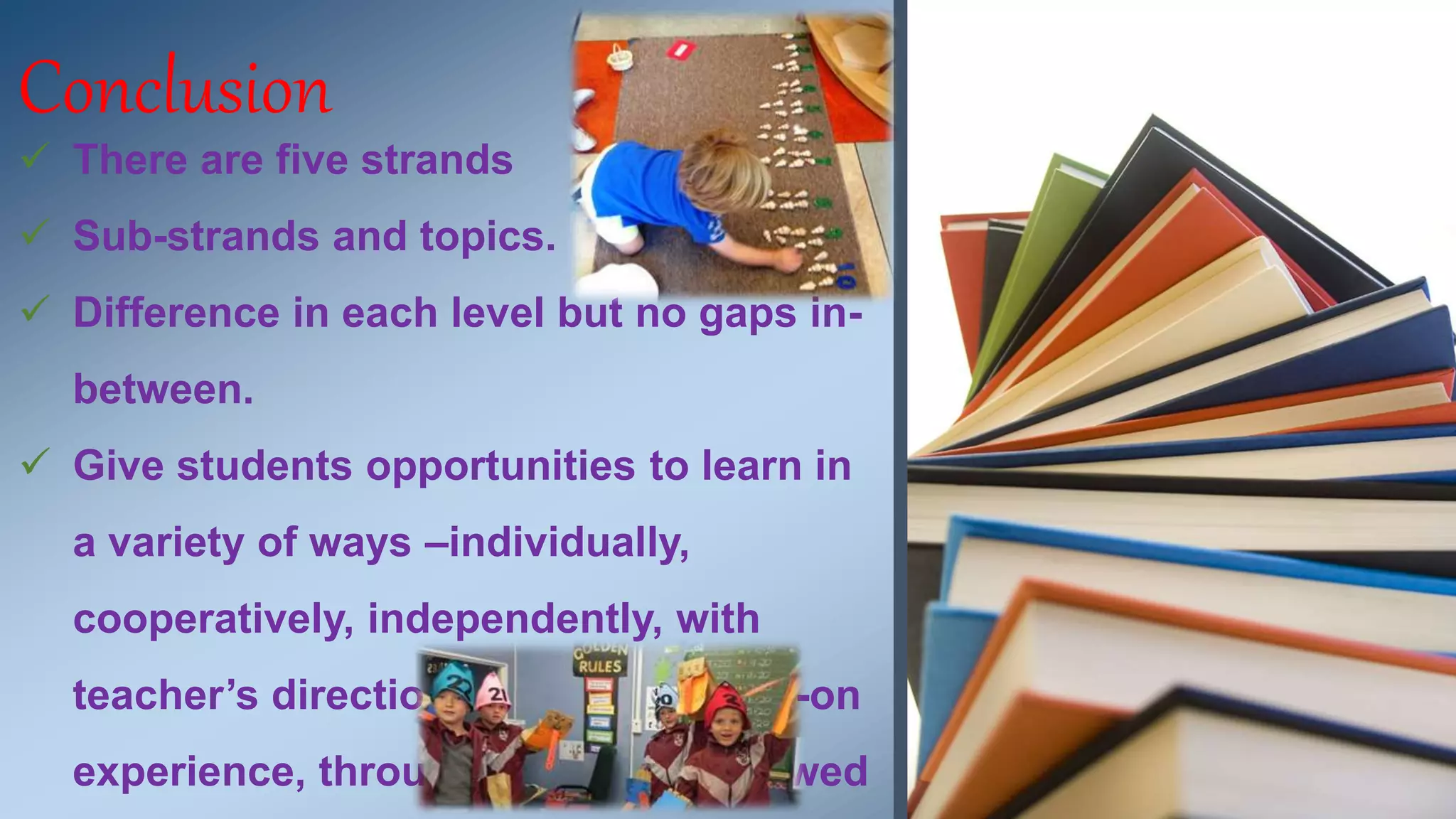
 Give students opportunities to learn in 
a variety of ways –individually, 
cooperatively, independently, with 
teacher’s direction, through hands-on 
experience, through examples followed
Conclusion 
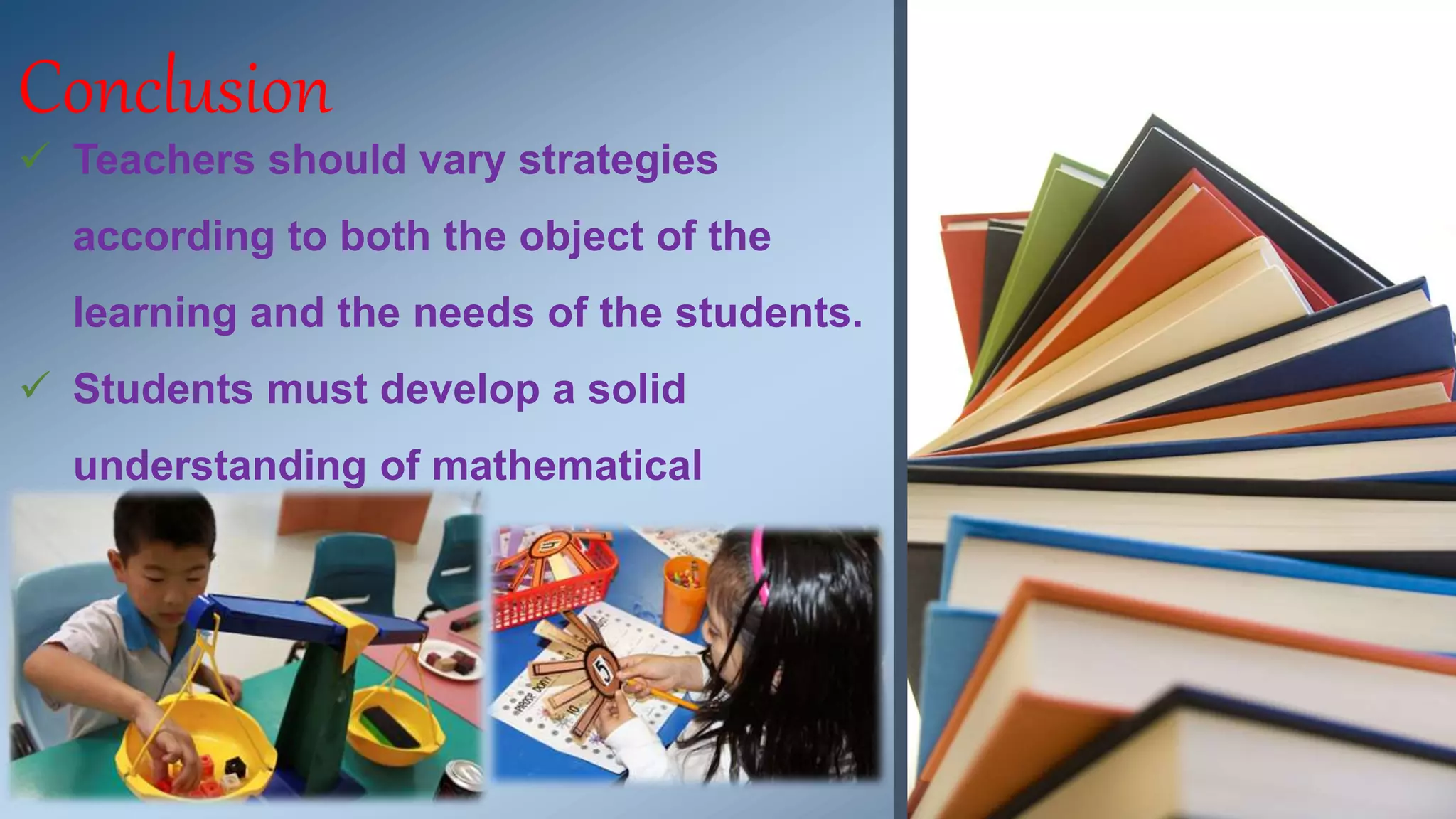
 Teachers should vary strategies 
according to both the object of the 
learning and the needs of the students. 
 Students must develop a solid 
understanding of mathematical 
concepts.
Conclusion 
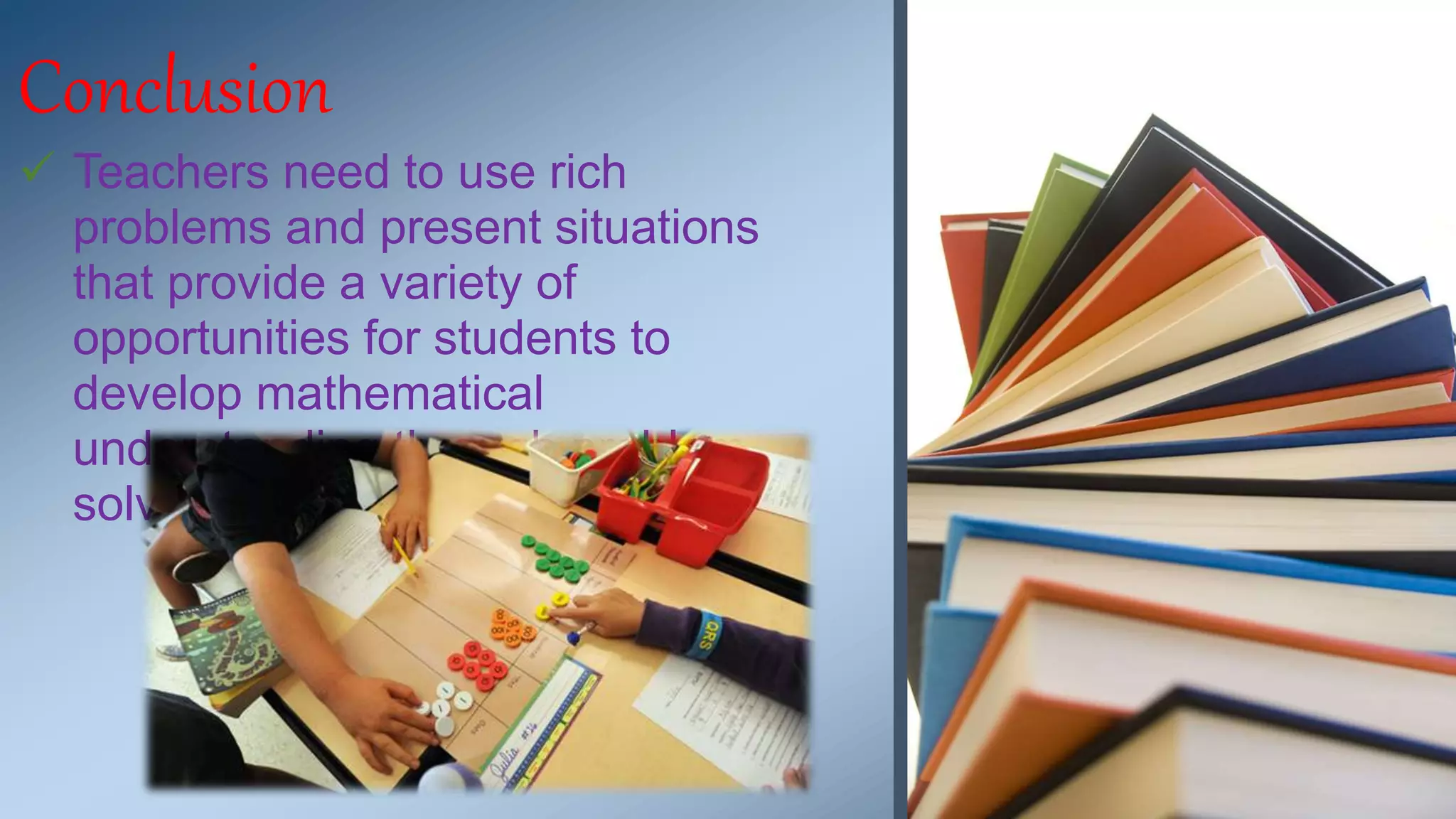
 Teachers need to use rich 
problems and present situations 
that provide a variety of 
opportunities for students to 
develop mathematical 
understanding through problem 
solving.
Reference 
 NIE (2014) Mathematics in the National Curriculum. [ONLINE] Available at: 
http://nie.edu.mv/sites/default/files/Mathematics%20Syllabus%20KS1%20Final 
%2026th%20August%202014.pdf. [Accessed 09 September 14]
Curriculum studies

Curriculum studies

  • 1.
    ADTPM Mandhu college Semester 2, 2014 Curriculum Studies, 0710 Content knowledge in the National curriculum of the Maldives By Yuzna Mohamed (5337) Aminath Muhisina (5372)
  • 2.
    Contents • Introduction • Content related to our topic • Our opinion and Justification
  • 3.
    Introduction • Thechosen topic is “Mathematics” from the new curriculum of Maldives.
  • 4.
    Content • Thereare 5 strands of mathematics. Numbers Measurement Shape and Space Chance and Data Patterning and Algebra
  • 5.
    Numbers  NumberConcept  Addition and Subtraction  Multiplication & Division  Money  Fractions, Decimals
  • 6.
    Measurement  Length  Mass  Capacity  Perimeter, Area and Volume  Time
  • 7.
    Shape and Space  3D Shapes  2D Shapes  Positions and Directions  Angles  Handling Data
  • 8.
    Chance and HandlingData  Handling Data  Sequences and Properties of Numbers  Investigations, Puzzles and Problems
  • 9.
    Patterning and Algebra  Sequences and properties of Numbers  Investigations, Puzzles and problems.
  • 10.
    Our opinion andjustification  Good syllabus / very appropriate to the Maldivian society: “Knowledge, skills, values and attitudes taught through this subject would be a tool for the pupils to function and excel in all aspects of life. It also helps to think logically, be creative, solve problems and appreciate the esthetics of Allah (SWT)’s creation.”
  • 11.
    Our opinion andjustification  Principles:  No gaps in-between the grades.  Interesting (investigations, puzzles) “number system, computational skills, and the ability to solve simple problems related to their day to day life. Emphasis is also given to practical understanding of the ways in which information is gathered and presented” (NIE, 2014, p.6)
  • 12.
    Our opinion andjustification  Cross-Curricular and Integrated Learning  learn the process of enquiry, discovery and verification and to apply mathematical ideas, rules and procedures to particular situations and problems.  Students will explore, estimate and manipulate numbers to carry out day to day
  • 13.
    Our opinion andjustification  learn the process of enquiry, discovery and verification and to apply mathematical ideas, rules and procedures to particular situations and problems.  Students will explore, estimate and manipulate numbers to carry out day to day activities.  equip the students to estimate, measure
  • 14.
    Our opinion andjustification  contributes to the development of the student in all aspects.  would master in 3D & 2D shapes, positions, directions and angles.  Students would be able to visualize spatial aspects of things and perceive them better.  Students would be able to represent and interpret different data collected in a
  • 15.
    Our opinion andjustification  Students’ confidence is built by helping them to develop a feel for numbers, their properties, and the relationships. Algebra is one of the very important topics that students learn in their entire schooling, which
  • 16.
    Conclusion  Thereare five strands  Sub-strands and topics.  Difference in each level but no gaps in-between.  Give students opportunities to learn in a variety of ways –individually, cooperatively, independently, with teacher’s direction, through hands-on experience, through examples followed
  • 17.
    Conclusion  Teachersshould vary strategies according to both the object of the learning and the needs of the students.  Students must develop a solid understanding of mathematical concepts.
  • 18.
    Conclusion  Teachersneed to use rich problems and present situations that provide a variety of opportunities for students to develop mathematical understanding through problem solving.
  • 19.
    Reference  NIE(2014) Mathematics in the National Curriculum. [ONLINE] Available at: http://nie.edu.mv/sites/default/files/Mathematics%20Syllabus%20KS1%20Final %2026th%20August%202014.pdf. [Accessed 09 September 14]