CREATING AND
SUSTAINING
ORGANIZATIONAL
CULTURE
Group 3
INTRODUCTION
 Organizational Culture is the totality of beliefs
Customs, traditions and values shared by the
members of the organization.
 Corporate culture can be looked at as a
system.
 It is important to consider culture while
managing
change in the organization.
 Culture can be both, as input and as output
Creating Corporate Culture
 The ultimate source of an organization‟s culture is
its founders.
 Culture creation occurs in three ways:
 Employees hire and keep employees with same
thinking
 They indoctrinate and socialize the employees
with the organization‟s thinking
 The founder‟s behavior acts as a role model for
the employees
 With the organizational success, the founder‟s
personality is embedded in the organizational
culture.
Sustaining Orgnizational
Culture
 Three forces play a particularly important part
in sustaining a culture:
• Selection practices
• Actions of top management
• Socialization methods
Profiles
Selection
 Explicit goal – identifying and hiring individuals
having knowledge, skills and abilities to
perform the jobs successfully.
 Individuals having values consistent with
those of the organization are selected as per
the decision maker‟s judgements.
 Selection becomes a „two-way street‟ as it
provides information about the organization to
the applicants.
Top Management
 The actions of top management establishes
the norms for the organization as to:
 Whether risk taking is desirable
 How much freedom managers should give to
their subordinates
 What actions will pay off in terms of pay
rises, promotions and other rewards, etc.
Socialization
 New employees are not familiar with the
organizational culture and are potentially likely to
disturb the existing culture.
 The process through which the employees are
proselytized about the customs and traditions of
the organization is known as socialization.
 It is the process of adaptation by which new
employees are to understand the basic values and
norms for becoming „accepted‟ members of the
organization.
Socialization Process
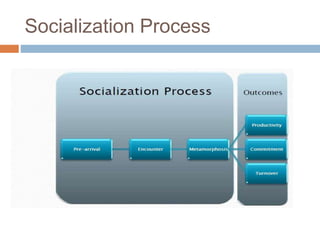
 Socialization is a process made up of three
stages:
 Pre-arrival – The period of learning in the
socialization process occurs before a new
employee joins the organization
 Encounter - The new employee sees what the
organization is really like and confronts the
possibility that expectations and reality may
diverge.
 Metamorphosis - The relatively long-lasting
changes take place.
• The new employee masters the skills required
for the job, successfully performs the new
roles, and makes the adjustments to the work
group's values and norms.
How culture forms
Summary
 Founders philosophy Original culture
 influences in hiring criteria
 Top Management Organization Climate
 Acceptable behavior of employees
 General Climate
• New Employee
• Values
• Preconception
Selection
process
• Top management
preference
• Socialization process
• Employee Value
match
Constraints • Degree of Success
Socialize
Organization Culture Types:
Culture obd

Culture obd

  • 1.
  • 2.
    INTRODUCTION  Organizational Cultureis the totality of beliefs Customs, traditions and values shared by the members of the organization.  Corporate culture can be looked at as a system.  It is important to consider culture while managing change in the organization.  Culture can be both, as input and as output
  • 3.
    Creating Corporate Culture The ultimate source of an organization‟s culture is its founders.  Culture creation occurs in three ways:  Employees hire and keep employees with same thinking  They indoctrinate and socialize the employees with the organization‟s thinking  The founder‟s behavior acts as a role model for the employees  With the organizational success, the founder‟s personality is embedded in the organizational culture.
  • 4.
    Sustaining Orgnizational Culture  Threeforces play a particularly important part in sustaining a culture: • Selection practices • Actions of top management • Socialization methods
  • 5.
  • 6.
    Selection  Explicit goal– identifying and hiring individuals having knowledge, skills and abilities to perform the jobs successfully.  Individuals having values consistent with those of the organization are selected as per the decision maker‟s judgements.  Selection becomes a „two-way street‟ as it provides information about the organization to the applicants.
  • 7.
    Top Management  Theactions of top management establishes the norms for the organization as to:  Whether risk taking is desirable  How much freedom managers should give to their subordinates  What actions will pay off in terms of pay rises, promotions and other rewards, etc.
  • 9.
    Socialization  New employeesare not familiar with the organizational culture and are potentially likely to disturb the existing culture.  The process through which the employees are proselytized about the customs and traditions of the organization is known as socialization.  It is the process of adaptation by which new employees are to understand the basic values and norms for becoming „accepted‟ members of the organization.
  • 10.
  • 11.
    Socialization Process  Socializationis a process made up of three stages:  Pre-arrival – The period of learning in the socialization process occurs before a new employee joins the organization  Encounter - The new employee sees what the organization is really like and confronts the possibility that expectations and reality may diverge.
  • 12.
     Metamorphosis -The relatively long-lasting changes take place. • The new employee masters the skills required for the job, successfully performs the new roles, and makes the adjustments to the work group's values and norms.
  • 13.
  • 14.
    Summary  Founders philosophyOriginal culture  influences in hiring criteria  Top Management Organization Climate  Acceptable behavior of employees  General Climate
  • 15.
    • New Employee •Values • Preconception Selection process • Top management preference • Socialization process • Employee Value match Constraints • Degree of Success Socialize
  • 16.