A Practical Approach
to Design Thinking
Simran Talreja
Product Manager
ResellerClub
Design Thinking
Web-BasedSolutions
Web-Based Solutions
PROBLEMS
Design Thinking
A Problem-Solving Approach that any
and all businesses can apply
The Power of Design Thinking
The Good Kitchen
The Problem
125,000
of Denmark’s senior citizens rely on government-
sponsored meals
Yet…
60%
Had poor nutrition
20%
Were actually malnourished
The Project
Fix The Menu
The Municipality of Holstelbro hired
Hatch and Bloom to
The Method
Shadowing Delivery Boys into
the homes of Senior Citizens
Interacting with the
Employees of the Kitchen
Key Discoveries
Seniors were embarrassed to accept government
assistance
Loss of Control over their food choices was painful
They ate alone and missed the taste of seasonal food
The less they enjoyed their situation, the
smaller their appetites
Key Discoveries
The Workers were demotivated and bored of
creating the same meals day after day
Making meals in a Government kitchen was a low
status job
So What did Hatch & Bloom do?
Shifted Mental Models
What if the Food Delivery Service was a
Restaurant?
The Solution
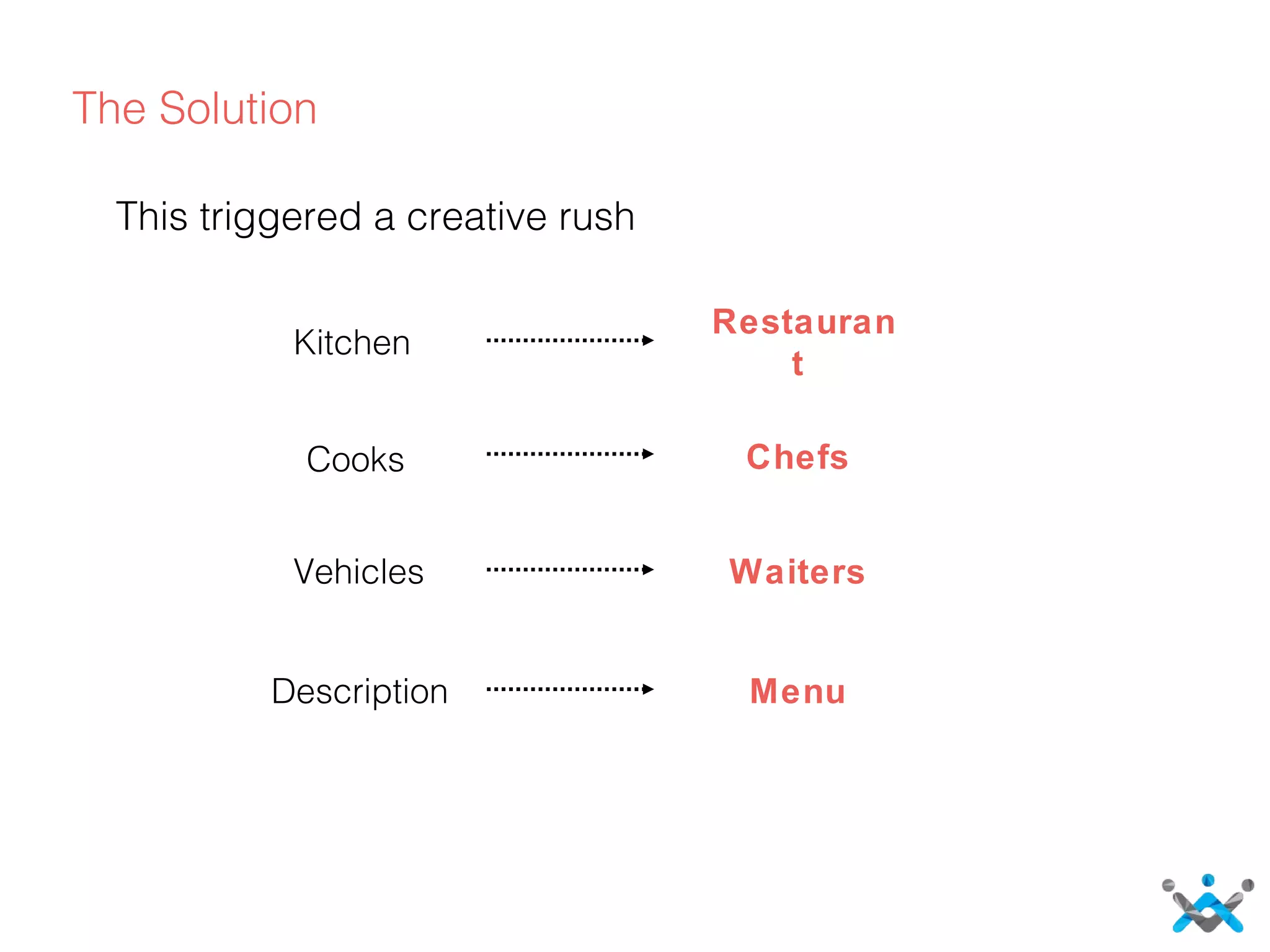
This triggered a creative rush
Kitchen
Cooks
Vehicles
Description
Restauran
t
Chefs
Waiters
Menu
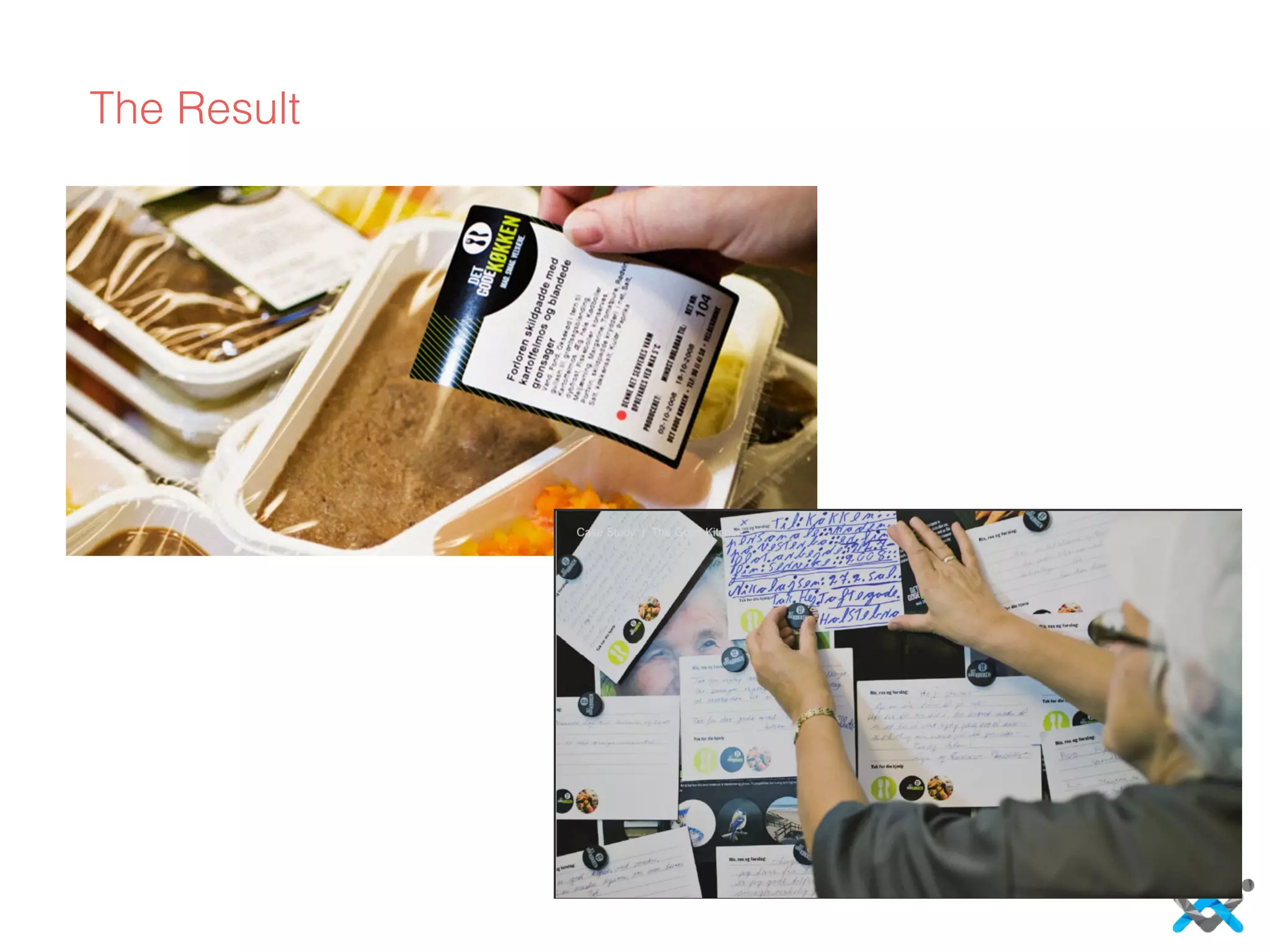
The Result
The Result
‘The Good Kitchen’
The Result
500%
Increase
in meal orders in the first week alone
The Result
The Initial Solution
Fix The Menu
The Actual Solution
Happier Seniors
with Better Nutrition
Motivated
Employees taking
pride in their work
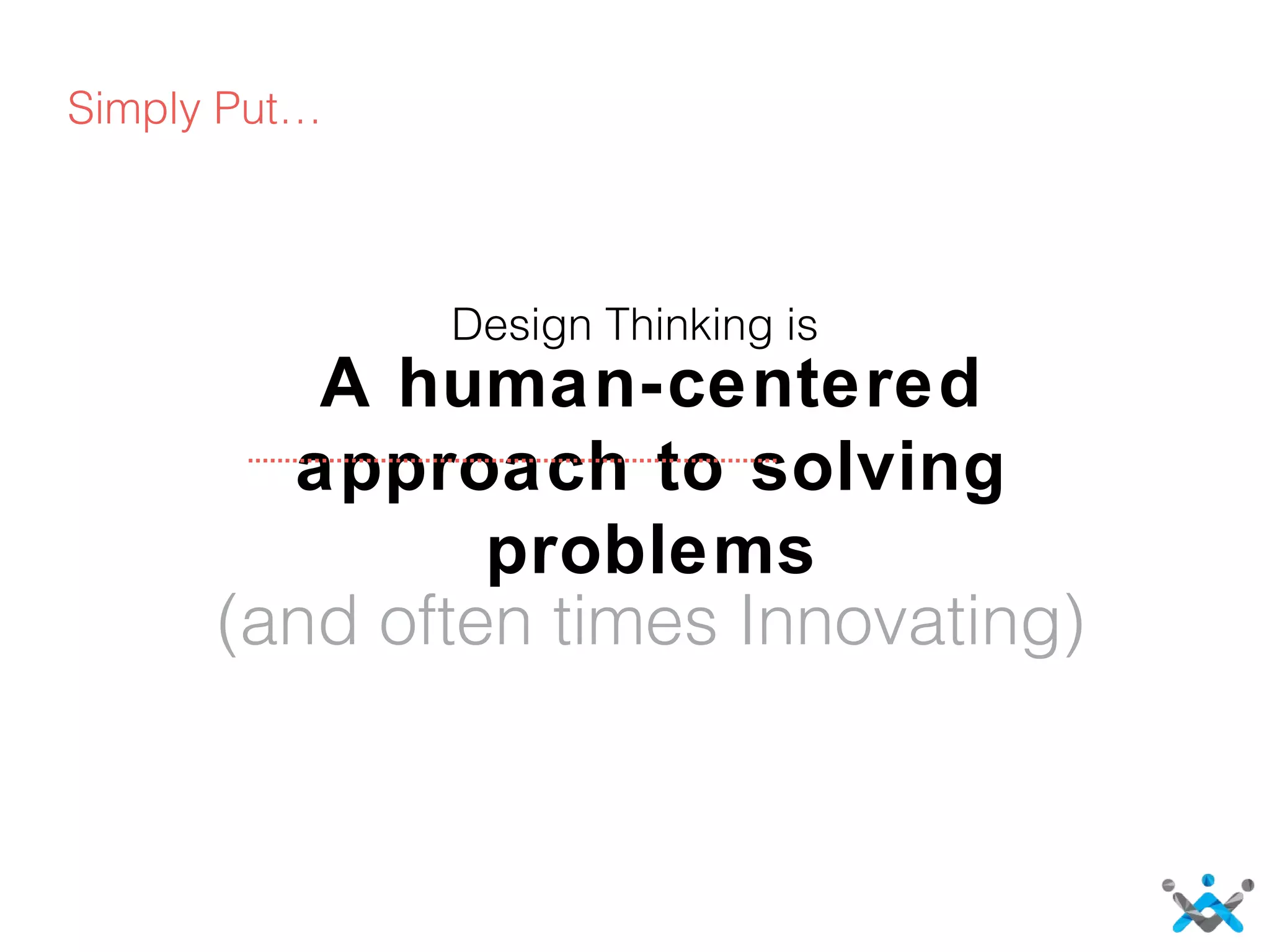
Design Thinking is
(and often times Innovating)
Simply Put…
A human-centered
approach to solving
problems
Another Interesting Example
As creators of Software…
We’re not just building Technology
We’re building Solutions
for Human Beings
So…
How To Do It?
The Process
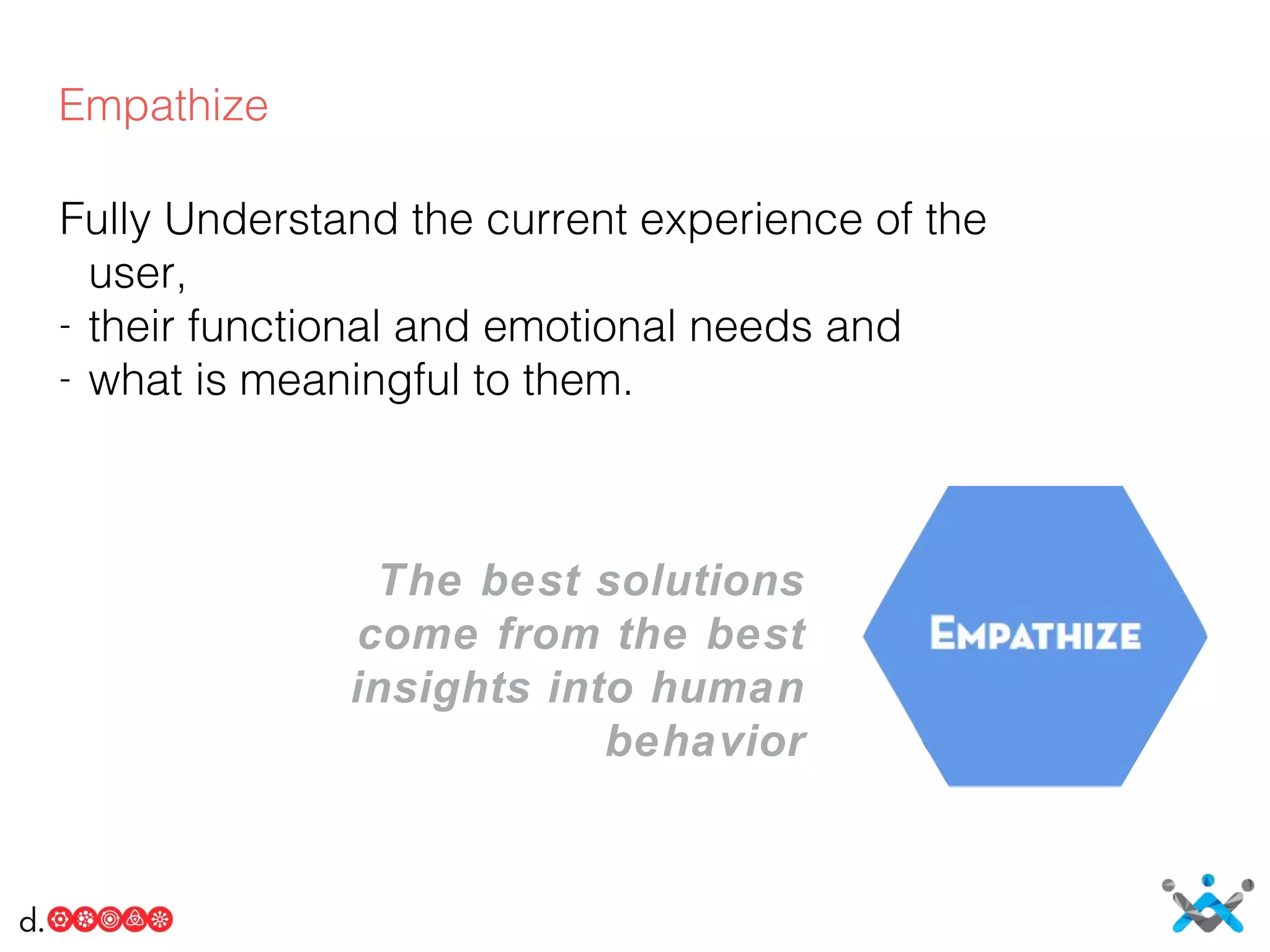
Empathize
Fully Understand the current experience of the
user,
- their functional and emotional needs and
- what is meaningful to them.
The best solutions
come from the best
insights into human
behavior
Empathize
Observation Interviewing Experiencing
Do this by…
Define
Formulate a ‘user’ centered statement of the
Problem
In most cases, this will come from unstated insights
Framing the right
problem is the only way
to creating the right
solution
Ideate
Come up with a variety of solutions
The higher the number, the more the chances of going beyond
the obvious
It’s not about coming up
with the ‘right’ idea - its
about coming up with the
‘most’ ideas
Prototype
Visualize your Ideas
Experience and interact with them and, in the process, learn
and develop more empathy.
Build to think,
articulate and learn
Test
Try out high-resolution versions of your prototypes
nd get feedback to refine prototypes, learn more about the user, and refine your or
Testing is an
opportunity to learn
about your solution and
your user
Now
Lets actually do it together!
Build a Learning Experience
which is meaningful to your
Partner
Your Design Challenge
We’re going to go through each of these steps
Go back to the last time you
tried to learn something
A
interview
s B
3 Mins
B
interview
s A
3 Mins
A
Digs
Deeper
3 Mins
B
Digs
Deeper
3 Mins
Take a
Moment for
Individual
Reflection
of what you
have learnt
2 Mins
Synthesize
your
Learnings
1 Min
Be Radical
Be Visual
Go Beyond
the
Obvious
5 Mins
B
Gives Feedback
to
A
2 Mins
A
Gives Feedback
to
B
2 Mins
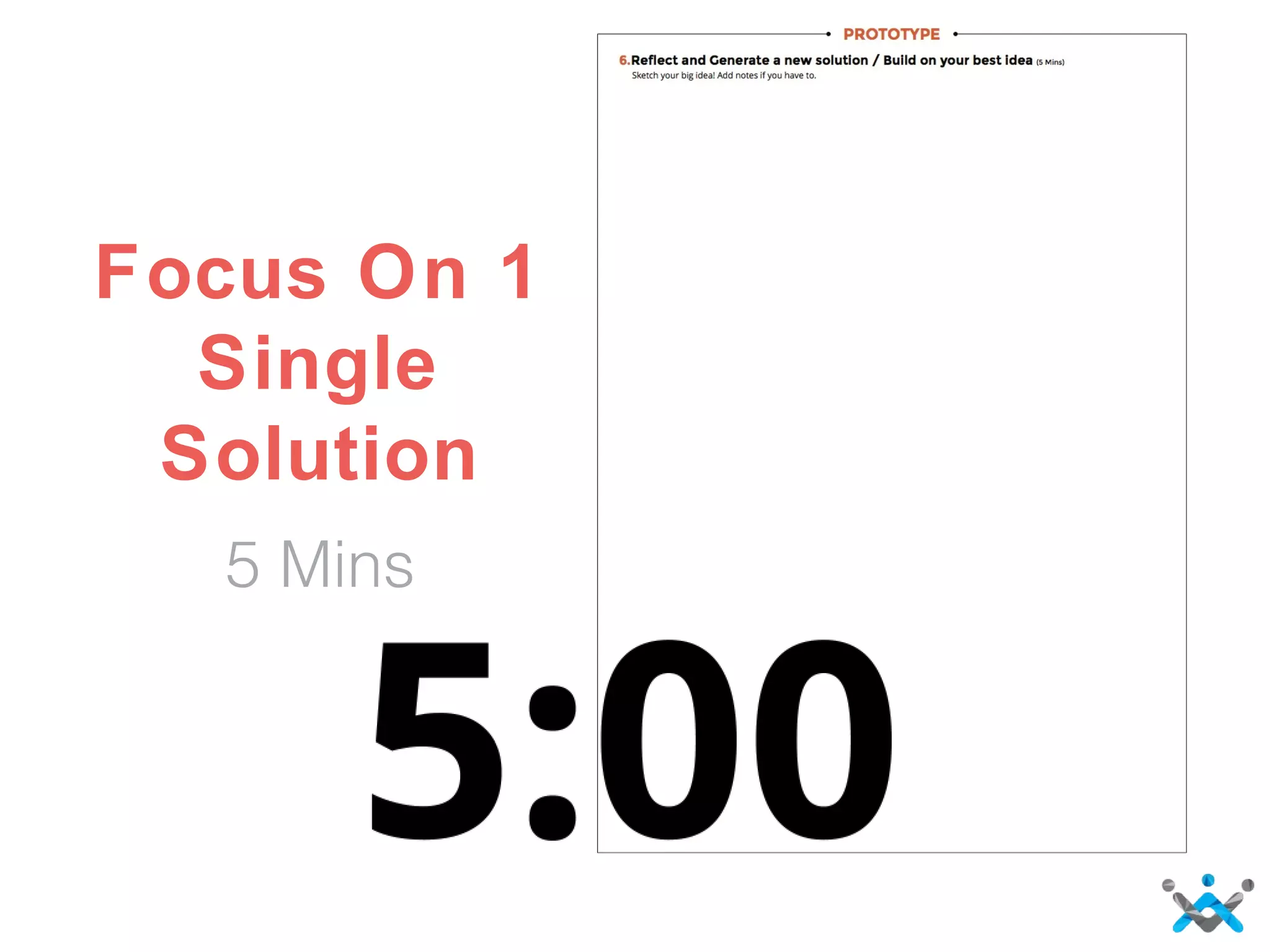
Focus On 1
Single
Solution
5 Mins
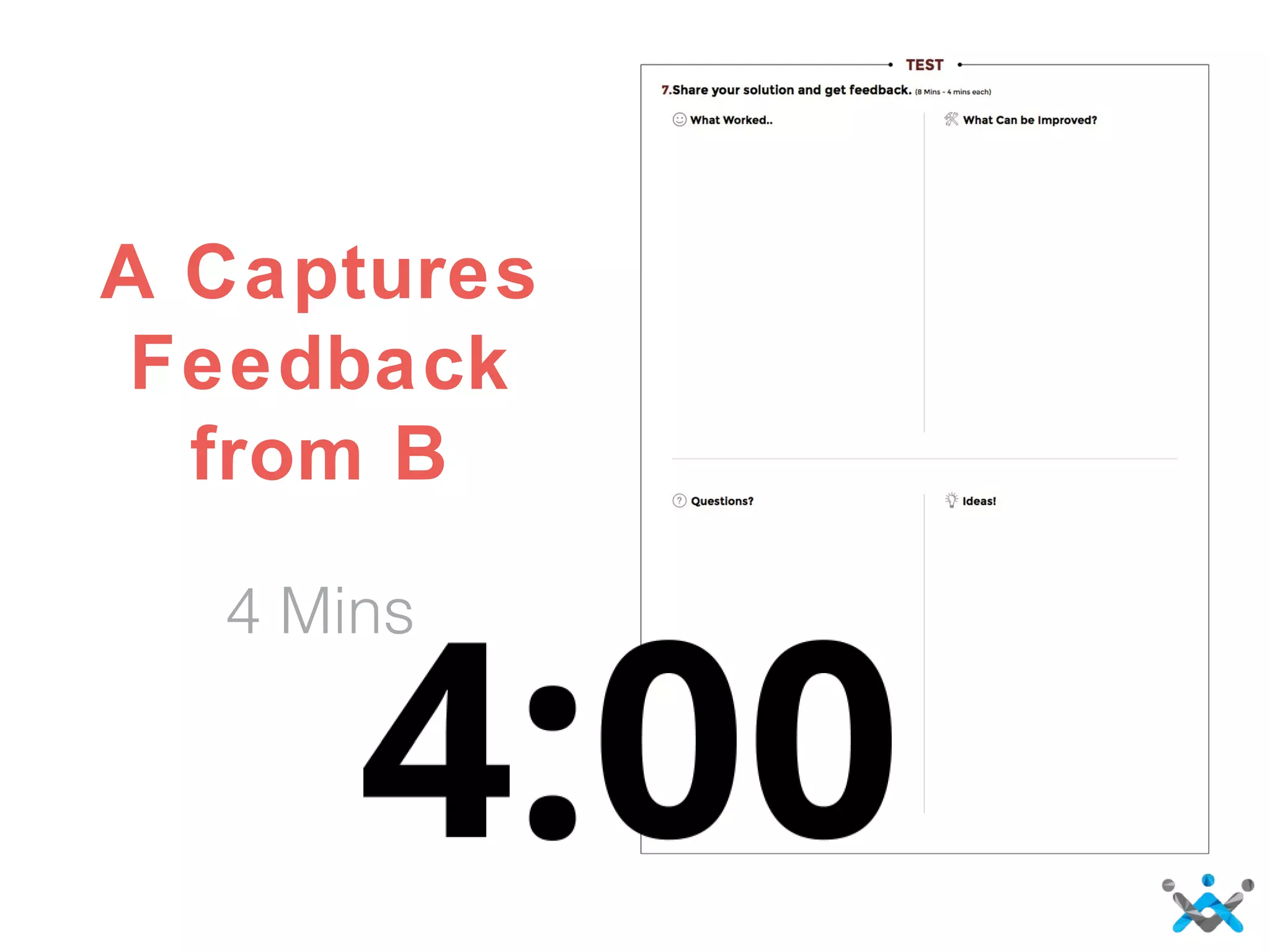
A Captures
Feedback
from B
4 Mins
B Captures
Feedback
from A
4 Mins
Hopefully you have
stumbled upon a new way
of Learning :)
Anyone want to share?
Thank You for Being a
Wonderful Audience!
Get in touch with me
simran.t@endurance.com
@awesim

Ctrl+F5 2017, Jaipur: A Practical Approach to Design Thinking by Simran Talreja