Developing and pilot testing a
Guide to Stakeholder
Mapping in West Africa –
Nigeria, Sierra Leone and
Liberia Experience
SUN Civil Society Alliance
of Liberia
Overall Goal
A Guide for Stakeholder mapping in West Africa to strengthen
West Africa Civil Society Alliances in nutrition coordination and
collaboration.
Project Objective:
The overall objective is to identify and map up relevant
nutrition stakeholders involved in nutrition specific and
nutrition sensitive programs in Sierra Leone.
A pilot stakeholder mapping process has been conducted in
Liberia, Nigeria and Sierra Leone
Process of the CSO Mapping
 Development of the guideline for the CSO mapping
exercises
 Identification of Stakeholders. E.g. stakeholder
depending on the country
 Identify different mapping tool that can be use
and identify the needs for the countries, base on
that there was a discussion and agreement on a
sample and single CSO mapping that can be use for
the three countries.
Process of the CSO Mapping Cont…..
➢Depending on the scope, cost and time, different
strategies were used to do the mapping exercises.
Liberia Team visited Sierra Leone fellows for
capacity building on the mapping tool and lesson
learnt with experience sharing:
• Identification of different selected numbers of CSO
at country and also depending on the country
size/largeness, different CSO were identify regional
level
Stakeholder Mapping Tool
 The tool is divided into several section:
 Section 1: Identification- The first and critical part of the process
which is to identify the stakeholders you believe play a key role in
nutrition.
 Section 2: Programmatic area- in which your CSO works.
▪ Health: Maternal and Child Health, Immunization, Non
Communicable Diseases
▪ Nutrition& Food Security: Infant and Young Child Feeding (IYCF),
Community-based Management of Acute Malnutrition,
Nutritional Supplementation
Stakeholder Mapping Tool Cont….
 Section 2b: Strategies- What strategies do you undertake in
addressing your programmatic areas?
▪ Advocacy, Behavior Change Communication (e.g. radio/television
drama; IEC materials; mHealth), Capacity Development,
Community Mobilization (e.g. engagement of
religious/traditional leaders and community groups)
 Section 3: Target Populations
 Section 4: Current and Past Projects implemented (ended within
the past two years in 2015)
 Section 5: Institutional/Organizational Capacity
 Recent activities
Data Collection, data analysis and reporting
writing meet the objective of the project.
The information gathered are collated,
Data are inputted,
analysed and interpreted, a report on the process
and
developing a stakeholder map provide pictorial
representation of the findings
Three memorable achievement and take away
during the project
 Collaboration between country, especially when our Liberia fellow
visit Sierra Leone, on experience sharing and lesson learnt. There was
training of two SUNCSAL personnel on mapping technique conducted
in Sierra Leone
 There was an ideas on the CSO mapping tool for the three country.
 Share capacity building of partner from different country
 Take away: Collaboration across CSAs has contributed to improved
mapping skills and promoted cross country best practices in
stakeholders mapping
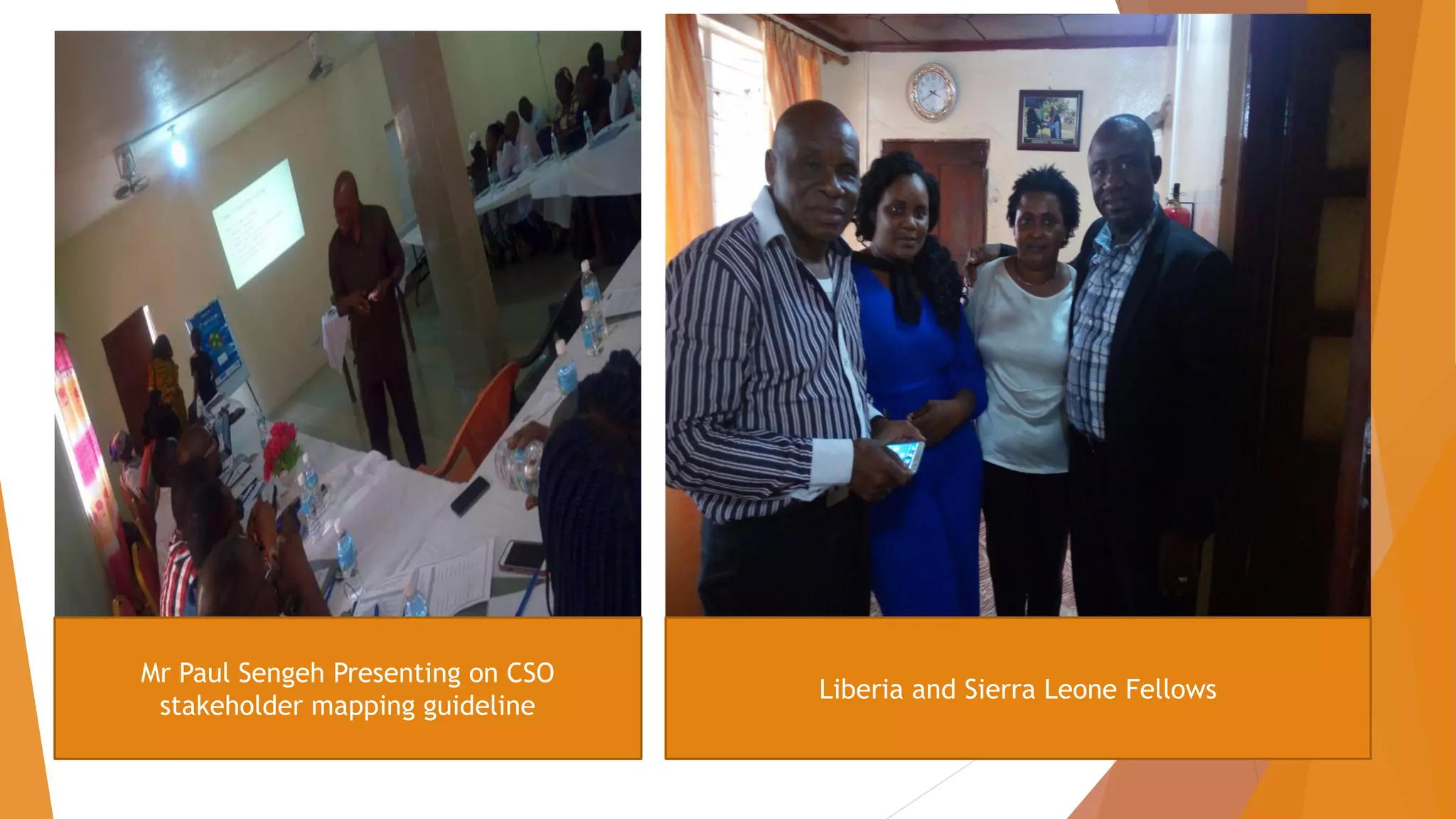
Mr Paul Sengeh Presenting on CSO
stakeholder mapping guideline
Liberia and Sierra Leone Fellows
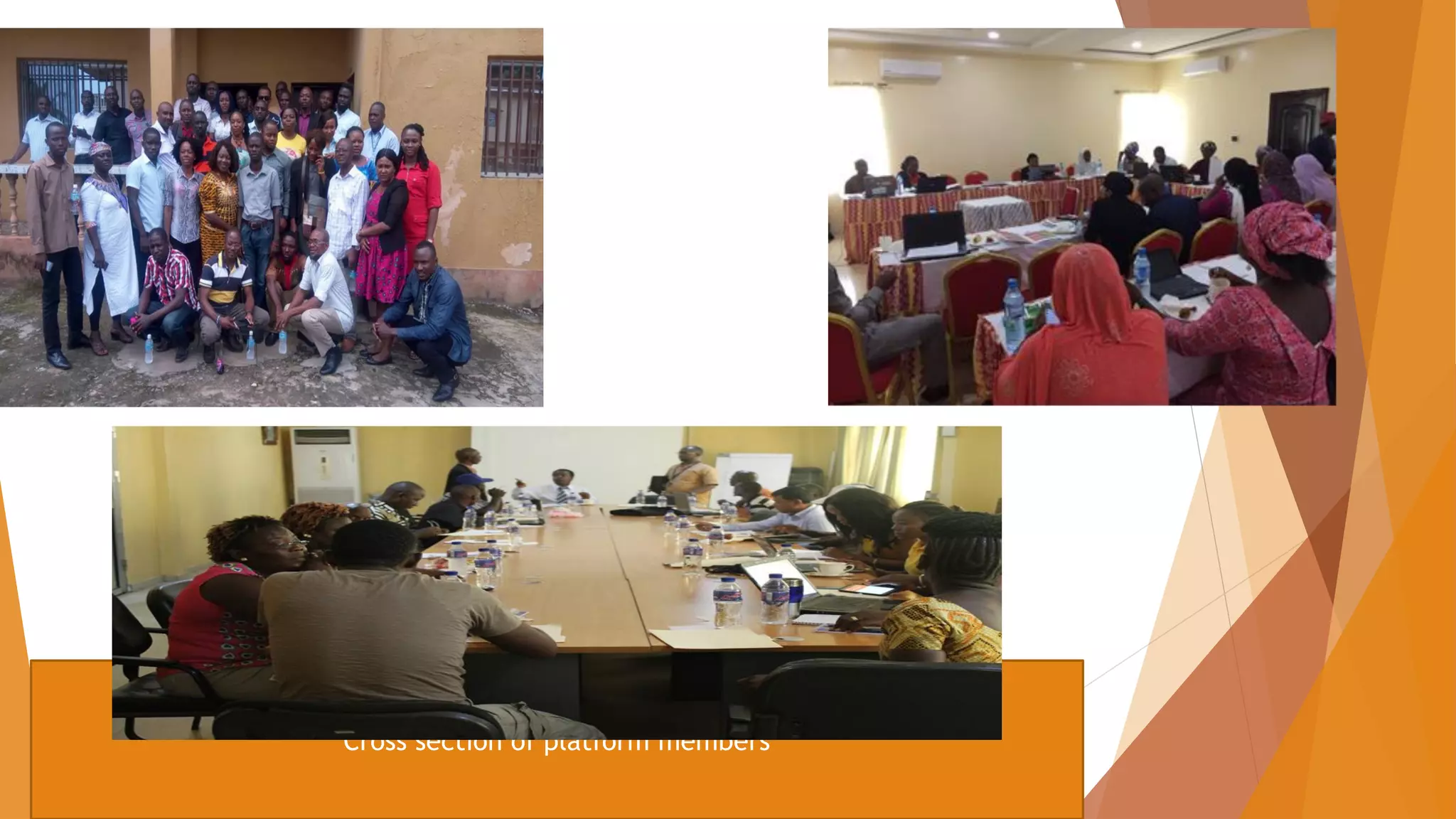
Cross section of platform members

Cso stakeholder mapping guideline.ppt

  • 1.
    Developing and pilottesting a Guide to Stakeholder Mapping in West Africa – Nigeria, Sierra Leone and Liberia Experience SUN Civil Society Alliance of Liberia
  • 2.
    Overall Goal A Guidefor Stakeholder mapping in West Africa to strengthen West Africa Civil Society Alliances in nutrition coordination and collaboration. Project Objective: The overall objective is to identify and map up relevant nutrition stakeholders involved in nutrition specific and nutrition sensitive programs in Sierra Leone. A pilot stakeholder mapping process has been conducted in Liberia, Nigeria and Sierra Leone
  • 3.
    Process of theCSO Mapping  Development of the guideline for the CSO mapping exercises  Identification of Stakeholders. E.g. stakeholder depending on the country  Identify different mapping tool that can be use and identify the needs for the countries, base on that there was a discussion and agreement on a sample and single CSO mapping that can be use for the three countries.
  • 4.
    Process of theCSO Mapping Cont….. ➢Depending on the scope, cost and time, different strategies were used to do the mapping exercises. Liberia Team visited Sierra Leone fellows for capacity building on the mapping tool and lesson learnt with experience sharing: • Identification of different selected numbers of CSO at country and also depending on the country size/largeness, different CSO were identify regional level
  • 5.
    Stakeholder Mapping Tool The tool is divided into several section:  Section 1: Identification- The first and critical part of the process which is to identify the stakeholders you believe play a key role in nutrition.  Section 2: Programmatic area- in which your CSO works. ▪ Health: Maternal and Child Health, Immunization, Non Communicable Diseases ▪ Nutrition& Food Security: Infant and Young Child Feeding (IYCF), Community-based Management of Acute Malnutrition, Nutritional Supplementation
  • 6.
    Stakeholder Mapping ToolCont….  Section 2b: Strategies- What strategies do you undertake in addressing your programmatic areas? ▪ Advocacy, Behavior Change Communication (e.g. radio/television drama; IEC materials; mHealth), Capacity Development, Community Mobilization (e.g. engagement of religious/traditional leaders and community groups)  Section 3: Target Populations  Section 4: Current and Past Projects implemented (ended within the past two years in 2015)  Section 5: Institutional/Organizational Capacity  Recent activities
  • 7.
    Data Collection, dataanalysis and reporting writing meet the objective of the project. The information gathered are collated, Data are inputted, analysed and interpreted, a report on the process and developing a stakeholder map provide pictorial representation of the findings
  • 8.
    Three memorable achievementand take away during the project  Collaboration between country, especially when our Liberia fellow visit Sierra Leone, on experience sharing and lesson learnt. There was training of two SUNCSAL personnel on mapping technique conducted in Sierra Leone  There was an ideas on the CSO mapping tool for the three country.  Share capacity building of partner from different country  Take away: Collaboration across CSAs has contributed to improved mapping skills and promoted cross country best practices in stakeholders mapping
  • 9.
    Mr Paul SengehPresenting on CSO stakeholder mapping guideline Liberia and Sierra Leone Fellows
  • 10.
    Cross section ofplatform members