www.oeclib.in
Submitted By:
Odisha Electronics Control Library
Seminar
On
Mobile Number Portability
•What is MNP….?
•Types of Number Portability
•Component of MNP
•MNP implementation
•MNP working
•Benefits
•Problem
•Future aspects
•Conclusion
•References
 Mobile Number portability (MNP)
 Enables mobile subscribers to change their service providers
 Their location without having to change their existing
phone numbers.
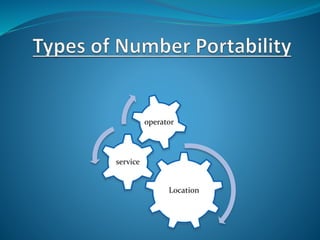
Location
service
operator
Service Platform
Server
Central Reference Database(CRDB)
 Passive
 Active
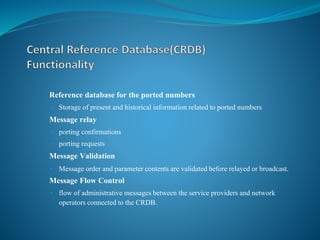
• Reference database for the ported numbers
• Storage of present and historical information related to ported numbers
• Message relay
• porting confirmations
• porting requests
• Message Validation
• Message order and parameter contents are validated before relayed or broadcast.
• Message Flow Control
• flow of administrative messages between the service providers and network
operators connected to the CRDB.
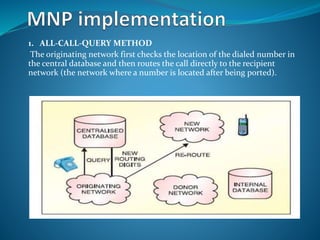
1. ALL-CALL-QUERY METHOD
The originating network first checks the location of the dialed number in
the central database and then routes the call directly to the recipient
network (the network where a number is located after being ported).
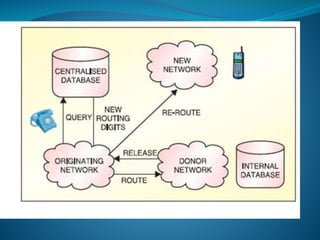
The originating network first checks the status of the dialed
number with the donor network (the initial network where the
number was located before ported).
 The donor network returns a message to the originating
network identifying whether the number has been ported or
not.
 The originating network then queries the central database to
obtain the information regarding the recipient network and
routes the call directly to the recipient network.
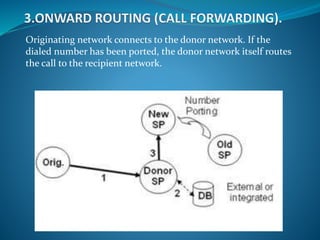
Originating network connects to the donor network. If the
dialed number has been ported, the donor network itself routes
the call to the recipient network.
The central agency checks with the SP-A. This could include
verifying whether the customer has paid all dues any completed
pending commitments. The SP-A can also choose to check with
customer to verify the authenticity of the request. However SP-A upon
getting the instructions from Central agency need to finish the
portability in one hour.
In case, the customer wants to cancel the request, she can do it
within 24 hours from applying. In that case, she can’t reclaim the
dipping charge.
Once into the new SP-B, the customer can’t move out and retain the
number at the same time for the next three months.
The entire process may take more than 4 days to a maximum of 6
days.
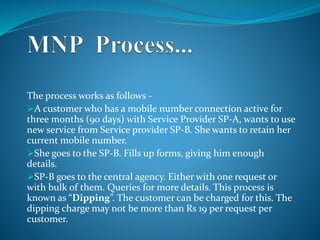
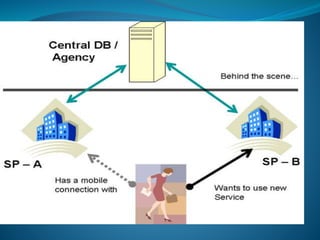
The process works as follows -
A customer who has a mobile number connection active for
three months (90 days) with Service Provider SP-A, wants to use
new service from Service provider SP-B. She wants to retain her
current mobile number.
She goes to the SP-B. Fills up forms, giving him enough
details.
SP-B goes to the central agency. Either with one request or
with bulk of them. Queries for more details. This process is
known as “Dipping”. The customer can be charged for this. The
dipping charge may not be more than Rs 19 per request per
customer.
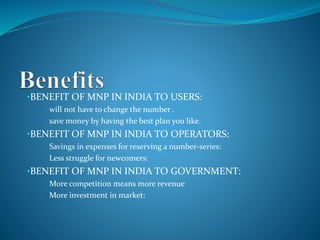
•BENEFIT OF MNP IN INDIA TO USERS:
• will not have to change the number .
• save money by having the best plan you like.
•BENEFIT OF MNP IN INDIA TO OPERATORS:
• Savings in expenses for reserving a number-series:
• Less struggle for newcomers:
•BENEFIT OF MNP IN INDIA TO GOVERNMENT:
• More competition means more revenue
• More investment in market:
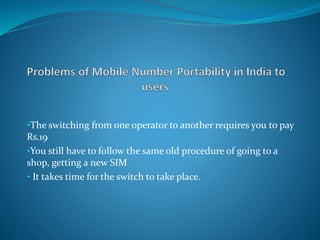
•The switching from one operator to another requires you to pay
Rs.19
•You still have to follow the same old procedure of going to a
shop, getting a new SIM
• It takes time for the switch to take place.
•Technology change
•More competition with other companies
•Underlying network changes
•More competition to BSNL
•Loss due to dropdown in number of mobile numbers
•No More number series reservations
The future seems to be bright for this technology in India. The
reason for being so is that currently, according to the
government statistics, about 68% of all mobile customers
change their mobile phone number at least once in a year.
When Mobile Number Portability in India is complete, the
number will drop significantly and only those people will
change the numbers who really want to disconnect the mobile
service or want to become anonymous again.
The MNP process is relatively new to India but holds lots of
scope. With the revolution of mobile telephony sector in India,
the subscriber base has grown by leaps and bounds over the past
decade.
It can also lead to lots of errors like customer dissatisfaction,
misalignment between the old and new service operator, loss of
revenue and negative publicity. Hence proper infrastructure
needs to be in place for it starts in India.
References
 www.google.com
 www.wikipedia.org
 www.oeclib.in
 www.pptplanet.com
csemobilenumberportabilityppt-170825044545.pdf

csemobilenumberportabilityppt-170825044545.pdf

  • 1.
    www.oeclib.in Submitted By: Odisha ElectronicsControl Library Seminar On Mobile Number Portability
  • 2.
    •What is MNP….? •Typesof Number Portability •Component of MNP •MNP implementation •MNP working •Benefits •Problem •Future aspects •Conclusion •References
  • 3.
     Mobile Numberportability (MNP)  Enables mobile subscribers to change their service providers  Their location without having to change their existing phone numbers.
  • 4.
  • 5.
    Service Platform Server Central ReferenceDatabase(CRDB)  Passive  Active
  • 6.
    • Reference databasefor the ported numbers • Storage of present and historical information related to ported numbers • Message relay • porting confirmations • porting requests • Message Validation • Message order and parameter contents are validated before relayed or broadcast. • Message Flow Control • flow of administrative messages between the service providers and network operators connected to the CRDB.
  • 7.
    1. ALL-CALL-QUERY METHOD Theoriginating network first checks the location of the dialed number in the central database and then routes the call directly to the recipient network (the network where a number is located after being ported).
  • 8.
    The originating networkfirst checks the status of the dialed number with the donor network (the initial network where the number was located before ported).  The donor network returns a message to the originating network identifying whether the number has been ported or not.  The originating network then queries the central database to obtain the information regarding the recipient network and routes the call directly to the recipient network.
  • 10.
    Originating network connectsto the donor network. If the dialed number has been ported, the donor network itself routes the call to the recipient network.
  • 11.
    The central agencychecks with the SP-A. This could include verifying whether the customer has paid all dues any completed pending commitments. The SP-A can also choose to check with customer to verify the authenticity of the request. However SP-A upon getting the instructions from Central agency need to finish the portability in one hour. In case, the customer wants to cancel the request, she can do it within 24 hours from applying. In that case, she can’t reclaim the dipping charge. Once into the new SP-B, the customer can’t move out and retain the number at the same time for the next three months. The entire process may take more than 4 days to a maximum of 6 days.
  • 13.
    The process worksas follows - A customer who has a mobile number connection active for three months (90 days) with Service Provider SP-A, wants to use new service from Service provider SP-B. She wants to retain her current mobile number. She goes to the SP-B. Fills up forms, giving him enough details. SP-B goes to the central agency. Either with one request or with bulk of them. Queries for more details. This process is known as “Dipping”. The customer can be charged for this. The dipping charge may not be more than Rs 19 per request per customer.
  • 15.
    •BENEFIT OF MNPIN INDIA TO USERS: • will not have to change the number . • save money by having the best plan you like. •BENEFIT OF MNP IN INDIA TO OPERATORS: • Savings in expenses for reserving a number-series: • Less struggle for newcomers: •BENEFIT OF MNP IN INDIA TO GOVERNMENT: • More competition means more revenue • More investment in market:
  • 16.
    •The switching fromone operator to another requires you to pay Rs.19 •You still have to follow the same old procedure of going to a shop, getting a new SIM • It takes time for the switch to take place.
  • 17.
    •Technology change •More competitionwith other companies •Underlying network changes
  • 18.
    •More competition toBSNL •Loss due to dropdown in number of mobile numbers •No More number series reservations
  • 19.
    The future seemsto be bright for this technology in India. The reason for being so is that currently, according to the government statistics, about 68% of all mobile customers change their mobile phone number at least once in a year. When Mobile Number Portability in India is complete, the number will drop significantly and only those people will change the numbers who really want to disconnect the mobile service or want to become anonymous again.
  • 20.
    The MNP processis relatively new to India but holds lots of scope. With the revolution of mobile telephony sector in India, the subscriber base has grown by leaps and bounds over the past decade. It can also lead to lots of errors like customer dissatisfaction, misalignment between the old and new service operator, loss of revenue and negative publicity. Hence proper infrastructure needs to be in place for it starts in India.
  • 21.