By Kajal Chaudhari
Roll No.: 30
Cryptography in networks.
• Cryptography derived its name from a Greek word
called “Kryptos” which means “Hidden Secrets”.
• Cryptography is a method of storing and transmitting
data in a particular form so that only those for whom it
is intended can read and process it.
• The term is most often associated with scrambling
plaintext (ordinary text) into cipher text (a process
called encryption), then back again (known as
decryption).
What is cryptography?
Bob Alice
Types of Cryptography
(Secret key) (Public key)
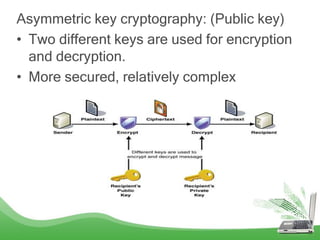
Asymmetric key cryptography: (Public key)
• Two different keys are used for encryption
and decryption.
• More secured, relatively complex
Symmetric key cryptography (private key)
• Only one key is used for encryption and decryption
• It is simple and faster
• Less secured
Purpose of cryptography
• Defending against external/internal
hackers
• Securing E-commerce
• Securing bank accounts/electronic
transfer
• Securing intellectual property
• Avoiding liability
Thank you!!

Cryptography in networks

  • 1.
    By Kajal Chaudhari RollNo.: 30 Cryptography in networks.
  • 2.
    • Cryptography derivedits name from a Greek word called “Kryptos” which means “Hidden Secrets”. • Cryptography is a method of storing and transmitting data in a particular form so that only those for whom it is intended can read and process it. • The term is most often associated with scrambling plaintext (ordinary text) into cipher text (a process called encryption), then back again (known as decryption). What is cryptography?
  • 3.
  • 5.
  • 6.
    Asymmetric key cryptography:(Public key) • Two different keys are used for encryption and decryption. • More secured, relatively complex
  • 7.
    Symmetric key cryptography(private key) • Only one key is used for encryption and decryption • It is simple and faster • Less secured
  • 8.
    Purpose of cryptography •Defending against external/internal hackers • Securing E-commerce • Securing bank accounts/electronic transfer • Securing intellectual property • Avoiding liability
  • 9.