 Cropping Pattern
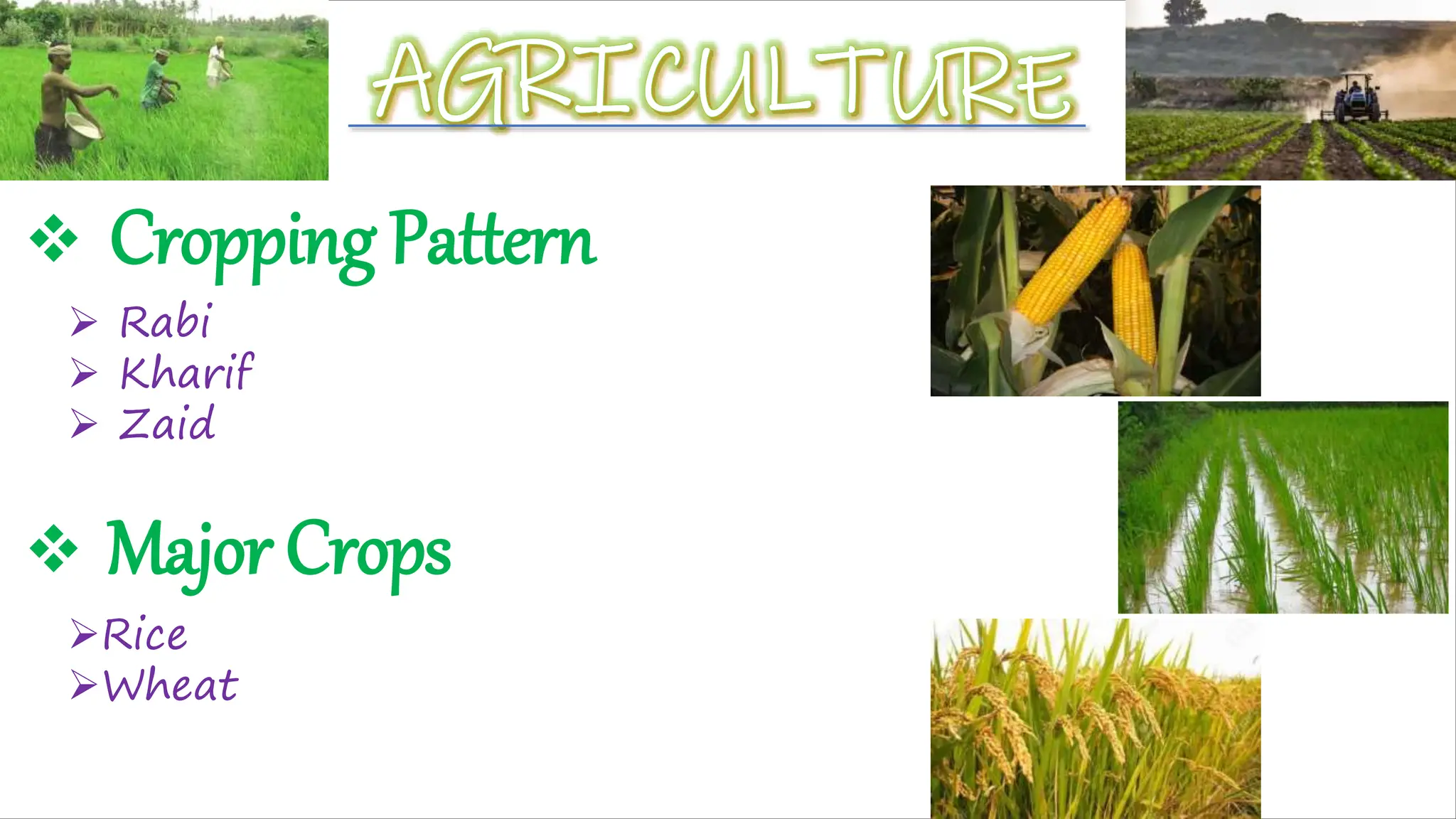
 Rabi
 Kharif
 Zaid
 Major Crops
Rice
Wheat
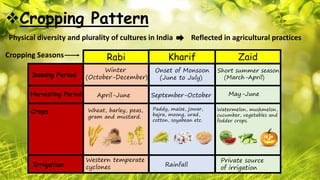
Cropping Pattern
Physical diversity and plurality of cultures in India Reflected in agricultural practices
Rabi Kharif Zaid
Cropping Seasons
Sowing Period
Harvesting Period
Crops
Irrigation
Winter
(October-December)
April-June
Wheat, barley, peas,
gram and mustard.
Western temperate
cyclones
Onset of Monsoon
(June to July)
September-October
Paddy, maize, jowar,
bajra, moong, urad,
cotton, soyabean etc.
Rainfall
Short summer season
(March-April)
May-June
Watermelon, muskmelon,
cucumber, vegetables and
fodder crops.
Private source
of irrigation
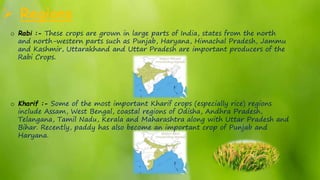
 Regions
o Rabi :- These crops are grown in large parts of India, states from the north
and north-western parts such as Punjab, Haryana, Himachal Pradesh, Jammu
and Kashmir, Uttarakhand and Uttar Pradesh are important producers of the
Rabi Crops.
o Kharif :- Some of the most important Kharif crops (especially rice) regions
include Assam, West Bengal, coastal regions of Odisha, Andhra Pradesh,
Telangana, Tamil Nadu, Kerala and Maharashtra along with Uttar Pradesh and
Bihar. Recently, paddy has also become an important crop of Punjab and
Haryana.
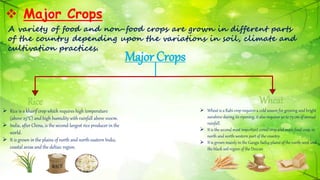
 Major Crops
A variety of food and non-food crops are grown in different parts
of the country depending upon the variations in soil, climate and
cultivation practices.
Major Crops
Rice Wheat
 Rice is a kharif crop which requires high temperature
(above 25°C) and high humidity with rainfall above 100cm.
 India, after China, is the second-largest rice producer in the
world.
 It is grown in the plains of north and north-eastern India,
coastal areas and the deltaic region.
 Wheat is a Rabi crop requires a cold season for growing and bright
sunshine during its ripening, it also requires 50 to 75 cm of annual
rainfall.
 It is the second most important cereal crop and main food crop, in
north and north-western part of the country.
 It is grown mainly in the Ganga-Satluj plains of the north-west and
the black soil region of the Deccan
 Identify the following Crops:
Pea Crop (Rabi crop)
Cotton Crop (Kharif Crop)
Muskmelon Crop (Zaid Crop) Mustard Crops (Kharif Crops)
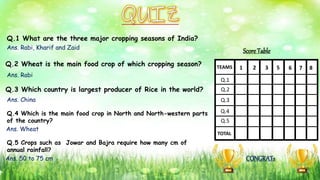
TEAMS
TOTAL
Q.1
Q.2
Q.3
Q.4
Q.5
1 2 3 5 6 7 8
Score Table
Q.1 What are the three major cropping seasons of India?
Ans. Rabi, Kharif and Zaid
Q.2 Wheat is the main food crop of which cropping season?
Ans. Rabi
Q.3 Which country is largest producer of Rice in the world?
Ans. China
Q.4 Which is the main food crop in North and North-western parts
of the country?
Ans. Wheat
Q.5 Crops such as Jowar and Bajra require how many cm of
annual rainfall?
Ans. 50 to 75 cm CONGRATs
Jyoti
Rakesh
Mrituanjay
Mohasin
 Presented by:

Cropping Patterns and Major Crops.pptx

  • 1.
     Cropping Pattern Rabi  Kharif  Zaid  Major Crops Rice Wheat
  • 2.
    Cropping Pattern Physical diversityand plurality of cultures in India Reflected in agricultural practices Rabi Kharif Zaid Cropping Seasons Sowing Period Harvesting Period Crops Irrigation Winter (October-December) April-June Wheat, barley, peas, gram and mustard. Western temperate cyclones Onset of Monsoon (June to July) September-October Paddy, maize, jowar, bajra, moong, urad, cotton, soyabean etc. Rainfall Short summer season (March-April) May-June Watermelon, muskmelon, cucumber, vegetables and fodder crops. Private source of irrigation
  • 3.
     Regions o Rabi:- These crops are grown in large parts of India, states from the north and north-western parts such as Punjab, Haryana, Himachal Pradesh, Jammu and Kashmir, Uttarakhand and Uttar Pradesh are important producers of the Rabi Crops. o Kharif :- Some of the most important Kharif crops (especially rice) regions include Assam, West Bengal, coastal regions of Odisha, Andhra Pradesh, Telangana, Tamil Nadu, Kerala and Maharashtra along with Uttar Pradesh and Bihar. Recently, paddy has also become an important crop of Punjab and Haryana.
  • 4.
     Major Crops Avariety of food and non-food crops are grown in different parts of the country depending upon the variations in soil, climate and cultivation practices. Major Crops Rice Wheat  Rice is a kharif crop which requires high temperature (above 25°C) and high humidity with rainfall above 100cm.  India, after China, is the second-largest rice producer in the world.  It is grown in the plains of north and north-eastern India, coastal areas and the deltaic region.  Wheat is a Rabi crop requires a cold season for growing and bright sunshine during its ripening, it also requires 50 to 75 cm of annual rainfall.  It is the second most important cereal crop and main food crop, in north and north-western part of the country.  It is grown mainly in the Ganga-Satluj plains of the north-west and the black soil region of the Deccan
  • 5.
     Identify thefollowing Crops: Pea Crop (Rabi crop) Cotton Crop (Kharif Crop) Muskmelon Crop (Zaid Crop) Mustard Crops (Kharif Crops)
  • 6.
    TEAMS TOTAL Q.1 Q.2 Q.3 Q.4 Q.5 1 2 35 6 7 8 Score Table Q.1 What are the three major cropping seasons of India? Ans. Rabi, Kharif and Zaid Q.2 Wheat is the main food crop of which cropping season? Ans. Rabi Q.3 Which country is largest producer of Rice in the world? Ans. China Q.4 Which is the main food crop in North and North-western parts of the country? Ans. Wheat Q.5 Crops such as Jowar and Bajra require how many cm of annual rainfall? Ans. 50 to 75 cm CONGRATs
  • 7.