Critical Discourse Analysis:
Discourse and Vocabulary
This presentation explores how vocabulary functions within discourse,
drawing on key insights from McCarthy, Halliday, and Hasan. We will
examine how words connect ideas, signal meaning, and shape
communication in both spoken and written contexts. By understanding
vocabulary through a discourse lens, language learners can achieve
greater fluency and coherence.
Vocabulary in Discourse: Beyond Word Lists
More Than Meanings
Vocabulary is not just a list of words to memorize. In
discourse analysis, words work together to help people
share ideas clearly in speaking and writing.
• Connects sentences
• Expresses attitudes
• Organizes messages
Context Matters
Word choices depend on who we’re talking to, the topic,
and our goals. Knowing a word’s meaning is not enough;
we must use it correctly in different situations and contexts.
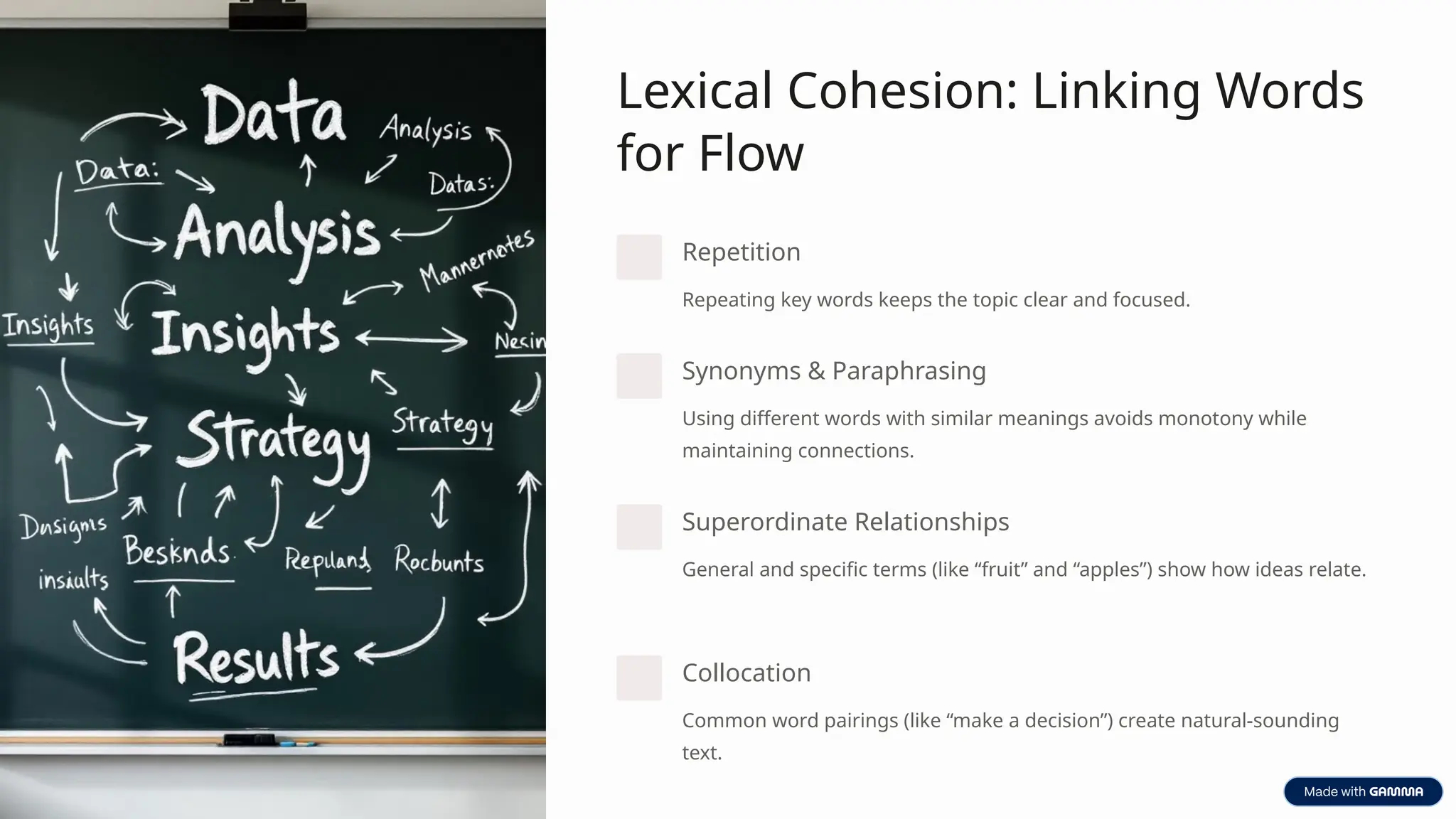
Lexical Cohesion: Linking Words
for Flow
Repetition
Repeating key words keeps the topic clear and focused.
Synonyms & Paraphrasing
Using different words with similar meanings avoids monotony while
maintaining connections.
Superordinate Relationships
General and specific terms (like “fruit” and “apples”) show how ideas relate.
Collocation
Common word pairings (like “make a decision”) create natural-sounding
text.
Spoken Discourse:
Vocabulary in Conversation
Deictic Expressions
Words like “this,” “that,” and
“here” rely on shared context.
General Words
Terms like “thing” or “stuff” are
common in informal speech.
Interactive Markers
Fillers such as “you know” and “like” manage conversation and
create a friendly tone.
Textual Aspects of Lexical
Competence
Recognize Co-
textual Signals
Understand how
surrounding words
influence meaning.
Polysemy &
Ambiguity
Use context to
determine the correct
meaning of words
with multiple senses.
Genre, Stance,
Function
Choose vocabulary
that fits the
communicative
purpose and
audience.
Using Vocabulary Well in Real Communication
Notice Clues
Words change meaning depending
on nearby words (co-text).
1
Understand Polysemy
Some words have multiple meanings;
context is key.
2
Choose for Situation
Select vocabulary that matches the
audience, topic, and purpose.
3
Organizing Text: Connectors
and Markers
1 Logical Connectors
Words like “therefore” and “however” show relationships
between ideas.
2 Topic Shifters
“Anyway” and “so” move the conversation or text to new
topics.
3 Frame Markers
“First of all” and “finally” signal structure and sequence.
Key Takeaways: Vocabulary
in Discourse
Context Shapes Meaning
Word meanings depend on context and surrounding words.
Vocabulary Connects Ideas
Connectors and markers guide readers and listeners through
texts.
Effective Communication
Understanding vocabulary in discourse improves fluency,
coherence, and confidence.
By focusing on how vocabulary functions in real communication,
learners become better equipped for academic, professional, and
everyday interactions.

Critical-Discourse-Analysis-Discourse-and-Vocabulary.pptx

  • 1.
    Critical Discourse Analysis: Discourseand Vocabulary This presentation explores how vocabulary functions within discourse, drawing on key insights from McCarthy, Halliday, and Hasan. We will examine how words connect ideas, signal meaning, and shape communication in both spoken and written contexts. By understanding vocabulary through a discourse lens, language learners can achieve greater fluency and coherence.
  • 2.
    Vocabulary in Discourse:Beyond Word Lists More Than Meanings Vocabulary is not just a list of words to memorize. In discourse analysis, words work together to help people share ideas clearly in speaking and writing. • Connects sentences • Expresses attitudes • Organizes messages Context Matters Word choices depend on who we’re talking to, the topic, and our goals. Knowing a word’s meaning is not enough; we must use it correctly in different situations and contexts.
  • 3.
    Lexical Cohesion: LinkingWords for Flow Repetition Repeating key words keeps the topic clear and focused. Synonyms & Paraphrasing Using different words with similar meanings avoids monotony while maintaining connections. Superordinate Relationships General and specific terms (like “fruit” and “apples”) show how ideas relate. Collocation Common word pairings (like “make a decision”) create natural-sounding text.
  • 4.
    Spoken Discourse: Vocabulary inConversation Deictic Expressions Words like “this,” “that,” and “here” rely on shared context. General Words Terms like “thing” or “stuff” are common in informal speech. Interactive Markers Fillers such as “you know” and “like” manage conversation and create a friendly tone.
  • 5.
    Textual Aspects ofLexical Competence Recognize Co- textual Signals Understand how surrounding words influence meaning. Polysemy & Ambiguity Use context to determine the correct meaning of words with multiple senses. Genre, Stance, Function Choose vocabulary that fits the communicative purpose and audience.
  • 6.
    Using Vocabulary Wellin Real Communication Notice Clues Words change meaning depending on nearby words (co-text). 1 Understand Polysemy Some words have multiple meanings; context is key. 2 Choose for Situation Select vocabulary that matches the audience, topic, and purpose. 3
  • 7.
    Organizing Text: Connectors andMarkers 1 Logical Connectors Words like “therefore” and “however” show relationships between ideas. 2 Topic Shifters “Anyway” and “so” move the conversation or text to new topics. 3 Frame Markers “First of all” and “finally” signal structure and sequence.
  • 8.
    Key Takeaways: Vocabulary inDiscourse Context Shapes Meaning Word meanings depend on context and surrounding words. Vocabulary Connects Ideas Connectors and markers guide readers and listeners through texts. Effective Communication Understanding vocabulary in discourse improves fluency, coherence, and confidence. By focusing on how vocabulary functions in real communication, learners become better equipped for academic, professional, and everyday interactions.