Dr. Shoebul Haque
MD Pharmacology & Therapeutics
Drugs used in
Emergency/Critical care
Drugs used in Emergency/Critical care
Learning Objectives
• Code Blue
• Code Blue Phases
• Crash Cart
• Drugs used in Critical care
• Mechanism of action and their uses
• Responsibilities of nurses/paramedical staff
•Cardio-
pulmonary
arrest
Unconscious
•Syncope
•Cardiac Pain
•Mental
status
changes
CODE BLUE
Code Blue Phases
Stage 1: Activation Phase
The Unit where a patient has arrested will be asked to do the following (“The Three C’s”):
• Call for help – call a Code Blue Sim Lab
• CPR – initiate chest compressions (CAB)
• Crash cart –
 Staff in the Nursing Unit are expected to bring the crash cart as soon as the code is called,
Whoever is closest should bring it
 Last staff entering should bring the patient’s chart
Code Blue Phases
Stage 2: Staggered arrival – Chaotic Phase
The priorities of the team members who arrive first are to:
1. Ensure that the initial priorities (the “Three C’s”) are being addressed. CPR should be in progress. The
crash cart should be at the bedside
2. Defibrillator pads should be applied to the patient, and the defibrillator should be turned ON
3. The AIRWAY manager should be ventilating the patient using a Ambu-bag
4. Two people should be delegated to continue CPR
5. IV access should be should be confirmed by NS flushing
6. A Medicine nurse should be delegated to find, prepare, and hand medications to the IV nurse
Code Blue Phases
Stage 3: Organized Team Function Phase
Crash Cart
CRASH CART (FUNCTIONS)
1. Airway Management
2. Emergency Medications
3. Intravenous (IV) Access
4. Oxygen Administration
5. Universal Precautions Supplies
6. Cardiopulmonary Resuscitation (CPR)
7. Monitoring Devices
8. Emergency Procedures Manual
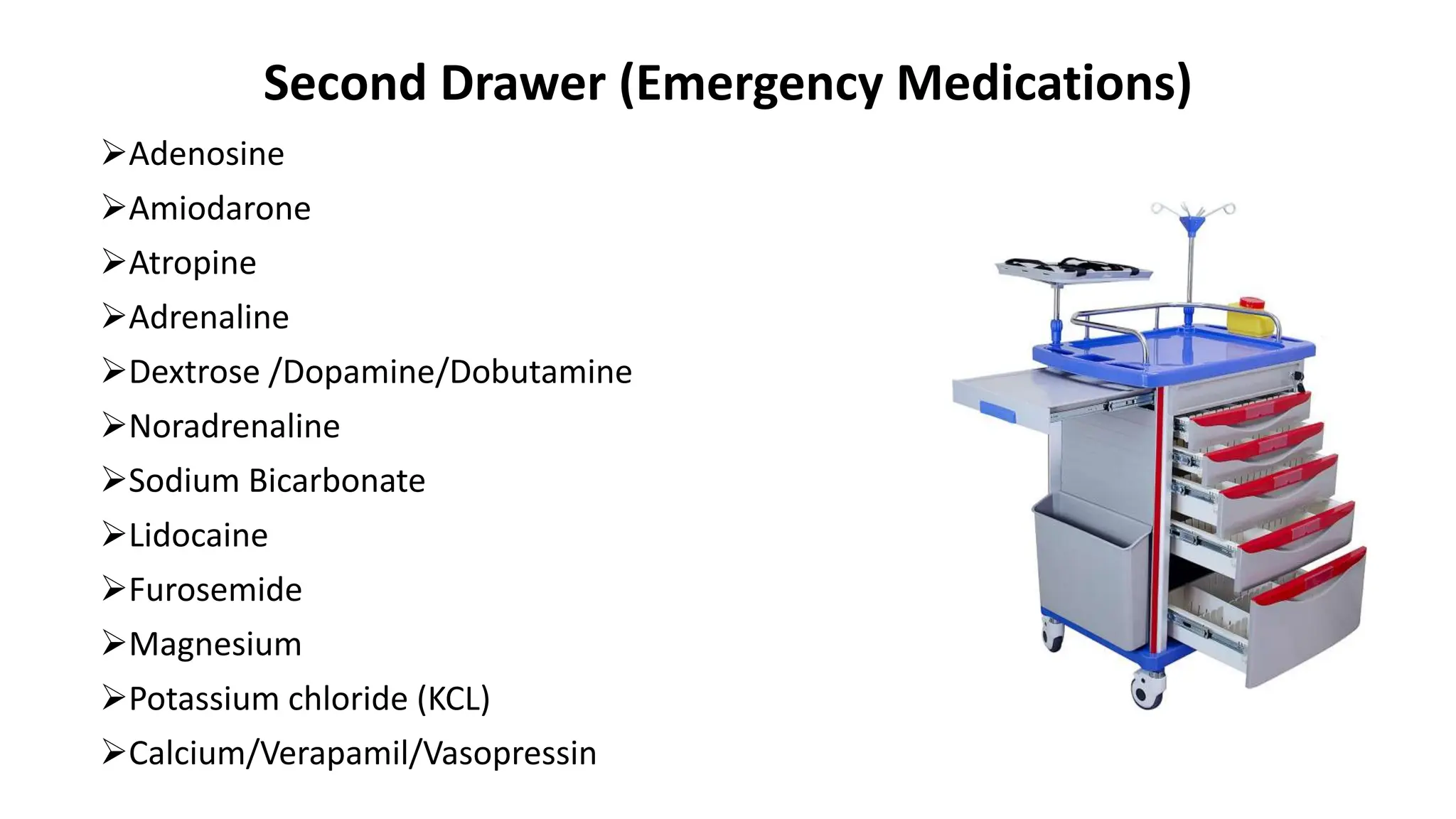
Second Drawer (Emergency Medications)
Adenosine
Amiodarone
Atropine
Adrenaline
Dextrose /Dopamine/Dobutamine
Noradrenaline
Sodium Bicarbonate
Lidocaine
Furosemide
Magnesium
Potassium chloride (KCL)
Calcium/Verapamil/Vasopressin
Epinephrine
Classification Adrenergic agent, Vasoconstrictor
Uses •Administered in pulseless ventricular fibrillation (VF),
•Ventricular tachycardia (VT),
•Asystole, and pulseless electrical activity (PEA)
•Cardiopulmonary resuscitation (CPR)
•Anaphylaxis
Dose 1 mg IV or IO every 3–5 minutes during cardiac arrest
Endotracheal route: 2 to 2.5 mg endotracheally every 3 to 5 minutes during
cardiac arrest if IV or intraosseous route cannot be established
Stocked Typically available as 1 mg/10ml 1:10,000 concentration
Epinephrine
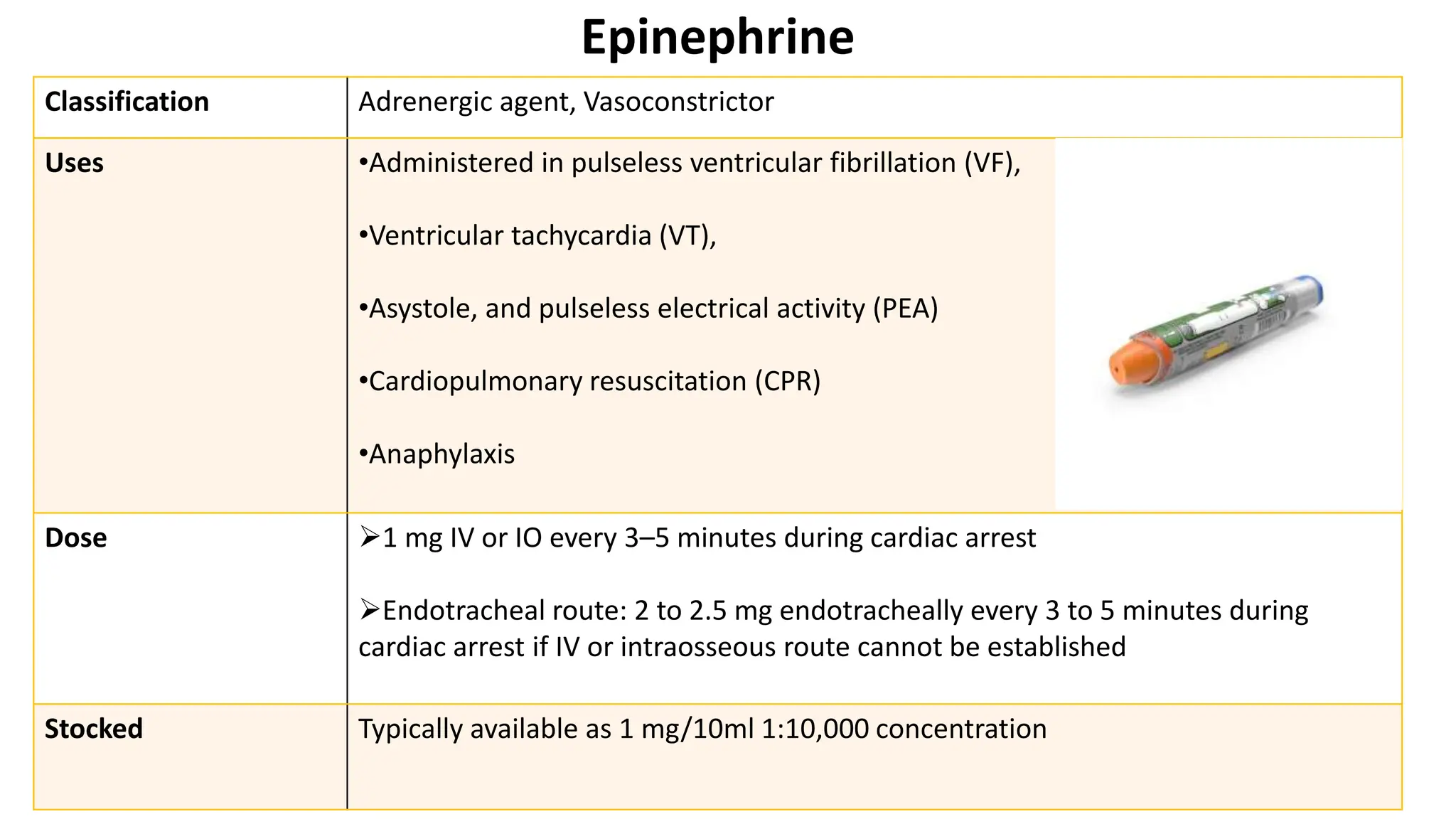
Uses: Usual Adult Dose for Anaphylaxis
• Auto-Injector:
30 kg or greater: Injectable Solution of 1 mg/mL (1:1000) 0.3 mg IM or
subcutaneously into anterolateral aspect of thigh; repeat as needed
Usual Adult Dose for Hypotension
• Injectable Solution of 1 mg/mL (1:1000): 0.05 to 2 mcg/kg/min IV and titrate to achieve
desired mean arterial pressure (MAP)
Usual Adult Dose for Shock
• Injectable Solution of 1 mg/mL (1:1000): 0.05 to 2 mcg/kg/min IV and titrate to achieve
desired mean arterial pressure (MAP)
Usual Adult Dose for Ventricular Fibrillation
• Injectable Solution of 0.1 mg/mL (1:10,000):
IV: 0.5 to 1 mg (5 to 10 mL) IV once; during resuscitation effort, 0.5 mg (5 mL) should
be given IV every 5 minutes
Epinephrine
Nurses Responsibilities:
• Proper labelling
• Continuous monitoring
• Check B/P, pulse rate regularly
• After giving flush it immediately with 3-5 ml of NS
• Ensure rhythm and watch carefully
Atropine Sulfate
Classification Parasympatholytic, Anticholinergic
These actions increase cardiac output & heart rate
Heart rate decrease by blocking vagal stimulations in heart
Blocks the acetylcholine receptors to dries the secretion
Uses Bradycardia < 40-50 bpm
AV heart block
Biliary surgery
Dose 0.5-1mg IV push, repeat at 3-5 minutes
Total dose: 0.04mg/kg
Atropine
Nurses Responsibilities:
• I/O chart must to check urinary retention
• Continuous ECG monitoring
• Assess GI functions
• Check for any dryness of mucous membrane
Verapamil
Classification
 Antianginal, Antiarrhythmic, Antihypertensive
Uses  SVT
 Essential hypertension
Dose  IV initial dose 5-10mg over 2 min
Stocked  2.5mg/ml
Verapamil
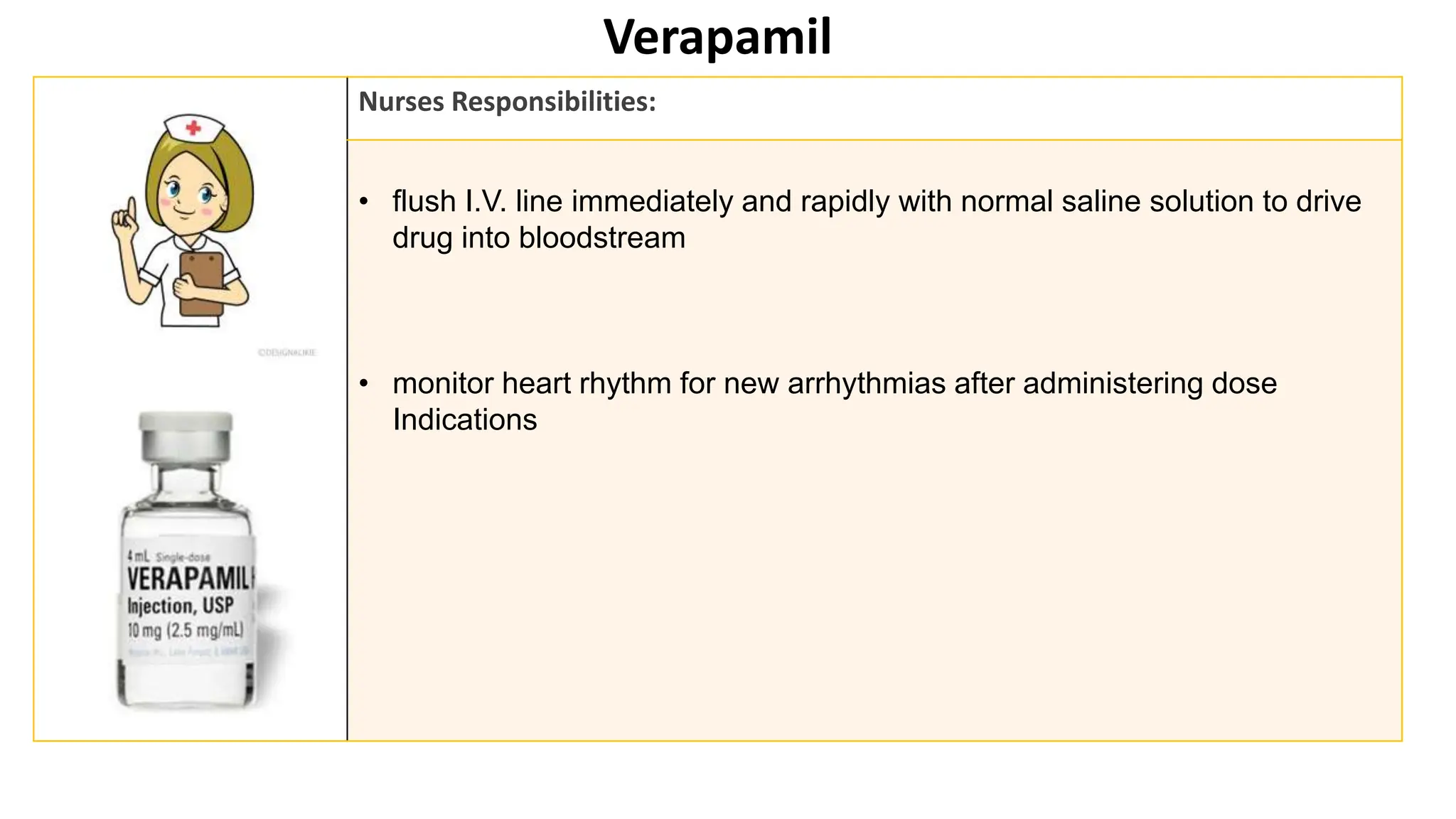
Nurses Responsibilities:
• flush I.V. line immediately and rapidly with normal saline solution to drive
drug into bloodstream
• monitor heart rhythm for new arrhythmias after administering dose
Indications
Amiodarone
Classification  Slows AV conduction, prolongs QT interval
 It works on cardiac cell membrane and relax the smooth muscles of myocardium
Uses  For refractory pulseless VT/VF
 Atrial flutter
Dose  1ml –50mg
 150 mg for 1st dose
 360 mg for next 6 hours
 Maintenance 540 mg for remaining 18 hours
Amiodarone
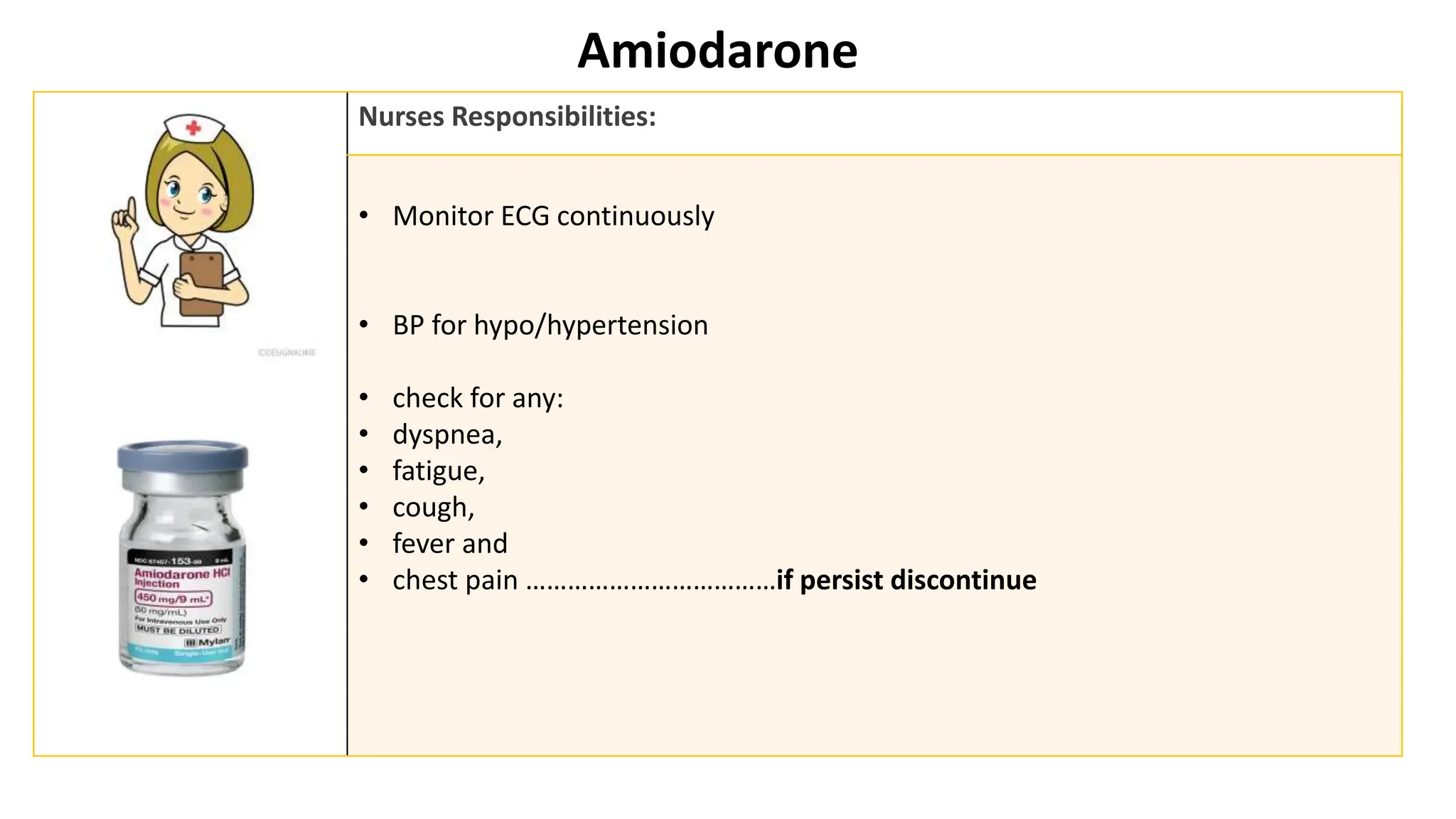
Nurses Responsibilities:
• Monitor ECG continuously
• BP for hypo/hypertension
• check for any:
• dyspnea,
• fatigue,
• cough,
• fever and
• chest pain ………………………………if persist discontinue
Adenosine
Classification  Antiarrhythmic drug
 Slows conduction time through the A-V node, can interrupt the re-entry
pathways through the A-V node, and can restore normal sinus rhythm in
patients with paroxysmal supraventricular tachycardia
Uses  For symptomatic SVT
Dose
 2ml – 6mg
 Onset: 20-30 seconds and the duration of action is < 10 seconds
 Max dose: 12 mg
Adenosine
Nurses Responsibilities:
• Don’t administer through central line (may cause asystole)
• Don’t give more than 12 mg Adenosine as a single dose
• After administering adenosine , flush I.V. line immediately and rapidly with
normal saline solution to drive drug into bloodstream
• Monitor heart rhythm for new arrhythmias after administering dose
Dobutamine
Classification
Inotropic agent, Vasodilator
Dobutamine stimulates beta-1 adrenergic receptors, leading to increased heart
rate and contractility, ultimately improving cardiac output
Uses  heart failure or situations requiring increased cardiac output
Dose  1ml - 50mg i/v
Dobutamine
Nurses Responsibilities:
• Assess for hypovolemia and correct
• Check for bp, chest pain
• If bp increases titrate the value
• Check for electrolyte and urine output
• Titrate on the basis of the patient's homodynamic/renal response
Dopamine
Classification  Inotropic agent, Vasopressor
 It stimulates dopaminergic, beta-1 adrenergic, and alpha-adrenergic receptors,
leading to increased heart rate, contractility, and vasoconstriction
Uses
 Shock ; Hypotension
 Cardiogenic or septic shock
Dose  2 mcg/kg/min IV: dopaminergic effects
 5-10 mcg/kg/min IV: beta effects
 10-20 mcg/kg/min IV: alpha effects
 1ml-40mg / 5ml-200mg
Dopamine
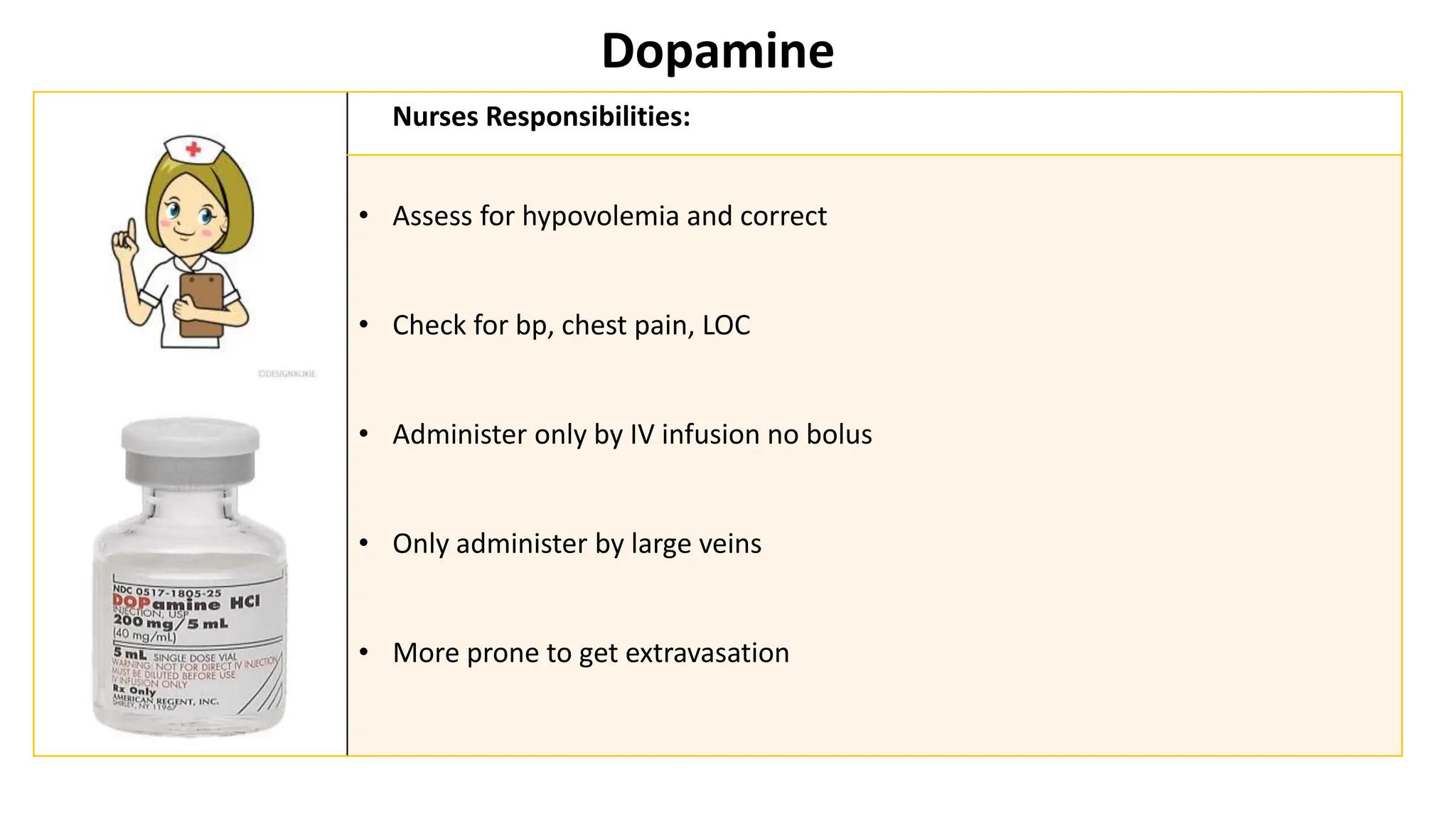
Nurses Responsibilities:
• Assess for hypovolemia and correct
• Check for bp, chest pain, LOC
• Administer only by IV infusion no bolus
• Only administer by large veins
• More prone to get extravasation
Magnesium sulphate
Classification
Uses  Recommended for torsade's de pointes VT
 Severe Pre-eclampsia; Prevention of eclamptic seizures
Dose
 IV/IM protocol
4 g by IV infusion in 100 ml of 0.9% sodium chloride over 15 to 20 minutes then,
10 g by IM route (5 g in each buttock) then, 5 g by IM route every 4 hours (changing
buttock for each injection)
 IV protocol
4 g by IV infusion in 100 ml of 0.9% sodium chloride over 15 to 20 minutes then 1 g
per hour by continuous IV infusion
Stock Stocked in 1 gm/2ml vials
Magnesium sulphate
Nurses Responsibilities:
• Reduce the dose in patients with renal impairment; do not administer to
patients with severe renal impairment
• Do not combine with nifedipine
• Check urine output every hour. In the event of decreased urine output (< 30
ml/hour or 100 ml/4 hour), stop magnesium sulfate
• Check patellar reflex, blood pressure, heart and respiratory rate every 15
minutes during the first hour of treatment
• If signs of overdosage are observed: stop magnesium sulfate and give 1 g calcium
gluconate by slow IV route as an antidote (in this event, seizures may recur)
Lidocaine
Classification Anti-arrhythmic class I-b
It causes diastolic depolarization
decreasing automaticity of ventricular cells
Uses  Ventricular dysrhythmias
 Digoxin toxicity
Dose 1ml – 20mg
 50-100mg (25-50mg/min)
 Repeat q3-5 min
Max 300mg / hr.
Stocked
Lidocaine
Nurses Responsibilities:
• Continuous cardiac monitoring for dysrhythmia
• ECG: if increases PR & QRS Segments stop or reduce rate
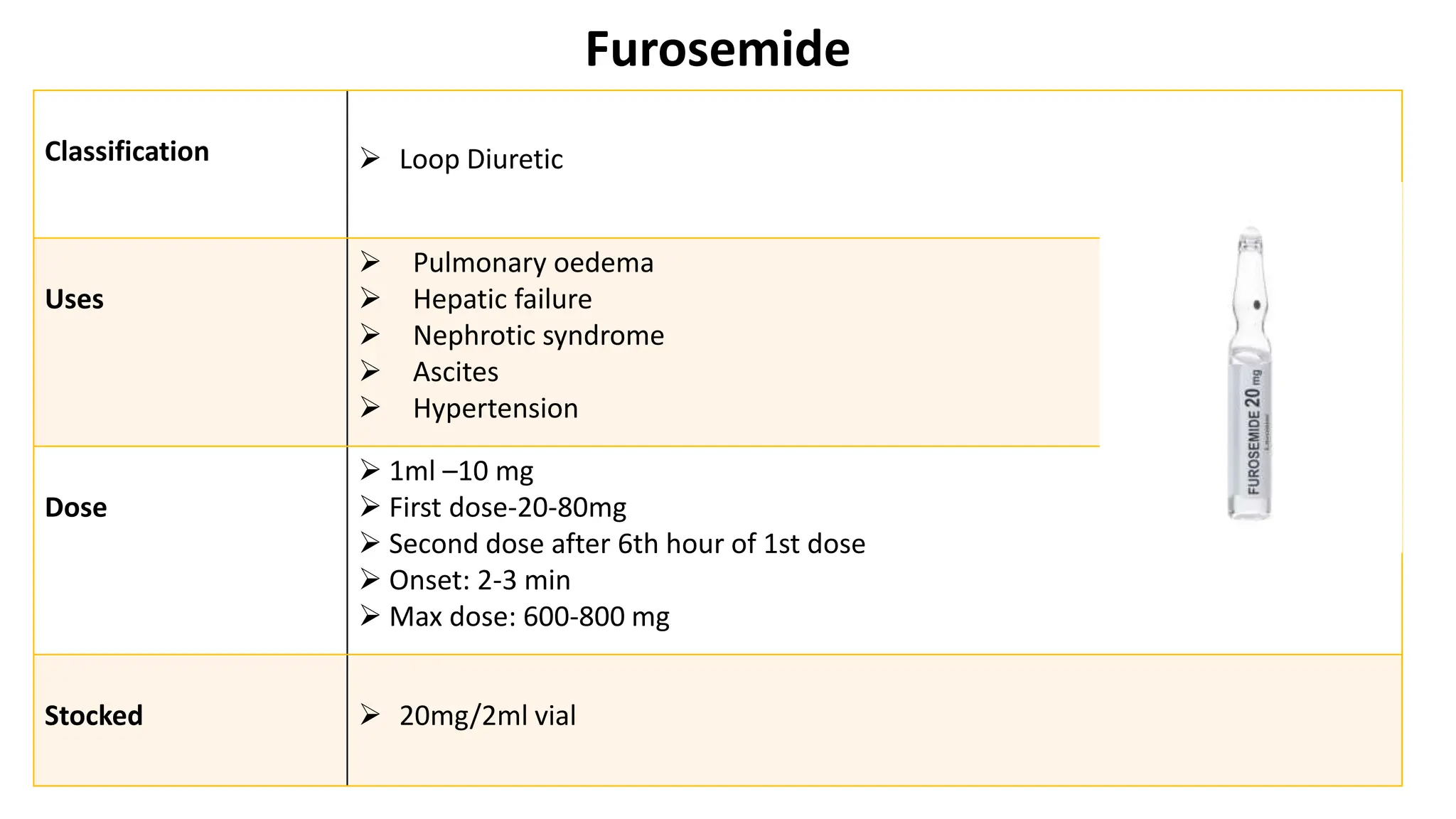
Furosemide
Classification  Loop Diuretic
Uses
 Pulmonary oedema
 Hepatic failure
 Nephrotic syndrome
 Ascites
 Hypertension
Dose
 1ml –10 mg
 First dose-20-80mg
 Second dose after 6th hour of 1st dose
 Onset: 2-3 min
 Max dose: 600-800 mg
Stocked  20mg/2ml vial
Furosemide
Nurses Responsibilities:
• I/O chart must to check fluid loss
• Assess for hypokalemia & hypotension
• If high doses check for tinnitus or hearing loss
Norepinephrine
Classification  Vasopressor, Sympathomimetic
 Vasoconstrictor
 BP, heart rate, cardiac output increases
Uses  Acute hypotension
 Shock
Dose 1mg/1ml
Stocked  4mg/4ml
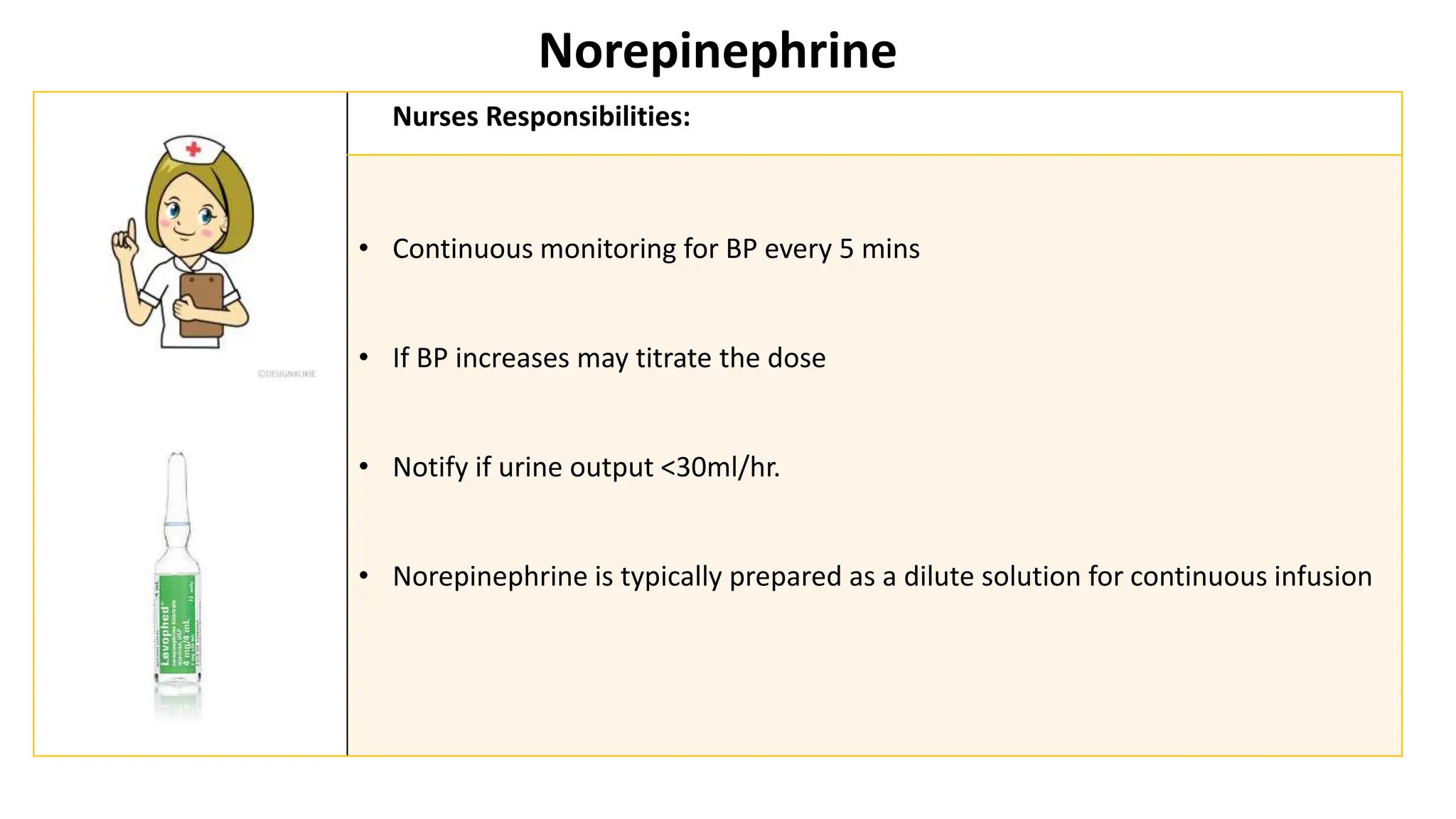
Norepinephrine
Nurses Responsibilities:
• Continuous monitoring for BP every 5 mins
• If BP increases may titrate the dose
• Notify if urine output <30ml/hr.
• Norepinephrine is typically prepared as a dilute solution for continuous infusion
Vasopressin
Classification Hormone, Vasopressor
Vasopressin acts on V1 receptors in blood vessels, causing vasoconstriction. This
results in an increase in blood pressure
• Additionally, it has antidiuretic effects on the kidneys, reducing urine production
Uses  cardiac arrest,
 To increase BP and improve blood flow to vital organs
Dose
 Septic Shock:
 Initial dose: 0.01 units/min IV infusion
 If target blood pressure response is not achieved: titrate up by 0.005 units/min
at 10 to 15 minute intervals
 Maximum rate of infusion: 0.07 units/min
Vasopressin
Nurses Responsibilities:
• Continuous monitoring for BP every 5 mins
• If BP increases may titrate the dose
• Notify if urine output <30ml/hr.
i/v Glucose
Classification  Carbohydrate, Hypertonic solution
Uses  Severe hypoglycemia
Dose
 The dosage is determined based on the patient's weight, the severity of
hypoglycemia
 IV
 Concentrations: Glucose injections are available in different concentrations
D10W (10% dextrose in water) D25W, and D50W, each
representing the percentage of glucose in the solution
i/v Glucose
Nurses Responsibilities:
• Blood glucose concentrations should be closely monitored during and after the
administration of glucose
Sodium Bicarbonate
Classification Alkalinizing agent, Electrolyte
Sodium bicarbonate acts as a buffer, neutralizing excess acids in the blood and
tissues
Uses  Metabolic acidosis
 Salicylate poisoning
Dose 10ml-7.5%
If severe acidosis, 50 ordered means 5 ampoules have to administer
Sodium Bicarbonate
Nurses Responsibilities:
• Check ABG every 4 hours if infusion ongoing
• Check for the serum electrolytes
• Asses respiratory status, pulse rate if abnormal notify
Calcium Gluconate
Classification  Electrolyte, Mineral supplement
Uses  Prevention and treatment of hypocalcemia
 Hyper- magnesemia
 Hyperkalemia
Dose
 10% - 10 ml
 Max dose: 3 gram
Preparation  Calcium gluconate is a calcium salt of gluconic acid
Calcium Gluconate
Nurses Responsibilities:
 Continuous cardiac monitoring
 ECG: check for the reverse of QT and T waves
 Check for calcium levels
 Calcium needed for maintenance of nervous, muscular & skeletal functions
 Mainly cardiac contractibility
Hydrocortisone
Classification  Corticosteroid
 Immunosuppressive and salt-retaining (mineralocorticoid)
Uses  Severe inflammation
 Adrenal insufficiency
 Ulcerative colitis
 Asthma /COPD
Dose  100–500 mg
 3–4 times in 24 hours
Preparation  100mg/2ml
Hydrocortisone
Nurses Responsibilities:
• Check for hypokalemia & hyperglycemia
• Plasma cortisol level if long term
• Check for any signs of infection with WBC counts
• Ensure antacids are there or not
Maintenance
Nurses Responsibilities:
 Monthly routine checks: expiration dates, defibrillation pads, battery charge
 Replace expired medications and defibrillation pads
 Document checks and replacements
Critical care Emergency medications.pptx

Critical care Emergency medications.pptx

  • 1.
    Dr. Shoebul Haque MDPharmacology & Therapeutics Drugs used in Emergency/Critical care
  • 2.
    Drugs used inEmergency/Critical care Learning Objectives • Code Blue • Code Blue Phases • Crash Cart • Drugs used in Critical care • Mechanism of action and their uses • Responsibilities of nurses/paramedical staff
  • 3.
  • 4.
    Code Blue Phases Stage1: Activation Phase The Unit where a patient has arrested will be asked to do the following (“The Three C’s”): • Call for help – call a Code Blue Sim Lab • CPR – initiate chest compressions (CAB) • Crash cart –  Staff in the Nursing Unit are expected to bring the crash cart as soon as the code is called, Whoever is closest should bring it  Last staff entering should bring the patient’s chart
  • 5.
    Code Blue Phases Stage2: Staggered arrival – Chaotic Phase The priorities of the team members who arrive first are to: 1. Ensure that the initial priorities (the “Three C’s”) are being addressed. CPR should be in progress. The crash cart should be at the bedside 2. Defibrillator pads should be applied to the patient, and the defibrillator should be turned ON 3. The AIRWAY manager should be ventilating the patient using a Ambu-bag 4. Two people should be delegated to continue CPR 5. IV access should be should be confirmed by NS flushing 6. A Medicine nurse should be delegated to find, prepare, and hand medications to the IV nurse
  • 6.
    Code Blue Phases Stage3: Organized Team Function Phase
  • 7.
  • 8.
    CRASH CART (FUNCTIONS) 1.Airway Management 2. Emergency Medications 3. Intravenous (IV) Access 4. Oxygen Administration 5. Universal Precautions Supplies 6. Cardiopulmonary Resuscitation (CPR) 7. Monitoring Devices 8. Emergency Procedures Manual
  • 9.
    Second Drawer (EmergencyMedications) Adenosine Amiodarone Atropine Adrenaline Dextrose /Dopamine/Dobutamine Noradrenaline Sodium Bicarbonate Lidocaine Furosemide Magnesium Potassium chloride (KCL) Calcium/Verapamil/Vasopressin
  • 10.
    Epinephrine Classification Adrenergic agent,Vasoconstrictor Uses •Administered in pulseless ventricular fibrillation (VF), •Ventricular tachycardia (VT), •Asystole, and pulseless electrical activity (PEA) •Cardiopulmonary resuscitation (CPR) •Anaphylaxis Dose 1 mg IV or IO every 3–5 minutes during cardiac arrest Endotracheal route: 2 to 2.5 mg endotracheally every 3 to 5 minutes during cardiac arrest if IV or intraosseous route cannot be established Stocked Typically available as 1 mg/10ml 1:10,000 concentration
  • 11.
    Epinephrine Uses: Usual AdultDose for Anaphylaxis • Auto-Injector: 30 kg or greater: Injectable Solution of 1 mg/mL (1:1000) 0.3 mg IM or subcutaneously into anterolateral aspect of thigh; repeat as needed Usual Adult Dose for Hypotension • Injectable Solution of 1 mg/mL (1:1000): 0.05 to 2 mcg/kg/min IV and titrate to achieve desired mean arterial pressure (MAP) Usual Adult Dose for Shock • Injectable Solution of 1 mg/mL (1:1000): 0.05 to 2 mcg/kg/min IV and titrate to achieve desired mean arterial pressure (MAP) Usual Adult Dose for Ventricular Fibrillation • Injectable Solution of 0.1 mg/mL (1:10,000): IV: 0.5 to 1 mg (5 to 10 mL) IV once; during resuscitation effort, 0.5 mg (5 mL) should be given IV every 5 minutes
  • 12.
    Epinephrine Nurses Responsibilities: • Properlabelling • Continuous monitoring • Check B/P, pulse rate regularly • After giving flush it immediately with 3-5 ml of NS • Ensure rhythm and watch carefully
  • 13.
    Atropine Sulfate Classification Parasympatholytic,Anticholinergic These actions increase cardiac output & heart rate Heart rate decrease by blocking vagal stimulations in heart Blocks the acetylcholine receptors to dries the secretion Uses Bradycardia < 40-50 bpm AV heart block Biliary surgery Dose 0.5-1mg IV push, repeat at 3-5 minutes Total dose: 0.04mg/kg
  • 14.
    Atropine Nurses Responsibilities: • I/Ochart must to check urinary retention • Continuous ECG monitoring • Assess GI functions • Check for any dryness of mucous membrane
  • 15.
    Verapamil Classification  Antianginal, Antiarrhythmic,Antihypertensive Uses  SVT  Essential hypertension Dose  IV initial dose 5-10mg over 2 min Stocked  2.5mg/ml
  • 16.
    Verapamil Nurses Responsibilities: • flushI.V. line immediately and rapidly with normal saline solution to drive drug into bloodstream • monitor heart rhythm for new arrhythmias after administering dose Indications
  • 17.
    Amiodarone Classification  SlowsAV conduction, prolongs QT interval  It works on cardiac cell membrane and relax the smooth muscles of myocardium Uses  For refractory pulseless VT/VF  Atrial flutter Dose  1ml –50mg  150 mg for 1st dose  360 mg for next 6 hours  Maintenance 540 mg for remaining 18 hours
  • 18.
    Amiodarone Nurses Responsibilities: • MonitorECG continuously • BP for hypo/hypertension • check for any: • dyspnea, • fatigue, • cough, • fever and • chest pain ………………………………if persist discontinue
  • 19.
    Adenosine Classification  Antiarrhythmicdrug  Slows conduction time through the A-V node, can interrupt the re-entry pathways through the A-V node, and can restore normal sinus rhythm in patients with paroxysmal supraventricular tachycardia Uses  For symptomatic SVT Dose  2ml – 6mg  Onset: 20-30 seconds and the duration of action is < 10 seconds  Max dose: 12 mg
  • 20.
    Adenosine Nurses Responsibilities: • Don’tadminister through central line (may cause asystole) • Don’t give more than 12 mg Adenosine as a single dose • After administering adenosine , flush I.V. line immediately and rapidly with normal saline solution to drive drug into bloodstream • Monitor heart rhythm for new arrhythmias after administering dose
  • 21.
    Dobutamine Classification Inotropic agent, Vasodilator Dobutaminestimulates beta-1 adrenergic receptors, leading to increased heart rate and contractility, ultimately improving cardiac output Uses  heart failure or situations requiring increased cardiac output Dose  1ml - 50mg i/v
  • 22.
    Dobutamine Nurses Responsibilities: • Assessfor hypovolemia and correct • Check for bp, chest pain • If bp increases titrate the value • Check for electrolyte and urine output • Titrate on the basis of the patient's homodynamic/renal response
  • 23.
    Dopamine Classification  Inotropicagent, Vasopressor  It stimulates dopaminergic, beta-1 adrenergic, and alpha-adrenergic receptors, leading to increased heart rate, contractility, and vasoconstriction Uses  Shock ; Hypotension  Cardiogenic or septic shock Dose  2 mcg/kg/min IV: dopaminergic effects  5-10 mcg/kg/min IV: beta effects  10-20 mcg/kg/min IV: alpha effects  1ml-40mg / 5ml-200mg
  • 24.
    Dopamine Nurses Responsibilities: • Assessfor hypovolemia and correct • Check for bp, chest pain, LOC • Administer only by IV infusion no bolus • Only administer by large veins • More prone to get extravasation
  • 25.
    Magnesium sulphate Classification Uses Recommended for torsade's de pointes VT  Severe Pre-eclampsia; Prevention of eclamptic seizures Dose  IV/IM protocol 4 g by IV infusion in 100 ml of 0.9% sodium chloride over 15 to 20 minutes then, 10 g by IM route (5 g in each buttock) then, 5 g by IM route every 4 hours (changing buttock for each injection)  IV protocol 4 g by IV infusion in 100 ml of 0.9% sodium chloride over 15 to 20 minutes then 1 g per hour by continuous IV infusion Stock Stocked in 1 gm/2ml vials
  • 26.
    Magnesium sulphate Nurses Responsibilities: •Reduce the dose in patients with renal impairment; do not administer to patients with severe renal impairment • Do not combine with nifedipine • Check urine output every hour. In the event of decreased urine output (< 30 ml/hour or 100 ml/4 hour), stop magnesium sulfate • Check patellar reflex, blood pressure, heart and respiratory rate every 15 minutes during the first hour of treatment • If signs of overdosage are observed: stop magnesium sulfate and give 1 g calcium gluconate by slow IV route as an antidote (in this event, seizures may recur)
  • 27.
    Lidocaine Classification Anti-arrhythmic classI-b It causes diastolic depolarization decreasing automaticity of ventricular cells Uses  Ventricular dysrhythmias  Digoxin toxicity Dose 1ml – 20mg  50-100mg (25-50mg/min)  Repeat q3-5 min Max 300mg / hr. Stocked
  • 28.
    Lidocaine Nurses Responsibilities: • Continuouscardiac monitoring for dysrhythmia • ECG: if increases PR & QRS Segments stop or reduce rate
  • 29.
    Furosemide Classification  LoopDiuretic Uses  Pulmonary oedema  Hepatic failure  Nephrotic syndrome  Ascites  Hypertension Dose  1ml –10 mg  First dose-20-80mg  Second dose after 6th hour of 1st dose  Onset: 2-3 min  Max dose: 600-800 mg Stocked  20mg/2ml vial
  • 30.
    Furosemide Nurses Responsibilities: • I/Ochart must to check fluid loss • Assess for hypokalemia & hypotension • If high doses check for tinnitus or hearing loss
  • 31.
    Norepinephrine Classification  Vasopressor,Sympathomimetic  Vasoconstrictor  BP, heart rate, cardiac output increases Uses  Acute hypotension  Shock Dose 1mg/1ml Stocked  4mg/4ml
  • 32.
    Norepinephrine Nurses Responsibilities: • Continuousmonitoring for BP every 5 mins • If BP increases may titrate the dose • Notify if urine output <30ml/hr. • Norepinephrine is typically prepared as a dilute solution for continuous infusion
  • 33.
    Vasopressin Classification Hormone, Vasopressor Vasopressinacts on V1 receptors in blood vessels, causing vasoconstriction. This results in an increase in blood pressure • Additionally, it has antidiuretic effects on the kidneys, reducing urine production Uses  cardiac arrest,  To increase BP and improve blood flow to vital organs Dose  Septic Shock:  Initial dose: 0.01 units/min IV infusion  If target blood pressure response is not achieved: titrate up by 0.005 units/min at 10 to 15 minute intervals  Maximum rate of infusion: 0.07 units/min
  • 34.
    Vasopressin Nurses Responsibilities: • Continuousmonitoring for BP every 5 mins • If BP increases may titrate the dose • Notify if urine output <30ml/hr.
  • 35.
    i/v Glucose Classification Carbohydrate, Hypertonic solution Uses  Severe hypoglycemia Dose  The dosage is determined based on the patient's weight, the severity of hypoglycemia  IV  Concentrations: Glucose injections are available in different concentrations D10W (10% dextrose in water) D25W, and D50W, each representing the percentage of glucose in the solution
  • 36.
    i/v Glucose Nurses Responsibilities: •Blood glucose concentrations should be closely monitored during and after the administration of glucose
  • 37.
    Sodium Bicarbonate Classification Alkalinizingagent, Electrolyte Sodium bicarbonate acts as a buffer, neutralizing excess acids in the blood and tissues Uses  Metabolic acidosis  Salicylate poisoning Dose 10ml-7.5% If severe acidosis, 50 ordered means 5 ampoules have to administer
  • 38.
    Sodium Bicarbonate Nurses Responsibilities: •Check ABG every 4 hours if infusion ongoing • Check for the serum electrolytes • Asses respiratory status, pulse rate if abnormal notify
  • 39.
    Calcium Gluconate Classification Electrolyte, Mineral supplement Uses  Prevention and treatment of hypocalcemia  Hyper- magnesemia  Hyperkalemia Dose  10% - 10 ml  Max dose: 3 gram Preparation  Calcium gluconate is a calcium salt of gluconic acid
  • 40.
    Calcium Gluconate Nurses Responsibilities: Continuous cardiac monitoring  ECG: check for the reverse of QT and T waves  Check for calcium levels  Calcium needed for maintenance of nervous, muscular & skeletal functions  Mainly cardiac contractibility
  • 41.
    Hydrocortisone Classification  Corticosteroid Immunosuppressive and salt-retaining (mineralocorticoid) Uses  Severe inflammation  Adrenal insufficiency  Ulcerative colitis  Asthma /COPD Dose  100–500 mg  3–4 times in 24 hours Preparation  100mg/2ml
  • 42.
    Hydrocortisone Nurses Responsibilities: • Checkfor hypokalemia & hyperglycemia • Plasma cortisol level if long term • Check for any signs of infection with WBC counts • Ensure antacids are there or not
  • 43.
    Maintenance Nurses Responsibilities:  Monthlyroutine checks: expiration dates, defibrillation pads, battery charge  Replace expired medications and defibrillation pads  Document checks and replacements