CREST SYNDROME
BY
PRIYANKA.NIDUMOLU
19AB1T0017
INTRODUCTION
 CREST syndrome is a connective tissue disorder and limited form of systemic sclerosis
 Crest is an acronym of clinical features:
 1.calcinosis
 2.Raynaud,s phenomenon
 3.esophageal dysfunction
 4.sclerodactyly
 5.telangiectasia
INTRODUCTION
CALCINOSIS: calcium deposits form of skin.
 RAYNAUD’S PHENOMENON: hands and feet have an abnormal response to cold temperatures or
anxiety. Blood vessels narrow when you are cold or stressed, turning fingers and toes white or blue
before blood flow is restored and they turn to a normal colour.
 ESOPHAGEAL DYSMOTILITY: the smooth muscles that time esophageal lose normal movement and
function
 Sclerodactyly:extra collagen deposits on skin on your hands the result is tight skin on your fingers.
 Telangiectesia: the red spots on your hands and your face caused by dilated or broken small blood
vessels in those areas.
INTRODUCTION
 CREST syndrome affects different organ systems causing thickening of organs
 Its also known as cutaneous scleroderma .
 It s a rare connective tissue disorder more serious and progresses to systemic.
 Crest syndrome affects the following organ systems
 Skin limited to upper limbs
 oesophagus
 Lungs
 kidneys
 Skeletal muscles
 pericardium
SYMPTOMS
 Depending upon the organ system affected
 Skin dryness or hardening
 discolouration of skin
 Joint pain
 Fatigue
 Difficulty in walking
 Heart burn
 Persistent cough, heart disease,
 Arthritis
symptoms
 Ulcers on fingers and toes
 Contractures
 Hair loss
 Voice hoarseness
 Constipation or diarrhea
 Bloating
 Neuropathies
 Erectile dysfunction
causes
 Genetic predisposition
 Cytomegalovirus
 Epstein-Barr virus
 parvovirusB19
 Silica dust exposure
 Usage of tobacco
 Use of certain medicines like ranitidine
diagnosis
 CBC: check for anemia other dysfunction from absorbtion of nutrients
 Serum creatinine: for assessing kidney function
 Creatinine kinase – to measure the involvement of muscles
 Urine analysis
 Anti- nuclear antibody testing
 Anti-centromere anti body testing
 Anti RNA3 polymerase antibody
 Electromyography
 Imaging studies
 Pulmonary function testing
 Doppler echo cardio graphy
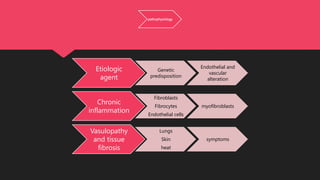
pathophysiology
Etiologic
agent
Genetic
predisposition
Endothelial and
vascular
alteration
Chronic
inflammation
Fibroblasts
Fibrocytes
Endothelial cells
myofibroblasts
Vasulopathy
and tissue
fibrosis
Lungs
Skin
heat
symptoms
Treatment
 No universal treatment for crest syndrome
 Immunosuppresents
 Vasodilators
 Symptomatic management
 Laxatives or heart burn medications

crest syndrome.pptx

  • 1.
  • 2.
    INTRODUCTION  CREST syndromeis a connective tissue disorder and limited form of systemic sclerosis  Crest is an acronym of clinical features:  1.calcinosis  2.Raynaud,s phenomenon  3.esophageal dysfunction  4.sclerodactyly  5.telangiectasia
  • 3.
    INTRODUCTION CALCINOSIS: calcium depositsform of skin.  RAYNAUD’S PHENOMENON: hands and feet have an abnormal response to cold temperatures or anxiety. Blood vessels narrow when you are cold or stressed, turning fingers and toes white or blue before blood flow is restored and they turn to a normal colour.  ESOPHAGEAL DYSMOTILITY: the smooth muscles that time esophageal lose normal movement and function  Sclerodactyly:extra collagen deposits on skin on your hands the result is tight skin on your fingers.  Telangiectesia: the red spots on your hands and your face caused by dilated or broken small blood vessels in those areas.
  • 4.
    INTRODUCTION  CREST syndromeaffects different organ systems causing thickening of organs  Its also known as cutaneous scleroderma .  It s a rare connective tissue disorder more serious and progresses to systemic.  Crest syndrome affects the following organ systems  Skin limited to upper limbs  oesophagus  Lungs  kidneys  Skeletal muscles  pericardium
  • 5.
    SYMPTOMS  Depending uponthe organ system affected  Skin dryness or hardening  discolouration of skin  Joint pain  Fatigue  Difficulty in walking  Heart burn  Persistent cough, heart disease,  Arthritis
  • 6.
    symptoms  Ulcers onfingers and toes  Contractures  Hair loss  Voice hoarseness  Constipation or diarrhea  Bloating  Neuropathies  Erectile dysfunction
  • 7.
    causes  Genetic predisposition Cytomegalovirus  Epstein-Barr virus  parvovirusB19  Silica dust exposure  Usage of tobacco  Use of certain medicines like ranitidine
  • 8.
    diagnosis  CBC: checkfor anemia other dysfunction from absorbtion of nutrients  Serum creatinine: for assessing kidney function  Creatinine kinase – to measure the involvement of muscles  Urine analysis  Anti- nuclear antibody testing  Anti-centromere anti body testing  Anti RNA3 polymerase antibody  Electromyography  Imaging studies  Pulmonary function testing  Doppler echo cardio graphy
  • 9.
  • 10.
    Treatment  No universaltreatment for crest syndrome  Immunosuppresents  Vasodilators  Symptomatic management  Laxatives or heart burn medications