Creativity
How Can I Get Some?
Is It A Gift From
       GOd?
Do You Have to be Born Creative?

Do You to be Lucky In Life?
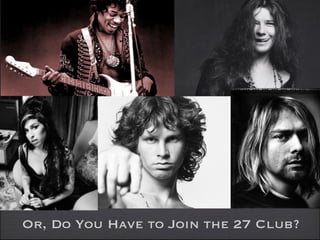
Or, Do You Have to Join the 27 Club?
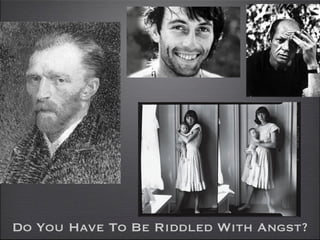
Do You Have To Be Riddled With Angst?
Or, is Creativity a
       Skill?
If so, It Follows that To Be
Creative, You Have to Know How
to Be Creative.

If So, Creative Thinking Can be
Learned and Enhanced.
Creativity
We Can Learn How to Increase
the Odds of Performing
Creatively on Any Given Day -
Under Any Circumstances.
The Big Picture
Creativity, the Kind That Leads to
Meaningful Breakthroughs in
the Way We See or Perform on
Demand, Involves a Three-Part
System.

The Domain
The Field
The Creative
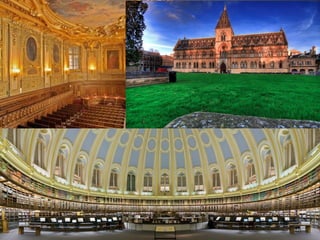
1) The Domain
The Domain is the Totality of the
Accumulated Knowledge, History,
Culture, Rules, Icons and
Current State of the Discipline
in Which We Work.
2) The Field
The Field is the summation of the
Institutions and Individuals Who
Judge Our Work and Control
Our Creative Destiny
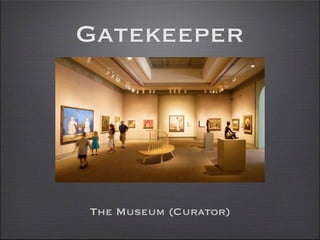
Gatekeeper


The Museum (Curator)
Judge & Jury


   The Historian
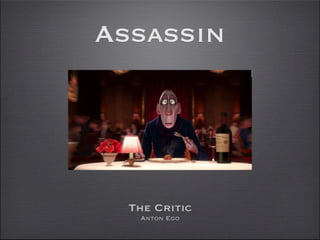
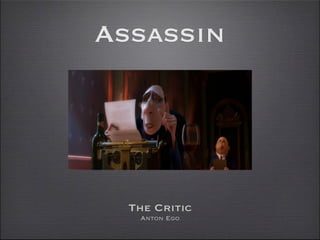
Assassin


  The Critic
   Anton Ego
Assassin


  The Critic
   Anton Ego
Publicist


The Trade & Popular Press Editor
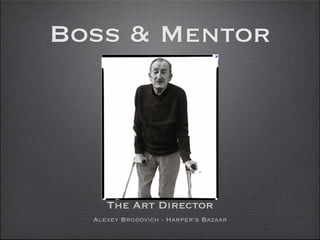
Boss & Mentor


     The Art Director
  Alexey Brodovich - Harper’s Bazaar
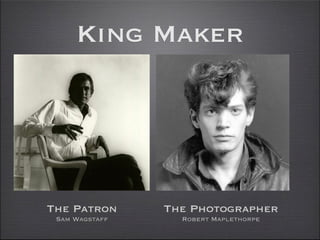
King Maker


The Patron      The Photographer
 Sam Wagstaff     Robert Maplethorpe
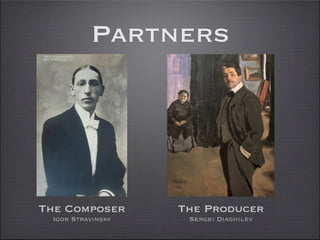
Partners


The Composer       The Producer
 Igor Stravinsky    Sergei Diaghilev
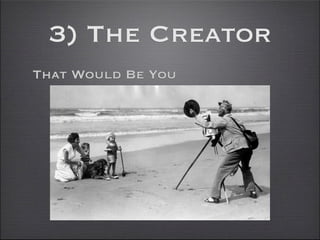
3) The Creator
That Would Be You
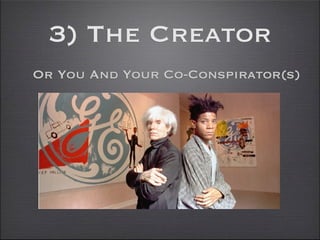
3) The Creator
Or You And Your Co-Conspirator(s)
3) The Creator
Working Alone
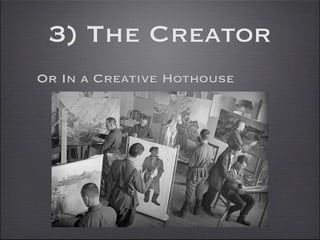
3) The Creator
Or In a Creative Hothouse
Creative Hothouse
Renaissance Florence
Creative Hothouse
Paris In The 20’s
Creative Hothouse
New York - Pretty Much Anytime
What Can You Do
to Increase the Odds, on Any
Given Day, of Performing at a
Higher Level of Creativity?
Build a Foundation
 1) Acquire a Knowledge of Your
 Domain - The Ability to Draw on
 Its History and Culture Will
 Serve You Well

 Study The Visual Arts and Read
 Widely, With Intent
Build a Foundation
 Take Workshops and Classes

 Join a Camera club, ASMP, PPA

 Visit Museums & Galleries

 Develop Interests In Other
 Disciplines to Broaden the Range
 of Possibilities
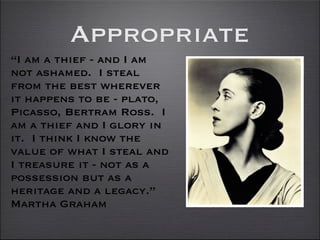
Appropriate
“I am a thief - and I am
not ashamed. I steal
from the best wherever
it happens to be - plato,
Picasso, Bertram Ross. I
am a thief and I glory in
it. I think I know the
value of what I steal and
I treasure it - not as a
possession but as a
heritage and a legacy.”
Martha Graham
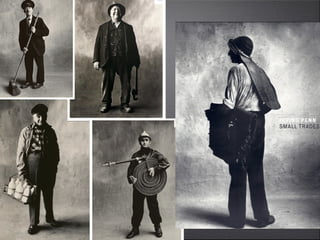
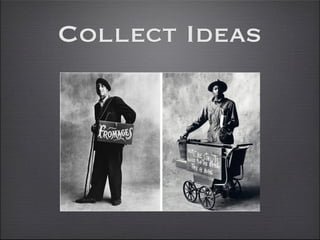
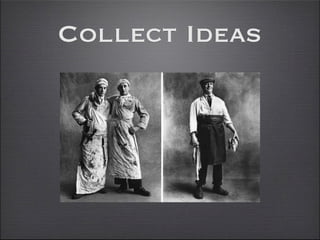
Collect Ideas
Collect Ideas
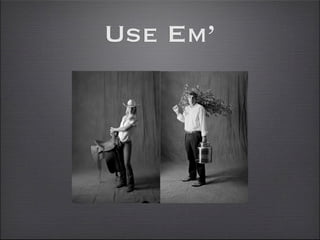
Use Em’
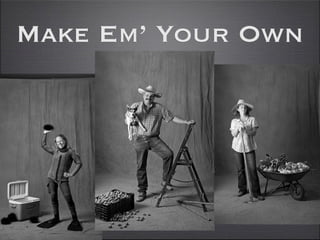
Make Em’ Your Own
Build Your Skills
2) Craftsmanship Inspires
Confidence, Creates Options,
Facilitates Problem Solving.
Build Your Skills
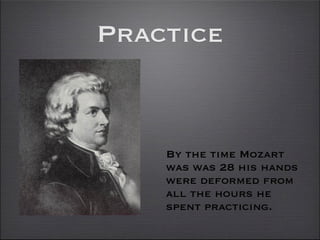
Practice


    By the time Mozart
    was was 28 his hands
    were deformed from
    all the hours he
    spent practicing.
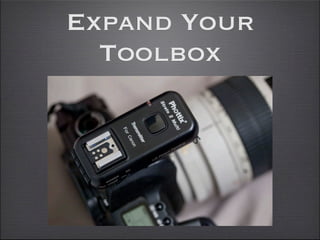
Expand Your
  Toolbox
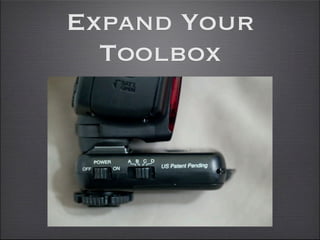
Expand Your
  Toolbox
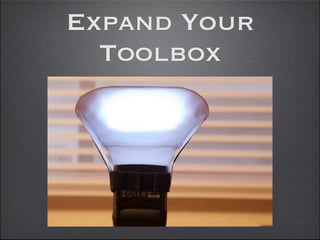
Expand Your
  Toolbox
Expand Your
  Toolbox
Grow by Doing
“The function of the majority of
your work is simply to teach you
how to make the small fraction
of your work that soars. The
point is, you learn how to make
your work by making your work.

The rest is largely a matter of
perseverance.” Bayless & Orland
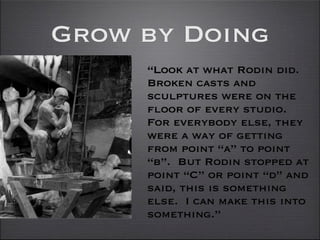
Grow by Doing
     “Look at what Rodin did.
     Broken casts and
     sculptures were on the
     floor of every studio.
     For everybody else, they
     were a way of getting
     from point “a” to point
     “b”. But Rodin stopped at
     point “C” or point “d” and
     said, this is something
     else. I can make this into
     something.”
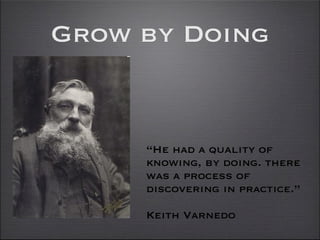
Grow by Doing


     “He had a quality of
     knowing, by doing. there
     was a process of
     discovering in practice.”

     Keith Varnedo
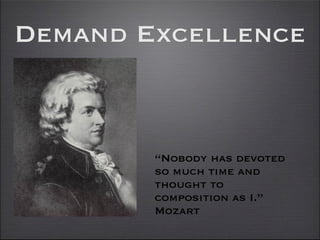
Demand Excellence


        “Nobody has devoted
        so much time and
        thought to
        composition as I.”
        Mozart
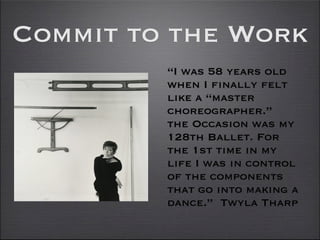
Commit to the Work
         “I was 58 years old
         when I finally felt
         like a “master
         choreographer.”
         the Occasion was my
         128th Ballet. For
         the 1st time in my
         life I was in control
         of the components
         that go into making a
         dance.” Twyla Tharp
The Next Step
Living a Creative Life Requires
an Accumulation of Data.

Creativity Requires Raw Material
to Contemplate, Kick Around,
Tear Apart, Rearrange, Process
and Re-order in Your Sub-
Conscious Mind.
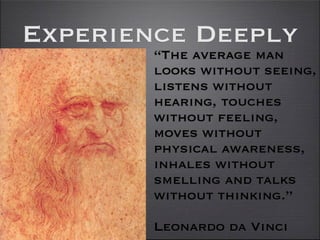
Experience Deeply
        “The average man
        looks without seeing,
        listens without
        hearing, touches
        without feeling,
        moves without
        physical awareness,
        inhales without
        smelling and talks
        without thinking.”

        Leonardo da Vinci
The Next Big Step
The magic happens when ideas
from different fields collide
and then fuse together, creating
new ways of thinking, seeing and
doing.
Learn to Think
You Can Encourage This Cross-
Pollination by Learning How to
Think Like Da Vinci or DuChamp.

Creative People Tend to Think
Visually, They Create Analogies,
Employ Empathy or Think With
Their Entire Bodies
Take It Up a Notch
Inform Your Photographic Vision
With Moving Pictures, Sound,
Story Telling, Subject Motion,
Passage of Time and Good Post-
Production Skills.

Illustrate Metaphors and
Concepts With Your Images
Non-Linear Thinking
 Visualization - Einstein Riding on
 His Beam of Light

 Tesla Was Said to be Able to
 Build the Machines in His Minds
 Eye
Non-Linear Thinking
 Creating Analogies -
Non-Linear Thinking
 Employing Empathy - Put
 Yourself in Someone Else’s
 Shoes and Use Their Point of
 View.
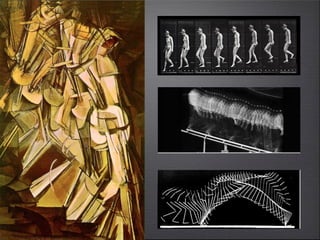
Theory In Practice
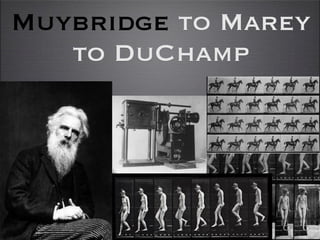
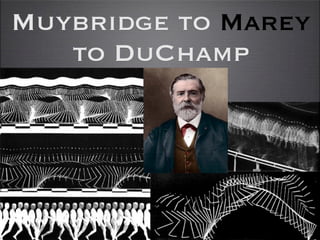
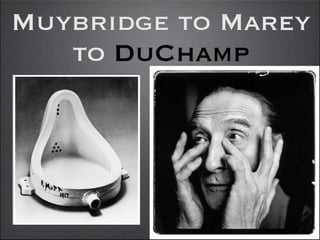
Muybridge to Marey
   to DuChamp
Muybridge to Marey
   to DuChamp
Muybridge to Marey
   to DuChamp
Wo Woo Psychology
 If Creativity is a Mental Exercise,
 and Our Goal is to Increase the
 Odds of Performing at a Higher
 Level on Any Given Day, Then
 Psychology Must Fit in Here
 Somewhere.
Wo Woo Psychology
 Because There Are Many Mental
 and Emotional Similarities
 Between Athletes and Artists in
 Training, We Can Look to Sports
 Psychology for Insight.
Wo Woo Psychology
 Sports Psychology is Designed
 to Help Athletes Get Into “The
 Zone”, That Magical Place of
 Peak Mental and Physical
 Performance.
Wo Woo Psychology
 Artists and Others Might Call
 This State of Grace “Flow”, The
 Place Where Creativity Seems to
 Flow like water.

 Whatever You Call It, It is Not
 Only the Happy Place of Peak
 Performance but also of Great
 Pleasure and Enjoyment.
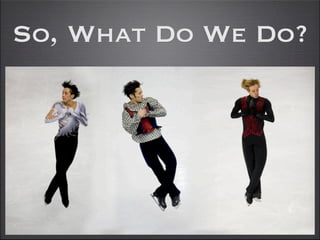
So, What Do We Do?
First
find a good mentor (coach) to
teach you, to hold you
accountable, to encourage you
and to critique your work
Step Two
Design Your Practice Sessions to
Build Skills - the Exercises
Should be Just Beyond Your
Current Abilities.

The Idea is to Stretch Without
Getting so Frustrated That You
Throw in the Towel.
Step Three
Use Positive Affirmations

What You Say to Yourself is Very
Important
Step Three
“I am a Photographer”
Step Four
Pre-Visualize the Shoot - Think
About What Can Go Wrong and
How You’ll React. This Exercise
is a Great Planning Tool and, it
Gets The Nerves Out of the Way.
Step Five
Imagine Yourself on Location, in
Complete Control of the
Production, Collaborating With
the Entire Crew, Making all the
Right Decisions and Knocking
Back Great Images.
Step Six
Replay the Shoot in Your Head,
Not to Beat Yourself Up but to
Learn from What Your Mistakes
and to be Able to Reproduce
What Went Well.

Do This Right Away and Make a
Movie of It in Your Head. You’ll
be Amazed at How Much Sticks.
Step Seven
Review the Resulting Images
Dispassionately. Remember What
You Were Thinking at the Time
You Snapped the Shutter.

You’re a Performer - Review
Your Performance.
Make a Plan
Create a Plan Designed to Get
Results and Execute That Plan -
Above All, Make Sure That You
Enjoy the Journey & the Process

Take a Page from Tony Robbins -
Develop Constant, Never Ending
Improvement in Your Creative
Life
“Action”
Get Grounded in the Domain
Get Mentally Fit
Get Physically Fit
Build Your Skills
Make Connections in the Field
Build Your Skills
Create A Body of Work
Make Connections in the Field
Sell Your Work, Get Better Work
“Action”
Create a Mantra That You Employ
Before Every Shoot

Affirmation of Skills
Deep Breathing Routine
Physical Routine (Gear Checking)
Working Habits (You Are In
Charge!)
Checklist of Ideas That Reach
Beyond What’s Expected
Exercises
1 One Shot A Day for ten Days
(commit to an Hour a Day)

2 One Lens for an entire Day

3 One Small Environment for an
Entire Day - Your Bedroom, Yard

4 100 Images of an inanimate
Object
Exercises
5 Develop Specific Skills - Focus,
Panning, Backlight, Gestures

6 Master New Tools - Radio
Slaves, Lens, Gorilla Pods, Light
Modifiers

7 Expand Your Mind - Shoot to a
Soundtrack, a Word or Phrase, a
Concept, A Story or Illustrate a
Poem
Exercises
8 Shoot to a Color Pallet

9 Shoot with A Post-Production
Treatment in Mind

10 Shoot the Same Scene in
Different Light, in Different
Weather, With Different Tools,
With a different Aesthetic
Exercises
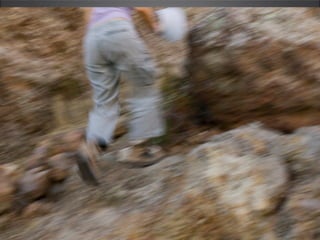
11 Portray Motion - Motion Blur,
Stop Action, Mixed Ambient and
Strobe, Camera Shake, Multiple
Exposure etc.
Exercises
12 Shoot what terrifies you -
hard midday light, back light,
studio strobes, rotweillers
Rules of
    Engagement
Pre-Visualize the Image and Think
About All the Camera Controls
That Are Required to Achieve The
Desired Result
Rules of
    Engagement
Do Not Chimp. Do Not Delete in
Camera - There’s Gold in Mistakes

Instead, Study the Entire Take.

Compare Your Expectations to
Your Results.

Deconstruct the Results, Learn
from the Garbage (But just Once)
Work Smart
Learn to work smart - both
behind the camera and in front
of the computer
Get Noticed
Get Integrated into the Photo
Community and Get Your Work
Out There.

Good Work, When it is Seen And
Recognized, Leads to More Good
Work.
Books
tywla Tharp - The Creative Habit

Michael Gelb - How to Think Like
Leonardo Da Vinci

David Bayles & Ted Orland - Art and
Fear

Mihaly Csikszentmihalyi - Creativity:
Flow & the Psychology of Discovery &
Invention
Documentaries
Gerhard Richter Painting

Being Elmo

Jiro Dreams of Sushi

Jean Michel Basquiat: The Radiant child
PBS Art:21 Art in the 21st Century

The Dancer Revealed
Links
http://www.theatlantic.com/entertainment/archive/2012/07/does-
artistic-collaboration-ever-work/260319/

Creativity

  • 1.
  • 2.
    Is It AGift From GOd? Do You Have to be Born Creative? Do You to be Lucky In Life?
  • 3.
    Or, Do YouHave to Join the 27 Club?
  • 4.
    Do You HaveTo Be Riddled With Angst?
  • 5.
    Or, is Creativitya Skill? If so, It Follows that To Be Creative, You Have to Know How to Be Creative. If So, Creative Thinking Can be Learned and Enhanced.
  • 6.
    Creativity We Can LearnHow to Increase the Odds of Performing Creatively on Any Given Day - Under Any Circumstances.
  • 7.
    The Big Picture Creativity,the Kind That Leads to Meaningful Breakthroughs in the Way We See or Perform on Demand, Involves a Three-Part System. The Domain The Field The Creative
  • 8.
    1) The Domain TheDomain is the Totality of the Accumulated Knowledge, History, Culture, Rules, Icons and Current State of the Discipline in Which We Work.
  • 12.
    2) The Field TheField is the summation of the Institutions and Individuals Who Judge Our Work and Control Our Creative Destiny
  • 13.
  • 14.
    Judge & Jury The Historian
  • 15.
    Assassin TheCritic Anton Ego
  • 16.
    Assassin TheCritic Anton Ego
  • 17.
    Publicist The Trade &Popular Press Editor
  • 18.
    Boss & Mentor The Art Director Alexey Brodovich - Harper’s Bazaar
  • 20.
    King Maker The Patron The Photographer Sam Wagstaff Robert Maplethorpe
  • 21.
    Partners The Composer The Producer Igor Stravinsky Sergei Diaghilev
  • 22.
    3) The Creator ThatWould Be You
  • 23.
    3) The Creator OrYou And Your Co-Conspirator(s)
  • 24.
  • 25.
    3) The Creator OrIn a Creative Hothouse
  • 26.
  • 27.
  • 28.
    Creative Hothouse New York- Pretty Much Anytime
  • 30.
    What Can YouDo to Increase the Odds, on Any Given Day, of Performing at a Higher Level of Creativity?
  • 31.
    Build a Foundation 1) Acquire a Knowledge of Your Domain - The Ability to Draw on Its History and Culture Will Serve You Well Study The Visual Arts and Read Widely, With Intent
  • 32.
    Build a Foundation Take Workshops and Classes Join a Camera club, ASMP, PPA Visit Museums & Galleries Develop Interests In Other Disciplines to Broaden the Range of Possibilities
  • 33.
    Appropriate “I am athief - and I am not ashamed. I steal from the best wherever it happens to be - plato, Picasso, Bertram Ross. I am a thief and I glory in it. I think I know the value of what I steal and I treasure it - not as a possession but as a heritage and a legacy.” Martha Graham
  • 35.
  • 36.
  • 37.
  • 38.
  • 40.
    Build Your Skills 2)Craftsmanship Inspires Confidence, Creates Options, Facilitates Problem Solving.
  • 41.
  • 42.
    Practice By the time Mozart was was 28 his hands were deformed from all the hours he spent practicing.
  • 43.
    Expand Your Toolbox
  • 44.
    Expand Your Toolbox
  • 45.
    Expand Your Toolbox
  • 46.
    Expand Your Toolbox
  • 53.
    Grow by Doing “Thefunction of the majority of your work is simply to teach you how to make the small fraction of your work that soars. The point is, you learn how to make your work by making your work. The rest is largely a matter of perseverance.” Bayless & Orland
  • 54.
    Grow by Doing “Look at what Rodin did. Broken casts and sculptures were on the floor of every studio. For everybody else, they were a way of getting from point “a” to point “b”. But Rodin stopped at point “C” or point “d” and said, this is something else. I can make this into something.”
  • 55.
    Grow by Doing “He had a quality of knowing, by doing. there was a process of discovering in practice.” Keith Varnedo
  • 56.
    Demand Excellence “Nobody has devoted so much time and thought to composition as I.” Mozart
  • 57.
    Commit to theWork “I was 58 years old when I finally felt like a “master choreographer.” the Occasion was my 128th Ballet. For the 1st time in my life I was in control of the components that go into making a dance.” Twyla Tharp
  • 58.
    The Next Step Livinga Creative Life Requires an Accumulation of Data. Creativity Requires Raw Material to Contemplate, Kick Around, Tear Apart, Rearrange, Process and Re-order in Your Sub- Conscious Mind.
  • 59.
    Experience Deeply “The average man looks without seeing, listens without hearing, touches without feeling, moves without physical awareness, inhales without smelling and talks without thinking.” Leonardo da Vinci
  • 60.
    The Next BigStep The magic happens when ideas from different fields collide and then fuse together, creating new ways of thinking, seeing and doing.
  • 61.
    Learn to Think YouCan Encourage This Cross- Pollination by Learning How to Think Like Da Vinci or DuChamp. Creative People Tend to Think Visually, They Create Analogies, Employ Empathy or Think With Their Entire Bodies
  • 62.
    Take It Upa Notch Inform Your Photographic Vision With Moving Pictures, Sound, Story Telling, Subject Motion, Passage of Time and Good Post- Production Skills. Illustrate Metaphors and Concepts With Your Images
  • 63.
    Non-Linear Thinking Visualization- Einstein Riding on His Beam of Light Tesla Was Said to be Able to Build the Machines in His Minds Eye
  • 64.
  • 65.
    Non-Linear Thinking EmployingEmpathy - Put Yourself in Someone Else’s Shoes and Use Their Point of View.
  • 66.
  • 67.
  • 68.
  • 69.
  • 71.
    Wo Woo Psychology If Creativity is a Mental Exercise, and Our Goal is to Increase the Odds of Performing at a Higher Level on Any Given Day, Then Psychology Must Fit in Here Somewhere.
  • 72.
    Wo Woo Psychology Because There Are Many Mental and Emotional Similarities Between Athletes and Artists in Training, We Can Look to Sports Psychology for Insight.
  • 73.
    Wo Woo Psychology Sports Psychology is Designed to Help Athletes Get Into “The Zone”, That Magical Place of Peak Mental and Physical Performance.
  • 74.
    Wo Woo Psychology Artists and Others Might Call This State of Grace “Flow”, The Place Where Creativity Seems to Flow like water. Whatever You Call It, It is Not Only the Happy Place of Peak Performance but also of Great Pleasure and Enjoyment.
  • 75.
  • 76.
    First find a goodmentor (coach) to teach you, to hold you accountable, to encourage you and to critique your work
  • 77.
    Step Two Design YourPractice Sessions to Build Skills - the Exercises Should be Just Beyond Your Current Abilities. The Idea is to Stretch Without Getting so Frustrated That You Throw in the Towel.
  • 78.
    Step Three Use PositiveAffirmations What You Say to Yourself is Very Important
  • 79.
    Step Three “I ama Photographer”
  • 80.
    Step Four Pre-Visualize theShoot - Think About What Can Go Wrong and How You’ll React. This Exercise is a Great Planning Tool and, it Gets The Nerves Out of the Way.
  • 81.
    Step Five Imagine Yourselfon Location, in Complete Control of the Production, Collaborating With the Entire Crew, Making all the Right Decisions and Knocking Back Great Images.
  • 82.
    Step Six Replay theShoot in Your Head, Not to Beat Yourself Up but to Learn from What Your Mistakes and to be Able to Reproduce What Went Well. Do This Right Away and Make a Movie of It in Your Head. You’ll be Amazed at How Much Sticks.
  • 83.
    Step Seven Review theResulting Images Dispassionately. Remember What You Were Thinking at the Time You Snapped the Shutter. You’re a Performer - Review Your Performance.
  • 84.
    Make a Plan Createa Plan Designed to Get Results and Execute That Plan - Above All, Make Sure That You Enjoy the Journey & the Process Take a Page from Tony Robbins - Develop Constant, Never Ending Improvement in Your Creative Life
  • 85.
    “Action” Get Grounded inthe Domain Get Mentally Fit Get Physically Fit Build Your Skills Make Connections in the Field Build Your Skills Create A Body of Work Make Connections in the Field Sell Your Work, Get Better Work
  • 86.
    “Action” Create a MantraThat You Employ Before Every Shoot Affirmation of Skills Deep Breathing Routine Physical Routine (Gear Checking) Working Habits (You Are In Charge!) Checklist of Ideas That Reach Beyond What’s Expected
  • 87.
    Exercises 1 One ShotA Day for ten Days (commit to an Hour a Day) 2 One Lens for an entire Day 3 One Small Environment for an Entire Day - Your Bedroom, Yard 4 100 Images of an inanimate Object
  • 88.
    Exercises 5 Develop SpecificSkills - Focus, Panning, Backlight, Gestures 6 Master New Tools - Radio Slaves, Lens, Gorilla Pods, Light Modifiers 7 Expand Your Mind - Shoot to a Soundtrack, a Word or Phrase, a Concept, A Story or Illustrate a Poem
  • 89.
    Exercises 8 Shoot toa Color Pallet 9 Shoot with A Post-Production Treatment in Mind 10 Shoot the Same Scene in Different Light, in Different Weather, With Different Tools, With a different Aesthetic
  • 90.
    Exercises 11 Portray Motion- Motion Blur, Stop Action, Mixed Ambient and Strobe, Camera Shake, Multiple Exposure etc.
  • 94.
    Exercises 12 Shoot whatterrifies you - hard midday light, back light, studio strobes, rotweillers
  • 95.
    Rules of Engagement Pre-Visualize the Image and Think About All the Camera Controls That Are Required to Achieve The Desired Result
  • 96.
    Rules of Engagement Do Not Chimp. Do Not Delete in Camera - There’s Gold in Mistakes Instead, Study the Entire Take. Compare Your Expectations to Your Results. Deconstruct the Results, Learn from the Garbage (But just Once)
  • 97.
    Work Smart Learn towork smart - both behind the camera and in front of the computer
  • 98.
    Get Noticed Get Integratedinto the Photo Community and Get Your Work Out There. Good Work, When it is Seen And Recognized, Leads to More Good Work.
  • 101.
    Books tywla Tharp -The Creative Habit Michael Gelb - How to Think Like Leonardo Da Vinci David Bayles & Ted Orland - Art and Fear Mihaly Csikszentmihalyi - Creativity: Flow & the Psychology of Discovery & Invention
  • 102.
    Documentaries Gerhard Richter Painting BeingElmo Jiro Dreams of Sushi Jean Michel Basquiat: The Radiant child PBS Art:21 Art in the 21st Century The Dancer Revealed
  • 103.