✨ 1. IMAGERY
Definition:
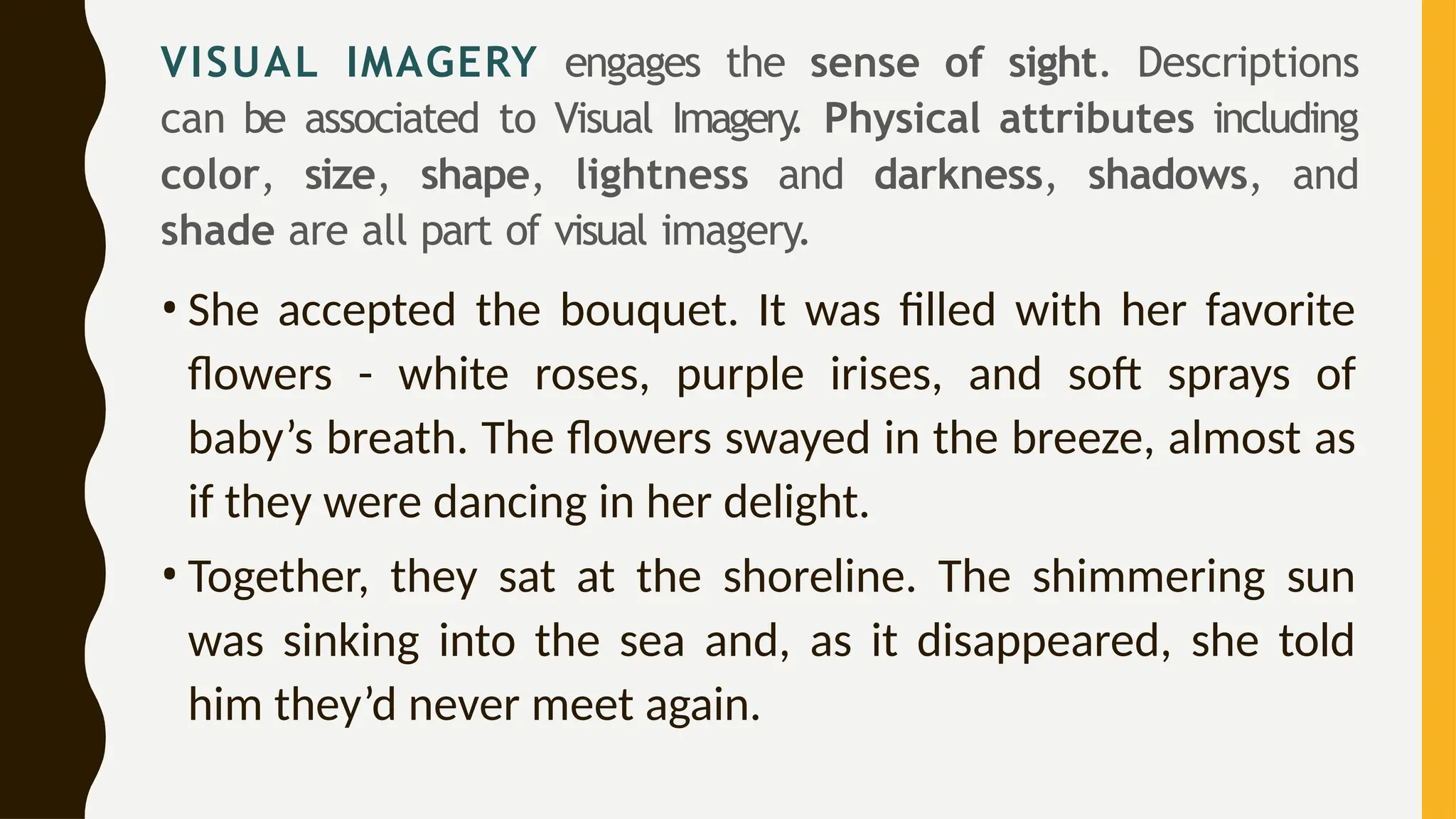
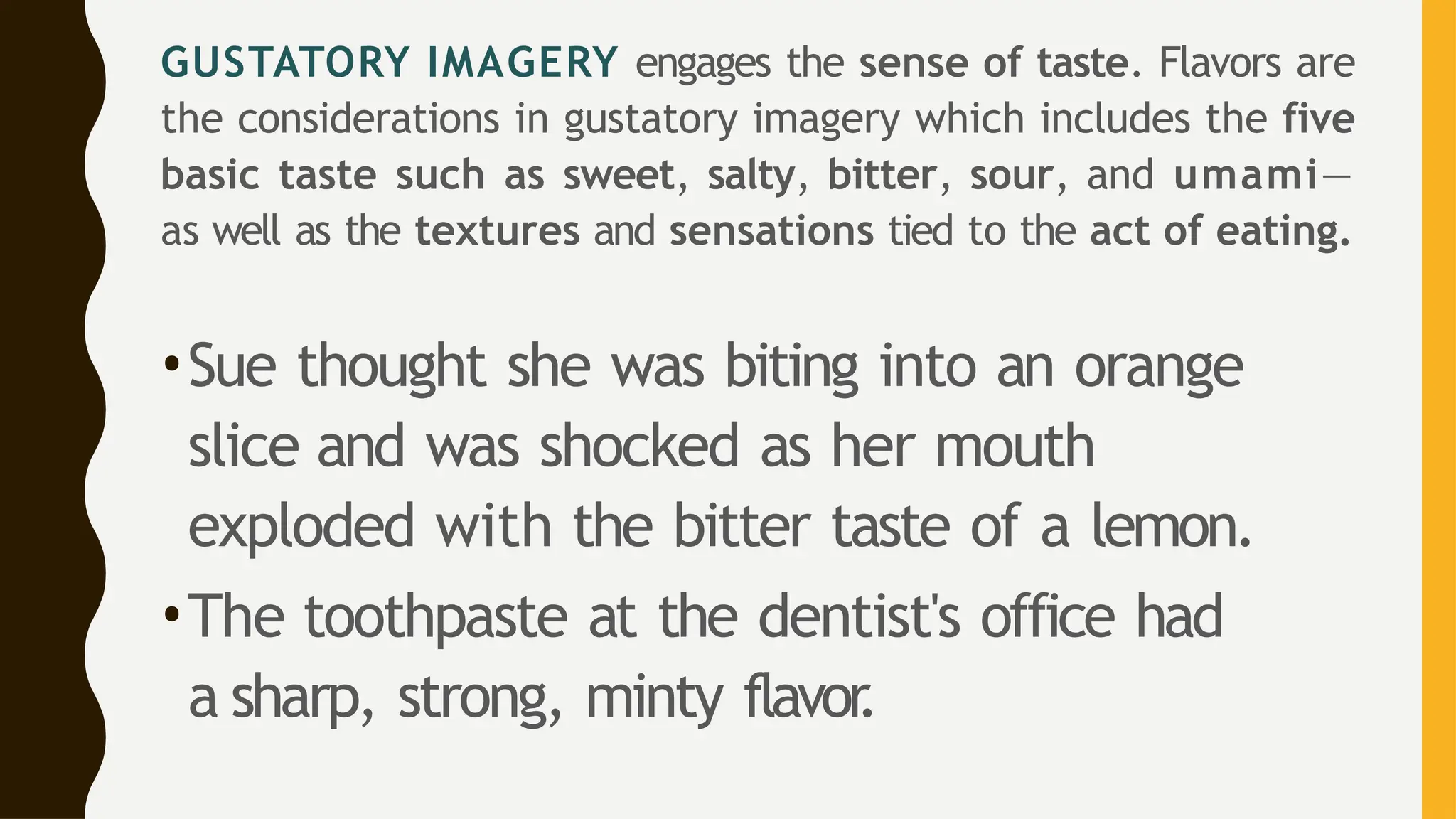
Imagery is descriptive language that appeals to the five senses: sight, sound, smell, taste, and touch. It helps readers see, hear, feel, smell, or taste what’s happening in the story or poem.
🔹 Types of Imagery:
Type Example
Visual (Sight) The golden sun dipped below the horizon, painting the sky in hues of orange and violet.
Auditory (Sound) The leaves rustled like whispers in the wind.
Olfactory (Smell) The scent of freshly baked bread filled the room.
Gustatory (Taste) Her lips curled at the bitter taste of burnt coffee.
Tactile (Touch) The icy wind stung his cheeks like tiny needles.
📌 Tip:
Use specific details. Instead of "flower," write "a red rose with dew on its petals."
✨ 2. DICTION
Definition:
Diction is the choice of words a writer uses. The right words set the tone, build imagery, and reflect a character’s personality or the mood of the piece.
🔹 Types of Diction:
Type Example
Formal The experiment yielded conclusive results, validating the hypothesis.
Informal / Colloquial I dunno, man. That just feels off.
Poetic Beneath the moon’s soft silver gaze, the sea sighed in sleep.
Descriptive The ancient door creaked open, revealing a room draped in cobwebs and dust.




![IM Creative Writing - Grade 11 [Midterms]](https://cdn.slidesharecdn.com/ss_thumbnails/imcreativewritingmidterms-250113073731-7c8f2846-thumbnail.jpg?width=640&height=640&fit=bounds)


![Figurative language[1]](https://cdn.slidesharecdn.com/ss_thumbnails/figurativelanguage1-120409215645-phpapp02-thumbnail.jpg?width=640&height=640&fit=bounds)


