Incentives for change
through a Market
Systems Development
approach
3
Changing market systems
means changing people's
behaviour – that’s not
easy
- Human beings have an inherent aversion to change
- Technical innovations can be great, but adoption of these
techniques fails for other reasons
- Promoting climate resilience requires both individual and
collective shifts in behaviour to address change at
landscape level
4
Market Systems
Development approach
• MSD is a holistic approach that aims to
improve the overall functioning and
efficiency of agricultural markets by
addressing systemic constraints and
promoting market-driven solutions.
• To reach any significant impact, the change
has to be at scale – pilots are nice, but
don’t really contribute to any sustainable
change in a market system
• Local private sector actors are the ones
living and working in the communities and
they will thrive if their community thrives –
this is a strong incentive for them to be
active in development of their community
– we need to see them as drivers of
systemic change at community level
5
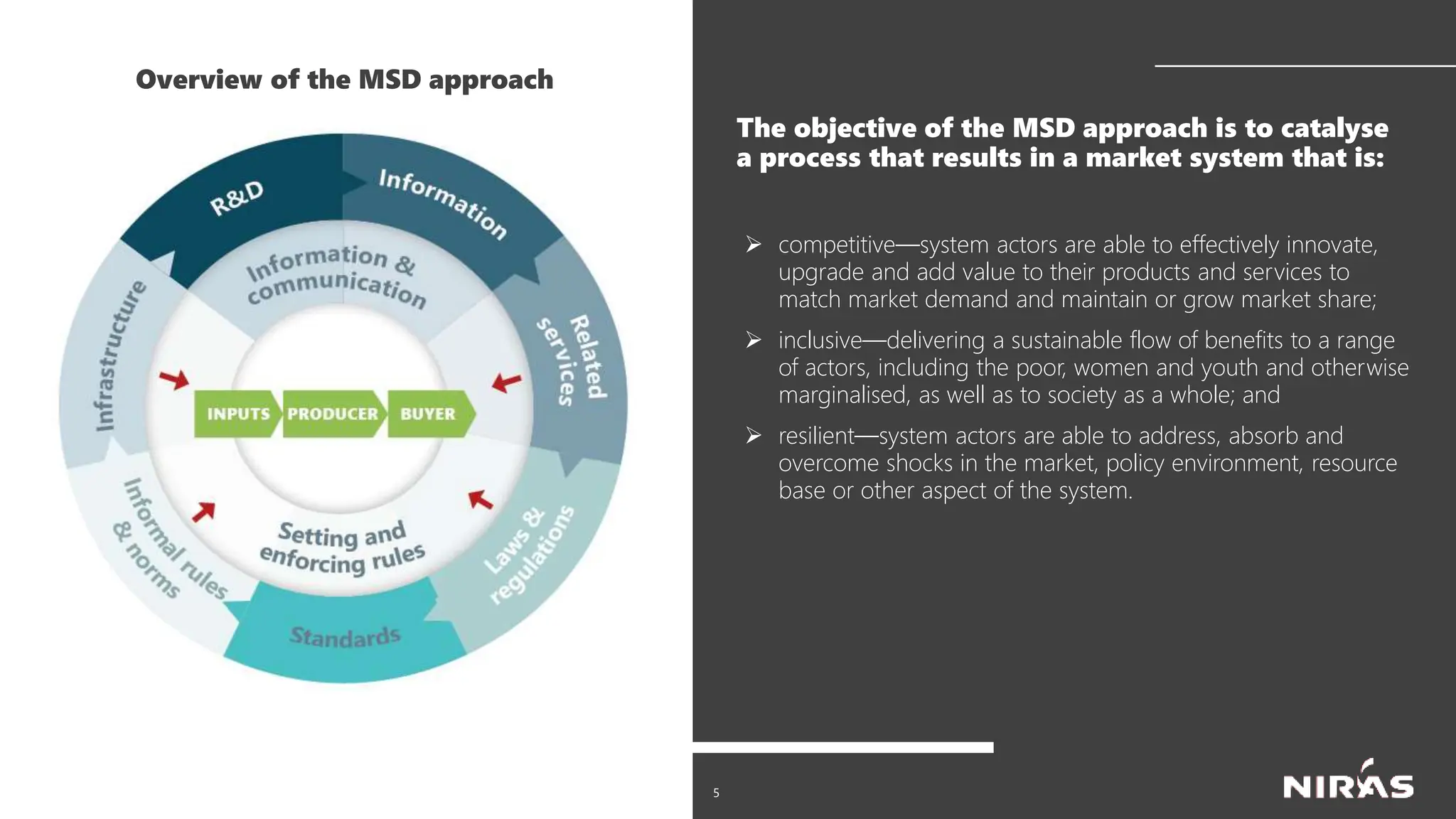
The objective of the MSD approach is to catalyse
a process that results in a market system that is:
 competitive—system actors are able to effectively innovate,
upgrade and add value to their products and services to
match market demand and maintain or grow market share;
 inclusive—delivering a sustainable flow of benefits to a range
of actors, including the poor, women and youth and otherwise
marginalised, as well as to society as a whole; and
 resilient—system actors are able to address, absorb and
overcome shocks in the market, policy environment, resource
base or other aspect of the system.
Overview of the MSD approach
CCW5QE77JSR7-1994474830-1424
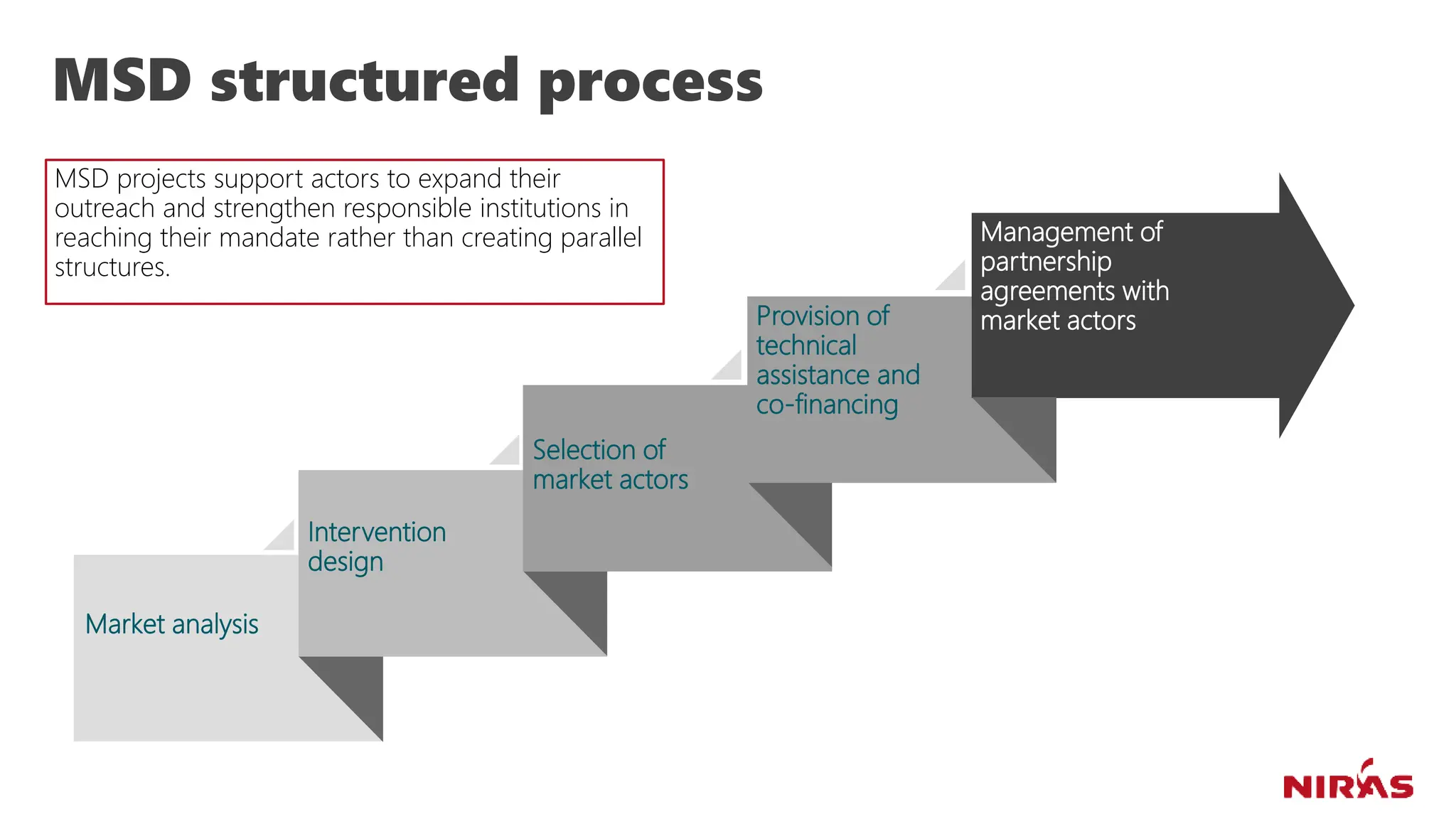
MSD projects support actors to expand their
outreach and strengthen responsible institutions in
reaching their mandate rather than creating parallel
structures.
Market analysis
Intervention
design
Selection of
market actors
Provision of
technical
assistance and
co-financing
Management of
partnership
agreements with
market actors
MSD structured process
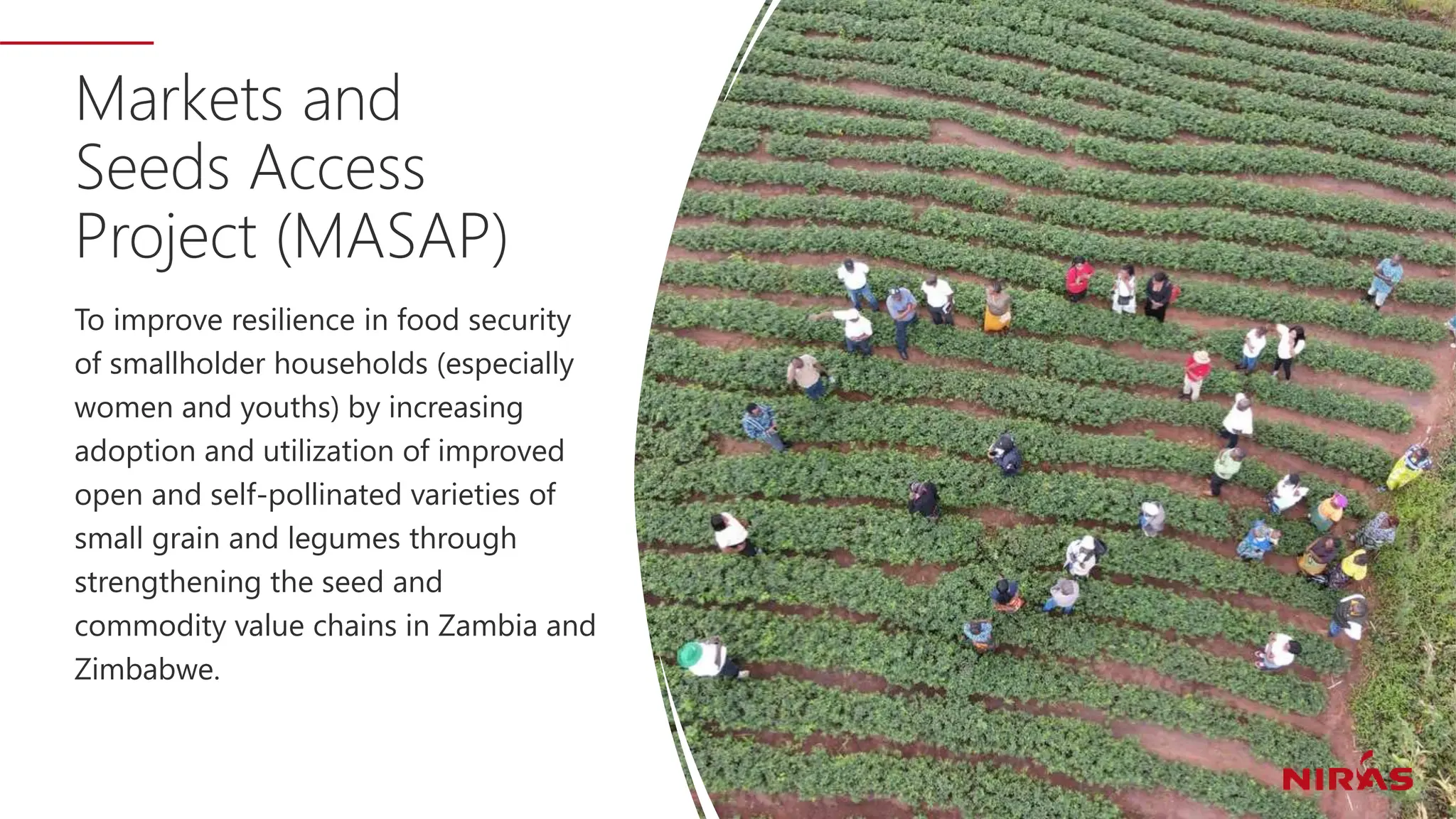
Markets and
Seeds Access
Project (MASAP)
To improve resilience in food security
of smallholder households​ (especially
women and youths) by increasing
adoption and utilization of​ improved
open and self-pollinated varieties of
small grain and legumes through​
strengthening the seed and
commodity value chains in Zambia and​
Zimbabwe.
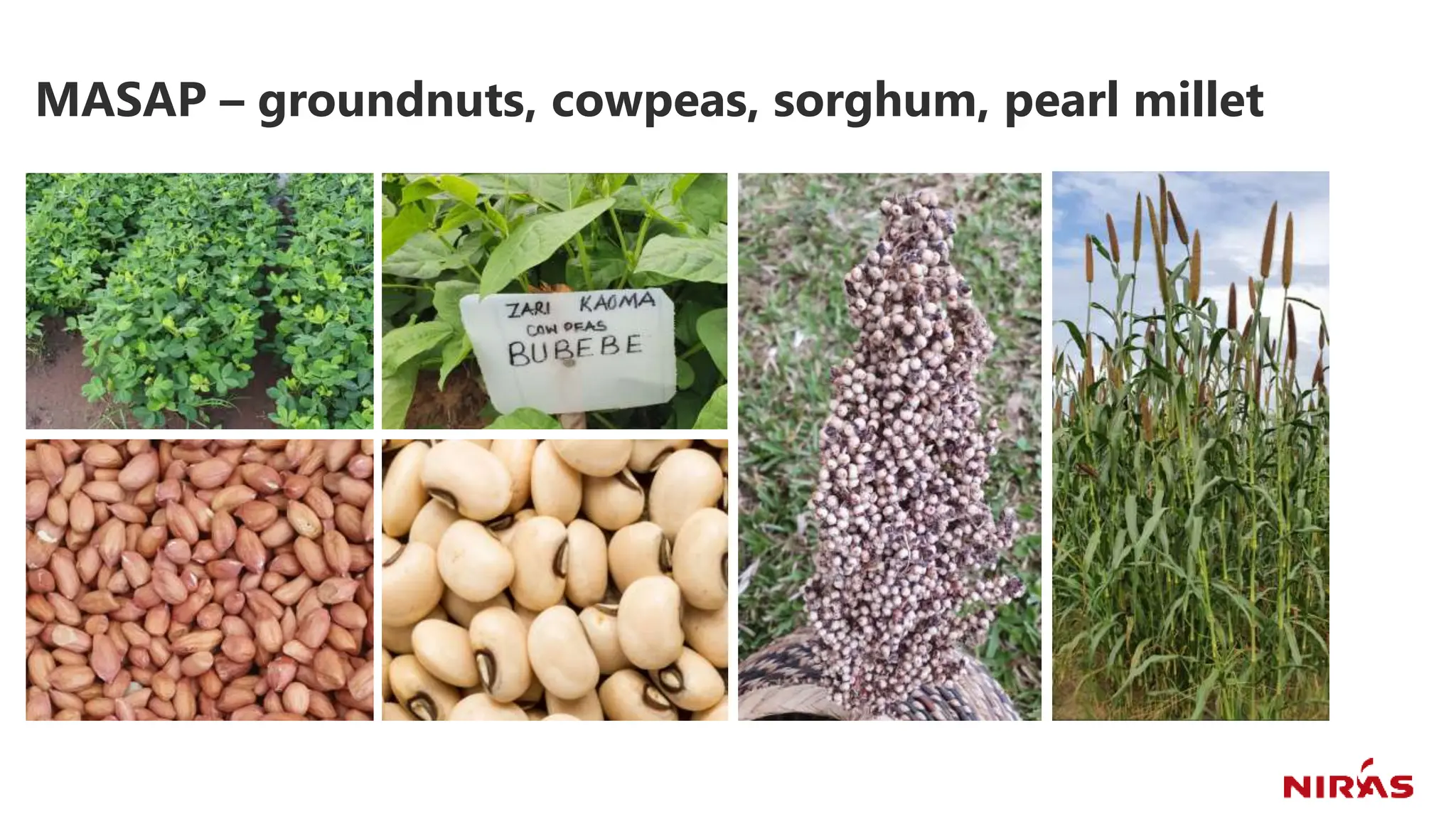
MASAP – groundnuts, cowpeas, sorghum, pearl millet
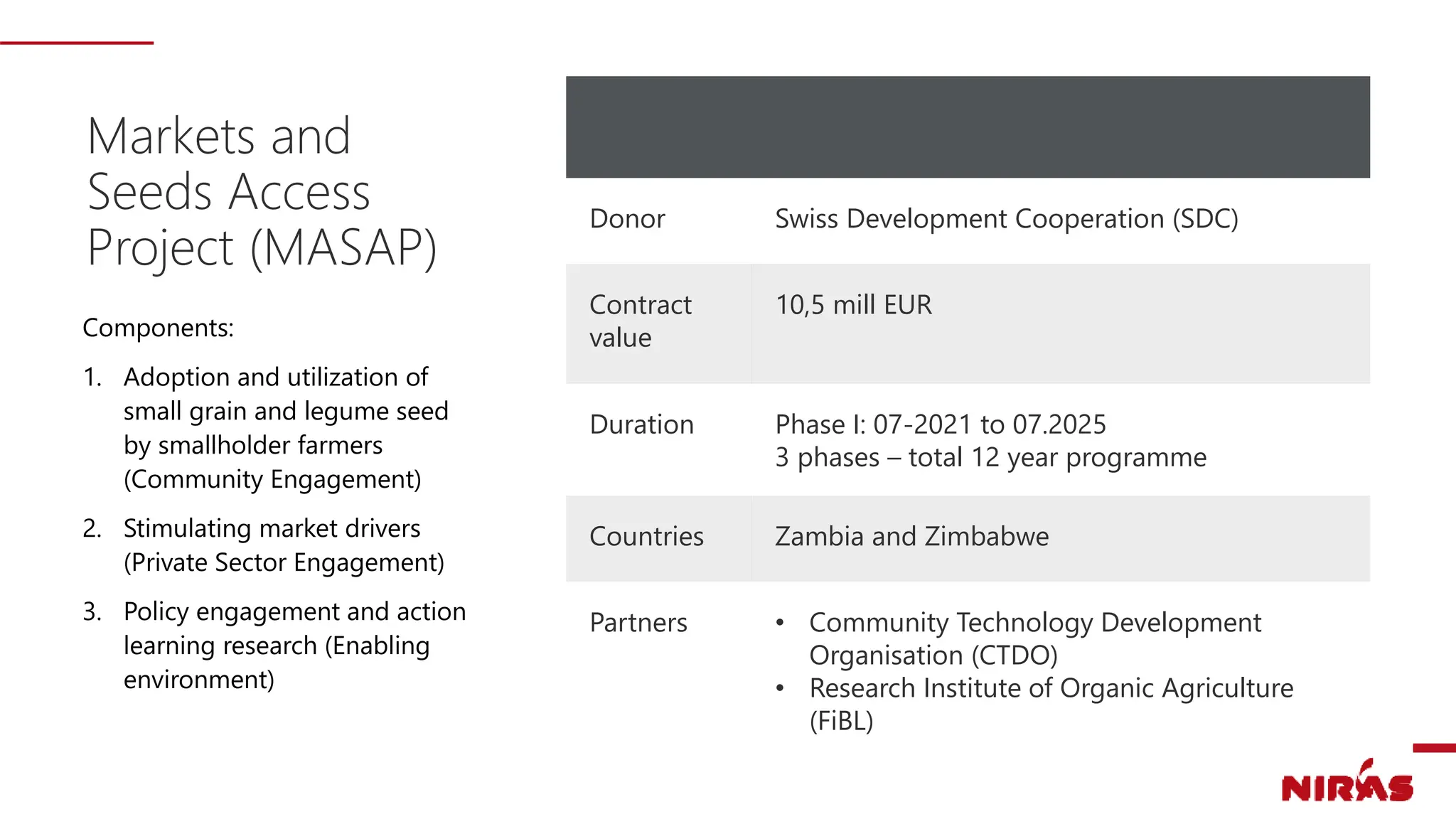
Markets and
Seeds Access
Project (MASAP)
Donor Swiss Development Cooperation (SDC)
Contract
value
10,5 mill EUR
Duration Phase I: 07-2021 to 07.2025
3 phases – total 12 year programme
Countries Zambia and Zimbabwe
Partners • Community Technology Development
Organisation (CTDO)
• Research Institute of Organic Agriculture
(FiBL)
Components:
1. Adoption and utilization of
small grain and legume seed
by smallholder farmers
(Community Engagement)
2. Stimulating market drivers
(Private Sector Engagement)
3. Policy engagement and action
learning research (Enabling
environment)
Markets and
Seeds Access
Project (MASAP)
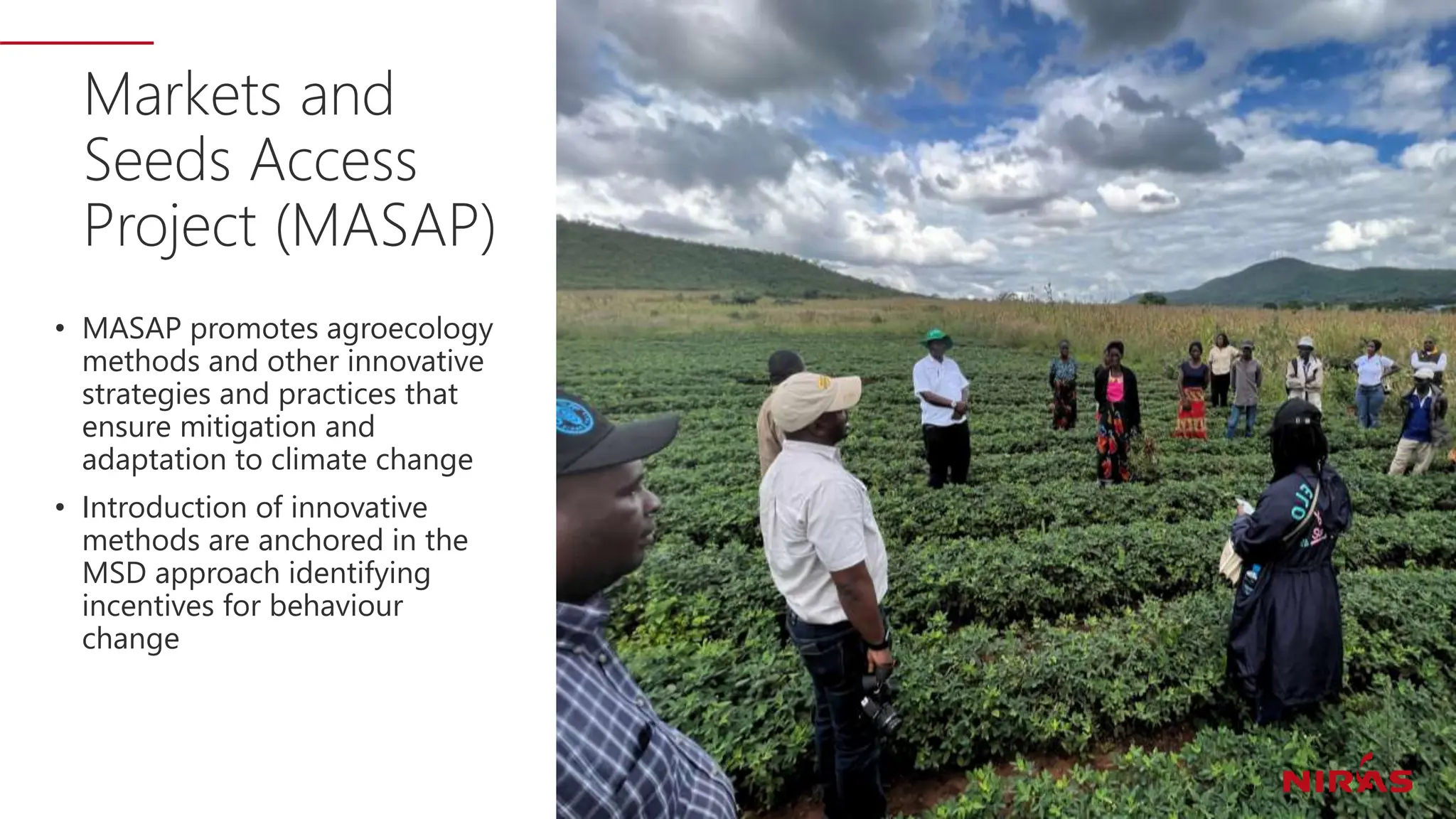
• MASAP promotes agroecology
methods and other innovative
strategies and practices that
ensure mitigation and
adaptation to climate change
• Introduction of innovative
methods are anchored in the
MSD approach identifying
incentives for behaviour
change
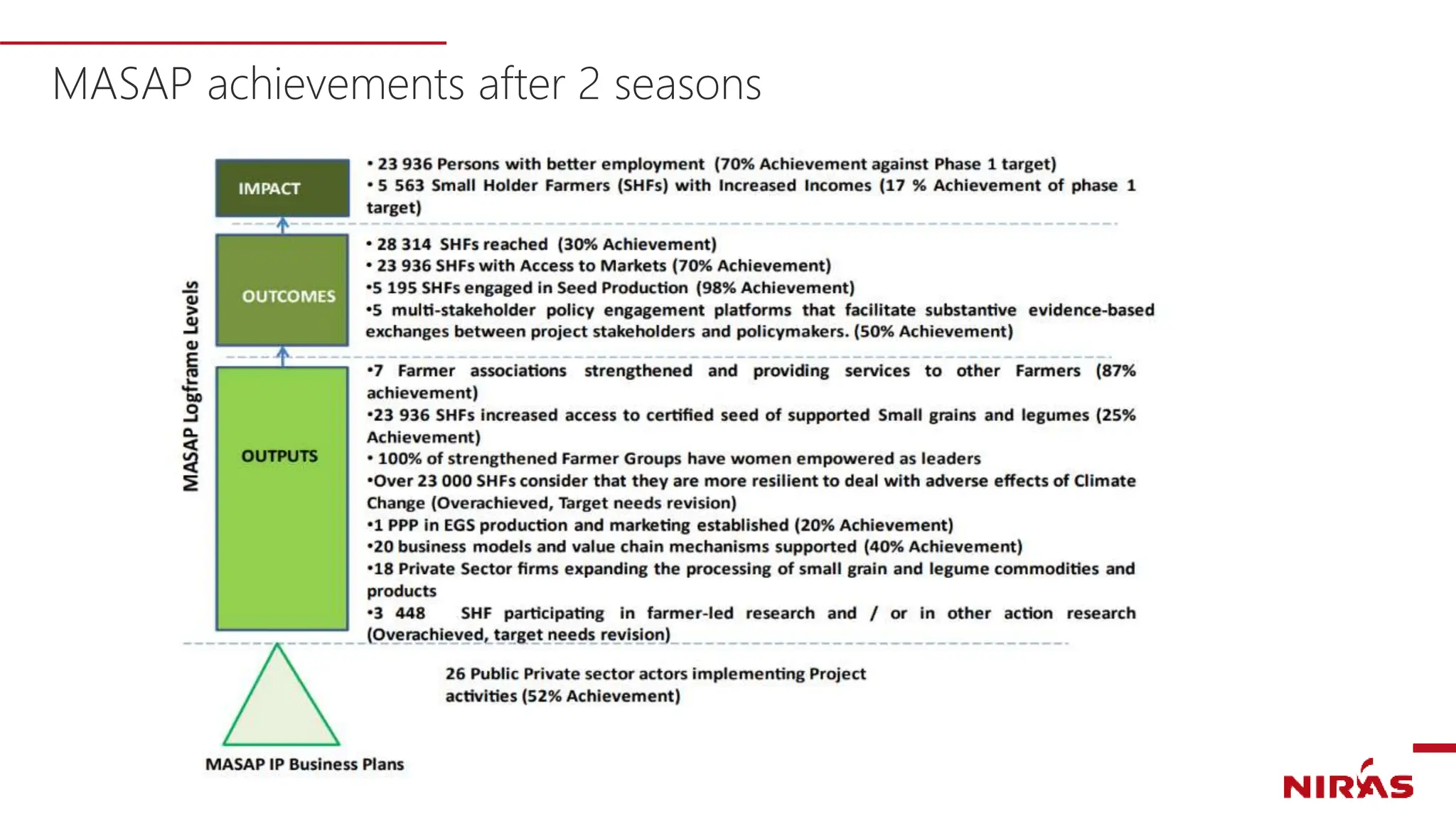
MASAP achievements after 2 seasons
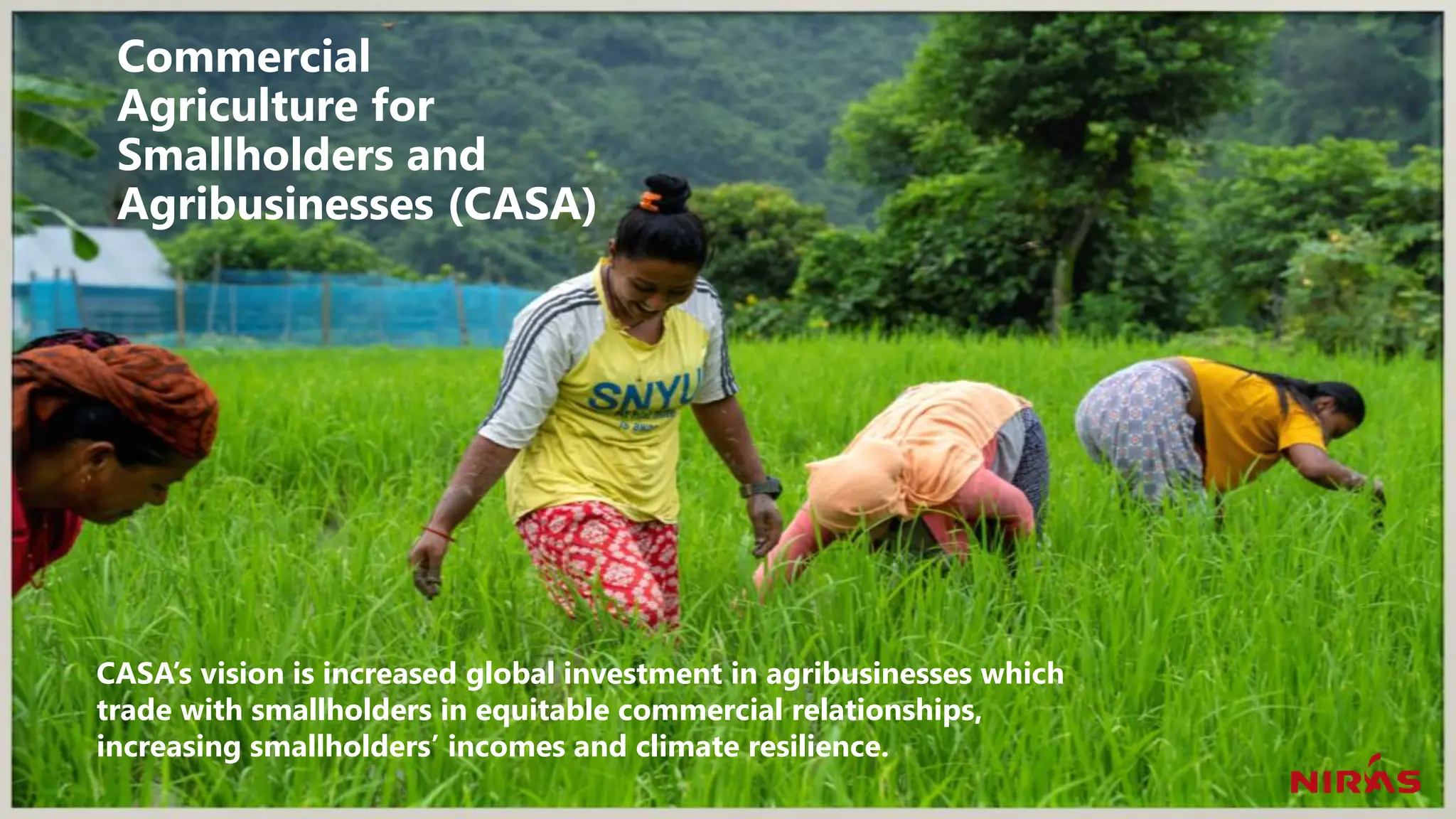
Commercial
Agriculture for
Smallholders and
Agribusinesses (CASA)
CASA’s vision is increased global investment in agribusinesses which
trade with smallholders in equitable commercial relationships,
increasing smallholders’ incomes and climate resilience.
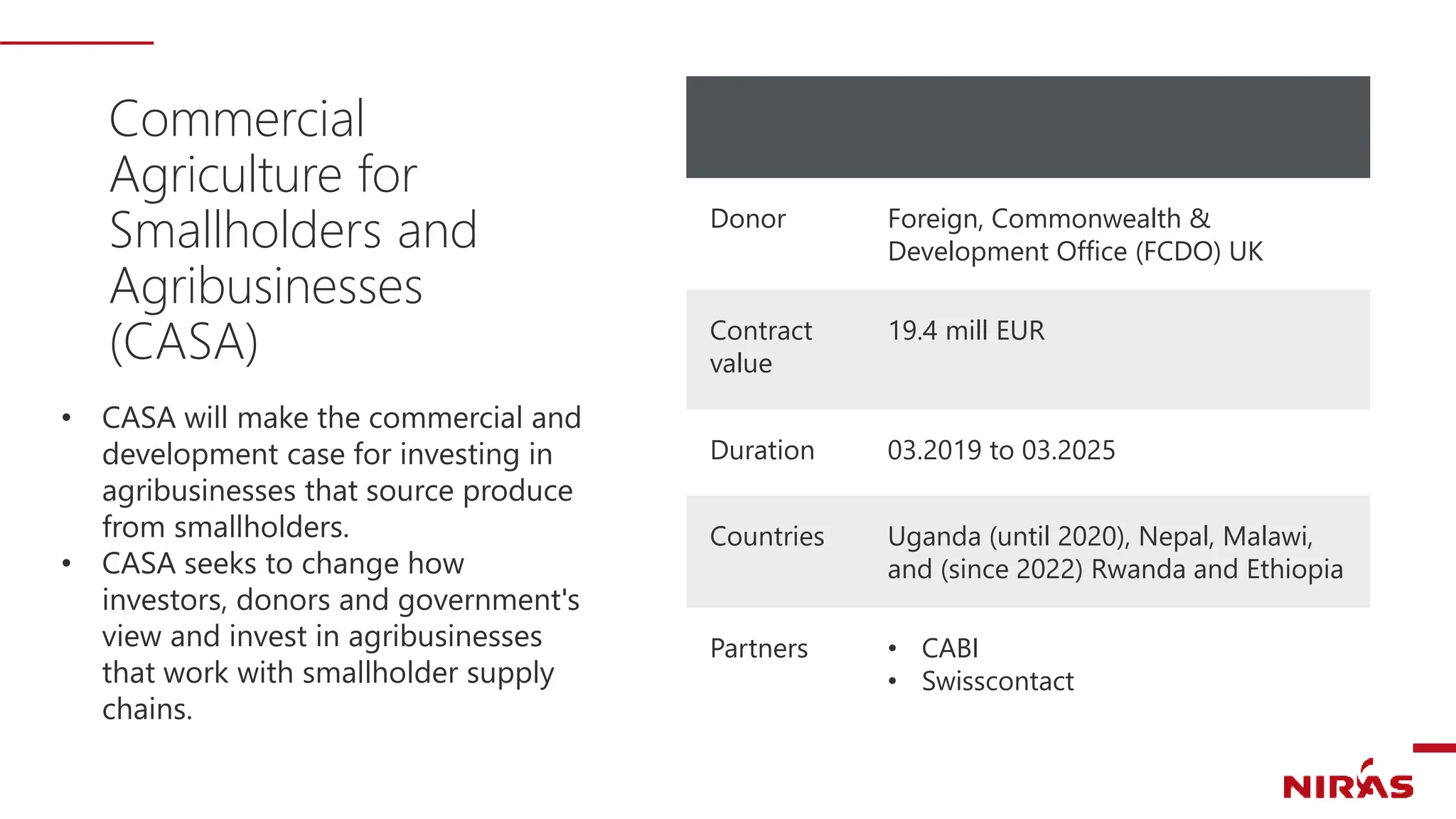
Commercial
Agriculture for
Smallholders and
Agribusinesses
(CASA)
Donor Foreign, Commonwealth &
Development Office (FCDO) UK
Contract
value
19.4 mill EUR
Duration 03.2019 to 03.2025
Countries Uganda (until 2020), Nepal, Malawi,
and (since 2022) Rwanda and Ethiopia
Partners • CABI
• Swisscontact
• CASA will make the commercial and
development case for investing in
agribusinesses that source produce
from smallholders.
• CASA seeks to change how
investors, donors and government's
view and invest in agribusinesses
that work with smallholder supply
chains.
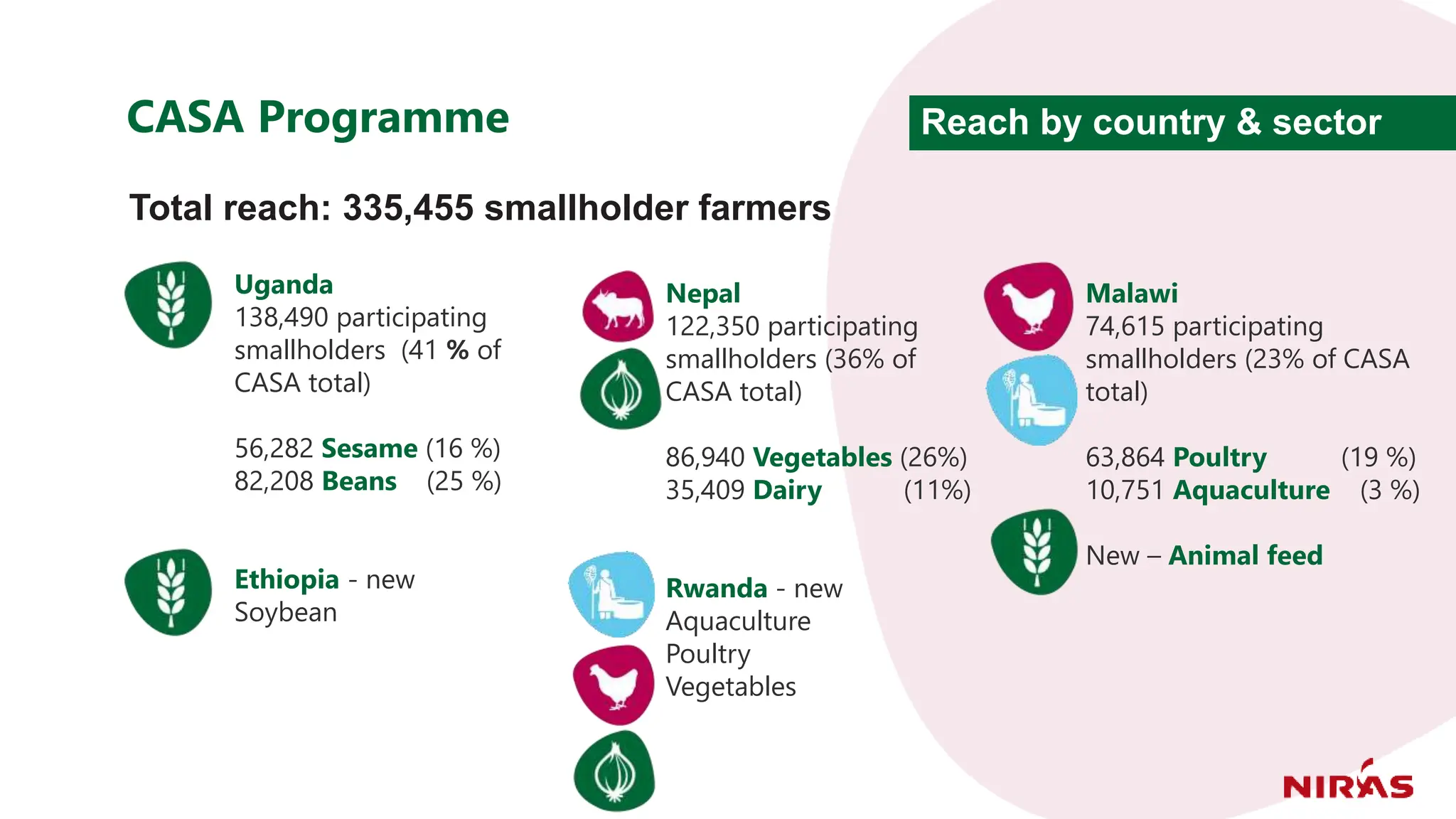
CASA Programme Reach by country & sector
Total reach: 335,455 smallholder farmers
Nepal
122,350 participating
smallholders (36% of
CASA total)
86,940 Vegetables (26%)
35,409 Dairy (11%)
Rwanda - new
Aquaculture
Poultry
Vegetables
Uganda
138,490 participating
smallholders (41 % of
CASA total)
56,282 Sesame (16 %)
82,208 Beans (25 %)
Ethiopia - new
Soybean
Malawi
74,615 participating
smallholders (23% of CASA
total)
63,864 Poultry (19 %)
10,751 Aquaculture (3 %)
New – Animal feed
15
Thank you!
For more information, see
www.NIRAS.com or follow
NIRAS on LinkedIn

Creating incentives through a Market Systems Development approach

  • 1.
    Incentives for change througha Market Systems Development approach
  • 2.
    3 Changing market systems meanschanging people's behaviour – that’s not easy - Human beings have an inherent aversion to change - Technical innovations can be great, but adoption of these techniques fails for other reasons - Promoting climate resilience requires both individual and collective shifts in behaviour to address change at landscape level
  • 3.
    4 Market Systems Development approach •MSD is a holistic approach that aims to improve the overall functioning and efficiency of agricultural markets by addressing systemic constraints and promoting market-driven solutions. • To reach any significant impact, the change has to be at scale – pilots are nice, but don’t really contribute to any sustainable change in a market system • Local private sector actors are the ones living and working in the communities and they will thrive if their community thrives – this is a strong incentive for them to be active in development of their community – we need to see them as drivers of systemic change at community level
  • 4.
    5 The objective ofthe MSD approach is to catalyse a process that results in a market system that is:  competitive—system actors are able to effectively innovate, upgrade and add value to their products and services to match market demand and maintain or grow market share;  inclusive—delivering a sustainable flow of benefits to a range of actors, including the poor, women and youth and otherwise marginalised, as well as to society as a whole; and  resilient—system actors are able to address, absorb and overcome shocks in the market, policy environment, resource base or other aspect of the system. Overview of the MSD approach
  • 5.
    CCW5QE77JSR7-1994474830-1424 MSD projects supportactors to expand their outreach and strengthen responsible institutions in reaching their mandate rather than creating parallel structures. Market analysis Intervention design Selection of market actors Provision of technical assistance and co-financing Management of partnership agreements with market actors MSD structured process
  • 6.
    Markets and Seeds Access Project(MASAP) To improve resilience in food security of smallholder households​ (especially women and youths) by increasing adoption and utilization of​ improved open and self-pollinated varieties of small grain and legumes through​ strengthening the seed and commodity value chains in Zambia and​ Zimbabwe.
  • 7.
    MASAP – groundnuts,cowpeas, sorghum, pearl millet
  • 8.
    Markets and Seeds Access Project(MASAP) Donor Swiss Development Cooperation (SDC) Contract value 10,5 mill EUR Duration Phase I: 07-2021 to 07.2025 3 phases – total 12 year programme Countries Zambia and Zimbabwe Partners • Community Technology Development Organisation (CTDO) • Research Institute of Organic Agriculture (FiBL) Components: 1. Adoption and utilization of small grain and legume seed by smallholder farmers (Community Engagement) 2. Stimulating market drivers (Private Sector Engagement) 3. Policy engagement and action learning research (Enabling environment)
  • 9.
    Markets and Seeds Access Project(MASAP) • MASAP promotes agroecology methods and other innovative strategies and practices that ensure mitigation and adaptation to climate change • Introduction of innovative methods are anchored in the MSD approach identifying incentives for behaviour change
  • 10.
  • 11.
    Commercial Agriculture for Smallholders and Agribusinesses(CASA) CASA’s vision is increased global investment in agribusinesses which trade with smallholders in equitable commercial relationships, increasing smallholders’ incomes and climate resilience.
  • 12.
    Commercial Agriculture for Smallholders and Agribusinesses (CASA) DonorForeign, Commonwealth & Development Office (FCDO) UK Contract value 19.4 mill EUR Duration 03.2019 to 03.2025 Countries Uganda (until 2020), Nepal, Malawi, and (since 2022) Rwanda and Ethiopia Partners • CABI • Swisscontact • CASA will make the commercial and development case for investing in agribusinesses that source produce from smallholders. • CASA seeks to change how investors, donors and government's view and invest in agribusinesses that work with smallholder supply chains.
  • 13.
    CASA Programme Reachby country & sector Total reach: 335,455 smallholder farmers Nepal 122,350 participating smallholders (36% of CASA total) 86,940 Vegetables (26%) 35,409 Dairy (11%) Rwanda - new Aquaculture Poultry Vegetables Uganda 138,490 participating smallholders (41 % of CASA total) 56,282 Sesame (16 %) 82,208 Beans (25 %) Ethiopia - new Soybean Malawi 74,615 participating smallholders (23% of CASA total) 63,864 Poultry (19 %) 10,751 Aquaculture (3 %) New – Animal feed
  • 14.
    15 Thank you! For moreinformation, see www.NIRAS.com or follow NIRAS on LinkedIn

Editor's Notes

  • #4 - as it is risky to change from something you know to something you don’t More often than not, the farmer’s decision is based on the social situation, traditional values or competing priorities for labour resources rather than pure economic, production or market opportunities. Consequently all of these must be taken into account in changing a market system