• Introduction
• What is Crafting
Learner
• Centered Learning
Outcome
• Goals, Aims,
Objective, Outcomes
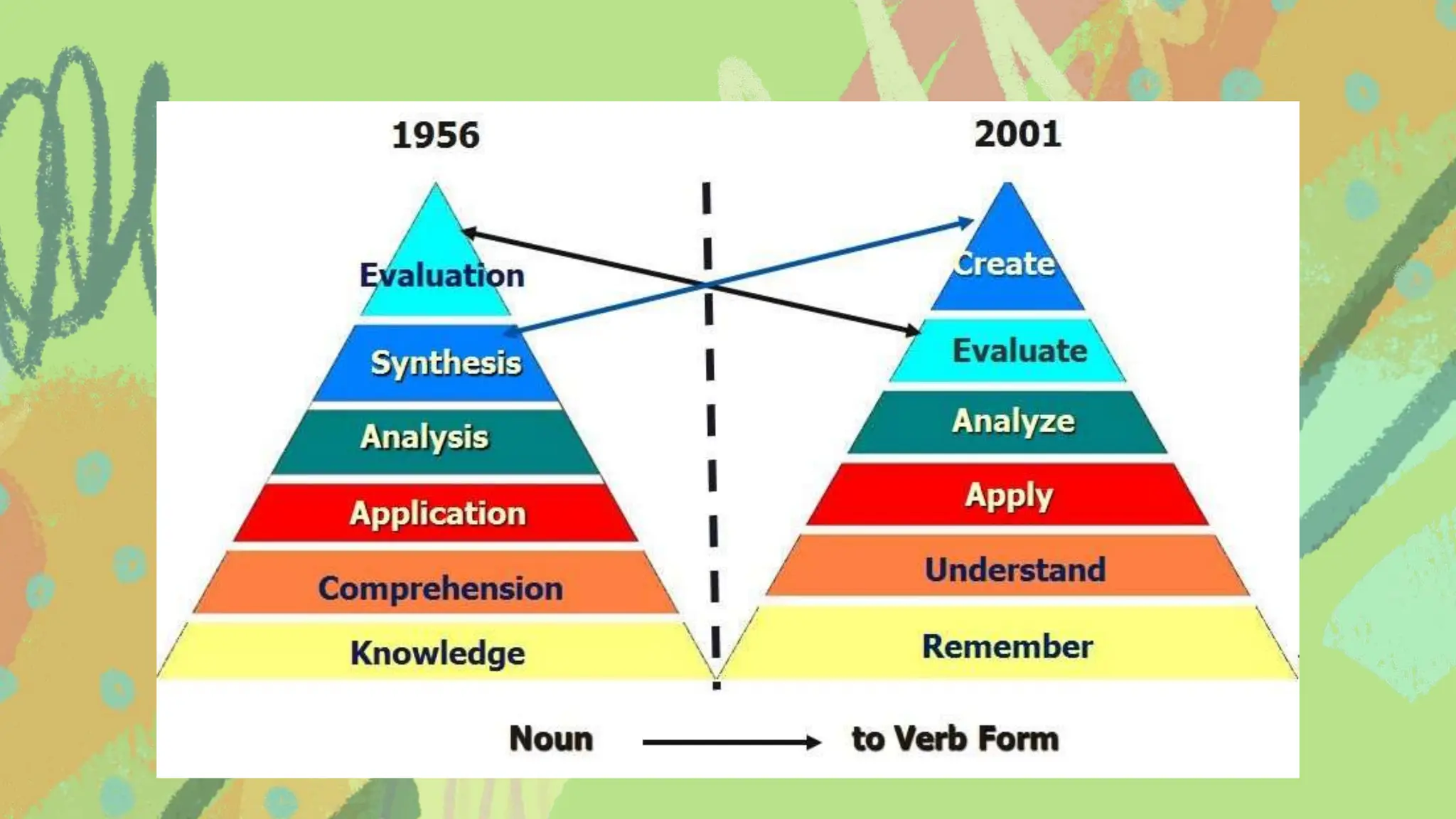
• Revised Bloom's
Taxonomy
• The ABCD of
Learning Outcomes
INTRODUCTION
TO LEARNER-CENTERED TEACHING
THE TEAM
•
CRAFTING
LEARNER
GOALS, AIMS,
OBJECTIVES AND
OUTCOMES
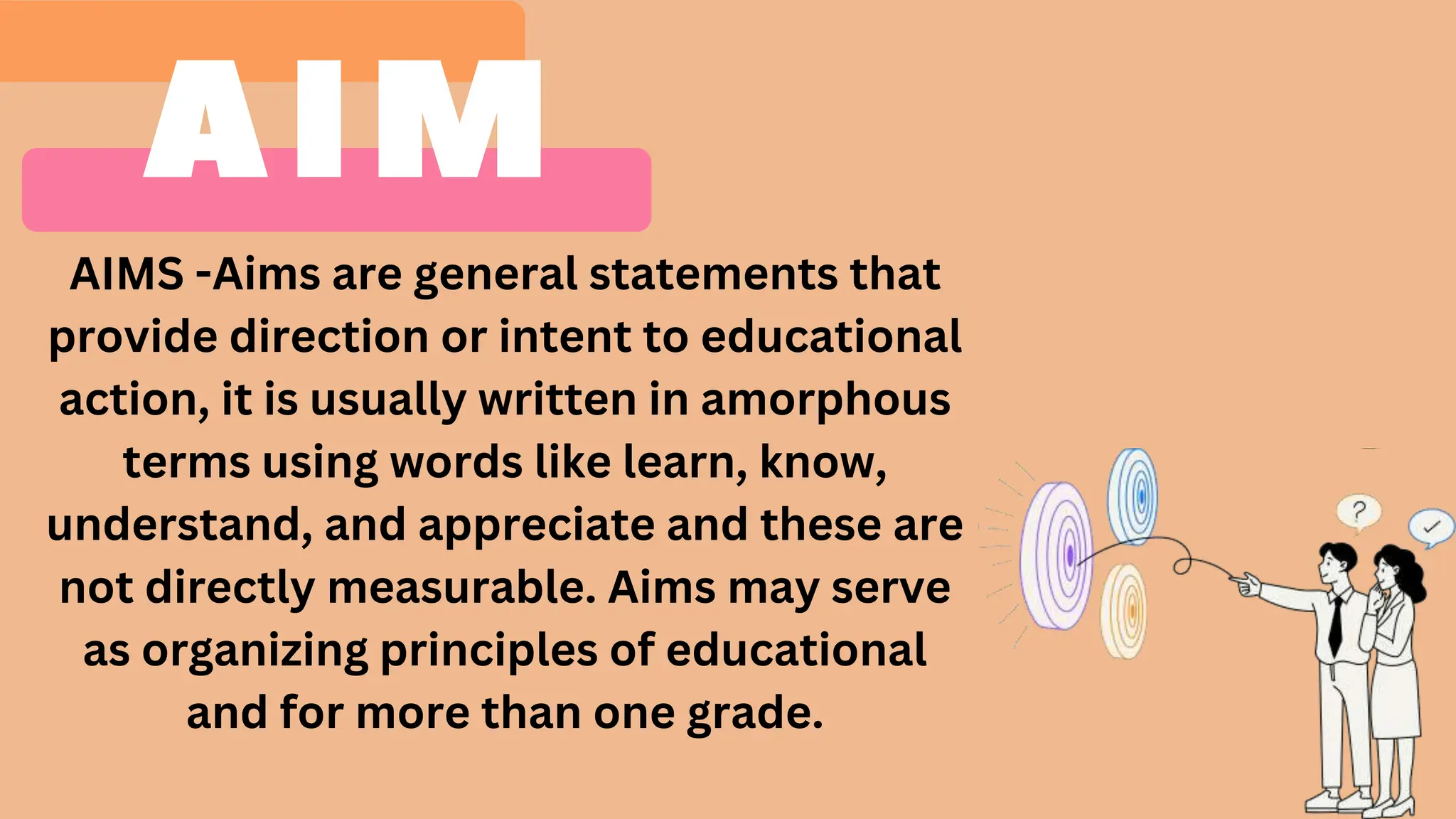
AIMS -Aims are general statements that
provide direction or intent to educational
action, it is usually written in amorphous
terms using words like learn, know,
understand, and appreciate and these are
not directly measurable. Aims may serve
as organizing principles of educational
and for more than one grade.
GOALS -Goals are statements of
educational intention which are
more specific than aims. Goals too
may encompass an entire program,
subject area, or multiple grade
levels.
-A learning objective is an outcome
statement that captures specifically
what knowledge, skills, attitudes
learners should be able to exhibit
following instruction.
-Learning outcomes are statements that
describe the knowledge or skills students
should acquire by the end of a particular
assignment, class, course, or program, and
help students understand why that knowledge
and those skills will be useful to them.
WHAT IS
BLOOM’S
TAXONOMY?
WHO REVISED
THE BLOOM’S
TAXONOMY?
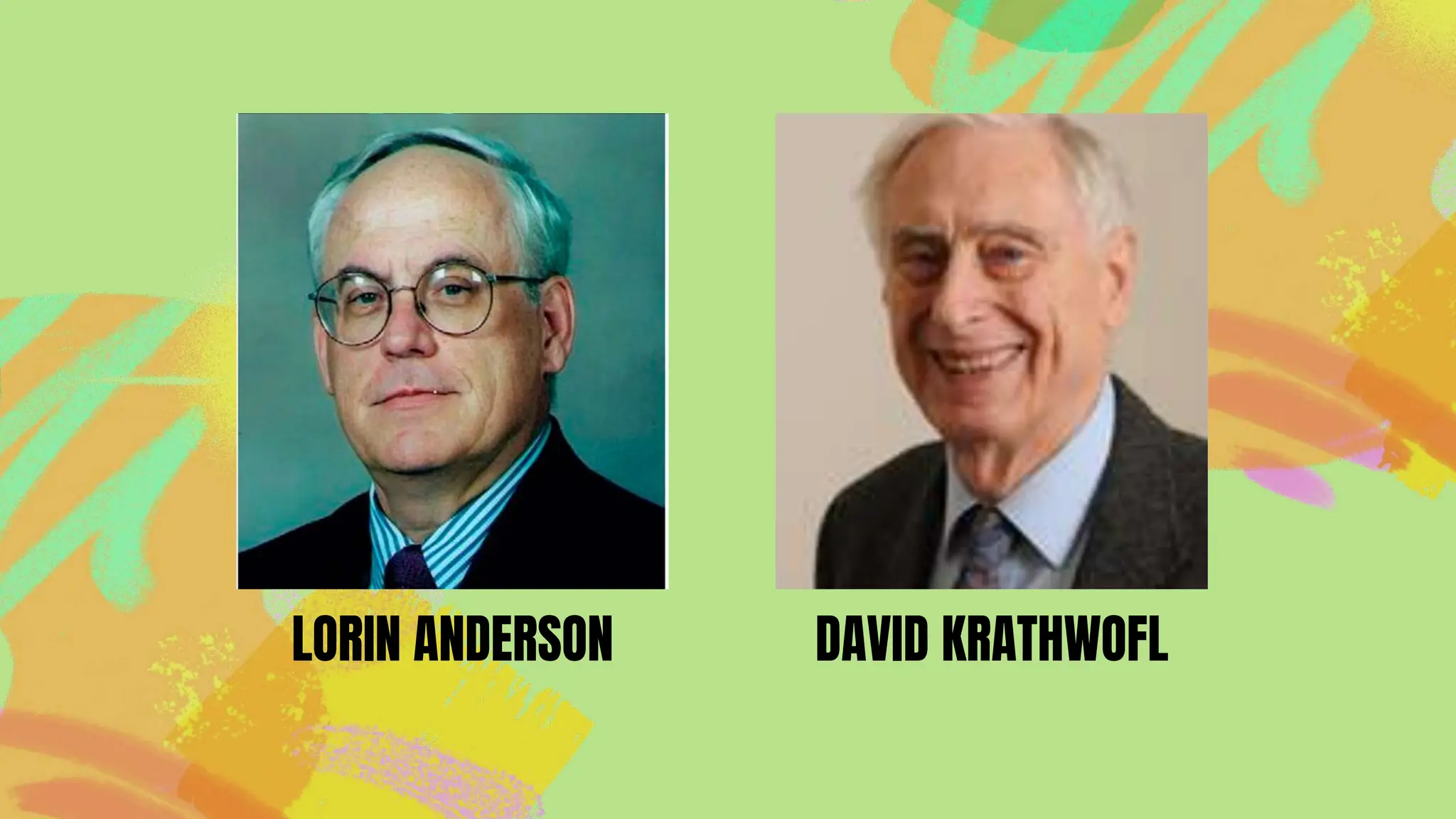
LORIN ANDERSON DAVID KRATHWOFL
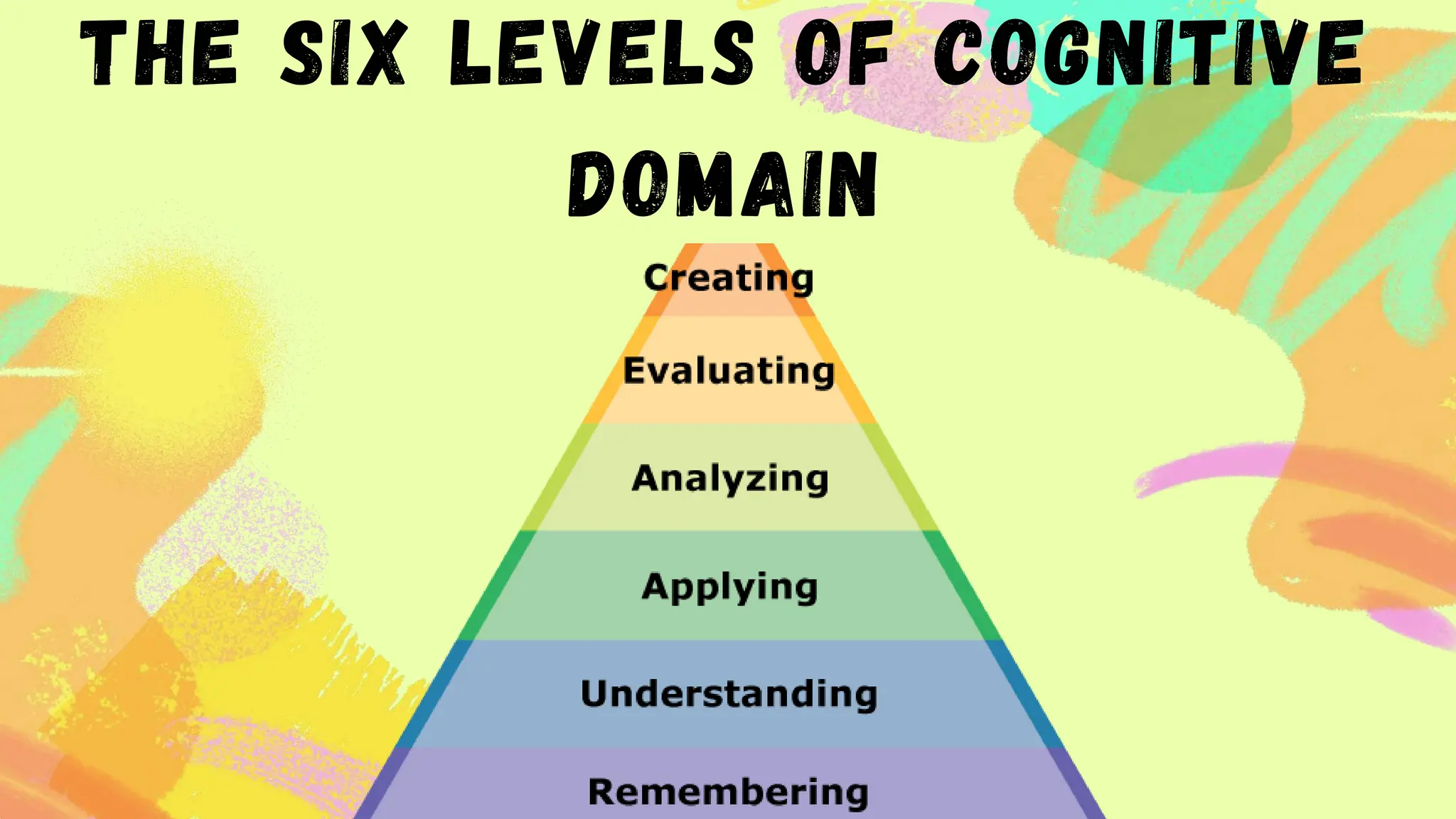
THE SIX LEVELS OF COGNITIVE
DOMAIN
REMEMBERING
Recognizing or recalling knowledge
from memory. Remembering is when
memory is used to produce or retrieve
definitions, facts, or lists, or to recite
previously learned information.
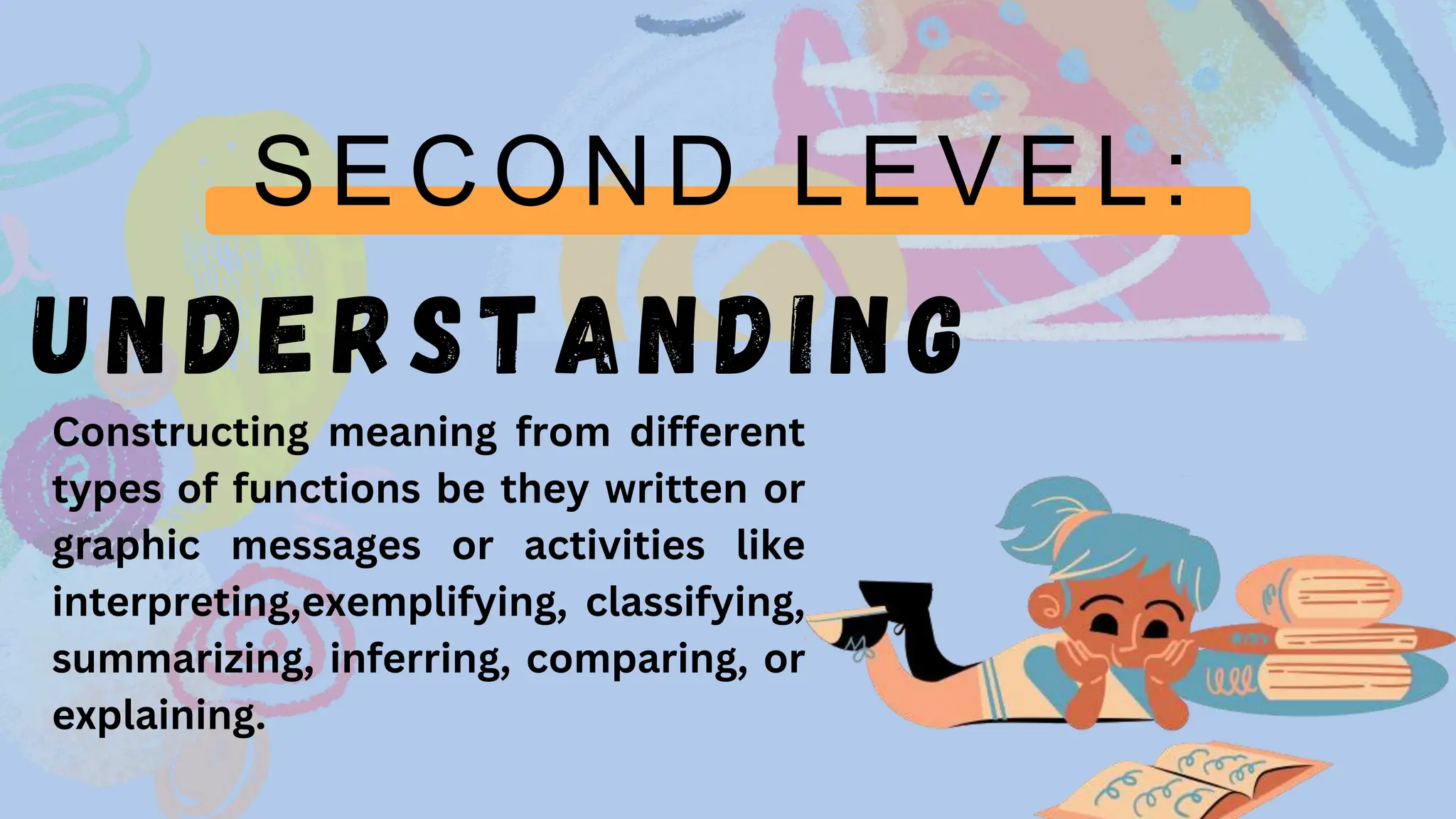
SECOND LEVEL:
UNDERSTANDING
Constructing meaning from different
types of functions be they written or
graphic messages or activities like
interpreting,exemplifying, classifying,
summarizing, inferring, comparing, or
explaining.
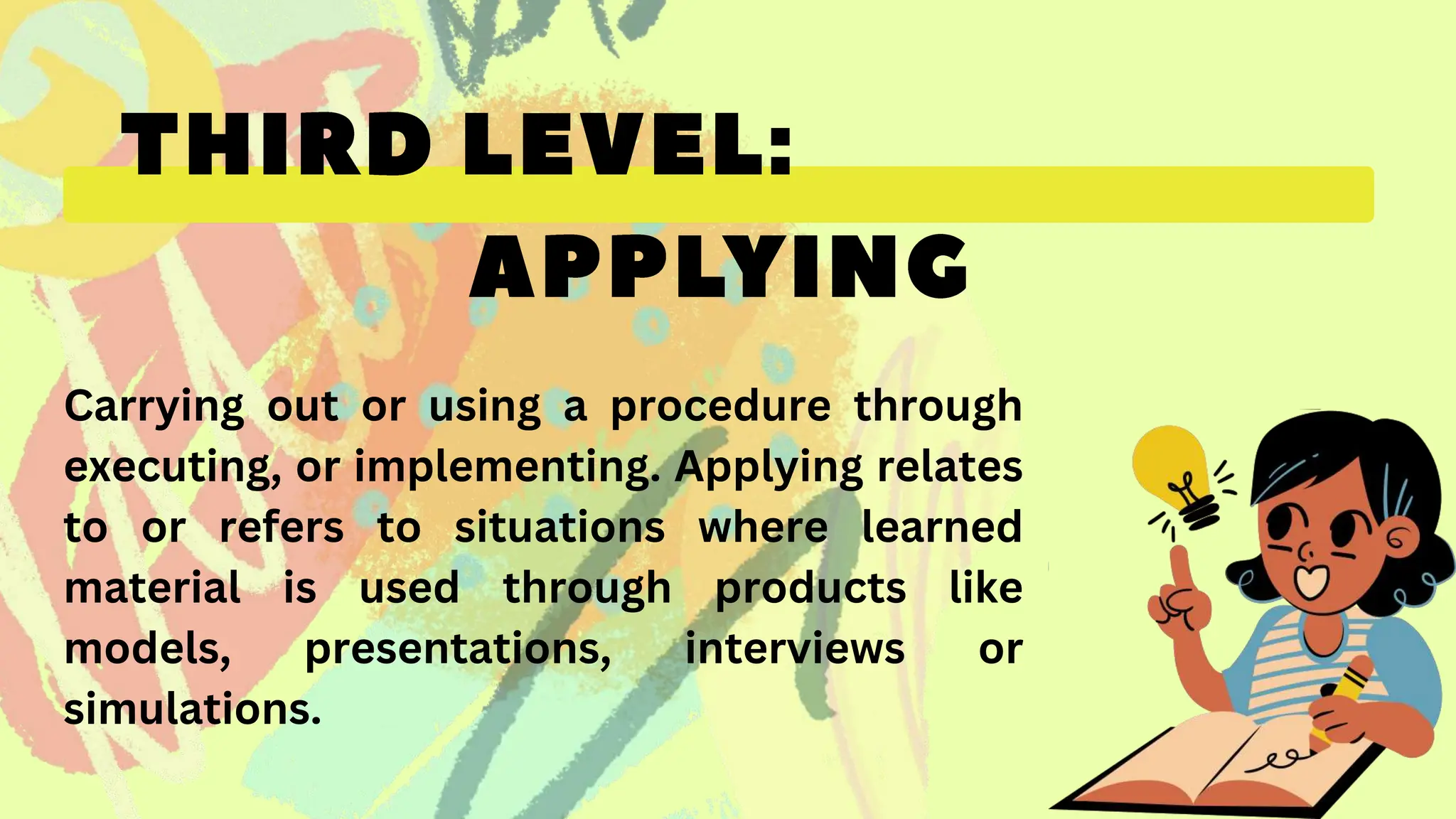
Carrying out or using a procedure through
executing, or implementing. Applying relates
to or refers to situations where learned
material is used through products like
models, presentations, interviews or
simulations.
FOURTH LEVEL:
ANALYZING
Breaking materials or concepts into parts,
determining how the parts relate to one
another or how they interrelate, or how
the parts relate to an overall structure or
purpose. Mental actions included in this
function are differentiating, organizing,
and attributing, as well as being able to
distinguish between the components or
parts.
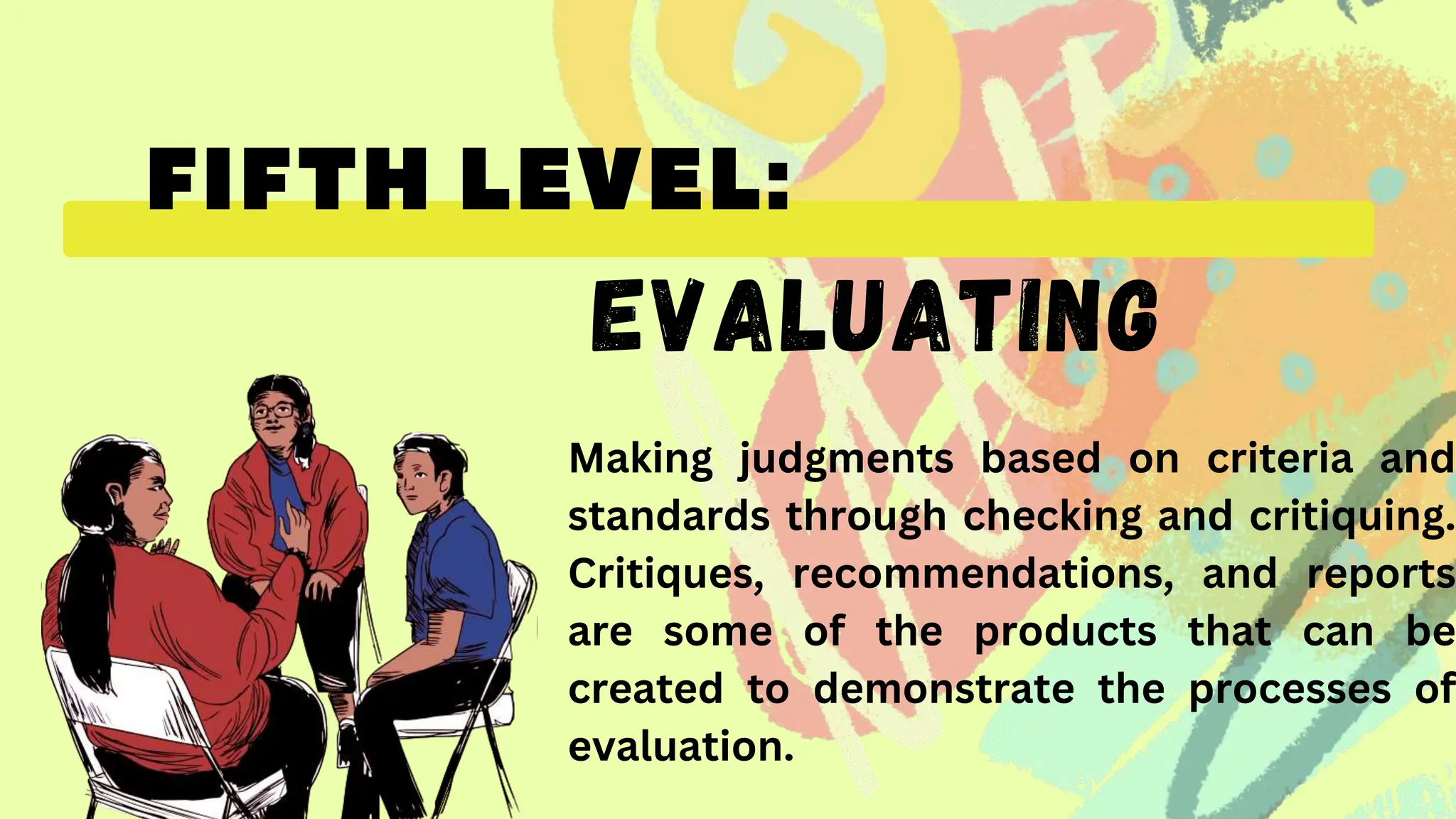
EVALUATING
Making judgments based on criteria and
standards through checking and critiquing.
Critiques, recommendations, and reports
are some of the products that can be
created to demonstrate the processes of
evaluation.
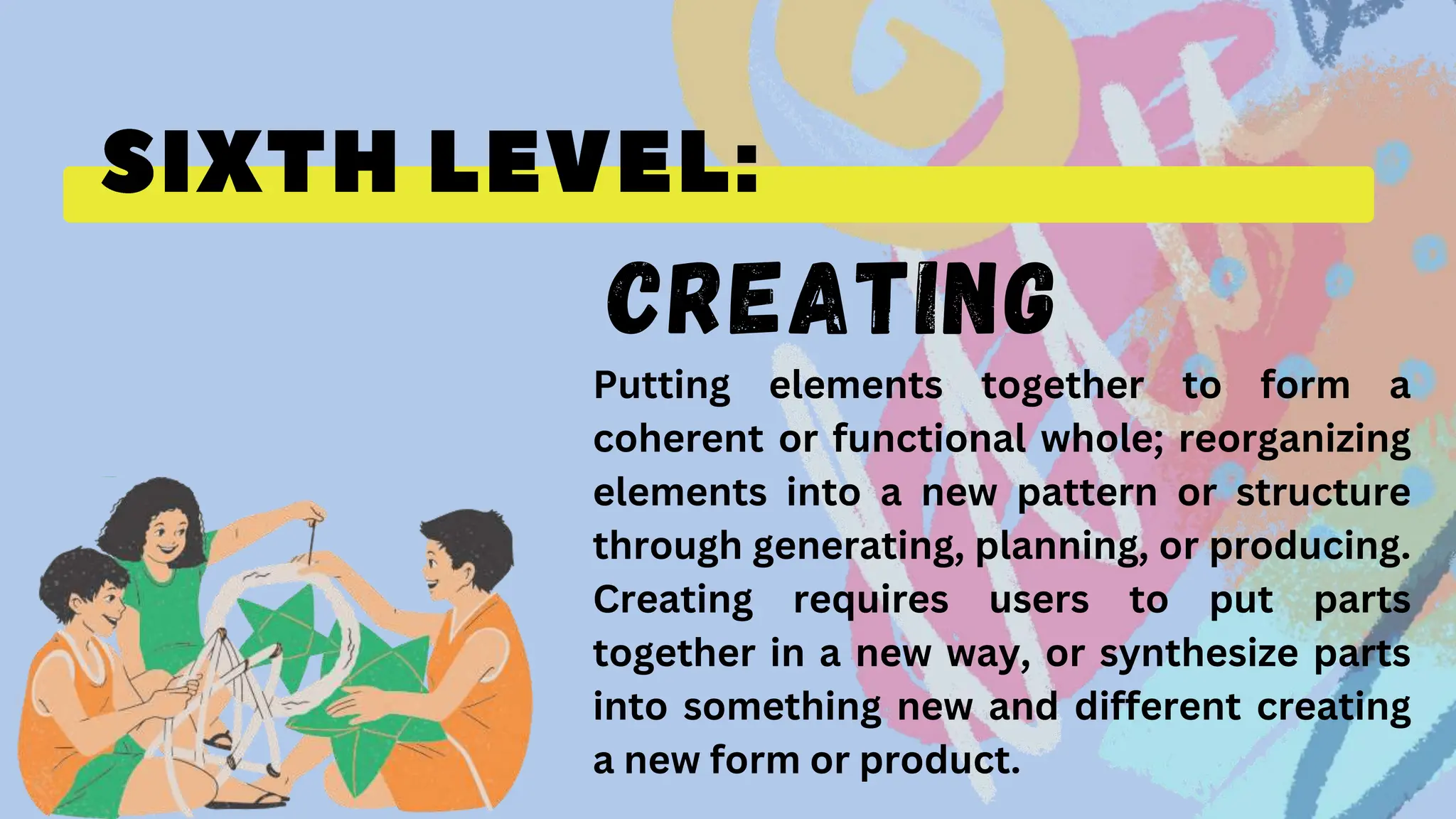
CREATING
Putting elements together to form a
coherent or functional whole; reorganizing
elements into a new pattern or structure
through generating, planning, or producing.
Creating requires users to put parts
together in a new way, or synthesize parts
into something new and different creating
a new form or product.
WHY DO TEACHER
NEED TO USE
BLOOM’S
TAXONOMY?
WHY DID THEY
REVISED THE
BLOOM’S
TAXONOMY?
SCRAMBLE
WORDS
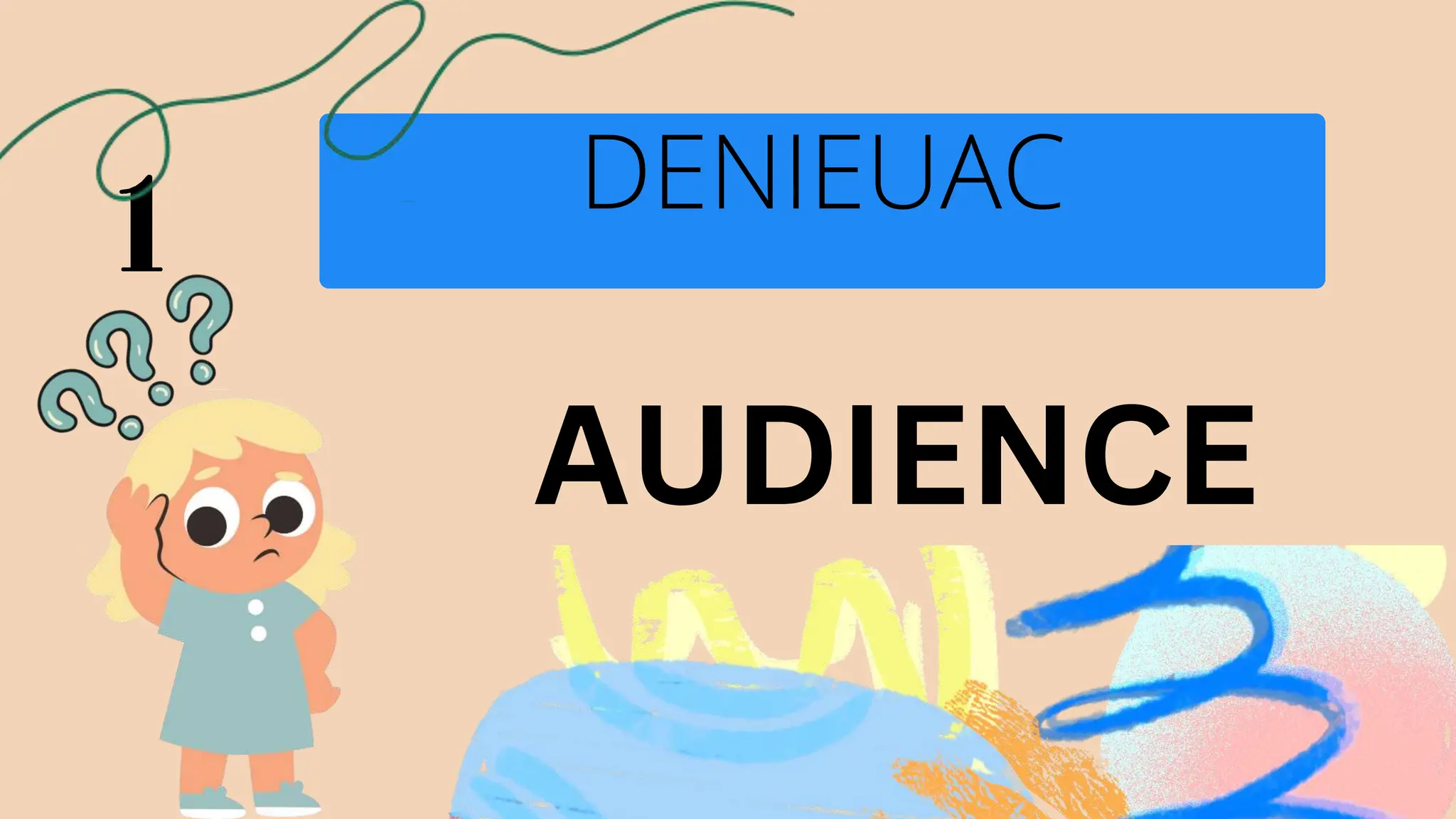
AUDIENCE
DENIEUAC
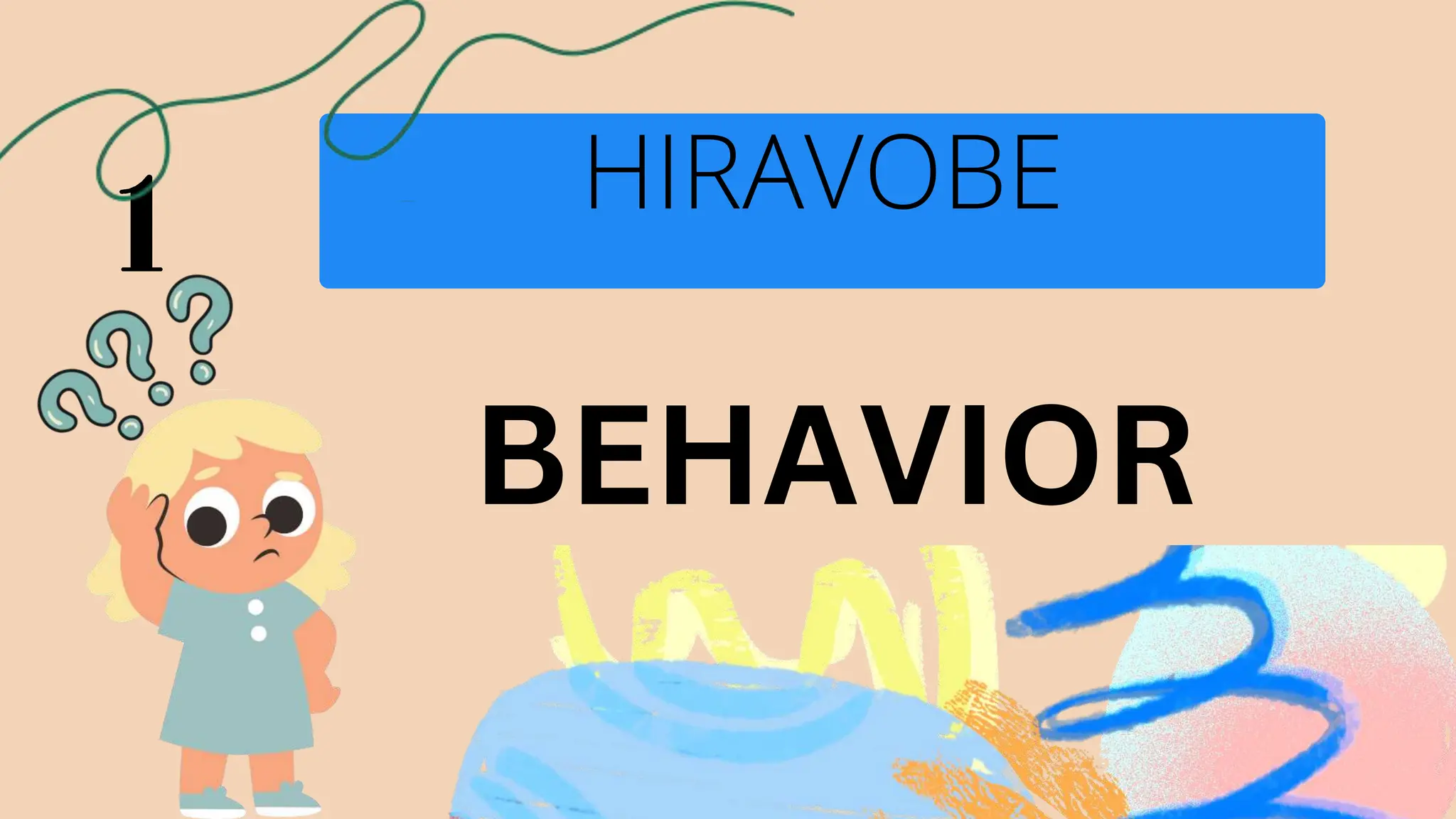
BEHAVIOR
HIRAVOBE
CONDITION
TONIDINOC
DEGREE
GEREDE
WHAT IS LEARNING OBJECTIVES?
• Learning objectives describe
what we want students to know
and be able to do by the end of a
course.
Why we Write Learning Objectives?
• We are teaching from a specific curriculum standards
that need to be addressed.
• Objectives describe exactly what the learners will
display upon completion of the lesson.
• Basis for selection of the strategies & media used.
• Basis for student learning expectations and
assessment
A (Audience)
• Who is the objective
for
B (Behaviour)
• Action verb representing the
behavior wanted
C (Conditions of
Performance)
• Learning materials
and environment
D (Degree of Accuracy)
• Specific information about
how you will determine
student mastery

CRAFTING LEARNER-CENTERED TEACHING_OMBROG_EP2-1.pptx

  • 2.
    • Introduction • Whatis Crafting Learner • Centered Learning Outcome • Goals, Aims, Objective, Outcomes • Revised Bloom's Taxonomy • The ABCD of Learning Outcomes
  • 3.
  • 4.
  • 5.
  • 6.
  • 8.
  • 9.
    AIMS -Aims aregeneral statements that provide direction or intent to educational action, it is usually written in amorphous terms using words like learn, know, understand, and appreciate and these are not directly measurable. Aims may serve as organizing principles of educational and for more than one grade.
  • 10.
    GOALS -Goals arestatements of educational intention which are more specific than aims. Goals too may encompass an entire program, subject area, or multiple grade levels.
  • 11.
    -A learning objectiveis an outcome statement that captures specifically what knowledge, skills, attitudes learners should be able to exhibit following instruction.
  • 12.
    -Learning outcomes arestatements that describe the knowledge or skills students should acquire by the end of a particular assignment, class, course, or program, and help students understand why that knowledge and those skills will be useful to them.
  • 14.
  • 15.
  • 16.
  • 17.
    THE SIX LEVELSOF COGNITIVE DOMAIN
  • 18.
    REMEMBERING Recognizing or recallingknowledge from memory. Remembering is when memory is used to produce or retrieve definitions, facts, or lists, or to recite previously learned information.
  • 19.
    SECOND LEVEL: UNDERSTANDING Constructing meaningfrom different types of functions be they written or graphic messages or activities like interpreting,exemplifying, classifying, summarizing, inferring, comparing, or explaining.
  • 20.
    Carrying out orusing a procedure through executing, or implementing. Applying relates to or refers to situations where learned material is used through products like models, presentations, interviews or simulations.
  • 21.
    FOURTH LEVEL: ANALYZING Breaking materialsor concepts into parts, determining how the parts relate to one another or how they interrelate, or how the parts relate to an overall structure or purpose. Mental actions included in this function are differentiating, organizing, and attributing, as well as being able to distinguish between the components or parts.
  • 22.
    EVALUATING Making judgments basedon criteria and standards through checking and critiquing. Critiques, recommendations, and reports are some of the products that can be created to demonstrate the processes of evaluation.
  • 23.
    CREATING Putting elements togetherto form a coherent or functional whole; reorganizing elements into a new pattern or structure through generating, planning, or producing. Creating requires users to put parts together in a new way, or synthesize parts into something new and different creating a new form or product.
  • 24.
    WHY DO TEACHER NEEDTO USE BLOOM’S TAXONOMY?
  • 25.
    WHY DID THEY REVISEDTHE BLOOM’S TAXONOMY?
  • 28.
  • 29.
  • 30.
  • 31.
  • 32.
  • 33.
    WHAT IS LEARNINGOBJECTIVES? • Learning objectives describe what we want students to know and be able to do by the end of a course.
  • 34.
    Why we WriteLearning Objectives? • We are teaching from a specific curriculum standards that need to be addressed. • Objectives describe exactly what the learners will display upon completion of the lesson. • Basis for selection of the strategies & media used. • Basis for student learning expectations and assessment
  • 35.
    A (Audience) • Whois the objective for
  • 36.
    B (Behaviour) • Actionverb representing the behavior wanted
  • 37.
    C (Conditions of Performance) •Learning materials and environment
  • 38.
    D (Degree ofAccuracy) • Specific information about how you will determine student mastery