
Craft &
The Fundamentals of
Observation
This session is
experimental and
interactive
Are you aware of your own breathing? Observation
is a very powerful skill.
We go into autopilot with our everyday life. Just like
our job. We have a natural tendency to fall into
patterns and behaviour. Especially when our
survival is dependant on it. It becomes 2nd nature.
As designers get more experience, our own
patterns gets more invisible.
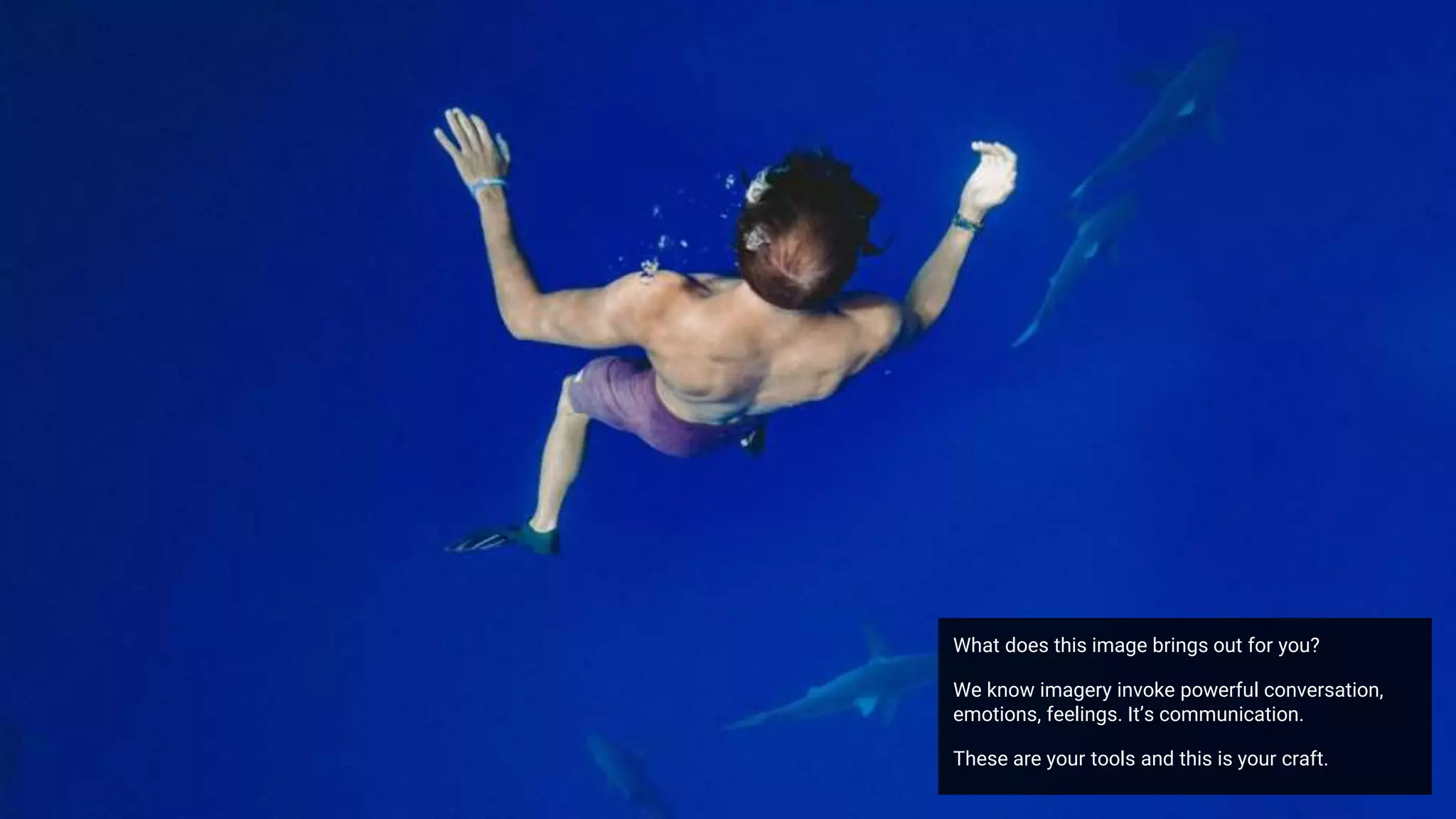
What does this image brings out for you?
We know imagery invoke powerful conversation,
emotions, feelings. It’s communication.
These are your tools and this is your craft.
You cannot intervene in a
world you cannot see.
Julio Olalla, Newfield Network
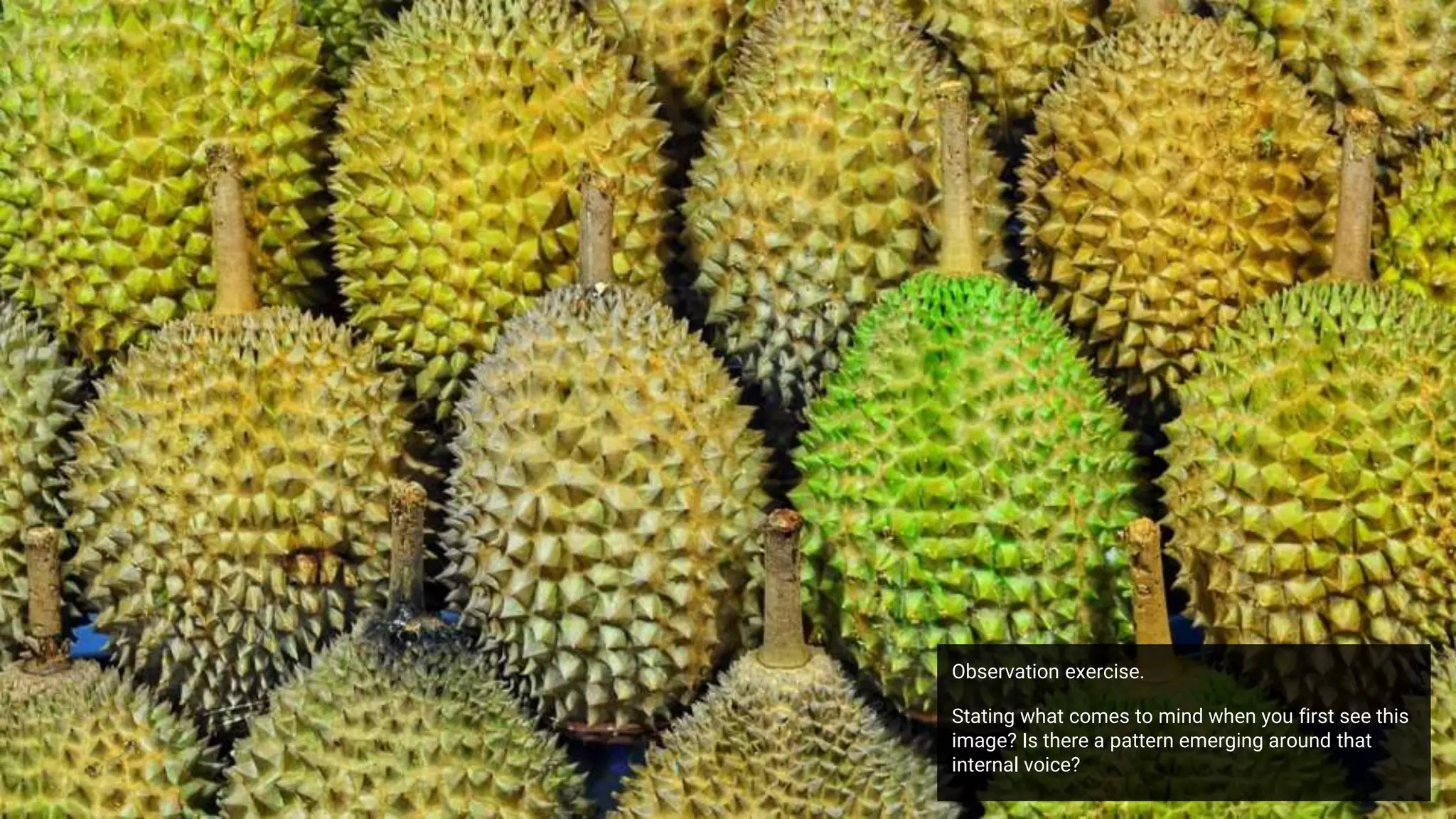
Observation exercise.
Notice what you are noticing. The things that are
happening. There’s a voice happening in your head.
Conversation is constant
The voice in our head is something we cannot put
down. It’s like breathing. You are not aware until
you pay attention to it..
If you start to listen to it, it becomes clearer and you
can start to sort them out.
Conversation happens internally and externally.
Inside and outside. Self and others
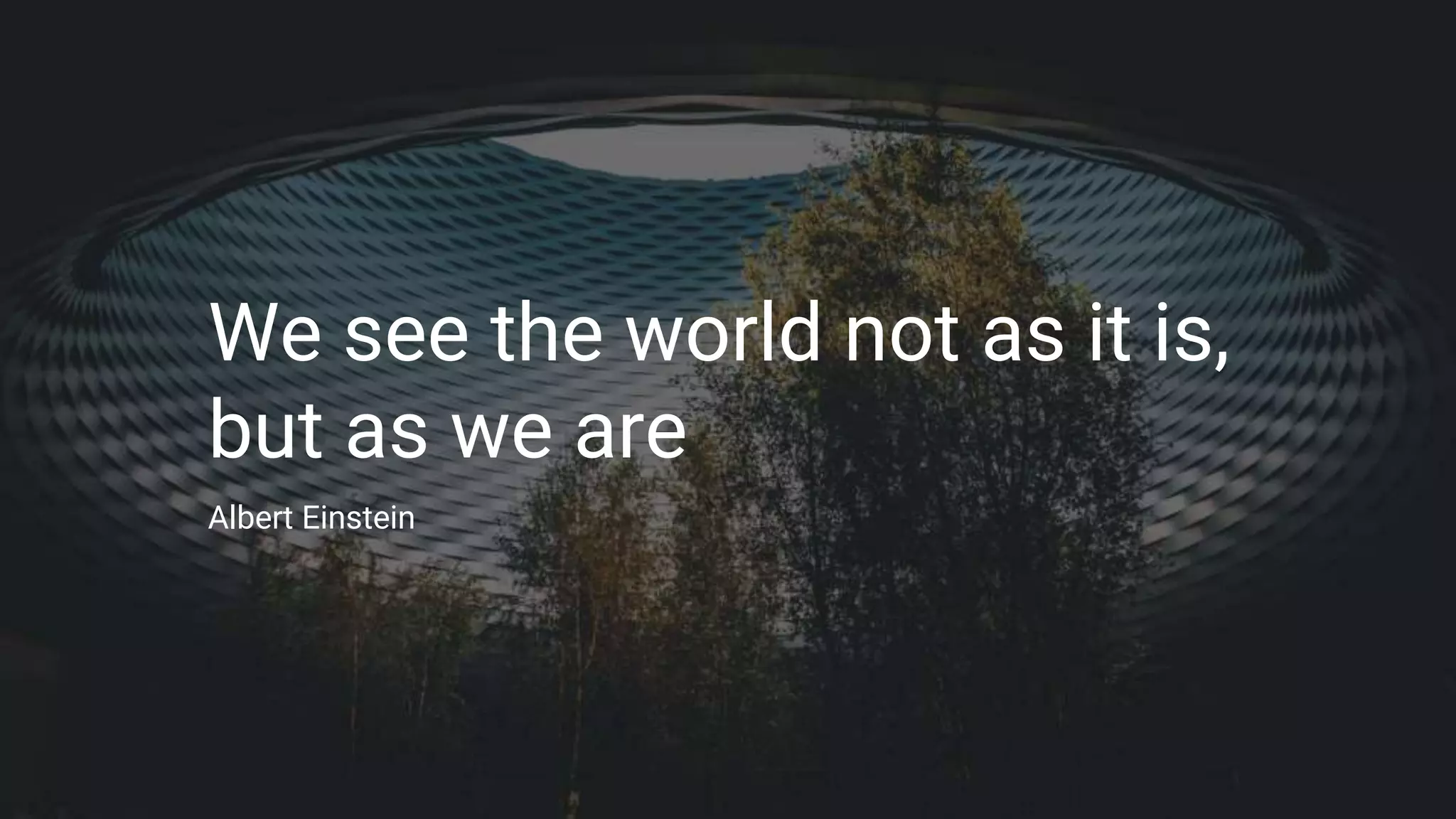
We see the world not as it is,
but as we are
Albert Einstein
Observation exercise.
Stating what comes to mind when you first see this
image? Is there a pattern emerging around that
internal voice?
Assertions vs Assessment
There’s 2 things going on. Start to be aware of what
are facts(assertions) and what are
opinions(assumption).
Humans constantly make assumptions and form
opinions, it’s hard to separate them from facts.
Why is this important?
When you start being aware,
you start to allow for
different outcomes
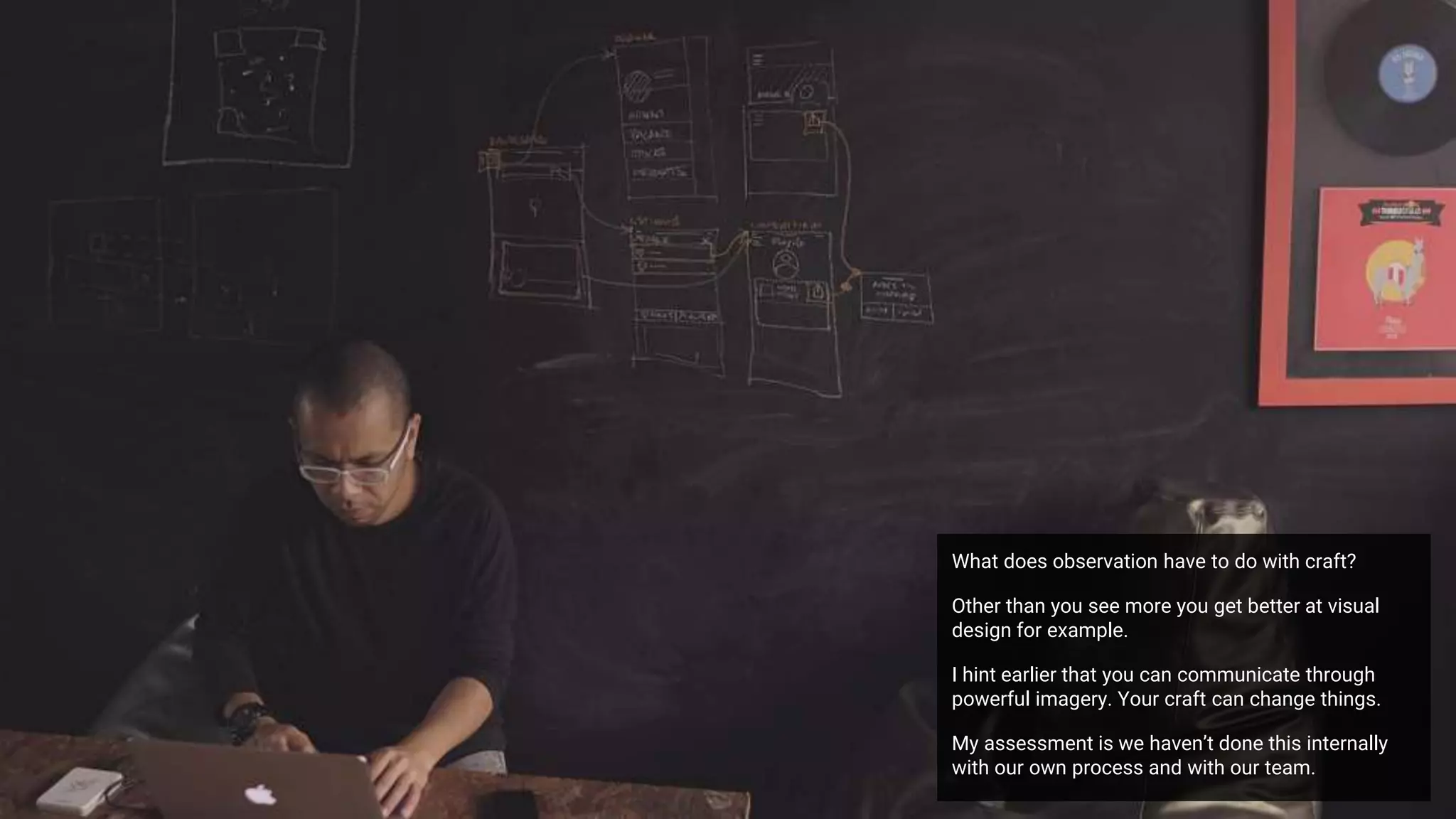
What does observation have to do with craft?
Other than you see more you get better at visual
design for example.
I hint earlier that you can communicate through
powerful imagery. Your craft can change things.
My assessment is we haven’t done this internally
with our own process and with our team.
Why is design so contentious
sometimes?
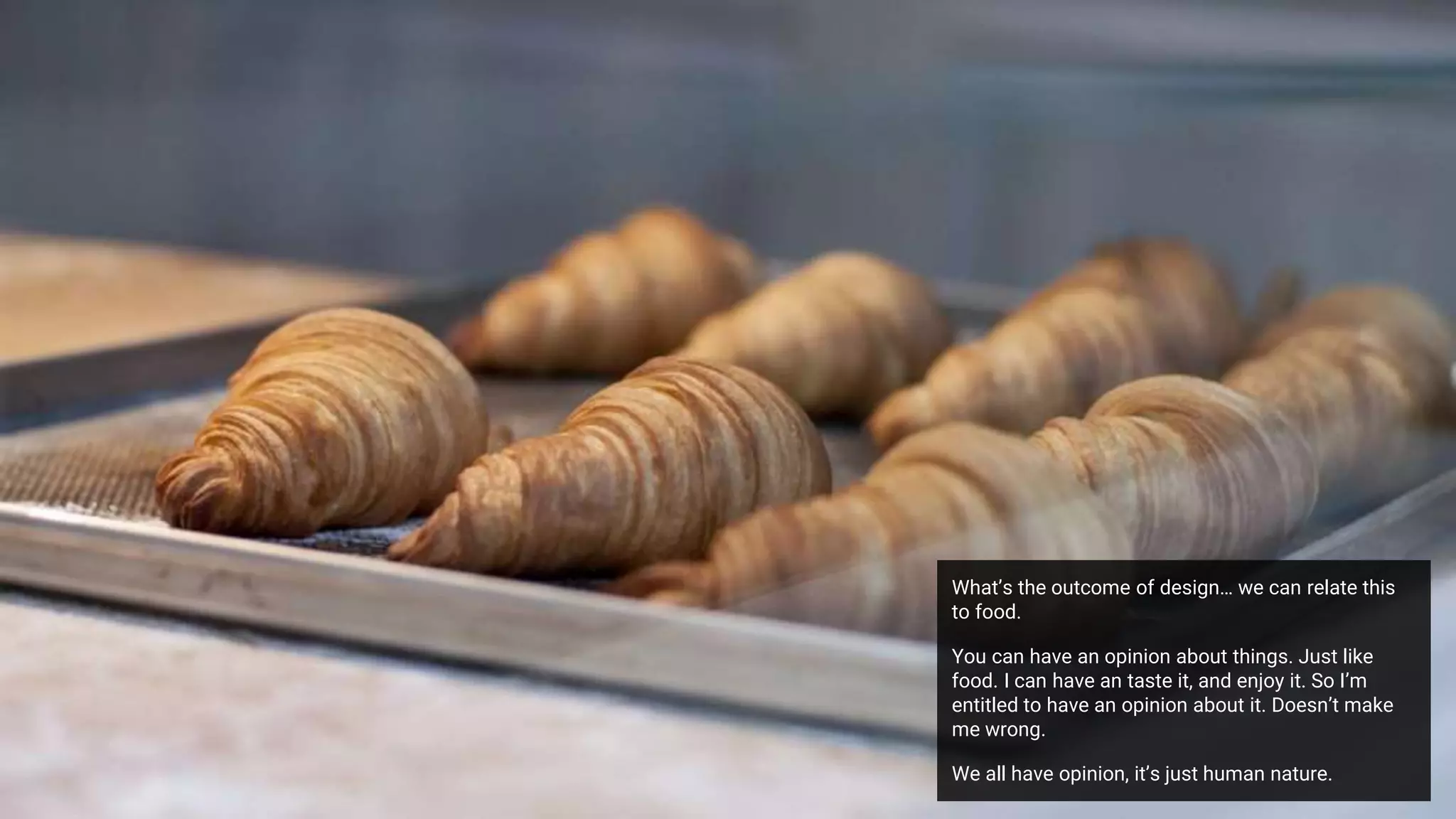
What’s the outcome of design… we can relate this
to food.
You can have an opinion about things. Just like
food. I can have an taste it, and enjoy it. So I’m
entitled to have an opinion about it. Doesn’t make
me wrong.
We all have opinion, it’s just human nature.
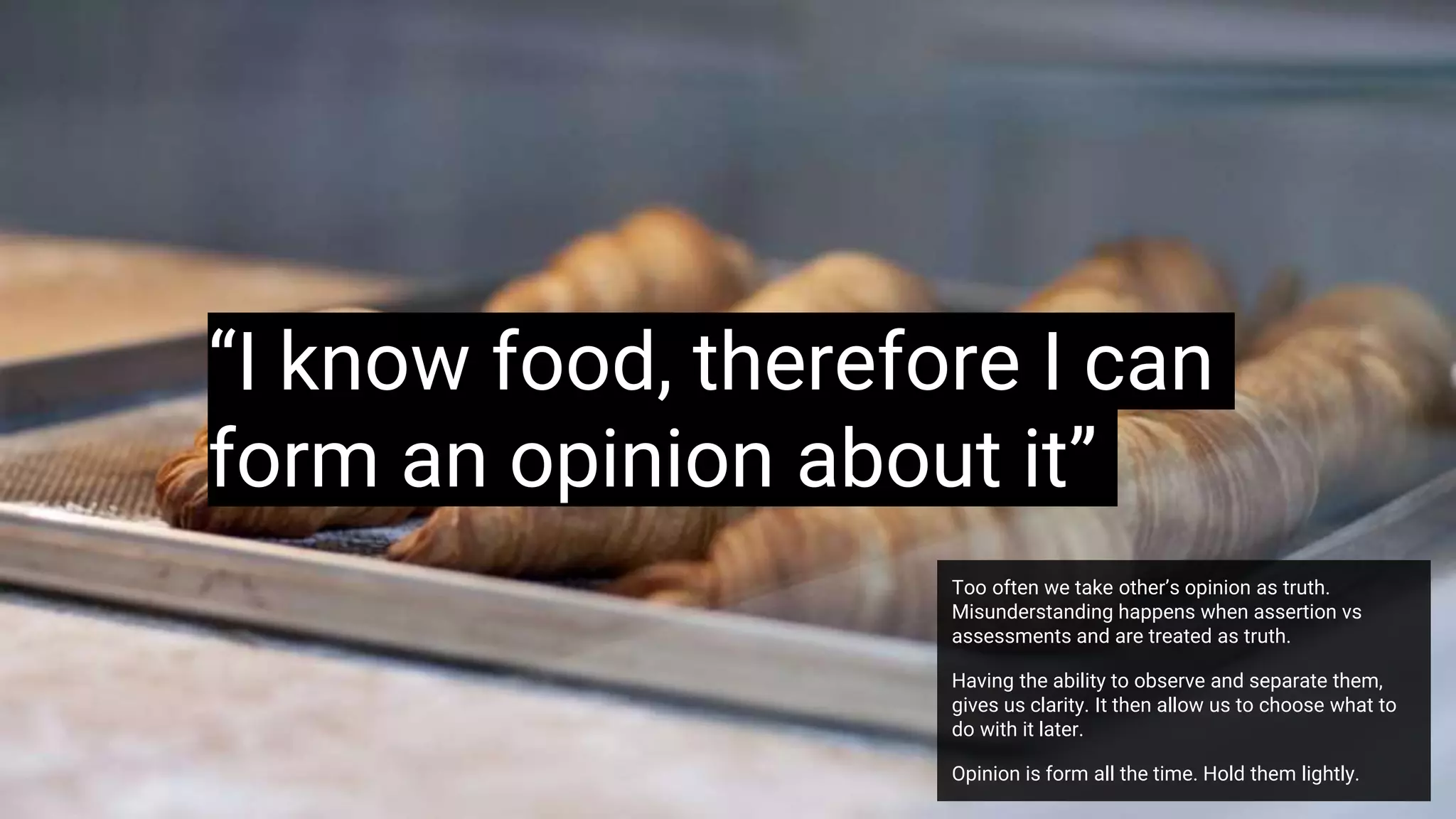
“I know food, therefore I can
form an opinion about it”
Too often we take other’s opinion as truth.
Misunderstanding happens when assertion vs
assessments and are treated as truth.
Having the ability to observe and separate them,
gives us clarity. It then allow us to choose what to
do with it later.
Opinion is form all the time. Hold them lightly.
Observation gives us clarity
And why do we tend to listen to seniors or other
designers as feedback? Because they know our
secrets (process), so their feedback hold more
weight.
Design process is methodical
Design is inclusive,
the role of design however is
exclusive.
Everyone can enjoy the output of design, but people
who create them require specific type of practices.
There’s no job in the world that ask you to create
things before it’s a reality. We create possibilities.
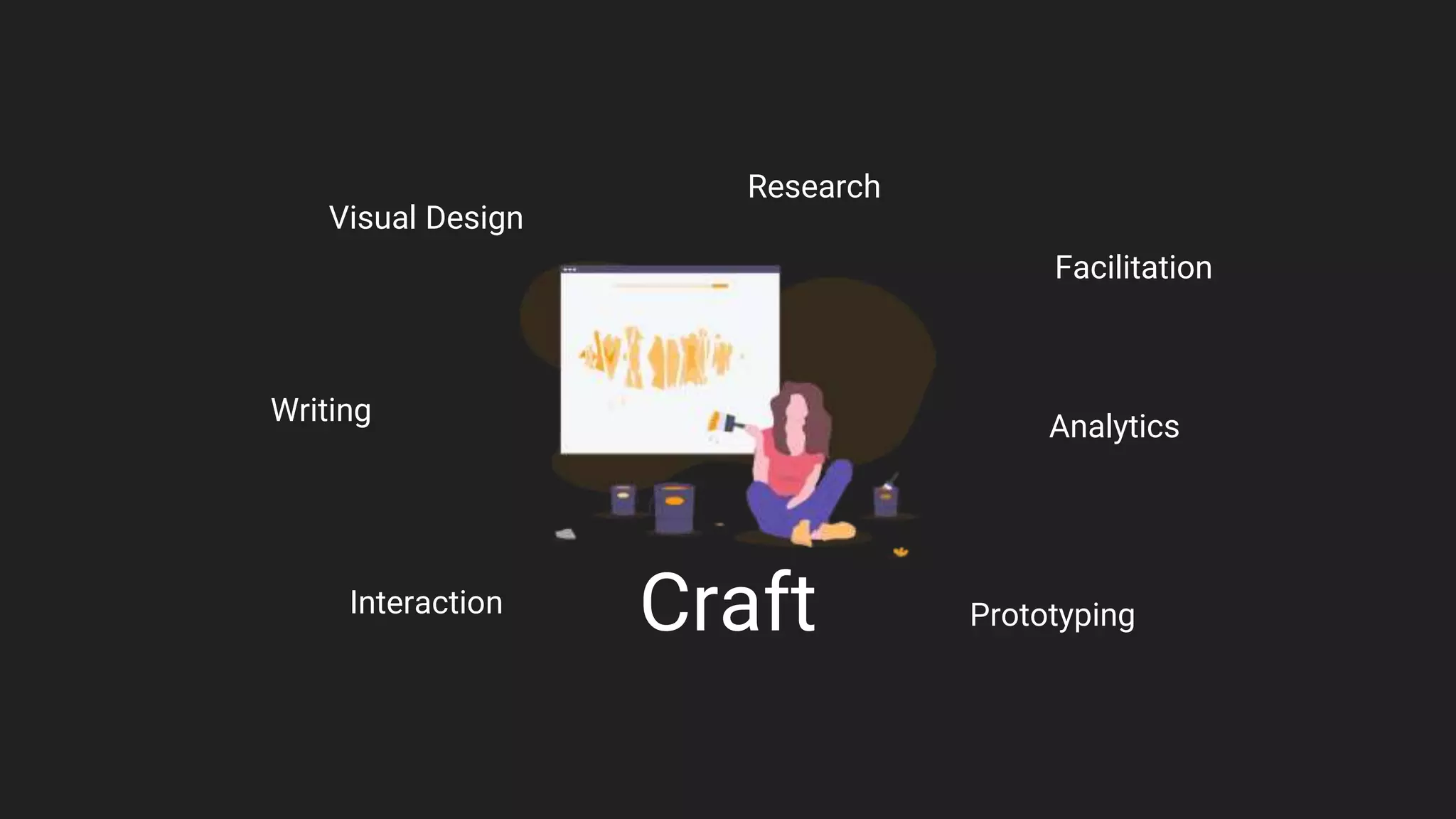
Visual Design
Prototyping
Writing
Facilitation
Research
Interaction
Analytics
Craft
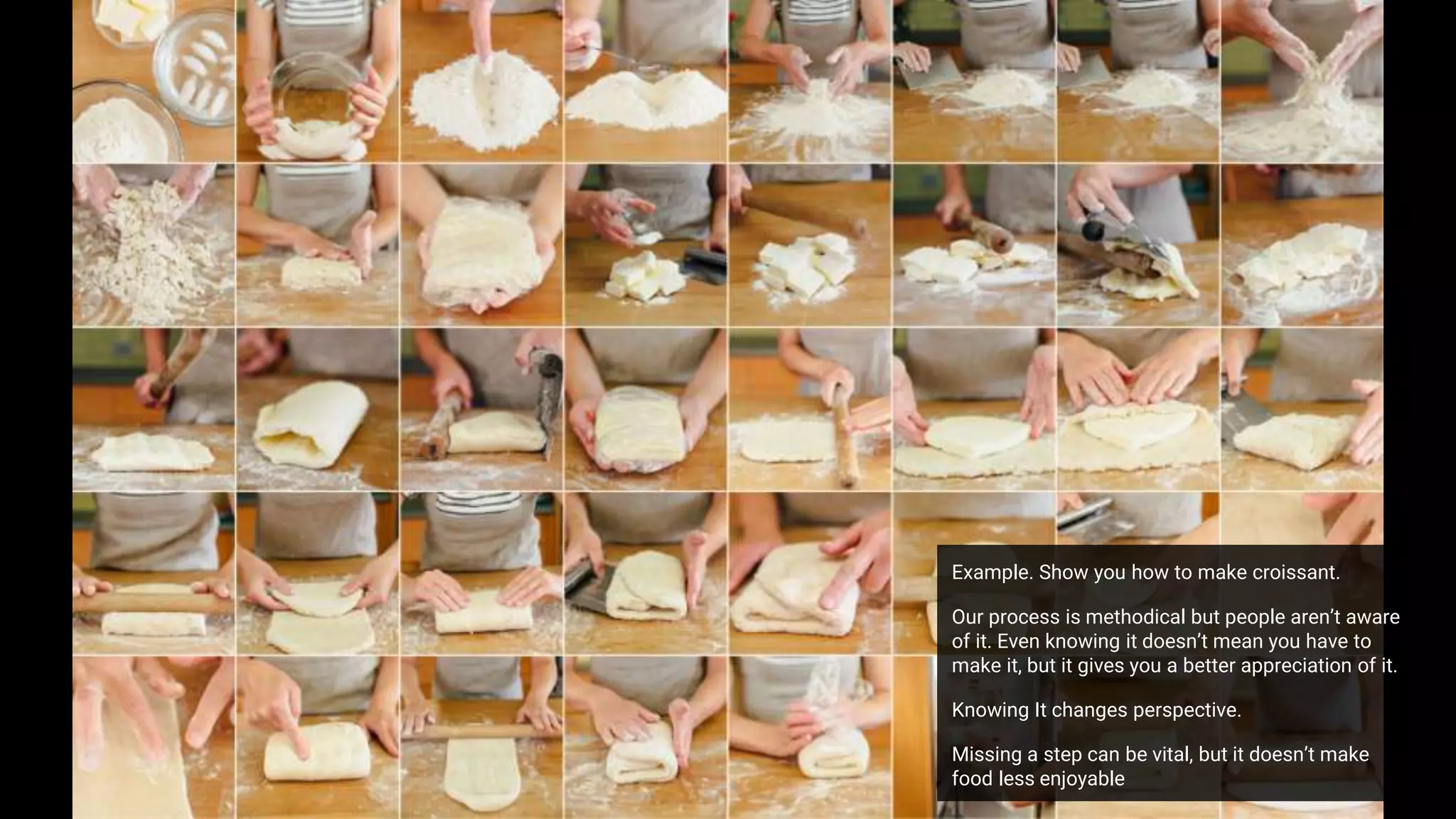
Example. Show you how to make croissant.
Our process is methodical but people aren’t aware
of it. Even knowing it doesn’t mean you have to
make it, but it gives you a better appreciation of it.
Knowing It changes perspective.
Missing a step can be vital, but it doesn’t make
food less enjoyable
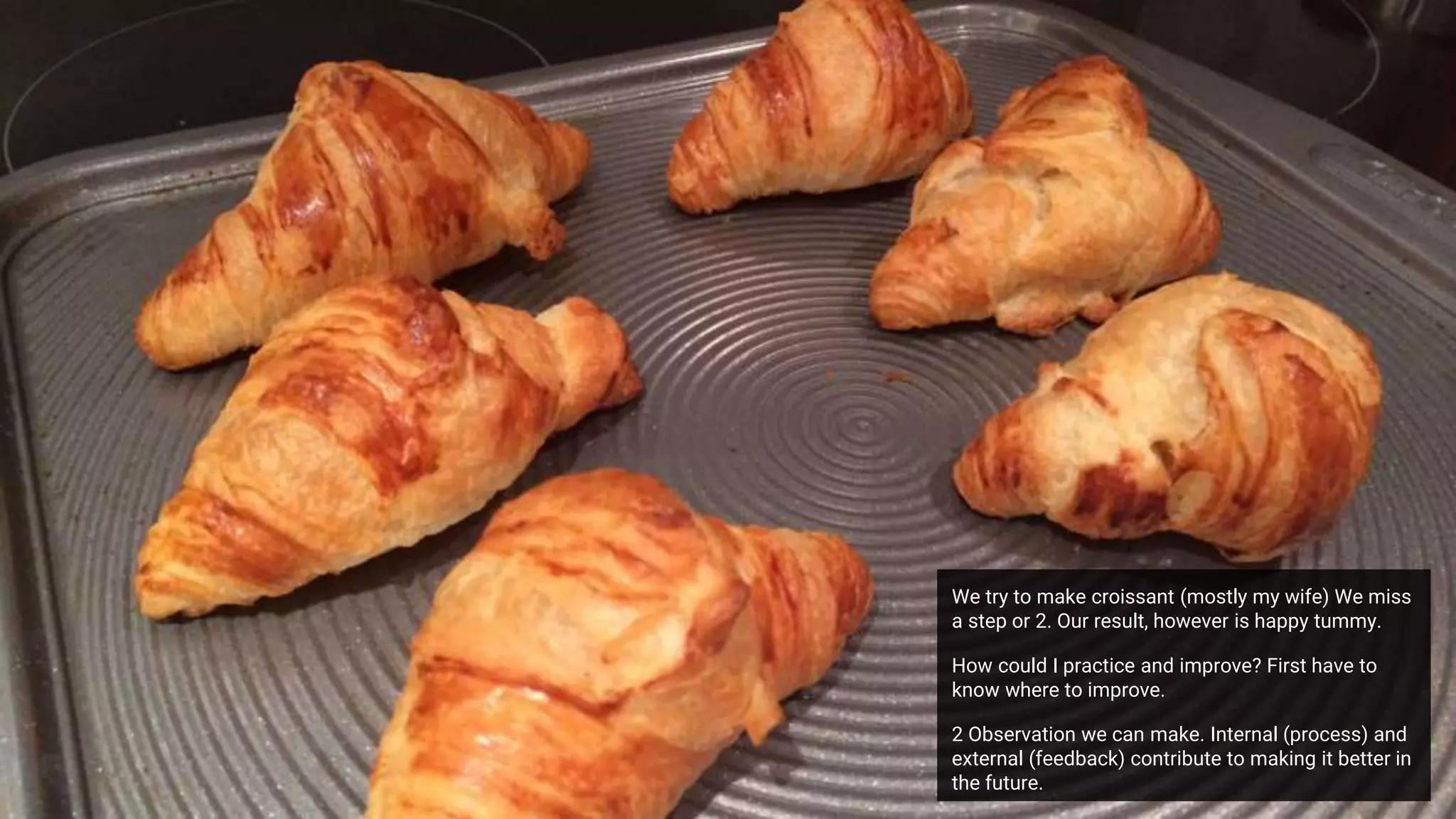
We try to make croissant (mostly my wife) We miss
a step or 2. Our result, however is happy tummy.
How could I practice and improve? First have to
know where to improve.
2 Observation we can make. Internal (process) and
external (feedback) contribute to making it better in
the future.
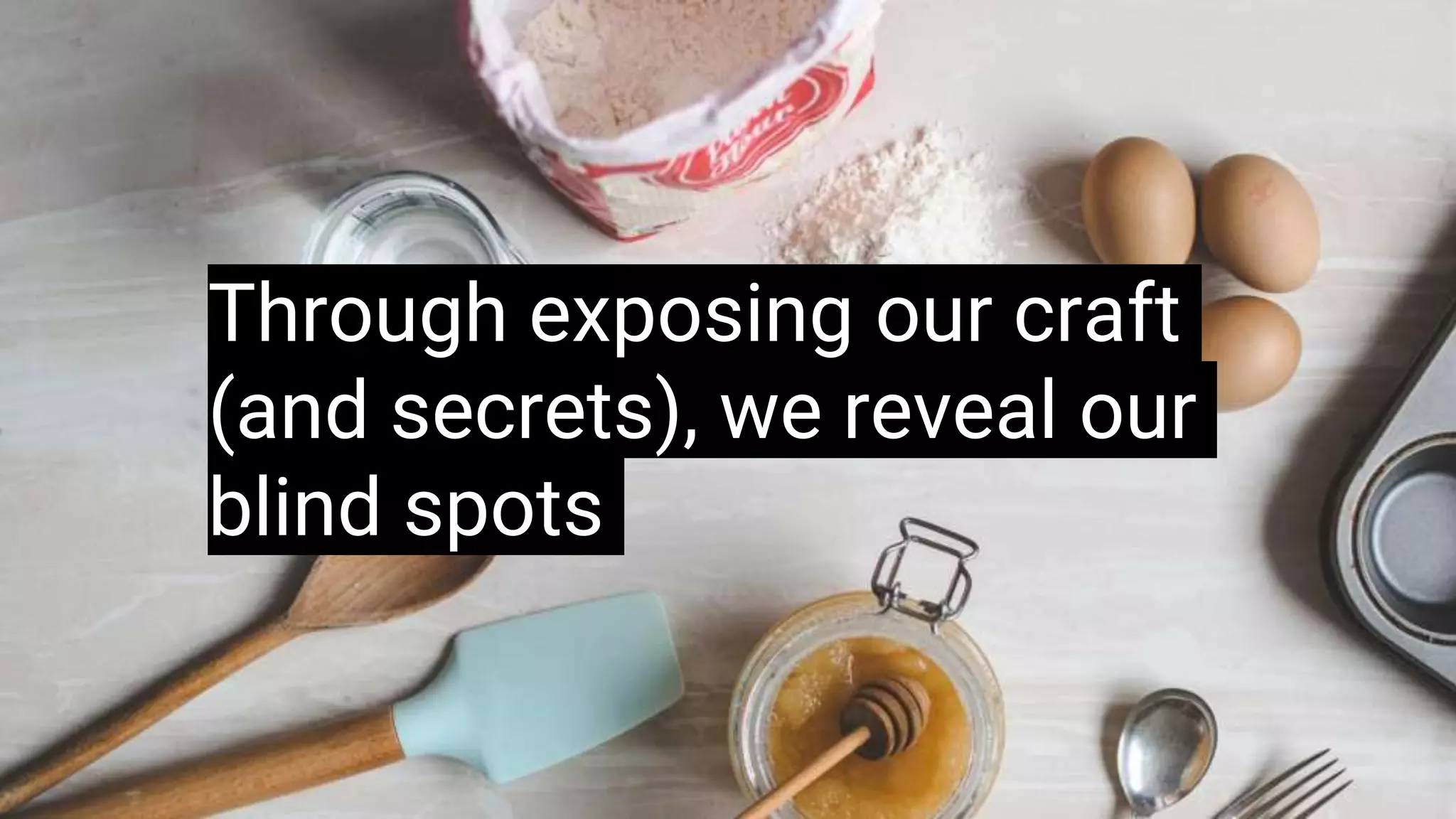
Through exposing our craft
(and secrets), we reveal our
blind spots
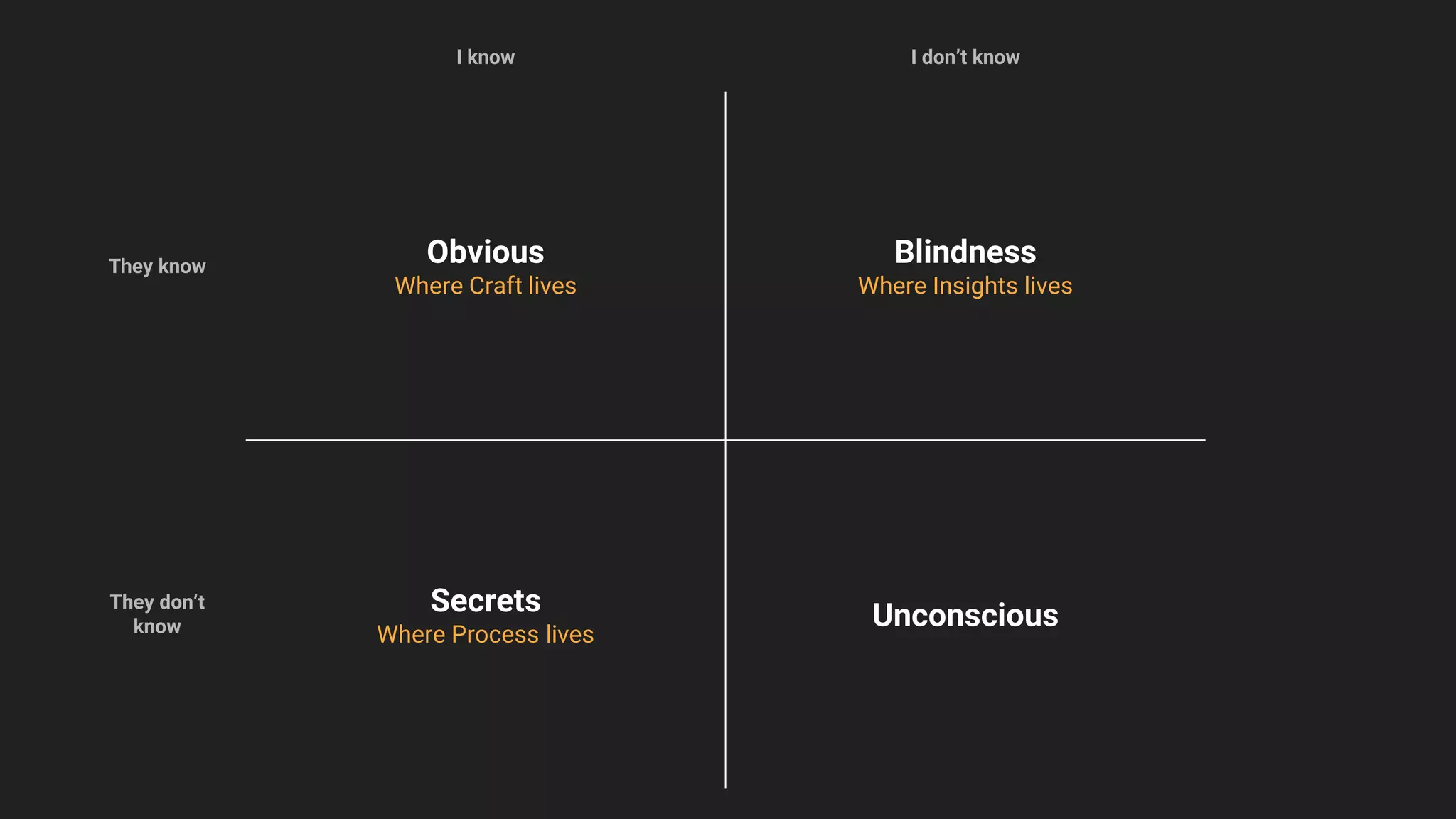
I know
They know
I don’t know
They don’t
know
Obvious
Where Craft lives
Blindness
Where Insights lives
Secrets
Where Process lives
Unconscious
Communicating craft
changes conversation
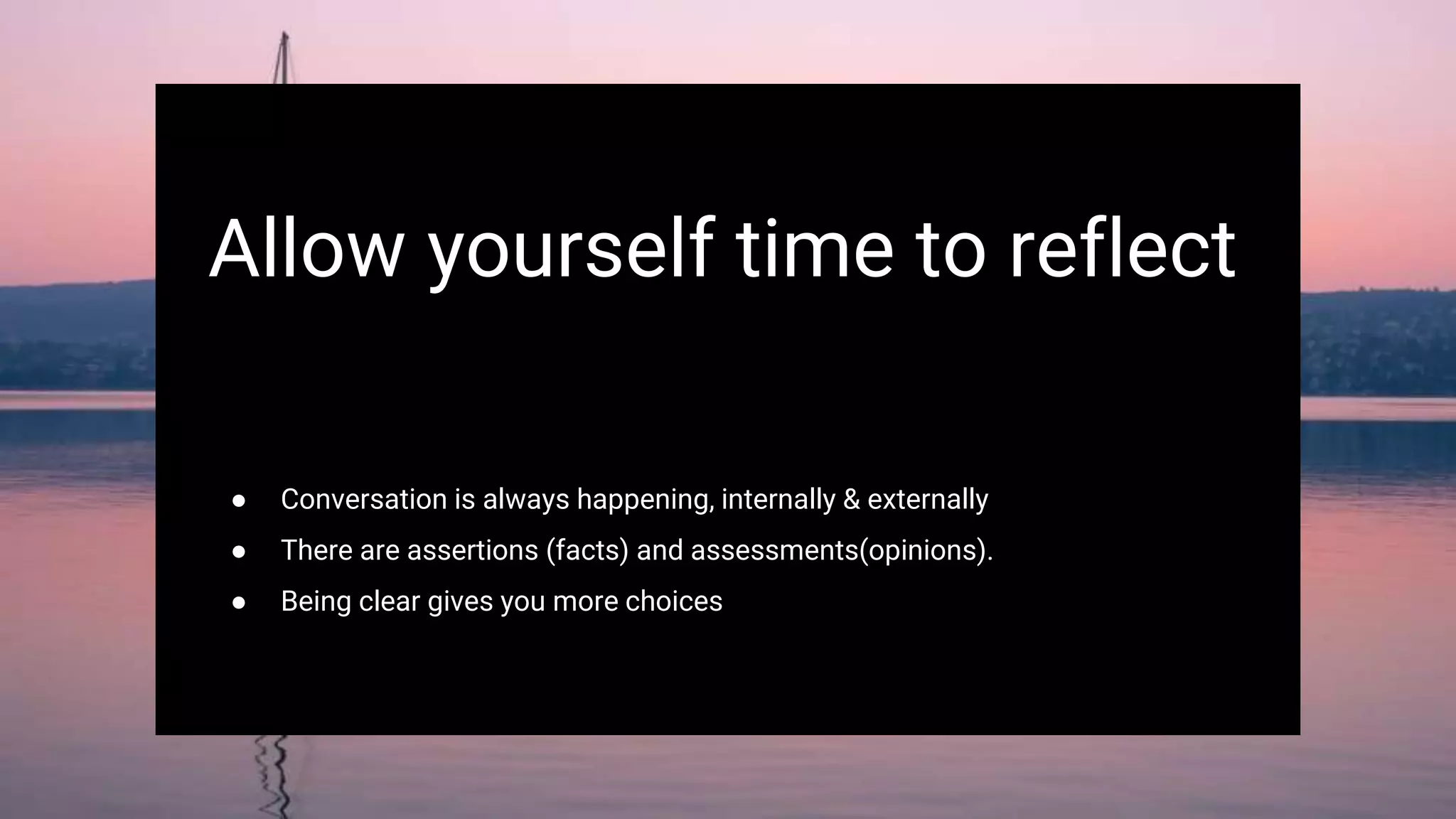
Allow yourself time to reflect
● Conversation is always happening, internally & externally
● There are assertions (facts) and assessments(opinions).
● Being clear gives you more choices
Expose your secrets, unveil
your blind spots
● Share your craft and process openly
● Allow others to make observations as well
● Revealing your blind spots allow you to get better
● Help others gain a better appreciation of what you deliver
Cultivate a safe environment
for open honest
conversation
● Give opportunity for others to give feedback
● People are entitled to give their opinion, you decide how to act on it
● Make design truly inclusive and create trust in your craft
Observation + Craft
create possibilities
Thank You & AMA

DBA #22 - Craft & The Fundamentals of Observation by Jonathan Yap

  • 1.
  • 2.
  • 3.
    Are you awareof your own breathing? Observation is a very powerful skill. We go into autopilot with our everyday life. Just like our job. We have a natural tendency to fall into patterns and behaviour. Especially when our survival is dependant on it. It becomes 2nd nature. As designers get more experience, our own patterns gets more invisible.
  • 4.
    What does thisimage brings out for you? We know imagery invoke powerful conversation, emotions, feelings. It’s communication. These are your tools and this is your craft.
  • 5.
    You cannot intervenein a world you cannot see. Julio Olalla, Newfield Network
  • 6.
    Observation exercise. Notice whatyou are noticing. The things that are happening. There’s a voice happening in your head.
  • 7.
    Conversation is constant Thevoice in our head is something we cannot put down. It’s like breathing. You are not aware until you pay attention to it.. If you start to listen to it, it becomes clearer and you can start to sort them out. Conversation happens internally and externally. Inside and outside. Self and others
  • 8.
    We see theworld not as it is, but as we are Albert Einstein
  • 9.
    Observation exercise. Stating whatcomes to mind when you first see this image? Is there a pattern emerging around that internal voice?
  • 10.
    Assertions vs Assessment There’s2 things going on. Start to be aware of what are facts(assertions) and what are opinions(assumption). Humans constantly make assumptions and form opinions, it’s hard to separate them from facts. Why is this important?
  • 11.
    When you startbeing aware, you start to allow for different outcomes
  • 12.
    What does observationhave to do with craft? Other than you see more you get better at visual design for example. I hint earlier that you can communicate through powerful imagery. Your craft can change things. My assessment is we haven’t done this internally with our own process and with our team.
  • 13.
    Why is designso contentious sometimes?
  • 14.
    What’s the outcomeof design… we can relate this to food. You can have an opinion about things. Just like food. I can have an taste it, and enjoy it. So I’m entitled to have an opinion about it. Doesn’t make me wrong. We all have opinion, it’s just human nature.
  • 15.
    “I know food,therefore I can form an opinion about it” Too often we take other’s opinion as truth. Misunderstanding happens when assertion vs assessments and are treated as truth. Having the ability to observe and separate them, gives us clarity. It then allow us to choose what to do with it later. Opinion is form all the time. Hold them lightly.
  • 16.
    Observation gives usclarity And why do we tend to listen to seniors or other designers as feedback? Because they know our secrets (process), so their feedback hold more weight. Design process is methodical
  • 17.
    Design is inclusive, therole of design however is exclusive. Everyone can enjoy the output of design, but people who create them require specific type of practices. There’s no job in the world that ask you to create things before it’s a reality. We create possibilities.
  • 18.
  • 19.
    Example. Show youhow to make croissant. Our process is methodical but people aren’t aware of it. Even knowing it doesn’t mean you have to make it, but it gives you a better appreciation of it. Knowing It changes perspective. Missing a step can be vital, but it doesn’t make food less enjoyable
  • 20.
    We try tomake croissant (mostly my wife) We miss a step or 2. Our result, however is happy tummy. How could I practice and improve? First have to know where to improve. 2 Observation we can make. Internal (process) and external (feedback) contribute to making it better in the future.
  • 21.
    Through exposing ourcraft (and secrets), we reveal our blind spots
  • 22.
    I know They know Idon’t know They don’t know Obvious Where Craft lives Blindness Where Insights lives Secrets Where Process lives Unconscious
  • 23.
  • 24.
    Allow yourself timeto reflect ● Conversation is always happening, internally & externally ● There are assertions (facts) and assessments(opinions). ● Being clear gives you more choices
  • 25.
    Expose your secrets,unveil your blind spots ● Share your craft and process openly ● Allow others to make observations as well ● Revealing your blind spots allow you to get better ● Help others gain a better appreciation of what you deliver
  • 26.
    Cultivate a safeenvironment for open honest conversation ● Give opportunity for others to give feedback ● People are entitled to give their opinion, you decide how to act on it ● Make design truly inclusive and create trust in your craft
  • 27.
  • 28.

Editor's Notes

  • #2 Introduction
  • #14 Now that we’re hearing our internal voice. Why is design so contentious? Why does it feel so hard to do our jobs, explaining it, or get people to see the value of it? Let’s talk about it What’s the outcome of design… we can relate this to food.
  • #15 You can have an opinion about things. Just like food. I can have an taste it, and enjoy it. So I’m entitled to have an opinion about it. Doesn’t make me wrong. We all have opinion, it’s just human nature.
  • #19 The output of our crafts are deliverables and facts. The process is ours to own.