TECHNOLOGY
POLICIES WE NEED
      NOW
    AND WHY
        Lori Crabtree
   Summer 2010 for ISLT 7366
ACCEPTABLE USE POLICY
 Most recent revision
 completed in 2003

 New technologies available

 AUP needs to include
 current technological tools

 Promote positive
 application of
 technological tools
WIKIS
What are wikis?

  How could they be used
  in the classroom?
  http://wikiharju.wikispaces.com/

  http://105.wikispaces.com/


What policies do we need
now?

Why would those policies
be best?
BLOGS
What are blogs?

How can they be used in
the classroom?
http://classblogmeister.com/blog.php?
blogger_id=1337
http://millersenglish10.blogspot.com/


What policy do we need
now?

Why would this policy be
best?
RESPONSIBILITY
           OUTLINE


AUP needs to be updated to for all parties involved

Specific responsibilities for each group should be outlined
and discussed.

Signed permissions should be flagged in PowerSchool
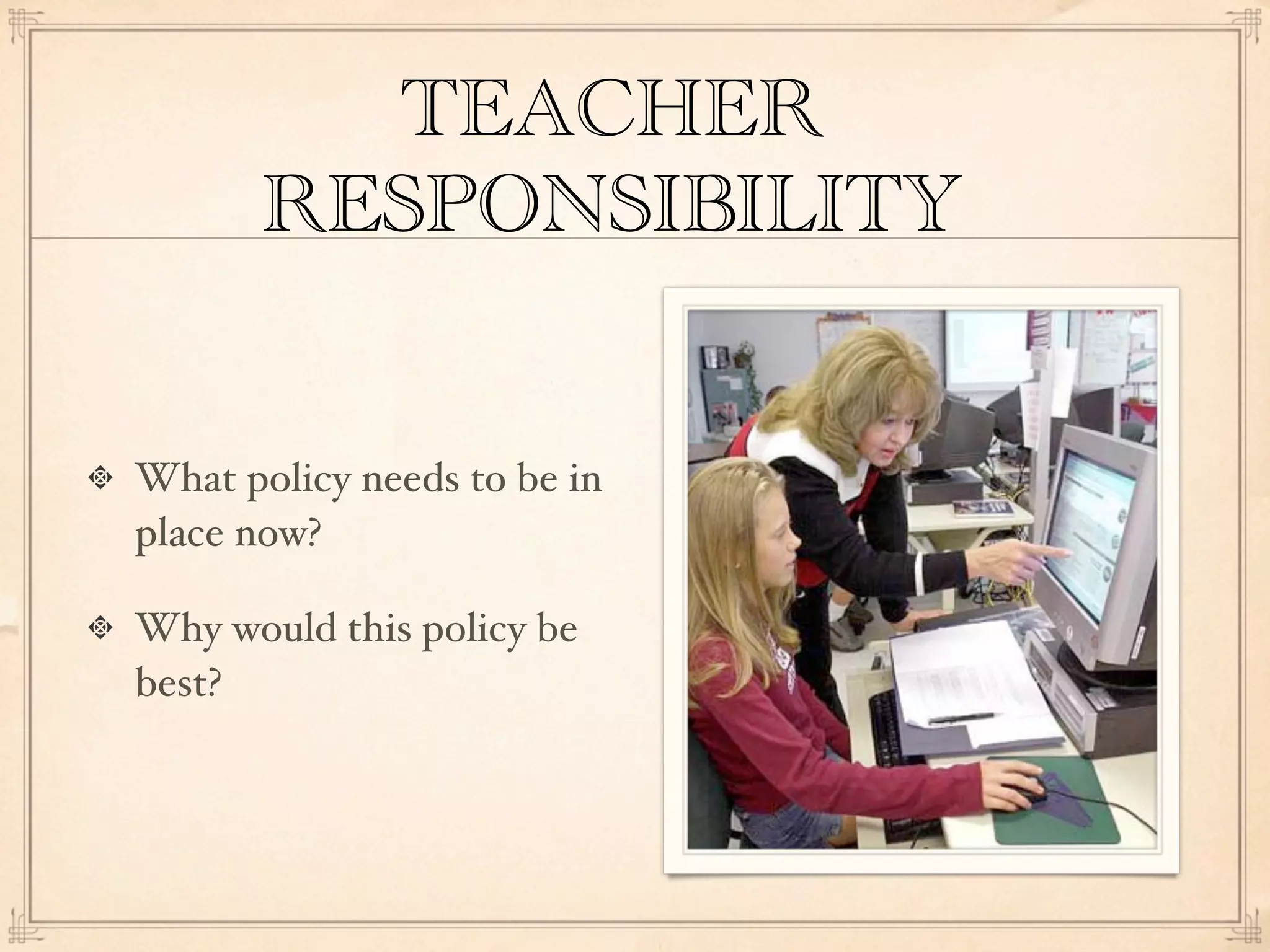
TEACHER
       RESPONSIBILITY


What policy needs to be in
place now?

Why would this policy be
best?
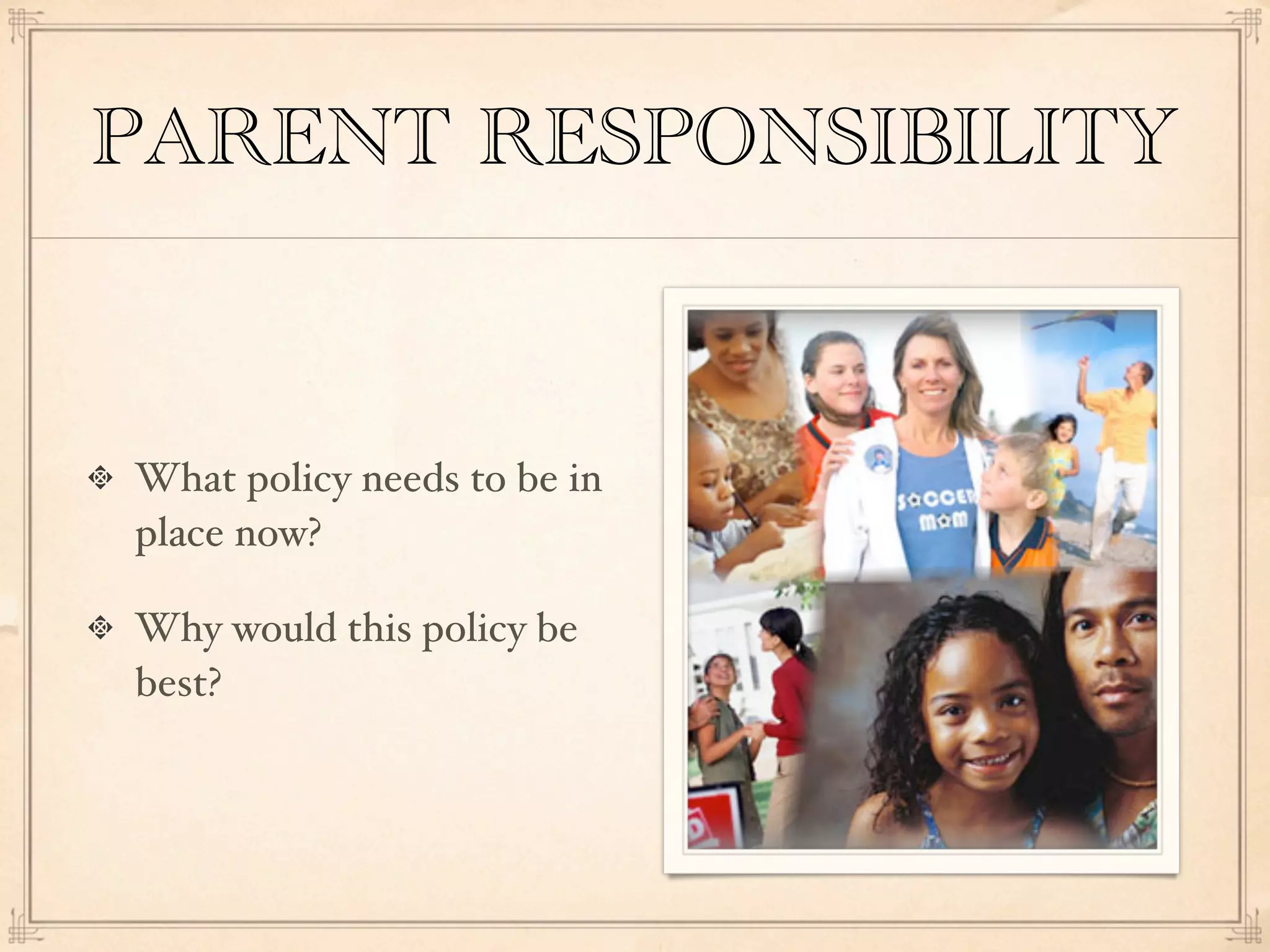
PARENT RESPONSIBILITY


What policy needs to be in
place now?

Why would this policy be
best?
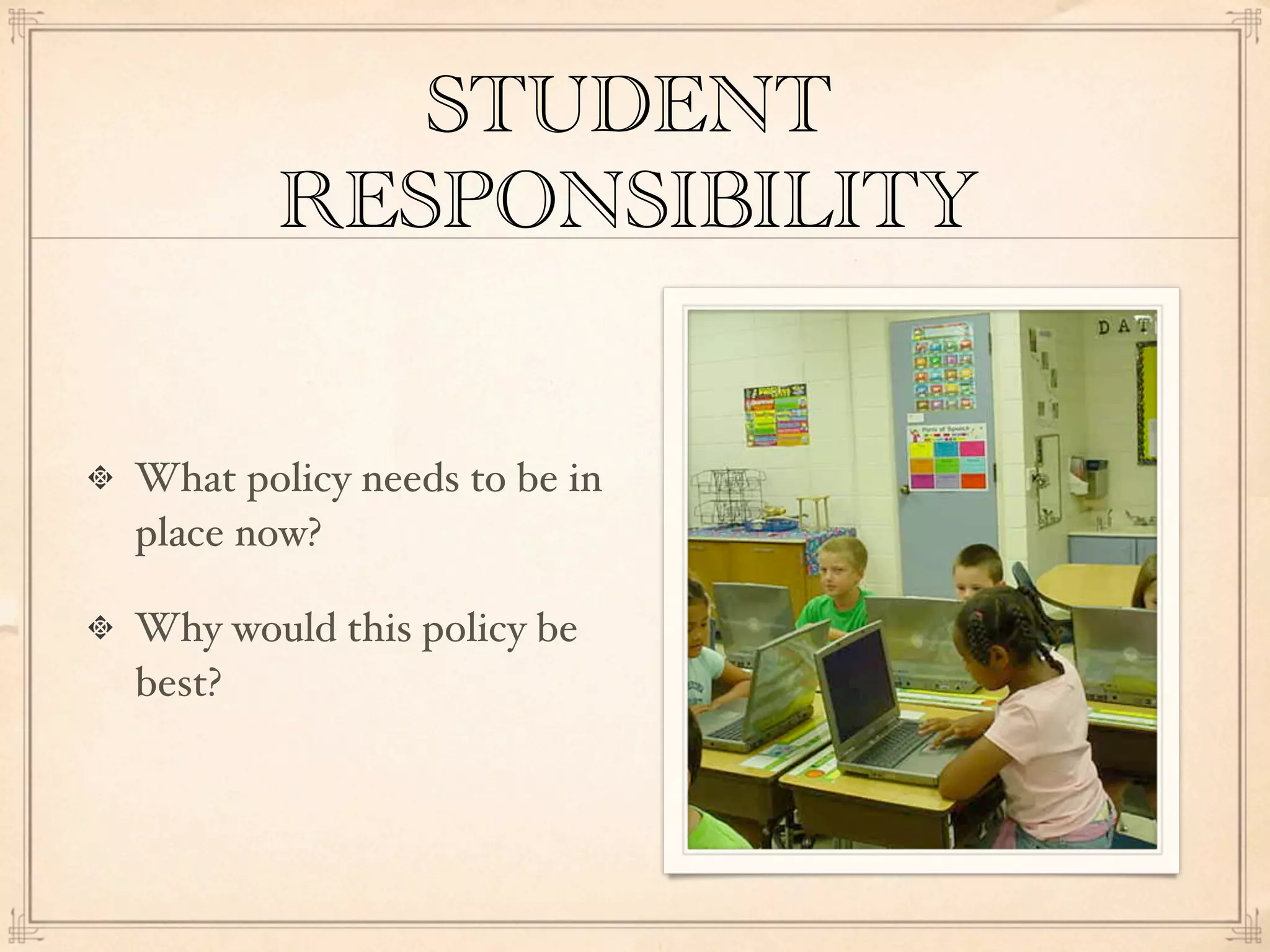
STUDENT
       RESPONSIBILITY


What policy needs to be in
place now?

Why would this policy be
best?
POLICY UPDATE

Recommend review of AUP every 3 years.

Include specific guidelines for Web 2.0 tools in the
classroom

AUP information given to parents at face to face meetings.

Responsibilities for teachers, students, and parents outline
in AUP
WHO IS THE AUDIENCE?


This presentation would be given to the district technology team. Members of this
team include the District Director of Instructional Media and Technology, District
Instructional Technology Resource Specialist, Coordinator of Technical Services,
building instructional technology specialists, and the building librarians. I chose
this group because I saw a need to make them more aware of things that could be
improved in our AUP. The current AUP is vague and does not address how
teachers should safeguards their use of Web 2.0 tools in the classroom. By adding
specific guidelines to our AUP, teachers would know their boundaries and be able
to use these tools and make sure students and student works are protected.

Crabtreeld tech present

  • 1.
    TECHNOLOGY POLICIES WE NEED NOW AND WHY Lori Crabtree Summer 2010 for ISLT 7366
  • 2.
    ACCEPTABLE USE POLICY Most recent revision completed in 2003 New technologies available AUP needs to include current technological tools Promote positive application of technological tools
  • 3.
    WIKIS What are wikis? How could they be used in the classroom? http://wikiharju.wikispaces.com/ http://105.wikispaces.com/ What policies do we need now? Why would those policies be best?
  • 6.
    BLOGS What are blogs? Howcan they be used in the classroom? http://classblogmeister.com/blog.php? blogger_id=1337 http://millersenglish10.blogspot.com/ What policy do we need now? Why would this policy be best?
  • 9.
    RESPONSIBILITY OUTLINE AUP needs to be updated to for all parties involved Specific responsibilities for each group should be outlined and discussed. Signed permissions should be flagged in PowerSchool
  • 10.
    TEACHER RESPONSIBILITY What policy needs to be in place now? Why would this policy be best?
  • 12.
    PARENT RESPONSIBILITY What policyneeds to be in place now? Why would this policy be best?
  • 14.
    STUDENT RESPONSIBILITY What policy needs to be in place now? Why would this policy be best?
  • 16.
    POLICY UPDATE Recommend reviewof AUP every 3 years. Include specific guidelines for Web 2.0 tools in the classroom AUP information given to parents at face to face meetings. Responsibilities for teachers, students, and parents outline in AUP
  • 17.
    WHO IS THEAUDIENCE? This presentation would be given to the district technology team. Members of this team include the District Director of Instructional Media and Technology, District Instructional Technology Resource Specialist, Coordinator of Technical Services, building instructional technology specialists, and the building librarians. I chose this group because I saw a need to make them more aware of things that could be improved in our AUP. The current AUP is vague and does not address how teachers should safeguards their use of Web 2.0 tools in the classroom. By adding specific guidelines to our AUP, teachers would know their boundaries and be able to use these tools and make sure students and student works are protected.

Editor's Notes

  • #2 As a requirement for my ISLT 7366 class, I needed to review our current Acceptable Use Policy to see if any policies needed to be updated and why those updates would be needed.
  • #3  One concern I have for our AUP is that it is now 7 years old. With wikis, blogs and other social networking sites available for school use, our policies should have measures in place to protect our teachers and students. These new technologies have the potential if used correctly to enhance student learning, teacher instruction, and further prepare our students for the future. To keep our AUP relevant, I would recommend that our AUP be reevaluated every 3 years. In the reevaluation process it would be important to write policy documents that promote the positive application of technology tools rather that prohibit undesirable uses. I would encourage the AUP to begin with a list of goals for using wikis, class web sites, blogs and other Web 2.0 tools in the classroom.
  • #4 One new technology would be the use of Wikis. Wikis are ways that students and teachers can create pages of information. These could be used in classrooms to design pages for research projects, book reports or math concepts. A policy that we need would be one that is very specific to the information that students could post to the wiki. A specific policy would help alleviate questioning. Students need to know what information can be posted. Wikis that are used in the classroom could be gated or password protected. By password protecting the site, only parents or invited guests could view the site. This policy would be in place to safeguard our students. Another policy to consider would be what wiki hosting site would be used. Would teachers be allowed to use any wiki format he or she is comfortable with? Or would the district select 1 or 2 wiki sites that teachers could use? What every route the district takes, filtering software needs to be considered. Filtering software should allow this sites to be unblocked and accessible to students and teachers. This policy would prevent frustration over a site being blocked.
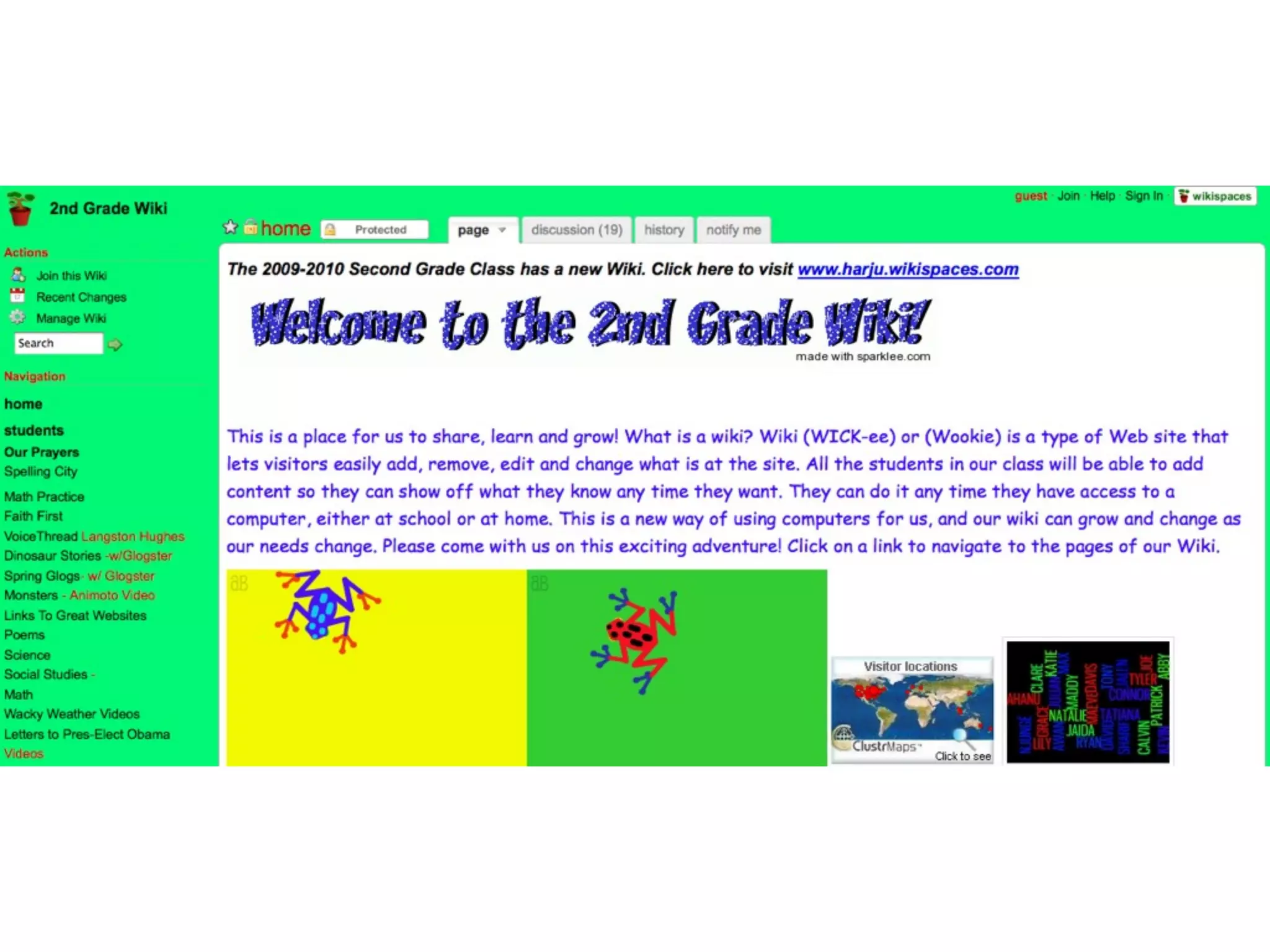
  • #5 This wiki is being used by an elementary school. It is a place where students collaborate to show what they are learning. This time of wiki could be used in all areas of the curriculum. This would also be a way to show other technological tools that students are using in the classroom.
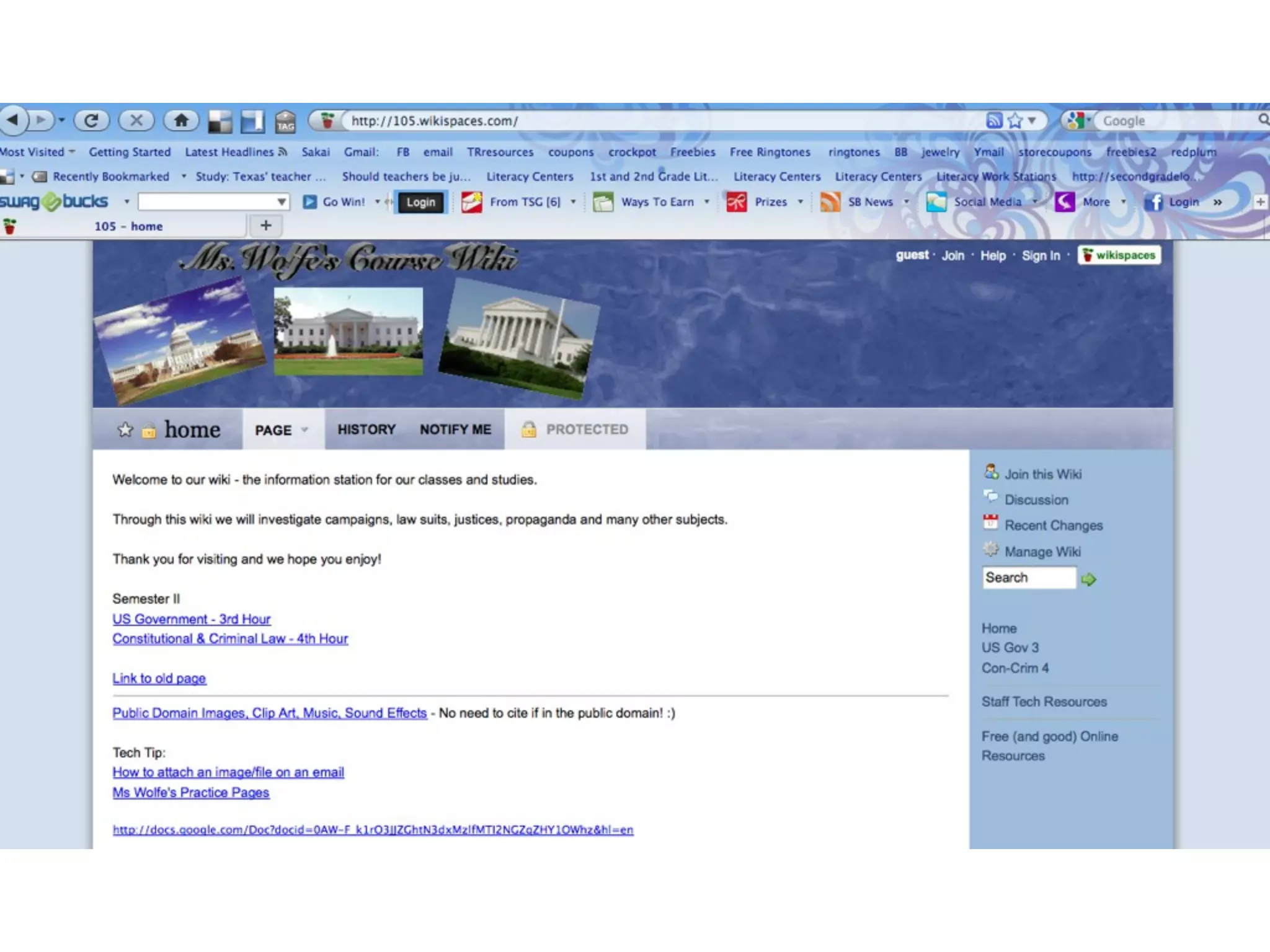
  • #6 A wiki at the high school level would look a little different. This wiki is an information station that students have created to show what they are learning about a particular subject. Not only does the wiki have student input, but it also gives tips from the teacher to help students improve their learning.
  • #7 According to Wikipedia a blog can provide commentary or news on a particular subject; others function as more personal journals. Using blogs in a classroom would be a creative way to use technology to keep parents informed of the daily or weekly happenings in a classroom. A blog could be written by a teacher or by students in a class. A policy that we need now should be one that mandates how a student can be identified on a blog. Students should not be identified by name or other recognizable information. If a teacher wants to create a classroom blog, student should be identified by a psuedonym or code name known only to classmates or family members. Students might also choose to create avatars. This would allow them to personalize their entries without giving away personal information.This policy would help to prevent lurkers from identifying students away from the blogsite. It would be in place to safeguard students. Again, blogs might need to be gated or password protected. This is another wall to protect our students. Again filtering software should be considered. At this time, the majority of sites that are blogs are blocked from teachers and students. Blogs should be UNblocked to help encourage teacher use of these tools. This policy would ensure that teachers can use the tools that they would like to incorporate into the classroom.
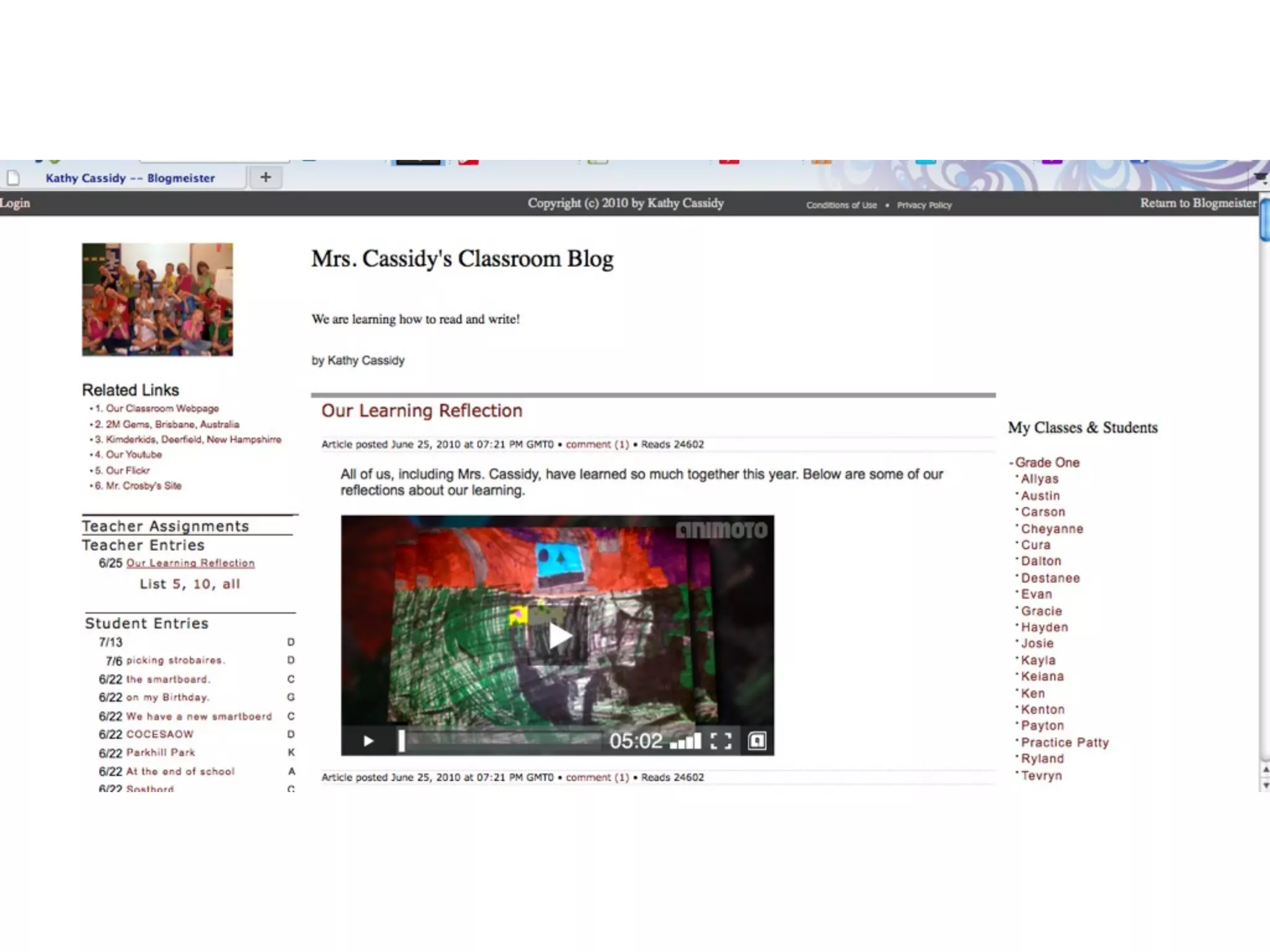
  • #8 A blog in an elementary classroom would require much teacher support. This blog created by a first grade teacher showcases work that students have completed. Students also have a personal page to upload comments. Using a blog in an elementary classroom can give students an opportunity to work on reading and writing skills.
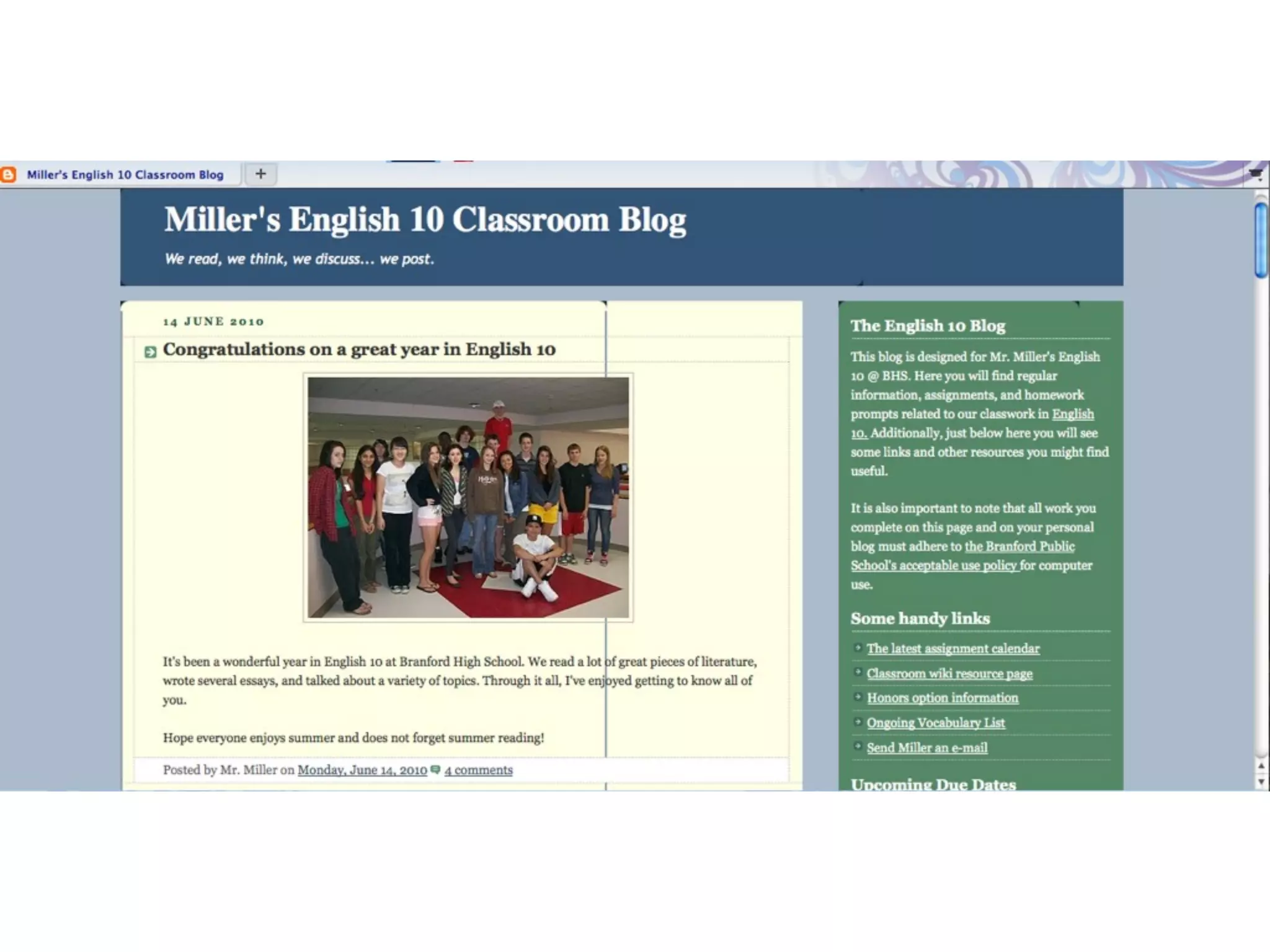
  • #9 A blog for a high school students would look much different. This blog is an example of an English class. The teacher posts an initial comment or thought for discussion. Then students comment and post ideas or thoughts. Other students comment to create a rich learning environment where ideas are shared and valued.
  • #10 The possibility of Web 2.0 tools being used in our classroom begs for a AUP that includes the responsibilities of all parties to be outlined with specific instructions. This should be discussed in a face to face format to ensure parents understand the guidelines before signing the AUP. Face to face information sharing would give parents an opportunity to ask questions, see what the teacher is expecting from the students, and view samples of successful wikis and blogs before signing the AUP. With complete understanding, I feel parents will be receptive and become involved in their student’s learning. Specific instructions should be given in a face to face format for teachers and students. Again this would allow for total understanding before signing the AUP and the responsibility outline. Once all parties understand their responsibilities and the AUP/ responsibility outline has been signed, the permissions slips should be flagged in Power school for easy access for teachers.
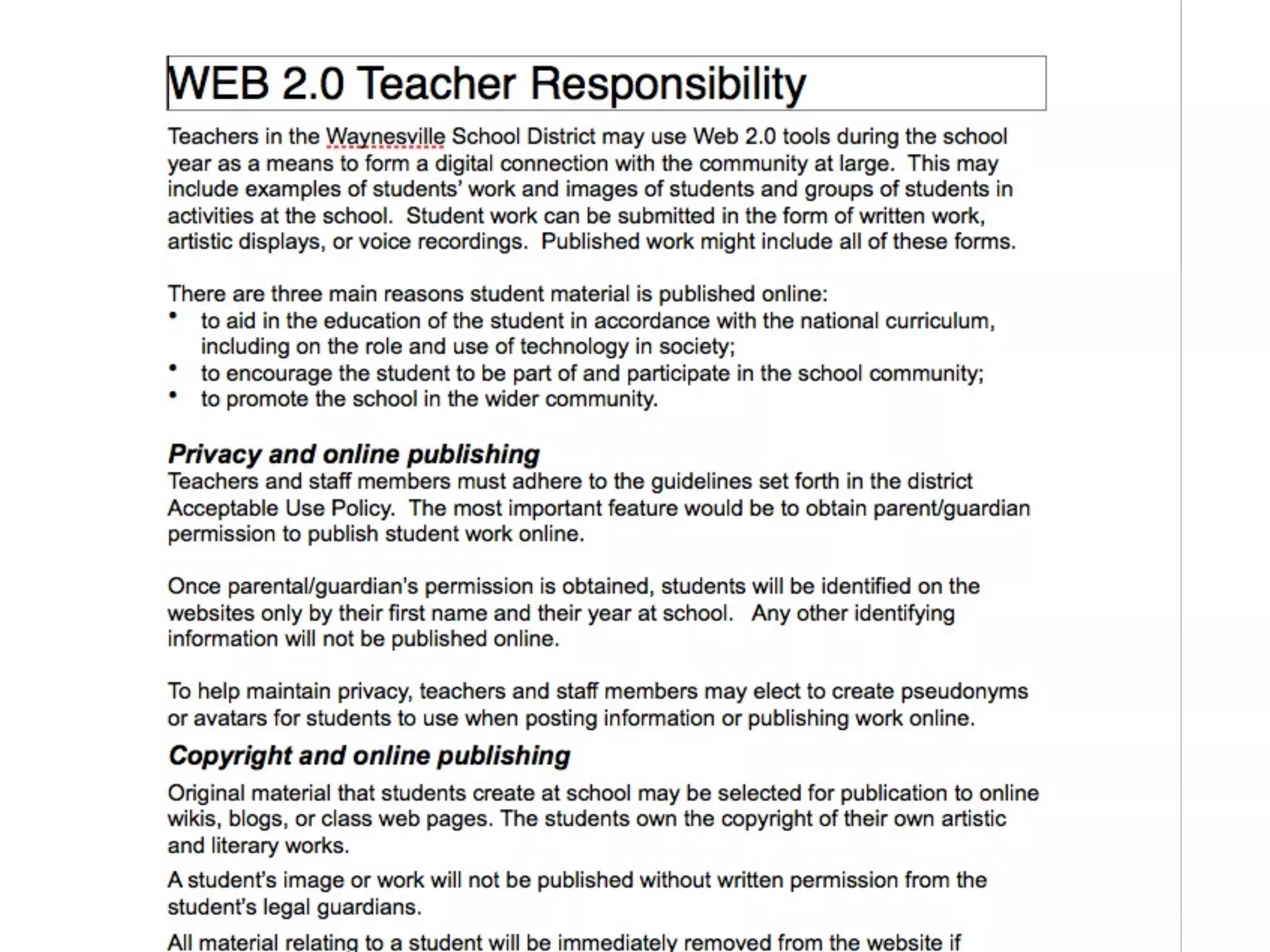
  • #11 Teachers who are willing to use Web 2.0 tools in his/her classroom must understand the responsibilities of the technology. I would suggest that these be outlined and combined with the AUP that teachers must sign every year. A policy that fully explains the boundaries of wikis or blogs, that encourages wiki use for specific reasons, and gives suggestions for how to keep students sage would help to alleviate the fear some teachers have with online tools.
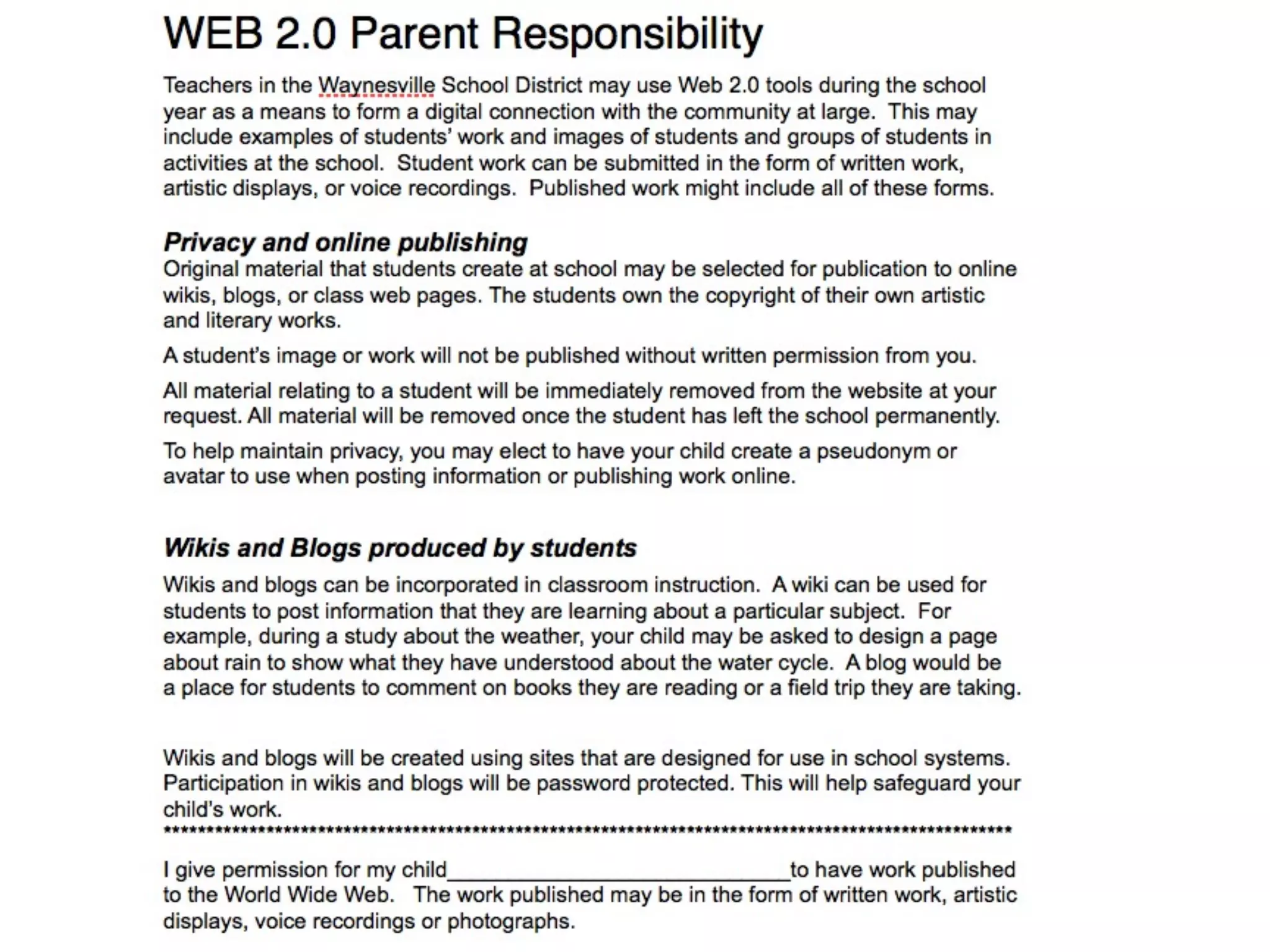
  • #12 This sample outline explains privacy and copyright information for student publishing. It also explains wikis and blogs and what the district view of using these tools would be. It encourages teachers while still giving them boundaries that are clear. This outline is a starting point for clear guidelines.
  • #13 Parents would need to understand their responsibilities too. This outline should help them understand what tools their child might be using. It should provide teachers with the information to understand what their child can and can not post, and how their child’s identity will be protected. This policy should also encourage parents to log on, post comments, and become a valuable part of their child’s education.
  • #14 This sample outline gives information about privacy and publishing and online tools use. When parents know what is expected, they can feel more at ease with their child’s online presence.
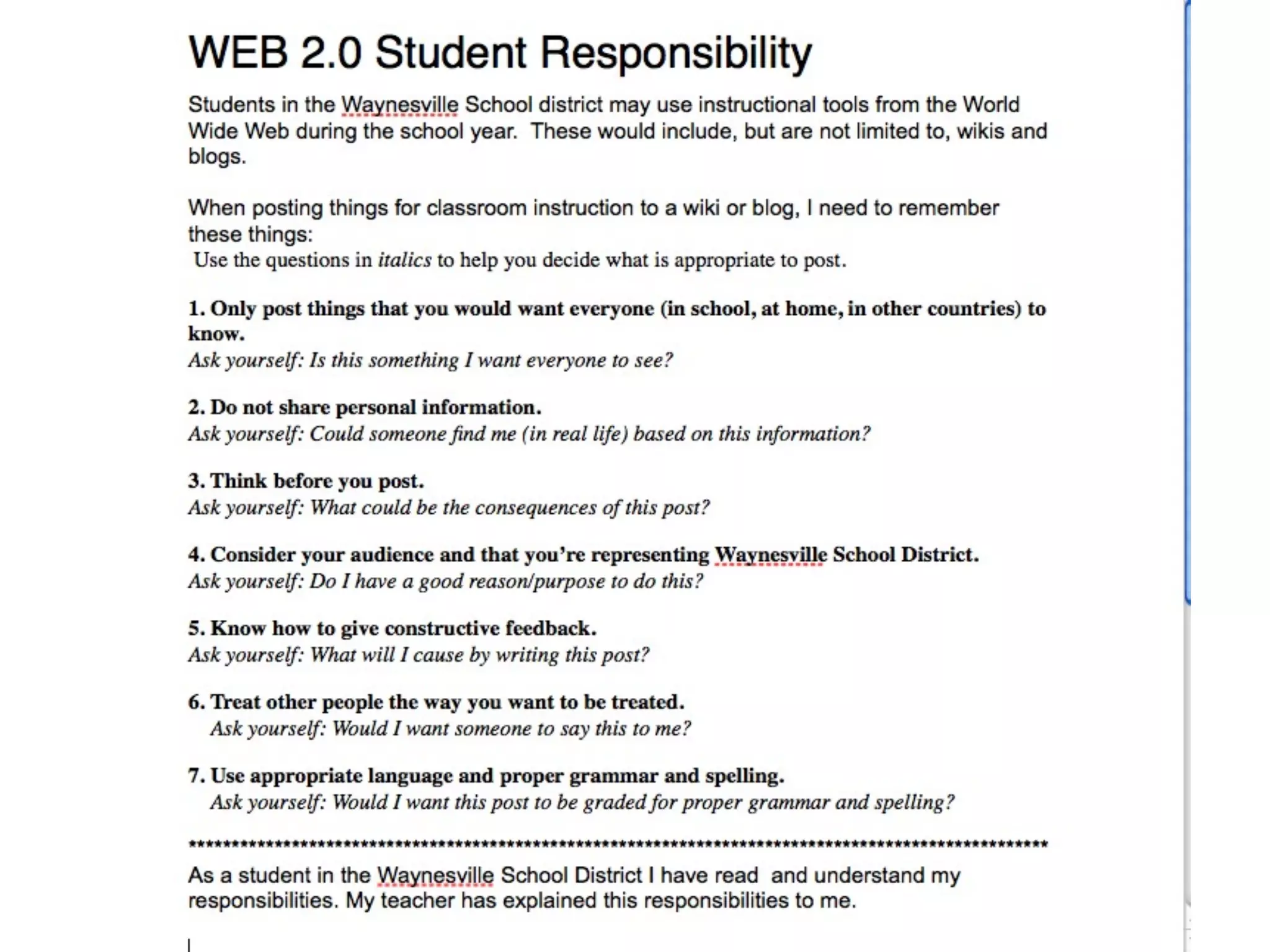
  • #15 Students who are required to use We 2.0 tools need to know their boundaries. They should be armed with questions to themselves before posting thoughts to a blog or wiki.
  • #16 This sample outlines questions that might help students think about what they are posting. This policy would be make sure that students understand what could or could not be posted to a blog or wiki. This could be coupled with the iSafe training that the district tech team can provide. This would build a strong foundation of internet safety for student.s
  • #17 One major concern is making sure our AUP is current and consistent with technological instruction in our district. By reviewing the AUP every 3 years, we can stay abreast of technological advances. Guidelines for using technology tools should be specific and goal oriented rather than a list of things that teacher should not do. Currently, the AUP is given to parents at Meet the Teacher night and when new students enroll. This can be a stressful time for parents. No real information is given to parents to discuss what the AUP is or why it is important. My recommendation is that the AUP be discussed in a face to face meeting with parents. This would be especially important for teachers who plan to create a digital footprint for their class or students. Parents need to be made aware of what their children will be asked to do in regards to technology. Responsibilities with regards to online tools should be addressed to parties and included in the AUP.
  • #18 I think this group needs to hear that teachers are ready and willing to use the tools that are available to us online. We need specific guidelines and encouragement from the tech staff before some teachers will embrace anything new. Teachers can be afraid to touch new things unless they know their boundaries. I think the policies that I have laid out in this presentation show that all the policies we need will help to safeguard teachers and students.