CPR Class Cardio Pulmonary Resuscitation Copyright, 2010 © Lakeview Veterinary Clinic, LLC TIP  Always make sure  you   are breathing first.
Basic CPR Advanced CPR Copyright, 2010 © Lakeview Veterinary Clinic, LLC In study from UC Davis, 2.3% of patients survive, even with humans – unlike on TV Best done with 2 people for Airway and Compression.  If only 1, and airway open,  chest compression is as effective as both.
Make sure animal is unconscious  Talk Gently touch pet You can be seriously injured if attempting CPR on pet that is sleeping heavily and startled awake
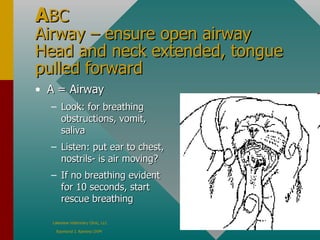
A BC Airway – ensure open airway Head and neck extended, tongue pulled forward A = Airway Look: for breathing obstructions, vomit, saliva Listen: put ear to chest, nostrils- is air moving? If no breathing evident for 10 seconds, start rescue breathing
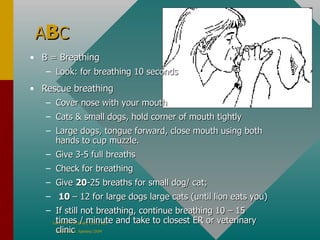
A B C    B = Breathing Look: for breathing 10 seconds Rescue breathing  Cover nose with your mouth Cats & small dogs, hold corner of mouth tightly Large dogs, tongue forward, close mouth using both hands to cup muzzle. Give 3-5 full breaths Check for breathing Give  20 -25 breaths for small dog/ cat; 10  – 12 for large dogs large cats (until lion eats you) If still not breathing, continue breathing 10 – 15 times / minute and take to closest ER or veterinary clinic
AB C  Cardiac After open airway – check for pulse. If no femoral pulse, begin chest compressions.  In small dogs/ cats – Squeeze the chest using one or both hands around the chest. Depress the rib cage circumferentially (see illustration).    Do this  120  to 150 times per minute  Large dogs Depress chest with 1 or both hands 1.5 – 4 inches – depend on size of dog 80 –  120  / min
ABC – Breath and Compress If possible coordinate breathing and compression if 2 rescue situation.  2 breaths for every 12 compression.
Continue CPR until…. You become exhausted and can not continue. Get animal transported to veterinary facility and experts take over. If pulse is palpable or heartbeat felt and are strong and regular.
Benefits You have knowledge of what is most important for pet’s life. Airway is most important  Breathing is important  Cardiac – heart  Do not be discouraged if patient does not survive.  Human medicine = CPR successful 4%  Hollywood success = depend on if character is in next weeks episode.
Close CPR has practical benefits that will give you confidence that you can help your pet survive a life threatening problem.
CPR test What are the 3 basics to remember with pet CPR? What does A stand for? What does B? What is breath rate for small dog?  Large? What is the compression rate for cat?  Large dog? Name one of reasons to stop CPR.

CPR for dogs and cats

  • 1.
    CPR Class CardioPulmonary Resuscitation Copyright, 2010 © Lakeview Veterinary Clinic, LLC TIP Always make sure you are breathing first.
  • 2.
    Basic CPR AdvancedCPR Copyright, 2010 © Lakeview Veterinary Clinic, LLC In study from UC Davis, 2.3% of patients survive, even with humans – unlike on TV Best done with 2 people for Airway and Compression. If only 1, and airway open, chest compression is as effective as both.
  • 3.
    Make sure animalis unconscious Talk Gently touch pet You can be seriously injured if attempting CPR on pet that is sleeping heavily and startled awake
  • 4.
    A BC Airway– ensure open airway Head and neck extended, tongue pulled forward A = Airway Look: for breathing obstructions, vomit, saliva Listen: put ear to chest, nostrils- is air moving? If no breathing evident for 10 seconds, start rescue breathing
  • 5.
    A B C B = Breathing Look: for breathing 10 seconds Rescue breathing Cover nose with your mouth Cats & small dogs, hold corner of mouth tightly Large dogs, tongue forward, close mouth using both hands to cup muzzle. Give 3-5 full breaths Check for breathing Give 20 -25 breaths for small dog/ cat; 10 – 12 for large dogs large cats (until lion eats you) If still not breathing, continue breathing 10 – 15 times / minute and take to closest ER or veterinary clinic
  • 6.
    AB C Cardiac After open airway – check for pulse. If no femoral pulse, begin chest compressions. In small dogs/ cats – Squeeze the chest using one or both hands around the chest. Depress the rib cage circumferentially (see illustration).   Do this 120 to 150 times per minute Large dogs Depress chest with 1 or both hands 1.5 – 4 inches – depend on size of dog 80 – 120 / min
  • 7.
    ABC – Breathand Compress If possible coordinate breathing and compression if 2 rescue situation. 2 breaths for every 12 compression.
  • 8.
    Continue CPR until….You become exhausted and can not continue. Get animal transported to veterinary facility and experts take over. If pulse is palpable or heartbeat felt and are strong and regular.
  • 9.
    Benefits You haveknowledge of what is most important for pet’s life. Airway is most important Breathing is important Cardiac – heart Do not be discouraged if patient does not survive. Human medicine = CPR successful 4% Hollywood success = depend on if character is in next weeks episode.
  • 10.
    Close CPR haspractical benefits that will give you confidence that you can help your pet survive a life threatening problem.
  • 11.
    CPR test Whatare the 3 basics to remember with pet CPR? What does A stand for? What does B? What is breath rate for small dog? Large? What is the compression rate for cat? Large dog? Name one of reasons to stop CPR.