Calvin Coolidge- The Man
 Political Career-
Mayor of Northampton,
Massachusetts
Lieutenant Governor of
Massachusetts
Governor of Massachusetts
Vice President of the U.S.
Calvin Coolidge- The Man
 Characteristics-
Plain
Thrifty
Quiet (aka- “Silent Cal”)
Pro-Business (Less Government
Interference)
Follower of Jefferson’s belief that the
government is best which governs the
least
Presidential Election of 1924
 Republican National Convention- 1924
Cleveland, Ohio
Nominated Calvin Coolidge and
Charles Dawes as his running mate
Presidential Election of 1924
 Democratic National Convention- 1924
Madison Square Garden, New York
City
Nominated John W. Davis and
Charles W. Bryan as his running
mate
Presidential Election of 1924
 Republicans and Democrats both
experienced a split within their parties
City Dwellers vs. Country Dwellers
Progressive Ticket, 1924
 Robert “Battling Bob” La Follette
Believed that they had turned their
backs on the farmers of America
Ran for the presidency on the new
Progressive ticket
Republicans and Democrats attacked
him as a radical
Presidential Election of 1924
 Calvin Coolidge won the election
 Surprising Outcome-
123 women won seats in state legislatures
2 women were elected governors of their
states
 Miriam “Ma” Ferguson (Texas)
 Nellie Ross (Wyoming)
Government Helps Business
 Coolidge believed-
 Free Enterprise = Freedom of business from
government rules
 Government regulations = Less profitable
business
 Profitable businesses = A happy and prosperous
nation
 Factories = Temples
 Workers = Worshippers
Government Helps Business
 Federal Trade Commission and
Federal Reserve Board take on
new roles
Aided the companies they were
supposed to be regulating
Allowed for the development of
trusts and monopolies again
Supreme Court Aids Big
Business
 Example- US Steel was ruled as
not a monopoly even though it
controlled 40% of the steel
industry in 1920
The Farm Problem
 Farmers were growing poorer while the
urban dwellers were getting richer
Problem with supply and demand
More produce meant lower prices
and less profits
High cost of farming
Higher taxes
 Government responds with
protectionist tariffs- which didn’t work
McNary-Haugen Bill
 Federal government would buy up the
agricultural surplus
Hold it until the home market improved
or
Sell it abroad
 Failed to pass Congress in 1924 and 1926
 Passed Congress in 1927 and 1928
Vetoed by Coolidge both times
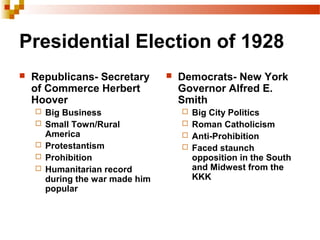
Presidential Election of 1928
 Republicans- Secretary
of Commerce Herbert
Hoover
 Big Business
 Small Town/Rural
America
 Protestantism
 Prohibition
 Humanitarian record
during the war made him
popular
 Democrats- New York
Governor Alfred E.
Smith
 Big City Politics
 Roman Catholicism
 Anti-Prohibition
 Faced staunch
opposition in the South
and Midwest from the
KKK
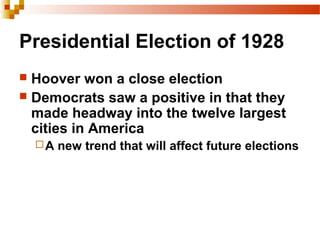
Presidential Election of 1928
 Hoover won a close election
 Democrats saw a positive in that they
made headway into the twelve largest
cities in America
A new trend that will affect future elections

CP US - Ch. 22 - Sec. 3

  • 1.
    Calvin Coolidge- TheMan  Political Career- Mayor of Northampton, Massachusetts Lieutenant Governor of Massachusetts Governor of Massachusetts Vice President of the U.S.
  • 2.
    Calvin Coolidge- TheMan  Characteristics- Plain Thrifty Quiet (aka- “Silent Cal”) Pro-Business (Less Government Interference) Follower of Jefferson’s belief that the government is best which governs the least
  • 3.
    Presidential Election of1924  Republican National Convention- 1924 Cleveland, Ohio Nominated Calvin Coolidge and Charles Dawes as his running mate
  • 4.
    Presidential Election of1924  Democratic National Convention- 1924 Madison Square Garden, New York City Nominated John W. Davis and Charles W. Bryan as his running mate
  • 5.
    Presidential Election of1924  Republicans and Democrats both experienced a split within their parties City Dwellers vs. Country Dwellers
  • 6.
    Progressive Ticket, 1924 Robert “Battling Bob” La Follette Believed that they had turned their backs on the farmers of America Ran for the presidency on the new Progressive ticket Republicans and Democrats attacked him as a radical
  • 7.
    Presidential Election of1924  Calvin Coolidge won the election  Surprising Outcome- 123 women won seats in state legislatures 2 women were elected governors of their states  Miriam “Ma” Ferguson (Texas)  Nellie Ross (Wyoming)
  • 8.
    Government Helps Business Coolidge believed-  Free Enterprise = Freedom of business from government rules  Government regulations = Less profitable business  Profitable businesses = A happy and prosperous nation  Factories = Temples  Workers = Worshippers
  • 9.
    Government Helps Business Federal Trade Commission and Federal Reserve Board take on new roles Aided the companies they were supposed to be regulating Allowed for the development of trusts and monopolies again
  • 10.
    Supreme Court AidsBig Business  Example- US Steel was ruled as not a monopoly even though it controlled 40% of the steel industry in 1920
  • 11.
    The Farm Problem Farmers were growing poorer while the urban dwellers were getting richer Problem with supply and demand More produce meant lower prices and less profits High cost of farming Higher taxes  Government responds with protectionist tariffs- which didn’t work
  • 12.
    McNary-Haugen Bill  Federalgovernment would buy up the agricultural surplus Hold it until the home market improved or Sell it abroad  Failed to pass Congress in 1924 and 1926  Passed Congress in 1927 and 1928 Vetoed by Coolidge both times
  • 13.
    Presidential Election of1928  Republicans- Secretary of Commerce Herbert Hoover  Big Business  Small Town/Rural America  Protestantism  Prohibition  Humanitarian record during the war made him popular  Democrats- New York Governor Alfred E. Smith  Big City Politics  Roman Catholicism  Anti-Prohibition  Faced staunch opposition in the South and Midwest from the KKK
  • 14.
    Presidential Election of1928  Hoover won a close election  Democrats saw a positive in that they made headway into the twelve largest cities in America A new trend that will affect future elections