Version 6: August 31, 2020
Professor Ali A. Hadi
Faculty of Medicine/University of
Al-Ameed
Comprehensive COVID-19 Slideset: Emerging Data
and Guidance on Diagnosis and Management
This program is supported by an educational grant from Gilead Sciences, Inc.
Global Epidemiology
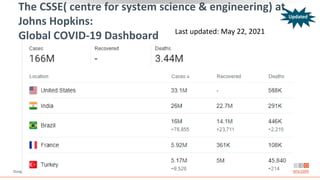
The CSSE( centre for system science & engineering) at
Johns Hopkins:
Global COVID-19 Dashboard
Dong. Lancet Infect Dis. 2020;20:533. https://coronavirus.jhu.edu/map.html Slide credit: clinicaloptions.com
Last updated: May 22, 2021
Updated
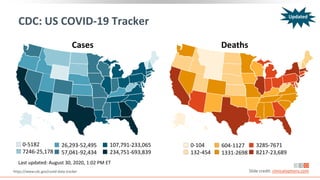
CDC: US COVID-19 Tracker
https://www.cdc.gov/covid-data-tracker Slide credit: clinicaloptions.com
Cases Deaths
0-5182
7246-25,178
107,791-233,065
234,751-693,839
Last updated: August 30, 2020, 1:02 PM ET
26,293-52,495
57,041-92,434
0-104
132-454
3285-7671
8217-23,689
604-1127
1331-2698
Updated
50
40
30
20
10
0
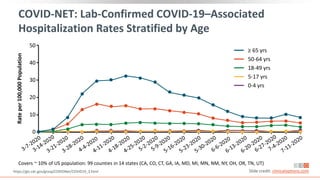
COVID-NET: Lab-Confirmed COVID-19–Associated
Hospitalization Rates Stratified by Age
https://gis.cdc.gov/grasp/COVIDNet/COVID19_3.html Slide credit: clinicaloptions.com
Covers ~ 10% of US population: 99 counties in 14 states (CA, CO, CT, GA, IA, MD, MI, MN, NM, NY, OH, OR, TN, UT)
Rate
per
100,000
Population
0-4 yrs
5-17 yrs
18-49 yrs
50-64 yrs
≥ 65 yrs
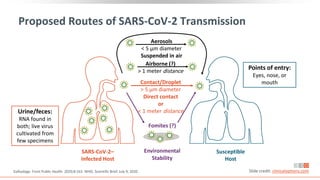
Proposed Routes of SARS-CoV-2 Transmission
Galbadage. Front Public Health. 2020;8:163. WHO. Scientific Brief. July 9, 2020. Slide credit: clinicaloptions.com
SARS-CoV-2–
Infected Host
Susceptible
Host
Aerosols
< 5 µm diameter
Suspended in air
Contact/Droplet
> 5 µm diameter
Direct contact
or
< 1 meter distance
Fomites (?)
Environmental
Stability
Points of entry:
Eyes, nose, or
mouth
Airborne (?)
> 1 meter distance
Urine/feces:
RNA found in
both; live virus
cultivated from
few specimens
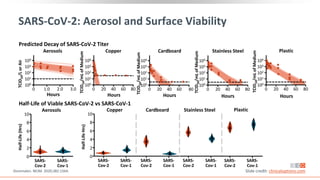
SARS-CoV-2: Aerosol and Surface Viability
Doremalen. NEJM. 2020;382:1564. Slide credit: clinicaloptions.com
Predicted Decay of SARS-CoV-2 Titer
Half-Life of Viable SARS-CoV-2 vs SARS-CoV-1
Hours
Hours Hours
Hours
Hours
Aerosols
3.0
0 1.0 2.0
104
103
102
101
100
TCID
50
/L
or
Air
80
0 20 40
104
103
102
101
100
TCID
50
/mL
of
Medium
60 80
0 20 40
104
103
102
101
100
60
Copper Cardboard
80
0 20 40
104
103
102
101
100
60
Stainless Steel
80
0 20 40
104
103
102
101
100
60
Plastic
SARS-
Cov-2
SARS-
Cov-1
Half-Life
(Hrs)
10
8
6
4
2
0
Aerosols
SARS-
Cov-2
SARS-
Cov-1
Half-Life
Hrs)
10
8
6
4
2
0
Copper
SARS-
Cov-2
SARS-
Cov-1
Cardboard
SARS-
Cov-2
SARS-
Cov-1
Stainless Steel
SARS-
Cov-2
SARS-
Cov-1
Plastic
TCID
50
/mL
of
Medium
TCID
50
/mL
of
Medium
TCID
50
/mL
of
Medium
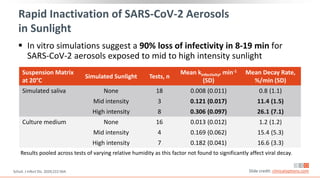
Rapid Inactivation of SARS-CoV-2 Aerosols
in Sunlight
 In vitro simulations suggest a 90% loss of infectivity in 8-19 min for
SARS-CoV-2 aerosols exposed to mid to high intensity sunlight
Schuit. J Infect Dis. 2020;222:564. Slide credit: clinicaloptions.com
Suspension Matrix
at 20°C
Simulated Sunlight Tests, n
Mean kinfectivity, min-1
(SD)
Mean Decay Rate,
%/min (SD)
Simulated saliva None 18 0.008 (0.011) 0.8 (1.1)
Mid intensity 3 0.121 (0.017) 11.4 (1.5)
High intensity 8 0.306 (0.097) 26.1 (7.1)
Culture medium None 16 0.013 (0.012) 1.2 (1.2)
Mid intensity 4 0.169 (0.062) 15.4 (5.3)
High intensity 7 0.182 (0.041) 16.6 (3.3)
Results pooled across tests of varying relative humidity as this factor not found to significantly affect viral decay.
Key Considerations on Modes of SARS-CoV-2
Transmission
 Person-to-person considered predominant mode of transmission, likely via
respiratory droplets from coughing, sneezing, or talking[1,2]
‒ High-level viral shedding evident in upper respiratory tract[3,4]
‒ Airborne transmission suggested by multiple studies, but frequency unclear in
absence of aerosol-generating procedures in healthcare settings[2]
 Virus rarely cultured in respiratory samples > 9 days after symptom onset,
especially in patients with mild disease[5]
 Multiple studies describe a correlation between reduced infectivity with decreases
in viral loads and rises in neutralizing antibodies[5]
 ACOG: “Data are reassuring that vertical transmission appears to be uncommon”[6]
1. https://www.cdc.gov/coronavirus/2019-ncov/prevent-getting-sick/how-covid-spreads.html 2. WHO. Scientific Brief. July 9, 2020.
3. Wölfel. Nature. 2020;581:465. 4. Zou. NEJM. 2020;382:1177.
5. WHO. Scientific Brief. June 17, 2020. 6. ACOG. Practice Advisory: Novel Coronavirus 2019 (COVID-19). Last updated July 1, 2020. Slide credit: clinicaloptions.com
Updated
Updated
Timing of SARS-CoV-2 Transmission
Based on Symptoms
 Prospective study of lab-confirmed
COVID-19 cases (n = 100) and their close
contacts (n = 2761) in Taiwan[1]
‒ Paired index-secondary cases (n = 22)
occurred more frequently with exposure
just before or within 5 days of symptom
onset vs later
 Pre-symptomatic infections
‒ Accounted for 6.4% of locally acquired
infections in a study in Singapore (N =
157)[2]
‒ Modelling study of transmission in China
(n = 154) estimated that 44% of
transmissions may have occurred just
before symptoms appeared[3]
 A recent systematic review and meta-
analysis estimated that the proportion of
total infections that are truly
asymptomatic range from 6% to 41%
(pooled estimate of 15%)[4]
‒ Asymptomatic transmission rates ranged
from 0% to 2.2% vs symptomatic
transmission rates of 0.8% to 15.4%
‒ 3 studies reported that the cycle
threshold from RT-PCR assays did not
differ between symptomatic and
asymptomatic individuals
1. Cheng. JAMA Intern Med. 2020;[Epub]. 2. Wei. MMWR. 2020;69:411.
3. He. Nature Medicine. 2020;26:672. 4. Byambasuren. MedRxiv. 2020;[Preprint]. Note: this study has not been peer reviewed. Slide credit: clinicaloptions.com
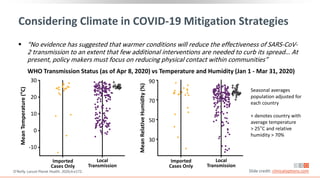
Considering Climate in COVID-19 Mitigation Strategies
 “No evidence has suggested that warmer conditions will reduce the effectiveness of SARS-CoV-
2 transmission to an extent that few additional interventions are needed to curb its spread… At
present, policy makers must focus on reducing physical contact within communities”
O’Reilly. Lancet Planet Health. 2020;4:e172. Slide credit: clinicaloptions.com
Mean
Temperature
(°C)
Mean
Relative
Humidity
(%)
Seasonal averages
population adjusted for
each country
+ denotes country with
average temperature
> 25°C and relative
humidity > 70%
WHO Transmission Status (as of Apr 8, 2020) vs Temperature and Humidity (Jan 1 - Mar 31, 2020)
Imported
Cases Only
Local
Transmission
30
20
10
0
-10
Imported
Cases Only
Local
Transmission
90
70
50
30
+
+
+
+
+ +
+
+
+ +
+
+
+
+
+
+
+ +
++
+ +
+
+
+
+
+
+
+ +
+
+
+
+
+
+
++
+
+
+
+
+
+
+
+
+
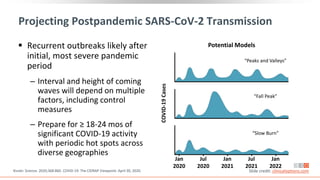
Projecting Postpandemic SARS-CoV-2 Transmission
 Recurrent outbreaks likely after
initial, most severe pandemic
period
‒ Interval and height of coming
waves will depend on multiple
factors, including control
measures
‒ Prepare for ≥ 18-24 mos of
significant COVID-19 activity
with periodic hot spots across
diverse geographies
Kissler. Science. 2020;368:860. COVID-19: The CIDRAP Viewpoint. April 30, 2020. Slide credit: clinicaloptions.com
Potential Models
“Peaks and Valleys”
“Fall Peak”
“Slow Burn”
Jan
2020
Jul
2020
Jan
2021
Jul
2021
Jan
2022
COVID-19
Cases
Nonpharmacologic Preventative Interventions
 Inactivation of SARS-CoV, MERS-CoV,
and other endemic human
coronaviruses readily accomplished
with 62% to 71% ethanol, 0.5%
hydrogen peroxide, or 0.1% sodium
hypochlorite (in 1 min)[5]
‒ 0.05% to 0.2% benzalkonium
chloride, 0.02% chlorhexidine
digluconate less effective
1. https://www.cdc.gov/coronavirus/2019-ncov/prevent-getting-sick/prevention.html 2. WHO. Scientific Brief. July 9, 2020.
3. Leung. Nat Med. 2020;26:676. 4. Chu. Lancet. 2020;395:1973. 5. Kampf. J Hosp Infect. 2020;104:246. Slide credit: clinicaloptions.com
Recommended Prevention Strategies[1,2]
Identify and quickly test suspect cases with
subsequent isolation of infected individuals
Quarantine close contacts of infected individuals
Wash hands often with soap and water
Maintain social distance (~ 6 feet)
Wear cloth face cover in public[3,4]
Practice respiratory etiquette
Disinfect frequent-touch surfaces regularly
Avoid crowds, close-contact settings, and poorly
ventilated spaces
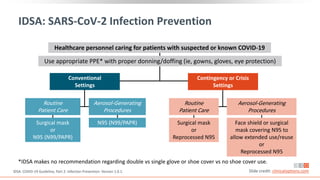
IDSA: SARS-CoV-2 Infection Prevention
IDSA. COVID-19 Guideline, Part 2: Infection Prevention. Version 1.0.1. Slide credit: clinicaloptions.com
Healthcare personnel caring for patients with suspected or known COVID-19
Use appropriate PPE* with proper donning/doffing (ie, gowns, gloves, eye protection)
Routine
Patient Care
Aerosol-Generating
Procedures
Surgical mask
or
N95 (N99/PAPR)
N95 (N99/PAPR)
Conventional
Settings
*IDSA makes no recommendation regarding double vs single glove or shoe cover vs no shoe cover use.
Routine
Patient Care
Aerosol-Generating
Procedures
Surgical mask
or
Reprocessed N95
Face shield or surgical
mask covering N95 to
allow extended use/reuse
or
Reprocessed N95
Contingency or Crisis
Settings
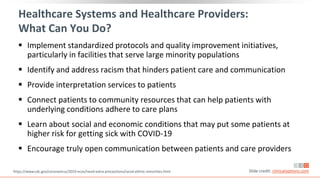
Healthcare Systems and Healthcare Providers:
What Can You Do?
 Implement standardized protocols and quality improvement initiatives,
particularly in facilities that serve large minority populations
 Identify and address racism that hinders patient care and communication
 Provide interpretation services to patients
 Connect patients to community resources that can help patients with
underlying conditions adhere to care plans
 Learn about social and economic conditions that may put some patients at
higher risk for getting sick with COVID-19
 Encourage truly open communication between patients and care providers
https://www.cdc.gov/coronavirus/2019-ncov/need-extra-precautions/racial-ethnic-minorities.html Slide credit: clinicaloptions.com
Screening and Diagnosis
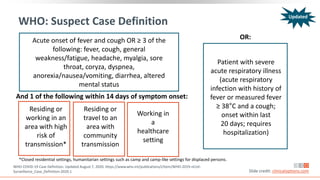
Residing or
working in an
area with high
risk of
transmission*
WHO: Suspect Case Definition
Acute onset of fever and cough OR ≥ 3 of the
following: fever, cough, general
weakness/fatigue, headache, myalgia, sore
throat, coryza, dyspnea,
anorexia/nausea/vomiting, diarrhea, altered
mental status
And 1 of the following within 14 days of symptom onset:
Residing or
travel to an
area with
community
transmission
Working in
a
healthcare
setting
WHO COVID-19 Case Definition. Updated August 7, 2020. https://www.who.int/publications/i/item/WHO-2019-nCoV-
Surveillance_Case_Definition-2020.1 Slide credit: clinicaloptions.com
*Closed residential settings, humanitarian settings such as camp and camp-like settings for displaced persons.
OR:
Patient with severe
acute respiratory illness
(acute respiratory
infection with history of
fever or measured fever
≥ 38°C and a cough;
onset within last
20 days; requires
hospitalization)
Updated
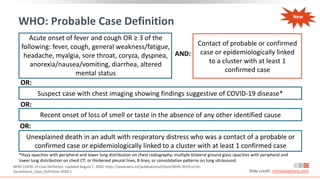
Contact of probable or confirmed
case or epidemiologically linked
to a cluster with at least 1
confirmed case
WHO: Probable Case Definition
Acute onset of fever and cough OR ≥ 3 of the
following: fever, cough, general weakness/fatigue,
headache, myalgia, sore throat, coryza, dyspnea,
anorexia/nausea/vomiting, diarrhea, altered
mental status
AND:
WHO COVID-19 Case Definition. Updated August 7, 2020. https://www.who.int/publications/i/item/WHO-2019-nCoV-
Surveillance_Case_Definition-2020.1 Slide credit: clinicaloptions.com
*Hazy opacities with peripheral and lower lung distribution on chest radiography; multiple bilateral ground glass opacities with peripheral and
lower lung distribution on chest CT; or thickened pleural lines, B lines, or consolidative patterns on lung ultrasound.
OR:
Suspect case with chest imaging showing findings suggestive of COVID-19 disease*
OR:
Recent onset of loss of smell or taste in the absence of any other identified cause
OR:
Unexplained death in an adult with respiratory distress who was a contact of a probable or
confirmed case or epidemiologically linked to a cluster with at least 1 confirmed case
New
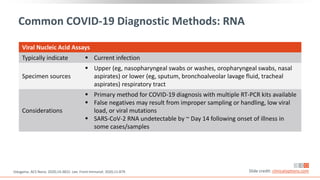
Common COVID-19 Diagnostic Methods: RNA
Udugama. ACS Nano. 2020;14:3822. Lee. Front Immunol. 2020;11:879. Slide credit: clinicaloptions.com
Viral Nucleic Acid Assays
Typically indicate  Current infection
Specimen sources
 Upper (eg, nasopharyngeal swabs or washes, oropharyngeal swabs, nasal
aspirates) or lower (eg, sputum, bronchoalveolar lavage fluid, tracheal
aspirates) respiratory tract
Considerations
 Primary method for COVID-19 diagnosis with multiple RT-PCR kits available
 False negatives may result from improper sampling or handling, low viral
load, or viral mutations
 SARS-CoV-2 RNA undetectable by ~ Day 14 following onset of illness in
some cases/samples
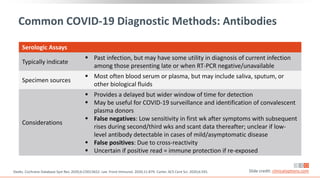
Common COVID-19 Diagnostic Methods: Antibodies
Deeks. Cochrane Database Syst Rev. 2020;6:CD013652. Lee. Front Immunol. 2020;11:879. Carter. ACS Cent Sci. 2020;6:591. Slide credit: clinicaloptions.com
Updated
Serologic Assays
Typically indicate
 Past infection, but may have some utility in diagnosis of current infection
among those presenting late or when RT-PCR negative/unavailable
Specimen sources
 Most often blood serum or plasma, but may include saliva, sputum, or
other biological fluids
Considerations
 Provides a delayed but wider window of time for detection
 May be useful for COVID-19 surveillance and identification of convalescent
plasma donors
 False negatives: Low sensitivity in first wk after symptoms with subsequent
rises during second/third wks and scant data thereafter; unclear if low-
level antibody detectable in cases of mild/asymptomatic disease
 False positives: Due to cross-reactivity
 Uncertain if positive read = immune protection if re-exposed
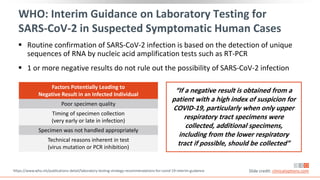
WHO: Interim Guidance on Laboratory Testing for
SARS-CoV-2 in Suspected Symptomatic Human Cases
 Routine confirmation of SARS-CoV-2 infection is based on the detection of unique
sequences of RNA by nucleic acid amplification tests such as RT-PCR
 1 or more negative results do not rule out the possibility of SARS-CoV-2 infection
Factors Potentially Leading to
Negative Result in an Infected Individual
Poor specimen quality
Timing of specimen collection
(very early or late in infection)
Specimen was not handled appropriately
Technical reasons inherent in test
(virus mutation or PCR inhibition)
“If a negative result is obtained from a
patient with a high index of suspicion for
COVID-19, particularly when only upper
respiratory tract specimens were
collected, additional specimens,
including from the lower respiratory
tract if possible, should be collected”
https://www.who.int/publications-detail/laboratory-testing-strategy-recommendations-for-covid-19-interim-guidance Slide credit: clinicaloptions.com
CDC: Testing Recommendations for SARS-CoV-2
 “Viral [nucleic acid or antigen] tests are recommended to diagnose acute
infection.”
Overview of Testing for SARS-CoV-2 (COVID-19). Updated August 24, 2020. https://www.cdc.gov/coronavirus/2019-
ncov/hcp/testing-overview.html Slide credit: clinicaloptions.com
Considerations for Who Should Get Tested
Persons with COVID-19 symptoms: test or self-isolate for ≥ 10 days after symptom onset and ≥ 24 hrs after
symptom resolution
Close contacts (within 6 ft) of known case for ≥ 15 mins: test if vulnerable individual or recommended by state
or local public health officials
No COVID-19 symptoms and no close contact with known case: no test needed
Persons in high transmission area who attended a gathering of ≥ 10 people without widespread mask wearing
or physical distancing: test if vulnerable individual or recommended by state or local public health officials
Work in a nursing home or long-term care facility: test regularly (frequency depends on incidence rate of area)
Live in or receive care in a nursing home or long-term care facility: test if symptomatic, if an outbreak occurs, or
routinely for persons who leave the facility on a regular basis
Critical infrastructure worker, health care worker, or first responder: may be tested according to employer’s
guidelines
Updated
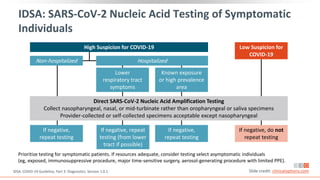
IDSA: SARS-CoV-2 Nucleic Acid Testing of Symptomatic
Individuals
IDSA. COVID-19 Guideline, Part 3: Diagnostics. Version 1.0.1. Slide credit: clinicaloptions.com
Direct SARS-CoV-2 Nucleic Acid Amplification Testing
Collect nasopharyngeal, nasal, or mid-turbinate rather than oropharyngeal or saliva specimens
Provider-collected or self-collected specimens acceptable except nasopharyngeal
Non-hospitalized Hospitalized
Lower
respiratory tract
symptoms
High Suspicion for COVID-19 Low Suspicion for
COVID-19
Known exposure
or high prevalence
area
If negative,
repeat testing
If negative, repeat
testing (from lower
tract if possible)
If negative,
repeat testing
If negative, do not
repeat testing
Prioritize testing for symptomatic patients. If resources adequate, consider testing select asymptomatic individuals
(eg, exposed, immunosuppressive procedure, major time-sensitive surgery, aerosol-generating procedure with limited PPE).
Temporal Profile of SARS-CoV-2 Viral Load
 Serial viral loads assessed via
RT-PCR of posterior
oropharyngeal saliva or
endotracheal aspirate* collected
from hospitalized patients in
Hong Kong with laboratory
confirmed COVID-19 (N = 23)[1]
 Viral loads highest during first
wk following symptom onset[1]
 Pneumonia may develop late
and when URT PCR is negative[2]
*Intubated patients.
Slide credit: clinicaloptions.com
Mean
Viral
Load,
log
10
copies/mL
(SD)
Days After Symptom Onset
Temporal Viral Load in Patients With COVID-19[1]
10
8
6
4
2
0
0 10 20 30
Saliva
Endotracheal aspirate*
Day
Saliva
Endotracheal
0
1
0
1
1
0
2
3
0
3
3
0
4
5
0
5
5
0
6
5
0
7
4
0
8
7
1
9
10
0
10
5
1
11
8
2
12
7
2
13
7
2
14
6
2
15
7
2
16
8
2
17
5
2
18
6
2
19
5
2
20
6
2
21
6
1
22
5
1
23
6
1
24
4
1
25
3
1
26
3
0
27
2
0
28
2
0
29
1
0
1. To. Lancet Infect Dis. 2020;20:565. 2. Ai. Radiology. 2020;296:E32.
P = .02
P < .001 P < .001
P < .001
Figure 3. A, Viral load of different tissue samples. B, Analysis of viral load in different clinical stages of ...
 Viral load assessed via digital droplet PCR of samples collected from patients in
Beijing with laboratory confirmed COVID-19 (N = 76)
Viral Load Varies by Sample Type and Disease Stage
*Early stage: multifocal bilateral or isolated round ground-glass opacity with or without patchy consolidations and prominent peripherally
subpleural distribution on chest CT. Progressive stage: Increasing number, range, or density of lung lesions on chest CT. †Recovery phase:
lesions gradually absorbed. ‡Clinical cure: temperature recovery for > 3 days, improvement in respiratory symptoms, absorption of lung lesions,
and 2 consecutive negative RT-PCR results from respiratory samples tested at least 1 day apart.
Early and progressive stages*
(n = 15)
Recovery stage† (n = 49)
Clinical cure‡ (n = 5)
Slide credit: clinicaloptions.com
Mean
Viral
Load
(copies/test)
Mean
Viral
Load
(copies/test)
Type of Specimens
106
Nasal swabs
Throat swabs
Sputum
Blood
Urine
104
102
100
P < .001
Clinical Disease Stage
106
104
102
100
P < .001
Sputum Viral Load By Disease Stage
Viral Load By Sample Type
Yu. Clin Infect Dis. 2020;[Epub].
SARS-CoV-2 Detection by RT-PCR
Across Different Clinical Specimens
 Among 1070 specimens from 205 COVID-19 patients in China, highest SARS-CoV-2
positivity rates observed with BAL fluid (93%), sputum (72%), nasal swab (63%)
Wang. JAMA. 2020;323:1843. Slide credit: clinicaloptions.com
*Samples falling above the
dashed line considered
positive for SARS-CoV-2.
Patient
Cycle
Threshold*
10
20
30
40
50
1 2 3 4 5 6 7 8 9 10 11 12 13 14 15 16 17 18 19 20
BAL fluid
Pharyngeal swab
Fibrobronchoscopy brush biopsy
Feces
Sputum
Blood
Nasal swab
Urine
Chest CT Abnormalities
 Most common hallmark features on chest CT images include bilateral peripheral ground-
glass opacities and consolidations of the lungs with peak lung involvement between 6 days
and 11 days post-symptom onset[1-3]
 In a study in Wuhan, China, chest CT imaging demonstrated a sensitivity of 97% and
specificity of 25% with RT-PCR as the reference (N = 1014)[4]
‒ 60% to 93% of patients had initial positive lung CT consistent with COVID-19 before the initial
positive RT-PCR result
1. Bernheim. Radiology. 2020;295:685. 2. Pan. Radiology. 2020;295:715. 3. Wang. Radiology. 2020;296:E55. 4. Ai. Radiology. 2020;296:E32. Slide credit: clinicaloptions.com
29-Yr-Old Man Presenting With Fever for 6 Days[4]
Ground-glass
opacities
Day 6 Day 9 Day 11 Day 17 Day 23
SARS-CoV-2 in Stool
 Reports of negative pharyngeal and sputum viral tests but fecal samples
testing positive for SARS-CoV-2[1]
 Similar viral load but significantly longer duration of viral detection in stool
vs respiratory samples[2]
1. Chen. Am J Gastroenterol. 2020;115:790. 2. Zheng. BMJ. 2020;369:m1443. Slide credit: clinicaloptions.com
10
8
6
4
2
0
Respiratory Stool Serum
Viral
Load
(log
10
copies/mL)
P = .04 P < .001
P < .001
40
50
30
20
10
0
Respiratory Stool Serum
Days
After
Symptom
Onset
P = .02 P < .001
P = .07
60
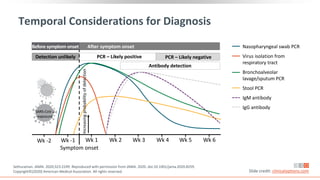
Temporal Considerations for Diagnosis
Sethuraman. JAMA. 2020;323:2249. Reproduced with permission from JAMA. 2020. doi:10.1001/jama.2020.8259.
Copyright©(2020) American Medical Association. All rights reserved. Slide credit: clinicaloptions.com
Wk -2 Wk -1 Wk 1 Wk 2 Wk 3 Wk 4 Wk 5 Wk 6
Symptom onset
Detection unlikely PCR – Likely positive PCR – Likely negative
Antibody detection
Nasopharyngeal swab PCR
Virus isolation from
respiratory tract
Bronchoalveolar
lavage/sputum PCR
Stool PCR
IgM antibody
IgG antibody
After symptom onset
Before symptom onset
SARS-CoV-2
exposure
Increasing
probability
of
detection
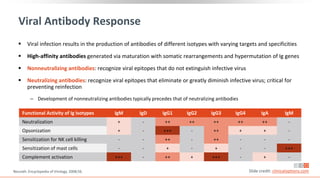
Viral Antibody Response
 Viral infection results in the production of antibodies of different isotypes with varying targets and specificities
 High-affinity antibodies generated via maturation with somatic rearrangements and hypermutation of Ig genes
 Nonneutralizing antibodies: recognize viral epitopes that do not extinguish infective virus
 Neutralizing antibodies: recognize viral epitopes that eliminate or greatly diminish infective virus; critical for
preventing reinfection
‒ Development of nonneutralizing antibodies typically precedes that of neutralizing antibodies
Functional Activity of Ig Isotypes IgM IgD IgG1 IgG2 IgG3 IgG4 IgA IgM
Neutralization + - ++ ++ ++ ++ ++ -
Opsonization + - +++ - ++ + + -
Sensitization for NK cell killing - - ++ - ++ - - -
Sensitization of mast cells - - + - + - - +++
Complement activation +++ - ++ + +++ - + -
Slide credit: clinicaloptions.com
Neurath. Encyclopedia of Virology. 2008;56.
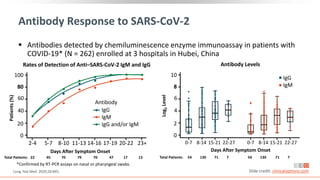
Antibody Response to SARS-CoV-2
 Antibodies detected by chemiluminescence enzyme immunoassay in patients with
COVID-19* (N = 262) enrolled at 3 hospitals in Hubei, China
Rates of Detection of Anti–SARS-CoV-2 IgM and IgG Antibody Levels
Slide credit: clinicaloptions.com
Long. Nat Med. 2020;26:845.
Total Patients: 22 45 70 79 70 47 17 13
Days After Symptom Onset
Log
2
Level
*Confirmed by RT-PCR assays on nasal or pharyngeal swabs.
Total Patients: 54 130 71 7 54 130 71 7
Days After Symptom Onset
100
80
60
40
20
0
2-4 8-10 11-13 14-16 17-19 20-22 23+
5-7
Antibody
IgG
IgM
IgG and/or IgM
10
8
6
4
2
0
0-7 15-21 22-27 0-7 8-14 15-21 22-27
8-14
IgG
IgM
Patients
(%)
Neutralizing Antibodies to SARS-CoV-2
 Plasma collected from recovered
patients with COVID-19 who had
mild symptoms (N = 175)
 Neutralizing antibody titers* varied
 Neutralizing and spike-binding
antibodies emerged concurrently
between 10-15 days following
disease onset
Slide credit: clinicaloptions.com
Wu. medRxiv. 2020;[Preprint]. Note: This study has not been peer reviewed.
SARS-CoV-2
NAb
Titers
(ID50)
Disease Duration (Days)
*Assessed via pseudotyped, lentiviral vector-based assay.
NAb Titers Value (N = 175)
Titer range, ID50 < 40 to 21,567
Patients with undetectable level, % 6
Patients with detectable level, %
 ID50: < 500 (very low)
 ID50: 500-999 (medium low)
 ID50: 1000-2500 (medium high)
 ID50: > 2500 (high)
30
17
39
14
4096
2048
1024
512
256
128
64
32
16
2 4 6 8 10 12 14 161820 2224
Patient 1
Patient 2
Patient 3
Patient 4
Patient 5
Patient 6
SARS-CoV-2 Serology for Diagnosis:
Current Recommendations
 CDC: Given that it can take 1-3 wks to develop antibodies following infection, antibody test
results should not be used to diagnose someone with an active SARS-CoV-2 infection[1,2]
 Royal College of Pathologists of Australasia[3]:
‒ “Molecular testing on a single throat with deep nasal swab is the current test of choice for the
diagnosis of acute COVID-19 infection”
‒ “COVID-19 IgG/IgM rapid tests have no role to play in the acute diagnosis of COVID-19 virus
infection . . . ”
‒ “COVID-19 IgG/IgM rapid tests will miss patients in early stages of disease when they are
infectious to other people”
 WHO: “At present, based on current evidence, WHO recommends the use of these new
point-of-care immunodiagnostic tests only in research settings”[4]
Slide credit: clinicaloptions.com
1. https://www.cdc.gov/coronavirus/2019-ncov/lab/resources/antibody-tests-professional.html.
2. https://www.cdc.gov/coronavirus/2019-ncov/testing/serology-overview.html.
3. https://www.rcpa.edu.au/getattachment/bf9c7996-6467-44e6-81f2-e2e0cd71a4c7/COVID19-IgG-IgM-RAPID-POCT-TESTS.aspx.
4. https://www.who.int/news-room/commentaries/detail/advice-on-the-use-of-point-of-care-immunodiagnostic-tests-for-covid-19.
Natural History, Clinical Presentation,
and Symptom Spectrum
COVID-19 Incubation: Infection to Illness Onset
 Among 10 confirmed NCIP cases in
Wuhan, Hubei province, China[1]
‒ Mean incubation: 5.2 days
(95% CI: 4.1-7.0)
 Among 181 confirmed SARS-CoV-2
infections occurring outside of Hubei
province[2]
‒ Median incubation: 5.1 days
(95% CI: 4.5-5.8)
‒ Symptom onset by Day 11.5 of
infection in 97.5% of persons
1. Li. NEJM. 2020;382:1199. 2. Lauer. Ann Intern Med. 2020;172:577. Slide credit: clinicaloptions.com
Estimated Incubation Period Distribution[1]
0.25
0.20
0.15
0.10
0.05
0
Relative
Frequency
Days From Infection to Symptom Onset
21
0 7 14
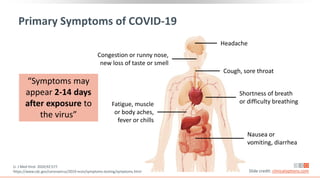
Primary Symptoms of COVID-19
Li. J Med Virol. 2020;92:577.
https://www.cdc.gov/coronavirus/2019-ncov/symptoms-testing/symptoms.html Slide credit: clinicaloptions.com
Headache
Congestion or runny nose,
new loss of taste or smell
Fatigue, muscle
or body aches,
fever or chills
Nausea or
vomiting, diarrhea
Cough, sore throat
Shortness of breath
or difficulty breathing
“Symptoms may
appear 2-14 days
after exposure to
the virus”
COVID-19 Clinical Presentation May Vary by Age, Sex
 Observational study of Europeans with mild-to-moderate
COVID-19 (ie, no ICU admission) via standardized
questionnaire during March 22-April 10, 2020 (N = 1420)[1]
‒ Mean duration of symptoms (n = 264): 11.5 ± 5.7 days
‒ Ear, nose, throat complaints more common in young patients;
fever, fatigue, loss of appetite, diarrhea in elderly patients
(P < .01)
‒ Loss of smell, headache, nasal obstruction, throat pain, fatigue
more common in women; cough, fever in men (P < .001)
 Among 17 fatal COVID-19 cases detailed by the China
National Health Commission, median time from first
symptom to death: 14 days (range: 6-41)[2]
‒ Numerically faster in older patients: 11.5 days if ≥ 70 yrs vs 20
days if < 70 yrs (P = .033)
1. Lechien. J Intern Med. 2020;[Epub]. 2. Wang. J Med Virol. 2020;92:441. Slide credit: clinicaloptions.com
Symptom,[1] % N = 1420
Headache 70.3
Loss of smell 70.2
Nasal obstruction 67.8
Asthenia 63.3
Cough 63.2
Myalgia 62.5
Rhinorrhea 60.1
Taste dysfunction 54.2
Sore throat 52.9
Fever (> 38°C) 45.4
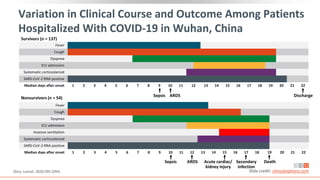
Variation in Clinical Course and Outcome Among Patients
Hospitalized With COVID-19 in Wuhan, China
Zhou. Lancet. 2020;395:1054. Slide credit: clinicaloptions.com
Fever
Cough
Dyspnea
ICU admission
Systematic corticosteroid
SARS-CoV-2 RNA positive
Median days after onset 1 2 3 4 5 6 7 8 9 10 11 12 13 14 15 16 17 18 19 20 21 22
Survivors (n = 137)
Sepsis ARDS Discharge
Fever
Cough
Dyspnea
ICU admission
Invasive ventilation
Systematic corticosteroid
SARS-CoV-2 RNA positive
Median days after onset 1 2 3 4 5 6 7 8 9 10 11 12 13 14 15 16 17 18 19 20 21 22
Nonsurvivors (n = 54)
Sepsis ARDS Acute cardiac/
kidney injury
Death
Secondary
infection
Assessing Disease Severity
and Risk Factors for Severe Disease
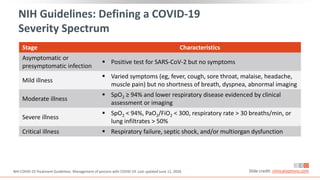
NIH Guidelines: Defining a COVID-19
Severity Spectrum
NIH COVID-19 Treatment Guidelines. Management of persons with COVID-19. Last updated June 11, 2020. Slide credit: clinicaloptions.com
Stage Characteristics
Asymptomatic or
presymptomatic infection
 Positive test for SARS-CoV-2 but no symptoms
Mild illness
 Varied symptoms (eg, fever, cough, sore throat, malaise, headache,
muscle pain) but no shortness of breath, dyspnea, abnormal imaging
Moderate illness
 SpO2 ≥ 94% and lower respiratory disease evidenced by clinical
assessment or imaging
Severe illness
 SpO2 < 94%, PaO2/FiO2 < 300, respiratory rate > 30 breaths/min, or
lung infiltrates > 50%
Critical illness  Respiratory failure, septic shock, and/or multiorgan dysfunction
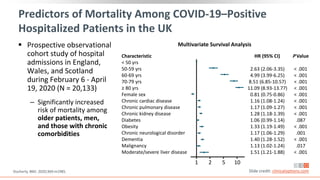
Predictors of Mortality Among COVID-19–Positive
Hospitalized Patients in the UK
 Prospective observational
cohort study of hospital
admissions in England,
Wales, and Scotland
during February 6 - April
19, 2020 (N = 20,133)
‒ Significantly increased
risk of mortality among
older patients, men,
and those with chronic
comorbidities
Docherty. BMJ. 2020;369:m1985. Slide credit: clinicaloptions.com
Multivariate Survival Analysis
HR (95% CI) P Value
< 50 yrs
50-59 yrs
60-69 yrs
70-79 yrs
≥ 80 yrs
Female sex
Chronic cardiac disease
Chronic pulmonary disease
Chronic kidney disease
Diabetes
Obesity
Chronic neurological disorder
Dementia
Malignancy
Moderate/severe liver disease
2.63 (2.06-3.35)
4.99 (3.99-6.25)
8.51 (6.85-10.57)
11.09 (8.93-13.77)
0.81 (0.75-0.86)
1.16 (1.08-1.24)
1.17 (1.09-1.27)
1.28 (1.18-1.39)
1.06 (0.99-1.14)
1.33 (1.19-1.49)
1.17 (1.06-1.29)
1.40 (1.28-1.52)
1.13 (1.02-1.24)
1.51 (1.21-1.88)
Characteristic
< .001
< .001
< .001
< .001
< .001
< .001
< .001
< .001
.087
< .001
.001
< .001
.017
< .001
10
1 2 5
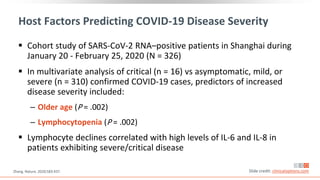
Host Factors Predicting COVID-19 Disease Severity
 Cohort study of SARS-CoV-2 RNA–positive patients in Shanghai during
January 20 - February 25, 2020 (N = 326)
 In multivariate analysis of critical (n = 16) vs asymptomatic, mild, or
severe (n = 310) confirmed COVID-19 cases, predictors of increased
disease severity included:
‒ Older age (P = .002)
‒ Lymphocytopenia (P = .002)
 Lymphocyte declines correlated with high levels of IL-6 and IL-8 in
patients exhibiting severe/critical disease
Zhang. Nature. 2020;583:437. Slide credit: clinicaloptions.com
Vaccine Development
Vaccine Development Pathway
 Traditional vaccine development pathway[1]
‒ Target discovery/validation, preclinical stage, manufacturing development, clinical
assay optimization: 3-8 yrs
‒ Phase I (safety), phase II (safety/immunogenicity), phase III (safety/efficacy) clinical
trials: 2-10 yrs
‒ Regulatory review: 1-2 yrs
Slide credit: clinicaloptions.com
1. Heaton. NEJM. 2020;[Epub].
2. The New York Times. Coronavirus Vaccine Tracker. https://www.nytimes.com/interactive/2020/science/coronavirus-vaccine-tracker.html
SARS-CoV-2 Vaccine Candidates in Development[2]
Preclinical Phase I Phase II Phase III Approval
Vaccines not
yet in human trials
Vaccines testing
safety and dosage
Vaccines in expanded
safety trials
Vaccines in large-
scale efficacy
tests
Vaccine approved
for limited use
140+ 19 12 5 1
Virus genes
(some inactive)
Vaccine Candidates in Development for SARS-Cov-2
Slide credit: clinicaloptions.com
Funk. Frontiers in Pharmacology. 2020;[Epub].
Vaccine Platforms Vaccine Candidates
44
16
14
10 12
20
3
8
Other DNA
RNA
SARS-CoV-2
inactivated
SARS-CoV-2
live
attenuated
Viral vector
(nonreplicating)
Viral vector
(replicating)
Protein based
Viral vector
(nonreplicating)
Viral vector
(replicating)
Virus
(inactivated)
Virus
(attenuated)
DNA
RNA (+ LNPs)
Protein based
(eg, spike)
Coronavirus
spike gene
Virus genes
(some inactive)
Coronavirus
spike gene
mRNA Vaccine Against SARS-CoV-2:
Preliminary Safety Report
 No serious adverse events reported
Slide credit: clinicaloptions.com
Jackson. NEJM. 2020;[Epub].
0
Symptom Dose Group Vaccination 1 Vaccination 2
Mild Moderate Severe
Any systemic
symptom
Arthralgia
Fatigue
Fever
Chills
Headache
25 μg
100 μg
250 μg
25 μg
100 μg
250 μg
25 μg
100 μg
250 μg
25 μg
100 μg
250 μg
25 μg
100 μg
250 μg
25 μg
100 μg
250 μg
Participants (%)
0
Symptom Dose Group Vaccination 1 Vaccination 2
Myalgia
Nausea
Any local
symptom
Size of erythema
or redness
Size of induration
or swelling
Pain
25 μg
100 μg
250 μg
25 μg
100 μg
250 μg
25 μg
100 μg
250 μg
25 μg
100 μg
250 μg
25 μg
100 μg
250 μg
25 μg
100 μg
250 μg
Participants (%)
100
40 60 80
20 100
40 60 80
20 100
40 60 80
20
100
40 60 80
20
Dose and Age Considerations
 Many phase III vaccine studies fail because the dose chosen did not
best balance safety and efficacy[1]
 Immune function declines with age and this decline is likely partially
responsible for the greater risk of severe COVID-19 in older adults 
may lead to poor vaccine responses and the need for higher vaccine
doses in older adults[2,3]
Slide credit: clinicaloptions.com
1. Musuamba. CPT Pharmacometrix Syst Pharmacol. 2017;6:418. 2. Heaton. NEJM. 2020;[Epub]. 3. Zhu. Lancet. 2020;[Epub].
Current Medical Management
and Supportive Care
Medical Management of Mild COVID-19
1. WHO Interim Guidance. Clinical management of COVID-19. May 27, 2020.
2. NIH COVID-19 Treatment Guidelines. Management of persons with COVID-19. Last updated June 11, 2020.
3. NIH COVID-19 Treatment Guidelines. Antithrombotic therapy in patients with COVID-19. Last updated May 12, 2020. Slide credit: clinicaloptions.com
WHO[1]
 Isolate suspected/confirmed cases to contain
SARS-CoV-2 transmission; isolation can occur
at home, in a designated COVID-19 health or
community facility
 Treat symptoms (eg, antipyretics for fever,
adequate nutrition, appropriate rehydration)
 Educate patients on signs/symptoms of
complications that, if developed, should
prompt pursuit of urgent care
NIH[2,3]
 Majority of cases managed in ambulatory
setting or at home (eg, by telemedicine)
 Close monitoring advised for symptomatic
patients with risk factors for severe disease;
rapid progression possible
 No specific lab tests indicated if otherwise
healthy
 In non-hospitalized patients, do not initiate
anticoagulants or antiplatelet therapy to
prevent VTE or arterial thrombosis unless
other indications exist
Management[1]
 Monitor closely, as pulmonary disease can
rapidly progress
 Administer empiric antibiotics if bacterial
pneumonia/sepsis strongly suspected; re-
evaluate daily and de-escalate/stop treatment
if no evidence of infection
 Use hospital infection prevention and control
measures; limit number of
individuals/providers entering patient room
 Use AIIRs for aerosol-generating procedures;
staff should wear N95 respirators or PAPRs vs
surgical masks
Medical Management of Moderate COVID-19
Slide credit: clinicaloptions.com
Initial Evaluation[1]
 May include chest x-ray, ultrasound, or CT
 Perform ECG if indicated
 Obtain CBC with differential and metabolic
profile including liver/renal function
 Inflammatory markers (eg, CRP, D-dimer,
ferritin) may be prognostically valuable
Isolation (Home vs Healthcare Facility)[2]
 Dependent on clinical presentation,
requirement for supportive care, presence of
vulnerable household contacts; if high risk of
deterioration, hospitalization preferred
1. NIH COVID-19 Treatment Guidelines. Management of persons with COVID-19. Last updated June 11, 2020.
2. WHO Interim Guidance. Clinical management of COVID-19. May 27, 2020.
Acute Coinfection Treatment[1]
 Administer empiric antimicrobials within 1 hr of
initial assessment based on clinical judgment,
patient host factors, and local epidemiology;
knowledge of blood cultures before antimicrobial
administration ideal
 Assess daily for antimicrobial de-escalation
Severe Pneumonia Treatment[1]
 Equip patient care areas with pulse oximeters,
functioning oxygen systems, and disposable, single-
use, oxygen-delivering interfaces
 Provide immediate supplemental oxygen to
patients with emergency signs (eg,
obstructed/absent breathing, severe respiratory
distress, central cyanosis, shock, coma, or
convulsions) and anyone with SpO2 < 90%
 Monitor for clinical deterioration (eg, rapidly
progressive respiratory failure, shock); provide
immediate supportive care
 Practice cautious fluid management in patients
without tissue hypoperfusion and fluid
responsiveness
Medical Management of Severe COVID-19
Slide credit: clinicaloptions.com
1. WHO Interim Guidance. Clinical management of COVID-19. May 27, 2020.
2. NIH COVID-19 Treatment Guidelines. Management of persons with COVID-19. Last updated June 11, 2020.
Evaluation[2]
 Perform evaluations outlined for moderate disease
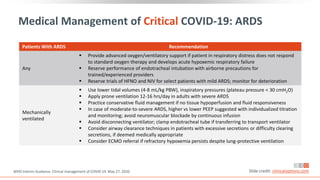
Medical Management of Critical COVID-19: ARDS
WHO Interim Guidance. Clinical management of COVID-19. May 27, 2020. Slide credit: clinicaloptions.com
Patients With ARDS Recommendation
Any
 Provide advanced oxygen/ventilatory support if patient in respiratory distress does not respond
to standard oxygen therapy and develops acute hypoxemic respiratory failure
 Reserve performance of endotracheal intubation with airborne precautions for
trained/experienced providers
 Reserve trials of HFNO and NIV for select patients with mild ARDS; monitor for deterioration
Mechanically
ventilated
 Use lower tidal volumes (4-8 mL/kg PBW), inspiratory pressures (plateau pressure < 30 cmH2O)
 Apply prone ventilation 12-16 hrs/day in adults with severe ARDS
 Practice conservative fluid management if no tissue hypoperfusion and fluid responsiveness
 In case of moderate-to-severe ARDS, higher vs lower PEEP suggested with individualized titration
and monitoring; avoid neuromuscular blockade by continuous infusion
 Avoid disconnecting ventilator; clamp endotracheal tube if transferring to transport ventilator
 Consider airway clearance techniques in patients with excessive secretions or difficulty clearing
secretions, if deemed medically appropriate
 Consider ECMO referral if refractory hypoxemia persists despite lung-protective ventilation
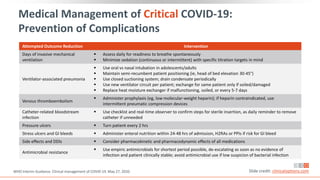
Medical Management of Critical COVID-19:
Prevention of Complications
Slide credit: clinicaloptions.com
Attempted Outcome Reduction Intervention
Days of invasive mechanical
ventilation
 Assess daily for readiness to breathe spontaneously
 Minimize sedation (continuous or intermittent) with specific titration targets in mind
Ventilator-associated pneumonia
 Use oral vs nasal intubation in adolescents/adults
 Maintain semi-recumbent patient positioning (ie, head of bed elevation 30-45°)
 Use closed suctioning system; drain condensate periodically
 Use new ventilator circuit per patient; exchange for same patient only if soiled/damaged
 Replace heat moisture exchanger if malfunctioning, soiled, or every 5-7 days
Venous thromboembolism
 Administer prophylaxis (eg, low molecular-weight heparin); if heparin contraindicated, use
intermittent pneumatic compression devices
Catheter-related bloodstream
infection
 Use checklist and real-time observer to confirm steps for sterile insertion, as daily reminder to remove
catheter if unneeded
Pressure ulcers  Turn patient every 2 hrs
Stress ulcers and GI bleeds  Administer enteral nutrition within 24-48 hrs of admission, H2RAs or PPIs if risk for GI bleed
Side effects and DDIs  Consider pharmacokinetic and pharmacodynamic effects of all medications
Antimicrobial resistance
 Use empiric antimicrobials for shortest period possible, de-escalating as soon as no evidence of
infection and patient clinically stable; avoid antimicrobial use if low suspicion of bacterial infection
WHO Interim Guidance. Clinical management of COVID-19. May 27, 2020.
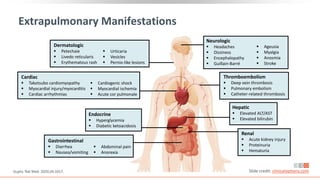
Endocrine
 Hyperglycemia
 Diabetic ketoacidosis
Extrapulmonary Manifestations
Gupta. Nat Med. 2020;26:1017. Slide credit: clinicaloptions.com
Neurologic
 Headaches
 Dizziness
 Encephalopathy
 Guillain-Barré
New
Renal
 Acute kidney injury
 Proteinuria
 Hematuria
Hepatic
 Elevated ALT/AST
 Elevated bilirubin
Cardiac
 Takotsubo cardiomyopathy
 Myocardial injury/myocarditis
 Cardiac arrhythmias
 Ageusia
 Myalgia
 Anosmia
 Stroke
 Cardiogenic shock
 Myocardial ischemia
 Acute cor pulmonale
Dermatologic
 Petechaie
 Livedo reticularis
 Erythematous rash
 Urticaria
 Vesicles
 Pernio-like lesions
Thromboembolism
 Deep vein thrombosis
 Pulmonary embolism
 Catheter-related thrombosis
Gastrointestinal
 Diarrhea
 Nausea/vomiting
 Abdominal pain
 Anorexia
≥ 24 hrs since resolution
of fever, last antipyretics
CDC: Discontinuation of Transmission-Based
Precautions in Symptomatic COVID-19 Patients
 “A test-based strategy is no
longer recommended [except
for rare situations] because, in
the majority of cases, it results
in prolonged isolation of
patients who continue to shed
detectable SARS-CoV-2 RNA but
are no longer infectious.”
Symptom-Based Strategy
And
https://www.cdc.gov/coronavirus/2019-ncov/hcp/disposition-hospitalized-patients.html Slide credit: clinicaloptions.com
Improvement in symptoms
(eg, cough, shortness of breath)
And
≥ 10 days since symptom onset
for mild to moderate illness,
≥ 20 days for severe to critical illness
or those severely immunocompromised
Burden of Thrombosis in Patients With COVID-19
Study Country Design Population N Thromboprophylaxis Screening VTE Rate, %
China[1] Retrospective ICU 81 No No 25.0
France[2] Prospective ICU 150 Yes No 11.7*
France[3] Retrospective ICU 26 Yes Yes 69.0
France[4] Retrospective ICU 107 Yes No 20.6†
The
Netherlands[5] Retrospective ICU 184 Yes No 27.0
Italy[6] Retrospective Inpatient 388 Yes No 21.0
United
Kingdom[7] Retrospective ICU 63 Yes No 27.0
*Pulmonary embolisms in COVID-19 ARDS vs 2.1% in matched non-COVID-19 ARDS.†Pulmonary embolism vs 6.1% in non–COVID-19 ICU patients.
1. Cui. J Throm Maemost. 2020;[Epub]. 2. Helms. Intesive Care Med. 2020;46:1089. 3. Llitjos. J Thromb Haemost. 2020;18:1743. 4. Poissy.
Circulation. 2020;142:184. 5. Klok. Throm Res. 2020;191:145. 6. Lodigiani. Thromb Res. 2020;191:9. 7. Thomas. Thromb Res. 2020;191:76. Slide credit: clinicaloptions.com
New
Autopsy Evidence of Lung Damage in COVID-19
 Prospective study to compare
clinical findings with data from
autopsy (N = 12)[1]
‒ 7/12 patients had unsuspected
bilateral DVT
‒ 4/7 died from PE
Alveolar Damage[2]
Organizing Microthrombus[2]
1. Wichmann. Ann Int Med. 2020;[Epub]. 2. Carsana. Lancet Infect Dis. 2020. doi.org/10.1016/S1473-3099(20)30434-5. Slide credit: clinicaloptions.com
New
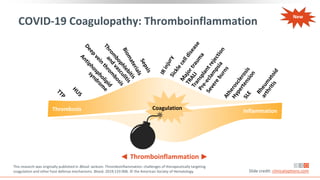
COVID-19 Coagulopathy: Thromboinflammation
This research was originally published in Blood. Jackson. Thromboinflammation: challenges of therapeutically targeting
coagulation and other host defense mechanisms. Blood. 2019;133:906. © the American Society of Hematology. Slide credit: clinicaloptions.com
Thromboinflammation
Thrombosis Inflammation
Coagulation
New
Guidance on Thromboprophylaxis
NIH[1] ASH[2]
 Hospitalized adults with COVID-19 should receive VTE
prophylaxis per the SoC for other hospitalized adults
 Anticoagulant or antiplatelet therapy should not be
used to prevent arterial thrombosis outside of the usual
SoC for patients without COVID-19
 Currently insufficient data to recommend for or against
the use of thrombolytics or increasing anticoagulant
doses for VTE prophylaxis in hospitalized COVID-19
patients outside of clinical trial
 Hospitalized patients should not be routinely discharged
on VTE prophylaxis (extended VTE prophylaxis can be
considered in patients with low bleeding risk and high
VTE risk)
 All hospitalized adults with COVID-19 should receive
thromboprophylaxis with low-molecular-weight
heparin over unfractionated heparin, unless bleeding
risk outweighs thrombosis risk
 Fondaparinux is recommended in the setting of
heparin-induced thrombocytopenia
 In patients in whom anticoagulants are contraindicated
or unavailable, use mechanical thromboprophylaxis
(eg, pneumatic compression devices)
 Encourage participation on clinical trials rather than
empiric use of therapeutic-dose heparin in COVID-19
patients with no other indication for therapeutic dose
anticoagulation
Slide credit: clinicaloptions.com
1. NIH. COVID-19 Treatment Guidelines. Updated: May 12, 2020. 2. American Society of Hematology. COVID-19 and VTE/
Anticoagulation: Frequently Asked Questions. 3. Spyropoulos. J Thromb Haemost. 2020;[Epub]. 4. Moores. CHEST. 2020;[Epub].
*Additional recommendations available from the International Society on Thrombosis and Haemostasis[3], and CHEST.[4]
Recommending Organization*
New
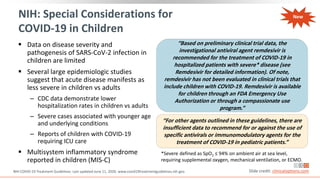
NIH: Special Considerations for
COVID-19 in Children
 Data on disease severity and
pathogenesis of SARS-CoV-2 infection in
children are limited
 Several large epidemiologic studies
suggest that acute disease manifests as
less severe in children vs adults
‒ CDC data demonstrate lower
hospitalization rates in children vs adults
‒ Severe cases associated with younger age
and underlying conditions
‒ Reports of children with COVID-19
requiring ICU care
 Multisystem inflammatory syndrome
reported in children (MIS-C)
NIH COVID-19 Treatment Guidelines. Last updated June 11, 2020. www.covid19treatmentguidelines.nih.gov. Slide credit: clinicaloptions.com
*Severe defined as SpO2 ≤ 94% on ambient air at sea level,
requiring supplemental oxygen, mechanical ventilation, or ECMO.
“Based on preliminary clinical trial data, the
investigational antiviral agent remdesivir is
recommended for the treatment of COVID-19 in
hospitalized patients with severe* disease (see
Remdesivir for detailed information). Of note,
remdesivir has not been evaluated in clinical trials that
include children with COVID-19. Remdesivir is available
for children through an FDA Emergency Use
Authorization or through a compassionate use
program.”
“For other agents outlined in these guidelines, there are
insufficient data to recommend for or against the use of
specific antivirals or immunomodulatory agents for the
treatment of COVID-19 in pediatric patients.”
New
COVID-19–Associated Hospitalization and
Death Rates Increase With Age in US
1. https://www.cdc.gov/coronavirus/2019-ncov/covid-data/covid-net/purpose-methods.html.
2. https://www.cdc.gov/covid-data-tracker/index.html#demographics. Slide credit: clinicaloptions.com
*Lab-confirmed COVID-19 cases; covers ~ 10% of US population: 99 counties in 14 states (CA, CO, CT, GA, IA, MD, MI, MN, NM, NY, OH, OR, TN, UT).
†Data from 109,622 deaths in confirmed and probable COVID-19 cases as reported by US states and territories; age group data available for 109,602
deaths (99%).
COVID-19–Associated Hospitalizations*[1] COVID-19–Associated Deaths†[2]
%
of
Total
Deaths
Age Group (Yrs)
Rates
per
100,000
Population
Wk
400
350
300
250
200
150
100
50
0
0-4 yrs
5-17 yrs
18-49 yrs
50-64 yrs
65+ yrs
100
0 10 20 30 40 50 60 70 80 90
0-4: < 0.1%
5-17: < 0.1%
18-29: 0.5%
30-39: 1.3%
40-49: 3.1%
50-64: 15.4%
65-74: 20.9%
75-84: 26.4%
85+: 32.4%
New
Treatment Overview
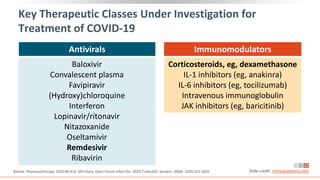
Key Therapeutic Classes Under Investigation for
Treatment of COVID-19
Barlow. Pharmacotherapy. 2020;40:416. McCreary. Open Forum Infect Dis. 2020;7:ofaa105. Sanders. JAMA. 2020;323:1824. Slide credit: clinicaloptions.com
Antivirals Immunomodulators
Baloxivir
Convalescent plasma
Favipiravir
(Hydroxy)chloroquine
Interferon
Lopinavir/ritonavir
Nitazoxanide
Oseltamivir
Remdesivir
Ribavirin
Corticosteroids, eg, dexamethasone
IL-1 inhibitors (eg, anakinra)
IL-6 inhibitors (eg, tocilizumab)
Intravenous immunoglobulin
JAK inhibitors (eg, baricitinib)
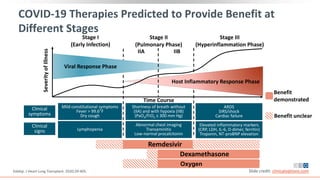
COVID-19 Therapies Predicted to Provide Benefit at
Different Stages
Slide credit: clinicaloptions.com
Siddiqi. J Heart Lung Transplant. 2020;39:405.
Oxygen
Remdesivir
Dexamethasone
Benefit unclear
Benefit
demonstrated
Stage I
(Early Infection)
Severity
of
Illness
Stage II
(Pulmonary Phase)
IIA IIB
Stage III
(Hyperinflammation Phase)
Viral Response Phase
Host Inflammatory Response Phase
Time Course
Clinical
symptoms
Clinical
signs
Mild constitutional symptoms
Fever > 99.6°F
Dry cough
Lymphopenia
Shortness of breath without
(IIA) and with hypoxia (IIB)
(PaO2/FiO2 ≤ 300 mm Hg)
Abnormal chest imaging
Transaminitis
Low-normal procalcitonin
ARDS
SIRS/shock
Cardiac failure
Elevated inflammatory markers
(CRP, LDH, IL-6, D-dimer, ferritin)
Troponin, NT-proBNP elevation
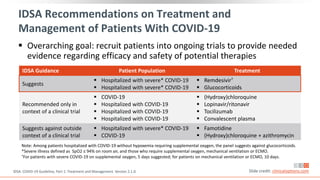
IDSA Recommendations on Treatment and
Management of Patients With COVID-19
 Overarching goal: recruit patients into ongoing trials to provide needed
evidence regarding efficacy and safety of potential therapies
IDSA. COVID-19 Guideline, Part 1: Treatment and Management. Version 2.1.0. Slide credit: clinicaloptions.com
IDSA Guidance Patient Population Treatment
Suggests
 Hospitalized with severe* COVID-19
 Remdesivir†
 Glucocorticoids
Recommended only in
context of a clinical trial
 COVID-19
 Hospitalized with COVID-19
 (Hydroxy)chloroquine
 Lopinavir/ritonavir
 Tocilizumab
 Convalescent plasma
Suggests against outside
context of a clinical trial
 Hospitalized with severe* COVID-19
 COVID-19
 Famotidine
 (Hydroxy)chloroquine + azithromycin
Note: Among patients hospitalized with COVID-19 without hypoxemia requiring supplemental oxygen, the panel suggests against glucocorticoids.
*Severe illness defined as SpO2 ≤ 94% on room air, and those who require supplemental oxygen, mechanical ventilation or ECMO.
†For patients with severe COVID-19 on supplemental oxygen, 5 days suggested; for patients on mechanical ventilation or ECMO, 10 days.
Updated
Investigational Treatments
Key RCT Data For Other Investigational Agents
Agent N Population Comparator Primary Outcome
Lopinavir/ritonavir[1] 199 Adults, severe SOC alone  No difference in time to clinical improvement
Lopinavir/ritonavir[2] 86
Adults, mild-to-
moderate
Umifenovir or
no antiviral
 No difference in rate of positive-to-negative
conversion of SARS-CoV-2 nucleic acid
Lopinavir/ritonavir +
ribavirin + IFNβ1b[3] 86 Adults, hospitalized LPV/RTV
 Significantly shorter median time from start
of study treatment to negative
nasopharyngeal swab for combination
treatment
Lopinavir/ritonavir*[4] 1596 Hospitalized SOC alone  No difference in 28-day mortality
Favipiravir*[5] 240 Adults, pneumonia Umifenovir  No difference in clinical recovery rate of Day 7
Hydroxychloroquine*[6] 150
Adults, mild-to-
moderate
SOC alone
 No difference in negative conversion of SARS-
CoV-2 by Day 28
Hydroxychloroquine*[7] 1542 Hospitalized SOC alone  No difference in 28-day mortality
Slide credit: clinicaloptions.com
1. Cao. NEJM. 2020;382:1787. 2. Li. Med. 2020;[Epub]. 3. Hung. Lancet. 2020;395:1695.
4. https://www.recoverytrial.net/files/lopinavir-ritonavir-recovery-statement-29062020_final.pdf
5. Chen. https://doi.org/10.1101/2020.03.17.20037432 6. Tang. https://doi.org/10.1101/2020.04.10.20060558
7. https://www.recoverytrial.net/files/hcq-recovery-statement-050620-final-002.pdf
*Published as a preprint or by press release only; not yet peer-reviewed.
Key RCT Data For Other Investigational Agents (Cont.)
Agent N Population Comparator Primary Outcome
Tocilizumab[1,2] 129
Moderate or
severe
pneumonia
Standard care
alone
 Improvement in composite
endpoint of death or need for
ventilation at Day 14 with
tocilizumab vs standard care
Sarilumab
(200 or 400 mg)[3,4] 457 Severe or critical Placebo
 CRP decline: 77% and 79% vs 21%
 IDMC recommended continuing
phase III only in critical subgroup
with 400 mg sarilumab vs placebo
Slide credit: clinicaloptions.com
1. https://www.aphp.fr/contenu/tocilizumab-improves-significantly-clinical-outcomes-patients-moderate-or-severe-covid-19
2. NCT04331808. 3. NCT04315298. 4. https://newsroom.regeneron.com/news-releases/news-release-details/regeneron-and-
sanofi-provide-update-us-phase-23-adaptive
Go Online for More CCO
Coverage of COVID-19!
Weekly Medical Minute presentations on timely topics related to care of patients with
COVID-19
Question and Answer webinars hosted by expert faculty who will answer your questions in
real time
clinicaloptions.com/c19

Covid-19.pdf

  • 1.
    Version 6: August31, 2020 Professor Ali A. Hadi Faculty of Medicine/University of Al-Ameed Comprehensive COVID-19 Slideset: Emerging Data and Guidance on Diagnosis and Management This program is supported by an educational grant from Gilead Sciences, Inc.
  • 2.
  • 3.
    The CSSE( centrefor system science & engineering) at Johns Hopkins: Global COVID-19 Dashboard Dong. Lancet Infect Dis. 2020;20:533. https://coronavirus.jhu.edu/map.html Slide credit: clinicaloptions.com Last updated: May 22, 2021 Updated
  • 4.
    CDC: US COVID-19Tracker https://www.cdc.gov/covid-data-tracker Slide credit: clinicaloptions.com Cases Deaths 0-5182 7246-25,178 107,791-233,065 234,751-693,839 Last updated: August 30, 2020, 1:02 PM ET 26,293-52,495 57,041-92,434 0-104 132-454 3285-7671 8217-23,689 604-1127 1331-2698 Updated
  • 5.
    50 40 30 20 10 0 COVID-NET: Lab-Confirmed COVID-19–Associated HospitalizationRates Stratified by Age https://gis.cdc.gov/grasp/COVIDNet/COVID19_3.html Slide credit: clinicaloptions.com Covers ~ 10% of US population: 99 counties in 14 states (CA, CO, CT, GA, IA, MD, MI, MN, NM, NY, OH, OR, TN, UT) Rate per 100,000 Population 0-4 yrs 5-17 yrs 18-49 yrs 50-64 yrs ≥ 65 yrs
  • 6.
    Proposed Routes ofSARS-CoV-2 Transmission Galbadage. Front Public Health. 2020;8:163. WHO. Scientific Brief. July 9, 2020. Slide credit: clinicaloptions.com SARS-CoV-2– Infected Host Susceptible Host Aerosols < 5 µm diameter Suspended in air Contact/Droplet > 5 µm diameter Direct contact or < 1 meter distance Fomites (?) Environmental Stability Points of entry: Eyes, nose, or mouth Airborne (?) > 1 meter distance Urine/feces: RNA found in both; live virus cultivated from few specimens
  • 7.
    SARS-CoV-2: Aerosol andSurface Viability Doremalen. NEJM. 2020;382:1564. Slide credit: clinicaloptions.com Predicted Decay of SARS-CoV-2 Titer Half-Life of Viable SARS-CoV-2 vs SARS-CoV-1 Hours Hours Hours Hours Hours Aerosols 3.0 0 1.0 2.0 104 103 102 101 100 TCID 50 /L or Air 80 0 20 40 104 103 102 101 100 TCID 50 /mL of Medium 60 80 0 20 40 104 103 102 101 100 60 Copper Cardboard 80 0 20 40 104 103 102 101 100 60 Stainless Steel 80 0 20 40 104 103 102 101 100 60 Plastic SARS- Cov-2 SARS- Cov-1 Half-Life (Hrs) 10 8 6 4 2 0 Aerosols SARS- Cov-2 SARS- Cov-1 Half-Life Hrs) 10 8 6 4 2 0 Copper SARS- Cov-2 SARS- Cov-1 Cardboard SARS- Cov-2 SARS- Cov-1 Stainless Steel SARS- Cov-2 SARS- Cov-1 Plastic TCID 50 /mL of Medium TCID 50 /mL of Medium TCID 50 /mL of Medium
  • 8.
    Rapid Inactivation ofSARS-CoV-2 Aerosols in Sunlight  In vitro simulations suggest a 90% loss of infectivity in 8-19 min for SARS-CoV-2 aerosols exposed to mid to high intensity sunlight Schuit. J Infect Dis. 2020;222:564. Slide credit: clinicaloptions.com Suspension Matrix at 20°C Simulated Sunlight Tests, n Mean kinfectivity, min-1 (SD) Mean Decay Rate, %/min (SD) Simulated saliva None 18 0.008 (0.011) 0.8 (1.1) Mid intensity 3 0.121 (0.017) 11.4 (1.5) High intensity 8 0.306 (0.097) 26.1 (7.1) Culture medium None 16 0.013 (0.012) 1.2 (1.2) Mid intensity 4 0.169 (0.062) 15.4 (5.3) High intensity 7 0.182 (0.041) 16.6 (3.3) Results pooled across tests of varying relative humidity as this factor not found to significantly affect viral decay.
  • 9.
    Key Considerations onModes of SARS-CoV-2 Transmission  Person-to-person considered predominant mode of transmission, likely via respiratory droplets from coughing, sneezing, or talking[1,2] ‒ High-level viral shedding evident in upper respiratory tract[3,4] ‒ Airborne transmission suggested by multiple studies, but frequency unclear in absence of aerosol-generating procedures in healthcare settings[2]  Virus rarely cultured in respiratory samples > 9 days after symptom onset, especially in patients with mild disease[5]  Multiple studies describe a correlation between reduced infectivity with decreases in viral loads and rises in neutralizing antibodies[5]  ACOG: “Data are reassuring that vertical transmission appears to be uncommon”[6] 1. https://www.cdc.gov/coronavirus/2019-ncov/prevent-getting-sick/how-covid-spreads.html 2. WHO. Scientific Brief. July 9, 2020. 3. Wölfel. Nature. 2020;581:465. 4. Zou. NEJM. 2020;382:1177. 5. WHO. Scientific Brief. June 17, 2020. 6. ACOG. Practice Advisory: Novel Coronavirus 2019 (COVID-19). Last updated July 1, 2020. Slide credit: clinicaloptions.com Updated Updated
  • 10.
    Timing of SARS-CoV-2Transmission Based on Symptoms  Prospective study of lab-confirmed COVID-19 cases (n = 100) and their close contacts (n = 2761) in Taiwan[1] ‒ Paired index-secondary cases (n = 22) occurred more frequently with exposure just before or within 5 days of symptom onset vs later  Pre-symptomatic infections ‒ Accounted for 6.4% of locally acquired infections in a study in Singapore (N = 157)[2] ‒ Modelling study of transmission in China (n = 154) estimated that 44% of transmissions may have occurred just before symptoms appeared[3]  A recent systematic review and meta- analysis estimated that the proportion of total infections that are truly asymptomatic range from 6% to 41% (pooled estimate of 15%)[4] ‒ Asymptomatic transmission rates ranged from 0% to 2.2% vs symptomatic transmission rates of 0.8% to 15.4% ‒ 3 studies reported that the cycle threshold from RT-PCR assays did not differ between symptomatic and asymptomatic individuals 1. Cheng. JAMA Intern Med. 2020;[Epub]. 2. Wei. MMWR. 2020;69:411. 3. He. Nature Medicine. 2020;26:672. 4. Byambasuren. MedRxiv. 2020;[Preprint]. Note: this study has not been peer reviewed. Slide credit: clinicaloptions.com
  • 11.
    Considering Climate inCOVID-19 Mitigation Strategies  “No evidence has suggested that warmer conditions will reduce the effectiveness of SARS-CoV- 2 transmission to an extent that few additional interventions are needed to curb its spread… At present, policy makers must focus on reducing physical contact within communities” O’Reilly. Lancet Planet Health. 2020;4:e172. Slide credit: clinicaloptions.com Mean Temperature (°C) Mean Relative Humidity (%) Seasonal averages population adjusted for each country + denotes country with average temperature > 25°C and relative humidity > 70% WHO Transmission Status (as of Apr 8, 2020) vs Temperature and Humidity (Jan 1 - Mar 31, 2020) Imported Cases Only Local Transmission 30 20 10 0 -10 Imported Cases Only Local Transmission 90 70 50 30 + + + + + + + + + + + + + + + + + + ++ + + + + + + + + + + + + + + + + ++ + + + + + + + + +
  • 12.
    Projecting Postpandemic SARS-CoV-2Transmission  Recurrent outbreaks likely after initial, most severe pandemic period ‒ Interval and height of coming waves will depend on multiple factors, including control measures ‒ Prepare for ≥ 18-24 mos of significant COVID-19 activity with periodic hot spots across diverse geographies Kissler. Science. 2020;368:860. COVID-19: The CIDRAP Viewpoint. April 30, 2020. Slide credit: clinicaloptions.com Potential Models “Peaks and Valleys” “Fall Peak” “Slow Burn” Jan 2020 Jul 2020 Jan 2021 Jul 2021 Jan 2022 COVID-19 Cases
  • 13.
    Nonpharmacologic Preventative Interventions Inactivation of SARS-CoV, MERS-CoV, and other endemic human coronaviruses readily accomplished with 62% to 71% ethanol, 0.5% hydrogen peroxide, or 0.1% sodium hypochlorite (in 1 min)[5] ‒ 0.05% to 0.2% benzalkonium chloride, 0.02% chlorhexidine digluconate less effective 1. https://www.cdc.gov/coronavirus/2019-ncov/prevent-getting-sick/prevention.html 2. WHO. Scientific Brief. July 9, 2020. 3. Leung. Nat Med. 2020;26:676. 4. Chu. Lancet. 2020;395:1973. 5. Kampf. J Hosp Infect. 2020;104:246. Slide credit: clinicaloptions.com Recommended Prevention Strategies[1,2] Identify and quickly test suspect cases with subsequent isolation of infected individuals Quarantine close contacts of infected individuals Wash hands often with soap and water Maintain social distance (~ 6 feet) Wear cloth face cover in public[3,4] Practice respiratory etiquette Disinfect frequent-touch surfaces regularly Avoid crowds, close-contact settings, and poorly ventilated spaces
  • 14.
    IDSA: SARS-CoV-2 InfectionPrevention IDSA. COVID-19 Guideline, Part 2: Infection Prevention. Version 1.0.1. Slide credit: clinicaloptions.com Healthcare personnel caring for patients with suspected or known COVID-19 Use appropriate PPE* with proper donning/doffing (ie, gowns, gloves, eye protection) Routine Patient Care Aerosol-Generating Procedures Surgical mask or N95 (N99/PAPR) N95 (N99/PAPR) Conventional Settings *IDSA makes no recommendation regarding double vs single glove or shoe cover vs no shoe cover use. Routine Patient Care Aerosol-Generating Procedures Surgical mask or Reprocessed N95 Face shield or surgical mask covering N95 to allow extended use/reuse or Reprocessed N95 Contingency or Crisis Settings
  • 15.
    Healthcare Systems andHealthcare Providers: What Can You Do?  Implement standardized protocols and quality improvement initiatives, particularly in facilities that serve large minority populations  Identify and address racism that hinders patient care and communication  Provide interpretation services to patients  Connect patients to community resources that can help patients with underlying conditions adhere to care plans  Learn about social and economic conditions that may put some patients at higher risk for getting sick with COVID-19  Encourage truly open communication between patients and care providers https://www.cdc.gov/coronavirus/2019-ncov/need-extra-precautions/racial-ethnic-minorities.html Slide credit: clinicaloptions.com
  • 16.
  • 17.
    Residing or working inan area with high risk of transmission* WHO: Suspect Case Definition Acute onset of fever and cough OR ≥ 3 of the following: fever, cough, general weakness/fatigue, headache, myalgia, sore throat, coryza, dyspnea, anorexia/nausea/vomiting, diarrhea, altered mental status And 1 of the following within 14 days of symptom onset: Residing or travel to an area with community transmission Working in a healthcare setting WHO COVID-19 Case Definition. Updated August 7, 2020. https://www.who.int/publications/i/item/WHO-2019-nCoV- Surveillance_Case_Definition-2020.1 Slide credit: clinicaloptions.com *Closed residential settings, humanitarian settings such as camp and camp-like settings for displaced persons. OR: Patient with severe acute respiratory illness (acute respiratory infection with history of fever or measured fever ≥ 38°C and a cough; onset within last 20 days; requires hospitalization) Updated
  • 18.
    Contact of probableor confirmed case or epidemiologically linked to a cluster with at least 1 confirmed case WHO: Probable Case Definition Acute onset of fever and cough OR ≥ 3 of the following: fever, cough, general weakness/fatigue, headache, myalgia, sore throat, coryza, dyspnea, anorexia/nausea/vomiting, diarrhea, altered mental status AND: WHO COVID-19 Case Definition. Updated August 7, 2020. https://www.who.int/publications/i/item/WHO-2019-nCoV- Surveillance_Case_Definition-2020.1 Slide credit: clinicaloptions.com *Hazy opacities with peripheral and lower lung distribution on chest radiography; multiple bilateral ground glass opacities with peripheral and lower lung distribution on chest CT; or thickened pleural lines, B lines, or consolidative patterns on lung ultrasound. OR: Suspect case with chest imaging showing findings suggestive of COVID-19 disease* OR: Recent onset of loss of smell or taste in the absence of any other identified cause OR: Unexplained death in an adult with respiratory distress who was a contact of a probable or confirmed case or epidemiologically linked to a cluster with at least 1 confirmed case New
  • 19.
    Common COVID-19 DiagnosticMethods: RNA Udugama. ACS Nano. 2020;14:3822. Lee. Front Immunol. 2020;11:879. Slide credit: clinicaloptions.com Viral Nucleic Acid Assays Typically indicate  Current infection Specimen sources  Upper (eg, nasopharyngeal swabs or washes, oropharyngeal swabs, nasal aspirates) or lower (eg, sputum, bronchoalveolar lavage fluid, tracheal aspirates) respiratory tract Considerations  Primary method for COVID-19 diagnosis with multiple RT-PCR kits available  False negatives may result from improper sampling or handling, low viral load, or viral mutations  SARS-CoV-2 RNA undetectable by ~ Day 14 following onset of illness in some cases/samples
  • 20.
    Common COVID-19 DiagnosticMethods: Antibodies Deeks. Cochrane Database Syst Rev. 2020;6:CD013652. Lee. Front Immunol. 2020;11:879. Carter. ACS Cent Sci. 2020;6:591. Slide credit: clinicaloptions.com Updated Serologic Assays Typically indicate  Past infection, but may have some utility in diagnosis of current infection among those presenting late or when RT-PCR negative/unavailable Specimen sources  Most often blood serum or plasma, but may include saliva, sputum, or other biological fluids Considerations  Provides a delayed but wider window of time for detection  May be useful for COVID-19 surveillance and identification of convalescent plasma donors  False negatives: Low sensitivity in first wk after symptoms with subsequent rises during second/third wks and scant data thereafter; unclear if low- level antibody detectable in cases of mild/asymptomatic disease  False positives: Due to cross-reactivity  Uncertain if positive read = immune protection if re-exposed
  • 21.
    WHO: Interim Guidanceon Laboratory Testing for SARS-CoV-2 in Suspected Symptomatic Human Cases  Routine confirmation of SARS-CoV-2 infection is based on the detection of unique sequences of RNA by nucleic acid amplification tests such as RT-PCR  1 or more negative results do not rule out the possibility of SARS-CoV-2 infection Factors Potentially Leading to Negative Result in an Infected Individual Poor specimen quality Timing of specimen collection (very early or late in infection) Specimen was not handled appropriately Technical reasons inherent in test (virus mutation or PCR inhibition) “If a negative result is obtained from a patient with a high index of suspicion for COVID-19, particularly when only upper respiratory tract specimens were collected, additional specimens, including from the lower respiratory tract if possible, should be collected” https://www.who.int/publications-detail/laboratory-testing-strategy-recommendations-for-covid-19-interim-guidance Slide credit: clinicaloptions.com
  • 22.
    CDC: Testing Recommendationsfor SARS-CoV-2  “Viral [nucleic acid or antigen] tests are recommended to diagnose acute infection.” Overview of Testing for SARS-CoV-2 (COVID-19). Updated August 24, 2020. https://www.cdc.gov/coronavirus/2019- ncov/hcp/testing-overview.html Slide credit: clinicaloptions.com Considerations for Who Should Get Tested Persons with COVID-19 symptoms: test or self-isolate for ≥ 10 days after symptom onset and ≥ 24 hrs after symptom resolution Close contacts (within 6 ft) of known case for ≥ 15 mins: test if vulnerable individual or recommended by state or local public health officials No COVID-19 symptoms and no close contact with known case: no test needed Persons in high transmission area who attended a gathering of ≥ 10 people without widespread mask wearing or physical distancing: test if vulnerable individual or recommended by state or local public health officials Work in a nursing home or long-term care facility: test regularly (frequency depends on incidence rate of area) Live in or receive care in a nursing home or long-term care facility: test if symptomatic, if an outbreak occurs, or routinely for persons who leave the facility on a regular basis Critical infrastructure worker, health care worker, or first responder: may be tested according to employer’s guidelines Updated
  • 23.
    IDSA: SARS-CoV-2 NucleicAcid Testing of Symptomatic Individuals IDSA. COVID-19 Guideline, Part 3: Diagnostics. Version 1.0.1. Slide credit: clinicaloptions.com Direct SARS-CoV-2 Nucleic Acid Amplification Testing Collect nasopharyngeal, nasal, or mid-turbinate rather than oropharyngeal or saliva specimens Provider-collected or self-collected specimens acceptable except nasopharyngeal Non-hospitalized Hospitalized Lower respiratory tract symptoms High Suspicion for COVID-19 Low Suspicion for COVID-19 Known exposure or high prevalence area If negative, repeat testing If negative, repeat testing (from lower tract if possible) If negative, repeat testing If negative, do not repeat testing Prioritize testing for symptomatic patients. If resources adequate, consider testing select asymptomatic individuals (eg, exposed, immunosuppressive procedure, major time-sensitive surgery, aerosol-generating procedure with limited PPE).
  • 24.
    Temporal Profile ofSARS-CoV-2 Viral Load  Serial viral loads assessed via RT-PCR of posterior oropharyngeal saliva or endotracheal aspirate* collected from hospitalized patients in Hong Kong with laboratory confirmed COVID-19 (N = 23)[1]  Viral loads highest during first wk following symptom onset[1]  Pneumonia may develop late and when URT PCR is negative[2] *Intubated patients. Slide credit: clinicaloptions.com Mean Viral Load, log 10 copies/mL (SD) Days After Symptom Onset Temporal Viral Load in Patients With COVID-19[1] 10 8 6 4 2 0 0 10 20 30 Saliva Endotracheal aspirate* Day Saliva Endotracheal 0 1 0 1 1 0 2 3 0 3 3 0 4 5 0 5 5 0 6 5 0 7 4 0 8 7 1 9 10 0 10 5 1 11 8 2 12 7 2 13 7 2 14 6 2 15 7 2 16 8 2 17 5 2 18 6 2 19 5 2 20 6 2 21 6 1 22 5 1 23 6 1 24 4 1 25 3 1 26 3 0 27 2 0 28 2 0 29 1 0 1. To. Lancet Infect Dis. 2020;20:565. 2. Ai. Radiology. 2020;296:E32.
  • 25.
    P = .02 P< .001 P < .001 P < .001 Figure 3. A, Viral load of different tissue samples. B, Analysis of viral load in different clinical stages of ...  Viral load assessed via digital droplet PCR of samples collected from patients in Beijing with laboratory confirmed COVID-19 (N = 76) Viral Load Varies by Sample Type and Disease Stage *Early stage: multifocal bilateral or isolated round ground-glass opacity with or without patchy consolidations and prominent peripherally subpleural distribution on chest CT. Progressive stage: Increasing number, range, or density of lung lesions on chest CT. †Recovery phase: lesions gradually absorbed. ‡Clinical cure: temperature recovery for > 3 days, improvement in respiratory symptoms, absorption of lung lesions, and 2 consecutive negative RT-PCR results from respiratory samples tested at least 1 day apart. Early and progressive stages* (n = 15) Recovery stage† (n = 49) Clinical cure‡ (n = 5) Slide credit: clinicaloptions.com Mean Viral Load (copies/test) Mean Viral Load (copies/test) Type of Specimens 106 Nasal swabs Throat swabs Sputum Blood Urine 104 102 100 P < .001 Clinical Disease Stage 106 104 102 100 P < .001 Sputum Viral Load By Disease Stage Viral Load By Sample Type Yu. Clin Infect Dis. 2020;[Epub].
  • 26.
    SARS-CoV-2 Detection byRT-PCR Across Different Clinical Specimens  Among 1070 specimens from 205 COVID-19 patients in China, highest SARS-CoV-2 positivity rates observed with BAL fluid (93%), sputum (72%), nasal swab (63%) Wang. JAMA. 2020;323:1843. Slide credit: clinicaloptions.com *Samples falling above the dashed line considered positive for SARS-CoV-2. Patient Cycle Threshold* 10 20 30 40 50 1 2 3 4 5 6 7 8 9 10 11 12 13 14 15 16 17 18 19 20 BAL fluid Pharyngeal swab Fibrobronchoscopy brush biopsy Feces Sputum Blood Nasal swab Urine
  • 27.
    Chest CT Abnormalities Most common hallmark features on chest CT images include bilateral peripheral ground- glass opacities and consolidations of the lungs with peak lung involvement between 6 days and 11 days post-symptom onset[1-3]  In a study in Wuhan, China, chest CT imaging demonstrated a sensitivity of 97% and specificity of 25% with RT-PCR as the reference (N = 1014)[4] ‒ 60% to 93% of patients had initial positive lung CT consistent with COVID-19 before the initial positive RT-PCR result 1. Bernheim. Radiology. 2020;295:685. 2. Pan. Radiology. 2020;295:715. 3. Wang. Radiology. 2020;296:E55. 4. Ai. Radiology. 2020;296:E32. Slide credit: clinicaloptions.com 29-Yr-Old Man Presenting With Fever for 6 Days[4] Ground-glass opacities Day 6 Day 9 Day 11 Day 17 Day 23
  • 28.
    SARS-CoV-2 in Stool Reports of negative pharyngeal and sputum viral tests but fecal samples testing positive for SARS-CoV-2[1]  Similar viral load but significantly longer duration of viral detection in stool vs respiratory samples[2] 1. Chen. Am J Gastroenterol. 2020;115:790. 2. Zheng. BMJ. 2020;369:m1443. Slide credit: clinicaloptions.com 10 8 6 4 2 0 Respiratory Stool Serum Viral Load (log 10 copies/mL) P = .04 P < .001 P < .001 40 50 30 20 10 0 Respiratory Stool Serum Days After Symptom Onset P = .02 P < .001 P = .07 60
  • 29.
    Temporal Considerations forDiagnosis Sethuraman. JAMA. 2020;323:2249. Reproduced with permission from JAMA. 2020. doi:10.1001/jama.2020.8259. Copyright©(2020) American Medical Association. All rights reserved. Slide credit: clinicaloptions.com Wk -2 Wk -1 Wk 1 Wk 2 Wk 3 Wk 4 Wk 5 Wk 6 Symptom onset Detection unlikely PCR – Likely positive PCR – Likely negative Antibody detection Nasopharyngeal swab PCR Virus isolation from respiratory tract Bronchoalveolar lavage/sputum PCR Stool PCR IgM antibody IgG antibody After symptom onset Before symptom onset SARS-CoV-2 exposure Increasing probability of detection
  • 30.
    Viral Antibody Response Viral infection results in the production of antibodies of different isotypes with varying targets and specificities  High-affinity antibodies generated via maturation with somatic rearrangements and hypermutation of Ig genes  Nonneutralizing antibodies: recognize viral epitopes that do not extinguish infective virus  Neutralizing antibodies: recognize viral epitopes that eliminate or greatly diminish infective virus; critical for preventing reinfection ‒ Development of nonneutralizing antibodies typically precedes that of neutralizing antibodies Functional Activity of Ig Isotypes IgM IgD IgG1 IgG2 IgG3 IgG4 IgA IgM Neutralization + - ++ ++ ++ ++ ++ - Opsonization + - +++ - ++ + + - Sensitization for NK cell killing - - ++ - ++ - - - Sensitization of mast cells - - + - + - - +++ Complement activation +++ - ++ + +++ - + - Slide credit: clinicaloptions.com Neurath. Encyclopedia of Virology. 2008;56.
  • 31.
    Antibody Response toSARS-CoV-2  Antibodies detected by chemiluminescence enzyme immunoassay in patients with COVID-19* (N = 262) enrolled at 3 hospitals in Hubei, China Rates of Detection of Anti–SARS-CoV-2 IgM and IgG Antibody Levels Slide credit: clinicaloptions.com Long. Nat Med. 2020;26:845. Total Patients: 22 45 70 79 70 47 17 13 Days After Symptom Onset Log 2 Level *Confirmed by RT-PCR assays on nasal or pharyngeal swabs. Total Patients: 54 130 71 7 54 130 71 7 Days After Symptom Onset 100 80 60 40 20 0 2-4 8-10 11-13 14-16 17-19 20-22 23+ 5-7 Antibody IgG IgM IgG and/or IgM 10 8 6 4 2 0 0-7 15-21 22-27 0-7 8-14 15-21 22-27 8-14 IgG IgM Patients (%)
  • 32.
    Neutralizing Antibodies toSARS-CoV-2  Plasma collected from recovered patients with COVID-19 who had mild symptoms (N = 175)  Neutralizing antibody titers* varied  Neutralizing and spike-binding antibodies emerged concurrently between 10-15 days following disease onset Slide credit: clinicaloptions.com Wu. medRxiv. 2020;[Preprint]. Note: This study has not been peer reviewed. SARS-CoV-2 NAb Titers (ID50) Disease Duration (Days) *Assessed via pseudotyped, lentiviral vector-based assay. NAb Titers Value (N = 175) Titer range, ID50 < 40 to 21,567 Patients with undetectable level, % 6 Patients with detectable level, %  ID50: < 500 (very low)  ID50: 500-999 (medium low)  ID50: 1000-2500 (medium high)  ID50: > 2500 (high) 30 17 39 14 4096 2048 1024 512 256 128 64 32 16 2 4 6 8 10 12 14 161820 2224 Patient 1 Patient 2 Patient 3 Patient 4 Patient 5 Patient 6
  • 33.
    SARS-CoV-2 Serology forDiagnosis: Current Recommendations  CDC: Given that it can take 1-3 wks to develop antibodies following infection, antibody test results should not be used to diagnose someone with an active SARS-CoV-2 infection[1,2]  Royal College of Pathologists of Australasia[3]: ‒ “Molecular testing on a single throat with deep nasal swab is the current test of choice for the diagnosis of acute COVID-19 infection” ‒ “COVID-19 IgG/IgM rapid tests have no role to play in the acute diagnosis of COVID-19 virus infection . . . ” ‒ “COVID-19 IgG/IgM rapid tests will miss patients in early stages of disease when they are infectious to other people”  WHO: “At present, based on current evidence, WHO recommends the use of these new point-of-care immunodiagnostic tests only in research settings”[4] Slide credit: clinicaloptions.com 1. https://www.cdc.gov/coronavirus/2019-ncov/lab/resources/antibody-tests-professional.html. 2. https://www.cdc.gov/coronavirus/2019-ncov/testing/serology-overview.html. 3. https://www.rcpa.edu.au/getattachment/bf9c7996-6467-44e6-81f2-e2e0cd71a4c7/COVID19-IgG-IgM-RAPID-POCT-TESTS.aspx. 4. https://www.who.int/news-room/commentaries/detail/advice-on-the-use-of-point-of-care-immunodiagnostic-tests-for-covid-19.
  • 34.
    Natural History, ClinicalPresentation, and Symptom Spectrum
  • 35.
    COVID-19 Incubation: Infectionto Illness Onset  Among 10 confirmed NCIP cases in Wuhan, Hubei province, China[1] ‒ Mean incubation: 5.2 days (95% CI: 4.1-7.0)  Among 181 confirmed SARS-CoV-2 infections occurring outside of Hubei province[2] ‒ Median incubation: 5.1 days (95% CI: 4.5-5.8) ‒ Symptom onset by Day 11.5 of infection in 97.5% of persons 1. Li. NEJM. 2020;382:1199. 2. Lauer. Ann Intern Med. 2020;172:577. Slide credit: clinicaloptions.com Estimated Incubation Period Distribution[1] 0.25 0.20 0.15 0.10 0.05 0 Relative Frequency Days From Infection to Symptom Onset 21 0 7 14
  • 36.
    Primary Symptoms ofCOVID-19 Li. J Med Virol. 2020;92:577. https://www.cdc.gov/coronavirus/2019-ncov/symptoms-testing/symptoms.html Slide credit: clinicaloptions.com Headache Congestion or runny nose, new loss of taste or smell Fatigue, muscle or body aches, fever or chills Nausea or vomiting, diarrhea Cough, sore throat Shortness of breath or difficulty breathing “Symptoms may appear 2-14 days after exposure to the virus”
  • 37.
    COVID-19 Clinical PresentationMay Vary by Age, Sex  Observational study of Europeans with mild-to-moderate COVID-19 (ie, no ICU admission) via standardized questionnaire during March 22-April 10, 2020 (N = 1420)[1] ‒ Mean duration of symptoms (n = 264): 11.5 ± 5.7 days ‒ Ear, nose, throat complaints more common in young patients; fever, fatigue, loss of appetite, diarrhea in elderly patients (P < .01) ‒ Loss of smell, headache, nasal obstruction, throat pain, fatigue more common in women; cough, fever in men (P < .001)  Among 17 fatal COVID-19 cases detailed by the China National Health Commission, median time from first symptom to death: 14 days (range: 6-41)[2] ‒ Numerically faster in older patients: 11.5 days if ≥ 70 yrs vs 20 days if < 70 yrs (P = .033) 1. Lechien. J Intern Med. 2020;[Epub]. 2. Wang. J Med Virol. 2020;92:441. Slide credit: clinicaloptions.com Symptom,[1] % N = 1420 Headache 70.3 Loss of smell 70.2 Nasal obstruction 67.8 Asthenia 63.3 Cough 63.2 Myalgia 62.5 Rhinorrhea 60.1 Taste dysfunction 54.2 Sore throat 52.9 Fever (> 38°C) 45.4
  • 38.
    Variation in ClinicalCourse and Outcome Among Patients Hospitalized With COVID-19 in Wuhan, China Zhou. Lancet. 2020;395:1054. Slide credit: clinicaloptions.com Fever Cough Dyspnea ICU admission Systematic corticosteroid SARS-CoV-2 RNA positive Median days after onset 1 2 3 4 5 6 7 8 9 10 11 12 13 14 15 16 17 18 19 20 21 22 Survivors (n = 137) Sepsis ARDS Discharge Fever Cough Dyspnea ICU admission Invasive ventilation Systematic corticosteroid SARS-CoV-2 RNA positive Median days after onset 1 2 3 4 5 6 7 8 9 10 11 12 13 14 15 16 17 18 19 20 21 22 Nonsurvivors (n = 54) Sepsis ARDS Acute cardiac/ kidney injury Death Secondary infection
  • 39.
    Assessing Disease Severity andRisk Factors for Severe Disease
  • 40.
    NIH Guidelines: Defininga COVID-19 Severity Spectrum NIH COVID-19 Treatment Guidelines. Management of persons with COVID-19. Last updated June 11, 2020. Slide credit: clinicaloptions.com Stage Characteristics Asymptomatic or presymptomatic infection  Positive test for SARS-CoV-2 but no symptoms Mild illness  Varied symptoms (eg, fever, cough, sore throat, malaise, headache, muscle pain) but no shortness of breath, dyspnea, abnormal imaging Moderate illness  SpO2 ≥ 94% and lower respiratory disease evidenced by clinical assessment or imaging Severe illness  SpO2 < 94%, PaO2/FiO2 < 300, respiratory rate > 30 breaths/min, or lung infiltrates > 50% Critical illness  Respiratory failure, septic shock, and/or multiorgan dysfunction
  • 41.
    Predictors of MortalityAmong COVID-19–Positive Hospitalized Patients in the UK  Prospective observational cohort study of hospital admissions in England, Wales, and Scotland during February 6 - April 19, 2020 (N = 20,133) ‒ Significantly increased risk of mortality among older patients, men, and those with chronic comorbidities Docherty. BMJ. 2020;369:m1985. Slide credit: clinicaloptions.com Multivariate Survival Analysis HR (95% CI) P Value < 50 yrs 50-59 yrs 60-69 yrs 70-79 yrs ≥ 80 yrs Female sex Chronic cardiac disease Chronic pulmonary disease Chronic kidney disease Diabetes Obesity Chronic neurological disorder Dementia Malignancy Moderate/severe liver disease 2.63 (2.06-3.35) 4.99 (3.99-6.25) 8.51 (6.85-10.57) 11.09 (8.93-13.77) 0.81 (0.75-0.86) 1.16 (1.08-1.24) 1.17 (1.09-1.27) 1.28 (1.18-1.39) 1.06 (0.99-1.14) 1.33 (1.19-1.49) 1.17 (1.06-1.29) 1.40 (1.28-1.52) 1.13 (1.02-1.24) 1.51 (1.21-1.88) Characteristic < .001 < .001 < .001 < .001 < .001 < .001 < .001 < .001 .087 < .001 .001 < .001 .017 < .001 10 1 2 5
  • 42.
    Host Factors PredictingCOVID-19 Disease Severity  Cohort study of SARS-CoV-2 RNA–positive patients in Shanghai during January 20 - February 25, 2020 (N = 326)  In multivariate analysis of critical (n = 16) vs asymptomatic, mild, or severe (n = 310) confirmed COVID-19 cases, predictors of increased disease severity included: ‒ Older age (P = .002) ‒ Lymphocytopenia (P = .002)  Lymphocyte declines correlated with high levels of IL-6 and IL-8 in patients exhibiting severe/critical disease Zhang. Nature. 2020;583:437. Slide credit: clinicaloptions.com
  • 43.
  • 44.
    Vaccine Development Pathway Traditional vaccine development pathway[1] ‒ Target discovery/validation, preclinical stage, manufacturing development, clinical assay optimization: 3-8 yrs ‒ Phase I (safety), phase II (safety/immunogenicity), phase III (safety/efficacy) clinical trials: 2-10 yrs ‒ Regulatory review: 1-2 yrs Slide credit: clinicaloptions.com 1. Heaton. NEJM. 2020;[Epub]. 2. The New York Times. Coronavirus Vaccine Tracker. https://www.nytimes.com/interactive/2020/science/coronavirus-vaccine-tracker.html SARS-CoV-2 Vaccine Candidates in Development[2] Preclinical Phase I Phase II Phase III Approval Vaccines not yet in human trials Vaccines testing safety and dosage Vaccines in expanded safety trials Vaccines in large- scale efficacy tests Vaccine approved for limited use 140+ 19 12 5 1
  • 45.
    Virus genes (some inactive) VaccineCandidates in Development for SARS-Cov-2 Slide credit: clinicaloptions.com Funk. Frontiers in Pharmacology. 2020;[Epub]. Vaccine Platforms Vaccine Candidates 44 16 14 10 12 20 3 8 Other DNA RNA SARS-CoV-2 inactivated SARS-CoV-2 live attenuated Viral vector (nonreplicating) Viral vector (replicating) Protein based Viral vector (nonreplicating) Viral vector (replicating) Virus (inactivated) Virus (attenuated) DNA RNA (+ LNPs) Protein based (eg, spike) Coronavirus spike gene Virus genes (some inactive) Coronavirus spike gene
  • 46.
    mRNA Vaccine AgainstSARS-CoV-2: Preliminary Safety Report  No serious adverse events reported Slide credit: clinicaloptions.com Jackson. NEJM. 2020;[Epub]. 0 Symptom Dose Group Vaccination 1 Vaccination 2 Mild Moderate Severe Any systemic symptom Arthralgia Fatigue Fever Chills Headache 25 μg 100 μg 250 μg 25 μg 100 μg 250 μg 25 μg 100 μg 250 μg 25 μg 100 μg 250 μg 25 μg 100 μg 250 μg 25 μg 100 μg 250 μg Participants (%) 0 Symptom Dose Group Vaccination 1 Vaccination 2 Myalgia Nausea Any local symptom Size of erythema or redness Size of induration or swelling Pain 25 μg 100 μg 250 μg 25 μg 100 μg 250 μg 25 μg 100 μg 250 μg 25 μg 100 μg 250 μg 25 μg 100 μg 250 μg 25 μg 100 μg 250 μg Participants (%) 100 40 60 80 20 100 40 60 80 20 100 40 60 80 20 100 40 60 80 20
  • 47.
    Dose and AgeConsiderations  Many phase III vaccine studies fail because the dose chosen did not best balance safety and efficacy[1]  Immune function declines with age and this decline is likely partially responsible for the greater risk of severe COVID-19 in older adults  may lead to poor vaccine responses and the need for higher vaccine doses in older adults[2,3] Slide credit: clinicaloptions.com 1. Musuamba. CPT Pharmacometrix Syst Pharmacol. 2017;6:418. 2. Heaton. NEJM. 2020;[Epub]. 3. Zhu. Lancet. 2020;[Epub].
  • 48.
  • 49.
    Medical Management ofMild COVID-19 1. WHO Interim Guidance. Clinical management of COVID-19. May 27, 2020. 2. NIH COVID-19 Treatment Guidelines. Management of persons with COVID-19. Last updated June 11, 2020. 3. NIH COVID-19 Treatment Guidelines. Antithrombotic therapy in patients with COVID-19. Last updated May 12, 2020. Slide credit: clinicaloptions.com WHO[1]  Isolate suspected/confirmed cases to contain SARS-CoV-2 transmission; isolation can occur at home, in a designated COVID-19 health or community facility  Treat symptoms (eg, antipyretics for fever, adequate nutrition, appropriate rehydration)  Educate patients on signs/symptoms of complications that, if developed, should prompt pursuit of urgent care NIH[2,3]  Majority of cases managed in ambulatory setting or at home (eg, by telemedicine)  Close monitoring advised for symptomatic patients with risk factors for severe disease; rapid progression possible  No specific lab tests indicated if otherwise healthy  In non-hospitalized patients, do not initiate anticoagulants or antiplatelet therapy to prevent VTE or arterial thrombosis unless other indications exist
  • 50.
    Management[1]  Monitor closely,as pulmonary disease can rapidly progress  Administer empiric antibiotics if bacterial pneumonia/sepsis strongly suspected; re- evaluate daily and de-escalate/stop treatment if no evidence of infection  Use hospital infection prevention and control measures; limit number of individuals/providers entering patient room  Use AIIRs for aerosol-generating procedures; staff should wear N95 respirators or PAPRs vs surgical masks Medical Management of Moderate COVID-19 Slide credit: clinicaloptions.com Initial Evaluation[1]  May include chest x-ray, ultrasound, or CT  Perform ECG if indicated  Obtain CBC with differential and metabolic profile including liver/renal function  Inflammatory markers (eg, CRP, D-dimer, ferritin) may be prognostically valuable Isolation (Home vs Healthcare Facility)[2]  Dependent on clinical presentation, requirement for supportive care, presence of vulnerable household contacts; if high risk of deterioration, hospitalization preferred 1. NIH COVID-19 Treatment Guidelines. Management of persons with COVID-19. Last updated June 11, 2020. 2. WHO Interim Guidance. Clinical management of COVID-19. May 27, 2020.
  • 51.
    Acute Coinfection Treatment[1] Administer empiric antimicrobials within 1 hr of initial assessment based on clinical judgment, patient host factors, and local epidemiology; knowledge of blood cultures before antimicrobial administration ideal  Assess daily for antimicrobial de-escalation Severe Pneumonia Treatment[1]  Equip patient care areas with pulse oximeters, functioning oxygen systems, and disposable, single- use, oxygen-delivering interfaces  Provide immediate supplemental oxygen to patients with emergency signs (eg, obstructed/absent breathing, severe respiratory distress, central cyanosis, shock, coma, or convulsions) and anyone with SpO2 < 90%  Monitor for clinical deterioration (eg, rapidly progressive respiratory failure, shock); provide immediate supportive care  Practice cautious fluid management in patients without tissue hypoperfusion and fluid responsiveness Medical Management of Severe COVID-19 Slide credit: clinicaloptions.com 1. WHO Interim Guidance. Clinical management of COVID-19. May 27, 2020. 2. NIH COVID-19 Treatment Guidelines. Management of persons with COVID-19. Last updated June 11, 2020. Evaluation[2]  Perform evaluations outlined for moderate disease
  • 52.
    Medical Management ofCritical COVID-19: ARDS WHO Interim Guidance. Clinical management of COVID-19. May 27, 2020. Slide credit: clinicaloptions.com Patients With ARDS Recommendation Any  Provide advanced oxygen/ventilatory support if patient in respiratory distress does not respond to standard oxygen therapy and develops acute hypoxemic respiratory failure  Reserve performance of endotracheal intubation with airborne precautions for trained/experienced providers  Reserve trials of HFNO and NIV for select patients with mild ARDS; monitor for deterioration Mechanically ventilated  Use lower tidal volumes (4-8 mL/kg PBW), inspiratory pressures (plateau pressure < 30 cmH2O)  Apply prone ventilation 12-16 hrs/day in adults with severe ARDS  Practice conservative fluid management if no tissue hypoperfusion and fluid responsiveness  In case of moderate-to-severe ARDS, higher vs lower PEEP suggested with individualized titration and monitoring; avoid neuromuscular blockade by continuous infusion  Avoid disconnecting ventilator; clamp endotracheal tube if transferring to transport ventilator  Consider airway clearance techniques in patients with excessive secretions or difficulty clearing secretions, if deemed medically appropriate  Consider ECMO referral if refractory hypoxemia persists despite lung-protective ventilation
  • 53.
    Medical Management ofCritical COVID-19: Prevention of Complications Slide credit: clinicaloptions.com Attempted Outcome Reduction Intervention Days of invasive mechanical ventilation  Assess daily for readiness to breathe spontaneously  Minimize sedation (continuous or intermittent) with specific titration targets in mind Ventilator-associated pneumonia  Use oral vs nasal intubation in adolescents/adults  Maintain semi-recumbent patient positioning (ie, head of bed elevation 30-45°)  Use closed suctioning system; drain condensate periodically  Use new ventilator circuit per patient; exchange for same patient only if soiled/damaged  Replace heat moisture exchanger if malfunctioning, soiled, or every 5-7 days Venous thromboembolism  Administer prophylaxis (eg, low molecular-weight heparin); if heparin contraindicated, use intermittent pneumatic compression devices Catheter-related bloodstream infection  Use checklist and real-time observer to confirm steps for sterile insertion, as daily reminder to remove catheter if unneeded Pressure ulcers  Turn patient every 2 hrs Stress ulcers and GI bleeds  Administer enteral nutrition within 24-48 hrs of admission, H2RAs or PPIs if risk for GI bleed Side effects and DDIs  Consider pharmacokinetic and pharmacodynamic effects of all medications Antimicrobial resistance  Use empiric antimicrobials for shortest period possible, de-escalating as soon as no evidence of infection and patient clinically stable; avoid antimicrobial use if low suspicion of bacterial infection WHO Interim Guidance. Clinical management of COVID-19. May 27, 2020.
  • 54.
    Endocrine  Hyperglycemia  Diabeticketoacidosis Extrapulmonary Manifestations Gupta. Nat Med. 2020;26:1017. Slide credit: clinicaloptions.com Neurologic  Headaches  Dizziness  Encephalopathy  Guillain-Barré New Renal  Acute kidney injury  Proteinuria  Hematuria Hepatic  Elevated ALT/AST  Elevated bilirubin Cardiac  Takotsubo cardiomyopathy  Myocardial injury/myocarditis  Cardiac arrhythmias  Ageusia  Myalgia  Anosmia  Stroke  Cardiogenic shock  Myocardial ischemia  Acute cor pulmonale Dermatologic  Petechaie  Livedo reticularis  Erythematous rash  Urticaria  Vesicles  Pernio-like lesions Thromboembolism  Deep vein thrombosis  Pulmonary embolism  Catheter-related thrombosis Gastrointestinal  Diarrhea  Nausea/vomiting  Abdominal pain  Anorexia
  • 55.
    ≥ 24 hrssince resolution of fever, last antipyretics CDC: Discontinuation of Transmission-Based Precautions in Symptomatic COVID-19 Patients  “A test-based strategy is no longer recommended [except for rare situations] because, in the majority of cases, it results in prolonged isolation of patients who continue to shed detectable SARS-CoV-2 RNA but are no longer infectious.” Symptom-Based Strategy And https://www.cdc.gov/coronavirus/2019-ncov/hcp/disposition-hospitalized-patients.html Slide credit: clinicaloptions.com Improvement in symptoms (eg, cough, shortness of breath) And ≥ 10 days since symptom onset for mild to moderate illness, ≥ 20 days for severe to critical illness or those severely immunocompromised
  • 56.
    Burden of Thrombosisin Patients With COVID-19 Study Country Design Population N Thromboprophylaxis Screening VTE Rate, % China[1] Retrospective ICU 81 No No 25.0 France[2] Prospective ICU 150 Yes No 11.7* France[3] Retrospective ICU 26 Yes Yes 69.0 France[4] Retrospective ICU 107 Yes No 20.6† The Netherlands[5] Retrospective ICU 184 Yes No 27.0 Italy[6] Retrospective Inpatient 388 Yes No 21.0 United Kingdom[7] Retrospective ICU 63 Yes No 27.0 *Pulmonary embolisms in COVID-19 ARDS vs 2.1% in matched non-COVID-19 ARDS.†Pulmonary embolism vs 6.1% in non–COVID-19 ICU patients. 1. Cui. J Throm Maemost. 2020;[Epub]. 2. Helms. Intesive Care Med. 2020;46:1089. 3. Llitjos. J Thromb Haemost. 2020;18:1743. 4. Poissy. Circulation. 2020;142:184. 5. Klok. Throm Res. 2020;191:145. 6. Lodigiani. Thromb Res. 2020;191:9. 7. Thomas. Thromb Res. 2020;191:76. Slide credit: clinicaloptions.com New
  • 57.
    Autopsy Evidence ofLung Damage in COVID-19  Prospective study to compare clinical findings with data from autopsy (N = 12)[1] ‒ 7/12 patients had unsuspected bilateral DVT ‒ 4/7 died from PE Alveolar Damage[2] Organizing Microthrombus[2] 1. Wichmann. Ann Int Med. 2020;[Epub]. 2. Carsana. Lancet Infect Dis. 2020. doi.org/10.1016/S1473-3099(20)30434-5. Slide credit: clinicaloptions.com New
  • 58.
    COVID-19 Coagulopathy: Thromboinflammation Thisresearch was originally published in Blood. Jackson. Thromboinflammation: challenges of therapeutically targeting coagulation and other host defense mechanisms. Blood. 2019;133:906. © the American Society of Hematology. Slide credit: clinicaloptions.com Thromboinflammation Thrombosis Inflammation Coagulation New
  • 59.
    Guidance on Thromboprophylaxis NIH[1]ASH[2]  Hospitalized adults with COVID-19 should receive VTE prophylaxis per the SoC for other hospitalized adults  Anticoagulant or antiplatelet therapy should not be used to prevent arterial thrombosis outside of the usual SoC for patients without COVID-19  Currently insufficient data to recommend for or against the use of thrombolytics or increasing anticoagulant doses for VTE prophylaxis in hospitalized COVID-19 patients outside of clinical trial  Hospitalized patients should not be routinely discharged on VTE prophylaxis (extended VTE prophylaxis can be considered in patients with low bleeding risk and high VTE risk)  All hospitalized adults with COVID-19 should receive thromboprophylaxis with low-molecular-weight heparin over unfractionated heparin, unless bleeding risk outweighs thrombosis risk  Fondaparinux is recommended in the setting of heparin-induced thrombocytopenia  In patients in whom anticoagulants are contraindicated or unavailable, use mechanical thromboprophylaxis (eg, pneumatic compression devices)  Encourage participation on clinical trials rather than empiric use of therapeutic-dose heparin in COVID-19 patients with no other indication for therapeutic dose anticoagulation Slide credit: clinicaloptions.com 1. NIH. COVID-19 Treatment Guidelines. Updated: May 12, 2020. 2. American Society of Hematology. COVID-19 and VTE/ Anticoagulation: Frequently Asked Questions. 3. Spyropoulos. J Thromb Haemost. 2020;[Epub]. 4. Moores. CHEST. 2020;[Epub]. *Additional recommendations available from the International Society on Thrombosis and Haemostasis[3], and CHEST.[4] Recommending Organization* New
  • 60.
    NIH: Special Considerationsfor COVID-19 in Children  Data on disease severity and pathogenesis of SARS-CoV-2 infection in children are limited  Several large epidemiologic studies suggest that acute disease manifests as less severe in children vs adults ‒ CDC data demonstrate lower hospitalization rates in children vs adults ‒ Severe cases associated with younger age and underlying conditions ‒ Reports of children with COVID-19 requiring ICU care  Multisystem inflammatory syndrome reported in children (MIS-C) NIH COVID-19 Treatment Guidelines. Last updated June 11, 2020. www.covid19treatmentguidelines.nih.gov. Slide credit: clinicaloptions.com *Severe defined as SpO2 ≤ 94% on ambient air at sea level, requiring supplemental oxygen, mechanical ventilation, or ECMO. “Based on preliminary clinical trial data, the investigational antiviral agent remdesivir is recommended for the treatment of COVID-19 in hospitalized patients with severe* disease (see Remdesivir for detailed information). Of note, remdesivir has not been evaluated in clinical trials that include children with COVID-19. Remdesivir is available for children through an FDA Emergency Use Authorization or through a compassionate use program.” “For other agents outlined in these guidelines, there are insufficient data to recommend for or against the use of specific antivirals or immunomodulatory agents for the treatment of COVID-19 in pediatric patients.” New
  • 61.
    COVID-19–Associated Hospitalization and DeathRates Increase With Age in US 1. https://www.cdc.gov/coronavirus/2019-ncov/covid-data/covid-net/purpose-methods.html. 2. https://www.cdc.gov/covid-data-tracker/index.html#demographics. Slide credit: clinicaloptions.com *Lab-confirmed COVID-19 cases; covers ~ 10% of US population: 99 counties in 14 states (CA, CO, CT, GA, IA, MD, MI, MN, NM, NY, OH, OR, TN, UT). †Data from 109,622 deaths in confirmed and probable COVID-19 cases as reported by US states and territories; age group data available for 109,602 deaths (99%). COVID-19–Associated Hospitalizations*[1] COVID-19–Associated Deaths†[2] % of Total Deaths Age Group (Yrs) Rates per 100,000 Population Wk 400 350 300 250 200 150 100 50 0 0-4 yrs 5-17 yrs 18-49 yrs 50-64 yrs 65+ yrs 100 0 10 20 30 40 50 60 70 80 90 0-4: < 0.1% 5-17: < 0.1% 18-29: 0.5% 30-39: 1.3% 40-49: 3.1% 50-64: 15.4% 65-74: 20.9% 75-84: 26.4% 85+: 32.4% New
  • 62.
  • 63.
    Key Therapeutic ClassesUnder Investigation for Treatment of COVID-19 Barlow. Pharmacotherapy. 2020;40:416. McCreary. Open Forum Infect Dis. 2020;7:ofaa105. Sanders. JAMA. 2020;323:1824. Slide credit: clinicaloptions.com Antivirals Immunomodulators Baloxivir Convalescent plasma Favipiravir (Hydroxy)chloroquine Interferon Lopinavir/ritonavir Nitazoxanide Oseltamivir Remdesivir Ribavirin Corticosteroids, eg, dexamethasone IL-1 inhibitors (eg, anakinra) IL-6 inhibitors (eg, tocilizumab) Intravenous immunoglobulin JAK inhibitors (eg, baricitinib)
  • 64.
    COVID-19 Therapies Predictedto Provide Benefit at Different Stages Slide credit: clinicaloptions.com Siddiqi. J Heart Lung Transplant. 2020;39:405. Oxygen Remdesivir Dexamethasone Benefit unclear Benefit demonstrated Stage I (Early Infection) Severity of Illness Stage II (Pulmonary Phase) IIA IIB Stage III (Hyperinflammation Phase) Viral Response Phase Host Inflammatory Response Phase Time Course Clinical symptoms Clinical signs Mild constitutional symptoms Fever > 99.6°F Dry cough Lymphopenia Shortness of breath without (IIA) and with hypoxia (IIB) (PaO2/FiO2 ≤ 300 mm Hg) Abnormal chest imaging Transaminitis Low-normal procalcitonin ARDS SIRS/shock Cardiac failure Elevated inflammatory markers (CRP, LDH, IL-6, D-dimer, ferritin) Troponin, NT-proBNP elevation
  • 65.
    IDSA Recommendations onTreatment and Management of Patients With COVID-19  Overarching goal: recruit patients into ongoing trials to provide needed evidence regarding efficacy and safety of potential therapies IDSA. COVID-19 Guideline, Part 1: Treatment and Management. Version 2.1.0. Slide credit: clinicaloptions.com IDSA Guidance Patient Population Treatment Suggests  Hospitalized with severe* COVID-19  Hospitalized with severe* COVID-19  Remdesivir†  Glucocorticoids Recommended only in context of a clinical trial  COVID-19  Hospitalized with COVID-19  Hospitalized with COVID-19  Hospitalized with COVID-19  (Hydroxy)chloroquine  Lopinavir/ritonavir  Tocilizumab  Convalescent plasma Suggests against outside context of a clinical trial  Hospitalized with severe* COVID-19  COVID-19  Famotidine  (Hydroxy)chloroquine + azithromycin Note: Among patients hospitalized with COVID-19 without hypoxemia requiring supplemental oxygen, the panel suggests against glucocorticoids. *Severe illness defined as SpO2 ≤ 94% on room air, and those who require supplemental oxygen, mechanical ventilation or ECMO. †For patients with severe COVID-19 on supplemental oxygen, 5 days suggested; for patients on mechanical ventilation or ECMO, 10 days. Updated
  • 66.
  • 67.
    Key RCT DataFor Other Investigational Agents Agent N Population Comparator Primary Outcome Lopinavir/ritonavir[1] 199 Adults, severe SOC alone  No difference in time to clinical improvement Lopinavir/ritonavir[2] 86 Adults, mild-to- moderate Umifenovir or no antiviral  No difference in rate of positive-to-negative conversion of SARS-CoV-2 nucleic acid Lopinavir/ritonavir + ribavirin + IFNβ1b[3] 86 Adults, hospitalized LPV/RTV  Significantly shorter median time from start of study treatment to negative nasopharyngeal swab for combination treatment Lopinavir/ritonavir*[4] 1596 Hospitalized SOC alone  No difference in 28-day mortality Favipiravir*[5] 240 Adults, pneumonia Umifenovir  No difference in clinical recovery rate of Day 7 Hydroxychloroquine*[6] 150 Adults, mild-to- moderate SOC alone  No difference in negative conversion of SARS- CoV-2 by Day 28 Hydroxychloroquine*[7] 1542 Hospitalized SOC alone  No difference in 28-day mortality Slide credit: clinicaloptions.com 1. Cao. NEJM. 2020;382:1787. 2. Li. Med. 2020;[Epub]. 3. Hung. Lancet. 2020;395:1695. 4. https://www.recoverytrial.net/files/lopinavir-ritonavir-recovery-statement-29062020_final.pdf 5. Chen. https://doi.org/10.1101/2020.03.17.20037432 6. Tang. https://doi.org/10.1101/2020.04.10.20060558 7. https://www.recoverytrial.net/files/hcq-recovery-statement-050620-final-002.pdf *Published as a preprint or by press release only; not yet peer-reviewed.
  • 68.
    Key RCT DataFor Other Investigational Agents (Cont.) Agent N Population Comparator Primary Outcome Tocilizumab[1,2] 129 Moderate or severe pneumonia Standard care alone  Improvement in composite endpoint of death or need for ventilation at Day 14 with tocilizumab vs standard care Sarilumab (200 or 400 mg)[3,4] 457 Severe or critical Placebo  CRP decline: 77% and 79% vs 21%  IDMC recommended continuing phase III only in critical subgroup with 400 mg sarilumab vs placebo Slide credit: clinicaloptions.com 1. https://www.aphp.fr/contenu/tocilizumab-improves-significantly-clinical-outcomes-patients-moderate-or-severe-covid-19 2. NCT04331808. 3. NCT04315298. 4. https://newsroom.regeneron.com/news-releases/news-release-details/regeneron-and- sanofi-provide-update-us-phase-23-adaptive
  • 69.
    Go Online forMore CCO Coverage of COVID-19! Weekly Medical Minute presentations on timely topics related to care of patients with COVID-19 Question and Answer webinars hosted by expert faculty who will answer your questions in real time clinicaloptions.com/c19