In the Name of Allāh, the most Gracious, the most Merciful
PACTS OF THE MESSENGER OF ALLĀH 
WITH HIS CONTEMPORARY CHRISTIANS OF
NAJRAN AND JEWS OF MEDINA
See English Texts Below
‫هللا‬ ‫رسىل‬ ‫معاهداخ‬‫المدينح‬ ‫يهىد‬ ‫مع‬
‫هللا‬ ‫سعٛي‬ ‫ػمذ‬‫اٌّذ٠ٕخ‬ ‫٠ٙٛد‬ ‫ِغ‬ ‫اٌّؼب٘ذح‬‫دالٌخ‬ ‫٠ذي‬ ‫ِّب‬ ‫ثٙب؛‬ ِٗ‫أ٠ب‬ ً‫أٚائ‬ ٟ‫ٚف‬ ‫ِجبؽشح‬ ‫ئٌ١ٙب‬ ٗ‫٘جشر‬ ‫ثؼذ‬
‫هللا‬ ‫سعٛي‬ ‫ٚسغجخ‬ ‫اٌزؼب٠ؼ‬ ٖ‫فىش‬ ٍٝ‫ػ‬ ‫لبهؼخ‬‫ِب‬ ‫اٌّؼب٘ذح‬ ‫ٔقٛؿ‬ ٟ‫ف‬ ‫جبء‬ ‫ٚلذ‬ ،ٓ١ٍّ‫اٌّغ‬ ‫غ١ش‬ ‫ِغبٌّخ‬ ٟ‫ف‬
ٍٟ٠:
1-ُٙ١ٌ‫ِٛا‬ ،ُٕٙ٠‫د‬ ٓ١ٍّ‫ٌٍّٚغ‬ ُٕٙ٠‫د‬ ‫ٌٍ١ٙٛد‬ ،ٓ١ِٕ‫اٌّإ‬ ‫ِغ‬ ‫أِخ‬ ‫ػٛف‬ ٟٕ‫ث‬ ‫٠ٙٛد‬ ْ‫أ‬ُٙ‫ٚأٔفغ‬[4].
2-‫ٔف‬ ‫اٌ١ٙٛد‬ ٍٝ‫ػ‬ ْ‫ٚأ‬ُٙ‫ٔفمز‬ ٓ١ٍّ‫اٌّغ‬ ٍٝ‫ٚػ‬ ،ُٙ‫لز‬.
3-‫اٌقذ١فخ‬ ٖ‫٘ز‬ ً٘‫أ‬ ‫دبسة‬ ِٓ ٍٝ‫ػ‬ ‫إٌقش‬ ُٕٙ١‫ث‬ ْ‫ٚأ‬.
4-ُ‫ا٦ص‬ ْٚ‫د‬ ‫ٚاٌجش‬ ،‫ٚإٌق١ذخ‬ ‫إٌقخ‬ ُٕٙ١‫ث‬ ْ‫ٚأ‬.
5-ٗ‫ثذٍ١ف‬ ُ‫اِشؤ‬ ُ‫٠أص‬ ‫ال‬ ٗٔ‫ٚأ‬.
6-ٍَٛ‫ٌٍّظ‬ ‫إٌقش‬ ْ‫ٚأ‬.
2
7-ٓ١‫ِذبسث‬ ‫داِٛا‬ ‫ِب‬ ٓ١ِٕ‫اٌّإ‬ ‫ِغ‬ ْٛ‫٠ٕفم‬ ‫اٌ١ٙٛد‬ ْ‫ٚأ‬.
8-‫٠ضشة‬ ْ‫ٚأ‬‫جٛفٙب‬ َ‫دشا‬‫اٌقذ١فخ‬ ٖ‫٘ز‬ ً٘٤.
9-‫ؽجبس‬ ٚ‫أ‬ ‫دذس‬ ِٓ ‫اٌقذ١فخ‬ ٖ‫٘ز‬ ً٘‫أ‬ ٓ١‫ث‬ ْ‫وب‬ ‫ِب‬ ٗٔ‫ٚأ‬‫هللا‬ ٌٝ‫ئ‬ َّٖ‫د‬‫ِش‬ ْ‫فا‬ ٖ‫فغبد‬ ‫٠خبف‬‫هللا‬ ‫سعٛي‬ ‫دمحم‬ ٌٝ‫ٚئ‬ ،
.
10-‫َب‬٘ َ‫ش‬َ‫ق‬َٔ َِٓ ‫ٚال‬ ٌ‫لش٠ؼ‬ ُ‫بس‬َ‫ج‬ُ‫ر‬ ‫ال‬ ٗٔ‫ٚأ‬.
11-‫٠ضشة‬ ََُ٘‫د‬ ِٓ ٍٝ‫ػ‬ ‫إٌقش‬ ُٕٙ١‫ث‬ ْ‫ٚأ‬..ٍََُٗ‫ج‬ِ‫ل‬ ٞ‫اٌز‬ ُٙ‫جبٔج‬ ِٓ ُٙ‫دقز‬ ‫أٔبط‬ ً‫و‬ ٍٝ‫ػ‬َْ.
12-ُ‫آص‬ ٚ‫أ‬ ٌُ‫ظب‬ ْٚ‫د‬ ‫اٌىزبة‬ ‫٘زا‬ ‫٠ذٛي‬ ‫ال‬ ٗٔ‫ٚأ‬[5].
‫ٚال‬ ‫إٌن١ش‬ ٟٕ‫ث‬ ‫٠ٙٛد‬ ‫ٚال‬ ‫ل١ٕمبع‬ ٟٕ‫ث‬ ‫٠ٙٛد‬ ‫رزوش‬ ٌُ ‫اٌٛص١مخ‬ ٖ‫٘ز‬ ْ‫أ‬ ‫اٌّٛمغ‬ ‫٘زا‬ ٟ‫ف‬ ٗ١ٌ‫ئ‬ ‫ا٦ؽبسح‬ ‫رجذس‬ ‫ِّٚب‬
‫لش٠ظخ‬ ٟٕ‫ث‬ ‫٠ٙٛد‬[6]‫غ١ش‬ ٜ‫أخش‬ ‫ِٚٛاص١ك‬ ‫ػٙٛد‬ ُٙ‫ِؼ‬ ‫رّذ‬ ‫لذ‬ ٗٔ‫أ‬ ُ‫ذ‬ِ‫ج‬ْ‫ض‬ُ‫ر‬ ٟ‫اٌز‬ ‫اٌغ١شح‬ ‫ٚلبئغ‬ ِٓ َّ‫خ‬‫ف‬ ‫ِب‬ ‫ِغ‬ ‫؛‬
‫اٌٛص١مخ‬ ٖ‫٘ز‬.
‫وبٔذ‬ ‫ِب‬ ِّ‫ٌٍؾه‬ ً‫ال‬‫ِجب‬ ‫٠ذع‬ ‫ال‬ ‫ثّب‬ ‫اٌٛص١مخ‬ ٖ‫٘ز‬ ‫ٚرضجذ‬‫ا٦عالِ١خ‬ ‫اٌذٌٚخ‬ ٗ١ٍ‫ػ‬-ِٓ ٌٝٚ٤‫ا‬ ‫اٌّشدٍخ‬ ٖ‫٘ز‬ ٟ‫ف‬ ٟ٘ٚ
‫ٚاٌزأع١ظ‬ ‫اٌجٕبء‬-‫٠ظٙش‬ ‫وّب‬ ،‫ا٢خش‬ َ‫ادزشا‬ ٍٝ‫ػ‬ ‫اٌمبئّخ‬ ‫ٚاٌّؼب٠ؾخ‬ ‫ٌٍّؾبسوخ‬ ‫ٌٍغ١ش‬ ‫ٚئفغبح‬ ،‫خ‬َِّ‫رب‬ ‫دش٠خ‬ ِٓ
ُِّ‫٠ٕظ‬ ‫ِب‬ ً‫ٚ٤ج‬ ،ٍٗ‫أج‬ ِٓ ٓ١ٔ‫اٌمٛا‬ ‫ٚرؾشع‬ ،‫ا٢خش‬ ً‫رمج‬ ‫أٔٙب‬ ‫اٌٛص١مخ‬ ٖ‫٘ز‬ ‫ٌجٕٛد‬ ‫اٌّزأٔ١خ‬ ‫اٌمشاءح‬ ‫خالي‬ ِٓ ‫رٌه‬
ٗ١ٍ‫ػ‬ ‫ٚلغ‬ ْ‫ئ‬ ٍُ‫اٌظ‬ ٕٗ‫ػ‬ ‫ٚ٠شد‬ ٗ‫دمٛل‬ ٌٗ ‫ٚ٠ذفع‬ ،ٍُ‫اٌّغ‬ ‫اٌّجزّغ‬ ‫أفشاد‬ ٓ١‫ث‬ ٗ‫د١بر‬.
‫واليهىد‬ ‫المسلمين‬ ‫تين‬ ‫السلمي‬ ‫التعايش‬
‫هللا‬ ‫سعٛي‬ َ‫ؿ‬َ‫ش‬َ‫د‬ ‫ٚلذ‬ٍّْٛ‫ٚاٌّغ‬-‫ِزىشسح‬ ‫ِٚىبئذ‬ ‫ثبٌغخ‬ ‫فؼٛثبد‬ ِٓ ٖٛٙ‫ٚاج‬ ‫ِب‬ ُ‫سغ‬-‫اعزّشاس‬ ٍٝ‫ػ‬
‫هللا‬ ‫سعٛي‬ ‫ِغ‬ ‫اٌ١ٙٛد‬ ِٓ ‫٠ؼ١ؼ‬ َِْٓ ‫ِغ‬ ِٓ٢‫ا‬ ٍّٟ‫اٌغ‬ ‫اٌزؼب٠ؼ‬ ْ‫فىب‬ ،‫اٌّؼب٘ذح‬ ٖ‫٘ز‬ ‫ثٕٛد‬ ‫رطج١ك‬ٓ١ٍّ‫ٚاٌّغ‬
ٓ٠‫اٌّذ‬ ٟ‫ف‬ ‫اٌ١ٙٛد‬ ‫أعٛاق‬ ‫اِز٥د‬ ‫د١ش‬ ُٕٙ١‫ث‬ ٞ‫اٌزجبس‬ ‫اٌزجبدي‬ ‫فجذأ‬ ‫اٌّذ٠ٕخ؛‬ ً‫داخ‬ ‫اٌذ١بح‬ ‫عّخ‬ ٛ٘،ٓ١ٍّ‫ثبٌّغ‬ ‫ح‬
‫ل١ٕمبع‬ ٟٕ‫ث‬ ‫عٛق‬ ‫اٌ١ٙٛد‬ ‫أعٛاق‬ ‫أؽٙش‬ ِٓٚ.ُٙ‫ثؼن‬ ِٓ‫٠أ‬ َٛ‫ل‬ ٓ١‫ث‬ ‫ئال‬ ُ‫رز‬ ‫ال‬ ‫ٚاٌؾشاء‬ ‫اٌج١غ‬ ‫ػٍّ١بد‬ َ‫ٚئرّب‬
ٜ‫ِذ‬ ٍٝ‫ػ‬ ‫٠ذي‬ ‫ِّب‬ ‫دشط؛‬ ْٚ‫د‬ ُٙ‫عٛل‬ ٟ‫ف‬ ‫اٌ١ٙٛد‬ ِٓ ٞ‫ٌزؾزش‬ ‫ثٕفغٙب‬ ‫رز٘ت‬ ‫اٌّغٍّخ‬ ‫اٌّشأح‬ ‫وبٔذ‬ ‫ٚلذ‬ ،‫ب‬ً‫ن‬‫ثؼ‬
‫ثبٌ١ٙٛد‬ ٓ١ٍّ‫اٌّغ‬ ‫صمخ‬[7]ْ‫ػضّب‬ ٜ‫اؽزش‬ ‫وّب‬ ،‫سِٚخ‬ ‫ثئش‬ ْ‫ػفب‬ ٓ‫ث‬[8]ٞ‫٠ٙٛد‬ ِٓ.
‫هللا‬ ‫سعٛي‬ ْ‫وب‬ ‫وّب‬،ٗٔٛ‫ّص‬ِ‫ذ‬‫ٚ٠ذ‬ ُٙ‫ّص‬ِ‫ذ‬‫ٚ٠ذ‬ ُٙ‫ِؼ‬ ‫ٚ٠جٍظ‬ ،ٓ١ٍّ‫ِغ‬ ‫ٚغ١ش‬ ٓ١ٍّ‫ِغ‬ ،‫ثبٌّذ٠ٕخ‬ ُ١‫٠م‬ ِٓ ً‫و‬ ‫٠خبٌو‬
ٖ‫سٚا‬ ‫ِب‬ ‫رٌه‬ ٟ‫ف‬ ‫جبء‬ ‫ِّٚب‬‫اٌضث١ش‬ ٓ‫ث‬ ‫ػشٚح‬‫لبي‬:ٟٔ‫أخجش‬ٍ‫ذ‬٠‫ص‬ ٓ‫ث‬ ‫أعبِخ‬َّٟ‫ج‬ٌَّٕ‫ا‬ َّْ‫أ‬ٗ١ٍ‫ػ‬ ‫ا‬ً‫دّبس‬ ‫سوت‬
ٌ‫ئوبف‬[9]ٗ‫رذز‬ٌ‫لط١فخ‬[10]ٌ‫َّخ‬١‫فذو‬[11]ٖ‫ٚساء‬ ‫ٚأسدف‬ ،ٍ‫ذ‬٠‫ص‬ ٓ‫ث‬ ‫أعبِخ‬[12]‫٠ؼٛد‬ ٛ٘ٚ ،‫ػجبدح‬ ٓ‫ث‬ ‫عؼذ‬[13]ٟ‫ف‬
،‫اٌخضسط‬ ٓ‫ث‬ ‫اٌذبسس‬ ٟٕ‫ث‬‫ٚلؼخ‬ ً‫لج‬ ‫ٚرٌه‬، ٍ‫ثذس‬‫ػجذح‬ ٓ١‫ٚاٌّؾشو‬ ٓ١ٍّ‫اٌّغ‬ ِٓ ٌ‫ه‬‫أخال‬ ٗ١‫ف‬ ٍ‫ِجٍظ‬ ٟ‫ف‬ َّ‫ِش‬ َّٝ‫ز‬‫د‬
ْ‫ا٤ٚصب‬،‫ٚاٌ١ٙٛد‬ُٙ١‫ٚف‬،‫عٍٛي‬ ٓ‫ث‬ ّٟ‫أث‬ ٓ‫ث‬ َّ‫َّللا‬ ‫ػجذ‬‫اٌّجٍظ‬ ٟ‫ٚف‬،‫سٚادخ‬ ٓ‫ث‬ َّ‫َّللا‬ ‫ػجذ‬‫اٌّجٍظ‬ ‫غؾ١ذ‬ ‫ب‬ٍَّّ‫ف‬
‫َّخ‬‫ث‬‫َّا‬‫ذ‬ٌ‫ا‬ ‫ػجبجخ‬[14]‫ش‬َّّ‫خ‬[15]ٍّٟ‫أث‬ ٓ‫ث‬ َّ‫َّللا‬ ‫ػجذ‬‫لبي‬ َُّ‫ص‬ ،ٗ‫ثشدائ‬ ٗ‫أٔف‬:‫ػٍ١ٕب‬ ‫ّشٚا‬ِ‫ج‬‫رغ‬ ‫ال‬.‫ُّي‬ٟ‫ج‬ٌَّٕ‫ا‬ ُٙ١ٍ‫ػ‬ ٍَُّ‫فغ‬،َُّ‫ص‬
‫فمبي‬ ،ْ‫اٌمشآ‬ ُٙ١ٍ‫ػ‬ ‫ٚلشأ‬ ، َّ‫َّللا‬ ٌٝ‫ئ‬ ُ٘‫فذػب‬ ‫فٕضي‬ ‫ٚلف‬‫عٍٛي‬ ٓ‫ث‬ ّٟ‫أث‬ ٓ‫ث‬ َّ‫َّللا‬ ‫ػجذ‬:‫٘زا‬ ِٓ ٓ‫أدغ‬ ‫ال‬ ،‫اٌّشء‬ ‫ُّيٙب‬٠‫أ‬
ٗ١ٍ‫ػ‬ ‫فبلقـ‬ ‫ب‬َِّٕ ‫جبءن‬ ّٓ‫ف‬ ،‫سدٍه‬ ٌٝ‫ئ‬ ‫ٚاسجغ‬ ،‫ِجبٌغٕب‬ ٟ‫ف‬ ‫رإرٔب‬ ‫فال‬ ‫ب؛‬ًّ‫م‬‫د‬ ‫رمٛي‬ ‫ِب‬ ْ‫وب‬ ْ‫ئ‬.
‫لبي‬‫سٚادخ‬ ٓ‫ث‬ َّ‫َّللا‬ ‫ػجذ‬:‫رٌه‬ ‫ٔذتُّي‬ ‫ب‬َّٔ‫فا‬ ‫ِجبٌغٕب؛‬ ٟ‫ف‬ ‫فبغؾٕب‬ ،‫هللا‬ ‫سعٛي‬ ‫٠ب‬ ٍٝ‫ث‬.ْٛ‫ٚاٌّؾشو‬ ٍّْٛ‫اٌّغ‬ َّ‫فبعزت‬
،‫ٚاٌ١ٙٛد‬‫ُّي‬ٟ‫ج‬ٌَّٕ‫ا‬ ‫٠ضي‬ ٍُ‫ف‬ ،‫٠زٛاصجٛا‬ ْ‫أ‬ ‫ٛا‬‫ُّي‬ّ٘ َّٝ‫ز‬‫د‬ٍٝ‫ػ‬ ً‫دخ‬ َّٝ‫ز‬‫د‬ ،ٗ‫َّز‬‫ث‬‫دا‬ ‫سوت‬ َُّ‫ص‬ ،ُٙ‫ن‬ِّ‫ف‬‫٠خ‬‫ػجبدح‬ ٓ‫ث‬ ‫عؼذ‬
‫فمبي‬" :َ‫د‬ ٌََُْ‫أ‬ ،ُ‫ذ‬ْ‫ؼ‬َ‫ع‬ َْٞ‫أ‬‫؟‬ٍ‫ة‬‫ب‬َ‫ج‬ُ‫د‬ ُٛ‫ث‬َ‫أ‬ َ‫ي‬‫ب‬َ‫ل‬ ‫ب‬َِ ٌَِٝ‫ئ‬ ْ‫غ‬َّْ‫ع‬(ُ‫ذ‬٠ ِ‫ُش‬٠ٍَّٟ‫ث‬ُ‫أ‬ َْٓ‫ث‬ ِ َّ‫َّللا‬ َ‫ذ‬ْ‫ج‬َ‫ػ‬)َ‫ي‬‫ب‬َ‫ل‬:‫ا‬َ‫ز‬َ‫و‬ َٚ ‫ا‬َ‫ز‬َ‫و‬."‫لبي‬:‫٠ب‬ ٕٗ‫ػ‬ ُ‫اػف‬
3
‫اٌجذشح‬ ٖ‫٘ز‬ ً٘‫أ‬ ‫افطٍخ‬ ‫ٌٚمذ‬ ‫أػطبن‬ ٞ‫ز‬ٌَّ‫ا‬ َّ‫َّللا‬ ‫أػطبن‬ ‫ٌمذ‬ َّ‫فَّٛللا‬ ،‫ٚاففخ‬ َّ‫َّللا‬ ‫سعٛي‬[16]-ٍُ‫ِغ‬ ‫ػٕذ‬:‫اٌجذ١شح‬-
ٗٔٛ‫ج‬ّ ِ‫ف١ؼق‬ ٖٛ‫ج‬ ِّٛ‫٠ز‬ ْ‫أ‬ ٍٝ‫ػ‬[17]َ‫ػ‬ ‫أػطبن‬ ٞ‫ز‬ٌَّ‫ا‬ ِّ‫ك‬‫ثبٌذ‬ ‫رٌه‬ ُ َّ‫َّللا‬ َّ‫د‬‫س‬ ‫ب‬ٍَّّ‫ف‬ ،‫ثبٌؼقبثخ‬َ‫ق‬ ِ‫س‬[18]ً‫فؼ‬ ‫فزٌه‬ ،‫ثزٌه‬
‫ِب‬ ٗ‫ث‬‫سأ٠ذ‬.‫ُّي‬ٟ‫ج‬ٌَّٕ‫ا‬ ٕٗ‫ػ‬ ‫فؼفب‬"[19].
‫تالمدينح‬ ‫هللا‬ ‫لرسىل‬ ‫اليهىد‬ ‫استفساز‬‫و‬‫العالمين‬ ‫رب‬ ‫على‬ ‫تهجمهم‬
‫هللا‬ ‫سعٛي‬ ‫دشؿ‬ ُ‫ٚسغ‬‫اٌّذ٠ٕخ‬ ٟ‫ف‬ ‫اٌ١ٙٛد‬ ‫ِغ‬ ٍّٟ‫اٌغ‬ ‫اٌزؼب٠ؼ‬ ٍٝ‫ػ‬،‫ح‬َّ‫ِغزفض‬ ‫ثأفؼبي‬ ‫لبِٛا‬ ‫اٌ١ٙٛد‬ ْ‫أ‬ َّ‫ال‬‫ئ‬
‫هللا‬ ‫سعٛي‬ ٓ‫ٌى‬‫ثبٌغخ‬ ‫ٚثذىّخ‬ ،‫وج١شح‬ ‫فذس‬ ‫ثغؼخ‬ ‫٠مبثٍٙب‬ ْ‫وب‬.‫اٌ١ٙٛد‬ ‫أفؼبي‬ ِٓ ‫أِضٍخ‬ ‫ثزوش‬ ‫ٕ٘ب‬ ٟ‫ٚعٕىزف‬
‫ٌنؼف‬ ‫فمو‬ ‫ٌ١ظ‬ ،‫اٌؼمبة‬ َّ‫ذ‬‫أؽ‬ ‫رغزٛجت‬ ‫وبسصخ‬ ‫ثّفشد٘ب‬ ٖ‫ٚ٘ز‬ ،ٓ١ٌّ‫اٌؼب‬ ‫سة‬ ٍٝ‫ػ‬ ُّٙ‫ُّي‬‫ج‬ٙ‫ر‬ ‫ِٕٙب‬ ‫االعزفضاص٠خ؛‬
‫اٌّشط‬ ٟ‫ف‬ ْٕٛ‫٠طؼ‬ ِّٞ‫ذ‬‫اٌزؼ‬ ‫ثٙزا‬ ُٙٔ٤ ٓ‫ٌٚى‬ ‫٠ؼشفٛٔٗ؛‬ ٞ‫اٌز‬ ‫اٌذك‬ ُ٘‫ٚئٔىبس‬ ،ُٙٔ‫ئ٠ّب‬‫ٌٍّغٍّ١ٓ؛‬ ‫ا٤عبع١خ‬ ‫ػ١خ‬
‫ِب‬ ‫رٌه‬ ِٓٚ ،‫اٌّذ٠ٕخ‬ ٟ‫ف‬ ‫وج١شح‬ ‫فزٕخ‬ ‫٘زا‬ ٟ‫ٚف‬ ،ُّٙ‫٠ذى‬ ٞ‫اٌز‬ ‫اٌزؾش٠غ‬ ‫سفل‬ ٍٝ‫ػ‬ ‫إٌبط‬ ْٛ‫ُّي‬‫ن‬‫٠ذ‬ ُٙ‫ف‬ ‫ٚثزٌه‬
ٓ١ٌّ‫اٌؼب‬ ‫سة‬ ٌٝ‫ئ‬ ٖٛ‫ٔغج‬I‫هللا‬ ‫أٔضي‬ ُٙ١‫ٚف‬ ،‫اٌفمش‬ ِٓ:{ٌ‫١ش‬ِ‫م‬َ‫ف‬ َ َّ‫َّللا‬ َِّْ‫ئ‬ ‫ٛا‬ٌُ‫ب‬َ‫ل‬ َٓ٠ِ‫ز‬ٌَّ‫ا‬ َ‫ي‬ َْٛ‫ل‬ ُ َّ‫َّللا‬ َ‫غ‬َِّ‫ع‬ ْ‫ذ‬َ‫م‬ٌََِْٟٕ‫غ‬َ‫أ‬ ُْٓ‫َذ‬ٔ َُٚ‫ء‬‫ا‬}
[ْ‫ػّشا‬ ‫آي‬:181][20].
‫هللا‬ ‫رسىل‬ ‫على‬ ‫تعديهم‬
‫هللا‬ ‫سعٛي‬ ٍٝ‫ػ‬ ُٙ٠ِّ‫ذ‬‫رؼ‬ ‫ٚوزٌه‬ْ‫أ‬ ٌْٛٚ‫٠ذب‬ ُ٘ٚ ،ٗٙ‫ٚج‬ ٟ‫ف‬ ‫ثبٌّٛد‬ ٗ١ٍ‫ػ‬ ُْٛ‫ػ‬ْ‫ذ‬َ٠ٚ ،ٗ١ٍ‫ػ‬ ْٚ‫ُّي‬‫٠ّش‬ ‫وبٔٛا‬ ‫فمذ‬
ُ٘‫أدذ‬ ‫ف١مٛي‬ ،‫رٌه‬ ‫ػىظ‬ ‫شٚا‬ِٙ‫ُظ‬٠:‫ػٍ١ه‬ َ‫اٌغب‬.‫هللا‬ ‫سعٛي‬ ‫٠ض٠ذ‬ ‫فال‬ ،‫اٌّٛد‬ ٛ٘ َ‫ٚاٌغب‬ٍٝ‫ػ‬ ُٙ١ٍ‫ػ‬ ِّٖ‫د‬‫س‬ ٟ‫ف‬
‫لٛي‬" :ُُْ‫ى‬ْ١ٍََ‫ػ‬ َٚ"[21].‫هللا‬ ‫سعٛي‬ ْ‫ٚوب‬ ً‫ث‬ٓ٠‫اٌز‬ ‫اٌقذبثخ‬ ‫٠أِش‬‫ٚال‬ ِّ‫د‬‫ثبٌش‬ ‫ٛا‬ُ‫م‬َّ‫ف‬‫٠زش‬ ْ‫ثأ‬ ‫اٌذػبء‬ ‫٘زا‬ ْٛ‫٠غّؼ‬
‫اٌمٛي‬ ٟ‫ف‬ ‫ٛا‬ُ‫ؾ‬َّ‫ذ‬‫٠زف‬.
‫واألنصار‬ ‫المهاجرين‬ ‫تين‬ ‫الشحناء‬ ‫إثارج‬
‫رٌه‬ ِٓٚ-‫ب‬ً‫ن‬٠‫أ‬-‫ٚا٤ٔقبس‬ ٓ٠‫اٌّٙبجش‬ ٓ١‫ث‬ ‫اٌؾذٕبء‬ ‫ٚئصبسح‬ ْ‫ٚاٌمشآ‬ ‫ا٤ٔج١بء‬ ٍٝ‫ػ‬ ُٙ٠ِّ‫ذ‬‫رؼ‬..ٓ‫ٌٚى‬ ،‫رٌه‬ ‫ٚغ١ش‬
ً‫ال‬ّ‫ِذز‬ ‫ا٤ِش‬ ْ‫ٌىب‬ ٗ١ٍ‫ػ‬ ٛ٘ ‫ِب‬ ٍٝ‫ػ‬ ‫اٌ١ٙٛد‬ ‫دبي‬ ٟ‫ثم‬ ٌُٛ٘‫صاد‬ ‫ِٚب‬ ،‫رٌه‬ ِٓ ‫أوضش‬ ‫رطبٌٚٛا‬ ُٕٙ‫ٌٚى‬ ‫؛‬ً‫ال‬ٛ‫ِٚمج‬
‫هللا‬ ‫سعٛي‬ ٍُ‫د‬‫ب‬ً‫ذ‬٠‫فش‬ ‫ب‬ً‫ن‬‫ٔم‬ ‫٘زا‬ ْ‫وب‬ ََُّ‫ص‬ ِٓٚ ،ٌٗ‫ادزّب‬ ٓ‫٠ّى‬ ‫ال‬ ‫ِب‬ ‫ا٤ِٛس‬ ِٓ ‫فبسرىجٛا‬ ،ً‫ال‬ٙ‫ج‬ َّ‫ال‬‫ئ‬
‫اٌّشأح‬ ‫ثّشاٚدح‬ ،‫جغ١ّخ‬ ‫ِخبٌفبد‬ ‫ل١ٕمبع‬ ٕٛ‫ث‬ ‫خبٌفذ‬ ‫فمذ‬ ‫رجبً٘؛‬ ٌٗ‫د١ب‬ ً١‫ٚ٠غزذ‬ ،‫ففخ‬ ٗ‫ِؼ‬ ‫س‬َّ‫ز‬‫٠زؼ‬ ،‫ٌٍّؼب٘ذح‬
‫ع‬ ‫اٌّغٍّخ‬ٍُ‫ِغ‬ ً‫سج‬ ً‫لز‬ ٍٝ‫ػ‬ ٍٟ‫اٌمج‬ ‫االجزّبع‬ ُ‫ص‬ ،‫ػٛسرٙب‬ ‫وؾف‬ ٍٝ‫ػ‬ ً٠‫اٌزذب‬ ُ‫ص‬ ،‫ٚجٙٙب‬ ‫وؾف‬ ٌٝ[22]،
‫ٌك‬ ‫فش٠ذخ‬ ‫ثّذبٌٚخ‬ ‫إٌن١ش‬ ٕٛ‫ث‬ ‫ٚخبٌفذ‬‫هللا‬ ‫سعٛي‬ ً‫ر‬[23]‫خبٌفذ‬ ‫ٚوزٌه‬ ،‫ب‬ً‫ف‬ٕ‫ػ‬ ‫أؽذ‬ ‫ِذبٌٚخ‬ ٟ‫ف‬ ‫لش٠ظخ‬ ٕٛ‫ث‬
‫اٌّذ٠ٕخ‬ ٟ‫ف‬ َِْٓ ً‫و‬ ‫ٚاعزجبدخ‬ ً‫لز‬ ٌٝ‫ئ‬ ‫رٙذف‬ ً‫ح‬ٚ‫ٚمشا‬‫إٌّٛسح‬[24]!!
‫خيثر‬ ‫يهىد‬ ‫مع‬ ‫هللا‬ ‫رسىل‬ ‫معاهداخ‬
‫هللا‬ ‫سعٛي‬ ‫ِؼب٘ذح‬ ‫ب‬َِّ‫أ‬‫خ١جش‬ ‫٠ٙٛد‬ ‫ِغ‬‫هللا‬ ‫سعٛي‬ ‫ئٌ١ٙب‬ ‫٠ٍجأ‬ ٌُ ٟ‫اٌز‬ ،ُٙ‫دشث‬ ‫ثؼذ‬ ‫ذ‬َّّ‫ر‬ ‫فمذ‬ٖ‫ذ‬‫ُّي‬‫و‬‫رأ‬ ‫ثؼذ‬ َّ‫ال‬‫ئ‬
ٟ‫أث‬ ٓ‫ث‬ َُ‫عال‬ ‫ئٌ١ٙب‬ ‫ٌجأ‬ ‫فمذ‬ ،‫ثٕ١بٔٙب‬ ‫ٚرمٛ٠ل‬ ‫ا٦عالِ١خ‬ ‫اٌذٌٚخ‬ َ‫ٌٙذ‬ ‫اٌزخط١و‬ ‫٠ش٠ذ‬ ٌّٓ ‫ا‬ً‫ر‬‫ِال‬ ‫أفجذذ‬ ‫أٔٙب‬ ِٓ
‫اٌذم١ك‬ُ‫ح‬ٚ ،‫اٌذم١ك‬ ٟ‫أث‬ ٓ‫ث‬ ‫اٌشث١غ‬ ٓ‫ث‬ ‫ٚوٕبٔخ‬ ،‫سافغ‬ ٟ‫ثأث‬ ‫اٌّؼشٚف‬َٟٕٞ‫ث‬ ‫أؽشاف‬ ِٓ ُ٘ٚ ،‫أخطت‬ ٓ‫ث‬ ٞ
‫إٌن١ش‬[25]‫هللا‬ ‫سعٛي‬ ُ٘‫أجال‬ ٓ٠‫اٌز‬ ِٓٚ ،ٓ١ٍّ‫اٌّغ‬ ‫أػذاء‬ ّ‫ذ‬ٌ‫أ‬ ِٓٚ ،‫اٌّذ‬ ِٓ‫٠ٕخ‬ِٓ ‫الزشفٛا‬ ‫ِب‬ ‫ثؼذ‬
‫ثزأٌ١ت‬ ‫ٚصػّبئٙب‬ ‫خ١جش‬ ‫٠ٙٛد‬ ِٓ ُٙ‫ِؼ‬ ِٓٚ ،‫ثخ١جش‬ ّْٛ١‫اٌّم‬ ‫إٌن١ش‬ ٕٛ‫ث‬ ‫٠ٙٛد‬ ‫فجذأ‬ ،ُ‫اٌجشائ‬[26]‫اٌّجزّغ‬
‫ا٤دضاة‬ ‫ٌزجّ١غ‬ ‫إٌن١ش‬ ٟٕ‫ث‬ ‫ٚ٠ٙٛد‬ ‫خ١جش‬ ‫٠ٙٛد‬ ِٓ ‫ِجّٛػخ‬ ‫فخشجذ‬ ‫اٌّغٍّ١ٓ؛‬ ٍٝ‫ػ‬ ٍَٟ‫ج‬َ‫م‬ٌ‫ا‬‫ثٙذف‬ ‫اٌّؾشوخ‬
‫ِمبد‬ ‫آالف‬ ‫ػؾشح‬ ِٓ ‫أوضش‬ ‫ف١ٙب‬ ‫غ‬َّّ‫رج‬ ٟ‫اٌز‬ ،‫ا٤دضاة‬ ‫غضٚح‬ ‫فىبٔذ‬ ،ٓ١ٍّ‫اٌّغ‬ ‫دقبس‬‫٦ثبدح‬ ‫اٌّؾشو١ٓ؛‬ ِٓ ‫ي‬
ٍٝ‫ػ‬ ٍُ١‫ػظ‬ ٍ‫خطش‬ ‫ثإسح‬ ‫أفجذذ‬ ‫خ١جش‬ ٓ‫ٌٚى‬ ،‫ف١ٙب‬ ٖ‫ثٕقش‬ ٓ١ٍّ‫اٌّغ‬ ٍٝ‫ػ‬ ََِّٓ ‫هللا‬ ٓ‫ٌٚى‬ ،‫اٌّذ٠ٕخ‬ ٟ‫ف‬ ٓ١ٍّ‫اٌّغ‬
‫ا٦عالِ١خ‬ ‫اٌذٌٚخ‬ ِّ‫ك‬‫د‬ ٟ‫ف‬ ُ‫جشائ‬ ِٓ ‫الزشفٛا‬ ‫ِب‬ ‫ثؼل‬ ٍٝ‫ػ‬ ُٙ‫ِٚذبعجز‬ ،ُٙ‫رأد٠ج‬ ِٓ َّ‫ذ‬ُ‫ث‬ ‫ال‬ ْ‫وب‬ ‫ٌزٌه‬ ‫اٌّغٍّ١ٓ؛‬.
4
‫اي‬ َ‫اٌؼب‬ ٟ‫ف‬ ُٙ‫ٌّذبسثز‬ ٟ‫إٌج‬ ‫فخشط‬‫ا٢خش‬ ٍٛ‫ر‬ ‫اٌٛادذ‬ ُٙٔٛ‫ٌذق‬ ‫ٚدقبس‬ ‫ػذ٠ذح‬ ‫ِؼبسن‬ ‫ٚثؼذ‬ ،‫اٌٙجشح‬ ِٓ ‫عبثغ‬
‫هللا‬ ‫سعٛي‬ ‫ِغ‬ ‫٠زفبٚمٛا‬ ْ‫ٚأ‬ ،‫اٌقٍخ‬ ٍٝ‫ػ‬ ‫٠ٕضٌٛا‬ ْ‫أ‬ ‫اٌ١ٙٛد‬ ‫هٍت‬‫هللا‬ ‫سعٛي‬ ًَِ‫ج‬َ‫ل‬ٚ ،‫ٚوبٔذ‬ ،‫رٌه‬ ُِٕٙ
‫ٚا‬ ‫َّخ‬٠ِّ‫س‬‫ُّي‬‫ز‬ٌ‫ٚا‬ ‫اٌّمبرٍخ‬ ِٓ ْٛ‫اٌذق‬ ٟ‫ف‬ ِٓ ً‫و‬ ‫ٚدِبء‬ ،ُٙ‫دِبئ‬ ْٓ‫م‬‫د‬ ٍٝ‫ػ‬ ‫اٌزقبٌخ‬ َُّ‫ر‬ ْ‫أ‬ ‫ا٤ِش‬ ‫خالفخ‬،‫ٌٕغبء‬
‫اؽزشه‬ ‫وّب‬ ،‫ؽٟء‬ ْٚ‫د‬ ‫ٚ٠خشجٛا‬ ،‫ٚاٌفنخ‬ ،‫ٚاٌز٘ت‬ ،‫ٚا٤ِٛاي‬ ،‫ٚاٌغالح‬ ،‫اٌذ٠بس‬ ُٙ‫خٍف‬ ‫٠زشوٛا‬ ْ‫أ‬ ٍٝ‫ٚػ‬
‫هللا‬ ‫سعٛي‬‫فمبي‬ ‫ب‬ًِّّٙ ‫ب‬ً‫ه‬‫ؽش‬ ُٙ١ٍ‫ػ‬ ‫اٌّؼب٘ذح‬ ٖ‫٘ز‬ ٟ‫ف‬" :ٌُِِٗٛ‫ع‬ َ‫س‬ ُ‫خ‬َِِّ‫ر‬ َٚ ِ َّ‫َّللا‬ ُ‫خ‬َِِّ‫ر‬ ُُْ‫ى‬ِِْٕ ْ‫َذ‬‫ئ‬ ِ‫ش‬َ‫ث‬ َٚِْْ‫ئ‬
‫ب‬ً‫ئ‬ْ١َ‫ؽ‬ ُُِّٟٔٛ‫ز‬َّْ‫ز‬َ‫و‬[27]."٤‫ا‬ ِٓ ‫ب‬ً‫ئ‬١‫ؽ‬ ٝ‫أخف‬ ‫اٌ١ٙٛد‬ ِٓ ‫ًا‬‫ذ‬‫أد‬ ْ‫أ‬ ٌٛ ٞ‫أ‬‫اٌفنخ‬ ٚ‫أ‬ ‫اٌز٘ت‬ ِٓ ٚ‫أ‬ ‫ِٛاي‬،‫فٍٍشعٛي‬
‫ا٦خفبء‬ ‫ثٙزا‬ ٍٗ‫٠مز‬ ْ‫أ‬[28].‫اٌشعٛي‬ ٓ‫دم‬ ‫ٚلذ‬ ،‫خ١جش‬ ِٓ ‫اٌخشٚط‬ ٟ‫ف‬ ‫ٚثذءٚا‬ ،‫اٌقٍخ‬ ‫٘زا‬ ‫اٌ١ٙٛد‬ ًِ‫ج‬َ‫ل‬ٚ
،‫اٌؼٙذ‬ ‫ٌٙزا‬ ٗ‫خ١بٔز‬ ْ‫ثشصد‬ َِْٓ َّ‫ال‬‫ئ‬ ً‫٠مز‬ ٌُٚ ،‫عٛء‬ ِٓ ُٙ٠‫أ٠ذ‬ ‫َِّذ‬‫ذ‬‫ل‬ ‫ِب‬ ُ‫سغ‬ ‫ٚرٌه‬ ،‫اٌقٍخ‬ ‫ثٙزا‬ ‫ب‬ً‫ؼ‬١ّ‫ج‬ ُ٘‫دِبء‬
‫اٌذم١ك‬ ٟ‫أث‬ ٓ‫ث‬ ‫ٌىٕبٔخ‬ ‫ٚلغ‬ ‫وّب‬[29].
،ٓ١ٍّ‫اٌّغ‬ ‫ث١ذ‬ ٍٗ‫و‬ ‫ا٤ِش‬ ْ‫وب‬ ِّ‫ذ‬‫اٌذ‬ ‫٘زا‬ ٌٝ‫ئ‬‫سعٛي‬ ‫ٌٚشغجخ‬ ‫رٌه‬ ‫ِٚغ‬ ،‫اٌخشٚط‬ ‫غ١ش‬ ‫اخز١بس‬ ‫اٌ١ٙٛد‬ َ‫أِب‬ ‫ٌٚ١ظ‬
‫هللا‬‫هللا‬ ‫سعٛي‬ ِٓ ‫اٌ١ٙٛد‬ ‫هٍت‬ ‫ٌمذ‬ ‫اٌ١ٙٛد؛‬ َِّٗ‫ذ‬‫ل‬ ٞ‫اٌز‬ ‫ثبٌطشح‬ ًَِ‫ج‬َ‫ل‬ ‫ا٢خش‬ ‫ِغ‬ ٍّٟ‫اٌغ‬ ‫اٌزؼب٠ؼ‬ ٟ‫ف‬ْ‫أ‬
‫ػّش‬ ٓ‫ث‬ ‫هللا‬ ‫ػجذ‬ ٓ‫ػ‬ ٞ‫اٌجخبس‬ ٟ‫فف‬ ،ٓ١ٍّ‫اٌّغ‬ ‫ِغ‬ ‫ِٕبففخ‬ ‫ا٤سك‬ ٖ‫٘ز‬ ‫٠ضسػٛا‬‫لبي‬:‫هللا‬ ‫سعٛي‬ ٝ‫أػط‬
‫خ١جش‬ٌٍٟ‫ِٕٙب‬ ‫٠خشط‬ ‫ِب‬ ‫ؽطش‬ ٌُٙٚ ‫ٚ٠ضسػٛ٘ب‬ ‫٠ؼٍّٛ٘ب‬ ْ‫أ‬ ‫٘ٛد‬[30].
‫هللا‬ ‫سعٛي‬ ً‫ج‬ِ‫ل‬ ِٓ َِّ‫اٌزب‬ ْ‫ا٦دغب‬ ‫ثّٕضٌخ‬ ‫اٌقٍخ‬ ‫٘زا‬ ْ‫ٚوب‬ٌٝ‫ئ‬ ‫اٌخشٚط‬ ِٓ ٌُٙ ‫ا‬ً‫ر‬‫ٚئٔمب‬ ،‫خ١جش‬ ‫ٌ١ٙٛد‬
‫ثقٛسح‬ ‫اٌذ١بح‬ ‫جشد‬ ‫ٌمذ‬ ،‫ؽٟء‬ ً‫و‬ ُٙ‫خٍف‬ ٓ١‫ربسو‬ ُٙ‫ئجالئ‬ ٍٝ‫ػ‬ ‫ُّي‬‫رٕـ‬ ٌٝٚ٤‫ا‬ ‫اٌّؼب٘ذح‬ ‫وبٔذ‬ ‫فمذ‬ ،‫اٌقذشاء‬
‫ذ‬‫ُّي‬ٕ‫رؼ‬ ٍٝ‫ػ‬ ‫ُّي‬‫ي‬‫رذ‬ ‫ِٛالف‬ ‫أ٠خ‬ ‫ش‬َ‫ص‬‫إ‬ُ‫ر‬ ٌُٚ ،‫خ‬َِّ‫رب‬ ‫َّخ‬٠ِّ‫ش‬ُ‫ذ‬‫ث‬ ‫ثٙب‬ ِْٛٛ‫٠م‬ ٌُٙ‫أػّب‬ ٟ‫ف‬ ‫ٛا‬‫ُّي‬ٍ‫ظ‬ ٓ٠‫اٌز‬ ،‫خ١جش‬ ً٘‫أ‬ ‫ِغ‬ ‫هج١ؼ١خ‬
َ ٓ١ٍّ‫اٌّغ‬ُٙ‫ػ‬.
‫هللا‬ ‫سعٛي‬ ‫ػمذ‬ ‫ٌ٣خش‬ ُ١‫اٌؼظ‬ ‫اٌذت‬ ‫ٚثٙزا‬ ‫اٌشال١خ‬ ‫ا٤خالق‬ ٖ‫ثٙز‬‫٠ذبفظٛا‬ ٌُ ُٕٙ‫ٌٚى‬ ،‫اٌ١ٙٛد‬ ‫ِغ‬ ٗ‫ِؼب٘ذار‬
ٜ‫ا٤خش‬ ٍٛ‫ر‬ ‫ٚادذح‬ ‫ٚٔمنٛ٘ب‬ ‫ػٍ١ٙب‬.
‫د‬.‫السرجاني‬ ‫راغة‬
[1]‫وض١ش‬ ٓ‫اث‬:ُ١‫اٌؼظ‬ ْ‫اٌمشآ‬ ‫رفغ١ش‬4/598.
[2]‫ػجغخ‬ ٓ‫ث‬ ٚ‫ػّش‬ ٓ‫ػ‬ ‫داٚد‬ ٛ‫أث‬:‫ػٙذ‬ ٚ‫اٌؼذ‬ ٓ١‫ٚث‬ ٕٗ١‫ث‬ ْٛ‫٠ى‬ َ‫ا٦ِب‬ ٟ‫ف‬ ‫ثبة‬ ،‫اٌجٙبد‬ ‫وزبة‬( ...2759)،
ٞ‫ٚاٌزشِز‬(1580)‫ٚلبي‬:‫دذ٠ش‬ ‫٘زا‬‫فذ١خ‬ ٓ‫دغ‬.‫ٚأدّذ‬(17056)ٟٔ‫ا٤ٌجب‬ ‫ٚلبي‬ ،:‫فذ١خ‬.‫فذ١خ‬ ‫أظش‬
‫اٌجبِغ‬(6480.)
[3]‫ؽٍزٛد‬:‫ؿ‬ ،‫ٚؽش٠ؼخ‬ ‫ػم١ذح‬ َ‫ا٦عال‬457.
[4]ٟٕ‫ٚث‬ ‫إٌجبس‬ ٟٕ‫ث‬ ‫٠ٙٛد‬ ‫فزوشد‬ ،‫ٌٍجّ١غ‬ ‫ٍِضِخ‬ ‫ٌزقجخ‬ ‫اخزالفٙب‬ ٍٝ‫ػ‬ ً‫اٌمجبئ‬ ‫أعّبء‬ ‫اٌّؼب٘ذح‬ ‫دذدد‬
ُ٘‫ٚغ١ش‬ ‫صؼٍجخ‬ ٟٕ‫ٚث‬ ُ‫ؾ‬ُ‫ج‬ ٟٕ‫ٚث‬ ‫عبػذح‬ ٟٕ‫ٚث‬ ‫اٌذبسس‬.
[5]َ‫٘ؾب‬ ٓ‫اث‬:‫إٌجٛ٠خ‬ ‫اٌغ١شح‬1/503،504.
[6]‫ئ‬ ‫اٌغبثمخ‬ ‫اٌّؼب٘ذح‬ ٟ‫ف‬ ‫وش‬ُ‫ر‬ ِٕٓٚٛ‫ٚث‬ ‫إٌن١ش‬ ٕٛ‫ٚث‬ ‫ل١ٕمبع‬ ٕٛ‫ث‬ ‫أِب‬ ،‫دٚا‬ ّٛٙ‫ر‬ ٓ٠‫اٌز‬ ‫اٌؼشة‬ ْٛ‫ثط‬ ِٓ ُ٘ ‫ّٔب‬
ْٛ١ٍ‫أف‬ ‫٠ٙٛد‬ ُٙ‫ف‬ ‫لش٠ظخ‬.
[7]‫أظش‬:َ‫٘ؾب‬ ٓ‫اث‬:‫إٌجٛ٠خ‬ ‫اٌغ١شح‬3/314‫إٌبط‬ ‫ع١ذ‬ ٓ‫اث‬ ،:‫ا٤صش‬ ْٛ١‫ػ‬1/443.
[8]‫غبثخ‬ ِ‫ٚص‬ ‫شف‬ُ‫ج‬ٌ‫ا‬ ٓ١‫ث‬ ‫ثبٌّذ٠ٕخ‬ ‫أسك‬.‫أظش‬:ّٞٛ‫اٌذ‬ ‫٠بلٛد‬:ْ‫اٌجٍذا‬ ُ‫ِؼج‬3/104.
[9]‫ا٦وبف‬:‫اٌذاثخ‬ ٍٝ‫ػ‬ ‫٠ٛمغ‬ ‫ِب‬.
[10]‫اٌمط١فخ‬:‫وغبء‬.
[11]‫ف١ٙب‬ ‫ٕؼذ‬ُ‫ف‬ ‫اٌمط١فخ‬ ْ‫وأ‬ ،‫اٌّذ٠ٕخ‬ ‫ؽّبي‬ ‫اٌّؾٙٛسح‬ ‫اٌمش٠خ‬ ‫ن‬َ‫ذ‬َ‫ف‬ ٌٝ‫ئ‬ ‫ٔغجخ‬.
5
[12]‫ص٠ذ‬ ٓ‫ث‬ ‫أعبِخ‬ ٛ٘‫هللا‬ ‫سعٛي‬ ٌِٝٛ ،ٟ‫اٌىٍج‬ ً١‫ؽشدج‬ ٓ‫ث‬ ‫دبسصخ‬ ٓ‫ث‬ٓ‫ث‬ ّ‫ت‬ ِ‫اٌذ‬ ٌٗ ‫ٚ٠مبي‬ ،ٗ٠ٛ‫أث‬ ِٓ
‫هللا‬ ‫سعٛي‬ ّ‫ت‬ ِ‫د‬ ٞ‫أ‬ ،‫اٌذت‬‫هللا‬ ‫سعٛي‬ ‫دت‬ ‫ص٠ذ‬ ٓ‫ٚاث‬.ٟ‫إٌج‬ ٖ‫ش‬ِّ‫أ‬ٓ‫اث‬ ٛ٘ٚ ‫اٌج١ؼ‬ ٍٝ‫ػ‬18‫عٕخ‬.‫ِبد‬
‫اٌّذ٠ٕخ‬ ٟ‫ف‬58ٚ‫أ‬59‫اٌفزٕخ‬ ‫اػزضي‬ ‫لذ‬ ْ‫ٚوب‬ ،‫٘ـ‬.‫أظش‬:،‫االعز١ؼبة‬1/170‫اٌغبثخ‬ ‫أعذ‬ ،1/91،‫ا٦فبثخ‬ ،
‫اٌزشجّخ‬(89.)
[13]‫ػجبدح‬ ٓ‫ث‬ ‫عؼذ‬ ٟٛ٘‫ٔم‬ ْ‫وب‬ ،ٞ‫اٌغبػذ‬ ٞ‫ا٤ٔقبس‬ ٟ‫اٌخضسج‬‫ا٤ٔقبس‬ ٟ‫ف‬ ‫ًا‬‫ذ‬١‫ع‬ ْ‫ٚوب‬ ،‫ا‬ً‫ٚثذس‬ ‫اٌؼمجخ‬ ‫ؽٙذ‬ ‫ًب‬‫ث‬
‫ثٙب‬ ٌٗ ِٗٛ‫ل‬ ‫٠ؼزشف‬ ‫ٚع١بدح‬ ‫س٠بعخ‬ ٌٗ ،‫ًا‬‫د‬‫جٛا‬ ‫ب‬ًٙ١‫ٚج‬ ‫ب‬ًِ‫ِمذ‬.‫ٚٔقف‬ ٓ١‫ٌغٕز‬ َ‫اٌؾب‬ ‫أسك‬ ِٓ ْ‫ثذٛسا‬ ‫ِبد‬
‫عٕخ‬ ‫ػّش‬ ‫خالفخ‬ ِٓ ‫ِنزب‬15‫٘ـ‬.‫أظش‬:‫االعز١ؼبة‬2/161‫اٌغبثخ‬ ‫أعذ‬ ،2/221‫اٌزشجّخ‬ ،‫ا٦فبثخ‬ ،(3169.)
[14]ٖٛ‫ٚٔذ‬ ٍ‫ة‬‫رشا‬ ِٓ ‫ع١ش٘ب‬ ‫أصٕبء‬ ‫اٌذاثخ‬ ٖ‫رض١ش‬ ‫ِب‬.
[15]‫خّش‬:َّٝ‫غط‬ ٞ‫أ‬.
[16]‫اٌفزخ‬ ٟ‫ف‬ ‫دجش‬ ٓ‫اث‬ ‫لبي‬:ٍٝ‫ػ‬ ‫٠طٍك‬ ‫اٌٍفع‬ ‫٘زا‬ً‫ٚٔم‬ ،‫إٌجٛ٠خ‬ ‫اٌّذ٠ٕخ‬ ‫ٕ٘ب‬ ٗ‫ث‬ ‫ٚاٌّشاد‬ ،‫اٌجٍذ‬ ٍٝ‫ٚػ‬ ‫اٌمش٠خ‬
‫إٌجٛ٠خ‬ ‫اٌّذ٠ٕخ‬ ‫أعّبء‬ ِٓ ‫اٌجذشح‬ ْ‫أ‬ ّٞٛ‫اٌذ‬ ‫٠بلٛد‬.
[17]ْٛ‫٠ؼقج‬ ُٙٔ٤ ٚ‫أ‬ ،‫ا٤ِٛس‬ ِٓ ٗ‫ثشأع‬ ‫٠ؼقت‬ ‫ٌّب‬ ‫ًب‬‫ج‬َّ‫ق‬‫ِؼ‬ ‫اٌشئ١ظ‬ ّٟ‫ٚع‬ ،ٖٚ‫ٚ٠غٛد‬ ُٙ١ٍ‫ػ‬ ٖٛ‫٠شئغ‬ ٟٕ‫٠ؼ‬
‫ثٙب‬ ْٚ‫٠ّزبص‬ ُ٘‫ٌغ١ش‬ ٟ‫رٕجغ‬ ‫ال‬ ‫ثؼقبثخ‬ ُٙ‫سءٚع‬.‫أظش‬:‫دجش‬ ٓ‫اث‬:ٞ‫اٌجبس‬ ‫فزخ‬8/232.
[18]‫اٌذغذ‬ ٓ‫ػ‬ ‫وٕب٠خ‬ ٛ٘ٚ ،ٗ‫غقج‬ ٞ‫أ‬.
[19]ٞ‫اٌجخبس‬:‫ا‬ ‫ثبة‬ ،ْ‫االعزئزا‬ ‫وزبة‬ٓ١‫ٚاٌّؾشو‬ ٓ١ٍّ‫اٌّغ‬ ِٓ ‫أخاله‬ ٗ١‫ف‬ ‫ِجٍظ‬ ٟ‫ف‬ ُ١ٍ‫ٌزغ‬(5899)،
ٍُ‫ِٚغ‬ ،ٌٗ ‫ٚاٌٍفع‬:ٟ‫إٌج‬ ‫دػبء‬ ٟ‫ف‬ ‫ثبة‬ ،‫ٚاٌغ١ش‬ ‫اٌجٙبد‬ ‫وزبة‬ٓ١‫إٌّبفم‬ ٜ‫أر‬ ٍٝ‫ػ‬ ٖ‫ٚفجش‬(1798)‫ٚأدّذ‬ ،
(21815.)
[20]َ‫٘ؾب‬ ٓ‫اث‬:‫إٌجٛ٠خ‬ ‫اٌغ١شح‬1/558،559ٍٟ١ٙ‫ٚاٌغ‬ ،:‫ا٤ٔف‬ ‫اٌشٚك‬4/254،255‫إٌبط‬ ‫ع١ذ‬ ٓ‫ٚاث‬ ،:
‫ا٤صش‬ ْٛ١‫ػ‬1/285.
[21]ٞ‫اٌجخبس‬:‫اي‬ ‫ثبة‬ ،‫ا٤دة‬ ‫وزبة‬ٍٗ‫و‬ ‫ا٤ِش‬ ٟ‫ف‬ ‫سفك‬(5678)ٟ‫إٌج‬ ٓ‫٠ى‬ ٌُ ‫ٚثبة‬ ،‫ب‬ً‫ؾ‬‫ِزفذ‬ ‫ٚال‬ ‫ب‬ً‫ؾ‬‫فبد‬
(5683)ٍُ‫ِٚغ‬ ،:َ‫ثبٌغال‬ ‫اٌىزبة‬ ً٘‫أ‬ ‫اثزذاء‬ ٓ‫ػ‬ ٌٟٕٙ‫ا‬ ‫ثبة‬ ،َ‫اٌغال‬ ‫وزبة‬( ...2164.)
[22]َ‫٘ؾب‬ ٓ‫اث‬:‫إٌجٛ٠خ‬ ‫اٌغ١شح‬2/47‫وض١ش‬ ٓ‫ٚاث‬ ،:‫إٌجٛ٠خ‬ ‫اٌغ١شح‬3/6ٍٟ١ٙ‫ٚاٌغ‬ ،:‫ا٤ٔف‬ ‫اٌشٚك‬5/277.
[23]َ‫٘ؾب‬ ٓ‫اث‬:‫إٌجٛ٠خ‬ ‫اٌغ١شح‬2/189‫وض١ش‬ ٓ‫ٚاث‬ ،:‫إٌجٛ٠خ‬ ‫اٌغ١شح‬3/146ٍٟ١ٙ‫ٚاٌغ‬ ،:‫ا٤ٔف‬ ‫اٌشٚك‬
6/158.
[24]ٓ‫اث‬َ‫٘ؾب‬:‫إٌجٛ٠خ‬ ‫اٌغ١شح‬2/220ِٟ‫اٌؾب‬ ٟ‫ٚاٌقبٌذ‬ ،:‫ٚاٌشؽبد‬ ٜ‫اٌٙذ‬ ً‫عج‬4/373‫اٌجٛص٠خ‬ ُ١‫ل‬ ٓ‫ٚاث‬ ،:
‫اٌّؼبد‬ ‫صاد‬3/240.
[25]َ‫٘ؾب‬ ٓ‫اث‬:‫إٌجٛ٠خ‬ ‫اٌغ١شح‬1/513‫وض١ش‬ ٓ‫ٚاث‬ ،:‫إٌجٛ٠خ‬ ‫اٌغ١شح‬2/342.
[26]ٗ١ٍ‫ػ‬ َ‫ت‬ٌََّ‫أ‬:ِ‫ح‬ٚ‫ذا‬َ‫ؼ‬ٌ‫ٚا‬ ٍُ‫ثبٌظ‬ ٗ١ٍ‫ػ‬ ‫اجزّغ‬.‫أظش‬:‫ِٕظٛس‬ ٓ‫اث‬:‫أٌت‬ ‫ِبدح‬ ،‫اٌؼشة‬ ْ‫ٌغب‬1/215.
[27]ٟ‫اٌج١ٙم‬:‫إٌجٛح‬ ً‫دالئ‬4/204ُ١‫اٌم‬ ٓ‫ٚاث‬ ،:‫اٌّؼبد‬ ‫صاد‬3/283‫اٌؼ‬ ٟ‫ٚاٌقبٌذ‬ ،ِٟ‫ا‬:‫ٚاٌشؽبد‬ ٜ‫اٌٙذ‬ ً‫عج‬
5/131.
[28]‫وض١ش‬ ٓ‫اث‬:‫إٌجٛ٠خ‬ ‫اٌغ١شح‬3/377ُ١‫اٌم‬ ٓ‫ٚاث‬ ،:‫اٌّؼبد‬ ‫صاد‬3/129،289،290.
[29]‫اٌشعٛي‬ ‫ش‬ِ‫ج‬‫خ‬ُ‫أ‬ٗ١ٌ‫ا‬ ‫أدذ‬ ٌِٓٗ ‫فمبي‬ ،ٗ‫ث‬ ٟ‫ر‬ُ‫فأ‬ ،ً‫ال‬‫ِب‬ ٝ‫أخف‬ ‫لذ‬ ‫اٌذم١ك‬ ٟ‫أث‬ ٓ‫ث‬ ‫وٕبٔخ‬ ْ‫أ‬ ‫ٚد‬" :ًَْ٘
‫؟‬ً‫ال‬‫ب‬َِ َ‫ْذ‬١َ‫ف‬ْ‫خ‬َ‫أ‬.."‫فمبي‬:‫ال‬..‫فمبي‬" :‫؟‬َ‫ه‬ٍُُ‫ز‬ْ‫ل‬َ‫أ‬َ‫أ‬ َ‫َن‬‫ذ‬ِْٕ‫ػ‬ ُٖ‫َب‬ْٔ‫ذ‬َ‫ج‬ َٚ ِْْ‫ئ‬ َ‫ْذ‬٠َ‫أ‬ َ‫س‬َ‫أ‬.."!‫لبي‬:ُ‫ٔؼ‬.‫فأِش‬ٟ‫ف‬ ‫ثبٌجذش‬
ٓ١ٍّ‫اٌّغ‬ ‫ِغ‬ ‫ٌٍؼٙذ‬ ٗ‫خ١بٔز‬ ‫ٔز١جخ‬ ‫اٌذم١ك‬ ٟ‫أث‬ ٓ‫ث‬ ‫وٕبٔخ‬ ً‫ز‬ُ‫ل‬ٚ ،‫اٌّبي‬ ِٓ ‫ا‬ً‫وج١ش‬ ‫ا‬ً‫وٕض‬ ‫فٛجذٚا‬ ،ٗ‫أسم‬.‫أظش‬:ٓ‫اث‬
‫وض١ش‬:‫إٌجٛ٠خ‬ ‫اٌغ١شح‬3/374َ‫٘ؾب‬ ٓ‫ٚاث‬ ،:‫إٌجٛ٠خ‬ ‫اٌغ١شح‬2/336،337.
[30]ٞ‫اٌجخبس‬:ٟ‫إٌج‬ ‫ِؼبٍِخ‬ ‫ثبة‬ ،ٞ‫اٌّغبص‬ ‫وزبة‬‫خ١جش‬ ً٘‫أ‬(2571)ٍُ‫ِٚغ‬ ،:‫ثبة‬ ،‫اٌّغبلبح‬ ‫وزبة‬
‫ٚاٌّؼب‬ ‫اٌّغبلبح‬‫ٚاٌضسع‬ ‫اٌضّش‬ ِٓ ‫ثجضء‬ ‫ٍِخ‬(1551.)
6
Below is the gist of the Arabic text above. The text
below is a small portion of my 576-page book titled
←←Muhammed: Messenger of Peace and Tolerance, a
book which is now available in all the continents of
the world:
PROPHET SIGNS A PACT WITH THE JEWS
(624 A.D.)
Having thus welded the Ansār and the Muhajirun
into one Brotherhood, the Prophet now set himself
to the task of establishing a stable society, a
commonwealth based on equality of rights and on
the concept of universal humanity. Granting equality of status and rights as
well as full freedom of religion and of conscience to the Jews, he invited
them to enter into a pact with the Muslims. He drew up a charter, a
covenant, which has been reproduced by the historian Ibn Hashim thus:
In the Name of the Most Merciful and Compassionate God.
Granted by Muhammed, the Prophet, to the Believers, whether of Quraish or of
Yathrib, and all individuals of whatever origin who have made common cause with
them, all these shall constitute one nation.
Then, after regulating the payment of the diyya (blood compensation
money) by the various clans and fixing some wise rules regarding the
private duties of Muslims among themselves, the document proceeds thus:
The state of peace and war shall be common to all Muslims; none among them shall
have the right of concluding peace with, or declaring war against, the enemies of
his co-religionists. The Jews who enter into this covenant shall be protected from
all insults and vexations; they shall have an equal right with our own people to our
assistance and good offices. The Jews of the various branches of `Awf, Najjar, al-
Hārith, Jashm, Tha`labah, Aws, and all others domiciled in Yathrib shall form with
the Muslims one composite nation. They shall practice their religion as freely as
the Muslims. The clients and allies of the Jews shall enjoy the same security and
freedom. The guilty shall be pursued and punished. The Jews shall join the
Muslims in defending Yathrib against all enemies. The interior of Yathrib shall be
a sacred place for all those who accept this Charter. The clients and allies of the
7
Muslims and of the Jews shall be as respected as the principals. All Muslims shall
hold in abhorrence anyone found guilty of a crime, injustice, or disorder. None
shall uphold the culpable, even if he may be his nearest in kinship.
Then, after some other provisions regarding the internal management of
the State, this extraordinary document concluded thus:
All future disputes between those who accept this Charter shall be finally referred,
after God, to the Prophet.
The Jews of Medīna accepted this Pact. After some time, the neighboring
Jewish tribes of Banu Nadir and Banu Quraizah signed it, too. But, as later
events proved, it was only expediency that had dictated this course of
action to the Jews. There was no change of heart on their part and they
secretly nursed the same hostile feelings against the Aws and the Khazraj
as before and viewed the growing confederation of the Muslims with grave
concern and animosity. In the course of time, they started taunting and
abusing the Muslims, frequently quarrelling with them and resorting to
treachery and sedition. They were assisted by some people of the Aws and
the Khazraj who had become lukewarm converts: the Manafiqun
(hypocrites). These were headed by Abdullāh ibn Ubay who had his own
designs to become the king of Medīna and, together with the Jews, they
became a constant source of danger to the newborn religion and to its
adherents.
WHERE DID THOSE JEWS COME FROM?
Before I go on, I have to address the question of what brought those Jews to
Medīna to live among people whom they regarded as their inferior,
polytheist pagans who regarded any profession at all other than trade as
being beneath their status.
There are two theories. One says that those Jews were motivated by the
desire to be the first to believe in the new Arabian Prophet whose name
was written in their religious books and whose mission was about to start,
so they made a mass immigration to Medīna. Their high rabbis had told
them that Medīna would be the place where the new Prophet, Muhammed,
would be preaching the Divine message. This view is supported by verses
8
40 – 103 of Surat al-Baqara (Chapter of the Cow, i.e. Ch. 2) which
repeatedly admonishes the Israelites and strongly rebukes them for seeing
the truth but turning away from it. According to this theory, those Jews
with religious fervor had come from Jerusalem in particular and Greater
Syria (Sham) in particular. Let us cite these verses both in their original
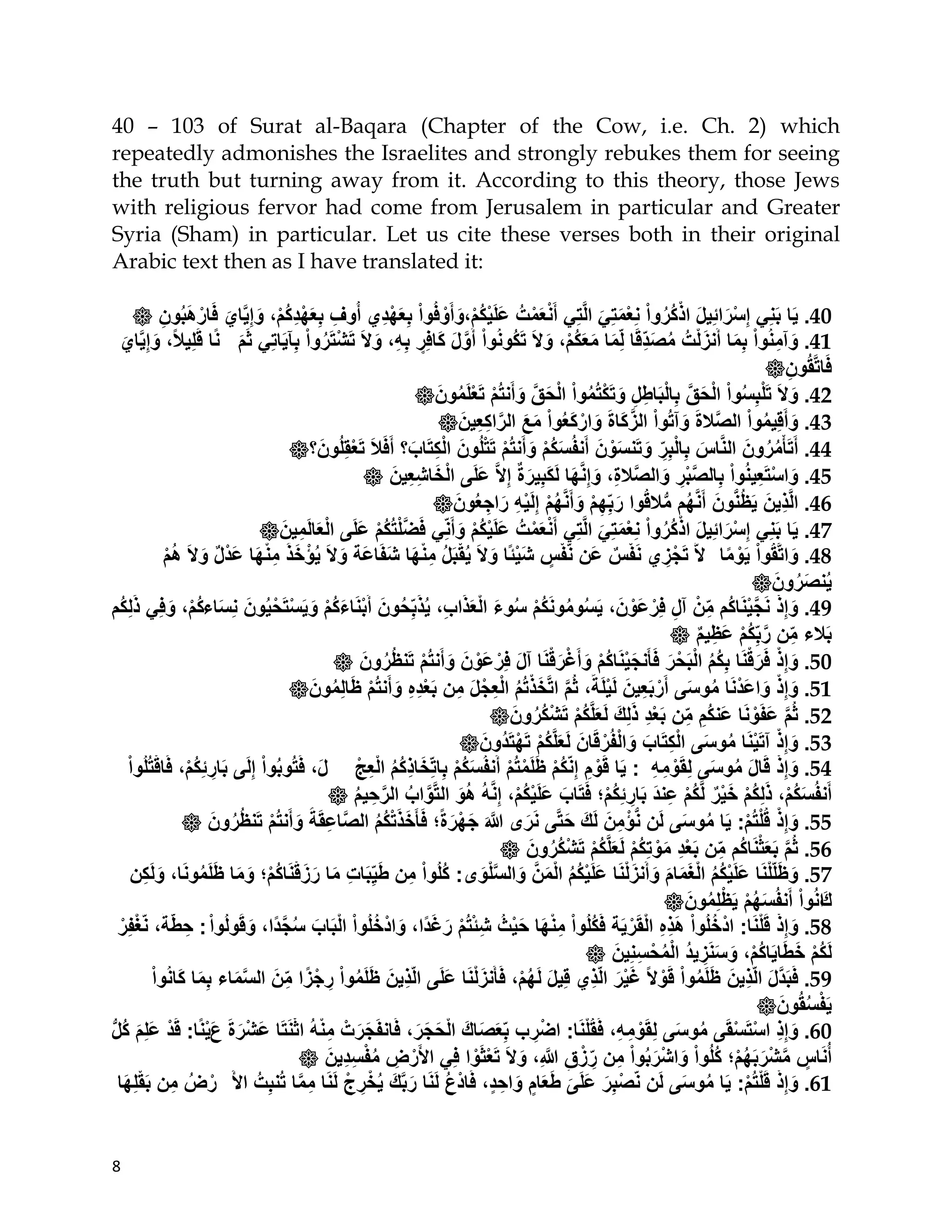
Arabic text then as I have translated it:
40.‫ا‬ٌَِّ‫إ‬َ‫و‬ ،ْ‫م‬ُ‫ك‬ِ‫د‬ْ‫ه‬َ‫ع‬ِ‫ب‬ ِ‫وف‬ُ‫أ‬ ‫ِي‬‫د‬ْ‫ه‬َ‫ع‬ِ‫ب‬ ْ‫ا‬‫و‬ُ‫ف‬ ْ‫و‬َ‫أ‬َ‫،و‬ْ‫م‬ُ‫ك‬ٌَْ‫ل‬َ‫ع‬ ُ‫ت‬ْ‫م‬َ‫ع‬ْ‫ن‬َ‫أ‬ ًِ‫ت‬َّ‫ل‬‫ا‬ ًَِ‫ت‬َ‫م‬ْ‫ع‬ِ‫ن‬ ْ‫ا‬‫و‬ُ‫ُر‬‫ك‬ْ‫اذ‬ َ‫ل‬ٌِ‫ئ‬‫ا‬َ‫ر‬ْ‫س‬ِ‫إ‬ ًِ‫ن‬َ‫ب‬ ‫ا‬ٌَِ‫ون‬ُ‫ب‬َ‫ه‬ْ‫ار‬َ‫ف‬ َ‫ي‬
41.َ‫م‬َ ًِ‫ت‬‫ا‬ٌَ ِ‫ب‬ ْ‫ا‬‫و‬ُ‫ر‬َ‫ت‬ْ َ‫ت‬ َ َ‫و‬ ،ِ ِ‫ب‬ ‫ٍر‬‫ر‬ِ‫ف‬‫َا‬‫ك‬ َ‫ل‬َّ‫و‬َ‫أ‬ ْ‫ا‬‫و‬ُ‫ن‬‫ُو‬‫ك‬َ‫ت‬ َ َ‫و‬ ،ْ‫م‬ُ‫ك‬َ‫ع‬َ‫م‬ ‫ا‬َ‫م‬ِّ‫ل‬ ‫ا‬‫ًق‬ ِّ‫د‬َ ُ‫م‬ ُ‫ت‬ْ‫ل‬َ‫نن‬َ‫أ‬ ‫ا‬َ‫م‬ِ‫ب‬ ْ‫ا‬‫و‬ُ‫ن‬ِ‫م‬ َ‫و‬َ‫اي‬ٌَِّ‫إ‬َ‫و‬ ،‫ًق‬‫ال‬ٌِ‫ل‬َ ‫ا‬‫ًق‬‫ن‬
ِ‫ون‬ُ َّ‫ت‬‫ا‬َ‫ف‬
42.َ‫ون‬ُ‫م‬َ‫ل‬ْ‫ع‬َ‫ت‬ ْ‫م‬ُ‫ت‬‫ن‬َ‫أ‬َ‫و‬ َّ َ ْ‫ل‬‫ا‬ ْ‫ا‬‫و‬ُ‫م‬ُ‫ت‬ْ‫ك‬َ‫ت‬َ‫و‬ ِ‫ل‬ِ‫اا‬َ‫ب‬ْ‫ل‬‫ا‬ِ‫ب‬ َّ َ ْ‫ل‬‫ا‬ ْ‫ا‬‫و‬ُ‫س‬ِ‫ب‬ْ‫ل‬َ‫ت‬ َ َ‫و‬
43.َ‫ٌن‬ِ‫ع‬ِ‫ك‬‫ا‬َّ‫الر‬ َ َ‫م‬ ْ‫ا‬‫و‬ُ‫ع‬َ‫ك‬ْ‫ار‬َ‫و‬ َ‫ال‬‫َا‬‫ك‬َّ‫الن‬ ْ‫ا‬‫و‬ُ‫ت‬ َ‫و‬ َ‫ال‬‫ال‬َّ ‫ال‬ ْ‫ا‬‫و‬ُ‫م‬ٌِ َ‫أ‬َ‫و‬
44.َ‫اا‬َ‫ت‬ِ‫ك‬ْ‫ل‬‫ا‬ َ‫ون‬ُ‫ل‬ْ‫ت‬َ‫ت‬ ْ‫م‬ُ‫ت‬‫ن‬َ‫أ‬َ‫و‬ ْ‫م‬ُ‫ك‬َ‫س‬ُ‫ن‬‫ن‬َ‫أ‬ َ‫ن‬ ْ‫و‬َ‫س‬‫ن‬َ‫ت‬َ‫و‬ ِّ‫ر‬ِ‫ب‬ْ‫ل‬‫ا‬ِ‫ب‬ َ‫اا‬َّ‫ن‬‫ال‬ َ‫ون‬ُ‫ر‬ُ‫م‬ْ َ‫ت‬َ‫أ‬‫؟‬‫؟‬َ‫ون‬ُ‫ل‬ِ ْ‫ع‬َ‫ت‬ َ‫ال‬َ‫ف‬َ‫أ‬
45.ِ‫إ‬ ‫ٌة‬‫ال‬َ‫ٌر‬ِ‫ب‬َ‫ك‬َ‫ل‬ ‫ا‬َ‫ه‬َّ‫ن‬ِ‫إ‬َ‫و‬ ،ِ‫ال‬‫ال‬َّ ‫ال‬َ‫و‬ ِ‫ْر‬‫ب‬َّ ‫ال‬ِ‫ب‬ ْ‫ا‬‫و‬ُ‫ن‬ٌِ‫ع‬َ‫ت‬ْ‫س‬‫ا‬َ‫و‬َ‫ٌن‬ِ‫ع‬ِ ‫ا‬َ‫خ‬ْ‫ل‬‫ا‬ ‫ى‬َ‫ل‬َ‫ع‬ َّ
46.َ‫ون‬ُ‫ع‬ ِ‫اا‬َ‫ر‬ ِ ٌَْ‫ل‬ِ‫إ‬ ْ‫م‬ُ‫ه‬َّ‫ن‬َ‫أ‬َ‫و‬ ْ‫م‬ِ‫ه‬ِّ‫ب‬َ‫ر‬ ‫وا‬ُ ‫ال‬‫ُّن‬‫م‬ ‫م‬ُ‫ه‬َّ‫ن‬َ‫أ‬ َ‫ون‬‫ُّن‬‫ن‬ُ ٌَ َ‫ٌن‬ِ‫ذ‬َّ‫ل‬‫ا‬
47.َ‫ٌن‬ِ‫م‬َ‫ل‬‫ا‬َ‫ع‬ْ‫ل‬‫ا‬ ‫ى‬َ‫ل‬َ‫ع‬ ْ‫م‬ُ‫ك‬ُ‫ت‬ْ‫ل‬َّ َ‫ف‬ ًِّ‫ن‬َ‫أ‬َ‫و‬ ْ‫م‬ُ‫ك‬ٌَْ‫ل‬َ‫ع‬ ُ‫ت‬ْ‫م‬َ‫ع‬ْ‫ن‬َ‫أ‬ ًِ‫ت‬َّ‫ل‬‫ا‬ ًَِ‫ت‬َ‫م‬ْ‫ع‬ِ‫ن‬ ْ‫ا‬‫و‬ُ‫ُر‬‫ك‬ْ‫اذ‬ َ‫ل‬ٌِ‫ئ‬‫ا‬َ‫ر‬ْ‫س‬ِ‫إ‬ ًِ‫ن‬َ‫ب‬ ‫ا‬ٌَ
48.‫ا‬‫ًق‬‫م‬ ْ‫و‬ٌَ ْ‫ا‬‫و‬ُ َّ‫ت‬‫ا‬َ‫و‬ْ‫م‬ُ‫ه‬ َ َ‫و‬ ‫ٌة‬‫ل‬ْ‫د‬َ‫ع‬ ‫ا‬َ‫ه‬ْ‫ن‬ِ‫م‬ ُ‫ذ‬َ‫خ‬ْ‫ؤ‬ٌُ َ َ‫و‬ ‫ٌة‬‫َة‬‫ع‬‫ا‬َ‫ن‬َ ‫ا‬َ‫ه‬ْ‫ن‬ِ‫م‬ ُ‫ل‬َ‫ب‬ْ ٌُ َ َ‫و‬ ‫ًقا‬‫ئ‬ٌَْ ‫ٍر‬‫ا‬ْ‫ن‬َّ‫ن‬ ‫َن‬‫ع‬ ‫ٌة‬‫ا‬ْ‫ن‬َ‫ن‬ ‫ي‬ ِ‫ن‬ْ‫ا‬َ‫ت‬ َّ
َ‫ون‬ُ‫ر‬َ ‫ن‬ٌُ
49.‫اء‬َ‫س‬ِ‫ن‬ َ‫ون‬ٌُْ َ‫ت‬ْ‫س‬ٌََ‫و‬ ْ‫م‬ُ‫ك‬َ‫ء‬‫ا‬َ‫ن‬ْ‫ب‬َ‫أ‬ َ‫ون‬ُ ِّ‫ب‬َ‫ذ‬ٌُ ،ِ‫ا‬‫ا‬َ‫ذ‬َ‫ع‬ْ‫ل‬‫ا‬ َ‫ء‬‫و‬ُ‫س‬ ْ‫م‬ُ‫ك‬َ‫ن‬‫و‬ُ‫م‬‫و‬ُ‫س‬ٌَ ،َ‫ن‬ ْ‫َو‬‫ع‬ْ‫ر‬ِ‫ف‬ ِ‫ل‬ ْ‫ن‬ِّ‫م‬ ‫ُم‬‫ك‬‫ا‬َ‫ن‬ٌَّْ‫ا‬َ‫ن‬ ْ‫ذ‬ِ‫إ‬َ‫و‬ْ‫م‬ُ‫ك‬‫ُم‬‫ك‬ِ‫ل‬َ‫ذ‬ ًِ‫ف‬َ‫و‬ ،
‫ٌة‬‫م‬ٌِ َ‫ع‬ ْ‫م‬ُ‫ك‬ِّ‫ب‬َّ‫ر‬ ‫ن‬ِّ‫م‬ ‫الء‬َ‫ب‬
50.َ‫ون‬ُ‫ر‬ُ ‫ن‬َ‫ت‬ ْ‫م‬ُ‫ت‬‫ن‬َ‫أ‬َ‫و‬ َ‫ن‬ ْ‫َو‬‫ع‬ْ‫ر‬ِ‫ف‬ َ‫ل‬ ‫ا‬َ‫ن‬ْ َ‫ر‬ْ‫غ‬َ‫أ‬َ‫و‬ ْ‫م‬ُ‫ك‬‫ا‬َ‫ن‬ٌَْ‫ا‬‫ن‬َ َ‫ف‬ َ‫ر‬ْ َ‫ب‬ْ‫ل‬‫ا‬ ُ‫م‬ُ‫ك‬ِ‫ب‬ ‫ا‬َ‫ن‬ْ َ‫ر‬َ‫ف‬ ْ‫ذ‬ِ‫إ‬َ‫و‬
51.ْ‫م‬ُ‫ت‬‫ن‬َ‫أ‬َ‫و‬ ِ‫ه‬ِ‫د‬ْ‫ع‬َ‫ب‬ ‫ن‬ِ‫م‬ َ‫ل‬ْ‫ِا‬‫ع‬ْ‫ل‬‫ا‬ ُ‫م‬ُ‫ت‬ْ‫ذ‬َ‫خ‬َّ‫ت‬‫ا‬ َّ‫م‬ُ ،‫ًق‬‫ة‬َ‫ل‬ٌَْ‫ل‬ َ‫ٌن‬ِ‫ع‬َ‫ب‬ْ‫ر‬َ‫أ‬ ‫ى‬َ‫س‬‫و‬ُ‫م‬ ‫ا‬َ‫ن‬ْ‫د‬َ‫ع‬‫ا‬َ‫و‬ ْ‫ذ‬ِ‫إ‬َ‫و‬َ‫ون‬ُ‫م‬ِ‫ل‬‫ا‬َ
52.َ‫ون‬ُ‫ُر‬‫ك‬ْ َ‫ت‬ ْ‫م‬ُ‫ك‬َّ‫ل‬َ‫ع‬َ‫ل‬ َ ِ‫ل‬َ‫ذ‬ ِ‫د‬ْ‫ع‬َ‫ب‬ ‫ن‬ِّ‫م‬ ِ‫ُم‬‫ك‬‫َن‬‫ع‬ ‫ا‬َ‫ن‬ ْ‫و‬َ‫ن‬َ‫ع‬ َّ‫م‬ُ
53.َ‫ون‬ُ‫د‬َ‫ت‬ْ‫ه‬َ‫ت‬ ْ‫م‬ُ‫ك‬َّ‫ل‬َ‫ع‬َ‫ل‬ َ‫ان‬َ ْ‫ر‬ُ‫ن‬ْ‫ل‬‫ا‬َ‫و‬ َ‫اا‬َ‫ت‬ِ‫ك‬ْ‫ل‬‫ا‬ ‫ى‬َ‫س‬‫و‬ُ‫م‬ ‫ا‬َ‫ن‬ٌَْ‫ت‬ ْ‫ذ‬ِ‫إ‬َ‫و‬
54.ِ ِ‫م‬ ْ‫و‬َ ِ‫ل‬ ‫ى‬َ‫س‬‫و‬ُ‫م‬ َ‫ل‬‫ا‬َ ْ‫ذ‬ِ‫إ‬َ‫و‬:ْ ِ‫ع‬ْ‫ل‬‫ا‬ ُ‫م‬ُ‫ك‬ِ‫ذ‬‫ا‬َ‫خ‬ِّ‫ت‬‫ا‬ِ‫ب‬ ْ‫م‬ُ‫ك‬َ‫س‬ُ‫ن‬‫ن‬َ‫أ‬ ْ‫م‬ُ‫ت‬ْ‫م‬َ‫ل‬َ ْ‫م‬ُ‫ك‬َّ‫ن‬ِ‫إ‬ ِ‫م‬ ْ‫و‬َ ‫ا‬ٌَْ‫ا‬‫و‬ُ‫ل‬ُ‫ت‬ْ ‫ا‬َ‫ف‬ ،ْ‫م‬ُ‫ك‬ِ‫ئ‬ ِ‫ار‬َ‫ب‬ ‫ى‬َ‫ل‬ِ‫إ‬ ْ‫ا‬‫و‬ُ‫ب‬‫و‬ُ‫ت‬َ‫ف‬ ،َ‫ل‬
ُ‫م‬ٌ ِ َّ‫الر‬ ُ‫اا‬َّ‫و‬َّ‫ت‬‫ال‬ َ‫و‬ُ‫ه‬ ُ َّ‫ن‬ِ‫إ‬ ،ْ‫م‬ُ‫ك‬ٌَْ‫ل‬َ‫ع‬ َ‫اا‬َ‫ت‬َ‫ف‬ ‫؛‬ْ‫م‬ُ‫ك‬ِ‫ئ‬ ِ‫ار‬َ‫ب‬ َ‫د‬‫ن‬ِ‫ع‬ ْ‫م‬ُ‫ك‬َّ‫ل‬ ‫ٌة‬‫ْر‬ٌَ‫خ‬ ْ‫م‬ُ‫ك‬ِ‫ل‬َ‫ذ‬ ،ْ‫م‬ُ‫ك‬َ‫س‬ُ‫ن‬‫ن‬َ‫أ‬
55.ْ‫م‬ُ‫ت‬ْ‫ل‬ُ ْ‫ذ‬ِ‫إ‬َ‫و‬:‫ا‬ ُ‫م‬ُ‫ك‬ْ‫ت‬َ‫ذ‬َ‫خ‬َ َ‫ف‬ ‫؛‬‫ًق‬‫ال‬َ‫ْر‬‫ه‬َ‫ا‬ َ َّ‫َّللا‬ ‫ى‬َ‫ر‬َ‫ن‬ ‫ى‬َّ‫ت‬َ َ َ‫ل‬ َ‫ن‬ِ‫م‬ْ‫ؤ‬‫ُّن‬‫ن‬ ‫ن‬َ‫ل‬ ‫ى‬َ‫س‬‫و‬ُ‫م‬ ‫ا‬ٌََ‫ون‬ُ‫ر‬ُ ‫ن‬َ‫ت‬ ْ‫م‬ُ‫ت‬‫ن‬َ‫أ‬َ‫و‬ ُ‫ة‬َ ِ‫ع‬‫ا‬َّ ‫ل‬
56.َ‫ون‬ُ‫ُر‬‫ك‬ْ َ‫ت‬ ْ‫م‬ُ‫ك‬َّ‫ل‬َ‫ع‬َ‫ل‬ ْ‫م‬ُ‫ك‬ِ‫ت‬ ْ‫و‬َ‫م‬ ِ‫د‬ْ‫ع‬َ‫ب‬ ‫ن‬ِّ‫م‬ ‫ُم‬‫ك‬‫ا‬َ‫ن‬ْ َ‫ع‬َ‫ب‬ َّ‫م‬ُ
57.‫ى‬َ‫و‬ْ‫ل‬َّ‫س‬‫ال‬َ‫و‬ َّ‫ن‬َ‫م‬ْ‫ل‬‫ا‬ ُ‫م‬ُ‫ك‬ٌَْ‫ل‬َ‫ع‬ ‫ا‬َ‫ن‬ْ‫ل‬َ‫نن‬َ‫أ‬َ‫و‬ َ‫م‬‫ا‬َ‫م‬َ‫غ‬ْ‫ل‬‫ا‬ ُ‫م‬ُ‫ك‬ٌَْ‫ل‬َ‫ع‬ ‫ا‬َ‫ن‬ْ‫ل‬َّ‫ل‬َ َ‫و‬:‫ن‬ِ‫ك‬َ‫ل‬َ‫و‬ ،‫ا‬َ‫ن‬‫و‬ُ‫م‬َ‫ل‬َ ‫ا‬َ‫م‬َ‫و‬ ‫؛‬ْ‫م‬ُ‫ك‬‫ا‬َ‫ن‬ْ َ‫ن‬َ‫ر‬ ‫ا‬َ‫م‬ ِ‫ت‬‫ا‬َ‫ب‬ٌَِّ‫ا‬ ‫ن‬ِ‫م‬ ْ‫ا‬‫و‬ُ‫ل‬ُ‫ك‬
ََ‫ون‬ُ‫م‬ِ‫ل‬ْ ٌَ ْ‫م‬ُ‫ه‬َ‫س‬ُ‫ن‬‫ن‬َ‫أ‬ ْ‫ا‬‫و‬ُ‫ن‬‫ا‬
58.‫ا‬َ‫ن‬ْ‫ل‬ُ ْ‫ذ‬ِ‫إ‬َ‫و‬:ْ‫ا‬‫و‬ُ‫ل‬‫و‬ُ َ‫و‬ ،‫ًقا‬‫د‬َّ‫ا‬ُ‫س‬ َ‫اا‬َ‫ب‬ْ‫ل‬‫ا‬ ْ‫ا‬‫و‬ُ‫ل‬ُ‫خ‬ْ‫د‬‫ا‬َ‫و‬ ،‫ًقا‬‫د‬َ‫غ‬َ‫ر‬ ْ‫م‬ُ‫ت‬ْ‫ئ‬ِ ُ ٌَْ ‫ا‬َ‫ه‬ْ‫ن‬ِ‫م‬ ْ‫ا‬‫و‬ُ‫ل‬ُ‫ك‬َ‫ف‬ َ‫ة‬ٌَْ‫ر‬َ ْ‫ل‬‫ا‬ ِ‫ه‬ِ‫ذ‬َ‫ه‬ ْ‫ا‬‫و‬ُ‫ل‬ُ‫خ‬ْ‫د‬‫ا‬:ْ‫ر‬ِ‫ن‬ْ‫غ‬َّ‫ن‬ ،‫ٌة‬‫ة‬َّ‫ا‬ ِ
َ‫ٌن‬ِ‫ن‬ِ‫س‬ْ ُ‫م‬ْ‫ل‬‫ا‬ ُ‫د‬ٌ ِ‫ن‬َ‫ن‬َ‫س‬َ‫و‬ ،ْ‫م‬ُ‫ك‬‫ا‬ٌَ‫ا‬َ‫ا‬َ‫خ‬ ْ‫م‬ُ‫ك‬َ‫ل‬
59.َ‫ٌن‬ِ‫ذ‬َّ‫ل‬‫ا‬ َ‫ل‬َّ‫د‬َ‫ب‬َ‫ف‬ْ‫ا‬‫و‬ُ‫ن‬‫َا‬‫ك‬ ‫ا‬َ‫م‬ِ‫ب‬ ‫اء‬َ‫م‬َّ‫س‬‫ال‬ َ‫ن‬ِّ‫م‬ ‫ا‬‫ًق‬‫ن‬ْ‫ا‬ ِ‫ر‬ ْ‫ا‬‫و‬ُ‫م‬َ‫ل‬َ َ‫ٌن‬ِ‫ذ‬َّ‫ل‬‫ا‬ ‫ى‬َ‫ل‬َ‫ع‬ ‫ا‬َ‫ن‬ْ‫ل‬َ‫نن‬َ َ‫ف‬ ،ْ‫م‬ُ‫ه‬َ‫ل‬ َ‫ل‬ٌِ ‫ِي‬‫ذ‬َّ‫ل‬‫ا‬ َ‫ْر‬ٌَ‫غ‬ ‫ًق‬ ْ‫و‬َ ْ‫ا‬‫و‬ُ‫م‬َ‫ل‬َ
َ‫ون‬ُ ُ‫س‬ْ‫ن‬ٌَ
60.ِ ِ‫م‬ ْ‫و‬َ ِ‫ل‬ ‫ى‬َ‫س‬‫و‬ُ‫م‬ ‫ى‬َ ْ‫س‬َ‫ت‬ْ‫س‬‫ا‬ ِ‫ذ‬ِ‫إ‬َ‫و‬،‫ا‬َ‫ن‬ْ‫ل‬ُ َ‫ف‬:َ َ‫ال‬َ‫ْر‬ َ‫ع‬ ‫ا‬َ‫ت‬َ‫ن‬ْ ‫ا‬ ُ ْ‫ن‬ِ‫م‬ ْ‫ت‬َ‫ر‬َ‫ا‬َ‫ن‬‫ان‬َ‫ف‬ ،َ‫ر‬َ‫ا‬َ ْ‫ل‬‫ا‬ َ ‫ا‬َ َ‫ع‬ِّ‫ب‬ ‫ا‬ ِ‫ر‬ْ ‫ا‬‫ا‬‫ًق‬‫ن‬ٌْ:‫ُّن‬‫ل‬ُ‫ك‬ َ‫م‬ِ‫ل‬َ‫ع‬ ْ‫د‬َ
َ‫ٌن‬ِ‫د‬ِ‫س‬ْ‫ن‬ُ‫م‬ ِ‫ض‬ْ‫ر‬َ‫أل‬‫ا‬ ًِ‫ف‬ ‫ا‬ ْ‫و‬َ ْ‫ع‬َ‫ت‬ َ َ‫و‬ ،ِ َّ‫َّللا‬ ِ‫ق‬ْ‫ن‬ ِّ‫ر‬ ‫ن‬ِ‫م‬ ْ‫ا‬‫و‬ُ‫ب‬َ‫ْر‬ ‫ا‬َ‫و‬ ْ‫ا‬‫و‬ُ‫ل‬ُ‫ك‬ ‫؛‬ْ‫م‬ُ‫ه‬َ‫ب‬َ‫ْر‬ َّ‫م‬ ‫ٍر‬‫اا‬َ‫ن‬ُ‫أ‬
61.ْ‫م‬ُ‫ت‬ْ‫ل‬ُ ْ‫ذ‬ِ‫إ‬َ‫و‬:َ‫أل‬‫ا‬ ُ‫ت‬ِ‫ب‬‫ن‬ُ‫ت‬ ‫ا‬َّ‫م‬ِ‫م‬ ‫ا‬َ‫ن‬َ‫ل‬ ْ ِ‫ر‬ْ‫خ‬ٌُ َ َّ‫ب‬َ‫ر‬ ‫ا‬َ‫ن‬َ‫ل‬ ُ ْ‫د‬‫ا‬َ‫ف‬ ،‫ٍر‬‫د‬ ِ ‫ا‬َ‫و‬ ‫ٍر‬‫ام‬َ‫ع‬َ‫ا‬ َ‫ى‬َ‫ل‬َ‫ع‬ َ‫ر‬ِ‫ب‬ْ َّ‫ن‬ ‫ن‬َ‫ل‬ ‫ى‬َ‫س‬‫و‬ُ‫م‬ ‫ا‬ٌَ‫ا‬َ‫ه‬ِ‫ل‬ْ َ‫ب‬ ‫ن‬ِ‫م‬ ُ‫ض‬ْ‫ر‬
9
‫ال‬َ ‫ا؛‬َ‫ه‬ِ‫ل‬َ َ‫ب‬َ‫و‬ ‫ا‬َ‫ه‬ِ‫س‬َ‫د‬َ‫ع‬َ‫و‬ ‫ا‬َ‫ه‬ِ‫وم‬ُ‫ف‬َ‫و‬ ‫ا‬َ‫ه‬ِ‫ئ‬‫ا‬َّ ِ َ‫و‬:َ‫ُم‬‫ك‬َ‫ل‬ َّ‫ن‬ِ‫إ‬َ‫ف‬ ،‫ًق‬‫ا‬‫ْر‬ ِ‫م‬ ْ‫ا‬‫و‬ُ‫ا‬ِ‫ب‬ْ‫ه‬‫ا‬ ‫ْر؟‬ٌَ‫خ‬ َ‫و‬ُ‫ه‬ ‫ِي‬‫ذ‬َّ‫ل‬‫ا‬ِ‫ب‬ ‫ى‬َ‫ن‬ْ‫د‬َ‫أ‬ َ‫و‬ُ‫ه‬ ‫ِي‬‫ذ‬َّ‫ل‬‫ا‬ َ‫ون‬ُ‫ل‬ِ‫د‬ْ‫ب‬َ‫ت‬ْ‫س‬َ‫ت‬َ‫أ‬
َ‫ض‬َ‫غ‬ِ‫ب‬ ْ‫ا‬‫ُو‬‫ؤ‬‫ا‬َ‫ب‬َ‫و‬ ،ُ‫ة‬َ‫ن‬َ‫ك‬ْ‫س‬َ‫م‬ْ‫ل‬‫ا‬َ‫و‬ ُ‫ة‬َّ‫ل‬ِّ‫ذ‬‫ال‬ ُ‫م‬ِ‫ْه‬ٌَ‫ل‬َ‫ع‬ ْ‫ت‬َ‫ب‬ ِ‫ُر‬ َ‫و‬ ‫؛‬ْ‫م‬ُ‫ت‬ْ‫ل‬َ َ‫س‬ ‫ا‬َّ‫م‬ِ َّ‫َّللا‬ ِ‫ت‬‫ا‬ٌَ ِ‫ب‬ َ‫ون‬ُ‫ر‬ُ‫ن‬ْ‫ك‬ٌَ ْ‫ا‬‫و‬ُ‫ن‬‫َا‬‫ك‬ ْ‫م‬ُ‫ه‬َّ‫ن‬َ ِ‫ب‬ َ ِ‫ل‬َ‫ذ‬ ‫ِ؛‬ َّ‫َّللا‬ َ‫ن‬ِّ‫م‬ ‫ٍر‬‫ا‬
َ‫ون‬ُ‫د‬َ‫ت‬ْ‫ع‬ٌَ ْ‫ا‬‫و‬ُ‫ن‬‫َا‬‫ك‬َّ‫و‬ ،ْ‫ا‬‫و‬َ َ‫ع‬ ‫ا‬َ‫م‬ِ‫ب‬ َ ِ‫ل‬َ‫ذ‬ ‫؛‬ِّ َ ْ‫ل‬‫ا‬ ِ‫ْر‬ٌَ‫غ‬ِ‫ب‬ َ‫ٌن‬ٌِِّ‫ب‬َّ‫ن‬‫ال‬ َ‫ون‬ُ‫ل‬ُ‫ت‬ْ ٌََ‫و‬
62.َ‫ل‬ِ‫َم‬‫ع‬َ‫و‬ ِ‫ر‬ ِ‫ااخ‬ ِ‫م‬ ْ‫و‬ٌَْ‫ل‬‫ا‬َ‫و‬ ِ َّ‫اا‬ِ‫ب‬ َ‫ن‬َ‫م‬ ْ‫ن‬َ‫م‬ َ‫ٌن‬ِ‫ئ‬ِ‫ب‬‫ا‬َّ ‫ال‬َ‫و‬ ‫ى‬َ‫ار‬َ َّ‫ن‬‫ال‬َ‫و‬ ْ‫ا‬‫ُو‬‫د‬‫ا‬َ‫ه‬ َ‫ٌن‬ِ‫ذ‬َّ‫ل‬‫ا‬َ‫و‬ ْ‫ا‬‫و‬ُ‫ن‬َ‫م‬ َ‫ٌن‬ِ‫ذ‬َّ‫ل‬‫ا‬ َّ‫ن‬ِ‫إ‬ْ‫م‬ُ‫ه‬َ‫ل‬َ‫ف‬ ‫ا‬‫ًق‬ ِ‫ل‬‫ا‬َ
َ‫ون‬ُ‫ن‬َ‫ن‬ْ ٌَ ْ‫م‬ُ‫ه‬ َ َ‫و‬ ْ‫م‬ِ‫ْه‬ٌَ‫ل‬َ‫ع‬ ‫ٌة‬‫ف‬ ْ‫و‬َ‫خ‬ َ َ‫و‬ ،ْ‫م‬ِ‫ه‬ِّ‫ب‬َ‫ر‬ َ‫د‬‫ن‬ِ‫ع‬ ْ‫م‬ُ‫ه‬ُ‫ر‬ْ‫ا‬َ‫أ‬
63.َ‫ر‬َ‫و‬ ْ‫م‬ُ‫ك‬َ ‫ا‬َ ٌِ‫م‬ ‫ا‬َ‫ن‬ْ‫ذ‬َ‫خ‬َ‫أ‬ ْ‫ذ‬ِ‫إ‬َ‫و‬َ‫ور‬‫ُّن‬‫ا‬‫ال‬ ُ‫م‬ُ‫ك‬َ ْ‫و‬َ‫ف‬ ‫ا‬َ‫ن‬ْ‫ع‬َ‫ف‬:َ‫ون‬ُ َّ‫ت‬َ‫ت‬ ْ‫م‬ُ‫ك‬َّ‫ل‬َ‫ع‬َ‫ل‬ ِ ٌِ‫ف‬ ‫ا‬َ‫م‬ ْ‫ا‬‫و‬ُ‫ُر‬‫ك‬ْ‫اذ‬َ‫و‬ ‫ٍر‬‫ال‬َّ‫و‬ُ ِ‫ب‬ ‫ُم‬‫ك‬‫ا‬َ‫ن‬ٌَْ‫ت‬ ‫ا‬َ‫م‬ ْ‫ا‬‫و‬ُ‫ذ‬ُ‫خ‬
64.َ‫ٌن‬ ِ‫ر‬ِ‫س‬‫ا‬َ‫خ‬ْ‫ل‬‫ا‬ َ‫ن‬ِّ‫م‬ ‫م‬ُ‫ت‬‫ُن‬‫ك‬َ‫ل‬ ُ ُ‫ت‬َ‫م‬ْ َ‫ر‬َ‫و‬ ْ‫م‬ُ‫ك‬ٌَْ‫ل‬َ‫ع‬ ِ َّ‫َّللا‬ ُ‫ل‬ْ َ‫ف‬ َ ْ‫و‬َ‫ل‬َ‫ف‬ ،َ ِ‫ل‬َ‫ذ‬ ِ‫د‬ْ‫ع‬َ‫ب‬ ‫ن‬ِّ‫م‬ ‫م‬ُ‫ت‬ٌَّْ‫ل‬َ‫و‬َ‫ت‬ َّ‫م‬ُ
65.ِ‫ذ‬َّ‫ل‬‫ا‬ ُ‫م‬ُ‫ت‬ْ‫م‬ِ‫ل‬َ‫ع‬ ْ‫د‬َ َ‫ل‬َ‫و‬ِ‫ت‬ْ‫ب‬َّ‫س‬‫ال‬ ًِ‫ف‬ ْ‫م‬ُ‫ك‬‫ن‬ِ‫م‬ ‫ا‬ ْ‫َو‬‫د‬َ‫ت‬ْ‫ع‬‫ا‬ َ‫ٌن‬،ْ‫م‬ُ‫ه‬َ‫ل‬ ‫ا‬َ‫ن‬ْ‫ل‬ُ َ‫ف‬:َ‫ٌن‬ِ‫ئ‬ِ‫س‬‫ا‬َ‫خ‬ ‫ًق‬‫ال‬َ‫د‬َ‫ر‬ِ ْ‫ا‬‫و‬ُ‫ن‬‫ُو‬‫ك‬
66.َ‫ٌن‬ِ َّ‫ت‬ُ‫م‬ْ‫ل‬ِّ‫ل‬ ‫ًق‬‫ة‬َ ِ‫ع‬ ْ‫و‬َ‫م‬َ‫و‬ ‫ا‬َ‫ه‬َ‫ن‬ْ‫ل‬َ‫خ‬ ‫ا‬َ‫م‬َ‫و‬ ‫ا‬َ‫ه‬ٌَْ‫د‬ٌَ َ‫ن‬ٌَْ‫ب‬ ‫ا‬َ‫م‬ِّ‫ل‬ ‫ًق‬ ‫َا‬‫ك‬َ‫ن‬ ‫ا‬َ‫ه‬‫ا‬َ‫ن‬ْ‫ل‬َ‫ع‬َ‫ا‬َ‫ف‬
67.ِ ِ‫م‬ ْ‫و‬َ ِ‫ل‬ ‫ى‬َ‫س‬‫و‬ُ‫م‬ َ‫ل‬‫ا‬َ ْ‫ذ‬ِ‫إ‬َ‫و‬:ْ‫ا‬‫و‬ُ‫ل‬‫ا‬َ ‫؛‬‫ًق‬‫ال‬َ‫ر‬َ َ‫ب‬ ْ‫ا‬‫و‬ُ َ‫ب‬ْ‫ذ‬َ‫ت‬ ْ‫ن‬َ‫أ‬ ْ‫م‬ُ‫ك‬ُ‫ر‬ُ‫م‬ْ ٌَ َ َّ‫َّللا‬ َّ‫ن‬ِ‫إ‬:‫ا؟‬‫ًق‬‫و‬ُ‫ن‬ُ‫ه‬ ‫ا‬َ‫ن‬ُ‫ذ‬ ِ‫خ‬َّ‫ت‬َ‫ت‬َ‫أ‬!َ‫ل‬‫ا‬َ:ْ‫ن‬َ‫أ‬ ِ َّ‫اا‬ِ‫ب‬ ُ‫ذ‬‫ُو‬‫ع‬َ‫أ‬
َ‫ٌن‬ِ‫ل‬ِ‫ه‬‫ا‬َ‫ا‬ْ‫ل‬‫ا‬ َ‫ن‬ِ‫م‬ َ‫ُون‬‫ك‬َ‫أ‬
68.ْ‫ا‬‫و‬ُ‫ل‬‫ا‬َ:َ‫ل‬‫ا‬َ ‫؛‬ًَِ‫ه‬ ‫ا‬َ‫م‬ ‫ا‬َ‫ن‬َّ‫ل‬ ‫ن‬ٌَِّ‫ب‬ٌُ َ َّ‫ب‬َ‫ر‬ ‫ا‬َ‫ن‬َ‫ل‬ ُ ْ‫د‬‫ا‬:ُ‫ل‬‫و‬ُ ٌَ ُ َّ‫ن‬ِ‫إ‬:ِ‫ار‬َ‫ف‬ َّ ‫ٌة‬‫ال‬َ‫ر‬َ َ‫ب‬ ‫ا‬َ‫ه‬َّ‫ن‬ِ‫إ‬،َ ِ‫ل‬َ‫ذ‬ َ‫ن‬ٌَْ‫ب‬ ‫انٌة‬َ‫َو‬‫ع‬ ،‫ٌة‬‫ر‬ْ‫ك‬ِ‫ب‬ َ َ‫و‬ ‫ٌة‬‫ض‬
َ‫ون‬ُ‫ر‬َ‫م‬ْ‫ؤ‬ُ‫ت‬ ‫ا‬َ‫م‬ ْ‫ا‬‫و‬ُ‫ل‬َ‫ع‬ْ‫اف‬َ‫ف‬
69.ْ‫ا‬‫و‬ُ‫ل‬‫ا‬َ:َ‫ل‬‫ا‬َ ‫ا؛‬َ‫ه‬ُ‫ن‬ ْ‫و‬َ‫ل‬ ‫ا‬َ‫م‬ ‫ا‬َ‫ن‬َّ‫ل‬ ‫ن‬ٌَِّ‫ب‬ٌُ َ َّ‫ب‬َ‫ر‬ ‫ا‬َ‫ن‬َ‫ل‬ ُ ْ‫د‬‫ا‬:ُ‫ل‬‫و‬ُ ٌَ ُ َّ‫ن‬ِ‫إ‬:َ‫ٌن‬ ِ‫ر‬ِ ‫ا‬َّ‫ن‬‫ال‬ ‫ُّن‬‫ر‬ُ‫س‬َ‫ت‬ ‫ا‬َ‫ه‬ُ‫ن‬ ْ‫و‬َّ‫ل‬ ‫ٌة‬ ِ ‫ا‬َ‫ف‬ ‫اء‬َ‫ر‬ْ‫ن‬َ ‫ٌة‬‫ال‬َ‫ر‬َ َ‫ب‬ ‫ا‬َ‫ه‬َّ‫ن‬ِ‫إ‬
70.ْ‫ا‬‫و‬ُ‫ل‬‫ا‬َ:َّ‫ا‬َ‫ر‬ ‫ا‬َ‫ن‬َ‫ل‬ ُ ْ‫د‬‫ا‬َ‫ون‬ُ‫د‬َ‫ت‬ْ‫ه‬ُ‫م‬َ‫ل‬ ُ َّ‫َّللا‬ ‫َاء‬ ‫ن‬ِ‫إ‬ ‫ا‬َّ‫ن‬ِ‫إ‬َ‫و‬ ،‫ا‬َ‫ن‬ٌَْ‫ل‬َ‫ع‬ َ َ‫ب‬‫َا‬ َ‫ت‬ َ‫ر‬َ َ‫ب‬ْ‫ل‬‫ا‬ َّ‫ن‬ِ‫إ‬ ‫؛‬ًَِ‫ه‬ ‫ا‬َ‫م‬ ‫ا‬َ‫ن‬َّ‫ل‬ ‫ن‬ٌَِّ‫ب‬ٌُ َ
71.َ‫ل‬‫ا‬َ:ُ‫ل‬‫ا‬َ ‫ا؛‬َ‫ه‬ٌِ‫ف‬ َ‫ة‬ٌَِ َّ ‫ٌة‬‫ة‬َ‫م‬َّ‫ل‬َ‫س‬ُ‫م‬ ،َ ْ‫ر‬َ ْ‫ل‬‫ا‬ ًِ ْ‫س‬َ‫ت‬ َ َ‫و‬ َ‫ض‬ْ‫ر‬َ‫أل‬‫ا‬ ُ‫ٌر‬ِ ُ‫ت‬ ‫ٌة‬‫ل‬‫و‬ُ‫ل‬َ‫ذ‬ َّ ‫ٌة‬‫ال‬َ‫ر‬َ َ‫ب‬ ‫ا‬َ‫ه‬َّ‫ن‬ِ‫إ‬ ُ‫ل‬‫و‬ُ ٌَ ُ َّ‫ن‬ِ‫إ‬ْ‫ا‬‫و‬:َ‫اان‬
ْ ِ‫ا‬َ‫ون‬ُ‫ل‬َ‫ع‬ْ‫ن‬ٌَ ْ‫ا‬‫ُو‬‫د‬‫َا‬‫ك‬ ‫ا‬َ‫م‬َ‫و‬ ،‫ا‬َ‫ه‬‫و‬ُ َ‫ب‬َ‫ذ‬َ‫ف‬ ‫؛‬ِّ َ ْ‫ل‬‫ا‬ِ‫ب‬ َ‫ت‬
72.َ‫ون‬ُ‫م‬ُ‫ت‬ْ‫ك‬َ‫ت‬ ْ‫م‬ُ‫ت‬‫ُن‬‫ك‬ ‫ا‬َّ‫م‬ ‫ٌة‬ ِ‫ر‬ْ‫خ‬ُ‫م‬ ُ َّ‫َّللا‬َ‫و‬ ،‫ا‬َ‫ه‬ٌِ‫ف‬ ْ‫م‬ُ‫ت‬ْ‫أ‬َ‫َّار‬‫د‬‫ا‬َ‫ف‬ ‫ا‬‫ًق‬‫س‬ْ‫ن‬َ‫ن‬ ْ‫م‬ُ‫ت‬ْ‫ل‬َ‫ت‬َ ْ‫ذ‬ِ‫إ‬َ‫و‬
73.‫ا‬َ‫ن‬ْ‫ل‬ُ َ‫ف‬:ُ َّ‫ل‬َ‫ع‬َ‫ل‬ ِ ِ‫ت‬‫ا‬ٌَ ْ‫م‬ُ‫ك‬ٌ ِ‫ر‬ٌَُ‫و‬ ‫ى‬َ‫ت‬ ْ‫و‬َ‫م‬ْ‫ل‬‫ا‬ ُ َّ‫َّللا‬ ًٌِْ ٌُ َ ِ‫ل‬َ‫ذ‬َ‫ك‬ ‫ا؛‬َ‫ه‬ ِ ْ‫ع‬َ‫ب‬ِ‫ب‬ ُ‫ه‬‫و‬ُ‫ب‬ ِ‫ر‬ْ ‫ا‬َ‫ون‬ُ‫ل‬ِ ْ‫ع‬َ‫ت‬ ْ‫م‬
74.َ ِ‫ل‬َ‫ذ‬ ِ‫د‬ْ‫ع‬َ‫ب‬ ‫ن‬ِّ‫م‬ ‫ُم‬‫ك‬ُ‫ب‬‫و‬ُ‫ل‬ُ ْ‫ت‬َ‫س‬َ َّ‫م‬ُ،،ُ‫ار‬َ‫ه‬ْ‫ن‬َ‫أل‬‫ا‬ ُ ْ‫ن‬ِ‫م‬ ُ‫ر‬َّ‫ا‬َ‫ن‬َ‫ت‬ٌَ ‫ا‬َ‫م‬َ‫ل‬ ِ‫ال‬َ‫ار‬َ‫ا‬ ِ ْ‫ل‬‫ا‬ َ‫ن‬ِ‫م‬ َّ‫ن‬ِ‫إ‬َ‫و‬ ،‫ًق‬‫ال‬َ‫و‬ْ‫س‬َ ‫ُّن‬‫د‬َ َ‫أ‬ ْ‫و‬َ‫أ‬ ِ‫ال‬َ‫ار‬َ‫ا‬ ِ ْ‫ل‬‫َا‬‫ك‬ ًَِ‫ه‬َ‫ف‬
َ‫ي‬ ‫ا‬َ‫م‬َ‫ل‬ ‫ا‬َ‫ه‬ْ‫ن‬ِ‫م‬ َّ‫ن‬ِ‫إ‬َ‫و‬ ،‫اء‬َ‫م‬ْ‫ل‬‫ا‬ ُ ْ‫ن‬ِ‫م‬ ُ ُ‫ر‬ْ‫خ‬ٌََ‫ف‬ ُ َّ َّ ٌَ ‫ا‬َ‫م‬َ‫ل‬ ‫ا‬َ‫ه‬ْ‫ن‬ِ‫م‬ َّ‫ن‬ِ‫إ‬َ‫و‬َ‫ون‬ُ‫ل‬َ‫م‬ْ‫ع‬َ‫ت‬ ‫ا‬َّ‫م‬َ‫ع‬ ‫ٍر‬‫ل‬ِ‫ف‬‫ا‬َ‫غ‬ِ‫ب‬ ُ َّ‫َّللا‬ ‫ا‬َ‫م‬َ‫و‬ ،ِ َّ‫َّللا‬ ِ‫ة‬ٌَْ َ‫خ‬ ْ‫ن‬ِ‫م‬ ُ‫ا‬ِ‫ب‬ْ‫ه‬
75.ْ َ‫ب‬ ‫ن‬ِ‫م‬ ُ َ‫ن‬‫و‬ُ‫ف‬ ِّ‫ر‬َ ٌُ َّ‫م‬ُ ِ َّ‫َّللا‬ َ‫م‬‫َال‬‫ك‬ َ‫ون‬ُ‫ع‬َ‫م‬ْ‫س‬ٌَ ْ‫م‬ُ‫ه‬ْ‫ن‬ِّ‫م‬ ‫ٌة‬ ٌ ِ‫ر‬َ‫ف‬ َ‫َان‬‫ك‬ ْ‫د‬َ َ‫و‬ ْ‫م‬ُ‫ك‬َ‫ل‬ ْ‫ا‬‫و‬ُ‫ن‬ِ‫م‬ْ‫ؤ‬ٌُ ‫ن‬َ‫أ‬ َ‫ون‬ُ‫ع‬َ‫م‬ْ‫ا‬َ‫ت‬َ‫ف‬َ‫أ‬ْ‫م‬ُ‫ه‬َ‫و‬ ُ‫ه‬‫و‬ُ‫ل‬َ َ‫ع‬ ‫ا‬َ‫م‬ ِ‫د‬
‫؟‬َ‫ون‬ُ‫م‬َ‫ل‬ْ‫ع‬ٌَ
76.ْ‫ا‬‫و‬ُ َ‫ل‬ ‫ا‬َ‫ذ‬ِ‫إ‬َ‫و‬‫وا‬ُ‫ل‬‫ا‬َ ْ‫ا‬‫و‬ُ‫ن‬َ‫م‬ َ‫ٌن‬ِ‫ذ‬َّ‫ل‬‫ا‬:ْ‫وا‬ُ‫ل‬‫ا‬َ ‫ٍر‬‫ض‬ْ‫ع‬َ‫ب‬ َ‫ى‬َ‫ل‬ِ‫إ‬ ْ‫م‬ُ‫ه‬ُ ْ‫ع‬َ‫ب‬ َ‫ال‬َ‫خ‬ ‫ا‬َ‫ذ‬ِ‫إ‬َ‫و‬ ‫ا؛‬َّ‫ن‬َ‫م‬:ْْ‫م‬ُ‫ك‬ٌَْ‫ل‬َ‫ع‬ ُ َّ‫َّللا‬ َ‫ح‬َ‫ت‬َ‫ف‬ ‫ا‬َ‫م‬ِ‫ب‬ ‫م‬ُ‫ه‬َ‫ن‬‫و‬ُ ِّ‫د‬َ ُ‫ت‬َ‫أ‬
‫؟‬ْ‫م‬ُ‫ك‬ِّ‫ب‬َ‫ر‬ َ‫د‬‫ن‬ِ‫ع‬ ِ ِ‫ب‬ ‫ُم‬‫ك‬‫و‬‫ُّن‬‫ا‬‫ا‬َ ٌُِ‫ل‬!‫؟‬َ‫ون‬ُ‫ل‬ِ ْ‫ع‬َ‫ت‬ َ‫ال‬َ‫ف‬َ‫أ‬
77.َ‫ون‬‫ُّن‬‫ر‬ِ‫س‬ٌُ ‫ا‬َ‫م‬ ُ‫م‬َ‫ل‬ْ‫ع‬ٌَ َ َّ‫َّللا‬ َّ‫ن‬َ‫أ‬ َ‫ون‬ُ‫م‬َ‫ل‬ْ‫ع‬ٌَ َ َ‫و‬َ‫أ‬‫؟‬َ‫ون‬ُ‫ن‬ِ‫ل‬ْ‫ع‬ٌُ ‫ا‬َ‫م‬َ‫و‬
78.،ًَِّ‫ن‬‫ا‬َ‫م‬َ‫أ‬ َّ ِ‫إ‬ َ‫اا‬َ‫ت‬ِ‫ك‬ْ‫ل‬‫ا‬ َ‫ون‬ُ‫م‬َ‫ل‬ْ‫ع‬ٌَ َ َ‫ون‬‫ُّن‬ٌِّ‫م‬ُ‫أ‬ ْ‫م‬ُ‫ه‬ْ‫ن‬ِ‫م‬َ‫و‬َ‫ون‬‫ُّن‬‫ن‬ُ ٌَ َّ ِ‫إ‬ ْ‫م‬ُ‫ه‬ ْ‫ن‬ِ‫إ‬َ‫و‬
79.َ‫ون‬ُ‫ل‬‫و‬ُ ٌَ َّ‫م‬ُ ْ‫م‬ِ‫ٌِه‬‫د‬ٌَْ ِ‫ب‬ َ‫اا‬َ‫ت‬ِ‫ك‬ْ‫ل‬‫ا‬ َ‫ون‬ُ‫ب‬ُ‫ت‬ْ‫ك‬ٌَ َ‫ٌن‬ِ‫ذ‬َّ‫ل‬ِّ‫ل‬ ‫ٌة‬‫ل‬ٌَْ‫و‬َ‫ف‬:ِ‫ل‬َ ‫ا‬‫ًق‬‫ن‬َ‫م‬َ ِ ِ‫ب‬ ْ‫ا‬‫و‬ُ‫ر‬َ‫ت‬ْ ٌَِ‫ل‬ ،ِ َّ‫َّللا‬ ِ‫د‬‫ن‬ِ‫ع‬ ْ‫ن‬ِ‫م‬ ‫ا‬َ‫ذ‬َ‫ه‬‫ا‬َّ‫م‬ِّ‫م‬ ‫م‬ُ‫ه‬َّ‫ل‬ ‫ٌة‬‫ل‬ٌَْ‫و‬َ‫ف‬ ‫؛‬‫ًق‬‫ال‬ٌ
َ‫ون‬ُ‫ب‬ِ‫س‬ْ‫ك‬ٌَ ‫ا‬َّ‫م‬ِّ‫م‬ ْ‫م‬ُ‫ه‬َّ‫ل‬ ‫ٌة‬‫ل‬ٌَْ‫و‬َ‫و‬ ،ْ‫م‬ِ‫ٌِه‬‫د‬ٌَْ‫أ‬ ْ‫ت‬َ‫ب‬َ‫ت‬َ‫ك‬
80.‫وا‬ُ‫ل‬‫ا‬َ َ‫و‬:ْ‫ل‬ُ ‫؛‬‫ًق‬‫ال‬َ‫د‬‫ُو‬‫د‬ْ‫ع‬َّ‫م‬ ‫ا‬‫ًق‬‫م‬‫ا‬ٌََّ‫أ‬ َّ ِ‫إ‬ ُ‫ار‬َّ‫ن‬‫ال‬ ‫ا‬َ‫ن‬َّ‫س‬َ‫م‬َ‫ت‬ ‫ن‬َ‫ل‬:َْ‫ون‬ُ‫ل‬‫و‬ُ َ‫ت‬ ْ‫م‬َ‫أ‬ ‫؟‬ُ‫ه‬َ‫د‬ْ‫ه‬َ‫ع‬ ُ َّ‫َّللا‬ َ‫ف‬ِ‫ل‬ْ‫خ‬ٌُ ‫ن‬َ‫ل‬َ‫ف‬ ‫ًقا‬‫د‬ْ‫ه‬َ‫ع‬ ِ َّ‫َّللا‬ َ‫د‬‫ن‬ِ‫ع‬ ْ‫م‬ُ‫ت‬ْ‫ذ‬َ‫خ‬َّ‫ت‬َ‫أ‬
‫ى‬َ‫ل‬َ‫ع‬‫؟‬َ‫ون‬ُ‫م‬َ‫ل‬ْ‫ع‬َ‫ت‬ َ ‫ا‬َ‫م‬ ِ َّ‫َّللا‬
81.‫ى‬َ‫ل‬َ‫ب‬:َ‫ون‬ُ‫د‬ِ‫ل‬‫ا‬َ‫خ‬ ‫ا‬َ‫ه‬ٌِ‫ف‬ ْ‫م‬ُ‫ه‬ ، ِ‫ار‬َّ‫ن‬‫ال‬ ُ‫اا‬َ ْ َ‫أ‬ َ ِ‫ئ‬َ‫ل‬‫و‬ُ َ‫ف‬ ُ ُ‫ت‬َ‫ئ‬ٌِ‫ا‬َ‫خ‬ ِ ِ‫ب‬ ْ‫ت‬َ‫ا‬‫ا‬َ َ‫أ‬َ‫و‬ ‫ًق‬‫َة‬‫ئ‬ٌَِّ‫س‬ َ‫ا‬َ‫س‬َ‫ك‬ ‫ن‬َ‫م‬
82.َ‫ون‬ُ‫د‬ِ‫ل‬‫ا‬َ‫خ‬ ‫ا‬َ‫ه‬ٌِ‫ف‬ ْ‫م‬ُ‫ه‬ ،ِ‫ة‬َّ‫ن‬َ‫ا‬ْ‫ل‬‫ا‬ ُ‫اا‬َ ْ َ‫أ‬ َ ِ‫ئ‬َ‫ل‬ ْ‫و‬ُ‫أ‬ ،ِ‫ت‬‫ا‬َ ِ‫ل‬‫ا‬َّ ‫ال‬ ْ‫ا‬‫و‬ُ‫ل‬ِ‫َم‬‫ع‬َ‫و‬ ْ‫ا‬‫و‬ُ‫ن‬َ‫م‬ َ‫ٌن‬ِ‫ذ‬َّ‫ل‬‫ا‬َ‫و‬
83.ِ‫إ‬َ‫و‬َ‫ل‬ٌِ‫ئ‬‫ا‬َ‫ر‬ْ‫س‬ِ‫إ‬ ًِ‫ن‬َ‫ب‬ َ‫اق‬َ ٌِ‫م‬ ‫ا‬َ‫ن‬ْ‫ذ‬َ‫خ‬َ‫أ‬ ْ‫ذ‬:‫ى‬َ‫م‬‫ا‬َ‫ت‬ٌَْ‫ل‬‫ا‬َ‫و‬ ‫ى‬َ‫ب‬ْ‫ر‬ُ ْ‫ل‬‫ا‬ ‫ِي‬‫ذ‬َ‫و‬ ‫ا‬‫ًق‬‫ن‬‫ا‬َ‫س‬ْ ِ‫إ‬ ِ‫ْن‬ٌَ‫د‬ِ‫ل‬‫ا‬َ‫و‬ْ‫ل‬‫ا‬ِ‫ب‬َ‫و‬ َ َّ‫َّللا‬ َّ ِ‫إ‬ َ‫ون‬ُ‫د‬ُ‫ب‬ْ‫ع‬َ‫ت‬ َ
ِ‫ل‬َ َّ ِ‫إ‬ ْ‫م‬ُ‫ت‬ٌَّْ‫ل‬َ‫و‬َ‫ت‬ َّ‫م‬ُ ‫؛‬َ‫ال‬‫َا‬‫ك‬َّ‫الن‬ ْ‫ا‬‫و‬ُ‫ت‬ َ‫و‬ َ‫ال‬‫ال‬َّ ‫ال‬ ْ‫ا‬‫و‬ُ‫م‬ٌِ َ‫أ‬َ‫و‬ ،‫ا‬‫ًق‬‫ن‬ْ‫س‬ُ ِ‫اا‬َّ‫ن‬‫ل‬ِ‫ل‬ ْ‫ا‬‫و‬ُ‫ل‬‫و‬ُ َ‫و‬ ،ِ‫ٌن‬ِ‫ك‬‫ا‬َ‫س‬َ‫م‬ْ‫ل‬‫ا‬َ‫و‬‫م‬ُ‫ت‬‫ن‬َ‫أ‬َ‫و‬ ْ‫م‬ُ‫ك‬‫ن‬ِّ‫م‬ ‫ًق‬‫ال‬ٌ
َ‫ُون‬ ِ‫ر‬ْ‫ع‬‫ُّن‬‫م‬
84.ْ‫م‬ُ‫ك‬َ ‫ا‬َ ٌِ‫م‬ ‫ا‬َ‫ن‬ْ‫ذ‬َ‫خ‬َ‫أ‬ ْ‫ذ‬ِ‫إ‬َ‫و‬:َ‫ون‬ُ‫د‬َ‫ه‬ْ َ‫ت‬ ْ‫م‬ُ‫ت‬‫ن‬َ‫أ‬َ‫و‬ ْ‫م‬ُ‫ت‬ْ‫ر‬َ‫ر‬ْ َ‫أ‬ َّ‫م‬ُ ‫؛‬ْ‫م‬ُ‫ك‬ ِ‫ار‬ٌَِ‫د‬ ‫ن‬ِّ‫م‬ ‫ُم‬‫ك‬َ‫س‬ُ‫ن‬‫ن‬َ‫أ‬ َ‫ون‬ُ‫ا‬ ِ‫ر‬ْ‫خ‬ُ‫ت‬ َ َ‫و‬ ْ‫م‬ُ‫ك‬َ‫ء‬‫ا‬َ‫م‬ِ‫د‬ َ‫ُون‬‫ك‬ِ‫ن‬ْ‫س‬َ‫ت‬ َ
85.‫ا‬‫ًق‬ ٌ ِ‫ر‬َ‫ف‬ َ‫ون‬ُ‫ا‬ ِ‫ر‬ْ‫خ‬ُ‫ت‬َ‫و‬ ْ‫م‬ُ‫ك‬َ‫س‬ُ‫ن‬‫ن‬َ‫أ‬ َ‫ون‬ُ‫ل‬ُ‫ت‬ْ َ‫ت‬ ‫ء‬ ُ‫ؤ‬َ‫ه‬ ْ‫م‬ُ‫ت‬‫ن‬َ‫أ‬ َّ‫م‬ُ،ِ‫ان‬َ‫ْو‬‫د‬ُ‫ع‬ْ‫ل‬‫ا‬َ‫و‬ ِ‫م‬ْ ِ‫اإل‬ِ‫ب‬ ‫م‬ِ‫ْه‬ٌَ‫ل‬َ‫ع‬ َ‫ون‬ُ‫ر‬َ‫ه‬‫ا‬َ َ‫ت‬ ْ‫م‬ِ‫ه‬ ِ‫ار‬ٌَِ‫د‬ ‫ن‬ِّ‫م‬ ‫ُم‬‫ك‬‫ن‬ِّ‫م‬
10
ْ َ‫ت‬َ‫و‬ ِ‫ا‬‫ا‬َ‫ت‬ِ‫ك‬ْ‫ل‬‫ا‬ ِ‫ض‬ْ‫ع‬َ‫ب‬ِ‫ب‬ َ‫ون‬ُ‫ن‬ِ‫م‬ْ‫ؤ‬ُ‫ت‬َ‫ف‬َ‫أ‬ ‫؛‬ْ‫م‬ُ‫ه‬ُ‫ا‬‫ا‬َ‫ر‬ْ‫خ‬ِ‫إ‬ ْ‫م‬ُ‫ك‬ٌَْ‫ل‬َ‫ع‬ ‫ٌة‬‫م‬َّ‫ر‬َ ُ‫م‬ َ‫و‬ُ‫ه‬َ‫و‬ ْ‫م‬ُ‫ه‬‫ُو‬‫د‬‫ا‬َ‫ن‬ُ‫ت‬ ‫ى‬َ‫ار‬َ‫س‬ُ‫أ‬ ْ‫م‬ُ‫ك‬‫و‬ُ‫ت‬ْ ٌَ ‫ن‬ِ‫إ‬َ‫و‬‫ا‬َ‫م‬َ‫ف‬ ‫؟‬ ‫ٍر‬‫ض‬ْ‫ع‬َ‫ب‬ِ‫ب‬ َ‫ون‬ُ‫ر‬ُ‫ف‬
ُ ‫ن‬ِ‫م‬ َ ِ‫ل‬َ‫ذ‬ ُ‫ل‬َ‫ع‬ْ‫ن‬ٌَ ‫ن‬َ‫م‬ ‫اء‬َ‫ن‬َ‫ا‬‫ٍر‬‫ل‬ِ‫ف‬‫ا‬َ‫غ‬ِ‫ب‬ ُ َّ‫َّللا‬ ‫ا‬َ‫م‬َ‫و‬ ،ِ‫ا‬‫ا‬َ‫ذ‬َ‫ع‬ْ‫ل‬‫ا‬ ِّ‫د‬َ َ‫أ‬ ‫ى‬َ‫ل‬ِ‫إ‬ َ‫ُّنون‬‫د‬َ‫ر‬ٌُ ِ‫ة‬َ‫م‬‫ا‬ٌَِ ْ‫ل‬‫ا‬ َ‫م‬ ْ‫و‬ٌََ‫و‬ ‫ا؟‬ٌَْ‫ن‬‫ُّن‬‫د‬‫ال‬ ِ‫ال‬‫ا‬ٌََ ْ‫ل‬‫ا‬ ًِ‫ف‬ ‫ٌة‬‫ي‬ْ‫ن‬ ِ‫خ‬ َّ ِ‫إ‬ ْ‫م‬
َ‫ون‬ُ‫ل‬َ‫م‬ْ‫ع‬َ‫ت‬ ‫ا‬َّ‫م‬َ‫ع‬
86.َ‫ون‬ُ‫ر‬َ ‫ن‬ٌُ ْ‫م‬ُ‫ه‬ َ َ‫و‬ ،ُ‫اا‬َ‫ذ‬َ‫ع‬ْ‫ل‬‫ا‬ ُ‫م‬ُ‫ه‬ْ‫ن‬َ‫ع‬ ُ‫ف‬َّ‫ن‬َ‫خ‬ٌُ َ‫ال‬َ‫ف‬ ،ِ‫ال‬َ‫ر‬ ِ‫ااخ‬ِ‫ب‬ ‫ا‬ٌَْ‫ن‬‫ُّن‬‫د‬‫ال‬ َ‫ال‬‫ا‬ٌََ ْ‫ل‬‫ا‬ ْ‫ا‬ُ‫و‬َ‫ر‬َ‫ت‬ْ ‫ا‬ َ‫ٌن‬ِ‫ذ‬َّ‫ل‬‫ا‬ َ ِ‫ئ‬َ‫ل‬ ْ‫و‬ُ‫أ‬
87.َ‫أ‬َ‫و‬ ِ‫ت‬‫ا‬َ‫ن‬ٌَِّ‫ب‬ْ‫ل‬‫ا‬ َ‫م‬ٌَْ‫ر‬َ‫م‬ َ‫ن‬ْ‫ب‬‫ا‬ ‫ى‬َ‫س‬ٌِ‫ع‬ ‫ا‬َ‫ن‬ٌَْ‫ت‬ َ‫و‬ ،ِ‫ل‬ُ‫س‬‫ُّن‬‫الر‬ِ‫ب‬ ِ‫ه‬ِ‫د‬ْ‫ع‬َ‫ب‬ ‫ن‬ِ‫م‬ ‫ا‬َ‫ن‬ٌَّْ‫ن‬َ َ‫و‬ َ‫اا‬َ‫ت‬ِ‫ك‬ْ‫ل‬‫ا‬ ‫ى‬َ‫س‬‫و‬ُ‫م‬ ‫ا‬َ‫ن‬ٌَْ‫ت‬ ْ‫د‬َ َ‫ل‬َ‫و‬ِ‫وح‬ُ‫ر‬ِ‫ب‬ ُ‫ه‬‫ا‬َ‫ن‬ْ‫د‬ٌَّ
َ‫ت‬ ‫ا‬‫ًق‬ ٌ ِ‫ر‬َ‫ف‬َ‫و‬ ْ‫م‬ُ‫ت‬ْ‫ب‬َّ‫ذ‬َ‫ك‬ ‫ًق‬‫ا‬ ٌ ِ‫ر‬َ‫ن‬َ‫ف‬ ‫؟‬ْ‫م‬ُ‫ت‬ْ‫ر‬َ‫ب‬ْ‫ك‬َ‫ت‬ْ‫س‬‫ا‬ ُ‫م‬ُ‫ك‬ُ‫س‬ُ‫ن‬‫ن‬َ‫أ‬ ‫ى‬َ‫ْو‬‫ه‬َ‫ت‬ َ ‫ا‬َ‫م‬ِ‫ب‬ ‫ٌة‬‫ل‬‫و‬ُ‫س‬َ‫ر‬ ْ‫م‬ُ‫ك‬َ‫ء‬‫ا‬َ‫ا‬ ‫ا‬َ‫م‬َّ‫ل‬ُ‫ك‬َ‫ف‬َ‫أ‬ ‫؛‬ ِ‫ُا‬‫د‬ُ ْ‫ل‬‫ا‬َ‫ون‬ُ‫ل‬ُ‫ت‬ْ
88.ْ‫ا‬‫و‬ُ‫ل‬‫ا‬َ َ‫و‬:َ‫ون‬ُ‫ن‬ِ‫م‬ْ‫ؤ‬ٌُ ‫ا‬َّ‫م‬ ‫ًق‬‫ال‬ٌِ‫ل‬َ َ‫ف‬ ‫؛‬ْ‫م‬ِ‫ه‬ ِ‫ر‬ْ‫ن‬ُ‫ك‬ِ‫ب‬ َّ‫َّللا‬ ُ‫م‬ُ‫ه‬َ‫ن‬َ‫ع‬َّ‫ل‬ ‫ل‬َ‫ب‬ ‫؛‬ ‫ٌة‬‫ف‬ْ‫ل‬ُ‫غ‬ ‫ا‬َ‫ن‬ُ‫ب‬‫و‬ُ‫ل‬ُ
89.َ‫و‬ْ‫م‬ُ‫ه‬َ‫ع‬َ‫م‬ ‫ا‬َ‫م‬ِّ‫ل‬ ‫ٌة‬‫ق‬ِّ‫د‬َ ُ‫م‬ ِ َّ‫َّللا‬ ِ‫د‬‫ن‬ِ‫ع‬ ْ‫ن‬ِّ‫م‬ ‫ٌة‬‫اا‬َ‫ت‬ِ‫ك‬ ْ‫م‬ُ‫ه‬َ‫ء‬‫ا‬َ‫ا‬ ‫ا‬َّ‫م‬َ‫ل‬،‫ا‬َّ‫م‬َ‫ل‬َ‫ف‬ ،ْ‫ا‬‫و‬ُ‫ر‬َ‫ن‬َ‫ك‬ َ‫ٌن‬ِ‫ذ‬َّ‫ل‬‫ا‬ ‫ى‬َ‫ل‬َ‫ع‬ َ‫ون‬ُ ِ‫ت‬ْ‫ن‬َ‫ت‬ْ‫س‬ٌَ ُ‫ل‬ْ‫ب‬َ ‫ن‬ِ‫م‬ ْ‫ا‬‫و‬ُ‫ن‬‫َا‬‫ك‬َ‫و‬
َ‫ٌن‬ ِ‫ر‬ِ‫ف‬‫َا‬‫ك‬ْ‫ل‬‫ا‬ ‫ى‬َ‫ل‬َ‫ع‬ َّ‫َّللا‬ ُ‫ة‬َ‫ن‬ْ‫ع‬َ‫ل‬َ‫ف‬ ،ِ ِ‫ب‬ ْ‫ا‬‫و‬ُ‫ر‬َ‫ن‬َ‫ك‬ ْ‫ا‬‫و‬ُ‫ف‬َ‫َر‬‫ع‬ ‫ا‬َّ‫م‬ ‫م‬ُ‫ه‬َ‫ء‬‫ا‬َ‫ا‬
90.‫ن‬َ‫أ‬ ِ ِ‫ب‬ ‫ا‬ ْ‫و‬َ‫ر‬َ‫ت‬ْ ‫ا‬ ‫ا‬َ‫م‬َ‫س‬ْ‫ئ‬ِ‫ب‬ْ‫ن‬ِ‫م‬ ‫َاء‬ ٌَ ‫ن‬َ‫م‬ ‫ى‬َ‫ل‬َ‫ع‬ ِ ِ‫ل‬ْ َ‫ف‬ ‫ن‬ِ‫م‬ ُ َّ‫َّللا‬ ُ‫ل‬ ِّ‫ن‬َ‫ن‬ٌُ ‫ن‬َ‫أ‬ ‫ا‬‫ًق‬ٌْ‫غ‬َ‫ب‬ ُ َّ‫َّللا‬ َ‫ل‬َ‫نن‬َ‫أ‬ ‫ا‬َ‫م‬ِ‫ب‬ ْ‫ا‬‫و‬ُ‫ر‬ُ‫ن‬ْ‫ك‬ٌَ ‫ن‬َ‫أ‬ ْ‫م‬ُ‫ه‬َ‫س‬ُ‫ف‬
‫ٌنٌة‬ِ‫ه‬‫ُّن‬‫م‬ ‫ٌة‬‫اا‬َ‫ذ‬َ‫ع‬ َ‫ٌن‬ ِ‫ر‬ِ‫ف‬‫َا‬‫ك‬ْ‫ل‬ِ‫ل‬َ‫و‬ ،‫ٍر‬‫ا‬َ َ‫غ‬ ‫ى‬َ‫ل‬َ‫ع‬ ‫ٍر‬‫ا‬َ َ‫غ‬ِ‫ب‬ ْ‫ا‬‫ُو‬‫ؤ‬‫ا‬َ‫ب‬َ‫ف‬ ،ِ‫ه‬ِ‫د‬‫ا‬َ‫ب‬ِ‫ع‬
91.ْ‫م‬ُ‫ه‬َ‫ل‬ َ‫ل‬ٌِ ‫ا‬َ‫ذ‬ِ‫إ‬َ‫و‬:ْ‫ا‬‫و‬ُ‫ل‬‫ا‬َ ،ُ َّ‫َّللا‬ َ‫ل‬َ‫نن‬َ‫أ‬ ‫ا‬َ‫م‬ِ‫ب‬ ْ‫ا‬‫و‬ُ‫ن‬ِ‫م‬:‫ُّن‬ َ ْ‫ل‬‫ا‬ َ‫و‬ُ‫ه‬َ‫و‬ ُ‫ه‬‫اء‬َ‫ر‬َ‫و‬ ‫ا‬َ‫م‬ِ‫ب‬ َ‫ون‬ُ‫ر‬ُ‫ن‬ْ‫ك‬ٌََ‫و‬ ،‫ا‬َ‫ن‬ٌَْ‫ل‬َ‫ع‬ َ‫ل‬ ِ‫نن‬ُ‫أ‬ ‫ا‬َ‫م‬ِ‫ب‬ ُ‫ن‬ِ‫م‬ْ‫ؤ‬ُ‫ن‬
ْ‫ل‬ُ ‫؛‬ْ‫م‬ُ‫ه‬َ‫ع‬َ‫م‬ ‫ا‬َ‫م‬ِّ‫ل‬ ‫ا‬‫ًق‬ ِّ‫د‬َ ُ‫م‬:‫؟‬َ‫ٌن‬ِ‫ن‬ِ‫م‬ْ‫ؤ‬‫ُّن‬‫م‬ ‫م‬ُ‫ت‬‫ُن‬‫ك‬ ‫ن‬ِ‫إ‬ ُ‫ل‬ْ‫ب‬َ ‫ن‬ِ‫م‬ ِ َّ‫َّللا‬ ‫اء‬ٌَِ‫ب‬‫ن‬َ‫أ‬ َ‫ون‬ُ‫ل‬ُ‫ت‬ْ َ‫ت‬ َ‫م‬ِ‫ل‬َ‫ف‬
92.ِ‫ت‬‫ا‬َ‫ن‬ٌَِّ‫ب‬ْ‫ل‬‫ا‬ِ‫ب‬ ‫ى‬َ‫س‬‫و‬‫ُّن‬‫م‬ ‫ُم‬‫ك‬َ‫ء‬‫ا‬َ‫ا‬ ْ‫د‬َ َ‫ل‬َ‫و‬،َ‫ون‬ُ‫م‬ِ‫ل‬‫ا‬َ ْ‫م‬ُ‫ت‬‫ن‬َ‫أ‬َ‫و‬ ِ‫ه‬ِ‫د‬ْ‫ع‬َ‫ب‬ ‫ن‬ِ‫م‬ َ‫ل‬ْ‫ِا‬‫ع‬ْ‫ل‬‫ا‬ ُ‫م‬ُ‫ت‬ْ‫ذ‬َ‫خ‬َّ‫ت‬‫ا‬ َّ‫م‬ُ
93.َ‫ور‬‫ُّن‬‫ا‬‫ال‬ ُ‫م‬ُ‫ك‬َ ْ‫و‬َ‫ف‬ ‫ا‬َ‫ن‬ْ‫ع‬َ‫ف‬َ‫ر‬َ‫و‬ ْ‫م‬ُ‫ك‬َ ‫ا‬َ ٌِ‫م‬ ‫ا‬َ‫ن‬ْ‫ذ‬َ‫خ‬َ‫أ‬ ْ‫ذ‬ِ‫إ‬َ‫و‬:ْ‫ا‬‫و‬ُ‫ل‬‫ا‬َ ‫؛‬ْ‫ا‬‫و‬ُ‫ع‬َ‫م‬ْ‫س‬‫ا‬َ‫و‬ ‫ٍر‬‫ال‬َّ‫و‬ُ ِ‫ب‬ ‫ُم‬‫ك‬‫ا‬َ‫ن‬ٌَْ‫ت‬ ‫ا‬َ‫م‬ ْ‫ا‬‫و‬ُ‫ذ‬ُ‫خ‬:‫ا؛‬َ‫ن‬ٌَْ َ‫ع‬َ‫و‬ ‫ا‬َ‫ن‬ْ‫ع‬ِ‫م‬َ‫س‬
ْ‫ُف‬‫ك‬ِ‫ب‬ َ‫ل‬ْ‫ِا‬‫ع‬ْ‫ل‬‫ا‬ ُ‫م‬ِ‫ه‬ِ‫ب‬‫و‬ُ‫ل‬ُ ًِ‫ف‬ ْ‫ا‬‫و‬ُ‫ب‬ ِ‫ْر‬ ُ‫أ‬َ‫و‬ْ‫ل‬ُ ‫؛‬ْ‫م‬ِ‫ه‬ ِ‫ر‬:َ‫ٌن‬ِ‫ن‬ِ‫م‬ْ‫ؤ‬‫ُّن‬‫م‬ ْ‫م‬ُ‫ت‬‫ُن‬‫ك‬ ‫ن‬ِ‫إ‬ ْ‫م‬ُ‫ك‬ُ‫ن‬‫ا‬َ‫م‬ٌِ‫إ‬ ِ ِ‫ب‬ ْ‫م‬ُ‫ك‬ُ‫ر‬ُ‫م‬ْ ٌَ ‫ا‬َ‫م‬َ‫س‬ْ‫ئ‬ِ‫ب‬
94.ْ‫ل‬ُ:ِ‫ِق‬‫د‬‫ا‬َ ْ‫م‬ُ‫ت‬‫ُن‬‫ك‬ ‫ن‬ِ‫إ‬ َ‫ت‬ ْ‫و‬َ‫م‬ْ‫ل‬‫ا‬ ْ‫ا‬ُ‫و‬َّ‫ن‬َ‫م‬َ‫ت‬َ‫ف‬ ، ِ‫اا‬َّ‫ن‬‫ال‬ ِ‫ُون‬‫د‬ ‫ن‬ِّ‫م‬ ‫ًق‬‫ة‬َ ِ‫ل‬‫ا‬َ‫خ‬ ِ َّ‫َّللا‬ َ‫د‬‫ن‬ِ‫ع‬ ُ‫ال‬َ‫ر‬ ِ‫ااخ‬ ُ‫َّار‬‫د‬‫ال‬ ُ‫م‬ُ‫ك‬َ‫ل‬ ْ‫ت‬َ‫ن‬‫َا‬‫ك‬ ‫ن‬ِ‫إ‬َ‫ٌن‬
95.َ‫ق‬ ‫ا‬َ‫م‬ِ‫ب‬ ‫ًقا‬‫د‬َ‫ب‬َ‫أ‬ ُ‫ه‬ ْ‫و‬َّ‫ن‬َ‫م‬َ‫ت‬ٌَ ‫ن‬َ‫ل‬َ‫و‬َ‫ٌن‬ِ‫م‬ِ‫ل‬‫ا‬َّ ‫ال‬ِ‫ب‬ ‫ٌة‬‫م‬ٌِ‫ل‬َ‫ع‬ ُ َّ‫َّللا‬َ‫و‬ ،ْ‫م‬ِ‫ٌِه‬‫د‬ٌَْ‫أ‬ ْ‫ت‬َ‫م‬َّ‫د‬
96.َ‫ن‬َ‫س‬ َ‫ف‬ْ‫ل‬َ‫أ‬ ُ‫ر‬َّ‫م‬َ‫ع‬ٌُ ْ‫و‬َ‫ل‬ ْ‫م‬ُ‫ه‬ُ‫د‬َ َ‫أ‬ ‫ُّن‬‫د‬َ‫و‬ٌَ ْ‫ا‬‫ُو‬‫ك‬َ‫ْر‬ َ‫أ‬ َ‫ٌن‬ِ‫ذ‬َّ‫ل‬‫ا‬ َ‫ن‬ِ‫م‬َ‫و‬ ،‫ٍر‬‫ال‬‫ا‬ٌََ ‫ى‬َ‫ل‬َ‫ع‬ ِ‫اا‬َّ‫ن‬‫ال‬ َ َ‫ر‬ْ َ‫أ‬ ْ‫م‬ُ‫ه‬َّ‫ن‬َ‫د‬ ِ‫ا‬َ‫ت‬َ‫ل‬َ‫و‬َ‫و‬ُ‫ه‬ ‫ا‬َ‫م‬َ‫و‬ ،‫ٍر‬‫ال‬
َ‫ا‬ ُ َّ‫َّللا‬َ‫و‬ ،َ‫ر‬َّ‫م‬َ‫ع‬ٌُ ‫ن‬َ‫أ‬ ِ‫ا‬‫ا‬َ‫ذ‬َ‫ع‬ْ‫ل‬‫ا‬ َ‫ن‬ِ‫م‬ ِ ِ ِ‫ن‬ْ َ‫ن‬ُ‫م‬ِ‫ب‬َ‫ون‬ُ‫ل‬َ‫م‬ْ‫ع‬ٌَ ‫ا‬َ‫م‬ِ‫ب‬ ‫ٌة‬‫ٌر‬ ِ
97.ْ‫ل‬ُ:‫ًق‬‫د‬ُ‫ه‬َ‫و‬ ِ ٌَْ‫د‬ٌَ َ‫ن‬ٌَْ‫ب‬ ‫ا‬َ‫م‬ِّ‫ل‬ ‫ا‬‫ًق‬ ِّ‫د‬َ ُ‫م‬ ،ِ َّ‫َّللا‬ ِ‫ن‬ْ‫ذ‬ِ‫إ‬ِ‫ب‬ َ ِ‫ب‬ْ‫ل‬َ ‫ى‬َ‫ل‬َ‫ع‬ ُ َ‫ل‬َّ‫ن‬َ‫ن‬ ُ َّ‫ن‬ِ‫إ‬َ‫ف‬ َ‫ل‬ٌ ِ‫ْر‬‫ب‬ ِ‫ا‬ِّ‫ل‬ ‫ا‬‫ًّو‬‫ُو‬‫د‬َ‫ع‬ َ‫َان‬‫ك‬ ‫ن‬َ‫م‬‫ى‬َ‫ْر‬ ُ‫ب‬َ‫و‬ ‫ى‬
َ‫ٌن‬ِ‫ن‬ِ‫م‬ْ‫ؤ‬ُ‫م‬ْ‫ل‬ِ‫ل‬
98.َ‫ٌن‬ ِ‫ر‬ِ‫ف‬‫َا‬‫ك‬ْ‫ل‬ِّ‫ل‬ ٌّ‫ُو‬‫د‬َ‫ع‬ َ َّ‫َّللا‬ َّ‫ن‬ِ‫إ‬َ‫ف‬ َ‫ل‬‫َا‬‫ك‬ٌِ‫م‬َ‫و‬ َ‫ل‬ٌ ِ‫ْر‬‫ب‬ ِ‫ا‬َ‫و‬ ِ ِ‫ل‬ُ‫س‬ُ‫ر‬َ‫و‬ ِ ِ‫ت‬َ‫ك‬ِ‫ئ‬‫ال‬َ‫م‬َ‫و‬ ِ َّ ِّ‫ا‬ ‫ا‬‫ًّو‬‫ُو‬‫د‬َ‫ع‬ َ‫َان‬‫ك‬ ‫ن‬َ‫م‬
99.‫ٍر‬‫ت‬‫ا‬َ‫ن‬ٌَِّ‫ب‬ ‫ٍر‬‫ت‬‫ا‬ٌَ َ ٌَْ‫ل‬ِ‫إ‬ ‫ا‬َ‫ن‬ْ‫ل‬َ‫نن‬َ‫أ‬ ْ‫د‬َ َ‫ل‬َ‫و‬،َ‫ون‬ُ ِ‫س‬‫ا‬َ‫ن‬ْ‫ل‬‫ا‬ َّ ِ‫إ‬ ‫ا‬َ‫ه‬ِ‫ب‬ ُ‫ر‬ُ‫ن‬ْ‫ك‬ٌَ ‫ا‬َ‫م‬َ‫و‬
100.َ‫ف‬ ُ‫ه‬َ‫ذ‬َ‫ب‬َّ‫ن‬ ‫ًقا‬‫د‬ْ‫ه‬َ‫ع‬ ْ‫ا‬‫ُو‬‫د‬َ‫ه‬‫َا‬‫ع‬ ‫ا‬َ‫م‬َّ‫ل‬ُ‫ك‬َ‫و‬َ‫أ‬‫م‬ُ‫ه‬ْ‫ن‬ِّ‫م‬ ‫ٌة‬ ٌ ِ‫ر‬‫؟‬َ‫ون‬ُ‫ن‬ِ‫م‬ْ‫ؤ‬ٌُ َ ْ‫م‬ُ‫ه‬ُ‫ر‬َ ْ‫ك‬َ‫أ‬ ْ‫ل‬َ‫ب‬
101.ِ َ‫اا‬َ‫ت‬ِ‫ك‬ْ‫ل‬‫ا‬ ْ‫ا‬‫و‬ُ‫ت‬‫و‬ُ‫أ‬ َ‫ٌن‬ِ‫ذ‬َّ‫ل‬‫ا‬ َ‫ن‬ِّ‫م‬ ‫ٌة‬ ٌ ِ‫ر‬َ‫ف‬ َ‫ذ‬َ‫ب‬َ‫ن‬ ْ‫م‬ُ‫ه‬َ‫ع‬َ‫م‬ ‫ا‬َ‫م‬ِّ‫ل‬ ‫ٌة‬‫ق‬ِّ‫د‬َ ُ‫م‬ ِ َّ‫َّللا‬ ِ‫د‬‫ن‬ِ‫ع‬ ْ‫ن‬ِّ‫م‬ ‫ٌة‬‫ل‬‫و‬ُ‫س‬َ‫ر‬ ْ‫م‬ُ‫ه‬َ‫ء‬‫ا‬َ‫ا‬ ‫ا‬َّ‫م‬َ‫ل‬َ‫و‬‫اء‬َ‫ر‬َ‫و‬ ِ َّ‫َّللا‬ َ‫اا‬َ‫ت‬
َ‫ون‬ُ‫م‬َ‫ل‬ْ‫ع‬ٌَ َ ْ‫م‬ُ‫ه‬َّ‫ن‬َ َ‫ك‬ ،ْ‫م‬ِ‫ه‬ ِ‫ور‬ُ‫ه‬ُ
102.ْ‫ا‬‫و‬ُ‫ع‬َ‫ب‬َّ‫ت‬‫ا‬َ‫و‬َ‫ون‬ُ‫م‬ِّ‫ل‬َ‫ع‬ٌُ ‫؛‬ْ‫ا‬‫و‬ُ‫ر‬َ‫ن‬َ‫ك‬ َ‫ٌن‬ِ‫اا‬ٌََّ ‫ال‬ َّ‫ن‬ِ‫ك‬َ‫ل‬َ‫و‬ ُ‫ان‬َ‫م‬ٌَْ‫ل‬ُ‫س‬ َ‫ر‬َ‫ن‬َ‫ك‬ ‫ا‬َ‫م‬َ‫و‬ ،َ‫ان‬َ‫م‬ٌَْ‫ل‬ُ‫س‬ ِ ْ‫ل‬ُ‫م‬ ‫ى‬َ‫ل‬َ‫ع‬ ُ‫ٌن‬ِ‫اا‬ٌََّ ‫ال‬ ْ‫ا‬‫و‬ُ‫ل‬ْ‫ت‬َ‫ت‬ ‫ا‬َ‫م‬
ُ ٌَ ‫ى‬َّ‫ت‬َ ‫ٍر‬‫د‬َ َ‫أ‬ ْ‫ن‬ِ‫م‬ ِ‫ان‬َ‫م‬ِّ‫ل‬َ‫ع‬ٌُ ‫ا‬َ‫م‬َ‫و‬ ،َ‫وت‬ُ‫ار‬َ‫م‬َ‫و‬ َ‫وت‬ُ‫ار‬َ‫ه‬ َ‫ل‬ِ‫ب‬‫ا‬َ‫ب‬ِ‫ب‬ ِ‫ْن‬ٌَ‫ك‬َ‫ل‬َ‫م‬ْ‫ل‬‫ا‬ ‫ى‬َ‫ل‬َ‫ع‬ َ‫ل‬ ِ‫نن‬ُ‫أ‬ ‫ا‬َ‫م‬َ‫و‬ َ‫ر‬ْ ِّ‫س‬‫ال‬ َ‫اا‬َّ‫ن‬‫ال‬‫و‬:َُ‫ن‬ْ َ‫ن‬ ‫ا‬َ‫م‬َّ‫ن‬ِ‫إ‬
َ‫ٌن‬ ِّ‫َار‬ ِ‫ب‬ ‫م‬ُ‫ه‬ ‫ا‬َ‫م‬َ‫و‬ ،ِ ِ‫ا‬ ْ‫و‬َ‫ن‬َ‫و‬ ِ‫ء‬ْ‫ر‬َ‫م‬ْ‫ل‬‫ا‬ َ‫ن‬ٌَْ‫ب‬ ِ ِ‫ب‬ َ‫ون‬ُ ِّ‫ر‬َ‫ن‬ٌُ ‫ا‬َ‫م‬ ‫ا‬َ‫م‬ُ‫ه‬ْ‫ن‬ِ‫م‬ َ‫ون‬ُ‫م‬َّ‫ل‬َ‫ع‬َ‫ت‬ٌََ‫ف‬ ‫؛‬ْ‫ر‬ُ‫ن‬ْ‫ك‬َ‫ت‬ َ‫ال‬َ‫ف‬ ،‫ٌة‬‫ة‬َ‫ن‬ْ‫ت‬ِ‫ف‬ِ‫ن‬ْ‫ذ‬ِ‫إ‬ِ‫ب‬ َّ ِ‫إ‬ ‫ٍر‬‫د‬َ َ‫أ‬ ْ‫ن‬ِ‫م‬ ِ ِ‫ب‬
‫و‬ُ‫م‬ِ‫ل‬َ‫ع‬ ْ‫د‬َ َ‫ل‬َ‫و‬ ،ْ‫م‬ُ‫ه‬ُ‫ع‬َ‫ن‬‫ن‬ٌَ َ َ‫و‬ ْ‫م‬ُ‫ه‬‫ُّن‬‫ُر‬ ٌَ ‫ا‬َ‫م‬ َ‫ون‬ُ‫م‬َّ‫ل‬َ‫ع‬َ‫ت‬ٌََ‫و‬ ،ِ َّ‫َّللا‬‫ا‬َ‫م‬ َ‫ا‬ْ‫ئ‬ِ‫ب‬َ‫ل‬َ‫و‬ ،‫ٍر‬‫الق‬َ‫خ‬ ْ‫ن‬ِ‫م‬ ِ‫ال‬َ‫ر‬ ِ‫ااخ‬ ًِ‫ف‬ ُ َ‫ل‬ ‫ا‬َ‫م‬ ُ‫ه‬‫ا‬َ‫ر‬َ‫ت‬ْ ‫ا‬ ِ‫ن‬َ‫م‬َ‫ل‬ ْ‫ا‬
َ‫ون‬ُ‫م‬َ‫ل‬ْ‫ع‬ٌَ ْ‫ا‬‫و‬ُ‫ن‬‫َا‬‫ك‬ ْ‫و‬َ‫ل‬ ْ‫م‬ُ‫ه‬َ‫س‬ُ‫ن‬‫ن‬َ‫أ‬ ِ ِ‫ب‬ ‫ا‬ ْ‫و‬َ‫َر‬
103.َ‫ون‬ُ‫م‬َ‫ل‬ْ‫ع‬ٌَ ْ‫ا‬‫و‬ُ‫ن‬‫َا‬‫ك‬ ْ‫و‬َّ‫ل‬ ‫ٌة‬‫ْر‬ٌَ‫خ‬ َّ‫َّللا‬ ِ‫د‬‫ن‬ِ‫ع‬ ْ‫ن‬ِّ‫م‬ ‫ٌة‬‫ة‬َ‫ب‬‫و‬ُ َ‫م‬َ‫ل‬ ‫ا‬ ْ‫و‬َ َّ‫ت‬‫ا‬َ‫و‬ ْ‫ا‬‫و‬ُ‫ن‬َ‫م‬ ْ‫م‬ُ‫ه‬َّ‫ن‬َ‫أ‬ ْ‫و‬َ‫ل‬َ‫و‬
40. O Children of Israel! Remember the favor I bestowed on you, and fulfill your
covenant with Me as I fulfill My covenant with you, and fear none but Me.
41. And believe in what I have revealed (Qur'ān) which confirms the revelation
with you; do not be the first to disbelieve in it, nor should you sell My signs for a
11
petty price, and fear Me and Me alone.
42. And do not cover the truth with falsehood, nor should you conceal the truth
while knowing it.
43. And be steadfast in your prayer; pay the zakāt and bow your heads down with
those who bow down (in worship).
44. Do you require right conduct from people while forgetting (to practice it)
yourselves even as you study the Scriptures? Will you not understand?
45. Seek (Allāh's) help for perseverance and prayer; it is indeed hard except to
those who fully submit to Allāh,
46. Those who believe for sure that they shall meet their Lord and that to Him
shall they return.
47. O Children of Israel! Remember the (special) blessing which I bestowed on
you, and that I preferred you over all others (as bearers of My message).
48. Then guard yourselves against a Day when no soul shall avail any other, nor
shall intercession be accepted for it, nor shall compensation be taken from it, nor
shall anyone be helped (by others).
49. And remember how We saved you from the people of Pharaoh: They set hard
tasks and punishments for you, slaughtering your sons and letting your women
live; this was a tremendous trial from your Lord.
50. And remember how We parted the sea for you and saved you, drowning
Pharaoh's people before your very eyes.
51. And remember how We appointed forty nights for Moses, and how in his
absence you took the calf (for worship), thus committing a grievous wrongdoing.
52. We thereafter forgave you, perhaps you would be grateful.
53. And remember when We gave Moses the Scriptures and the criterion (for
right and wrong): There was then a chance for you to be rightly guided.
54. And remember when Moses said to his people, ―O my people! You have indeed
wronged yourselves by worshipping the calf; so, turn (in repentance) to your
Maker and kill (the wrongdoers), this will be better for you in the sight of your
Maker.‖ Then He turned to you (in forgiveness), surely He is the Oft-Returning,
the Most Merciful One.
55. And remember when you said, ―O Moses! We shall never believe in you
unless we see Allāh manifestly,‖ so you were dazed with thunder and lightning
even as you looked on.
56. Then We raised you up after your death: You had then (another) chance to be
grateful.
57. And We shaded you with clouds and sent down to you manna and quails
saying, ―Eat of the good things We have provided for you.‖ (But you rebelled;)
12
they did not harm Us; rather, they harmed only their own selves.
58. And remember when We said, ―Enter this town and eat of the plentiful things
in it as you wish, but enter the gate prostrating, in posture and (humble) in
words, so We may forgive your faults and increase (the portion of) those (from
among you) who do good deeds.‖
59. But the transgressors changed the statement from what it had been conveyed
to them; so We sent a plague from the heavens on the transgressors because they
repeatedly violated (Our command).
60. And remember when Moses prayed for water for his people; We said, ―Strike
the rock with your staff.‖ Twelve springs gushed forth from it. Each group of
people knew its own watering place. So, eat and drink of the sustenance provided
by Allāh and do not commit evil or mischief on earth.
61. And remember when you said, ―O Moses! We cannot endure one kind of food
(always); so ask your Lord to produce for us of what the earth grows—its pot-
herbs and cucumbers, garlic, lentils and onions. . .‖ He said, ―Will you exchange
what is better for what is worse? Go to any town and you shall find what you
want!‖ They were stamped with humiliation and misery and incurred Allāh's
Wrath upon themselves. This is so because they went on rejecting Allāh's Signs
and killing His messengers without a just cause. This is so because they rebelled
and went on transgressing.
62. Those who believe (in the Qur’ān) and those who follow the Jewish
(Scriptures) and the Christians and the Sabians and those who believe in Allāh
and in the last Day and do acts of righteousness… shall all have their reward with
their Lord; on them there shall be no fear, nor shall they grieve.
63. And remember when We made a covenant with you, when We raised above
you (the towering height) of Mount (Sinai) (saying), ―Hold firmly to it and
always remember its contents, perhaps you may attain piety.‖
64. Then you (O Children of Israel!) turned back after all of that: Had it not been
for Allāh's grace and mercy to you, you would surely have been among the losers.
65. And you knew very well those among you who transgressed in the matter of
the Sabbath: We said to them, ―Be apes, despised and rejected.‖
66. So We made it an example to their own time and to their posterity and a
lesson to those who fear Allāh.
67. And remember when Moses said to his people, ―Allāh commands you to
sacrifice a heifer.‖ They said, ―Are you making a laughing-stock of us?!‖ He said,
―Allāh save me from being one of the ignorant folks!‖
68. They said, ―Ask your Lord on our behalf to make it plain to us: What (heifer)
is it?‖ He said, ―He says: The heifer should be neither too old nor too young, but
13
of middling age; now do as you are commanded.‖
69. They said, ―Ask your Lord on our behalf to tell us what her color is.‖ He said,
―He says: It is a fawn-colored heifer, pure and rich in tone, the admiration of the
beholders!‖
70. They said, ―Ask your Lord on our behalf to make it plain to us: What is she?
All heifers look alike to us; we truly wish to be guided, if Allāh so pleases.‖
71. He said, ―He says: It is a heifer not trained to till the soil nor water the fields;
sound and without a blemish.‖ They said, ―Now you have brought the truth.‖
Then they offered her in sacrifice, but grudgingly.
72. Remember when you killed a man and fell into dispute among yourselves
about the crime, but Allāh was to bring forth what you were concealing.
73. So We said, ―Strike the (corpse) with a piece of the (sacrificed heifer).‖ Thus
does Allāh bring the dead to life; He shows you His signs, perhaps you may
understand.
74. From then (on) your hearts were hardened: they became like rocks and even
worse in hardness, for among rocks there are some from which rivers gush forth;
there are others which, when split asunder, send forth water, and there are others
which fall down due to fear of Allāh. Allāh is not unmindful of what you (O
Children of Israel!) do.
75. Can you (O believers!) entertain the hope that they (non-believers) will believe
in you, seeing that a party of them heard the word of Allāh and perverted it
knowingly even after understanding it?
76. Behold! When they meet the faithful (Muslims), they say, ―We believe.‖ But
when they meet each other in private, they say, ―Shall you tell them about what
Allāh has revealed to you so that they may engage you in argument about it before
your Lord?‖ Do you not understand (their aim)?
77. Do they not know that Allāh knows what they conceal and what they
manifest?
78. Among them are those who are illiterate who do not know the Book, yet they
(see in it their own) false desires, and they do nothing but conjecture.
79. So, woe unto those who write the Book with their own hands then say, ―This
is from Allāh,‖ in order to traffic with it for a miserable price! Woe to them for
what their hands write and for the gain they get from it!
80. And they say, ―The Fire shall not touch us except for a few numbered days.‖
Say: ―Have you taken a promise from Allāh, for He never breaks His promise? Or
is it that you say things about Allāh which you do not know?‖
81. Surely, those who seek to gain evil and are engulfed in their sins__they are the
companions of the Fire: they shall dwell in it forever.
14
82. As for those who have faith and do righteous deeds, they are the companions of
the Garden: they shall dwell in it forever.
83. And remember that We made a covenant with the Children of Israel (to this
effect): Worship none but Allāh; treat your parents, kindred, orphans and the
needy with kindness; speak fairly to people; be steadfast in prayer and pay the
zakāt. Then you turned back, except for a few from among you, and you backslide
(even now).
84. And remember that We (also) made a covenant with you (to this effect): Do
not shed your blood, nor should you turn your own people out of your homes. You
even solemnly ratified this, and you can bear witness to this.
85. After this, it is you, the same people, who kill each other and banish some of
your folk from their homes and assist (their enemies) against them in acts of guilt
and rancor and if they come to you as captives (seeking protection), you ransom
them, although it was unlawful for you to banish them (in the first place). So, do
you believe in only a part of the Book and reject the rest? But what is the reward
of those from among you who behave like this other than disgrace in this life, and
on the Day of Judgment they shall be assigned the most grievous penalty? Allāh is
not unmindful of what you do.
86. These are the people who trade in the life of this world at the expense of
(losing) the Hereafter; their penalty shall not be lessened, nor shall they be helped.
87. We granted Moses the Book, followed him up with a succession of Messengers;
We granted Jesus son of Mary clear (signs) and strengthened him with the Holy
Spirit. Is it that whenever a Messenger comes to you with something which you
do not desire, you (O Children of Israel) are puffed up with pride? Some you
called impostors, murdering others!
88. They say, ―Our hearts are the wrappings (preserving Allāh's word; we need
nothing more).‖ Undoubtedly Allāh has cursed them for their blasphemy. Little
do they believe.
89. And when a Book from Allāh (Qur'ān) came to them, confirming what
(Divine knowledge) is already with them–even though for ages they had prayed
for victory against those (around them) who had no faith–when such (Book) came
to them which they should have recognized, they refused to believe in it; therefore,
Allāh's curse is on those who do not have faith.
90. They have sold their souls for a miserable price by thus denying (the
revelation/Qur'ān) which Allāh has sent down, in insolent envy that Allāh, out of
His grace, should send it to whomever of His servants He pleases. Thus have they
brought wrath upon wrath on their own selves, and the punishment of those who
reject the faith is truly humiliating.
15
91. When it is said to them, ―Believe in what Allāh has sent down,‖ they say,
―We believe in what was sent to us.‖ Yet they reject everything besides it, even if
it is the truth that confirms what is with them. Say: ―Why, then, did you kill
Allāh's prophets in the past, if you did indeed believe?‖
92. Moses came to you (O Children of Israel) with clear (signs); yet you
worshipped the calf (even) after that, and you behaved wrongfully.
93. And remember when We made a covenant with you and raised above you (the
towering height) of Mount (Sinai), (saying), ―Hold firmly to what We have given
you and listen to (Our Word).‖ They said, ―We hear and we disobey;‖ and they
had to drink into their hearts (of the taint) of the calf because of their disbelief.
Say: ―Vile, indeed, are the biddings of your faith, if you have any faith at all!‖
94. Say: ―If the last abode, with Allāh, is especially for you exclusively rather than
for anyone else, then seek death, if you are sincere at all.‖
95. But they will never seek death on account of the (sins) which their hands have
sent before. And Allāh is well acquainted with the wrong-doers.
96. You will, indeed, find them, of all people, the most covetous of life–even more
so than the idolaters; each of them wishes he could live for a thousand years. But
granting one such a life will not save him from (due) punishment, for Allāh sees
well all that they do.
97. Say: ―Whoever is an enemy to Gabriel–for he brings down the (revelation) to
your heart by Allāh's will to confirm what went before and as guidance and glad
tidings for those who believe,
98. ―Whoever is an enemy of Allāh, of His angels and Messengers, of Gabriel and
Michael–Beware! Allāh is the enemy of those who reject the faith.‖
99. We have sent clear signs (āyāt) to you and none reject them except those who
are perverse.
100. Is it not (the case) that every time they make a covenant, some of them throw
it aside? In truth, most of them have no faith (at all).
101. And when a Messenger from Allāh (Muhammed) came to them, confirming
what was with them, some of the People of the Book threw away Allāh's Book
behind their backs, as if (this advent had been something) they did not know!
102. They followed what the evil ones recited (falsely) against the kingdom of
Solomon: The blasphemers, the evil ones, not Solomon, were teaching men magic
and such things that came down at Babylon to angels Harut and Marut. But
neither of these (angels) taught anyone (such things) without saying, ―We are
only (sent) for a trial; so do not blaspheme.‖ They learned from them (from those
Satans) the means to sow discord between man and wife. But they could not harm
anyone in this way except with Allāh's permission. And they learned what
16
harmed them, not what benefitted them. And they knew that the buyers of (magic)
would have no share in the happiness of the Hereafter. And the price for which
they sold their souls was vile, if they only knew!
103. Had they kept their faith and guarded themselves from evil, their reward
from their Lord would have been far better, if only they knew!
Qur’ān, 2:40-103
This lengthy quotation portrays to the reader the issues of contention at the time
between the Muslims and the Jews and casts a light on the latter's typically
rebellious attitude, their haughtiness and self-conceit, arrogance and insistence on
wrongdoing. It reminds the Jews of a number of tests to which they were subjected
by the Almighty and in which they failed miserably. One of them was their calf
worship when Moses went to receive the Ten Commandments at the Mount of
Sinai, leaving his brother, Aaron, behind him representing his authority over the
people. At the same time, this quotation reflects Islam's tolerance, stressing that
Christians and Jews, as well as others, who do good deeds will receive their due
rewards from the Almighty, thus highlighting the fact that Islam does not
discriminate against followers of other creeds in general and of the Abrahamic
faith in particular. We do not deny that on the grounds of reality, this has not
always been so, but those who in any way hurt the feelings or cause harm to non-
Muslims in the name of Islam are mostly politicians who justify their foul deeds.
For example, the terrorists who these days attack churches and synagogues are paid
by certain rulers of the Arabian Peninsula and Gulf, and these are condemned by
the mainstream Muslim clergy, so they do not represent our Islamic faith in the
least although they commit their crime in the name of Islam. They have nothing to
do with Islam, nor do those who pay them, arm them and brainwash them so they
would commit their most heinous crimes against followers of Islam as well as of
all other creeds; terrorism has no religion, nor do those who support and
fund it, and we all by now who they are.
THE OTHER THEORY OF THE JEWS' LIMITED EXODUS
The other theory seeks an explanation from the historic events that took place in
southern Arabia, particularly Yemen. It concludes by saying that those Jews had
migrated from their homelands in pursuit of religious freedom and for better
economic conditions. This is how advocates of this theory reason: The immigration
of the majority of Jews into Yemen from abroad appears to have taken place about
the beginning of the 2nd century A.D. But Yemen province is mentioned neither
by Josephus, better known as Yoseph ben (ibn, i.e. son of) Mattithyahu (cir. 37 –
100 A.D.), a Romano-Jewish historian and hagiographer, nor by the main books of
the Jewish oral law, namely the Mishnah and Talmud.
17
According to some sources, the Jews of Yemen enjoyed prosperity until the 6th
century A.D. The Himyarite King, Abu-Karib Asad Toban, converted to Judaism
at the end of the 5th century, while laying siege to Medīna. It is likely some of his
soldiers preferred to stay there for economic and perhaps other reasons. His army
had marched north to battle the Aksumites who had been fighting for control of
Yemen for a hundred years. The Aksumites were only expelled from the region
when the newly Jewish king rallied the Jews from all over Arabia, together with
pagan allies. But this victory was short-lived.
In 518 A.D., the kingdom of Yemen was taken over by Zar’a Yousuf, who was of
“royal descent” but was not the son of his predecessor, Ma'di Karib Ya’fur. Yousuf
converted to Judaism and instigated wars to drive the Aksumite Ethiopians from
Arabia. Zar'a Yousuf is chiefly known by his cognomen “Thu Nuwas”, in
reference to his curly hair. The Jewish rule lasted till 525 A.D., only 85 years
before the inception of the Islamic Prophetic mission. Some historians, however,
date it later, to 530, when Christians from the Aksumite Kingdom of Ethiopia
defeated and killed Thu Nuwas, taking power in Yemen. According to a number of
medieval historians, Thu Nuwas announced that he would persecute the Christians
living in his kingdom, mostly in Najrān, because Christian states had persecuted
his fellow co-religionists (the Jews) in their realms. This persecution, which took
place in the year 524 A.D., is blamed on one Dimnon in Najrān, that is modern al-
Ukhdud area of Saudi Arabia. The following photos show you how the Ukhdood
area now looks like. By the way, Najran used to be part of Yemen before King
Abdul-Aziz ibn Saud and annexed it to his kingdom together with Jizan and Aseer
under what is known as the May 1934 Treaty of Taif with the Idrisi Imāms who
then ruled Yemen, and now the Houthis are trying to reclaim these areas and return
them to the motherland, Yemen.
18
Aerial view of the Ukhdud area
Foreign tourists and archeologists surveying the Ukhdud area escorted by some Saudi government officials
19
The Saudi government marked this Ukhdud area, realizing its archeological and historical significance.
20
In Najran did scientists of archeology find these stones with inscriptions on them.
21
A study of these inscriptions may lead to the roots of written Arabic.
These writings do not give the impression that they are Arabic. They may be Amharic
(Ethiopian) because Yemen remained for years under the control of the Ethiopians, and you
know the story of Abraha al-Ashram, the Ethiopian vassal over Yemen, his elephant and attempt
to attack and demolish the Ka`ba in Mecca.
22
Any reader of the Holy Qur’ān must have come across verse 4 of Surat al-Buruj
(Chapter 85) of the Holy Qur’ān which refers to ‫األخد‬ ‫أصحاب‬‫ود‬ , fellows of the
Ukhdud, which is imprecisely translated by some translators of the Holy Qur’ān as
“the ditch self-destructed”, according to some weak English translations of the
Holy Qur’ān. To the author of this book, who belongs to a deeply rooted Arab
tribe, “the ditch self-destructed” does not make much sense... Actually, this
“ukhdud” was a long ditch filled with firewood. It was lit and the believers were
thrown into it if they refused to abandon their faith. Some ran away from this
inferno. This may remind one of a similar situation which took place with Prophet
Ibrahim (Abraham), peace be upon him, at the hands of Nimrud of 13th
Century
B.C. Assyria, Iraq. Abraham was born in what is now called the City of Nasiriyya,
and his house is still standing there for all to see. Anyway, the survivors of that
inferno, mostly Christians and Jews, fled up north in the direction of Medīna which
they made home, though temporarily. The Almighty in 85:4-11 condemns this
massacre in the strongest of terms, and Christians and Jews, if they have any sense
of justice, ought to appreciate this fact:
4.ِ‫د‬‫ُو‬‫د‬ْ‫خ‬ُ‫أل‬‫ا‬ ُ‫اا‬َ ْ َ‫أ‬ َ‫ل‬ِ‫ت‬ُ
5.ِ‫د‬‫و‬ُ َ‫و‬ْ‫ل‬‫ا‬ ِ‫ت‬‫ا‬َ‫ذ‬ ِ‫ار‬َّ‫ن‬‫ال‬
6.‫ٌة‬‫د‬‫و‬ُ‫ع‬ُ ‫ا‬َ‫ه‬ٌَْ‫ل‬َ‫ع‬ ْ‫م‬ُ‫ه‬ ْ‫ذ‬ِ‫إ‬
7.‫ٌة‬‫د‬‫و‬ُ‫ه‬ُ َ‫ٌن‬ِ‫ن‬ِ‫م‬ْ‫ؤ‬ُ‫م‬ْ‫ل‬‫ا‬ِ‫ب‬ َ‫ون‬ُ‫ل‬َ‫ع‬ْ‫ن‬ٌَ ‫ا‬َ‫م‬ ‫ى‬َ‫ل‬َ‫ع‬ ْ‫م‬ُ‫ه‬َ‫و‬
8.ِ‫د‬ٌِ‫م‬َ ْ‫ل‬‫ا‬ ِ‫ٌن‬ ِ‫ن‬َ‫ع‬ْ‫ل‬‫ا‬ ِ َّ‫اا‬ِ‫ب‬ ‫وا‬ُ‫ن‬ِ‫م‬ْ‫ؤ‬ٌُ ‫ن‬َ‫أ‬ َّ ِ‫إ‬ ْ‫م‬ُ‫ه‬ْ‫ن‬ِ‫م‬ ‫وا‬ُ‫م‬َ َ‫ن‬ ‫ا‬َ‫م‬َ‫و‬
9.‫ٌة‬‫د‬ٌِ‫َه‬ ‫ٍر‬‫ء‬ًَْ ِّ‫ل‬ُ‫ك‬ ‫ى‬َ‫ل‬َ‫ع‬ ُ َّ‫َّللا‬َ‫و‬ ِ‫ض‬ْ‫ر‬َ‫أل‬‫ا‬َ‫و‬ ِ‫ت‬‫ا‬َ‫او‬َ‫م‬َّ‫س‬‫ال‬ ُ ْ‫ل‬ُ‫م‬ ُ َ‫ل‬ ‫ِي‬‫ذ‬َّ‫ل‬‫ا‬
10.ْ‫ل‬‫ا‬ ُ‫اا‬َ‫ذ‬َ‫ع‬ ْ‫م‬ُ‫ه‬َ‫ل‬َ‫و‬ َ‫م‬َّ‫ن‬َ‫ه‬َ‫ا‬ ُ‫اا‬َ‫ذ‬َ‫ع‬ ْ‫م‬ُ‫ه‬َ‫ل‬َ‫ف‬ ‫وا‬ُ‫ب‬‫و‬ُ‫ت‬ٌَ ْ‫م‬َ‫ل‬ َّ‫م‬ُ ِ‫ت‬‫ا‬َ‫ن‬ِ‫م‬ْ‫ؤ‬ُ‫م‬ْ‫ل‬‫ا‬َ‫و‬ َ‫ٌن‬ِ‫ن‬ِ‫م‬ْ‫ؤ‬ُ‫م‬ْ‫ل‬‫ا‬ ‫وا‬ُ‫ن‬َ‫ت‬َ‫ف‬ َ‫ٌن‬ِ‫ذ‬َّ‫ل‬‫ا‬ َّ‫ن‬ِ‫إ‬ِ ٌ ِ‫ر‬َ
11.َ ْ‫ل‬‫ا‬ ُ‫ن‬ ْ‫و‬َ‫ن‬ْ‫ل‬‫ا‬ َ ِ‫ل‬َ‫ذ‬ ُ‫ار‬َ‫ه‬ْ‫ن‬َ‫أل‬‫ا‬ ‫ا‬َ‫ه‬ِ‫ت‬ْ َ‫ت‬ ‫ن‬ِ‫م‬ ‫ي‬ ِ‫ر‬ْ‫ا‬َ‫ت‬ ‫اتٌة‬َّ‫ن‬َ‫ا‬ ْ‫م‬ُ‫ه‬َ‫ل‬ ِ‫ت‬‫ا‬َ ِ‫ل‬‫ا‬َّ ‫ال‬ ‫وا‬ُ‫ل‬ِ‫َم‬‫ع‬َ‫و‬ ‫وا‬ُ‫ن‬َ‫م‬ َ‫ٌن‬ِ‫ذ‬َّ‫ل‬‫ا‬ َّ‫ن‬ِ‫إ‬ُ‫ٌر‬ِ‫ب‬
4. Woe unto the makers of the pit (of Fire, the Ukhdud),
5. Fire supplied (abundantly) with fuel:
6. Behold! They sat by the (Fire),
7. And they witnessed (all that) they were doing against the believers.
8. And they ill-treated them for no reason other than that they believed in Allāh,
the One Exalted in power, the One Worthy of all praise!
9. The One to Whom the dominion of the heavens and the earth belongs! And
Allāh is Witness to all things.
10. Those who persecute the Believers, men and women, (or draw them into
temptation) and do not turn in repentance, will have the penalty of Hell: They
will have the penalty of the burning Fire (of Hell).
11. For those who believe and do righteous deeds, (there) will be Gardens beneath
23
which rivers flow: That is the great salvation, (the fulfillment of all desires).
12. Truly your Lord's grip (and power) is mighty.
13. It is Who creates from the very beginning and He can restore (life).
14. And He is the oft-Forgiving, Full of loving kindness,
Qur’ān, 85: 4-14
According to some sources, after seizing the throne of the Himyarites, in
518 or 523 A.D., Thu Nuwas attacked the Aksumite (mainly Christian)
garrison at Zafar, capturing them and burning their churches. He then
moved against Najrān, a Christian and Aksumite stronghold. After
accepting the city's capitulation, he massacred those inhabitants who
would not renounce Christianity in this Ukhdud incident. Estimates of the
death toll from this tragic event reach 20,000 in some sources. So, believers
in God, Christians and Jews, had reasons to go somewhere else where they
would practice their religion freely while enjoying better business
opportunities among Arabs who, at the time, were mostly nomads, so they
went up north to Mecca and Medina which were at the time major trade
centers.
This is how the Ka`ba used to look in old times.
24
Advertisement of my book in Russia
Here is an Internet Link for you if you are in RUSSIA and looking for this book:
https://www.moscowbooks.ru/search/?r46_search_query=yasin%20al-jibouri
LINK TO RUSSIAN SITE ADVERTISING MY BOOK ABOUT THE PROPHET :
https://www.moscowbooks.ru/pod/book/8674223/?recommended_by=instant_searc
h&r46_search_query=yasin%20al-jibouri
Also, giant e-Bay makes many of my books available to order Online in RUSSIA via
this Link:
https://www.ebay.com/sch/i.html?_from=R40&_trksid=p2499334.m570.l1312.R1.TR9.
TRC1.A0.H0.XYASIN.TRS1&_nkw=YASIN+AL-JIBOURI&_sacat=267
25
26
Three of my books are being marketed in Russia.

Covenants of the Prophet Mohammad with people of Jesus SUH and Moses SUH and all avatars ,the Descent of the Word of Allahussamad

  • 1.
    In the Nameof Allāh, the most Gracious, the most Merciful PACTS OF THE MESSENGER OF ALLĀH  WITH HIS CONTEMPORARY CHRISTIANS OF NAJRAN AND JEWS OF MEDINA See English Texts Below ‫هللا‬ ‫رسىل‬ ‫معاهداخ‬‫المدينح‬ ‫يهىد‬ ‫مع‬ ‫هللا‬ ‫سعٛي‬ ‫ػمذ‬‫اٌّذ٠ٕخ‬ ‫٠ٙٛد‬ ‫ِغ‬ ‫اٌّؼب٘ذح‬‫دالٌخ‬ ‫٠ذي‬ ‫ِّب‬ ‫ثٙب؛‬ ِٗ‫أ٠ب‬ ً‫أٚائ‬ ٟ‫ٚف‬ ‫ِجبؽشح‬ ‫ئٌ١ٙب‬ ٗ‫٘جشر‬ ‫ثؼذ‬ ‫هللا‬ ‫سعٛي‬ ‫ٚسغجخ‬ ‫اٌزؼب٠ؼ‬ ٖ‫فىش‬ ٍٝ‫ػ‬ ‫لبهؼخ‬‫ِب‬ ‫اٌّؼب٘ذح‬ ‫ٔقٛؿ‬ ٟ‫ف‬ ‫جبء‬ ‫ٚلذ‬ ،ٓ١ٍّ‫اٌّغ‬ ‫غ١ش‬ ‫ِغبٌّخ‬ ٟ‫ف‬ ٍٟ٠: 1-ُٙ١ٌ‫ِٛا‬ ،ُٕٙ٠‫د‬ ٓ١ٍّ‫ٌٍّٚغ‬ ُٕٙ٠‫د‬ ‫ٌٍ١ٙٛد‬ ،ٓ١ِٕ‫اٌّإ‬ ‫ِغ‬ ‫أِخ‬ ‫ػٛف‬ ٟٕ‫ث‬ ‫٠ٙٛد‬ ْ‫أ‬ُٙ‫ٚأٔفغ‬[4]. 2-‫ٔف‬ ‫اٌ١ٙٛد‬ ٍٝ‫ػ‬ ْ‫ٚأ‬ُٙ‫ٔفمز‬ ٓ١ٍّ‫اٌّغ‬ ٍٝ‫ٚػ‬ ،ُٙ‫لز‬. 3-‫اٌقذ١فخ‬ ٖ‫٘ز‬ ً٘‫أ‬ ‫دبسة‬ ِٓ ٍٝ‫ػ‬ ‫إٌقش‬ ُٕٙ١‫ث‬ ْ‫ٚأ‬. 4-ُ‫ا٦ص‬ ْٚ‫د‬ ‫ٚاٌجش‬ ،‫ٚإٌق١ذخ‬ ‫إٌقخ‬ ُٕٙ١‫ث‬ ْ‫ٚأ‬. 5-ٗ‫ثذٍ١ف‬ ُ‫اِشؤ‬ ُ‫٠أص‬ ‫ال‬ ٗٔ‫ٚأ‬. 6-ٍَٛ‫ٌٍّظ‬ ‫إٌقش‬ ْ‫ٚأ‬.
  • 2.
    2 7-ٓ١‫ِذبسث‬ ‫داِٛا‬ ‫ِب‬ٓ١ِٕ‫اٌّإ‬ ‫ِغ‬ ْٛ‫٠ٕفم‬ ‫اٌ١ٙٛد‬ ْ‫ٚأ‬. 8-‫٠ضشة‬ ْ‫ٚأ‬‫جٛفٙب‬ َ‫دشا‬‫اٌقذ١فخ‬ ٖ‫٘ز‬ ً٘٤. 9-‫ؽجبس‬ ٚ‫أ‬ ‫دذس‬ ِٓ ‫اٌقذ١فخ‬ ٖ‫٘ز‬ ً٘‫أ‬ ٓ١‫ث‬ ْ‫وب‬ ‫ِب‬ ٗٔ‫ٚأ‬‫هللا‬ ٌٝ‫ئ‬ َّٖ‫د‬‫ِش‬ ْ‫فا‬ ٖ‫فغبد‬ ‫٠خبف‬‫هللا‬ ‫سعٛي‬ ‫دمحم‬ ٌٝ‫ٚئ‬ ، . 10-‫َب‬٘ َ‫ش‬َ‫ق‬َٔ َِٓ ‫ٚال‬ ٌ‫لش٠ؼ‬ ُ‫بس‬َ‫ج‬ُ‫ر‬ ‫ال‬ ٗٔ‫ٚأ‬. 11-‫٠ضشة‬ ََُ٘‫د‬ ِٓ ٍٝ‫ػ‬ ‫إٌقش‬ ُٕٙ١‫ث‬ ْ‫ٚأ‬..ٍََُٗ‫ج‬ِ‫ل‬ ٞ‫اٌز‬ ُٙ‫جبٔج‬ ِٓ ُٙ‫دقز‬ ‫أٔبط‬ ً‫و‬ ٍٝ‫ػ‬َْ. 12-ُ‫آص‬ ٚ‫أ‬ ٌُ‫ظب‬ ْٚ‫د‬ ‫اٌىزبة‬ ‫٘زا‬ ‫٠ذٛي‬ ‫ال‬ ٗٔ‫ٚأ‬[5]. ‫ٚال‬ ‫إٌن١ش‬ ٟٕ‫ث‬ ‫٠ٙٛد‬ ‫ٚال‬ ‫ل١ٕمبع‬ ٟٕ‫ث‬ ‫٠ٙٛد‬ ‫رزوش‬ ٌُ ‫اٌٛص١مخ‬ ٖ‫٘ز‬ ْ‫أ‬ ‫اٌّٛمغ‬ ‫٘زا‬ ٟ‫ف‬ ٗ١ٌ‫ئ‬ ‫ا٦ؽبسح‬ ‫رجذس‬ ‫ِّٚب‬ ‫لش٠ظخ‬ ٟٕ‫ث‬ ‫٠ٙٛد‬[6]‫غ١ش‬ ٜ‫أخش‬ ‫ِٚٛاص١ك‬ ‫ػٙٛد‬ ُٙ‫ِؼ‬ ‫رّذ‬ ‫لذ‬ ٗٔ‫أ‬ ُ‫ذ‬ِ‫ج‬ْ‫ض‬ُ‫ر‬ ٟ‫اٌز‬ ‫اٌغ١شح‬ ‫ٚلبئغ‬ ِٓ َّ‫خ‬‫ف‬ ‫ِب‬ ‫ِغ‬ ‫؛‬ ‫اٌٛص١مخ‬ ٖ‫٘ز‬. ‫وبٔذ‬ ‫ِب‬ ِّ‫ٌٍؾه‬ ً‫ال‬‫ِجب‬ ‫٠ذع‬ ‫ال‬ ‫ثّب‬ ‫اٌٛص١مخ‬ ٖ‫٘ز‬ ‫ٚرضجذ‬‫ا٦عالِ١خ‬ ‫اٌذٌٚخ‬ ٗ١ٍ‫ػ‬-ِٓ ٌٝٚ٤‫ا‬ ‫اٌّشدٍخ‬ ٖ‫٘ز‬ ٟ‫ف‬ ٟ٘ٚ ‫ٚاٌزأع١ظ‬ ‫اٌجٕبء‬-‫٠ظٙش‬ ‫وّب‬ ،‫ا٢خش‬ َ‫ادزشا‬ ٍٝ‫ػ‬ ‫اٌمبئّخ‬ ‫ٚاٌّؼب٠ؾخ‬ ‫ٌٍّؾبسوخ‬ ‫ٌٍغ١ش‬ ‫ٚئفغبح‬ ،‫خ‬َِّ‫رب‬ ‫دش٠خ‬ ِٓ ُِّ‫٠ٕظ‬ ‫ِب‬ ً‫ٚ٤ج‬ ،ٍٗ‫أج‬ ِٓ ٓ١ٔ‫اٌمٛا‬ ‫ٚرؾشع‬ ،‫ا٢خش‬ ً‫رمج‬ ‫أٔٙب‬ ‫اٌٛص١مخ‬ ٖ‫٘ز‬ ‫ٌجٕٛد‬ ‫اٌّزأٔ١خ‬ ‫اٌمشاءح‬ ‫خالي‬ ِٓ ‫رٌه‬ ٗ١ٍ‫ػ‬ ‫ٚلغ‬ ْ‫ئ‬ ٍُ‫اٌظ‬ ٕٗ‫ػ‬ ‫ٚ٠شد‬ ٗ‫دمٛل‬ ٌٗ ‫ٚ٠ذفع‬ ،ٍُ‫اٌّغ‬ ‫اٌّجزّغ‬ ‫أفشاد‬ ٓ١‫ث‬ ٗ‫د١بر‬. ‫واليهىد‬ ‫المسلمين‬ ‫تين‬ ‫السلمي‬ ‫التعايش‬ ‫هللا‬ ‫سعٛي‬ َ‫ؿ‬َ‫ش‬َ‫د‬ ‫ٚلذ‬ٍّْٛ‫ٚاٌّغ‬-‫ِزىشسح‬ ‫ِٚىبئذ‬ ‫ثبٌغخ‬ ‫فؼٛثبد‬ ِٓ ٖٛٙ‫ٚاج‬ ‫ِب‬ ُ‫سغ‬-‫اعزّشاس‬ ٍٝ‫ػ‬ ‫هللا‬ ‫سعٛي‬ ‫ِغ‬ ‫اٌ١ٙٛد‬ ِٓ ‫٠ؼ١ؼ‬ َِْٓ ‫ِغ‬ ِٓ٢‫ا‬ ٍّٟ‫اٌغ‬ ‫اٌزؼب٠ؼ‬ ْ‫فىب‬ ،‫اٌّؼب٘ذح‬ ٖ‫٘ز‬ ‫ثٕٛد‬ ‫رطج١ك‬ٓ١ٍّ‫ٚاٌّغ‬ ٓ٠‫اٌّذ‬ ٟ‫ف‬ ‫اٌ١ٙٛد‬ ‫أعٛاق‬ ‫اِز٥د‬ ‫د١ش‬ ُٕٙ١‫ث‬ ٞ‫اٌزجبس‬ ‫اٌزجبدي‬ ‫فجذأ‬ ‫اٌّذ٠ٕخ؛‬ ً‫داخ‬ ‫اٌذ١بح‬ ‫عّخ‬ ٛ٘،ٓ١ٍّ‫ثبٌّغ‬ ‫ح‬ ‫ل١ٕمبع‬ ٟٕ‫ث‬ ‫عٛق‬ ‫اٌ١ٙٛد‬ ‫أعٛاق‬ ‫أؽٙش‬ ِٓٚ.ُٙ‫ثؼن‬ ِٓ‫٠أ‬ َٛ‫ل‬ ٓ١‫ث‬ ‫ئال‬ ُ‫رز‬ ‫ال‬ ‫ٚاٌؾشاء‬ ‫اٌج١غ‬ ‫ػٍّ١بد‬ َ‫ٚئرّب‬ ٜ‫ِذ‬ ٍٝ‫ػ‬ ‫٠ذي‬ ‫ِّب‬ ‫دشط؛‬ ْٚ‫د‬ ُٙ‫عٛل‬ ٟ‫ف‬ ‫اٌ١ٙٛد‬ ِٓ ٞ‫ٌزؾزش‬ ‫ثٕفغٙب‬ ‫رز٘ت‬ ‫اٌّغٍّخ‬ ‫اٌّشأح‬ ‫وبٔذ‬ ‫ٚلذ‬ ،‫ب‬ً‫ن‬‫ثؼ‬ ‫ثبٌ١ٙٛد‬ ٓ١ٍّ‫اٌّغ‬ ‫صمخ‬[7]ْ‫ػضّب‬ ٜ‫اؽزش‬ ‫وّب‬ ،‫سِٚخ‬ ‫ثئش‬ ْ‫ػفب‬ ٓ‫ث‬[8]ٞ‫٠ٙٛد‬ ِٓ. ‫هللا‬ ‫سعٛي‬ ْ‫وب‬ ‫وّب‬،ٗٔٛ‫ّص‬ِ‫ذ‬‫ٚ٠ذ‬ ُٙ‫ّص‬ِ‫ذ‬‫ٚ٠ذ‬ ُٙ‫ِؼ‬ ‫ٚ٠جٍظ‬ ،ٓ١ٍّ‫ِغ‬ ‫ٚغ١ش‬ ٓ١ٍّ‫ِغ‬ ،‫ثبٌّذ٠ٕخ‬ ُ١‫٠م‬ ِٓ ً‫و‬ ‫٠خبٌو‬ ٖ‫سٚا‬ ‫ِب‬ ‫رٌه‬ ٟ‫ف‬ ‫جبء‬ ‫ِّٚب‬‫اٌضث١ش‬ ٓ‫ث‬ ‫ػشٚح‬‫لبي‬:ٟٔ‫أخجش‬ٍ‫ذ‬٠‫ص‬ ٓ‫ث‬ ‫أعبِخ‬َّٟ‫ج‬ٌَّٕ‫ا‬ َّْ‫أ‬ٗ١ٍ‫ػ‬ ‫ا‬ً‫دّبس‬ ‫سوت‬ ٌ‫ئوبف‬[9]ٗ‫رذز‬ٌ‫لط١فخ‬[10]ٌ‫َّخ‬١‫فذو‬[11]ٖ‫ٚساء‬ ‫ٚأسدف‬ ،ٍ‫ذ‬٠‫ص‬ ٓ‫ث‬ ‫أعبِخ‬[12]‫٠ؼٛد‬ ٛ٘ٚ ،‫ػجبدح‬ ٓ‫ث‬ ‫عؼذ‬[13]ٟ‫ف‬ ،‫اٌخضسط‬ ٓ‫ث‬ ‫اٌذبسس‬ ٟٕ‫ث‬‫ٚلؼخ‬ ً‫لج‬ ‫ٚرٌه‬، ٍ‫ثذس‬‫ػجذح‬ ٓ١‫ٚاٌّؾشو‬ ٓ١ٍّ‫اٌّغ‬ ِٓ ٌ‫ه‬‫أخال‬ ٗ١‫ف‬ ٍ‫ِجٍظ‬ ٟ‫ف‬ َّ‫ِش‬ َّٝ‫ز‬‫د‬ ْ‫ا٤ٚصب‬،‫ٚاٌ١ٙٛد‬ُٙ١‫ٚف‬،‫عٍٛي‬ ٓ‫ث‬ ّٟ‫أث‬ ٓ‫ث‬ َّ‫َّللا‬ ‫ػجذ‬‫اٌّجٍظ‬ ٟ‫ٚف‬،‫سٚادخ‬ ٓ‫ث‬ َّ‫َّللا‬ ‫ػجذ‬‫اٌّجٍظ‬ ‫غؾ١ذ‬ ‫ب‬ٍَّّ‫ف‬ ‫َّخ‬‫ث‬‫َّا‬‫ذ‬ٌ‫ا‬ ‫ػجبجخ‬[14]‫ش‬َّّ‫خ‬[15]ٍّٟ‫أث‬ ٓ‫ث‬ َّ‫َّللا‬ ‫ػجذ‬‫لبي‬ َُّ‫ص‬ ،ٗ‫ثشدائ‬ ٗ‫أٔف‬:‫ػٍ١ٕب‬ ‫ّشٚا‬ِ‫ج‬‫رغ‬ ‫ال‬.‫ُّي‬ٟ‫ج‬ٌَّٕ‫ا‬ ُٙ١ٍ‫ػ‬ ٍَُّ‫فغ‬،َُّ‫ص‬ ‫فمبي‬ ،ْ‫اٌمشآ‬ ُٙ١ٍ‫ػ‬ ‫ٚلشأ‬ ، َّ‫َّللا‬ ٌٝ‫ئ‬ ُ٘‫فذػب‬ ‫فٕضي‬ ‫ٚلف‬‫عٍٛي‬ ٓ‫ث‬ ّٟ‫أث‬ ٓ‫ث‬ َّ‫َّللا‬ ‫ػجذ‬:‫٘زا‬ ِٓ ٓ‫أدغ‬ ‫ال‬ ،‫اٌّشء‬ ‫ُّيٙب‬٠‫أ‬ ٗ١ٍ‫ػ‬ ‫فبلقـ‬ ‫ب‬َِّٕ ‫جبءن‬ ّٓ‫ف‬ ،‫سدٍه‬ ٌٝ‫ئ‬ ‫ٚاسجغ‬ ،‫ِجبٌغٕب‬ ٟ‫ف‬ ‫رإرٔب‬ ‫فال‬ ‫ب؛‬ًّ‫م‬‫د‬ ‫رمٛي‬ ‫ِب‬ ْ‫وب‬ ْ‫ئ‬. ‫لبي‬‫سٚادخ‬ ٓ‫ث‬ َّ‫َّللا‬ ‫ػجذ‬:‫رٌه‬ ‫ٔذتُّي‬ ‫ب‬َّٔ‫فا‬ ‫ِجبٌغٕب؛‬ ٟ‫ف‬ ‫فبغؾٕب‬ ،‫هللا‬ ‫سعٛي‬ ‫٠ب‬ ٍٝ‫ث‬.ْٛ‫ٚاٌّؾشو‬ ٍّْٛ‫اٌّغ‬ َّ‫فبعزت‬ ،‫ٚاٌ١ٙٛد‬‫ُّي‬ٟ‫ج‬ٌَّٕ‫ا‬ ‫٠ضي‬ ٍُ‫ف‬ ،‫٠زٛاصجٛا‬ ْ‫أ‬ ‫ٛا‬‫ُّي‬ّ٘ َّٝ‫ز‬‫د‬ٍٝ‫ػ‬ ً‫دخ‬ َّٝ‫ز‬‫د‬ ،ٗ‫َّز‬‫ث‬‫دا‬ ‫سوت‬ َُّ‫ص‬ ،ُٙ‫ن‬ِّ‫ف‬‫٠خ‬‫ػجبدح‬ ٓ‫ث‬ ‫عؼذ‬ ‫فمبي‬" :َ‫د‬ ٌََُْ‫أ‬ ،ُ‫ذ‬ْ‫ؼ‬َ‫ع‬ َْٞ‫أ‬‫؟‬ٍ‫ة‬‫ب‬َ‫ج‬ُ‫د‬ ُٛ‫ث‬َ‫أ‬ َ‫ي‬‫ب‬َ‫ل‬ ‫ب‬َِ ٌَِٝ‫ئ‬ ْ‫غ‬َّْ‫ع‬(ُ‫ذ‬٠ ِ‫ُش‬٠ٍَّٟ‫ث‬ُ‫أ‬ َْٓ‫ث‬ ِ َّ‫َّللا‬ َ‫ذ‬ْ‫ج‬َ‫ػ‬)َ‫ي‬‫ب‬َ‫ل‬:‫ا‬َ‫ز‬َ‫و‬ َٚ ‫ا‬َ‫ز‬َ‫و‬."‫لبي‬:‫٠ب‬ ٕٗ‫ػ‬ ُ‫اػف‬
  • 3.
    3 ‫اٌجذشح‬ ٖ‫٘ز‬ ً٘‫أ‬‫افطٍخ‬ ‫ٌٚمذ‬ ‫أػطبن‬ ٞ‫ز‬ٌَّ‫ا‬ َّ‫َّللا‬ ‫أػطبن‬ ‫ٌمذ‬ َّ‫فَّٛللا‬ ،‫ٚاففخ‬ َّ‫َّللا‬ ‫سعٛي‬[16]-ٍُ‫ِغ‬ ‫ػٕذ‬:‫اٌجذ١شح‬- ٗٔٛ‫ج‬ّ ِ‫ف١ؼق‬ ٖٛ‫ج‬ ِّٛ‫٠ز‬ ْ‫أ‬ ٍٝ‫ػ‬[17]َ‫ػ‬ ‫أػطبن‬ ٞ‫ز‬ٌَّ‫ا‬ ِّ‫ك‬‫ثبٌذ‬ ‫رٌه‬ ُ َّ‫َّللا‬ َّ‫د‬‫س‬ ‫ب‬ٍَّّ‫ف‬ ،‫ثبٌؼقبثخ‬َ‫ق‬ ِ‫س‬[18]ً‫فؼ‬ ‫فزٌه‬ ،‫ثزٌه‬ ‫ِب‬ ٗ‫ث‬‫سأ٠ذ‬.‫ُّي‬ٟ‫ج‬ٌَّٕ‫ا‬ ٕٗ‫ػ‬ ‫فؼفب‬"[19]. ‫تالمدينح‬ ‫هللا‬ ‫لرسىل‬ ‫اليهىد‬ ‫استفساز‬‫و‬‫العالمين‬ ‫رب‬ ‫على‬ ‫تهجمهم‬ ‫هللا‬ ‫سعٛي‬ ‫دشؿ‬ ُ‫ٚسغ‬‫اٌّذ٠ٕخ‬ ٟ‫ف‬ ‫اٌ١ٙٛد‬ ‫ِغ‬ ٍّٟ‫اٌغ‬ ‫اٌزؼب٠ؼ‬ ٍٝ‫ػ‬،‫ح‬َّ‫ِغزفض‬ ‫ثأفؼبي‬ ‫لبِٛا‬ ‫اٌ١ٙٛد‬ ْ‫أ‬ َّ‫ال‬‫ئ‬ ‫هللا‬ ‫سعٛي‬ ٓ‫ٌى‬‫ثبٌغخ‬ ‫ٚثذىّخ‬ ،‫وج١شح‬ ‫فذس‬ ‫ثغؼخ‬ ‫٠مبثٍٙب‬ ْ‫وب‬.‫اٌ١ٙٛد‬ ‫أفؼبي‬ ِٓ ‫أِضٍخ‬ ‫ثزوش‬ ‫ٕ٘ب‬ ٟ‫ٚعٕىزف‬ ‫ٌنؼف‬ ‫فمو‬ ‫ٌ١ظ‬ ،‫اٌؼمبة‬ َّ‫ذ‬‫أؽ‬ ‫رغزٛجت‬ ‫وبسصخ‬ ‫ثّفشد٘ب‬ ٖ‫ٚ٘ز‬ ،ٓ١ٌّ‫اٌؼب‬ ‫سة‬ ٍٝ‫ػ‬ ُّٙ‫ُّي‬‫ج‬ٙ‫ر‬ ‫ِٕٙب‬ ‫االعزفضاص٠خ؛‬ ‫اٌّشط‬ ٟ‫ف‬ ْٕٛ‫٠طؼ‬ ِّٞ‫ذ‬‫اٌزؼ‬ ‫ثٙزا‬ ُٙٔ٤ ٓ‫ٌٚى‬ ‫٠ؼشفٛٔٗ؛‬ ٞ‫اٌز‬ ‫اٌذك‬ ُ٘‫ٚئٔىبس‬ ،ُٙٔ‫ئ٠ّب‬‫ٌٍّغٍّ١ٓ؛‬ ‫ا٤عبع١خ‬ ‫ػ١خ‬ ‫ِب‬ ‫رٌه‬ ِٓٚ ،‫اٌّذ٠ٕخ‬ ٟ‫ف‬ ‫وج١شح‬ ‫فزٕخ‬ ‫٘زا‬ ٟ‫ٚف‬ ،ُّٙ‫٠ذى‬ ٞ‫اٌز‬ ‫اٌزؾش٠غ‬ ‫سفل‬ ٍٝ‫ػ‬ ‫إٌبط‬ ْٛ‫ُّي‬‫ن‬‫٠ذ‬ ُٙ‫ف‬ ‫ٚثزٌه‬ ٓ١ٌّ‫اٌؼب‬ ‫سة‬ ٌٝ‫ئ‬ ٖٛ‫ٔغج‬I‫هللا‬ ‫أٔضي‬ ُٙ١‫ٚف‬ ،‫اٌفمش‬ ِٓ:{ٌ‫١ش‬ِ‫م‬َ‫ف‬ َ َّ‫َّللا‬ َِّْ‫ئ‬ ‫ٛا‬ٌُ‫ب‬َ‫ل‬ َٓ٠ِ‫ز‬ٌَّ‫ا‬ َ‫ي‬ َْٛ‫ل‬ ُ َّ‫َّللا‬ َ‫غ‬َِّ‫ع‬ ْ‫ذ‬َ‫م‬ٌََِْٟٕ‫غ‬َ‫أ‬ ُْٓ‫َذ‬ٔ َُٚ‫ء‬‫ا‬} [ْ‫ػّشا‬ ‫آي‬:181][20]. ‫هللا‬ ‫رسىل‬ ‫على‬ ‫تعديهم‬ ‫هللا‬ ‫سعٛي‬ ٍٝ‫ػ‬ ُٙ٠ِّ‫ذ‬‫رؼ‬ ‫ٚوزٌه‬ْ‫أ‬ ٌْٛٚ‫٠ذب‬ ُ٘ٚ ،ٗٙ‫ٚج‬ ٟ‫ف‬ ‫ثبٌّٛد‬ ٗ١ٍ‫ػ‬ ُْٛ‫ػ‬ْ‫ذ‬َ٠ٚ ،ٗ١ٍ‫ػ‬ ْٚ‫ُّي‬‫٠ّش‬ ‫وبٔٛا‬ ‫فمذ‬ ُ٘‫أدذ‬ ‫ف١مٛي‬ ،‫رٌه‬ ‫ػىظ‬ ‫شٚا‬ِٙ‫ُظ‬٠:‫ػٍ١ه‬ َ‫اٌغب‬.‫هللا‬ ‫سعٛي‬ ‫٠ض٠ذ‬ ‫فال‬ ،‫اٌّٛد‬ ٛ٘ َ‫ٚاٌغب‬ٍٝ‫ػ‬ ُٙ١ٍ‫ػ‬ ِّٖ‫د‬‫س‬ ٟ‫ف‬ ‫لٛي‬" :ُُْ‫ى‬ْ١ٍََ‫ػ‬ َٚ"[21].‫هللا‬ ‫سعٛي‬ ْ‫ٚوب‬ ً‫ث‬ٓ٠‫اٌز‬ ‫اٌقذبثخ‬ ‫٠أِش‬‫ٚال‬ ِّ‫د‬‫ثبٌش‬ ‫ٛا‬ُ‫م‬َّ‫ف‬‫٠زش‬ ْ‫ثأ‬ ‫اٌذػبء‬ ‫٘زا‬ ْٛ‫٠غّؼ‬ ‫اٌمٛي‬ ٟ‫ف‬ ‫ٛا‬ُ‫ؾ‬َّ‫ذ‬‫٠زف‬. ‫واألنصار‬ ‫المهاجرين‬ ‫تين‬ ‫الشحناء‬ ‫إثارج‬ ‫رٌه‬ ِٓٚ-‫ب‬ً‫ن‬٠‫أ‬-‫ٚا٤ٔقبس‬ ٓ٠‫اٌّٙبجش‬ ٓ١‫ث‬ ‫اٌؾذٕبء‬ ‫ٚئصبسح‬ ْ‫ٚاٌمشآ‬ ‫ا٤ٔج١بء‬ ٍٝ‫ػ‬ ُٙ٠ِّ‫ذ‬‫رؼ‬..ٓ‫ٌٚى‬ ،‫رٌه‬ ‫ٚغ١ش‬ ً‫ال‬ّ‫ِذز‬ ‫ا٤ِش‬ ْ‫ٌىب‬ ٗ١ٍ‫ػ‬ ٛ٘ ‫ِب‬ ٍٝ‫ػ‬ ‫اٌ١ٙٛد‬ ‫دبي‬ ٟ‫ثم‬ ٌُٛ٘‫صاد‬ ‫ِٚب‬ ،‫رٌه‬ ِٓ ‫أوضش‬ ‫رطبٌٚٛا‬ ُٕٙ‫ٌٚى‬ ‫؛‬ً‫ال‬ٛ‫ِٚمج‬ ‫هللا‬ ‫سعٛي‬ ٍُ‫د‬‫ب‬ً‫ذ‬٠‫فش‬ ‫ب‬ً‫ن‬‫ٔم‬ ‫٘زا‬ ْ‫وب‬ ََُّ‫ص‬ ِٓٚ ،ٌٗ‫ادزّب‬ ٓ‫٠ّى‬ ‫ال‬ ‫ِب‬ ‫ا٤ِٛس‬ ِٓ ‫فبسرىجٛا‬ ،ً‫ال‬ٙ‫ج‬ َّ‫ال‬‫ئ‬ ‫اٌّشأح‬ ‫ثّشاٚدح‬ ،‫جغ١ّخ‬ ‫ِخبٌفبد‬ ‫ل١ٕمبع‬ ٕٛ‫ث‬ ‫خبٌفذ‬ ‫فمذ‬ ‫رجبً٘؛‬ ٌٗ‫د١ب‬ ً١‫ٚ٠غزذ‬ ،‫ففخ‬ ٗ‫ِؼ‬ ‫س‬َّ‫ز‬‫٠زؼ‬ ،‫ٌٍّؼب٘ذح‬ ‫ع‬ ‫اٌّغٍّخ‬ٍُ‫ِغ‬ ً‫سج‬ ً‫لز‬ ٍٝ‫ػ‬ ٍٟ‫اٌمج‬ ‫االجزّبع‬ ُ‫ص‬ ،‫ػٛسرٙب‬ ‫وؾف‬ ٍٝ‫ػ‬ ً٠‫اٌزذب‬ ُ‫ص‬ ،‫ٚجٙٙب‬ ‫وؾف‬ ٌٝ[22]، ‫ٌك‬ ‫فش٠ذخ‬ ‫ثّذبٌٚخ‬ ‫إٌن١ش‬ ٕٛ‫ث‬ ‫ٚخبٌفذ‬‫هللا‬ ‫سعٛي‬ ً‫ر‬[23]‫خبٌفذ‬ ‫ٚوزٌه‬ ،‫ب‬ً‫ف‬ٕ‫ػ‬ ‫أؽذ‬ ‫ِذبٌٚخ‬ ٟ‫ف‬ ‫لش٠ظخ‬ ٕٛ‫ث‬ ‫اٌّذ٠ٕخ‬ ٟ‫ف‬ َِْٓ ً‫و‬ ‫ٚاعزجبدخ‬ ً‫لز‬ ٌٝ‫ئ‬ ‫رٙذف‬ ً‫ح‬ٚ‫ٚمشا‬‫إٌّٛسح‬[24]!! ‫خيثر‬ ‫يهىد‬ ‫مع‬ ‫هللا‬ ‫رسىل‬ ‫معاهداخ‬ ‫هللا‬ ‫سعٛي‬ ‫ِؼب٘ذح‬ ‫ب‬َِّ‫أ‬‫خ١جش‬ ‫٠ٙٛد‬ ‫ِغ‬‫هللا‬ ‫سعٛي‬ ‫ئٌ١ٙب‬ ‫٠ٍجأ‬ ٌُ ٟ‫اٌز‬ ،ُٙ‫دشث‬ ‫ثؼذ‬ ‫ذ‬َّّ‫ر‬ ‫فمذ‬ٖ‫ذ‬‫ُّي‬‫و‬‫رأ‬ ‫ثؼذ‬ َّ‫ال‬‫ئ‬ ٟ‫أث‬ ٓ‫ث‬ َُ‫عال‬ ‫ئٌ١ٙب‬ ‫ٌجأ‬ ‫فمذ‬ ،‫ثٕ١بٔٙب‬ ‫ٚرمٛ٠ل‬ ‫ا٦عالِ١خ‬ ‫اٌذٌٚخ‬ َ‫ٌٙذ‬ ‫اٌزخط١و‬ ‫٠ش٠ذ‬ ٌّٓ ‫ا‬ً‫ر‬‫ِال‬ ‫أفجذذ‬ ‫أٔٙب‬ ِٓ ‫اٌذم١ك‬ُ‫ح‬ٚ ،‫اٌذم١ك‬ ٟ‫أث‬ ٓ‫ث‬ ‫اٌشث١غ‬ ٓ‫ث‬ ‫ٚوٕبٔخ‬ ،‫سافغ‬ ٟ‫ثأث‬ ‫اٌّؼشٚف‬َٟٕٞ‫ث‬ ‫أؽشاف‬ ِٓ ُ٘ٚ ،‫أخطت‬ ٓ‫ث‬ ٞ ‫إٌن١ش‬[25]‫هللا‬ ‫سعٛي‬ ُ٘‫أجال‬ ٓ٠‫اٌز‬ ِٓٚ ،ٓ١ٍّ‫اٌّغ‬ ‫أػذاء‬ ّ‫ذ‬ٌ‫أ‬ ِٓٚ ،‫اٌّذ‬ ِٓ‫٠ٕخ‬ِٓ ‫الزشفٛا‬ ‫ِب‬ ‫ثؼذ‬ ‫ثزأٌ١ت‬ ‫ٚصػّبئٙب‬ ‫خ١جش‬ ‫٠ٙٛد‬ ِٓ ُٙ‫ِؼ‬ ِٓٚ ،‫ثخ١جش‬ ّْٛ١‫اٌّم‬ ‫إٌن١ش‬ ٕٛ‫ث‬ ‫٠ٙٛد‬ ‫فجذأ‬ ،ُ‫اٌجشائ‬[26]‫اٌّجزّغ‬ ‫ا٤دضاة‬ ‫ٌزجّ١غ‬ ‫إٌن١ش‬ ٟٕ‫ث‬ ‫ٚ٠ٙٛد‬ ‫خ١جش‬ ‫٠ٙٛد‬ ِٓ ‫ِجّٛػخ‬ ‫فخشجذ‬ ‫اٌّغٍّ١ٓ؛‬ ٍٝ‫ػ‬ ٍَٟ‫ج‬َ‫م‬ٌ‫ا‬‫ثٙذف‬ ‫اٌّؾشوخ‬ ‫ِمبد‬ ‫آالف‬ ‫ػؾشح‬ ِٓ ‫أوضش‬ ‫ف١ٙب‬ ‫غ‬َّّ‫رج‬ ٟ‫اٌز‬ ،‫ا٤دضاة‬ ‫غضٚح‬ ‫فىبٔذ‬ ،ٓ١ٍّ‫اٌّغ‬ ‫دقبس‬‫٦ثبدح‬ ‫اٌّؾشو١ٓ؛‬ ِٓ ‫ي‬ ٍٝ‫ػ‬ ٍُ١‫ػظ‬ ٍ‫خطش‬ ‫ثإسح‬ ‫أفجذذ‬ ‫خ١جش‬ ٓ‫ٌٚى‬ ،‫ف١ٙب‬ ٖ‫ثٕقش‬ ٓ١ٍّ‫اٌّغ‬ ٍٝ‫ػ‬ ََِّٓ ‫هللا‬ ٓ‫ٌٚى‬ ،‫اٌّذ٠ٕخ‬ ٟ‫ف‬ ٓ١ٍّ‫اٌّغ‬ ‫ا٦عالِ١خ‬ ‫اٌذٌٚخ‬ ِّ‫ك‬‫د‬ ٟ‫ف‬ ُ‫جشائ‬ ِٓ ‫الزشفٛا‬ ‫ِب‬ ‫ثؼل‬ ٍٝ‫ػ‬ ُٙ‫ِٚذبعجز‬ ،ُٙ‫رأد٠ج‬ ِٓ َّ‫ذ‬ُ‫ث‬ ‫ال‬ ْ‫وب‬ ‫ٌزٌه‬ ‫اٌّغٍّ١ٓ؛‬.
  • 4.
    4 ‫اي‬ َ‫اٌؼب‬ ٟ‫ف‬ُٙ‫ٌّذبسثز‬ ٟ‫إٌج‬ ‫فخشط‬‫ا٢خش‬ ٍٛ‫ر‬ ‫اٌٛادذ‬ ُٙٔٛ‫ٌذق‬ ‫ٚدقبس‬ ‫ػذ٠ذح‬ ‫ِؼبسن‬ ‫ٚثؼذ‬ ،‫اٌٙجشح‬ ِٓ ‫عبثغ‬ ‫هللا‬ ‫سعٛي‬ ‫ِغ‬ ‫٠زفبٚمٛا‬ ْ‫ٚأ‬ ،‫اٌقٍخ‬ ٍٝ‫ػ‬ ‫٠ٕضٌٛا‬ ْ‫أ‬ ‫اٌ١ٙٛد‬ ‫هٍت‬‫هللا‬ ‫سعٛي‬ ًَِ‫ج‬َ‫ل‬ٚ ،‫ٚوبٔذ‬ ،‫رٌه‬ ُِٕٙ ‫ٚا‬ ‫َّخ‬٠ِّ‫س‬‫ُّي‬‫ز‬ٌ‫ٚا‬ ‫اٌّمبرٍخ‬ ِٓ ْٛ‫اٌذق‬ ٟ‫ف‬ ِٓ ً‫و‬ ‫ٚدِبء‬ ،ُٙ‫دِبئ‬ ْٓ‫م‬‫د‬ ٍٝ‫ػ‬ ‫اٌزقبٌخ‬ َُّ‫ر‬ ْ‫أ‬ ‫ا٤ِش‬ ‫خالفخ‬،‫ٌٕغبء‬ ‫اؽزشه‬ ‫وّب‬ ،‫ؽٟء‬ ْٚ‫د‬ ‫ٚ٠خشجٛا‬ ،‫ٚاٌفنخ‬ ،‫ٚاٌز٘ت‬ ،‫ٚا٤ِٛاي‬ ،‫ٚاٌغالح‬ ،‫اٌذ٠بس‬ ُٙ‫خٍف‬ ‫٠زشوٛا‬ ْ‫أ‬ ٍٝ‫ٚػ‬ ‫هللا‬ ‫سعٛي‬‫فمبي‬ ‫ب‬ًِّّٙ ‫ب‬ً‫ه‬‫ؽش‬ ُٙ١ٍ‫ػ‬ ‫اٌّؼب٘ذح‬ ٖ‫٘ز‬ ٟ‫ف‬" :ٌُِِٗٛ‫ع‬ َ‫س‬ ُ‫خ‬َِِّ‫ر‬ َٚ ِ َّ‫َّللا‬ ُ‫خ‬َِِّ‫ر‬ ُُْ‫ى‬ِِْٕ ْ‫َذ‬‫ئ‬ ِ‫ش‬َ‫ث‬ َٚِْْ‫ئ‬ ‫ب‬ً‫ئ‬ْ١َ‫ؽ‬ ُُِّٟٔٛ‫ز‬َّْ‫ز‬َ‫و‬[27]."٤‫ا‬ ِٓ ‫ب‬ً‫ئ‬١‫ؽ‬ ٝ‫أخف‬ ‫اٌ١ٙٛد‬ ِٓ ‫ًا‬‫ذ‬‫أد‬ ْ‫أ‬ ٌٛ ٞ‫أ‬‫اٌفنخ‬ ٚ‫أ‬ ‫اٌز٘ت‬ ِٓ ٚ‫أ‬ ‫ِٛاي‬،‫فٍٍشعٛي‬ ‫ا٦خفبء‬ ‫ثٙزا‬ ٍٗ‫٠مز‬ ْ‫أ‬[28].‫اٌشعٛي‬ ٓ‫دم‬ ‫ٚلذ‬ ،‫خ١جش‬ ِٓ ‫اٌخشٚط‬ ٟ‫ف‬ ‫ٚثذءٚا‬ ،‫اٌقٍخ‬ ‫٘زا‬ ‫اٌ١ٙٛد‬ ًِ‫ج‬َ‫ل‬ٚ ،‫اٌؼٙذ‬ ‫ٌٙزا‬ ٗ‫خ١بٔز‬ ْ‫ثشصد‬ َِْٓ َّ‫ال‬‫ئ‬ ً‫٠مز‬ ٌُٚ ،‫عٛء‬ ِٓ ُٙ٠‫أ٠ذ‬ ‫َِّذ‬‫ذ‬‫ل‬ ‫ِب‬ ُ‫سغ‬ ‫ٚرٌه‬ ،‫اٌقٍخ‬ ‫ثٙزا‬ ‫ب‬ً‫ؼ‬١ّ‫ج‬ ُ٘‫دِبء‬ ‫اٌذم١ك‬ ٟ‫أث‬ ٓ‫ث‬ ‫ٌىٕبٔخ‬ ‫ٚلغ‬ ‫وّب‬[29]. ،ٓ١ٍّ‫اٌّغ‬ ‫ث١ذ‬ ٍٗ‫و‬ ‫ا٤ِش‬ ْ‫وب‬ ِّ‫ذ‬‫اٌذ‬ ‫٘زا‬ ٌٝ‫ئ‬‫سعٛي‬ ‫ٌٚشغجخ‬ ‫رٌه‬ ‫ِٚغ‬ ،‫اٌخشٚط‬ ‫غ١ش‬ ‫اخز١بس‬ ‫اٌ١ٙٛد‬ َ‫أِب‬ ‫ٌٚ١ظ‬ ‫هللا‬‫هللا‬ ‫سعٛي‬ ِٓ ‫اٌ١ٙٛد‬ ‫هٍت‬ ‫ٌمذ‬ ‫اٌ١ٙٛد؛‬ َِّٗ‫ذ‬‫ل‬ ٞ‫اٌز‬ ‫ثبٌطشح‬ ًَِ‫ج‬َ‫ل‬ ‫ا٢خش‬ ‫ِغ‬ ٍّٟ‫اٌغ‬ ‫اٌزؼب٠ؼ‬ ٟ‫ف‬ْ‫أ‬ ‫ػّش‬ ٓ‫ث‬ ‫هللا‬ ‫ػجذ‬ ٓ‫ػ‬ ٞ‫اٌجخبس‬ ٟ‫فف‬ ،ٓ١ٍّ‫اٌّغ‬ ‫ِغ‬ ‫ِٕبففخ‬ ‫ا٤سك‬ ٖ‫٘ز‬ ‫٠ضسػٛا‬‫لبي‬:‫هللا‬ ‫سعٛي‬ ٝ‫أػط‬ ‫خ١جش‬ٌٍٟ‫ِٕٙب‬ ‫٠خشط‬ ‫ِب‬ ‫ؽطش‬ ٌُٙٚ ‫ٚ٠ضسػٛ٘ب‬ ‫٠ؼٍّٛ٘ب‬ ْ‫أ‬ ‫٘ٛد‬[30]. ‫هللا‬ ‫سعٛي‬ ً‫ج‬ِ‫ل‬ ِٓ َِّ‫اٌزب‬ ْ‫ا٦دغب‬ ‫ثّٕضٌخ‬ ‫اٌقٍخ‬ ‫٘زا‬ ْ‫ٚوب‬ٌٝ‫ئ‬ ‫اٌخشٚط‬ ِٓ ٌُٙ ‫ا‬ً‫ر‬‫ٚئٔمب‬ ،‫خ١جش‬ ‫ٌ١ٙٛد‬ ‫ثقٛسح‬ ‫اٌذ١بح‬ ‫جشد‬ ‫ٌمذ‬ ،‫ؽٟء‬ ً‫و‬ ُٙ‫خٍف‬ ٓ١‫ربسو‬ ُٙ‫ئجالئ‬ ٍٝ‫ػ‬ ‫ُّي‬‫رٕـ‬ ٌٝٚ٤‫ا‬ ‫اٌّؼب٘ذح‬ ‫وبٔذ‬ ‫فمذ‬ ،‫اٌقذشاء‬ ‫ذ‬‫ُّي‬ٕ‫رؼ‬ ٍٝ‫ػ‬ ‫ُّي‬‫ي‬‫رذ‬ ‫ِٛالف‬ ‫أ٠خ‬ ‫ش‬َ‫ص‬‫إ‬ُ‫ر‬ ٌُٚ ،‫خ‬َِّ‫رب‬ ‫َّخ‬٠ِّ‫ش‬ُ‫ذ‬‫ث‬ ‫ثٙب‬ ِْٛٛ‫٠م‬ ٌُٙ‫أػّب‬ ٟ‫ف‬ ‫ٛا‬‫ُّي‬ٍ‫ظ‬ ٓ٠‫اٌز‬ ،‫خ١جش‬ ً٘‫أ‬ ‫ِغ‬ ‫هج١ؼ١خ‬ َ ٓ١ٍّ‫اٌّغ‬ُٙ‫ػ‬. ‫هللا‬ ‫سعٛي‬ ‫ػمذ‬ ‫ٌ٣خش‬ ُ١‫اٌؼظ‬ ‫اٌذت‬ ‫ٚثٙزا‬ ‫اٌشال١خ‬ ‫ا٤خالق‬ ٖ‫ثٙز‬‫٠ذبفظٛا‬ ٌُ ُٕٙ‫ٌٚى‬ ،‫اٌ١ٙٛد‬ ‫ِغ‬ ٗ‫ِؼب٘ذار‬ ٜ‫ا٤خش‬ ٍٛ‫ر‬ ‫ٚادذح‬ ‫ٚٔمنٛ٘ب‬ ‫ػٍ١ٙب‬. ‫د‬.‫السرجاني‬ ‫راغة‬ [1]‫وض١ش‬ ٓ‫اث‬:ُ١‫اٌؼظ‬ ْ‫اٌمشآ‬ ‫رفغ١ش‬4/598. [2]‫ػجغخ‬ ٓ‫ث‬ ٚ‫ػّش‬ ٓ‫ػ‬ ‫داٚد‬ ٛ‫أث‬:‫ػٙذ‬ ٚ‫اٌؼذ‬ ٓ١‫ٚث‬ ٕٗ١‫ث‬ ْٛ‫٠ى‬ َ‫ا٦ِب‬ ٟ‫ف‬ ‫ثبة‬ ،‫اٌجٙبد‬ ‫وزبة‬( ...2759)، ٞ‫ٚاٌزشِز‬(1580)‫ٚلبي‬:‫دذ٠ش‬ ‫٘زا‬‫فذ١خ‬ ٓ‫دغ‬.‫ٚأدّذ‬(17056)ٟٔ‫ا٤ٌجب‬ ‫ٚلبي‬ ،:‫فذ١خ‬.‫فذ١خ‬ ‫أظش‬ ‫اٌجبِغ‬(6480.) [3]‫ؽٍزٛد‬:‫ؿ‬ ،‫ٚؽش٠ؼخ‬ ‫ػم١ذح‬ َ‫ا٦عال‬457. [4]ٟٕ‫ٚث‬ ‫إٌجبس‬ ٟٕ‫ث‬ ‫٠ٙٛد‬ ‫فزوشد‬ ،‫ٌٍجّ١غ‬ ‫ٍِضِخ‬ ‫ٌزقجخ‬ ‫اخزالفٙب‬ ٍٝ‫ػ‬ ً‫اٌمجبئ‬ ‫أعّبء‬ ‫اٌّؼب٘ذح‬ ‫دذدد‬ ُ٘‫ٚغ١ش‬ ‫صؼٍجخ‬ ٟٕ‫ٚث‬ ُ‫ؾ‬ُ‫ج‬ ٟٕ‫ٚث‬ ‫عبػذح‬ ٟٕ‫ٚث‬ ‫اٌذبسس‬. [5]َ‫٘ؾب‬ ٓ‫اث‬:‫إٌجٛ٠خ‬ ‫اٌغ١شح‬1/503،504. [6]‫ئ‬ ‫اٌغبثمخ‬ ‫اٌّؼب٘ذح‬ ٟ‫ف‬ ‫وش‬ُ‫ر‬ ِٕٓٚٛ‫ٚث‬ ‫إٌن١ش‬ ٕٛ‫ٚث‬ ‫ل١ٕمبع‬ ٕٛ‫ث‬ ‫أِب‬ ،‫دٚا‬ ّٛٙ‫ر‬ ٓ٠‫اٌز‬ ‫اٌؼشة‬ ْٛ‫ثط‬ ِٓ ُ٘ ‫ّٔب‬ ْٛ١ٍ‫أف‬ ‫٠ٙٛد‬ ُٙ‫ف‬ ‫لش٠ظخ‬. [7]‫أظش‬:َ‫٘ؾب‬ ٓ‫اث‬:‫إٌجٛ٠خ‬ ‫اٌغ١شح‬3/314‫إٌبط‬ ‫ع١ذ‬ ٓ‫اث‬ ،:‫ا٤صش‬ ْٛ١‫ػ‬1/443. [8]‫غبثخ‬ ِ‫ٚص‬ ‫شف‬ُ‫ج‬ٌ‫ا‬ ٓ١‫ث‬ ‫ثبٌّذ٠ٕخ‬ ‫أسك‬.‫أظش‬:ّٞٛ‫اٌذ‬ ‫٠بلٛد‬:ْ‫اٌجٍذا‬ ُ‫ِؼج‬3/104. [9]‫ا٦وبف‬:‫اٌذاثخ‬ ٍٝ‫ػ‬ ‫٠ٛمغ‬ ‫ِب‬. [10]‫اٌمط١فخ‬:‫وغبء‬. [11]‫ف١ٙب‬ ‫ٕؼذ‬ُ‫ف‬ ‫اٌمط١فخ‬ ْ‫وأ‬ ،‫اٌّذ٠ٕخ‬ ‫ؽّبي‬ ‫اٌّؾٙٛسح‬ ‫اٌمش٠خ‬ ‫ن‬َ‫ذ‬َ‫ف‬ ٌٝ‫ئ‬ ‫ٔغجخ‬.
  • 5.
    5 [12]‫ص٠ذ‬ ٓ‫ث‬ ‫أعبِخ‬ٛ٘‫هللا‬ ‫سعٛي‬ ٌِٝٛ ،ٟ‫اٌىٍج‬ ً١‫ؽشدج‬ ٓ‫ث‬ ‫دبسصخ‬ ٓ‫ث‬ٓ‫ث‬ ّ‫ت‬ ِ‫اٌذ‬ ٌٗ ‫ٚ٠مبي‬ ،ٗ٠ٛ‫أث‬ ِٓ ‫هللا‬ ‫سعٛي‬ ّ‫ت‬ ِ‫د‬ ٞ‫أ‬ ،‫اٌذت‬‫هللا‬ ‫سعٛي‬ ‫دت‬ ‫ص٠ذ‬ ٓ‫ٚاث‬.ٟ‫إٌج‬ ٖ‫ش‬ِّ‫أ‬ٓ‫اث‬ ٛ٘ٚ ‫اٌج١ؼ‬ ٍٝ‫ػ‬18‫عٕخ‬.‫ِبد‬ ‫اٌّذ٠ٕخ‬ ٟ‫ف‬58ٚ‫أ‬59‫اٌفزٕخ‬ ‫اػزضي‬ ‫لذ‬ ْ‫ٚوب‬ ،‫٘ـ‬.‫أظش‬:،‫االعز١ؼبة‬1/170‫اٌغبثخ‬ ‫أعذ‬ ،1/91،‫ا٦فبثخ‬ ، ‫اٌزشجّخ‬(89.) [13]‫ػجبدح‬ ٓ‫ث‬ ‫عؼذ‬ ٟٛ٘‫ٔم‬ ْ‫وب‬ ،ٞ‫اٌغبػذ‬ ٞ‫ا٤ٔقبس‬ ٟ‫اٌخضسج‬‫ا٤ٔقبس‬ ٟ‫ف‬ ‫ًا‬‫ذ‬١‫ع‬ ْ‫ٚوب‬ ،‫ا‬ً‫ٚثذس‬ ‫اٌؼمجخ‬ ‫ؽٙذ‬ ‫ًب‬‫ث‬ ‫ثٙب‬ ٌٗ ِٗٛ‫ل‬ ‫٠ؼزشف‬ ‫ٚع١بدح‬ ‫س٠بعخ‬ ٌٗ ،‫ًا‬‫د‬‫جٛا‬ ‫ب‬ًٙ١‫ٚج‬ ‫ب‬ًِ‫ِمذ‬.‫ٚٔقف‬ ٓ١‫ٌغٕز‬ َ‫اٌؾب‬ ‫أسك‬ ِٓ ْ‫ثذٛسا‬ ‫ِبد‬ ‫عٕخ‬ ‫ػّش‬ ‫خالفخ‬ ِٓ ‫ِنزب‬15‫٘ـ‬.‫أظش‬:‫االعز١ؼبة‬2/161‫اٌغبثخ‬ ‫أعذ‬ ،2/221‫اٌزشجّخ‬ ،‫ا٦فبثخ‬ ،(3169.) [14]ٖٛ‫ٚٔذ‬ ٍ‫ة‬‫رشا‬ ِٓ ‫ع١ش٘ب‬ ‫أصٕبء‬ ‫اٌذاثخ‬ ٖ‫رض١ش‬ ‫ِب‬. [15]‫خّش‬:َّٝ‫غط‬ ٞ‫أ‬. [16]‫اٌفزخ‬ ٟ‫ف‬ ‫دجش‬ ٓ‫اث‬ ‫لبي‬:ٍٝ‫ػ‬ ‫٠طٍك‬ ‫اٌٍفع‬ ‫٘زا‬ً‫ٚٔم‬ ،‫إٌجٛ٠خ‬ ‫اٌّذ٠ٕخ‬ ‫ٕ٘ب‬ ٗ‫ث‬ ‫ٚاٌّشاد‬ ،‫اٌجٍذ‬ ٍٝ‫ٚػ‬ ‫اٌمش٠خ‬ ‫إٌجٛ٠خ‬ ‫اٌّذ٠ٕخ‬ ‫أعّبء‬ ِٓ ‫اٌجذشح‬ ْ‫أ‬ ّٞٛ‫اٌذ‬ ‫٠بلٛد‬. [17]ْٛ‫٠ؼقج‬ ُٙٔ٤ ٚ‫أ‬ ،‫ا٤ِٛس‬ ِٓ ٗ‫ثشأع‬ ‫٠ؼقت‬ ‫ٌّب‬ ‫ًب‬‫ج‬َّ‫ق‬‫ِؼ‬ ‫اٌشئ١ظ‬ ّٟ‫ٚع‬ ،ٖٚ‫ٚ٠غٛد‬ ُٙ١ٍ‫ػ‬ ٖٛ‫٠شئغ‬ ٟٕ‫٠ؼ‬ ‫ثٙب‬ ْٚ‫٠ّزبص‬ ُ٘‫ٌغ١ش‬ ٟ‫رٕجغ‬ ‫ال‬ ‫ثؼقبثخ‬ ُٙ‫سءٚع‬.‫أظش‬:‫دجش‬ ٓ‫اث‬:ٞ‫اٌجبس‬ ‫فزخ‬8/232. [18]‫اٌذغذ‬ ٓ‫ػ‬ ‫وٕب٠خ‬ ٛ٘ٚ ،ٗ‫غقج‬ ٞ‫أ‬. [19]ٞ‫اٌجخبس‬:‫ا‬ ‫ثبة‬ ،ْ‫االعزئزا‬ ‫وزبة‬ٓ١‫ٚاٌّؾشو‬ ٓ١ٍّ‫اٌّغ‬ ِٓ ‫أخاله‬ ٗ١‫ف‬ ‫ِجٍظ‬ ٟ‫ف‬ ُ١ٍ‫ٌزغ‬(5899)، ٍُ‫ِٚغ‬ ،ٌٗ ‫ٚاٌٍفع‬:ٟ‫إٌج‬ ‫دػبء‬ ٟ‫ف‬ ‫ثبة‬ ،‫ٚاٌغ١ش‬ ‫اٌجٙبد‬ ‫وزبة‬ٓ١‫إٌّبفم‬ ٜ‫أر‬ ٍٝ‫ػ‬ ٖ‫ٚفجش‬(1798)‫ٚأدّذ‬ ، (21815.) [20]َ‫٘ؾب‬ ٓ‫اث‬:‫إٌجٛ٠خ‬ ‫اٌغ١شح‬1/558،559ٍٟ١ٙ‫ٚاٌغ‬ ،:‫ا٤ٔف‬ ‫اٌشٚك‬4/254،255‫إٌبط‬ ‫ع١ذ‬ ٓ‫ٚاث‬ ،: ‫ا٤صش‬ ْٛ١‫ػ‬1/285. [21]ٞ‫اٌجخبس‬:‫اي‬ ‫ثبة‬ ،‫ا٤دة‬ ‫وزبة‬ٍٗ‫و‬ ‫ا٤ِش‬ ٟ‫ف‬ ‫سفك‬(5678)ٟ‫إٌج‬ ٓ‫٠ى‬ ٌُ ‫ٚثبة‬ ،‫ب‬ً‫ؾ‬‫ِزفذ‬ ‫ٚال‬ ‫ب‬ً‫ؾ‬‫فبد‬ (5683)ٍُ‫ِٚغ‬ ،:َ‫ثبٌغال‬ ‫اٌىزبة‬ ً٘‫أ‬ ‫اثزذاء‬ ٓ‫ػ‬ ٌٟٕٙ‫ا‬ ‫ثبة‬ ،َ‫اٌغال‬ ‫وزبة‬( ...2164.) [22]َ‫٘ؾب‬ ٓ‫اث‬:‫إٌجٛ٠خ‬ ‫اٌغ١شح‬2/47‫وض١ش‬ ٓ‫ٚاث‬ ،:‫إٌجٛ٠خ‬ ‫اٌغ١شح‬3/6ٍٟ١ٙ‫ٚاٌغ‬ ،:‫ا٤ٔف‬ ‫اٌشٚك‬5/277. [23]َ‫٘ؾب‬ ٓ‫اث‬:‫إٌجٛ٠خ‬ ‫اٌغ١شح‬2/189‫وض١ش‬ ٓ‫ٚاث‬ ،:‫إٌجٛ٠خ‬ ‫اٌغ١شح‬3/146ٍٟ١ٙ‫ٚاٌغ‬ ،:‫ا٤ٔف‬ ‫اٌشٚك‬ 6/158. [24]ٓ‫اث‬َ‫٘ؾب‬:‫إٌجٛ٠خ‬ ‫اٌغ١شح‬2/220ِٟ‫اٌؾب‬ ٟ‫ٚاٌقبٌذ‬ ،:‫ٚاٌشؽبد‬ ٜ‫اٌٙذ‬ ً‫عج‬4/373‫اٌجٛص٠خ‬ ُ١‫ل‬ ٓ‫ٚاث‬ ،: ‫اٌّؼبد‬ ‫صاد‬3/240. [25]َ‫٘ؾب‬ ٓ‫اث‬:‫إٌجٛ٠خ‬ ‫اٌغ١شح‬1/513‫وض١ش‬ ٓ‫ٚاث‬ ،:‫إٌجٛ٠خ‬ ‫اٌغ١شح‬2/342. [26]ٗ١ٍ‫ػ‬ َ‫ت‬ٌََّ‫أ‬:ِ‫ح‬ٚ‫ذا‬َ‫ؼ‬ٌ‫ٚا‬ ٍُ‫ثبٌظ‬ ٗ١ٍ‫ػ‬ ‫اجزّغ‬.‫أظش‬:‫ِٕظٛس‬ ٓ‫اث‬:‫أٌت‬ ‫ِبدح‬ ،‫اٌؼشة‬ ْ‫ٌغب‬1/215. [27]ٟ‫اٌج١ٙم‬:‫إٌجٛح‬ ً‫دالئ‬4/204ُ١‫اٌم‬ ٓ‫ٚاث‬ ،:‫اٌّؼبد‬ ‫صاد‬3/283‫اٌؼ‬ ٟ‫ٚاٌقبٌذ‬ ،ِٟ‫ا‬:‫ٚاٌشؽبد‬ ٜ‫اٌٙذ‬ ً‫عج‬ 5/131. [28]‫وض١ش‬ ٓ‫اث‬:‫إٌجٛ٠خ‬ ‫اٌغ١شح‬3/377ُ١‫اٌم‬ ٓ‫ٚاث‬ ،:‫اٌّؼبد‬ ‫صاد‬3/129،289،290. [29]‫اٌشعٛي‬ ‫ش‬ِ‫ج‬‫خ‬ُ‫أ‬ٗ١ٌ‫ا‬ ‫أدذ‬ ٌِٓٗ ‫فمبي‬ ،ٗ‫ث‬ ٟ‫ر‬ُ‫فأ‬ ،ً‫ال‬‫ِب‬ ٝ‫أخف‬ ‫لذ‬ ‫اٌذم١ك‬ ٟ‫أث‬ ٓ‫ث‬ ‫وٕبٔخ‬ ْ‫أ‬ ‫ٚد‬" :ًَْ٘ ‫؟‬ً‫ال‬‫ب‬َِ َ‫ْذ‬١َ‫ف‬ْ‫خ‬َ‫أ‬.."‫فمبي‬:‫ال‬..‫فمبي‬" :‫؟‬َ‫ه‬ٍُُ‫ز‬ْ‫ل‬َ‫أ‬َ‫أ‬ َ‫َن‬‫ذ‬ِْٕ‫ػ‬ ُٖ‫َب‬ْٔ‫ذ‬َ‫ج‬ َٚ ِْْ‫ئ‬ َ‫ْذ‬٠َ‫أ‬ َ‫س‬َ‫أ‬.."!‫لبي‬:ُ‫ٔؼ‬.‫فأِش‬ٟ‫ف‬ ‫ثبٌجذش‬ ٓ١ٍّ‫اٌّغ‬ ‫ِغ‬ ‫ٌٍؼٙذ‬ ٗ‫خ١بٔز‬ ‫ٔز١جخ‬ ‫اٌذم١ك‬ ٟ‫أث‬ ٓ‫ث‬ ‫وٕبٔخ‬ ً‫ز‬ُ‫ل‬ٚ ،‫اٌّبي‬ ِٓ ‫ا‬ً‫وج١ش‬ ‫ا‬ً‫وٕض‬ ‫فٛجذٚا‬ ،ٗ‫أسم‬.‫أظش‬:ٓ‫اث‬ ‫وض١ش‬:‫إٌجٛ٠خ‬ ‫اٌغ١شح‬3/374َ‫٘ؾب‬ ٓ‫ٚاث‬ ،:‫إٌجٛ٠خ‬ ‫اٌغ١شح‬2/336،337. [30]ٞ‫اٌجخبس‬:ٟ‫إٌج‬ ‫ِؼبٍِخ‬ ‫ثبة‬ ،ٞ‫اٌّغبص‬ ‫وزبة‬‫خ١جش‬ ً٘‫أ‬(2571)ٍُ‫ِٚغ‬ ،:‫ثبة‬ ،‫اٌّغبلبح‬ ‫وزبة‬ ‫ٚاٌّؼب‬ ‫اٌّغبلبح‬‫ٚاٌضسع‬ ‫اٌضّش‬ ِٓ ‫ثجضء‬ ‫ٍِخ‬(1551.)
  • 6.
    6 Below is thegist of the Arabic text above. The text below is a small portion of my 576-page book titled ←←Muhammed: Messenger of Peace and Tolerance, a book which is now available in all the continents of the world: PROPHET SIGNS A PACT WITH THE JEWS (624 A.D.) Having thus welded the Ansār and the Muhajirun into one Brotherhood, the Prophet now set himself to the task of establishing a stable society, a commonwealth based on equality of rights and on the concept of universal humanity. Granting equality of status and rights as well as full freedom of religion and of conscience to the Jews, he invited them to enter into a pact with the Muslims. He drew up a charter, a covenant, which has been reproduced by the historian Ibn Hashim thus: In the Name of the Most Merciful and Compassionate God. Granted by Muhammed, the Prophet, to the Believers, whether of Quraish or of Yathrib, and all individuals of whatever origin who have made common cause with them, all these shall constitute one nation. Then, after regulating the payment of the diyya (blood compensation money) by the various clans and fixing some wise rules regarding the private duties of Muslims among themselves, the document proceeds thus: The state of peace and war shall be common to all Muslims; none among them shall have the right of concluding peace with, or declaring war against, the enemies of his co-religionists. The Jews who enter into this covenant shall be protected from all insults and vexations; they shall have an equal right with our own people to our assistance and good offices. The Jews of the various branches of `Awf, Najjar, al- Hārith, Jashm, Tha`labah, Aws, and all others domiciled in Yathrib shall form with the Muslims one composite nation. They shall practice their religion as freely as the Muslims. The clients and allies of the Jews shall enjoy the same security and freedom. The guilty shall be pursued and punished. The Jews shall join the Muslims in defending Yathrib against all enemies. The interior of Yathrib shall be a sacred place for all those who accept this Charter. The clients and allies of the
  • 7.
    7 Muslims and ofthe Jews shall be as respected as the principals. All Muslims shall hold in abhorrence anyone found guilty of a crime, injustice, or disorder. None shall uphold the culpable, even if he may be his nearest in kinship. Then, after some other provisions regarding the internal management of the State, this extraordinary document concluded thus: All future disputes between those who accept this Charter shall be finally referred, after God, to the Prophet. The Jews of Medīna accepted this Pact. After some time, the neighboring Jewish tribes of Banu Nadir and Banu Quraizah signed it, too. But, as later events proved, it was only expediency that had dictated this course of action to the Jews. There was no change of heart on their part and they secretly nursed the same hostile feelings against the Aws and the Khazraj as before and viewed the growing confederation of the Muslims with grave concern and animosity. In the course of time, they started taunting and abusing the Muslims, frequently quarrelling with them and resorting to treachery and sedition. They were assisted by some people of the Aws and the Khazraj who had become lukewarm converts: the Manafiqun (hypocrites). These were headed by Abdullāh ibn Ubay who had his own designs to become the king of Medīna and, together with the Jews, they became a constant source of danger to the newborn religion and to its adherents. WHERE DID THOSE JEWS COME FROM? Before I go on, I have to address the question of what brought those Jews to Medīna to live among people whom they regarded as their inferior, polytheist pagans who regarded any profession at all other than trade as being beneath their status. There are two theories. One says that those Jews were motivated by the desire to be the first to believe in the new Arabian Prophet whose name was written in their religious books and whose mission was about to start, so they made a mass immigration to Medīna. Their high rabbis had told them that Medīna would be the place where the new Prophet, Muhammed, would be preaching the Divine message. This view is supported by verses
  • 8.
    8 40 – 103of Surat al-Baqara (Chapter of the Cow, i.e. Ch. 2) which repeatedly admonishes the Israelites and strongly rebukes them for seeing the truth but turning away from it. According to this theory, those Jews with religious fervor had come from Jerusalem in particular and Greater Syria (Sham) in particular. Let us cite these verses both in their original Arabic text then as I have translated it: 40.‫ا‬ٌَِّ‫إ‬َ‫و‬ ،ْ‫م‬ُ‫ك‬ِ‫د‬ْ‫ه‬َ‫ع‬ِ‫ب‬ ِ‫وف‬ُ‫أ‬ ‫ِي‬‫د‬ْ‫ه‬َ‫ع‬ِ‫ب‬ ْ‫ا‬‫و‬ُ‫ف‬ ْ‫و‬َ‫أ‬َ‫،و‬ْ‫م‬ُ‫ك‬ٌَْ‫ل‬َ‫ع‬ ُ‫ت‬ْ‫م‬َ‫ع‬ْ‫ن‬َ‫أ‬ ًِ‫ت‬َّ‫ل‬‫ا‬ ًَِ‫ت‬َ‫م‬ْ‫ع‬ِ‫ن‬ ْ‫ا‬‫و‬ُ‫ُر‬‫ك‬ْ‫اذ‬ َ‫ل‬ٌِ‫ئ‬‫ا‬َ‫ر‬ْ‫س‬ِ‫إ‬ ًِ‫ن‬َ‫ب‬ ‫ا‬ٌَِ‫ون‬ُ‫ب‬َ‫ه‬ْ‫ار‬َ‫ف‬ َ‫ي‬ 41.َ‫م‬َ ًِ‫ت‬‫ا‬ٌَ ِ‫ب‬ ْ‫ا‬‫و‬ُ‫ر‬َ‫ت‬ْ َ‫ت‬ َ َ‫و‬ ،ِ ِ‫ب‬ ‫ٍر‬‫ر‬ِ‫ف‬‫َا‬‫ك‬ َ‫ل‬َّ‫و‬َ‫أ‬ ْ‫ا‬‫و‬ُ‫ن‬‫ُو‬‫ك‬َ‫ت‬ َ َ‫و‬ ،ْ‫م‬ُ‫ك‬َ‫ع‬َ‫م‬ ‫ا‬َ‫م‬ِّ‫ل‬ ‫ا‬‫ًق‬ ِّ‫د‬َ ُ‫م‬ ُ‫ت‬ْ‫ل‬َ‫نن‬َ‫أ‬ ‫ا‬َ‫م‬ِ‫ب‬ ْ‫ا‬‫و‬ُ‫ن‬ِ‫م‬ َ‫و‬َ‫اي‬ٌَِّ‫إ‬َ‫و‬ ،‫ًق‬‫ال‬ٌِ‫ل‬َ ‫ا‬‫ًق‬‫ن‬ ِ‫ون‬ُ َّ‫ت‬‫ا‬َ‫ف‬ 42.َ‫ون‬ُ‫م‬َ‫ل‬ْ‫ع‬َ‫ت‬ ْ‫م‬ُ‫ت‬‫ن‬َ‫أ‬َ‫و‬ َّ َ ْ‫ل‬‫ا‬ ْ‫ا‬‫و‬ُ‫م‬ُ‫ت‬ْ‫ك‬َ‫ت‬َ‫و‬ ِ‫ل‬ِ‫اا‬َ‫ب‬ْ‫ل‬‫ا‬ِ‫ب‬ َّ َ ْ‫ل‬‫ا‬ ْ‫ا‬‫و‬ُ‫س‬ِ‫ب‬ْ‫ل‬َ‫ت‬ َ َ‫و‬ 43.َ‫ٌن‬ِ‫ع‬ِ‫ك‬‫ا‬َّ‫الر‬ َ َ‫م‬ ْ‫ا‬‫و‬ُ‫ع‬َ‫ك‬ْ‫ار‬َ‫و‬ َ‫ال‬‫َا‬‫ك‬َّ‫الن‬ ْ‫ا‬‫و‬ُ‫ت‬ َ‫و‬ َ‫ال‬‫ال‬َّ ‫ال‬ ْ‫ا‬‫و‬ُ‫م‬ٌِ َ‫أ‬َ‫و‬ 44.َ‫اا‬َ‫ت‬ِ‫ك‬ْ‫ل‬‫ا‬ َ‫ون‬ُ‫ل‬ْ‫ت‬َ‫ت‬ ْ‫م‬ُ‫ت‬‫ن‬َ‫أ‬َ‫و‬ ْ‫م‬ُ‫ك‬َ‫س‬ُ‫ن‬‫ن‬َ‫أ‬ َ‫ن‬ ْ‫و‬َ‫س‬‫ن‬َ‫ت‬َ‫و‬ ِّ‫ر‬ِ‫ب‬ْ‫ل‬‫ا‬ِ‫ب‬ َ‫اا‬َّ‫ن‬‫ال‬ َ‫ون‬ُ‫ر‬ُ‫م‬ْ َ‫ت‬َ‫أ‬‫؟‬‫؟‬َ‫ون‬ُ‫ل‬ِ ْ‫ع‬َ‫ت‬ َ‫ال‬َ‫ف‬َ‫أ‬ 45.ِ‫إ‬ ‫ٌة‬‫ال‬َ‫ٌر‬ِ‫ب‬َ‫ك‬َ‫ل‬ ‫ا‬َ‫ه‬َّ‫ن‬ِ‫إ‬َ‫و‬ ،ِ‫ال‬‫ال‬َّ ‫ال‬َ‫و‬ ِ‫ْر‬‫ب‬َّ ‫ال‬ِ‫ب‬ ْ‫ا‬‫و‬ُ‫ن‬ٌِ‫ع‬َ‫ت‬ْ‫س‬‫ا‬َ‫و‬َ‫ٌن‬ِ‫ع‬ِ ‫ا‬َ‫خ‬ْ‫ل‬‫ا‬ ‫ى‬َ‫ل‬َ‫ع‬ َّ 46.َ‫ون‬ُ‫ع‬ ِ‫اا‬َ‫ر‬ ِ ٌَْ‫ل‬ِ‫إ‬ ْ‫م‬ُ‫ه‬َّ‫ن‬َ‫أ‬َ‫و‬ ْ‫م‬ِ‫ه‬ِّ‫ب‬َ‫ر‬ ‫وا‬ُ ‫ال‬‫ُّن‬‫م‬ ‫م‬ُ‫ه‬َّ‫ن‬َ‫أ‬ َ‫ون‬‫ُّن‬‫ن‬ُ ٌَ َ‫ٌن‬ِ‫ذ‬َّ‫ل‬‫ا‬ 47.َ‫ٌن‬ِ‫م‬َ‫ل‬‫ا‬َ‫ع‬ْ‫ل‬‫ا‬ ‫ى‬َ‫ل‬َ‫ع‬ ْ‫م‬ُ‫ك‬ُ‫ت‬ْ‫ل‬َّ َ‫ف‬ ًِّ‫ن‬َ‫أ‬َ‫و‬ ْ‫م‬ُ‫ك‬ٌَْ‫ل‬َ‫ع‬ ُ‫ت‬ْ‫م‬َ‫ع‬ْ‫ن‬َ‫أ‬ ًِ‫ت‬َّ‫ل‬‫ا‬ ًَِ‫ت‬َ‫م‬ْ‫ع‬ِ‫ن‬ ْ‫ا‬‫و‬ُ‫ُر‬‫ك‬ْ‫اذ‬ َ‫ل‬ٌِ‫ئ‬‫ا‬َ‫ر‬ْ‫س‬ِ‫إ‬ ًِ‫ن‬َ‫ب‬ ‫ا‬ٌَ 48.‫ا‬‫ًق‬‫م‬ ْ‫و‬ٌَ ْ‫ا‬‫و‬ُ َّ‫ت‬‫ا‬َ‫و‬ْ‫م‬ُ‫ه‬ َ َ‫و‬ ‫ٌة‬‫ل‬ْ‫د‬َ‫ع‬ ‫ا‬َ‫ه‬ْ‫ن‬ِ‫م‬ ُ‫ذ‬َ‫خ‬ْ‫ؤ‬ٌُ َ َ‫و‬ ‫ٌة‬‫َة‬‫ع‬‫ا‬َ‫ن‬َ ‫ا‬َ‫ه‬ْ‫ن‬ِ‫م‬ ُ‫ل‬َ‫ب‬ْ ٌُ َ َ‫و‬ ‫ًقا‬‫ئ‬ٌَْ ‫ٍر‬‫ا‬ْ‫ن‬َّ‫ن‬ ‫َن‬‫ع‬ ‫ٌة‬‫ا‬ْ‫ن‬َ‫ن‬ ‫ي‬ ِ‫ن‬ْ‫ا‬َ‫ت‬ َّ َ‫ون‬ُ‫ر‬َ ‫ن‬ٌُ 49.‫اء‬َ‫س‬ِ‫ن‬ َ‫ون‬ٌُْ َ‫ت‬ْ‫س‬ٌََ‫و‬ ْ‫م‬ُ‫ك‬َ‫ء‬‫ا‬َ‫ن‬ْ‫ب‬َ‫أ‬ َ‫ون‬ُ ِّ‫ب‬َ‫ذ‬ٌُ ،ِ‫ا‬‫ا‬َ‫ذ‬َ‫ع‬ْ‫ل‬‫ا‬ َ‫ء‬‫و‬ُ‫س‬ ْ‫م‬ُ‫ك‬َ‫ن‬‫و‬ُ‫م‬‫و‬ُ‫س‬ٌَ ،َ‫ن‬ ْ‫َو‬‫ع‬ْ‫ر‬ِ‫ف‬ ِ‫ل‬ ْ‫ن‬ِّ‫م‬ ‫ُم‬‫ك‬‫ا‬َ‫ن‬ٌَّْ‫ا‬َ‫ن‬ ْ‫ذ‬ِ‫إ‬َ‫و‬ْ‫م‬ُ‫ك‬‫ُم‬‫ك‬ِ‫ل‬َ‫ذ‬ ًِ‫ف‬َ‫و‬ ، ‫ٌة‬‫م‬ٌِ َ‫ع‬ ْ‫م‬ُ‫ك‬ِّ‫ب‬َّ‫ر‬ ‫ن‬ِّ‫م‬ ‫الء‬َ‫ب‬ 50.َ‫ون‬ُ‫ر‬ُ ‫ن‬َ‫ت‬ ْ‫م‬ُ‫ت‬‫ن‬َ‫أ‬َ‫و‬ َ‫ن‬ ْ‫َو‬‫ع‬ْ‫ر‬ِ‫ف‬ َ‫ل‬ ‫ا‬َ‫ن‬ْ َ‫ر‬ْ‫غ‬َ‫أ‬َ‫و‬ ْ‫م‬ُ‫ك‬‫ا‬َ‫ن‬ٌَْ‫ا‬‫ن‬َ َ‫ف‬ َ‫ر‬ْ َ‫ب‬ْ‫ل‬‫ا‬ ُ‫م‬ُ‫ك‬ِ‫ب‬ ‫ا‬َ‫ن‬ْ َ‫ر‬َ‫ف‬ ْ‫ذ‬ِ‫إ‬َ‫و‬ 51.ْ‫م‬ُ‫ت‬‫ن‬َ‫أ‬َ‫و‬ ِ‫ه‬ِ‫د‬ْ‫ع‬َ‫ب‬ ‫ن‬ِ‫م‬ َ‫ل‬ْ‫ِا‬‫ع‬ْ‫ل‬‫ا‬ ُ‫م‬ُ‫ت‬ْ‫ذ‬َ‫خ‬َّ‫ت‬‫ا‬ َّ‫م‬ُ ،‫ًق‬‫ة‬َ‫ل‬ٌَْ‫ل‬ َ‫ٌن‬ِ‫ع‬َ‫ب‬ْ‫ر‬َ‫أ‬ ‫ى‬َ‫س‬‫و‬ُ‫م‬ ‫ا‬َ‫ن‬ْ‫د‬َ‫ع‬‫ا‬َ‫و‬ ْ‫ذ‬ِ‫إ‬َ‫و‬َ‫ون‬ُ‫م‬ِ‫ل‬‫ا‬َ 52.َ‫ون‬ُ‫ُر‬‫ك‬ْ َ‫ت‬ ْ‫م‬ُ‫ك‬َّ‫ل‬َ‫ع‬َ‫ل‬ َ ِ‫ل‬َ‫ذ‬ ِ‫د‬ْ‫ع‬َ‫ب‬ ‫ن‬ِّ‫م‬ ِ‫ُم‬‫ك‬‫َن‬‫ع‬ ‫ا‬َ‫ن‬ ْ‫و‬َ‫ن‬َ‫ع‬ َّ‫م‬ُ 53.َ‫ون‬ُ‫د‬َ‫ت‬ْ‫ه‬َ‫ت‬ ْ‫م‬ُ‫ك‬َّ‫ل‬َ‫ع‬َ‫ل‬ َ‫ان‬َ ْ‫ر‬ُ‫ن‬ْ‫ل‬‫ا‬َ‫و‬ َ‫اا‬َ‫ت‬ِ‫ك‬ْ‫ل‬‫ا‬ ‫ى‬َ‫س‬‫و‬ُ‫م‬ ‫ا‬َ‫ن‬ٌَْ‫ت‬ ْ‫ذ‬ِ‫إ‬َ‫و‬ 54.ِ ِ‫م‬ ْ‫و‬َ ِ‫ل‬ ‫ى‬َ‫س‬‫و‬ُ‫م‬ َ‫ل‬‫ا‬َ ْ‫ذ‬ِ‫إ‬َ‫و‬:ْ ِ‫ع‬ْ‫ل‬‫ا‬ ُ‫م‬ُ‫ك‬ِ‫ذ‬‫ا‬َ‫خ‬ِّ‫ت‬‫ا‬ِ‫ب‬ ْ‫م‬ُ‫ك‬َ‫س‬ُ‫ن‬‫ن‬َ‫أ‬ ْ‫م‬ُ‫ت‬ْ‫م‬َ‫ل‬َ ْ‫م‬ُ‫ك‬َّ‫ن‬ِ‫إ‬ ِ‫م‬ ْ‫و‬َ ‫ا‬ٌَْ‫ا‬‫و‬ُ‫ل‬ُ‫ت‬ْ ‫ا‬َ‫ف‬ ،ْ‫م‬ُ‫ك‬ِ‫ئ‬ ِ‫ار‬َ‫ب‬ ‫ى‬َ‫ل‬ِ‫إ‬ ْ‫ا‬‫و‬ُ‫ب‬‫و‬ُ‫ت‬َ‫ف‬ ،َ‫ل‬ ُ‫م‬ٌ ِ َّ‫الر‬ ُ‫اا‬َّ‫و‬َّ‫ت‬‫ال‬ َ‫و‬ُ‫ه‬ ُ َّ‫ن‬ِ‫إ‬ ،ْ‫م‬ُ‫ك‬ٌَْ‫ل‬َ‫ع‬ َ‫اا‬َ‫ت‬َ‫ف‬ ‫؛‬ْ‫م‬ُ‫ك‬ِ‫ئ‬ ِ‫ار‬َ‫ب‬ َ‫د‬‫ن‬ِ‫ع‬ ْ‫م‬ُ‫ك‬َّ‫ل‬ ‫ٌة‬‫ْر‬ٌَ‫خ‬ ْ‫م‬ُ‫ك‬ِ‫ل‬َ‫ذ‬ ،ْ‫م‬ُ‫ك‬َ‫س‬ُ‫ن‬‫ن‬َ‫أ‬ 55.ْ‫م‬ُ‫ت‬ْ‫ل‬ُ ْ‫ذ‬ِ‫إ‬َ‫و‬:‫ا‬ ُ‫م‬ُ‫ك‬ْ‫ت‬َ‫ذ‬َ‫خ‬َ َ‫ف‬ ‫؛‬‫ًق‬‫ال‬َ‫ْر‬‫ه‬َ‫ا‬ َ َّ‫َّللا‬ ‫ى‬َ‫ر‬َ‫ن‬ ‫ى‬َّ‫ت‬َ َ َ‫ل‬ َ‫ن‬ِ‫م‬ْ‫ؤ‬‫ُّن‬‫ن‬ ‫ن‬َ‫ل‬ ‫ى‬َ‫س‬‫و‬ُ‫م‬ ‫ا‬ٌََ‫ون‬ُ‫ر‬ُ ‫ن‬َ‫ت‬ ْ‫م‬ُ‫ت‬‫ن‬َ‫أ‬َ‫و‬ ُ‫ة‬َ ِ‫ع‬‫ا‬َّ ‫ل‬ 56.َ‫ون‬ُ‫ُر‬‫ك‬ْ َ‫ت‬ ْ‫م‬ُ‫ك‬َّ‫ل‬َ‫ع‬َ‫ل‬ ْ‫م‬ُ‫ك‬ِ‫ت‬ ْ‫و‬َ‫م‬ ِ‫د‬ْ‫ع‬َ‫ب‬ ‫ن‬ِّ‫م‬ ‫ُم‬‫ك‬‫ا‬َ‫ن‬ْ َ‫ع‬َ‫ب‬ َّ‫م‬ُ 57.‫ى‬َ‫و‬ْ‫ل‬َّ‫س‬‫ال‬َ‫و‬ َّ‫ن‬َ‫م‬ْ‫ل‬‫ا‬ ُ‫م‬ُ‫ك‬ٌَْ‫ل‬َ‫ع‬ ‫ا‬َ‫ن‬ْ‫ل‬َ‫نن‬َ‫أ‬َ‫و‬ َ‫م‬‫ا‬َ‫م‬َ‫غ‬ْ‫ل‬‫ا‬ ُ‫م‬ُ‫ك‬ٌَْ‫ل‬َ‫ع‬ ‫ا‬َ‫ن‬ْ‫ل‬َّ‫ل‬َ َ‫و‬:‫ن‬ِ‫ك‬َ‫ل‬َ‫و‬ ،‫ا‬َ‫ن‬‫و‬ُ‫م‬َ‫ل‬َ ‫ا‬َ‫م‬َ‫و‬ ‫؛‬ْ‫م‬ُ‫ك‬‫ا‬َ‫ن‬ْ َ‫ن‬َ‫ر‬ ‫ا‬َ‫م‬ ِ‫ت‬‫ا‬َ‫ب‬ٌَِّ‫ا‬ ‫ن‬ِ‫م‬ ْ‫ا‬‫و‬ُ‫ل‬ُ‫ك‬ ََ‫ون‬ُ‫م‬ِ‫ل‬ْ ٌَ ْ‫م‬ُ‫ه‬َ‫س‬ُ‫ن‬‫ن‬َ‫أ‬ ْ‫ا‬‫و‬ُ‫ن‬‫ا‬ 58.‫ا‬َ‫ن‬ْ‫ل‬ُ ْ‫ذ‬ِ‫إ‬َ‫و‬:ْ‫ا‬‫و‬ُ‫ل‬‫و‬ُ َ‫و‬ ،‫ًقا‬‫د‬َّ‫ا‬ُ‫س‬ َ‫اا‬َ‫ب‬ْ‫ل‬‫ا‬ ْ‫ا‬‫و‬ُ‫ل‬ُ‫خ‬ْ‫د‬‫ا‬َ‫و‬ ،‫ًقا‬‫د‬َ‫غ‬َ‫ر‬ ْ‫م‬ُ‫ت‬ْ‫ئ‬ِ ُ ٌَْ ‫ا‬َ‫ه‬ْ‫ن‬ِ‫م‬ ْ‫ا‬‫و‬ُ‫ل‬ُ‫ك‬َ‫ف‬ َ‫ة‬ٌَْ‫ر‬َ ْ‫ل‬‫ا‬ ِ‫ه‬ِ‫ذ‬َ‫ه‬ ْ‫ا‬‫و‬ُ‫ل‬ُ‫خ‬ْ‫د‬‫ا‬:ْ‫ر‬ِ‫ن‬ْ‫غ‬َّ‫ن‬ ،‫ٌة‬‫ة‬َّ‫ا‬ ِ َ‫ٌن‬ِ‫ن‬ِ‫س‬ْ ُ‫م‬ْ‫ل‬‫ا‬ ُ‫د‬ٌ ِ‫ن‬َ‫ن‬َ‫س‬َ‫و‬ ،ْ‫م‬ُ‫ك‬‫ا‬ٌَ‫ا‬َ‫ا‬َ‫خ‬ ْ‫م‬ُ‫ك‬َ‫ل‬ 59.َ‫ٌن‬ِ‫ذ‬َّ‫ل‬‫ا‬ َ‫ل‬َّ‫د‬َ‫ب‬َ‫ف‬ْ‫ا‬‫و‬ُ‫ن‬‫َا‬‫ك‬ ‫ا‬َ‫م‬ِ‫ب‬ ‫اء‬َ‫م‬َّ‫س‬‫ال‬ َ‫ن‬ِّ‫م‬ ‫ا‬‫ًق‬‫ن‬ْ‫ا‬ ِ‫ر‬ ْ‫ا‬‫و‬ُ‫م‬َ‫ل‬َ َ‫ٌن‬ِ‫ذ‬َّ‫ل‬‫ا‬ ‫ى‬َ‫ل‬َ‫ع‬ ‫ا‬َ‫ن‬ْ‫ل‬َ‫نن‬َ َ‫ف‬ ،ْ‫م‬ُ‫ه‬َ‫ل‬ َ‫ل‬ٌِ ‫ِي‬‫ذ‬َّ‫ل‬‫ا‬ َ‫ْر‬ٌَ‫غ‬ ‫ًق‬ ْ‫و‬َ ْ‫ا‬‫و‬ُ‫م‬َ‫ل‬َ َ‫ون‬ُ ُ‫س‬ْ‫ن‬ٌَ 60.ِ ِ‫م‬ ْ‫و‬َ ِ‫ل‬ ‫ى‬َ‫س‬‫و‬ُ‫م‬ ‫ى‬َ ْ‫س‬َ‫ت‬ْ‫س‬‫ا‬ ِ‫ذ‬ِ‫إ‬َ‫و‬،‫ا‬َ‫ن‬ْ‫ل‬ُ َ‫ف‬:َ َ‫ال‬َ‫ْر‬ َ‫ع‬ ‫ا‬َ‫ت‬َ‫ن‬ْ ‫ا‬ ُ ْ‫ن‬ِ‫م‬ ْ‫ت‬َ‫ر‬َ‫ا‬َ‫ن‬‫ان‬َ‫ف‬ ،َ‫ر‬َ‫ا‬َ ْ‫ل‬‫ا‬ َ ‫ا‬َ َ‫ع‬ِّ‫ب‬ ‫ا‬ ِ‫ر‬ْ ‫ا‬‫ا‬‫ًق‬‫ن‬ٌْ:‫ُّن‬‫ل‬ُ‫ك‬ َ‫م‬ِ‫ل‬َ‫ع‬ ْ‫د‬َ َ‫ٌن‬ِ‫د‬ِ‫س‬ْ‫ن‬ُ‫م‬ ِ‫ض‬ْ‫ر‬َ‫أل‬‫ا‬ ًِ‫ف‬ ‫ا‬ ْ‫و‬َ ْ‫ع‬َ‫ت‬ َ َ‫و‬ ،ِ َّ‫َّللا‬ ِ‫ق‬ْ‫ن‬ ِّ‫ر‬ ‫ن‬ِ‫م‬ ْ‫ا‬‫و‬ُ‫ب‬َ‫ْر‬ ‫ا‬َ‫و‬ ْ‫ا‬‫و‬ُ‫ل‬ُ‫ك‬ ‫؛‬ْ‫م‬ُ‫ه‬َ‫ب‬َ‫ْر‬ َّ‫م‬ ‫ٍر‬‫اا‬َ‫ن‬ُ‫أ‬ 61.ْ‫م‬ُ‫ت‬ْ‫ل‬ُ ْ‫ذ‬ِ‫إ‬َ‫و‬:َ‫أل‬‫ا‬ ُ‫ت‬ِ‫ب‬‫ن‬ُ‫ت‬ ‫ا‬َّ‫م‬ِ‫م‬ ‫ا‬َ‫ن‬َ‫ل‬ ْ ِ‫ر‬ْ‫خ‬ٌُ َ َّ‫ب‬َ‫ر‬ ‫ا‬َ‫ن‬َ‫ل‬ ُ ْ‫د‬‫ا‬َ‫ف‬ ،‫ٍر‬‫د‬ ِ ‫ا‬َ‫و‬ ‫ٍر‬‫ام‬َ‫ع‬َ‫ا‬ َ‫ى‬َ‫ل‬َ‫ع‬ َ‫ر‬ِ‫ب‬ْ َّ‫ن‬ ‫ن‬َ‫ل‬ ‫ى‬َ‫س‬‫و‬ُ‫م‬ ‫ا‬ٌَ‫ا‬َ‫ه‬ِ‫ل‬ْ َ‫ب‬ ‫ن‬ِ‫م‬ ُ‫ض‬ْ‫ر‬
  • 9.
    9 ‫ال‬َ ‫ا؛‬َ‫ه‬ِ‫ل‬َ َ‫ب‬َ‫و‬‫ا‬َ‫ه‬ِ‫س‬َ‫د‬َ‫ع‬َ‫و‬ ‫ا‬َ‫ه‬ِ‫وم‬ُ‫ف‬َ‫و‬ ‫ا‬َ‫ه‬ِ‫ئ‬‫ا‬َّ ِ َ‫و‬:َ‫ُم‬‫ك‬َ‫ل‬ َّ‫ن‬ِ‫إ‬َ‫ف‬ ،‫ًق‬‫ا‬‫ْر‬ ِ‫م‬ ْ‫ا‬‫و‬ُ‫ا‬ِ‫ب‬ْ‫ه‬‫ا‬ ‫ْر؟‬ٌَ‫خ‬ َ‫و‬ُ‫ه‬ ‫ِي‬‫ذ‬َّ‫ل‬‫ا‬ِ‫ب‬ ‫ى‬َ‫ن‬ْ‫د‬َ‫أ‬ َ‫و‬ُ‫ه‬ ‫ِي‬‫ذ‬َّ‫ل‬‫ا‬ َ‫ون‬ُ‫ل‬ِ‫د‬ْ‫ب‬َ‫ت‬ْ‫س‬َ‫ت‬َ‫أ‬ َ‫ض‬َ‫غ‬ِ‫ب‬ ْ‫ا‬‫ُو‬‫ؤ‬‫ا‬َ‫ب‬َ‫و‬ ،ُ‫ة‬َ‫ن‬َ‫ك‬ْ‫س‬َ‫م‬ْ‫ل‬‫ا‬َ‫و‬ ُ‫ة‬َّ‫ل‬ِّ‫ذ‬‫ال‬ ُ‫م‬ِ‫ْه‬ٌَ‫ل‬َ‫ع‬ ْ‫ت‬َ‫ب‬ ِ‫ُر‬ َ‫و‬ ‫؛‬ْ‫م‬ُ‫ت‬ْ‫ل‬َ َ‫س‬ ‫ا‬َّ‫م‬ِ َّ‫َّللا‬ ِ‫ت‬‫ا‬ٌَ ِ‫ب‬ َ‫ون‬ُ‫ر‬ُ‫ن‬ْ‫ك‬ٌَ ْ‫ا‬‫و‬ُ‫ن‬‫َا‬‫ك‬ ْ‫م‬ُ‫ه‬َّ‫ن‬َ ِ‫ب‬ َ ِ‫ل‬َ‫ذ‬ ‫ِ؛‬ َّ‫َّللا‬ َ‫ن‬ِّ‫م‬ ‫ٍر‬‫ا‬ َ‫ون‬ُ‫د‬َ‫ت‬ْ‫ع‬ٌَ ْ‫ا‬‫و‬ُ‫ن‬‫َا‬‫ك‬َّ‫و‬ ،ْ‫ا‬‫و‬َ َ‫ع‬ ‫ا‬َ‫م‬ِ‫ب‬ َ ِ‫ل‬َ‫ذ‬ ‫؛‬ِّ َ ْ‫ل‬‫ا‬ ِ‫ْر‬ٌَ‫غ‬ِ‫ب‬ َ‫ٌن‬ٌِِّ‫ب‬َّ‫ن‬‫ال‬ َ‫ون‬ُ‫ل‬ُ‫ت‬ْ ٌََ‫و‬ 62.َ‫ل‬ِ‫َم‬‫ع‬َ‫و‬ ِ‫ر‬ ِ‫ااخ‬ ِ‫م‬ ْ‫و‬ٌَْ‫ل‬‫ا‬َ‫و‬ ِ َّ‫اا‬ِ‫ب‬ َ‫ن‬َ‫م‬ ْ‫ن‬َ‫م‬ َ‫ٌن‬ِ‫ئ‬ِ‫ب‬‫ا‬َّ ‫ال‬َ‫و‬ ‫ى‬َ‫ار‬َ َّ‫ن‬‫ال‬َ‫و‬ ْ‫ا‬‫ُو‬‫د‬‫ا‬َ‫ه‬ َ‫ٌن‬ِ‫ذ‬َّ‫ل‬‫ا‬َ‫و‬ ْ‫ا‬‫و‬ُ‫ن‬َ‫م‬ َ‫ٌن‬ِ‫ذ‬َّ‫ل‬‫ا‬ َّ‫ن‬ِ‫إ‬ْ‫م‬ُ‫ه‬َ‫ل‬َ‫ف‬ ‫ا‬‫ًق‬ ِ‫ل‬‫ا‬َ َ‫ون‬ُ‫ن‬َ‫ن‬ْ ٌَ ْ‫م‬ُ‫ه‬ َ َ‫و‬ ْ‫م‬ِ‫ْه‬ٌَ‫ل‬َ‫ع‬ ‫ٌة‬‫ف‬ ْ‫و‬َ‫خ‬ َ َ‫و‬ ،ْ‫م‬ِ‫ه‬ِّ‫ب‬َ‫ر‬ َ‫د‬‫ن‬ِ‫ع‬ ْ‫م‬ُ‫ه‬ُ‫ر‬ْ‫ا‬َ‫أ‬ 63.َ‫ر‬َ‫و‬ ْ‫م‬ُ‫ك‬َ ‫ا‬َ ٌِ‫م‬ ‫ا‬َ‫ن‬ْ‫ذ‬َ‫خ‬َ‫أ‬ ْ‫ذ‬ِ‫إ‬َ‫و‬َ‫ور‬‫ُّن‬‫ا‬‫ال‬ ُ‫م‬ُ‫ك‬َ ْ‫و‬َ‫ف‬ ‫ا‬َ‫ن‬ْ‫ع‬َ‫ف‬:َ‫ون‬ُ َّ‫ت‬َ‫ت‬ ْ‫م‬ُ‫ك‬َّ‫ل‬َ‫ع‬َ‫ل‬ ِ ٌِ‫ف‬ ‫ا‬َ‫م‬ ْ‫ا‬‫و‬ُ‫ُر‬‫ك‬ْ‫اذ‬َ‫و‬ ‫ٍر‬‫ال‬َّ‫و‬ُ ِ‫ب‬ ‫ُم‬‫ك‬‫ا‬َ‫ن‬ٌَْ‫ت‬ ‫ا‬َ‫م‬ ْ‫ا‬‫و‬ُ‫ذ‬ُ‫خ‬ 64.َ‫ٌن‬ ِ‫ر‬ِ‫س‬‫ا‬َ‫خ‬ْ‫ل‬‫ا‬ َ‫ن‬ِّ‫م‬ ‫م‬ُ‫ت‬‫ُن‬‫ك‬َ‫ل‬ ُ ُ‫ت‬َ‫م‬ْ َ‫ر‬َ‫و‬ ْ‫م‬ُ‫ك‬ٌَْ‫ل‬َ‫ع‬ ِ َّ‫َّللا‬ ُ‫ل‬ْ َ‫ف‬ َ ْ‫و‬َ‫ل‬َ‫ف‬ ،َ ِ‫ل‬َ‫ذ‬ ِ‫د‬ْ‫ع‬َ‫ب‬ ‫ن‬ِّ‫م‬ ‫م‬ُ‫ت‬ٌَّْ‫ل‬َ‫و‬َ‫ت‬ َّ‫م‬ُ 65.ِ‫ذ‬َّ‫ل‬‫ا‬ ُ‫م‬ُ‫ت‬ْ‫م‬ِ‫ل‬َ‫ع‬ ْ‫د‬َ َ‫ل‬َ‫و‬ِ‫ت‬ْ‫ب‬َّ‫س‬‫ال‬ ًِ‫ف‬ ْ‫م‬ُ‫ك‬‫ن‬ِ‫م‬ ‫ا‬ ْ‫َو‬‫د‬َ‫ت‬ْ‫ع‬‫ا‬ َ‫ٌن‬،ْ‫م‬ُ‫ه‬َ‫ل‬ ‫ا‬َ‫ن‬ْ‫ل‬ُ َ‫ف‬:َ‫ٌن‬ِ‫ئ‬ِ‫س‬‫ا‬َ‫خ‬ ‫ًق‬‫ال‬َ‫د‬َ‫ر‬ِ ْ‫ا‬‫و‬ُ‫ن‬‫ُو‬‫ك‬ 66.َ‫ٌن‬ِ َّ‫ت‬ُ‫م‬ْ‫ل‬ِّ‫ل‬ ‫ًق‬‫ة‬َ ِ‫ع‬ ْ‫و‬َ‫م‬َ‫و‬ ‫ا‬َ‫ه‬َ‫ن‬ْ‫ل‬َ‫خ‬ ‫ا‬َ‫م‬َ‫و‬ ‫ا‬َ‫ه‬ٌَْ‫د‬ٌَ َ‫ن‬ٌَْ‫ب‬ ‫ا‬َ‫م‬ِّ‫ل‬ ‫ًق‬ ‫َا‬‫ك‬َ‫ن‬ ‫ا‬َ‫ه‬‫ا‬َ‫ن‬ْ‫ل‬َ‫ع‬َ‫ا‬َ‫ف‬ 67.ِ ِ‫م‬ ْ‫و‬َ ِ‫ل‬ ‫ى‬َ‫س‬‫و‬ُ‫م‬ َ‫ل‬‫ا‬َ ْ‫ذ‬ِ‫إ‬َ‫و‬:ْ‫ا‬‫و‬ُ‫ل‬‫ا‬َ ‫؛‬‫ًق‬‫ال‬َ‫ر‬َ َ‫ب‬ ْ‫ا‬‫و‬ُ َ‫ب‬ْ‫ذ‬َ‫ت‬ ْ‫ن‬َ‫أ‬ ْ‫م‬ُ‫ك‬ُ‫ر‬ُ‫م‬ْ ٌَ َ َّ‫َّللا‬ َّ‫ن‬ِ‫إ‬:‫ا؟‬‫ًق‬‫و‬ُ‫ن‬ُ‫ه‬ ‫ا‬َ‫ن‬ُ‫ذ‬ ِ‫خ‬َّ‫ت‬َ‫ت‬َ‫أ‬!َ‫ل‬‫ا‬َ:ْ‫ن‬َ‫أ‬ ِ َّ‫اا‬ِ‫ب‬ ُ‫ذ‬‫ُو‬‫ع‬َ‫أ‬ َ‫ٌن‬ِ‫ل‬ِ‫ه‬‫ا‬َ‫ا‬ْ‫ل‬‫ا‬ َ‫ن‬ِ‫م‬ َ‫ُون‬‫ك‬َ‫أ‬ 68.ْ‫ا‬‫و‬ُ‫ل‬‫ا‬َ:َ‫ل‬‫ا‬َ ‫؛‬ًَِ‫ه‬ ‫ا‬َ‫م‬ ‫ا‬َ‫ن‬َّ‫ل‬ ‫ن‬ٌَِّ‫ب‬ٌُ َ َّ‫ب‬َ‫ر‬ ‫ا‬َ‫ن‬َ‫ل‬ ُ ْ‫د‬‫ا‬:ُ‫ل‬‫و‬ُ ٌَ ُ َّ‫ن‬ِ‫إ‬:ِ‫ار‬َ‫ف‬ َّ ‫ٌة‬‫ال‬َ‫ر‬َ َ‫ب‬ ‫ا‬َ‫ه‬َّ‫ن‬ِ‫إ‬،َ ِ‫ل‬َ‫ذ‬ َ‫ن‬ٌَْ‫ب‬ ‫انٌة‬َ‫َو‬‫ع‬ ،‫ٌة‬‫ر‬ْ‫ك‬ِ‫ب‬ َ َ‫و‬ ‫ٌة‬‫ض‬ َ‫ون‬ُ‫ر‬َ‫م‬ْ‫ؤ‬ُ‫ت‬ ‫ا‬َ‫م‬ ْ‫ا‬‫و‬ُ‫ل‬َ‫ع‬ْ‫اف‬َ‫ف‬ 69.ْ‫ا‬‫و‬ُ‫ل‬‫ا‬َ:َ‫ل‬‫ا‬َ ‫ا؛‬َ‫ه‬ُ‫ن‬ ْ‫و‬َ‫ل‬ ‫ا‬َ‫م‬ ‫ا‬َ‫ن‬َّ‫ل‬ ‫ن‬ٌَِّ‫ب‬ٌُ َ َّ‫ب‬َ‫ر‬ ‫ا‬َ‫ن‬َ‫ل‬ ُ ْ‫د‬‫ا‬:ُ‫ل‬‫و‬ُ ٌَ ُ َّ‫ن‬ِ‫إ‬:َ‫ٌن‬ ِ‫ر‬ِ ‫ا‬َّ‫ن‬‫ال‬ ‫ُّن‬‫ر‬ُ‫س‬َ‫ت‬ ‫ا‬َ‫ه‬ُ‫ن‬ ْ‫و‬َّ‫ل‬ ‫ٌة‬ ِ ‫ا‬َ‫ف‬ ‫اء‬َ‫ر‬ْ‫ن‬َ ‫ٌة‬‫ال‬َ‫ر‬َ َ‫ب‬ ‫ا‬َ‫ه‬َّ‫ن‬ِ‫إ‬ 70.ْ‫ا‬‫و‬ُ‫ل‬‫ا‬َ:َّ‫ا‬َ‫ر‬ ‫ا‬َ‫ن‬َ‫ل‬ ُ ْ‫د‬‫ا‬َ‫ون‬ُ‫د‬َ‫ت‬ْ‫ه‬ُ‫م‬َ‫ل‬ ُ َّ‫َّللا‬ ‫َاء‬ ‫ن‬ِ‫إ‬ ‫ا‬َّ‫ن‬ِ‫إ‬َ‫و‬ ،‫ا‬َ‫ن‬ٌَْ‫ل‬َ‫ع‬ َ َ‫ب‬‫َا‬ َ‫ت‬ َ‫ر‬َ َ‫ب‬ْ‫ل‬‫ا‬ َّ‫ن‬ِ‫إ‬ ‫؛‬ًَِ‫ه‬ ‫ا‬َ‫م‬ ‫ا‬َ‫ن‬َّ‫ل‬ ‫ن‬ٌَِّ‫ب‬ٌُ َ 71.َ‫ل‬‫ا‬َ:ُ‫ل‬‫ا‬َ ‫ا؛‬َ‫ه‬ٌِ‫ف‬ َ‫ة‬ٌَِ َّ ‫ٌة‬‫ة‬َ‫م‬َّ‫ل‬َ‫س‬ُ‫م‬ ،َ ْ‫ر‬َ ْ‫ل‬‫ا‬ ًِ ْ‫س‬َ‫ت‬ َ َ‫و‬ َ‫ض‬ْ‫ر‬َ‫أل‬‫ا‬ ُ‫ٌر‬ِ ُ‫ت‬ ‫ٌة‬‫ل‬‫و‬ُ‫ل‬َ‫ذ‬ َّ ‫ٌة‬‫ال‬َ‫ر‬َ َ‫ب‬ ‫ا‬َ‫ه‬َّ‫ن‬ِ‫إ‬ ُ‫ل‬‫و‬ُ ٌَ ُ َّ‫ن‬ِ‫إ‬ْ‫ا‬‫و‬:َ‫اان‬ ْ ِ‫ا‬َ‫ون‬ُ‫ل‬َ‫ع‬ْ‫ن‬ٌَ ْ‫ا‬‫ُو‬‫د‬‫َا‬‫ك‬ ‫ا‬َ‫م‬َ‫و‬ ،‫ا‬َ‫ه‬‫و‬ُ َ‫ب‬َ‫ذ‬َ‫ف‬ ‫؛‬ِّ َ ْ‫ل‬‫ا‬ِ‫ب‬ َ‫ت‬ 72.َ‫ون‬ُ‫م‬ُ‫ت‬ْ‫ك‬َ‫ت‬ ْ‫م‬ُ‫ت‬‫ُن‬‫ك‬ ‫ا‬َّ‫م‬ ‫ٌة‬ ِ‫ر‬ْ‫خ‬ُ‫م‬ ُ َّ‫َّللا‬َ‫و‬ ،‫ا‬َ‫ه‬ٌِ‫ف‬ ْ‫م‬ُ‫ت‬ْ‫أ‬َ‫َّار‬‫د‬‫ا‬َ‫ف‬ ‫ا‬‫ًق‬‫س‬ْ‫ن‬َ‫ن‬ ْ‫م‬ُ‫ت‬ْ‫ل‬َ‫ت‬َ ْ‫ذ‬ِ‫إ‬َ‫و‬ 73.‫ا‬َ‫ن‬ْ‫ل‬ُ َ‫ف‬:ُ َّ‫ل‬َ‫ع‬َ‫ل‬ ِ ِ‫ت‬‫ا‬ٌَ ْ‫م‬ُ‫ك‬ٌ ِ‫ر‬ٌَُ‫و‬ ‫ى‬َ‫ت‬ ْ‫و‬َ‫م‬ْ‫ل‬‫ا‬ ُ َّ‫َّللا‬ ًٌِْ ٌُ َ ِ‫ل‬َ‫ذ‬َ‫ك‬ ‫ا؛‬َ‫ه‬ ِ ْ‫ع‬َ‫ب‬ِ‫ب‬ ُ‫ه‬‫و‬ُ‫ب‬ ِ‫ر‬ْ ‫ا‬َ‫ون‬ُ‫ل‬ِ ْ‫ع‬َ‫ت‬ ْ‫م‬ 74.َ ِ‫ل‬َ‫ذ‬ ِ‫د‬ْ‫ع‬َ‫ب‬ ‫ن‬ِّ‫م‬ ‫ُم‬‫ك‬ُ‫ب‬‫و‬ُ‫ل‬ُ ْ‫ت‬َ‫س‬َ َّ‫م‬ُ،،ُ‫ار‬َ‫ه‬ْ‫ن‬َ‫أل‬‫ا‬ ُ ْ‫ن‬ِ‫م‬ ُ‫ر‬َّ‫ا‬َ‫ن‬َ‫ت‬ٌَ ‫ا‬َ‫م‬َ‫ل‬ ِ‫ال‬َ‫ار‬َ‫ا‬ ِ ْ‫ل‬‫ا‬ َ‫ن‬ِ‫م‬ َّ‫ن‬ِ‫إ‬َ‫و‬ ،‫ًق‬‫ال‬َ‫و‬ْ‫س‬َ ‫ُّن‬‫د‬َ َ‫أ‬ ْ‫و‬َ‫أ‬ ِ‫ال‬َ‫ار‬َ‫ا‬ ِ ْ‫ل‬‫َا‬‫ك‬ ًَِ‫ه‬َ‫ف‬ َ‫ي‬ ‫ا‬َ‫م‬َ‫ل‬ ‫ا‬َ‫ه‬ْ‫ن‬ِ‫م‬ َّ‫ن‬ِ‫إ‬َ‫و‬ ،‫اء‬َ‫م‬ْ‫ل‬‫ا‬ ُ ْ‫ن‬ِ‫م‬ ُ ُ‫ر‬ْ‫خ‬ٌََ‫ف‬ ُ َّ َّ ٌَ ‫ا‬َ‫م‬َ‫ل‬ ‫ا‬َ‫ه‬ْ‫ن‬ِ‫م‬ َّ‫ن‬ِ‫إ‬َ‫و‬َ‫ون‬ُ‫ل‬َ‫م‬ْ‫ع‬َ‫ت‬ ‫ا‬َّ‫م‬َ‫ع‬ ‫ٍر‬‫ل‬ِ‫ف‬‫ا‬َ‫غ‬ِ‫ب‬ ُ َّ‫َّللا‬ ‫ا‬َ‫م‬َ‫و‬ ،ِ َّ‫َّللا‬ ِ‫ة‬ٌَْ َ‫خ‬ ْ‫ن‬ِ‫م‬ ُ‫ا‬ِ‫ب‬ْ‫ه‬ 75.ْ َ‫ب‬ ‫ن‬ِ‫م‬ ُ َ‫ن‬‫و‬ُ‫ف‬ ِّ‫ر‬َ ٌُ َّ‫م‬ُ ِ َّ‫َّللا‬ َ‫م‬‫َال‬‫ك‬ َ‫ون‬ُ‫ع‬َ‫م‬ْ‫س‬ٌَ ْ‫م‬ُ‫ه‬ْ‫ن‬ِّ‫م‬ ‫ٌة‬ ٌ ِ‫ر‬َ‫ف‬ َ‫َان‬‫ك‬ ْ‫د‬َ َ‫و‬ ْ‫م‬ُ‫ك‬َ‫ل‬ ْ‫ا‬‫و‬ُ‫ن‬ِ‫م‬ْ‫ؤ‬ٌُ ‫ن‬َ‫أ‬ َ‫ون‬ُ‫ع‬َ‫م‬ْ‫ا‬َ‫ت‬َ‫ف‬َ‫أ‬ْ‫م‬ُ‫ه‬َ‫و‬ ُ‫ه‬‫و‬ُ‫ل‬َ َ‫ع‬ ‫ا‬َ‫م‬ ِ‫د‬ ‫؟‬َ‫ون‬ُ‫م‬َ‫ل‬ْ‫ع‬ٌَ 76.ْ‫ا‬‫و‬ُ َ‫ل‬ ‫ا‬َ‫ذ‬ِ‫إ‬َ‫و‬‫وا‬ُ‫ل‬‫ا‬َ ْ‫ا‬‫و‬ُ‫ن‬َ‫م‬ َ‫ٌن‬ِ‫ذ‬َّ‫ل‬‫ا‬:ْ‫وا‬ُ‫ل‬‫ا‬َ ‫ٍر‬‫ض‬ْ‫ع‬َ‫ب‬ َ‫ى‬َ‫ل‬ِ‫إ‬ ْ‫م‬ُ‫ه‬ُ ْ‫ع‬َ‫ب‬ َ‫ال‬َ‫خ‬ ‫ا‬َ‫ذ‬ِ‫إ‬َ‫و‬ ‫ا؛‬َّ‫ن‬َ‫م‬:ْْ‫م‬ُ‫ك‬ٌَْ‫ل‬َ‫ع‬ ُ َّ‫َّللا‬ َ‫ح‬َ‫ت‬َ‫ف‬ ‫ا‬َ‫م‬ِ‫ب‬ ‫م‬ُ‫ه‬َ‫ن‬‫و‬ُ ِّ‫د‬َ ُ‫ت‬َ‫أ‬ ‫؟‬ْ‫م‬ُ‫ك‬ِّ‫ب‬َ‫ر‬ َ‫د‬‫ن‬ِ‫ع‬ ِ ِ‫ب‬ ‫ُم‬‫ك‬‫و‬‫ُّن‬‫ا‬‫ا‬َ ٌُِ‫ل‬!‫؟‬َ‫ون‬ُ‫ل‬ِ ْ‫ع‬َ‫ت‬ َ‫ال‬َ‫ف‬َ‫أ‬ 77.َ‫ون‬‫ُّن‬‫ر‬ِ‫س‬ٌُ ‫ا‬َ‫م‬ ُ‫م‬َ‫ل‬ْ‫ع‬ٌَ َ َّ‫َّللا‬ َّ‫ن‬َ‫أ‬ َ‫ون‬ُ‫م‬َ‫ل‬ْ‫ع‬ٌَ َ َ‫و‬َ‫أ‬‫؟‬َ‫ون‬ُ‫ن‬ِ‫ل‬ْ‫ع‬ٌُ ‫ا‬َ‫م‬َ‫و‬ 78.،ًَِّ‫ن‬‫ا‬َ‫م‬َ‫أ‬ َّ ِ‫إ‬ َ‫اا‬َ‫ت‬ِ‫ك‬ْ‫ل‬‫ا‬ َ‫ون‬ُ‫م‬َ‫ل‬ْ‫ع‬ٌَ َ َ‫ون‬‫ُّن‬ٌِّ‫م‬ُ‫أ‬ ْ‫م‬ُ‫ه‬ْ‫ن‬ِ‫م‬َ‫و‬َ‫ون‬‫ُّن‬‫ن‬ُ ٌَ َّ ِ‫إ‬ ْ‫م‬ُ‫ه‬ ْ‫ن‬ِ‫إ‬َ‫و‬ 79.َ‫ون‬ُ‫ل‬‫و‬ُ ٌَ َّ‫م‬ُ ْ‫م‬ِ‫ٌِه‬‫د‬ٌَْ ِ‫ب‬ َ‫اا‬َ‫ت‬ِ‫ك‬ْ‫ل‬‫ا‬ َ‫ون‬ُ‫ب‬ُ‫ت‬ْ‫ك‬ٌَ َ‫ٌن‬ِ‫ذ‬َّ‫ل‬ِّ‫ل‬ ‫ٌة‬‫ل‬ٌَْ‫و‬َ‫ف‬:ِ‫ل‬َ ‫ا‬‫ًق‬‫ن‬َ‫م‬َ ِ ِ‫ب‬ ْ‫ا‬‫و‬ُ‫ر‬َ‫ت‬ْ ٌَِ‫ل‬ ،ِ َّ‫َّللا‬ ِ‫د‬‫ن‬ِ‫ع‬ ْ‫ن‬ِ‫م‬ ‫ا‬َ‫ذ‬َ‫ه‬‫ا‬َّ‫م‬ِّ‫م‬ ‫م‬ُ‫ه‬َّ‫ل‬ ‫ٌة‬‫ل‬ٌَْ‫و‬َ‫ف‬ ‫؛‬‫ًق‬‫ال‬ٌ َ‫ون‬ُ‫ب‬ِ‫س‬ْ‫ك‬ٌَ ‫ا‬َّ‫م‬ِّ‫م‬ ْ‫م‬ُ‫ه‬َّ‫ل‬ ‫ٌة‬‫ل‬ٌَْ‫و‬َ‫و‬ ،ْ‫م‬ِ‫ٌِه‬‫د‬ٌَْ‫أ‬ ْ‫ت‬َ‫ب‬َ‫ت‬َ‫ك‬ 80.‫وا‬ُ‫ل‬‫ا‬َ َ‫و‬:ْ‫ل‬ُ ‫؛‬‫ًق‬‫ال‬َ‫د‬‫ُو‬‫د‬ْ‫ع‬َّ‫م‬ ‫ا‬‫ًق‬‫م‬‫ا‬ٌََّ‫أ‬ َّ ِ‫إ‬ ُ‫ار‬َّ‫ن‬‫ال‬ ‫ا‬َ‫ن‬َّ‫س‬َ‫م‬َ‫ت‬ ‫ن‬َ‫ل‬:َْ‫ون‬ُ‫ل‬‫و‬ُ َ‫ت‬ ْ‫م‬َ‫أ‬ ‫؟‬ُ‫ه‬َ‫د‬ْ‫ه‬َ‫ع‬ ُ َّ‫َّللا‬ َ‫ف‬ِ‫ل‬ْ‫خ‬ٌُ ‫ن‬َ‫ل‬َ‫ف‬ ‫ًقا‬‫د‬ْ‫ه‬َ‫ع‬ ِ َّ‫َّللا‬ َ‫د‬‫ن‬ِ‫ع‬ ْ‫م‬ُ‫ت‬ْ‫ذ‬َ‫خ‬َّ‫ت‬َ‫أ‬ ‫ى‬َ‫ل‬َ‫ع‬‫؟‬َ‫ون‬ُ‫م‬َ‫ل‬ْ‫ع‬َ‫ت‬ َ ‫ا‬َ‫م‬ ِ َّ‫َّللا‬ 81.‫ى‬َ‫ل‬َ‫ب‬:َ‫ون‬ُ‫د‬ِ‫ل‬‫ا‬َ‫خ‬ ‫ا‬َ‫ه‬ٌِ‫ف‬ ْ‫م‬ُ‫ه‬ ، ِ‫ار‬َّ‫ن‬‫ال‬ ُ‫اا‬َ ْ َ‫أ‬ َ ِ‫ئ‬َ‫ل‬‫و‬ُ َ‫ف‬ ُ ُ‫ت‬َ‫ئ‬ٌِ‫ا‬َ‫خ‬ ِ ِ‫ب‬ ْ‫ت‬َ‫ا‬‫ا‬َ َ‫أ‬َ‫و‬ ‫ًق‬‫َة‬‫ئ‬ٌَِّ‫س‬ َ‫ا‬َ‫س‬َ‫ك‬ ‫ن‬َ‫م‬ 82.َ‫ون‬ُ‫د‬ِ‫ل‬‫ا‬َ‫خ‬ ‫ا‬َ‫ه‬ٌِ‫ف‬ ْ‫م‬ُ‫ه‬ ،ِ‫ة‬َّ‫ن‬َ‫ا‬ْ‫ل‬‫ا‬ ُ‫اا‬َ ْ َ‫أ‬ َ ِ‫ئ‬َ‫ل‬ ْ‫و‬ُ‫أ‬ ،ِ‫ت‬‫ا‬َ ِ‫ل‬‫ا‬َّ ‫ال‬ ْ‫ا‬‫و‬ُ‫ل‬ِ‫َم‬‫ع‬َ‫و‬ ْ‫ا‬‫و‬ُ‫ن‬َ‫م‬ َ‫ٌن‬ِ‫ذ‬َّ‫ل‬‫ا‬َ‫و‬ 83.ِ‫إ‬َ‫و‬َ‫ل‬ٌِ‫ئ‬‫ا‬َ‫ر‬ْ‫س‬ِ‫إ‬ ًِ‫ن‬َ‫ب‬ َ‫اق‬َ ٌِ‫م‬ ‫ا‬َ‫ن‬ْ‫ذ‬َ‫خ‬َ‫أ‬ ْ‫ذ‬:‫ى‬َ‫م‬‫ا‬َ‫ت‬ٌَْ‫ل‬‫ا‬َ‫و‬ ‫ى‬َ‫ب‬ْ‫ر‬ُ ْ‫ل‬‫ا‬ ‫ِي‬‫ذ‬َ‫و‬ ‫ا‬‫ًق‬‫ن‬‫ا‬َ‫س‬ْ ِ‫إ‬ ِ‫ْن‬ٌَ‫د‬ِ‫ل‬‫ا‬َ‫و‬ْ‫ل‬‫ا‬ِ‫ب‬َ‫و‬ َ َّ‫َّللا‬ َّ ِ‫إ‬ َ‫ون‬ُ‫د‬ُ‫ب‬ْ‫ع‬َ‫ت‬ َ ِ‫ل‬َ َّ ِ‫إ‬ ْ‫م‬ُ‫ت‬ٌَّْ‫ل‬َ‫و‬َ‫ت‬ َّ‫م‬ُ ‫؛‬َ‫ال‬‫َا‬‫ك‬َّ‫الن‬ ْ‫ا‬‫و‬ُ‫ت‬ َ‫و‬ َ‫ال‬‫ال‬َّ ‫ال‬ ْ‫ا‬‫و‬ُ‫م‬ٌِ َ‫أ‬َ‫و‬ ،‫ا‬‫ًق‬‫ن‬ْ‫س‬ُ ِ‫اا‬َّ‫ن‬‫ل‬ِ‫ل‬ ْ‫ا‬‫و‬ُ‫ل‬‫و‬ُ َ‫و‬ ،ِ‫ٌن‬ِ‫ك‬‫ا‬َ‫س‬َ‫م‬ْ‫ل‬‫ا‬َ‫و‬‫م‬ُ‫ت‬‫ن‬َ‫أ‬َ‫و‬ ْ‫م‬ُ‫ك‬‫ن‬ِّ‫م‬ ‫ًق‬‫ال‬ٌ َ‫ُون‬ ِ‫ر‬ْ‫ع‬‫ُّن‬‫م‬ 84.ْ‫م‬ُ‫ك‬َ ‫ا‬َ ٌِ‫م‬ ‫ا‬َ‫ن‬ْ‫ذ‬َ‫خ‬َ‫أ‬ ْ‫ذ‬ِ‫إ‬َ‫و‬:َ‫ون‬ُ‫د‬َ‫ه‬ْ َ‫ت‬ ْ‫م‬ُ‫ت‬‫ن‬َ‫أ‬َ‫و‬ ْ‫م‬ُ‫ت‬ْ‫ر‬َ‫ر‬ْ َ‫أ‬ َّ‫م‬ُ ‫؛‬ْ‫م‬ُ‫ك‬ ِ‫ار‬ٌَِ‫د‬ ‫ن‬ِّ‫م‬ ‫ُم‬‫ك‬َ‫س‬ُ‫ن‬‫ن‬َ‫أ‬ َ‫ون‬ُ‫ا‬ ِ‫ر‬ْ‫خ‬ُ‫ت‬ َ َ‫و‬ ْ‫م‬ُ‫ك‬َ‫ء‬‫ا‬َ‫م‬ِ‫د‬ َ‫ُون‬‫ك‬ِ‫ن‬ْ‫س‬َ‫ت‬ َ 85.‫ا‬‫ًق‬ ٌ ِ‫ر‬َ‫ف‬ َ‫ون‬ُ‫ا‬ ِ‫ر‬ْ‫خ‬ُ‫ت‬َ‫و‬ ْ‫م‬ُ‫ك‬َ‫س‬ُ‫ن‬‫ن‬َ‫أ‬ َ‫ون‬ُ‫ل‬ُ‫ت‬ْ َ‫ت‬ ‫ء‬ ُ‫ؤ‬َ‫ه‬ ْ‫م‬ُ‫ت‬‫ن‬َ‫أ‬ َّ‫م‬ُ،ِ‫ان‬َ‫ْو‬‫د‬ُ‫ع‬ْ‫ل‬‫ا‬َ‫و‬ ِ‫م‬ْ ِ‫اإل‬ِ‫ب‬ ‫م‬ِ‫ْه‬ٌَ‫ل‬َ‫ع‬ َ‫ون‬ُ‫ر‬َ‫ه‬‫ا‬َ َ‫ت‬ ْ‫م‬ِ‫ه‬ ِ‫ار‬ٌَِ‫د‬ ‫ن‬ِّ‫م‬ ‫ُم‬‫ك‬‫ن‬ِّ‫م‬
  • 10.
    10 ْ َ‫ت‬َ‫و‬ ِ‫ا‬‫ا‬َ‫ت‬ِ‫ك‬ْ‫ل‬‫ا‬ِ‫ض‬ْ‫ع‬َ‫ب‬ِ‫ب‬ َ‫ون‬ُ‫ن‬ِ‫م‬ْ‫ؤ‬ُ‫ت‬َ‫ف‬َ‫أ‬ ‫؛‬ْ‫م‬ُ‫ه‬ُ‫ا‬‫ا‬َ‫ر‬ْ‫خ‬ِ‫إ‬ ْ‫م‬ُ‫ك‬ٌَْ‫ل‬َ‫ع‬ ‫ٌة‬‫م‬َّ‫ر‬َ ُ‫م‬ َ‫و‬ُ‫ه‬َ‫و‬ ْ‫م‬ُ‫ه‬‫ُو‬‫د‬‫ا‬َ‫ن‬ُ‫ت‬ ‫ى‬َ‫ار‬َ‫س‬ُ‫أ‬ ْ‫م‬ُ‫ك‬‫و‬ُ‫ت‬ْ ٌَ ‫ن‬ِ‫إ‬َ‫و‬‫ا‬َ‫م‬َ‫ف‬ ‫؟‬ ‫ٍر‬‫ض‬ْ‫ع‬َ‫ب‬ِ‫ب‬ َ‫ون‬ُ‫ر‬ُ‫ف‬ ُ ‫ن‬ِ‫م‬ َ ِ‫ل‬َ‫ذ‬ ُ‫ل‬َ‫ع‬ْ‫ن‬ٌَ ‫ن‬َ‫م‬ ‫اء‬َ‫ن‬َ‫ا‬‫ٍر‬‫ل‬ِ‫ف‬‫ا‬َ‫غ‬ِ‫ب‬ ُ َّ‫َّللا‬ ‫ا‬َ‫م‬َ‫و‬ ،ِ‫ا‬‫ا‬َ‫ذ‬َ‫ع‬ْ‫ل‬‫ا‬ ِّ‫د‬َ َ‫أ‬ ‫ى‬َ‫ل‬ِ‫إ‬ َ‫ُّنون‬‫د‬َ‫ر‬ٌُ ِ‫ة‬َ‫م‬‫ا‬ٌَِ ْ‫ل‬‫ا‬ َ‫م‬ ْ‫و‬ٌََ‫و‬ ‫ا؟‬ٌَْ‫ن‬‫ُّن‬‫د‬‫ال‬ ِ‫ال‬‫ا‬ٌََ ْ‫ل‬‫ا‬ ًِ‫ف‬ ‫ٌة‬‫ي‬ْ‫ن‬ ِ‫خ‬ َّ ِ‫إ‬ ْ‫م‬ َ‫ون‬ُ‫ل‬َ‫م‬ْ‫ع‬َ‫ت‬ ‫ا‬َّ‫م‬َ‫ع‬ 86.َ‫ون‬ُ‫ر‬َ ‫ن‬ٌُ ْ‫م‬ُ‫ه‬ َ َ‫و‬ ،ُ‫اا‬َ‫ذ‬َ‫ع‬ْ‫ل‬‫ا‬ ُ‫م‬ُ‫ه‬ْ‫ن‬َ‫ع‬ ُ‫ف‬َّ‫ن‬َ‫خ‬ٌُ َ‫ال‬َ‫ف‬ ،ِ‫ال‬َ‫ر‬ ِ‫ااخ‬ِ‫ب‬ ‫ا‬ٌَْ‫ن‬‫ُّن‬‫د‬‫ال‬ َ‫ال‬‫ا‬ٌََ ْ‫ل‬‫ا‬ ْ‫ا‬ُ‫و‬َ‫ر‬َ‫ت‬ْ ‫ا‬ َ‫ٌن‬ِ‫ذ‬َّ‫ل‬‫ا‬ َ ِ‫ئ‬َ‫ل‬ ْ‫و‬ُ‫أ‬ 87.َ‫أ‬َ‫و‬ ِ‫ت‬‫ا‬َ‫ن‬ٌَِّ‫ب‬ْ‫ل‬‫ا‬ َ‫م‬ٌَْ‫ر‬َ‫م‬ َ‫ن‬ْ‫ب‬‫ا‬ ‫ى‬َ‫س‬ٌِ‫ع‬ ‫ا‬َ‫ن‬ٌَْ‫ت‬ َ‫و‬ ،ِ‫ل‬ُ‫س‬‫ُّن‬‫الر‬ِ‫ب‬ ِ‫ه‬ِ‫د‬ْ‫ع‬َ‫ب‬ ‫ن‬ِ‫م‬ ‫ا‬َ‫ن‬ٌَّْ‫ن‬َ َ‫و‬ َ‫اا‬َ‫ت‬ِ‫ك‬ْ‫ل‬‫ا‬ ‫ى‬َ‫س‬‫و‬ُ‫م‬ ‫ا‬َ‫ن‬ٌَْ‫ت‬ ْ‫د‬َ َ‫ل‬َ‫و‬ِ‫وح‬ُ‫ر‬ِ‫ب‬ ُ‫ه‬‫ا‬َ‫ن‬ْ‫د‬ٌَّ َ‫ت‬ ‫ا‬‫ًق‬ ٌ ِ‫ر‬َ‫ف‬َ‫و‬ ْ‫م‬ُ‫ت‬ْ‫ب‬َّ‫ذ‬َ‫ك‬ ‫ًق‬‫ا‬ ٌ ِ‫ر‬َ‫ن‬َ‫ف‬ ‫؟‬ْ‫م‬ُ‫ت‬ْ‫ر‬َ‫ب‬ْ‫ك‬َ‫ت‬ْ‫س‬‫ا‬ ُ‫م‬ُ‫ك‬ُ‫س‬ُ‫ن‬‫ن‬َ‫أ‬ ‫ى‬َ‫ْو‬‫ه‬َ‫ت‬ َ ‫ا‬َ‫م‬ِ‫ب‬ ‫ٌة‬‫ل‬‫و‬ُ‫س‬َ‫ر‬ ْ‫م‬ُ‫ك‬َ‫ء‬‫ا‬َ‫ا‬ ‫ا‬َ‫م‬َّ‫ل‬ُ‫ك‬َ‫ف‬َ‫أ‬ ‫؛‬ ِ‫ُا‬‫د‬ُ ْ‫ل‬‫ا‬َ‫ون‬ُ‫ل‬ُ‫ت‬ْ 88.ْ‫ا‬‫و‬ُ‫ل‬‫ا‬َ َ‫و‬:َ‫ون‬ُ‫ن‬ِ‫م‬ْ‫ؤ‬ٌُ ‫ا‬َّ‫م‬ ‫ًق‬‫ال‬ٌِ‫ل‬َ َ‫ف‬ ‫؛‬ْ‫م‬ِ‫ه‬ ِ‫ر‬ْ‫ن‬ُ‫ك‬ِ‫ب‬ َّ‫َّللا‬ ُ‫م‬ُ‫ه‬َ‫ن‬َ‫ع‬َّ‫ل‬ ‫ل‬َ‫ب‬ ‫؛‬ ‫ٌة‬‫ف‬ْ‫ل‬ُ‫غ‬ ‫ا‬َ‫ن‬ُ‫ب‬‫و‬ُ‫ل‬ُ 89.َ‫و‬ْ‫م‬ُ‫ه‬َ‫ع‬َ‫م‬ ‫ا‬َ‫م‬ِّ‫ل‬ ‫ٌة‬‫ق‬ِّ‫د‬َ ُ‫م‬ ِ َّ‫َّللا‬ ِ‫د‬‫ن‬ِ‫ع‬ ْ‫ن‬ِّ‫م‬ ‫ٌة‬‫اا‬َ‫ت‬ِ‫ك‬ ْ‫م‬ُ‫ه‬َ‫ء‬‫ا‬َ‫ا‬ ‫ا‬َّ‫م‬َ‫ل‬،‫ا‬َّ‫م‬َ‫ل‬َ‫ف‬ ،ْ‫ا‬‫و‬ُ‫ر‬َ‫ن‬َ‫ك‬ َ‫ٌن‬ِ‫ذ‬َّ‫ل‬‫ا‬ ‫ى‬َ‫ل‬َ‫ع‬ َ‫ون‬ُ ِ‫ت‬ْ‫ن‬َ‫ت‬ْ‫س‬ٌَ ُ‫ل‬ْ‫ب‬َ ‫ن‬ِ‫م‬ ْ‫ا‬‫و‬ُ‫ن‬‫َا‬‫ك‬َ‫و‬ َ‫ٌن‬ ِ‫ر‬ِ‫ف‬‫َا‬‫ك‬ْ‫ل‬‫ا‬ ‫ى‬َ‫ل‬َ‫ع‬ َّ‫َّللا‬ ُ‫ة‬َ‫ن‬ْ‫ع‬َ‫ل‬َ‫ف‬ ،ِ ِ‫ب‬ ْ‫ا‬‫و‬ُ‫ر‬َ‫ن‬َ‫ك‬ ْ‫ا‬‫و‬ُ‫ف‬َ‫َر‬‫ع‬ ‫ا‬َّ‫م‬ ‫م‬ُ‫ه‬َ‫ء‬‫ا‬َ‫ا‬ 90.‫ن‬َ‫أ‬ ِ ِ‫ب‬ ‫ا‬ ْ‫و‬َ‫ر‬َ‫ت‬ْ ‫ا‬ ‫ا‬َ‫م‬َ‫س‬ْ‫ئ‬ِ‫ب‬ْ‫ن‬ِ‫م‬ ‫َاء‬ ٌَ ‫ن‬َ‫م‬ ‫ى‬َ‫ل‬َ‫ع‬ ِ ِ‫ل‬ْ َ‫ف‬ ‫ن‬ِ‫م‬ ُ َّ‫َّللا‬ ُ‫ل‬ ِّ‫ن‬َ‫ن‬ٌُ ‫ن‬َ‫أ‬ ‫ا‬‫ًق‬ٌْ‫غ‬َ‫ب‬ ُ َّ‫َّللا‬ َ‫ل‬َ‫نن‬َ‫أ‬ ‫ا‬َ‫م‬ِ‫ب‬ ْ‫ا‬‫و‬ُ‫ر‬ُ‫ن‬ْ‫ك‬ٌَ ‫ن‬َ‫أ‬ ْ‫م‬ُ‫ه‬َ‫س‬ُ‫ف‬ ‫ٌنٌة‬ِ‫ه‬‫ُّن‬‫م‬ ‫ٌة‬‫اا‬َ‫ذ‬َ‫ع‬ َ‫ٌن‬ ِ‫ر‬ِ‫ف‬‫َا‬‫ك‬ْ‫ل‬ِ‫ل‬َ‫و‬ ،‫ٍر‬‫ا‬َ َ‫غ‬ ‫ى‬َ‫ل‬َ‫ع‬ ‫ٍر‬‫ا‬َ َ‫غ‬ِ‫ب‬ ْ‫ا‬‫ُو‬‫ؤ‬‫ا‬َ‫ب‬َ‫ف‬ ،ِ‫ه‬ِ‫د‬‫ا‬َ‫ب‬ِ‫ع‬ 91.ْ‫م‬ُ‫ه‬َ‫ل‬ َ‫ل‬ٌِ ‫ا‬َ‫ذ‬ِ‫إ‬َ‫و‬:ْ‫ا‬‫و‬ُ‫ل‬‫ا‬َ ،ُ َّ‫َّللا‬ َ‫ل‬َ‫نن‬َ‫أ‬ ‫ا‬َ‫م‬ِ‫ب‬ ْ‫ا‬‫و‬ُ‫ن‬ِ‫م‬:‫ُّن‬ َ ْ‫ل‬‫ا‬ َ‫و‬ُ‫ه‬َ‫و‬ ُ‫ه‬‫اء‬َ‫ر‬َ‫و‬ ‫ا‬َ‫م‬ِ‫ب‬ َ‫ون‬ُ‫ر‬ُ‫ن‬ْ‫ك‬ٌََ‫و‬ ،‫ا‬َ‫ن‬ٌَْ‫ل‬َ‫ع‬ َ‫ل‬ ِ‫نن‬ُ‫أ‬ ‫ا‬َ‫م‬ِ‫ب‬ ُ‫ن‬ِ‫م‬ْ‫ؤ‬ُ‫ن‬ ْ‫ل‬ُ ‫؛‬ْ‫م‬ُ‫ه‬َ‫ع‬َ‫م‬ ‫ا‬َ‫م‬ِّ‫ل‬ ‫ا‬‫ًق‬ ِّ‫د‬َ ُ‫م‬:‫؟‬َ‫ٌن‬ِ‫ن‬ِ‫م‬ْ‫ؤ‬‫ُّن‬‫م‬ ‫م‬ُ‫ت‬‫ُن‬‫ك‬ ‫ن‬ِ‫إ‬ ُ‫ل‬ْ‫ب‬َ ‫ن‬ِ‫م‬ ِ َّ‫َّللا‬ ‫اء‬ٌَِ‫ب‬‫ن‬َ‫أ‬ َ‫ون‬ُ‫ل‬ُ‫ت‬ْ َ‫ت‬ َ‫م‬ِ‫ل‬َ‫ف‬ 92.ِ‫ت‬‫ا‬َ‫ن‬ٌَِّ‫ب‬ْ‫ل‬‫ا‬ِ‫ب‬ ‫ى‬َ‫س‬‫و‬‫ُّن‬‫م‬ ‫ُم‬‫ك‬َ‫ء‬‫ا‬َ‫ا‬ ْ‫د‬َ َ‫ل‬َ‫و‬،َ‫ون‬ُ‫م‬ِ‫ل‬‫ا‬َ ْ‫م‬ُ‫ت‬‫ن‬َ‫أ‬َ‫و‬ ِ‫ه‬ِ‫د‬ْ‫ع‬َ‫ب‬ ‫ن‬ِ‫م‬ َ‫ل‬ْ‫ِا‬‫ع‬ْ‫ل‬‫ا‬ ُ‫م‬ُ‫ت‬ْ‫ذ‬َ‫خ‬َّ‫ت‬‫ا‬ َّ‫م‬ُ 93.َ‫ور‬‫ُّن‬‫ا‬‫ال‬ ُ‫م‬ُ‫ك‬َ ْ‫و‬َ‫ف‬ ‫ا‬َ‫ن‬ْ‫ع‬َ‫ف‬َ‫ر‬َ‫و‬ ْ‫م‬ُ‫ك‬َ ‫ا‬َ ٌِ‫م‬ ‫ا‬َ‫ن‬ْ‫ذ‬َ‫خ‬َ‫أ‬ ْ‫ذ‬ِ‫إ‬َ‫و‬:ْ‫ا‬‫و‬ُ‫ل‬‫ا‬َ ‫؛‬ْ‫ا‬‫و‬ُ‫ع‬َ‫م‬ْ‫س‬‫ا‬َ‫و‬ ‫ٍر‬‫ال‬َّ‫و‬ُ ِ‫ب‬ ‫ُم‬‫ك‬‫ا‬َ‫ن‬ٌَْ‫ت‬ ‫ا‬َ‫م‬ ْ‫ا‬‫و‬ُ‫ذ‬ُ‫خ‬:‫ا؛‬َ‫ن‬ٌَْ َ‫ع‬َ‫و‬ ‫ا‬َ‫ن‬ْ‫ع‬ِ‫م‬َ‫س‬ ْ‫ُف‬‫ك‬ِ‫ب‬ َ‫ل‬ْ‫ِا‬‫ع‬ْ‫ل‬‫ا‬ ُ‫م‬ِ‫ه‬ِ‫ب‬‫و‬ُ‫ل‬ُ ًِ‫ف‬ ْ‫ا‬‫و‬ُ‫ب‬ ِ‫ْر‬ ُ‫أ‬َ‫و‬ْ‫ل‬ُ ‫؛‬ْ‫م‬ِ‫ه‬ ِ‫ر‬:َ‫ٌن‬ِ‫ن‬ِ‫م‬ْ‫ؤ‬‫ُّن‬‫م‬ ْ‫م‬ُ‫ت‬‫ُن‬‫ك‬ ‫ن‬ِ‫إ‬ ْ‫م‬ُ‫ك‬ُ‫ن‬‫ا‬َ‫م‬ٌِ‫إ‬ ِ ِ‫ب‬ ْ‫م‬ُ‫ك‬ُ‫ر‬ُ‫م‬ْ ٌَ ‫ا‬َ‫م‬َ‫س‬ْ‫ئ‬ِ‫ب‬ 94.ْ‫ل‬ُ:ِ‫ِق‬‫د‬‫ا‬َ ْ‫م‬ُ‫ت‬‫ُن‬‫ك‬ ‫ن‬ِ‫إ‬ َ‫ت‬ ْ‫و‬َ‫م‬ْ‫ل‬‫ا‬ ْ‫ا‬ُ‫و‬َّ‫ن‬َ‫م‬َ‫ت‬َ‫ف‬ ، ِ‫اا‬َّ‫ن‬‫ال‬ ِ‫ُون‬‫د‬ ‫ن‬ِّ‫م‬ ‫ًق‬‫ة‬َ ِ‫ل‬‫ا‬َ‫خ‬ ِ َّ‫َّللا‬ َ‫د‬‫ن‬ِ‫ع‬ ُ‫ال‬َ‫ر‬ ِ‫ااخ‬ ُ‫َّار‬‫د‬‫ال‬ ُ‫م‬ُ‫ك‬َ‫ل‬ ْ‫ت‬َ‫ن‬‫َا‬‫ك‬ ‫ن‬ِ‫إ‬َ‫ٌن‬ 95.َ‫ق‬ ‫ا‬َ‫م‬ِ‫ب‬ ‫ًقا‬‫د‬َ‫ب‬َ‫أ‬ ُ‫ه‬ ْ‫و‬َّ‫ن‬َ‫م‬َ‫ت‬ٌَ ‫ن‬َ‫ل‬َ‫و‬َ‫ٌن‬ِ‫م‬ِ‫ل‬‫ا‬َّ ‫ال‬ِ‫ب‬ ‫ٌة‬‫م‬ٌِ‫ل‬َ‫ع‬ ُ َّ‫َّللا‬َ‫و‬ ،ْ‫م‬ِ‫ٌِه‬‫د‬ٌَْ‫أ‬ ْ‫ت‬َ‫م‬َّ‫د‬ 96.َ‫ن‬َ‫س‬ َ‫ف‬ْ‫ل‬َ‫أ‬ ُ‫ر‬َّ‫م‬َ‫ع‬ٌُ ْ‫و‬َ‫ل‬ ْ‫م‬ُ‫ه‬ُ‫د‬َ َ‫أ‬ ‫ُّن‬‫د‬َ‫و‬ٌَ ْ‫ا‬‫ُو‬‫ك‬َ‫ْر‬ َ‫أ‬ َ‫ٌن‬ِ‫ذ‬َّ‫ل‬‫ا‬ َ‫ن‬ِ‫م‬َ‫و‬ ،‫ٍر‬‫ال‬‫ا‬ٌََ ‫ى‬َ‫ل‬َ‫ع‬ ِ‫اا‬َّ‫ن‬‫ال‬ َ َ‫ر‬ْ َ‫أ‬ ْ‫م‬ُ‫ه‬َّ‫ن‬َ‫د‬ ِ‫ا‬َ‫ت‬َ‫ل‬َ‫و‬َ‫و‬ُ‫ه‬ ‫ا‬َ‫م‬َ‫و‬ ،‫ٍر‬‫ال‬ َ‫ا‬ ُ َّ‫َّللا‬َ‫و‬ ،َ‫ر‬َّ‫م‬َ‫ع‬ٌُ ‫ن‬َ‫أ‬ ِ‫ا‬‫ا‬َ‫ذ‬َ‫ع‬ْ‫ل‬‫ا‬ َ‫ن‬ِ‫م‬ ِ ِ ِ‫ن‬ْ َ‫ن‬ُ‫م‬ِ‫ب‬َ‫ون‬ُ‫ل‬َ‫م‬ْ‫ع‬ٌَ ‫ا‬َ‫م‬ِ‫ب‬ ‫ٌة‬‫ٌر‬ ِ 97.ْ‫ل‬ُ:‫ًق‬‫د‬ُ‫ه‬َ‫و‬ ِ ٌَْ‫د‬ٌَ َ‫ن‬ٌَْ‫ب‬ ‫ا‬َ‫م‬ِّ‫ل‬ ‫ا‬‫ًق‬ ِّ‫د‬َ ُ‫م‬ ،ِ َّ‫َّللا‬ ِ‫ن‬ْ‫ذ‬ِ‫إ‬ِ‫ب‬ َ ِ‫ب‬ْ‫ل‬َ ‫ى‬َ‫ل‬َ‫ع‬ ُ َ‫ل‬َّ‫ن‬َ‫ن‬ ُ َّ‫ن‬ِ‫إ‬َ‫ف‬ َ‫ل‬ٌ ِ‫ْر‬‫ب‬ ِ‫ا‬ِّ‫ل‬ ‫ا‬‫ًّو‬‫ُو‬‫د‬َ‫ع‬ َ‫َان‬‫ك‬ ‫ن‬َ‫م‬‫ى‬َ‫ْر‬ ُ‫ب‬َ‫و‬ ‫ى‬ َ‫ٌن‬ِ‫ن‬ِ‫م‬ْ‫ؤ‬ُ‫م‬ْ‫ل‬ِ‫ل‬ 98.َ‫ٌن‬ ِ‫ر‬ِ‫ف‬‫َا‬‫ك‬ْ‫ل‬ِّ‫ل‬ ٌّ‫ُو‬‫د‬َ‫ع‬ َ َّ‫َّللا‬ َّ‫ن‬ِ‫إ‬َ‫ف‬ َ‫ل‬‫َا‬‫ك‬ٌِ‫م‬َ‫و‬ َ‫ل‬ٌ ِ‫ْر‬‫ب‬ ِ‫ا‬َ‫و‬ ِ ِ‫ل‬ُ‫س‬ُ‫ر‬َ‫و‬ ِ ِ‫ت‬َ‫ك‬ِ‫ئ‬‫ال‬َ‫م‬َ‫و‬ ِ َّ ِّ‫ا‬ ‫ا‬‫ًّو‬‫ُو‬‫د‬َ‫ع‬ َ‫َان‬‫ك‬ ‫ن‬َ‫م‬ 99.‫ٍر‬‫ت‬‫ا‬َ‫ن‬ٌَِّ‫ب‬ ‫ٍر‬‫ت‬‫ا‬ٌَ َ ٌَْ‫ل‬ِ‫إ‬ ‫ا‬َ‫ن‬ْ‫ل‬َ‫نن‬َ‫أ‬ ْ‫د‬َ َ‫ل‬َ‫و‬،َ‫ون‬ُ ِ‫س‬‫ا‬َ‫ن‬ْ‫ل‬‫ا‬ َّ ِ‫إ‬ ‫ا‬َ‫ه‬ِ‫ب‬ ُ‫ر‬ُ‫ن‬ْ‫ك‬ٌَ ‫ا‬َ‫م‬َ‫و‬ 100.َ‫ف‬ ُ‫ه‬َ‫ذ‬َ‫ب‬َّ‫ن‬ ‫ًقا‬‫د‬ْ‫ه‬َ‫ع‬ ْ‫ا‬‫ُو‬‫د‬َ‫ه‬‫َا‬‫ع‬ ‫ا‬َ‫م‬َّ‫ل‬ُ‫ك‬َ‫و‬َ‫أ‬‫م‬ُ‫ه‬ْ‫ن‬ِّ‫م‬ ‫ٌة‬ ٌ ِ‫ر‬‫؟‬َ‫ون‬ُ‫ن‬ِ‫م‬ْ‫ؤ‬ٌُ َ ْ‫م‬ُ‫ه‬ُ‫ر‬َ ْ‫ك‬َ‫أ‬ ْ‫ل‬َ‫ب‬ 101.ِ َ‫اا‬َ‫ت‬ِ‫ك‬ْ‫ل‬‫ا‬ ْ‫ا‬‫و‬ُ‫ت‬‫و‬ُ‫أ‬ َ‫ٌن‬ِ‫ذ‬َّ‫ل‬‫ا‬ َ‫ن‬ِّ‫م‬ ‫ٌة‬ ٌ ِ‫ر‬َ‫ف‬ َ‫ذ‬َ‫ب‬َ‫ن‬ ْ‫م‬ُ‫ه‬َ‫ع‬َ‫م‬ ‫ا‬َ‫م‬ِّ‫ل‬ ‫ٌة‬‫ق‬ِّ‫د‬َ ُ‫م‬ ِ َّ‫َّللا‬ ِ‫د‬‫ن‬ِ‫ع‬ ْ‫ن‬ِّ‫م‬ ‫ٌة‬‫ل‬‫و‬ُ‫س‬َ‫ر‬ ْ‫م‬ُ‫ه‬َ‫ء‬‫ا‬َ‫ا‬ ‫ا‬َّ‫م‬َ‫ل‬َ‫و‬‫اء‬َ‫ر‬َ‫و‬ ِ َّ‫َّللا‬ َ‫اا‬َ‫ت‬ َ‫ون‬ُ‫م‬َ‫ل‬ْ‫ع‬ٌَ َ ْ‫م‬ُ‫ه‬َّ‫ن‬َ َ‫ك‬ ،ْ‫م‬ِ‫ه‬ ِ‫ور‬ُ‫ه‬ُ 102.ْ‫ا‬‫و‬ُ‫ع‬َ‫ب‬َّ‫ت‬‫ا‬َ‫و‬َ‫ون‬ُ‫م‬ِّ‫ل‬َ‫ع‬ٌُ ‫؛‬ْ‫ا‬‫و‬ُ‫ر‬َ‫ن‬َ‫ك‬ َ‫ٌن‬ِ‫اا‬ٌََّ ‫ال‬ َّ‫ن‬ِ‫ك‬َ‫ل‬َ‫و‬ ُ‫ان‬َ‫م‬ٌَْ‫ل‬ُ‫س‬ َ‫ر‬َ‫ن‬َ‫ك‬ ‫ا‬َ‫م‬َ‫و‬ ،َ‫ان‬َ‫م‬ٌَْ‫ل‬ُ‫س‬ ِ ْ‫ل‬ُ‫م‬ ‫ى‬َ‫ل‬َ‫ع‬ ُ‫ٌن‬ِ‫اا‬ٌََّ ‫ال‬ ْ‫ا‬‫و‬ُ‫ل‬ْ‫ت‬َ‫ت‬ ‫ا‬َ‫م‬ ُ ٌَ ‫ى‬َّ‫ت‬َ ‫ٍر‬‫د‬َ َ‫أ‬ ْ‫ن‬ِ‫م‬ ِ‫ان‬َ‫م‬ِّ‫ل‬َ‫ع‬ٌُ ‫ا‬َ‫م‬َ‫و‬ ،َ‫وت‬ُ‫ار‬َ‫م‬َ‫و‬ َ‫وت‬ُ‫ار‬َ‫ه‬ َ‫ل‬ِ‫ب‬‫ا‬َ‫ب‬ِ‫ب‬ ِ‫ْن‬ٌَ‫ك‬َ‫ل‬َ‫م‬ْ‫ل‬‫ا‬ ‫ى‬َ‫ل‬َ‫ع‬ َ‫ل‬ ِ‫نن‬ُ‫أ‬ ‫ا‬َ‫م‬َ‫و‬ َ‫ر‬ْ ِّ‫س‬‫ال‬ َ‫اا‬َّ‫ن‬‫ال‬‫و‬:َُ‫ن‬ْ َ‫ن‬ ‫ا‬َ‫م‬َّ‫ن‬ِ‫إ‬ َ‫ٌن‬ ِّ‫َار‬ ِ‫ب‬ ‫م‬ُ‫ه‬ ‫ا‬َ‫م‬َ‫و‬ ،ِ ِ‫ا‬ ْ‫و‬َ‫ن‬َ‫و‬ ِ‫ء‬ْ‫ر‬َ‫م‬ْ‫ل‬‫ا‬ َ‫ن‬ٌَْ‫ب‬ ِ ِ‫ب‬ َ‫ون‬ُ ِّ‫ر‬َ‫ن‬ٌُ ‫ا‬َ‫م‬ ‫ا‬َ‫م‬ُ‫ه‬ْ‫ن‬ِ‫م‬ َ‫ون‬ُ‫م‬َّ‫ل‬َ‫ع‬َ‫ت‬ٌََ‫ف‬ ‫؛‬ْ‫ر‬ُ‫ن‬ْ‫ك‬َ‫ت‬ َ‫ال‬َ‫ف‬ ،‫ٌة‬‫ة‬َ‫ن‬ْ‫ت‬ِ‫ف‬ِ‫ن‬ْ‫ذ‬ِ‫إ‬ِ‫ب‬ َّ ِ‫إ‬ ‫ٍر‬‫د‬َ َ‫أ‬ ْ‫ن‬ِ‫م‬ ِ ِ‫ب‬ ‫و‬ُ‫م‬ِ‫ل‬َ‫ع‬ ْ‫د‬َ َ‫ل‬َ‫و‬ ،ْ‫م‬ُ‫ه‬ُ‫ع‬َ‫ن‬‫ن‬ٌَ َ َ‫و‬ ْ‫م‬ُ‫ه‬‫ُّن‬‫ُر‬ ٌَ ‫ا‬َ‫م‬ َ‫ون‬ُ‫م‬َّ‫ل‬َ‫ع‬َ‫ت‬ٌََ‫و‬ ،ِ َّ‫َّللا‬‫ا‬َ‫م‬ َ‫ا‬ْ‫ئ‬ِ‫ب‬َ‫ل‬َ‫و‬ ،‫ٍر‬‫الق‬َ‫خ‬ ْ‫ن‬ِ‫م‬ ِ‫ال‬َ‫ر‬ ِ‫ااخ‬ ًِ‫ف‬ ُ َ‫ل‬ ‫ا‬َ‫م‬ ُ‫ه‬‫ا‬َ‫ر‬َ‫ت‬ْ ‫ا‬ ِ‫ن‬َ‫م‬َ‫ل‬ ْ‫ا‬ َ‫ون‬ُ‫م‬َ‫ل‬ْ‫ع‬ٌَ ْ‫ا‬‫و‬ُ‫ن‬‫َا‬‫ك‬ ْ‫و‬َ‫ل‬ ْ‫م‬ُ‫ه‬َ‫س‬ُ‫ن‬‫ن‬َ‫أ‬ ِ ِ‫ب‬ ‫ا‬ ْ‫و‬َ‫َر‬ 103.َ‫ون‬ُ‫م‬َ‫ل‬ْ‫ع‬ٌَ ْ‫ا‬‫و‬ُ‫ن‬‫َا‬‫ك‬ ْ‫و‬َّ‫ل‬ ‫ٌة‬‫ْر‬ٌَ‫خ‬ َّ‫َّللا‬ ِ‫د‬‫ن‬ِ‫ع‬ ْ‫ن‬ِّ‫م‬ ‫ٌة‬‫ة‬َ‫ب‬‫و‬ُ َ‫م‬َ‫ل‬ ‫ا‬ ْ‫و‬َ َّ‫ت‬‫ا‬َ‫و‬ ْ‫ا‬‫و‬ُ‫ن‬َ‫م‬ ْ‫م‬ُ‫ه‬َّ‫ن‬َ‫أ‬ ْ‫و‬َ‫ل‬َ‫و‬ 40. O Children of Israel! Remember the favor I bestowed on you, and fulfill your covenant with Me as I fulfill My covenant with you, and fear none but Me. 41. And believe in what I have revealed (Qur'ān) which confirms the revelation with you; do not be the first to disbelieve in it, nor should you sell My signs for a
  • 11.
    11 petty price, andfear Me and Me alone. 42. And do not cover the truth with falsehood, nor should you conceal the truth while knowing it. 43. And be steadfast in your prayer; pay the zakāt and bow your heads down with those who bow down (in worship). 44. Do you require right conduct from people while forgetting (to practice it) yourselves even as you study the Scriptures? Will you not understand? 45. Seek (Allāh's) help for perseverance and prayer; it is indeed hard except to those who fully submit to Allāh, 46. Those who believe for sure that they shall meet their Lord and that to Him shall they return. 47. O Children of Israel! Remember the (special) blessing which I bestowed on you, and that I preferred you over all others (as bearers of My message). 48. Then guard yourselves against a Day when no soul shall avail any other, nor shall intercession be accepted for it, nor shall compensation be taken from it, nor shall anyone be helped (by others). 49. And remember how We saved you from the people of Pharaoh: They set hard tasks and punishments for you, slaughtering your sons and letting your women live; this was a tremendous trial from your Lord. 50. And remember how We parted the sea for you and saved you, drowning Pharaoh's people before your very eyes. 51. And remember how We appointed forty nights for Moses, and how in his absence you took the calf (for worship), thus committing a grievous wrongdoing. 52. We thereafter forgave you, perhaps you would be grateful. 53. And remember when We gave Moses the Scriptures and the criterion (for right and wrong): There was then a chance for you to be rightly guided. 54. And remember when Moses said to his people, ―O my people! You have indeed wronged yourselves by worshipping the calf; so, turn (in repentance) to your Maker and kill (the wrongdoers), this will be better for you in the sight of your Maker.‖ Then He turned to you (in forgiveness), surely He is the Oft-Returning, the Most Merciful One. 55. And remember when you said, ―O Moses! We shall never believe in you unless we see Allāh manifestly,‖ so you were dazed with thunder and lightning even as you looked on. 56. Then We raised you up after your death: You had then (another) chance to be grateful. 57. And We shaded you with clouds and sent down to you manna and quails saying, ―Eat of the good things We have provided for you.‖ (But you rebelled;)
  • 12.
    12 they did notharm Us; rather, they harmed only their own selves. 58. And remember when We said, ―Enter this town and eat of the plentiful things in it as you wish, but enter the gate prostrating, in posture and (humble) in words, so We may forgive your faults and increase (the portion of) those (from among you) who do good deeds.‖ 59. But the transgressors changed the statement from what it had been conveyed to them; so We sent a plague from the heavens on the transgressors because they repeatedly violated (Our command). 60. And remember when Moses prayed for water for his people; We said, ―Strike the rock with your staff.‖ Twelve springs gushed forth from it. Each group of people knew its own watering place. So, eat and drink of the sustenance provided by Allāh and do not commit evil or mischief on earth. 61. And remember when you said, ―O Moses! We cannot endure one kind of food (always); so ask your Lord to produce for us of what the earth grows—its pot- herbs and cucumbers, garlic, lentils and onions. . .‖ He said, ―Will you exchange what is better for what is worse? Go to any town and you shall find what you want!‖ They were stamped with humiliation and misery and incurred Allāh's Wrath upon themselves. This is so because they went on rejecting Allāh's Signs and killing His messengers without a just cause. This is so because they rebelled and went on transgressing. 62. Those who believe (in the Qur’ān) and those who follow the Jewish (Scriptures) and the Christians and the Sabians and those who believe in Allāh and in the last Day and do acts of righteousness… shall all have their reward with their Lord; on them there shall be no fear, nor shall they grieve. 63. And remember when We made a covenant with you, when We raised above you (the towering height) of Mount (Sinai) (saying), ―Hold firmly to it and always remember its contents, perhaps you may attain piety.‖ 64. Then you (O Children of Israel!) turned back after all of that: Had it not been for Allāh's grace and mercy to you, you would surely have been among the losers. 65. And you knew very well those among you who transgressed in the matter of the Sabbath: We said to them, ―Be apes, despised and rejected.‖ 66. So We made it an example to their own time and to their posterity and a lesson to those who fear Allāh. 67. And remember when Moses said to his people, ―Allāh commands you to sacrifice a heifer.‖ They said, ―Are you making a laughing-stock of us?!‖ He said, ―Allāh save me from being one of the ignorant folks!‖ 68. They said, ―Ask your Lord on our behalf to make it plain to us: What (heifer) is it?‖ He said, ―He says: The heifer should be neither too old nor too young, but
  • 13.
    13 of middling age;now do as you are commanded.‖ 69. They said, ―Ask your Lord on our behalf to tell us what her color is.‖ He said, ―He says: It is a fawn-colored heifer, pure and rich in tone, the admiration of the beholders!‖ 70. They said, ―Ask your Lord on our behalf to make it plain to us: What is she? All heifers look alike to us; we truly wish to be guided, if Allāh so pleases.‖ 71. He said, ―He says: It is a heifer not trained to till the soil nor water the fields; sound and without a blemish.‖ They said, ―Now you have brought the truth.‖ Then they offered her in sacrifice, but grudgingly. 72. Remember when you killed a man and fell into dispute among yourselves about the crime, but Allāh was to bring forth what you were concealing. 73. So We said, ―Strike the (corpse) with a piece of the (sacrificed heifer).‖ Thus does Allāh bring the dead to life; He shows you His signs, perhaps you may understand. 74. From then (on) your hearts were hardened: they became like rocks and even worse in hardness, for among rocks there are some from which rivers gush forth; there are others which, when split asunder, send forth water, and there are others which fall down due to fear of Allāh. Allāh is not unmindful of what you (O Children of Israel!) do. 75. Can you (O believers!) entertain the hope that they (non-believers) will believe in you, seeing that a party of them heard the word of Allāh and perverted it knowingly even after understanding it? 76. Behold! When they meet the faithful (Muslims), they say, ―We believe.‖ But when they meet each other in private, they say, ―Shall you tell them about what Allāh has revealed to you so that they may engage you in argument about it before your Lord?‖ Do you not understand (their aim)? 77. Do they not know that Allāh knows what they conceal and what they manifest? 78. Among them are those who are illiterate who do not know the Book, yet they (see in it their own) false desires, and they do nothing but conjecture. 79. So, woe unto those who write the Book with their own hands then say, ―This is from Allāh,‖ in order to traffic with it for a miserable price! Woe to them for what their hands write and for the gain they get from it! 80. And they say, ―The Fire shall not touch us except for a few numbered days.‖ Say: ―Have you taken a promise from Allāh, for He never breaks His promise? Or is it that you say things about Allāh which you do not know?‖ 81. Surely, those who seek to gain evil and are engulfed in their sins__they are the companions of the Fire: they shall dwell in it forever.
  • 14.
    14 82. As forthose who have faith and do righteous deeds, they are the companions of the Garden: they shall dwell in it forever. 83. And remember that We made a covenant with the Children of Israel (to this effect): Worship none but Allāh; treat your parents, kindred, orphans and the needy with kindness; speak fairly to people; be steadfast in prayer and pay the zakāt. Then you turned back, except for a few from among you, and you backslide (even now). 84. And remember that We (also) made a covenant with you (to this effect): Do not shed your blood, nor should you turn your own people out of your homes. You even solemnly ratified this, and you can bear witness to this. 85. After this, it is you, the same people, who kill each other and banish some of your folk from their homes and assist (their enemies) against them in acts of guilt and rancor and if they come to you as captives (seeking protection), you ransom them, although it was unlawful for you to banish them (in the first place). So, do you believe in only a part of the Book and reject the rest? But what is the reward of those from among you who behave like this other than disgrace in this life, and on the Day of Judgment they shall be assigned the most grievous penalty? Allāh is not unmindful of what you do. 86. These are the people who trade in the life of this world at the expense of (losing) the Hereafter; their penalty shall not be lessened, nor shall they be helped. 87. We granted Moses the Book, followed him up with a succession of Messengers; We granted Jesus son of Mary clear (signs) and strengthened him with the Holy Spirit. Is it that whenever a Messenger comes to you with something which you do not desire, you (O Children of Israel) are puffed up with pride? Some you called impostors, murdering others! 88. They say, ―Our hearts are the wrappings (preserving Allāh's word; we need nothing more).‖ Undoubtedly Allāh has cursed them for their blasphemy. Little do they believe. 89. And when a Book from Allāh (Qur'ān) came to them, confirming what (Divine knowledge) is already with them–even though for ages they had prayed for victory against those (around them) who had no faith–when such (Book) came to them which they should have recognized, they refused to believe in it; therefore, Allāh's curse is on those who do not have faith. 90. They have sold their souls for a miserable price by thus denying (the revelation/Qur'ān) which Allāh has sent down, in insolent envy that Allāh, out of His grace, should send it to whomever of His servants He pleases. Thus have they brought wrath upon wrath on their own selves, and the punishment of those who reject the faith is truly humiliating.
  • 15.
    15 91. When itis said to them, ―Believe in what Allāh has sent down,‖ they say, ―We believe in what was sent to us.‖ Yet they reject everything besides it, even if it is the truth that confirms what is with them. Say: ―Why, then, did you kill Allāh's prophets in the past, if you did indeed believe?‖ 92. Moses came to you (O Children of Israel) with clear (signs); yet you worshipped the calf (even) after that, and you behaved wrongfully. 93. And remember when We made a covenant with you and raised above you (the towering height) of Mount (Sinai), (saying), ―Hold firmly to what We have given you and listen to (Our Word).‖ They said, ―We hear and we disobey;‖ and they had to drink into their hearts (of the taint) of the calf because of their disbelief. Say: ―Vile, indeed, are the biddings of your faith, if you have any faith at all!‖ 94. Say: ―If the last abode, with Allāh, is especially for you exclusively rather than for anyone else, then seek death, if you are sincere at all.‖ 95. But they will never seek death on account of the (sins) which their hands have sent before. And Allāh is well acquainted with the wrong-doers. 96. You will, indeed, find them, of all people, the most covetous of life–even more so than the idolaters; each of them wishes he could live for a thousand years. But granting one such a life will not save him from (due) punishment, for Allāh sees well all that they do. 97. Say: ―Whoever is an enemy to Gabriel–for he brings down the (revelation) to your heart by Allāh's will to confirm what went before and as guidance and glad tidings for those who believe, 98. ―Whoever is an enemy of Allāh, of His angels and Messengers, of Gabriel and Michael–Beware! Allāh is the enemy of those who reject the faith.‖ 99. We have sent clear signs (āyāt) to you and none reject them except those who are perverse. 100. Is it not (the case) that every time they make a covenant, some of them throw it aside? In truth, most of them have no faith (at all). 101. And when a Messenger from Allāh (Muhammed) came to them, confirming what was with them, some of the People of the Book threw away Allāh's Book behind their backs, as if (this advent had been something) they did not know! 102. They followed what the evil ones recited (falsely) against the kingdom of Solomon: The blasphemers, the evil ones, not Solomon, were teaching men magic and such things that came down at Babylon to angels Harut and Marut. But neither of these (angels) taught anyone (such things) without saying, ―We are only (sent) for a trial; so do not blaspheme.‖ They learned from them (from those Satans) the means to sow discord between man and wife. But they could not harm anyone in this way except with Allāh's permission. And they learned what
  • 16.
    16 harmed them, notwhat benefitted them. And they knew that the buyers of (magic) would have no share in the happiness of the Hereafter. And the price for which they sold their souls was vile, if they only knew! 103. Had they kept their faith and guarded themselves from evil, their reward from their Lord would have been far better, if only they knew! Qur’ān, 2:40-103 This lengthy quotation portrays to the reader the issues of contention at the time between the Muslims and the Jews and casts a light on the latter's typically rebellious attitude, their haughtiness and self-conceit, arrogance and insistence on wrongdoing. It reminds the Jews of a number of tests to which they were subjected by the Almighty and in which they failed miserably. One of them was their calf worship when Moses went to receive the Ten Commandments at the Mount of Sinai, leaving his brother, Aaron, behind him representing his authority over the people. At the same time, this quotation reflects Islam's tolerance, stressing that Christians and Jews, as well as others, who do good deeds will receive their due rewards from the Almighty, thus highlighting the fact that Islam does not discriminate against followers of other creeds in general and of the Abrahamic faith in particular. We do not deny that on the grounds of reality, this has not always been so, but those who in any way hurt the feelings or cause harm to non- Muslims in the name of Islam are mostly politicians who justify their foul deeds. For example, the terrorists who these days attack churches and synagogues are paid by certain rulers of the Arabian Peninsula and Gulf, and these are condemned by the mainstream Muslim clergy, so they do not represent our Islamic faith in the least although they commit their crime in the name of Islam. They have nothing to do with Islam, nor do those who pay them, arm them and brainwash them so they would commit their most heinous crimes against followers of Islam as well as of all other creeds; terrorism has no religion, nor do those who support and fund it, and we all by now who they are. THE OTHER THEORY OF THE JEWS' LIMITED EXODUS The other theory seeks an explanation from the historic events that took place in southern Arabia, particularly Yemen. It concludes by saying that those Jews had migrated from their homelands in pursuit of religious freedom and for better economic conditions. This is how advocates of this theory reason: The immigration of the majority of Jews into Yemen from abroad appears to have taken place about the beginning of the 2nd century A.D. But Yemen province is mentioned neither by Josephus, better known as Yoseph ben (ibn, i.e. son of) Mattithyahu (cir. 37 – 100 A.D.), a Romano-Jewish historian and hagiographer, nor by the main books of the Jewish oral law, namely the Mishnah and Talmud.
  • 17.
    17 According to somesources, the Jews of Yemen enjoyed prosperity until the 6th century A.D. The Himyarite King, Abu-Karib Asad Toban, converted to Judaism at the end of the 5th century, while laying siege to Medīna. It is likely some of his soldiers preferred to stay there for economic and perhaps other reasons. His army had marched north to battle the Aksumites who had been fighting for control of Yemen for a hundred years. The Aksumites were only expelled from the region when the newly Jewish king rallied the Jews from all over Arabia, together with pagan allies. But this victory was short-lived. In 518 A.D., the kingdom of Yemen was taken over by Zar’a Yousuf, who was of “royal descent” but was not the son of his predecessor, Ma'di Karib Ya’fur. Yousuf converted to Judaism and instigated wars to drive the Aksumite Ethiopians from Arabia. Zar'a Yousuf is chiefly known by his cognomen “Thu Nuwas”, in reference to his curly hair. The Jewish rule lasted till 525 A.D., only 85 years before the inception of the Islamic Prophetic mission. Some historians, however, date it later, to 530, when Christians from the Aksumite Kingdom of Ethiopia defeated and killed Thu Nuwas, taking power in Yemen. According to a number of medieval historians, Thu Nuwas announced that he would persecute the Christians living in his kingdom, mostly in Najrān, because Christian states had persecuted his fellow co-religionists (the Jews) in their realms. This persecution, which took place in the year 524 A.D., is blamed on one Dimnon in Najrān, that is modern al- Ukhdud area of Saudi Arabia. The following photos show you how the Ukhdood area now looks like. By the way, Najran used to be part of Yemen before King Abdul-Aziz ibn Saud and annexed it to his kingdom together with Jizan and Aseer under what is known as the May 1934 Treaty of Taif with the Idrisi Imāms who then ruled Yemen, and now the Houthis are trying to reclaim these areas and return them to the motherland, Yemen.
  • 18.
    18 Aerial view ofthe Ukhdud area Foreign tourists and archeologists surveying the Ukhdud area escorted by some Saudi government officials
  • 19.
    19 The Saudi governmentmarked this Ukhdud area, realizing its archeological and historical significance.
  • 20.
    20 In Najran didscientists of archeology find these stones with inscriptions on them.
  • 21.
    21 A study ofthese inscriptions may lead to the roots of written Arabic. These writings do not give the impression that they are Arabic. They may be Amharic (Ethiopian) because Yemen remained for years under the control of the Ethiopians, and you know the story of Abraha al-Ashram, the Ethiopian vassal over Yemen, his elephant and attempt to attack and demolish the Ka`ba in Mecca.
  • 22.
    22 Any reader ofthe Holy Qur’ān must have come across verse 4 of Surat al-Buruj (Chapter 85) of the Holy Qur’ān which refers to ‫األخد‬ ‫أصحاب‬‫ود‬ , fellows of the Ukhdud, which is imprecisely translated by some translators of the Holy Qur’ān as “the ditch self-destructed”, according to some weak English translations of the Holy Qur’ān. To the author of this book, who belongs to a deeply rooted Arab tribe, “the ditch self-destructed” does not make much sense... Actually, this “ukhdud” was a long ditch filled with firewood. It was lit and the believers were thrown into it if they refused to abandon their faith. Some ran away from this inferno. This may remind one of a similar situation which took place with Prophet Ibrahim (Abraham), peace be upon him, at the hands of Nimrud of 13th Century B.C. Assyria, Iraq. Abraham was born in what is now called the City of Nasiriyya, and his house is still standing there for all to see. Anyway, the survivors of that inferno, mostly Christians and Jews, fled up north in the direction of Medīna which they made home, though temporarily. The Almighty in 85:4-11 condemns this massacre in the strongest of terms, and Christians and Jews, if they have any sense of justice, ought to appreciate this fact: 4.ِ‫د‬‫ُو‬‫د‬ْ‫خ‬ُ‫أل‬‫ا‬ ُ‫اا‬َ ْ َ‫أ‬ َ‫ل‬ِ‫ت‬ُ 5.ِ‫د‬‫و‬ُ َ‫و‬ْ‫ل‬‫ا‬ ِ‫ت‬‫ا‬َ‫ذ‬ ِ‫ار‬َّ‫ن‬‫ال‬ 6.‫ٌة‬‫د‬‫و‬ُ‫ع‬ُ ‫ا‬َ‫ه‬ٌَْ‫ل‬َ‫ع‬ ْ‫م‬ُ‫ه‬ ْ‫ذ‬ِ‫إ‬ 7.‫ٌة‬‫د‬‫و‬ُ‫ه‬ُ َ‫ٌن‬ِ‫ن‬ِ‫م‬ْ‫ؤ‬ُ‫م‬ْ‫ل‬‫ا‬ِ‫ب‬ َ‫ون‬ُ‫ل‬َ‫ع‬ْ‫ن‬ٌَ ‫ا‬َ‫م‬ ‫ى‬َ‫ل‬َ‫ع‬ ْ‫م‬ُ‫ه‬َ‫و‬ 8.ِ‫د‬ٌِ‫م‬َ ْ‫ل‬‫ا‬ ِ‫ٌن‬ ِ‫ن‬َ‫ع‬ْ‫ل‬‫ا‬ ِ َّ‫اا‬ِ‫ب‬ ‫وا‬ُ‫ن‬ِ‫م‬ْ‫ؤ‬ٌُ ‫ن‬َ‫أ‬ َّ ِ‫إ‬ ْ‫م‬ُ‫ه‬ْ‫ن‬ِ‫م‬ ‫وا‬ُ‫م‬َ َ‫ن‬ ‫ا‬َ‫م‬َ‫و‬ 9.‫ٌة‬‫د‬ٌِ‫َه‬ ‫ٍر‬‫ء‬ًَْ ِّ‫ل‬ُ‫ك‬ ‫ى‬َ‫ل‬َ‫ع‬ ُ َّ‫َّللا‬َ‫و‬ ِ‫ض‬ْ‫ر‬َ‫أل‬‫ا‬َ‫و‬ ِ‫ت‬‫ا‬َ‫او‬َ‫م‬َّ‫س‬‫ال‬ ُ ْ‫ل‬ُ‫م‬ ُ َ‫ل‬ ‫ِي‬‫ذ‬َّ‫ل‬‫ا‬ 10.ْ‫ل‬‫ا‬ ُ‫اا‬َ‫ذ‬َ‫ع‬ ْ‫م‬ُ‫ه‬َ‫ل‬َ‫و‬ َ‫م‬َّ‫ن‬َ‫ه‬َ‫ا‬ ُ‫اا‬َ‫ذ‬َ‫ع‬ ْ‫م‬ُ‫ه‬َ‫ل‬َ‫ف‬ ‫وا‬ُ‫ب‬‫و‬ُ‫ت‬ٌَ ْ‫م‬َ‫ل‬ َّ‫م‬ُ ِ‫ت‬‫ا‬َ‫ن‬ِ‫م‬ْ‫ؤ‬ُ‫م‬ْ‫ل‬‫ا‬َ‫و‬ َ‫ٌن‬ِ‫ن‬ِ‫م‬ْ‫ؤ‬ُ‫م‬ْ‫ل‬‫ا‬ ‫وا‬ُ‫ن‬َ‫ت‬َ‫ف‬ َ‫ٌن‬ِ‫ذ‬َّ‫ل‬‫ا‬ َّ‫ن‬ِ‫إ‬ِ ٌ ِ‫ر‬َ 11.َ ْ‫ل‬‫ا‬ ُ‫ن‬ ْ‫و‬َ‫ن‬ْ‫ل‬‫ا‬ َ ِ‫ل‬َ‫ذ‬ ُ‫ار‬َ‫ه‬ْ‫ن‬َ‫أل‬‫ا‬ ‫ا‬َ‫ه‬ِ‫ت‬ْ َ‫ت‬ ‫ن‬ِ‫م‬ ‫ي‬ ِ‫ر‬ْ‫ا‬َ‫ت‬ ‫اتٌة‬َّ‫ن‬َ‫ا‬ ْ‫م‬ُ‫ه‬َ‫ل‬ ِ‫ت‬‫ا‬َ ِ‫ل‬‫ا‬َّ ‫ال‬ ‫وا‬ُ‫ل‬ِ‫َم‬‫ع‬َ‫و‬ ‫وا‬ُ‫ن‬َ‫م‬ َ‫ٌن‬ِ‫ذ‬َّ‫ل‬‫ا‬ َّ‫ن‬ِ‫إ‬ُ‫ٌر‬ِ‫ب‬ 4. Woe unto the makers of the pit (of Fire, the Ukhdud), 5. Fire supplied (abundantly) with fuel: 6. Behold! They sat by the (Fire), 7. And they witnessed (all that) they were doing against the believers. 8. And they ill-treated them for no reason other than that they believed in Allāh, the One Exalted in power, the One Worthy of all praise! 9. The One to Whom the dominion of the heavens and the earth belongs! And Allāh is Witness to all things. 10. Those who persecute the Believers, men and women, (or draw them into temptation) and do not turn in repentance, will have the penalty of Hell: They will have the penalty of the burning Fire (of Hell). 11. For those who believe and do righteous deeds, (there) will be Gardens beneath
  • 23.
    23 which rivers flow:That is the great salvation, (the fulfillment of all desires). 12. Truly your Lord's grip (and power) is mighty. 13. It is Who creates from the very beginning and He can restore (life). 14. And He is the oft-Forgiving, Full of loving kindness, Qur’ān, 85: 4-14 According to some sources, after seizing the throne of the Himyarites, in 518 or 523 A.D., Thu Nuwas attacked the Aksumite (mainly Christian) garrison at Zafar, capturing them and burning their churches. He then moved against Najrān, a Christian and Aksumite stronghold. After accepting the city's capitulation, he massacred those inhabitants who would not renounce Christianity in this Ukhdud incident. Estimates of the death toll from this tragic event reach 20,000 in some sources. So, believers in God, Christians and Jews, had reasons to go somewhere else where they would practice their religion freely while enjoying better business opportunities among Arabs who, at the time, were mostly nomads, so they went up north to Mecca and Medina which were at the time major trade centers. This is how the Ka`ba used to look in old times.
  • 24.
    24 Advertisement of mybook in Russia Here is an Internet Link for you if you are in RUSSIA and looking for this book: https://www.moscowbooks.ru/search/?r46_search_query=yasin%20al-jibouri LINK TO RUSSIAN SITE ADVERTISING MY BOOK ABOUT THE PROPHET : https://www.moscowbooks.ru/pod/book/8674223/?recommended_by=instant_searc h&r46_search_query=yasin%20al-jibouri Also, giant e-Bay makes many of my books available to order Online in RUSSIA via this Link: https://www.ebay.com/sch/i.html?_from=R40&_trksid=p2499334.m570.l1312.R1.TR9. TRC1.A0.H0.XYASIN.TRS1&_nkw=YASIN+AL-JIBOURI&_sacat=267
  • 25.
  • 26.
    26 Three of mybooks are being marketed in Russia.