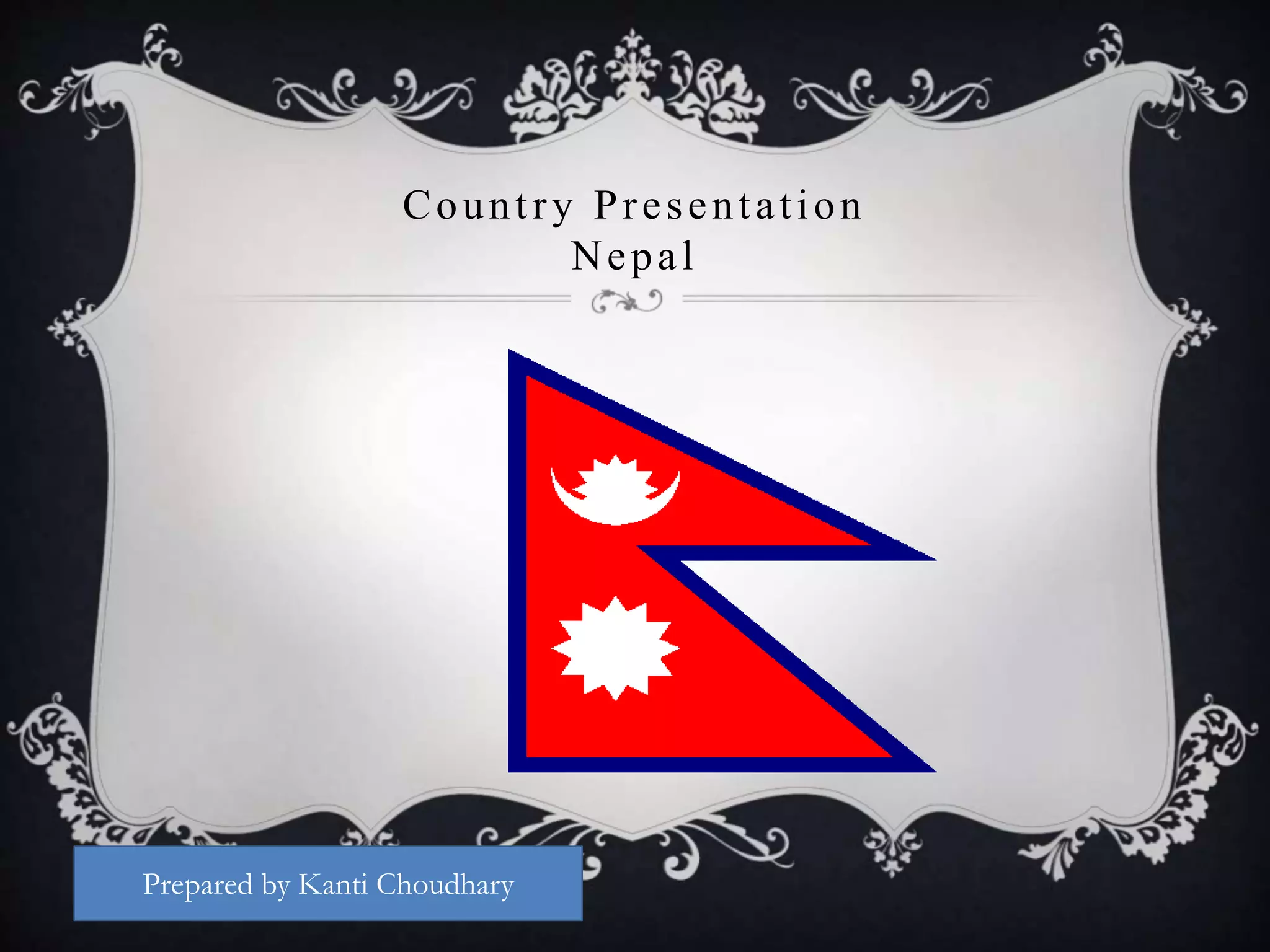
Country Presentation
Nepal
Prepared by Kanti Choudhary
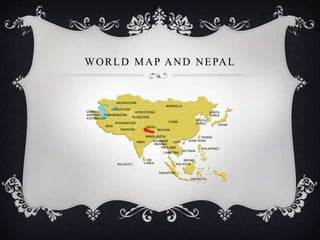
WORLD MAP AND NEPAL
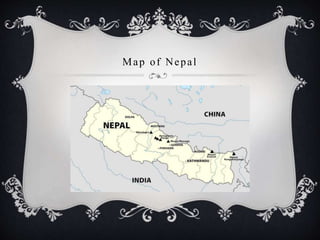
Map of Nepal
Geography of Nepal
 Nepal is of roughly trapezoidal shape, 800 kilometers (497 mi)
long and 200 kilometers (124 mi) wide, with an area of 147,181
km2 (56,827 sq mi).
 It lies between latitudes 26 c and 31 N, and longitudes 80 and
89 E
 Nepal is commonly divided into three physiographic areas :
1. Mountainous Region
2. Hilly Region,
3. Terai (Plain) Region.
 These ecological belts run east-west and are vertically
intersected by Nepal’s major, north to south flowing river
systems.
Climate of Nepal
 Nepal experiences five seasons :
1. Summer – Monsoon : Summer, from June to August, is
the monsoon season when the hills turn lush and green.
Temperatures can get quite warm, up to 30°C and more during
heat waves.
2. Autumn : Temperatures are not too warm, with daily maxima
about 25°C and cool nights with minima of 10°C, it usually
does not rain for more that one or two days during the entire
autumn.
3. Winter : In winter, from December to February, it is cold at night
with temperatures sometimes below zero. However, the
maximum temperatures can still reach up to 20°C. Then
the mountains are covered with snow including some
high hills.
4. Spring : Spring lasts from March to May, and is warm with rain
showers, and temperatures around 22°C.
Area, Population and Capital
 Area : 147,181 sq.km
 Population : 26.4 Million
 Capital : Kathmandu
Historical Background
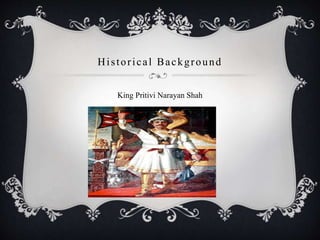
King Pritivi Narayan Shah
 Nepal had Many Small Kingdoms before 1768.
 The Modern State was Formed with the Unification of Nepal
 Prithvi Narayan Shah was born as a prince in Gorkha, Nepal .
 King Prithvi Narayaṇ Shah was ultimately able to unify these
previously small principalities into one nation, Nepal.
 United by The King Prithvi Narayan Shah on December 21,
1768.
 King Prithivi Narayan Shah was convinced that the British
forces would eventually approach Nepal.
 He believed that 50 small principalities would easily be
conquered by the British as part of a plan to colonize Nepal
 Unifying Nepal made it more difficult for British forces to
make their move. His unification campaign was very ambitious,
especially as he was the King of a (relatively) small kingdom
surrounded by strong and powerful neighbors.
 Prithvi Narayan Shah died in the gigantic Nuwakot palace,
sadly before he could effectively organize the administration of
his new country. He died in January 1775, at the age of 52.
 Still, King Prithivi Narayan Shah was able to successfully
unify Nepal, which later enabled unified Nepali forces to fight
against British colonial forces and prevent foreign colonization
of Nepal.
 Prithvi Narayan Shah with whom we move into the modern
period of Nepal's history, was the ninth generation of the ruling
house of Nepal.
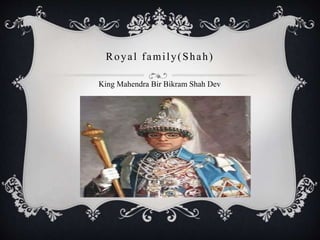
Royal family(Shah)
King Mahendra Bir Bikram Shah Dev
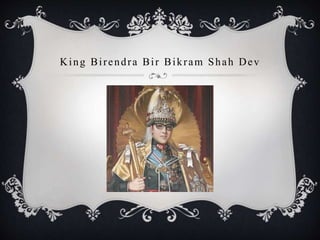
King Birendra Bir Bikram Shah Dev
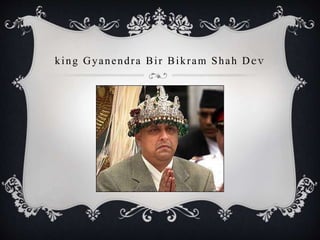
king Gyanendra Bir Bikram Shah Dev
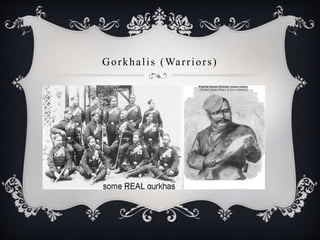
Gorkhalis (Warriors)
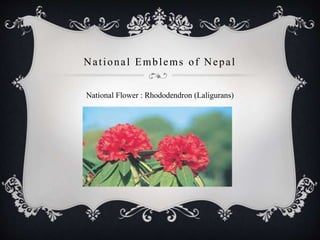
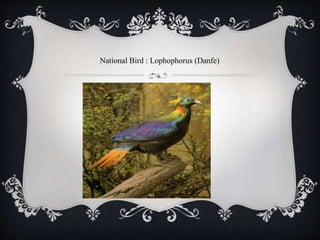
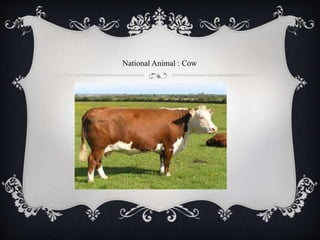
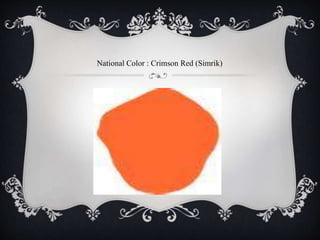
National Emblems of Nepal
National Flower : Rhododendron (Laligurans)
National Bird : Lophophorus (Danfe)
National Animal : Cow
National Color : Crimson Red (Simrik)
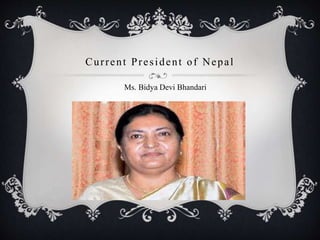
Current President of Nepal
Ms. Bidya Devi Bhandari
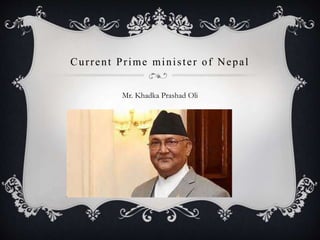
Current Prime minister of Nepal
Mr. Khadka Prashad Oli
Education system in Nepal
 Educations in School
Play group to SLC (10 class)
 Educations in College / University
10+2 (I.A) (two years)
Bachelors (four years)
Masters (two years) , Ph.D. (two…...years)
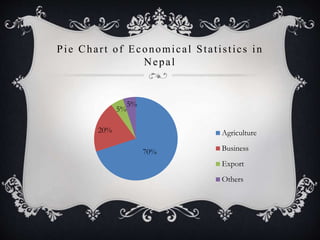
Pie Chart of Economical Statistics in
Nepal
70%
20%
5%
5%
Agriculture
Business
Export
Others
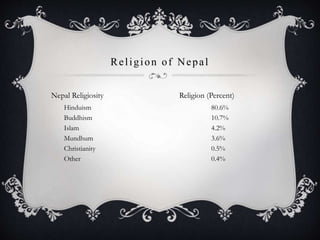
Religion of Nepal
Nepal Religiosity Religion (Percent)
Hinduism 80.6%
Buddhism 10.7%
Islam 4.2%
Mundhum 3.6%
Christianity 0.5%
Other 0.4%
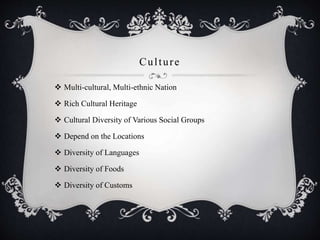
Culture
 Multi-cultural, Multi-ethnic Nation
 Rich Cultural Heritage
 Cultural Diversity of Various Social Groups
 Depend on the Locations
 Diversity of Languages
 Diversity of Foods
 Diversity of Customs
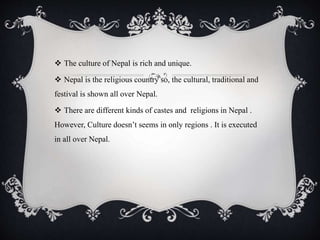
 The culture of Nepal is rich and unique.
 Nepal is the religious country so, the cultural, traditional and
festival is shown all over Nepal.
 There are different kinds of castes and religions in Nepal .
However, Culture doesn’t seems in only regions . It is executed
in all over Nepal.
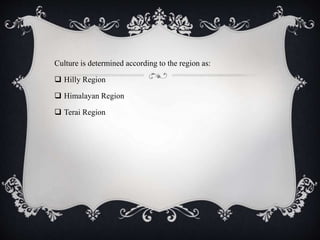
Culture is determined according to the region as:
 Hilly Region
 Himalayan Region
 Terai Region
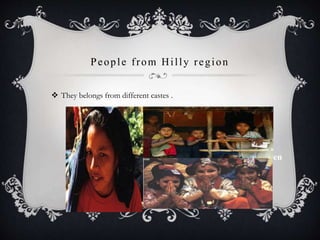
People from Hilly region
 They belongs from different castes .
Chhettri children
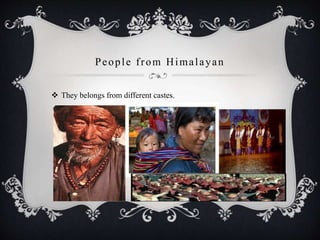
People from Himalayan
 They belongs from different castes.
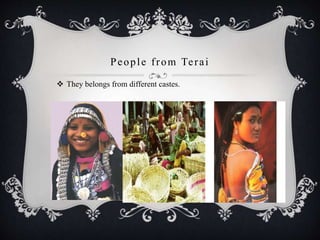
People from Terai
 They belongs from different castes.
Festival
 Festival are the belief and faith of the people.
 The festival are celebrated according to the caste and traditional in
all over the country.
 In the festival, the God/Goddess were worshiped by people
according to their culture.
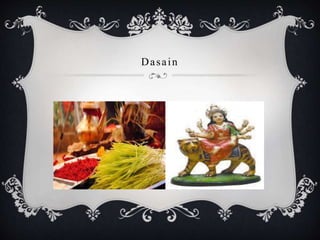
Dasain
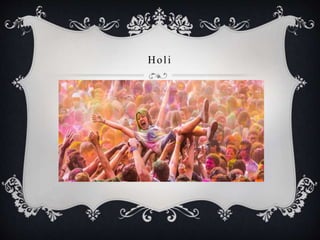
Holi
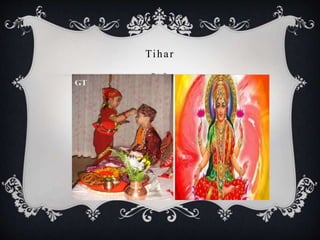
Tihar
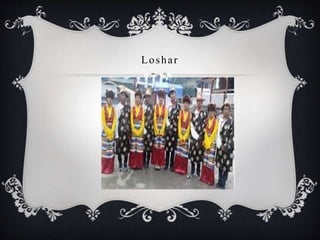
Loshar
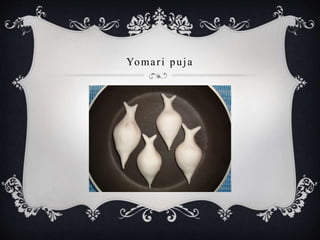
Yomari puja
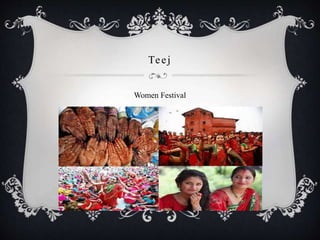
Teej
Women Festival
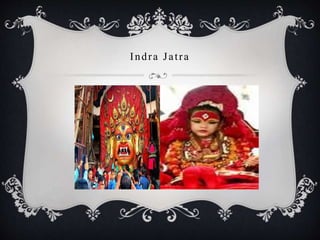
Indra Jatra
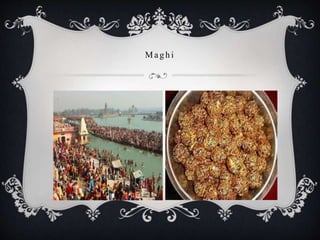
Mag h i
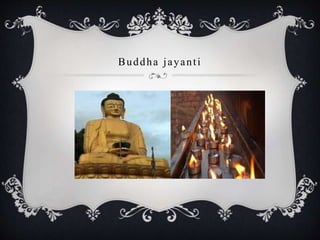
Buddha jayanti
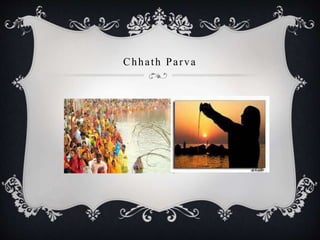
Chhath Parva
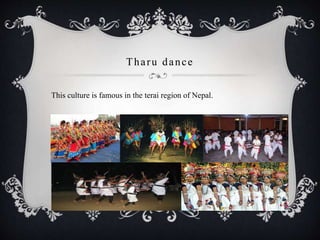
Tharu dance
This culture is famous in the terai region of Nepal.
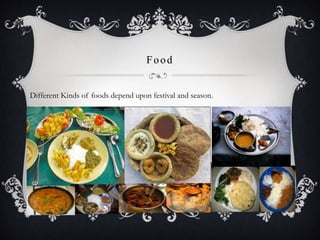
Food
Different Kinds of foods depend upon festival and season.
Clothes
 The clothes is determined according to the culture and tradition
through different castes.
 Nowadays, they prefer the clothes whatever they like .
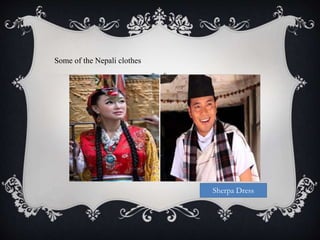
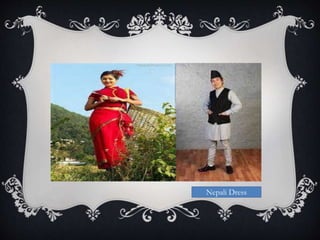
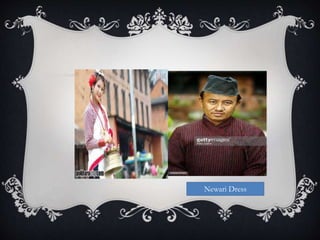
Some of the Nepali clothes
Sherpa Dress
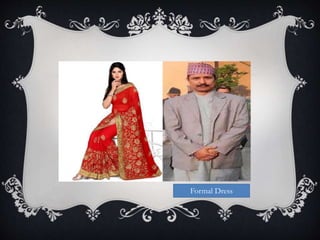
Nepali Dress
Newari Dress
Formal Dress
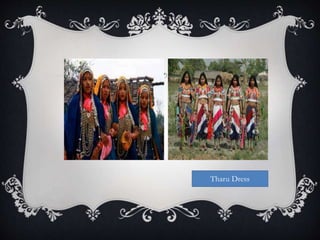
Tharu Dress
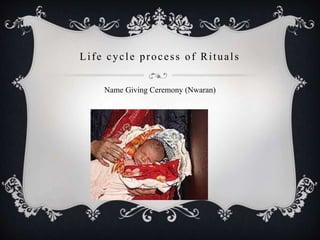
Life cycle process of Rituals
Name Giving Ceremony (Nwaran)
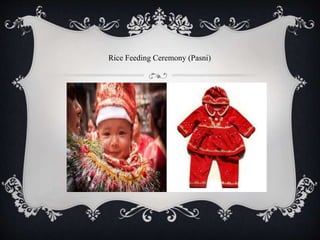
Rice Feeding Ceremony (Pasni)
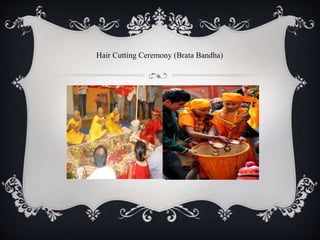
Hair Cutting Ceremony (Brata Bandha)
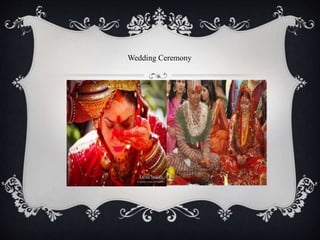
Wedding Ceremony
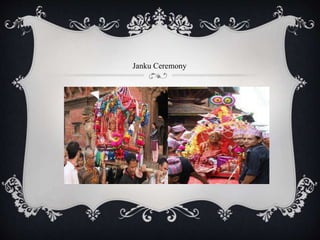
Janku Ceremony
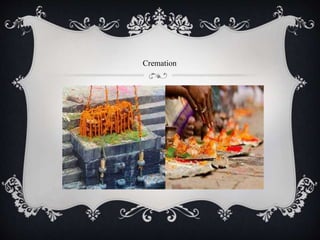
Cremation
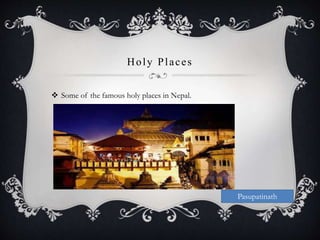
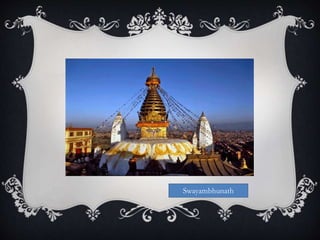
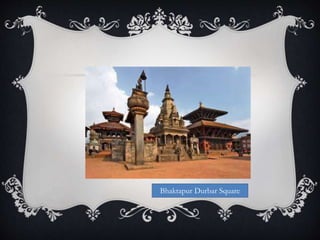
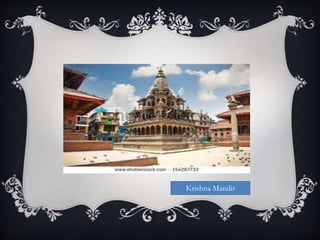
Holy Places
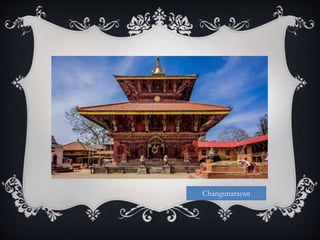
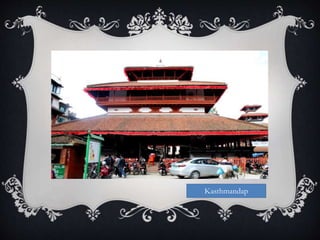
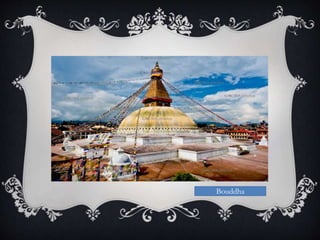
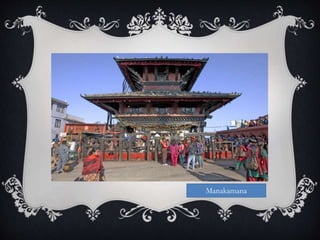
 Some of the famous holy places in Nepal.
Pasupatinath
Swayambhunath
Bhaktapur Durbar Square
Krishna Mandir
Changunarayan
Kasthmandap
Bouddha
Manakamana
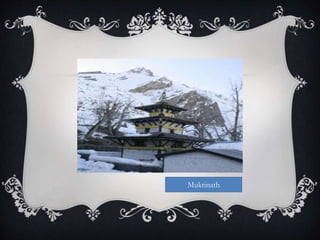
Muktinath
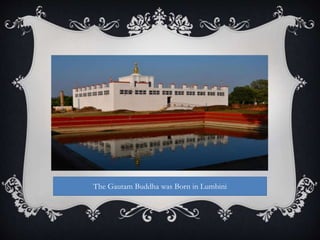
The Gautam Buddha was Born in Lumbini
Animals
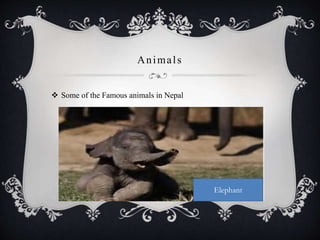
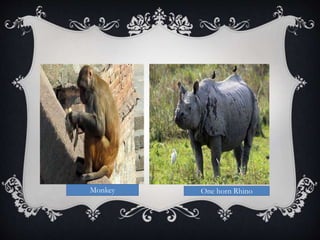
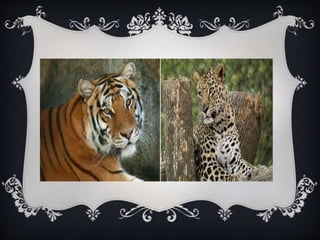
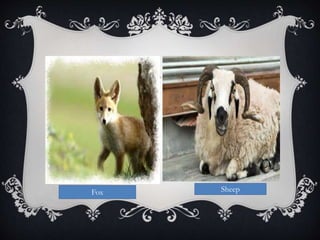
 Some of the Famous animals in Nepal
Elephant
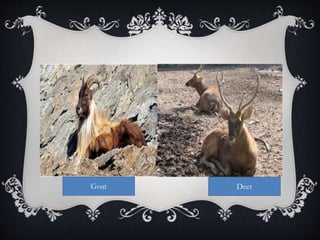
DeerGoat
One horn RhinoMonkey
Fox Sheep
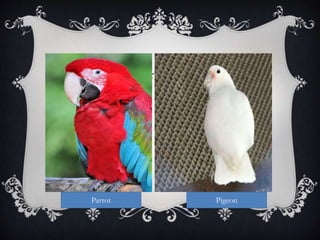
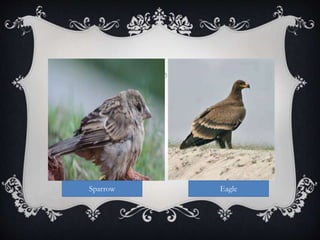
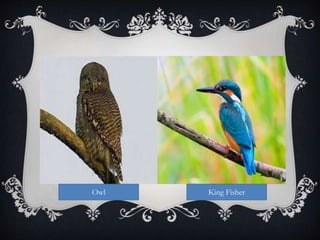
Birds
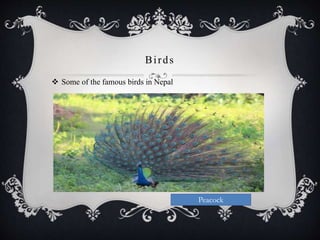
 Some of the famous birds in Nepal
Peacock
PigeonParrot
Sparrow Eagle
Owl King Fisher
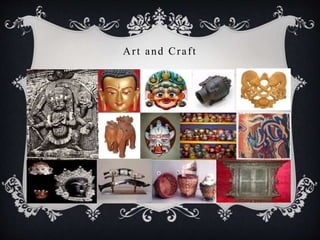
Art and Craft
Hand made clay Sculpture
 The sculpture are characterize by religious theme, neutrality and
little use of costume, simplicity and tantrism.
 Clay sculpture is very common in Nepal.
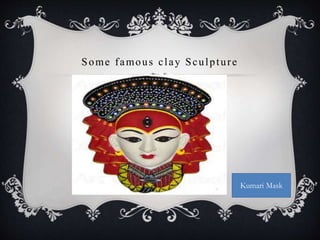
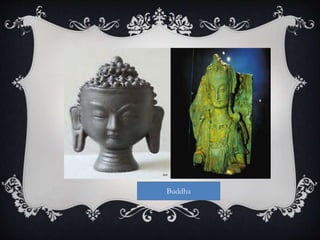
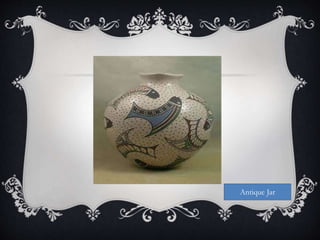
Some famous clay Sculpture
Kumari Mask
Buddha
Antique Jar
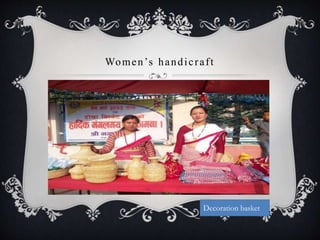
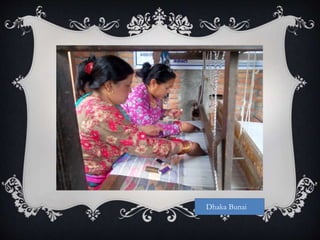
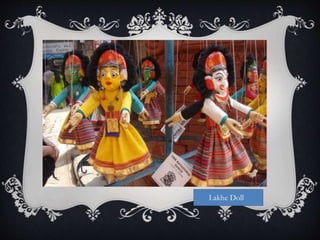
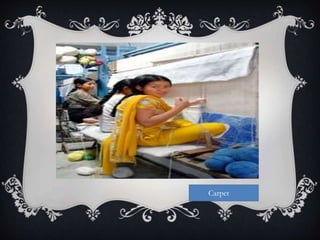
Women’s handicraft
Decoration basket
Dhaka Bunai
Lakhe Doll
Carpet
Some Glimpses Natural
Beauty
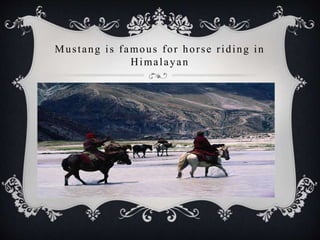
Mustang is famous for horse riding in
Himalayan
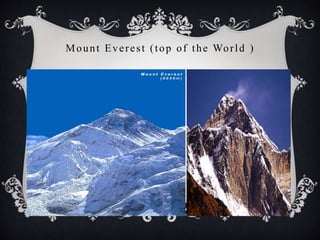
Mount Everest (top of the World )
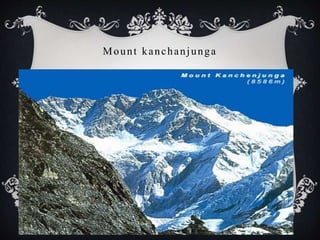
Mount kanchanjunga
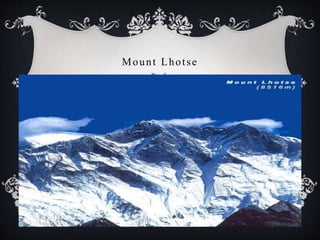
Mount Lhotse
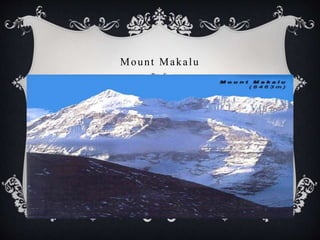
Mount Makalu
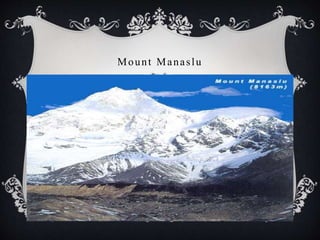
Mount Manaslu
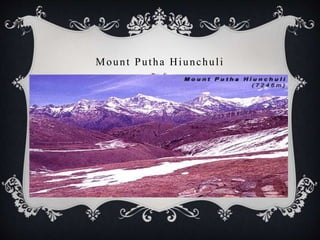
Mount Putha Hiunchuli
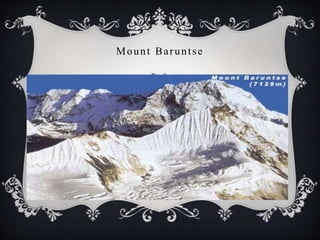
Mount Baruntse
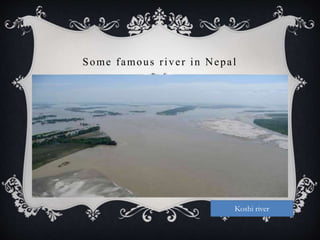
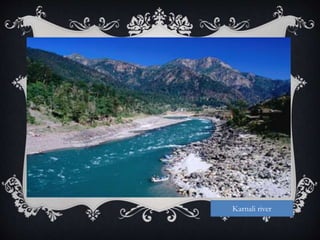
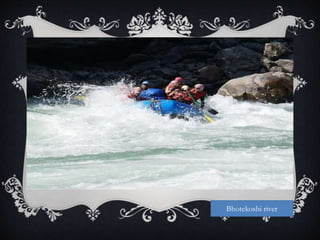
Some famous river in Nepal
Koshi river
Karnali river
Bhotekoshi river
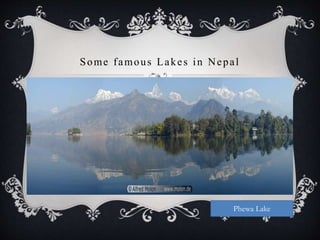
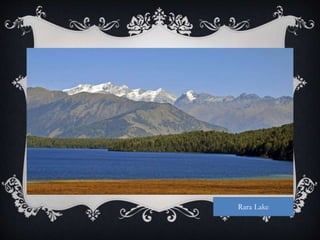
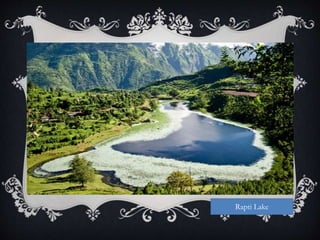
Some famous Lakes in Nepal
Phewa Lake
Rara Lake
Rapti Lake
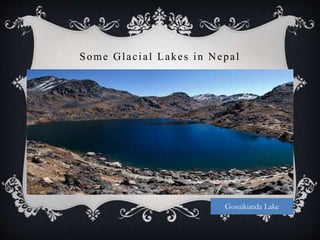
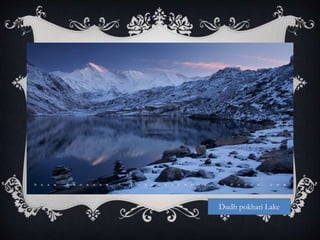
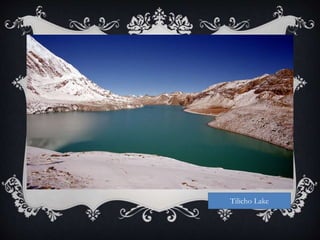
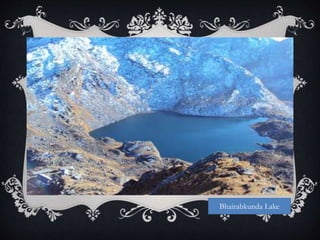
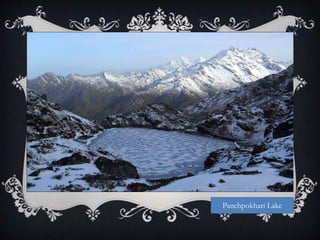
Some Glacial Lakes in Nepal
Gosaikunda Lake
Dudh pokhari Lake
Tilicho Lake
Bhairabkunda Lake
Panchpokhari Lake
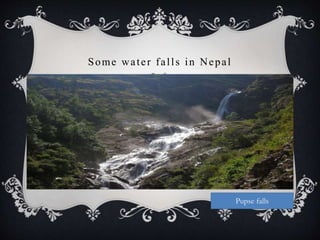
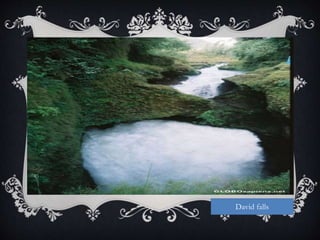
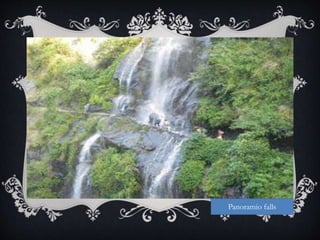
Some water falls in Nepal
Pupse falls
David falls
Panoramio falls
Any Queries
???

Country Presentation of Nepal