Corynebacteria
- This genus includes:
- Pathogenic Corynebacterium ;
C.diphtheriae.
- - Commensal Corynebacterium in skin&
mucous membrane; Diphtheroids.
Corynebacterium
diphtheriae

-
Long, gram-positive beaded bacilli due to
presence of metachromatic granules appear
better by
 Nisser stain (the granules appear deep blue
and the organism pink in color) or.
 Methylene blue stain (the granules appear
dark blue and the bacilli are light blue).
 They are non-motile, non-capsulated& have
Chinese letter arrangement.
 It grows on Loffler’s serum at 37˚C/ 24 h.
 On blood tellurite agar, the organism can be
differentiated into, mitis& intermedius types
(grey to black colonies).
C. Diphtheriae with
methylen blue stain
C. Diphthriae (Gram positive
bacilli have Chinese letter
arrangement)
Growth of C. Dipthriae on blood tellurite medium
(It is differentiated into gravis, mitis & intermedius)
Loffler’s serum
agar slope
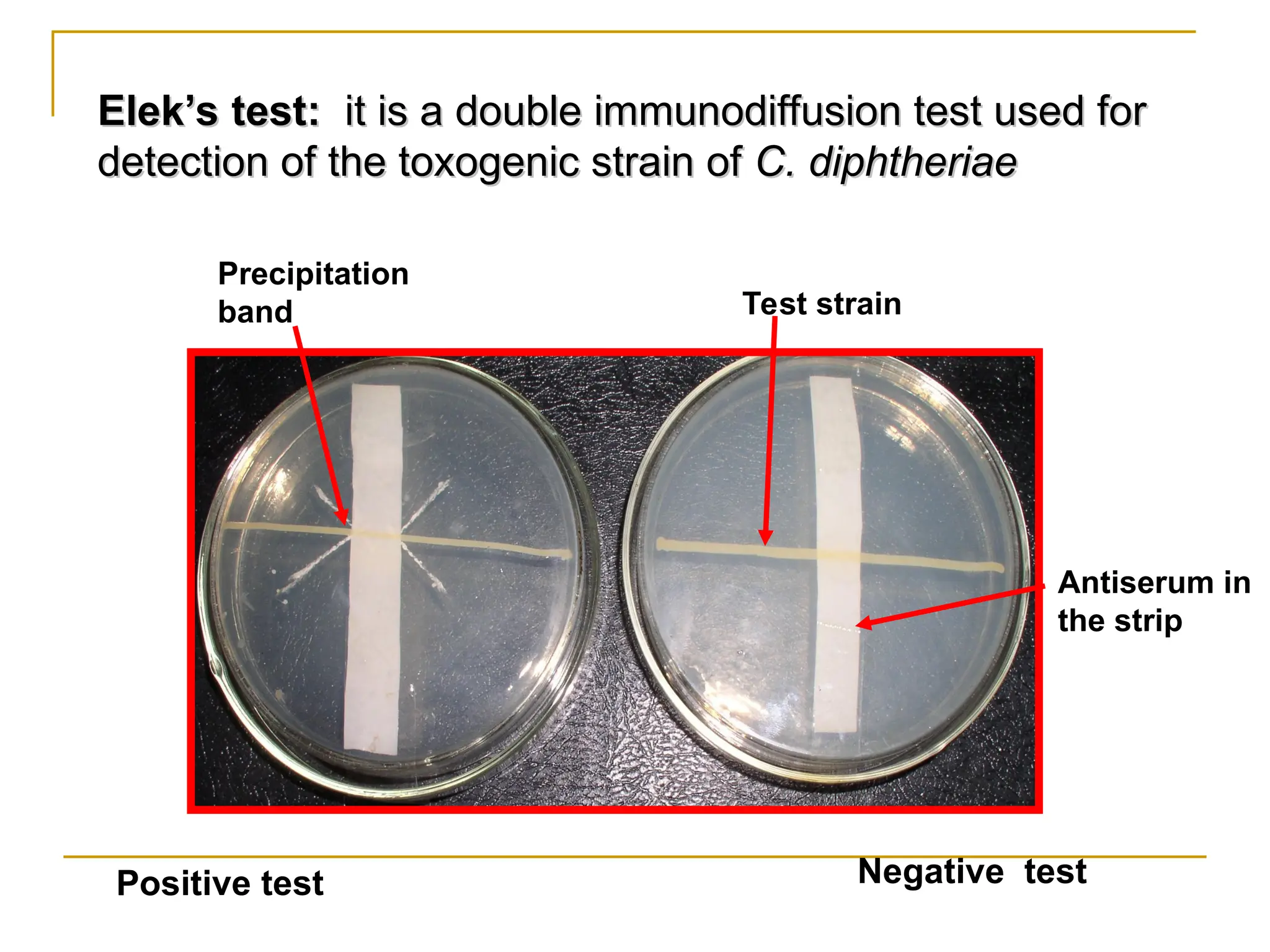
Positive test Negative test
Elek’s test:
Elek’s test: it is a double immunodiffusion test used for
it is a double immunodiffusion test used for
detection of the toxogenic strain of
detection of the toxogenic strain of C. diphtheriae
C. diphtheriae
Precipitation
band Test strain
Antiserum in
the strip
Diphtheroids
 They are gram- positive rods, non motile, non-
capsulated, non spore forming arranged in
parallel rows or pairs at angles (palisade).
 They grow on ordinary media these include
C.xerosis, C.ulcerans, C.hofmanni & C. acne.
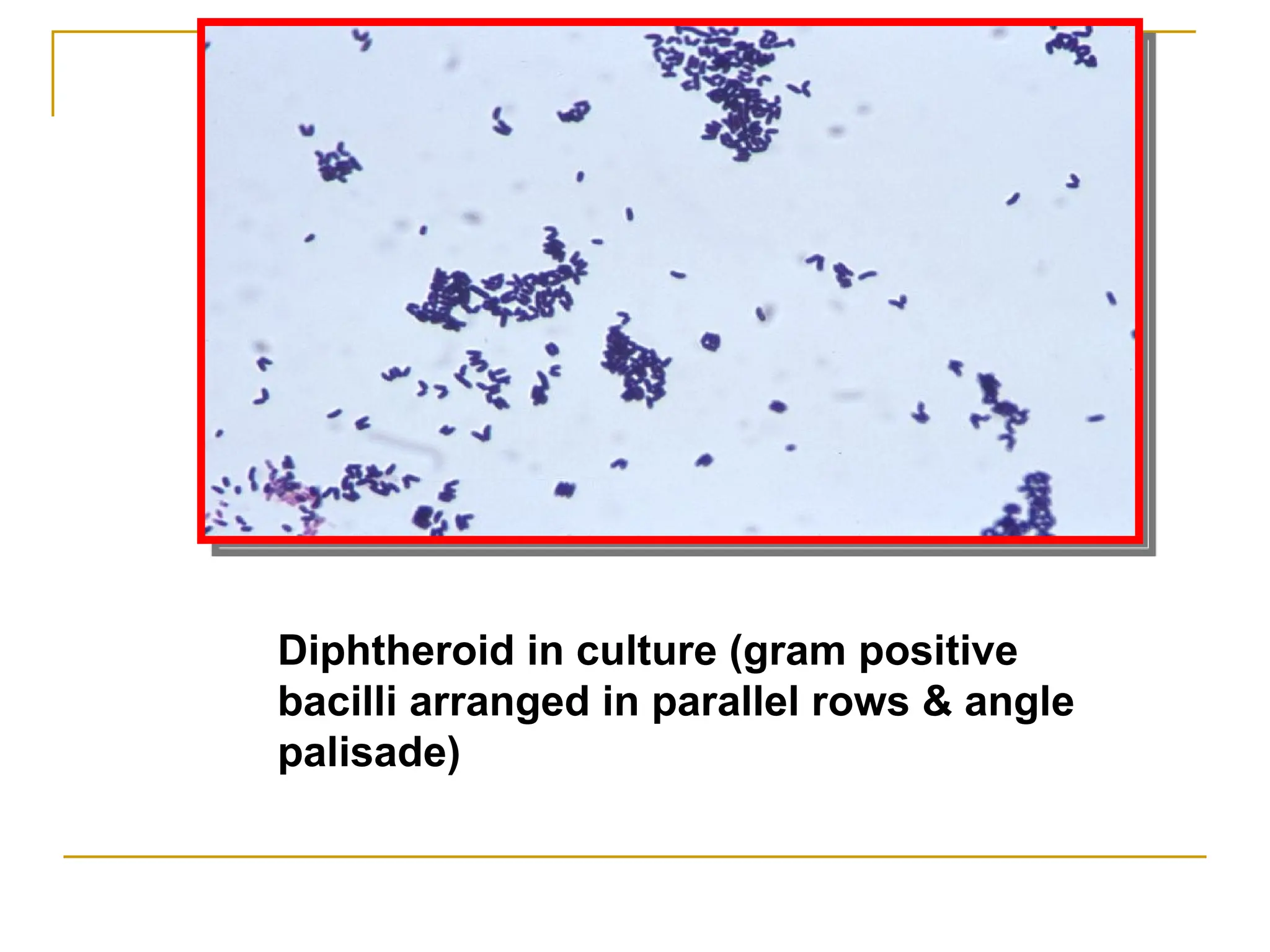
Diphtheroid in culture (gram positive
bacilli arranged in parallel rows & angle
palisade)

Corynebacteria species short notes on ppt

  • 1.
    Corynebacteria - This genusincludes: - Pathogenic Corynebacterium ; C.diphtheriae. - - Commensal Corynebacterium in skin& mucous membrane; Diphtheroids.
  • 2.
    Corynebacterium diphtheriae  - Long, gram-positive beadedbacilli due to presence of metachromatic granules appear better by  Nisser stain (the granules appear deep blue and the organism pink in color) or.  Methylene blue stain (the granules appear dark blue and the bacilli are light blue).
  • 3.
     They arenon-motile, non-capsulated& have Chinese letter arrangement.  It grows on Loffler’s serum at 37˚C/ 24 h.  On blood tellurite agar, the organism can be differentiated into, mitis& intermedius types (grey to black colonies).
  • 4.
    C. Diphtheriae with methylenblue stain C. Diphthriae (Gram positive bacilli have Chinese letter arrangement)
  • 5.
    Growth of C.Dipthriae on blood tellurite medium (It is differentiated into gravis, mitis & intermedius) Loffler’s serum agar slope
  • 6.
    Positive test Negativetest Elek’s test: Elek’s test: it is a double immunodiffusion test used for it is a double immunodiffusion test used for detection of the toxogenic strain of detection of the toxogenic strain of C. diphtheriae C. diphtheriae Precipitation band Test strain Antiserum in the strip
  • 7.
    Diphtheroids  They aregram- positive rods, non motile, non- capsulated, non spore forming arranged in parallel rows or pairs at angles (palisade).  They grow on ordinary media these include C.xerosis, C.ulcerans, C.hofmanni & C. acne.
  • 8.
    Diphtheroid in culture(gram positive bacilli arranged in parallel rows & angle palisade)