The progress of science & useful arts 
Mathias Klang @klangable mklang@sju.edu
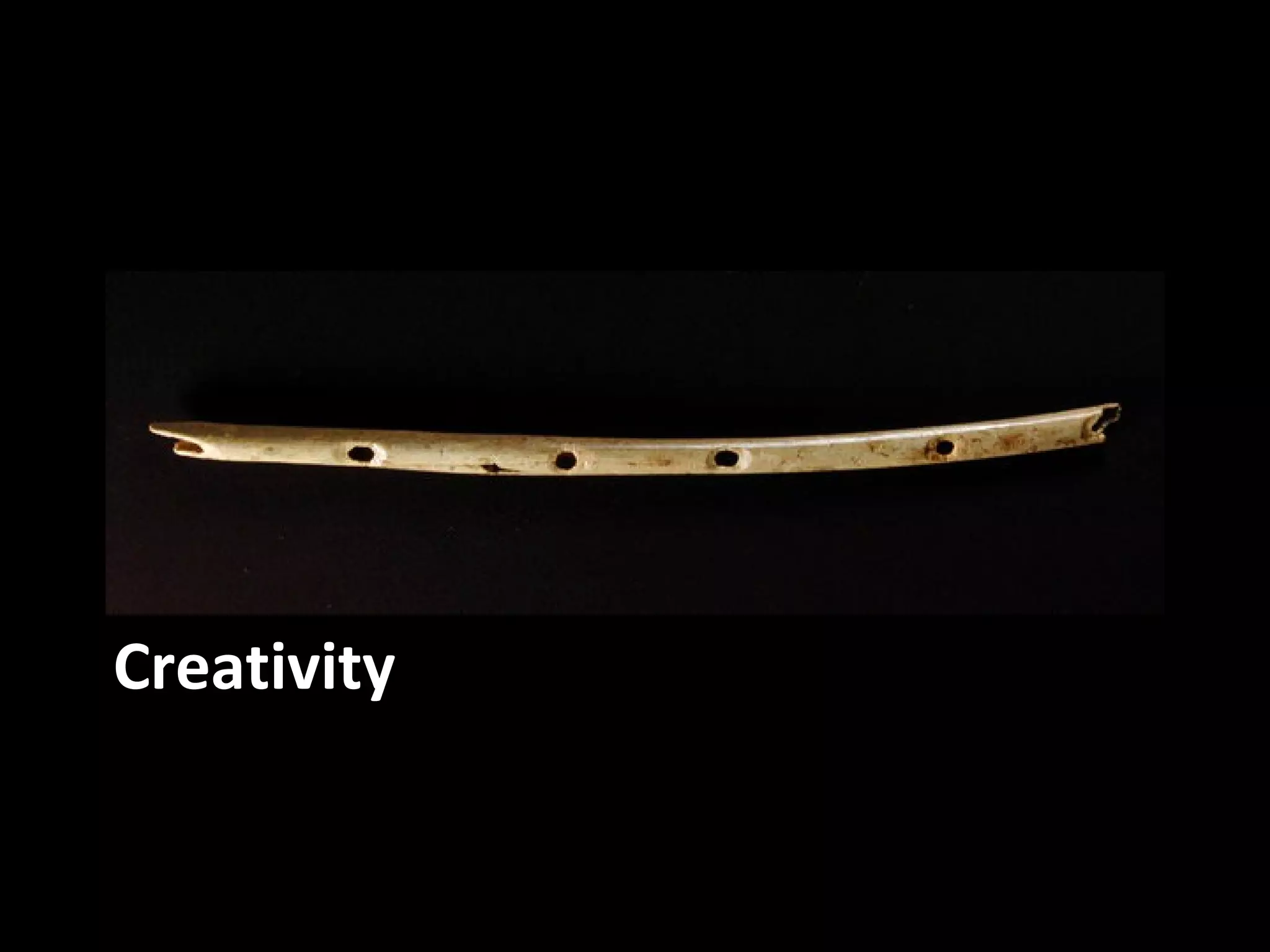
Creativity
“…fixed in any tangible medium of 
expression”
“original works 
of authorship”
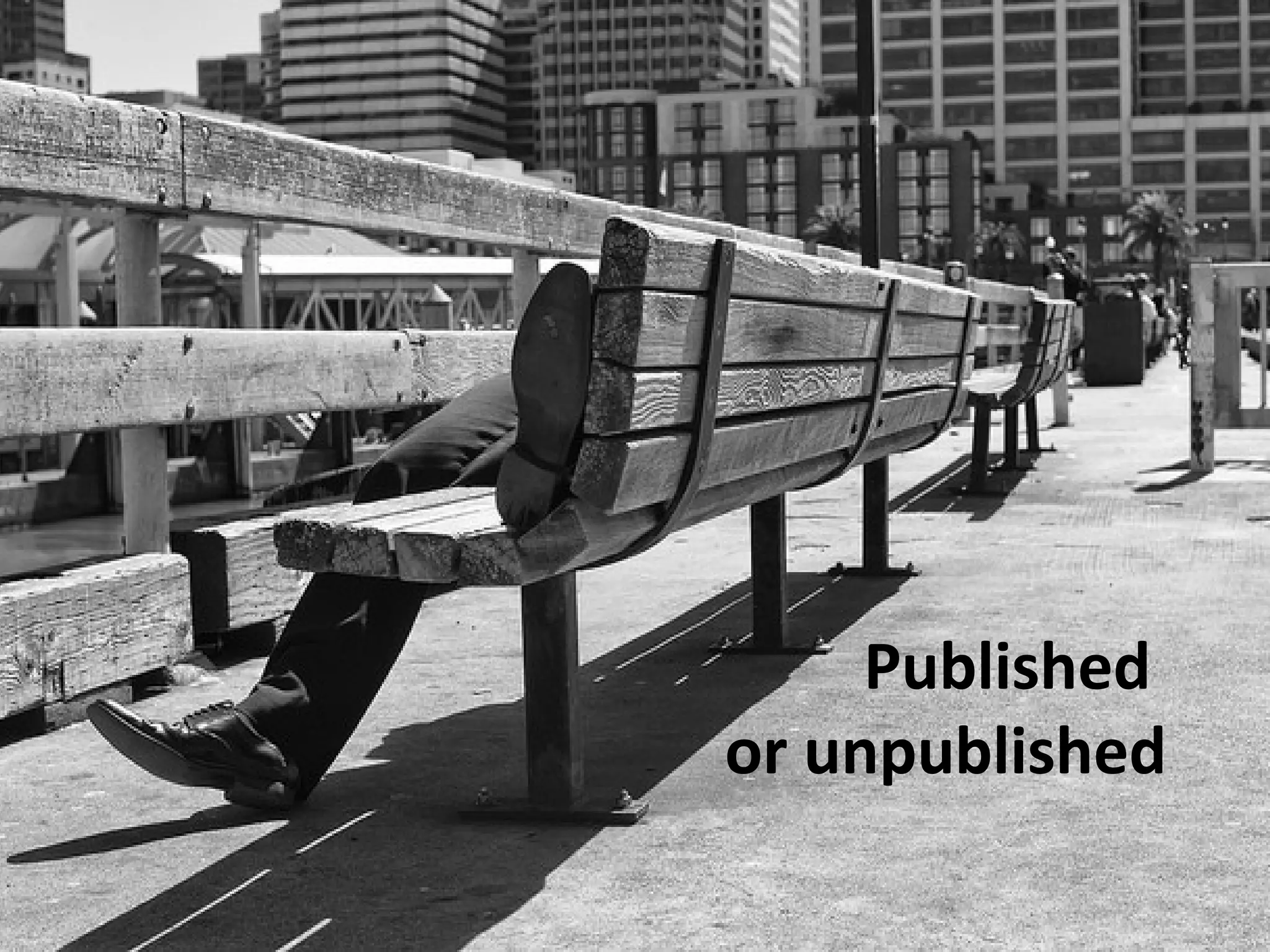
Published 
or unpublished
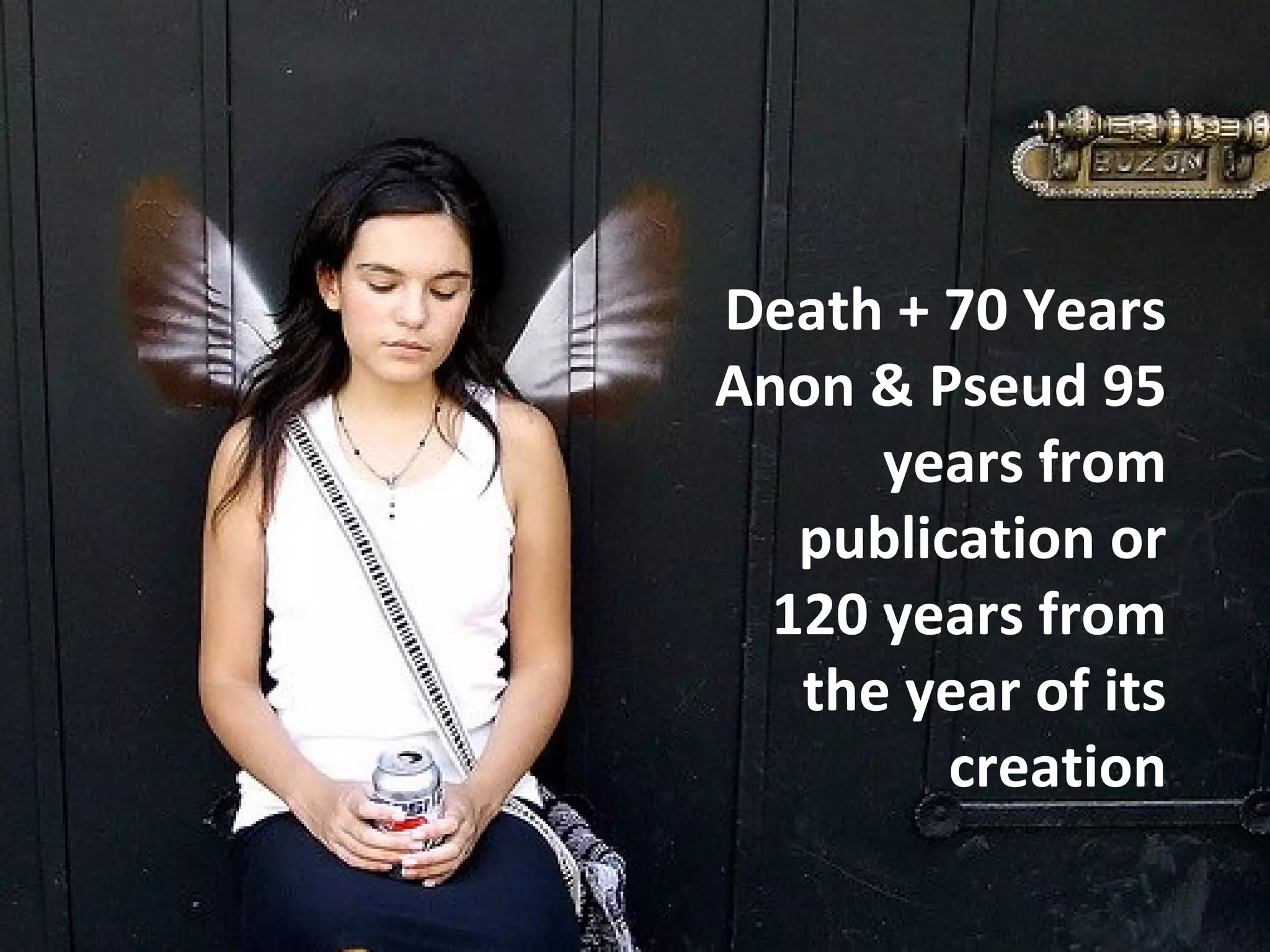
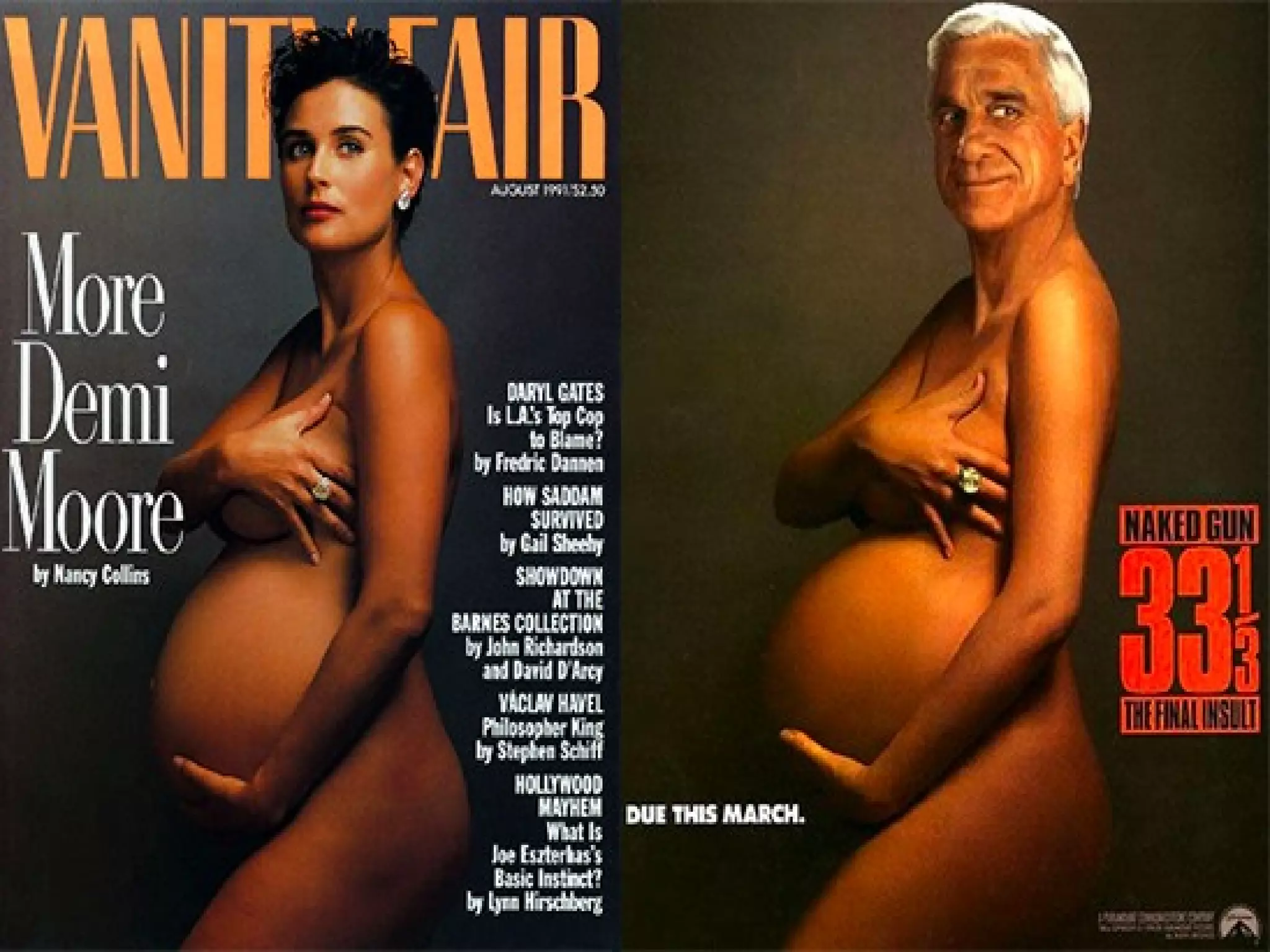
Death + 70 Years 
Anon & Pseud 95 
years from 
publication or 
120 years from 
the year of its 
creation
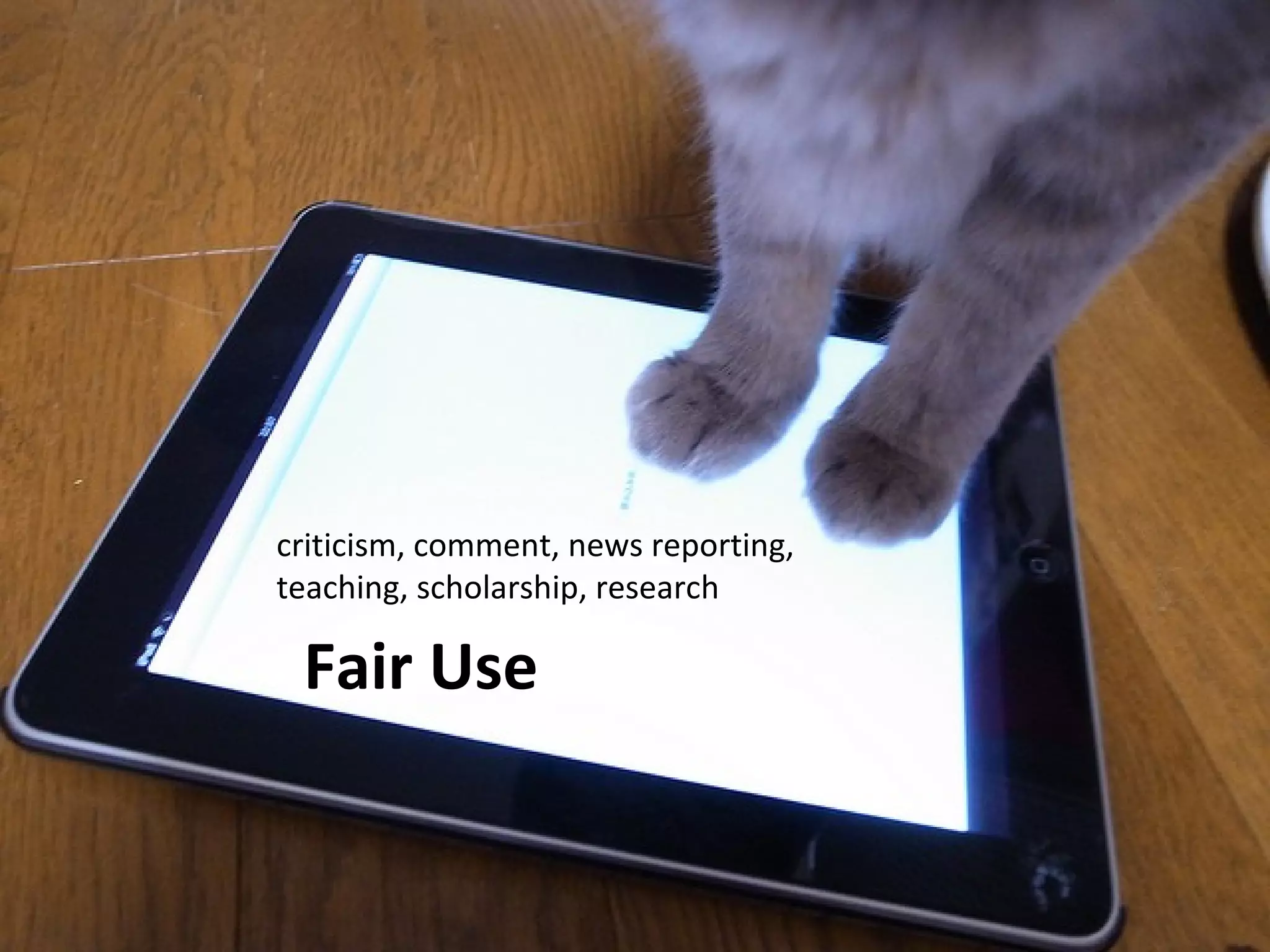
criticism, comment, news reporting, 
teaching, scholarship, research 
Fair Use
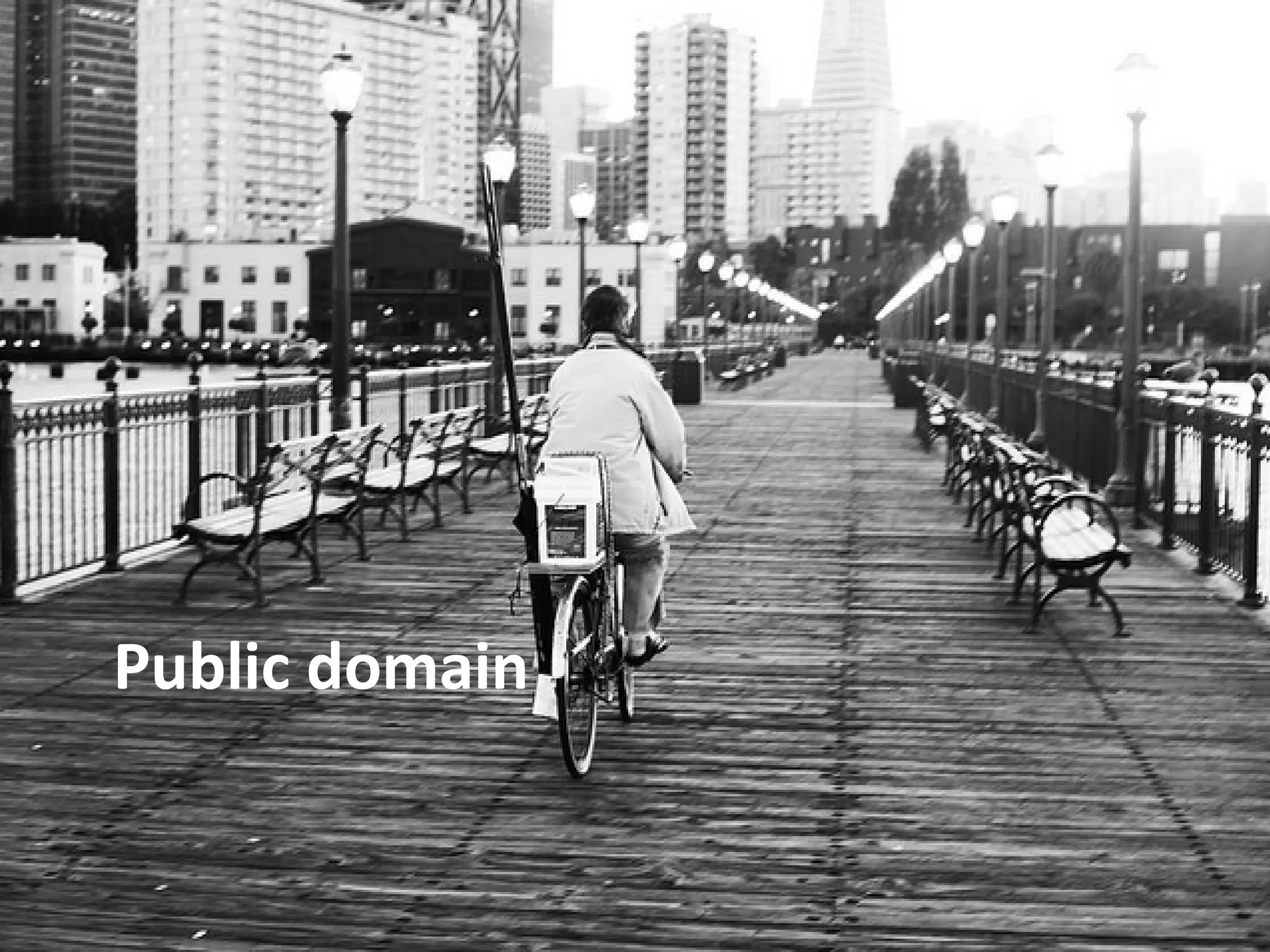
Public domain
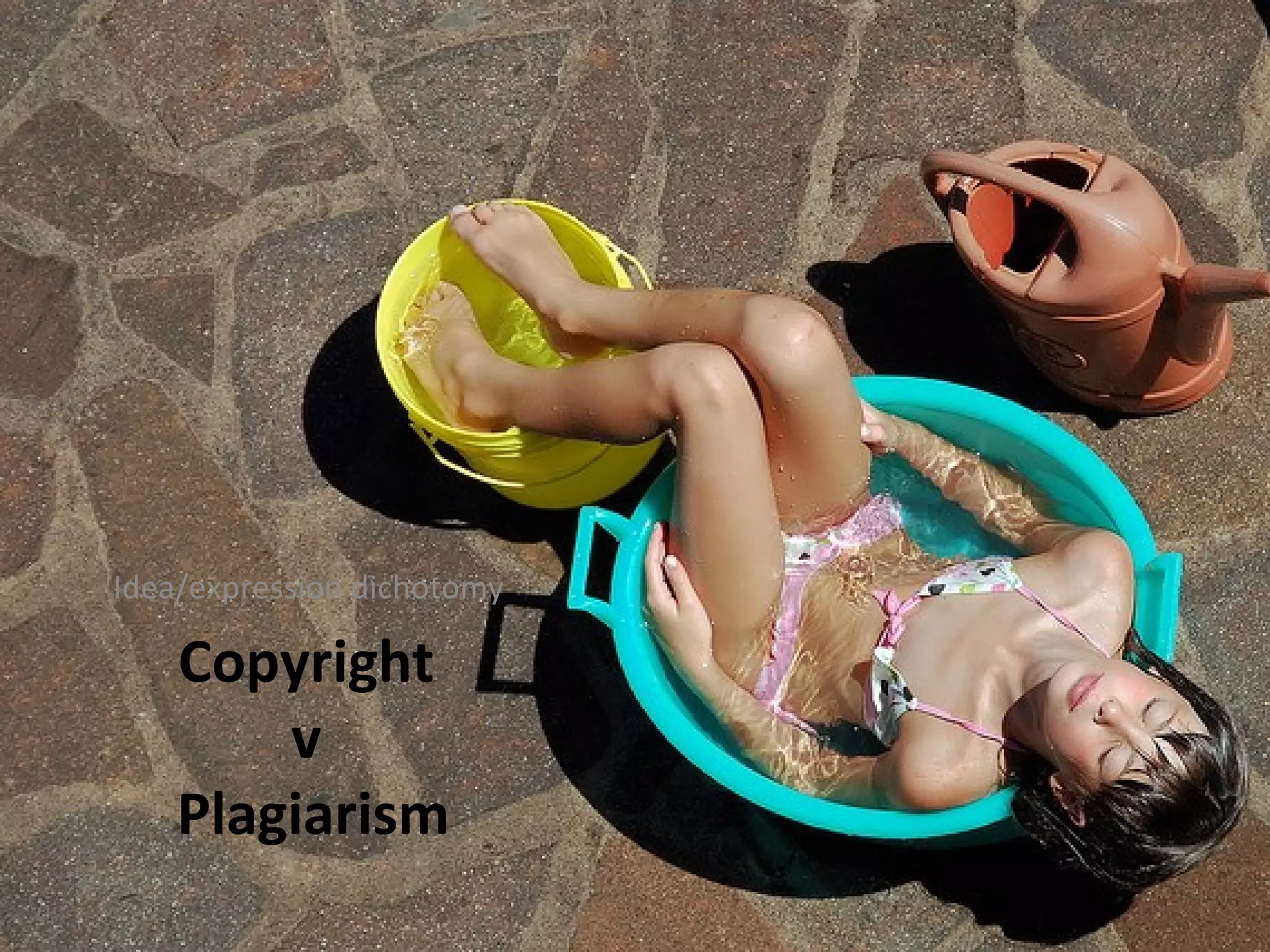
Idea/expression dichotomy 
Copyright 
v 
Plagiarism
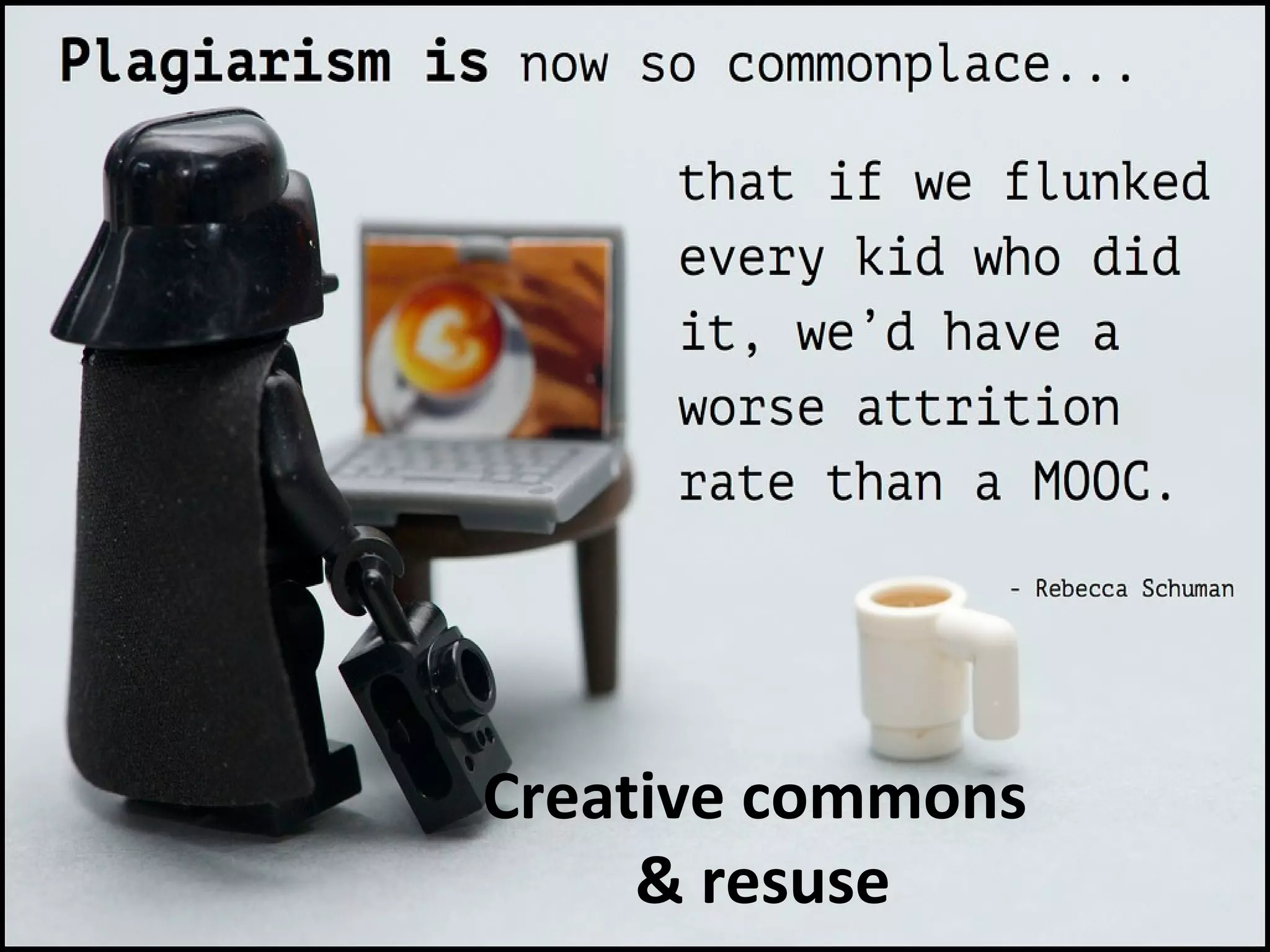
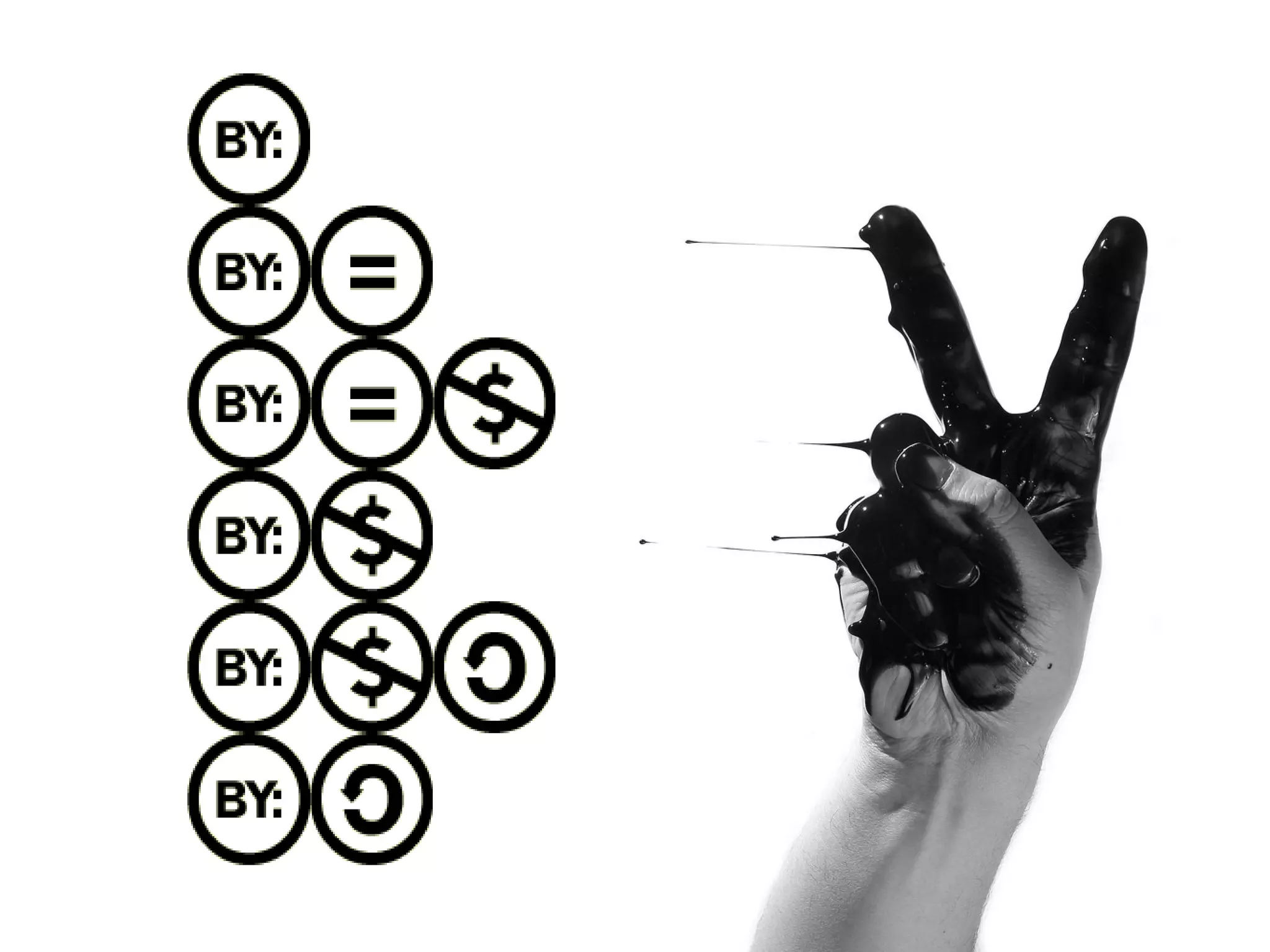
Creative commons 
& resuse
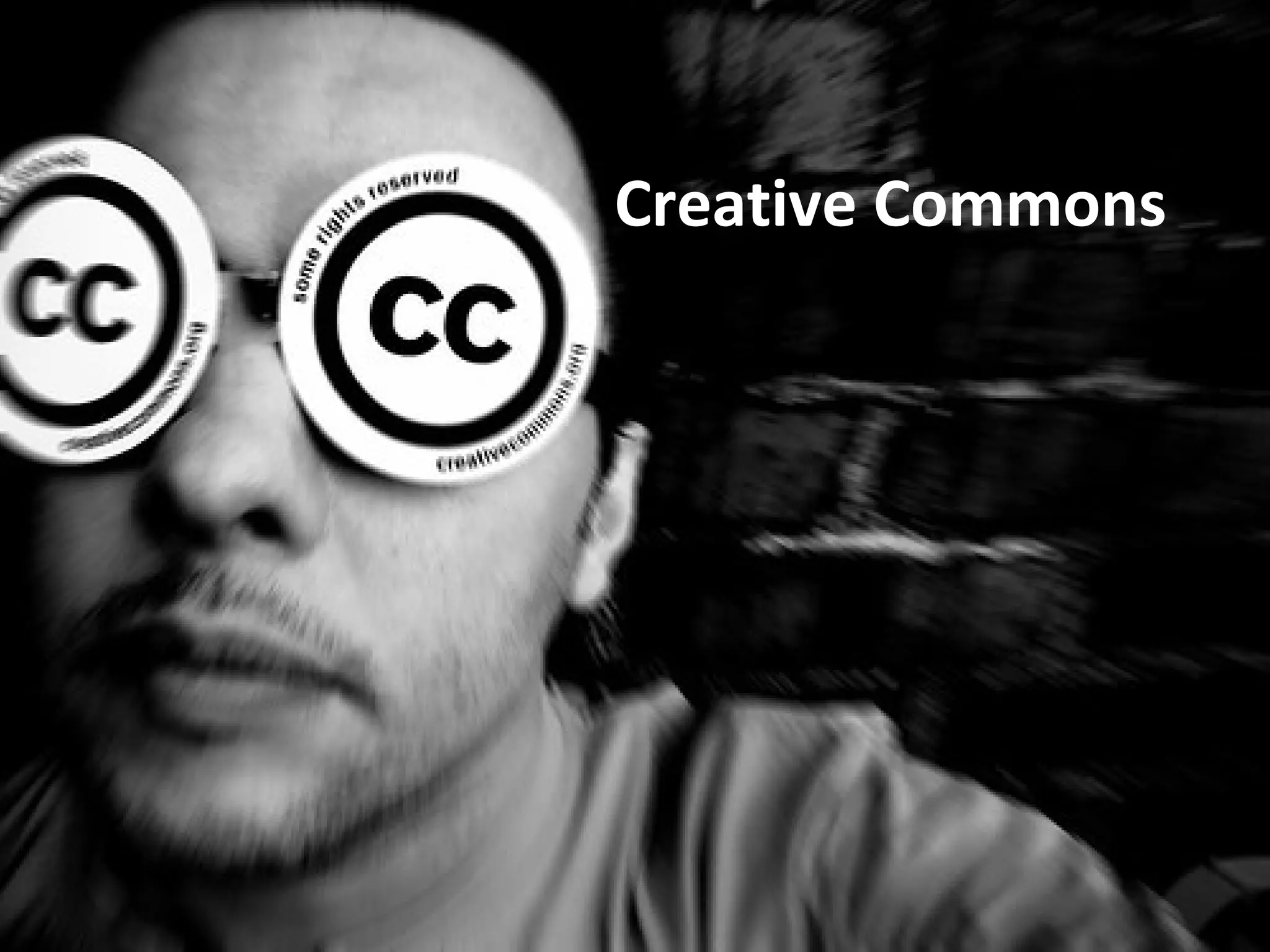
Creative Commons
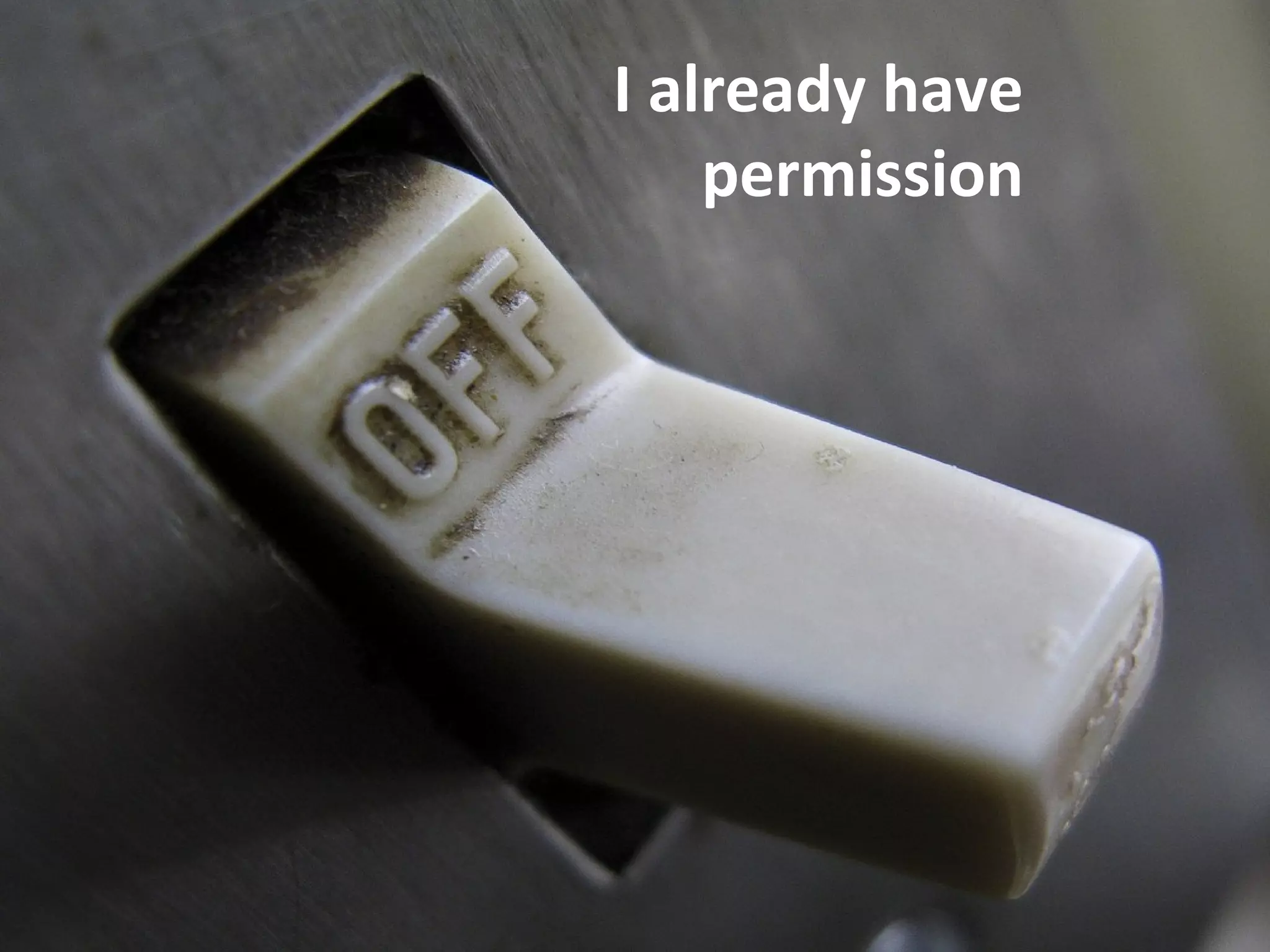
I already have 
permission
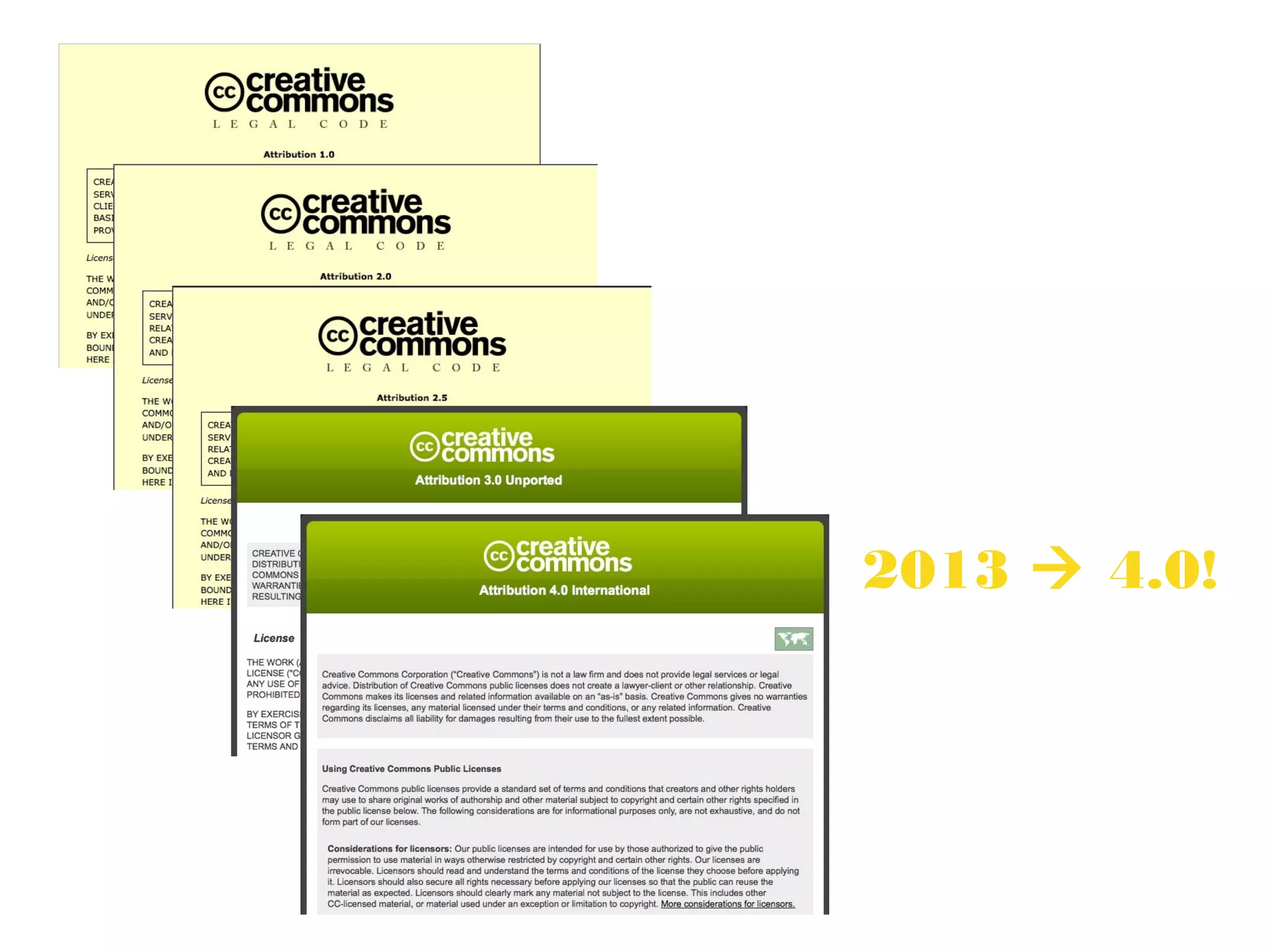
2002  1.0 
2004  2.0 
2013 
4.0 
2005  2.5 
2007  3.0 
2013  4.0!
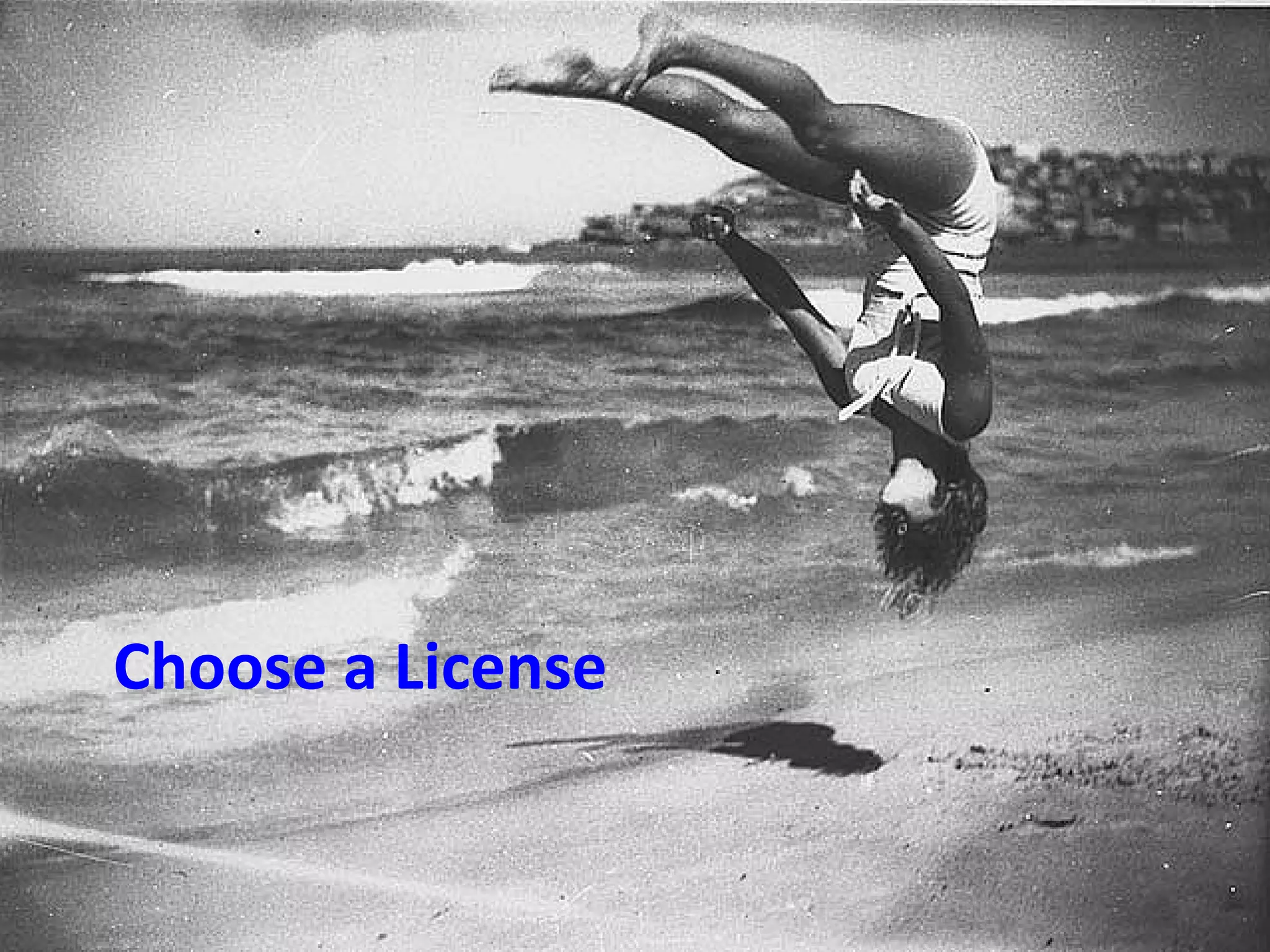
Choose a License
The critique: Does it all work?
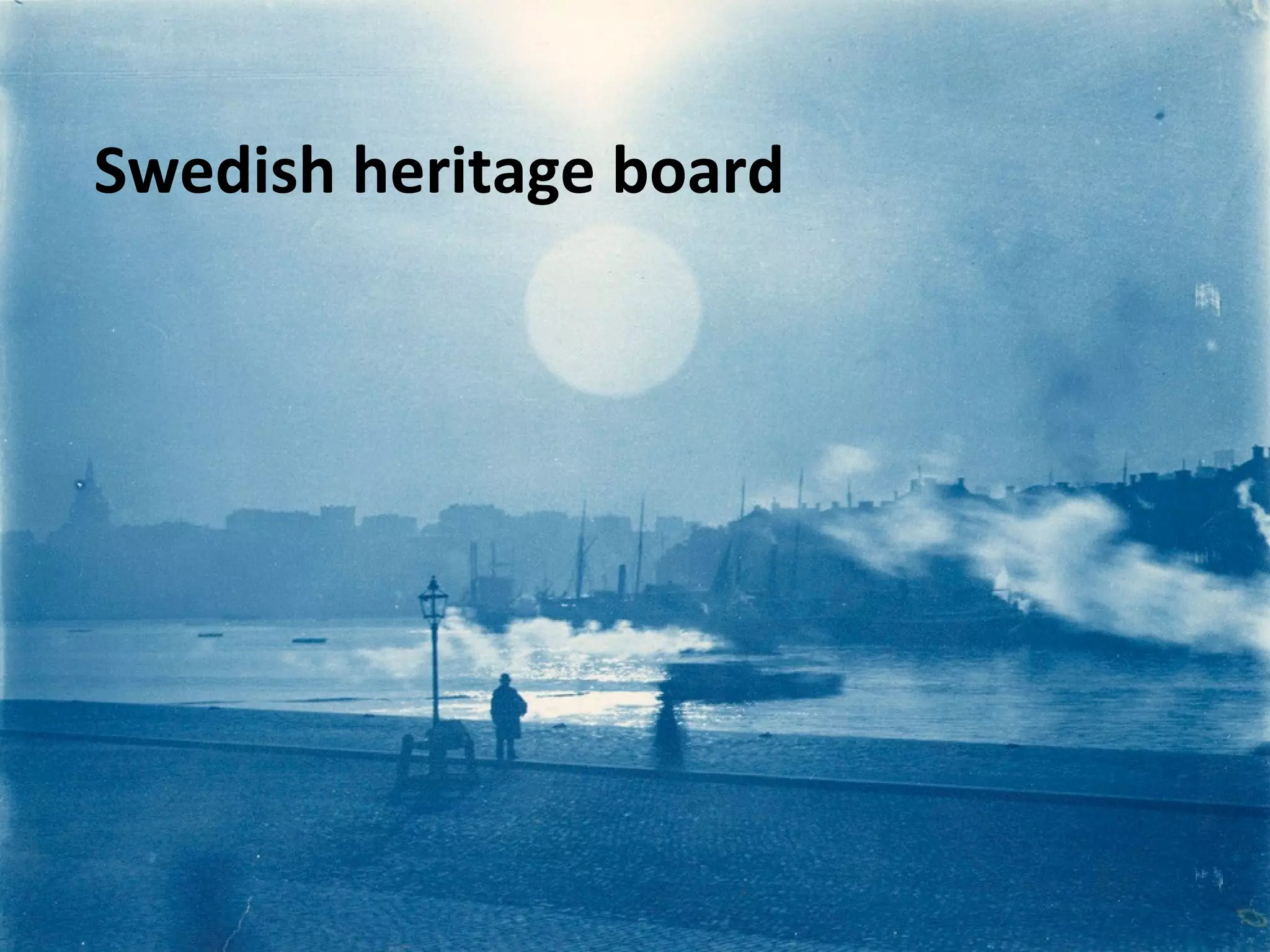
Swedish heritage board
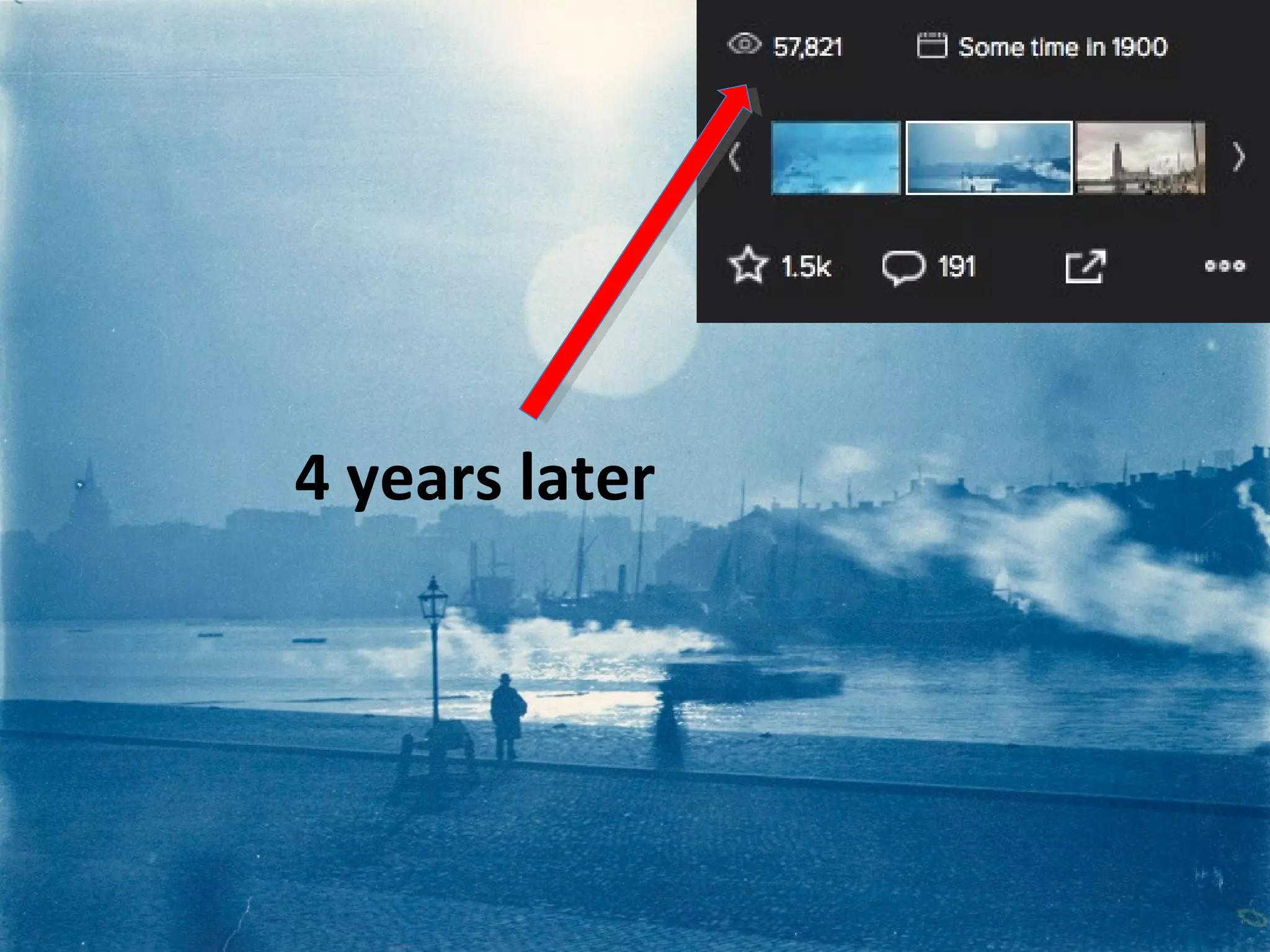
4 years later
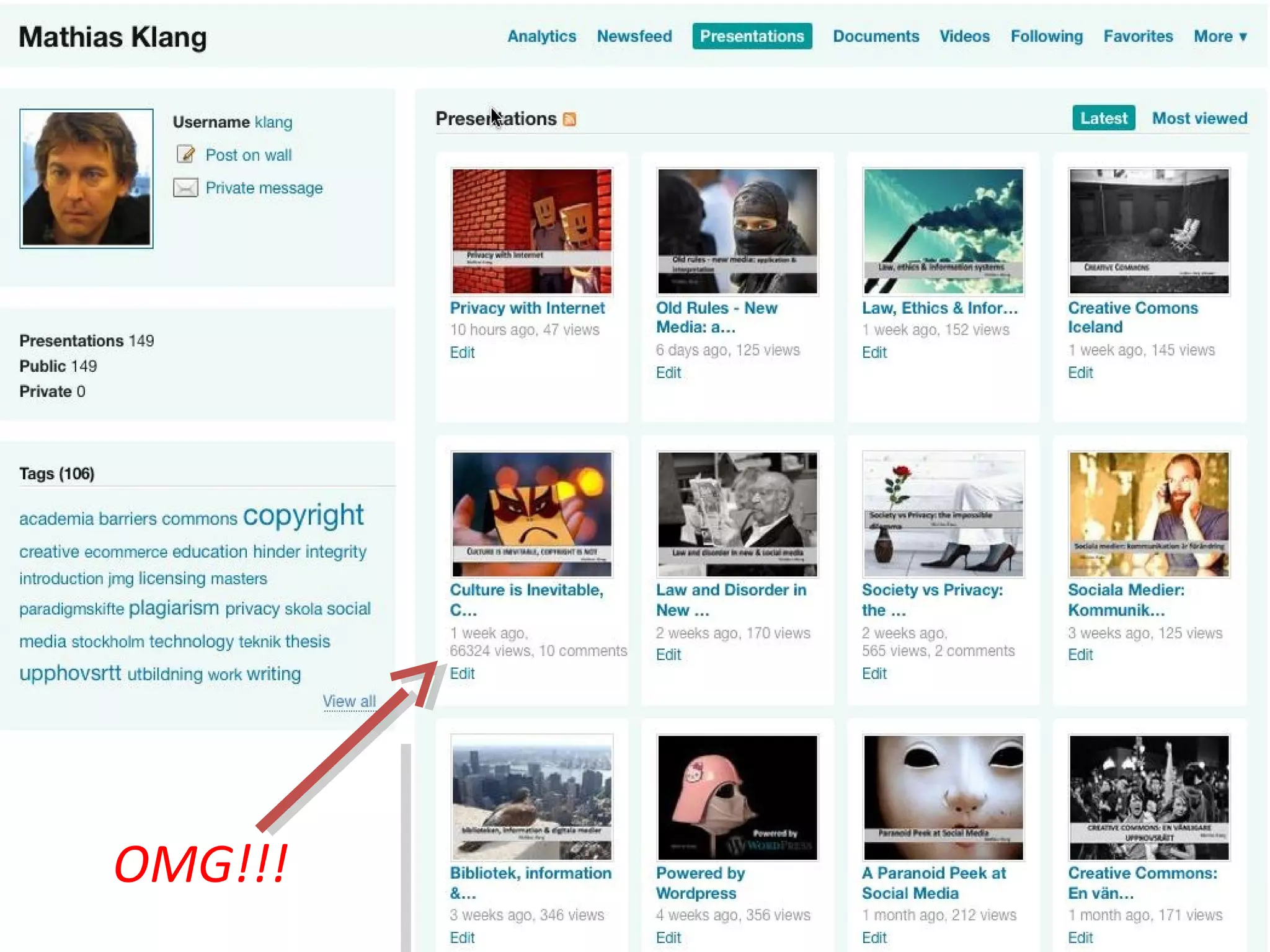
OOMMGG!!!!!!
Using other 
people’s content
Mathias Klang 
mklang@sju.edu or @klangable 
www.klangable.com 
Image & licensing info in the notes 
section of slides. 
Images at www.flickr.com (or 
specifically stated). 
This ppt licensed: 
Creative Commons BY-NC-SA 
Download presentation 
www.slideshare.net/klang

Copyright & Licensing: The progress of science & useful arts

Editor's Notes

  • #2 US Constitution by Kim Davies cc by nc nd To promote the Progress of Science and useful Arts, by securing for limited Times to Authors and Inventors the exclusive Right to their respective Writings and Discoveries. Article I, Section 8, Clause 8 of the United States Constitution
  • #3 Bone Flute found in Hohle Fels Cave in Germany, is at least 42,000 years old. http://www.nytimes.com/2012/05/29/science/oldest-musical-instruments-are-even-older-than-first-thought.html
  • #4 Copyright Act of 1976snowman by Javier cc by nc nd
  • #5 capturing the art shark by Art Siegel cc by nc
  • #6 Ferry Building, 18th April 2013 by screaming_monkey cc by sa
  • #7 Alas _ Hope is the thing with feathers... By Celeste cc by nc CROPPED
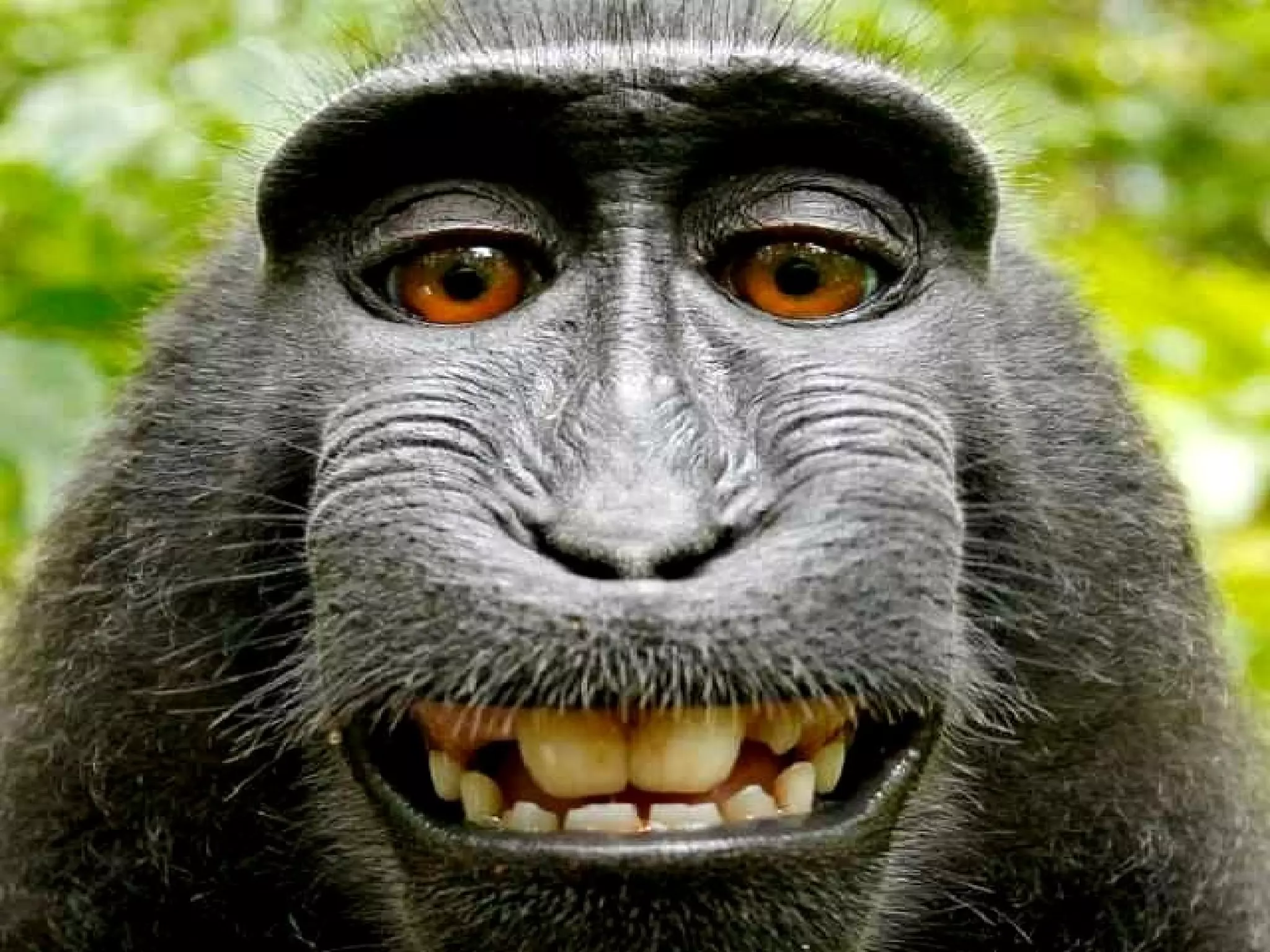
  • #8 David Slater was taking photos of macaques on the Indonesian island of Sulawesi in 2011
  • #9 Ahchan on iPad By jetalone cc by Fair-Use Doctrine: it is permissible to use limited portions of a work. The reproduction of a particular work may be considered fair if it is used for: criticism, comment, news reporting, teaching, scholarship, research. The purpose and character of the use, including whether such use is of commercial nature or is for nonprofit educational purposes. The nature of the copyrighted work. The amount and substantiality of the portion used in relation to the copyrighted work as a whole The effect of the use upon the potential market for, or value of, the copyrighted work
  • #10 The fair use doctrine has been described as a "guarantee of breathing space at the heart of copyright."... This breathing space ensures that copyright will not stifle the very proliferation of creative works that it was designed to foster. Three of the four fair use factors in the present case militate in favor of a finding of fair use, largely because the defendant's transformation of the plaintiff's photograph has resulted in public access to two distinct works, serving distinct markets, with little risk that the creator of the first work will be disinclined to create further works that may be open to parody. Because I agree with the Second Circuit that in this case "[a]ccording [the] proprietor [of the copyrighted work] further protection against parody does little to promote creativity, but it places a substantial inhibition upon the creativity of authors adept at using parody, ..." I hold that the fundamental purposes of copyright are best served by a finding that defendant's use of the Moore photograph is a fair one.
  • #11 After a long day at work by screaming_monkey cc by sa Can be used without permission or the payment of fees
  • #12 Low Cost by Luigi Piazzi cc by nc sa
  • #13 Plagiarism by Steve Ransom CC BY NC SA Plagiarism Quotation source: www.slate.com/articles/life/education/2013/12/college_pap...   Image Credit: Kristina Alexanderson www.flickr.com/photos/kalexanderson/7588771492 Used and modified (text added) under Creative Commons license: creativecommons.org/licenses/by-nc-sa/2.0/
  • #15 creative commons -Franz Patzig- from A. Diez Herrero cc by nc sa
  • #16 Off Switch from Kyle Slattery cc by nc sa
  • #17 So to make sure our licenses and public domain tools are up to date, Creative Commons has been versioning them since we first launched it in 2002. And you can see here the different versions launched at various intervals – 1.0 in 2002, 2.0 in 2004 up through 3.0 in 2007 and 4.0 last year. = Why versioning is important = So I mentioned a bit on the last slide about why Versioning is important, but I want to re-emphasize that here, with a few additional points. Versioning is really a core responsibility of license stewardship, because: (as I mentioned) the Law and technology keeps changing – for example, think about privacy before and after the Internet! But what’s more, the Usage of our licenses keeps growing, certainly since 2002 the number of CC licensed works has grown exponentially, and this results in many more and diverse stakeholders when it comes to our licenses, also known as license adopters And lastly, we can’t predict the future. Because we are not fortune tellers, we do have to continue versioning the licenses every so often to adapt to this growing and diverse base of users and to anticipate significant changes to the law and technology Long story short: Version 4.0 is the most up to date version of our license suite yet, and it was designed in consultation with many, many legal experts from around the world to account for and anticipate all these changes! For speaker and further interested audience members: we have this detailed chart explaining the differences between all the versions: http://wiki.creativecommons.org/License_Versions ---- For most lay education audiences, stop here ---- = Examples of when versioning was needed = (only dive into if relevant to audience, eg. open ed advocates might be interested; educators don’t need to know this) 1.0 – 2.0: CC learned a lot its first year in existence, and with experience came recognition that adjustments were needed relatively soon after launch of 1.0. Among other things no demand for the non BY licenses in the original suite of 11 licenses; took the opportunity to drop those from the 2.0 suite dropped affirmative representations and warranties on the part of licensors, to bring us in line with what other providers of free content were doing. We recognized (and encouraged then as well as today) that licensors can offer warranties with or without a fee where those are sought. This is a common model throughout the open publishing landscape, and one embraced by the open source community as well. other important changes: improving the attribution requirement, addressing music-related issues including how the CC licenses work with collecting societies, and introducing compatibility between ported versions of BY-SA. 2.0 to 3.0: second major upgrade endorsement: concern by licensors that when others reused their works, the licensor endorsed those uses through attribution statements. Introduced “no endorsement” provision, introduced provision requiring removal of attribution when requested and reasonably possible, and clarified moral rights internationalization-related issues: the generic license was one in the same as the US license, wanted to change that by creating a more international license using international terminology to ease adoption issues; other issues also were in play, including the need to harmonize still further treatment of moral rights. compatibility: other major issue was compatibility with other copy-left or ShareAlike licenses. Recognized problems associated with having incompatible silos of content that could not be remixed; introduced a provision that would allow CC to declare other licenses sufficiently compatible such that content could be remixed between them and licensed under one or the other license easily.
  • #18 In 4.0, Attribution requirements have been aggregated and greatly simplified, with more flexibility built in such that the attribution requirement is subject to a “reasonable to the means, medium and context” standard. So for example, one reasonable way to satisfy the attribution requirement is with a link to a page that lists all the required attribution information. Note: This was assumed reasonable under 3.0, but made explicit in 4.0. -- To help you out, we revamped our best practices for attribution guide http://wiki.creativecommons.org/Best_practices_for_attribution Title Author Source License
  • #20 (for better or for worse) NonCommercial has stayed the same, so whatever you were able to do before with an NC licensed work you can continue to do so. Nothing about the definition has changed, so if you hated back then, you can continue to hate it…. Extra presenter’s notes: Does my use violate the NonCommercial clause of the licenses? CC's NonCommercial (NC) licenses prohibit uses that are "primarily intended for or directed toward commercial advantage or monetary compensation." This is intended to capture the intention of the NC-using community without placing detailed restrictions that are either too broad or too narrow. Please note that CC's definition does not turn on the type of user: if you are a nonprofit or charitable organization, your use of an NC-licensed work could still run afoul of the NC restriction, and if you are a for-profit entity, your use of an NC-licensed work does not necessarily mean you have violated the term. Whether a use is commercial will depend on the specifics of the situation and the intentions of the user. In CC's experience, it is usually relatively easy to determine whether a use is permitted, and known conflicts are relatively few considering the popularity of the NC licenses. However, there will always be uses that are challenging to categorize as commercial or noncommercial. CC cannot advise you on what is and is not commercial use. If you are unsure, you should either contact the rights holder for clarification, or search for works that permit commercial uses. In 2008, Creative Commons published results from a survey on meanings of commercial and noncommercial use generally. Note that the results of the study are not intended to serve as CC's official interpretation of what is and is not commercial use under our licenses, and the results should not be relied upon as such.
  • #22 Day 78 - Peace by lintmachine cc by nc sa
  • #23 Peggy Bacon in mid-air backflip, Bondi Beach, Sydney, 6_2_1937 _ by Ted Hood By State Library of New South Wales collection
  • #24 Statue Park by Bill McIntyre cc by nc sa
  • #25 Carl Curman Stockholm, Sweden View towards the Old Town and the Southern part of Stockholm city. Vy mot Gamla stan och Söder. Parish (socken): StockholmProvince (landskap): UpplandMunicipality (kommun): StockholmCounty (län): Stockholm Photograph by: Carl CurmanDate: 1900Format: Cyanotype Persistent URL: www.kms.raa.se/cocoon/bild/show-image.html?id=16000300029623 Read more about the photo database (in english): www.kms.raa.se/cocoon/bild/about.html
  • #26 Carl Curman Stockholm, Sweden View towards the Old Town and the Southern part of Stockholm city. Vy mot Gamla stan och Söder. Parish (socken): StockholmProvince (landskap): UpplandMunicipality (kommun): StockholmCounty (län): Stockholm Photograph by: Carl CurmanDate: 1900Format: Cyanotype Persistent URL: www.kms.raa.se/cocoon/bild/show-image.html?id=16000300029623 Read more about the photo database (in english): www.kms.raa.se/cocoon/bild/about.html
  • #28 Superman in North Dakota from Fonzie's cousin cc by nc sa