Copyright ©An introduction to Elementary Teachers presented by Conrado Gonzalez
IntroductionCopyright and users’ rights. Hard to define.
Corporations and libraries partnering to digitalized thousands of works for the public.
But, copyright laws keep many of these works unavailable to the public at large.
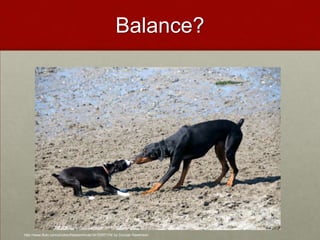
A balance that is admittedly dynamic must be reached between these two opposite sides of the issue.Balance?http://www.flickr.com/photos/thelastminute/3415357174/ by Duncan Rawlinson
What is being done?First better tools and methods are being developed to accurately identify those works that are public domain.
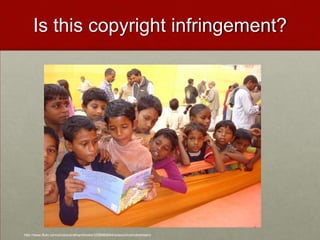
Second, though risky, institutions are beginning to take a chance in using orphan works.Is this copyright infringement? http://www.flickr.com/photos/prathambooks/3258065644/sizes/o/in/photostream/
Material from the InternetCopyright law covers material you find on the internet. To many this is outdated but it takes time to modify the law.
These works may not even have any notice of copyright and still be protected because the law has changed.Yet…By putting something on the internet there is the knowledge that this material will used and shared somehow.
This is an implied limited license.
Also some may choose to provide express licenses by including a Creative Commons license in their works.The role of fair useFair use played an important part in the analog world but its role in its digital counterpart is ambiguous.
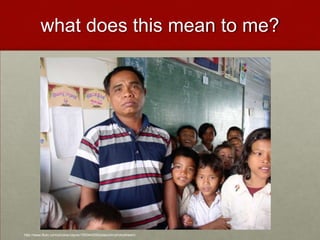
Yet with the addition of implied and express licenses, we as educator can have a broader set of protections for our use in the educational field.what does this mean to me?http://www.flickr.com/photos/cayce/100044359/sizes/o/in/photostream/
First let’s define Fair UseFair use is so hard to define.
But there is hope in great part for the organized efforts yielding for instance Fair Use Best Practices statement and the availability of material with Creative Commons licenses.
Yet we must never lose sight of harsh penalties for infringement.Don’t end up hereA court can award up to $150,000 for each separate act of willful infringement. You will be also liable if you unknowingly broke the law, but the amount will change.
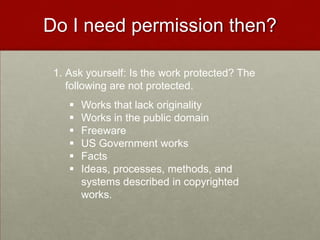
But there is what is called the good faith fair use defense where it states that you acted in belief that you were following the fair use policy.Do I need permission then?Ask yourself: Is the work protected? The following are not protected.Works that lack originality
Works in the public domain
Freeware
US Government works
Facts
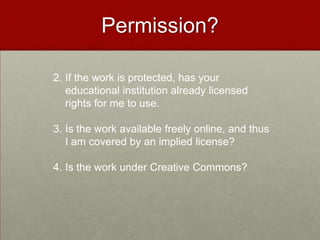
Ideas, processes, methods, and systems described in copyrighted works. If the work is protected, has your educational institution already licensed rights for me to use.Is the work available freely online, and thus I am covered by an implied license?Is the work under Creative Commons?Permission?
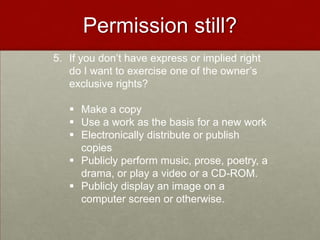
Permission still?If you don’t have express or implied right do I want to exercise one of the owner’s exclusive rights?Make a copy
Use a work as the basis for a new work

Copyright crashcourse conrado gonzalez_634064_v3

  • 1.
    Copyright ©An introductionto Elementary Teachers presented by Conrado Gonzalez
  • 2.
    IntroductionCopyright and users’rights. Hard to define.
  • 3.
    Corporations and librariespartnering to digitalized thousands of works for the public.
  • 4.
    But, copyright lawskeep many of these works unavailable to the public at large.
  • 5.
    A balance thatis admittedly dynamic must be reached between these two opposite sides of the issue.Balance?http://www.flickr.com/photos/thelastminute/3415357174/ by Duncan Rawlinson
  • 6.
    What is beingdone?First better tools and methods are being developed to accurately identify those works that are public domain.
  • 7.
    Second, though risky,institutions are beginning to take a chance in using orphan works.Is this copyright infringement? http://www.flickr.com/photos/prathambooks/3258065644/sizes/o/in/photostream/
  • 8.
    Material from theInternetCopyright law covers material you find on the internet. To many this is outdated but it takes time to modify the law.
  • 9.
    These works maynot even have any notice of copyright and still be protected because the law has changed.Yet…By putting something on the internet there is the knowledge that this material will used and shared somehow.
  • 10.
    This is animplied limited license.
  • 11.
    Also some maychoose to provide express licenses by including a Creative Commons license in their works.The role of fair useFair use played an important part in the analog world but its role in its digital counterpart is ambiguous.
  • 12.
    Yet with theaddition of implied and express licenses, we as educator can have a broader set of protections for our use in the educational field.what does this mean to me?http://www.flickr.com/photos/cayce/100044359/sizes/o/in/photostream/
  • 13.
    First let’s defineFair UseFair use is so hard to define.
  • 14.
    But there ishope in great part for the organized efforts yielding for instance Fair Use Best Practices statement and the availability of material with Creative Commons licenses.
  • 15.
    Yet we mustnever lose sight of harsh penalties for infringement.Don’t end up hereA court can award up to $150,000 for each separate act of willful infringement. You will be also liable if you unknowingly broke the law, but the amount will change.
  • 16.
    But there iswhat is called the good faith fair use defense where it states that you acted in belief that you were following the fair use policy.Do I need permission then?Ask yourself: Is the work protected? The following are not protected.Works that lack originality
  • 17.
    Works in thepublic domain
  • 18.
  • 19.
  • 20.
  • 21.
    Ideas, processes, methods,and systems described in copyrighted works. If the work is protected, has your educational institution already licensed rights for me to use.Is the work available freely online, and thus I am covered by an implied license?Is the work under Creative Commons?Permission?
  • 22.
    Permission still?If youdon’t have express or implied right do I want to exercise one of the owner’s exclusive rights?Make a copy
  • 23.
    Use a workas the basis for a new work

Editor's Notes

  • #4 http://www.flickr.com/photos/thelastminute/3415357174/ by Duncan Rawlinson
  • #6 http://www.flickr.com/photos/prathambooks/3258065644/sizes/o/in/photostream/
  • #7 Now simply putting pen on paper or hitting ‘save’ on your keyboard creates a copyright.
  • #10 http://www.flickr.com/photos/cayce/100044359/sizes/o/in/photostream/
  • #16 http://www.flickr.com/photos/photojonny/2268845904/sizes/l/in/pool-79112418@N00/
  • #20 http://www.flickr.com/photos/mg315/381296439/sizes/o/in/photostream/