University of Central Florida
STARS
STARS
Electronic Theses and Dissertations, 2004-2019
2017
The Coping Assessment for Bereavement and Loss Experiences
(CABLE): Development and Validation
Anne Crunk
University of Central Florida
Part of the Counselor Education Commons, and the Student Counseling and Personnel Services
Commons
Find similar works at: https://stars.library.ucf.edu/etd
University of Central Florida Libraries http://library.ucf.edu
This Doctoral Dissertation (Open Access) is brought to you for free and open access by STARS. It has been accepted
for inclusion in Electronic Theses and Dissertations, 2004-2019 by an authorized administrator of STARS. For more
information, please contact STARS@ucf.edu.
STARS Citation
STARS Citation
Crunk, Anne, "The Coping Assessment for Bereavement and Loss Experiences (CABLE): Development and
Validation" (2017). Electronic Theses and Dissertations, 2004-2019. 5658.
https://stars.library.ucf.edu/etd/5658
THE COPING ASSESSMENT FOR BEREAVEMENT AND LOSS EXPERIENCES
(CABLE): DEVELOPMENT AND VALIDATION
by
A. ELIZABETH CRUNK
M.S. The University of Memphis, 2014
B.A. The University of Memphis, 2011
A dissertation submitted in partial fulfillment of the requirements
for the degree of Doctor of Philosophy
in the College of Education and Human Performance
at the University of Central Florida
Orlando, Florida
Spring Term
2017
Major Professors: E. H. “Mike” Robinson, III, & Haiyan Bai
ii
© 2017 Anne Elizabeth Crunk
iii
ABSTRACT
The loss of a loved one through death is a virtually inescapable part of the human
experience and one that can elicit marked psychological and physical distress on the part
of the survivor. However, not all individuals who lose a loved one cope with their grief in
the same way. Variation in the duration and intensity of grief reactions among mourners
is well supported, with 10-15% of the bereaved population experiencing a protracted,
debilitating, and sometimes life-threatening grief response known as complicated grief
(CG). However, most grievers respond to loss with relative resilience, demonstrating an
ability to sustain reasonably stable and adaptive levels of functioning while grieving the
loss of their loved one. One factor that might distinguish resilient and CG reactions is
differences in the cognitive, behavioral, emotional, social, and spiritual strategies they
use to cope with their distressing grief symptoms. However, prior to this study, an
instrument designed to assess potential constructive strategies for coping with
bereavement had yet to be developed, limiting helping professionals and researchers to
the use of nonspecific measures that assess coping with life stressors in general, rather
than with bereavement, in particular. Therefore, the aim of this study was to construct
and validate the Coping Assessment for Bereavement and Loss Experiences, or CABLE,
an instrument designed to identify which strategies bereaved individuals currently use to
cope with grief following the death of a loved one. The present study followed a mixed-
methods approach to instrument development, incorporating both qualitative (i.e., Phase
1) and quantitative (i.e., Phase 2) approaches with two diverse samples of bereaved adults
(N = 12 for Phase 1 and N = 918 for Phase 2, respectively). Exploratory factor analysis
iv
(EFA) with the initial item pool (n = 89 items) yielded a six-factor, 30-item structure,
which was cross-validated for item selection using confirmatory factor analysis (CFA).
CFA generated a final six-factor, 28-item model of grief coping. The CABLE
demonstrated good internal consistency reliability and provided initial evidence for
convergent and discriminant validity with the present sample. Finally, findings from
hierarchical multiple regression analyses and one-way analysis of variances (ANOVA)
tests shed light on participant demographic and background variables that accounted for
small but significant variance in CABLE scores. Limitations of the present study,
recommendations for future research, and implications for helping professionals and
researchers are discussed.
v
resilience ri-`zil-yen(t)s (noun):
1
The capacity to recover quickly from difficulties; toughness
2
“The personal qualities that enable one to thrive in the face of adversity”
(Connor & Davidson, 2003, p. 76)
I dedicate this dissertation to my mother, Elisa Y. Jones, who is the embodiment of
resilience, and who has taught me how to thrive amid life’s challenges.
vi
ACKNOWLEDGMENTS
A number of individuals have shaped my development as a student and future
counselor educator. My professional journey has led me to mentors who have nurtured
my growth while expecting much of me, leaders in the field who have inspired me, and a
cohort of fellow counselor educators-in-training who have motivated me, broadened my
thinking, and compelled me to reflect on the value of professional relationships. I am
grateful to each of these individuals for the imprint they have left on me as a developing
professional.
However, there are several individuals without whom this journey would not have
been possible. Thus, I wish to first thank my wonderful family, who has provided endless
support as I pursue my goals. Thank you for your faith in me, for your pride in me, and
most of all, for your unconditional and unwavering love. Thank you for encouraging me
to dream big, for loving me even when I fall short, and for being a reminder of what is
most important in life. And thank you so much, Paula, for the countless hours you have
spent proofreading my papers and this dissertation. I am so fortunate to have you as my
aunt and as my friend.
I wish to thank my dissertation chair and mentor, Dr. E. H. “Mike” Robinson, III.
Thank you for supporting me in my professional journey and for being proof that students
truly can grow from mentorship that is grounded in empathy, genuineness, and
unconditional positive regard. You have been a voice of reason, kindness, and humor
throughout this process. I also wish to thank my co-chair, Dr. Haiyan Bai, for sharing
vii
your expertise and for providing a nurturing, approachable learning environment. It is a
pleasure to learn from you. Thank you for seeing your students’ potential and for
encouraging them to succeed. I wish to also thank my committee member, Dr. Sandra
Robinson, for being a source of wisdom and expertise and for being an exemplary
professional role model. I have learned so much from each of you, and I thank you both
for believing in me.
I want to thank my Memphis mentors, Dr. Laurie Burke and Dr. Robert
Neimeyer, whom I met when I was an undergraduate psychology student. My passion for
grief research started with you, where – through your mentorship – I challenged myself to
reflect on the “lessons of loss” and how such lessons have shaped my own life. I am
moved to have you both as members of my dissertation committee nearly eight years later
and am deeply grateful that you have continued walking this path with me. Rather than an
ending, I hope this research marks the beginning of continued collaboration. Thank you
for your mentorship and for your friendship.
Finally, I wish to thank the individuals who participated in this study. The words
and numbers presented on the pages of this dissertation tell your stories of grief, growth,
and resilience. Thank you so much for sharing your experiences with us.
viii
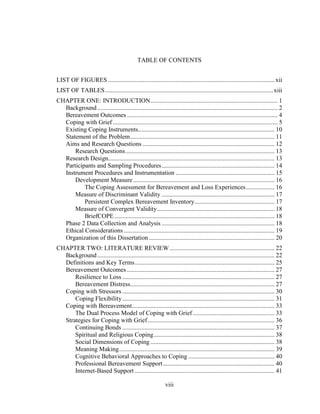
TABLE OF CONTENTS
LIST OF FIGURES ..........................................................................................................xii
LIST OF TABLES...........................................................................................................xiii
CHAPTER ONE: INTRODUCTION................................................................................. 1
Background................................................................................................................... 2
Bereavement Outcomes ................................................................................................ 4
Coping with Grief ......................................................................................................... 5
Existing Coping Instruments....................................................................................... 10
Statement of the Problem............................................................................................ 11
Aims and Research Questions .................................................................................... 12
Research Questions............................................................................................... 13
Research Design.......................................................................................................... 13
Participants and Sampling Procedures........................................................................ 14
Instrument Procedures and Instrumentation ............................................................... 15
Development Measure .......................................................................................... 16
The Coping Assessment for Bereavement and Loss Experiences.................. 16
Measure of Discriminant Validity ........................................................................ 17
Persistent Complex Bereavement Inventory................................................... 17
Measure of Convergent Validity........................................................................... 18
BriefCOPE ...................................................................................................... 18
Phase 2 Data Collection and Analysis ........................................................................ 18
Ethical Considerations ................................................................................................ 19
Organization of this Dissertation ................................................................................ 20
CHAPTER TWO: LITERATURE REVIEW................................................................... 22
Background................................................................................................................. 22
Definitions and Key Terms......................................................................................... 25
Bereavement Outcomes .............................................................................................. 27
Resilience to Loss ................................................................................................. 27
Bereavement Distress............................................................................................ 27
Coping with Stressors ................................................................................................. 30
Coping Flexibility................................................................................................. 31
Coping with Bereavement........................................................................................... 33
The Dual Process Model of Coping with Grief .................................................... 33
Strategies for Coping with Grief................................................................................. 36
Continuing Bonds ................................................................................................. 37
Spiritual and Religious Coping............................................................................. 38
Social Dimensions of Coping ............................................................................... 38
Meaning Making................................................................................................... 39
Cognitive Behavioral Approaches to Coping ....................................................... 40
Professional Bereavement Support....................................................................... 40
Internet-Based Support ......................................................................................... 41
ix
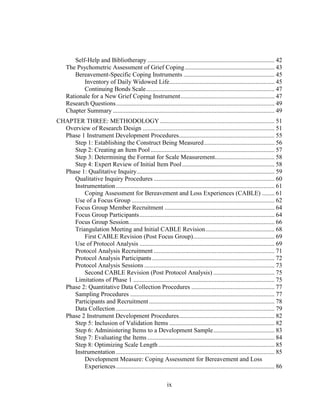
Self-Help and Bibliotherapy ................................................................................. 42
The Psychometric Assessment of Grief Coping ......................................................... 43
Bereavement-Specific Coping Instruments .......................................................... 45
Inventory of Daily Widowed Life................................................................... 45
Continuing Bonds Scale.................................................................................. 47
Rationale for a New Grief Coping Instrument............................................................ 47
Research Questions..................................................................................................... 49
Chapter Summary ....................................................................................................... 49
CHAPTER THREE: METHODOLOGY ......................................................................... 51
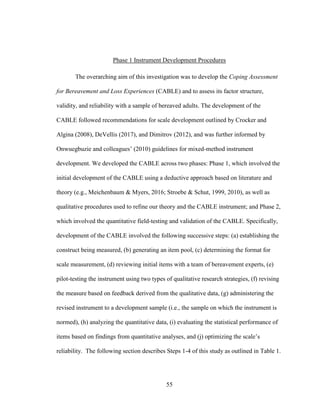
Overview of Research Design .................................................................................... 51
Phase 1 Instrument Development Procedures............................................................. 55
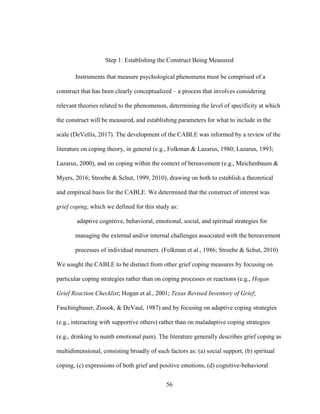
Step 1: Establishing the Construct Being Measured............................................. 56
Step 2: Creating an Item Pool............................................................................... 57
Step 3: Determining the Format for Scale Measurement...................................... 58
Step 4: Expert Review of Initial Item Pool........................................................... 58
Phase 1: Qualitative Inquiry........................................................................................ 59
Qualitative Inquiry Procedures ............................................................................. 60
Instrumentation ..................................................................................................... 61
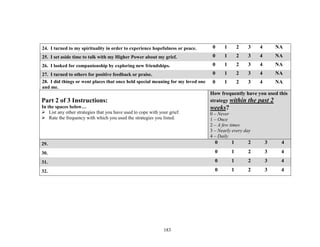
Coping Assessment for Bereavement and Loss Experiences (CABLE) ........ 61
Use of a Focus Group ........................................................................................... 62
Focus Group Member Recruitment ...................................................................... 64
Focus Group Participants...................................................................................... 64
Focus Group Session............................................................................................. 66
Triangulation Meeting and Initial CABLE Revision............................................ 68
First CABLE Revision (Post Focus Group).................................................... 69
Use of Protocol Analysis ...................................................................................... 69
Protocol Analysis Recruitment ............................................................................. 71
Protocol Analysis Participants .............................................................................. 72
Protocol Analysis Sessions ................................................................................... 73
Second CABLE Revision (Post Protocol Analysis) ....................................... 75
Limitations of Phase 1 .......................................................................................... 75
Phase 2: Quantitative Data Collection Procedures ..................................................... 77
Sampling Procedures ............................................................................................ 77
Participants and Recruitment................................................................................ 78
Data Collection ..................................................................................................... 79
Phase 2 Instrument Development Procedures............................................................. 82
Step 5: Inclusion of Validation Items ................................................................... 82
Step 6: Administering Items to a Development Sample....................................... 83
Step 7: Evaluating the Items ................................................................................. 84
Step 8: Optimizing Scale Length .......................................................................... 85
Instrumentation ..................................................................................................... 85
Development Measure: Coping Assessment for Bereavement and Loss
Experiences..................................................................................................... 86
x
Measure of Convergent Validity..................................................................... 87
BriefCOPE .................................................................................................. 87
Measure of Discriminant Validity .................................................................. 87
Persistent Complex Bereavement Inventory............................................... 87
Phase 2 Aims and Research Questions....................................................................... 88
Research Questions............................................................................................... 89
Chapter Summary ....................................................................................................... 89
CHAPTER FOUR: RESULTS ......................................................................................... 90
Sampling and Data Collection .................................................................................... 90
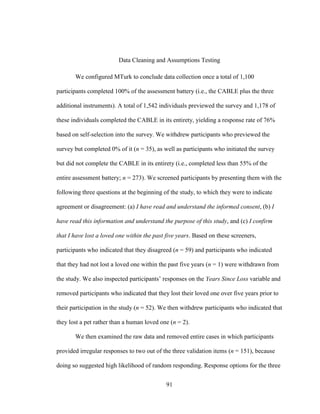
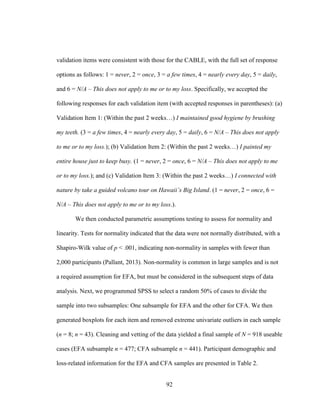
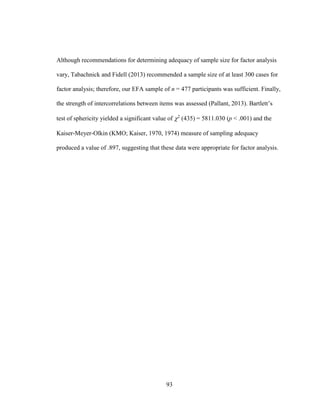
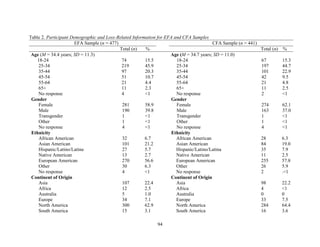
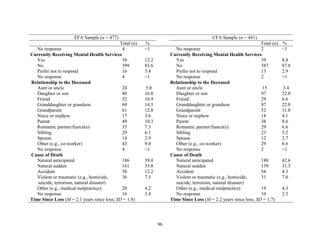
Data Cleaning and Assumptions Testing.............................................................. 91
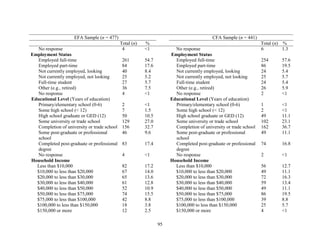
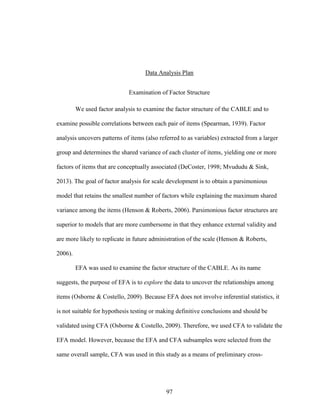
Data Analysis Plan...................................................................................................... 97
Examination of Factor Structure........................................................................... 97
Reliability and Validity......................................................................................... 98
Additional Correlational Analyses........................................................................ 98
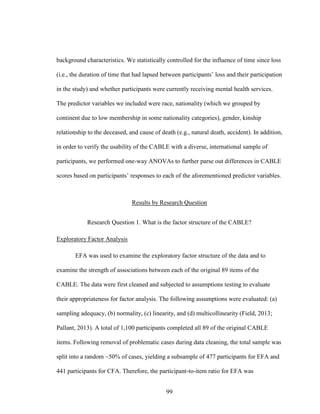
Results by Research Question..................................................................................... 99
Research Question 1. What is the factor structure of the CABLE?...................... 99
Exploratory Factor Analysis ........................................................................... 99
Confirmatory Factor Analysis....................................................................... 112
Preliminary CFA Model ............................................................................... 112
Final CFA Model .......................................................................................... 115
Research Question 2. What is the internal consistency of the CABLE and each of
its individual factors?.......................................................................................... 119
Reliability in the EFA Subsample................................................................. 119
Reliability in the CFA Sample...................................................................... 120
Research Question 3. With respect to convergent validity, what is the relation
between the CABLE and the BriefCOPE (Carver, 1997)?................................. 121
Research Question 4. With respect to discriminant validity, what is the relation
between the CABLE and the Persistent Complex Bereavement Inventory (PCBI;
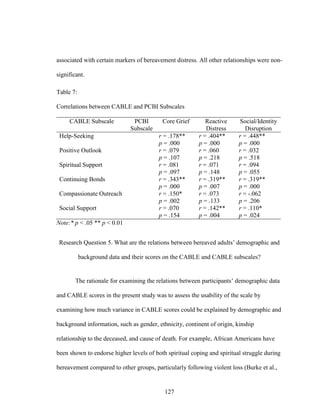
Lee, 2015)? ......................................................................................................... 124
Research Question 5. What are the relations between bereaved adults’
demographic and background data and their scores on the CABLE and CABLE
subscales?............................................................................................................ 127
Background Predictors and CABLE Total Score ......................................... 129
Background Predictors and CABLE Factor 1. Help-Seeking....................... 132
Background Predictors and CABLE Factor 2. Positive Outlook.................. 133
Background Predictors and CABLE Factor 3. Spiritual Support ................. 134
Background Predictors and CABLE Factor 4. Continuing Bonds ............... 136
Background Predictors and CABLE Factor 5. Compassionate Outreach..... 137
Background Predictors and CABLE Factor 6. Social Support..................... 138
Chapter 4 Summary .................................................................................................. 139
CHAPTER FIVE: DISCUSSION................................................................................... 140
Introduction and Rationale for the Present Study..................................................... 140
Method...................................................................................................................... 142
xi
Research Questions................................................................................................... 144
Discussion of the Findings........................................................................................ 145
Factor Structure of the CABLE .......................................................................... 145
Internal Consistency Reliability of the CABLE ................................................. 147
Convergent and Discriminant Validity............................................................... 148
Demographic Factors and CABLE Scores ......................................................... 151
Limitations................................................................................................................ 154
Phase 1 Limitations............................................................................................. 154
Phase 2 Limitations............................................................................................. 155
Recommendations for Future Research.................................................................... 157
Implications............................................................................................................... 159
Chapter Five Summary ............................................................................................. 161
APPENDIX A: UNIVERSITY OF CENTRAL FLORIDA INSTITUTIONAL REVIEW
FORM PHASE I ............................................................................................................. 162
APPENDIX B: UNIVERSITY OF CENTRAL FLORIDA INSTITUTIONAL REVIEW
FORM PHASE II............................................................................................................ 164
APPENDIX C: QUALTRICS EXPLANATION OF STUDY AND INFORMED
CONSENT...................................................................................................................... 166
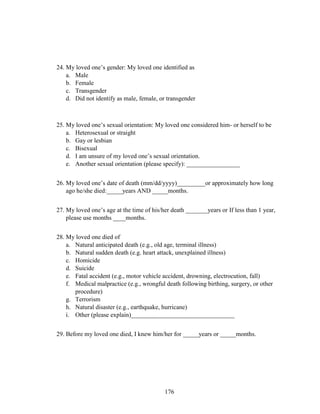
APPENDIX D: PARTICIPANT DEMOGRAPHIC AND BACKGROUND
INFORMATION QUESTIONNAIRE ........................................................................... 171
APPENDIX E: THE COPING ASSESSMENT FOR BEREVEMENT AND LOSS
EXPERIENCES (CABLE)............................................................................................. 178
APPENDIX F: MEASURE OF DISCRIMINANT VALIDITY.................................... 185
APPENDIX G: MEASURE OF CONVERGENT VALIDITY ..................................... 187
APPENDIX H: FOCUS GROUP SCRIPT..................................................................... 189
APPENDIX I: PROTOCOL ANALYSIS SCRIPT........................................................ 192
REFERENCES ............................................................................................................... 195
xii
LIST OF FIGURES
Figure 1. Diagram of Exploratory, Mixed-Methods, Quantitative-Dominant, Sequential
Design (adapted from Creswell, 2014; Morse, 1991)....................................................... 61
Figure 2. Interface of MTurk Worker Portal .................................................................... 81
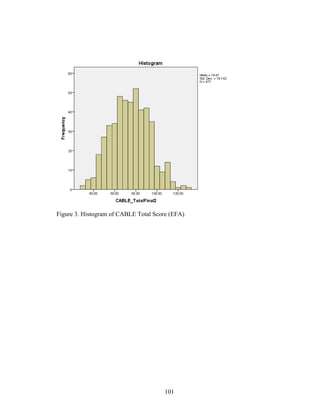
Figure 3. Histogram of CABLE Total Score (EFA)....................................................... 101
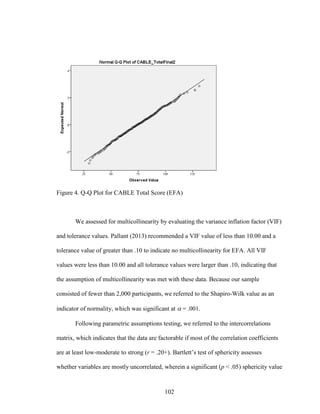
Figure 4. Q-Q Plot for CABLE Total Score (EFA)........................................................ 102
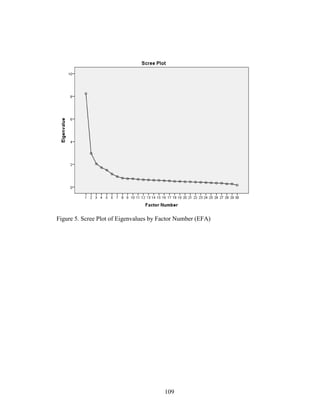
Figure 5. Scree Plot of Eigenvalues by Factor Number (EFA) ...................................... 109
Figure 6. Initial CFA Structure (Six factors, 30 items)................................................... 114
Figure 7. Final CFA Structure (Six factors, 28 items).................................................... 116
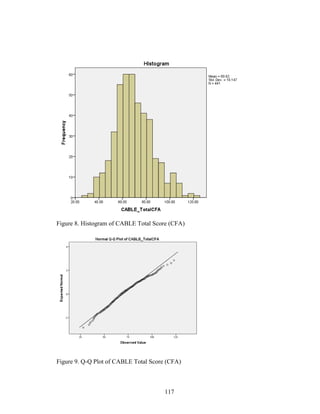
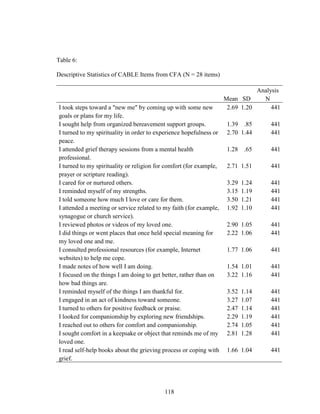
Figure 8. Histogram of CABLE Total Score (CFA)....................................................... 117
Figure 9. Q-Q Plot of CABLE Total Score (CFA) ......................................................... 117
Figure 10. Scatterplot of CABLE Total Score and BriefCOPE Five-Factor Totals....... 123
Figure 11. Scatterplot of CABLE Total Score (with negatively correlated subscales
reverse-scored) and PCBI Total Score............................................................................ 126
xiii
LIST OF TABLES
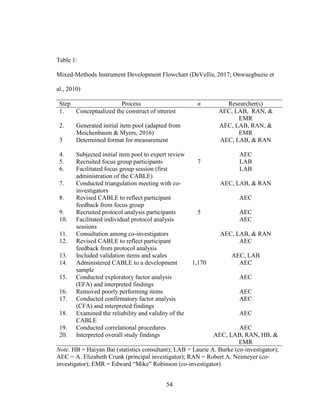
Table 1: Mixed-Methods Instrument Development Flowchart (DeVellis, 2017;
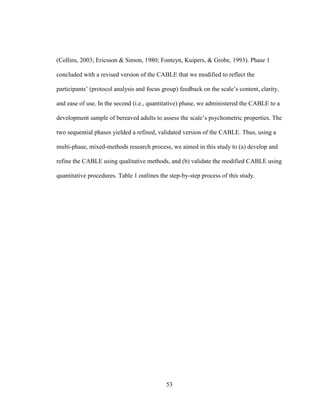
Onwuegbuzie et al., 2010) ................................................................................................ 54
Table 2: Communalities of CABLE Items (EFA) .......................................................... 105
Table 3: CABLE Pattern Matrix (EFA).......................................................................... 106
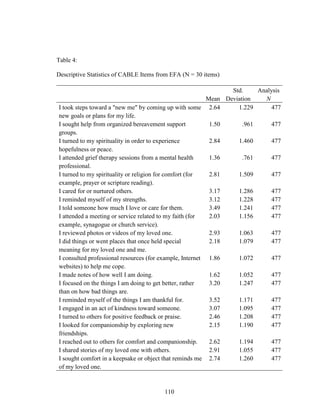
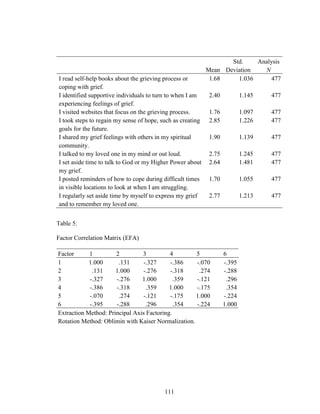
Table 4: Descriptive Statistics of CABLE Items from EFA (N = 30 items) .................. 110
Table 5: Factor Correlation Matrix (EFA)...................................................................... 111
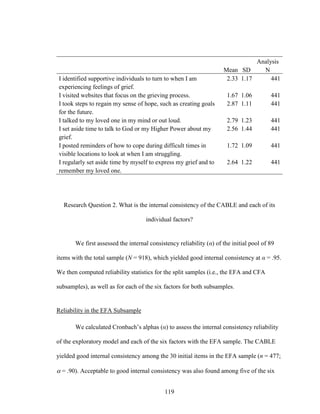
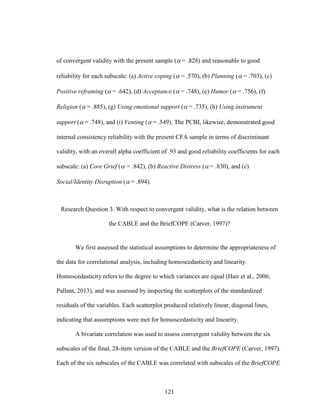
Table 6: Descriptive Statistics of CABLE Items from CFA (N = 28 items) .................. 118
Table 7: Correlations between CABLE and PCBI Subscales......................................... 127
1
CHAPTER ONE: INTRODUCTION
The loss of a loved one through death is a universal human experience that can
elicit heightened psychological and physical distress on the part of the survivor (Stroebe,
Schut, & Stroebe, 2007). However, not all bereaved individuals cope with loss in the
same way (Bonanno, 2004). Prior research has revealed considerable variation in the
duration and intensity of grief reactions among bereaved individuals (Bonanno et al.,
2002), with 10-15% of the bereaved population experiencing a protracted, debilitating,
sometimes life-threatening grief response known as complicated grief (CG; Prigerson et
al., 2009; Shear et al., 2011). Other grievers experience common reactions to grief, with
grief symptoms that attenuate within one to two years following loss (Bonanno et al.,
2004). However, most grievers (i.e., approximately 50%) respond to loss with resilience,
demonstrating an ability to sustain reasonably stable and adaptive levels of functioning in
response to loss (Bonanno, 2004).
One factor that might distinguish bereaved individuals’ grief reactions is how they
cope with their grief (Meichenbaum & Myers, 2016), or the “processes, strategies, or
styles of managing the situation in which bereavement places the individual” (Stroebe &
Schut, 2010, p. 274). For example, previous studies indicate that individuals who are able
to make meaning of their loss experience greater resilience and posttraumatic growth
compared to those who struggle to make sense of their loss (Bonanno, Wortman, &
Nesse, 2004; Currier, Holland, & Neimeyer, 2006; Davis, Nolen-Hoeksema, & Larson,
1998). Other studies indicate that certain aspects of social support are associated with
adaptive bereavement outcomes (e.g., physical assistance; Bottomley, Burke, &
2
Neimeyer, 2015; Burke, Neimeyer, & McDevitt-Murphy, 2010). However, the empirical
literature on the specific cognitive, behavioral, emotional, social, and spiritual strategies
that bereaved individuals find helpful in coping with loss is relatively scarce, providing
helping professionals little guidance for developing personalized interventions to use with
clients presenting with grief and for assessing the usefulness of such interventions.
Furthermore, there is a dearth of bereavement-specific instruments designed to identify
the strategies that bereaved individuals use to cope with loss, limiting researchers to using
nonspecific measures that assess coping with life stressors in general, rather than with
bereavement, in particular. Thus, the purpose of this research is to investigate strategies
for coping during bereavement, with the aim of uncovering a comprehensive range of
strategies that bereaved individuals engage in to cope with their grief, and to identify
which ones they use with the greatest frequency. Specifically, the overarching aim of this
study is to develop and obtain initial validation for the Coping Assessment for
Bereavement and Loss Experiences (CABLE), an innovative instrument for identifying
the strategies mourners use to cope following loss.
Background
Contrary to many traditional bereavement models that conceptualize grief as a
stepwise, uniform process that is experienced similarly by the majority of grievers,
contemporary research indicates that grief is an idiosyncratic experience that can vary
considerably between individuals in terms of symptom type, intensity, and duration. Grief
is the psychological reaction to loss, consisting of feelings, thoughts, and behaviors
3
related to the deceased or to the loss event, the intensity and duration of which fall on a
continuum that ranges from common grief to complicated grief (Holland, Neimeyer,
Boelen, & Prigerson, 2009; Horowitz et al., 1993). Acute grief, however, refers to the
distressing initial reaction to the loss, during which time the griever might experience
shock, disbelief, anguish, sadness, anxiety, guilt, anger, and longing and yearning for the
deceased, among other responses (Simon, 2013; Zisook & Shear, 2009). Although
individuals with CG often experience the same symptoms as those with acute grief, it is
the high intensity and lengthy duration of symptoms that differentiate these responses to
loss (Crunk, Burke, & Robinson, 2017).
Acute grief is not only a period in which the griever experiences preoccupation
with distressing thoughts and feelings related to the loss, but also is a period in which the
griever attempts to face the reality of the loss and to rebuild his or her life in the absence
of the deceased loved one (Stroebe & Schut, 1999). When acute grief follows this natural,
adaptive process, it is generally followed by integrated grief, in which the griever begins
to incorporate the loss into his or her life narrative in pursuit of restorative movement
toward living life without the deceased (Shear, 2012).
When viewing grief on a continuum with common grief on one end, at the
extreme other end of the continuum is CG. CG occurs when the path to integrated grief is
blocked, resulting in profound and chronic distress associated with the loss (Shear, 2012;
Simon, 2013). As CG is one of the foci of this study, it is important to note that several
terms have been used to categorize this response to loss, including prolonged grief,
traumatic grief and, more recently, persistent complex bereavement disorder (American
4
Psychiatric Association, 2013). However, in the present dissertation, this condition will
be referred to as complicated grief (CG) to remain consistent with the bulk of the extant
literature.
Bereavement Outcomes
Losing a loved one is a common and often highly distressing life event, and no
one path of grieving is considered “normal.” Studies indicate that most bereaved
individuals go on to exhibit resilience following loss (Bonanno, 2004), with grief
symptoms that attenuate naturally within a few months following the loss and most often
within one to two years (Bonanno & Kaltman, 2001). However, the remaining grievers
experience clinically significant distress in response to loss. Furthermore, a subset of
bereaved individuals experience CG (Shear et al., 2011), a chronic and immobilizing
grief response that is associated with significant impairment severe enough to lead to
long-term psychological and physical distress if not treated (McDevitt-Murphy,
Neimeyer, Burke, Williams, & Lawson, 2012; Ott, Sanders, & Kelber, 2007).
The factors that distinguish resilient and complicated grievers are numerous,
multifaceted, and sometimes difficult to identify. In a review of the empirical literature
on risk factors for CG, Burke and Neimeyer (2012) identified several factors that have
been shown to prospectively predict CG, including variables that preceded the loss (e.g.,
kinship to the deceased), stable traits and characteristics of the survivor (e.g.,
demographic factors, such as gender), and interpersonal factors (e.g., social support).
Although strikingly understudied and, therefore, poorly understood, an additional factor
5
that might differentiate resilient and complicated grievers is the strategies they use to
cope with their grief (Meichenbaum & Myers, 2016). Unfortunately, however, there is a
paucity of research on strategies that bereaved individuals use to cope with their grief,
generally, and even less on the factors that moderate the relation between grief coping
and bereavement outcome, specifically (e.g., race/ethnicity, attachment style, type of loss;
Stroebe, Folkman, Hansson, & Schut, 2006). Thus, further investigation of what
distinguishes these groups of survivors in order to gain a more comprehensive
understanding of what bereaved individuals do to cope with grief, and to assist helping
professionals in developing informed treatment interventions is warranted.
Coping with Grief
Coping refers to one’s “constantly changing cognitive and behavioral efforts to
manage specific external and/or internal demands that are appraised as taxing or
exceeding one’s resources” (Folkman, Lazarus, Dunkel-Schetter, DeLongis, & Gruen,
1986, p. 993). For individuals who have lost a loved one, Stroebe and Schut’s (1999;
2010) Dual Process Model of grieving suggests that coping with bereavement resembles
the movement of a pendulum, such that when the grief process works well, mourners
function within a natural oscillating motion of both attending to their grief (i.e., loss
orientation) and adjusting to life without the deceased (i.e., restoration orientation). Both
the loss-oriented and restoration-oriented processes involve cognitive, behavioral,
emotional, social, and spiritual strategies that bereaved individuals engage in to manage
the stress associated with each process. For example, grievers who are positioned in loss
6
orientation might attend to their feelings of grief by creating a memorial for the deceased
or by finding comfort in looking at old photos of their loved one. When grievers vacillate
toward the restoration orientation, coping strategies shift to adjusting to their changed
lives without the deceased, which might involve taking on tasks that were previously
carried out by the deceased (e.g., paying bills, housework) or by forming new
relationships with others (Stroebe & Schut, 1999).
The extant literature points to a selection of general coping domains that
individuals tap into for support following bereavement and other highly distressing
events. For example, Meichenbaum (2013) examined approaches for bolstering resilience
following trauma and classified coping strategies into six general categories, including
physical, interpersonal, emotional, cognitive, behavioral, and spiritual coping.
Furthermore, Asai et al. (2012) examined the coping strategies of bereaved spouses (N =
821) and found that coping strategies yielded three factor structures, including distraction
(e.g., engaging in physical activity), continuing bonds (e.g., keeping possessions of the
deceased nearby), and social sharing/reconstruction (e.g., seeking emotional support
from family members). Asai and colleagues’ (2012) study is one of the few to explore the
range of strategies for coping with grief, offering an important contribution to the
bereavement literature. However, their study was confined to a predominantly Japanese
sample of spouses of cancer patients (Asai et al., 2012), leaving a need for additional
research examining the coping strategies of a demographically diverse sample of grievers
who are bereaved by both natural and violent (i.e., by homicide, suicide, or fatal accident)
means. Furthermore, their study did not aim to develop an instrument for assessing
7
strategies for coping with grief, but rather to classify grief coping strategies by
identifying their factor structures (Asai et al., 2012). Thus, the present study aimed to
build on their work by developing an instrument that reflects the grief coping strategies of
a diverse, international sample of individuals who are bereaved by both natural and
violent causes. Such an instrument potentially has the capability to function as both an
assessment tool for evaluating the strategies that bereaved individuals use to cope with
their grief, as well as an intervention tool for informing treatment. Furthermore, the
current study sought to examine cross-sectional associations between endorsed coping
strategies and level of bereavement distress (i.e., CG), allowing counselors and
researchers to make provisional inferences about coping strategies that might yield
positive bereavement outcomes.
The current bereavement coping literature is perhaps most developed in the areas
of social support (Bottomley et al., 2015; Stroebe, Zech, Stroebe, & Abakoumkin, 2005),
spiritual coping (Burke & Neimeyer, 2014; Burke, Neimeyer, McDevitt-Murphy,
Ippolito, & Roberts, 2011; Burke, Neimeyer, Young, Piazza Bonin, & Davis, 2014; Hays
& Hendrix, 2008; Wortmann & Park, 2008), meaning making (Currier et al., 2006;
Lichtenthal, Burke, & Neimeyer, 2011; Neimeyer, 2016a), and cognitive behavioral
coping strategies (Boelen, de Keijser, van den Hout, & van den Bout, 2007).
Furthermore, a notable contribution to the grief literature is the notion that successful
adjustment to loss can include an ongoing attachment to the deceased rather than the
relinquishment of this relationship (Field, 2008) – a perspective known as maintaining a
continuing bond (Klass, Silverman, & Nickman, 1996). Research on continuing bonds
8
has brought about the development of clinical interventions and strategies that bereaved
individuals use to maintain a continuing bond with the deceased, as well as research on
identifying populations for whom maintaining such an attachment is more or less helpful
in adapting to the loss of a loved one (Field, Gal-Oz, & Bonanno, 2003).
Although there is evidence for several strategies that have been shown to aid
grievers in adapting to loss, the literature simultaneously reveals that these coping
strategies can act as double-edged swords, proving to be helpful for some grievers under
certain circumstances, yet associated with deleterious outcomes for other grievers under
different circumstances. For example, although many bereaved persons turn to religion
and spirituality for sources of strength and coping, not all spiritually inclined grievers
find comfort in their faith following loss and, in fact, might go on to experience a rupture
in their relationship with God and/or their spiritual community, a phenomenon known as
complicated spiritual grief (Burke et al., 2014; Burke & Neimeyer, 2014). Spiritual
coping is generally related to positive adjustment in bereavement (Wortmann & Park,
2008); however, some spiritually inclined individuals experience a crisis of faith
following loss, particularly when they are bereaved by violent means (Burke &
Neimeyer, 2014).
Use of social support as a factor in coping with grief presents a similar paradox,
with studies indicating that social support can serve as a protective factor against poor
bereavement outcome in some cases, but can exacerbate grief in others. For example,
Burke, Neimeyer, and McDevitt-Murphy (2010) examined the relation between social
support and bereavement outcome in a sample of African Americans bereaved by
9
homicide (N = 54) and found that some aspects of social support were related to lower
bereavement distress (i.e., CG, PTSD, depression). However, the number of negative or
conflicted relationships in the survivor’s social network was positively associated with
both CG and PTSD, and anticipated negative relationships were associated with higher
levels of depression. Bottomley and colleagues’ (2015) longitudinal study sought to
identify specific aspects of social support that predicted positive bereavement outcomes
in the same sample of homicidally bereaved African Americans (N = 47). Findings
generally highlighted the role of social support in facilitating the bereavement experience,
especially when the support is viewed by the bereaved individual as satisfying and
needed. Findings from both studies (Bottomley et al., 2015; Burke et al., 2010) suggest
that certain aspects of social support (e.g., instrumental support in the form of physical
assistance) can serve as a buffer against poor bereavement outcome, but that relationships
viewed by mourners as negative – even when intended to be helpful by the would-be
supporters – tend to predict intensified bereavement distress.
The bereavement literature suggests that the loss of a loved one often compels the
griever to draw on both internal and external resources for coping with grief. Although
prior studies have investigated how particular types of coping relate to bereavement
outcomes, few studies have sought to gain a comprehensive understanding of what
bereaved individuals do to cope with their grief. Thus, the present study aims to develop
an instrument that can be used to identify the range of coping strategies bereaved
individuals use following loss, so that the adaptiveness of these strategies in particular
10
circumstances of loss, for particular mourners, or at different points in bereavement can
be evaluated in subsequent research.
Existing Coping Instruments
Studies on grief coping aim to evaluate the cognitive, behavioral, emotional,
social, and spiritual strategies that bereaved individuals use in order to manage their grief.
However, in general, bereavement studies that do assess coping following loss do so
using a handful of researcher-selected items that are evaluated in relation to bereavement
distress instruments (e.g., high levels of negative religious coping are correlated with
high CG). Other bereavement studies are limited to using nonspecific instruments that
were designed to assess coping in the context of general life stressors as opposed to
bereavement, including, but not limited to, the BriefCOPE (Carver, 1997) and the Coping
Inventory for Stressful Situations (CISS; Endler & Parker, 1990). Thus, few instruments
have been developed to assess grief-specific coping strategies. The two exceptions we
identified are the Inventory of Daily Widowed Life (IDWL; Caserta & Lund, 2007),
which was designed to assess the frequency with which bereaved spouses engage in
thoughts and behaviors that reflect the Dual Process Model of coping with bereavement
(Stroebe & Schut, 1999; 2010), and the Continuing Bonds Scale (Field et al., 2003). A
more thorough review of existing coping instruments that are relevant to the present
study is provided in Chapter Two of this dissertation.
Although there are several existing nonspecific instruments for assessing coping
in distressed populations, there is a dearth of bereavement-specific instruments designed
11
to identify the strategies that bereaved individuals use to cope with grief. Such a tool is
necessary to inform helping professionals and researchers in developing and evaluating
interventions for assisting clients who present with issues of debilitating loss and grief, as
well as for grievers themselves who might benefit from such a tool for self-monitoring
and self-managing of their grief. Thus, the aim of this study was to develop an innovative
measure for assessing the coping strategies that individuals use following the death of a
loved one.
Statement of the Problem
The loss of a loved one through death is a ubiquitous and often distressing
experience for the survivor (Stroebe et al., 2007). Prior research indicates that the
intensity and duration of grief reactions can vary dramatically among bereaved
individuals (Bonanno et al., 2002), with 10-15% of grievers experiencing profound,
unremitting, and sometimes life-threatening bereavement distress known as CG
(Prigerson et al., 2009; Shear et al., 2011). However, most bereaved individuals respond
to loss resiliently, with symptoms of grief that subside within one to two years of their
loss (Bonanno & Kaltman, 2001). One factor that might differentiate bereaved
individuals’ grief reactions is the strategies they use to cope with their grief
(Meichenbaum & Myers, 2016). However, few studies have investigated the specific
strategies that individuals find helpful in coping during bereavement, providing helping
professionals with little direction for informing treatment of grieving clients.
12
Although clinical intervention is generally indicated for individuals with CG, the
majority of grievers are able to adjust to loss without professional support (Currier,
Neimeyer, & Berman, 2008), suggesting that bereaved individuals benefit from turning to
internal and external resources to cope with their grief. Even so, grief is a common
presenting issue for clients seeking counseling, and one that often surfaces concurrently
with other comorbidities and life stressors (Crunk et al., 2017). Furthermore, the demand
for grief counseling is expected to rise as individuals of the “baby boom” generation
experience successive losses (Maples & Abney, 2006). Understanding what bereaved
individuals find helpful in managing their grief could provide helping professionals with
valuable information for developing and evaluating treatment. However, the shortage of
bereavement-specific instruments designed to evaluate strategies for coping with grief
impedes the advancement of research in this area. Thus, the primary aim of this study
was to develop an innovative scale for identifying strategies that bereaved individuals use
to cope with their grief.
Aims and Research Questions
The overarching aim of this study was to examine the psychometric properties of
the Coping Assessment for Bereavement and Loss Experiences (CABLE; see Appendix
E) in an international sample of bereaved adults. Prior studies on grief coping strategies
point to several coping domains that bereaved individuals turn to in order to manage their
grief, including social support, spirituality, and meaning making, among others. Thus, we
hypothesized that the CABLE would yield a multidimensional factor structure of grief
13
coping strategies that reflects these domains. However, because of the exploratory nature
of developing a new grief coping measure, specific hypotheses about the factor structure
of the model were not proposed (Mvududu & Sink, 2013).
Research Questions
The present study aims to investigate the following research questions, all with an
international sample of bereaved adults:
1. What is the overall factor structure of items on the CABLE?
2. What is the internal consistency of the CABLE scale and its individual factors?
3. With respect to convergent validity, what is the relation between the CABLE and
the BriefCOPE (Carver, 1997)?
4. With respect to discriminant validity, what is the relation between the CABLE
and the Persistent Complex Bereavement Inventory (PCBI; Lee, 2015)?
5. What are the relations between CABLE scores and reported demographic and
background data?
Research Design
The focus of this research was on the development and the initial testing of the
validity of the CABLE scale with a diverse sample of bereaved adults. The present study
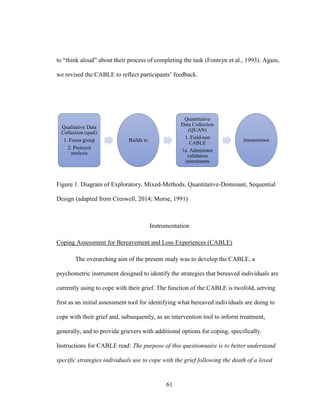
followed an exploratory, sequential, mixed-methods design consisting of both qualitative
and quantitative research methodologies (Creswell, 2014). The purpose of using a mixed-
methods design in the present study was to pilot-test the CABLE and to enhance its
14
content validity and ease-of-use prior to administering it to a development sample (i.e.,
the sample with whom the CABLE was normed). Quantitative analyses were
correlational, in which relations between variables were examined without manipulation
(Gall, Gall, & Borg, 2007). Thorough descriptions of the qualitative (Phase 1) and
quantitative (Phase 2) procedures are presented in Chapter Three of this dissertation.
Participants and Sampling Procedures
In order to participate in this study, participants must have been: (a) bereaved
(i.e., lost a human loved one through death) within the past five years, (b) able to read
English, and (c) 18 years of age or older. Phase 1 data collection involved two distinct
qualitative approaches: A focus group and protocol analysis. Focus group participants (N
= 7) were bereaved adults who were diverse with respect to age, gender, and type of loss.
Protocol analysis (N = 5) participants were bereaved graduate students who were diverse
with respect to race/ethnicity, gender, and type of loss.
Phase 2 data were collected through online survey administration using Amazon’s
Mechanical Turk (MTurk), a site that functions as a Web-based tool for participant
recruitment and data collection (Buhrmester, Kwang, & Gosling, 2011). Buhrmester and
colleagues (2011) found that MTurk participants are somewhat more demographically
diverse than standard Internet and college samples and that data obtained from MTurk
demonstrate comparable reliability to data obtained through traditional data collection
methods. Participants received monetary compensation of $0.50 for their participation in
this study, as well as a list of resources on grief coping and education. Although
15
recommendations regarding the appropriate sample size for analyzing the factor structure
of a scale (i.e., factor analysis) vary among methodologists, in general, the sample size
should be proportionate to the number of items included in the scale. For the present
study, we aimed to obtain a sample of 1,100 participants in order to subsequently split the
sample in half to conduct exploratory factor analysis (EFA) and confirmatory factor
analysis (CFA). Although a sample size of 400-500 participants is lower than
recommended for EFA, it is still considered sufficient (Comrey, 1973; 1988).
Instrument Procedures and Instrumentation
The present research investigation involved developing the CABLE instrument
and examining its psychometric properties. We also developed a general demographic
form (see Appendix D) for bereaved individuals that was administered with the CABLE
to obtain relevant background information from participants to use in our analyses.
Recruitment took place following approval from the university’s Institutional Review
Board (IRB).
Development of the CABLE followed DeVellis’s (2017) recommendations for
scale development, which involve the following successive steps: (a) determining clearly
what will be measured, (b) generating an item pool, (c) determining the format for scale
measurement, (d) having initial items reviewed by experts in the content area, (e)
considering inclusion of additional items for validation, (f) administering the instrument
to a development sample, (g) evaluating the items based on findings from statistical
analyses, and (h) optimizing the length of the scale.
16
Four instruments were used in this study: (a) the CABLE (see Appendix E), (b) a
demographics questionnaire (see Appendix D), (c) one instrument for assessing
discriminant validity (i.e., the absence of association between measures of constructs that
are not related; DeVellis, 2017; see Appendix F), and (d) one instrument for assessing
convergent validity (i.e., the degree of association between measures of constructs that
are theoretically related; DeVellis, 2017; see Appendix G). The following section
provides a brief description of each instrument. More comprehensive descriptions of the
instruments used in the present study are provided in Chapter Three of this dissertation.
Development Measure
The Coping Assessment for Bereavement and Loss Experiences
The overarching aim of the present study was to develop the Coping Assessment
for Bereavement and Loss Experiences (CABLE), a psychometric instrument that was
designed to identify the strategies that bereaved individuals are currently using to cope
with their grief. The function of the CABLE is twofold, serving first as an initial
assessment tool for identifying what bereaved individuals are doing to cope with their
grief and, subsequently, as an intervention tool to inform treatment and to provide
grievers with additional ideas for coping. The item content was developed, in part, from
Meichenbaum and Myers’ (2016) checklist of strategies for coping with loss and
traumatic events and was modified using the following strategies: (a) thorough review of
the bereavement and coping literature, (b) consultation with experts in the field of grief
research and grief counseling and with professional counselors who have experience in
17
scale development, and (c) qualitative feedback from bereaved individuals who
participated in Phase 1 of the present study (see Chapter Three for a description of
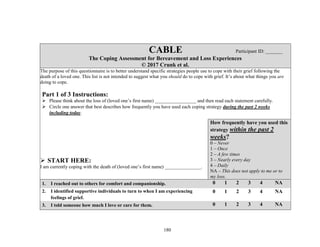
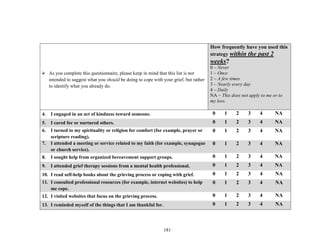
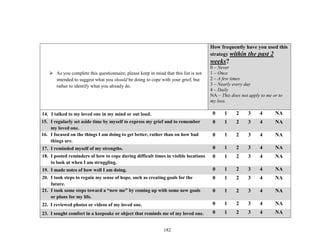
procedures). The initial item pool included 89 items with Likert-type response options
that were rated on a 5-point scale ranging from 0 (Never) to 4 (Daily). Sample items
included I shared my feelings of grief with others in my spiritual community and I
attended grief therapy sessions from a mental health professional. The CABLE also
included eight open-response items for participants to write in other strategies they have
used to cope with grief. The CABLE was administered with a demographics
questionnaire to capture background information about the participant (e.g., gender, age,
nationality, relationship to the deceased), as well as relevant information about the
participant’s bereavement and deceased loved one (e.g., cause of death, time since loss).
Measure of Discriminant Validity
Persistent Complex Bereavement Inventory
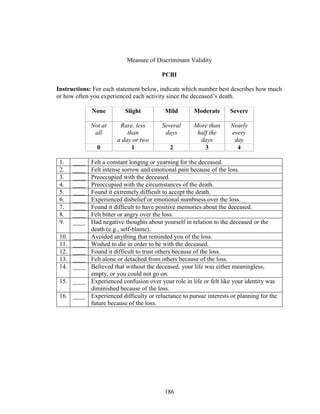
The Persistent Complex Bereavement Inventory (PCBI; Lee, 2015) was designed
to assess symptoms of bereavement distress (e.g., CG) that correspond with criteria for
persistent complex bereavement disorder (PCBD), a condition that was included in the
“Conditions for Further Study” section of the Diagnostic and Statistical Manual of
Mental Disorders (5th ed.; DSM-5; American Psychiatric Association, 2013). The PCBI
is a 16-item measure rated on a 5-point Likert-type scale ranging from 0 (none; not at all)
to 4 (severe; nearly every day) and consists of three subscales (i.e., Core Grief, Reactive
Distress, and Social/Identity Disruption), each of which have shown adequate to high
18
internal consistency (α = .82, α = .83, and α = .91, respectively). The total scale has also
demonstrated high reliability in two distinct trials of bereaved college students (αs = .92).
Representative items include, “[I] felt a constant longing or yearning for the deceased,”
and, “[I] found it extremely difficult to accept the death.”
Measure of Convergent Validity
BriefCOPE
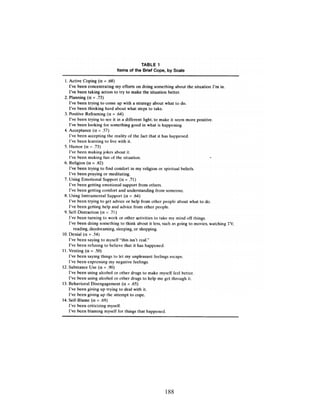
The BriefCOPE (Carver, 1997) is an abbreviated version of the original 60-item
scale (i.e., the COPE; Carver, Scheier, & Weintraub, 1989) that measures the frequency
of engaging in behavioral and cognitive strategies for coping with general life stressors.
The BriefCOPE uses a 4-point Likert-type scale with response options ranging from 0 (I
haven’t been doing this at all) to 3 (I’ve been doing this a lot). Sample items include I’ve
been concentrating my efforts on doing something about the situation I’m in, and I’ve
been accepting the reality of the fact that it has happened. The BriefCOPE demonstrated
acceptable internal reliability on each of the seven subscales (αs > .60) in a community
sample of participants who had been critically affected by Hurricane Andrew.
Phase 2 Data Collection and Analysis
Following approval from the university’s IRB, a digital version of the CABLE
was published online through MTurk. The online survey was open to individuals who
met the following inclusion criteria: (a) adults of 18 years of age or older, (b) bereaved
19
within the past five years, and (c) fluent in English. Recruitment of participants took
place exclusively through MTurk from November 30th, 2016 to December 8th, 2016.
The factor structure of the CABLE was analyzed using factor analysis, a
statistical approach for revealing the underlying relations among test items (Spearman,
1939). Due to the exploratory nature of this study, the factor structure of the CABLE was
first analyzed using EFA, the primary aim of which is to uncover the embedded
structures of observed variables (Mvududu & Sink, 2013). In addition, the EFA was
cross-validated with another sample using CFA, a procedure for assessing model fit
(Mvududu & Sink, 2013).
Ethical Considerations
The risks in this study were considered minimal but included the potential for
subjective discomfort. Participants might have experienced emotion (e.g., tearfulness,
anger) while participating in this study; however, the likelihood of experiencing
overwhelming discomfort or distress from completing self-report questionnaires was
considered low. Breach of confidentiality also was a risk but was judged to be low for
this Web-based study due to the many layers of protection in place (e.g., participants
used their own device to access the study and entered the study using their self-created
MTurk login information). Any information that could have been used to identify
participants’ was removed from data.
A limitation of online data collection is that trained researchers are not present to
evaluate, address, and help lessen the magnitude of distress that participants might
20
experience through their involvement in the research. However, the online survey
included several national telephone hotlines and websites that offer support for persons
in crisis or trauma, and participants were given instructions to contact these or other
local agencies (e.g., 911, if in the United States, or their national crisis hotline, if they
were outside the U.S.) to receive mental health support. Furthermore, we attempted to
minimize discomfort resulting from answering questions on scales assessing levels of
bereavement distress by including in the informed consent a written statement assuring
participants that they could withdraw from the study at any time without penalty.
Although participants could not be guaranteed any benefits stemming from participation
in this study, studies suggest that bereaved research participants report finding
satisfaction in contributing to bereavement research efforts and to scientific endeavors in
general, and from the awareness that sharing their experiences might indirectly help
other bereaved individuals (Buckle, Dwyer, & Jackson, 2010).
Organization of this Dissertation
This dissertation is organized in the following format. Chapter Two includes a
review of the literature that aims to: (a) familiarize the reader with key concepts and
definitions related to grief and bereavement, (b) provide an overview of contemporary
research on grief coping, and (c) highlight strengths and limitations of existing grief
coping research. Chapter Three describes the methodology and procedures that we used
in conducting the present study, including a detailed description of procedures from
Phase 1 (i.e., qualitative) and Phase 2 (i.e., quantitative). Chapter Four presents the
21
quantitative findings of the present study. Finally, Chapter Five (a) provides a discussion
of the results, (b) discusses limitations, (c) offers recommendations for future research,
and (d) discusses implications for helping professionals and researchers.
22
CHAPTER TWO: LITERATURE REVIEW
Chapter Two begins with an overview of terms and definitions related to
bereavement and grief coping and is followed by a discussion of (a) variations in
bereavement outcomes, (b) theories of coping with stressors, (c) coping within the
context of bereavement, (d) psychometric assessment of grief coping, (e) the rationale for
a new grief coping assessment, and (f) the research questions that guided the present
study.
Background
The loss of a loved one through death is a nearly unavoidable experience and one
that is associated with heightened psychological and physical distress for the survivor
(Stroebe et al., 2007). However, not all individuals who lose a loved one cope with their
grief in the same way (Bonanno, 2004; Bonanno et al., 2002). Ten to fifteen percent of
the bereaved population experiencing a protracted, debilitating, and sometimes life-
threatening grief response known as complicated grief (CG; Shear et al., 2011; see Crunk
et al., 2017, for a theoretical review), also termed prolonged grief disorder (Prigerson et
al., 2009) or persistent complex bereavement disorder (American Psychiatric
Association, 2013). Other grievers experience common reactions to grief, with grief
distress that diminishes within one to two years following bereavement (Bonanno, 2004).
However, the majority of grievers respond to loss with relative resilience and generally
sustain reasonably stable and adaptive levels of functioning during their grief (Bonanno,
2004).
23
Contemporary research has investigated potential factors that distinguish these
groups of mourners, specifically by examining risk factors of poor bereavement outcome.
Bereavement studies define risk factors as the “situational and personal characteristics
likely to be associated with increased vulnerability across the spectrum of bereavement
outcome variables” (Stroebe et al., 2006, p. 2441). Conversely, protective factors refer to
variables that enhance the probability of positive bereavement outcomes (Stroebe et al.,
2006). Burke and Neimeyer (2013) identified a number of prospective risk factors that
predict CG symptomatology, including variables that preceded the loss (e.g., kinship to
the deceased), demographic (e.g., gender, race), intrapersonal characteristics of the
survivor (e.g., attachment style), and variables related to the circumstances of the death
(e.g., cause of death; see also Neimeyer & Burke, 2017, for an update of this review).
Although helpful in identifying who is at risk for bereavement distress, these static
factors are not amenable to modification in counseling or other contexts of help-seeking,
signaling a need for further investigation of predictors of bereavement outcomes that are
modifiable by intervention (Burke & Neimeyer, 2013; Last, 1995).
One factor that might distinguish resilient and CG reactions is differences in what
mourners do following loss—differences in the cognitive, behavioral, and emotional
strategies they use to cope with their distressing grief symptoms (Meichenbaum &
Myers, 2016). For example, a substantial body of research supports the role of meaning
making in adjusting to loss, with studies generally suggesting that grievers who are able
to reconstruct meanings that have been challenged by loss experience greater resilience
and posttraumatic growth compared to those who struggle to make sense of their loss
24
(Neimeyer, 2016a). Furthermore, prior studies indicate that certain aspects of social
support are associated with adaptive bereavement outcomes (e.g., Bottomley et al., 2015;
Burke et al., 2010). Still other studies support the effectiveness of cognitive-behavioral
strategies in adjusting to loss, such as cognitive restructuring (Boelen, et al., 2007) and
behavioral activation (Papa, Sewell, Garrison-Diehn, & Rummel, 2013).
Although Folkman (2001) noted that coping “may have a relatively small
influence on adjustment and recovery compared to factors such as timing and nature of
the death, history, and personality” (p. 564), she also argued that, “…coping is important
because it is one of the few factors influencing bereavement outcomes amenable to brief
interventions” (p. 564; Stroebe et al., 2006). However, a comprehensive assessment of
potential constructive strategies for coping with bereavement has yet to be designed,
providing helping professionals with little guidance for formally identifying which
strategies their clients employ to cope with grief and for developing personalized
interventions accordingly. Furthermore, the scarcity of grief-specific instruments for
assessing coping strategies limits researchers to using nonspecific measures that assess
coping with general life stressors rather than grief-specific measures normed with
bereaved populations. Therefore, we aimed with the present study to construct and
validate the Coping Assessment for Bereavement and Loss Experiences (CABLE), an
instrument designed to identify which strategies bereaved individuals currently use to
cope with grief following the death of a human loved one.
25
Definitions and Key Terms
The terms bereavement, grief, and mourning are often used interchangeably in
bereavement literature, however, they have distinct meanings. Bereavement is defined as
“the objective situation of having lost someone significant through death” (Stroebe,
Hansson, Schut, & Stroebe, 2008, p. 4). The term originates from the now dated verb,
reave, which means, “to despoil, rob, or forcibly deprive” (Simpson & Weiner, 1989, p.
295), evoking an image of a harsh pillage and removal of a person who is significant to
the griever (Corr & Coolican, 2010). Mourning refers to expressions of grief
communicated through a variety of rituals, customs, and practices that vary across
societies and cultures, such as funeral ceremonies and wakes (Stroebe et al., 2008). Grief
is a natural psychological response to bereavement, comprising the feelings, thoughts,
and behaviors related to the loss, to the deceased loved one, or to the death event (Shear,
2012). Contrary to many traditional models that illustrate grief as a stepwise, one-size-
fits-all process, contemporary research has generated a revised conceptualization of grief
as an idiosyncratic experience that can vary dramatically between mourners (Crunk et al.,
2017). The intensity and duration of grief symptoms fall on a continuum that ranges from
resilient (i.e., adaptive grief; Bonanno, 2004) to complicated grief (Holland et al., 2009;
Horowitz et al., 1993). In the middle of the continuum are individuals who experience
normative reactions to loss. Although this group of mourners experiences the same
intensity of symptoms as those with CG, they adapt normatively (i.e., in a manner that
gradually leads to less distress across time) and are able to integrate the loss into their
lives by one to two years (Bonanno, 2004). In contrast, bereaved individuals who exhibit
26
resilience demonstrate an ability to maintain reasonably stable and adaptive levels of
functioning following loss (see Bonanno, Westphal, & Mancini, 2011, for a review).
Acute grief refers to the initial reaction to the loss, during which time the griever
might experience symptoms including, but not limited to, shock, disbelief, sorrow,
sadness, anxiety, guilt, anger, and longing and yearning for the deceased (Simon, 2013;
Zisook & Shear, 2009). However, acute grief is also a period in which the griever
simultaneously attempts to confront the reality of the loss and to restore his or her life in
the absence of the deceased loved one (Stroebe & Schut, 1999). When acute grief follows
this adaptive process, it is generally followed by integrated grief, in which the mourner
begins to write the loss into his or her life narrative with the aim of restorative movement
toward living life without his or her loved one (Shear, 2012).
Opposite resilience on the grief continuum is CG, in which the path to integrated
grief is not navigable, resulting in overwhelming and chronic bereavement distress
(Shear, 2012; Simon, 2013). Several terms have been used to categorize this response to
loss, including prolonged grief disorder (PGD), traumatic grief and, more recently,
persistent complex bereavement disorder (PCBD; American Psychiatric Association,
2013). However, in the present study, we refer to this condition as complicated grief
(CG) to remain consistent with the bulk of the extant literature.
27
Bereavement Outcomes
Resilience to Loss
Resilience has been defined as “the personal qualities that enable one to thrive in
the face of adversity” (Connor & Davidson, 2003, p. 76). Within the context of adult
bereavement, resilience refers to “the ability of adults in otherwise normal circumstances
who are exposed to an isolated and potentially disruptive event […] to maintain relatively
stable, healthy levels of psychological and physical functioning” (Bonanno, 2004, p. 20).
Although the loss of a loved one is often a highly distressing life event, an impressive
body of research suggests that most grievers are able to adapt to loss, and still others are
even able to thrive in the face of loss (Bonanno, 2004). For example, in Bonanno and
colleagues’ (2002) investigation of the grief patterns of spouses (N = 205) several years
before their loss and at 6- and 18-months postloss, resilient bereavement patterns
emerged as the most frequently reported response to the death of a spouse (45.9%; n =
94). For this prevalent group of grievers who exhibit resilience in response to loss, acute
grief symptoms are transient and diminish naturally within a few months to two years
following the loss (Bonanno & Kaltman, 2001).
Bereavement Distress
Although most bereaved individuals respond to loss with resilience, the remaining
proportions of grievers experience clinically significant distress in response to loss. For
example, symptoms of major depressive disorder (MDD), posttraumatic stress disorder
(PTSD), and anxiety commonly surface as forms of bereavement distress that can go on
28
to predict a variety of other psychological and physical health concerns over time (Boelen
& Prigerson, 2007; Mancini & Bonanno, 2006). For instance, Boelen and Prigerson
(2007) found that depression prospectively predicted aspects of poor quality of life and
health in a sample of bereaved adults (N = 346), such as poorer mental health at the final
assessment (i.e., Time 3) and lower perceptions of general health.
Furthermore, a small but important subset of grievers (i.e., 10-15%) experience
CG (Shear et al., 2011) – a chronic and psychologically incapacitating grief response that
is associated with significant impairment severe enough to lead to long-term, poor
psychological and physical outcomes if left untreated (McDevitt-Murphy et al., 2012; Ott
et al., 2007). Features of CG include overwhelming pangs of grief that endure for long
periods of time following the loss of a loved one, intense longing and yearning to be
reunited with the deceased, profound separation distress, intrusive thoughts about the
deceased or the death event, an inability to accept that the death has occurred, and
proximity seeking to be nearer to the loved one (Shear et al., 2011). Furthermore,
mourners with CG often experience meaninglessness or purposelessness in life and
struggle to make a new life without their loved one (Holland et al., 2009). CG also
sometimes is characterized by confusion about one’s identity and life role, mistrust and
wariness of others, emotional numbness and shock, and anger regarding the loss
(Lichtenthal, Cruess, & Prigerson, 2004; Prigerson et al., 1995). Importantly, CG is a
potentially life-threatening condition, in that mourners with CG exhibit higher
susceptibility to suicidality (Latham & Prigerson, 2004), poorer quality of life, decreased
social functioning, spiritual crisis (Burke & Neimeyer, 2014), and elevated rates of a
29
variety of physical health concerns, including cancer, immune dysfunction, heart disease,
disrupted sleeping patterns, and substance abuse compared to grievers who respond more
adaptively to their loss (Prigerson et al., 1997, 2009).
Although variation in reactions to loss is well documented, relatively few studies
have empirically examined which factors predict bereavement distress (see Burke &
Neimeyer, 2013, for a review) or, conversely, promote resilience to loss (Bonanno,
2004). The existing literature on resilience factors (see Mancini & Bonanno, 2009, for a
review) suggests that there are “multiple pathways to resilience” (Bonanno, 2004, p. 25),
including attachment style (Mancini, Robinaugh, Shear, & Bonanno, 2009), a priori
worldviews, identity continuity and identity complexity (Mancini & Bonanno, 2009),
positive emotion and laughter (Fredrickson & Losada, 2005), finding comfort in positive
memories of the loved one (Bonanno, Wortman, & Nesse, 2004), and personality traits
such as hardiness (Florian, Mikulincer, & Taubman, 1995) and self-enhancement
(Bonanno, Rennicke, & Dekel, 2005). With respect to coping mechanisms that might
predict resilience, some studies have shown that repressive coping (i.e., coping strategies
that are intended to repress negative emotions) is associated with lower symptoms of
grief and fewer health concerns (e.g., Coifman, Bonanno, Ray, & Gross, 2007). However,
relatively little research has attempted to provide a comprehensive and fine-grained
analysis of whether specific coping strategies predict greater resilience and or lessen
bereavement distress. Doing so is, therefore, an aim of the present study.
30
Coping with Stressors
Coping refers to one’s “constantly changing cognitive and behavioral efforts to
manage specific external and/or internal demands that are appraised as taxing or
exceeding the resources of a person” (Lazarus & Folkman, 1984, p. 14). Across the past
several decades, researchers have endeavored to understand the role that coping plays in
psychological and physical health (Folkman & Moskowitz, 2004; Lazarus, 1993).
Although the role of coping in overall adjustment has been explored in the literature,
research has generated multiple viewpoints on which processes are involved in coping
with stress and trauma, as well as inconsistencies in their taxonomy (Folkman &
Moskowitz, 2004; Lazarus, 1993; Lazarus & Folkman, 1984). For example, in an earlier
model, Folkman and Lazarus (1980) identified two major coping processes: problem-
focused coping (i.e., engaging in action- and future-oriented behaviors to address the
stressor) and emotion-focused coping (i.e., engaging in distracting behaviors that serve to
alleviate the negative feelings related to the stressor), which have also been termed active
and avoidant coping (Carver, Scheier, & Weintraub, 1989). Other models have included
meaning-focused or meaning-making coping efforts (e.g., Park & Folkman, 1997), in
which individuals turn to their beliefs, worldviews, and values to adjust their meaning of
the stressor. Still other coping models include social components and positive
restructuring (e.g., positive reframing of the stressor, humor; Carver et al., 1989).
Folkman and Moskowitz (2004) noted that although classifying coping into
categories such as problem- and emotion-focused is helpful in synthesizing conclusions
across studies, it potentially conceals noteworthy distinctions within these categories.
31
Subsequent developments in the coping research examined the more fine-grained aspects
of coping that were previously grouped into broader factors, including future-oriented
coping (e.g., setting aside resources to use for future coping; Aspinwall & Taylor, 1997),
social dimensions of coping (e.g., communal coping and pro-social behaviors; Wells,
Hobfoll, & Lavin, 1997), spiritual and religious coping (e.g., finding comfort in prayer or
meditation; Pargament, Feuille, & Burdzy, 2011; Pargament, Smith, Koenig, & Perez,
1998), emotional approach coping (e.g., active processing of emotions; Stanton, Danoff-
Burg, Cameron, & Ellis, 1994), and positive emotions in coping (e.g., expressing
happiness; Folkman, 2008). Although these studies have provided a clearer understanding
of the dimensions that comprise broad categories of coping, few contributed depth to our
understanding of the ways that coping processes interact with one another within the
context of a stressful life experience and/or with the characteristics of the person
experiencing stress. The following section summarizes more recent research that has
attempted to examine individual differences in coping.
Coping Flexibility
Prior research and theory have generally classified coping processes as either
adaptive or maladaptive (e.g., Baker & Berenbaum, 2007). However, nascent research
suggests that individuals who are able to employ a variety of coping strategies and
modify the strategies they employ in response to contextual changes are able to adapt to
stress better than those who draw on one process alone – a perspective known as coping
flexibility (Cheng, Lau, & Chan, 2014; see also Cantor & Fleeson, 1994; Mischel &
32
Shoda, 2000). Contrary to previous perspectives that view coping with traumatic events
as demanding focused attention to the thoughts and memories related to the event (e.g.,
exposure therapy; Foa, Zoellner, Feeny, Hembree, & Alvarez-Conrad, 2002) or other
perspectives that emphasize behaviors that divert attention away from the event (e.g.,
emotional avoidance; Burton et al., 2012), coping flexibility is an integrated paradigm
that emphasizes the importance of both approach- and avoidant-oriented coping
(Bonanno, Pat-Horenczyk, & Noll, 2011; Lester, Smart, & Baum, 1994). Coping
flexibility suggests that “resilience to trauma is fostered not by one particular type of
coping response but rather by the ability to flexibly engage in different types of coping
responses as needed across different types of potentially traumatic events” (Bonanno et
al., 2011, p. 117).
A meta-analysis of studies (k = 329, N = 58,946) examining the relation between
coping flexibility and psychological adjustment revealed a positive small to moderate
overall mean effect size, with moderate effects for studies that conceptualized coping
flexibility as a strategy-situation fit model (i.e., involving situationally focused coping
strategies that are congruent with the unique demands of the stressful event; Cheng et al.,
2014). Furthermore, studies of coping flexibility among samples of mourners have found
that coping flexibility is associated with better adjustment to loss. For example, an
investigation of married (n = 37) and bereaved (n = 58) individuals in the United States
and in China found that lower levels of coping flexibility were associated with CG,
irrespective of nationality (Burton et al., 2012).
33
Coping with Bereavement
Coping with bereavement refers to the “processes, strategies, or styles of
managing (e.g., reducing, mastering, tolerating) the situation in which bereavement
places the individual” (Stroebe & Schut, 2010, p. 274). Stroebe and colleagues’ (2006)
integrative risk factor framework proposes that the type of stressor (e.g., type of loss) is
predictive of the outcome and that coping serves as a mediator between the stressor and
the outcome. In the case of the present study, the stressor is bereavement, and an aim of
this study is to identify which strategies for coping with bereavement predict outcome
(i.e., CG scores). This section provides a summary of the relevant contemporary literature
on coping with grief following the loss of a loved one.
The Dual Process Model of Coping with Grief
Stroebe and Schut (1999, 2010) identified two such external and internal demands
that mourners face, which they described in their Dual Process Model of coping with
bereavement. The Dual Process Model suggests that coping with bereavement resembles
the movement of a pendulum, such that when the grief process works adaptively,
mourners function within a natural oscillating motion of both attending to their grief (i.e.,
loss-oriented coping) and adjusting to life without the deceased (i.e., restoration-oriented
coping). Both the loss-oriented and restoration-oriented processes involve cognitive,
behavioral, and emotional strategies that bereaved individuals engage in to manage the
stress associated with each of the two processes. A unique feature of the Dual Process
Model is the oscillation between the restoration and loss orientations, which acts as a
34
regulatory process. For example, grievers engaged in loss-oriented coping might manage
their feelings of grief by creating a memorial for the deceased, allowing themselves time
to cry, or looking at old photos of their loved one. When grievers vacillate toward
restoration-oriented coping, the coping strategies they use enable them to begin making a
new life without the deceased, which might involve taking on tasks that were previously
carried out by the deceased (e.g., paying bills, housework), engaging in new activities, or
forming new relationships with others (Stroebe & Schut, 1999).
The Dual Process Model draws on Lazarus and Folkman’s (1984) Cognitive
Stress Theory – a stress, appraisal, and coping model for general stress and trauma.
According to Cognitive Stress Theory, individuals experience stress when they appraise a
stressor as personally significant, when it involves internal and/or external demands that
challenge their existing resources, and when they perceive having limited options for
coping with the stressor (Stroebe et al., 2006). Thus, prolonged distress in relation to the
stressor can have a deleterious impact on the individual’s health (Stroebe et al., 2006).
The Dual Process Model is condition-specific, positioning coping within the context of
bereavement wherein the death is the precipitating event and the loss- and restoration-
oriented processes are the stressors (Stroebe & Schut, 2010). Although the two
orientations are stressors, they also are both integral to the coping process, such that
preoccupation with either orientation rather than oscillation between the two can impede
adaptive coping.
Stroebe and colleagues (2006) asserted that coping mechanisms serve as a
mediator between the stressor (in this case, bereavement) and bereavement outcome, such
35
that individual differences in what mourners do to cope with their grief might influence
their bereavement trajectory. Still, the authors called for more research that examines the
interactions between bereavement-related stressors, inter- and intra-personal risk factors,
and coping and appraisal processes rather than further research that examined only one of
these factors in isolation. They stated, “We have argued the need for an integrative,
comprehensive framework of adjustment to bereavement to overcome limitations in
previous research, prevent faulty conclusions, and to increase our ability to predict
bereavement outcome” (Stroebe et al., 2006, p. 2449). Recent research has made notable
strides toward understanding bereavement outcome in the context of relevant factors such
as type of loss, gender, racial and ethnic background, and specific coping mechanisms in
isolation. Nevertheless, relatively little research has studied the interactions among these
variables, and studies that aim to identify the particular strategies that a wide range of
mourners use to cope with their grief are conspicuously rare. Therefore, with the present
study, we aimed to develop an instrument that would allow researchers to uncover the
strategies grievers employ to cope following loss, as well as the interrelations between
coping strategies and contextual variables such as type of loss. We defined grief coping
as the adaptive cognitive, behavioral, and emotional strategies for managing the external
and/or internal challenges associated with the bereavement processes of individual
mourners (Folkman et al., 1986; Stroebe & Schut, 2010). The following section
summarizes the literature on strategies for coping with grief following the loss of a loved
one through death.
36
Strategies for Coping with Grief
Contemporary literature points to a handful of coping domains that individuals tap
into for support following bereavement and other highly distressing events, which we
consulted as a basis for developing the initial item pool of the CABLE. For example,
Meichenbaum (2013) examined approaches for bolstering resilience following trauma
and classified coping strategies into six general categories, including physical,
interpersonal, emotional, cognitive, behavioral, and spiritual coping. Furthermore, in a
rare attempt to provide a comprehensive analysis of the particular strategies mourners use
to cope with their grief, Asai and colleagues (2012) examined the coping strategies of
Japanese bereaved spouses (N = 821). Their investigation yielded three factor structures
with their sample: distraction (e.g., engaging in physical activity), continuing bonds (e.g.,
keeping possessions of the deceased nearby), and social sharing/reconstruction (e.g.,
seeking emotional support from family members). Although their study is one of the few
to explore the range of strategies for coping with grief, their findings represented a
relatively homogenous sample of Japanese mourners who lost a spouse to cancer.
Furthermore, their study did not culminate in a validated instrument for assessing grief
coping strategies, but rather aimed to uncover the factor structures of strategies this
sample used to cope with their grief (Asai et al., 2012). Therefore, there remains a need
for further research that examines the coping strategies of a demographically and
contextually diverse sample of grievers who are bereaved by both natural and violent
(i.e., by homicide, suicide, or fatal accident) means that also includes the validation of an
instrument for assessing such strategies. In the following sections, we summarize the
37
literature on grief coping strategies that was used as an empirical and theoretical basis to
develop the initial item pool for the CABLE.
Continuing Bonds
Contrary to prior beliefs that mourners must sever ties with their deceased loved
one (e.g., Freud, 1917), a notable contribution to the grief literature is the notion that
successful adjustment to loss can include an ongoing symbolic connection with the
deceased rather than the relinquishment of the relationship (Field, 2008) – a perspective
known as maintaining a continuing bond (Klass, Silverman, & Nickman, 1996). For
example, the continuing bond might take the form of wearing an article of clothing that
belonged to the deceased, speaking to or asking advice of the deceased, or engaging in an
activity or cause that was meaningful to the person while alive. Research on continuing
bonds has brought about the development of clinical interventions and strategies that
bereaved individuals use to maintain a continuing bond with the deceased, as well as
research on identifying populations for whom maintaining such an attachment is more or
less helpful in adapting to the loss of a loved one (Field et al., 2003). For example, Meert,
Thurston, and Briller (2005) collected qualitative data on the role of altruistic actions in
parents who lost a child, who coped in these ways as a means of “maintain[ing] a
relationship with the child through presence, words, or symbols” (p. 422), such as
volunteer work, charity fundraising, creating support groups, and organ donation.
38
Spiritual and Religious Coping
Spiritual coping is generally related to positive adjustment in bereavement
(Wortmann & Park, 2008); however, some spiritually inclined individuals experience a
crisis of faith following loss, particularly when they are bereaved by violent means
(Burke & Neimeyer, 2014). Although there is evidence for a number of spirituality-
related coping strategies that are shown to aid grievers in adapting to loss, the literature
simultaneously reveals that these coping strategies can act as double-edged swords,
proving to be helpful for some grievers under certain circumstances, yet associated with
deleterious outcomes for other grievers under different circumstances. Research reports
also indicate that many bereaved individuals find religion/spirituality to be a source of
strength while simultaneously being a source of strain (Burke et al., 2011; Burke &
Neimeyer, 2014). Thus, although many bereaved persons turn to religion and spirituality
as sources of strength and coping, not all spiritually inclined grievers find comfort in their
faith following loss. In fact, some spiritually inclined mourners go on to experience a
rupture in their relationship with God and/or their spiritual community, a phenomenon
known as complicated spiritual grief (Burke et al., 2014; Burke & Neimeyer, 2014).
Social Dimensions of Coping
Use of social support as a factor in coping with grief presents a paradox similar to
that of spiritual coping, with studies indicating that social support can serve as a
protective factor against poor bereavement outcome in some cases, but can exacerbate
grief in others. For example, Burke and her colleagues (2010) examined the relation
39
between would-be social support and bereavement outcome (i.e., CG, PTSD, depression)
in a sample of African Americans bereaved by homicide (N = 54) and found that some
aspects of social support were related to lower bereavement distress. However, the
number of intrusive, negative, or conflicted relationships in the survivor’s social network
was positively associated with both CG and PTSD, and anticipated negative relationships
were associated with higher levels of depression. Bottomley and colleagues’ (2015)
longitudinal study sought to identify specific aspects of social support that predicted
positive bereavement outcomes in the same sample of homicidally bereaved African
Americans (N = 47). Findings indicated that instrumental social support in the form of
physical assistance was more closely and consistently associated with adaptive outcomes
than was emotional support, advice, and a variety of other dimensions – at least among
homicidally bereaved participants.
Meaning Making
Meaning making in bereavement refers to “the attempt to reaffirm or reconstruct a
world of meaning that has been challenged by loss” (Neimeyer, 2016a, p. 2; see also
Neimeyer, 2001). Earlier research emphasized the roles of benefit finding and sense
making in facilitating meaning making. Whereas, sense making refers to the efforts made
by the bereaved individual to understand the death or the loss event, benefit finding
involves “encountering unsought growth through grief, valued life lessons in the
experience, or reordered life priorities” (Neimeyer, 2016a, p. 3). Research generally
supports the role of meaning making in adapting to bereavement, with studies suggesting
40
that grievers who are able to reconstruct meaning experience better outcomes compared
to those who struggle to make sense of their loss (e.g., Neimeyer, 2016a).
Cognitive Behavioral Approaches to Coping
Cognitive behavioral approaches have been shown to be effective in assuaging
symptoms of CG, taking the traditional tenets of exposure (Bryant et al., 2014), cognitive
restructuring (Boelen et al., 2007), and behavioral activation (Papa et al., 2013) and
adapting them to the context of grief therapy. For example, Bryant and colleagues’
(2014) randomized clinical trial of outpatients (N = 80) with CG demonstrated that
patients who received CBT with exposure experienced a greater decrease in CG
symptoms than those who received CBT without exposure, both immediately post-
treatment and at the six-month follow-up. In fact, significantly fewer patients in the
CBT/exposure condition met criteria for CG at follow-up than did those in the CBT-only
condition. Exposure therapy for grief (also known as imaginal revisiting; Shear, 2010),
which involves “repeated, imaginative re-experiencing of the death,” can “elicit marked
distress during the reliving,” however, this distress is temporary and the treatment (which
is a component of Complicated Grief Treatment; Shear, Frank, Houck, & Reynolds,
2005) has been shown to be highly effective.
Professional Bereavement Support
Although most mourners are able to adapt to their grief naturally, professional
support is indicated for individuals who struggle to adapt to their loss (Bonanno, 2004).
41
Currier and colleagues’ (2008) meta-analysis on the effectiveness of psychotherapy for
bereaved adults found that traditional grief therapy demonstrated small effects in
alleviating grief symptoms at posttreatment when applied universally to all mourners.
However, they found greater effects for mourners who experienced significant challenges
in adapting to loss (i.e., CG; Currier et al., 2008). Wittouck, Van Autreve, De Jaegere,
Portzky, and van Heeringen’s (2011) subsequent meta-analysis examined the
effectiveness of prevention and treatment interventions for CG, and supported the Currier
et al. (2008) findings with respect to outcomes for complicated grievers. Specifically,
they found that although preventive interventions were not effective in impeding the
development of CG, treatment interventions were effective in reducing its symptoms.
Internet-Based Support
The advent of the Internet has brought about innovative bereavement-specific
services (Stroebe, van der Houwen, & Schut, 2008), including e-mail-based self-help
interventions (Van der Houwen, Schut, van den Bout, Stroebe, & Stroebe, 2010), online
mutual support (Van der Houwen, Stroebe, Schut, Stroebe, & van den Bout, 2010), and
grief-focused chatroom discussions (Elder & Burke, 2015). However, research on the
effectiveness of such services is scarce, with extant studies providing mixed support for
their helpfulness in reducing grief symptoms. For example, in Elder and Burke’s (2015)
qualitative and survey-based study examining the helpfulness of online cancer support
groups in a sample of bereaved parents (N = 14), 79% (11/14) of participants reported
that live, online chat groups were helpful in coping with their grief. In contrast, however,
42
Van der Houwen and colleagues’ (2010) investigation of an e-mail-based writing
intervention demonstrated that written disclosure reduced feelings of emotional
loneliness and increased positive mood, but had no effect on grief or depressive
symptoms. Furthermore, a preliminary examination of the efficacy of online mutual
bereavement support indicated that users of online mutual bereavement support showed
worse “mental health” and lower social support than people who stopped using such
support (van der Houwen et al., 2010). Although grievers who use grief-based websites
generally report better adjustment to loss (Aho, Paavilainen, & Kaunonen, 2012; Vicary
& Fraley, 2010), mixed findings call for further research on how such interventions can
be improved and for whom they are most helpful.
Self-Help and Bibliotherapy
Following the loss of a loved one, many grievers turn to self-help resources and
bibliotherapy for comfort and for gaining a better understanding of the grief process
(Dennis, 2012). Although Marrs’ (1995) comprehensive meta-analysis revealed that
bibliotherapy is at least moderately effective for adults in treating many concerns,
generally, scant research exists on the efficacy or the accuracy of self-help books in
addressing issues of grief, specifically. Dennis (2012) found that self-help books
published after 1999 contained themes that are consistent with findings from
contemporary bereavement research (e.g., updated grief models, continuing bonds).
However, much of the extant empirical research on grief-focused bibliotherapy is dated
and, thus, we know little about the effectiveness of using contemporary self-help books in
43
addressing issues of grief. More recently, however, a number of conceptual articles have
offered strategies for using bibliotherapy and poetry therapy with bereaved children and
adults (e.g., Bowman, 2007, 2012; Noctor, 2006). Nevertheless, given the prevalence
with which individuals turn to self-help books to address issues of loss and grief, there is
a need for more up-to-date empirical research on its effectiveness.
The Psychometric Assessment of Grief Coping
The American Counseling Association (ACA, 2014) ethical code mandates that
counselors use techniques that are empirically supported (Section C.7.a), and that
counselors are to use assessment for client decision-making and treatment planning
(Section E.1.a). Specifically, the ACA Code of Ethics states, “Counselors promote the
well-being of individual clients or groups of clients by developing and using appropriate
educational, mental health, psychological, and career assessments” (ACA, 2014, p. 11;
Section E). Furthermore, counselors-in-training enrolled in programs accredited by the
Council for Accreditation of Counseling and Related Educational Programs (CACREP,
2016) are required to develop competencies in the use of assessment in counseling for
intervention planning (Section 2.F.7.e). The importance of assessment extends to helping
professionals of other disciplines, as well. For example, the American Psychological
Association Ethics Code (2010) states, “Psychologists who develop tests and other
assessment techniques use appropriate psychometric procedures and current scientific or
professional knowledge for test design, standardization, validation, reduction or
elimination of bias and recommendations for use” (Standard 9.05). Thus, helping
44
professionals working with bereaved clients are advised to use assessment as a
component of the helping relationship for purposes that include screening clients for CG
symptomatology, diagnosing CG or other forms of distress (e.g., PTSD), developing
treatment interventions, and evaluating the usefulness of such interventions.
A number of instruments have been developed to assess manifestations of grief
and reactions to loss, such as the Grief Experience Inventory (GEI; Sanders, Mauger, &
Strong, 1985), the Grief Evaluation Measure (GEM; Jordan, Baker, Matteis, Rosenthal,
& Ware, 2005), and the Hogan Grief Reaction Checklist (HGRC; Hogan, et al., 2001).
Such instruments evaluate the griever’s symptoms, experiences, and reactions to losing a
loved one. Bereavement distress measures, on the other hand, assess adaptation to loss
and bereavement distress. Commonly used grief distress measures include the Inventory
of Complicated Grief-Revised (ICG-R; Prigerson et al., 1995), the PG-13 (Prigerson et
al., 2009), and, more recently, the Persistent Complex Bereavement Inventory (PCBI;
Lee, 2015). (For more comprehensive reviews of bereavement assessment tools, see
Neimeyer & Hogan, 2001, Neimeyer, Hogan, & Laurie, 2008; Neimeyer, 2016b).
Past investigations of grief coping have evaluated the cognitive, behavioral, and
emotional strategies that bereaved individuals use in order to manage their grief.
However, in general, bereavement studies that assess coping following loss do so using a
handful of researcher-selected items that are evaluated in relation to bereavement distress
instruments (e.g., high levels of negative religious coping are correlated with high CG).
Other bereavement studies are limited to using nonspecific instruments that are designed
to assess coping in the context of general life stressors as opposed to bereavement, such
45
as the COPE (Carver, Scheier, & Weintraub, 1989), the BriefCOPE (Carver, 1997) and
the Coping Inventory for Stressful Situations (CISS; Endler & Parker, 1990). However,
the purpose of the present study was to develop an instrument for assessing the specific
internal and external strategies bereaved persons use to cope with the death of a loved
one. Therefore, we narrowed the present review to existing instruments that assess
strategies for coping with grief rather than those that assess coping with general life
stressors.
Bereavement-Specific Coping Instruments
Our review of the literature revealed two coping instruments that assess strategies
for coping with bereavement, specifically – namely, the Inventory of Daily Widowed Life
(IDWL; Caserta & Lund, 2007) and the Continuing Bonds Scale (CBS; Field et al.,
2003). Here we have provided a description of the two scales, including information
pertaining to their development and psychometric properties.
Inventory of Daily Widowed Life
The Inventory of Daily Widowed Life (IDWL; Caserta & Lund, 2007) was
designed to assess the frequency with which widows and widowers engage in thoughts
and behaviors that reflect Stroebe and Schut’s (1999; 2010) Dual Process Model of
coping with bereavement. The IDWL is a 22-item self-report measure consisting of two
subscales for assessing the degree to which bereaved spouses take part in the coping
processes related to the loss orientation and restoration orientation processes of the Dual
46
Process Model. For each item, participants are asked to indicate how much time they
have spent on each activity conveyed in each item, with items such as, Thinking about
how much I miss my spouse (i.e., loss orientation), and Finding ways to keep busy or
occupied (i.e., restoration orientation). Items are formatted on a 4-point Likert-type scale
ranging from 1 (rarely or not at all) to 4 (almost always). The possible range of scores
for each subscale is 11–44, with higher scores indicating stronger adherence to each
process of the Dual Process Model. Furthermore, the IDWL attempts to capture the
oscillation process of the Dual Process Model, or the bereaved individual’s back-and-
forth movement from loss-oriented to restoration-oriented coping. Thus, oscillation is
calculated by subtracting respondents’ total loss orientation score from their total
restoration orientation score, yielding a possible balance score of -33 (exclusive
engagement in loss orientation) to 33 (exclusive engagement in restoration orientation),
with a score of 0 indicating equal balance between the two processes.
The IDWL demonstrated high internal consistency for both subsamples of
widows and widowers and for the total sample, with alpha coefficients for the loss
orientation subscale ranging from .88 for participants widowed 12-15 months to .91 for
participants widowed 2-5 months. The restoration orientation subscale yielded a
moderate alpha coefficient of .78 for both subsamples of participants. Although Caserta
and Lund (2007) reported the reliability and validity statistics for the IDWL, they did not
report findings of factor structure of the instrument or the performance of the individual
items, limiting inferences that can be made about the validity of the scale. However, the
reported reliability and validity statistics provide some support for the coping processes
47
described in the Dual Process Model. Accordingly, the authors encouraged further
refinement of the IDWL as a direction for future research.
Continuing Bonds Scale
The Continuing Bonds Scale (CBS; Field et al., 2003) is an 11-item instrument
designed to measure strategies that the bereaved individual uses in order to maintain a
symbolic, psychological connection to the deceased. The item pool was developed based
on the bereavement literature on continuing bonds (Klass et al., 1996), with items such as
I seek out things to remind me of my spouse and I am aware of having taken on many of
my spouse’s habits, values, or interests. Respondents are asked to rate the degree to
which each item holds true in relation to their spouse on a 5-point Likert-type scale, with
response options that range from 1 (not at all true) to 5 (very true). The CBS
demonstrated good internal consistency (α = .87) in Field and colleagues’ (2003) study in
which the instrument was administered to a development sample of bereaved spouses (N
= 39). Neimeyer et al. (2006) examined the CBS using principal components analysis on
a sample of college students (N = 506), yielding a scree plot suggesting the extraction of
one factor (i.e., continuing bonds) consisting of all 11 items included on the CBS, all of
which demonstrated high internal consistency (α = .90).
Rationale for a New Grief Coping Instrument
The loss of a loved one through death is a ubiquitous and often distressing
experience for the survivor (Stroebe et al., 2007). However, prior research indicates that
48
the intensity and duration of grief reactions can vary dramatically among bereaved
individuals (Bonanno et al., 2002; Bonanno, 2004). One factor that might differentiate
bereaved individuals’ grief reactions is the strategies they use to cope with their grief
(Meichenbaum & Myers, 2016). However, few studies have investigated the specific
strategies that individuals use to cope with their grief, providing helping professionals
little direction for developing treatments for bereaved clients.
Although clinical intervention is indicated for individuals with CG, most grievers
are able to adjust to loss without professional support (Currier et al., 2008), suggesting
that bereaved individuals benefit from turning to internal and external resources to cope
with their grief. Even so, grief is a common presenting issue for clients seeking
counseling, and one that often surfaces concurrently with other comorbidities and life
stressors (Crunk et al., 2017). Furthermore, the demand for grief counseling is expected
to rise as individuals of the “baby boomer” generation face successive losses (Maples &
Abney, 2006). Understanding which strategies bereaved individuals use to manage their
grief could provide helping professionals with valuable information for developing and
evaluating clinical interventions for grievers. However, there are currently no
bereavement-specific instruments designed to evaluate a range of strategies for coping
with grief in diverse populations of mourners. Thus, the primary aim of this study was to
develop and validate the CABLE, a new scale for identifying strategies that bereaved
individuals use to cope with their grief.
Mounting evidence suggests that individuals who use diverse strategies to cope
and who modify their coping strategies to correspond with changes in their situation
49
and/or environment are better able to adapt to stress than those who rely on only one
coping mechanism (i.e., coping flexibility; Bonanno & Burton, 2013; Cheng et al., 2014).
Although the CABLE in its current form is a measure of coping flexibility, per se, the
basis of the CABLE is grounded in the theory of coping flexibility. Thus, we developed
the CABLE to reflect the myriad ways in which grievers cope with loss and hypothesized
that the CABLE would yield a multifactorial assessment of coping strategies.
Research Questions
In this study, we aimed to address the following research questions, all within the
context of an international sample of bereaved adults:
1. What is the factor structure of the CABLE?
2. What is the internal consistency of the CABLE and of its individual factors?
3. With respect to convergent validity, what is the relation between the CABLE and
the BriefCOPE (Carver, 1997)?
4. With respect to discriminant validity, what is the relation between the CABLE
and the Persistent Complex Bereavement Inventory (PCBI; Lee, 2015)?
5. What are the relations between CABLE scores and reported demographic and
background data?
Chapter Summary
Chapter Two provided a review of the relevant literature and contained eight main
sections. The first section provided definitions of key terms. The second section focused
50
on variations in bereavement outcomes. The third section discussed theories of coping
with general stressors. The fourth section summarized the literature on coping within the
context of bereavement. The fifth section discussed the psychometric assessment of grief
coping, followed by our rationale for a new grief coping instrument and the research
questions that guided the present study. The literature reviewed in Chapter Two supports
the need for continued investigation of grief coping, as well as the need for a new
instrument that is (a) developed in adherence to rigorous scale development procedures,
(b) derived from existing theory and empirical literature, and (c) designed to assess the
specific strategies mourners use to cope with their grief. The following chapter presents
our research methodologies and procedures.
51
CHAPTER THREE: METHODOLOGY
Chapter Three presents our research methodology and procedures for developing
and validating the Coping Assessment for Bereavement and Loss Experiences (CABLE).
The overarching aim of this study was to construct the CABLE and to assess its
psychometric properties with a sample of adult mourners who have lost a human loved
one through death. We conducted this investigation across two research phases,
employing both qualitative and quantitative approaches, respectively. Chapter Three of
this dissertation is, thus, organized into two sections for describing the distinct research
phases and describes the following methodological features of each phase: (a) study
design, (b) population and sample, (c) data collection methods, (d) instrument
development procedures, (e) instrumentation, (f) research aims and hypotheses, (g)
statistical analysis plan for Phase 2, and (h) limitations of the study.
Overview of Research Design
The development of the CABLE involved the use of mixed-methods research
approaches, incorporating both qualitative and quantitative strategies to inform the
construction and validation of the instrument (Creswell, 2014). Integrating qualitative and
quantitative approaches can strengthen scale development by improving instrument
fidelity (i.e., the instrument’s appropriateness and functionality; Collins, Onwuegbuzie, &
Sutton, 2006), maximizing content and construct validity (Onwuegbuzie, Bustamante, &
Nelson, 2010), and providing “breadth and depth of understanding and corroboration”
(Johnson, Onwuegbuzie, & Turner, 2007, p. 123). Furthermore, mixed-methods research
52
endorses a pragmatist worldview that incorporates both constructivist and postpositivist
epistemologies, wherein the limitations of one paradigm are offset by the strengths of the
other (Creswell, 2014). We propose that the idiosyncratic nature of the grieving process
for individual mourners calls for a scale that honors not only the etic perspectives of the
researchers, but also the emic views of the participants. Therefore, we developed the
CABLE to reflect both the bereavement literature and the perspectives of bereaved
persons for whom the scale is intended.
We followed Creswell’s (2014) recommendations for mixed-methods research
design, integrating features of Onwuegbuzie and colleagues’ (2010) guidelines for
mixed-methods instrument development with DeVellis’s (2017) recommendations for
quantitative scale development. Specifically, the present study used an exploratory
sequential model (Creswell, 2014) – a mixed-methods design that begins with qualitative
data collection strategies that are used to inform or build to a subsequent quantitative
phase. The quantitative phase of this study was correlational, examining the relations
between variables without manipulation (Gall et al., 2007). We adapted the initial version
of the CABLE from Meichenbaum and Myers’ (2016) checklist of strategies for coping
with grief, which we extensively modified based on a thorough review of the
bereavement literature and in collaboration with experts in the field of grief research and
grief therapy, as well as with professional counselors with experience in scale
development. Data collection proceeded in two phases. In the first (i.e., qualitative)
phase, we pilot-tested it on two samples of bereaved adults using focus-group (Kitzinger,
1994, 1995; Morgan, 1996; Plummer-D’Amato, 2008) and protocol analysis procedures
53
(Collins, 2003; Ericsson & Simon, 1980; Fonteyn, Kuipers, & Grobe, 1993). Phase 1
concluded with a revised version of the CABLE that we modified to reflect the
participants’ (protocol analysis and focus group) feedback on the scale’s content, clarity,
and ease of use. In the second (i.e., quantitative) phase, we administered the CABLE to a
development sample of bereaved adults to assess the scale’s psychometric properties. The
two sequential phases yielded a refined, validated version of the CABLE. Thus, using a
multi-phase, mixed-methods research process, we aimed in this study to (a) develop and
refine the CABLE using qualitative methods, and (b) validate the modified CABLE using
quantitative procedures. Table 1 outlines the step-by-step process of this study.
54
Table 1:
Mixed-Methods Instrument Development Flowchart (DeVellis, 2017; Onwuegbuzie et
al., 2010)
Step Process n Researcher(s)
1. Conceptualized the construct of interest AEC, LAB, RAN, &
EMR
2. Generated initial item pool (adapted from
Meichenbaum & Myers, 2016)
AEC, LAB, RAN, &
EMR
3 Determined format for measurement AEC, LAB, & RAN
4. Subjected initial item pool to expert review AEC
5. Recruited focus group participants 7 LAB
6. Facilitated focus group session (first
administration of the CABLE)
LAB
7. Conducted triangulation meeting with co-
investigators
AEC, LAB, & RAN
8. Revised CABLE to reflect participant
feedback from focus group
AEC
9. Recruited protocol analysis participants 5 AEC
10. Facilitated individual protocol analysis
sessions
AEC
11. Consultation among co-investigators AEC, LAB, & RAN
12. Revised CABLE to reflect participant
feedback from protocol analysis
AEC
13. Included validation items and scales AEC, LAB
14. Administered CABLE to a development
sample
1,170 AEC
15. Conducted exploratory factor analysis
(EFA) and interpreted findings
AEC
16. Removed poorly performing items AEC
17. Conducted confirmatory factor analysis
(CFA) and interpreted findings
AEC
18. Examined the reliability and validity of the
CABLE
AEC
19. Conducted correlational procedures AEC
20. Interpreted overall study findings AEC, LAB, RAN, HB, &
EMR
Note. HB = Haiyan Bai (statistics consultant); LAB = Laurie A. Burke (co-investigator);
AEC = A. Elizabeth Crunk (principal investigator); RAN = Robert A. Neimeyer (co-
investigator); EMR = Edward “Mike” Robinson (co-investigator)
55
Phase 1 Instrument Development Procedures
The overarching aim of this investigation was to develop the Coping Assessment
for Bereavement and Loss Experiences (CABLE) and to assess its factor structure,
validity, and reliability with a sample of bereaved adults. The development of the
CABLE followed recommendations for scale development outlined by Crocker and
Algina (2008), DeVellis (2017), and Dimitrov (2012), and was further informed by
Onwuegbuzie and colleagues’ (2010) guidelines for mixed-method instrument
development. We developed the CABLE across two phases: Phase 1, which involved the
initial development of the CABLE using a deductive approach based on literature and
theory (e.g., Meichenbaum & Myers, 2016; Stroebe & Schut, 1999, 2010), as well as
qualitative procedures used to refine our theory and the CABLE instrument; and Phase 2,
which involved the quantitative field-testing and validation of the CABLE. Specifically,
development of the CABLE involved the following successive steps: (a) establishing the
construct being measured, (b) generating an item pool, (c) determining the format for
scale measurement, (d) reviewing initial items with a team of bereavement experts, (e)
pilot-testing the instrument using two types of qualitative research strategies, (f) revising
the measure based on feedback derived from the qualitative data, (g) administering the
revised instrument to a development sample (i.e., the sample on which the instrument is
normed), (h) analyzing the quantitative data, (i) evaluating the statistical performance of
items based on findings from quantitative analyses, and (j) optimizing the scale’s
reliability. The following section describes Steps 1-4 of this study as outlined in Table 1.
56
Step 1: Establishing the Construct Being Measured
Instruments that measure psychological phenomena must be comprised of a
construct that has been clearly conceptualized – a process that involves considering
relevant theories related to the phenomenon, determining the level of specificity at which
the construct will be measured, and establishing parameters for what to include in the
scale (DeVellis, 2017). The development of the CABLE was informed by a review of the
literature on coping theory, in general (e.g., Folkman & Lazarus, 1980; Lazarus, 1993;
Lazarus, 2000), and on coping within the context of bereavement (e.g., Meichenbaum &
Myers, 2016; Stroebe & Schut, 1999, 2010), drawing on both to establish a theoretical
and empirical basis for the CABLE. We determined that the construct of interest was
grief coping, which we defined for this study as:
adaptive cognitive, behavioral, emotional, social, and spiritual strategies for
managing the external and/or internal challenges associated with the bereavement
processes of individual mourners. (Folkman et al., 1986; Stroebe & Schut, 2010)
We sought the CABLE to be distinct from other grief coping measures by focusing on
particular coping strategies rather than on coping processes or reactions (e.g., Hogan
Grief Reaction Checklist; Hogan et al., 2001; Texas Revised Inventory of Grief;
Faschingbauer, Zisook, & DeVaul, 1987) and by focusing on adaptive coping strategies
(e.g., interacting with supportive others) rather than on maladaptive coping strategies
(e.g., drinking to numb emotional pain). The literature generally describes grief coping as
multidimensional, consisting broadly of such factors as: (a) social support, (b) spiritual
coping, (c) expressions of both grief and positive emotions, (d) cognitive-behavioral
57
coping, (e) physical wellness, (f) meaning making regarding the loss, and (g) maintaining
a continuing bond with the deceased loved one. Therefore, we designed the CABLE to be
a multidimensional measure of grief coping designed to assess the frequency with which
a bereaved person employed specific adaptive cognitive, behavioral, emotional, social,
and spiritual strategies for coping with their grief within a two-week timeframe.
Step 2: Creating an Item Pool
Generating the item pool for a scale involves choosing items that are consistent
with the scale’s purpose and reflect the construct being measured (DeVellis, 2017). Thus,
we conducted a thorough review of the relevant empirical and theoretical literature to
develop an initial item pool that was grounded in the research and theory of grief coping.
Specifically, we reviewed existing instruments and checklists that measure coping with
stress and traumatic events (e.g., Carver, 1997; Folkman & Lazarus, 1988), grief-specific
instruments and checklists (e.g., Caserta & Lund, 2007; Meichenbaum & Myers, 2016),
and theoretical models that address grief coping strategies (e.g., Neimeyer, 2000; Stroebe
& Schut, 1999, 2010). We generated an initial item pool of 89 items, taking particular
care to avoid double-barreled items (e.g., items that touch upon more than one issue, yet
allow for only one response) and to generate items that were readable, concise, and
positively worded so as to represent the presence (rather than the absence) of the
construct of interest (i.e., grief coping; DeVellis, 2017). Literature on scale development
provides support for the use of a large initial item pool in order to enhance the internal
consistency reliability of the scale (Crocker & Algina, 2008; DeVellis, 2017).
58
Step 3: Determining the Format for Scale Measurement
The measurement format of a scale should be determined concurrently with item
generation to ensure that the two correspond (DeVellis, 2017). The CABLE uses a
Likert-type measurement format. However, rather than using traditional Likert-type
response options that indicate the strength of agreement with each item, the CABLE
employs a verbal frequency scale – a measurement scale that is used to assess how often
a behavior is performed (Scarborough, 2005). Measuring the frequency with which
bereaved individuals use certain coping strategies allows both the griever and the helping
professional to examine what the griever is currently doing to cope, as well as which
additional strategies the griever might want to use more frequently. The CABLE verbal
frequency scale ranges from 0 (Never) to 5 (Daily), as well as a neutral response option
(N/A – This does not apply to me or to my loss; Crocker & Algina, 2008; DeVellis, 2017).
Step 4: Expert Review of Initial Item Pool
Following development of the initial item pool, we solicited the assistance of a
panel of content area and methodology experts (N = 5) to review the CABLE and to
provide feedback on the extent to which items are relevant to the construct of interest, the
clarity of the items, and the overall scale construction as a means of optimizing the
scale’s content validity (Crocker & Algina, 2008; DeVellis, 2017). The expert panel
consisted of helping professionals (specifically, counselor educators and licensed clinical
psychologists) and educators with relevant expertise in grief and bereavement,
measurement and scale development, and reading and literacy. The panel members
59
reviewed the CABLE and gave feedback on the clarity and conciseness of the items and
the instructions for respondents, the appropriateness of the measurement format of the
scale, suggestions for items to include or omit (e.g., clinically relevant items, redundant
items), and recommendations for improving the scale’s ease of use (e.g., formatting
edits). Following expert review of the initial item pool, we pilot-tested the initial version
of the CABLE with a focus group of bereaved adults (n = 7). We then refined the
CABLE based on participant feedback and administered the revised scale to a second
sample of bereaved adults using protocol analysis. The following section of this chapter
outlines in detail the qualitative phase (i.e., Steps 5-12) in the development of the
CABLE.
Phase 1: Qualitative Inquiry
The purpose of Phase 1 was to pilot-test the initial version of the CABLE using
qualitative research strategies and to revise the CABLE to reflect participants’ feedback
on completing the scale. Specifically, we sought participants’ reactions to the item clarity
and scale content, aesthetics, ease of use, relevancy, tone, length of time needed for
participant response, and cultural appropriateness, as well as suggestions for the inclusion
of additional coping strategies as CABLE items. Thus, the ultimate goal of Phase 1 was
to use participant feedback to revise and strengthen the CABLE in preparation for
administering it to a larger development sample during Phase 2. A secondary goal was to
broaden our understanding of the lived experiences of adults who have lost a loved one
through death to inform subsequent bereavement intervention research. Thus, using
60
qualitative research strategies with samples of bereaved adults, Phase 1 aimed to address
the following research questions: (a) In what ways can we revise the CABLE to
strengthen its content, relevance, and utility? and (b) What are the firsthand experiences
of grief coping in the lives of the participants?
Qualitative Inquiry Procedures
We followed Creswell’s (2014) recommendations for mixed methods research
design, integrating features of Onwuegbuzie and colleagues’ (2010) guidelines for
mixed-methods instrument development with DeVellis’s (2017) recommendations for
quantitative scale development. Phase 1 followed a quantitative-dominant exploratory
sequential design (i.e., qual  QUAN1
) – a mixed-methods approach that begins with
qualitative research strategies for discovering the firsthand views and experiences of the
participants, then uses the qualitative data to inform the subsequent quantitative phase
(Creswell, 2014; see Figure 1). To enhance the CABLE’s content and utility, we first
conducted a focus group session with bereaved participants who were presently or had
experienced grief distress since their loss. We used data from the focus group to refine
the CABLE and administered it to a separate sample of bereaved participants using
protocol analysis – a procedure in which participants are given a task and are instructed
1
Morse (1991) developed mixed-methods notation, which uses abbreviated terms and
symbols to represent specific mixed-methods procedures. According to Morse’s (1991)
notation, the present study is denoted as qual  QUAN, where the arrow represents the
use of sequential procedures, and the uppercase letters indicate that greater emphasis was
given to quantitative methods than to qualitative strategies (Creswell, 2014).
61
to “think aloud” about their process of completing the task (Fonteyn et al., 1993). Again,
we revised the CABLE to reflect participants’ feedback.
Figure 1. Diagram of Exploratory, Mixed-Methods, Quantitative-Dominant, Sequential
Design (adapted from Creswell, 2014; Morse, 1991)
Instrumentation
Coping Assessment for Bereavement and Loss Experiences (CABLE)
The overarching aim of the present study was to develop the CABLE, a
psychometric instrument designed to identify the strategies that bereaved individuals are
currently using to cope with their grief. The function of the CABLE is twofold, serving
first as an initial assessment tool for identifying what bereaved individuals are doing to
cope with their grief and, subsequently, as an intervention tool to inform treatment,
generally, and to provide grievers with additional options for coping, specifically.
Instructions for CABLE read: The purpose of this questionnaire is to better understand
specific strategies individuals use to cope with the grief following the death of a loved
Qualitative Data
Collection (qual)
1. Focus group
2. Protocol
analysis
Builds to
Quantitative
Data Collection
(QUAN)
1. Field-test
CABLE
1a. Administer
validation
instruments
Interpretation
62
one. This list is not intended to suggest what you should do to cope with grief. It’s about
what things you are doing to cope. Please think about the loss of (loved one’s first name)
____________________ and then read each statement carefully. Circle one answer that
best describes how frequently you have used each coping strategy during the past 2
weeks including today. More detailed instructions and information about the purpose of
the study were displayed on the first page of the survey (see Appendix E). The initial
version of the CABLE included 89 items that used a Likert-type verbal frequency scale to
indicate the frequency with which participants have used each strategy to cope with their
grief within the past two weeks, ranging from 0 (Never) to 4 (Daily). Sample items
include I maintained a sense of ongoing relationship with my loved one and I read self-
help books about the grieving process or coping with grief. The initial scale also included
eight open-response items for participants to write in other strategies they have used to
cope with grief. The CABLE was administered with a participant background
questionnaire to capture demographic information about the participant (e.g., gender, age,
race/ethnicity), as well as relevant background information about the loss event and the
deceased loved one (e.g., cause of death, time since the loss).
Use of a Focus Group
The purpose of a focus group is to explore the perceptions, understanding,
attitudes, and ideas of a targeted group of individuals about a topic, task, or phenomenon,
and to discover the nuanced language and thought patterns intrinsic to their experiences
by using questions or prompts that generate discussion related to their perceptions of the
63
subject (Plummer-D’Amato, 2008). Morgan (1996) stated that the primary role of the
focus group members is to generate and engage in interaction and the role of the
moderator is to facilitate these interactions. Thus, focus groups allow a researcher to
capitalize on communication and interactions between participants to gain their collective
insights on the phenomenon of interest (Kitzinger, 1995). An inherent benefit of focus
groups is the efficiency of interviewing several people at the same time, which also
allows group members to hear diverse views, and often elicits a chain of reactions from
other group members (Plummer-D’Amato, 2008). Kitzinger (1995) noted that focus
groups are ideal for questionnaire development, allowing the facilitator to examine the
wording of items and to uncover not only how participants responded, but also why they
responded as they did. Thus, the purpose of including a focus group in this study was,
first, to learn from participants how we could revise the CABLE to improve its content,
clarity, relevance, and utility, and, second, to better understand their experience of coping
with grief. We conducted a focus group session with bereaved participants who were
presently or had experienced grief distress since their loss, who were canvassed in
relation to (a) the clarity and readability of item wording, (b) each item’s relevance to the
bereaved person, (c) ease of completing the scale, and (d) suggestions for additional
items to gain a greater understanding of strategies bereaved individuals use to cope with
their grief.
64
Focus Group Member Recruitment
We recruited focus group members from the private practice of a licensed clinical
psychologist who is also a co-investigator of this study, located in the Northwestern
region of the United States. We sought one group of participants from the practice who
met our inclusion criteria (i.e., 18 years of age or older, bereaved within the past five
years, and able to read English fluently) to participate in a one-time focus group session
that lasted approximately 60 minutes. We invited 10 potential participants with the goal
of recruiting at least five. Seven individuals gave face-to-face consent to participate and
were provided details regarding the date and time the focus group would take place.
Three potential participants did not participate for reasons that included: scheduling
conflict or unavailable childcare. Participants were not offered compensation for their
participation in this phase of the study, though they received a thank you card following
the study.
Focus Group Participants
Here we provide demographic and background characteristics of the seven focus
group members, using pseudonyms to protect their privacy:
Elissa was a 52-year-old European-American woman who lost her 22-year-old
son, Greg, to natural, sudden death 23 months prior to her participation in this study. She
was in contact with her son on a daily basis, but was not present at the time of his death.
Elissa was married, employed part-time, had completed a college degree, and had an
65
annual income of $50,000-74,999. She had not lost any other loved ones (i.e., family
members or close friends) through death within the last three years.
Paul was a 70-year-old European-American man who lost his brother, Matt, to a
routine medical procedure that went awry eight months prior. He was in contact with his
brother less often than once per month, but was present when he died in a local
emergency room. Paul was not married or in a romantic relationship, was retired, had
completed a college degree, and had an annual income of $50,000-74,000. He had not
lost any other loved ones through death within the past three years.
Colleen was a 56-year-old American Indian/Alaska Native woman who lost her
21-year-old son, Kent, to a fatal accident one year prior. She was in contact with her son
several times per day, but was not present at the time of his death. Colleen was not
married or in a romantic relationship, was unemployed but looking for work, had
completed a master’s degree, and did not report an annual income. She had lost five other
loved ones through death within the past three years.
Reenda was a 34-year-old European-American widow who lost her 33-year-old
husband, Andy, to a drowning accident 10 months prior. She was in contact with him on
a daily basis and was present at the time of his death. Reenda was currently in a romantic
relationship, employed full-time, had completed a high school diploma/GED, and had an
annual income of over $100,000. She had lost three other loved ones through death
within the past three years.
Catherine was a 25-year-old European-American woman who lost her 23-year-old
partner, Conner, to a drowning accident two months prior to her participation in this
66
study. She was in contact with him on a daily basis but was not present at the time of his
death. Catherine was not married or in a romantic relationship, was a full-time graduate
student, had completed a master’s degree, and had an annual income of $25,000-49,999.
She had not lost any other loved ones through death within the past three years.
Scott was a 60-year-old European-American man who lost his 86-year-old father,
William, to natural, sudden death nine months prior. He was in contact with his father
once per week and was present at the time of his death. Scott was married, had completed
a master’s degree, was employed full-time, and had an annual income of over $100,000.
He had lost two other loved ones through death within the last three years.
Erin was a 29-year-old European-American woman who lost her 33-year-old
partner, Brad, to suicide eight months prior. She was in contact with her partner on a
daily basis. She was not present at the time of his death, but was the person who found
him dead. Erin was not married or in a romantic relationship, had completed some
college, was employed full-time, and had an annual income of $25,000-49,999. She had
not lost any other loved ones through death within the last three years.
Focus Group Session
A licensed clinical psychologist and co-investigator of this study (LAB)
facilitated the focus group meeting, which lasted approximately one hour, and was held
in a conference room in her private practice. As participants arrived, they were offered a
snack and were invited to seat themselves at a table, which provided ample space
between chairs to provide privacy in responding to the pencil-and-paper instruments.
67
LAB explained the informed consent document to participants and provided them with
instructions about the protocol of the focus group session (e.g., the roles of the
participants and the group leader, the structure of the session, confidentiality issues).
Participants had an opportunity to have their questions about the consent form answered
and were provided a copy of the document to keep for their records.
Focus group members were invited to introduce themselves, then were reminded
that the focus group session would include audio- and written recordings (i.e.,
facilitator’s handwritten notes) of their comments. The session was recorded using an
audio recording app on LAB’s password-protected mobile device and the audio file was
deleted after being uploaded to a secure cloud storage space. LAB explained that the
purpose of the focus group was to provide the researchers with feedback on how to
improve the CABLE and to share strategies they have used to cope with their grief. Each
participant received a packet containing the CABLE, a participant background
information questionnaire (see Appendix D), and two informed consent forms (one for
their records). After reading and receiving answers to their questions, LAB provided
instructions for completing the instruments. Once participants had completed the packet
of instruments, LAB proceeded to facilitate the focus group using a semi-structured focus
group script (see Appendix H) as a guide, which included open-ended questions related to
the clarity, relevance, and ease of use of the CABLE, as well as a question inviting the
participants to share something about how they have coped with their grief. Participants
were invited to respond to each question without pressure to contribute or any restrictions
on the extent to which they could respond, although participants who did not respond as
68
often were invited to say more, if they wished. Participants were asked to expound on
their responses in cases in which the facilitator desired more details or needed
clarification. Consistent with focus group protocol, members were allowed to interact
with one another, to ask each other questions, and to react to each other’s statements. The
session environment was warm and supportive, and the tone of the session varied from
somber to lighthearted, congruent with natural shifts in conversation.
Triangulation Meeting and Initial CABLE Revision
Following the focus group session, AEC reviewed the audio file and made notes
of the focus group members’ feedback regarding their experiences completing the
CABLE. Specifically, items that the members suggested be rephrased or omitted, as well
as the items that members suggested be added to the CABLE, were documented. In
addition, AEC noted members’ feedback on the scale’s ease of use and how to improve
its format. Examples of member feedback included (a) modifying the measurement scale
to make it less cognitively taxing, (b) adding items that reflected greater diversity in
coping strategies, and (c) rephrasing items that read as too scholarly or off-putting, such
as items that alluded to focusing on the “positive life lessons” of loss rather than on the
painful feelings of grief.
Next, we (i.e., AEC, LAB, and RAN) met by conference call to listen to the audio
recording of the session in its entirety. As a means of triangulation, we drew independent
conclusions about the data stemming from the audio file and written notes. We each
69
shared our conclusions and deliberated until we reached consensus on how to proceed
with refining the CABLE in light of participant feedback.
First CABLE Revision (Post Focus Group)
We then revised the CABLE, which involved: (a) rephrasing unclear and poorly
phrased items (e.g., uninspiring, hackneyed), (b) including additional items that reflected
focus group members’ suggestions, (c) removing redundant items, (d) altering the
measurement scale to make it more user-friendly, and (e) revising the instructions to
emphasize that the CABLE is not intended to suggest what respondents should be doing
to cope with their grief, but rather to identify what they are doing to cope, and also that
some items might not apply to their loss or situation at all, and to endorse Not Applicable
in such cases. Importantly, although participants suggested adding items that measured
“negative” coping (e.g., drinking an alcoholic beverage to cope), we chose not to include
negative coping items in the current version of the CABLE so that, once validated, the
scale could function as a tool for providing grievers with additional, helpful strategies to
cope with their grief.
Use of Protocol Analysis
The purpose of protocol analysis – also termed think-aloud interviewing (Fonteyn
et al., 1993) – is to uncover the reasoning and thinking processes that a person uses to
complete a given problem-solving task (Ericsson & Simon, 1980). Collins (2003)
asserted that survey instruments should be subjected to pilot-testing using cognitive
70
interviewing techniques, such protocol analysis, to ensure they serve their intended
purpose and to reduce measurement error. In the present study, we used “concurrent
verbalization” (Ericsson & Simon, 1980, p. 218) – a think-aloud approach in which the
participant attends to a task and simultaneously voices his or her cognitive processes
related to performing the procedures of the task. When protocol analysis is used as a tool
for piloting instruments, the interviewer is to carefully attend to the thought processes
that the participant uses to answer scale items, as well as how the participant interprets
the scale’s instructions to successfully progress through the scale (Collins, 2003). Unlike
cognitive probing, in which the respondent completes a task and then the researcher asks
the respondent to answer questions about their experience completing the instrument
retroactively, protocol analysis requires the participant to concurrently complete the task
while verbalizing his or her mental processes (Collins, 2003). Aside from these prompts,
the researcher is to refrain from interacting with the respondent to keep from
“interfering” with the respondent’s train of thought.
The purpose of including protocol analysis in this study was to learn how we
could revise the CABLE to improve its clarity, content, and ease of use by attending to
participants’ here-and-now thoughts and behaviors while they completed the CABLE.
Following the protocol analysis interviews, AEC debriefed participants about their
experience with completing the CABLE and provided them an opportunity to share more
about their experience in coping with grief following their loss.
71
Protocol Analysis Recruitment
We recruited master’s-level counseling students from a university in the
Southeastern United States to participate in protocol analysis. In order to be eligible for
this portion of this study, participants must have met the inclusion criteria we established
for both phases of this study (i.e., 18 years of age or older, bereaved within the past five
years, and able to read English fluently). AEC recruited participants via in-class study
announcements made during their counseling classes and distributed a sign-up sheet
asking interested students to provide their e-mail addresses. AEC sent an anonymized e-
mail to interested students, providing more information about the study and inviting them
to schedule via email a time to meet with her for an individual, one-time, in-person
interview session. Twenty-two interested students were e-mailed and six of these students
followed up with e-mail consent to participate; however, one canceled due to
transportation issues. The remaining five students were e-mailed and provided with
details regarding scheduling and the location of the interviews. Participants were not
offered compensation for their participation in this phase of the study, but were provided
with a list of websites that offer information on grief education and coping, as well as
phone numbers for local mental health service providers and national crisis hotlines,
should they be desired or needed.
72
Protocol Analysis Participants
Here we describe the demographic and background characteristics of the five
graduate students who participated in protocol analysis, using pseudonyms to protect
their privacy:
Emily was a 24-year-old European-American woman who lost her 24-year-old
friend, Jacob, to accidental drug overdose two months prior to her participation in the
study. She had known Jacob for ten years before his death and was in contact with him
once per month. Emily was married and employed full-time. She had lost one other loved
one through death within the last five years, approximately one year prior to the study.
Michael was a 23-year-old European-American man who lost his 80-year-old
grandmother, Miriam, to natural, anticipated death two years prior. He had known
Miriam his entire life and was in contact with her less often than once per month prior to
her death. Michael was not married or in a romantic relationship and was a full-time
student. He had not lost any other loved ones through death within the last five years.
Makayla was a 26-year-old Filipino woman who lost her 56-year-old friend,
Lillian, to natural, anticipated death approximately 14 months prior. She had known
Lillian for 25 years and was in contact with her once per week. Makayla was married and
employed full-time. She had not lost any other loved ones through death within the last
five years.
Anthony was a 23-year-old African-American man who lost his 102-year-old
great-grandfather, Marcus, to natural, sudden death ten months prior. He had known
Marcus his entire life and was in contact with him less often than once per month.
73
Anthony was not married or in a romantic relationship and was employed part-time. He
had not lost any other loved ones through death within the last five years.
Nicholas was a 40-year-old European-American man who lost Maya, the 20-
month-old daughter of a close friend, to a fatal accident three years prior. He shared that
he had known Maya her “entire short life” and was in contact with her once per month.
Nicholas is not married or in a romantic relationship and is employed full-time. He has
lost one other loved one within the past five years, approximately 15 months prior to the
study.
Protocol Analysis Sessions
AEC facilitated the protocol analysis sessions, each of which lasted
approximately one hour and involved two parts: First, completion of the instrument
packet using protocol analysis and, second, a follow-up interview with participants about
their perceptions of completing the instruments, as well as their experiences coping with
grief following the death of a loved one. The interviews took place in a small, private
meeting room located on the campus of the university. Participants met one-on-one with
AEC for individual protocol analysis sessions. As participants arrived, they were invited
to seat themselves at a table across from AEC, who then explained the informed consent
document to each participant and provided information about the protocol of the session
(e.g., the roles of the participant and the researcher, the structure of the interview,
confidentiality issues). Participants were given time to read the informed consent
document and to have all of their questions answered.
74
Following introductions between AEC and the participant, the participant was
reminded that the PA session would include audio- and written recordings (i.e., the PI’s
handwritten notes) of their comments. Each interview session was recorded using an
audio recording app on AEC’s password-protected mobile device and each audio file was
destroyed after being saved to a secured cloud storage space. AEC explained that the
purpose of the interview was to learn how to improve the CABLE and to better
understand how the participant had coped with grief following his or her loss. Each
participant received a packet containing pencil and paper versions of the CABLE, a
participant background information questionnaire (see Appendix D), and an informed
consent form to keep for their records. After providing them with an opportunity to read
the informed consent document and ask questions, AEC gave the participant instructions
for following think-aloud protocol while completing the instruments. Specifically, she
asked the participant to complete the instruments while simultaneously verbalizing his or
her thoughts, questions, affective reactions, and problem-solving strategies used to
complete the instruments. AEC demonstrated the think-aloud protocol for the participant
by role-playing completion of a task while thinking aloud from the perspective of the
participant. AEC informed participants that she would take written notes of the
participant’s verbalizations and nonverbal behaviors and would refrain from making
comments or asking the participant questions during the protocol analysis interview, but
would remind the participant to continue thinking aloud if there were pauses in speech.
Participants began the protocol analysis by first completing the participant background
75
information questionnaire as a warm-up to protocol analysis, then proceeded with
completing the CABLE while thinking aloud.
Following each protocol analysis session, AEC invited the participant to provide
more details related to his or her perceptions of completing the instruments and to share
more about their experiences in coping with the death of a loved one. AEC used a semi-
structured interview script (see Appendix I) to guide these follow-up interviews and
repeated this process with each participant individually. Recruitment for protocol analysis
was discontinued after determining that saturation had been reached (i.e., no new
information was gained from protocol analysis interviews).
Second CABLE Revision (Post Protocol Analysis)
Following protocol analysis interviews, we performed a second revision of the
CABLE, which involved: (a) rewording unclear and poorly worded items, (b) including
additional items that protocol analysis participants recommended based on their grief
coping experiences, (c) modifying the measurement scale to make it easier to use, and (d)
revising the instructions to emphasize the purpose of the CABLE and to further explicate
how to complete the CABLE.
Limitations of Phase 1
The construction of a quantitative instrument that is informed by both qualitative
inquiry and empirically informed theory can provide a solid foundation for subsequent
validation of the instrument (Creswell, 2014; Onwuegbuzie et al., 2010). Strengths of
76
Phase 1 include participant diversity with respect to residing in various geographic
regions of the United States, age, gender, kinship (i.e., relationship to the deceased), and
mode of death. Our use of expert review, a focus group, protocol analysis, and
triangulation between investigators further strengthened both Phase 1 and the
investigation overall. However, Phase 1 presents some limitations that warrant
consideration. First, the data derived from the focus group and the protocol analysis
sessions were not transcribed or subjected to rigorous qualitative data analysis
procedures, which might mean that common themes were missed or biases in interpreting
the data existed. In a future phase of this investigation, we will transcribe and analyze
both sets of data from Phase 1 in order to report the lived experiences of bereaved
persons and how they cope, as well as the qualitative data from the open-response items
of the CABLE, to cross-validate the factor structure of the CABLE instrument itself
(Onwuegbuzie et al., 2010). Second, despite using multiple triangulation strategies to
enhance trustworthiness, we did not employ other validation strategies, such as member
checking or use of an external auditor (Creswell, 2014). Finally, although the focus group
and protocol analysis samples were diverse in several aspects, the initial construction of
the CABLE reflected the perspectives of samples that were homogeneous in the
following respects: (a) participants in both samples were predominantly European-
American, with most reporting an annual income of at least $25,000-49,999; (b) most
participants had at least a college degree, and (c) each participant spoke English as their
first and/or primary language. Thus, in these respects, the participants we recruited to
77
develop the CABLE in Phase 1 did not represent the diverse, international sample of
participants we recruited to validate the CABLE in Phase 2.
Phase 2: Quantitative Data Collection Procedures
The overarching aim of Phase 2 was to assess the factor structure, validity, and
reliability of the CABLE in a sample of bereaved adults. A secondary aim of Phase 2 was
to examine the relations between endorsed coping strategies and participant demographic
factors, as well as levels of resilience, meaning making, and bereavement distress. This
section of Chapter Three describes the procedures we employed in the quantitative phase
of this study.
Sampling Procedures
As with many statistical procedures, the use of factor analysis for scale
development requires consideration of sample size (DeVellis, 2017). The bulk of the
methodological literature indicates that the sample size for analyzing the factor structure
of a scale should be large in order to mitigate the effects of outliers and sampling error
(Comrey, 1988) and to yield sample factor loadings that reflect the population and can be
replicated across samples (MacCallum, Widaman, Zhang, & Hong, 1999). However,
there is little consensus with respect to determining just how large the sample size should
be (Floyd & Widaman, 1995). Comrey (1973) provided general guidelines for
determining sample size for factor analysis, categorizing a sample of 100 participants as
poor, 300 as good, 500 as very good, and 1,000 as excellent. However, such cut-and-dry
78
rules fail to account for the effects of scale length (DeVellis, 2017). Thus, an alternative
strategy involves determining the ratio of participants to the number of items on the scale
(i.e., N:p, where N represents the number of participants and p indicates the number of
items; Hair, Black, Babin, Anderson, & Tatham, 2006). An N:p ratio of 10:1 to 20:1 is
considered appropriate for research in the social sciences (Hair et al., 2006; Mvududu &
Sink, 2013; Tinsley & Tinsley, 1987), with most studies using EFA, as was the case in
this study, using an N:p ratio of closer to 10:1 (Costello & Osborne, 2005). Therefore, for
the present study, we attempted to obtain a sample size of at least 890 participants for
examining the psychometric properties of the CABLE in order to obtain an N:p ratio of
10:1 (i.e., 10 participants for every 1 item for a total of 89 items). Convenience sampling
with inclusion criteria was used to recruit a sample of bereaved adults who met the
following inclusion criteria: 18 years of age or older, bereaved within the past five years,
and able to read English fluently.
Participants and Recruitment
The participant pool for Phase 2 consisted of an international sample of bereaved
adults who were diverse with respect to race/ethnicity, nationality, age, gender, type of
loss, and kinship relationship to the deceased, and who met the established inclusion
criteria. Following approval from the university’s Institutional Review Board (IRB; see
Appendix B), we recruited a total of 1,170 bereaved adults from Amazon’s Mechanical
Turk (MTurk; Buhrmester et al., 2011), a Web-based tool for participant recruitment and
data collection. After cleaning and vetting of the data, the final sample consisted of N =
79
918 (i.e., 78.4% of the original sample) useable cases. Participant recruitment and data
collection took place by means of online survey administration through MTurk. MTurk
(Buhrmester et al., 2011) is an online workforce in which a Requester (i.e., AEC, in the
case of the present study) uses MTurk to recruit Workers (i.e., human participants) to
complete various Human Intelligence Tasks (HITs) online. Workers may search for and
accept HITs that are displayed on the MTurk website (See
https://www.mturk.com/mturk/welcome) for compensation that is set by the Requester.
Hereafter, the terms Requester, Workers, and HIT will be referred to as AEC,
participants, and study, respectively.
Data Collection
Data collection for Phase 2 began on November 30th, 2016 and ended on
December 8th, 2016. Participation in this study involved completion of the assessment
battery, which consisted of the CABLE, instruments for measuring discriminant and
convergent validity, and a participant background questionnaire (see Instrumentation
section below for a description of the instruments used in this study). All participants
accessed the study through the MTurk Worker portal. Therefore, in order to participate in
this study, each participant had to have an MTurk account and had to be registered as an
MTurk Worker. MTurk Workers who chose to proceed with this study were instructed to
click the survey link provided, which directed them to Qualtrics (Qualtrics Labs, Inc.,
2012), a Web-based survey tool. Thus, all data were collected via online survey
administration through Qualtrics.
80
To recruit participants to this study from the list of available HITs on MTurk,
AEC titled the HIT, “Answer a survey about how you’ve coped with the death of a loved
one,” and assigned the following keywords to attract participants searching for specific
tasks: survey, grief, bereavement, and coping. Individuals who previewed the study
through the MTurk portal were provided a description of the task, eligibility criteria,
anticipated time to complete the task, instructions for completing the task, and
compensation rate (see Figure 2 for graphic of MTurk portal interface). Based on the
duration of time that Phase 1 participants needed to complete the CABLE and the
participant background information questionnaire (i.e., 25-35 minutes), we estimated that
the time commitment to complete this one-time study would be approximately 45-60
minutes given the inclusion of additional instruments. Compensation was set at $0.50 for
each participant who completed the entire study, which is a comparable, average rate of
compensation for similar MTurk tasks.
81
Figure 2. Interface of MTurk Worker Portal
The informed consent document was presented as the first page of the Qualtrics
survey. Participants were required to check a box to indicate that they had read and
understood the informed consent form. Qualtrics was configured to e-mail to participants
who provided their e-mail addresses a copy of the informed consent document to keep for
their records. The informed consent document included contact information for the
principal investigator and the university’s IRB who were available to respond to
questions regarding the study.
Participants who completed the entire task (i.e., the five instruments and the
participant background questionnaire) were presented with a completion code at the end
of the study, which they were instructed to enter into the MTurk portal to indicate that
they had finished the task for compensation. Participants were not eligible for
82
compensation if they did not meet inclusion criteria or if they dropped out of the study
(i.e., had not completed the survey battery in its entirety). Upon entering the Qualtrics
survey, participants were prompted to confirm that they met inclusion criteria in order to
proceed. Participants who selected “yes” were authorized to proceed to the study.
Individuals who selected “no” were withdrawn from the study. Furthermore, we
configured the Qualtrics survey to “force response” in order to prevent missing data;
however, consistent with relevant statements in the informed consent form, participants
had the option of ending the study at any time. Both completers and non-completers were
provided with a list of links to resources on grief education, coping, and crisis support,
which was presented in the informed consent form on the homepage when they entered
the Qualtrics survey. Furthermore, Qualtrics was programmed to automatically e-mail the
resource list to any completer or non-completer who requested to obtain a copy of the
resource list and informed consent document for their records. AEC approved all
completed surveys for compensation within seven days of participants’ completion of the
study.
Phase 2 Instrument Development Procedures
Step 5: Inclusion of Validation Items
The next step of Phase 2 involved considering the inclusion of items that would
help to assess the validity of the final instrument (DeVellis, 2017). First, we created three
additional items that served to detect flaws or problems in the data (e.g., haphazard
responses, social desirability), including, I attended to my personal hygiene by brushing
83
my teeth and, I painted my entire house just to keep busy, wherein responses other than 5
– daily or 0 – never, respectively, would signal potentially flawed data. Following data
collection, we examined the raw scores and removed entire cases in which a participant
provided inappropriate responses to two out of the three validation items, because doing
so indicated high likelihood of random responding (i.e., for instance, endorsing all items
with daily or never). Second, we included two existing scales to assess the CABLE’s
construct validity: (a) the BriefCope (Carver, 1997) and (b) the Persistent Complex
Bereavement Inventory (PCBI; Lee, 2015; see Instrumentation section below for a
description of each instrument). We examined the correlations between the CABLE and
the instruments of convergent and discriminant validity (i.e., the BriefCOPE and the
PCBI), hypothesizing that the CABLE would be positively correlated with the former and
negatively correlated with the latter.
Step 6: Administering Items to a Development Sample
We administered the CABLE to a development sample (i.e., the sample on which
the CABLE was validated) to assess the factor structure, validity, and reliability of the
scale with a norming group of adults (N = 1,170) who had lost a loved one through death
within the past five years. Data cleaning yielded a final sample of N = 918 usable cases.
The present study outlines the procedures used in the initial development and validation
of the CABLE. However, at a future time point, we will conduct subsequent
administrations of the CABLE in order to assess the test-retest reliability of the CABLE
with members of the present sample, as well as its validity and reliability with alternate
84
samples. To accommodate these proposed follow-up analyses, in Phase 2 of the present
study we invited participants to take part in follow-up studies and gave them the option of
consenting to have our research team contact them at a later date by providing their e-
mail addresses. We obtained IRB approval (see Appendix B) to re-contact Phase 2
participants to request their voluntary participation in a follow-up study, which we
anticipate will begin in May of 2017 and will end in July of 2017.
Step 7: Evaluating the Items
After the scale is administered to a development sample, the next step included
evaluating the performance of individual items to determine which items to retain in the
final scale and which items to consider removing (DeVellis, 2017). We first randomly
divided data from the sample into two roughly equal subsamples, with the first subsample
(n = 477) serving as the primary development sample and the second (n = 441) as a cross-
validation sample (DeVellis, 2017). Using data from the first subsample, we examined
the intercorrelations among CABLE items, the item-scale correlations, item variances,
item means, scale dimensionality, and the scale’s internal consistency reliability (i.e.,
coefficient alpha). The factor structure of the CABLE was examined using EFA with the
first subsample and was cross-validated with the second subsample using CFA
procedures. Results from these analyses are presented in Chapter Four of this dissertation.
85
Step 8: Optimizing Scale Length
Following statistical evaluation of individual items, the final step in the initial
development of a scale is to remove items that perform poorly or that do not contribute to
the overall alpha level of the scale, with the goal of obtaining the shortest possible final
scale that generates appropriate reliability and validity scores (Crocker & Algina, 2008;
DeVellis, 2017). We proceeded to delete items of the CABLE that failed to meet the
following pre-determined criteria for item retention (Field, 2013; Hair et al., 2006;
Mvududu & Sink, 2013; Pallant, 2013): (a) a Kaiser-Meyer-Olkin (KMO; Kaiser 1970,
1974) measure of sampling adequacy value, or eigenvalue, of 0.5 or greater for the entire
scale, which is a sufficient for large samples, (b) a significant (p < .05) Bartlett’s test of
sphericity value, (c) a value of 0.5 or greater measurement sample accuracy (MSA) for
each item, (d) a value of 0.2 or greater disparity between factor loadings, and (e) factor
loadings with values of 0.35 or greater. The final version of the CABLE consists of 28
items that loaded onto six factors.
Instrumentation
A total of four instruments were used in this study: (a) the CABLE (see Appendix
E), (b) a participant background questionnaire (see Appendix D), (c) one instrument for
assessing discriminant validity (i.e., the absence of association between measures of
constructs that are not related; DeVellis, 2017; see Appendix F), and (d) one instrument
for assessing convergent validity (i.e., the degree of association between measures of
86
constructs that are theoretically related; DeVellis, 2017; see Appendix G). The following
section provides a brief description of each instrument.
Development Measure: Coping Assessment for Bereavement and Loss Experiences
The development measure was the Coping Assessment for Bereavement and Loss
Experiences (CABLE), which was designed to identify the cognitive, behavioral,
emotional, social, and spiritual strategies bereaved individuals use to cope with their grief
following the loss of a loved one through death. The initial version of the CABLE
included 89 items that used Likert-type verbal frequency scale for participants to indicate
the frequency with which they have used each strategy to cope with their grief within the
past two weeks, ranging from 0 (Never) to 4 (Daily). Sample items include I identified
supportive individuals to turn to when I am experiencing feelings of grief and I attended
grief therapy sessions from a mental health professional. The initial scale also included
eight open-response items for participants to write in other strategies they have used to
cope with grief. Instructions for CABLE read: The purpose of this questionnaire is to
better understand specific strategies individuals use to cope with the grief following the
death of a loved one. This list is not intended to suggest what you should do to cope with
grief. It’s about what things you are doing to cope. Please think about the loss of (loved
one’s first name) ____________________ and then read each statement carefully. Circle
one answer that best describes how frequently you have used each coping strategy
during the past 2 weeks including today. More detailed instructions and information
about the purpose of the study were displayed on the first page of the survey (see
87
Appendix E). The CABLE was administered with a participant background questionnaire
to capture demographic information about the participant (e.g., gender, age,
race/ethnicity), as well as relevant background information about the loss event and the
deceased loved one (e.g., cause of death, time since the loss).
Measure of Convergent Validity
BriefCOPE
The BriefCOPE (Carver, 1997) is a 28-item abbreviated version of the original
60-item scale (i.e., the COPE; Carver et al., 1989) that measures the frequency of
engaging in behavioral and cognitive strategies for coping with general life stressors. The
BriefCOPE uses a 4-point Likert-type scale with response options ranging from 0 (I
haven’t been doing this at all) to 3 (I’ve been doing this a lot). Sample items include, I’ve
been concentrating my efforts on doing something about the situation I’m in, and, I’ve
been accepting the reality of the fact that it has happened. The BriefCOPE demonstrated
acceptable internal reliability on each of the seven subscales (αs > .60) in a community
sample of participants who had been critically affected by Hurricane Andrew.
Measure of Discriminant Validity
Persistent Complex Bereavement Inventory
The PCBI (Lee, 2015) was designed to assess symptoms of bereavement distress
(i.e., CG) that correspond with criteria for persistent complex bereavement disorder
(PCBD), a condition that was included in the “Conditions for Further Study” section of
88
the Diagnostic and Statistical Manual of Mental Disorders (5th ed.; DSM-5; American
Psychiatric Association, 2013). The PCBI is a 16-item measure rated on a 5-point Likert-
type scale ranging from 0 (none; not at all) to 4 (severe; nearly every day) and consists of
three subscales (i.e., Core Grief, Reactive Distress, and Social/Identity Disruption), each
of which have shown adequate to high internal consistency (α = .82, α = .83, and α = .91,
respectively). The total scale has also demonstrated high reliability in two distinct trials
of bereaved college students (αs = .92). Representative items include, [I] felt a constant
longing or yearning for the deceased, and, [I] found it extremely difficult to accept the
death. The PCBI can be used to both yield a continuous score for severity of grief
symptomatology and to establish “caseness” for a persistent complex bereavement
disorder diagnosis (i.e., CG, Shear et al., 2011) or prolonged grief disorder (Prigerson et
al., 2009).
Phase 2 Aims and Research Questions
The overarching aim of this study was to examine the psychometric properties of
the CABLE in a sample of bereaved adults, as well as the convergent and discriminant
validity of the CABLE. The grief literature has identified several domains of coping that
bereaved individuals tend to use to manage their grief, such as spiritual coping and social
support. Furthermore, the research on coping indicates that individuals make use of both
internal and external supports to cope with stressors. Therefore, we anticipated that the
CABLE would yield a multidimensional factor structure of grief coping strategies that
reflects such strategies. However, because we began with an exploratory approach, we
89
did not make assumptions about the number of factors the CABLE would yield or which
items would comprise various factors (Dimitrov, 2012; Mvududu & Sink, 2013).
Research Questions
In this study, we aimed to address the following research questions, all within the
context of a sample of bereaved adults:
1. What is the factor structure of endorsed items on the CABLE?
2. What is the internal consistency of the CABLE and of its individual factors?
3. With respect to discriminant validity, what is the relation between the CABLE
and the Persistent Complex Bereavement Inventory (PCBI; Lee, 2015)?
4. With respect to convergent validity, what is the relation between the CABLE and
the BriefCOPE (Carver, 1997)?
5. What are the relations between bereaved adults’ CABLE scores and their reported
demographic and background data?
Chapter Summary
The purpose of the present study was to develop the CABLE and to assess its
psychometric properties in an international sample of bereaved adults. Chapter Three
discussed our (a) research design, (b) population and sampling procedures, (c) data
collection strategies, (d) procedures for instrument development, (e) instrumentation, and
(f) research aims and hypotheses. Chapter Four presents the results of the present
investigation.
90
CHAPTER FOUR: RESULTS
Chapter Four presents the results for each research question we posed in the
present study, in which we examined the psychometric properties of the Coping
Assessment for Bereavement and Loss Experiences (CABLE) with an international
sample of bereaved adults. Data were analyzed using IBM ® Statistical Package for the
Social Sciences (SPSS ®) and SPSS Amos (Mac and Windows Version 23.0). Research
questions were examined using (a) exploratory factor analysis (EFA), (b) confirmatory
factor analysis (CFA), (c) Cronbach’s (1951) alpha, (d) Spearman Rho correlations, and
(e) hierarchical multiple regression and one-way analysis of variance (ANOVA).
Descriptive statistics for the sample and results of each research question are presented in
the following order: (a) research question 1, EFA and CFA; (b) research question 2,
Cronbach’s alpha analyses; (c) research questions 3 and 4, correlational analyses; and (d)
research question 5, hierarchical multiple regression and ANOVA.
Sampling and Data Collection
The present study consisted of an international sample of bereaved adults who
were recruited through online survey administration using Amazon’s Mechanical Turk
(MTurk; Buhrmester et al., 2011). Participants completed an assessment battery that
included the following instruments: (a) the CABLE, (b) the BriefCOPE (Carver, 1997),
(c) the Persistent Complex Bereavement Inventory (PCBI; Lee, 2015), and (d) a
participant demographics and background information questionnaire.
91
Data Cleaning and Assumptions Testing
We configured MTurk to conclude data collection once a total of 1,100
participants completed 100% of the assessment battery (i.e., the CABLE plus the three
additional instruments). A total of 1,542 individuals previewed the survey and 1,178 of
these individuals completed the CABLE in its entirety, yielding a response rate of 76%
based on self-selection into the survey. We withdrew participants who previewed the
survey but completed 0% of it (n = 35), as well as participants who initiated the survey
but did not complete the CABLE in its entirety (i.e., completed less than 55% of the
entire assessment battery; n = 273). We screened participants by presenting them with the
following three questions at the beginning of the study, to which they were to indicate
agreement or disagreement: (a) I have read and understand the informed consent, (b) I
have read this information and understand the purpose of this study, and (c) I confirm
that I have lost a loved one within the past five years. Based on these screeners,
participants who indicated that they disagreed (n = 59) and participants who indicated
that they had not lost a loved one within the past five years (n = 1) were withdrawn from
the study. We also inspected participants’ responses on the Years Since Loss variable and
removed participants who indicated that they lost their loved one over five years prior to
their participation in the study (n = 52). We then withdrew participants who indicated that
they lost a pet rather than a human loved one (n = 2).
We then examined the raw data and removed entire cases in which participants
provided irregular responses to two out of the three validation items (n = 151), because
doing so suggested high likelihood of random responding. Response options for the three
92
validation items were consistent with those for the CABLE, with the full set of response
options as follows: 1 = never, 2 = once, 3 = a few times, 4 = nearly every day, 5 = daily,
and 6 = N/A – This does not apply to me or to my loss. Specifically, we accepted the
following responses for each validation item (with accepted responses in parentheses): (a)
Validation Item 1: (Within the past 2 weeks…) I maintained good hygiene by brushing
my teeth. (3 = a few times, 4 = nearly every day, 5 = daily, 6 = N/A – This does not apply
to me or to my loss.); (b) Validation Item 2: (Within the past 2 weeks…) I painted my
entire house just to keep busy. (1 = never, 2 = once, 6 = N/A – This does not apply to me
or to my loss.); and (c) Validation Item 3: (Within the past 2 weeks…) I connected with
nature by take a guided volcano tour on Hawaii’s Big Island. (1 = never, 2 = once, 6 =
N/A – This does not apply to me or to my loss.).
We then conducted parametric assumptions testing to assess for normality and
linearity. Tests for normality indicated that the data were not normally distributed, with a
Shapiro-Wilk value of p < .001, indicating non-normality in samples with fewer than
2,000 participants (Pallant, 2013). Non-normality is common in large samples and is not
a required assumption for EFA, but must be considered in the subsequent steps of data
analysis. Next, we programmed SPSS to select a random 50% of cases to divide the
sample into two subsamples: One subsample for EFA and the other for CFA. We then
generated boxplots for each item and removed extreme univariate outliers in each sample
(n = 8; n = 43). Cleaning and vetting of the data yielded a final sample of N = 918 useable
cases (EFA subsample n = 477; CFA subsample n = 441). Participant demographic and
loss-related information for the EFA and CFA samples are presented in Table 2.
93
Although recommendations for determining adequacy of sample size for factor analysis
vary, Tabachnick and Fidell (2013) recommended a sample size of at least 300 cases for
factor analysis; therefore, our EFA sample of n = 477 participants was sufficient. Finally,
the strength of intercorrelations between items was assessed (Pallant, 2013). Bartlett’s
test of sphericity yielded a significant value of 2
(435) = 5811.030 (p < .001) and the
Kaiser-Meyer-Olkin (KMO; Kaiser, 1970, 1974) measure of sampling adequacy
produced a value of .897, suggesting that these data were appropriate for factor analysis.
94
Table 2. Participant Demographic and Loss-Related Information for EFA and CFA Samples
EFA Sample (n = 477) CFA Sample (n = 441)
Total (n) % Total (n) %
Age (M = 34.4 years; SD = 11.3) Age (M = 34.7 years; SD = 11.0)
18-24 74 15.5 18-24 67 15.3
25-34 219 45.9 25-34 197 44.7
35-44 97 20.3 35-44 101 22.9
45-54 51 10.7 45-54 42 9.5
55-64 21 4.4 55-64 21 4.8
65+ 11 2.3 65+ 11 2.5
No response 4 <1 No response 2 <1
Gender Gender
Female 281 58.9 Female 274 62.1
Male 190 39.8 Male 163 37.0
Transgender 1 <1 Transgender 1 <1
Other 1 <1 Other 1 <1
No response 4 <1 No response 4 <1
Ethnicity Ethnicity
African American 32 6.7 African American 28 6.3
Asian American 101 21.2 Asian American 84 19.0
Hispanic/Latino/Latina 27 5.7 Hispanic/Latino/Latina 35 7.9
Native American 13 2.7 Native American 11 2.5
European American 270 56.6 European American 255 57.8
Other 30 6.3 Other 26 5.9
No response 4 <1 No response 2 .<1
Continent of Origin Continent of Origin
Asia 107 22.4 Asia 98 22.2
Africa 12 2.5 Africa 4 <1
Australia 5 1.0 Australia 0 0
Europe 34 7.1 Europe 33 7.5
North America 300 62.9 North America 284 64.4
South America 15 3.1 South America 16 3.6
95
EFA Sample (n = 477) CFA Sample (n = 441)
Total (n) % Total (n) %
No response 4 <1 No response 6 1.3
Employment Status Employment Status
Employed full-time 261 54.7 Employed full-time 254 57.6
Employed part-time 84 17.6 Employed part-time 86 19.5
Not currently employed, looking 40 8.4 Not currently employed, looking 24 5.4
Not currently employed, not looking 25 5.2 Not currently employed, not looking 25 5.7
Full-time student 27 5.7 Full-time student 24 5.4
Other (e.g., retired) 36 7.5 Other (e.g., retired) 26 5.9
No response 4 <1 No response 2 <1
Educational Level (Years of education) Educational Level (Years of education)
Primary/elementary school (0-6) 2 <1 Primary/elementary school (0-6) 1 <1
Some high school (< 12) 7 1.5 Some high school (< 12) 2 <1
High school graduate or GED (12) 50 10.5 High school graduate or GED (12) 49 11.1
Some university or trade school 129 27.0 Some university or trade school 102 23.1
Completion of university or trade school 156 32.7 Completion of university or trade school 162 36.7
Some post-graduate or professional
school
46 9.6 Some post-graduate or professional
school
49 11.1
Completed post-graduate or professional
degree
83 17.4 Completed post-graduate or professional
degree
74 16.8
No response 4 <1 No response 2 <1
Household Income Household Income
Less than $10,000 82 17.2 Less than $10,000 56 12.7
$10,000 to less than $20,000 67 14.0 $10,000 to less than $20,000 49 11.1
$20,000 to less than $30,000 65 13.6 $20,000 to less than $30,000 72 16.3
$30,000 to less than $40,000 61 12.8 $30,000 to less than $40,000 59 13.4
$40,000 to less than $50,000 52 10.9 $40,000 to less than $50,000 49 11.1
$50,000 to less than $75,000 74 15.5 $50,000 to less than $75,000 86 19.5
$75,000 to less than $100,000 42 8.8 $75,000 to less than $100,000 39 8.8
$100,000 to less than $150,000 18 3.8 $100,000 to less than $150,000 25 5.7
$150,000 or more 12 2.5 $150,000 or more 4 <1
96
EFA Sample (n = 477) CFA Sample (n = 441)
Total (n) % Total (n) %
No response 4 <1 No response 2 <1
Currently Receiving Mental Health Services Currently Receiving Mental Health Services
Yes 58 12.2 Yes 39 8.8
No 399 83.6 No 387 87.8
Prefer not to respond 16 3.4 Prefer not to respond 13 2.9
No response 4 <1 No response 2 <1
Relationship to the Deceased Relationship to the Deceased
Aunt or uncle 24 5.0 Aunt or uncle 15 3.4
Daughter or son 80 16.8 Daughter or son 97 22.0
Friend 52 10.9 Friend 29 6.6
Granddaughter or grandson 69 14.5 Granddaughter or grandson 97 22.0
Grandparent 61 12.8 Grandparent 52 11.8
Niece or nephew 17 3.6 Niece or nephew 18 4.1
Parent 49 10.3 Parent 38 8.6
Romantic partner/fiancé(e) 35 7.3 Romantic partner/fiancé(e) 29 6.6
Sibling 29 6.1 Sibling 23 5.2
Spouse 14 2.9 Spouse 12 2.7
Other (e.g., co-worker) 43 9.0 Other (e.g., co-worker) 29 6.6
No response 4 <1 No response 2 <1
Cause of Death Cause of Death
Natural anticipated 186 39.0 Natural anticipated 188 42.6
Natural sudden 161 33.8 Natural sudden 139 31.5
Accident 58 12.2 Accident 54 4.3
Violent or traumatic (e.g., homicide,
suicide, terrorism, natural disaster)
36 7.5 Violent or traumatic (e.g., homicide,
suicide, terrorism, natural disaster)
31 7.0
Other (e.g., medical malpractice) 20 4.2 Other (e.g., medical malpractice) 19 4.3
No response 16 3.4 No response 10 2.3
Time Since Loss (M = 2.1 years since loss; SD = 1.8) Time Since Loss (M = 2.2 years since loss; SD = 1.7)
97
Data Analysis Plan
Examination of Factor Structure
We used factor analysis to examine the factor structure of the CABLE and to
examine possible correlations between each pair of items (Spearman, 1939). Factor
analysis uncovers patterns of items (also referred to as variables) extracted from a larger
group and determines the shared variance of each cluster of items, yielding one or more
factors of items that are conceptually associated (DeCoster, 1998; Mvududu & Sink,
2013). The goal of factor analysis for scale development is to obtain a parsimonious
model that retains the smallest number of factors while explaining the maximum shared
variance among the items (Henson & Roberts, 2006). Parsimonious factor structures are
superior to models that are more cumbersome in that they enhance external validity and
are more likely to replicate in future administration of the scale (Henson & Roberts,
2006).
EFA was used to examine the factor structure of the CABLE. As its name
suggests, the purpose of EFA is to explore the data to uncover the relationships among
items (Osborne & Costello, 2009). Because EFA does not involve inferential statistics, it
is not suitable for hypothesis testing or making definitive conclusions and should be
validated using CFA (Osborne & Costello, 2009). Therefore, we used CFA to validate the
EFA model. However, because the EFA and CFA subsamples were selected from the
same overall sample, CFA was used in this study as a means of preliminary cross-
98
validation. Firm conclusions about the model cannot be established until it has been
validated with a separate sample in a follow-up study.
Reliability and Validity
Cronbach’s alpha () was used to assess the internal consistency reliability of the
CABLE, as well as the internal consistency of each of its six factors. Internal consistency
is a measure of reliability that refers to the degree to which respondents perform
consistently across items or groups of items on a single instrument (Crocker & Algina,
2008). Coefficients of internal consistency range from 0 to 1, with values closer to 1
indicating higher reliability (DeVellis, 2017). Alpha coefficients of .70 or higher indicate
acceptable reliability for most purposes (Mitchell & Jolley, 2004; Sterner, 2003).
Bivariate correlational analyses were used to assess the convergent and
discriminant validity of the CABLE with the present sample (DeVellis, 2017).
Specifically, Spearman’s rho correlation was used as a nonparametric equivalent due to
the non-normality of the data (Pallant, 2013). Convergent validity is established by
assessing relationships between different measures that assess the same construct
(Crocker & Algina, 2008). In contrast, discriminant validity evaluates the extent to which
constructs are distinct from one another (Crocker & Algina, 2008).
Additional Correlational Analyses
Hierarchical multiple regression analyses were performed to examine the extent to
which CABLE scores could be predicted by certain participant demographic and
99
background characteristics. We statistically controlled for the influence of time since loss
(i.e., the duration of time that had lapsed between participants’ loss and their participation
in the study) and whether participants were currently receiving mental health services.
The predictor variables we included were race, nationality (which we grouped by
continent due to low membership in some nationality categories), gender, kinship
relationship to the deceased, and cause of death (e.g., natural death, accident). In addition,
in order to verify the usability of the CABLE with a diverse, international sample of
participants, we performed one-way ANOVAs to further parse out differences in CABLE
scores based on participants’ responses to each of the aforementioned predictor variables.
Results by Research Question
Research Question 1. What is the factor structure of the CABLE?
Exploratory Factor Analysis
EFA was used to examine the exploratory factor structure of the data and to
examine the strength of associations between each of the original 89 items of the
CABLE. The data were first cleaned and subjected to assumptions testing to evaluate
their appropriateness for factor analysis. The following assumptions were evaluated: (a)
sampling adequacy, (b) normality, (c) linearity, and (d) multicollinearity (Field, 2013;
Pallant, 2013). A total of 1,100 participants completed all 89 of the original CABLE
items. Following removal of problematic cases during data cleaning, the total sample was
split into a random ~50% of cases, yielding a subsample of 477 participants for EFA and
441 participants for CFA. Therefore, the participant-to-item ratio for EFA was
100
approximately 5:1 (i.e., 5 participants for every 1 item), indicating an adequate ratio of
participants to items (Hair et al., 2006).
With respect to linearity, no nonlinear relationships between variables were
detected by visual inspection of the scatterplots for each item. Therefore, we concluded
that the data met the assumption of linearity. The normality assumption was evaluated by
examining (a) the skewness and kurtosis values, (b) histograms, (c) quartile-quartile (Q-
Q) plots, (d) probability-probability (P-P) plots, (e) multicollinearity, (f) Shapiro-Wilk
value, (g) univariate normality, and (h) multivariate normality. Because large sample
sizes can influence skewness and kurtosis estimates (Pallant, 2013), we proceeded to
examine histograms for each item and for the scale as a whole. Non-normal histograms
(i.e., histograms that did not follow a bell-shaped distribution) and Q-Q plots indicated
non-normality. See figures 3 and 4 for examples.
101
Figure 3. Histogram of CABLE Total Score (EFA)
102
Figure 4. Q-Q Plot for CABLE Total Score (EFA)
We assessed for multicollinearity by evaluating the variance inflation factor (VIF)
and tolerance values. Pallant (2013) recommended a VIF value of less than 10.00 and a
tolerance value of greater than .10 to indicate no multicollinearity for EFA. All VIF
values were less than 10.00 and all tolerance values were larger than .10, indicating that
the assumption of multicollinearity was met with these data. Because our sample
consisted of fewer than 2,000 participants, we referred to the Shapiro-Wilk value as an
indicator of normality, which was significant at  = .001.
Following parametric assumptions testing, we referred to the intercorrelations
matrix, which indicates that the data are factorable if most of the correlation coefficients
are at least low-moderate to strong (r = .20+). Bartlett’s test of sphericity assesses
whether variables are mostly uncorrelated, wherein a significant (p < .05) sphericity value
103
indicates that the data and, thus, the correlation matrix, are suitable for factor analysis.
KMO Index should be greater than .60 (Kaiser, 1974), with values closer to .80 or .90
indicating ideal intercorrelations for factor analysis (Pett, Lackey, & Sullivan, 2003).
Bartlett’s test of sphericity (Bartlett, 1954) yielded a significant value of 2
(435) =
5811.030 (p < .001) and the Kaiser-Meyer-Olkin (KMO; Kaiser, 1970, 1974) measure of
sampling adequacy produced a value of .90, suggesting that these data were appropriate
for factor analysis.
After determining that the data were appropriate for factor analysis, we used EFA
to derive initial factors from the intercorrelations matrix. Factor extraction involves the
separation of each item’s shared variance from its unique variance and error to uncover
the underlying factor structure of the items (Brown, 2010; Mvududu & Sink, 2013).
Mvududu and Sink (2013) provided researchers with guidelines for assessing the strength
of a factor solution. First, in a strong factor structure, shared variance (as indicated by the
item’s communality) is maximized and error variance is reduced (Mvududu & Sink,
2013). Communalities ranging from .50 to 1.00 indicate that adequate variance is
explained by each of the obtained factors. Second, the extracted factors should be
overdetermined, such that each factor consists of high loadings of .40 or higher on at least
three items. Third, Kaiser’s criterion is recommended to retain only factors with
Eigenvalues () greater than 1.00 (Pett et al., 2003). Eigenvalues refer to the degree of
variance that is represented by each factor proportionate to the total variance of the factor
matrix (Mvududu & Sink, 2013). Finally, the overall factor matrix should yield a simple
104
factor structure that includes the fewest number of factors while explaining the maximum
variance that is shared among items (Henson & Roberts, 2006).
In the present study, the researchers used the principal factor analysis (PAF)
extraction method, which analyzes only the common variance (as opposed to both
common and unique variance, as in principal components analysis) and is recommended
when the purpose of EFA is to uncover latent factors in the data (Mvududu & Sink,
2013). In addition, an oblique (i.e., direct oblimin) rotation method was selected as
opposed to an orthogonal rotation method, as the former methods assume that factors are
correlated. Because most factors in social science research are correlated, oblique
rotations are recommended for EFA used in counseling research (Mvududu & Sink,
2013). Items with communalities greater than .30 were retained (see Table 3). Items that
significantly cross-loaded on other factors were removed (i.e., cross-loadings of .30 or
higher; Hair et al., 2006; Mvududu & Sink, 2013). The final PAF EFA with an oblique,
direct oblimin rotation yielded a six-factor, 30-item factor solution (see Table 4) with
Eigenvalues greater than 1.00. However, communality values are a limitation of the
factor structure, with only seven of the initial 30 items representing communalities over
the recommended .50. We also examined the scree plot to cross-validate factor selection.
The scree plot indicates the number of factors that should be captured, wherein factors
beyond the scree plot bend do not add considerable cumulative variance to the factor
structure.
105
Table 2:
Communalities of CABLE Items (EFA)
CABLE Item Initial Extraction
I took steps toward a "new me" by coming up with some new goals
or plans for my life.
.394 .439
I sought help from organized bereavement support groups. .573 .660
I turned to my spirituality in order to experience hopefulness or
peace.
.708 .772
I attended grief therapy sessions from a mental health professional. .478 .498
I turned to my spirituality or religion for comfort (for example,
prayer or scripture reading).
.723 .795
I cared for or nurtured others. .330 .438
I reminded myself of my strengths. .401 .467
I told someone how much I love or care for them. .351 .442
I attended a meeting or service related to my faith (for example,
synagogue or church service).
.500 .510
I reviewed photos or videos of my loved one. .387 .458
I did things or went places that once held special meaning for my
loved one and me.
.431 .429
I consulted professional resources (for example, Internet websites) to
help me cope.
.427 .382
I made notes of how well I am doing. .463 .470
I focused on the things I am doing to get better, rather than on how
bad things are.
.406 .449
I reminded myself of the things I am thankful for. .372 .416
I engaged in an act of kindness toward someone. .403 .480
I turned to others for positive feedback or praise. .446 .495
I looked for companionship by exploring new friendships. .407 .439
I reached out to others for comfort and companionship. .386 .420
I shared stories of my loved one with others. .389 .428
I sought comfort in a keepsake or object that reminds me of my loved
one.
.405 .474
I read self-help books about the grieving process or coping with grief. .566 .575
I identified supportive individuals to turn to when I am experiencing
feelings of grief.
.402 .417
I visited websites that focus on the grieving process. .472 .414
106
CABLE Item Initial Extraction
I took steps to regain my sense of hope, such as creating goals for the
future.
.432 .472
I shared my grief feelings with others in my spiritual community. .511 .531
I talked to my loved one in my mind or out loud. .382 .409
I set aside time to talk to God or my Higher Power about my grief. .578 .595
I posted reminders of how to cope during difficult times in visible
locations to look at when I am struggling.
.422 .424
I regularly set aside time by myself to express my grief and to
remember my loved one.
.394 .415
Extraction Method: Principal Axis Factoring
Table 3:
CABLE Pattern Matrix (EFA)
Factor
1 2 3 4 5 6
Help-
Seeking
Positive
Outlook
Spiritual
Support
Continuing
Bonds
Compas.
Outreach
Social
Support
I sought help from organized
bereavement support groups.
.816
I attended grief therapy sessions from
a mental health professional.
.773
I made notes of how well I am doing. .596
I read self-help books about the
grieving process or coping with grief.
.575
I visited websites that focus on the
grieving process.
.494
I consulted professional resources (for
example, Internet websites) to help me
cope.
.481
I posted reminders of how to cope
during difficult times in visible
locations to look at when I am
struggling.
.448
I reminded myself of my strengths. .607
107
Factor
1 2 3 4 5 6
Help-
Seeking
Positive
Outlook
Spiritual
Support
Continuing
Bonds
Compas.
Outreach
Social
Support
I focused on the things I am doing to
get better, rather than on how bad
things are.
.606
I took steps toward a "new me" by
coming up with some new goals or
plans for my life.
.592
I took steps to regain my sense of
hope, such as creating goals for the
future.
.556
I reminded myself of the things I am
thankful for.
.400
I turned to my spirituality or religion
for comfort (for example, prayer or
scripture reading).
.933
I turned to my spirituality in order to
experience hopefulness or peace.
.909
I set aside time to talk to God or my
Higher Power about my grief.
.711
I attended a meeting or service related
to my faith (for example, synagogue
or church service).
.525
I shared my grief feelings with others
in my spiritual community.
.382
I reviewed photos or videos of my
loved one.
.699
I sought comfort in a keepsake or
object that reminds me of my loved
one.
.669
I talked to my loved one in my mind
or out loud.
.615
I shared stories of my loved one with
others.
.605
108
Factor
1 2 3 4 5 6
Help-
Seeking
Positive
Outlook
Spiritual
Support
Continuing
Bonds
Compas.
Outreach
Social
Support
I did things or went places that once
held special meaning for my loved one
and me.
.480
I regularly set aside time by myself to
express my grief and to remember my
loved one.
.426
I cared for or nurtured others. .648
I told someone how much I love or
care for them.
.646
I engaged in an act of kindness toward
someone.
.555
I reached out to others for comfort and
companionship.
.538
I turned to others for positive feedback
or praise.
.531
I identified supportive individuals to
turn to when I am experiencing
feelings of grief.
.433
I looked for companionship by
exploring new friendships.
.421
Eigenvalue 8.04 2.97 2.05 1.69 1.43 1.17
Total Variance Explained (%) 26.79 9.90 6.83 5.64 4.76 3.89
Extraction Method: Principal Axis Factoring.
Rotation Method: Oblimin with Kaiser Normalization.
a. Rotation converged in 14 iterations.
109
Figure 5. Scree Plot of Eigenvalues by Factor Number (EFA)
110
Table 4:
Descriptive Statistics of CABLE Items from EFA (N = 30 items)
Mean
Std.
Deviation
Analysis
N
I took steps toward a "new me" by coming up with some
new goals or plans for my life.
2.64 1.229 477
I sought help from organized bereavement support
groups.
1.50 .961 477
I turned to my spirituality in order to experience
hopefulness or peace.
2.84 1.460 477
I attended grief therapy sessions from a mental health
professional.
1.36 .761 477
I turned to my spirituality or religion for comfort (for
example, prayer or scripture reading).
2.81 1.509 477
I cared for or nurtured others. 3.17 1.286 477
I reminded myself of my strengths. 3.12 1.228 477
I told someone how much I love or care for them. 3.49 1.241 477
I attended a meeting or service related to my faith (for
example, synagogue or church service).
2.03 1.156 477
I reviewed photos or videos of my loved one. 2.93 1.063 477
I did things or went places that once held special
meaning for my loved one and me.
2.18 1.079 477
I consulted professional resources (for example, Internet
websites) to help me cope.
1.86 1.072 477
I made notes of how well I am doing. 1.62 1.052 477
I focused on the things I am doing to get better, rather
than on how bad things are.
3.20 1.247 477
I reminded myself of the things I am thankful for. 3.52 1.171 477
I engaged in an act of kindness toward someone. 3.07 1.095 477
I turned to others for positive feedback or praise. 2.46 1.208 477
I looked for companionship by exploring new
friendships.
2.15 1.190 477
I reached out to others for comfort and companionship. 2.62 1.194 477
I shared stories of my loved one with others. 2.91 1.055 477
I sought comfort in a keepsake or object that reminds me
of my loved one.
2.74 1.260 477
111
Mean
Std.
Deviation
Analysis
N
I read self-help books about the grieving process or
coping with grief.
1.68 1.036 477
I identified supportive individuals to turn to when I am
experiencing feelings of grief.
2.40 1.145 477
I visited websites that focus on the grieving process. 1.76 1.097 477
I took steps to regain my sense of hope, such as creating
goals for the future.
2.85 1.226 477
I shared my grief feelings with others in my spiritual
community.
1.90 1.139 477
I talked to my loved one in my mind or out loud. 2.75 1.245 477
I set aside time to talk to God or my Higher Power about
my grief.
2.64 1.481 477
I posted reminders of how to cope during difficult times
in visible locations to look at when I am struggling.
1.70 1.055 477
I regularly set aside time by myself to express my grief
and to remember my loved one.
2.77 1.213 477
Table 5:
Factor Correlation Matrix (EFA)
Factor 1 2 3 4 5 6
1 1.000 .131 -.327 -.386 -.070 -.395
2 .131 1.000 -.276 -.318 .274 -.288
3 -.327 -.276 1.000 .359 -.121 .296
4 -.386 -.318 .359 1.000 -.175 .354
5 -.070 .274 -.121 -.175 1.000 -.224
6 -.395 -.288 .296 .354 -.224 1.000
Extraction Method: Principal Axis Factoring.
Rotation Method: Oblimin with Kaiser Normalization.
112
Confirmatory Factor Analysis
After arriving at an exploratory model, we used CFA with the CFA subsample to
finalize item selection. Although CFA provides a more accurate picture of the
generalizability of the exploratory factor structure than does EFA with replication
(Costello & Osborne, 2005), our findings should be interpreted with caution until the
CFA can be replicated with a different sample. Because our initial CFA model revealed
some indices that suggested poor model fit, we modified the model until we achieved
stronger model fit. The following sections describe the procedures we employed for
achieving model fit.
Preliminary CFA Model
First, we aimed to assess the model we obtained with the EFA subsample (n =
447) using CFA. The CFA subsample consisted of n = 441 participants, yielding an item-
to-participant ratio of approximately 15:1 (i.e., 15 participants for every one item).
Consistent with the exploratory model we obtained in the EFA sample, we assessed a
model with the following six latent factors, measured with the best items for each
respective factor established previously in the exploratory model: (a) Help-Seeking,
measured with seven items; (b) Positive Outlook, measured with five items; (c) Spiritual
Support, measured with five items; (d) Continuing Bonds, measured with six items; (e)
Compassionate Outreach, measured with three items; and (f) Social Support, measured
with four items. The initial CFA model (see Figure 6) yielded problematic model fit
indices, χ2
(390) = 1241.543, p < .001; RMR = .108; NFI = .766; CFI = .825; RMSEA =
113
.070, 90% confidence interval (CI) = .066 – .075). Therefore, we removed two variables
one by one with significant standardized residual covariances (i.e., greater than 2.58)
until model fit could no longer be improved by continued removal of variables. The two
variables we removed were CABLE #65 (I shared stories of my loved one with others.)
and CABLE #80 (I shared my grief feelings with others in my spiritual community.).
Removal of these two items improved model fit. The final CFA model is presented in
Figure 7 and is described in the section below.
114
Figure 6. Initial CFA Structure (Six factors, 30 items)
115
Final CFA Model
The six-factor model shown in Figure 7 demonstrated reasonably good model fit,
χ2
(327) = 664.893, p < .001; RMR = .078; NFI = .861; CFI = .924; RMSEA = .048, 90%
confidence interval (CI) = .043-.054). Although chi-square fit indices should be
nonsignificant (p > .05), significant chi-square is common with large samples and with
Likert scales. Although the EFA and CFA samples were dissimilar in size (n = 477 and n
= 441, respectively), their mean CABLE scores were comparable (EFA M = 69.86, SD =
16.91; CFA M = 69.62, SD = 16.15). The final model yielded a 6-factor, 28-item scale,
with each item loading above .40. Figure 7 displays the standardized factor loadings from
the CFA for the six-factor model tested in the CFA sample (n = 441). The final version of
the 6-factor, 28-item scale is provided in Appendix E.
116
Figure 7. Final CFA Structure (Six factors, 28 items)
117
Figure 8. Histogram of CABLE Total Score (CFA)
Figure 9. Q-Q Plot of CABLE Total Score (CFA)
118
Table 6:
Descriptive Statistics of CABLE Items from CFA (N = 28 items)
Mean SD
Analysis
N
I took steps toward a "new me" by coming up with some new
goals or plans for my life.
2.69 1.20 441
I sought help from organized bereavement support groups. 1.39 .85 441
I turned to my spirituality in order to experience hopefulness or
peace.
2.70 1.44 441
I attended grief therapy sessions from a mental health
professional.
1.28 .65 441
I turned to my spirituality or religion for comfort (for example,
prayer or scripture reading).
2.71 1.51 441
I cared for or nurtured others. 3.29 1.24 441
I reminded myself of my strengths. 3.15 1.19 441
I told someone how much I love or care for them. 3.50 1.21 441
I attended a meeting or service related to my faith (for example,
synagogue or church service).
1.92 1.10 441
I reviewed photos or videos of my loved one. 2.90 1.05 441
I did things or went places that once held special meaning for
my loved one and me.
2.22 1.06 441
I consulted professional resources (for example, Internet
websites) to help me cope.
1.77 1.06 441
I made notes of how well I am doing. 1.54 1.01 441
I focused on the things I am doing to get better, rather than on
how bad things are.
3.22 1.16 441
I reminded myself of the things I am thankful for. 3.52 1.14 441
I engaged in an act of kindness toward someone. 3.27 1.07 441
I turned to others for positive feedback or praise. 2.47 1.14 441
I looked for companionship by exploring new friendships. 2.29 1.19 441
I reached out to others for comfort and companionship. 2.74 1.05 441
I sought comfort in a keepsake or object that reminds me of my
loved one.
2.81 1.28 441
I read self-help books about the grieving process or coping with
grief.
1.66 1.04 441
119
Mean SD
Analysis
N
I identified supportive individuals to turn to when I am
experiencing feelings of grief.
2.33 1.17 441
I visited websites that focus on the grieving process. 1.67 1.06 441
I took steps to regain my sense of hope, such as creating goals
for the future.
2.87 1.11 441
I talked to my loved one in my mind or out loud. 2.79 1.23 441
I set aside time to talk to God or my Higher Power about my
grief.
2.56 1.44 441
I posted reminders of how to cope during difficult times in
visible locations to look at when I am struggling.
1.72 1.09 441
I regularly set aside time by myself to express my grief and to
remember my loved one.
2.64 1.22 441
Research Question 2. What is the internal consistency of the CABLE and each of its
individual factors?
We first assessed the internal consistency reliability (α) of the initial pool of 89
items with the total sample (N = 918), which yielded good internal consistency at α = .95.
We then computed reliability statistics for the split samples (i.e., the EFA and CFA
subsamples), as well as for each of the six factors for both subsamples.
Reliability in the EFA Subsample
We calculated Cronbach’s alphas (α) to assess the internal consistency reliability
of the exploratory model and each of the six factors with the EFA sample. The CABLE
yielded good internal consistency among the 30 initial items in the EFA sample (n = 477;
 = .90). Acceptable to good internal consistency was also found among five of the six
120
factors: (a) Help-Seeking, α = .85; (b) Positive Outlook, α = .77; (c) Spiritual Support, α
= .86; (d) Continuing Bonds, α = .79; and (e) Social Support, α = .75. The Compassionate
Outreach factor performed below the acceptable level of reliability at α = .69. However,
Cronbach’s alpha is directly influenced by the number of items on a scale (Crocker &
Algina, 2008); thus, low reliability for the Compassionate Outreach factor might be due
to the low number of items loading above .35 on this factor (i.e., 3 items).
Reliability in the CFA Sample
Next, we calculated Cronbach’s alphas (α) to assess the internal consistency
reliability of the confirmed model with the CFA sample. Good internal consistency was
found among the 28 items in the CFA sample (n = 441; α = .89). Five of the six factors
yielded adequate to good internal consistency: (a) Help-Seeking, α = .84; (b) Positive
Outlook, α = .78; (c) Spiritual Support, α = .86; (d) Continuing Bonds, α = .76; and (e)
Social Support, α = .74. Consistent with the EFA sample, the Compassionate Outreach
factor performed below the acceptable level of reliability at α = .66. However, we chose
to retain the Compassionate Outreach factor because it met all other predetermined
criteria for EFA (i.e., Eigenvalue above 1.0, target factor loadings above .35,
communalities above .40 for each item, and meaningful contribution of each item to the
factor and to the CABLE as a whole [i.e., face validity]).
We also calculated Cronbach’s alphas for measures of convergent validity (i.e.,
adaptive subscales of the BriefCOPE) and discriminant validity (i.e., PCBI) with the final
CFA sample. The BriefCOPE demonstrated good internal consistency reliability in terms
121
of convergent validity with the present sample ( = .828) and reasonable to good
reliability for each subscale: (a) Active coping ( = .570), (b) Planning ( = .703), (c)
Positive reframing ( = .642), (d) Acceptance ( = .748), (e) Humor ( = .756), (f)
Religion ( = .885), (g) Using emotional support ( = .735), (h) Using instrument
support ( = .748), and (i) Venting ( = .549). The PCBI, likewise, demonstrated good
internal consistency reliability with the present CFA sample in terms of discriminant
validity, with an overall alpha coefficient of .93 and good reliability coefficients for each
subscale: (a) Core Grief ( = .842), (b) Reactive Distress ( = .830), and (c)
Social/Identity Disruption ( = .894).
Research Question 3. With respect to convergent validity, what is the relation between
the CABLE and the BriefCOPE (Carver, 1997)?
We first assessed the statistical assumptions to determine the appropriateness of
the data for correlational analysis, including homoscedasticity and linearity.
Homoscedasticity refers to the degree to which variances are equal (Hair et al., 2006;
Pallant, 2013), and was assessed by inspecting the scatterplots of the standardized
residuals of the variables. Each scatterplot produced relatively linear, diagonal lines,
indicating that assumptions were met for homoscedasticity and linearity.
A bivariate correlation was used to assess convergent validity between the six
subscales of the final, 28-item version of the CABLE and the BriefCOPE (Carver, 1997).
Each of the six subscales of the CABLE was correlated with subscales of the BriefCOPE
122
that we deemed to measure comparable constructs (i.e., adaptive coping) as a means of
evaluating convergent validity. Due to the non-normality of the data, we used Spearman’s
rho correlation coefficients to assess the correlations between the CABLE and each of its
six subscales and the subscales of the BriefCOPE that measure adaptive coping,
including: (a) Positive Reframing, (b) Religion, (c) Using Emotional Support, (d), Using
Instrumental Support, and (e) Venting. We combined Using Emotional Support and
Using Instrument Support subscales into one subscale, as both subscales measure
variables that are similar to the Help-Seeking, Compassionate Outreach, and Social
Support subscales of the CABLE.
We examined relationships between items on the CABLE and subscales of the
BriefCOPE (Carver, 1997) using Spearman’s rho correlation coefficient due to the non-
normality of the data. A total of N = 424 participants completed the BriefCOPE. Each
item of the six factors was summed to assess how the items performed as subscales.
Furthermore, we summed items of the BriefCOPE that measure adaptive coping to
produce a total score. The CABLE total scale revealed a significant, positive correlation
with the total of the five subscales of the BriefCOPE, such that higher scores on the
CABLE yielded higher BriefCOPE scores (r = .589, p < .001). We also examined
correlations between factors of the CABLE that corresponded in construct validity with
the BriefCOPE in (e.g., CABLE Spiritual Support and BriefCOPE Religion), with the
exception of two CABLE factors (i.e., CABLE Continuing Bonds and CABLE
Compassionate Outreach) that did not have corresponding factors on the BriefCOPE.
Further correlational analyses between factors of the CABLE and BriefCOPE factors
123
likewise yielded significant, positive correlations between CABLE subscales and
corresponding BriefCOPE subscales: (a) CABLE Help-Seeking and BriefCOPE Using
Emotional Support and Using Instrumental Support (combined subscales; r = .220, p <
.001), (b) CABLE Positive Outlook and BriefCOPE Positive Reframing (r = .408, p <
.001), (c) CABLE Spiritual Support and BriefCOPE Religion (r = .818, p < .001), and (d)
CABLE Social Support and BriefCOPE Using Emotional Support and Using
Instrumental Support (combined subscales; r = .491, p < .001).
Figure 10. Scatterplot of CABLE Total Score and BriefCOPE Five-Factor Totals
124
Research Question 4. With respect to discriminant validity, what is the relation between
the CABLE and the Persistent Complex Bereavement Inventory (PCBI; Lee, 2015)?
Next, we assessed discriminant validity to evaluate the extent to which the
CABLE is distinct from grief symptomatology (Crocker & Algina, 2008). Bivariate
correlations were used to assess discriminant validity between the six subscales of the
final, 28-item version of the CABLE and the PCBI (Lee, 2015), which is a measure of
grief distress. The three subscales that were negatively correlated with the CABLE total
score (i.e., Spiritual Support, Continuing Bonds, and Social Support) were reverse-
scored, then each of the six subscales of the CABLE, as well as the CABLE total score,
were correlated with the three subscales of the PCBI as a means of evaluating
discriminant validity. Due to the non-normality of the data, we used Spearman’s rho
correlation coefficients to assess the correlations between the CABLE and each of its six
subscales and the subscales of the PCBI: (a) Core Grief, (b) Reactive Distress, and (c)
Social/Identity Disruption.
A total of N = 419 participants completed the PCBI. Each item of the six factors
of the CABLE was summed, as well as the three factors of the PCBI. CABLE factors that
were negatively loaded were reverse-scored. The CABLE total scale revealed a negative,
but non-significant, correlation with the total of the three subscales of the PCBI, such that
higher scores on the CABLE yielded somewhat lower PCBI scores (r = -.019, p < .696).
Although this relationship is weak and non-significant, the negative association provides
tentative support for our hypothesis that coping is negatively associated with
125
bereavement distress. However, further investigation of associations between the PCBI
and each subscale of the CABLE is warranted.
126
Figure 11. Scatterplot of CABLE Total Score (with negatively correlated subscales
reverse-scored) and PCBI Total Score
Closer examination of the relationships between the CABLE and the PCBI at the
level of individual factors revealed significant, positive relationships between the
following CABLE and PCBI subscales (see Table 8): (a) Help-Seeking and Core Grief (r
= .178, p < .001); Help-Seeking and Reactive Distress (r = .404, p < .001); and Help-
Seeking and Social/Identity Disruption (r = .448, p < .001); (b) Continuing Bonds and
Core Grief (r = .343, p < .001), Continuing Bonds and Reactive Distress (r = .319, p =
.007); and Continuing Bonds and Social/Identity Disruption (r = .319, p < .001); (c)
Compassionate Outreach and Core Grief (r = .150, p = .002); and (d) Social Support and
Reactive Distress (r = .142, p = .004); and Social Support and Social/Identity Disruption
(r = .110, p = .024). Thus, although the CABLE total score was negatively associated
with the PCBI, indicating tentative evidence for discriminant validity, further assessment
at the level of individual factors indicated that some subscales of the CABLE, such as
Help-Seeking, Continuing Bonds, Compassionate Outreach, and Social Support were
127
associated with certain markers of bereavement distress. All other relationships were non-
significant.
Table 7:
Correlations between CABLE and PCBI Subscales
CABLE Subscale PCBI
Subscale
Core Grief Reactive
Distress
Social/Identity
Disruption
Help-Seeking r = .178**
p = .000
r = .404**
p = .000
r = .448**
p = .000
Positive Outlook r = .079
p = .107
r = .060
p = .218
r = .032
p = .518
Spiritual Support r = .081
p = .097
r = .071
p = .148
r = .094
p = .055
Continuing Bonds r = .343**
p = .000
r = .319**
p = .007
r = .319**
p = .000
Compassionate Outreach r = .150*
p = .002
r = .073
p = .133
r = -.062
p = .206
Social Support r = .070
p = .154
r = .142**
p = .004
r = .110*
p = .024
Note:* p < .05 ** p < 0.01
Research Question 5. What are the relations between bereaved adults’ demographic and
background data and their scores on the CABLE and CABLE subscales?
The rationale for examining the relations between participants’ demographic data
and CABLE scores in the present study was to assess the usability of the scale by
examining how much variance in CABLE scores could be explained by demographic and
background information, such as gender, ethnicity, continent of origin, kinship
relationship to the deceased, and cause of death. For example, African Americans have
been shown to endorse higher levels of both spiritual coping and spiritual struggle during
bereavement compared to other groups, particularly following violent loss (Burke et al.,
128
2011; Burke et al., 2014). Significant predictors of scores on the CABLE and/or its
subscales might indicate a need for further research to explore differences in CABLE
scores based on significant participant demographic and background variables.
Hierarchical multiple regression was used to assess relations between
participants’ demographic and background data and CABLE scores after controlling for
the influence of time since loss and whether participants were currently receiving mental
health services. We grouped the time since loss variable by (a) 0-6 months post-loss, (b)
7-11 months post-loss, and (c) greater than 12 months post-loss (however, we
recommend a more fine-grained analysis of the impact of time since loss on CABLE
score in future studies). Specifically, we examined variables that we hypothesized might
have the potential to significantly predict CABLE score, including (a) gender, (b) race,
(c) nationality (grouped by continent), (d) kinship relationship to the deceased, and (e)
cause of death. Prior to conducting hierarchical multiple regression, we reverse-scored
items that were negatively correlated with the CABLE, including each item on the
following factors: (a) Spiritual Support, (b) Continuing Bonds, and (c) Spiritual Support
so that these items would not cancel out the positively correlated items.
Preliminary analyses were conducted to assess for violations of assumptions of
normality, linearity, multicollinearity, and homoscedasticity. For multiple regression
analysis, Tabachnick and Fidell (2013) recommend a sample size of N > 50 +8m, where
“m” equals the number of independent variables that will be entered. With five
independent variables, we would have required a minimum sample of 90 participants;
thus, our sample of N = 441 was sufficient. We assessed for multicollinearity by
129
examining the relationships among independent variables, as indicated by variables that
are highly correlated (i.e., VIF values above 10 and Tolerance values below .10 indicate
multicollinearity). VIF and Tolerance values did not indicate the presence of
multicollinearity. We generated graphs and scatterplots to assess for outliers, normality,
linearity, and homoscedasticity. Inspection of boxplots indicated five outliers; however,
we retained these cases because none were extreme outliers and contributed to less than
5% of the overall sample (Schafer, 1999). Furthermore, Mahalanobis distances indicated
no multivariate outliers, using criteria of p < .001 and a Chi Square critical value of 20.52
calculated with five independent variables (Tabachnick & Fidell, 2013, Table C.4). We
examined homoscedasticity and linearity by inspecting the Normal Probability-
Probability (P-P) Plot of the Regression Standardized Residual and a scatterplot of the
standardized residuals, respectively, neither of which indicated major deviations from
normality or nonlinearity. However, prior assumptions testing yielded a significant (p <
.001) Shapiro-Wilk value, indicating non-normal data; thus, the assumption for normality
was not met for hierarchical multiple regression.
Background Predictors and CABLE Total Score
The control variables time since loss and receiving mental health services were
entered at Step 1, predicting approximately 2% (r = .150, r2
= .023) of the variance in
CABLE score F (3, 426) = 3.287, p = .021. After entering gender, race, continent of
origin, kinship relationship to the deceased, and cause of death at Step 2, the total
variance explained by the model as a whole was approximately 6% (r = .253, r2
= .064) ,
130
F (19, 410) = 1.474, p = .090. The two control variables (i.e., time since loss and
receiving mental health services) explained an additional 4% in CABLE score, ΔR2
.041,
∆F (16, 410) = 1.31, p = .323. In the final model, the only independent variables that
significantly predicted CABLE scores were ethnicity, with participants reporting Native
American ( = .109, p = .030) or Other ( = .148, p = .039) racial/ethnic background
accounting for the greatest variance in CABLE score. Cohen’s (1988) guidelines for
interpreting effect size suggest that the effects of the selected independent variables on
CABLE scores were small, indicating that the influence of race on CABLE scores had
little practical significance in the present study. However, further research is warranted to
explore multicultural differences in coping, particularly among those who identified as
Native American or Other (e.g., Native Hawaiian/Pacific Islander).
In order to further parse out differences in CABLE total score based on
participant demographic and background characteristics, we conducted individual
ANOVA tests for each predictor variable that we included in the hierarchical multiple
regression model (i.e., gender, race, continent of origin, kinship relationship to the
deceased, and cause of death). First, we examined differences in CABLE total score
based on participant ethnic group, which included Asian American, African American,
Latino/a American, Native American, European American, and American – Other. There
was a statistically significant difference in CABLE total score based on participant
ethnicity F (5, 433) = 6.07, p < .001, ηp
2
= 0.06. A Bonferroni post hoc comparison
indicated that the mean CABLE total score was significantly higher for Asian American
131
participants (M = 76.93, SD = 16.29) compared to European American participants (M =
66.53, SD = 14.66).
Second, we examined differences in CABLE total score based on participant
gender. There was no statistically significant difference in CABLE total score based on
gender F (1, 435) = 1.395, p = .238, ηp
2
= 0.003, with males reporting a mean CABLE
total score of 68.49 (SD = 15.50) and females reporting a mean CABLE total score of
70.38 (SD = 16.594). Third, we examined differences in CABLE total score based on
participants’ continent of origin, which we grouped by continent, including Africa, Asia,
Europe, North America, South America, and Other (e.g., Oceania). There was a
statistically significant difference in CABLE total score based on continent of origin F (5,
433) = 5.18, p < .001, ηp
2
= 0.06. A Bonferroni post hoc comparison indicated that the
mean CABLE total score was significantly higher for Asian participants (M = 76.07, SD
= 15.59) compared to participants from Europe (M = 62.18, SD = 13.58) and North
America (M = 68.23, SD = 16.14).
Fourth, we examined differences in CABLE total score based on participants’
kinship relationship to the deceased. There was a statistically significant difference in
CABLE total score based on participant kinship F (10, 428) = 2.95, p = .001, ηp
2
= 0.06.
A Bonferroni post hoc comparison indicated that the mean CABLE total score was
significantly higher for bereaved parents (M = 77.79, SD = 18.13) compared to bereaved
grandchildren (M = 65.28, SD = 15.33). All other differences in CABLE total scores
based on kinship relationship to the deceased were nonsignificant. Finally, we examined
differences in CABLE total score based on the deceased’s cause of death. There was no
132
statistically significant difference in CABLE total score based on cause of death F (4,
426) = .556, p = .695, ηp
2
= 0.005.
Background Predictors and CABLE Factor 1. Help-Seeking
The control variables time since loss and receiving mental health services were
entered at Step 1, predicting approximately 2% (r = .123, r2
= .015) of the variance in the
CABLE Help-Seeking subscale F (3, 426) = 2.173, p = .091. After entering gender, race,
continent of origin, kinship relationship to the deceased, and cause of death at Step 2, the
total variance explained by the model as a whole was approximately 16% (r = .398, r2
=
.158), F (19, 410) = 4.052, p < .001. The two control measures explained an additional
14% in CABLE score, ΔR2
.143, ∆F (16, 410) = 4.353, p < .001. In the final model, the
independent variables that significantly predicted the CABLE Help-Seeking subscale
were race and cause of death after controlling for time since loss and whether participants
were currently receiving mental health services. Specifically, participants reporting Asian
American ( = .407, p < .001), African American ( = .152, p = .009), or Native
American ( = .160, p = .001) racial/ethnic backgrounds accounted for the most variance
in the CABLE Help-Seeking subscale. Furthermore, participants who lost their loved one
to violent or traumatic causes accounted for significantly greater variance in the CABLE
Help-Seeking subscale compared to other causes of death ( = .106, p = .026).
Results from ANOVA tests indicated that there was a statistically significant
difference in CABLE Help-Seeking scores based on participant ethnicity F (5, 433) =
11.984, p < .001, ηp
2
= 0.12, with Asian American participants reporting significantly
133
higher CABLE Help-Seeking scores (M = 13.85, SD = 5.37) compared to Latino/a
American (M = 11.11, SD = 4.82) and European American (M = 9.73, SD = 4.01)
participants, and with Native American participants endorsing significantly higher scores
on the CABLE Help-Seeking subscale (M = 14.18, SD = 5.42) compared to European
American participants. Furthermore, CABLE Help-Seeking scores significantly differed
based on participant continent of origin F (5, 433) = 6.548, p < .001, ηp
2
= 0.07, with
participants from Asian nations reporting significantly higher CABLE Help-Seeking
scores (M = 13.36, SD = 5.25) compared to participants from Europe (M = 10.18, SD =
3.70) and North American (M = 10.31, SD = 4.64). In addition, there was a significant
difference in CABLE Help-Seeking scores based on kinship relationship to the deceased
F (10, 428) = 3.987, p < .001, ηp
2
= 0.09. Specifically, participants who were the aunt or
uncle of the deceased endorsed significantly higher CABLE Help-Seeking scores (M =
15.33, SD = 6.82) compared to children (M = 10.22, SD = 4.01) and grandchildren of the
deceased (M = 9.81, SD = 4.20). Furthermore, bereaved parents reported significantly
higher CABLE Help-Seeking scores (M = 13.34, SD = 5.99) compared to children (M =
10.22, SD = 4.01) and grandchildren of the deceased (M = 9.81, SD = 4.20). CABLE
Help-Seeking scores did not significantly differ based on participant gender or the cause
of death of the deceased.
Background Predictors and CABLE Factor 2. Positive Outlook
The control variables time since loss and receiving mental health services were
entered at Step 1, predicting approximately 0% (r = .086, r2
= .000) of the variance in
134
scores on the CABLE Positive Outlook subscale F (3, 426) = 1.055, p = .368. After
entering gender, race, continent of origin, kinship relationship to the deceased, and cause
of death at Step 2, the total variance explained by the model as a whole was
approximately 7% (r = .266, r2
= .071) , F (19, 410) = 1.645, p = .043. The two control
measures explained an additional 6% in CABLE Positive Outlook score, ΔR2
.063, ∆F
(16, 410) = 1.750, p = .036. After controlling for time since loss and whether participants
were currently receiving mental health services, the only independent variables that
significantly predicted CABLE scores were gender and continent of origin, with females
( = .679, p = .047) and participants of European national origin ( = -.122, p = .014)
accounting for the greatest variance in CABLE Positive Outlook score.
Results from ANOVA tests indicated that there was a significant difference in
CABLE Positive Outlook scores based on participant continent of origin F (5, 433) =
4.006, p = .001, ηp
2
= 0.04, with participants from Asia reporting significantly higher
CABLE Positive Outlook scores (M = 16.66, SD = 3.77) compared to participants from
Europe (M = 13.15, SD = 4.68). There were no other significant differences in CABLE
Positive Outlook scores based on any of the other aforementioned predictor variables
(i.e., gender, race, kinship, or cause of death).
Background Predictors and CABLE Factor 3. Spiritual Support
The control variables time since loss and receiving mental health services were
entered at Step 1, predicting approximately 2% (r = .143, r2
= .014) of the variance in the
CABLE Spiritual Support subscale F (3, 426) = 2.984, p = .031. After entering gender,
135
race, continent of origin, kinship relationship to the deceased, and cause of death at Step
2, the total variance explained by the model as a whole was approximately 14% (r = .381,
r2
= .145) , F (19, 410) = 3.654, p < .001. The two control measures explained an
additional 12% in CABLE score, ΔR2
.124, ∆F (16, 410) = 3.722, p < .001. In the final
model, the independent variables that significantly predicted CABLE Spiritual Support
scores were ethnicity, continent of origin, and cause of death. Specifically, participants
who identified as African American accounted for significantly greater variance in
CABLE Spiritual Support subscale compared to other racial/ethnic groups ( = -.142, p =
.004). Furthermore, participants who reported being of African ( = -.095, p = .048) or
Asian ( = -.277, p = .011) national origin accounted for greater variance in scores on the
CABLE Spiritual Support subscale compared to other nationalities. Finally, participants
who lost a loved one to a fatal accident ( = .136, p = .007) accounted for greater
variance in CABLE Spiritual Support subscale compared to other causes of death.
Results from ANOVA tests indicated that there was a statistically significant
difference in CABLE Spiritual Support scores based on participant ethnicity F (5, 433) =
8.379, p < .001, ηp
2
= 0.09, with Asian American participants reporting significantly
higher CABLE Spiritual Support scores (M = 11.86, SD = 4.00) compared to European
American participants (M = 8.81, SD = 4.60), and with African American participants
endorsing significantly higher CABLE Spiritual Support scores (M = 12.25, SD = 4.04)
compared to European American participants. Furthermore, there was a statistically
significant difference in CABLE Spiritual Support scores based on participant continent
of origin F (5, 433) = 7.784, p < .001, ηp
2
= 0.08, with participants from Asia reporting
136
significantly higher CABLE Spiritual Support scores (M = 11.88, SD = 3.84) compared
to participants from Europe (M = 7.73, SD = 3.00) and North America (M = 9.30, SD =
4.81). CABLE Spiritual Support scores also differed based on kinship F (10, 428) =
2.737, p = .003, ηp
2
= 0.06, with bereaved parents reporting significantly higher CABLE
Spiritual Support scores (M = 11.89, SD = 4.21) compared to grandchildren of the
deceased (M = 8.40, SD = 4.72). There was no statistically significant difference in
CABLE Spiritual Support scores based on cause of death.
Background Predictors and CABLE Factor 4. Continuing Bonds
The control variables time since loss and receiving mental health services were
entered at Step 1, predicting < 1% (r = .083, r2
= .007) of the variance in CABLE
Continuing Bonds subscale F (3, 426) = .990, p = .398. After entering gender, race,
continent of origin, kinship relationship to the deceased, and cause of death at Step 2, the
total variance explained by the model as a whole was approximately 7% (r = .260, r2
=
.067), F (19, 410) = 1.558, p = .063. The two control measures explained an additional
6% in CABLE score, ΔR2
.060, ∆F (16, 410) = 1.660, p = .052. After controlling for time
since loss and whether participants were currently receiving mental health services, the
only independent variable that significantly predicted CABLE Continuing Bonds
subscale was ethnicity, with participants identifying as Asian American accounting for
the greatest variance in CABLE Continuing Bonds subscale.
Results from ANOVA tests indicated that there was a statistically significant
difference in CABLE Continuing Bonds scores based on participant ethnicity F (5, 433) =
137
3.717, p = .003, ηp
2
= 0.04, with Asian American participants reporting significantly
higher CABLE Continuing Bonds scores (M = 14.88, SD = 3.81) compared to European
American participants (M = 12.88, SD = 4.17). CABLE Continuing Bonds scores also
significantly differed based on kinship F (10, 428) = 2.435, p = .008, ηp
2
= 0.05, with
bereaved parents reporting significantly higher CABLE Continuing Bonds scores (M =
15.13, SD = 4.15) compared to grandchildren of the deceased (M = 12.30, SD = 4.24).
None of the other aforementioned predictor variables were significantly different with
respect to CABLE Continuing Bonds scores.
Background Predictors and CABLE Factor 5. Compassionate Outreach
The control variables time since loss and receiving mental health services were
entered at Step 1, predicting approximately < 1% (r = .083, r2
= .007) of the variance in
CABLE Compassionate Outreach score F (3, 426) = .993, p = .396. After entering
gender, race, continent of origin, kinship relationship to the deceased, and cause of death
at Step 2, the total variance explained by the model as a whole was approximately 12% (r
= .353, r2
= .124), F (19, 410) = 3.065, p < .001. The two control measures explained an
additional 11% in CABLE score, ΔR2
.117, ∆F (16, 410) = 3.436, p < .001. In the final
model, the only independent variables that significantly predicted CABLE scores were
ethnicity and continent of origin, with participants identifying as African American ( = -
.096, p = .05) or of European national origin ( = -.099, p = .040) accounting for the
greatest variance in CABLE Compassionate Outreach score.
138
Results from ANOVA tests indicated that there was a statistically significant
difference in CABLE Compassionate Outreach scores based on participant gender F (1,
435) = 35.804, p < .001, ηp
2
= 0.08, with females endorsing significantly higher CABLE
Compassionate Outreach scores (M = 10.66, SD = 2.57) compared to males (M = 9.11,
SD = 2.68). CABLE Compassionate Outreach scores also significantly differed with
respect to kinship F (10, 428) = 3.034, p = .001, ηp
2
= 0.07, with children of the deceased
(M = 10.51, SD = 2.84) and grandchildren of the deceased (M = 10.43, SD = 2.49)
reporting significantly higher CABLE Compassionate Outreach scores compared to
participants who identified as the partner or fiancé(e) of the deceased (M = 8.28, SD =
2.75). Spouses of the deceased also reported significantly higher CABLE Compassionate
Outreach scores (M = 11.42, SD = 1.80) compared to partners/fiancé(e)s of the deceased
(M = 8.28, SD = 2.75). No other aforementioned predictor variables were significantly
different with respect to CABLE Compassionate Outreach scores.
Background Predictors and CABLE Factor 6. Social Support
The control variables time since loss and receiving mental health services were
entered at Step 1, predicting < 1% (r = .023, r2
= .001) of the variance in CABLE Social
Support score F (3, 426) = .073, p = .974. After entering gender, race, continent of origin,
kinship relationship to the deceased, and cause of death at Step 2, the total variance
explained by the model as a whole was approximately 4% (r = .194, r2
= .038), F (19,
410) = .845, p = .652. The two control measures explained an additional 4% in CABLE
score, ΔR2
.037, ∆F (16, 410) = .990, p = .467. After controlling for time since loss and
139
whether participants were currently receiving mental health services, no independent
variables significantly predicted CABLE Social Support subscale scores, suggesting that
participant demographics do not have a significant influence on their engagement with
social support as a form of coping with their grief. Results from ANOVA tests did not
reveal any statistically significant differences in CABLE Social Support scores based on
any of the aforementioned predictor variables.
Chapter 4 Summary
Chapter Four discussed the data analysis plan for the current investigation, which
involved (a) EFA and CFA, (b) internal consistency reliability using Cronbach’s alpha,
(c) Spearman’s Rho correlations, and (d) hierarchical multiple regression and ANOVA.
This chapter also presented the results of the present study per their respective research
questions. Chapter Five provides a discussion of our findings, as well as limitations,
considerations for future research, and implications for helping professionals.
140
CHAPTER FIVE: DISCUSSION
The purpose of Chapter Five is to provide an overview of the present research
investigation and to discuss the significance and implications of the findings.
Furthermore, Chapter Five discusses (a) limitations of the present study, (b)
recommendations for future research, and (c) implications for helping professionals and
researchers.
Introduction and Rationale for the Present Study
Grief is a common and often highly distressing reaction to the loss of a loved one.
However, contemporary research challenges the dated, one-size-fits-all, step-wise, stage-
based models of grief, bringing to light the importance of attending to individual
differences in grief reactions between mourners (Crunk et al., 2017). For example, a
substantial body of evidence indicates that the intensity and duration of grief symptoms
can vary drastically between bereaved individuals, with most demonstrating resilient
responses to bereavement, others experiencing more normative reactions with grief
symptoms that subside within one to two years of the loss, and still others who
experience significant difficulty adjusting to their loss (Bonanno et al., 2002). However,
we know less about which factors differentiate these groups of mourners.
Stroebe and colleagues (2006) and, more recently, Meichenbaum and Meyers
(2016), suggested that individual differences in the cognitive, behavioral, emotional,
social, and spiritual strategies that mourners use to cope with their grief might account for
at least some variance in bereavement outcomes. Yet, the strategies bereaved individuals
141
use to cope with their grief can be as diverse as the grief reactions themselves, with some
mourners finding relief in instrumental forms of social support (e.g., physical assistance;
Bottomley et al., 2015), others embracing spirituality and religion (Wortmann & Park,
2008) and still others finding comfort in maintaining a sense of ongoing connection to the
deceased in the form of continuing bonds (Field et al., 2003). Conversely, other mourners
are burdened by these forms of coping, such as unwanted forms of social support (e.g.,
unwanted advice; Bottomley et al., 2015). Our review of the literature, paired with
findings from the present study, lead us to introduce the closing section of this
dissertation with one general, albeit simplified, conclusion: Coping with grief is
multifaceted and can be complex. Thus, identifying what mourners do to cope with their
grief, as well as which strategies are most helpful for specific grievers, is critical because
coping is one of few bereavement-related factors that can be modified by clinical
intervention (Stroebe et al., 2006).
Prior research has provided some insight into factors that appear to moderate the
influence of coping strategies on bereavement outcomes, such as ethnicity and cause of
death. For example, although most bereaved individuals find comfort in their spirituality
and religion following loss (Wortmann & Park), Burke and colleagues (2011) found that
African Americans bereaved by violent means endorsed both spiritual coping and
spiritual crisis at higher rates compared with other groups. Additional such studies that
aim to explore the variables that moderate bereavement outcomes are needed in
expanding our understanding of grief coping. Nevertheless, attempts to further examine
grief coping are thwarted by the dearth of available instruments for assessing coping
142
within the context of bereavement. Therefore, the overarching aim of the present study
was to develop an instrument for identifying the strategies that bereaved individuals use
to cope with their grief. We have, thus, developed the Coping Assessment for
Bereavement and Loss Experiences, or CABLE, a six-factor, 28-item scale designed to
assess the cognitive, behavioral, emotional, social, and spiritual strategies that mourners
employ to cope with their grief. The following section summarizes the research
methodology and procedures we employed in developing the CABLE.
Method
Development of the CABLE involved an exploratory, sequential mixed-methods
design, integrating both qualitative and quantitative research methodologies (Creswell,
2014). Quantitative analyses were correlational, which involves examining relations
between variables without manipulation (Gall et al., 2007). The overarching goal of this
study was to develop and provide initial validation of the CABLE with an international
sample of bereaved adults.
The present study was approved by the University of Central Florida’s
Institutional Review Board. Data were collected between August 20, 2016, through
December 8, 2016. Participants were an international sample of bereaved adults (N =
918) who were at least 18 years of age, had lost a loved one within the past five years,
and could read English fluently. The sample was diverse with respect to race/ethnicity,
nationality, gender, age group, kinship relationship to the deceased, and type of loss (e.g.,
natural death, suicide), among other background variables.
143
Data were collected through online survey administration using Amazon’s
Mechanical Turk (MTurk; Buhrmester et al., 2011). Participants completed four
instruments (i.e., the CABLE, a participant demographic and background questionnaire,
one measure of convergent validity, and one measure of discriminant validity). The initial
version of the CABLE that participants completed included (a) 89 Likert-type items, (b)
five open-response items for listing anything else they have done to cope with their group
with five corresponding Likert-type items to indicate the frequency of use, (c) three
optional open-response items for indicating the 1-3 most helpful strategies they have used
to cope with their grief, and (d) a final open-response item that allowed participants to
share additional details about how they have coped with their grief. The Persistent
Complex Bereavement Inventory (PCBI; Lee, 2015) was designed to assess symptoms of
bereavement distress (e.g., CG) that correspond with criteria for persistent complex
bereavement disorder (PCBD) and was used as a measure of discriminant validity. The
BriefCOPE (Carver, 1997) measures the frequency of engaging in behavioral and
cognitive strategies for coping with nonspecific life stressors and was used as a measure
of convergent validity. The factor structure of the CABLE was evaluated using
exploratory factor analysis (EFA) and confirmatory factor analysis (CFA). Convergent
and discriminant validity were assessed using correlational analyses. Hierarchical linear
regression was used to examine the influence of participant demographic and background
variables on their CABLE scores.
Our goal for this study was to develop a measure of adaptive strategies for coping
with grief, entitled the Coping Assessment for Bereavement and Loss Experiences, or
144
CABLE, and to examine its application to samples of bereaved adults (see Appendix E
for a full version of the final instrument). We have presented the psychometric properties
of the 28-item instrument and its six subscales: (a) Help-Seeking, (b) Positive Outlook,
(c) Spiritual Support, (d) Continuing Bonds, (e) Compassionate Outreach, and (f) Social
Support. EFA with a sample of bereaved adults supported a six-factor model and
replication with a second sample using CFA provided further evidence for the
generalizability of the model. Overall, the CABLE and its six factors performed
reasonably well with respect to internal consistency reliability, convergent validity, and
model fit.
Research Questions
The present study aimed to address the following research questions, all within
the context of an international sample of bereaved adults:
1. What is the factor structure of the CABLE?
2. What is the internal consistency of the CABLE and of its individual factors?
3. With respect to convergent validity, what is the relation between the CABLE and
the BriefCOPE (Carver, 1997)?
4. With respect to discriminant validity, what is the relation between the CABLE
and the Persistent Complex Bereavement Inventory (PCBI; Lee, 2015)?
5. What are the relations between bereaved adults’ CABLE scores and their reported
demographic and background data?
145
Discussion of the Findings
Factor Structure of the CABLE
The overarching aim of the present study was to examine the factor structure of
the CABLE with an international sample of bereaved adults. Exploratory factor analysis
(EFA) yielded an initial factor structure of 30 items loading on the following six factors:
(a) Help-Seeking, (b) Positive Outlook, (c) Spiritual Support, (d) Continuing Bonds, (e)
Compassionate Outreach, and (f) Social Support. Replication with a second sample using
confirmatory factor analysis (CFA) provided further evidence for the generalizability of
the exploratory model, resulting in a final model that consisted of the same six factors
and 28 of the best-performing items.
Our model is consistent with the grief coping literature, which suggests that there
are a variety of strategies that mourners might draw on to help them cope with their grief.
There exists an impressive body of literature for some of these coping domains, such as
seeking professional help (Currier et al., 2008), turning to spirituality and religion (Burke
et al., 2014; Wortmann & Park, 2008), and reaching out to one’s social network for
support during bereavement (Bottomley et al., 2015). However, there is less evidence for
other strategies that were reflected in our model, such as bibliotherapy and other self-
directed forms of help-seeking (Dennis, 2012). In either instance, we caution readers
from concluding from our findings that the use of any one of these strategies or the
absence of their use is associated with better or poorer bereavement outcomes. Findings
from EFA and CFA in the present study speak to what grievers do to cope with their
grief, as well as to the underlying interrelationships among such strategies; however,
146
these analyses alone cannot speak to whether the strategies are adaptive or maladaptive,
or for whom. Although our correlational analyses between CABLE subscales and the
Persistent Complex Bereavement Inventory (PCBI; Lee, 2015) offer preliminary insight
into the helpfulness of certain strategies for adapting to loss, further investigation is
needed to explore variables that moderate the relationship between grief coping
mechanisms and bereavement outcomes.
Although a substantial body of literature supports the factor structure we achieved
through EFA, careful adherence to guidelines for factor analysis in scale development
necessitated our removal of other salient factors that are supported in the literature. For
example, prior studies suggest that there are instances in which it can be helpful for
grievers to take a break from their painful feelings of grief (Stroebe & Schut, 1999,
2010); thus, in the initial item pool, we included items that reflected taking respite from
grief, such as I gave myself a break from my grief by reading, watching movies, etc.
Although this item loaded strongly onto a factor with the item I watched television or
used other forms of technology to cope (with factor loadings of .604 and .701,
respectively), no additional items loaded onto this factor, nor did these items load
strongly onto other factors. We therefore chose to remove those two items in deference to
recommendations for obtaining a psychometrically sound factor structure (e.g., Mvududu
& Sink, 2013). However, although prioritizing these guidelines can enhance the structural
validity of a scale (Loevinger, 1957), doing so sometimes jeopardizes the merit of other
measurement properties, such as construct validity.
147
Internal Consistency Reliability of the CABLE
Overall, the CABLE and each of its subscales performed well with respect to
internal consistency reliability, using a Cronbach’s alpha () value of .70 as our criterion
for acceptable internal consistency. The initial, 89-item scale (N = 918) yielded good
internal consistency at α = .95. After splitting the sample to perform EFA and CFA, the
30-item exploratory factor structure sustained good internal consistency in the EFA
sample (n = 477;  = .90). Acceptable to good internal consistency was also found
among five of the six factors: (a) Help-Seeking, α = .85; (b) Positive Outlook, α = .77; (c)
Spiritual Support, α = .86; (d) Continuing Bonds, α = .79; and (e) Social Support, α = .75.
Although the Compassionate Outreach subscale performed below the acceptable level of
reliability at α = .69, we attribute this to there being only three items on this subscale
(Crocker & Algina, 2008).
Finally, we calculated Cronbach’s alphas (α) to assess the internal consistency
reliability of the cross-validated model with the CFA sample (n = 441). Good internal
consistency was found among the 28 items (α = .89). Five of the six factors yielded
adequate to good internal consistency: (a) Help-Seeking, α = .84; (b) Positive Outlook, α
= .78; (c) Spiritual Support, α = .86; (d) Continuing Bonds, α = .76; and (e) Social
Support, α = .74. Although the Compassionate Outreach factor performed below the
acceptable level of reliability at α = .66, we chose to retain it because it met all other
predetermined psychometric criteria and contributed meaningfully to the content of the
CABLE. The internal consistency reliability of the CABLE is comparable to that of
existing measures of grief coping, such as the 22-item Inventory of Daily Widowed Life
148
(IDWL; Caserta & Lund, 2007), which yielded alpha coefficients of .91 for participants
widowed 2-5 months and .88 for participants widowed 12-15 months, as well as the 11-
item Continuing Bonds Scale (CBS; Field et al., 2003), which has demonstrated good
internal consistency .87 (Field et al., 2003) to .90 (Neimeyer et al., 2006).
Convergent and Discriminant Validity
We used bivariate correlations to assess convergent validity between the six
subscales of the final, 28-item version of the CABLE and the BriefCOPE (Carver, 1997).
Each of the six subscales of the CABLE were correlated with subscales of the BriefCOPE
that we deemed to measure comparable constructs (i.e., adaptive coping) as a means of
evaluating convergent validity, including: (a) Positive Reframing, (b) Religion, (c) Using
Emotional Support, (d) Using Instrumental Support, and (e) Venting. The CABLE total
scale revealed a significant, positive correlation with the total of the five subscales
BriefCOPE, such that higher scores on the CABLE yielded higher BriefCOPE scores (r =
.589, p < .001). A correlation of .589 is adequate to indicate that the two instruments
measure similar constructs (i.e., coping), but is not so high as to suggest redundancy
(DeVellis, 2017). Further examination at the level of factors of the CABLE and
BriefCOPE factors likewise yielded significant, positive correlations between CABLE
subscales and corresponding BriefCOPE subscales: (a) CABLE Help-Seeking and
BriefCOPE Using Emotional Support and Using Instrumental Support (combined
subscales), (b) CABLE Positive Outlook and BriefCOPE Positive Reframing, (c) CABLE
Spiritual Support and BriefCOPE Religion, and (d) CABLE Social Support and
149
BriefCOPE Using Emotional Support and Using Instrumental Support (combined
subscales). These findings are consistent with our hypothesis that CABLE subscales
would be positively correlated with the BriefCOPE subscales, suggesting that both scales
measure similar constructs.
Next, we assessed discriminant validity using bivariate correlations between the
six subscales of the final, 28-item version of the CABLE and the PCBI (Lee, 2015),
which is a measure of grief distress. The three subscales that were negatively correlated
with the CABLE total score (i.e., Spiritual Support, Continuing Bonds, and Social
Support) were reverse-scored, then each of the six subscales of the CABLE, as well as
the CABLE total score, were correlated with the three subscales of the PCBI as a means
of evaluating discriminant validity. Due to the non-normality of the data, we used
Spearman’s rho correlation coefficients to assess the correlations between the CABLE
and each of its six subscales and the subscales of the PCBI: (a) Core Grief, (b) Reactive
Distress, and (c) Social/Identity Disruption. The CABLE total scale revealed a negative,
but non-significant, correlation with the total of the three subscales of the PCBI, such that
higher scores on the CABLE yielded somewhat lower PCBI scores (r = -.019, p < .696).
Although the relationship between the CABLE and the PCBI is weak and non-significant,
this finding provides tentative support for the hypothesis that use of adaptive coping
strategies is negatively associated with bereavement distress.
In contrast, closer examination of the relationships between the CABLE and the
PCBI at the level of individual factors revealed significant, positive relationships between
the following CABLE and PCBI subscales: (a) Help-Seeking and Core Grief, Help-
150
Seeking and Reactive Distress, and Help-Seeking and Social/Identity Disruption; (b)
Continuing Bonds and Core Grief, Continuing Bonds and Reactive Distress, and
Continuing Bonds and Social/Identity Disruption; (c) Compassionate Outreach and Core
Grief; and (d) Social Support and Reactive Distress and Social Support and
Social/Identity Disruption. Thus, although the CABLE total score was negatively
associated with the PCBI, indicating preliminary evidence for discriminant validity,
further assessment at the level of individual factors suggested that some subscales of the
CABLE, such as Help-Seeking, Continuing Bonds, Compassionate Outreach, and Social
Support were positively associated with certain indicators of bereavement distress,
contrary to our initial hypothesis that greater use of adaptive coping strategies would be
negatively associated with bereavement distress. On the other hand, these findings are
unsurprising given prior research indicating that, for some grievers, strategies such as
seeking professional support (Currier et al., 2008), maintaining continuing bonds (Field et
al., 2003), and certain facets of social support (Bottomley et al., 2015) are seemingly
unhelpful. Further research is warranted to deepen our understanding of these coping
strategies and their relations to bereavement outcome. Specifically, longitudinal
assessment is needed to better determine the direction of the relationship between grief
symptoms and coping (i.e., whether level of grief symptoms drives attempts to cope or,
conversely, if the frequency and/or type of coping strategies one endorses predicts grief
symptoms).
151
Demographic Factors and CABLE Scores
Specific participant demographic and background variables were associated with
CABLE scores. For example, after controlling for whether participants were currently
receiving mental health services and time since loss, participants identifying as Native
American or Other (e.g., Native Hawaiian/Pacific Islander) accounted for the greatest
variance in overall coping scores compared with other ethnicities. Several demographic
factors also significantly predicted scores on the individual CABLE subscales. Asian
American, African American, and Native American mourners, for instance, contributed
the greatest amount of variance in scores on the CABLE Factor 1 (Help-Seeking).
Furthermore, violently bereaved participants accounted for significantly greater variance
in help-seeking scores compared to mourners who were bereaved by other means. With
respect to CABLE Factor 2 (Positive Outlook), participants who identified as female and
mourners of European national origin accounted for the greatest variance in items
measuring positive outlook, with identification as female positively predicting Positive
Outlook score and European national origin negatively predicting scores on this subscale.
CABLE Factor 3 (Spiritual Support) scores were significantly predicted by
ethnicity, nationality, and cause of death, such that African Americans accounted for
greater variance in scores on the Spiritual Support subscale compared to other
racial/ethnic groups. This finding is consistent with prior research indicating that African
Americans endorse spiritual coping, as well as spiritual struggle, at higher rates compared
to other ethnic groups (Burke et al., 2011; Taylor, Chatters, & Levin, 2004). Furthermore,
participants who reported being from the continent of Africa or Asia accounted for
152
greater variance in scores on the CABLE Spiritual Support subscale compared to
mourners from other continents, endorsing scores that negatively predicted Spiritual
Support. Finally, participants who lost a loved one to a fatal accident contributed greater
variance in Spiritual Support compared to grievers who were bereaved by other causes.
The only independent variable that significantly predicted CABLE Factor 4
(Continuing Bonds) was ethnicity, with participants identifying as Asian American
accounting for the greatest variance in CABLE Continuing Bonds subscale. Participants
identifying as African American or of European national origin accounted for the greatest
variance in CABLE Factor 5 (Compassionate Outreach), with both suggesting negative
predictors of scores on the Compassionate Outreach subscale. There were no
demographic factors that significantly predicted the CABLE Factor 6 (Social Support),
suggesting that, in our sample, participant background variables did not significantly
influence one’s engagement with social support as a means of coping with grief.
Cohen (1988) provided the following guidelines for interpreting the strength of
correlations, which are used as criteria for assessing practical significance: (a) r = .10 to
.20 (small), (b) r = .30 to .49 (medium), and (c) r = .50 to 1.0 (large). By Cohen’s (1988)
recommendations, the linear composites of the predictor variables for the CABLE and
each of its six factors indicated small (3.8%-15.8%) effect sizes, suggesting that
demographic factors that significantly predicted CABLE scores carry limited practical
significance. However, our findings provide some corroborative evidence for prior
studies suggesting that factors such as racial/ethnic background (Burke et al., 2011) and
cause of death (e.g., violent loss; Burke et al., 2014) moderate bereavement outcomes.
153
Although estimates of effect size suggested that these factors contributed little practical
significance to our understanding of individual differences in grief coping with the
present sample, we nevertheless encourage further exploration of demographic and
background factors that moderate relationships between coping mechanisms and
bereavement distress.
Further examination of CABLE scores using ANOVA tests provided additional
evidence for differences in grief coping based on participant demographic and
background characteristics, particularly with respect to race/ethnicity, continent of origin,
and kinship relationship to the deceased. For instance, participants who were Asian
American or of Asian national origin consistently reported higher scores on the CABLE
and its individual subscales compared to other racial/ethnic groups and nationalities,
suggesting that these groups employ diverse coping strategies with greater frequency.
Although there is scant research on the grief coping responses of Asian Americans or
individuals from Asian nations, our findings are consistent with available research
suggesting that Asian groups might employ a variety of strategies for coping with grief,
such as emotional expression, seeking social support, maintaining continuing bonds with
the deceased, and meaning making (Asai et al., 2010). Although our findings provide
additional evidence for differences in grief coping among Asian participants, in general,
further research is warranted to capture the unique variations in coping among distinct
Asian cultures.
154
Limitations
Phase 1 Limitations
The construction of a quantitative instrument that is informed by both qualitative
inquiry and empirically informed theory can provide a solid foundation for subsequent
validation of the instrument (Creswell, 2014; Onwuegbuzie et al., 2010). Strengths of
Phase 1 include participant diversity with respect to residing in various geographic
regions of the United States, age, gender, kinship (i.e., relationship to the deceased), and
mode of death. Our use of expert review, a focus group, protocol analysis, and
triangulation between investigators further strengthened both Phase 1 and the
investigation overall. However, Phase 1 presents some limitations that warrant
consideration. First, the data derived from the focus group and the protocol analysis
sessions were not transcribed or subjected to rigorous qualitative data analysis
procedures, which might mean that common themes were missed or biases in interpreting
the data existed. In a future phase of this investigation, we will transcribe and analyze
both sets of data from Phase 1, as well as the qualitative data we collected from the open-
response items of the CABLE, as an attempt to provide additional empirical support for
the factor structure of the CABLE (Onwuegbuzie et al., 2010). Second, despite using
multiple triangulation strategies to enhance trustworthiness, we did not employ other
validation strategies, such as member checking or use of an external auditor (Creswell,
2014). Finally, although the focus group and protocol analysis samples were diverse in
several aspects, the initial construction of the CABLE reflected the perspectives of
samples that were homogeneous in the following respects: (a) participants in both
155
samples were predominantly European-American, with most reporting an annual income
of at least $25,000-49,999; (b) most participants had at least a college degree, and (c)
each participant spoke English as their first and/or primary language. Thus, in these
respects, the participants we recruited to develop the CABLE in Phase 1 did not represent
the diverse, international sample of participants we recruited to validate the CABLE in
Phase 2.
Phase 2 Limitations
The current investigation represents a rare attempt to develop an assessment tool
for measuring grief-specific coping strategies. The CABLE demonstrated high internal
consistency in a diverse sample of bereaved adults and provided initial evidence for
criterion, construct, and content validity, as measured by instruments of discriminant and
convergent validity. Furthermore, we cross-validated our initial, exploratory model using
CFA procedures. Additional strengths of Phase 2 included a large, international sample
and participant diversity with respect to race/ethnicity, nationality, age, gender, type of
loss, and kinship relationship to the deceased). However, Phase 2 presents some
limitations that warrant discussion. First, although CFA is a sound method for assessing
model fit (compared to EFA with replication, for example), the final 28-item factor
structure should be replicated with an independent sample in a follow-up study. Second,
the present study provided limited evidence of discriminant validity. Future validation of
the CABLE should include additional or different assessment tools in the hopes of
providing substantial evidence of convergent and discriminant validity.
156
Although prior studies lend strong evidence for MTurk’s merit as a data collection
approach, the present study was limited by our use of only one recruitment and data
collection strategy. MTurk tasks are restricted to individuals who register as MTurk
“Workers,” and, furthermore, MTurk does not approve every registration request; thus,
potential limitations of the present study are self-selection/omission and MTurk screening
confounds. The proportion of participants (n = 151; 12.8%) whose responses to the three
validation items were inconsistent with our pre-determined validation protocol signals the
need for a follow-up study to cross-validate the current version of the scale using
traditional recruitment strategies (e.g., posting flyers in private practices, making
announcements in large churches and other religious centers, contacting local hospitals
and hospices) in order to enhance the trustworthiness of data derived from future norming
samples.
Furthermore, the exclusive use of online administration of the CABLE limits our
understanding of how the CABLE will perform when administered in other settings and
formats. For example, given that most helping professionals will likely administer a
paper-and-pencil version of the CABLE to clients, future studies call for face-to-face
administration of a paper-and-pencil version of the scale in order to enhance
generalizability and applicability (Dillman, Smyth, & Christian, 2014). Moreover, the
growing movement toward utilizing technology for self-management of mental health
issues calls for further testing of the CABLE using a digital app version of the scale,
which would allow grievers to assess their own coping, give them suggestions for
157
additional ones to try, and could provide them with a portable list of coping strategies to
refer to on their mobile devices (Donker et al., 2013; Proudfoot, 2012).
Because we did not randomize CABLE items between participants or vary the
sequence of instruments, an additional advantage of paper-and-pencil administration is
the ease with which instruments can be staggered to control for order effects. In the case
of the CABLE, with its fairly unwieldy initial number of items, not doing so meant we
were unable to test the role of participant response burden in relation to responses, or
whether completing the CABLE before or after the validity measures influenced distress
scores. Finally, although we assessed cultural relevance of the CABLE in Phase 1, the
items might, nonetheless, reflect some linguistic nuances that do not translate accurately
across cultures, which is an important consideration given the international scope of our
study.
Recommendations for Future Research
The present study offers initial support for the validation of an innovative tool for
assessing coping within the context of bereavement. However, several steps can be taken
to further validate the CABLE and enhance the final model. First, although we used CFA
to validate item selection, additional confirmatory analyses are indicated to improve
model fit and to confirm the generalizability of the scale with independent participant
samples. Additional samples on which the CABLE might be normed include members of
the researchers’ communities (e.g., clients from private practice, attendees of local
churches, college students), aging adults, and other large, diverse samples. Second, future
158
administrations of the CABLE should include additional markers of convergent and
discriminant validity to cross-validate the CABLE with other measures of grief coping
and bereavement distress. Third, a follow-up assessment with the present sample is
warranted to examine test-retest reliability, as well as to longitudinally assess prospective
changes in coping. This would allow us to make firmer conclusions about the direction of
the relation between coping and bereavement distress, examining whether the coping
strategies participants endorse predict bereavement outcomes or, conversely, if
participants’ level of bereavement distress predicts the strategies they use to cope.
Additionally, retesting this sample at multiple intervals would guide our understanding
about how or if coping strategies change over time, both across the measure and in
relation to items on specific subscales.
Potential methodological and psychometric directions might involve applying
item response theory (also termed latent trait theory; Crocker & Algina, 2008; Embretson
& Reise, 2013) to enhance our understanding of how items of the CABLE perform. For
example, item response theory would allow us to explore how participants at different
levels of grief distress responded to a given item. Furthermore, generalizability theory
(Brennan, 1992) could be used as an alternative to Cronbach’s alpha to parse out sources
of error and to allow us to make inferences about the generalizability of the CABLE with
different samples.
Future research likely will involve using qualitative approaches to analyze
participants’ responses on the open-response items on the CABLE as a means of cross-
validating our quantitative findings with qualitative data. Once we arrive at a
159
psychometrically sound instrument, we recommend having the CABLE translated into
Spanish and normed with samples of predominantly Spanish-speaking mourners.
Furthermore, we recommend further exploration into demographic and background
variables (e.g., race/ethnicity, gender, time since loss, cause of death) to deepen our
understanding of factors that moderate the relation between grief coping and bereavement
distress. Finally, we hope that the CABLE might eventually be used as a tool for
developing and testing the effectiveness of innovative interventions for treating grieving
clients.
Implications
The overarching goal of this study was to develop a measure of adaptive grief
coping entitled the Coping Assessment for Bereavement and Loss Experiences, or
CABLE, and to assess its specific utility with a diverse sample of bereaved adults.
Whereas most existing coping instruments assess coping with nonspecific stressors, our
findings contribute to the current bereavement literature by providing a methodologically
sound instrument for identifying the strategies mourners employ to cope with their grief
following the death of a loved one. Although further refinement and validation of the
CABLE is warranted, the present study provides initial support for an innovative, 28-item
scale that assesses grief-specific coping.
Losing a loved one through death is a nearly unavoidable part of the human
experience and grief is a common client concern; however, research on grief and
bereavement in the contemporary counseling literature is scarce (Crunk et al., 2017).
160
Furthermore, there are currently no instruments specifically designed to assess strategies
for coping with grief. With this study, we aimed to develop a grief-specific instrument
that can be used by helping professionals (e.g., counselors, psychologists, social workers)
as an initial assessment tool for identifying strategies their clients use to cope with grief,
as well as an intervention tool for helping clients to expand their coping repertoire. In
addition, our findings have relevance to religious clergy and funeral service personnel
who work closely with diverse mourners. Although the factor analytic methods used with
the present international sample of mourners shed light on universal responses to coping
with bereavement, our findings also support contemporary bereavement research that
emphasizes individual differences in coping with grief as opposed to linear, one-size-fits-
all models.
Stroebe and colleagues (2006) called for additional research on individual
differences in coping with bereavement, highlighting the need for studies that explore
factors that moderate the relationship between grief coping and bereavement outcomes.
Although a guiding question of the present study was, “Which strategies are most helpful
in coping with grief following the loss of a loved one?”, our findings suggest that the
answer might not be readily explained by simple correlations between endorsed coping
strategies and level of bereavement distress. Although the present study has only
scratched the surface, we hope that the development of the CABLE will enable
researchers to break new ground in broadening our understanding of how grievers cope
following the loss of a loved one.
161
The CABLE is a metaphor for mourners who often feel following loss that the
cable of life (literally and figuratively) has slipped through their hands. We developed the
CABLE with the hope of providing grievers with strategies to help them hang on better
and longer (L. Burke, personal communication, February 12, 2016). Thus, we consider
the CABLE to be a useful instrument for conceptualizing and assessing grief-specific
coping, a practical tool for developing and evaluating the effectiveness of novel
interventions to facilitate adaptive grief coping in grievers, as well as a self-monitoring
and self-management tool for grievers to use on their own.
Chapter Five Summary
Chapter Five summarized the findings of the five research questions discussed in
Chapter Four. With this study, we have developed and provided initial validation for the
Coping Assessment for Bereavement and Loss Experiences, or CABLE, with a diverse
sample of bereaved adults. Although the present study provides initial evidence for the
validity of the CABLE, additional research is needed to further refine and validate the
scale. Chapter Five discussed limitations of the present study, recommendations for
future research, and implications for helping professionals and researchers.
162
APPENDIX A: UNIVERSITY OF CENTRAL FLORIDA INSTITUTIONAL REVIEW
FORM PHASE I
163
Page 1 of 2
Approval of Human Research
From: UCF Institutional Review Board #1
FWA00000351, IRB00001138
To: Anne Elizabeth Crunk
Date: August 19, 2016
Dear Researcher:
On 08/19/2016 the IRB approved the following human participant research until 08/18/2017 inclusive:
Type of Review: UCF Initial Review Submission Form
Project Title: Coping Assessment for Bereavement and Loss Experiences:
Development and Validation of a New Instrument -- Phase I
Investigator: Anne Elizabeth Crunk
IRB Number: SBE-16-12429
Funding Agency:
Grant Title: Coping Assessment for Bereavement and Loss Experiences
(CABLE): Development and Initial Validation of a New
Instrument
Research ID: N/A
The scientific merit of the research was considered during the IRB review. The Continuing Review
Application must be submitted 30days prior to the expiration date for studies that were previously
expedited, and 60 days prior to the expiration date for research that was previously reviewed at a convened
meeting. Do not make changes to the study (i.e., protocol, methodology, consent form, personnel, site,
etc.) before obtaining IRB approval. A Modification Form cannot be used to extend the approval period of
a study. All forms may be completed and submitted online at https://iris.research.ucf.edu .
If continuing review approval is not granted before the expiration date of 08/18/2017,
approval of this research expires on that date. When you have completed your research, please submit a
Study Closure request in iRIS so that IRB records will be accurate.
Use of the approved, stamped consent document(s) is required. The new form supersedes all previous
versions, which are now invalid for further use. Only approved investigators (or other approved key study
personnel) may solicit consent for research participation. Participants or their representatives must receive
a dated copy of the consent form(s).
All data, including signed consent forms if applicable, must be retained and secured per protocol for a minimum of
five years (six if HIPAA applies) past the completion of this research. Any links to the identification of participants
should be maintained and secured per protocol. Additional requirements may be imposed by your funding agency,
your department, or other entities. Access to data is limited to authorized individuals listed as key study personnel.
In the conduct of this research, you are responsible to follow the requirements of the Investigator Manual.
On behalf of Sophia Dziegielewski, Ph.D., L.C.S.W., UCF IRB Chair, this letter is signed by:
University of Central Florida Institutional Review Board
Office of Research & Commercialization
12201 Research Parkway, Suite 501
Orlando, Florida 32826-3246
Telephone: 407-823-2901 or 407-882-2276
www.research.ucf.edu/compliance/irb.html
164
APPENDIX B: UNIVERSITY OF CENTRAL FLORIDA INSTITUTIONAL REVIEW
FORM PHASE II
165
Page 1 of 2
Approval of Human Research
From: UCF Institutional Review Board #1
FWA00000351, IRB00001138
To: Anne Elizabeth Crunk
Date: November 23, 2016
Dear Researcher:
On 11/23/2016 the IRB approved the following human participant research until 11/22/2017 inclusive:
Type of Review: UCF Initial Review Submission Form
Expedited Review
Project Title: The Coping Assessment for Bereavement and Loss Experiences:
Development and Initial Validation of a New Instrument -- Phase
II
Investigator: Anne Elizabeth Crunk
IRB Number: SBE-16-12662
Funding Agency:
Grant Title: The Coping Assesment for Bereavement and Loss Experiences
(CABLE): Development and Initial Validation of a New
Instrument
Research ID: N/A
The scientific merit of the research was considered during the IRB review. The Continuing Review
Application must be submitted 30days prior to the expiration date for studies that were previously
expedited, and 60 days prior to the expiration date for research that was previously reviewed at a convened
meeting. Do not make changes to the study (i.e., protocol, methodology, consent form, personnel, site,
etc.) before obtaining IRB approval. A Modification Form cannot be used to extend the approval period of
a study. All forms may be completed and submitted online at https://iris.research.ucf.edu .
If continuing review approval is not granted before the expiration date of 11/22/2017,
approval of this research expires on that date. When you have completed your research, please submit a
Study Closure request in iRIS so that IRB records will be accurate.
Use of the approved, stamped consent document(s) is required. The new form supersedes all previous
versions, which are now invalid for further use. Only approved investigators (or other approved key study
personnel) may solicit consent for research participation. Participants or their representatives must receive
a copy of the consent form(s).
All data, including signed consent forms if applicable, must be retained and secured per protocol for a minimum of
five years (six if HIPAA applies) past the completion of this research. Any links to the identification of participants
should be maintained and secured per protocol. Additional requirements may be imposed by your funding agency,
your department, or other entities. Access to data is limited to authorized individuals listed as key study personnel.
In the conduct of this research, you are responsible to follow the requirements of the Investigator Manual.
University of Central Florida Institutional Review Board
Office of Research & Commercialization
12201 Research Parkway, Suite 501
Orlando, Florida 32826-3246
Telephone: 407-823-2901 or 407-882-2276
www.research.ucf.edu/compliance/irb.html
166
APPENDIX C: QUALTRICS EXPLANATION OF STUDY AND INFORMED
CONSENT
167
Introduction
IMPORTANT. PLEASE READ CAREFULLY.
 The purpose of this study is to understand which strategies people use to cope with their
grief following the death of a loved one.
 As part of your participation in this study, you will be asked to complete
1. A set of questionnaires about how you are coping with your loss
2. A brief questionnaire providing us with background information about you
 Before you begin this study, you must first read the following informed consent.
 After you complete this study, a copy of the informed consent will be e-mailed to you to
keep for your records.
 Please check the box at the end of this page to indicate that you have read and understand
the informed consent, then click the yellow arrow to proceed to the study.
The Coping Assessment for Bereavement and Loss
Experiences (CABLE): Development and Validation of a New Instrument – Phase II
Informed Consent
Principal Investigator: A. Elizabeth Crunk, M.S., Doctoral Candidate, UCF College of
Education and Human Performance (Department of Child, Family, and Community
Sciences)
Sub-investigators: Laurie A. Burke, Ph.D., Assistant Research Professor, The University
of Memphis, Department of Psychology; Director, Burke Psychological Services, LLC;
Robert A. Neimeyer, Ph.D., Professor of Psychology, The University of Memphis,
Department of Psychology;
E. H. “Mike” Robinson, III, Ph.D., UCF College of Education and Human Performance
(Department of Child, Family, and Community Sciences)
UCF faculty advisor: E. H. “Mike” Robinson, III, Ph.D., UCF College of Education and
Human Performance (Department of Child, Family, and Community Sciences)
Sponsor: This research is sponsored in part by the Association for Assessment and
Research in Counseling (AARC), a division of the American Counseling Association.
Investigational Site(s): Burke Psychological Services, LLC, Portland, OR
University of Central Florida College of Education and Human Performance
University of Central Florida Community Counseling and Research Center
Introduction: Researchers at the University of Central Florida (UCF) study many topics.
To do this, we need the help of people who agree to take part in a research study. You are
168
being invited to take part in this research study because you indicated that you have lost a
loved one to death within the past five years. You must be 18 years of age or older to be
included in the research study.
The persons conducting this research are Elizabeth Crunk, M.S., of the University of
Central Florida College of Education and Human Performance; Laurie Burke, Ph.D., and
Robert A. Neimeyer, Ph.D., of the University of Memphis; and Edward Robinson, Ph.D,
of the University of Central Florida College of Education and Human Performance.
Because the lead researcher is a doctoral student, she is being advised by Edward
Robinson, Ph.D., a UCF faculty member.
What you should know about a research study:
 This research study will be explained to you in the present informed consent document.
 A research study is something you volunteer for.
 Whether or not you take part is up to you.
 You should take part in this study only because you want to.
 You can choose not to take part in the research study.
 You can agree to take part now and later change your mind.
 Your decision will not be held against you by UCF or any other university or institution.
 If you have questions or would like additional information about the study, you may
contact the principal investigator at the phone number or e-mail address provided below.
 Feel free to ask all the questions you want before you decide to participate.
Purpose of the research study: The aim of this research is to understand which
strategies bereaved individuals use to cope with their grief, how often they use such
strategies, as well as which strategies they have found particularly helpful in coping with
their grief.
What you will be asked to do in the study:
As part of your participation in this study, you will be asked to complete (1) a set of
questionnaires about how you are coping with your loss, and (2) a brief questionnaire
providing us with background information about you. This is a Web-based study and,
therefore, all data will be collected online. The expected time needed to complete the
assessment battery and demographics questionnaire is 45-60 minutes.
Location:
You will complete this study online through Amazon’s Mechanical Turk (MTurk).
Therefore, in order to participate in this study, you must register for an MTurk account
and sign up as a “Mechanical Turk Worker” at the following
website: https://www.mturk.com/mturk/findhits?match=false. MTurk is used for this
study because it provides our research team with a fair means of compensating all
participants equally. If you do not want to use MTurk, unfortunately, you will not be able
to participate in this study. You may participate in this study at any location where you
have online access to MTurk. To maintain your privacy, we suggest using a personal
169
computer.
Time required: We expect that your time commitment to participate in this one-time
research study will be approximately 45-60 minutes.
Audio or videotaping: You will not be audiotaped or videotaped during this study.
Funding for this study: This research study is funded in part by the Association for
Assessment and Research in Counseling, a division of the American Counseling
Association.
Risks: The risks of participating in this study are considered minimal, but involve
gathering data about the grief you experience as a result of the loss of your loved one,
which some participants might consider to be of a sensitive nature. We will provide you
with links to resources and information on grief education and coping; despite this, you
are free to end your participation at any time.
Benefits:
Although some individuals find that answering questionnaires can be helpful, we do not
promise that you will benefit directly as a result of being part of this study.
Compensation or payment: Individuals who complete the entire study will receive
compensation of $0.50 (a comparable, average rate of compensation for similar research
studies using MTurk). Individuals who do not complete the entire study will not be
eligible for compensation. Although participation in this study is completely voluntary,
we encourage your full participation.
Confidentiality:
Your participation in this study and the information you provide will be kept confidential
to the full extent of the law. However, by law, there are a few exceptions to issues of
confidentiality. These exceptions were created to protect both the research participant and
others. The law requires that we must take action if there is suspicion that you may harm
yourself or someone else or there is suspicion that a child may be in danger. Our research
staff will keep all research data confidential and will not share it with anyone who is not
associated directly with this project; however, we cannot guarantee complete
confidentiality. Organizations that may inspect and copy your information include the
UCF Institutional Review Board (IRB) and other representatives of UCF. In addition, our
research team will publish some of the findings from this study in scientific and
professional publications. Your individual information will not be identifiable in any
publication, presentation, report, or other public representation of this project.
Opportunity to participate in follow-up studies:
Our research team will conduct follow-up studies and would appreciate your help at a
future point in time. If you are interested in participating in a follow-up study, we will ask
170
you to provide your e-mail address on a separate page of this survey so that we may
contact you at that time. Your participation in follow-up studies is completely voluntary
and is not required in order to participate in the present study. We appreciate your
participation in this and follow-up studies.
Study contact for questions about the study or to report a problem: If you have
questions, concerns, or complaints, please contact the Principal Investigator, Elizabeth
Crunk, M.S., a counselor education doctoral candidate at the University of Central
Florida, College of Education and Human Performance, who can be reached by phone at
(407) 823-6705, or by e-mail at griefcoping@gmail.com.
IRB contact about your rights in the study or to report a complaint: Research at the
University of Central Florida involving human participants is carried out under the
oversight of the Institutional Review Board (UCF IRB). This research has been reviewed
and approved by the IRB. For information about the rights of people who take part in
research, please contact: Institutional Review Board, University of Central Florida,
Office of Research & Commercialization, 12201 Research Parkway, Suite 501, Orlando,
FL 32826-3246 or by telephone at (407) 823-2901. You may also talk to them for any of
the following:
 Your questions, concerns, or complaints are not being answered by the research team.
 You cannot reach the research team.
 You want to talk to someone besides the research team.
 You want to get information or provide input about this research.
171
APPENDIX D: PARTICIPANT DEMOGRAPHIC AND BACKGROUND
INFORMATION QUESTIONNAIRE
172
Background Information
Information about me:
1. Age: ______ Year of birth ________
2. Sex I was assigned at birth (on my original birth certificate):
a. Male
b. Female
3. My current gender identity:
a. Male
b. Female
c. Transgender
d. Do not identify as female, male, or transgender
4. Sexual orientation: I consider myself to be
a. Heterosexual or straight
b. Gay or lesbian
c. Bisexual
d. Another sexual orientation (please specify): _____________________
5. I am my deceased loved one’s (check one) :
a. spouse b. grandmother
c. partner/fiancé d. grandfather
e. mother f. aunt
g. father h. uncle
i. stepmother j. cousin
k. stepfather l. friend
m. sister n. boyfriend
o. brother p. girlfriend
q. brother-in law r. co-worker
s. sister-in-law t. granddaughter
u. son v. grandson
w. daughter x. other (please list) ____________
6. My nationality (e.g., Venezuelan, Canadian, Iranian) _______________________
173
7. If I am an American, my racial or ethnic background is (choose all that apply):
a. Asian or Asian-American
b. Black or African-American
c. Hispanic, Latino/Latina, or Spanish origin
d. Native American/American Indian/Alaska Native
e. Native Hawaiian/Other Pacific Islander
f. White
g. Other race (please specify): _______________
8. My country of residence (e.g., New Zealand, USA, Argentina)
9. I currently reside in ___________________.
10. I am: (choose one)
a. In a romantic relationship right now
b. Not in a romantic relationship right now
11. Marital status: My marital status is (choose one)
a. Single
b. Married or living together in a committed relationship
c. Separated
d. Divorced
e. Widowed
12. The highest level of education/total years of education I have completed:
a. Primary/elementary school (0-6 years of education)
b. Middle school (8 years of education)
c. Some high school (less than 12 years of education)
d. High school graduate or GED (12 years of education)
e. Some university or trade school
f. Completion of university or trade school
g. Some post-graduate or professional school
h. Completed post-graduate or professional degree
13. My total annual family income (in U.S. dollars):
a. Less than $10,000
b. $10,000 to less than $20,000
c. $20,000 to less than $30,000
174
d. $30,000 to less than $40,000
e. $40,000 to less than $50,000
f. $50,000 to less than $75,000
g. $75,000 to less than $100,000
h. $100,000 to less than $150,000
i. $150,000 or more
14. My employment status: (choose one)
a. Employed full-time (at least 30 hours per week)
b. Employed part-time
c. Not currently employed, looking for work
d. Not currently employed, not looking for work
e. Full time student
f. Other, please explain ______________________________________________
15. The faith tradition with which I most closely affiliate (e.g., Buddhism, Judaism,
Christianity, Islam, Secular/Nonreligious/Agnostic)
a. Buddhism
b. Christianity
c. Hinduism
d. Judaism
e. Islam
f. Atheist
g. Agnostic
h. Nothing in particular
i. Spiritual but not religious
j. Other, please explain ______________________________
16. On average, I engage in personal or public religious activities pertaining to my
faith/spirituality… (e.g., personal prayer or reading of sacred text, attending
synagogue meeting, religious festivals, Bible study group, spiritual retreat) (Choose
one):
a. Never
b. Once per year
c. At least twice per year
d. At least once per month
e. At least twice per month
f. At least once per week
g. At least twice per week
175
h. Daily
17. For me personally, I consider faith / spirituality to be:
a. Totally irrelevant
b. Somewhat important
c. Not very important
d. Very important
e. Extremely important
18. Other than the deceased loved one I am currently grieving, in the past 5 years, I have
also experienced the death of ___ loved ones (family members or close friends).
19. Other than the deceased loved one I am currently grieving, my most recent loss of a
family member or a close friend to death was approximately ____years or _____
months ago.
20. Are you currently receiving mental health services (for example, attending counseling
or a support group led by a mental health professional)?
a. Yes
b. No
c. Prefer not to respond
21. If you are receiving mental health services, how long have you been receiving these
services?
a. 2 weeks or less
b. 1 month
c. 2-4 months
d. 4-6 months
e. 6-12 months
f. More than 12 months
g. NA – I am not currently receiving mental health services.
Information about my deceased loved one:
22. My loved one’s first or given name: _______________
23. My loved one’s sex assigned at birth (on his or her original birth certificate):
a. Male
b. female
176
24. My loved one’s gender: My loved one identified as
a. Male
b. Female
c. Transgender
d. Did not identify as male, female, or transgender
25. My loved one’s sexual orientation: My loved one considered him- or herself to be
a. Heterosexual or straight
b. Gay or lesbian
c. Bisexual
d. I am unsure of my loved one’s sexual orientation.
e. Another sexual orientation (please specify): _________________
26. My loved one’s date of death (mm/dd/yyyy)_________or approximately how long
ago he/she died:_____years AND _____months.
27. My loved one’s age at the time of his/her death _______years or If less than 1 year,
please use months ____months.
28. My loved one died of
a. Natural anticipated death (e.g., old age, terminal illness)
b. Natural sudden death (e.g. heart attack, unexplained illness)
c. Homicide
d. Suicide
e. Fatal accident (e.g., motor vehicle accident, drowning, electrocution, fall)
f. Medical malpractice (e.g., wrongful death following birthing, surgery, or other
procedure)
g. Terrorism
h. Natural disaster (e.g., earthquake, hurricane)
i. Other (please explain)_________________________________
29. Before my loved one died, I knew him/her for _____years or _____months.
177
30. Before my loved one died, I was in contact with him/her (choose one):
a. 2-7 times per week
b. once per week
c. every other week
d. once per month
e. 2-7 times per year
f. once per year
g. less often than once per year
31. How did you hear about this study (choose one)?
a. Amazon’s Mechanical Turk (MTurk)
b. Social media (for example, Facebook, LinkedIn)
c. Bereavement website
d. Flyer
e. Through a mental health service provider
f. Word of mouth (for example, at a workshop or conference, from a friend)
32. Our research team will conduct follow-up studies and would appreciate your help.
May we contact you at that time to see if you are interested in participating? If so,
please provide your email address: ___________________ (E-mail address)
178
APPENDIX E: THE COPING ASSESSMENT FOR BEREVEMENT AND LOSS
EXPERIENCES (CABLE)
179
Introduction:
 The purpose of this study is to understand which strategies people use to cope with their grief following the death of a
loved one.
 This questionnaire lists ways that some people cope during bereavement. Bereavement is the period of mourning after
the death of a loved one.
 After any type of death, it is common to feel grief, which can involve a range of reactions including deep sorrow and
frequent thoughts related to the loss. For this study, grief refers to your response to the death of your loved one.
 We’d like to know what you are actually doing to help with your grief or take care of yourself more generally.
 The questionnaire is NOT suggesting how you SHOULD be coping with your grief, but rather to identify how you
ARE coping.
 No one uses all of these coping strategies. You may find you use just a few or none of them.
 Every person has different values and loss experiences. Therefore, many items on this questionnaire will not apply to
your situation, your value system, or to your loss experience. If an item is not relevant to you or your situation, simply
mark “NA” (Not Applicable).
 Our primary goal is to understand which coping strategies you use and how frequently you use them. We also want to
learn which strategies are most helpful to you.
 Again, this list is not about what you should be doing to cope with your grief, it’s about what things you are doing to
cope.
 Some of these strategies will be relevant to your situation, but some will not.
 I have read this introduction and understand the purpose of this study. (Please check if applicable.)
Please turn to the next page to begin the questionnaire.   
180
CABLE Participant ID: _______
The Coping Assessment for Bereavement and Loss Experiences
© 2017 Crunk et al.
The purpose of this questionnaire is to better understand specific strategies people use to cope with their grief following the
death of a loved one. This list is not intended to suggest what you should do to cope with grief. It’s about what things you are
doing to cope.
Part 1 of 3 Instructions:
 Please think about the loss of (loved one’s first name) _________________ and then read each statement carefully.
 Circle one answer that best describes how frequently you have used each coping strategy during the past 2 weeks
including today.
 START HERE:
I am currently coping with the death of (loved one’s first name) _______________.
How frequently have you used this
strategy within the past 2
weeks?
0 – Never
1 – Once
2 – A few times
3 – Nearly every day
4 – Daily
NA – This does not apply to me or to
my loss.
1. I reached out to others for comfort and companionship. 0 1 2 3 4 NA
2. I identified supportive individuals to turn to when I am experiencing
feelings of grief.
0 1 2 3 4 NA
3. I told someone how much I love or care for them. 0 1 2 3 4 NA
181
 As you complete this questionnaire, please keep in mind that this list is not
intended to suggest what you should be doing to cope with your grief, but rather
to identify what you already do.
How frequently have you used this
strategy within the past 2
weeks?
0 – Never
1 – Once
2 – A few times
3 – Nearly every day
4 – Daily
NA – This does not apply to me or to
my loss.
4. I engaged in an act of kindness toward someone. 0 1 2 3 4 NA
5. I cared for or nurtured others. 0 1 2 3 4 NA
6. I turned to my spirituality or religion for comfort (for example, prayer or
scripture reading).
0 1 2 3 4 NA
7. I attended a meeting or service related to my faith (for example, synagogue
or church service).
0 1 2 3 4 NA
8. I sought help from organized bereavement support groups. 0 1 2 3 4 NA
9. I attended grief therapy sessions from a mental health professional. 0 1 2 3 4 NA
10. I read self-help books about the grieving process or coping with grief. 0 1 2 3 4 NA
11. I consulted professional resources (for example, internet websites) to help
me cope.
0 1 2 3 4 NA
12. I visited websites that focus on the grieving process. 0 1 2 3 4 NA
13. I reminded myself of the things that I am thankful for. 0 1 2 3 4 NA
182
 As you complete this questionnaire, please keep in mind that this list is not
intended to suggest what you should be doing to cope with your grief, but
rather to identify what you already do.
How frequently have you used this
strategy within the past 2
weeks?
0 – Never
1 – Once
2 – A few times
3 – Nearly every day
4 – Daily
NA – This does not apply to me or to
my loss.
14. I talked to my loved one in my mind or out loud. 0 1 2 3 4 NA
15. I regularly set aside time by myself to express my grief and to remember
my loved one.
0 1 2 3 4 NA
16. I focused on the things I am doing to get better, rather than on how bad
things are.
0 1 2 3 4 NA
17. I reminded myself of my strengths. 0 1 2 3 4 NA
18. I posted reminders of how to cope during difficult times in visible locations
to look at when I am struggling.
0 1 2 3 4 NA
19. I made notes of how well I am doing. 0 1 2 3 4 NA
20. I took steps to regain my sense of hope, such as creating goals for the
future.
0 1 2 3 4 NA
21. I took some steps toward a “new me” by coming up with some new goals
or plans for my life.
0 1 2 3 4 NA
22. I reviewed photos or videos of my loved one. 0 1 2 3 4 NA
23. I sought comfort in a keepsake or object that reminds me of my loved one. 0 1 2 3 4 NA
183
24. I turned to my spirituality in order to experience hopefulness or peace. 0 1 2 3 4 NA
25. I set aside time to talk with my Higher Power about my grief. 0 1 2 3 4 NA
26. I looked for companionship by exploring new friendships. 0 1 2 3 4 NA
27. I turned to others for positive feedback or praise. 0 1 2 3 4 NA
28. I did things or went places that once held special meaning for my loved one
and me.
0 1 2 3 4 NA
Part 2 of 3 Instructions:
In the spaces below…
 List any other strategies that you have used to cope with your grief.
 Rate the frequency with which you used the strategies you listed.
How frequently have you used this
strategy within the past 2
weeks?
0 – Never
1 – Once
2 – A few times
3 – Nearly every day
4 – Daily
29. 0 1 2 3 4
30. 0 1 2 3 4
31. 0 1 2 3 4
32. 0 1 2 3 4
184
Part 3 of 3 Instructions: Please respond to the following questions, if applicable.
I’ve found the following ways of coping to be particularly helpful since I lost my loved one [list 1-3 items from the list above].
# __________ # __________ # __________
Is there anything else you would like to share about how you have coped with your loss?
_____________________________________________________________________________________________________
_____________________________________________________________________________________________________
______________________________________________________________________________________________________
_____________________________________________________________________________________________________
______________________________________________________________________________________________________
185
APPENDIX F: MEASURE OF DISCRIMINANT VALIDITY
186
Measure of Discriminant Validity
PCBI
Instructions: For each statement below, indicate which number best describes how much
or how often you experienced each activity since the deceased’s death.
None Slight Mild Moderate Severe
Not at
all
Rare, less
than
a day or two
Several
days
More than
half the
days
Nearly
every
day
0 1 2 3 4
1. ____ Felt a constant longing or yearning for the deceased.
2. ____ Felt intense sorrow and emotional pain because of the loss.
3. ____ Preoccupied with the deceased.
4. ____ Preoccupied with the circumstances of the death.
5. ____ Found it extremely difficult to accept the death.
6. ____ Experienced disbelief or emotional numbness over the loss.
7. ____ Found it difficult to have positive memories about the deceased.
8. ____ Felt bitter or angry over the loss.
9. ____ Had negative thoughts about yourself in relation to the deceased or the
death (e.g., self-blame).
10. ____ Avoided anything that reminded you of the loss.
11. ____ Wished to die in order to be with the deceased.
12. ____ Found it difficult to trust others because of the loss.
13. ____ Felt alone or detached from others because of the loss.
14. ____ Believed that without the deceased, your life was either meaningless,
empty, or you could not go on.
15. ____ Experienced confusion over your role in life or felt like your identity was
diminished because of the loss.
16. ____ Experienced difficulty or reluctance to pursue interests or planning for the
future because of the loss.
187
APPENDIX G: MEASURE OF CONVERGENT VALIDITY
188
189
APPENDIX H: FOCUS GROUP SCRIPT
190
CABLE Focus Group Script
(To be conducted following completion of CABLE by all participants;
directions are in italics; questions are numbered)
“Welcome to the focus group portion of our session. My name is _____, and I will be the
focus group leader this evening. With me is ______, who will be taking notes as we go
along. I want to thank each of you for filling out the informed consent and the
questionnaires found in your packets. The purpose of the focus group is to get your
feedback on both what the process was like for you to experience in general, and to
specifically ask you about one of the questionnaires in particular. We’d like your input on
how to make both of these things better. We will audio-tape your responses.
First, though, it is important that we set a few ground rules. For instance, in offering
your feedback to specific questions, I want you to know that there are no wrong answers
or comments. And, because we are very interested in protecting your privacy, these
sessions are kept confidential—everything we share here tonight stays here and is not to
be shared outside of this room. In fact, I’d like us all to make a commitment to
confidentiality by nodding our heads in agreement (all nod). This idea of confidentiality
extends to us, as well. We will not use your real name in our notes, our transcriptions of
the audio recording, or anything that stems from this session tonight. Are there any
questions about any of those things?
1. OK, how about we go around the room and introduce ourselves by sharing your
first name, the first name of your deceased loved one, and a brief statement about
how he/she died, if you feel comfortable doing so.
[Transition Question]
Now, we’d like your comments on topics specifically related to our study. For instance: I’d
like to have you look at the questionnaire that you filled out called the CABLE, or the
Coping Assessment for Bereavement and Loss Experiences (leader hands out blank copies).
This questionnaire asked you to respond to a number of questions about strategies you’ve
used to cope with your grief. We want you to help us evaluate this questionnaire because
we want to know how to improve it to ensure that it asks meaningful questions of bereaved
individuals. For example:
2. Which item(s) were hard to understand? (i.e., confusing or difficult wording,
unsure what was being asked)
3. Which item (s) did you think were particularly relevant to you? (i.e., on target,
meaningful, relevant to cultural background)
4. Which item (s) do you think might be particularly relevant to other grievers?
5. Which item (s) would you say were least relevant to you?
6. Which item (s) would you say might be least relevant to other grievers?
191
7. What else have you done to cope with your grief that was not included in this
questionnaire? What question(s) would you suggest that we add?
8. In terms of helpfulness, using our response options, do you think it was easy
enough to convey which coping strategies helped you and to what degree?
[Ending Questions]
We have a few final questions for you. First:
10. What have we missed?
11. Is there anything that you didn’t get a chance to say?
12. And, finally, if you could tell us only one thing about your experience of what
you have done to cope following your loss, what would that be?”
Great! Your help with this is invaluable to us, and we really appreciate the extra time
and effort you put toward helping us in this way.”
192
APPENDIX I: PROTOCOL ANALYSIS SCRIPT
193
CABLE Protocol Analysis Script
(To be conducted following completion of CABLE;
directions are in italics; questions are numbered)
“Thank you for agreeing to participate in this study and brief interview. The purpose of
this research is to get your feedback on both what the process was like for you to
experience in general, and to specifically ask you about one of the questionnaires in
particular. I’d like your input on how to make both of these things better. I will audio-
tape your responses. First, though, it is important that I set a few ground rules. For
instance, in offering your feedback to specific questions, I want you to know that there
are no wrong answers or comments. And, because I am very interested in protecting
your privacy, these sessions are kept confidential—everything we share here stays here
and is not to be shared outside of this room. This idea of confidentiality extends to me,
the researcher, as well. I will not use your real name in my notes, transcriptions of the
audio recording, or anything that stems from this session. Are there any questions about
any of those things?
1. OK, how about we start by telling me the name of your loved one and a brief
statement about how he/she died, if you feel comfortable doing so.
[Transition Question]
Now, I’d like your comments on topics specifically related to our study. For instance: I’d
like to have you look at the questionnaire that you filled out called the CABLE, or the
Coping Assessment for Bereavement and Loss Experiences. This questionnaire asked you
to respond to a number of questions about strategies you’ve used to cope with your grief.
I want you to help us evaluate this questionnaire because I want to know how to improve
it to ensure that it asks meaningful questions of bereaved individuals. For example:
9. Which item(s) were hard to understand? (i.e., confusing or difficult wording,
unsure what was being asked)
10. Which item (s) did you think were particularly relevant to you? (i.e., on target,
meaningful, relevant to cultural background)
11. Which item (s) do you think might be particularly relevant to other grievers?
12. Which item (s) would you say were least relevant to you?
13. Which item (s) would you say might be least relevant to other grievers?
14. What else have you done to cope with your grief that was not included in this
questionnaire? What question(s) would you suggest that we add?
15. In terms of helpfulness, using our response options, do you think it was easy
enough to convey which coping strategies helped you and to what degree?
[Ending Questions]
194
We have a few final questions for you. First:
13. What have I missed?
14. Is there anything that you didn’t get a chance to say?
15. And, finally, if you could tell me only one thing about your experience of what
you have done to cope following your loss, what would that be?”
Great! Your help with this is invaluable to me, and I really appreciate the extra time and
effort you put toward helping us in this way.”
195
REFERENCES
Aho, A., Paavilainen, E., & Kaunonen, M. (2012). Mothers' experiences of peer support
via an internet discussion forum after the death of a child. Scandinavian Journal
of Caring Sciences, 26(3), 417-426.
American Counseling Association (2014). ACA Code of Ethics. Alexandria, VA: Author.
American Psychiatric Association. (2013). Diagnostic and statistical manual of mental
disorders (5th ed.). Washington, DC: Author.
American Psychological Association. (2010). Ethical principles of psychologists and
code of conduct. Washington, DC: Author.
Asai, M., Akizuki, N., Fujimori, M., Matsui, Y., Itoh, K., Ikeda, M., ... & Kinoshita, H.
(2012). Psychological states and coping strategies after bereavement among
spouses of cancer patients: A quantitative study in Japan. Supportive Care in
Cancer, 20, 3189-3203.
Asai, M., Fujimori, M., Akizuki, N., Inagaki, M., Matsui, Y., & Uchitomi, Y. (2010).
Psychological states and coping strategies after bereavement among the spouses
of cancer patients: A qualitative study. Psycho‐Oncology, 19(1), 38-45.
Aspinwall, L. G., & Taylor, S. E. (1997). A stitch in time: Self-regulation and proactive
coping. Psychological Bulletin, 121, 417–436.
Baker, J. P., & Berenbaum, H. (2007). Emotional approach and problem-focused coping:
A comparison of potentially adaptive strategies. Cognition & Emotion, 21, 95–
118.
196
Boelen, P. A., & Prigerson, H. G. (2007). The influence of symptoms of prolonged grief
disorder, depression, and anxiety on quality of life among bereaved adults.
European Archives of Psychiatry and Clinical Neuroscience, 257, 444-452.
Boelen, P. A., de Keijser, J., van den Hout, M. A., & van den Bout, J. (2007). Treatment
of complicated grief: a comparison between cognitive-behavioral therapy and
supportive counseling. Journal of consulting and clinical psychology, 75(2), 277.
Bonanno, G. A. (2004). Loss, trauma, and human resilience: Have we underestimated the
human capacity to thrive after extremely aversive events? American
psychologist, 59, 20-28.
Bonanno, G. A., & Burton, C. L. (2013). Regulatory flexibility: An individual differences
perspective on coping and emotion regulation. Perspectives on Psychological
Science, 8(6), 591-612.
Bonanno, G. A., & Kaltman, S. (2001). The varieties of grief experience. Clinical
Psychology Review, 21, 705-734.
Bonanno, G. A., Pat-Horenczyk, R., & Noll, J. (2011). Coping flexibility and trauma:
The Perceived Ability to Cope With Trauma (PACT) scale. Psychological
Trauma: Theory, Research, Practice, and Policy, 3(2), 117.
Bonanno, G. A., Rennicke, C., & Dekel, S. (2005). Self-enhancement among high-
exposure survivors of the September 11th terrorist attack: Resilience or social
maladjustment?. Journal of personality and social psychology, 88(6), 984.
Bonanno, G. A., Westphal, M., & Mancini, A. D. (2011). Resilience to loss and potential
trauma. Annual review of clinical psychology, 7, 511-535.
197
Bonanno, G. A., Wortman, C. B., & Nesse, R. M. (2004). Prospective patterns of
resilience and maladjustment during widowhood. Psychology and Aging, 19, 260-
271.
Bonanno, G. A., Wortman, C. B., & Nesse, R. M. (2004). Prospective patterns of
resilience and maladjustment during widowhood. Psychology and aging, 19(2),
260.
Bonanno, G. A., Wortman, C. B., Lehman, D. R., Tweed, R. G., Haring, M., Sonnega, J.,
... & Nesse, R. M. (2002). Resilience to loss and chronic grief: a prospective study
from pre-loss to 18-months post-loss. Journal of Personality and Social
Psychology, 83, 1150-1164.
Bottomley, J. S., Burke, L. A., & Neimeyer, R. A. (2015). Domains of social support that
predict bereavement distress following homicide loss: Assessing need and
satisfaction. OMEGA-Journal of Death and Dying, 0, 1-23.
Bowman, T. (2007). Poetry anthologies of grief and bereavement: A critical and applied
review. Journal of Poetry Therapy, 20(4), 219-223.
Bowman, T. (2012). Poetry and bibliotherapy. Techniques of grief therapy: Creative
practices for counseling the bereaved, 303-305.
Brennan, R. L. (1992). Generalizability theory. Educational Measurement: Issues and
Practice, 11(4), 27-34.
Brown, J. D. (2010). How are PCA and EFA used in language test and questionnaire
development? JALT Testing & Evaluation SIG Newsletter, 14, 30-35. Retrieved
from http://www.jalt.org/test/PDF/Brown33.pdf
198
Bryant, R. A., Kenny, L., Joscelyne, A., Rawson, N., Maccallum, F., Cahill, C., ... &
Nickerson, A. (2014). Treating prolonged grief disorder: A randomized clinical
trial. JAMA psychiatry, 71(12), 1332-1339.
Buckle, J. L., Dwyer, S., & Jackson, M. (2010). Qualitative bereavement research:
Incongruity between the perspectives of participants and research ethics boards.
International Journal of Social Research Methodology: Theory & Practice, 13,
111-125.
Buhrmester M., Kwang, T., & Gosling, S. D. (2011). Amazon’s Mechanical Turk: A new
source of inexpensive, yet high-quality, data? Perspectives on Psychological
Science, 6, 3-5.
Burke, L. A., & Neimeyer, R. A. (2012). Prospective risk factors for complicated grief: A
review of the empirical literature. In H. S. M.S. Stroebe, J. van der Bout & P.
Boelen. (Eds.), Complicated grief: Scientific foundations for healthcare
professionals. New York: Routledge.
Burke, L. A., & Neimeyer, R. A. (2013). 11 Prospective risk factors for complicated
grief. Complicated grief: Scientific foundations for health care professionals, 145.
Burke, L. A., & Neimeyer, R. A. (2014). Complicated spiritual grief I: Relation to
complicated grief symptomatology following violent death bereavement. Death
studies, 38, 259-267.
Burke, L. A., Neimeyer, R. A., & McDevitt-Murphy, M. E. (2010). African American
homicide bereavement: Aspects of social support that predict complicated grief,
PTSD, and depression. OMEGA-Journal of death and dying, 61, 1-24.
199
Burke, L. A., Neimeyer, R. A., McDevitt-Murphy, M.E., Ippolito, M. R., & Roberts, J.
M. (2011). Faith in the wake of homicide: Spiritual crisis and bereavement
distress in an African American sample. International Journal for Psychology of
Religion, 21, 1–19.
Burke, L. A., Neimeyer, R. A., Young, M. J., Piazza Bonin, B. & Davis, N. L. (2014).
Complicated spiritual grief II: A deductive inquiry following the loss of a loved
one. Death Studies, 38, 268-281.
Burton, C. L., Yan, O. H., Pat-Horenczyk, R., Chan, I. S. F., Ho, S., & Bonanno, G. A.
(2012). Coping flexibility and compli- cated grief: A comparison of American and
Chinese sam- ples. Depression and Anxiety, 29, 16–22. Retrieved from
http://dx.doi.org/10.1002/da.20888
Cantor, N., & Fleeson, W. (1994). Social intelligence and intelligent goal pursuit: A
cognitive slice of motivation. In W. Spaulding (Ed.), Ne- braska Symposium on
Motivation (Vol. 41, pp. 125–179). Lincoln: University of Nebraska.
Carver, C. S. (1997). You want to measure coping but your protocol’s too long: Consider
the brief cope. International journal of behavioral medicine, 4, 92-100.
Carver, C.S., Scheier, M. F., & Weintraub, J. K. (1989). Assessing coping strategies: A
theoretically based approach. Journal of Personality and Social Psychology, 66,
184-195.
Caserta, M. S., & Lund, D. A. (2007). Toward the development of an Inventory of Daily
Widowed Life (IDWL): Guided by the dual process model of coping with
bereavement. Death studies, 31(6), 505-535.
200
Cheng, C., Lau, H. P. B., & Chan, M. P. S. (2014). Coping flexibility and psychological
adjustment to stressful life changes: A meta-analytic review. Psychological
Bulletin, 140, 1582-1607.
Cohen, J. (1988). Statistical power analysis for the behavioral sciences (2nd ed.).
Hillsdale, NJ: Erlbaum.
Coifman, K. G., Bonanno, G. A., Ray, R. D., & Gross, J. J. (2007). Does repressive
coping promote resilience? Affective-autonomic response discrepancy during
bereavement. Journal of personality and social psychology, 92(4), 745.
Collins, D. (2003). Pretesting survey instruments: an overview of cognitive
methods. Quality of life research, 12(3), 229-238.
Collins, K. M., Onwuegbuzie, A. J., & Sutton, I. L. (2006). A model incorporating the
rationale and purpose for conducting mixed methods research in special education
and beyond. Learning disabilities: a contemporary journal, 4(1), 67-100.
Comrey, A. L. (1973). A first course in factor analysis. New York: Academic Press.
Comrey, A. L. (1988). Factor analytic methods of scale development in personality and
clinical psychology. Journal of Consulting and Clinical Psychology, 56, 754-761.
Connor, K. M., & Davidson, J. R. (2003). Development of a new resilience scale: The
Connor‐Davidson resilience scale (CD‐RISC). Depression and Anxiety, 18, 76-
82.
Corr, C. A., & Coolican, M. B. (2010). Understanding bereavement, grief, and mourning:
implications for donation and transplant professionals. Progress in
Transplantation, 20(2), 169-177.
201
Costello, A. B., & Osborne, J. W. (2005). Best practices in exploratory factor analysis:
Four recommendations for getting the most from your analysis. Practical
Assessment, Research, & Evaluation, 10(7). Retrieved from http://
pareonline.net/pdf/v10n7.pdf
Council for Accreditation of Counseling and Related Educational Programs. (2016). 2016
standards. Retrieved from http://www.cacrep.org/for-programs/2016-cacrep-
standards/
Creswell, J. W. (2014). Research design: Qualitative, quantitative, and mixed methods
approaches. Sage publications.
Crocker, L., & Algina, J. (2008). Reliability and the classical true score
model. Introduction to classical & modern theory, 2, 114-130.
Cronbach, L. J. (1951). Coefficient alpha and the internal structure of tests.
Psychometrika, 16(3), 297-334.
Crunk, A. E., Burke, L. A., & Robinson, E. H. (2017). Complicated grief: An evolving
theoretical landscape. Journal of Counseling & Development.
Currier, J. M., Holland, J. M., & Neimeyer, R. A. (2006). Sense-making, grief, and the
experience of violent loss: Toward a mediational model. Death Studies, 30(5),
403-428.
Currier, J. M., Neimeyer, R. A., & Berman, J. S. (2008). The effectiveness of
psychotherapeutic interventions for the bereaved: A comprehensive quantitative
review. Psychological Bulletin, 134(5), 648-661.
202
Davis, C. G., Nolen-Hoeksema, S., & Larson, J. (1998). Making sense of loss and
benefiting from the experience: Two construals of meaning. Journal of
Personality and Social Psychology, 75(2), 561-574.
DeCoster, J. (1998). Overview of factor analysis. Retrieved from http://www.stat-
help.com/notes.html
Dennis, M. R. (2012). Do grief self-help books convey contemporary perspectives on
grieving? Death Studies, 36(5), 393-418.
DeVellis, R. F. (2017). Scale development: Theory and applications (4th ed.). Los
Angeles, CA: Sage.
Dillman, D. A., Smyth, J. D., & Christian, L. M. (2014). Internet, phone, mail, and
mixed-mode surveys: the tailored design method. John Wiley & Sons.
Dimitrov, D. M. (2012). Statistical methods for validation of assessment scale data in
counseling and related fields. Alexandria, VA: American Counseling Association.
Donker, T., Petrie, K., Proudfoot, J., Clarke, J., Birch, M.-R., & Christensen, H. (2013).
Smartphones for Smarter Delivery of Mental Health Programs: A Systematic
Review. Journal of Medical Internet Research, 15(11), e247.
http://doi.org.ezproxy.net.ucf.edu/10.2196/jmir.2791
Elder, J., & Burke, L. A. (2015). Parental Grief Expression in Online Cancer Support
Groups. Illness, Crisis & Loss, 23(2), 175-190.
Embretson, S. E., & Reise, S. P. (2013). Item response theory. Psychology Press.
Endler, N. S., & Parker, J. D. (1990). Multidimensional assessment of coping: a critical
evaluation. Journal of Personality and Social Psychology,58(5), 844-854.
203
Ericsson, K. A., & Simon, H. A. (1980). Verbal reports as data. Psychological
review, 87(3), 215.
Ericsson, K. A., & Simon, H. A. (1998) How to study thinking in everyday life:
Contrasting think-aloud protocols with descriptions and explanations of thinking,
mind, culture, and activity, 5(3), 178-186.
Faschingbauer, T.R., Zisook, S. and DeVaul, R. (1987) The Texas Revised Inventory of
Grief. In: Zisook, S. (Ed.), Biopsychosocial Aspects of Bereavement. American
Psychiatric Press, Inc., Washington, DC, pp. 109-124.
Field, A. (2013). Discovering statistics using IBM SPSS statistics, 4th ed. London: Sage
Publication, Inc.
Field, N. P. (2008). Whether to relinquish or maintain a bond with the deceased. In M. S.
Stroebe, R. O. Hansson, H. Schut, & W. Stroebe (Eds.), Handbook of
bereavement research and practice: Advances in theory and intervention (pp.
113-132). Washington, DC: American Psychological Association.
Field, N. P., Gal-Oz, E., & Bonanno, G. A. (2003). Continuing bonds and adjustment at 5
years after the death of a spouse. Journal of Consulting and Clinical
Psychology, 71(1), 1-8.
Florian, V., Mikulincer, M., & Taubman, O. (1995). Does hardiness contribute to mental
health during a stressful real-life situation? The roles of appraisal and
coping. Journal of personality and social psychology, 68(4), 687.
204
Floyd, F. J., & Widaman, K. F. (1995). Factor analysis in the development and
refinement of clinical assessment instruments. Psychological assessment, 7(3),
286.
Foa, E. B., Zoellner, L. A., Feeny, N. C., Hembree, E.A., & Alvarez-Conrad, J. (2002).
Does imaginal exposure exacerbate PTSD symptoms? Journal of Consulting and
Clinical Psychology, 70(4),1022-1028.
Folkman, S. (2001). Revised coping theory and the process of bereavement. In M.
Stroebe, R. O. Hansson, W. Stroebe, & H. Schut (Eds.), Handbook of
bereavement research: Consequences, coping and cure (pp. 563-584).
Washington, DC: American Psychological Association.
Folkman, S. (2008). The case for positive emotions in stress. Anxiety, Stress, and Coping,
21(1), 3-14.
Folkman, S., & Lazarus, R. S. (1980). An analysis of coping in a middle-aged community
sample. Journal of health and social behavior, 219-239.
Folkman, S., & Lazarus, R. S. (1988). Manual for the ways of coping questionnaire.
Consulting Psychologists Press.
Folkman, S., & Moskowitz, J. T. (2004). Coping: Pitfalls and promise. Annu. Rev.
Psychol., 55, 745-774.
Folkman, S., Lazarus, R. S., Dunkel-Schetter, C., DeLongis, A., & Gruen, R. J. (1986).
Dynamics of a stressful encounter: Cognitive appraisal, coping, and encounter
outcomes. Journal of Personality and Social Psychology, 50(5), 992-1003.
205
Fonteyn, M. E., Kuipers, B., & Grobe, S. J. (1993). A description of think aloud method
and protocol analysis. Qualitative Health Research, 3(4), 430-441.
Fredrickson, B. L., & Losada, M. F. (2005). Positive affect and the complex dynamics of
human flourishing. American psychologist, 60(7), 678.
Freud, S. (1917). Mourning and melancholia. Standard Edition, 14, 243–258.
Gall, M.D., Gall, J.P., & Borg, W.R. (2007), Educational research: An introduction (8th
ed.). Boston: Pearson.
Hair, J. F., Black, W. C., Babin, B. J., Anderson, R. E., & Tatham, R. L. (2006).
Multivariate data analysis. Upper Saddle River, NJ: Pearson.
Hays, J. C., & Hendrix, C. C. (2008). The role of religion in bereavement. In M. S.
Stroebe, R. O. Hansson, H. Schut, W. Stroebe & E. V. D. Blink (Eds.), Handbook
of bereavement research and practice (pp. 327–348). Washington, DC: American
Psychological Association.
Henson, R. K., & Roberts, J. K. (2006). Use of exploratory factor analysis in published
research: Common errors and some comment on improved practice. Educational
and Psychological Measurement, 66(3), 393-416.
Hogan, N. S., Daryl, B., Greenfield, L., Schmidt, N. (2001). Development and validation
of the Hogan grief reaction checklist. Death studies, 25(1), 1-32.
Holland, J. M., Neimeyer, R. A., Boelen, P. A., & Prigerson, H. G. (2009). The
underlying structure of grief: A taxometric investigation of prolonged and normal
reactions to loss. Journal of Psychopathology and Behavioral Assessment, 31(3),
190-201.
206
Horowitz, M. J., Stinson, C. H., Fridhandler, B., Milbrath, C., Redington, D., & Ewert,
M. (1993). Pathological grief: An intensive case study. Psychiatry, Interpersonal
and Biological Processes, 56, 356-374.
Johnson, R. B., Onwuegbuzie, A. J., & Turner, L. A. (2007). Toward a definition of
mixed methods research. Journal of mixed methods research, 1(2), 112-133.
Jordan, J. R., Baker, J., Matteis, M., Rosenthal, S., & Ware, E. S. (2005). The grief
evaluation measure (GEM): An initial validation study. Death studies, 29(4), 301-
332.
Kaiser, H. F. (1970). A second generation little jiffy. Psychometrika, 35(4), 401-415.
Kaiser, H. F. (1974). An index of factorial simplicity. Psychometrika, 39(1), 31-36.
Kitzinger, J. (1994). The methodology of focus groups: the importance of interaction
between research participants. Sociology of health & illness, 16(1), 103-121.
Kitzinger, J. (1995). Qualitative research. Introducing focus groups. BMJ: British
medical journal, 311(7000), 299-302.
Klass, D., Silverman, P., & Nickman, S. L. (1996). Continuing bonds: New
understandings of grief. Washington, DC: Taylor & Francis.
Last, J. (1995). A dictionary of epidemiology (3rd ed.). New York: Oxford University.
Latham, A. E., & Prigerson, H. G. (2004). Suicidality and bereavement: complicated
grief as psychiatric disorder presenting greatest risk for suicidality. Suicide and
Life-Threatening Behavior, 34(4), 350-362.
Lazarus, R. S. (1993). Coping theory and research: Past, present, and future.
Psychosomatic Medicine, 53(3), 234-247.
207
Lazarus, R. S. (2000). Toward better research on stress and coping. American
Psychologist, 55(6), 665-673.
Lazarus, R. S., & Folkman, S. (1984). Coping and adaptation. The handbook of
behavioral medicine, 282-325.
Lee, S. A. (2015). The Persistent Complex Bereavement Inventory: a measure based on
the DSM-5. Death studies, 39(7), 399-410.
Lester, N., Smart, L., & Baum, A. (1994). Measuring coping flexibility. Psychology and
Health, 9(6), 409-424.
Lichtenthal, W. G., Burke, L. A., & Neimeyer, R. A. (2011). Religious coping and
meaning-making following the loss of a loved one. Counseling and Spirituality,
30, 113-136.
Lichtenthal, W. G., Cruess, D. G., & Prigerson, H. G. (2004). A case for establishing
complicated grief as a distinct mental disorder in DSM-V. Clinical psychology
review, 24(6), 637-662.
Loevinger, J. (1957). Objective tests as instruments of psychological theory.(
Psychological Reports, 3, 635—694.)
MacCallum, R. C., Widaman, K. F., Zhang, S., & Hong, S. (1999). Sample size in factor
analysis. Psychological methods, 4(1), 84.
Mancini, A. D., & Bonanno, G. A. (2006). Resilience in the face of potential trauma:
Clinical practices and illustrations. Journal of clinical psychology, 62(8), 971-
986.
208
Mancini, A. D., & Bonanno, G. A. (2009). Predictors and parameters of resilience to loss:
Toward an individual differences model. Journal of personality, 77(6), 1805-
1832.
Mancini, A. D., Robinaugh, D., Shear, K., & Bonanno, G. A. (2009). Does attachment
avoidance help people cope with loss? The moderating effects of relationship
quality. Journal of clinical psychology, 65(10), 1127-1136.
Maples, M. F., & Abney, P. C. (2006). Baby boomers mature and gerontological
counseling comes of age. Journal of Counseling & Development, 84(1), 3-9.
Marrs, R. W. (1995). A meta‐analysis of bibliotherapy studies. American journal of
community psychology, 23(6), 843-870.
McDevitt-Murphy, M. E., Neimeyer, R. A., Burke, L. A., Williams, J. L., & Lawson, K.
(2012). The toll of traumatic loss: Psychological symptoms in African Americans
bereaved by homicide. Psychological Trauma: Theory, Research, Practice, and
Policy. 4(3), 303-311.
Meert, K. L., Thurston, C. S., & Briller, S. H. (2005). The spiritual needs of parents at the
time of their child’s death in the pediatric intensive care unit and during
bereavement: A qualitative study. Pediatric Critical Care Medicine, 6(4), 420-
427.
Meichenbaum, D. (2013). Roadmap to resilience: A guide for military, trauma victims
and their families. Willston, VT: Crown House Publishers.
209
Meichenbaum, D., & Myers, J. (2016). Strategies for coping with grief. In R. A.
Neimeyer (Ed.), Techniques of grief therapy: Assessment and intervention (pp.
117-123). New York, NY: Routledge.
Mischel, W., & Shoda, Y. (2000). A cognitive–affective system theory of personality:
Reconceptualizing situations, dispositions, dynamics, and invariance in
personality structure. In E. T. Higgins & A. W. Kruglanski (Eds.), Motivational
science: Social and personality perspectives (pp. 150–176). Philadelphia, PA:
Psychology Press.
Morgan, D. L. (1996). Focus groups. Annual review of sociology, 22(1), 129-152.
Morse, J. M. (1991). Approaches to qualitative-quantitative methodological triangulation.
Nursing Research, 40, 120–123.
Mvududu, N. H., & Sink, C. A. (2013). Factor analysis in counseling research and
practice. Counseling Outcome Research and Evaluation, 4(2), 75-98.
Neimeyer, R. (Ed.). (2016b). Techniques of grief therapy: Assessment and intervention.
New York, NY: Routledge. 352
Neimeyer, R. A. (2000). Searching for the meaning of meaning: Grief therapy and the
process of reconstruction. Death Studies, 24(6), 541-558.
Neimeyer, R. A. (2000). Searching for the meaning of meaning: Grief therapy and the
process of reconstruction. Death Studies, 24(6), 541-558.
Neimeyer, R. A. (2001). Meaning reconstruction & the experience of loss. Washington,
DC: American Psychological Association.
210
Neimeyer, R. A. (2016a). Meaning reconstruction in the wake of loss: Evolution of a
research program. Behaviour Change, 1-15.
Neimeyer, R. A., & Burke, L. A. (2017). What makes grief complicated? Risk factors for
complicated grief. In K. Doka & A. Tucci (Eds.), Living with grief: When grief is
complicated. Washington, DC: Hospice Foundation of America.
Neimeyer, R. A., & Hogan, N. S. (2001). Quantitative or qualitative? Measurement issues
in the study of grief. In M. S. Stroebe, R. O. Hansson, W. Stroebe, & H. Schut
(Eds). Handbook of bereavement research: Consequences, coping, and care, (pp.
89-118). Washington, DC: American Psychological Association.
Neimeyer, R. A., Hogan, N. S., & Laurie, A. (2008). The measurement of grief:
Psychometric considerations in the assessment of reactions to bereavement. In M.
S. Stroebe, R. O. Hansson, H. Schut, & W. Stroebe (Eds). Handbook of
bereavement research and practice: Advances in theory and intervention, (pp.
133-161). Washington, DC: American Psychological Association.
Noctor, C. (2006). Putting Harry Potter on the couch. Clinical child psychology and
psychiatry, 11(4), 579-589.
Onwuegbuzie, A. J., Bustamante, R. M., & Nelson, J. A. (2010). Mixed research as a tool
for developing quantitative instruments. Journal of Mixed Methods
Research, 4(1), 56-78.
Osborne, J. W. (2009). Best practices in exploratory factor analysis: Four
recommendations for getting the most from your analysis. Pan-Pacific
Management Review, 12(2), 131-146.
211
Ott, C. H., Sanders, S., & Kelber, S. T. (2007). Grief and personal growth experience of
spouses and adult-child caregivers of individuals with Alzheimer's Disease and
related dementias. The Gerontologist, 47(6), 798-809.
Pallant, J. (2013). SPSS survival manual. McGraw-Hill Education (UK).
Papa, A., Sewell, M. T., Garrison-Diehn, C., & Rummel, C. (2013). A randomized open
trial assessing the feasibility of behavioral activation for pathological grief
responding. Behavior Therapy, 44(4), 639-650.
Pargament, K. I., Smith, B. W., Koenig, H. G., & Perez, L. (1998). Patterns of positive
and negative religious coping with major life stressors. Journal for the scientific
study of religion, 710-724.
Pargament, K., Feuille, M., & Burdzy, D. (2011). The Brief RCOPE: Current
psychometric status of a short measure of religious coping. Religions, 2(1), 51-76.
Park, C. L., & Folkman, S. (1997). Meaning in the context of stress and coping. Review
of general psychology, 1(2), 115.
Pett, M. A., Lackey, N. R., & Sullivan, J. J. (2003). Making sense of factor analysis: The
use of factor analysis for instrument development in health care research.
Thousand Oaks, CA: Sage.
Plummer-D’Amato, P. (2008). Focus group methodology Part 1: Considerations for
design. International Journal of Therapy and Rehabilitation, 15(2), 69.
Prigerson, H. G., Bierhals, A. J., Kasl, S. V., Reynolds, C. F., & al., e. (1997). Traumatic
grief as a risk factor for mental and physical morbidity. American Journal of
Psychiatry, 154, 616-623.
212
Prigerson, H. G., Horowitz, M. J., Jacobs, S. C., Parkes, C. M., Aslan, M., Goodkin, K.,
Raphael, B., . . . Maciejewski, P. K. (2009). Prolonged grief disorder:
Psychometric validation of criteria proposed for DSM-V and ICD-11. PLoS
Medicine, 6(8), 1-12.
Prigerson, H. G., Maciejewski, P. K., Reynolds, C. F., Bierhals, A. J., Newsom, J. T.,
Fasiczka, A., ... & Miller, M. (1995). Inventory of Complicated Grief: A scale to
measure maladaptive symptoms of loss. Psychiatry Research, 59(1), 65-79.
Proudfoot, J. (2012). The future is in our hands: the role of mobile phones in the
prevention and management of mental disorders. Australian & New Zealand
Journal of Psychiatry, 47(2), 111-113.
Qualtrics. (2015). Provo: Utah. Retrieved from http://www.qualtrics.com
Resilience [Def. 1]. (n.d.). Oxford living dictionaries. In Oxford Dictoinary. Retrieved
February 14, 2017, from https://en.oxforddictionaries.com/definition/resilience.
S. Hogan, Daryl B. Greenfield, Lee A. Schmidt, N. (2001). Development and validation
of the Hogan grief reaction checklist. Death studies, 25(1), 1-32.
Sanders, C. M., Mauger, P. A., & Strong, P. N. (1985). A manual for the Grief
Experience Inventory. Consulting Psychologists Press.
Scarborough, J. L. (2005). The school counselor activity rating scale: An instrument for
gathering process data. Professional School Counseling, 274-283.
Schafer, J. L. (1999). Multiple imputation: a primer. Statistical Methods in Medical
Research, 8(1), 3-15.
213
Shear, K., Frank, E., Houck, P. R., & Reynolds, C. F. (2005). Treatment of complicated
grief: a randomized controlled trial. Journal of the American Medical
Association, 293(21), 2601-2608.
Shear, M. K. (2010). Complicated grief treatment: The theory, practice and
outcomes. Bereavement Care, 29(3), 10-14.
Shear, M. K. (2012). Getting straight about grief. Depression and Anxiety, 29, 461-464.
Shear, M. K., Simon, N., Wall, M., Zisook, S., Neimeyer, R., Duan, N., . . . Keshaviah,
A. (2011). Complicated grief and related bereavement issues for DSM-5.
Depression and Anxiety, 28(2), 103-117.
Simon, N. M. (2013). Treating complicated grief. Journal of the American Medical
Association, 310, 416-423.
Simpson, J., & Weiner, E. S. (1989). Oxford English dictionary online. Oxford:
Clarendon Press. Retrieved March, 6, 2008.
Spearman, C. C. (1939). The factorial analysis of ability II: Determination of factors.
British Journal of Psychology, 30, 78–83.
Stanton AL, Danoff-Burg S, Cameron CL, Ellis AP. 1994. Coping through emotional
approach: problems of conceptualization and confounding. J. Personal. Soc.
Psychol. 66: 350–62.
Stroebe, M. S., Folkman, S., Hansson, R. O., & Schut, H. (2006). The prediction of
bereavement outcome: Development of an integrative risk factor
framework. Social science & medicine, 63(9), 2440-2451.
214
Stroebe, M. S., Hansson, R. O., Schut, H., & Stroebe, W. (2008). Bereavement research:
Contemporary perspectives. In M. Stroebe, R. Hansson, H. Schut, & W. Stroebe
(Eds.), Handbook of bereavement research and practice: Advances in theory and
intervention (pp. 3-25). Washington, DC: American Psychological Association.
Stroebe, M. S., Hansson, R. O., Schut, H., & Stroebe, W. (Eds). (2008). Handbook of
bereavement research and practice: Advances in theory and intervention, (pp.
133-161). Washington, DC: American Psychological Association.
Stroebe, M. S., Van Der Houwen, K., & Schut, H. (2008). Bereavement support,
intervention, and research on the Internet: A critical review.
Stroebe, M., & Schut, H. (1999) The Dual Process Model of coping with bereavement:
Rationale and description. Death Studies, 23(3), 197-224.
Stroebe, M., & Schut, H. (2010). The dual process model of coping with bereavement: A
decade on. OMEGA-Journal of Death and Dying, 61(4), 273-289.
Stroebe, M., Schut, H., & Stroebe, W. (2007). Health outcomes of bereavement. The
Lancet, 370(9603), 1960-1973.
Stroebe, W., Zech, E., Stroebe, M. S., & Abakoumkin, G. (2005). Does social support
help in bereavement? Journal of social and Clinical Psychology, 24(7), 1030-
1050.
Tabachnick, B. G., & Fidell, L. S. (2013). Using multivariate statistics (6th ed.). Upper
Saddle River, NJ: Pearson Education, Inc.
215
Taylor, R., Chatters, L., & Levin, J. (2004). Impact of religion on mental health and well-
being. In Religion in the lives of African-Americans: Social, psychological, and
health perspectives. Thousand Oaks, CA: Sage.
Tinsley, H. E., & Tinsley, D. J. (1987). Uses of factor analysis in counseling psychology
research. Journal of counseling psychology, 34(4), 414.
van der Houwen, K., Schut, H., van den Bout, J., Stroebe, M., & Stroebe, W. (2010). The
efficacy of a brief internet-based self-help intervention for the
bereaved. Behaviour research and therapy, 48(5), 359-367.
Van der Houwen, K., Stroebe, M., Schut, H., Stroebe, W., & Van den Bout, J. (2010).
Online mutual support in bereavement: An empirical examination. Computers in
Human Behavior, 26(6), 1519-1525.
Vicary, A. M., & Fraley, R. C. (2010). Student reactions to the shootings at Virginia Tech
and Northern Illinois University: Does sharing grief and support over the Internet
affect recovery?. Personality and Social Psychology Bulletin,
0146167210384880.
Wells, J. D., Hobfoll, S. E., & Lavin, J. (1997). Resource loss, resource gain, and
communal coping during pregnancy among women with multiple
roles. Psychology of Women Quarterly, 21(4), 645-662.
Wittouck, C., Van Autreve, S., De Jaegere, E., Portzky, G., & van Heeringen, K. (2011).
The prevention and treatment of complicated grief: A meta-analysis. Clinical
psychology review, 31(1), 69-78.
216
Wortmann, J. H., & Park, C. L. (2008). Religion and spirituality in adjustment following
bereavement: An integrative review. Death Studies, 32(8), 703-736.
Zisook, S., & Shear, K. (2009). Grief and bereavement: What psychiatrists need to know.
World Psychiatry, 8, 67-74.

coping assessment for bereavement.pdf

  • 1.
    University of CentralFlorida University of Central Florida STARS STARS Electronic Theses and Dissertations, 2004-2019 2017 The Coping Assessment for Bereavement and Loss Experiences The Coping Assessment for Bereavement and Loss Experiences (CABLE): Development and Validation (CABLE): Development and Validation Anne Crunk University of Central Florida Part of the Counselor Education Commons, and the Student Counseling and Personnel Services Commons Find similar works at: https://stars.library.ucf.edu/etd University of Central Florida Libraries http://library.ucf.edu This Doctoral Dissertation (Open Access) is brought to you for free and open access by STARS. It has been accepted for inclusion in Electronic Theses and Dissertations, 2004-2019 by an authorized administrator of STARS. For more information, please contact STARS@ucf.edu. STARS Citation STARS Citation Crunk, Anne, "The Coping Assessment for Bereavement and Loss Experiences (CABLE): Development and Validation" (2017). Electronic Theses and Dissertations, 2004-2019. 5658. https://stars.library.ucf.edu/etd/5658
  • 2.
    THE COPING ASSESSMENTFOR BEREAVEMENT AND LOSS EXPERIENCES (CABLE): DEVELOPMENT AND VALIDATION by A. ELIZABETH CRUNK M.S. The University of Memphis, 2014 B.A. The University of Memphis, 2011 A dissertation submitted in partial fulfillment of the requirements for the degree of Doctor of Philosophy in the College of Education and Human Performance at the University of Central Florida Orlando, Florida Spring Term 2017 Major Professors: E. H. “Mike” Robinson, III, & Haiyan Bai
  • 3.
    ii © 2017 AnneElizabeth Crunk
  • 4.
    iii ABSTRACT The loss ofa loved one through death is a virtually inescapable part of the human experience and one that can elicit marked psychological and physical distress on the part of the survivor. However, not all individuals who lose a loved one cope with their grief in the same way. Variation in the duration and intensity of grief reactions among mourners is well supported, with 10-15% of the bereaved population experiencing a protracted, debilitating, and sometimes life-threatening grief response known as complicated grief (CG). However, most grievers respond to loss with relative resilience, demonstrating an ability to sustain reasonably stable and adaptive levels of functioning while grieving the loss of their loved one. One factor that might distinguish resilient and CG reactions is differences in the cognitive, behavioral, emotional, social, and spiritual strategies they use to cope with their distressing grief symptoms. However, prior to this study, an instrument designed to assess potential constructive strategies for coping with bereavement had yet to be developed, limiting helping professionals and researchers to the use of nonspecific measures that assess coping with life stressors in general, rather than with bereavement, in particular. Therefore, the aim of this study was to construct and validate the Coping Assessment for Bereavement and Loss Experiences, or CABLE, an instrument designed to identify which strategies bereaved individuals currently use to cope with grief following the death of a loved one. The present study followed a mixed- methods approach to instrument development, incorporating both qualitative (i.e., Phase 1) and quantitative (i.e., Phase 2) approaches with two diverse samples of bereaved adults (N = 12 for Phase 1 and N = 918 for Phase 2, respectively). Exploratory factor analysis
  • 5.
    iv (EFA) with theinitial item pool (n = 89 items) yielded a six-factor, 30-item structure, which was cross-validated for item selection using confirmatory factor analysis (CFA). CFA generated a final six-factor, 28-item model of grief coping. The CABLE demonstrated good internal consistency reliability and provided initial evidence for convergent and discriminant validity with the present sample. Finally, findings from hierarchical multiple regression analyses and one-way analysis of variances (ANOVA) tests shed light on participant demographic and background variables that accounted for small but significant variance in CABLE scores. Limitations of the present study, recommendations for future research, and implications for helping professionals and researchers are discussed.
  • 6.
    v resilience ri-`zil-yen(t)s (noun): 1 Thecapacity to recover quickly from difficulties; toughness 2 “The personal qualities that enable one to thrive in the face of adversity” (Connor & Davidson, 2003, p. 76) I dedicate this dissertation to my mother, Elisa Y. Jones, who is the embodiment of resilience, and who has taught me how to thrive amid life’s challenges.
  • 7.
    vi ACKNOWLEDGMENTS A number ofindividuals have shaped my development as a student and future counselor educator. My professional journey has led me to mentors who have nurtured my growth while expecting much of me, leaders in the field who have inspired me, and a cohort of fellow counselor educators-in-training who have motivated me, broadened my thinking, and compelled me to reflect on the value of professional relationships. I am grateful to each of these individuals for the imprint they have left on me as a developing professional. However, there are several individuals without whom this journey would not have been possible. Thus, I wish to first thank my wonderful family, who has provided endless support as I pursue my goals. Thank you for your faith in me, for your pride in me, and most of all, for your unconditional and unwavering love. Thank you for encouraging me to dream big, for loving me even when I fall short, and for being a reminder of what is most important in life. And thank you so much, Paula, for the countless hours you have spent proofreading my papers and this dissertation. I am so fortunate to have you as my aunt and as my friend. I wish to thank my dissertation chair and mentor, Dr. E. H. “Mike” Robinson, III. Thank you for supporting me in my professional journey and for being proof that students truly can grow from mentorship that is grounded in empathy, genuineness, and unconditional positive regard. You have been a voice of reason, kindness, and humor throughout this process. I also wish to thank my co-chair, Dr. Haiyan Bai, for sharing
  • 8.
    vii your expertise andfor providing a nurturing, approachable learning environment. It is a pleasure to learn from you. Thank you for seeing your students’ potential and for encouraging them to succeed. I wish to also thank my committee member, Dr. Sandra Robinson, for being a source of wisdom and expertise and for being an exemplary professional role model. I have learned so much from each of you, and I thank you both for believing in me. I want to thank my Memphis mentors, Dr. Laurie Burke and Dr. Robert Neimeyer, whom I met when I was an undergraduate psychology student. My passion for grief research started with you, where – through your mentorship – I challenged myself to reflect on the “lessons of loss” and how such lessons have shaped my own life. I am moved to have you both as members of my dissertation committee nearly eight years later and am deeply grateful that you have continued walking this path with me. Rather than an ending, I hope this research marks the beginning of continued collaboration. Thank you for your mentorship and for your friendship. Finally, I wish to thank the individuals who participated in this study. The words and numbers presented on the pages of this dissertation tell your stories of grief, growth, and resilience. Thank you so much for sharing your experiences with us.
  • 9.
    viii TABLE OF CONTENTS LISTOF FIGURES ..........................................................................................................xii LIST OF TABLES...........................................................................................................xiii CHAPTER ONE: INTRODUCTION................................................................................. 1 Background................................................................................................................... 2 Bereavement Outcomes ................................................................................................ 4 Coping with Grief ......................................................................................................... 5 Existing Coping Instruments....................................................................................... 10 Statement of the Problem............................................................................................ 11 Aims and Research Questions .................................................................................... 12 Research Questions............................................................................................... 13 Research Design.......................................................................................................... 13 Participants and Sampling Procedures........................................................................ 14 Instrument Procedures and Instrumentation ............................................................... 15 Development Measure .......................................................................................... 16 The Coping Assessment for Bereavement and Loss Experiences.................. 16 Measure of Discriminant Validity ........................................................................ 17 Persistent Complex Bereavement Inventory................................................... 17 Measure of Convergent Validity........................................................................... 18 BriefCOPE ...................................................................................................... 18 Phase 2 Data Collection and Analysis ........................................................................ 18 Ethical Considerations ................................................................................................ 19 Organization of this Dissertation ................................................................................ 20 CHAPTER TWO: LITERATURE REVIEW................................................................... 22 Background................................................................................................................. 22 Definitions and Key Terms......................................................................................... 25 Bereavement Outcomes .............................................................................................. 27 Resilience to Loss ................................................................................................. 27 Bereavement Distress............................................................................................ 27 Coping with Stressors ................................................................................................. 30 Coping Flexibility................................................................................................. 31 Coping with Bereavement........................................................................................... 33 The Dual Process Model of Coping with Grief .................................................... 33 Strategies for Coping with Grief................................................................................. 36 Continuing Bonds ................................................................................................. 37 Spiritual and Religious Coping............................................................................. 38 Social Dimensions of Coping ............................................................................... 38 Meaning Making................................................................................................... 39 Cognitive Behavioral Approaches to Coping ....................................................... 40 Professional Bereavement Support....................................................................... 40 Internet-Based Support ......................................................................................... 41
  • 10.
    ix Self-Help and Bibliotherapy................................................................................. 42 The Psychometric Assessment of Grief Coping ......................................................... 43 Bereavement-Specific Coping Instruments .......................................................... 45 Inventory of Daily Widowed Life................................................................... 45 Continuing Bonds Scale.................................................................................. 47 Rationale for a New Grief Coping Instrument............................................................ 47 Research Questions..................................................................................................... 49 Chapter Summary ....................................................................................................... 49 CHAPTER THREE: METHODOLOGY ......................................................................... 51 Overview of Research Design .................................................................................... 51 Phase 1 Instrument Development Procedures............................................................. 55 Step 1: Establishing the Construct Being Measured............................................. 56 Step 2: Creating an Item Pool............................................................................... 57 Step 3: Determining the Format for Scale Measurement...................................... 58 Step 4: Expert Review of Initial Item Pool........................................................... 58 Phase 1: Qualitative Inquiry........................................................................................ 59 Qualitative Inquiry Procedures ............................................................................. 60 Instrumentation ..................................................................................................... 61 Coping Assessment for Bereavement and Loss Experiences (CABLE) ........ 61 Use of a Focus Group ........................................................................................... 62 Focus Group Member Recruitment ...................................................................... 64 Focus Group Participants...................................................................................... 64 Focus Group Session............................................................................................. 66 Triangulation Meeting and Initial CABLE Revision............................................ 68 First CABLE Revision (Post Focus Group).................................................... 69 Use of Protocol Analysis ...................................................................................... 69 Protocol Analysis Recruitment ............................................................................. 71 Protocol Analysis Participants .............................................................................. 72 Protocol Analysis Sessions ................................................................................... 73 Second CABLE Revision (Post Protocol Analysis) ....................................... 75 Limitations of Phase 1 .......................................................................................... 75 Phase 2: Quantitative Data Collection Procedures ..................................................... 77 Sampling Procedures ............................................................................................ 77 Participants and Recruitment................................................................................ 78 Data Collection ..................................................................................................... 79 Phase 2 Instrument Development Procedures............................................................. 82 Step 5: Inclusion of Validation Items ................................................................... 82 Step 6: Administering Items to a Development Sample....................................... 83 Step 7: Evaluating the Items ................................................................................. 84 Step 8: Optimizing Scale Length .......................................................................... 85 Instrumentation ..................................................................................................... 85 Development Measure: Coping Assessment for Bereavement and Loss Experiences..................................................................................................... 86
  • 11.
    x Measure of ConvergentValidity..................................................................... 87 BriefCOPE .................................................................................................. 87 Measure of Discriminant Validity .................................................................. 87 Persistent Complex Bereavement Inventory............................................... 87 Phase 2 Aims and Research Questions....................................................................... 88 Research Questions............................................................................................... 89 Chapter Summary ....................................................................................................... 89 CHAPTER FOUR: RESULTS ......................................................................................... 90 Sampling and Data Collection .................................................................................... 90 Data Cleaning and Assumptions Testing.............................................................. 91 Data Analysis Plan...................................................................................................... 97 Examination of Factor Structure........................................................................... 97 Reliability and Validity......................................................................................... 98 Additional Correlational Analyses........................................................................ 98 Results by Research Question..................................................................................... 99 Research Question 1. What is the factor structure of the CABLE?...................... 99 Exploratory Factor Analysis ........................................................................... 99 Confirmatory Factor Analysis....................................................................... 112 Preliminary CFA Model ............................................................................... 112 Final CFA Model .......................................................................................... 115 Research Question 2. What is the internal consistency of the CABLE and each of its individual factors?.......................................................................................... 119 Reliability in the EFA Subsample................................................................. 119 Reliability in the CFA Sample...................................................................... 120 Research Question 3. With respect to convergent validity, what is the relation between the CABLE and the BriefCOPE (Carver, 1997)?................................. 121 Research Question 4. With respect to discriminant validity, what is the relation between the CABLE and the Persistent Complex Bereavement Inventory (PCBI; Lee, 2015)? ......................................................................................................... 124 Research Question 5. What are the relations between bereaved adults’ demographic and background data and their scores on the CABLE and CABLE subscales?............................................................................................................ 127 Background Predictors and CABLE Total Score ......................................... 129 Background Predictors and CABLE Factor 1. Help-Seeking....................... 132 Background Predictors and CABLE Factor 2. Positive Outlook.................. 133 Background Predictors and CABLE Factor 3. Spiritual Support ................. 134 Background Predictors and CABLE Factor 4. Continuing Bonds ............... 136 Background Predictors and CABLE Factor 5. Compassionate Outreach..... 137 Background Predictors and CABLE Factor 6. Social Support..................... 138 Chapter 4 Summary .................................................................................................. 139 CHAPTER FIVE: DISCUSSION................................................................................... 140 Introduction and Rationale for the Present Study..................................................... 140 Method...................................................................................................................... 142
  • 12.
    xi Research Questions................................................................................................... 144 Discussionof the Findings........................................................................................ 145 Factor Structure of the CABLE .......................................................................... 145 Internal Consistency Reliability of the CABLE ................................................. 147 Convergent and Discriminant Validity............................................................... 148 Demographic Factors and CABLE Scores ......................................................... 151 Limitations................................................................................................................ 154 Phase 1 Limitations............................................................................................. 154 Phase 2 Limitations............................................................................................. 155 Recommendations for Future Research.................................................................... 157 Implications............................................................................................................... 159 Chapter Five Summary ............................................................................................. 161 APPENDIX A: UNIVERSITY OF CENTRAL FLORIDA INSTITUTIONAL REVIEW FORM PHASE I ............................................................................................................. 162 APPENDIX B: UNIVERSITY OF CENTRAL FLORIDA INSTITUTIONAL REVIEW FORM PHASE II............................................................................................................ 164 APPENDIX C: QUALTRICS EXPLANATION OF STUDY AND INFORMED CONSENT...................................................................................................................... 166 APPENDIX D: PARTICIPANT DEMOGRAPHIC AND BACKGROUND INFORMATION QUESTIONNAIRE ........................................................................... 171 APPENDIX E: THE COPING ASSESSMENT FOR BEREVEMENT AND LOSS EXPERIENCES (CABLE)............................................................................................. 178 APPENDIX F: MEASURE OF DISCRIMINANT VALIDITY.................................... 185 APPENDIX G: MEASURE OF CONVERGENT VALIDITY ..................................... 187 APPENDIX H: FOCUS GROUP SCRIPT..................................................................... 189 APPENDIX I: PROTOCOL ANALYSIS SCRIPT........................................................ 192 REFERENCES ............................................................................................................... 195
  • 13.
    xii LIST OF FIGURES Figure1. Diagram of Exploratory, Mixed-Methods, Quantitative-Dominant, Sequential Design (adapted from Creswell, 2014; Morse, 1991)....................................................... 61 Figure 2. Interface of MTurk Worker Portal .................................................................... 81 Figure 3. Histogram of CABLE Total Score (EFA)....................................................... 101 Figure 4. Q-Q Plot for CABLE Total Score (EFA)........................................................ 102 Figure 5. Scree Plot of Eigenvalues by Factor Number (EFA) ...................................... 109 Figure 6. Initial CFA Structure (Six factors, 30 items)................................................... 114 Figure 7. Final CFA Structure (Six factors, 28 items).................................................... 116 Figure 8. Histogram of CABLE Total Score (CFA)....................................................... 117 Figure 9. Q-Q Plot of CABLE Total Score (CFA) ......................................................... 117 Figure 10. Scatterplot of CABLE Total Score and BriefCOPE Five-Factor Totals....... 123 Figure 11. Scatterplot of CABLE Total Score (with negatively correlated subscales reverse-scored) and PCBI Total Score............................................................................ 126
  • 14.
    xiii LIST OF TABLES Table1: Mixed-Methods Instrument Development Flowchart (DeVellis, 2017; Onwuegbuzie et al., 2010) ................................................................................................ 54 Table 2: Communalities of CABLE Items (EFA) .......................................................... 105 Table 3: CABLE Pattern Matrix (EFA).......................................................................... 106 Table 4: Descriptive Statistics of CABLE Items from EFA (N = 30 items) .................. 110 Table 5: Factor Correlation Matrix (EFA)...................................................................... 111 Table 6: Descriptive Statistics of CABLE Items from CFA (N = 28 items) .................. 118 Table 7: Correlations between CABLE and PCBI Subscales......................................... 127
  • 15.
    1 CHAPTER ONE: INTRODUCTION Theloss of a loved one through death is a universal human experience that can elicit heightened psychological and physical distress on the part of the survivor (Stroebe, Schut, & Stroebe, 2007). However, not all bereaved individuals cope with loss in the same way (Bonanno, 2004). Prior research has revealed considerable variation in the duration and intensity of grief reactions among bereaved individuals (Bonanno et al., 2002), with 10-15% of the bereaved population experiencing a protracted, debilitating, sometimes life-threatening grief response known as complicated grief (CG; Prigerson et al., 2009; Shear et al., 2011). Other grievers experience common reactions to grief, with grief symptoms that attenuate within one to two years following loss (Bonanno et al., 2004). However, most grievers (i.e., approximately 50%) respond to loss with resilience, demonstrating an ability to sustain reasonably stable and adaptive levels of functioning in response to loss (Bonanno, 2004). One factor that might distinguish bereaved individuals’ grief reactions is how they cope with their grief (Meichenbaum & Myers, 2016), or the “processes, strategies, or styles of managing the situation in which bereavement places the individual” (Stroebe & Schut, 2010, p. 274). For example, previous studies indicate that individuals who are able to make meaning of their loss experience greater resilience and posttraumatic growth compared to those who struggle to make sense of their loss (Bonanno, Wortman, & Nesse, 2004; Currier, Holland, & Neimeyer, 2006; Davis, Nolen-Hoeksema, & Larson, 1998). Other studies indicate that certain aspects of social support are associated with adaptive bereavement outcomes (e.g., physical assistance; Bottomley, Burke, &
  • 16.
    2 Neimeyer, 2015; Burke,Neimeyer, & McDevitt-Murphy, 2010). However, the empirical literature on the specific cognitive, behavioral, emotional, social, and spiritual strategies that bereaved individuals find helpful in coping with loss is relatively scarce, providing helping professionals little guidance for developing personalized interventions to use with clients presenting with grief and for assessing the usefulness of such interventions. Furthermore, there is a dearth of bereavement-specific instruments designed to identify the strategies that bereaved individuals use to cope with loss, limiting researchers to using nonspecific measures that assess coping with life stressors in general, rather than with bereavement, in particular. Thus, the purpose of this research is to investigate strategies for coping during bereavement, with the aim of uncovering a comprehensive range of strategies that bereaved individuals engage in to cope with their grief, and to identify which ones they use with the greatest frequency. Specifically, the overarching aim of this study is to develop and obtain initial validation for the Coping Assessment for Bereavement and Loss Experiences (CABLE), an innovative instrument for identifying the strategies mourners use to cope following loss. Background Contrary to many traditional bereavement models that conceptualize grief as a stepwise, uniform process that is experienced similarly by the majority of grievers, contemporary research indicates that grief is an idiosyncratic experience that can vary considerably between individuals in terms of symptom type, intensity, and duration. Grief is the psychological reaction to loss, consisting of feelings, thoughts, and behaviors
  • 17.
    3 related to thedeceased or to the loss event, the intensity and duration of which fall on a continuum that ranges from common grief to complicated grief (Holland, Neimeyer, Boelen, & Prigerson, 2009; Horowitz et al., 1993). Acute grief, however, refers to the distressing initial reaction to the loss, during which time the griever might experience shock, disbelief, anguish, sadness, anxiety, guilt, anger, and longing and yearning for the deceased, among other responses (Simon, 2013; Zisook & Shear, 2009). Although individuals with CG often experience the same symptoms as those with acute grief, it is the high intensity and lengthy duration of symptoms that differentiate these responses to loss (Crunk, Burke, & Robinson, 2017). Acute grief is not only a period in which the griever experiences preoccupation with distressing thoughts and feelings related to the loss, but also is a period in which the griever attempts to face the reality of the loss and to rebuild his or her life in the absence of the deceased loved one (Stroebe & Schut, 1999). When acute grief follows this natural, adaptive process, it is generally followed by integrated grief, in which the griever begins to incorporate the loss into his or her life narrative in pursuit of restorative movement toward living life without the deceased (Shear, 2012). When viewing grief on a continuum with common grief on one end, at the extreme other end of the continuum is CG. CG occurs when the path to integrated grief is blocked, resulting in profound and chronic distress associated with the loss (Shear, 2012; Simon, 2013). As CG is one of the foci of this study, it is important to note that several terms have been used to categorize this response to loss, including prolonged grief, traumatic grief and, more recently, persistent complex bereavement disorder (American
  • 18.
    4 Psychiatric Association, 2013).However, in the present dissertation, this condition will be referred to as complicated grief (CG) to remain consistent with the bulk of the extant literature. Bereavement Outcomes Losing a loved one is a common and often highly distressing life event, and no one path of grieving is considered “normal.” Studies indicate that most bereaved individuals go on to exhibit resilience following loss (Bonanno, 2004), with grief symptoms that attenuate naturally within a few months following the loss and most often within one to two years (Bonanno & Kaltman, 2001). However, the remaining grievers experience clinically significant distress in response to loss. Furthermore, a subset of bereaved individuals experience CG (Shear et al., 2011), a chronic and immobilizing grief response that is associated with significant impairment severe enough to lead to long-term psychological and physical distress if not treated (McDevitt-Murphy, Neimeyer, Burke, Williams, & Lawson, 2012; Ott, Sanders, & Kelber, 2007). The factors that distinguish resilient and complicated grievers are numerous, multifaceted, and sometimes difficult to identify. In a review of the empirical literature on risk factors for CG, Burke and Neimeyer (2012) identified several factors that have been shown to prospectively predict CG, including variables that preceded the loss (e.g., kinship to the deceased), stable traits and characteristics of the survivor (e.g., demographic factors, such as gender), and interpersonal factors (e.g., social support). Although strikingly understudied and, therefore, poorly understood, an additional factor
  • 19.
    5 that might differentiateresilient and complicated grievers is the strategies they use to cope with their grief (Meichenbaum & Myers, 2016). Unfortunately, however, there is a paucity of research on strategies that bereaved individuals use to cope with their grief, generally, and even less on the factors that moderate the relation between grief coping and bereavement outcome, specifically (e.g., race/ethnicity, attachment style, type of loss; Stroebe, Folkman, Hansson, & Schut, 2006). Thus, further investigation of what distinguishes these groups of survivors in order to gain a more comprehensive understanding of what bereaved individuals do to cope with grief, and to assist helping professionals in developing informed treatment interventions is warranted. Coping with Grief Coping refers to one’s “constantly changing cognitive and behavioral efforts to manage specific external and/or internal demands that are appraised as taxing or exceeding one’s resources” (Folkman, Lazarus, Dunkel-Schetter, DeLongis, & Gruen, 1986, p. 993). For individuals who have lost a loved one, Stroebe and Schut’s (1999; 2010) Dual Process Model of grieving suggests that coping with bereavement resembles the movement of a pendulum, such that when the grief process works well, mourners function within a natural oscillating motion of both attending to their grief (i.e., loss orientation) and adjusting to life without the deceased (i.e., restoration orientation). Both the loss-oriented and restoration-oriented processes involve cognitive, behavioral, emotional, social, and spiritual strategies that bereaved individuals engage in to manage the stress associated with each process. For example, grievers who are positioned in loss
  • 20.
    6 orientation might attendto their feelings of grief by creating a memorial for the deceased or by finding comfort in looking at old photos of their loved one. When grievers vacillate toward the restoration orientation, coping strategies shift to adjusting to their changed lives without the deceased, which might involve taking on tasks that were previously carried out by the deceased (e.g., paying bills, housework) or by forming new relationships with others (Stroebe & Schut, 1999). The extant literature points to a selection of general coping domains that individuals tap into for support following bereavement and other highly distressing events. For example, Meichenbaum (2013) examined approaches for bolstering resilience following trauma and classified coping strategies into six general categories, including physical, interpersonal, emotional, cognitive, behavioral, and spiritual coping. Furthermore, Asai et al. (2012) examined the coping strategies of bereaved spouses (N = 821) and found that coping strategies yielded three factor structures, including distraction (e.g., engaging in physical activity), continuing bonds (e.g., keeping possessions of the deceased nearby), and social sharing/reconstruction (e.g., seeking emotional support from family members). Asai and colleagues’ (2012) study is one of the few to explore the range of strategies for coping with grief, offering an important contribution to the bereavement literature. However, their study was confined to a predominantly Japanese sample of spouses of cancer patients (Asai et al., 2012), leaving a need for additional research examining the coping strategies of a demographically diverse sample of grievers who are bereaved by both natural and violent (i.e., by homicide, suicide, or fatal accident) means. Furthermore, their study did not aim to develop an instrument for assessing
  • 21.
    7 strategies for copingwith grief, but rather to classify grief coping strategies by identifying their factor structures (Asai et al., 2012). Thus, the present study aimed to build on their work by developing an instrument that reflects the grief coping strategies of a diverse, international sample of individuals who are bereaved by both natural and violent causes. Such an instrument potentially has the capability to function as both an assessment tool for evaluating the strategies that bereaved individuals use to cope with their grief, as well as an intervention tool for informing treatment. Furthermore, the current study sought to examine cross-sectional associations between endorsed coping strategies and level of bereavement distress (i.e., CG), allowing counselors and researchers to make provisional inferences about coping strategies that might yield positive bereavement outcomes. The current bereavement coping literature is perhaps most developed in the areas of social support (Bottomley et al., 2015; Stroebe, Zech, Stroebe, & Abakoumkin, 2005), spiritual coping (Burke & Neimeyer, 2014; Burke, Neimeyer, McDevitt-Murphy, Ippolito, & Roberts, 2011; Burke, Neimeyer, Young, Piazza Bonin, & Davis, 2014; Hays & Hendrix, 2008; Wortmann & Park, 2008), meaning making (Currier et al., 2006; Lichtenthal, Burke, & Neimeyer, 2011; Neimeyer, 2016a), and cognitive behavioral coping strategies (Boelen, de Keijser, van den Hout, & van den Bout, 2007). Furthermore, a notable contribution to the grief literature is the notion that successful adjustment to loss can include an ongoing attachment to the deceased rather than the relinquishment of this relationship (Field, 2008) – a perspective known as maintaining a continuing bond (Klass, Silverman, & Nickman, 1996). Research on continuing bonds
  • 22.
    8 has brought aboutthe development of clinical interventions and strategies that bereaved individuals use to maintain a continuing bond with the deceased, as well as research on identifying populations for whom maintaining such an attachment is more or less helpful in adapting to the loss of a loved one (Field, Gal-Oz, & Bonanno, 2003). Although there is evidence for several strategies that have been shown to aid grievers in adapting to loss, the literature simultaneously reveals that these coping strategies can act as double-edged swords, proving to be helpful for some grievers under certain circumstances, yet associated with deleterious outcomes for other grievers under different circumstances. For example, although many bereaved persons turn to religion and spirituality for sources of strength and coping, not all spiritually inclined grievers find comfort in their faith following loss and, in fact, might go on to experience a rupture in their relationship with God and/or their spiritual community, a phenomenon known as complicated spiritual grief (Burke et al., 2014; Burke & Neimeyer, 2014). Spiritual coping is generally related to positive adjustment in bereavement (Wortmann & Park, 2008); however, some spiritually inclined individuals experience a crisis of faith following loss, particularly when they are bereaved by violent means (Burke & Neimeyer, 2014). Use of social support as a factor in coping with grief presents a similar paradox, with studies indicating that social support can serve as a protective factor against poor bereavement outcome in some cases, but can exacerbate grief in others. For example, Burke, Neimeyer, and McDevitt-Murphy (2010) examined the relation between social support and bereavement outcome in a sample of African Americans bereaved by
  • 23.
    9 homicide (N =54) and found that some aspects of social support were related to lower bereavement distress (i.e., CG, PTSD, depression). However, the number of negative or conflicted relationships in the survivor’s social network was positively associated with both CG and PTSD, and anticipated negative relationships were associated with higher levels of depression. Bottomley and colleagues’ (2015) longitudinal study sought to identify specific aspects of social support that predicted positive bereavement outcomes in the same sample of homicidally bereaved African Americans (N = 47). Findings generally highlighted the role of social support in facilitating the bereavement experience, especially when the support is viewed by the bereaved individual as satisfying and needed. Findings from both studies (Bottomley et al., 2015; Burke et al., 2010) suggest that certain aspects of social support (e.g., instrumental support in the form of physical assistance) can serve as a buffer against poor bereavement outcome, but that relationships viewed by mourners as negative – even when intended to be helpful by the would-be supporters – tend to predict intensified bereavement distress. The bereavement literature suggests that the loss of a loved one often compels the griever to draw on both internal and external resources for coping with grief. Although prior studies have investigated how particular types of coping relate to bereavement outcomes, few studies have sought to gain a comprehensive understanding of what bereaved individuals do to cope with their grief. Thus, the present study aims to develop an instrument that can be used to identify the range of coping strategies bereaved individuals use following loss, so that the adaptiveness of these strategies in particular
  • 24.
    10 circumstances of loss,for particular mourners, or at different points in bereavement can be evaluated in subsequent research. Existing Coping Instruments Studies on grief coping aim to evaluate the cognitive, behavioral, emotional, social, and spiritual strategies that bereaved individuals use in order to manage their grief. However, in general, bereavement studies that do assess coping following loss do so using a handful of researcher-selected items that are evaluated in relation to bereavement distress instruments (e.g., high levels of negative religious coping are correlated with high CG). Other bereavement studies are limited to using nonspecific instruments that were designed to assess coping in the context of general life stressors as opposed to bereavement, including, but not limited to, the BriefCOPE (Carver, 1997) and the Coping Inventory for Stressful Situations (CISS; Endler & Parker, 1990). Thus, few instruments have been developed to assess grief-specific coping strategies. The two exceptions we identified are the Inventory of Daily Widowed Life (IDWL; Caserta & Lund, 2007), which was designed to assess the frequency with which bereaved spouses engage in thoughts and behaviors that reflect the Dual Process Model of coping with bereavement (Stroebe & Schut, 1999; 2010), and the Continuing Bonds Scale (Field et al., 2003). A more thorough review of existing coping instruments that are relevant to the present study is provided in Chapter Two of this dissertation. Although there are several existing nonspecific instruments for assessing coping in distressed populations, there is a dearth of bereavement-specific instruments designed
  • 25.
    11 to identify thestrategies that bereaved individuals use to cope with grief. Such a tool is necessary to inform helping professionals and researchers in developing and evaluating interventions for assisting clients who present with issues of debilitating loss and grief, as well as for grievers themselves who might benefit from such a tool for self-monitoring and self-managing of their grief. Thus, the aim of this study was to develop an innovative measure for assessing the coping strategies that individuals use following the death of a loved one. Statement of the Problem The loss of a loved one through death is a ubiquitous and often distressing experience for the survivor (Stroebe et al., 2007). Prior research indicates that the intensity and duration of grief reactions can vary dramatically among bereaved individuals (Bonanno et al., 2002), with 10-15% of grievers experiencing profound, unremitting, and sometimes life-threatening bereavement distress known as CG (Prigerson et al., 2009; Shear et al., 2011). However, most bereaved individuals respond to loss resiliently, with symptoms of grief that subside within one to two years of their loss (Bonanno & Kaltman, 2001). One factor that might differentiate bereaved individuals’ grief reactions is the strategies they use to cope with their grief (Meichenbaum & Myers, 2016). However, few studies have investigated the specific strategies that individuals find helpful in coping during bereavement, providing helping professionals with little direction for informing treatment of grieving clients.
  • 26.
    12 Although clinical interventionis generally indicated for individuals with CG, the majority of grievers are able to adjust to loss without professional support (Currier, Neimeyer, & Berman, 2008), suggesting that bereaved individuals benefit from turning to internal and external resources to cope with their grief. Even so, grief is a common presenting issue for clients seeking counseling, and one that often surfaces concurrently with other comorbidities and life stressors (Crunk et al., 2017). Furthermore, the demand for grief counseling is expected to rise as individuals of the “baby boom” generation experience successive losses (Maples & Abney, 2006). Understanding what bereaved individuals find helpful in managing their grief could provide helping professionals with valuable information for developing and evaluating treatment. However, the shortage of bereavement-specific instruments designed to evaluate strategies for coping with grief impedes the advancement of research in this area. Thus, the primary aim of this study was to develop an innovative scale for identifying strategies that bereaved individuals use to cope with their grief. Aims and Research Questions The overarching aim of this study was to examine the psychometric properties of the Coping Assessment for Bereavement and Loss Experiences (CABLE; see Appendix E) in an international sample of bereaved adults. Prior studies on grief coping strategies point to several coping domains that bereaved individuals turn to in order to manage their grief, including social support, spirituality, and meaning making, among others. Thus, we hypothesized that the CABLE would yield a multidimensional factor structure of grief
  • 27.
    13 coping strategies thatreflects these domains. However, because of the exploratory nature of developing a new grief coping measure, specific hypotheses about the factor structure of the model were not proposed (Mvududu & Sink, 2013). Research Questions The present study aims to investigate the following research questions, all with an international sample of bereaved adults: 1. What is the overall factor structure of items on the CABLE? 2. What is the internal consistency of the CABLE scale and its individual factors? 3. With respect to convergent validity, what is the relation between the CABLE and the BriefCOPE (Carver, 1997)? 4. With respect to discriminant validity, what is the relation between the CABLE and the Persistent Complex Bereavement Inventory (PCBI; Lee, 2015)? 5. What are the relations between CABLE scores and reported demographic and background data? Research Design The focus of this research was on the development and the initial testing of the validity of the CABLE scale with a diverse sample of bereaved adults. The present study followed an exploratory, sequential, mixed-methods design consisting of both qualitative and quantitative research methodologies (Creswell, 2014). The purpose of using a mixed- methods design in the present study was to pilot-test the CABLE and to enhance its
  • 28.
    14 content validity andease-of-use prior to administering it to a development sample (i.e., the sample with whom the CABLE was normed). Quantitative analyses were correlational, in which relations between variables were examined without manipulation (Gall, Gall, & Borg, 2007). Thorough descriptions of the qualitative (Phase 1) and quantitative (Phase 2) procedures are presented in Chapter Three of this dissertation. Participants and Sampling Procedures In order to participate in this study, participants must have been: (a) bereaved (i.e., lost a human loved one through death) within the past five years, (b) able to read English, and (c) 18 years of age or older. Phase 1 data collection involved two distinct qualitative approaches: A focus group and protocol analysis. Focus group participants (N = 7) were bereaved adults who were diverse with respect to age, gender, and type of loss. Protocol analysis (N = 5) participants were bereaved graduate students who were diverse with respect to race/ethnicity, gender, and type of loss. Phase 2 data were collected through online survey administration using Amazon’s Mechanical Turk (MTurk), a site that functions as a Web-based tool for participant recruitment and data collection (Buhrmester, Kwang, & Gosling, 2011). Buhrmester and colleagues (2011) found that MTurk participants are somewhat more demographically diverse than standard Internet and college samples and that data obtained from MTurk demonstrate comparable reliability to data obtained through traditional data collection methods. Participants received monetary compensation of $0.50 for their participation in this study, as well as a list of resources on grief coping and education. Although
  • 29.
    15 recommendations regarding theappropriate sample size for analyzing the factor structure of a scale (i.e., factor analysis) vary among methodologists, in general, the sample size should be proportionate to the number of items included in the scale. For the present study, we aimed to obtain a sample of 1,100 participants in order to subsequently split the sample in half to conduct exploratory factor analysis (EFA) and confirmatory factor analysis (CFA). Although a sample size of 400-500 participants is lower than recommended for EFA, it is still considered sufficient (Comrey, 1973; 1988). Instrument Procedures and Instrumentation The present research investigation involved developing the CABLE instrument and examining its psychometric properties. We also developed a general demographic form (see Appendix D) for bereaved individuals that was administered with the CABLE to obtain relevant background information from participants to use in our analyses. Recruitment took place following approval from the university’s Institutional Review Board (IRB). Development of the CABLE followed DeVellis’s (2017) recommendations for scale development, which involve the following successive steps: (a) determining clearly what will be measured, (b) generating an item pool, (c) determining the format for scale measurement, (d) having initial items reviewed by experts in the content area, (e) considering inclusion of additional items for validation, (f) administering the instrument to a development sample, (g) evaluating the items based on findings from statistical analyses, and (h) optimizing the length of the scale.
  • 30.
    16 Four instruments wereused in this study: (a) the CABLE (see Appendix E), (b) a demographics questionnaire (see Appendix D), (c) one instrument for assessing discriminant validity (i.e., the absence of association between measures of constructs that are not related; DeVellis, 2017; see Appendix F), and (d) one instrument for assessing convergent validity (i.e., the degree of association between measures of constructs that are theoretically related; DeVellis, 2017; see Appendix G). The following section provides a brief description of each instrument. More comprehensive descriptions of the instruments used in the present study are provided in Chapter Three of this dissertation. Development Measure The Coping Assessment for Bereavement and Loss Experiences The overarching aim of the present study was to develop the Coping Assessment for Bereavement and Loss Experiences (CABLE), a psychometric instrument that was designed to identify the strategies that bereaved individuals are currently using to cope with their grief. The function of the CABLE is twofold, serving first as an initial assessment tool for identifying what bereaved individuals are doing to cope with their grief and, subsequently, as an intervention tool to inform treatment and to provide grievers with additional ideas for coping. The item content was developed, in part, from Meichenbaum and Myers’ (2016) checklist of strategies for coping with loss and traumatic events and was modified using the following strategies: (a) thorough review of the bereavement and coping literature, (b) consultation with experts in the field of grief research and grief counseling and with professional counselors who have experience in
  • 31.
    17 scale development, and(c) qualitative feedback from bereaved individuals who participated in Phase 1 of the present study (see Chapter Three for a description of procedures). The initial item pool included 89 items with Likert-type response options that were rated on a 5-point scale ranging from 0 (Never) to 4 (Daily). Sample items included I shared my feelings of grief with others in my spiritual community and I attended grief therapy sessions from a mental health professional. The CABLE also included eight open-response items for participants to write in other strategies they have used to cope with grief. The CABLE was administered with a demographics questionnaire to capture background information about the participant (e.g., gender, age, nationality, relationship to the deceased), as well as relevant information about the participant’s bereavement and deceased loved one (e.g., cause of death, time since loss). Measure of Discriminant Validity Persistent Complex Bereavement Inventory The Persistent Complex Bereavement Inventory (PCBI; Lee, 2015) was designed to assess symptoms of bereavement distress (e.g., CG) that correspond with criteria for persistent complex bereavement disorder (PCBD), a condition that was included in the “Conditions for Further Study” section of the Diagnostic and Statistical Manual of Mental Disorders (5th ed.; DSM-5; American Psychiatric Association, 2013). The PCBI is a 16-item measure rated on a 5-point Likert-type scale ranging from 0 (none; not at all) to 4 (severe; nearly every day) and consists of three subscales (i.e., Core Grief, Reactive Distress, and Social/Identity Disruption), each of which have shown adequate to high
  • 32.
    18 internal consistency (α= .82, α = .83, and α = .91, respectively). The total scale has also demonstrated high reliability in two distinct trials of bereaved college students (αs = .92). Representative items include, “[I] felt a constant longing or yearning for the deceased,” and, “[I] found it extremely difficult to accept the death.” Measure of Convergent Validity BriefCOPE The BriefCOPE (Carver, 1997) is an abbreviated version of the original 60-item scale (i.e., the COPE; Carver, Scheier, & Weintraub, 1989) that measures the frequency of engaging in behavioral and cognitive strategies for coping with general life stressors. The BriefCOPE uses a 4-point Likert-type scale with response options ranging from 0 (I haven’t been doing this at all) to 3 (I’ve been doing this a lot). Sample items include I’ve been concentrating my efforts on doing something about the situation I’m in, and I’ve been accepting the reality of the fact that it has happened. The BriefCOPE demonstrated acceptable internal reliability on each of the seven subscales (αs > .60) in a community sample of participants who had been critically affected by Hurricane Andrew. Phase 2 Data Collection and Analysis Following approval from the university’s IRB, a digital version of the CABLE was published online through MTurk. The online survey was open to individuals who met the following inclusion criteria: (a) adults of 18 years of age or older, (b) bereaved
  • 33.
    19 within the pastfive years, and (c) fluent in English. Recruitment of participants took place exclusively through MTurk from November 30th, 2016 to December 8th, 2016. The factor structure of the CABLE was analyzed using factor analysis, a statistical approach for revealing the underlying relations among test items (Spearman, 1939). Due to the exploratory nature of this study, the factor structure of the CABLE was first analyzed using EFA, the primary aim of which is to uncover the embedded structures of observed variables (Mvududu & Sink, 2013). In addition, the EFA was cross-validated with another sample using CFA, a procedure for assessing model fit (Mvududu & Sink, 2013). Ethical Considerations The risks in this study were considered minimal but included the potential for subjective discomfort. Participants might have experienced emotion (e.g., tearfulness, anger) while participating in this study; however, the likelihood of experiencing overwhelming discomfort or distress from completing self-report questionnaires was considered low. Breach of confidentiality also was a risk but was judged to be low for this Web-based study due to the many layers of protection in place (e.g., participants used their own device to access the study and entered the study using their self-created MTurk login information). Any information that could have been used to identify participants’ was removed from data. A limitation of online data collection is that trained researchers are not present to evaluate, address, and help lessen the magnitude of distress that participants might
  • 34.
    20 experience through theirinvolvement in the research. However, the online survey included several national telephone hotlines and websites that offer support for persons in crisis or trauma, and participants were given instructions to contact these or other local agencies (e.g., 911, if in the United States, or their national crisis hotline, if they were outside the U.S.) to receive mental health support. Furthermore, we attempted to minimize discomfort resulting from answering questions on scales assessing levels of bereavement distress by including in the informed consent a written statement assuring participants that they could withdraw from the study at any time without penalty. Although participants could not be guaranteed any benefits stemming from participation in this study, studies suggest that bereaved research participants report finding satisfaction in contributing to bereavement research efforts and to scientific endeavors in general, and from the awareness that sharing their experiences might indirectly help other bereaved individuals (Buckle, Dwyer, & Jackson, 2010). Organization of this Dissertation This dissertation is organized in the following format. Chapter Two includes a review of the literature that aims to: (a) familiarize the reader with key concepts and definitions related to grief and bereavement, (b) provide an overview of contemporary research on grief coping, and (c) highlight strengths and limitations of existing grief coping research. Chapter Three describes the methodology and procedures that we used in conducting the present study, including a detailed description of procedures from Phase 1 (i.e., qualitative) and Phase 2 (i.e., quantitative). Chapter Four presents the
  • 35.
    21 quantitative findings ofthe present study. Finally, Chapter Five (a) provides a discussion of the results, (b) discusses limitations, (c) offers recommendations for future research, and (d) discusses implications for helping professionals and researchers.
  • 36.
    22 CHAPTER TWO: LITERATUREREVIEW Chapter Two begins with an overview of terms and definitions related to bereavement and grief coping and is followed by a discussion of (a) variations in bereavement outcomes, (b) theories of coping with stressors, (c) coping within the context of bereavement, (d) psychometric assessment of grief coping, (e) the rationale for a new grief coping assessment, and (f) the research questions that guided the present study. Background The loss of a loved one through death is a nearly unavoidable experience and one that is associated with heightened psychological and physical distress for the survivor (Stroebe et al., 2007). However, not all individuals who lose a loved one cope with their grief in the same way (Bonanno, 2004; Bonanno et al., 2002). Ten to fifteen percent of the bereaved population experiencing a protracted, debilitating, and sometimes life- threatening grief response known as complicated grief (CG; Shear et al., 2011; see Crunk et al., 2017, for a theoretical review), also termed prolonged grief disorder (Prigerson et al., 2009) or persistent complex bereavement disorder (American Psychiatric Association, 2013). Other grievers experience common reactions to grief, with grief distress that diminishes within one to two years following bereavement (Bonanno, 2004). However, the majority of grievers respond to loss with relative resilience and generally sustain reasonably stable and adaptive levels of functioning during their grief (Bonanno, 2004).
  • 37.
    23 Contemporary research hasinvestigated potential factors that distinguish these groups of mourners, specifically by examining risk factors of poor bereavement outcome. Bereavement studies define risk factors as the “situational and personal characteristics likely to be associated with increased vulnerability across the spectrum of bereavement outcome variables” (Stroebe et al., 2006, p. 2441). Conversely, protective factors refer to variables that enhance the probability of positive bereavement outcomes (Stroebe et al., 2006). Burke and Neimeyer (2013) identified a number of prospective risk factors that predict CG symptomatology, including variables that preceded the loss (e.g., kinship to the deceased), demographic (e.g., gender, race), intrapersonal characteristics of the survivor (e.g., attachment style), and variables related to the circumstances of the death (e.g., cause of death; see also Neimeyer & Burke, 2017, for an update of this review). Although helpful in identifying who is at risk for bereavement distress, these static factors are not amenable to modification in counseling or other contexts of help-seeking, signaling a need for further investigation of predictors of bereavement outcomes that are modifiable by intervention (Burke & Neimeyer, 2013; Last, 1995). One factor that might distinguish resilient and CG reactions is differences in what mourners do following loss—differences in the cognitive, behavioral, and emotional strategies they use to cope with their distressing grief symptoms (Meichenbaum & Myers, 2016). For example, a substantial body of research supports the role of meaning making in adjusting to loss, with studies generally suggesting that grievers who are able to reconstruct meanings that have been challenged by loss experience greater resilience and posttraumatic growth compared to those who struggle to make sense of their loss
  • 38.
    24 (Neimeyer, 2016a). Furthermore,prior studies indicate that certain aspects of social support are associated with adaptive bereavement outcomes (e.g., Bottomley et al., 2015; Burke et al., 2010). Still other studies support the effectiveness of cognitive-behavioral strategies in adjusting to loss, such as cognitive restructuring (Boelen, et al., 2007) and behavioral activation (Papa, Sewell, Garrison-Diehn, & Rummel, 2013). Although Folkman (2001) noted that coping “may have a relatively small influence on adjustment and recovery compared to factors such as timing and nature of the death, history, and personality” (p. 564), she also argued that, “…coping is important because it is one of the few factors influencing bereavement outcomes amenable to brief interventions” (p. 564; Stroebe et al., 2006). However, a comprehensive assessment of potential constructive strategies for coping with bereavement has yet to be designed, providing helping professionals with little guidance for formally identifying which strategies their clients employ to cope with grief and for developing personalized interventions accordingly. Furthermore, the scarcity of grief-specific instruments for assessing coping strategies limits researchers to using nonspecific measures that assess coping with general life stressors rather than grief-specific measures normed with bereaved populations. Therefore, we aimed with the present study to construct and validate the Coping Assessment for Bereavement and Loss Experiences (CABLE), an instrument designed to identify which strategies bereaved individuals currently use to cope with grief following the death of a human loved one.
  • 39.
    25 Definitions and KeyTerms The terms bereavement, grief, and mourning are often used interchangeably in bereavement literature, however, they have distinct meanings. Bereavement is defined as “the objective situation of having lost someone significant through death” (Stroebe, Hansson, Schut, & Stroebe, 2008, p. 4). The term originates from the now dated verb, reave, which means, “to despoil, rob, or forcibly deprive” (Simpson & Weiner, 1989, p. 295), evoking an image of a harsh pillage and removal of a person who is significant to the griever (Corr & Coolican, 2010). Mourning refers to expressions of grief communicated through a variety of rituals, customs, and practices that vary across societies and cultures, such as funeral ceremonies and wakes (Stroebe et al., 2008). Grief is a natural psychological response to bereavement, comprising the feelings, thoughts, and behaviors related to the loss, to the deceased loved one, or to the death event (Shear, 2012). Contrary to many traditional models that illustrate grief as a stepwise, one-size- fits-all process, contemporary research has generated a revised conceptualization of grief as an idiosyncratic experience that can vary dramatically between mourners (Crunk et al., 2017). The intensity and duration of grief symptoms fall on a continuum that ranges from resilient (i.e., adaptive grief; Bonanno, 2004) to complicated grief (Holland et al., 2009; Horowitz et al., 1993). In the middle of the continuum are individuals who experience normative reactions to loss. Although this group of mourners experiences the same intensity of symptoms as those with CG, they adapt normatively (i.e., in a manner that gradually leads to less distress across time) and are able to integrate the loss into their lives by one to two years (Bonanno, 2004). In contrast, bereaved individuals who exhibit
  • 40.
    26 resilience demonstrate anability to maintain reasonably stable and adaptive levels of functioning following loss (see Bonanno, Westphal, & Mancini, 2011, for a review). Acute grief refers to the initial reaction to the loss, during which time the griever might experience symptoms including, but not limited to, shock, disbelief, sorrow, sadness, anxiety, guilt, anger, and longing and yearning for the deceased (Simon, 2013; Zisook & Shear, 2009). However, acute grief is also a period in which the griever simultaneously attempts to confront the reality of the loss and to restore his or her life in the absence of the deceased loved one (Stroebe & Schut, 1999). When acute grief follows this adaptive process, it is generally followed by integrated grief, in which the mourner begins to write the loss into his or her life narrative with the aim of restorative movement toward living life without his or her loved one (Shear, 2012). Opposite resilience on the grief continuum is CG, in which the path to integrated grief is not navigable, resulting in overwhelming and chronic bereavement distress (Shear, 2012; Simon, 2013). Several terms have been used to categorize this response to loss, including prolonged grief disorder (PGD), traumatic grief and, more recently, persistent complex bereavement disorder (PCBD; American Psychiatric Association, 2013). However, in the present study, we refer to this condition as complicated grief (CG) to remain consistent with the bulk of the extant literature.
  • 41.
    27 Bereavement Outcomes Resilience toLoss Resilience has been defined as “the personal qualities that enable one to thrive in the face of adversity” (Connor & Davidson, 2003, p. 76). Within the context of adult bereavement, resilience refers to “the ability of adults in otherwise normal circumstances who are exposed to an isolated and potentially disruptive event […] to maintain relatively stable, healthy levels of psychological and physical functioning” (Bonanno, 2004, p. 20). Although the loss of a loved one is often a highly distressing life event, an impressive body of research suggests that most grievers are able to adapt to loss, and still others are even able to thrive in the face of loss (Bonanno, 2004). For example, in Bonanno and colleagues’ (2002) investigation of the grief patterns of spouses (N = 205) several years before their loss and at 6- and 18-months postloss, resilient bereavement patterns emerged as the most frequently reported response to the death of a spouse (45.9%; n = 94). For this prevalent group of grievers who exhibit resilience in response to loss, acute grief symptoms are transient and diminish naturally within a few months to two years following the loss (Bonanno & Kaltman, 2001). Bereavement Distress Although most bereaved individuals respond to loss with resilience, the remaining proportions of grievers experience clinically significant distress in response to loss. For example, symptoms of major depressive disorder (MDD), posttraumatic stress disorder (PTSD), and anxiety commonly surface as forms of bereavement distress that can go on
  • 42.
    28 to predict avariety of other psychological and physical health concerns over time (Boelen & Prigerson, 2007; Mancini & Bonanno, 2006). For instance, Boelen and Prigerson (2007) found that depression prospectively predicted aspects of poor quality of life and health in a sample of bereaved adults (N = 346), such as poorer mental health at the final assessment (i.e., Time 3) and lower perceptions of general health. Furthermore, a small but important subset of grievers (i.e., 10-15%) experience CG (Shear et al., 2011) – a chronic and psychologically incapacitating grief response that is associated with significant impairment severe enough to lead to long-term, poor psychological and physical outcomes if left untreated (McDevitt-Murphy et al., 2012; Ott et al., 2007). Features of CG include overwhelming pangs of grief that endure for long periods of time following the loss of a loved one, intense longing and yearning to be reunited with the deceased, profound separation distress, intrusive thoughts about the deceased or the death event, an inability to accept that the death has occurred, and proximity seeking to be nearer to the loved one (Shear et al., 2011). Furthermore, mourners with CG often experience meaninglessness or purposelessness in life and struggle to make a new life without their loved one (Holland et al., 2009). CG also sometimes is characterized by confusion about one’s identity and life role, mistrust and wariness of others, emotional numbness and shock, and anger regarding the loss (Lichtenthal, Cruess, & Prigerson, 2004; Prigerson et al., 1995). Importantly, CG is a potentially life-threatening condition, in that mourners with CG exhibit higher susceptibility to suicidality (Latham & Prigerson, 2004), poorer quality of life, decreased social functioning, spiritual crisis (Burke & Neimeyer, 2014), and elevated rates of a
  • 43.
    29 variety of physicalhealth concerns, including cancer, immune dysfunction, heart disease, disrupted sleeping patterns, and substance abuse compared to grievers who respond more adaptively to their loss (Prigerson et al., 1997, 2009). Although variation in reactions to loss is well documented, relatively few studies have empirically examined which factors predict bereavement distress (see Burke & Neimeyer, 2013, for a review) or, conversely, promote resilience to loss (Bonanno, 2004). The existing literature on resilience factors (see Mancini & Bonanno, 2009, for a review) suggests that there are “multiple pathways to resilience” (Bonanno, 2004, p. 25), including attachment style (Mancini, Robinaugh, Shear, & Bonanno, 2009), a priori worldviews, identity continuity and identity complexity (Mancini & Bonanno, 2009), positive emotion and laughter (Fredrickson & Losada, 2005), finding comfort in positive memories of the loved one (Bonanno, Wortman, & Nesse, 2004), and personality traits such as hardiness (Florian, Mikulincer, & Taubman, 1995) and self-enhancement (Bonanno, Rennicke, & Dekel, 2005). With respect to coping mechanisms that might predict resilience, some studies have shown that repressive coping (i.e., coping strategies that are intended to repress negative emotions) is associated with lower symptoms of grief and fewer health concerns (e.g., Coifman, Bonanno, Ray, & Gross, 2007). However, relatively little research has attempted to provide a comprehensive and fine-grained analysis of whether specific coping strategies predict greater resilience and or lessen bereavement distress. Doing so is, therefore, an aim of the present study.
  • 44.
    30 Coping with Stressors Copingrefers to one’s “constantly changing cognitive and behavioral efforts to manage specific external and/or internal demands that are appraised as taxing or exceeding the resources of a person” (Lazarus & Folkman, 1984, p. 14). Across the past several decades, researchers have endeavored to understand the role that coping plays in psychological and physical health (Folkman & Moskowitz, 2004; Lazarus, 1993). Although the role of coping in overall adjustment has been explored in the literature, research has generated multiple viewpoints on which processes are involved in coping with stress and trauma, as well as inconsistencies in their taxonomy (Folkman & Moskowitz, 2004; Lazarus, 1993; Lazarus & Folkman, 1984). For example, in an earlier model, Folkman and Lazarus (1980) identified two major coping processes: problem- focused coping (i.e., engaging in action- and future-oriented behaviors to address the stressor) and emotion-focused coping (i.e., engaging in distracting behaviors that serve to alleviate the negative feelings related to the stressor), which have also been termed active and avoidant coping (Carver, Scheier, & Weintraub, 1989). Other models have included meaning-focused or meaning-making coping efforts (e.g., Park & Folkman, 1997), in which individuals turn to their beliefs, worldviews, and values to adjust their meaning of the stressor. Still other coping models include social components and positive restructuring (e.g., positive reframing of the stressor, humor; Carver et al., 1989). Folkman and Moskowitz (2004) noted that although classifying coping into categories such as problem- and emotion-focused is helpful in synthesizing conclusions across studies, it potentially conceals noteworthy distinctions within these categories.
  • 45.
    31 Subsequent developments inthe coping research examined the more fine-grained aspects of coping that were previously grouped into broader factors, including future-oriented coping (e.g., setting aside resources to use for future coping; Aspinwall & Taylor, 1997), social dimensions of coping (e.g., communal coping and pro-social behaviors; Wells, Hobfoll, & Lavin, 1997), spiritual and religious coping (e.g., finding comfort in prayer or meditation; Pargament, Feuille, & Burdzy, 2011; Pargament, Smith, Koenig, & Perez, 1998), emotional approach coping (e.g., active processing of emotions; Stanton, Danoff- Burg, Cameron, & Ellis, 1994), and positive emotions in coping (e.g., expressing happiness; Folkman, 2008). Although these studies have provided a clearer understanding of the dimensions that comprise broad categories of coping, few contributed depth to our understanding of the ways that coping processes interact with one another within the context of a stressful life experience and/or with the characteristics of the person experiencing stress. The following section summarizes more recent research that has attempted to examine individual differences in coping. Coping Flexibility Prior research and theory have generally classified coping processes as either adaptive or maladaptive (e.g., Baker & Berenbaum, 2007). However, nascent research suggests that individuals who are able to employ a variety of coping strategies and modify the strategies they employ in response to contextual changes are able to adapt to stress better than those who draw on one process alone – a perspective known as coping flexibility (Cheng, Lau, & Chan, 2014; see also Cantor & Fleeson, 1994; Mischel &
  • 46.
    32 Shoda, 2000). Contraryto previous perspectives that view coping with traumatic events as demanding focused attention to the thoughts and memories related to the event (e.g., exposure therapy; Foa, Zoellner, Feeny, Hembree, & Alvarez-Conrad, 2002) or other perspectives that emphasize behaviors that divert attention away from the event (e.g., emotional avoidance; Burton et al., 2012), coping flexibility is an integrated paradigm that emphasizes the importance of both approach- and avoidant-oriented coping (Bonanno, Pat-Horenczyk, & Noll, 2011; Lester, Smart, & Baum, 1994). Coping flexibility suggests that “resilience to trauma is fostered not by one particular type of coping response but rather by the ability to flexibly engage in different types of coping responses as needed across different types of potentially traumatic events” (Bonanno et al., 2011, p. 117). A meta-analysis of studies (k = 329, N = 58,946) examining the relation between coping flexibility and psychological adjustment revealed a positive small to moderate overall mean effect size, with moderate effects for studies that conceptualized coping flexibility as a strategy-situation fit model (i.e., involving situationally focused coping strategies that are congruent with the unique demands of the stressful event; Cheng et al., 2014). Furthermore, studies of coping flexibility among samples of mourners have found that coping flexibility is associated with better adjustment to loss. For example, an investigation of married (n = 37) and bereaved (n = 58) individuals in the United States and in China found that lower levels of coping flexibility were associated with CG, irrespective of nationality (Burton et al., 2012).
  • 47.
    33 Coping with Bereavement Copingwith bereavement refers to the “processes, strategies, or styles of managing (e.g., reducing, mastering, tolerating) the situation in which bereavement places the individual” (Stroebe & Schut, 2010, p. 274). Stroebe and colleagues’ (2006) integrative risk factor framework proposes that the type of stressor (e.g., type of loss) is predictive of the outcome and that coping serves as a mediator between the stressor and the outcome. In the case of the present study, the stressor is bereavement, and an aim of this study is to identify which strategies for coping with bereavement predict outcome (i.e., CG scores). This section provides a summary of the relevant contemporary literature on coping with grief following the loss of a loved one. The Dual Process Model of Coping with Grief Stroebe and Schut (1999, 2010) identified two such external and internal demands that mourners face, which they described in their Dual Process Model of coping with bereavement. The Dual Process Model suggests that coping with bereavement resembles the movement of a pendulum, such that when the grief process works adaptively, mourners function within a natural oscillating motion of both attending to their grief (i.e., loss-oriented coping) and adjusting to life without the deceased (i.e., restoration-oriented coping). Both the loss-oriented and restoration-oriented processes involve cognitive, behavioral, and emotional strategies that bereaved individuals engage in to manage the stress associated with each of the two processes. A unique feature of the Dual Process Model is the oscillation between the restoration and loss orientations, which acts as a
  • 48.
    34 regulatory process. Forexample, grievers engaged in loss-oriented coping might manage their feelings of grief by creating a memorial for the deceased, allowing themselves time to cry, or looking at old photos of their loved one. When grievers vacillate toward restoration-oriented coping, the coping strategies they use enable them to begin making a new life without the deceased, which might involve taking on tasks that were previously carried out by the deceased (e.g., paying bills, housework), engaging in new activities, or forming new relationships with others (Stroebe & Schut, 1999). The Dual Process Model draws on Lazarus and Folkman’s (1984) Cognitive Stress Theory – a stress, appraisal, and coping model for general stress and trauma. According to Cognitive Stress Theory, individuals experience stress when they appraise a stressor as personally significant, when it involves internal and/or external demands that challenge their existing resources, and when they perceive having limited options for coping with the stressor (Stroebe et al., 2006). Thus, prolonged distress in relation to the stressor can have a deleterious impact on the individual’s health (Stroebe et al., 2006). The Dual Process Model is condition-specific, positioning coping within the context of bereavement wherein the death is the precipitating event and the loss- and restoration- oriented processes are the stressors (Stroebe & Schut, 2010). Although the two orientations are stressors, they also are both integral to the coping process, such that preoccupation with either orientation rather than oscillation between the two can impede adaptive coping. Stroebe and colleagues (2006) asserted that coping mechanisms serve as a mediator between the stressor (in this case, bereavement) and bereavement outcome, such
  • 49.
    35 that individual differencesin what mourners do to cope with their grief might influence their bereavement trajectory. Still, the authors called for more research that examines the interactions between bereavement-related stressors, inter- and intra-personal risk factors, and coping and appraisal processes rather than further research that examined only one of these factors in isolation. They stated, “We have argued the need for an integrative, comprehensive framework of adjustment to bereavement to overcome limitations in previous research, prevent faulty conclusions, and to increase our ability to predict bereavement outcome” (Stroebe et al., 2006, p. 2449). Recent research has made notable strides toward understanding bereavement outcome in the context of relevant factors such as type of loss, gender, racial and ethnic background, and specific coping mechanisms in isolation. Nevertheless, relatively little research has studied the interactions among these variables, and studies that aim to identify the particular strategies that a wide range of mourners use to cope with their grief are conspicuously rare. Therefore, with the present study, we aimed to develop an instrument that would allow researchers to uncover the strategies grievers employ to cope following loss, as well as the interrelations between coping strategies and contextual variables such as type of loss. We defined grief coping as the adaptive cognitive, behavioral, and emotional strategies for managing the external and/or internal challenges associated with the bereavement processes of individual mourners (Folkman et al., 1986; Stroebe & Schut, 2010). The following section summarizes the literature on strategies for coping with grief following the loss of a loved one through death.
  • 50.
    36 Strategies for Copingwith Grief Contemporary literature points to a handful of coping domains that individuals tap into for support following bereavement and other highly distressing events, which we consulted as a basis for developing the initial item pool of the CABLE. For example, Meichenbaum (2013) examined approaches for bolstering resilience following trauma and classified coping strategies into six general categories, including physical, interpersonal, emotional, cognitive, behavioral, and spiritual coping. Furthermore, in a rare attempt to provide a comprehensive analysis of the particular strategies mourners use to cope with their grief, Asai and colleagues (2012) examined the coping strategies of Japanese bereaved spouses (N = 821). Their investigation yielded three factor structures with their sample: distraction (e.g., engaging in physical activity), continuing bonds (e.g., keeping possessions of the deceased nearby), and social sharing/reconstruction (e.g., seeking emotional support from family members). Although their study is one of the few to explore the range of strategies for coping with grief, their findings represented a relatively homogenous sample of Japanese mourners who lost a spouse to cancer. Furthermore, their study did not culminate in a validated instrument for assessing grief coping strategies, but rather aimed to uncover the factor structures of strategies this sample used to cope with their grief (Asai et al., 2012). Therefore, there remains a need for further research that examines the coping strategies of a demographically and contextually diverse sample of grievers who are bereaved by both natural and violent (i.e., by homicide, suicide, or fatal accident) means that also includes the validation of an instrument for assessing such strategies. In the following sections, we summarize the
  • 51.
    37 literature on griefcoping strategies that was used as an empirical and theoretical basis to develop the initial item pool for the CABLE. Continuing Bonds Contrary to prior beliefs that mourners must sever ties with their deceased loved one (e.g., Freud, 1917), a notable contribution to the grief literature is the notion that successful adjustment to loss can include an ongoing symbolic connection with the deceased rather than the relinquishment of the relationship (Field, 2008) – a perspective known as maintaining a continuing bond (Klass, Silverman, & Nickman, 1996). For example, the continuing bond might take the form of wearing an article of clothing that belonged to the deceased, speaking to or asking advice of the deceased, or engaging in an activity or cause that was meaningful to the person while alive. Research on continuing bonds has brought about the development of clinical interventions and strategies that bereaved individuals use to maintain a continuing bond with the deceased, as well as research on identifying populations for whom maintaining such an attachment is more or less helpful in adapting to the loss of a loved one (Field et al., 2003). For example, Meert, Thurston, and Briller (2005) collected qualitative data on the role of altruistic actions in parents who lost a child, who coped in these ways as a means of “maintain[ing] a relationship with the child through presence, words, or symbols” (p. 422), such as volunteer work, charity fundraising, creating support groups, and organ donation.
  • 52.
    38 Spiritual and ReligiousCoping Spiritual coping is generally related to positive adjustment in bereavement (Wortmann & Park, 2008); however, some spiritually inclined individuals experience a crisis of faith following loss, particularly when they are bereaved by violent means (Burke & Neimeyer, 2014). Although there is evidence for a number of spirituality- related coping strategies that are shown to aid grievers in adapting to loss, the literature simultaneously reveals that these coping strategies can act as double-edged swords, proving to be helpful for some grievers under certain circumstances, yet associated with deleterious outcomes for other grievers under different circumstances. Research reports also indicate that many bereaved individuals find religion/spirituality to be a source of strength while simultaneously being a source of strain (Burke et al., 2011; Burke & Neimeyer, 2014). Thus, although many bereaved persons turn to religion and spirituality as sources of strength and coping, not all spiritually inclined grievers find comfort in their faith following loss. In fact, some spiritually inclined mourners go on to experience a rupture in their relationship with God and/or their spiritual community, a phenomenon known as complicated spiritual grief (Burke et al., 2014; Burke & Neimeyer, 2014). Social Dimensions of Coping Use of social support as a factor in coping with grief presents a paradox similar to that of spiritual coping, with studies indicating that social support can serve as a protective factor against poor bereavement outcome in some cases, but can exacerbate grief in others. For example, Burke and her colleagues (2010) examined the relation
  • 53.
    39 between would-be socialsupport and bereavement outcome (i.e., CG, PTSD, depression) in a sample of African Americans bereaved by homicide (N = 54) and found that some aspects of social support were related to lower bereavement distress. However, the number of intrusive, negative, or conflicted relationships in the survivor’s social network was positively associated with both CG and PTSD, and anticipated negative relationships were associated with higher levels of depression. Bottomley and colleagues’ (2015) longitudinal study sought to identify specific aspects of social support that predicted positive bereavement outcomes in the same sample of homicidally bereaved African Americans (N = 47). Findings indicated that instrumental social support in the form of physical assistance was more closely and consistently associated with adaptive outcomes than was emotional support, advice, and a variety of other dimensions – at least among homicidally bereaved participants. Meaning Making Meaning making in bereavement refers to “the attempt to reaffirm or reconstruct a world of meaning that has been challenged by loss” (Neimeyer, 2016a, p. 2; see also Neimeyer, 2001). Earlier research emphasized the roles of benefit finding and sense making in facilitating meaning making. Whereas, sense making refers to the efforts made by the bereaved individual to understand the death or the loss event, benefit finding involves “encountering unsought growth through grief, valued life lessons in the experience, or reordered life priorities” (Neimeyer, 2016a, p. 3). Research generally supports the role of meaning making in adapting to bereavement, with studies suggesting
  • 54.
    40 that grievers whoare able to reconstruct meaning experience better outcomes compared to those who struggle to make sense of their loss (e.g., Neimeyer, 2016a). Cognitive Behavioral Approaches to Coping Cognitive behavioral approaches have been shown to be effective in assuaging symptoms of CG, taking the traditional tenets of exposure (Bryant et al., 2014), cognitive restructuring (Boelen et al., 2007), and behavioral activation (Papa et al., 2013) and adapting them to the context of grief therapy. For example, Bryant and colleagues’ (2014) randomized clinical trial of outpatients (N = 80) with CG demonstrated that patients who received CBT with exposure experienced a greater decrease in CG symptoms than those who received CBT without exposure, both immediately post- treatment and at the six-month follow-up. In fact, significantly fewer patients in the CBT/exposure condition met criteria for CG at follow-up than did those in the CBT-only condition. Exposure therapy for grief (also known as imaginal revisiting; Shear, 2010), which involves “repeated, imaginative re-experiencing of the death,” can “elicit marked distress during the reliving,” however, this distress is temporary and the treatment (which is a component of Complicated Grief Treatment; Shear, Frank, Houck, & Reynolds, 2005) has been shown to be highly effective. Professional Bereavement Support Although most mourners are able to adapt to their grief naturally, professional support is indicated for individuals who struggle to adapt to their loss (Bonanno, 2004).
  • 55.
    41 Currier and colleagues’(2008) meta-analysis on the effectiveness of psychotherapy for bereaved adults found that traditional grief therapy demonstrated small effects in alleviating grief symptoms at posttreatment when applied universally to all mourners. However, they found greater effects for mourners who experienced significant challenges in adapting to loss (i.e., CG; Currier et al., 2008). Wittouck, Van Autreve, De Jaegere, Portzky, and van Heeringen’s (2011) subsequent meta-analysis examined the effectiveness of prevention and treatment interventions for CG, and supported the Currier et al. (2008) findings with respect to outcomes for complicated grievers. Specifically, they found that although preventive interventions were not effective in impeding the development of CG, treatment interventions were effective in reducing its symptoms. Internet-Based Support The advent of the Internet has brought about innovative bereavement-specific services (Stroebe, van der Houwen, & Schut, 2008), including e-mail-based self-help interventions (Van der Houwen, Schut, van den Bout, Stroebe, & Stroebe, 2010), online mutual support (Van der Houwen, Stroebe, Schut, Stroebe, & van den Bout, 2010), and grief-focused chatroom discussions (Elder & Burke, 2015). However, research on the effectiveness of such services is scarce, with extant studies providing mixed support for their helpfulness in reducing grief symptoms. For example, in Elder and Burke’s (2015) qualitative and survey-based study examining the helpfulness of online cancer support groups in a sample of bereaved parents (N = 14), 79% (11/14) of participants reported that live, online chat groups were helpful in coping with their grief. In contrast, however,
  • 56.
    42 Van der Houwenand colleagues’ (2010) investigation of an e-mail-based writing intervention demonstrated that written disclosure reduced feelings of emotional loneliness and increased positive mood, but had no effect on grief or depressive symptoms. Furthermore, a preliminary examination of the efficacy of online mutual bereavement support indicated that users of online mutual bereavement support showed worse “mental health” and lower social support than people who stopped using such support (van der Houwen et al., 2010). Although grievers who use grief-based websites generally report better adjustment to loss (Aho, Paavilainen, & Kaunonen, 2012; Vicary & Fraley, 2010), mixed findings call for further research on how such interventions can be improved and for whom they are most helpful. Self-Help and Bibliotherapy Following the loss of a loved one, many grievers turn to self-help resources and bibliotherapy for comfort and for gaining a better understanding of the grief process (Dennis, 2012). Although Marrs’ (1995) comprehensive meta-analysis revealed that bibliotherapy is at least moderately effective for adults in treating many concerns, generally, scant research exists on the efficacy or the accuracy of self-help books in addressing issues of grief, specifically. Dennis (2012) found that self-help books published after 1999 contained themes that are consistent with findings from contemporary bereavement research (e.g., updated grief models, continuing bonds). However, much of the extant empirical research on grief-focused bibliotherapy is dated and, thus, we know little about the effectiveness of using contemporary self-help books in
  • 57.
    43 addressing issues ofgrief. More recently, however, a number of conceptual articles have offered strategies for using bibliotherapy and poetry therapy with bereaved children and adults (e.g., Bowman, 2007, 2012; Noctor, 2006). Nevertheless, given the prevalence with which individuals turn to self-help books to address issues of loss and grief, there is a need for more up-to-date empirical research on its effectiveness. The Psychometric Assessment of Grief Coping The American Counseling Association (ACA, 2014) ethical code mandates that counselors use techniques that are empirically supported (Section C.7.a), and that counselors are to use assessment for client decision-making and treatment planning (Section E.1.a). Specifically, the ACA Code of Ethics states, “Counselors promote the well-being of individual clients or groups of clients by developing and using appropriate educational, mental health, psychological, and career assessments” (ACA, 2014, p. 11; Section E). Furthermore, counselors-in-training enrolled in programs accredited by the Council for Accreditation of Counseling and Related Educational Programs (CACREP, 2016) are required to develop competencies in the use of assessment in counseling for intervention planning (Section 2.F.7.e). The importance of assessment extends to helping professionals of other disciplines, as well. For example, the American Psychological Association Ethics Code (2010) states, “Psychologists who develop tests and other assessment techniques use appropriate psychometric procedures and current scientific or professional knowledge for test design, standardization, validation, reduction or elimination of bias and recommendations for use” (Standard 9.05). Thus, helping
  • 58.
    44 professionals working withbereaved clients are advised to use assessment as a component of the helping relationship for purposes that include screening clients for CG symptomatology, diagnosing CG or other forms of distress (e.g., PTSD), developing treatment interventions, and evaluating the usefulness of such interventions. A number of instruments have been developed to assess manifestations of grief and reactions to loss, such as the Grief Experience Inventory (GEI; Sanders, Mauger, & Strong, 1985), the Grief Evaluation Measure (GEM; Jordan, Baker, Matteis, Rosenthal, & Ware, 2005), and the Hogan Grief Reaction Checklist (HGRC; Hogan, et al., 2001). Such instruments evaluate the griever’s symptoms, experiences, and reactions to losing a loved one. Bereavement distress measures, on the other hand, assess adaptation to loss and bereavement distress. Commonly used grief distress measures include the Inventory of Complicated Grief-Revised (ICG-R; Prigerson et al., 1995), the PG-13 (Prigerson et al., 2009), and, more recently, the Persistent Complex Bereavement Inventory (PCBI; Lee, 2015). (For more comprehensive reviews of bereavement assessment tools, see Neimeyer & Hogan, 2001, Neimeyer, Hogan, & Laurie, 2008; Neimeyer, 2016b). Past investigations of grief coping have evaluated the cognitive, behavioral, and emotional strategies that bereaved individuals use in order to manage their grief. However, in general, bereavement studies that assess coping following loss do so using a handful of researcher-selected items that are evaluated in relation to bereavement distress instruments (e.g., high levels of negative religious coping are correlated with high CG). Other bereavement studies are limited to using nonspecific instruments that are designed to assess coping in the context of general life stressors as opposed to bereavement, such
  • 59.
    45 as the COPE(Carver, Scheier, & Weintraub, 1989), the BriefCOPE (Carver, 1997) and the Coping Inventory for Stressful Situations (CISS; Endler & Parker, 1990). However, the purpose of the present study was to develop an instrument for assessing the specific internal and external strategies bereaved persons use to cope with the death of a loved one. Therefore, we narrowed the present review to existing instruments that assess strategies for coping with grief rather than those that assess coping with general life stressors. Bereavement-Specific Coping Instruments Our review of the literature revealed two coping instruments that assess strategies for coping with bereavement, specifically – namely, the Inventory of Daily Widowed Life (IDWL; Caserta & Lund, 2007) and the Continuing Bonds Scale (CBS; Field et al., 2003). Here we have provided a description of the two scales, including information pertaining to their development and psychometric properties. Inventory of Daily Widowed Life The Inventory of Daily Widowed Life (IDWL; Caserta & Lund, 2007) was designed to assess the frequency with which widows and widowers engage in thoughts and behaviors that reflect Stroebe and Schut’s (1999; 2010) Dual Process Model of coping with bereavement. The IDWL is a 22-item self-report measure consisting of two subscales for assessing the degree to which bereaved spouses take part in the coping processes related to the loss orientation and restoration orientation processes of the Dual
  • 60.
    46 Process Model. Foreach item, participants are asked to indicate how much time they have spent on each activity conveyed in each item, with items such as, Thinking about how much I miss my spouse (i.e., loss orientation), and Finding ways to keep busy or occupied (i.e., restoration orientation). Items are formatted on a 4-point Likert-type scale ranging from 1 (rarely or not at all) to 4 (almost always). The possible range of scores for each subscale is 11–44, with higher scores indicating stronger adherence to each process of the Dual Process Model. Furthermore, the IDWL attempts to capture the oscillation process of the Dual Process Model, or the bereaved individual’s back-and- forth movement from loss-oriented to restoration-oriented coping. Thus, oscillation is calculated by subtracting respondents’ total loss orientation score from their total restoration orientation score, yielding a possible balance score of -33 (exclusive engagement in loss orientation) to 33 (exclusive engagement in restoration orientation), with a score of 0 indicating equal balance between the two processes. The IDWL demonstrated high internal consistency for both subsamples of widows and widowers and for the total sample, with alpha coefficients for the loss orientation subscale ranging from .88 for participants widowed 12-15 months to .91 for participants widowed 2-5 months. The restoration orientation subscale yielded a moderate alpha coefficient of .78 for both subsamples of participants. Although Caserta and Lund (2007) reported the reliability and validity statistics for the IDWL, they did not report findings of factor structure of the instrument or the performance of the individual items, limiting inferences that can be made about the validity of the scale. However, the reported reliability and validity statistics provide some support for the coping processes
  • 61.
    47 described in theDual Process Model. Accordingly, the authors encouraged further refinement of the IDWL as a direction for future research. Continuing Bonds Scale The Continuing Bonds Scale (CBS; Field et al., 2003) is an 11-item instrument designed to measure strategies that the bereaved individual uses in order to maintain a symbolic, psychological connection to the deceased. The item pool was developed based on the bereavement literature on continuing bonds (Klass et al., 1996), with items such as I seek out things to remind me of my spouse and I am aware of having taken on many of my spouse’s habits, values, or interests. Respondents are asked to rate the degree to which each item holds true in relation to their spouse on a 5-point Likert-type scale, with response options that range from 1 (not at all true) to 5 (very true). The CBS demonstrated good internal consistency (α = .87) in Field and colleagues’ (2003) study in which the instrument was administered to a development sample of bereaved spouses (N = 39). Neimeyer et al. (2006) examined the CBS using principal components analysis on a sample of college students (N = 506), yielding a scree plot suggesting the extraction of one factor (i.e., continuing bonds) consisting of all 11 items included on the CBS, all of which demonstrated high internal consistency (α = .90). Rationale for a New Grief Coping Instrument The loss of a loved one through death is a ubiquitous and often distressing experience for the survivor (Stroebe et al., 2007). However, prior research indicates that
  • 62.
    48 the intensity andduration of grief reactions can vary dramatically among bereaved individuals (Bonanno et al., 2002; Bonanno, 2004). One factor that might differentiate bereaved individuals’ grief reactions is the strategies they use to cope with their grief (Meichenbaum & Myers, 2016). However, few studies have investigated the specific strategies that individuals use to cope with their grief, providing helping professionals little direction for developing treatments for bereaved clients. Although clinical intervention is indicated for individuals with CG, most grievers are able to adjust to loss without professional support (Currier et al., 2008), suggesting that bereaved individuals benefit from turning to internal and external resources to cope with their grief. Even so, grief is a common presenting issue for clients seeking counseling, and one that often surfaces concurrently with other comorbidities and life stressors (Crunk et al., 2017). Furthermore, the demand for grief counseling is expected to rise as individuals of the “baby boomer” generation face successive losses (Maples & Abney, 2006). Understanding which strategies bereaved individuals use to manage their grief could provide helping professionals with valuable information for developing and evaluating clinical interventions for grievers. However, there are currently no bereavement-specific instruments designed to evaluate a range of strategies for coping with grief in diverse populations of mourners. Thus, the primary aim of this study was to develop and validate the CABLE, a new scale for identifying strategies that bereaved individuals use to cope with their grief. Mounting evidence suggests that individuals who use diverse strategies to cope and who modify their coping strategies to correspond with changes in their situation
  • 63.
    49 and/or environment arebetter able to adapt to stress than those who rely on only one coping mechanism (i.e., coping flexibility; Bonanno & Burton, 2013; Cheng et al., 2014). Although the CABLE in its current form is a measure of coping flexibility, per se, the basis of the CABLE is grounded in the theory of coping flexibility. Thus, we developed the CABLE to reflect the myriad ways in which grievers cope with loss and hypothesized that the CABLE would yield a multifactorial assessment of coping strategies. Research Questions In this study, we aimed to address the following research questions, all within the context of an international sample of bereaved adults: 1. What is the factor structure of the CABLE? 2. What is the internal consistency of the CABLE and of its individual factors? 3. With respect to convergent validity, what is the relation between the CABLE and the BriefCOPE (Carver, 1997)? 4. With respect to discriminant validity, what is the relation between the CABLE and the Persistent Complex Bereavement Inventory (PCBI; Lee, 2015)? 5. What are the relations between CABLE scores and reported demographic and background data? Chapter Summary Chapter Two provided a review of the relevant literature and contained eight main sections. The first section provided definitions of key terms. The second section focused
  • 64.
    50 on variations inbereavement outcomes. The third section discussed theories of coping with general stressors. The fourth section summarized the literature on coping within the context of bereavement. The fifth section discussed the psychometric assessment of grief coping, followed by our rationale for a new grief coping instrument and the research questions that guided the present study. The literature reviewed in Chapter Two supports the need for continued investigation of grief coping, as well as the need for a new instrument that is (a) developed in adherence to rigorous scale development procedures, (b) derived from existing theory and empirical literature, and (c) designed to assess the specific strategies mourners use to cope with their grief. The following chapter presents our research methodologies and procedures.
  • 65.
    51 CHAPTER THREE: METHODOLOGY ChapterThree presents our research methodology and procedures for developing and validating the Coping Assessment for Bereavement and Loss Experiences (CABLE). The overarching aim of this study was to construct the CABLE and to assess its psychometric properties with a sample of adult mourners who have lost a human loved one through death. We conducted this investigation across two research phases, employing both qualitative and quantitative approaches, respectively. Chapter Three of this dissertation is, thus, organized into two sections for describing the distinct research phases and describes the following methodological features of each phase: (a) study design, (b) population and sample, (c) data collection methods, (d) instrument development procedures, (e) instrumentation, (f) research aims and hypotheses, (g) statistical analysis plan for Phase 2, and (h) limitations of the study. Overview of Research Design The development of the CABLE involved the use of mixed-methods research approaches, incorporating both qualitative and quantitative strategies to inform the construction and validation of the instrument (Creswell, 2014). Integrating qualitative and quantitative approaches can strengthen scale development by improving instrument fidelity (i.e., the instrument’s appropriateness and functionality; Collins, Onwuegbuzie, & Sutton, 2006), maximizing content and construct validity (Onwuegbuzie, Bustamante, & Nelson, 2010), and providing “breadth and depth of understanding and corroboration” (Johnson, Onwuegbuzie, & Turner, 2007, p. 123). Furthermore, mixed-methods research
  • 66.
    52 endorses a pragmatistworldview that incorporates both constructivist and postpositivist epistemologies, wherein the limitations of one paradigm are offset by the strengths of the other (Creswell, 2014). We propose that the idiosyncratic nature of the grieving process for individual mourners calls for a scale that honors not only the etic perspectives of the researchers, but also the emic views of the participants. Therefore, we developed the CABLE to reflect both the bereavement literature and the perspectives of bereaved persons for whom the scale is intended. We followed Creswell’s (2014) recommendations for mixed-methods research design, integrating features of Onwuegbuzie and colleagues’ (2010) guidelines for mixed-methods instrument development with DeVellis’s (2017) recommendations for quantitative scale development. Specifically, the present study used an exploratory sequential model (Creswell, 2014) – a mixed-methods design that begins with qualitative data collection strategies that are used to inform or build to a subsequent quantitative phase. The quantitative phase of this study was correlational, examining the relations between variables without manipulation (Gall et al., 2007). We adapted the initial version of the CABLE from Meichenbaum and Myers’ (2016) checklist of strategies for coping with grief, which we extensively modified based on a thorough review of the bereavement literature and in collaboration with experts in the field of grief research and grief therapy, as well as with professional counselors with experience in scale development. Data collection proceeded in two phases. In the first (i.e., qualitative) phase, we pilot-tested it on two samples of bereaved adults using focus-group (Kitzinger, 1994, 1995; Morgan, 1996; Plummer-D’Amato, 2008) and protocol analysis procedures
  • 67.
    53 (Collins, 2003; Ericsson& Simon, 1980; Fonteyn, Kuipers, & Grobe, 1993). Phase 1 concluded with a revised version of the CABLE that we modified to reflect the participants’ (protocol analysis and focus group) feedback on the scale’s content, clarity, and ease of use. In the second (i.e., quantitative) phase, we administered the CABLE to a development sample of bereaved adults to assess the scale’s psychometric properties. The two sequential phases yielded a refined, validated version of the CABLE. Thus, using a multi-phase, mixed-methods research process, we aimed in this study to (a) develop and refine the CABLE using qualitative methods, and (b) validate the modified CABLE using quantitative procedures. Table 1 outlines the step-by-step process of this study.
  • 68.
    54 Table 1: Mixed-Methods InstrumentDevelopment Flowchart (DeVellis, 2017; Onwuegbuzie et al., 2010) Step Process n Researcher(s) 1. Conceptualized the construct of interest AEC, LAB, RAN, & EMR 2. Generated initial item pool (adapted from Meichenbaum & Myers, 2016) AEC, LAB, RAN, & EMR 3 Determined format for measurement AEC, LAB, & RAN 4. Subjected initial item pool to expert review AEC 5. Recruited focus group participants 7 LAB 6. Facilitated focus group session (first administration of the CABLE) LAB 7. Conducted triangulation meeting with co- investigators AEC, LAB, & RAN 8. Revised CABLE to reflect participant feedback from focus group AEC 9. Recruited protocol analysis participants 5 AEC 10. Facilitated individual protocol analysis sessions AEC 11. Consultation among co-investigators AEC, LAB, & RAN 12. Revised CABLE to reflect participant feedback from protocol analysis AEC 13. Included validation items and scales AEC, LAB 14. Administered CABLE to a development sample 1,170 AEC 15. Conducted exploratory factor analysis (EFA) and interpreted findings AEC 16. Removed poorly performing items AEC 17. Conducted confirmatory factor analysis (CFA) and interpreted findings AEC 18. Examined the reliability and validity of the CABLE AEC 19. Conducted correlational procedures AEC 20. Interpreted overall study findings AEC, LAB, RAN, HB, & EMR Note. HB = Haiyan Bai (statistics consultant); LAB = Laurie A. Burke (co-investigator); AEC = A. Elizabeth Crunk (principal investigator); RAN = Robert A. Neimeyer (co- investigator); EMR = Edward “Mike” Robinson (co-investigator)
  • 69.
    55 Phase 1 InstrumentDevelopment Procedures The overarching aim of this investigation was to develop the Coping Assessment for Bereavement and Loss Experiences (CABLE) and to assess its factor structure, validity, and reliability with a sample of bereaved adults. The development of the CABLE followed recommendations for scale development outlined by Crocker and Algina (2008), DeVellis (2017), and Dimitrov (2012), and was further informed by Onwuegbuzie and colleagues’ (2010) guidelines for mixed-method instrument development. We developed the CABLE across two phases: Phase 1, which involved the initial development of the CABLE using a deductive approach based on literature and theory (e.g., Meichenbaum & Myers, 2016; Stroebe & Schut, 1999, 2010), as well as qualitative procedures used to refine our theory and the CABLE instrument; and Phase 2, which involved the quantitative field-testing and validation of the CABLE. Specifically, development of the CABLE involved the following successive steps: (a) establishing the construct being measured, (b) generating an item pool, (c) determining the format for scale measurement, (d) reviewing initial items with a team of bereavement experts, (e) pilot-testing the instrument using two types of qualitative research strategies, (f) revising the measure based on feedback derived from the qualitative data, (g) administering the revised instrument to a development sample (i.e., the sample on which the instrument is normed), (h) analyzing the quantitative data, (i) evaluating the statistical performance of items based on findings from quantitative analyses, and (j) optimizing the scale’s reliability. The following section describes Steps 1-4 of this study as outlined in Table 1.
  • 70.
    56 Step 1: Establishingthe Construct Being Measured Instruments that measure psychological phenomena must be comprised of a construct that has been clearly conceptualized – a process that involves considering relevant theories related to the phenomenon, determining the level of specificity at which the construct will be measured, and establishing parameters for what to include in the scale (DeVellis, 2017). The development of the CABLE was informed by a review of the literature on coping theory, in general (e.g., Folkman & Lazarus, 1980; Lazarus, 1993; Lazarus, 2000), and on coping within the context of bereavement (e.g., Meichenbaum & Myers, 2016; Stroebe & Schut, 1999, 2010), drawing on both to establish a theoretical and empirical basis for the CABLE. We determined that the construct of interest was grief coping, which we defined for this study as: adaptive cognitive, behavioral, emotional, social, and spiritual strategies for managing the external and/or internal challenges associated with the bereavement processes of individual mourners. (Folkman et al., 1986; Stroebe & Schut, 2010) We sought the CABLE to be distinct from other grief coping measures by focusing on particular coping strategies rather than on coping processes or reactions (e.g., Hogan Grief Reaction Checklist; Hogan et al., 2001; Texas Revised Inventory of Grief; Faschingbauer, Zisook, & DeVaul, 1987) and by focusing on adaptive coping strategies (e.g., interacting with supportive others) rather than on maladaptive coping strategies (e.g., drinking to numb emotional pain). The literature generally describes grief coping as multidimensional, consisting broadly of such factors as: (a) social support, (b) spiritual coping, (c) expressions of both grief and positive emotions, (d) cognitive-behavioral
  • 71.
    57 coping, (e) physicalwellness, (f) meaning making regarding the loss, and (g) maintaining a continuing bond with the deceased loved one. Therefore, we designed the CABLE to be a multidimensional measure of grief coping designed to assess the frequency with which a bereaved person employed specific adaptive cognitive, behavioral, emotional, social, and spiritual strategies for coping with their grief within a two-week timeframe. Step 2: Creating an Item Pool Generating the item pool for a scale involves choosing items that are consistent with the scale’s purpose and reflect the construct being measured (DeVellis, 2017). Thus, we conducted a thorough review of the relevant empirical and theoretical literature to develop an initial item pool that was grounded in the research and theory of grief coping. Specifically, we reviewed existing instruments and checklists that measure coping with stress and traumatic events (e.g., Carver, 1997; Folkman & Lazarus, 1988), grief-specific instruments and checklists (e.g., Caserta & Lund, 2007; Meichenbaum & Myers, 2016), and theoretical models that address grief coping strategies (e.g., Neimeyer, 2000; Stroebe & Schut, 1999, 2010). We generated an initial item pool of 89 items, taking particular care to avoid double-barreled items (e.g., items that touch upon more than one issue, yet allow for only one response) and to generate items that were readable, concise, and positively worded so as to represent the presence (rather than the absence) of the construct of interest (i.e., grief coping; DeVellis, 2017). Literature on scale development provides support for the use of a large initial item pool in order to enhance the internal consistency reliability of the scale (Crocker & Algina, 2008; DeVellis, 2017).
  • 72.
    58 Step 3: Determiningthe Format for Scale Measurement The measurement format of a scale should be determined concurrently with item generation to ensure that the two correspond (DeVellis, 2017). The CABLE uses a Likert-type measurement format. However, rather than using traditional Likert-type response options that indicate the strength of agreement with each item, the CABLE employs a verbal frequency scale – a measurement scale that is used to assess how often a behavior is performed (Scarborough, 2005). Measuring the frequency with which bereaved individuals use certain coping strategies allows both the griever and the helping professional to examine what the griever is currently doing to cope, as well as which additional strategies the griever might want to use more frequently. The CABLE verbal frequency scale ranges from 0 (Never) to 5 (Daily), as well as a neutral response option (N/A – This does not apply to me or to my loss; Crocker & Algina, 2008; DeVellis, 2017). Step 4: Expert Review of Initial Item Pool Following development of the initial item pool, we solicited the assistance of a panel of content area and methodology experts (N = 5) to review the CABLE and to provide feedback on the extent to which items are relevant to the construct of interest, the clarity of the items, and the overall scale construction as a means of optimizing the scale’s content validity (Crocker & Algina, 2008; DeVellis, 2017). The expert panel consisted of helping professionals (specifically, counselor educators and licensed clinical psychologists) and educators with relevant expertise in grief and bereavement, measurement and scale development, and reading and literacy. The panel members
  • 73.
    59 reviewed the CABLEand gave feedback on the clarity and conciseness of the items and the instructions for respondents, the appropriateness of the measurement format of the scale, suggestions for items to include or omit (e.g., clinically relevant items, redundant items), and recommendations for improving the scale’s ease of use (e.g., formatting edits). Following expert review of the initial item pool, we pilot-tested the initial version of the CABLE with a focus group of bereaved adults (n = 7). We then refined the CABLE based on participant feedback and administered the revised scale to a second sample of bereaved adults using protocol analysis. The following section of this chapter outlines in detail the qualitative phase (i.e., Steps 5-12) in the development of the CABLE. Phase 1: Qualitative Inquiry The purpose of Phase 1 was to pilot-test the initial version of the CABLE using qualitative research strategies and to revise the CABLE to reflect participants’ feedback on completing the scale. Specifically, we sought participants’ reactions to the item clarity and scale content, aesthetics, ease of use, relevancy, tone, length of time needed for participant response, and cultural appropriateness, as well as suggestions for the inclusion of additional coping strategies as CABLE items. Thus, the ultimate goal of Phase 1 was to use participant feedback to revise and strengthen the CABLE in preparation for administering it to a larger development sample during Phase 2. A secondary goal was to broaden our understanding of the lived experiences of adults who have lost a loved one through death to inform subsequent bereavement intervention research. Thus, using
  • 74.
    60 qualitative research strategieswith samples of bereaved adults, Phase 1 aimed to address the following research questions: (a) In what ways can we revise the CABLE to strengthen its content, relevance, and utility? and (b) What are the firsthand experiences of grief coping in the lives of the participants? Qualitative Inquiry Procedures We followed Creswell’s (2014) recommendations for mixed methods research design, integrating features of Onwuegbuzie and colleagues’ (2010) guidelines for mixed-methods instrument development with DeVellis’s (2017) recommendations for quantitative scale development. Phase 1 followed a quantitative-dominant exploratory sequential design (i.e., qual  QUAN1 ) – a mixed-methods approach that begins with qualitative research strategies for discovering the firsthand views and experiences of the participants, then uses the qualitative data to inform the subsequent quantitative phase (Creswell, 2014; see Figure 1). To enhance the CABLE’s content and utility, we first conducted a focus group session with bereaved participants who were presently or had experienced grief distress since their loss. We used data from the focus group to refine the CABLE and administered it to a separate sample of bereaved participants using protocol analysis – a procedure in which participants are given a task and are instructed 1 Morse (1991) developed mixed-methods notation, which uses abbreviated terms and symbols to represent specific mixed-methods procedures. According to Morse’s (1991) notation, the present study is denoted as qual  QUAN, where the arrow represents the use of sequential procedures, and the uppercase letters indicate that greater emphasis was given to quantitative methods than to qualitative strategies (Creswell, 2014).
  • 75.
    61 to “think aloud”about their process of completing the task (Fonteyn et al., 1993). Again, we revised the CABLE to reflect participants’ feedback. Figure 1. Diagram of Exploratory, Mixed-Methods, Quantitative-Dominant, Sequential Design (adapted from Creswell, 2014; Morse, 1991) Instrumentation Coping Assessment for Bereavement and Loss Experiences (CABLE) The overarching aim of the present study was to develop the CABLE, a psychometric instrument designed to identify the strategies that bereaved individuals are currently using to cope with their grief. The function of the CABLE is twofold, serving first as an initial assessment tool for identifying what bereaved individuals are doing to cope with their grief and, subsequently, as an intervention tool to inform treatment, generally, and to provide grievers with additional options for coping, specifically. Instructions for CABLE read: The purpose of this questionnaire is to better understand specific strategies individuals use to cope with the grief following the death of a loved Qualitative Data Collection (qual) 1. Focus group 2. Protocol analysis Builds to Quantitative Data Collection (QUAN) 1. Field-test CABLE 1a. Administer validation instruments Interpretation
  • 76.
    62 one. This listis not intended to suggest what you should do to cope with grief. It’s about what things you are doing to cope. Please think about the loss of (loved one’s first name) ____________________ and then read each statement carefully. Circle one answer that best describes how frequently you have used each coping strategy during the past 2 weeks including today. More detailed instructions and information about the purpose of the study were displayed on the first page of the survey (see Appendix E). The initial version of the CABLE included 89 items that used a Likert-type verbal frequency scale to indicate the frequency with which participants have used each strategy to cope with their grief within the past two weeks, ranging from 0 (Never) to 4 (Daily). Sample items include I maintained a sense of ongoing relationship with my loved one and I read self- help books about the grieving process or coping with grief. The initial scale also included eight open-response items for participants to write in other strategies they have used to cope with grief. The CABLE was administered with a participant background questionnaire to capture demographic information about the participant (e.g., gender, age, race/ethnicity), as well as relevant background information about the loss event and the deceased loved one (e.g., cause of death, time since the loss). Use of a Focus Group The purpose of a focus group is to explore the perceptions, understanding, attitudes, and ideas of a targeted group of individuals about a topic, task, or phenomenon, and to discover the nuanced language and thought patterns intrinsic to their experiences by using questions or prompts that generate discussion related to their perceptions of the
  • 77.
    63 subject (Plummer-D’Amato, 2008).Morgan (1996) stated that the primary role of the focus group members is to generate and engage in interaction and the role of the moderator is to facilitate these interactions. Thus, focus groups allow a researcher to capitalize on communication and interactions between participants to gain their collective insights on the phenomenon of interest (Kitzinger, 1995). An inherent benefit of focus groups is the efficiency of interviewing several people at the same time, which also allows group members to hear diverse views, and often elicits a chain of reactions from other group members (Plummer-D’Amato, 2008). Kitzinger (1995) noted that focus groups are ideal for questionnaire development, allowing the facilitator to examine the wording of items and to uncover not only how participants responded, but also why they responded as they did. Thus, the purpose of including a focus group in this study was, first, to learn from participants how we could revise the CABLE to improve its content, clarity, relevance, and utility, and, second, to better understand their experience of coping with grief. We conducted a focus group session with bereaved participants who were presently or had experienced grief distress since their loss, who were canvassed in relation to (a) the clarity and readability of item wording, (b) each item’s relevance to the bereaved person, (c) ease of completing the scale, and (d) suggestions for additional items to gain a greater understanding of strategies bereaved individuals use to cope with their grief.
  • 78.
    64 Focus Group MemberRecruitment We recruited focus group members from the private practice of a licensed clinical psychologist who is also a co-investigator of this study, located in the Northwestern region of the United States. We sought one group of participants from the practice who met our inclusion criteria (i.e., 18 years of age or older, bereaved within the past five years, and able to read English fluently) to participate in a one-time focus group session that lasted approximately 60 minutes. We invited 10 potential participants with the goal of recruiting at least five. Seven individuals gave face-to-face consent to participate and were provided details regarding the date and time the focus group would take place. Three potential participants did not participate for reasons that included: scheduling conflict or unavailable childcare. Participants were not offered compensation for their participation in this phase of the study, though they received a thank you card following the study. Focus Group Participants Here we provide demographic and background characteristics of the seven focus group members, using pseudonyms to protect their privacy: Elissa was a 52-year-old European-American woman who lost her 22-year-old son, Greg, to natural, sudden death 23 months prior to her participation in this study. She was in contact with her son on a daily basis, but was not present at the time of his death. Elissa was married, employed part-time, had completed a college degree, and had an
  • 79.
    65 annual income of$50,000-74,999. She had not lost any other loved ones (i.e., family members or close friends) through death within the last three years. Paul was a 70-year-old European-American man who lost his brother, Matt, to a routine medical procedure that went awry eight months prior. He was in contact with his brother less often than once per month, but was present when he died in a local emergency room. Paul was not married or in a romantic relationship, was retired, had completed a college degree, and had an annual income of $50,000-74,000. He had not lost any other loved ones through death within the past three years. Colleen was a 56-year-old American Indian/Alaska Native woman who lost her 21-year-old son, Kent, to a fatal accident one year prior. She was in contact with her son several times per day, but was not present at the time of his death. Colleen was not married or in a romantic relationship, was unemployed but looking for work, had completed a master’s degree, and did not report an annual income. She had lost five other loved ones through death within the past three years. Reenda was a 34-year-old European-American widow who lost her 33-year-old husband, Andy, to a drowning accident 10 months prior. She was in contact with him on a daily basis and was present at the time of his death. Reenda was currently in a romantic relationship, employed full-time, had completed a high school diploma/GED, and had an annual income of over $100,000. She had lost three other loved ones through death within the past three years. Catherine was a 25-year-old European-American woman who lost her 23-year-old partner, Conner, to a drowning accident two months prior to her participation in this
  • 80.
    66 study. She wasin contact with him on a daily basis but was not present at the time of his death. Catherine was not married or in a romantic relationship, was a full-time graduate student, had completed a master’s degree, and had an annual income of $25,000-49,999. She had not lost any other loved ones through death within the past three years. Scott was a 60-year-old European-American man who lost his 86-year-old father, William, to natural, sudden death nine months prior. He was in contact with his father once per week and was present at the time of his death. Scott was married, had completed a master’s degree, was employed full-time, and had an annual income of over $100,000. He had lost two other loved ones through death within the last three years. Erin was a 29-year-old European-American woman who lost her 33-year-old partner, Brad, to suicide eight months prior. She was in contact with her partner on a daily basis. She was not present at the time of his death, but was the person who found him dead. Erin was not married or in a romantic relationship, had completed some college, was employed full-time, and had an annual income of $25,000-49,999. She had not lost any other loved ones through death within the last three years. Focus Group Session A licensed clinical psychologist and co-investigator of this study (LAB) facilitated the focus group meeting, which lasted approximately one hour, and was held in a conference room in her private practice. As participants arrived, they were offered a snack and were invited to seat themselves at a table, which provided ample space between chairs to provide privacy in responding to the pencil-and-paper instruments.
  • 81.
    67 LAB explained theinformed consent document to participants and provided them with instructions about the protocol of the focus group session (e.g., the roles of the participants and the group leader, the structure of the session, confidentiality issues). Participants had an opportunity to have their questions about the consent form answered and were provided a copy of the document to keep for their records. Focus group members were invited to introduce themselves, then were reminded that the focus group session would include audio- and written recordings (i.e., facilitator’s handwritten notes) of their comments. The session was recorded using an audio recording app on LAB’s password-protected mobile device and the audio file was deleted after being uploaded to a secure cloud storage space. LAB explained that the purpose of the focus group was to provide the researchers with feedback on how to improve the CABLE and to share strategies they have used to cope with their grief. Each participant received a packet containing the CABLE, a participant background information questionnaire (see Appendix D), and two informed consent forms (one for their records). After reading and receiving answers to their questions, LAB provided instructions for completing the instruments. Once participants had completed the packet of instruments, LAB proceeded to facilitate the focus group using a semi-structured focus group script (see Appendix H) as a guide, which included open-ended questions related to the clarity, relevance, and ease of use of the CABLE, as well as a question inviting the participants to share something about how they have coped with their grief. Participants were invited to respond to each question without pressure to contribute or any restrictions on the extent to which they could respond, although participants who did not respond as
  • 82.
    68 often were invitedto say more, if they wished. Participants were asked to expound on their responses in cases in which the facilitator desired more details or needed clarification. Consistent with focus group protocol, members were allowed to interact with one another, to ask each other questions, and to react to each other’s statements. The session environment was warm and supportive, and the tone of the session varied from somber to lighthearted, congruent with natural shifts in conversation. Triangulation Meeting and Initial CABLE Revision Following the focus group session, AEC reviewed the audio file and made notes of the focus group members’ feedback regarding their experiences completing the CABLE. Specifically, items that the members suggested be rephrased or omitted, as well as the items that members suggested be added to the CABLE, were documented. In addition, AEC noted members’ feedback on the scale’s ease of use and how to improve its format. Examples of member feedback included (a) modifying the measurement scale to make it less cognitively taxing, (b) adding items that reflected greater diversity in coping strategies, and (c) rephrasing items that read as too scholarly or off-putting, such as items that alluded to focusing on the “positive life lessons” of loss rather than on the painful feelings of grief. Next, we (i.e., AEC, LAB, and RAN) met by conference call to listen to the audio recording of the session in its entirety. As a means of triangulation, we drew independent conclusions about the data stemming from the audio file and written notes. We each
  • 83.
    69 shared our conclusionsand deliberated until we reached consensus on how to proceed with refining the CABLE in light of participant feedback. First CABLE Revision (Post Focus Group) We then revised the CABLE, which involved: (a) rephrasing unclear and poorly phrased items (e.g., uninspiring, hackneyed), (b) including additional items that reflected focus group members’ suggestions, (c) removing redundant items, (d) altering the measurement scale to make it more user-friendly, and (e) revising the instructions to emphasize that the CABLE is not intended to suggest what respondents should be doing to cope with their grief, but rather to identify what they are doing to cope, and also that some items might not apply to their loss or situation at all, and to endorse Not Applicable in such cases. Importantly, although participants suggested adding items that measured “negative” coping (e.g., drinking an alcoholic beverage to cope), we chose not to include negative coping items in the current version of the CABLE so that, once validated, the scale could function as a tool for providing grievers with additional, helpful strategies to cope with their grief. Use of Protocol Analysis The purpose of protocol analysis – also termed think-aloud interviewing (Fonteyn et al., 1993) – is to uncover the reasoning and thinking processes that a person uses to complete a given problem-solving task (Ericsson & Simon, 1980). Collins (2003) asserted that survey instruments should be subjected to pilot-testing using cognitive
  • 84.
    70 interviewing techniques, suchprotocol analysis, to ensure they serve their intended purpose and to reduce measurement error. In the present study, we used “concurrent verbalization” (Ericsson & Simon, 1980, p. 218) – a think-aloud approach in which the participant attends to a task and simultaneously voices his or her cognitive processes related to performing the procedures of the task. When protocol analysis is used as a tool for piloting instruments, the interviewer is to carefully attend to the thought processes that the participant uses to answer scale items, as well as how the participant interprets the scale’s instructions to successfully progress through the scale (Collins, 2003). Unlike cognitive probing, in which the respondent completes a task and then the researcher asks the respondent to answer questions about their experience completing the instrument retroactively, protocol analysis requires the participant to concurrently complete the task while verbalizing his or her mental processes (Collins, 2003). Aside from these prompts, the researcher is to refrain from interacting with the respondent to keep from “interfering” with the respondent’s train of thought. The purpose of including protocol analysis in this study was to learn how we could revise the CABLE to improve its clarity, content, and ease of use by attending to participants’ here-and-now thoughts and behaviors while they completed the CABLE. Following the protocol analysis interviews, AEC debriefed participants about their experience with completing the CABLE and provided them an opportunity to share more about their experience in coping with grief following their loss.
  • 85.
    71 Protocol Analysis Recruitment Werecruited master’s-level counseling students from a university in the Southeastern United States to participate in protocol analysis. In order to be eligible for this portion of this study, participants must have met the inclusion criteria we established for both phases of this study (i.e., 18 years of age or older, bereaved within the past five years, and able to read English fluently). AEC recruited participants via in-class study announcements made during their counseling classes and distributed a sign-up sheet asking interested students to provide their e-mail addresses. AEC sent an anonymized e- mail to interested students, providing more information about the study and inviting them to schedule via email a time to meet with her for an individual, one-time, in-person interview session. Twenty-two interested students were e-mailed and six of these students followed up with e-mail consent to participate; however, one canceled due to transportation issues. The remaining five students were e-mailed and provided with details regarding scheduling and the location of the interviews. Participants were not offered compensation for their participation in this phase of the study, but were provided with a list of websites that offer information on grief education and coping, as well as phone numbers for local mental health service providers and national crisis hotlines, should they be desired or needed.
  • 86.
    72 Protocol Analysis Participants Herewe describe the demographic and background characteristics of the five graduate students who participated in protocol analysis, using pseudonyms to protect their privacy: Emily was a 24-year-old European-American woman who lost her 24-year-old friend, Jacob, to accidental drug overdose two months prior to her participation in the study. She had known Jacob for ten years before his death and was in contact with him once per month. Emily was married and employed full-time. She had lost one other loved one through death within the last five years, approximately one year prior to the study. Michael was a 23-year-old European-American man who lost his 80-year-old grandmother, Miriam, to natural, anticipated death two years prior. He had known Miriam his entire life and was in contact with her less often than once per month prior to her death. Michael was not married or in a romantic relationship and was a full-time student. He had not lost any other loved ones through death within the last five years. Makayla was a 26-year-old Filipino woman who lost her 56-year-old friend, Lillian, to natural, anticipated death approximately 14 months prior. She had known Lillian for 25 years and was in contact with her once per week. Makayla was married and employed full-time. She had not lost any other loved ones through death within the last five years. Anthony was a 23-year-old African-American man who lost his 102-year-old great-grandfather, Marcus, to natural, sudden death ten months prior. He had known Marcus his entire life and was in contact with him less often than once per month.
  • 87.
    73 Anthony was notmarried or in a romantic relationship and was employed part-time. He had not lost any other loved ones through death within the last five years. Nicholas was a 40-year-old European-American man who lost Maya, the 20- month-old daughter of a close friend, to a fatal accident three years prior. He shared that he had known Maya her “entire short life” and was in contact with her once per month. Nicholas is not married or in a romantic relationship and is employed full-time. He has lost one other loved one within the past five years, approximately 15 months prior to the study. Protocol Analysis Sessions AEC facilitated the protocol analysis sessions, each of which lasted approximately one hour and involved two parts: First, completion of the instrument packet using protocol analysis and, second, a follow-up interview with participants about their perceptions of completing the instruments, as well as their experiences coping with grief following the death of a loved one. The interviews took place in a small, private meeting room located on the campus of the university. Participants met one-on-one with AEC for individual protocol analysis sessions. As participants arrived, they were invited to seat themselves at a table across from AEC, who then explained the informed consent document to each participant and provided information about the protocol of the session (e.g., the roles of the participant and the researcher, the structure of the interview, confidentiality issues). Participants were given time to read the informed consent document and to have all of their questions answered.
  • 88.
    74 Following introductions betweenAEC and the participant, the participant was reminded that the PA session would include audio- and written recordings (i.e., the PI’s handwritten notes) of their comments. Each interview session was recorded using an audio recording app on AEC’s password-protected mobile device and each audio file was destroyed after being saved to a secured cloud storage space. AEC explained that the purpose of the interview was to learn how to improve the CABLE and to better understand how the participant had coped with grief following his or her loss. Each participant received a packet containing pencil and paper versions of the CABLE, a participant background information questionnaire (see Appendix D), and an informed consent form to keep for their records. After providing them with an opportunity to read the informed consent document and ask questions, AEC gave the participant instructions for following think-aloud protocol while completing the instruments. Specifically, she asked the participant to complete the instruments while simultaneously verbalizing his or her thoughts, questions, affective reactions, and problem-solving strategies used to complete the instruments. AEC demonstrated the think-aloud protocol for the participant by role-playing completion of a task while thinking aloud from the perspective of the participant. AEC informed participants that she would take written notes of the participant’s verbalizations and nonverbal behaviors and would refrain from making comments or asking the participant questions during the protocol analysis interview, but would remind the participant to continue thinking aloud if there were pauses in speech. Participants began the protocol analysis by first completing the participant background
  • 89.
    75 information questionnaire asa warm-up to protocol analysis, then proceeded with completing the CABLE while thinking aloud. Following each protocol analysis session, AEC invited the participant to provide more details related to his or her perceptions of completing the instruments and to share more about their experiences in coping with the death of a loved one. AEC used a semi- structured interview script (see Appendix I) to guide these follow-up interviews and repeated this process with each participant individually. Recruitment for protocol analysis was discontinued after determining that saturation had been reached (i.e., no new information was gained from protocol analysis interviews). Second CABLE Revision (Post Protocol Analysis) Following protocol analysis interviews, we performed a second revision of the CABLE, which involved: (a) rewording unclear and poorly worded items, (b) including additional items that protocol analysis participants recommended based on their grief coping experiences, (c) modifying the measurement scale to make it easier to use, and (d) revising the instructions to emphasize the purpose of the CABLE and to further explicate how to complete the CABLE. Limitations of Phase 1 The construction of a quantitative instrument that is informed by both qualitative inquiry and empirically informed theory can provide a solid foundation for subsequent validation of the instrument (Creswell, 2014; Onwuegbuzie et al., 2010). Strengths of
  • 90.
    76 Phase 1 includeparticipant diversity with respect to residing in various geographic regions of the United States, age, gender, kinship (i.e., relationship to the deceased), and mode of death. Our use of expert review, a focus group, protocol analysis, and triangulation between investigators further strengthened both Phase 1 and the investigation overall. However, Phase 1 presents some limitations that warrant consideration. First, the data derived from the focus group and the protocol analysis sessions were not transcribed or subjected to rigorous qualitative data analysis procedures, which might mean that common themes were missed or biases in interpreting the data existed. In a future phase of this investigation, we will transcribe and analyze both sets of data from Phase 1 in order to report the lived experiences of bereaved persons and how they cope, as well as the qualitative data from the open-response items of the CABLE, to cross-validate the factor structure of the CABLE instrument itself (Onwuegbuzie et al., 2010). Second, despite using multiple triangulation strategies to enhance trustworthiness, we did not employ other validation strategies, such as member checking or use of an external auditor (Creswell, 2014). Finally, although the focus group and protocol analysis samples were diverse in several aspects, the initial construction of the CABLE reflected the perspectives of samples that were homogeneous in the following respects: (a) participants in both samples were predominantly European- American, with most reporting an annual income of at least $25,000-49,999; (b) most participants had at least a college degree, and (c) each participant spoke English as their first and/or primary language. Thus, in these respects, the participants we recruited to
  • 91.
    77 develop the CABLEin Phase 1 did not represent the diverse, international sample of participants we recruited to validate the CABLE in Phase 2. Phase 2: Quantitative Data Collection Procedures The overarching aim of Phase 2 was to assess the factor structure, validity, and reliability of the CABLE in a sample of bereaved adults. A secondary aim of Phase 2 was to examine the relations between endorsed coping strategies and participant demographic factors, as well as levels of resilience, meaning making, and bereavement distress. This section of Chapter Three describes the procedures we employed in the quantitative phase of this study. Sampling Procedures As with many statistical procedures, the use of factor analysis for scale development requires consideration of sample size (DeVellis, 2017). The bulk of the methodological literature indicates that the sample size for analyzing the factor structure of a scale should be large in order to mitigate the effects of outliers and sampling error (Comrey, 1988) and to yield sample factor loadings that reflect the population and can be replicated across samples (MacCallum, Widaman, Zhang, & Hong, 1999). However, there is little consensus with respect to determining just how large the sample size should be (Floyd & Widaman, 1995). Comrey (1973) provided general guidelines for determining sample size for factor analysis, categorizing a sample of 100 participants as poor, 300 as good, 500 as very good, and 1,000 as excellent. However, such cut-and-dry
  • 92.
    78 rules fail toaccount for the effects of scale length (DeVellis, 2017). Thus, an alternative strategy involves determining the ratio of participants to the number of items on the scale (i.e., N:p, where N represents the number of participants and p indicates the number of items; Hair, Black, Babin, Anderson, & Tatham, 2006). An N:p ratio of 10:1 to 20:1 is considered appropriate for research in the social sciences (Hair et al., 2006; Mvududu & Sink, 2013; Tinsley & Tinsley, 1987), with most studies using EFA, as was the case in this study, using an N:p ratio of closer to 10:1 (Costello & Osborne, 2005). Therefore, for the present study, we attempted to obtain a sample size of at least 890 participants for examining the psychometric properties of the CABLE in order to obtain an N:p ratio of 10:1 (i.e., 10 participants for every 1 item for a total of 89 items). Convenience sampling with inclusion criteria was used to recruit a sample of bereaved adults who met the following inclusion criteria: 18 years of age or older, bereaved within the past five years, and able to read English fluently. Participants and Recruitment The participant pool for Phase 2 consisted of an international sample of bereaved adults who were diverse with respect to race/ethnicity, nationality, age, gender, type of loss, and kinship relationship to the deceased, and who met the established inclusion criteria. Following approval from the university’s Institutional Review Board (IRB; see Appendix B), we recruited a total of 1,170 bereaved adults from Amazon’s Mechanical Turk (MTurk; Buhrmester et al., 2011), a Web-based tool for participant recruitment and data collection. After cleaning and vetting of the data, the final sample consisted of N =
  • 93.
    79 918 (i.e., 78.4%of the original sample) useable cases. Participant recruitment and data collection took place by means of online survey administration through MTurk. MTurk (Buhrmester et al., 2011) is an online workforce in which a Requester (i.e., AEC, in the case of the present study) uses MTurk to recruit Workers (i.e., human participants) to complete various Human Intelligence Tasks (HITs) online. Workers may search for and accept HITs that are displayed on the MTurk website (See https://www.mturk.com/mturk/welcome) for compensation that is set by the Requester. Hereafter, the terms Requester, Workers, and HIT will be referred to as AEC, participants, and study, respectively. Data Collection Data collection for Phase 2 began on November 30th, 2016 and ended on December 8th, 2016. Participation in this study involved completion of the assessment battery, which consisted of the CABLE, instruments for measuring discriminant and convergent validity, and a participant background questionnaire (see Instrumentation section below for a description of the instruments used in this study). All participants accessed the study through the MTurk Worker portal. Therefore, in order to participate in this study, each participant had to have an MTurk account and had to be registered as an MTurk Worker. MTurk Workers who chose to proceed with this study were instructed to click the survey link provided, which directed them to Qualtrics (Qualtrics Labs, Inc., 2012), a Web-based survey tool. Thus, all data were collected via online survey administration through Qualtrics.
  • 94.
    80 To recruit participantsto this study from the list of available HITs on MTurk, AEC titled the HIT, “Answer a survey about how you’ve coped with the death of a loved one,” and assigned the following keywords to attract participants searching for specific tasks: survey, grief, bereavement, and coping. Individuals who previewed the study through the MTurk portal were provided a description of the task, eligibility criteria, anticipated time to complete the task, instructions for completing the task, and compensation rate (see Figure 2 for graphic of MTurk portal interface). Based on the duration of time that Phase 1 participants needed to complete the CABLE and the participant background information questionnaire (i.e., 25-35 minutes), we estimated that the time commitment to complete this one-time study would be approximately 45-60 minutes given the inclusion of additional instruments. Compensation was set at $0.50 for each participant who completed the entire study, which is a comparable, average rate of compensation for similar MTurk tasks.
  • 95.
    81 Figure 2. Interfaceof MTurk Worker Portal The informed consent document was presented as the first page of the Qualtrics survey. Participants were required to check a box to indicate that they had read and understood the informed consent form. Qualtrics was configured to e-mail to participants who provided their e-mail addresses a copy of the informed consent document to keep for their records. The informed consent document included contact information for the principal investigator and the university’s IRB who were available to respond to questions regarding the study. Participants who completed the entire task (i.e., the five instruments and the participant background questionnaire) were presented with a completion code at the end of the study, which they were instructed to enter into the MTurk portal to indicate that they had finished the task for compensation. Participants were not eligible for
  • 96.
    82 compensation if theydid not meet inclusion criteria or if they dropped out of the study (i.e., had not completed the survey battery in its entirety). Upon entering the Qualtrics survey, participants were prompted to confirm that they met inclusion criteria in order to proceed. Participants who selected “yes” were authorized to proceed to the study. Individuals who selected “no” were withdrawn from the study. Furthermore, we configured the Qualtrics survey to “force response” in order to prevent missing data; however, consistent with relevant statements in the informed consent form, participants had the option of ending the study at any time. Both completers and non-completers were provided with a list of links to resources on grief education, coping, and crisis support, which was presented in the informed consent form on the homepage when they entered the Qualtrics survey. Furthermore, Qualtrics was programmed to automatically e-mail the resource list to any completer or non-completer who requested to obtain a copy of the resource list and informed consent document for their records. AEC approved all completed surveys for compensation within seven days of participants’ completion of the study. Phase 2 Instrument Development Procedures Step 5: Inclusion of Validation Items The next step of Phase 2 involved considering the inclusion of items that would help to assess the validity of the final instrument (DeVellis, 2017). First, we created three additional items that served to detect flaws or problems in the data (e.g., haphazard responses, social desirability), including, I attended to my personal hygiene by brushing
  • 97.
    83 my teeth and,I painted my entire house just to keep busy, wherein responses other than 5 – daily or 0 – never, respectively, would signal potentially flawed data. Following data collection, we examined the raw scores and removed entire cases in which a participant provided inappropriate responses to two out of the three validation items, because doing so indicated high likelihood of random responding (i.e., for instance, endorsing all items with daily or never). Second, we included two existing scales to assess the CABLE’s construct validity: (a) the BriefCope (Carver, 1997) and (b) the Persistent Complex Bereavement Inventory (PCBI; Lee, 2015; see Instrumentation section below for a description of each instrument). We examined the correlations between the CABLE and the instruments of convergent and discriminant validity (i.e., the BriefCOPE and the PCBI), hypothesizing that the CABLE would be positively correlated with the former and negatively correlated with the latter. Step 6: Administering Items to a Development Sample We administered the CABLE to a development sample (i.e., the sample on which the CABLE was validated) to assess the factor structure, validity, and reliability of the scale with a norming group of adults (N = 1,170) who had lost a loved one through death within the past five years. Data cleaning yielded a final sample of N = 918 usable cases. The present study outlines the procedures used in the initial development and validation of the CABLE. However, at a future time point, we will conduct subsequent administrations of the CABLE in order to assess the test-retest reliability of the CABLE with members of the present sample, as well as its validity and reliability with alternate
  • 98.
    84 samples. To accommodatethese proposed follow-up analyses, in Phase 2 of the present study we invited participants to take part in follow-up studies and gave them the option of consenting to have our research team contact them at a later date by providing their e- mail addresses. We obtained IRB approval (see Appendix B) to re-contact Phase 2 participants to request their voluntary participation in a follow-up study, which we anticipate will begin in May of 2017 and will end in July of 2017. Step 7: Evaluating the Items After the scale is administered to a development sample, the next step included evaluating the performance of individual items to determine which items to retain in the final scale and which items to consider removing (DeVellis, 2017). We first randomly divided data from the sample into two roughly equal subsamples, with the first subsample (n = 477) serving as the primary development sample and the second (n = 441) as a cross- validation sample (DeVellis, 2017). Using data from the first subsample, we examined the intercorrelations among CABLE items, the item-scale correlations, item variances, item means, scale dimensionality, and the scale’s internal consistency reliability (i.e., coefficient alpha). The factor structure of the CABLE was examined using EFA with the first subsample and was cross-validated with the second subsample using CFA procedures. Results from these analyses are presented in Chapter Four of this dissertation.
  • 99.
    85 Step 8: OptimizingScale Length Following statistical evaluation of individual items, the final step in the initial development of a scale is to remove items that perform poorly or that do not contribute to the overall alpha level of the scale, with the goal of obtaining the shortest possible final scale that generates appropriate reliability and validity scores (Crocker & Algina, 2008; DeVellis, 2017). We proceeded to delete items of the CABLE that failed to meet the following pre-determined criteria for item retention (Field, 2013; Hair et al., 2006; Mvududu & Sink, 2013; Pallant, 2013): (a) a Kaiser-Meyer-Olkin (KMO; Kaiser 1970, 1974) measure of sampling adequacy value, or eigenvalue, of 0.5 or greater for the entire scale, which is a sufficient for large samples, (b) a significant (p < .05) Bartlett’s test of sphericity value, (c) a value of 0.5 or greater measurement sample accuracy (MSA) for each item, (d) a value of 0.2 or greater disparity between factor loadings, and (e) factor loadings with values of 0.35 or greater. The final version of the CABLE consists of 28 items that loaded onto six factors. Instrumentation A total of four instruments were used in this study: (a) the CABLE (see Appendix E), (b) a participant background questionnaire (see Appendix D), (c) one instrument for assessing discriminant validity (i.e., the absence of association between measures of constructs that are not related; DeVellis, 2017; see Appendix F), and (d) one instrument for assessing convergent validity (i.e., the degree of association between measures of
  • 100.
    86 constructs that aretheoretically related; DeVellis, 2017; see Appendix G). The following section provides a brief description of each instrument. Development Measure: Coping Assessment for Bereavement and Loss Experiences The development measure was the Coping Assessment for Bereavement and Loss Experiences (CABLE), which was designed to identify the cognitive, behavioral, emotional, social, and spiritual strategies bereaved individuals use to cope with their grief following the loss of a loved one through death. The initial version of the CABLE included 89 items that used Likert-type verbal frequency scale for participants to indicate the frequency with which they have used each strategy to cope with their grief within the past two weeks, ranging from 0 (Never) to 4 (Daily). Sample items include I identified supportive individuals to turn to when I am experiencing feelings of grief and I attended grief therapy sessions from a mental health professional. The initial scale also included eight open-response items for participants to write in other strategies they have used to cope with grief. Instructions for CABLE read: The purpose of this questionnaire is to better understand specific strategies individuals use to cope with the grief following the death of a loved one. This list is not intended to suggest what you should do to cope with grief. It’s about what things you are doing to cope. Please think about the loss of (loved one’s first name) ____________________ and then read each statement carefully. Circle one answer that best describes how frequently you have used each coping strategy during the past 2 weeks including today. More detailed instructions and information about the purpose of the study were displayed on the first page of the survey (see
  • 101.
    87 Appendix E). TheCABLE was administered with a participant background questionnaire to capture demographic information about the participant (e.g., gender, age, race/ethnicity), as well as relevant background information about the loss event and the deceased loved one (e.g., cause of death, time since the loss). Measure of Convergent Validity BriefCOPE The BriefCOPE (Carver, 1997) is a 28-item abbreviated version of the original 60-item scale (i.e., the COPE; Carver et al., 1989) that measures the frequency of engaging in behavioral and cognitive strategies for coping with general life stressors. The BriefCOPE uses a 4-point Likert-type scale with response options ranging from 0 (I haven’t been doing this at all) to 3 (I’ve been doing this a lot). Sample items include, I’ve been concentrating my efforts on doing something about the situation I’m in, and, I’ve been accepting the reality of the fact that it has happened. The BriefCOPE demonstrated acceptable internal reliability on each of the seven subscales (αs > .60) in a community sample of participants who had been critically affected by Hurricane Andrew. Measure of Discriminant Validity Persistent Complex Bereavement Inventory The PCBI (Lee, 2015) was designed to assess symptoms of bereavement distress (i.e., CG) that correspond with criteria for persistent complex bereavement disorder (PCBD), a condition that was included in the “Conditions for Further Study” section of
  • 102.
    88 the Diagnostic andStatistical Manual of Mental Disorders (5th ed.; DSM-5; American Psychiatric Association, 2013). The PCBI is a 16-item measure rated on a 5-point Likert- type scale ranging from 0 (none; not at all) to 4 (severe; nearly every day) and consists of three subscales (i.e., Core Grief, Reactive Distress, and Social/Identity Disruption), each of which have shown adequate to high internal consistency (α = .82, α = .83, and α = .91, respectively). The total scale has also demonstrated high reliability in two distinct trials of bereaved college students (αs = .92). Representative items include, [I] felt a constant longing or yearning for the deceased, and, [I] found it extremely difficult to accept the death. The PCBI can be used to both yield a continuous score for severity of grief symptomatology and to establish “caseness” for a persistent complex bereavement disorder diagnosis (i.e., CG, Shear et al., 2011) or prolonged grief disorder (Prigerson et al., 2009). Phase 2 Aims and Research Questions The overarching aim of this study was to examine the psychometric properties of the CABLE in a sample of bereaved adults, as well as the convergent and discriminant validity of the CABLE. The grief literature has identified several domains of coping that bereaved individuals tend to use to manage their grief, such as spiritual coping and social support. Furthermore, the research on coping indicates that individuals make use of both internal and external supports to cope with stressors. Therefore, we anticipated that the CABLE would yield a multidimensional factor structure of grief coping strategies that reflects such strategies. However, because we began with an exploratory approach, we
  • 103.
    89 did not makeassumptions about the number of factors the CABLE would yield or which items would comprise various factors (Dimitrov, 2012; Mvududu & Sink, 2013). Research Questions In this study, we aimed to address the following research questions, all within the context of a sample of bereaved adults: 1. What is the factor structure of endorsed items on the CABLE? 2. What is the internal consistency of the CABLE and of its individual factors? 3. With respect to discriminant validity, what is the relation between the CABLE and the Persistent Complex Bereavement Inventory (PCBI; Lee, 2015)? 4. With respect to convergent validity, what is the relation between the CABLE and the BriefCOPE (Carver, 1997)? 5. What are the relations between bereaved adults’ CABLE scores and their reported demographic and background data? Chapter Summary The purpose of the present study was to develop the CABLE and to assess its psychometric properties in an international sample of bereaved adults. Chapter Three discussed our (a) research design, (b) population and sampling procedures, (c) data collection strategies, (d) procedures for instrument development, (e) instrumentation, and (f) research aims and hypotheses. Chapter Four presents the results of the present investigation.
  • 104.
    90 CHAPTER FOUR: RESULTS ChapterFour presents the results for each research question we posed in the present study, in which we examined the psychometric properties of the Coping Assessment for Bereavement and Loss Experiences (CABLE) with an international sample of bereaved adults. Data were analyzed using IBM ® Statistical Package for the Social Sciences (SPSS ®) and SPSS Amos (Mac and Windows Version 23.0). Research questions were examined using (a) exploratory factor analysis (EFA), (b) confirmatory factor analysis (CFA), (c) Cronbach’s (1951) alpha, (d) Spearman Rho correlations, and (e) hierarchical multiple regression and one-way analysis of variance (ANOVA). Descriptive statistics for the sample and results of each research question are presented in the following order: (a) research question 1, EFA and CFA; (b) research question 2, Cronbach’s alpha analyses; (c) research questions 3 and 4, correlational analyses; and (d) research question 5, hierarchical multiple regression and ANOVA. Sampling and Data Collection The present study consisted of an international sample of bereaved adults who were recruited through online survey administration using Amazon’s Mechanical Turk (MTurk; Buhrmester et al., 2011). Participants completed an assessment battery that included the following instruments: (a) the CABLE, (b) the BriefCOPE (Carver, 1997), (c) the Persistent Complex Bereavement Inventory (PCBI; Lee, 2015), and (d) a participant demographics and background information questionnaire.
  • 105.
    91 Data Cleaning andAssumptions Testing We configured MTurk to conclude data collection once a total of 1,100 participants completed 100% of the assessment battery (i.e., the CABLE plus the three additional instruments). A total of 1,542 individuals previewed the survey and 1,178 of these individuals completed the CABLE in its entirety, yielding a response rate of 76% based on self-selection into the survey. We withdrew participants who previewed the survey but completed 0% of it (n = 35), as well as participants who initiated the survey but did not complete the CABLE in its entirety (i.e., completed less than 55% of the entire assessment battery; n = 273). We screened participants by presenting them with the following three questions at the beginning of the study, to which they were to indicate agreement or disagreement: (a) I have read and understand the informed consent, (b) I have read this information and understand the purpose of this study, and (c) I confirm that I have lost a loved one within the past five years. Based on these screeners, participants who indicated that they disagreed (n = 59) and participants who indicated that they had not lost a loved one within the past five years (n = 1) were withdrawn from the study. We also inspected participants’ responses on the Years Since Loss variable and removed participants who indicated that they lost their loved one over five years prior to their participation in the study (n = 52). We then withdrew participants who indicated that they lost a pet rather than a human loved one (n = 2). We then examined the raw data and removed entire cases in which participants provided irregular responses to two out of the three validation items (n = 151), because doing so suggested high likelihood of random responding. Response options for the three
  • 106.
    92 validation items wereconsistent with those for the CABLE, with the full set of response options as follows: 1 = never, 2 = once, 3 = a few times, 4 = nearly every day, 5 = daily, and 6 = N/A – This does not apply to me or to my loss. Specifically, we accepted the following responses for each validation item (with accepted responses in parentheses): (a) Validation Item 1: (Within the past 2 weeks…) I maintained good hygiene by brushing my teeth. (3 = a few times, 4 = nearly every day, 5 = daily, 6 = N/A – This does not apply to me or to my loss.); (b) Validation Item 2: (Within the past 2 weeks…) I painted my entire house just to keep busy. (1 = never, 2 = once, 6 = N/A – This does not apply to me or to my loss.); and (c) Validation Item 3: (Within the past 2 weeks…) I connected with nature by take a guided volcano tour on Hawaii’s Big Island. (1 = never, 2 = once, 6 = N/A – This does not apply to me or to my loss.). We then conducted parametric assumptions testing to assess for normality and linearity. Tests for normality indicated that the data were not normally distributed, with a Shapiro-Wilk value of p < .001, indicating non-normality in samples with fewer than 2,000 participants (Pallant, 2013). Non-normality is common in large samples and is not a required assumption for EFA, but must be considered in the subsequent steps of data analysis. Next, we programmed SPSS to select a random 50% of cases to divide the sample into two subsamples: One subsample for EFA and the other for CFA. We then generated boxplots for each item and removed extreme univariate outliers in each sample (n = 8; n = 43). Cleaning and vetting of the data yielded a final sample of N = 918 useable cases (EFA subsample n = 477; CFA subsample n = 441). Participant demographic and loss-related information for the EFA and CFA samples are presented in Table 2.
  • 107.
    93 Although recommendations fordetermining adequacy of sample size for factor analysis vary, Tabachnick and Fidell (2013) recommended a sample size of at least 300 cases for factor analysis; therefore, our EFA sample of n = 477 participants was sufficient. Finally, the strength of intercorrelations between items was assessed (Pallant, 2013). Bartlett’s test of sphericity yielded a significant value of 2 (435) = 5811.030 (p < .001) and the Kaiser-Meyer-Olkin (KMO; Kaiser, 1970, 1974) measure of sampling adequacy produced a value of .897, suggesting that these data were appropriate for factor analysis.
  • 108.
    94 Table 2. ParticipantDemographic and Loss-Related Information for EFA and CFA Samples EFA Sample (n = 477) CFA Sample (n = 441) Total (n) % Total (n) % Age (M = 34.4 years; SD = 11.3) Age (M = 34.7 years; SD = 11.0) 18-24 74 15.5 18-24 67 15.3 25-34 219 45.9 25-34 197 44.7 35-44 97 20.3 35-44 101 22.9 45-54 51 10.7 45-54 42 9.5 55-64 21 4.4 55-64 21 4.8 65+ 11 2.3 65+ 11 2.5 No response 4 <1 No response 2 <1 Gender Gender Female 281 58.9 Female 274 62.1 Male 190 39.8 Male 163 37.0 Transgender 1 <1 Transgender 1 <1 Other 1 <1 Other 1 <1 No response 4 <1 No response 4 <1 Ethnicity Ethnicity African American 32 6.7 African American 28 6.3 Asian American 101 21.2 Asian American 84 19.0 Hispanic/Latino/Latina 27 5.7 Hispanic/Latino/Latina 35 7.9 Native American 13 2.7 Native American 11 2.5 European American 270 56.6 European American 255 57.8 Other 30 6.3 Other 26 5.9 No response 4 <1 No response 2 .<1 Continent of Origin Continent of Origin Asia 107 22.4 Asia 98 22.2 Africa 12 2.5 Africa 4 <1 Australia 5 1.0 Australia 0 0 Europe 34 7.1 Europe 33 7.5 North America 300 62.9 North America 284 64.4 South America 15 3.1 South America 16 3.6
  • 109.
    95 EFA Sample (n= 477) CFA Sample (n = 441) Total (n) % Total (n) % No response 4 <1 No response 6 1.3 Employment Status Employment Status Employed full-time 261 54.7 Employed full-time 254 57.6 Employed part-time 84 17.6 Employed part-time 86 19.5 Not currently employed, looking 40 8.4 Not currently employed, looking 24 5.4 Not currently employed, not looking 25 5.2 Not currently employed, not looking 25 5.7 Full-time student 27 5.7 Full-time student 24 5.4 Other (e.g., retired) 36 7.5 Other (e.g., retired) 26 5.9 No response 4 <1 No response 2 <1 Educational Level (Years of education) Educational Level (Years of education) Primary/elementary school (0-6) 2 <1 Primary/elementary school (0-6) 1 <1 Some high school (< 12) 7 1.5 Some high school (< 12) 2 <1 High school graduate or GED (12) 50 10.5 High school graduate or GED (12) 49 11.1 Some university or trade school 129 27.0 Some university or trade school 102 23.1 Completion of university or trade school 156 32.7 Completion of university or trade school 162 36.7 Some post-graduate or professional school 46 9.6 Some post-graduate or professional school 49 11.1 Completed post-graduate or professional degree 83 17.4 Completed post-graduate or professional degree 74 16.8 No response 4 <1 No response 2 <1 Household Income Household Income Less than $10,000 82 17.2 Less than $10,000 56 12.7 $10,000 to less than $20,000 67 14.0 $10,000 to less than $20,000 49 11.1 $20,000 to less than $30,000 65 13.6 $20,000 to less than $30,000 72 16.3 $30,000 to less than $40,000 61 12.8 $30,000 to less than $40,000 59 13.4 $40,000 to less than $50,000 52 10.9 $40,000 to less than $50,000 49 11.1 $50,000 to less than $75,000 74 15.5 $50,000 to less than $75,000 86 19.5 $75,000 to less than $100,000 42 8.8 $75,000 to less than $100,000 39 8.8 $100,000 to less than $150,000 18 3.8 $100,000 to less than $150,000 25 5.7 $150,000 or more 12 2.5 $150,000 or more 4 <1
  • 110.
    96 EFA Sample (n= 477) CFA Sample (n = 441) Total (n) % Total (n) % No response 4 <1 No response 2 <1 Currently Receiving Mental Health Services Currently Receiving Mental Health Services Yes 58 12.2 Yes 39 8.8 No 399 83.6 No 387 87.8 Prefer not to respond 16 3.4 Prefer not to respond 13 2.9 No response 4 <1 No response 2 <1 Relationship to the Deceased Relationship to the Deceased Aunt or uncle 24 5.0 Aunt or uncle 15 3.4 Daughter or son 80 16.8 Daughter or son 97 22.0 Friend 52 10.9 Friend 29 6.6 Granddaughter or grandson 69 14.5 Granddaughter or grandson 97 22.0 Grandparent 61 12.8 Grandparent 52 11.8 Niece or nephew 17 3.6 Niece or nephew 18 4.1 Parent 49 10.3 Parent 38 8.6 Romantic partner/fiancé(e) 35 7.3 Romantic partner/fiancé(e) 29 6.6 Sibling 29 6.1 Sibling 23 5.2 Spouse 14 2.9 Spouse 12 2.7 Other (e.g., co-worker) 43 9.0 Other (e.g., co-worker) 29 6.6 No response 4 <1 No response 2 <1 Cause of Death Cause of Death Natural anticipated 186 39.0 Natural anticipated 188 42.6 Natural sudden 161 33.8 Natural sudden 139 31.5 Accident 58 12.2 Accident 54 4.3 Violent or traumatic (e.g., homicide, suicide, terrorism, natural disaster) 36 7.5 Violent or traumatic (e.g., homicide, suicide, terrorism, natural disaster) 31 7.0 Other (e.g., medical malpractice) 20 4.2 Other (e.g., medical malpractice) 19 4.3 No response 16 3.4 No response 10 2.3 Time Since Loss (M = 2.1 years since loss; SD = 1.8) Time Since Loss (M = 2.2 years since loss; SD = 1.7)
  • 111.
    97 Data Analysis Plan Examinationof Factor Structure We used factor analysis to examine the factor structure of the CABLE and to examine possible correlations between each pair of items (Spearman, 1939). Factor analysis uncovers patterns of items (also referred to as variables) extracted from a larger group and determines the shared variance of each cluster of items, yielding one or more factors of items that are conceptually associated (DeCoster, 1998; Mvududu & Sink, 2013). The goal of factor analysis for scale development is to obtain a parsimonious model that retains the smallest number of factors while explaining the maximum shared variance among the items (Henson & Roberts, 2006). Parsimonious factor structures are superior to models that are more cumbersome in that they enhance external validity and are more likely to replicate in future administration of the scale (Henson & Roberts, 2006). EFA was used to examine the factor structure of the CABLE. As its name suggests, the purpose of EFA is to explore the data to uncover the relationships among items (Osborne & Costello, 2009). Because EFA does not involve inferential statistics, it is not suitable for hypothesis testing or making definitive conclusions and should be validated using CFA (Osborne & Costello, 2009). Therefore, we used CFA to validate the EFA model. However, because the EFA and CFA subsamples were selected from the same overall sample, CFA was used in this study as a means of preliminary cross-
  • 112.
    98 validation. Firm conclusionsabout the model cannot be established until it has been validated with a separate sample in a follow-up study. Reliability and Validity Cronbach’s alpha () was used to assess the internal consistency reliability of the CABLE, as well as the internal consistency of each of its six factors. Internal consistency is a measure of reliability that refers to the degree to which respondents perform consistently across items or groups of items on a single instrument (Crocker & Algina, 2008). Coefficients of internal consistency range from 0 to 1, with values closer to 1 indicating higher reliability (DeVellis, 2017). Alpha coefficients of .70 or higher indicate acceptable reliability for most purposes (Mitchell & Jolley, 2004; Sterner, 2003). Bivariate correlational analyses were used to assess the convergent and discriminant validity of the CABLE with the present sample (DeVellis, 2017). Specifically, Spearman’s rho correlation was used as a nonparametric equivalent due to the non-normality of the data (Pallant, 2013). Convergent validity is established by assessing relationships between different measures that assess the same construct (Crocker & Algina, 2008). In contrast, discriminant validity evaluates the extent to which constructs are distinct from one another (Crocker & Algina, 2008). Additional Correlational Analyses Hierarchical multiple regression analyses were performed to examine the extent to which CABLE scores could be predicted by certain participant demographic and
  • 113.
    99 background characteristics. Westatistically controlled for the influence of time since loss (i.e., the duration of time that had lapsed between participants’ loss and their participation in the study) and whether participants were currently receiving mental health services. The predictor variables we included were race, nationality (which we grouped by continent due to low membership in some nationality categories), gender, kinship relationship to the deceased, and cause of death (e.g., natural death, accident). In addition, in order to verify the usability of the CABLE with a diverse, international sample of participants, we performed one-way ANOVAs to further parse out differences in CABLE scores based on participants’ responses to each of the aforementioned predictor variables. Results by Research Question Research Question 1. What is the factor structure of the CABLE? Exploratory Factor Analysis EFA was used to examine the exploratory factor structure of the data and to examine the strength of associations between each of the original 89 items of the CABLE. The data were first cleaned and subjected to assumptions testing to evaluate their appropriateness for factor analysis. The following assumptions were evaluated: (a) sampling adequacy, (b) normality, (c) linearity, and (d) multicollinearity (Field, 2013; Pallant, 2013). A total of 1,100 participants completed all 89 of the original CABLE items. Following removal of problematic cases during data cleaning, the total sample was split into a random ~50% of cases, yielding a subsample of 477 participants for EFA and 441 participants for CFA. Therefore, the participant-to-item ratio for EFA was
  • 114.
    100 approximately 5:1 (i.e.,5 participants for every 1 item), indicating an adequate ratio of participants to items (Hair et al., 2006). With respect to linearity, no nonlinear relationships between variables were detected by visual inspection of the scatterplots for each item. Therefore, we concluded that the data met the assumption of linearity. The normality assumption was evaluated by examining (a) the skewness and kurtosis values, (b) histograms, (c) quartile-quartile (Q- Q) plots, (d) probability-probability (P-P) plots, (e) multicollinearity, (f) Shapiro-Wilk value, (g) univariate normality, and (h) multivariate normality. Because large sample sizes can influence skewness and kurtosis estimates (Pallant, 2013), we proceeded to examine histograms for each item and for the scale as a whole. Non-normal histograms (i.e., histograms that did not follow a bell-shaped distribution) and Q-Q plots indicated non-normality. See figures 3 and 4 for examples.
  • 115.
    101 Figure 3. Histogramof CABLE Total Score (EFA)
  • 116.
    102 Figure 4. Q-QPlot for CABLE Total Score (EFA) We assessed for multicollinearity by evaluating the variance inflation factor (VIF) and tolerance values. Pallant (2013) recommended a VIF value of less than 10.00 and a tolerance value of greater than .10 to indicate no multicollinearity for EFA. All VIF values were less than 10.00 and all tolerance values were larger than .10, indicating that the assumption of multicollinearity was met with these data. Because our sample consisted of fewer than 2,000 participants, we referred to the Shapiro-Wilk value as an indicator of normality, which was significant at  = .001. Following parametric assumptions testing, we referred to the intercorrelations matrix, which indicates that the data are factorable if most of the correlation coefficients are at least low-moderate to strong (r = .20+). Bartlett’s test of sphericity assesses whether variables are mostly uncorrelated, wherein a significant (p < .05) sphericity value
  • 117.
    103 indicates that thedata and, thus, the correlation matrix, are suitable for factor analysis. KMO Index should be greater than .60 (Kaiser, 1974), with values closer to .80 or .90 indicating ideal intercorrelations for factor analysis (Pett, Lackey, & Sullivan, 2003). Bartlett’s test of sphericity (Bartlett, 1954) yielded a significant value of 2 (435) = 5811.030 (p < .001) and the Kaiser-Meyer-Olkin (KMO; Kaiser, 1970, 1974) measure of sampling adequacy produced a value of .90, suggesting that these data were appropriate for factor analysis. After determining that the data were appropriate for factor analysis, we used EFA to derive initial factors from the intercorrelations matrix. Factor extraction involves the separation of each item’s shared variance from its unique variance and error to uncover the underlying factor structure of the items (Brown, 2010; Mvududu & Sink, 2013). Mvududu and Sink (2013) provided researchers with guidelines for assessing the strength of a factor solution. First, in a strong factor structure, shared variance (as indicated by the item’s communality) is maximized and error variance is reduced (Mvududu & Sink, 2013). Communalities ranging from .50 to 1.00 indicate that adequate variance is explained by each of the obtained factors. Second, the extracted factors should be overdetermined, such that each factor consists of high loadings of .40 or higher on at least three items. Third, Kaiser’s criterion is recommended to retain only factors with Eigenvalues () greater than 1.00 (Pett et al., 2003). Eigenvalues refer to the degree of variance that is represented by each factor proportionate to the total variance of the factor matrix (Mvududu & Sink, 2013). Finally, the overall factor matrix should yield a simple
  • 118.
    104 factor structure thatincludes the fewest number of factors while explaining the maximum variance that is shared among items (Henson & Roberts, 2006). In the present study, the researchers used the principal factor analysis (PAF) extraction method, which analyzes only the common variance (as opposed to both common and unique variance, as in principal components analysis) and is recommended when the purpose of EFA is to uncover latent factors in the data (Mvududu & Sink, 2013). In addition, an oblique (i.e., direct oblimin) rotation method was selected as opposed to an orthogonal rotation method, as the former methods assume that factors are correlated. Because most factors in social science research are correlated, oblique rotations are recommended for EFA used in counseling research (Mvududu & Sink, 2013). Items with communalities greater than .30 were retained (see Table 3). Items that significantly cross-loaded on other factors were removed (i.e., cross-loadings of .30 or higher; Hair et al., 2006; Mvududu & Sink, 2013). The final PAF EFA with an oblique, direct oblimin rotation yielded a six-factor, 30-item factor solution (see Table 4) with Eigenvalues greater than 1.00. However, communality values are a limitation of the factor structure, with only seven of the initial 30 items representing communalities over the recommended .50. We also examined the scree plot to cross-validate factor selection. The scree plot indicates the number of factors that should be captured, wherein factors beyond the scree plot bend do not add considerable cumulative variance to the factor structure.
  • 119.
    105 Table 2: Communalities ofCABLE Items (EFA) CABLE Item Initial Extraction I took steps toward a "new me" by coming up with some new goals or plans for my life. .394 .439 I sought help from organized bereavement support groups. .573 .660 I turned to my spirituality in order to experience hopefulness or peace. .708 .772 I attended grief therapy sessions from a mental health professional. .478 .498 I turned to my spirituality or religion for comfort (for example, prayer or scripture reading). .723 .795 I cared for or nurtured others. .330 .438 I reminded myself of my strengths. .401 .467 I told someone how much I love or care for them. .351 .442 I attended a meeting or service related to my faith (for example, synagogue or church service). .500 .510 I reviewed photos or videos of my loved one. .387 .458 I did things or went places that once held special meaning for my loved one and me. .431 .429 I consulted professional resources (for example, Internet websites) to help me cope. .427 .382 I made notes of how well I am doing. .463 .470 I focused on the things I am doing to get better, rather than on how bad things are. .406 .449 I reminded myself of the things I am thankful for. .372 .416 I engaged in an act of kindness toward someone. .403 .480 I turned to others for positive feedback or praise. .446 .495 I looked for companionship by exploring new friendships. .407 .439 I reached out to others for comfort and companionship. .386 .420 I shared stories of my loved one with others. .389 .428 I sought comfort in a keepsake or object that reminds me of my loved one. .405 .474 I read self-help books about the grieving process or coping with grief. .566 .575 I identified supportive individuals to turn to when I am experiencing feelings of grief. .402 .417 I visited websites that focus on the grieving process. .472 .414
  • 120.
    106 CABLE Item InitialExtraction I took steps to regain my sense of hope, such as creating goals for the future. .432 .472 I shared my grief feelings with others in my spiritual community. .511 .531 I talked to my loved one in my mind or out loud. .382 .409 I set aside time to talk to God or my Higher Power about my grief. .578 .595 I posted reminders of how to cope during difficult times in visible locations to look at when I am struggling. .422 .424 I regularly set aside time by myself to express my grief and to remember my loved one. .394 .415 Extraction Method: Principal Axis Factoring Table 3: CABLE Pattern Matrix (EFA) Factor 1 2 3 4 5 6 Help- Seeking Positive Outlook Spiritual Support Continuing Bonds Compas. Outreach Social Support I sought help from organized bereavement support groups. .816 I attended grief therapy sessions from a mental health professional. .773 I made notes of how well I am doing. .596 I read self-help books about the grieving process or coping with grief. .575 I visited websites that focus on the grieving process. .494 I consulted professional resources (for example, Internet websites) to help me cope. .481 I posted reminders of how to cope during difficult times in visible locations to look at when I am struggling. .448 I reminded myself of my strengths. .607
  • 121.
    107 Factor 1 2 34 5 6 Help- Seeking Positive Outlook Spiritual Support Continuing Bonds Compas. Outreach Social Support I focused on the things I am doing to get better, rather than on how bad things are. .606 I took steps toward a "new me" by coming up with some new goals or plans for my life. .592 I took steps to regain my sense of hope, such as creating goals for the future. .556 I reminded myself of the things I am thankful for. .400 I turned to my spirituality or religion for comfort (for example, prayer or scripture reading). .933 I turned to my spirituality in order to experience hopefulness or peace. .909 I set aside time to talk to God or my Higher Power about my grief. .711 I attended a meeting or service related to my faith (for example, synagogue or church service). .525 I shared my grief feelings with others in my spiritual community. .382 I reviewed photos or videos of my loved one. .699 I sought comfort in a keepsake or object that reminds me of my loved one. .669 I talked to my loved one in my mind or out loud. .615 I shared stories of my loved one with others. .605
  • 122.
    108 Factor 1 2 34 5 6 Help- Seeking Positive Outlook Spiritual Support Continuing Bonds Compas. Outreach Social Support I did things or went places that once held special meaning for my loved one and me. .480 I regularly set aside time by myself to express my grief and to remember my loved one. .426 I cared for or nurtured others. .648 I told someone how much I love or care for them. .646 I engaged in an act of kindness toward someone. .555 I reached out to others for comfort and companionship. .538 I turned to others for positive feedback or praise. .531 I identified supportive individuals to turn to when I am experiencing feelings of grief. .433 I looked for companionship by exploring new friendships. .421 Eigenvalue 8.04 2.97 2.05 1.69 1.43 1.17 Total Variance Explained (%) 26.79 9.90 6.83 5.64 4.76 3.89 Extraction Method: Principal Axis Factoring. Rotation Method: Oblimin with Kaiser Normalization. a. Rotation converged in 14 iterations.
  • 123.
    109 Figure 5. ScreePlot of Eigenvalues by Factor Number (EFA)
  • 124.
    110 Table 4: Descriptive Statisticsof CABLE Items from EFA (N = 30 items) Mean Std. Deviation Analysis N I took steps toward a "new me" by coming up with some new goals or plans for my life. 2.64 1.229 477 I sought help from organized bereavement support groups. 1.50 .961 477 I turned to my spirituality in order to experience hopefulness or peace. 2.84 1.460 477 I attended grief therapy sessions from a mental health professional. 1.36 .761 477 I turned to my spirituality or religion for comfort (for example, prayer or scripture reading). 2.81 1.509 477 I cared for or nurtured others. 3.17 1.286 477 I reminded myself of my strengths. 3.12 1.228 477 I told someone how much I love or care for them. 3.49 1.241 477 I attended a meeting or service related to my faith (for example, synagogue or church service). 2.03 1.156 477 I reviewed photos or videos of my loved one. 2.93 1.063 477 I did things or went places that once held special meaning for my loved one and me. 2.18 1.079 477 I consulted professional resources (for example, Internet websites) to help me cope. 1.86 1.072 477 I made notes of how well I am doing. 1.62 1.052 477 I focused on the things I am doing to get better, rather than on how bad things are. 3.20 1.247 477 I reminded myself of the things I am thankful for. 3.52 1.171 477 I engaged in an act of kindness toward someone. 3.07 1.095 477 I turned to others for positive feedback or praise. 2.46 1.208 477 I looked for companionship by exploring new friendships. 2.15 1.190 477 I reached out to others for comfort and companionship. 2.62 1.194 477 I shared stories of my loved one with others. 2.91 1.055 477 I sought comfort in a keepsake or object that reminds me of my loved one. 2.74 1.260 477
  • 125.
    111 Mean Std. Deviation Analysis N I read self-helpbooks about the grieving process or coping with grief. 1.68 1.036 477 I identified supportive individuals to turn to when I am experiencing feelings of grief. 2.40 1.145 477 I visited websites that focus on the grieving process. 1.76 1.097 477 I took steps to regain my sense of hope, such as creating goals for the future. 2.85 1.226 477 I shared my grief feelings with others in my spiritual community. 1.90 1.139 477 I talked to my loved one in my mind or out loud. 2.75 1.245 477 I set aside time to talk to God or my Higher Power about my grief. 2.64 1.481 477 I posted reminders of how to cope during difficult times in visible locations to look at when I am struggling. 1.70 1.055 477 I regularly set aside time by myself to express my grief and to remember my loved one. 2.77 1.213 477 Table 5: Factor Correlation Matrix (EFA) Factor 1 2 3 4 5 6 1 1.000 .131 -.327 -.386 -.070 -.395 2 .131 1.000 -.276 -.318 .274 -.288 3 -.327 -.276 1.000 .359 -.121 .296 4 -.386 -.318 .359 1.000 -.175 .354 5 -.070 .274 -.121 -.175 1.000 -.224 6 -.395 -.288 .296 .354 -.224 1.000 Extraction Method: Principal Axis Factoring. Rotation Method: Oblimin with Kaiser Normalization.
  • 126.
    112 Confirmatory Factor Analysis Afterarriving at an exploratory model, we used CFA with the CFA subsample to finalize item selection. Although CFA provides a more accurate picture of the generalizability of the exploratory factor structure than does EFA with replication (Costello & Osborne, 2005), our findings should be interpreted with caution until the CFA can be replicated with a different sample. Because our initial CFA model revealed some indices that suggested poor model fit, we modified the model until we achieved stronger model fit. The following sections describe the procedures we employed for achieving model fit. Preliminary CFA Model First, we aimed to assess the model we obtained with the EFA subsample (n = 447) using CFA. The CFA subsample consisted of n = 441 participants, yielding an item- to-participant ratio of approximately 15:1 (i.e., 15 participants for every one item). Consistent with the exploratory model we obtained in the EFA sample, we assessed a model with the following six latent factors, measured with the best items for each respective factor established previously in the exploratory model: (a) Help-Seeking, measured with seven items; (b) Positive Outlook, measured with five items; (c) Spiritual Support, measured with five items; (d) Continuing Bonds, measured with six items; (e) Compassionate Outreach, measured with three items; and (f) Social Support, measured with four items. The initial CFA model (see Figure 6) yielded problematic model fit indices, χ2 (390) = 1241.543, p < .001; RMR = .108; NFI = .766; CFI = .825; RMSEA =
  • 127.
    113 .070, 90% confidenceinterval (CI) = .066 – .075). Therefore, we removed two variables one by one with significant standardized residual covariances (i.e., greater than 2.58) until model fit could no longer be improved by continued removal of variables. The two variables we removed were CABLE #65 (I shared stories of my loved one with others.) and CABLE #80 (I shared my grief feelings with others in my spiritual community.). Removal of these two items improved model fit. The final CFA model is presented in Figure 7 and is described in the section below.
  • 128.
    114 Figure 6. InitialCFA Structure (Six factors, 30 items)
  • 129.
    115 Final CFA Model Thesix-factor model shown in Figure 7 demonstrated reasonably good model fit, χ2 (327) = 664.893, p < .001; RMR = .078; NFI = .861; CFI = .924; RMSEA = .048, 90% confidence interval (CI) = .043-.054). Although chi-square fit indices should be nonsignificant (p > .05), significant chi-square is common with large samples and with Likert scales. Although the EFA and CFA samples were dissimilar in size (n = 477 and n = 441, respectively), their mean CABLE scores were comparable (EFA M = 69.86, SD = 16.91; CFA M = 69.62, SD = 16.15). The final model yielded a 6-factor, 28-item scale, with each item loading above .40. Figure 7 displays the standardized factor loadings from the CFA for the six-factor model tested in the CFA sample (n = 441). The final version of the 6-factor, 28-item scale is provided in Appendix E.
  • 130.
    116 Figure 7. FinalCFA Structure (Six factors, 28 items)
  • 131.
    117 Figure 8. Histogramof CABLE Total Score (CFA) Figure 9. Q-Q Plot of CABLE Total Score (CFA)
  • 132.
    118 Table 6: Descriptive Statisticsof CABLE Items from CFA (N = 28 items) Mean SD Analysis N I took steps toward a "new me" by coming up with some new goals or plans for my life. 2.69 1.20 441 I sought help from organized bereavement support groups. 1.39 .85 441 I turned to my spirituality in order to experience hopefulness or peace. 2.70 1.44 441 I attended grief therapy sessions from a mental health professional. 1.28 .65 441 I turned to my spirituality or religion for comfort (for example, prayer or scripture reading). 2.71 1.51 441 I cared for or nurtured others. 3.29 1.24 441 I reminded myself of my strengths. 3.15 1.19 441 I told someone how much I love or care for them. 3.50 1.21 441 I attended a meeting or service related to my faith (for example, synagogue or church service). 1.92 1.10 441 I reviewed photos or videos of my loved one. 2.90 1.05 441 I did things or went places that once held special meaning for my loved one and me. 2.22 1.06 441 I consulted professional resources (for example, Internet websites) to help me cope. 1.77 1.06 441 I made notes of how well I am doing. 1.54 1.01 441 I focused on the things I am doing to get better, rather than on how bad things are. 3.22 1.16 441 I reminded myself of the things I am thankful for. 3.52 1.14 441 I engaged in an act of kindness toward someone. 3.27 1.07 441 I turned to others for positive feedback or praise. 2.47 1.14 441 I looked for companionship by exploring new friendships. 2.29 1.19 441 I reached out to others for comfort and companionship. 2.74 1.05 441 I sought comfort in a keepsake or object that reminds me of my loved one. 2.81 1.28 441 I read self-help books about the grieving process or coping with grief. 1.66 1.04 441
  • 133.
    119 Mean SD Analysis N I identifiedsupportive individuals to turn to when I am experiencing feelings of grief. 2.33 1.17 441 I visited websites that focus on the grieving process. 1.67 1.06 441 I took steps to regain my sense of hope, such as creating goals for the future. 2.87 1.11 441 I talked to my loved one in my mind or out loud. 2.79 1.23 441 I set aside time to talk to God or my Higher Power about my grief. 2.56 1.44 441 I posted reminders of how to cope during difficult times in visible locations to look at when I am struggling. 1.72 1.09 441 I regularly set aside time by myself to express my grief and to remember my loved one. 2.64 1.22 441 Research Question 2. What is the internal consistency of the CABLE and each of its individual factors? We first assessed the internal consistency reliability (α) of the initial pool of 89 items with the total sample (N = 918), which yielded good internal consistency at α = .95. We then computed reliability statistics for the split samples (i.e., the EFA and CFA subsamples), as well as for each of the six factors for both subsamples. Reliability in the EFA Subsample We calculated Cronbach’s alphas (α) to assess the internal consistency reliability of the exploratory model and each of the six factors with the EFA sample. The CABLE yielded good internal consistency among the 30 initial items in the EFA sample (n = 477;  = .90). Acceptable to good internal consistency was also found among five of the six
  • 134.
    120 factors: (a) Help-Seeking,α = .85; (b) Positive Outlook, α = .77; (c) Spiritual Support, α = .86; (d) Continuing Bonds, α = .79; and (e) Social Support, α = .75. The Compassionate Outreach factor performed below the acceptable level of reliability at α = .69. However, Cronbach’s alpha is directly influenced by the number of items on a scale (Crocker & Algina, 2008); thus, low reliability for the Compassionate Outreach factor might be due to the low number of items loading above .35 on this factor (i.e., 3 items). Reliability in the CFA Sample Next, we calculated Cronbach’s alphas (α) to assess the internal consistency reliability of the confirmed model with the CFA sample. Good internal consistency was found among the 28 items in the CFA sample (n = 441; α = .89). Five of the six factors yielded adequate to good internal consistency: (a) Help-Seeking, α = .84; (b) Positive Outlook, α = .78; (c) Spiritual Support, α = .86; (d) Continuing Bonds, α = .76; and (e) Social Support, α = .74. Consistent with the EFA sample, the Compassionate Outreach factor performed below the acceptable level of reliability at α = .66. However, we chose to retain the Compassionate Outreach factor because it met all other predetermined criteria for EFA (i.e., Eigenvalue above 1.0, target factor loadings above .35, communalities above .40 for each item, and meaningful contribution of each item to the factor and to the CABLE as a whole [i.e., face validity]). We also calculated Cronbach’s alphas for measures of convergent validity (i.e., adaptive subscales of the BriefCOPE) and discriminant validity (i.e., PCBI) with the final CFA sample. The BriefCOPE demonstrated good internal consistency reliability in terms
  • 135.
    121 of convergent validitywith the present sample ( = .828) and reasonable to good reliability for each subscale: (a) Active coping ( = .570), (b) Planning ( = .703), (c) Positive reframing ( = .642), (d) Acceptance ( = .748), (e) Humor ( = .756), (f) Religion ( = .885), (g) Using emotional support ( = .735), (h) Using instrument support ( = .748), and (i) Venting ( = .549). The PCBI, likewise, demonstrated good internal consistency reliability with the present CFA sample in terms of discriminant validity, with an overall alpha coefficient of .93 and good reliability coefficients for each subscale: (a) Core Grief ( = .842), (b) Reactive Distress ( = .830), and (c) Social/Identity Disruption ( = .894). Research Question 3. With respect to convergent validity, what is the relation between the CABLE and the BriefCOPE (Carver, 1997)? We first assessed the statistical assumptions to determine the appropriateness of the data for correlational analysis, including homoscedasticity and linearity. Homoscedasticity refers to the degree to which variances are equal (Hair et al., 2006; Pallant, 2013), and was assessed by inspecting the scatterplots of the standardized residuals of the variables. Each scatterplot produced relatively linear, diagonal lines, indicating that assumptions were met for homoscedasticity and linearity. A bivariate correlation was used to assess convergent validity between the six subscales of the final, 28-item version of the CABLE and the BriefCOPE (Carver, 1997). Each of the six subscales of the CABLE was correlated with subscales of the BriefCOPE
  • 136.
    122 that we deemedto measure comparable constructs (i.e., adaptive coping) as a means of evaluating convergent validity. Due to the non-normality of the data, we used Spearman’s rho correlation coefficients to assess the correlations between the CABLE and each of its six subscales and the subscales of the BriefCOPE that measure adaptive coping, including: (a) Positive Reframing, (b) Religion, (c) Using Emotional Support, (d), Using Instrumental Support, and (e) Venting. We combined Using Emotional Support and Using Instrument Support subscales into one subscale, as both subscales measure variables that are similar to the Help-Seeking, Compassionate Outreach, and Social Support subscales of the CABLE. We examined relationships between items on the CABLE and subscales of the BriefCOPE (Carver, 1997) using Spearman’s rho correlation coefficient due to the non- normality of the data. A total of N = 424 participants completed the BriefCOPE. Each item of the six factors was summed to assess how the items performed as subscales. Furthermore, we summed items of the BriefCOPE that measure adaptive coping to produce a total score. The CABLE total scale revealed a significant, positive correlation with the total of the five subscales of the BriefCOPE, such that higher scores on the CABLE yielded higher BriefCOPE scores (r = .589, p < .001). We also examined correlations between factors of the CABLE that corresponded in construct validity with the BriefCOPE in (e.g., CABLE Spiritual Support and BriefCOPE Religion), with the exception of two CABLE factors (i.e., CABLE Continuing Bonds and CABLE Compassionate Outreach) that did not have corresponding factors on the BriefCOPE. Further correlational analyses between factors of the CABLE and BriefCOPE factors
  • 137.
    123 likewise yielded significant,positive correlations between CABLE subscales and corresponding BriefCOPE subscales: (a) CABLE Help-Seeking and BriefCOPE Using Emotional Support and Using Instrumental Support (combined subscales; r = .220, p < .001), (b) CABLE Positive Outlook and BriefCOPE Positive Reframing (r = .408, p < .001), (c) CABLE Spiritual Support and BriefCOPE Religion (r = .818, p < .001), and (d) CABLE Social Support and BriefCOPE Using Emotional Support and Using Instrumental Support (combined subscales; r = .491, p < .001). Figure 10. Scatterplot of CABLE Total Score and BriefCOPE Five-Factor Totals
  • 138.
    124 Research Question 4.With respect to discriminant validity, what is the relation between the CABLE and the Persistent Complex Bereavement Inventory (PCBI; Lee, 2015)? Next, we assessed discriminant validity to evaluate the extent to which the CABLE is distinct from grief symptomatology (Crocker & Algina, 2008). Bivariate correlations were used to assess discriminant validity between the six subscales of the final, 28-item version of the CABLE and the PCBI (Lee, 2015), which is a measure of grief distress. The three subscales that were negatively correlated with the CABLE total score (i.e., Spiritual Support, Continuing Bonds, and Social Support) were reverse- scored, then each of the six subscales of the CABLE, as well as the CABLE total score, were correlated with the three subscales of the PCBI as a means of evaluating discriminant validity. Due to the non-normality of the data, we used Spearman’s rho correlation coefficients to assess the correlations between the CABLE and each of its six subscales and the subscales of the PCBI: (a) Core Grief, (b) Reactive Distress, and (c) Social/Identity Disruption. A total of N = 419 participants completed the PCBI. Each item of the six factors of the CABLE was summed, as well as the three factors of the PCBI. CABLE factors that were negatively loaded were reverse-scored. The CABLE total scale revealed a negative, but non-significant, correlation with the total of the three subscales of the PCBI, such that higher scores on the CABLE yielded somewhat lower PCBI scores (r = -.019, p < .696). Although this relationship is weak and non-significant, the negative association provides tentative support for our hypothesis that coping is negatively associated with
  • 139.
    125 bereavement distress. However,further investigation of associations between the PCBI and each subscale of the CABLE is warranted.
  • 140.
    126 Figure 11. Scatterplotof CABLE Total Score (with negatively correlated subscales reverse-scored) and PCBI Total Score Closer examination of the relationships between the CABLE and the PCBI at the level of individual factors revealed significant, positive relationships between the following CABLE and PCBI subscales (see Table 8): (a) Help-Seeking and Core Grief (r = .178, p < .001); Help-Seeking and Reactive Distress (r = .404, p < .001); and Help- Seeking and Social/Identity Disruption (r = .448, p < .001); (b) Continuing Bonds and Core Grief (r = .343, p < .001), Continuing Bonds and Reactive Distress (r = .319, p = .007); and Continuing Bonds and Social/Identity Disruption (r = .319, p < .001); (c) Compassionate Outreach and Core Grief (r = .150, p = .002); and (d) Social Support and Reactive Distress (r = .142, p = .004); and Social Support and Social/Identity Disruption (r = .110, p = .024). Thus, although the CABLE total score was negatively associated with the PCBI, indicating tentative evidence for discriminant validity, further assessment at the level of individual factors indicated that some subscales of the CABLE, such as Help-Seeking, Continuing Bonds, Compassionate Outreach, and Social Support were
  • 141.
    127 associated with certainmarkers of bereavement distress. All other relationships were non- significant. Table 7: Correlations between CABLE and PCBI Subscales CABLE Subscale PCBI Subscale Core Grief Reactive Distress Social/Identity Disruption Help-Seeking r = .178** p = .000 r = .404** p = .000 r = .448** p = .000 Positive Outlook r = .079 p = .107 r = .060 p = .218 r = .032 p = .518 Spiritual Support r = .081 p = .097 r = .071 p = .148 r = .094 p = .055 Continuing Bonds r = .343** p = .000 r = .319** p = .007 r = .319** p = .000 Compassionate Outreach r = .150* p = .002 r = .073 p = .133 r = -.062 p = .206 Social Support r = .070 p = .154 r = .142** p = .004 r = .110* p = .024 Note:* p < .05 ** p < 0.01 Research Question 5. What are the relations between bereaved adults’ demographic and background data and their scores on the CABLE and CABLE subscales? The rationale for examining the relations between participants’ demographic data and CABLE scores in the present study was to assess the usability of the scale by examining how much variance in CABLE scores could be explained by demographic and background information, such as gender, ethnicity, continent of origin, kinship relationship to the deceased, and cause of death. For example, African Americans have been shown to endorse higher levels of both spiritual coping and spiritual struggle during bereavement compared to other groups, particularly following violent loss (Burke et al.,
  • 142.
    128 2011; Burke etal., 2014). Significant predictors of scores on the CABLE and/or its subscales might indicate a need for further research to explore differences in CABLE scores based on significant participant demographic and background variables. Hierarchical multiple regression was used to assess relations between participants’ demographic and background data and CABLE scores after controlling for the influence of time since loss and whether participants were currently receiving mental health services. We grouped the time since loss variable by (a) 0-6 months post-loss, (b) 7-11 months post-loss, and (c) greater than 12 months post-loss (however, we recommend a more fine-grained analysis of the impact of time since loss on CABLE score in future studies). Specifically, we examined variables that we hypothesized might have the potential to significantly predict CABLE score, including (a) gender, (b) race, (c) nationality (grouped by continent), (d) kinship relationship to the deceased, and (e) cause of death. Prior to conducting hierarchical multiple regression, we reverse-scored items that were negatively correlated with the CABLE, including each item on the following factors: (a) Spiritual Support, (b) Continuing Bonds, and (c) Spiritual Support so that these items would not cancel out the positively correlated items. Preliminary analyses were conducted to assess for violations of assumptions of normality, linearity, multicollinearity, and homoscedasticity. For multiple regression analysis, Tabachnick and Fidell (2013) recommend a sample size of N > 50 +8m, where “m” equals the number of independent variables that will be entered. With five independent variables, we would have required a minimum sample of 90 participants; thus, our sample of N = 441 was sufficient. We assessed for multicollinearity by
  • 143.
    129 examining the relationshipsamong independent variables, as indicated by variables that are highly correlated (i.e., VIF values above 10 and Tolerance values below .10 indicate multicollinearity). VIF and Tolerance values did not indicate the presence of multicollinearity. We generated graphs and scatterplots to assess for outliers, normality, linearity, and homoscedasticity. Inspection of boxplots indicated five outliers; however, we retained these cases because none were extreme outliers and contributed to less than 5% of the overall sample (Schafer, 1999). Furthermore, Mahalanobis distances indicated no multivariate outliers, using criteria of p < .001 and a Chi Square critical value of 20.52 calculated with five independent variables (Tabachnick & Fidell, 2013, Table C.4). We examined homoscedasticity and linearity by inspecting the Normal Probability- Probability (P-P) Plot of the Regression Standardized Residual and a scatterplot of the standardized residuals, respectively, neither of which indicated major deviations from normality or nonlinearity. However, prior assumptions testing yielded a significant (p < .001) Shapiro-Wilk value, indicating non-normal data; thus, the assumption for normality was not met for hierarchical multiple regression. Background Predictors and CABLE Total Score The control variables time since loss and receiving mental health services were entered at Step 1, predicting approximately 2% (r = .150, r2 = .023) of the variance in CABLE score F (3, 426) = 3.287, p = .021. After entering gender, race, continent of origin, kinship relationship to the deceased, and cause of death at Step 2, the total variance explained by the model as a whole was approximately 6% (r = .253, r2 = .064) ,
  • 144.
    130 F (19, 410)= 1.474, p = .090. The two control variables (i.e., time since loss and receiving mental health services) explained an additional 4% in CABLE score, ΔR2 .041, ∆F (16, 410) = 1.31, p = .323. In the final model, the only independent variables that significantly predicted CABLE scores were ethnicity, with participants reporting Native American ( = .109, p = .030) or Other ( = .148, p = .039) racial/ethnic background accounting for the greatest variance in CABLE score. Cohen’s (1988) guidelines for interpreting effect size suggest that the effects of the selected independent variables on CABLE scores were small, indicating that the influence of race on CABLE scores had little practical significance in the present study. However, further research is warranted to explore multicultural differences in coping, particularly among those who identified as Native American or Other (e.g., Native Hawaiian/Pacific Islander). In order to further parse out differences in CABLE total score based on participant demographic and background characteristics, we conducted individual ANOVA tests for each predictor variable that we included in the hierarchical multiple regression model (i.e., gender, race, continent of origin, kinship relationship to the deceased, and cause of death). First, we examined differences in CABLE total score based on participant ethnic group, which included Asian American, African American, Latino/a American, Native American, European American, and American – Other. There was a statistically significant difference in CABLE total score based on participant ethnicity F (5, 433) = 6.07, p < .001, ηp 2 = 0.06. A Bonferroni post hoc comparison indicated that the mean CABLE total score was significantly higher for Asian American
  • 145.
    131 participants (M =76.93, SD = 16.29) compared to European American participants (M = 66.53, SD = 14.66). Second, we examined differences in CABLE total score based on participant gender. There was no statistically significant difference in CABLE total score based on gender F (1, 435) = 1.395, p = .238, ηp 2 = 0.003, with males reporting a mean CABLE total score of 68.49 (SD = 15.50) and females reporting a mean CABLE total score of 70.38 (SD = 16.594). Third, we examined differences in CABLE total score based on participants’ continent of origin, which we grouped by continent, including Africa, Asia, Europe, North America, South America, and Other (e.g., Oceania). There was a statistically significant difference in CABLE total score based on continent of origin F (5, 433) = 5.18, p < .001, ηp 2 = 0.06. A Bonferroni post hoc comparison indicated that the mean CABLE total score was significantly higher for Asian participants (M = 76.07, SD = 15.59) compared to participants from Europe (M = 62.18, SD = 13.58) and North America (M = 68.23, SD = 16.14). Fourth, we examined differences in CABLE total score based on participants’ kinship relationship to the deceased. There was a statistically significant difference in CABLE total score based on participant kinship F (10, 428) = 2.95, p = .001, ηp 2 = 0.06. A Bonferroni post hoc comparison indicated that the mean CABLE total score was significantly higher for bereaved parents (M = 77.79, SD = 18.13) compared to bereaved grandchildren (M = 65.28, SD = 15.33). All other differences in CABLE total scores based on kinship relationship to the deceased were nonsignificant. Finally, we examined differences in CABLE total score based on the deceased’s cause of death. There was no
  • 146.
    132 statistically significant differencein CABLE total score based on cause of death F (4, 426) = .556, p = .695, ηp 2 = 0.005. Background Predictors and CABLE Factor 1. Help-Seeking The control variables time since loss and receiving mental health services were entered at Step 1, predicting approximately 2% (r = .123, r2 = .015) of the variance in the CABLE Help-Seeking subscale F (3, 426) = 2.173, p = .091. After entering gender, race, continent of origin, kinship relationship to the deceased, and cause of death at Step 2, the total variance explained by the model as a whole was approximately 16% (r = .398, r2 = .158), F (19, 410) = 4.052, p < .001. The two control measures explained an additional 14% in CABLE score, ΔR2 .143, ∆F (16, 410) = 4.353, p < .001. In the final model, the independent variables that significantly predicted the CABLE Help-Seeking subscale were race and cause of death after controlling for time since loss and whether participants were currently receiving mental health services. Specifically, participants reporting Asian American ( = .407, p < .001), African American ( = .152, p = .009), or Native American ( = .160, p = .001) racial/ethnic backgrounds accounted for the most variance in the CABLE Help-Seeking subscale. Furthermore, participants who lost their loved one to violent or traumatic causes accounted for significantly greater variance in the CABLE Help-Seeking subscale compared to other causes of death ( = .106, p = .026). Results from ANOVA tests indicated that there was a statistically significant difference in CABLE Help-Seeking scores based on participant ethnicity F (5, 433) = 11.984, p < .001, ηp 2 = 0.12, with Asian American participants reporting significantly
  • 147.
    133 higher CABLE Help-Seekingscores (M = 13.85, SD = 5.37) compared to Latino/a American (M = 11.11, SD = 4.82) and European American (M = 9.73, SD = 4.01) participants, and with Native American participants endorsing significantly higher scores on the CABLE Help-Seeking subscale (M = 14.18, SD = 5.42) compared to European American participants. Furthermore, CABLE Help-Seeking scores significantly differed based on participant continent of origin F (5, 433) = 6.548, p < .001, ηp 2 = 0.07, with participants from Asian nations reporting significantly higher CABLE Help-Seeking scores (M = 13.36, SD = 5.25) compared to participants from Europe (M = 10.18, SD = 3.70) and North American (M = 10.31, SD = 4.64). In addition, there was a significant difference in CABLE Help-Seeking scores based on kinship relationship to the deceased F (10, 428) = 3.987, p < .001, ηp 2 = 0.09. Specifically, participants who were the aunt or uncle of the deceased endorsed significantly higher CABLE Help-Seeking scores (M = 15.33, SD = 6.82) compared to children (M = 10.22, SD = 4.01) and grandchildren of the deceased (M = 9.81, SD = 4.20). Furthermore, bereaved parents reported significantly higher CABLE Help-Seeking scores (M = 13.34, SD = 5.99) compared to children (M = 10.22, SD = 4.01) and grandchildren of the deceased (M = 9.81, SD = 4.20). CABLE Help-Seeking scores did not significantly differ based on participant gender or the cause of death of the deceased. Background Predictors and CABLE Factor 2. Positive Outlook The control variables time since loss and receiving mental health services were entered at Step 1, predicting approximately 0% (r = .086, r2 = .000) of the variance in
  • 148.
    134 scores on theCABLE Positive Outlook subscale F (3, 426) = 1.055, p = .368. After entering gender, race, continent of origin, kinship relationship to the deceased, and cause of death at Step 2, the total variance explained by the model as a whole was approximately 7% (r = .266, r2 = .071) , F (19, 410) = 1.645, p = .043. The two control measures explained an additional 6% in CABLE Positive Outlook score, ΔR2 .063, ∆F (16, 410) = 1.750, p = .036. After controlling for time since loss and whether participants were currently receiving mental health services, the only independent variables that significantly predicted CABLE scores were gender and continent of origin, with females ( = .679, p = .047) and participants of European national origin ( = -.122, p = .014) accounting for the greatest variance in CABLE Positive Outlook score. Results from ANOVA tests indicated that there was a significant difference in CABLE Positive Outlook scores based on participant continent of origin F (5, 433) = 4.006, p = .001, ηp 2 = 0.04, with participants from Asia reporting significantly higher CABLE Positive Outlook scores (M = 16.66, SD = 3.77) compared to participants from Europe (M = 13.15, SD = 4.68). There were no other significant differences in CABLE Positive Outlook scores based on any of the other aforementioned predictor variables (i.e., gender, race, kinship, or cause of death). Background Predictors and CABLE Factor 3. Spiritual Support The control variables time since loss and receiving mental health services were entered at Step 1, predicting approximately 2% (r = .143, r2 = .014) of the variance in the CABLE Spiritual Support subscale F (3, 426) = 2.984, p = .031. After entering gender,
  • 149.
    135 race, continent oforigin, kinship relationship to the deceased, and cause of death at Step 2, the total variance explained by the model as a whole was approximately 14% (r = .381, r2 = .145) , F (19, 410) = 3.654, p < .001. The two control measures explained an additional 12% in CABLE score, ΔR2 .124, ∆F (16, 410) = 3.722, p < .001. In the final model, the independent variables that significantly predicted CABLE Spiritual Support scores were ethnicity, continent of origin, and cause of death. Specifically, participants who identified as African American accounted for significantly greater variance in CABLE Spiritual Support subscale compared to other racial/ethnic groups ( = -.142, p = .004). Furthermore, participants who reported being of African ( = -.095, p = .048) or Asian ( = -.277, p = .011) national origin accounted for greater variance in scores on the CABLE Spiritual Support subscale compared to other nationalities. Finally, participants who lost a loved one to a fatal accident ( = .136, p = .007) accounted for greater variance in CABLE Spiritual Support subscale compared to other causes of death. Results from ANOVA tests indicated that there was a statistically significant difference in CABLE Spiritual Support scores based on participant ethnicity F (5, 433) = 8.379, p < .001, ηp 2 = 0.09, with Asian American participants reporting significantly higher CABLE Spiritual Support scores (M = 11.86, SD = 4.00) compared to European American participants (M = 8.81, SD = 4.60), and with African American participants endorsing significantly higher CABLE Spiritual Support scores (M = 12.25, SD = 4.04) compared to European American participants. Furthermore, there was a statistically significant difference in CABLE Spiritual Support scores based on participant continent of origin F (5, 433) = 7.784, p < .001, ηp 2 = 0.08, with participants from Asia reporting
  • 150.
    136 significantly higher CABLESpiritual Support scores (M = 11.88, SD = 3.84) compared to participants from Europe (M = 7.73, SD = 3.00) and North America (M = 9.30, SD = 4.81). CABLE Spiritual Support scores also differed based on kinship F (10, 428) = 2.737, p = .003, ηp 2 = 0.06, with bereaved parents reporting significantly higher CABLE Spiritual Support scores (M = 11.89, SD = 4.21) compared to grandchildren of the deceased (M = 8.40, SD = 4.72). There was no statistically significant difference in CABLE Spiritual Support scores based on cause of death. Background Predictors and CABLE Factor 4. Continuing Bonds The control variables time since loss and receiving mental health services were entered at Step 1, predicting < 1% (r = .083, r2 = .007) of the variance in CABLE Continuing Bonds subscale F (3, 426) = .990, p = .398. After entering gender, race, continent of origin, kinship relationship to the deceased, and cause of death at Step 2, the total variance explained by the model as a whole was approximately 7% (r = .260, r2 = .067), F (19, 410) = 1.558, p = .063. The two control measures explained an additional 6% in CABLE score, ΔR2 .060, ∆F (16, 410) = 1.660, p = .052. After controlling for time since loss and whether participants were currently receiving mental health services, the only independent variable that significantly predicted CABLE Continuing Bonds subscale was ethnicity, with participants identifying as Asian American accounting for the greatest variance in CABLE Continuing Bonds subscale. Results from ANOVA tests indicated that there was a statistically significant difference in CABLE Continuing Bonds scores based on participant ethnicity F (5, 433) =
  • 151.
    137 3.717, p =.003, ηp 2 = 0.04, with Asian American participants reporting significantly higher CABLE Continuing Bonds scores (M = 14.88, SD = 3.81) compared to European American participants (M = 12.88, SD = 4.17). CABLE Continuing Bonds scores also significantly differed based on kinship F (10, 428) = 2.435, p = .008, ηp 2 = 0.05, with bereaved parents reporting significantly higher CABLE Continuing Bonds scores (M = 15.13, SD = 4.15) compared to grandchildren of the deceased (M = 12.30, SD = 4.24). None of the other aforementioned predictor variables were significantly different with respect to CABLE Continuing Bonds scores. Background Predictors and CABLE Factor 5. Compassionate Outreach The control variables time since loss and receiving mental health services were entered at Step 1, predicting approximately < 1% (r = .083, r2 = .007) of the variance in CABLE Compassionate Outreach score F (3, 426) = .993, p = .396. After entering gender, race, continent of origin, kinship relationship to the deceased, and cause of death at Step 2, the total variance explained by the model as a whole was approximately 12% (r = .353, r2 = .124), F (19, 410) = 3.065, p < .001. The two control measures explained an additional 11% in CABLE score, ΔR2 .117, ∆F (16, 410) = 3.436, p < .001. In the final model, the only independent variables that significantly predicted CABLE scores were ethnicity and continent of origin, with participants identifying as African American ( = - .096, p = .05) or of European national origin ( = -.099, p = .040) accounting for the greatest variance in CABLE Compassionate Outreach score.
  • 152.
    138 Results from ANOVAtests indicated that there was a statistically significant difference in CABLE Compassionate Outreach scores based on participant gender F (1, 435) = 35.804, p < .001, ηp 2 = 0.08, with females endorsing significantly higher CABLE Compassionate Outreach scores (M = 10.66, SD = 2.57) compared to males (M = 9.11, SD = 2.68). CABLE Compassionate Outreach scores also significantly differed with respect to kinship F (10, 428) = 3.034, p = .001, ηp 2 = 0.07, with children of the deceased (M = 10.51, SD = 2.84) and grandchildren of the deceased (M = 10.43, SD = 2.49) reporting significantly higher CABLE Compassionate Outreach scores compared to participants who identified as the partner or fiancé(e) of the deceased (M = 8.28, SD = 2.75). Spouses of the deceased also reported significantly higher CABLE Compassionate Outreach scores (M = 11.42, SD = 1.80) compared to partners/fiancé(e)s of the deceased (M = 8.28, SD = 2.75). No other aforementioned predictor variables were significantly different with respect to CABLE Compassionate Outreach scores. Background Predictors and CABLE Factor 6. Social Support The control variables time since loss and receiving mental health services were entered at Step 1, predicting < 1% (r = .023, r2 = .001) of the variance in CABLE Social Support score F (3, 426) = .073, p = .974. After entering gender, race, continent of origin, kinship relationship to the deceased, and cause of death at Step 2, the total variance explained by the model as a whole was approximately 4% (r = .194, r2 = .038), F (19, 410) = .845, p = .652. The two control measures explained an additional 4% in CABLE score, ΔR2 .037, ∆F (16, 410) = .990, p = .467. After controlling for time since loss and
  • 153.
    139 whether participants werecurrently receiving mental health services, no independent variables significantly predicted CABLE Social Support subscale scores, suggesting that participant demographics do not have a significant influence on their engagement with social support as a form of coping with their grief. Results from ANOVA tests did not reveal any statistically significant differences in CABLE Social Support scores based on any of the aforementioned predictor variables. Chapter 4 Summary Chapter Four discussed the data analysis plan for the current investigation, which involved (a) EFA and CFA, (b) internal consistency reliability using Cronbach’s alpha, (c) Spearman’s Rho correlations, and (d) hierarchical multiple regression and ANOVA. This chapter also presented the results of the present study per their respective research questions. Chapter Five provides a discussion of our findings, as well as limitations, considerations for future research, and implications for helping professionals.
  • 154.
    140 CHAPTER FIVE: DISCUSSION Thepurpose of Chapter Five is to provide an overview of the present research investigation and to discuss the significance and implications of the findings. Furthermore, Chapter Five discusses (a) limitations of the present study, (b) recommendations for future research, and (c) implications for helping professionals and researchers. Introduction and Rationale for the Present Study Grief is a common and often highly distressing reaction to the loss of a loved one. However, contemporary research challenges the dated, one-size-fits-all, step-wise, stage- based models of grief, bringing to light the importance of attending to individual differences in grief reactions between mourners (Crunk et al., 2017). For example, a substantial body of evidence indicates that the intensity and duration of grief symptoms can vary drastically between bereaved individuals, with most demonstrating resilient responses to bereavement, others experiencing more normative reactions with grief symptoms that subside within one to two years of the loss, and still others who experience significant difficulty adjusting to their loss (Bonanno et al., 2002). However, we know less about which factors differentiate these groups of mourners. Stroebe and colleagues (2006) and, more recently, Meichenbaum and Meyers (2016), suggested that individual differences in the cognitive, behavioral, emotional, social, and spiritual strategies that mourners use to cope with their grief might account for at least some variance in bereavement outcomes. Yet, the strategies bereaved individuals
  • 155.
    141 use to copewith their grief can be as diverse as the grief reactions themselves, with some mourners finding relief in instrumental forms of social support (e.g., physical assistance; Bottomley et al., 2015), others embracing spirituality and religion (Wortmann & Park, 2008) and still others finding comfort in maintaining a sense of ongoing connection to the deceased in the form of continuing bonds (Field et al., 2003). Conversely, other mourners are burdened by these forms of coping, such as unwanted forms of social support (e.g., unwanted advice; Bottomley et al., 2015). Our review of the literature, paired with findings from the present study, lead us to introduce the closing section of this dissertation with one general, albeit simplified, conclusion: Coping with grief is multifaceted and can be complex. Thus, identifying what mourners do to cope with their grief, as well as which strategies are most helpful for specific grievers, is critical because coping is one of few bereavement-related factors that can be modified by clinical intervention (Stroebe et al., 2006). Prior research has provided some insight into factors that appear to moderate the influence of coping strategies on bereavement outcomes, such as ethnicity and cause of death. For example, although most bereaved individuals find comfort in their spirituality and religion following loss (Wortmann & Park), Burke and colleagues (2011) found that African Americans bereaved by violent means endorsed both spiritual coping and spiritual crisis at higher rates compared with other groups. Additional such studies that aim to explore the variables that moderate bereavement outcomes are needed in expanding our understanding of grief coping. Nevertheless, attempts to further examine grief coping are thwarted by the dearth of available instruments for assessing coping
  • 156.
    142 within the contextof bereavement. Therefore, the overarching aim of the present study was to develop an instrument for identifying the strategies that bereaved individuals use to cope with their grief. We have, thus, developed the Coping Assessment for Bereavement and Loss Experiences, or CABLE, a six-factor, 28-item scale designed to assess the cognitive, behavioral, emotional, social, and spiritual strategies that mourners employ to cope with their grief. The following section summarizes the research methodology and procedures we employed in developing the CABLE. Method Development of the CABLE involved an exploratory, sequential mixed-methods design, integrating both qualitative and quantitative research methodologies (Creswell, 2014). Quantitative analyses were correlational, which involves examining relations between variables without manipulation (Gall et al., 2007). The overarching goal of this study was to develop and provide initial validation of the CABLE with an international sample of bereaved adults. The present study was approved by the University of Central Florida’s Institutional Review Board. Data were collected between August 20, 2016, through December 8, 2016. Participants were an international sample of bereaved adults (N = 918) who were at least 18 years of age, had lost a loved one within the past five years, and could read English fluently. The sample was diverse with respect to race/ethnicity, nationality, gender, age group, kinship relationship to the deceased, and type of loss (e.g., natural death, suicide), among other background variables.
  • 157.
    143 Data were collectedthrough online survey administration using Amazon’s Mechanical Turk (MTurk; Buhrmester et al., 2011). Participants completed four instruments (i.e., the CABLE, a participant demographic and background questionnaire, one measure of convergent validity, and one measure of discriminant validity). The initial version of the CABLE that participants completed included (a) 89 Likert-type items, (b) five open-response items for listing anything else they have done to cope with their group with five corresponding Likert-type items to indicate the frequency of use, (c) three optional open-response items for indicating the 1-3 most helpful strategies they have used to cope with their grief, and (d) a final open-response item that allowed participants to share additional details about how they have coped with their grief. The Persistent Complex Bereavement Inventory (PCBI; Lee, 2015) was designed to assess symptoms of bereavement distress (e.g., CG) that correspond with criteria for persistent complex bereavement disorder (PCBD) and was used as a measure of discriminant validity. The BriefCOPE (Carver, 1997) measures the frequency of engaging in behavioral and cognitive strategies for coping with nonspecific life stressors and was used as a measure of convergent validity. The factor structure of the CABLE was evaluated using exploratory factor analysis (EFA) and confirmatory factor analysis (CFA). Convergent and discriminant validity were assessed using correlational analyses. Hierarchical linear regression was used to examine the influence of participant demographic and background variables on their CABLE scores. Our goal for this study was to develop a measure of adaptive strategies for coping with grief, entitled the Coping Assessment for Bereavement and Loss Experiences, or
  • 158.
    144 CABLE, and toexamine its application to samples of bereaved adults (see Appendix E for a full version of the final instrument). We have presented the psychometric properties of the 28-item instrument and its six subscales: (a) Help-Seeking, (b) Positive Outlook, (c) Spiritual Support, (d) Continuing Bonds, (e) Compassionate Outreach, and (f) Social Support. EFA with a sample of bereaved adults supported a six-factor model and replication with a second sample using CFA provided further evidence for the generalizability of the model. Overall, the CABLE and its six factors performed reasonably well with respect to internal consistency reliability, convergent validity, and model fit. Research Questions The present study aimed to address the following research questions, all within the context of an international sample of bereaved adults: 1. What is the factor structure of the CABLE? 2. What is the internal consistency of the CABLE and of its individual factors? 3. With respect to convergent validity, what is the relation between the CABLE and the BriefCOPE (Carver, 1997)? 4. With respect to discriminant validity, what is the relation between the CABLE and the Persistent Complex Bereavement Inventory (PCBI; Lee, 2015)? 5. What are the relations between bereaved adults’ CABLE scores and their reported demographic and background data?
  • 159.
    145 Discussion of theFindings Factor Structure of the CABLE The overarching aim of the present study was to examine the factor structure of the CABLE with an international sample of bereaved adults. Exploratory factor analysis (EFA) yielded an initial factor structure of 30 items loading on the following six factors: (a) Help-Seeking, (b) Positive Outlook, (c) Spiritual Support, (d) Continuing Bonds, (e) Compassionate Outreach, and (f) Social Support. Replication with a second sample using confirmatory factor analysis (CFA) provided further evidence for the generalizability of the exploratory model, resulting in a final model that consisted of the same six factors and 28 of the best-performing items. Our model is consistent with the grief coping literature, which suggests that there are a variety of strategies that mourners might draw on to help them cope with their grief. There exists an impressive body of literature for some of these coping domains, such as seeking professional help (Currier et al., 2008), turning to spirituality and religion (Burke et al., 2014; Wortmann & Park, 2008), and reaching out to one’s social network for support during bereavement (Bottomley et al., 2015). However, there is less evidence for other strategies that were reflected in our model, such as bibliotherapy and other self- directed forms of help-seeking (Dennis, 2012). In either instance, we caution readers from concluding from our findings that the use of any one of these strategies or the absence of their use is associated with better or poorer bereavement outcomes. Findings from EFA and CFA in the present study speak to what grievers do to cope with their grief, as well as to the underlying interrelationships among such strategies; however,
  • 160.
    146 these analyses alonecannot speak to whether the strategies are adaptive or maladaptive, or for whom. Although our correlational analyses between CABLE subscales and the Persistent Complex Bereavement Inventory (PCBI; Lee, 2015) offer preliminary insight into the helpfulness of certain strategies for adapting to loss, further investigation is needed to explore variables that moderate the relationship between grief coping mechanisms and bereavement outcomes. Although a substantial body of literature supports the factor structure we achieved through EFA, careful adherence to guidelines for factor analysis in scale development necessitated our removal of other salient factors that are supported in the literature. For example, prior studies suggest that there are instances in which it can be helpful for grievers to take a break from their painful feelings of grief (Stroebe & Schut, 1999, 2010); thus, in the initial item pool, we included items that reflected taking respite from grief, such as I gave myself a break from my grief by reading, watching movies, etc. Although this item loaded strongly onto a factor with the item I watched television or used other forms of technology to cope (with factor loadings of .604 and .701, respectively), no additional items loaded onto this factor, nor did these items load strongly onto other factors. We therefore chose to remove those two items in deference to recommendations for obtaining a psychometrically sound factor structure (e.g., Mvududu & Sink, 2013). However, although prioritizing these guidelines can enhance the structural validity of a scale (Loevinger, 1957), doing so sometimes jeopardizes the merit of other measurement properties, such as construct validity.
  • 161.
    147 Internal Consistency Reliabilityof the CABLE Overall, the CABLE and each of its subscales performed well with respect to internal consistency reliability, using a Cronbach’s alpha () value of .70 as our criterion for acceptable internal consistency. The initial, 89-item scale (N = 918) yielded good internal consistency at α = .95. After splitting the sample to perform EFA and CFA, the 30-item exploratory factor structure sustained good internal consistency in the EFA sample (n = 477;  = .90). Acceptable to good internal consistency was also found among five of the six factors: (a) Help-Seeking, α = .85; (b) Positive Outlook, α = .77; (c) Spiritual Support, α = .86; (d) Continuing Bonds, α = .79; and (e) Social Support, α = .75. Although the Compassionate Outreach subscale performed below the acceptable level of reliability at α = .69, we attribute this to there being only three items on this subscale (Crocker & Algina, 2008). Finally, we calculated Cronbach’s alphas (α) to assess the internal consistency reliability of the cross-validated model with the CFA sample (n = 441). Good internal consistency was found among the 28 items (α = .89). Five of the six factors yielded adequate to good internal consistency: (a) Help-Seeking, α = .84; (b) Positive Outlook, α = .78; (c) Spiritual Support, α = .86; (d) Continuing Bonds, α = .76; and (e) Social Support, α = .74. Although the Compassionate Outreach factor performed below the acceptable level of reliability at α = .66, we chose to retain it because it met all other predetermined psychometric criteria and contributed meaningfully to the content of the CABLE. The internal consistency reliability of the CABLE is comparable to that of existing measures of grief coping, such as the 22-item Inventory of Daily Widowed Life
  • 162.
    148 (IDWL; Caserta &Lund, 2007), which yielded alpha coefficients of .91 for participants widowed 2-5 months and .88 for participants widowed 12-15 months, as well as the 11- item Continuing Bonds Scale (CBS; Field et al., 2003), which has demonstrated good internal consistency .87 (Field et al., 2003) to .90 (Neimeyer et al., 2006). Convergent and Discriminant Validity We used bivariate correlations to assess convergent validity between the six subscales of the final, 28-item version of the CABLE and the BriefCOPE (Carver, 1997). Each of the six subscales of the CABLE were correlated with subscales of the BriefCOPE that we deemed to measure comparable constructs (i.e., adaptive coping) as a means of evaluating convergent validity, including: (a) Positive Reframing, (b) Religion, (c) Using Emotional Support, (d) Using Instrumental Support, and (e) Venting. The CABLE total scale revealed a significant, positive correlation with the total of the five subscales BriefCOPE, such that higher scores on the CABLE yielded higher BriefCOPE scores (r = .589, p < .001). A correlation of .589 is adequate to indicate that the two instruments measure similar constructs (i.e., coping), but is not so high as to suggest redundancy (DeVellis, 2017). Further examination at the level of factors of the CABLE and BriefCOPE factors likewise yielded significant, positive correlations between CABLE subscales and corresponding BriefCOPE subscales: (a) CABLE Help-Seeking and BriefCOPE Using Emotional Support and Using Instrumental Support (combined subscales), (b) CABLE Positive Outlook and BriefCOPE Positive Reframing, (c) CABLE Spiritual Support and BriefCOPE Religion, and (d) CABLE Social Support and
  • 163.
    149 BriefCOPE Using EmotionalSupport and Using Instrumental Support (combined subscales). These findings are consistent with our hypothesis that CABLE subscales would be positively correlated with the BriefCOPE subscales, suggesting that both scales measure similar constructs. Next, we assessed discriminant validity using bivariate correlations between the six subscales of the final, 28-item version of the CABLE and the PCBI (Lee, 2015), which is a measure of grief distress. The three subscales that were negatively correlated with the CABLE total score (i.e., Spiritual Support, Continuing Bonds, and Social Support) were reverse-scored, then each of the six subscales of the CABLE, as well as the CABLE total score, were correlated with the three subscales of the PCBI as a means of evaluating discriminant validity. Due to the non-normality of the data, we used Spearman’s rho correlation coefficients to assess the correlations between the CABLE and each of its six subscales and the subscales of the PCBI: (a) Core Grief, (b) Reactive Distress, and (c) Social/Identity Disruption. The CABLE total scale revealed a negative, but non-significant, correlation with the total of the three subscales of the PCBI, such that higher scores on the CABLE yielded somewhat lower PCBI scores (r = -.019, p < .696). Although the relationship between the CABLE and the PCBI is weak and non-significant, this finding provides tentative support for the hypothesis that use of adaptive coping strategies is negatively associated with bereavement distress. In contrast, closer examination of the relationships between the CABLE and the PCBI at the level of individual factors revealed significant, positive relationships between the following CABLE and PCBI subscales: (a) Help-Seeking and Core Grief, Help-
  • 164.
    150 Seeking and ReactiveDistress, and Help-Seeking and Social/Identity Disruption; (b) Continuing Bonds and Core Grief, Continuing Bonds and Reactive Distress, and Continuing Bonds and Social/Identity Disruption; (c) Compassionate Outreach and Core Grief; and (d) Social Support and Reactive Distress and Social Support and Social/Identity Disruption. Thus, although the CABLE total score was negatively associated with the PCBI, indicating preliminary evidence for discriminant validity, further assessment at the level of individual factors suggested that some subscales of the CABLE, such as Help-Seeking, Continuing Bonds, Compassionate Outreach, and Social Support were positively associated with certain indicators of bereavement distress, contrary to our initial hypothesis that greater use of adaptive coping strategies would be negatively associated with bereavement distress. On the other hand, these findings are unsurprising given prior research indicating that, for some grievers, strategies such as seeking professional support (Currier et al., 2008), maintaining continuing bonds (Field et al., 2003), and certain facets of social support (Bottomley et al., 2015) are seemingly unhelpful. Further research is warranted to deepen our understanding of these coping strategies and their relations to bereavement outcome. Specifically, longitudinal assessment is needed to better determine the direction of the relationship between grief symptoms and coping (i.e., whether level of grief symptoms drives attempts to cope or, conversely, if the frequency and/or type of coping strategies one endorses predicts grief symptoms).
  • 165.
    151 Demographic Factors andCABLE Scores Specific participant demographic and background variables were associated with CABLE scores. For example, after controlling for whether participants were currently receiving mental health services and time since loss, participants identifying as Native American or Other (e.g., Native Hawaiian/Pacific Islander) accounted for the greatest variance in overall coping scores compared with other ethnicities. Several demographic factors also significantly predicted scores on the individual CABLE subscales. Asian American, African American, and Native American mourners, for instance, contributed the greatest amount of variance in scores on the CABLE Factor 1 (Help-Seeking). Furthermore, violently bereaved participants accounted for significantly greater variance in help-seeking scores compared to mourners who were bereaved by other means. With respect to CABLE Factor 2 (Positive Outlook), participants who identified as female and mourners of European national origin accounted for the greatest variance in items measuring positive outlook, with identification as female positively predicting Positive Outlook score and European national origin negatively predicting scores on this subscale. CABLE Factor 3 (Spiritual Support) scores were significantly predicted by ethnicity, nationality, and cause of death, such that African Americans accounted for greater variance in scores on the Spiritual Support subscale compared to other racial/ethnic groups. This finding is consistent with prior research indicating that African Americans endorse spiritual coping, as well as spiritual struggle, at higher rates compared to other ethnic groups (Burke et al., 2011; Taylor, Chatters, & Levin, 2004). Furthermore, participants who reported being from the continent of Africa or Asia accounted for
  • 166.
    152 greater variance inscores on the CABLE Spiritual Support subscale compared to mourners from other continents, endorsing scores that negatively predicted Spiritual Support. Finally, participants who lost a loved one to a fatal accident contributed greater variance in Spiritual Support compared to grievers who were bereaved by other causes. The only independent variable that significantly predicted CABLE Factor 4 (Continuing Bonds) was ethnicity, with participants identifying as Asian American accounting for the greatest variance in CABLE Continuing Bonds subscale. Participants identifying as African American or of European national origin accounted for the greatest variance in CABLE Factor 5 (Compassionate Outreach), with both suggesting negative predictors of scores on the Compassionate Outreach subscale. There were no demographic factors that significantly predicted the CABLE Factor 6 (Social Support), suggesting that, in our sample, participant background variables did not significantly influence one’s engagement with social support as a means of coping with grief. Cohen (1988) provided the following guidelines for interpreting the strength of correlations, which are used as criteria for assessing practical significance: (a) r = .10 to .20 (small), (b) r = .30 to .49 (medium), and (c) r = .50 to 1.0 (large). By Cohen’s (1988) recommendations, the linear composites of the predictor variables for the CABLE and each of its six factors indicated small (3.8%-15.8%) effect sizes, suggesting that demographic factors that significantly predicted CABLE scores carry limited practical significance. However, our findings provide some corroborative evidence for prior studies suggesting that factors such as racial/ethnic background (Burke et al., 2011) and cause of death (e.g., violent loss; Burke et al., 2014) moderate bereavement outcomes.
  • 167.
    153 Although estimates ofeffect size suggested that these factors contributed little practical significance to our understanding of individual differences in grief coping with the present sample, we nevertheless encourage further exploration of demographic and background factors that moderate relationships between coping mechanisms and bereavement distress. Further examination of CABLE scores using ANOVA tests provided additional evidence for differences in grief coping based on participant demographic and background characteristics, particularly with respect to race/ethnicity, continent of origin, and kinship relationship to the deceased. For instance, participants who were Asian American or of Asian national origin consistently reported higher scores on the CABLE and its individual subscales compared to other racial/ethnic groups and nationalities, suggesting that these groups employ diverse coping strategies with greater frequency. Although there is scant research on the grief coping responses of Asian Americans or individuals from Asian nations, our findings are consistent with available research suggesting that Asian groups might employ a variety of strategies for coping with grief, such as emotional expression, seeking social support, maintaining continuing bonds with the deceased, and meaning making (Asai et al., 2010). Although our findings provide additional evidence for differences in grief coping among Asian participants, in general, further research is warranted to capture the unique variations in coping among distinct Asian cultures.
  • 168.
    154 Limitations Phase 1 Limitations Theconstruction of a quantitative instrument that is informed by both qualitative inquiry and empirically informed theory can provide a solid foundation for subsequent validation of the instrument (Creswell, 2014; Onwuegbuzie et al., 2010). Strengths of Phase 1 include participant diversity with respect to residing in various geographic regions of the United States, age, gender, kinship (i.e., relationship to the deceased), and mode of death. Our use of expert review, a focus group, protocol analysis, and triangulation between investigators further strengthened both Phase 1 and the investigation overall. However, Phase 1 presents some limitations that warrant consideration. First, the data derived from the focus group and the protocol analysis sessions were not transcribed or subjected to rigorous qualitative data analysis procedures, which might mean that common themes were missed or biases in interpreting the data existed. In a future phase of this investigation, we will transcribe and analyze both sets of data from Phase 1, as well as the qualitative data we collected from the open- response items of the CABLE, as an attempt to provide additional empirical support for the factor structure of the CABLE (Onwuegbuzie et al., 2010). Second, despite using multiple triangulation strategies to enhance trustworthiness, we did not employ other validation strategies, such as member checking or use of an external auditor (Creswell, 2014). Finally, although the focus group and protocol analysis samples were diverse in several aspects, the initial construction of the CABLE reflected the perspectives of samples that were homogeneous in the following respects: (a) participants in both
  • 169.
    155 samples were predominantlyEuropean-American, with most reporting an annual income of at least $25,000-49,999; (b) most participants had at least a college degree, and (c) each participant spoke English as their first and/or primary language. Thus, in these respects, the participants we recruited to develop the CABLE in Phase 1 did not represent the diverse, international sample of participants we recruited to validate the CABLE in Phase 2. Phase 2 Limitations The current investigation represents a rare attempt to develop an assessment tool for measuring grief-specific coping strategies. The CABLE demonstrated high internal consistency in a diverse sample of bereaved adults and provided initial evidence for criterion, construct, and content validity, as measured by instruments of discriminant and convergent validity. Furthermore, we cross-validated our initial, exploratory model using CFA procedures. Additional strengths of Phase 2 included a large, international sample and participant diversity with respect to race/ethnicity, nationality, age, gender, type of loss, and kinship relationship to the deceased). However, Phase 2 presents some limitations that warrant discussion. First, although CFA is a sound method for assessing model fit (compared to EFA with replication, for example), the final 28-item factor structure should be replicated with an independent sample in a follow-up study. Second, the present study provided limited evidence of discriminant validity. Future validation of the CABLE should include additional or different assessment tools in the hopes of providing substantial evidence of convergent and discriminant validity.
  • 170.
    156 Although prior studieslend strong evidence for MTurk’s merit as a data collection approach, the present study was limited by our use of only one recruitment and data collection strategy. MTurk tasks are restricted to individuals who register as MTurk “Workers,” and, furthermore, MTurk does not approve every registration request; thus, potential limitations of the present study are self-selection/omission and MTurk screening confounds. The proportion of participants (n = 151; 12.8%) whose responses to the three validation items were inconsistent with our pre-determined validation protocol signals the need for a follow-up study to cross-validate the current version of the scale using traditional recruitment strategies (e.g., posting flyers in private practices, making announcements in large churches and other religious centers, contacting local hospitals and hospices) in order to enhance the trustworthiness of data derived from future norming samples. Furthermore, the exclusive use of online administration of the CABLE limits our understanding of how the CABLE will perform when administered in other settings and formats. For example, given that most helping professionals will likely administer a paper-and-pencil version of the CABLE to clients, future studies call for face-to-face administration of a paper-and-pencil version of the scale in order to enhance generalizability and applicability (Dillman, Smyth, & Christian, 2014). Moreover, the growing movement toward utilizing technology for self-management of mental health issues calls for further testing of the CABLE using a digital app version of the scale, which would allow grievers to assess their own coping, give them suggestions for
  • 171.
    157 additional ones totry, and could provide them with a portable list of coping strategies to refer to on their mobile devices (Donker et al., 2013; Proudfoot, 2012). Because we did not randomize CABLE items between participants or vary the sequence of instruments, an additional advantage of paper-and-pencil administration is the ease with which instruments can be staggered to control for order effects. In the case of the CABLE, with its fairly unwieldy initial number of items, not doing so meant we were unable to test the role of participant response burden in relation to responses, or whether completing the CABLE before or after the validity measures influenced distress scores. Finally, although we assessed cultural relevance of the CABLE in Phase 1, the items might, nonetheless, reflect some linguistic nuances that do not translate accurately across cultures, which is an important consideration given the international scope of our study. Recommendations for Future Research The present study offers initial support for the validation of an innovative tool for assessing coping within the context of bereavement. However, several steps can be taken to further validate the CABLE and enhance the final model. First, although we used CFA to validate item selection, additional confirmatory analyses are indicated to improve model fit and to confirm the generalizability of the scale with independent participant samples. Additional samples on which the CABLE might be normed include members of the researchers’ communities (e.g., clients from private practice, attendees of local churches, college students), aging adults, and other large, diverse samples. Second, future
  • 172.
    158 administrations of theCABLE should include additional markers of convergent and discriminant validity to cross-validate the CABLE with other measures of grief coping and bereavement distress. Third, a follow-up assessment with the present sample is warranted to examine test-retest reliability, as well as to longitudinally assess prospective changes in coping. This would allow us to make firmer conclusions about the direction of the relation between coping and bereavement distress, examining whether the coping strategies participants endorse predict bereavement outcomes or, conversely, if participants’ level of bereavement distress predicts the strategies they use to cope. Additionally, retesting this sample at multiple intervals would guide our understanding about how or if coping strategies change over time, both across the measure and in relation to items on specific subscales. Potential methodological and psychometric directions might involve applying item response theory (also termed latent trait theory; Crocker & Algina, 2008; Embretson & Reise, 2013) to enhance our understanding of how items of the CABLE perform. For example, item response theory would allow us to explore how participants at different levels of grief distress responded to a given item. Furthermore, generalizability theory (Brennan, 1992) could be used as an alternative to Cronbach’s alpha to parse out sources of error and to allow us to make inferences about the generalizability of the CABLE with different samples. Future research likely will involve using qualitative approaches to analyze participants’ responses on the open-response items on the CABLE as a means of cross- validating our quantitative findings with qualitative data. Once we arrive at a
  • 173.
    159 psychometrically sound instrument,we recommend having the CABLE translated into Spanish and normed with samples of predominantly Spanish-speaking mourners. Furthermore, we recommend further exploration into demographic and background variables (e.g., race/ethnicity, gender, time since loss, cause of death) to deepen our understanding of factors that moderate the relation between grief coping and bereavement distress. Finally, we hope that the CABLE might eventually be used as a tool for developing and testing the effectiveness of innovative interventions for treating grieving clients. Implications The overarching goal of this study was to develop a measure of adaptive grief coping entitled the Coping Assessment for Bereavement and Loss Experiences, or CABLE, and to assess its specific utility with a diverse sample of bereaved adults. Whereas most existing coping instruments assess coping with nonspecific stressors, our findings contribute to the current bereavement literature by providing a methodologically sound instrument for identifying the strategies mourners employ to cope with their grief following the death of a loved one. Although further refinement and validation of the CABLE is warranted, the present study provides initial support for an innovative, 28-item scale that assesses grief-specific coping. Losing a loved one through death is a nearly unavoidable part of the human experience and grief is a common client concern; however, research on grief and bereavement in the contemporary counseling literature is scarce (Crunk et al., 2017).
  • 174.
    160 Furthermore, there arecurrently no instruments specifically designed to assess strategies for coping with grief. With this study, we aimed to develop a grief-specific instrument that can be used by helping professionals (e.g., counselors, psychologists, social workers) as an initial assessment tool for identifying strategies their clients use to cope with grief, as well as an intervention tool for helping clients to expand their coping repertoire. In addition, our findings have relevance to religious clergy and funeral service personnel who work closely with diverse mourners. Although the factor analytic methods used with the present international sample of mourners shed light on universal responses to coping with bereavement, our findings also support contemporary bereavement research that emphasizes individual differences in coping with grief as opposed to linear, one-size-fits- all models. Stroebe and colleagues (2006) called for additional research on individual differences in coping with bereavement, highlighting the need for studies that explore factors that moderate the relationship between grief coping and bereavement outcomes. Although a guiding question of the present study was, “Which strategies are most helpful in coping with grief following the loss of a loved one?”, our findings suggest that the answer might not be readily explained by simple correlations between endorsed coping strategies and level of bereavement distress. Although the present study has only scratched the surface, we hope that the development of the CABLE will enable researchers to break new ground in broadening our understanding of how grievers cope following the loss of a loved one.
  • 175.
    161 The CABLE isa metaphor for mourners who often feel following loss that the cable of life (literally and figuratively) has slipped through their hands. We developed the CABLE with the hope of providing grievers with strategies to help them hang on better and longer (L. Burke, personal communication, February 12, 2016). Thus, we consider the CABLE to be a useful instrument for conceptualizing and assessing grief-specific coping, a practical tool for developing and evaluating the effectiveness of novel interventions to facilitate adaptive grief coping in grievers, as well as a self-monitoring and self-management tool for grievers to use on their own. Chapter Five Summary Chapter Five summarized the findings of the five research questions discussed in Chapter Four. With this study, we have developed and provided initial validation for the Coping Assessment for Bereavement and Loss Experiences, or CABLE, with a diverse sample of bereaved adults. Although the present study provides initial evidence for the validity of the CABLE, additional research is needed to further refine and validate the scale. Chapter Five discussed limitations of the present study, recommendations for future research, and implications for helping professionals and researchers.
  • 176.
    162 APPENDIX A: UNIVERSITYOF CENTRAL FLORIDA INSTITUTIONAL REVIEW FORM PHASE I
  • 177.
    163 Page 1 of2 Approval of Human Research From: UCF Institutional Review Board #1 FWA00000351, IRB00001138 To: Anne Elizabeth Crunk Date: August 19, 2016 Dear Researcher: On 08/19/2016 the IRB approved the following human participant research until 08/18/2017 inclusive: Type of Review: UCF Initial Review Submission Form Project Title: Coping Assessment for Bereavement and Loss Experiences: Development and Validation of a New Instrument -- Phase I Investigator: Anne Elizabeth Crunk IRB Number: SBE-16-12429 Funding Agency: Grant Title: Coping Assessment for Bereavement and Loss Experiences (CABLE): Development and Initial Validation of a New Instrument Research ID: N/A The scientific merit of the research was considered during the IRB review. The Continuing Review Application must be submitted 30days prior to the expiration date for studies that were previously expedited, and 60 days prior to the expiration date for research that was previously reviewed at a convened meeting. Do not make changes to the study (i.e., protocol, methodology, consent form, personnel, site, etc.) before obtaining IRB approval. A Modification Form cannot be used to extend the approval period of a study. All forms may be completed and submitted online at https://iris.research.ucf.edu . If continuing review approval is not granted before the expiration date of 08/18/2017, approval of this research expires on that date. When you have completed your research, please submit a Study Closure request in iRIS so that IRB records will be accurate. Use of the approved, stamped consent document(s) is required. The new form supersedes all previous versions, which are now invalid for further use. Only approved investigators (or other approved key study personnel) may solicit consent for research participation. Participants or their representatives must receive a dated copy of the consent form(s). All data, including signed consent forms if applicable, must be retained and secured per protocol for a minimum of five years (six if HIPAA applies) past the completion of this research. Any links to the identification of participants should be maintained and secured per protocol. Additional requirements may be imposed by your funding agency, your department, or other entities. Access to data is limited to authorized individuals listed as key study personnel. In the conduct of this research, you are responsible to follow the requirements of the Investigator Manual. On behalf of Sophia Dziegielewski, Ph.D., L.C.S.W., UCF IRB Chair, this letter is signed by: University of Central Florida Institutional Review Board Office of Research & Commercialization 12201 Research Parkway, Suite 501 Orlando, Florida 32826-3246 Telephone: 407-823-2901 or 407-882-2276 www.research.ucf.edu/compliance/irb.html
  • 178.
    164 APPENDIX B: UNIVERSITYOF CENTRAL FLORIDA INSTITUTIONAL REVIEW FORM PHASE II
  • 179.
    165 Page 1 of2 Approval of Human Research From: UCF Institutional Review Board #1 FWA00000351, IRB00001138 To: Anne Elizabeth Crunk Date: November 23, 2016 Dear Researcher: On 11/23/2016 the IRB approved the following human participant research until 11/22/2017 inclusive: Type of Review: UCF Initial Review Submission Form Expedited Review Project Title: The Coping Assessment for Bereavement and Loss Experiences: Development and Initial Validation of a New Instrument -- Phase II Investigator: Anne Elizabeth Crunk IRB Number: SBE-16-12662 Funding Agency: Grant Title: The Coping Assesment for Bereavement and Loss Experiences (CABLE): Development and Initial Validation of a New Instrument Research ID: N/A The scientific merit of the research was considered during the IRB review. The Continuing Review Application must be submitted 30days prior to the expiration date for studies that were previously expedited, and 60 days prior to the expiration date for research that was previously reviewed at a convened meeting. Do not make changes to the study (i.e., protocol, methodology, consent form, personnel, site, etc.) before obtaining IRB approval. A Modification Form cannot be used to extend the approval period of a study. All forms may be completed and submitted online at https://iris.research.ucf.edu . If continuing review approval is not granted before the expiration date of 11/22/2017, approval of this research expires on that date. When you have completed your research, please submit a Study Closure request in iRIS so that IRB records will be accurate. Use of the approved, stamped consent document(s) is required. The new form supersedes all previous versions, which are now invalid for further use. Only approved investigators (or other approved key study personnel) may solicit consent for research participation. Participants or their representatives must receive a copy of the consent form(s). All data, including signed consent forms if applicable, must be retained and secured per protocol for a minimum of five years (six if HIPAA applies) past the completion of this research. Any links to the identification of participants should be maintained and secured per protocol. Additional requirements may be imposed by your funding agency, your department, or other entities. Access to data is limited to authorized individuals listed as key study personnel. In the conduct of this research, you are responsible to follow the requirements of the Investigator Manual. University of Central Florida Institutional Review Board Office of Research & Commercialization 12201 Research Parkway, Suite 501 Orlando, Florida 32826-3246 Telephone: 407-823-2901 or 407-882-2276 www.research.ucf.edu/compliance/irb.html
  • 180.
    166 APPENDIX C: QUALTRICSEXPLANATION OF STUDY AND INFORMED CONSENT
  • 181.
    167 Introduction IMPORTANT. PLEASE READCAREFULLY.  The purpose of this study is to understand which strategies people use to cope with their grief following the death of a loved one.  As part of your participation in this study, you will be asked to complete 1. A set of questionnaires about how you are coping with your loss 2. A brief questionnaire providing us with background information about you  Before you begin this study, you must first read the following informed consent.  After you complete this study, a copy of the informed consent will be e-mailed to you to keep for your records.  Please check the box at the end of this page to indicate that you have read and understand the informed consent, then click the yellow arrow to proceed to the study. The Coping Assessment for Bereavement and Loss Experiences (CABLE): Development and Validation of a New Instrument – Phase II Informed Consent Principal Investigator: A. Elizabeth Crunk, M.S., Doctoral Candidate, UCF College of Education and Human Performance (Department of Child, Family, and Community Sciences) Sub-investigators: Laurie A. Burke, Ph.D., Assistant Research Professor, The University of Memphis, Department of Psychology; Director, Burke Psychological Services, LLC; Robert A. Neimeyer, Ph.D., Professor of Psychology, The University of Memphis, Department of Psychology; E. H. “Mike” Robinson, III, Ph.D., UCF College of Education and Human Performance (Department of Child, Family, and Community Sciences) UCF faculty advisor: E. H. “Mike” Robinson, III, Ph.D., UCF College of Education and Human Performance (Department of Child, Family, and Community Sciences) Sponsor: This research is sponsored in part by the Association for Assessment and Research in Counseling (AARC), a division of the American Counseling Association. Investigational Site(s): Burke Psychological Services, LLC, Portland, OR University of Central Florida College of Education and Human Performance University of Central Florida Community Counseling and Research Center Introduction: Researchers at the University of Central Florida (UCF) study many topics. To do this, we need the help of people who agree to take part in a research study. You are
  • 182.
    168 being invited totake part in this research study because you indicated that you have lost a loved one to death within the past five years. You must be 18 years of age or older to be included in the research study. The persons conducting this research are Elizabeth Crunk, M.S., of the University of Central Florida College of Education and Human Performance; Laurie Burke, Ph.D., and Robert A. Neimeyer, Ph.D., of the University of Memphis; and Edward Robinson, Ph.D, of the University of Central Florida College of Education and Human Performance. Because the lead researcher is a doctoral student, she is being advised by Edward Robinson, Ph.D., a UCF faculty member. What you should know about a research study:  This research study will be explained to you in the present informed consent document.  A research study is something you volunteer for.  Whether or not you take part is up to you.  You should take part in this study only because you want to.  You can choose not to take part in the research study.  You can agree to take part now and later change your mind.  Your decision will not be held against you by UCF or any other university or institution.  If you have questions or would like additional information about the study, you may contact the principal investigator at the phone number or e-mail address provided below.  Feel free to ask all the questions you want before you decide to participate. Purpose of the research study: The aim of this research is to understand which strategies bereaved individuals use to cope with their grief, how often they use such strategies, as well as which strategies they have found particularly helpful in coping with their grief. What you will be asked to do in the study: As part of your participation in this study, you will be asked to complete (1) a set of questionnaires about how you are coping with your loss, and (2) a brief questionnaire providing us with background information about you. This is a Web-based study and, therefore, all data will be collected online. The expected time needed to complete the assessment battery and demographics questionnaire is 45-60 minutes. Location: You will complete this study online through Amazon’s Mechanical Turk (MTurk). Therefore, in order to participate in this study, you must register for an MTurk account and sign up as a “Mechanical Turk Worker” at the following website: https://www.mturk.com/mturk/findhits?match=false. MTurk is used for this study because it provides our research team with a fair means of compensating all participants equally. If you do not want to use MTurk, unfortunately, you will not be able to participate in this study. You may participate in this study at any location where you have online access to MTurk. To maintain your privacy, we suggest using a personal
  • 183.
    169 computer. Time required: Weexpect that your time commitment to participate in this one-time research study will be approximately 45-60 minutes. Audio or videotaping: You will not be audiotaped or videotaped during this study. Funding for this study: This research study is funded in part by the Association for Assessment and Research in Counseling, a division of the American Counseling Association. Risks: The risks of participating in this study are considered minimal, but involve gathering data about the grief you experience as a result of the loss of your loved one, which some participants might consider to be of a sensitive nature. We will provide you with links to resources and information on grief education and coping; despite this, you are free to end your participation at any time. Benefits: Although some individuals find that answering questionnaires can be helpful, we do not promise that you will benefit directly as a result of being part of this study. Compensation or payment: Individuals who complete the entire study will receive compensation of $0.50 (a comparable, average rate of compensation for similar research studies using MTurk). Individuals who do not complete the entire study will not be eligible for compensation. Although participation in this study is completely voluntary, we encourage your full participation. Confidentiality: Your participation in this study and the information you provide will be kept confidential to the full extent of the law. However, by law, there are a few exceptions to issues of confidentiality. These exceptions were created to protect both the research participant and others. The law requires that we must take action if there is suspicion that you may harm yourself or someone else or there is suspicion that a child may be in danger. Our research staff will keep all research data confidential and will not share it with anyone who is not associated directly with this project; however, we cannot guarantee complete confidentiality. Organizations that may inspect and copy your information include the UCF Institutional Review Board (IRB) and other representatives of UCF. In addition, our research team will publish some of the findings from this study in scientific and professional publications. Your individual information will not be identifiable in any publication, presentation, report, or other public representation of this project. Opportunity to participate in follow-up studies: Our research team will conduct follow-up studies and would appreciate your help at a future point in time. If you are interested in participating in a follow-up study, we will ask
  • 184.
    170 you to provideyour e-mail address on a separate page of this survey so that we may contact you at that time. Your participation in follow-up studies is completely voluntary and is not required in order to participate in the present study. We appreciate your participation in this and follow-up studies. Study contact for questions about the study or to report a problem: If you have questions, concerns, or complaints, please contact the Principal Investigator, Elizabeth Crunk, M.S., a counselor education doctoral candidate at the University of Central Florida, College of Education and Human Performance, who can be reached by phone at (407) 823-6705, or by e-mail at griefcoping@gmail.com. IRB contact about your rights in the study or to report a complaint: Research at the University of Central Florida involving human participants is carried out under the oversight of the Institutional Review Board (UCF IRB). This research has been reviewed and approved by the IRB. For information about the rights of people who take part in research, please contact: Institutional Review Board, University of Central Florida, Office of Research & Commercialization, 12201 Research Parkway, Suite 501, Orlando, FL 32826-3246 or by telephone at (407) 823-2901. You may also talk to them for any of the following:  Your questions, concerns, or complaints are not being answered by the research team.  You cannot reach the research team.  You want to talk to someone besides the research team.  You want to get information or provide input about this research.
  • 185.
    171 APPENDIX D: PARTICIPANTDEMOGRAPHIC AND BACKGROUND INFORMATION QUESTIONNAIRE
  • 186.
    172 Background Information Information aboutme: 1. Age: ______ Year of birth ________ 2. Sex I was assigned at birth (on my original birth certificate): a. Male b. Female 3. My current gender identity: a. Male b. Female c. Transgender d. Do not identify as female, male, or transgender 4. Sexual orientation: I consider myself to be a. Heterosexual or straight b. Gay or lesbian c. Bisexual d. Another sexual orientation (please specify): _____________________ 5. I am my deceased loved one’s (check one) : a. spouse b. grandmother c. partner/fiancé d. grandfather e. mother f. aunt g. father h. uncle i. stepmother j. cousin k. stepfather l. friend m. sister n. boyfriend o. brother p. girlfriend q. brother-in law r. co-worker s. sister-in-law t. granddaughter u. son v. grandson w. daughter x. other (please list) ____________ 6. My nationality (e.g., Venezuelan, Canadian, Iranian) _______________________
  • 187.
    173 7. If Iam an American, my racial or ethnic background is (choose all that apply): a. Asian or Asian-American b. Black or African-American c. Hispanic, Latino/Latina, or Spanish origin d. Native American/American Indian/Alaska Native e. Native Hawaiian/Other Pacific Islander f. White g. Other race (please specify): _______________ 8. My country of residence (e.g., New Zealand, USA, Argentina) 9. I currently reside in ___________________. 10. I am: (choose one) a. In a romantic relationship right now b. Not in a romantic relationship right now 11. Marital status: My marital status is (choose one) a. Single b. Married or living together in a committed relationship c. Separated d. Divorced e. Widowed 12. The highest level of education/total years of education I have completed: a. Primary/elementary school (0-6 years of education) b. Middle school (8 years of education) c. Some high school (less than 12 years of education) d. High school graduate or GED (12 years of education) e. Some university or trade school f. Completion of university or trade school g. Some post-graduate or professional school h. Completed post-graduate or professional degree 13. My total annual family income (in U.S. dollars): a. Less than $10,000 b. $10,000 to less than $20,000 c. $20,000 to less than $30,000
  • 188.
    174 d. $30,000 toless than $40,000 e. $40,000 to less than $50,000 f. $50,000 to less than $75,000 g. $75,000 to less than $100,000 h. $100,000 to less than $150,000 i. $150,000 or more 14. My employment status: (choose one) a. Employed full-time (at least 30 hours per week) b. Employed part-time c. Not currently employed, looking for work d. Not currently employed, not looking for work e. Full time student f. Other, please explain ______________________________________________ 15. The faith tradition with which I most closely affiliate (e.g., Buddhism, Judaism, Christianity, Islam, Secular/Nonreligious/Agnostic) a. Buddhism b. Christianity c. Hinduism d. Judaism e. Islam f. Atheist g. Agnostic h. Nothing in particular i. Spiritual but not religious j. Other, please explain ______________________________ 16. On average, I engage in personal or public religious activities pertaining to my faith/spirituality… (e.g., personal prayer or reading of sacred text, attending synagogue meeting, religious festivals, Bible study group, spiritual retreat) (Choose one): a. Never b. Once per year c. At least twice per year d. At least once per month e. At least twice per month f. At least once per week g. At least twice per week
  • 189.
    175 h. Daily 17. Forme personally, I consider faith / spirituality to be: a. Totally irrelevant b. Somewhat important c. Not very important d. Very important e. Extremely important 18. Other than the deceased loved one I am currently grieving, in the past 5 years, I have also experienced the death of ___ loved ones (family members or close friends). 19. Other than the deceased loved one I am currently grieving, my most recent loss of a family member or a close friend to death was approximately ____years or _____ months ago. 20. Are you currently receiving mental health services (for example, attending counseling or a support group led by a mental health professional)? a. Yes b. No c. Prefer not to respond 21. If you are receiving mental health services, how long have you been receiving these services? a. 2 weeks or less b. 1 month c. 2-4 months d. 4-6 months e. 6-12 months f. More than 12 months g. NA – I am not currently receiving mental health services. Information about my deceased loved one: 22. My loved one’s first or given name: _______________ 23. My loved one’s sex assigned at birth (on his or her original birth certificate): a. Male b. female
  • 190.
    176 24. My lovedone’s gender: My loved one identified as a. Male b. Female c. Transgender d. Did not identify as male, female, or transgender 25. My loved one’s sexual orientation: My loved one considered him- or herself to be a. Heterosexual or straight b. Gay or lesbian c. Bisexual d. I am unsure of my loved one’s sexual orientation. e. Another sexual orientation (please specify): _________________ 26. My loved one’s date of death (mm/dd/yyyy)_________or approximately how long ago he/she died:_____years AND _____months. 27. My loved one’s age at the time of his/her death _______years or If less than 1 year, please use months ____months. 28. My loved one died of a. Natural anticipated death (e.g., old age, terminal illness) b. Natural sudden death (e.g. heart attack, unexplained illness) c. Homicide d. Suicide e. Fatal accident (e.g., motor vehicle accident, drowning, electrocution, fall) f. Medical malpractice (e.g., wrongful death following birthing, surgery, or other procedure) g. Terrorism h. Natural disaster (e.g., earthquake, hurricane) i. Other (please explain)_________________________________ 29. Before my loved one died, I knew him/her for _____years or _____months.
  • 191.
    177 30. Before myloved one died, I was in contact with him/her (choose one): a. 2-7 times per week b. once per week c. every other week d. once per month e. 2-7 times per year f. once per year g. less often than once per year 31. How did you hear about this study (choose one)? a. Amazon’s Mechanical Turk (MTurk) b. Social media (for example, Facebook, LinkedIn) c. Bereavement website d. Flyer e. Through a mental health service provider f. Word of mouth (for example, at a workshop or conference, from a friend) 32. Our research team will conduct follow-up studies and would appreciate your help. May we contact you at that time to see if you are interested in participating? If so, please provide your email address: ___________________ (E-mail address)
  • 192.
    178 APPENDIX E: THECOPING ASSESSMENT FOR BEREVEMENT AND LOSS EXPERIENCES (CABLE)
  • 193.
    179 Introduction:  The purposeof this study is to understand which strategies people use to cope with their grief following the death of a loved one.  This questionnaire lists ways that some people cope during bereavement. Bereavement is the period of mourning after the death of a loved one.  After any type of death, it is common to feel grief, which can involve a range of reactions including deep sorrow and frequent thoughts related to the loss. For this study, grief refers to your response to the death of your loved one.  We’d like to know what you are actually doing to help with your grief or take care of yourself more generally.  The questionnaire is NOT suggesting how you SHOULD be coping with your grief, but rather to identify how you ARE coping.  No one uses all of these coping strategies. You may find you use just a few or none of them.  Every person has different values and loss experiences. Therefore, many items on this questionnaire will not apply to your situation, your value system, or to your loss experience. If an item is not relevant to you or your situation, simply mark “NA” (Not Applicable).  Our primary goal is to understand which coping strategies you use and how frequently you use them. We also want to learn which strategies are most helpful to you.  Again, this list is not about what you should be doing to cope with your grief, it’s about what things you are doing to cope.  Some of these strategies will be relevant to your situation, but some will not.  I have read this introduction and understand the purpose of this study. (Please check if applicable.) Please turn to the next page to begin the questionnaire.   
  • 194.
    180 CABLE Participant ID:_______ The Coping Assessment for Bereavement and Loss Experiences © 2017 Crunk et al. The purpose of this questionnaire is to better understand specific strategies people use to cope with their grief following the death of a loved one. This list is not intended to suggest what you should do to cope with grief. It’s about what things you are doing to cope. Part 1 of 3 Instructions:  Please think about the loss of (loved one’s first name) _________________ and then read each statement carefully.  Circle one answer that best describes how frequently you have used each coping strategy during the past 2 weeks including today.  START HERE: I am currently coping with the death of (loved one’s first name) _______________. How frequently have you used this strategy within the past 2 weeks? 0 – Never 1 – Once 2 – A few times 3 – Nearly every day 4 – Daily NA – This does not apply to me or to my loss. 1. I reached out to others for comfort and companionship. 0 1 2 3 4 NA 2. I identified supportive individuals to turn to when I am experiencing feelings of grief. 0 1 2 3 4 NA 3. I told someone how much I love or care for them. 0 1 2 3 4 NA
  • 195.
    181  As youcomplete this questionnaire, please keep in mind that this list is not intended to suggest what you should be doing to cope with your grief, but rather to identify what you already do. How frequently have you used this strategy within the past 2 weeks? 0 – Never 1 – Once 2 – A few times 3 – Nearly every day 4 – Daily NA – This does not apply to me or to my loss. 4. I engaged in an act of kindness toward someone. 0 1 2 3 4 NA 5. I cared for or nurtured others. 0 1 2 3 4 NA 6. I turned to my spirituality or religion for comfort (for example, prayer or scripture reading). 0 1 2 3 4 NA 7. I attended a meeting or service related to my faith (for example, synagogue or church service). 0 1 2 3 4 NA 8. I sought help from organized bereavement support groups. 0 1 2 3 4 NA 9. I attended grief therapy sessions from a mental health professional. 0 1 2 3 4 NA 10. I read self-help books about the grieving process or coping with grief. 0 1 2 3 4 NA 11. I consulted professional resources (for example, internet websites) to help me cope. 0 1 2 3 4 NA 12. I visited websites that focus on the grieving process. 0 1 2 3 4 NA 13. I reminded myself of the things that I am thankful for. 0 1 2 3 4 NA
  • 196.
    182  As youcomplete this questionnaire, please keep in mind that this list is not intended to suggest what you should be doing to cope with your grief, but rather to identify what you already do. How frequently have you used this strategy within the past 2 weeks? 0 – Never 1 – Once 2 – A few times 3 – Nearly every day 4 – Daily NA – This does not apply to me or to my loss. 14. I talked to my loved one in my mind or out loud. 0 1 2 3 4 NA 15. I regularly set aside time by myself to express my grief and to remember my loved one. 0 1 2 3 4 NA 16. I focused on the things I am doing to get better, rather than on how bad things are. 0 1 2 3 4 NA 17. I reminded myself of my strengths. 0 1 2 3 4 NA 18. I posted reminders of how to cope during difficult times in visible locations to look at when I am struggling. 0 1 2 3 4 NA 19. I made notes of how well I am doing. 0 1 2 3 4 NA 20. I took steps to regain my sense of hope, such as creating goals for the future. 0 1 2 3 4 NA 21. I took some steps toward a “new me” by coming up with some new goals or plans for my life. 0 1 2 3 4 NA 22. I reviewed photos or videos of my loved one. 0 1 2 3 4 NA 23. I sought comfort in a keepsake or object that reminds me of my loved one. 0 1 2 3 4 NA
  • 197.
    183 24. I turnedto my spirituality in order to experience hopefulness or peace. 0 1 2 3 4 NA 25. I set aside time to talk with my Higher Power about my grief. 0 1 2 3 4 NA 26. I looked for companionship by exploring new friendships. 0 1 2 3 4 NA 27. I turned to others for positive feedback or praise. 0 1 2 3 4 NA 28. I did things or went places that once held special meaning for my loved one and me. 0 1 2 3 4 NA Part 2 of 3 Instructions: In the spaces below…  List any other strategies that you have used to cope with your grief.  Rate the frequency with which you used the strategies you listed. How frequently have you used this strategy within the past 2 weeks? 0 – Never 1 – Once 2 – A few times 3 – Nearly every day 4 – Daily 29. 0 1 2 3 4 30. 0 1 2 3 4 31. 0 1 2 3 4 32. 0 1 2 3 4
  • 198.
    184 Part 3 of3 Instructions: Please respond to the following questions, if applicable. I’ve found the following ways of coping to be particularly helpful since I lost my loved one [list 1-3 items from the list above]. # __________ # __________ # __________ Is there anything else you would like to share about how you have coped with your loss? _____________________________________________________________________________________________________ _____________________________________________________________________________________________________ ______________________________________________________________________________________________________ _____________________________________________________________________________________________________ ______________________________________________________________________________________________________
  • 199.
    185 APPENDIX F: MEASUREOF DISCRIMINANT VALIDITY
  • 200.
    186 Measure of DiscriminantValidity PCBI Instructions: For each statement below, indicate which number best describes how much or how often you experienced each activity since the deceased’s death. None Slight Mild Moderate Severe Not at all Rare, less than a day or two Several days More than half the days Nearly every day 0 1 2 3 4 1. ____ Felt a constant longing or yearning for the deceased. 2. ____ Felt intense sorrow and emotional pain because of the loss. 3. ____ Preoccupied with the deceased. 4. ____ Preoccupied with the circumstances of the death. 5. ____ Found it extremely difficult to accept the death. 6. ____ Experienced disbelief or emotional numbness over the loss. 7. ____ Found it difficult to have positive memories about the deceased. 8. ____ Felt bitter or angry over the loss. 9. ____ Had negative thoughts about yourself in relation to the deceased or the death (e.g., self-blame). 10. ____ Avoided anything that reminded you of the loss. 11. ____ Wished to die in order to be with the deceased. 12. ____ Found it difficult to trust others because of the loss. 13. ____ Felt alone or detached from others because of the loss. 14. ____ Believed that without the deceased, your life was either meaningless, empty, or you could not go on. 15. ____ Experienced confusion over your role in life or felt like your identity was diminished because of the loss. 16. ____ Experienced difficulty or reluctance to pursue interests or planning for the future because of the loss.
  • 201.
    187 APPENDIX G: MEASUREOF CONVERGENT VALIDITY
  • 202.
  • 203.
  • 204.
    190 CABLE Focus GroupScript (To be conducted following completion of CABLE by all participants; directions are in italics; questions are numbered) “Welcome to the focus group portion of our session. My name is _____, and I will be the focus group leader this evening. With me is ______, who will be taking notes as we go along. I want to thank each of you for filling out the informed consent and the questionnaires found in your packets. The purpose of the focus group is to get your feedback on both what the process was like for you to experience in general, and to specifically ask you about one of the questionnaires in particular. We’d like your input on how to make both of these things better. We will audio-tape your responses. First, though, it is important that we set a few ground rules. For instance, in offering your feedback to specific questions, I want you to know that there are no wrong answers or comments. And, because we are very interested in protecting your privacy, these sessions are kept confidential—everything we share here tonight stays here and is not to be shared outside of this room. In fact, I’d like us all to make a commitment to confidentiality by nodding our heads in agreement (all nod). This idea of confidentiality extends to us, as well. We will not use your real name in our notes, our transcriptions of the audio recording, or anything that stems from this session tonight. Are there any questions about any of those things? 1. OK, how about we go around the room and introduce ourselves by sharing your first name, the first name of your deceased loved one, and a brief statement about how he/she died, if you feel comfortable doing so. [Transition Question] Now, we’d like your comments on topics specifically related to our study. For instance: I’d like to have you look at the questionnaire that you filled out called the CABLE, or the Coping Assessment for Bereavement and Loss Experiences (leader hands out blank copies). This questionnaire asked you to respond to a number of questions about strategies you’ve used to cope with your grief. We want you to help us evaluate this questionnaire because we want to know how to improve it to ensure that it asks meaningful questions of bereaved individuals. For example: 2. Which item(s) were hard to understand? (i.e., confusing or difficult wording, unsure what was being asked) 3. Which item (s) did you think were particularly relevant to you? (i.e., on target, meaningful, relevant to cultural background) 4. Which item (s) do you think might be particularly relevant to other grievers? 5. Which item (s) would you say were least relevant to you? 6. Which item (s) would you say might be least relevant to other grievers?
  • 205.
    191 7. What elsehave you done to cope with your grief that was not included in this questionnaire? What question(s) would you suggest that we add? 8. In terms of helpfulness, using our response options, do you think it was easy enough to convey which coping strategies helped you and to what degree? [Ending Questions] We have a few final questions for you. First: 10. What have we missed? 11. Is there anything that you didn’t get a chance to say? 12. And, finally, if you could tell us only one thing about your experience of what you have done to cope following your loss, what would that be?” Great! Your help with this is invaluable to us, and we really appreciate the extra time and effort you put toward helping us in this way.”
  • 206.
    192 APPENDIX I: PROTOCOLANALYSIS SCRIPT
  • 207.
    193 CABLE Protocol AnalysisScript (To be conducted following completion of CABLE; directions are in italics; questions are numbered) “Thank you for agreeing to participate in this study and brief interview. The purpose of this research is to get your feedback on both what the process was like for you to experience in general, and to specifically ask you about one of the questionnaires in particular. I’d like your input on how to make both of these things better. I will audio- tape your responses. First, though, it is important that I set a few ground rules. For instance, in offering your feedback to specific questions, I want you to know that there are no wrong answers or comments. And, because I am very interested in protecting your privacy, these sessions are kept confidential—everything we share here stays here and is not to be shared outside of this room. This idea of confidentiality extends to me, the researcher, as well. I will not use your real name in my notes, transcriptions of the audio recording, or anything that stems from this session. Are there any questions about any of those things? 1. OK, how about we start by telling me the name of your loved one and a brief statement about how he/she died, if you feel comfortable doing so. [Transition Question] Now, I’d like your comments on topics specifically related to our study. For instance: I’d like to have you look at the questionnaire that you filled out called the CABLE, or the Coping Assessment for Bereavement and Loss Experiences. This questionnaire asked you to respond to a number of questions about strategies you’ve used to cope with your grief. I want you to help us evaluate this questionnaire because I want to know how to improve it to ensure that it asks meaningful questions of bereaved individuals. For example: 9. Which item(s) were hard to understand? (i.e., confusing or difficult wording, unsure what was being asked) 10. Which item (s) did you think were particularly relevant to you? (i.e., on target, meaningful, relevant to cultural background) 11. Which item (s) do you think might be particularly relevant to other grievers? 12. Which item (s) would you say were least relevant to you? 13. Which item (s) would you say might be least relevant to other grievers? 14. What else have you done to cope with your grief that was not included in this questionnaire? What question(s) would you suggest that we add? 15. In terms of helpfulness, using our response options, do you think it was easy enough to convey which coping strategies helped you and to what degree? [Ending Questions]
  • 208.
    194 We have afew final questions for you. First: 13. What have I missed? 14. Is there anything that you didn’t get a chance to say? 15. And, finally, if you could tell me only one thing about your experience of what you have done to cope following your loss, what would that be?” Great! Your help with this is invaluable to me, and I really appreciate the extra time and effort you put toward helping us in this way.”
  • 209.
    195 REFERENCES Aho, A., Paavilainen,E., & Kaunonen, M. (2012). Mothers' experiences of peer support via an internet discussion forum after the death of a child. Scandinavian Journal of Caring Sciences, 26(3), 417-426. American Counseling Association (2014). ACA Code of Ethics. Alexandria, VA: Author. American Psychiatric Association. (2013). Diagnostic and statistical manual of mental disorders (5th ed.). Washington, DC: Author. American Psychological Association. (2010). Ethical principles of psychologists and code of conduct. Washington, DC: Author. Asai, M., Akizuki, N., Fujimori, M., Matsui, Y., Itoh, K., Ikeda, M., ... & Kinoshita, H. (2012). Psychological states and coping strategies after bereavement among spouses of cancer patients: A quantitative study in Japan. Supportive Care in Cancer, 20, 3189-3203. Asai, M., Fujimori, M., Akizuki, N., Inagaki, M., Matsui, Y., & Uchitomi, Y. (2010). Psychological states and coping strategies after bereavement among the spouses of cancer patients: A qualitative study. Psycho‐Oncology, 19(1), 38-45. Aspinwall, L. G., & Taylor, S. E. (1997). A stitch in time: Self-regulation and proactive coping. Psychological Bulletin, 121, 417–436. Baker, J. P., & Berenbaum, H. (2007). Emotional approach and problem-focused coping: A comparison of potentially adaptive strategies. Cognition & Emotion, 21, 95– 118.
  • 210.
    196 Boelen, P. A.,& Prigerson, H. G. (2007). The influence of symptoms of prolonged grief disorder, depression, and anxiety on quality of life among bereaved adults. European Archives of Psychiatry and Clinical Neuroscience, 257, 444-452. Boelen, P. A., de Keijser, J., van den Hout, M. A., & van den Bout, J. (2007). Treatment of complicated grief: a comparison between cognitive-behavioral therapy and supportive counseling. Journal of consulting and clinical psychology, 75(2), 277. Bonanno, G. A. (2004). Loss, trauma, and human resilience: Have we underestimated the human capacity to thrive after extremely aversive events? American psychologist, 59, 20-28. Bonanno, G. A., & Burton, C. L. (2013). Regulatory flexibility: An individual differences perspective on coping and emotion regulation. Perspectives on Psychological Science, 8(6), 591-612. Bonanno, G. A., & Kaltman, S. (2001). The varieties of grief experience. Clinical Psychology Review, 21, 705-734. Bonanno, G. A., Pat-Horenczyk, R., & Noll, J. (2011). Coping flexibility and trauma: The Perceived Ability to Cope With Trauma (PACT) scale. Psychological Trauma: Theory, Research, Practice, and Policy, 3(2), 117. Bonanno, G. A., Rennicke, C., & Dekel, S. (2005). Self-enhancement among high- exposure survivors of the September 11th terrorist attack: Resilience or social maladjustment?. Journal of personality and social psychology, 88(6), 984. Bonanno, G. A., Westphal, M., & Mancini, A. D. (2011). Resilience to loss and potential trauma. Annual review of clinical psychology, 7, 511-535.
  • 211.
    197 Bonanno, G. A.,Wortman, C. B., & Nesse, R. M. (2004). Prospective patterns of resilience and maladjustment during widowhood. Psychology and Aging, 19, 260- 271. Bonanno, G. A., Wortman, C. B., & Nesse, R. M. (2004). Prospective patterns of resilience and maladjustment during widowhood. Psychology and aging, 19(2), 260. Bonanno, G. A., Wortman, C. B., Lehman, D. R., Tweed, R. G., Haring, M., Sonnega, J., ... & Nesse, R. M. (2002). Resilience to loss and chronic grief: a prospective study from pre-loss to 18-months post-loss. Journal of Personality and Social Psychology, 83, 1150-1164. Bottomley, J. S., Burke, L. A., & Neimeyer, R. A. (2015). Domains of social support that predict bereavement distress following homicide loss: Assessing need and satisfaction. OMEGA-Journal of Death and Dying, 0, 1-23. Bowman, T. (2007). Poetry anthologies of grief and bereavement: A critical and applied review. Journal of Poetry Therapy, 20(4), 219-223. Bowman, T. (2012). Poetry and bibliotherapy. Techniques of grief therapy: Creative practices for counseling the bereaved, 303-305. Brennan, R. L. (1992). Generalizability theory. Educational Measurement: Issues and Practice, 11(4), 27-34. Brown, J. D. (2010). How are PCA and EFA used in language test and questionnaire development? JALT Testing & Evaluation SIG Newsletter, 14, 30-35. Retrieved from http://www.jalt.org/test/PDF/Brown33.pdf
  • 212.
    198 Bryant, R. A.,Kenny, L., Joscelyne, A., Rawson, N., Maccallum, F., Cahill, C., ... & Nickerson, A. (2014). Treating prolonged grief disorder: A randomized clinical trial. JAMA psychiatry, 71(12), 1332-1339. Buckle, J. L., Dwyer, S., & Jackson, M. (2010). Qualitative bereavement research: Incongruity between the perspectives of participants and research ethics boards. International Journal of Social Research Methodology: Theory & Practice, 13, 111-125. Buhrmester M., Kwang, T., & Gosling, S. D. (2011). Amazon’s Mechanical Turk: A new source of inexpensive, yet high-quality, data? Perspectives on Psychological Science, 6, 3-5. Burke, L. A., & Neimeyer, R. A. (2012). Prospective risk factors for complicated grief: A review of the empirical literature. In H. S. M.S. Stroebe, J. van der Bout & P. Boelen. (Eds.), Complicated grief: Scientific foundations for healthcare professionals. New York: Routledge. Burke, L. A., & Neimeyer, R. A. (2013). 11 Prospective risk factors for complicated grief. Complicated grief: Scientific foundations for health care professionals, 145. Burke, L. A., & Neimeyer, R. A. (2014). Complicated spiritual grief I: Relation to complicated grief symptomatology following violent death bereavement. Death studies, 38, 259-267. Burke, L. A., Neimeyer, R. A., & McDevitt-Murphy, M. E. (2010). African American homicide bereavement: Aspects of social support that predict complicated grief, PTSD, and depression. OMEGA-Journal of death and dying, 61, 1-24.
  • 213.
    199 Burke, L. A.,Neimeyer, R. A., McDevitt-Murphy, M.E., Ippolito, M. R., & Roberts, J. M. (2011). Faith in the wake of homicide: Spiritual crisis and bereavement distress in an African American sample. International Journal for Psychology of Religion, 21, 1–19. Burke, L. A., Neimeyer, R. A., Young, M. J., Piazza Bonin, B. & Davis, N. L. (2014). Complicated spiritual grief II: A deductive inquiry following the loss of a loved one. Death Studies, 38, 268-281. Burton, C. L., Yan, O. H., Pat-Horenczyk, R., Chan, I. S. F., Ho, S., & Bonanno, G. A. (2012). Coping flexibility and compli- cated grief: A comparison of American and Chinese sam- ples. Depression and Anxiety, 29, 16–22. Retrieved from http://dx.doi.org/10.1002/da.20888 Cantor, N., & Fleeson, W. (1994). Social intelligence and intelligent goal pursuit: A cognitive slice of motivation. In W. Spaulding (Ed.), Ne- braska Symposium on Motivation (Vol. 41, pp. 125–179). Lincoln: University of Nebraska. Carver, C. S. (1997). You want to measure coping but your protocol’s too long: Consider the brief cope. International journal of behavioral medicine, 4, 92-100. Carver, C.S., Scheier, M. F., & Weintraub, J. K. (1989). Assessing coping strategies: A theoretically based approach. Journal of Personality and Social Psychology, 66, 184-195. Caserta, M. S., & Lund, D. A. (2007). Toward the development of an Inventory of Daily Widowed Life (IDWL): Guided by the dual process model of coping with bereavement. Death studies, 31(6), 505-535.
  • 214.
    200 Cheng, C., Lau,H. P. B., & Chan, M. P. S. (2014). Coping flexibility and psychological adjustment to stressful life changes: A meta-analytic review. Psychological Bulletin, 140, 1582-1607. Cohen, J. (1988). Statistical power analysis for the behavioral sciences (2nd ed.). Hillsdale, NJ: Erlbaum. Coifman, K. G., Bonanno, G. A., Ray, R. D., & Gross, J. J. (2007). Does repressive coping promote resilience? Affective-autonomic response discrepancy during bereavement. Journal of personality and social psychology, 92(4), 745. Collins, D. (2003). Pretesting survey instruments: an overview of cognitive methods. Quality of life research, 12(3), 229-238. Collins, K. M., Onwuegbuzie, A. J., & Sutton, I. L. (2006). A model incorporating the rationale and purpose for conducting mixed methods research in special education and beyond. Learning disabilities: a contemporary journal, 4(1), 67-100. Comrey, A. L. (1973). A first course in factor analysis. New York: Academic Press. Comrey, A. L. (1988). Factor analytic methods of scale development in personality and clinical psychology. Journal of Consulting and Clinical Psychology, 56, 754-761. Connor, K. M., & Davidson, J. R. (2003). Development of a new resilience scale: The Connor‐Davidson resilience scale (CD‐RISC). Depression and Anxiety, 18, 76- 82. Corr, C. A., & Coolican, M. B. (2010). Understanding bereavement, grief, and mourning: implications for donation and transplant professionals. Progress in Transplantation, 20(2), 169-177.
  • 215.
    201 Costello, A. B.,& Osborne, J. W. (2005). Best practices in exploratory factor analysis: Four recommendations for getting the most from your analysis. Practical Assessment, Research, & Evaluation, 10(7). Retrieved from http:// pareonline.net/pdf/v10n7.pdf Council for Accreditation of Counseling and Related Educational Programs. (2016). 2016 standards. Retrieved from http://www.cacrep.org/for-programs/2016-cacrep- standards/ Creswell, J. W. (2014). Research design: Qualitative, quantitative, and mixed methods approaches. Sage publications. Crocker, L., & Algina, J. (2008). Reliability and the classical true score model. Introduction to classical & modern theory, 2, 114-130. Cronbach, L. J. (1951). Coefficient alpha and the internal structure of tests. Psychometrika, 16(3), 297-334. Crunk, A. E., Burke, L. A., & Robinson, E. H. (2017). Complicated grief: An evolving theoretical landscape. Journal of Counseling & Development. Currier, J. M., Holland, J. M., & Neimeyer, R. A. (2006). Sense-making, grief, and the experience of violent loss: Toward a mediational model. Death Studies, 30(5), 403-428. Currier, J. M., Neimeyer, R. A., & Berman, J. S. (2008). The effectiveness of psychotherapeutic interventions for the bereaved: A comprehensive quantitative review. Psychological Bulletin, 134(5), 648-661.
  • 216.
    202 Davis, C. G.,Nolen-Hoeksema, S., & Larson, J. (1998). Making sense of loss and benefiting from the experience: Two construals of meaning. Journal of Personality and Social Psychology, 75(2), 561-574. DeCoster, J. (1998). Overview of factor analysis. Retrieved from http://www.stat- help.com/notes.html Dennis, M. R. (2012). Do grief self-help books convey contemporary perspectives on grieving? Death Studies, 36(5), 393-418. DeVellis, R. F. (2017). Scale development: Theory and applications (4th ed.). Los Angeles, CA: Sage. Dillman, D. A., Smyth, J. D., & Christian, L. M. (2014). Internet, phone, mail, and mixed-mode surveys: the tailored design method. John Wiley & Sons. Dimitrov, D. M. (2012). Statistical methods for validation of assessment scale data in counseling and related fields. Alexandria, VA: American Counseling Association. Donker, T., Petrie, K., Proudfoot, J., Clarke, J., Birch, M.-R., & Christensen, H. (2013). Smartphones for Smarter Delivery of Mental Health Programs: A Systematic Review. Journal of Medical Internet Research, 15(11), e247. http://doi.org.ezproxy.net.ucf.edu/10.2196/jmir.2791 Elder, J., & Burke, L. A. (2015). Parental Grief Expression in Online Cancer Support Groups. Illness, Crisis & Loss, 23(2), 175-190. Embretson, S. E., & Reise, S. P. (2013). Item response theory. Psychology Press. Endler, N. S., & Parker, J. D. (1990). Multidimensional assessment of coping: a critical evaluation. Journal of Personality and Social Psychology,58(5), 844-854.
  • 217.
    203 Ericsson, K. A.,& Simon, H. A. (1980). Verbal reports as data. Psychological review, 87(3), 215. Ericsson, K. A., & Simon, H. A. (1998) How to study thinking in everyday life: Contrasting think-aloud protocols with descriptions and explanations of thinking, mind, culture, and activity, 5(3), 178-186. Faschingbauer, T.R., Zisook, S. and DeVaul, R. (1987) The Texas Revised Inventory of Grief. In: Zisook, S. (Ed.), Biopsychosocial Aspects of Bereavement. American Psychiatric Press, Inc., Washington, DC, pp. 109-124. Field, A. (2013). Discovering statistics using IBM SPSS statistics, 4th ed. London: Sage Publication, Inc. Field, N. P. (2008). Whether to relinquish or maintain a bond with the deceased. In M. S. Stroebe, R. O. Hansson, H. Schut, & W. Stroebe (Eds.), Handbook of bereavement research and practice: Advances in theory and intervention (pp. 113-132). Washington, DC: American Psychological Association. Field, N. P., Gal-Oz, E., & Bonanno, G. A. (2003). Continuing bonds and adjustment at 5 years after the death of a spouse. Journal of Consulting and Clinical Psychology, 71(1), 1-8. Florian, V., Mikulincer, M., & Taubman, O. (1995). Does hardiness contribute to mental health during a stressful real-life situation? The roles of appraisal and coping. Journal of personality and social psychology, 68(4), 687.
  • 218.
    204 Floyd, F. J.,& Widaman, K. F. (1995). Factor analysis in the development and refinement of clinical assessment instruments. Psychological assessment, 7(3), 286. Foa, E. B., Zoellner, L. A., Feeny, N. C., Hembree, E.A., & Alvarez-Conrad, J. (2002). Does imaginal exposure exacerbate PTSD symptoms? Journal of Consulting and Clinical Psychology, 70(4),1022-1028. Folkman, S. (2001). Revised coping theory and the process of bereavement. In M. Stroebe, R. O. Hansson, W. Stroebe, & H. Schut (Eds.), Handbook of bereavement research: Consequences, coping and cure (pp. 563-584). Washington, DC: American Psychological Association. Folkman, S. (2008). The case for positive emotions in stress. Anxiety, Stress, and Coping, 21(1), 3-14. Folkman, S., & Lazarus, R. S. (1980). An analysis of coping in a middle-aged community sample. Journal of health and social behavior, 219-239. Folkman, S., & Lazarus, R. S. (1988). Manual for the ways of coping questionnaire. Consulting Psychologists Press. Folkman, S., & Moskowitz, J. T. (2004). Coping: Pitfalls and promise. Annu. Rev. Psychol., 55, 745-774. Folkman, S., Lazarus, R. S., Dunkel-Schetter, C., DeLongis, A., & Gruen, R. J. (1986). Dynamics of a stressful encounter: Cognitive appraisal, coping, and encounter outcomes. Journal of Personality and Social Psychology, 50(5), 992-1003.
  • 219.
    205 Fonteyn, M. E.,Kuipers, B., & Grobe, S. J. (1993). A description of think aloud method and protocol analysis. Qualitative Health Research, 3(4), 430-441. Fredrickson, B. L., & Losada, M. F. (2005). Positive affect and the complex dynamics of human flourishing. American psychologist, 60(7), 678. Freud, S. (1917). Mourning and melancholia. Standard Edition, 14, 243–258. Gall, M.D., Gall, J.P., & Borg, W.R. (2007), Educational research: An introduction (8th ed.). Boston: Pearson. Hair, J. F., Black, W. C., Babin, B. J., Anderson, R. E., & Tatham, R. L. (2006). Multivariate data analysis. Upper Saddle River, NJ: Pearson. Hays, J. C., & Hendrix, C. C. (2008). The role of religion in bereavement. In M. S. Stroebe, R. O. Hansson, H. Schut, W. Stroebe & E. V. D. Blink (Eds.), Handbook of bereavement research and practice (pp. 327–348). Washington, DC: American Psychological Association. Henson, R. K., & Roberts, J. K. (2006). Use of exploratory factor analysis in published research: Common errors and some comment on improved practice. Educational and Psychological Measurement, 66(3), 393-416. Hogan, N. S., Daryl, B., Greenfield, L., Schmidt, N. (2001). Development and validation of the Hogan grief reaction checklist. Death studies, 25(1), 1-32. Holland, J. M., Neimeyer, R. A., Boelen, P. A., & Prigerson, H. G. (2009). The underlying structure of grief: A taxometric investigation of prolonged and normal reactions to loss. Journal of Psychopathology and Behavioral Assessment, 31(3), 190-201.
  • 220.
    206 Horowitz, M. J.,Stinson, C. H., Fridhandler, B., Milbrath, C., Redington, D., & Ewert, M. (1993). Pathological grief: An intensive case study. Psychiatry, Interpersonal and Biological Processes, 56, 356-374. Johnson, R. B., Onwuegbuzie, A. J., & Turner, L. A. (2007). Toward a definition of mixed methods research. Journal of mixed methods research, 1(2), 112-133. Jordan, J. R., Baker, J., Matteis, M., Rosenthal, S., & Ware, E. S. (2005). The grief evaluation measure (GEM): An initial validation study. Death studies, 29(4), 301- 332. Kaiser, H. F. (1970). A second generation little jiffy. Psychometrika, 35(4), 401-415. Kaiser, H. F. (1974). An index of factorial simplicity. Psychometrika, 39(1), 31-36. Kitzinger, J. (1994). The methodology of focus groups: the importance of interaction between research participants. Sociology of health & illness, 16(1), 103-121. Kitzinger, J. (1995). Qualitative research. Introducing focus groups. BMJ: British medical journal, 311(7000), 299-302. Klass, D., Silverman, P., & Nickman, S. L. (1996). Continuing bonds: New understandings of grief. Washington, DC: Taylor & Francis. Last, J. (1995). A dictionary of epidemiology (3rd ed.). New York: Oxford University. Latham, A. E., & Prigerson, H. G. (2004). Suicidality and bereavement: complicated grief as psychiatric disorder presenting greatest risk for suicidality. Suicide and Life-Threatening Behavior, 34(4), 350-362. Lazarus, R. S. (1993). Coping theory and research: Past, present, and future. Psychosomatic Medicine, 53(3), 234-247.
  • 221.
    207 Lazarus, R. S.(2000). Toward better research on stress and coping. American Psychologist, 55(6), 665-673. Lazarus, R. S., & Folkman, S. (1984). Coping and adaptation. The handbook of behavioral medicine, 282-325. Lee, S. A. (2015). The Persistent Complex Bereavement Inventory: a measure based on the DSM-5. Death studies, 39(7), 399-410. Lester, N., Smart, L., & Baum, A. (1994). Measuring coping flexibility. Psychology and Health, 9(6), 409-424. Lichtenthal, W. G., Burke, L. A., & Neimeyer, R. A. (2011). Religious coping and meaning-making following the loss of a loved one. Counseling and Spirituality, 30, 113-136. Lichtenthal, W. G., Cruess, D. G., & Prigerson, H. G. (2004). A case for establishing complicated grief as a distinct mental disorder in DSM-V. Clinical psychology review, 24(6), 637-662. Loevinger, J. (1957). Objective tests as instruments of psychological theory.( Psychological Reports, 3, 635—694.) MacCallum, R. C., Widaman, K. F., Zhang, S., & Hong, S. (1999). Sample size in factor analysis. Psychological methods, 4(1), 84. Mancini, A. D., & Bonanno, G. A. (2006). Resilience in the face of potential trauma: Clinical practices and illustrations. Journal of clinical psychology, 62(8), 971- 986.

  • 222.
    208 Mancini, A. D.,& Bonanno, G. A. (2009). Predictors and parameters of resilience to loss: Toward an individual differences model. Journal of personality, 77(6), 1805- 1832. Mancini, A. D., Robinaugh, D., Shear, K., & Bonanno, G. A. (2009). Does attachment avoidance help people cope with loss? The moderating effects of relationship quality. Journal of clinical psychology, 65(10), 1127-1136. Maples, M. F., & Abney, P. C. (2006). Baby boomers mature and gerontological counseling comes of age. Journal of Counseling & Development, 84(1), 3-9. Marrs, R. W. (1995). A meta‐analysis of bibliotherapy studies. American journal of community psychology, 23(6), 843-870. McDevitt-Murphy, M. E., Neimeyer, R. A., Burke, L. A., Williams, J. L., & Lawson, K. (2012). The toll of traumatic loss: Psychological symptoms in African Americans bereaved by homicide. Psychological Trauma: Theory, Research, Practice, and Policy. 4(3), 303-311. Meert, K. L., Thurston, C. S., & Briller, S. H. (2005). The spiritual needs of parents at the time of their child’s death in the pediatric intensive care unit and during bereavement: A qualitative study. Pediatric Critical Care Medicine, 6(4), 420- 427. Meichenbaum, D. (2013). Roadmap to resilience: A guide for military, trauma victims and their families. Willston, VT: Crown House Publishers.
  • 223.
    209 Meichenbaum, D., &Myers, J. (2016). Strategies for coping with grief. In R. A. Neimeyer (Ed.), Techniques of grief therapy: Assessment and intervention (pp. 117-123). New York, NY: Routledge. Mischel, W., & Shoda, Y. (2000). A cognitive–affective system theory of personality: Reconceptualizing situations, dispositions, dynamics, and invariance in personality structure. In E. T. Higgins & A. W. Kruglanski (Eds.), Motivational science: Social and personality perspectives (pp. 150–176). Philadelphia, PA: Psychology Press. Morgan, D. L. (1996). Focus groups. Annual review of sociology, 22(1), 129-152. Morse, J. M. (1991). Approaches to qualitative-quantitative methodological triangulation. Nursing Research, 40, 120–123. Mvududu, N. H., & Sink, C. A. (2013). Factor analysis in counseling research and practice. Counseling Outcome Research and Evaluation, 4(2), 75-98. Neimeyer, R. (Ed.). (2016b). Techniques of grief therapy: Assessment and intervention. New York, NY: Routledge. 352 Neimeyer, R. A. (2000). Searching for the meaning of meaning: Grief therapy and the process of reconstruction. Death Studies, 24(6), 541-558. Neimeyer, R. A. (2000). Searching for the meaning of meaning: Grief therapy and the process of reconstruction. Death Studies, 24(6), 541-558. Neimeyer, R. A. (2001). Meaning reconstruction & the experience of loss. Washington, DC: American Psychological Association.
  • 224.
    210 Neimeyer, R. A.(2016a). Meaning reconstruction in the wake of loss: Evolution of a research program. Behaviour Change, 1-15. Neimeyer, R. A., & Burke, L. A. (2017). What makes grief complicated? Risk factors for complicated grief. In K. Doka & A. Tucci (Eds.), Living with grief: When grief is complicated. Washington, DC: Hospice Foundation of America. Neimeyer, R. A., & Hogan, N. S. (2001). Quantitative or qualitative? Measurement issues in the study of grief. In M. S. Stroebe, R. O. Hansson, W. Stroebe, & H. Schut (Eds). Handbook of bereavement research: Consequences, coping, and care, (pp. 89-118). Washington, DC: American Psychological Association. Neimeyer, R. A., Hogan, N. S., & Laurie, A. (2008). The measurement of grief: Psychometric considerations in the assessment of reactions to bereavement. In M. S. Stroebe, R. O. Hansson, H. Schut, & W. Stroebe (Eds). Handbook of bereavement research and practice: Advances in theory and intervention, (pp. 133-161). Washington, DC: American Psychological Association. Noctor, C. (2006). Putting Harry Potter on the couch. Clinical child psychology and psychiatry, 11(4), 579-589. Onwuegbuzie, A. J., Bustamante, R. M., & Nelson, J. A. (2010). Mixed research as a tool for developing quantitative instruments. Journal of Mixed Methods Research, 4(1), 56-78. Osborne, J. W. (2009). Best practices in exploratory factor analysis: Four recommendations for getting the most from your analysis. Pan-Pacific Management Review, 12(2), 131-146.
  • 225.
    211 Ott, C. H.,Sanders, S., & Kelber, S. T. (2007). Grief and personal growth experience of spouses and adult-child caregivers of individuals with Alzheimer's Disease and related dementias. The Gerontologist, 47(6), 798-809. Pallant, J. (2013). SPSS survival manual. McGraw-Hill Education (UK). Papa, A., Sewell, M. T., Garrison-Diehn, C., & Rummel, C. (2013). A randomized open trial assessing the feasibility of behavioral activation for pathological grief responding. Behavior Therapy, 44(4), 639-650. Pargament, K. I., Smith, B. W., Koenig, H. G., & Perez, L. (1998). Patterns of positive and negative religious coping with major life stressors. Journal for the scientific study of religion, 710-724. Pargament, K., Feuille, M., & Burdzy, D. (2011). The Brief RCOPE: Current psychometric status of a short measure of religious coping. Religions, 2(1), 51-76. Park, C. L., & Folkman, S. (1997). Meaning in the context of stress and coping. Review of general psychology, 1(2), 115. Pett, M. A., Lackey, N. R., & Sullivan, J. J. (2003). Making sense of factor analysis: The use of factor analysis for instrument development in health care research. Thousand Oaks, CA: Sage. Plummer-D’Amato, P. (2008). Focus group methodology Part 1: Considerations for design. International Journal of Therapy and Rehabilitation, 15(2), 69. Prigerson, H. G., Bierhals, A. J., Kasl, S. V., Reynolds, C. F., & al., e. (1997). Traumatic grief as a risk factor for mental and physical morbidity. American Journal of Psychiatry, 154, 616-623.
  • 226.
    212 Prigerson, H. G.,Horowitz, M. J., Jacobs, S. C., Parkes, C. M., Aslan, M., Goodkin, K., Raphael, B., . . . Maciejewski, P. K. (2009). Prolonged grief disorder: Psychometric validation of criteria proposed for DSM-V and ICD-11. PLoS Medicine, 6(8), 1-12. Prigerson, H. G., Maciejewski, P. K., Reynolds, C. F., Bierhals, A. J., Newsom, J. T., Fasiczka, A., ... & Miller, M. (1995). Inventory of Complicated Grief: A scale to measure maladaptive symptoms of loss. Psychiatry Research, 59(1), 65-79. Proudfoot, J. (2012). The future is in our hands: the role of mobile phones in the prevention and management of mental disorders. Australian & New Zealand Journal of Psychiatry, 47(2), 111-113. Qualtrics. (2015). Provo: Utah. Retrieved from http://www.qualtrics.com Resilience [Def. 1]. (n.d.). Oxford living dictionaries. In Oxford Dictoinary. Retrieved February 14, 2017, from https://en.oxforddictionaries.com/definition/resilience. S. Hogan, Daryl B. Greenfield, Lee A. Schmidt, N. (2001). Development and validation of the Hogan grief reaction checklist. Death studies, 25(1), 1-32. Sanders, C. M., Mauger, P. A., & Strong, P. N. (1985). A manual for the Grief Experience Inventory. Consulting Psychologists Press. Scarborough, J. L. (2005). The school counselor activity rating scale: An instrument for gathering process data. Professional School Counseling, 274-283. Schafer, J. L. (1999). Multiple imputation: a primer. Statistical Methods in Medical Research, 8(1), 3-15.
  • 227.
    213 Shear, K., Frank,E., Houck, P. R., & Reynolds, C. F. (2005). Treatment of complicated grief: a randomized controlled trial. Journal of the American Medical Association, 293(21), 2601-2608. Shear, M. K. (2010). Complicated grief treatment: The theory, practice and outcomes. Bereavement Care, 29(3), 10-14. Shear, M. K. (2012). Getting straight about grief. Depression and Anxiety, 29, 461-464. Shear, M. K., Simon, N., Wall, M., Zisook, S., Neimeyer, R., Duan, N., . . . Keshaviah, A. (2011). Complicated grief and related bereavement issues for DSM-5. Depression and Anxiety, 28(2), 103-117. Simon, N. M. (2013). Treating complicated grief. Journal of the American Medical Association, 310, 416-423. Simpson, J., & Weiner, E. S. (1989). Oxford English dictionary online. Oxford: Clarendon Press. Retrieved March, 6, 2008. Spearman, C. C. (1939). The factorial analysis of ability II: Determination of factors. British Journal of Psychology, 30, 78–83. Stanton AL, Danoff-Burg S, Cameron CL, Ellis AP. 1994. Coping through emotional approach: problems of conceptualization and confounding. J. Personal. Soc. Psychol. 66: 350–62. Stroebe, M. S., Folkman, S., Hansson, R. O., & Schut, H. (2006). The prediction of bereavement outcome: Development of an integrative risk factor framework. Social science & medicine, 63(9), 2440-2451.
  • 228.
    214 Stroebe, M. S.,Hansson, R. O., Schut, H., & Stroebe, W. (2008). Bereavement research: Contemporary perspectives. In M. Stroebe, R. Hansson, H. Schut, & W. Stroebe (Eds.), Handbook of bereavement research and practice: Advances in theory and intervention (pp. 3-25). Washington, DC: American Psychological Association. Stroebe, M. S., Hansson, R. O., Schut, H., & Stroebe, W. (Eds). (2008). Handbook of bereavement research and practice: Advances in theory and intervention, (pp. 133-161). Washington, DC: American Psychological Association. Stroebe, M. S., Van Der Houwen, K., & Schut, H. (2008). Bereavement support, intervention, and research on the Internet: A critical review. Stroebe, M., & Schut, H. (1999) The Dual Process Model of coping with bereavement: Rationale and description. Death Studies, 23(3), 197-224. Stroebe, M., & Schut, H. (2010). The dual process model of coping with bereavement: A decade on. OMEGA-Journal of Death and Dying, 61(4), 273-289. Stroebe, M., Schut, H., & Stroebe, W. (2007). Health outcomes of bereavement. The Lancet, 370(9603), 1960-1973. Stroebe, W., Zech, E., Stroebe, M. S., & Abakoumkin, G. (2005). Does social support help in bereavement? Journal of social and Clinical Psychology, 24(7), 1030- 1050. Tabachnick, B. G., & Fidell, L. S. (2013). Using multivariate statistics (6th ed.). Upper Saddle River, NJ: Pearson Education, Inc.
  • 229.
    215 Taylor, R., Chatters,L., & Levin, J. (2004). Impact of religion on mental health and well- being. In Religion in the lives of African-Americans: Social, psychological, and health perspectives. Thousand Oaks, CA: Sage. Tinsley, H. E., & Tinsley, D. J. (1987). Uses of factor analysis in counseling psychology research. Journal of counseling psychology, 34(4), 414. van der Houwen, K., Schut, H., van den Bout, J., Stroebe, M., & Stroebe, W. (2010). The efficacy of a brief internet-based self-help intervention for the bereaved. Behaviour research and therapy, 48(5), 359-367. Van der Houwen, K., Stroebe, M., Schut, H., Stroebe, W., & Van den Bout, J. (2010). Online mutual support in bereavement: An empirical examination. Computers in Human Behavior, 26(6), 1519-1525. Vicary, A. M., & Fraley, R. C. (2010). Student reactions to the shootings at Virginia Tech and Northern Illinois University: Does sharing grief and support over the Internet affect recovery?. Personality and Social Psychology Bulletin, 0146167210384880. Wells, J. D., Hobfoll, S. E., & Lavin, J. (1997). Resource loss, resource gain, and communal coping during pregnancy among women with multiple roles. Psychology of Women Quarterly, 21(4), 645-662. Wittouck, C., Van Autreve, S., De Jaegere, E., Portzky, G., & van Heeringen, K. (2011). The prevention and treatment of complicated grief: A meta-analysis. Clinical psychology review, 31(1), 69-78.
  • 230.
    216 Wortmann, J. H.,& Park, C. L. (2008). Religion and spirituality in adjustment following bereavement: An integrative review. Death Studies, 32(8), 703-736. Zisook, S., & Shear, K. (2009). Grief and bereavement: What psychiatrists need to know. World Psychiatry, 8, 67-74.