Download to read offline
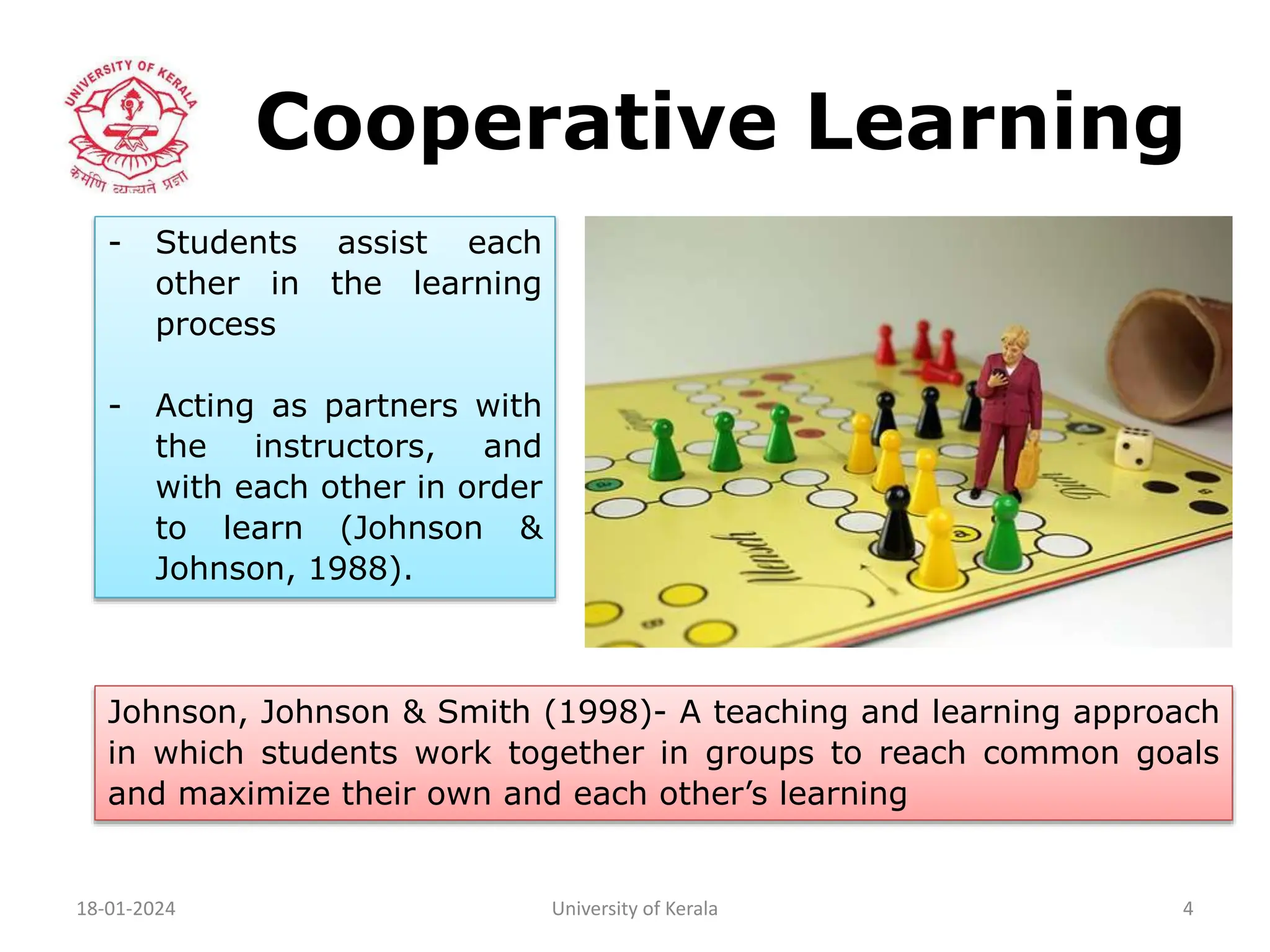
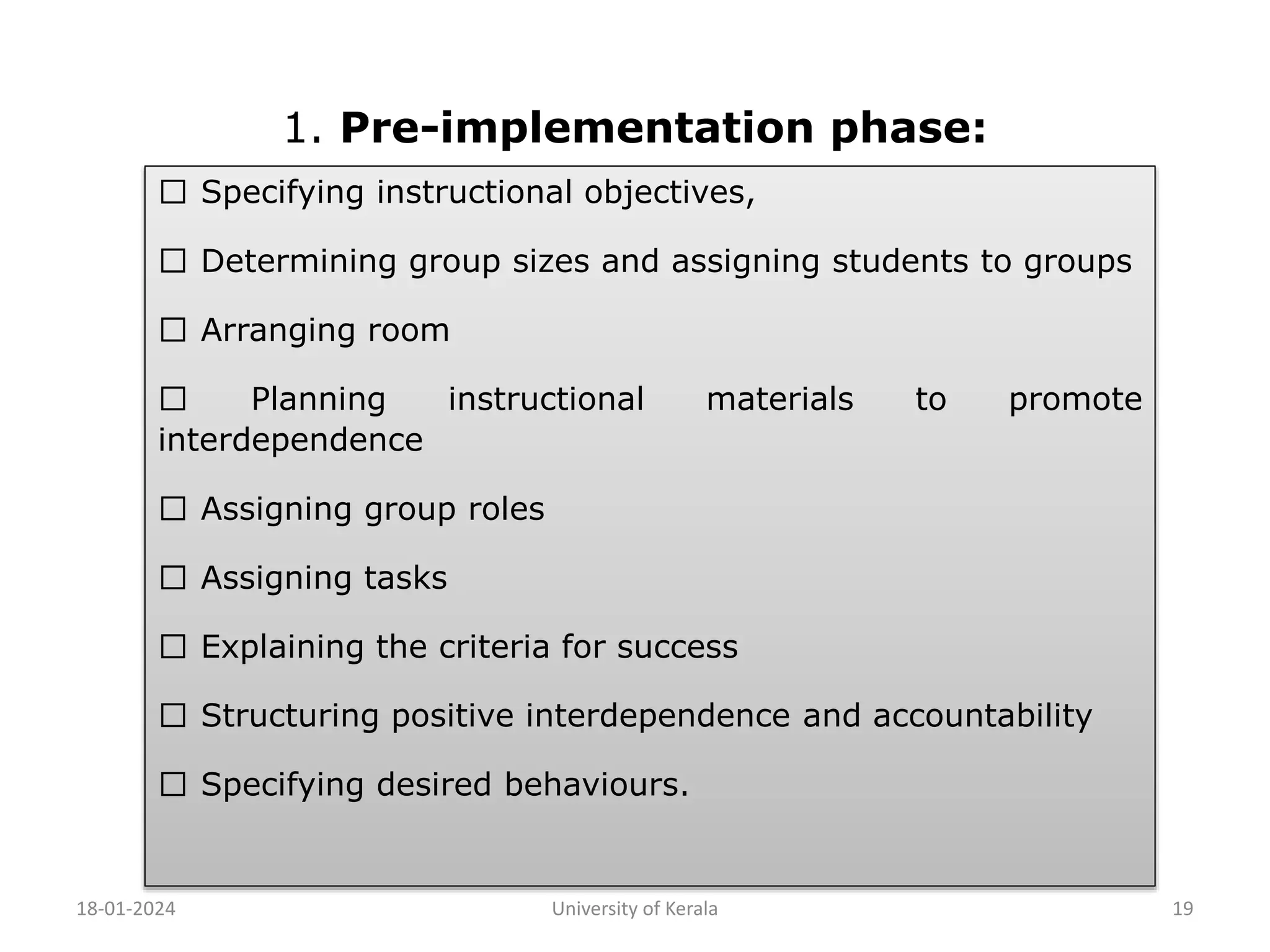
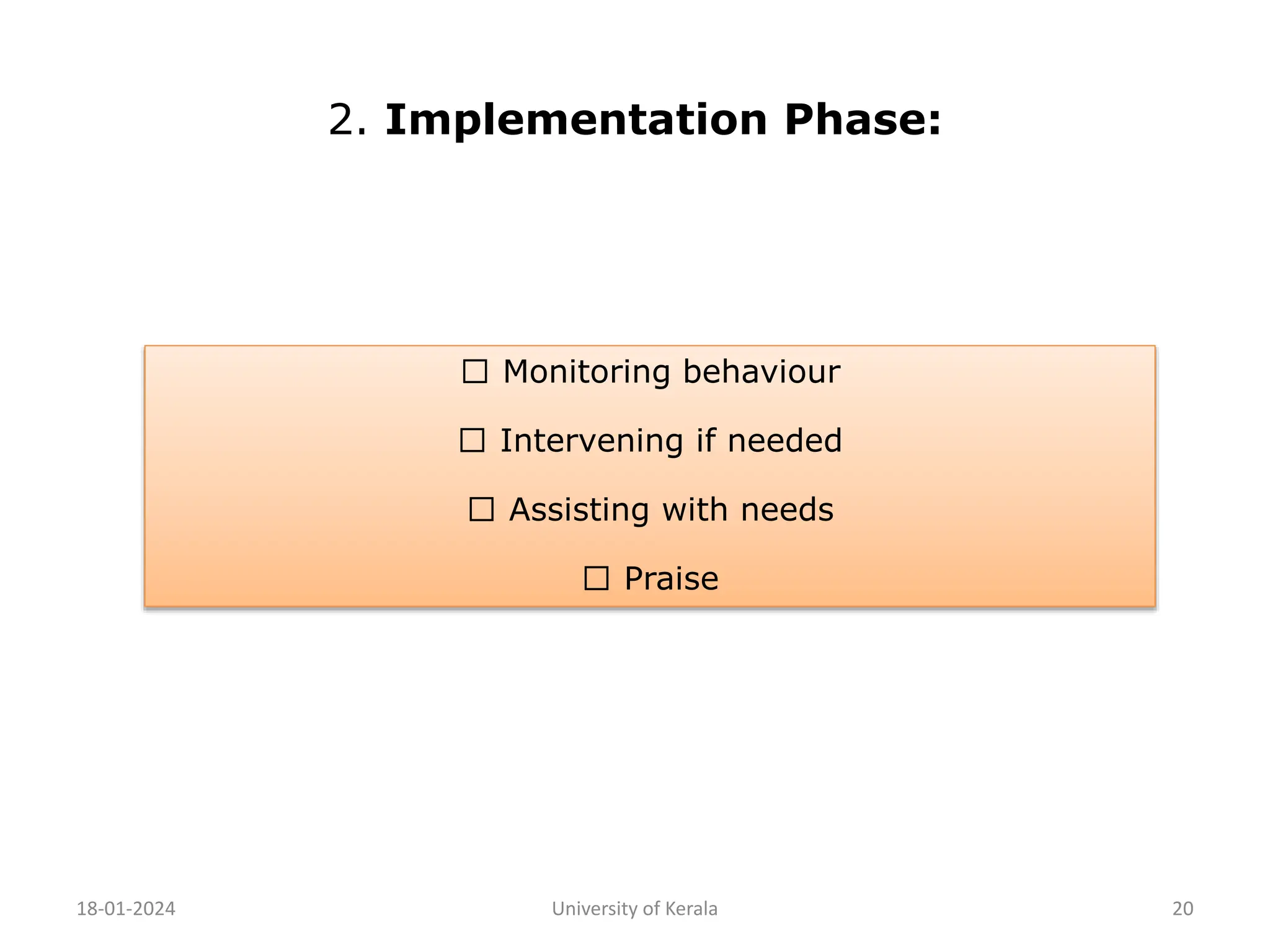
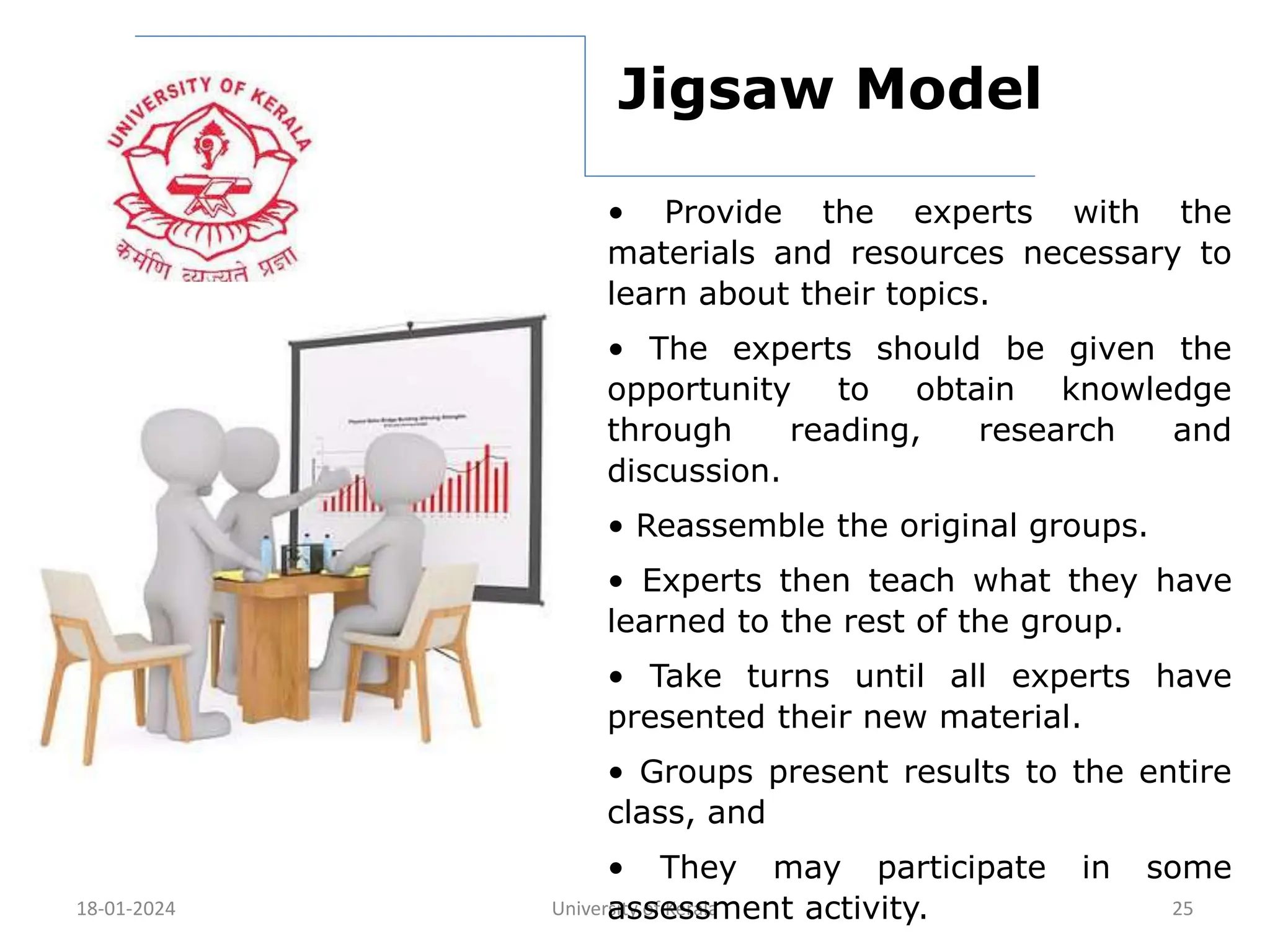
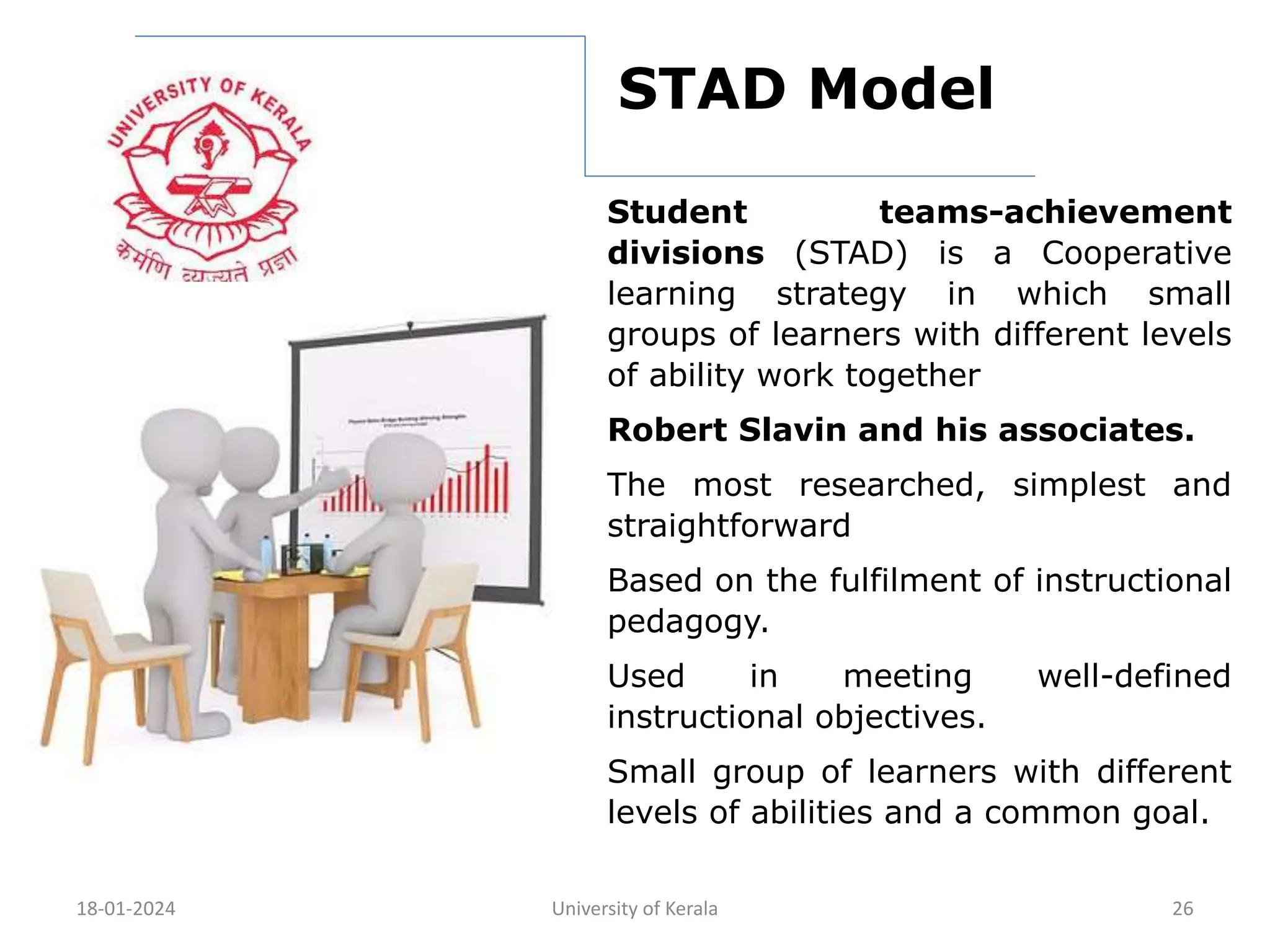


- Cooperative learning involves students working together in small groups to help one another learn. Key aspects include positive interdependence, face-to-face interaction, individual accountability, interpersonal skills development, and group processing. - There are various cooperative learning strategies teachers can use, including Jigsaw, STAD, TGT, and GI. Jigsaw involves experts from each group learning and then teaching material to their original groups. STAD involves heterogeneous groups working towards a common goal. - Implementing cooperative learning follows three phases - pre-implementation to set up groups and materials, implementation where the teacher monitors and assists, and post-implementation for reflection and evaluation. Cooperative learning has been shown to increase motivation


