Jonathan Romm, Palak Dudani, and Shivani Prakash
RSD9 Symposium - Systemic Design for Well-being: From Human to Humane
Conversations
in Healthcare
Service Design
The Oslo School of Architecture and Design (AHO) - Institute of Design
The Oslo School of Architecture and Design AHO
Institute of Design
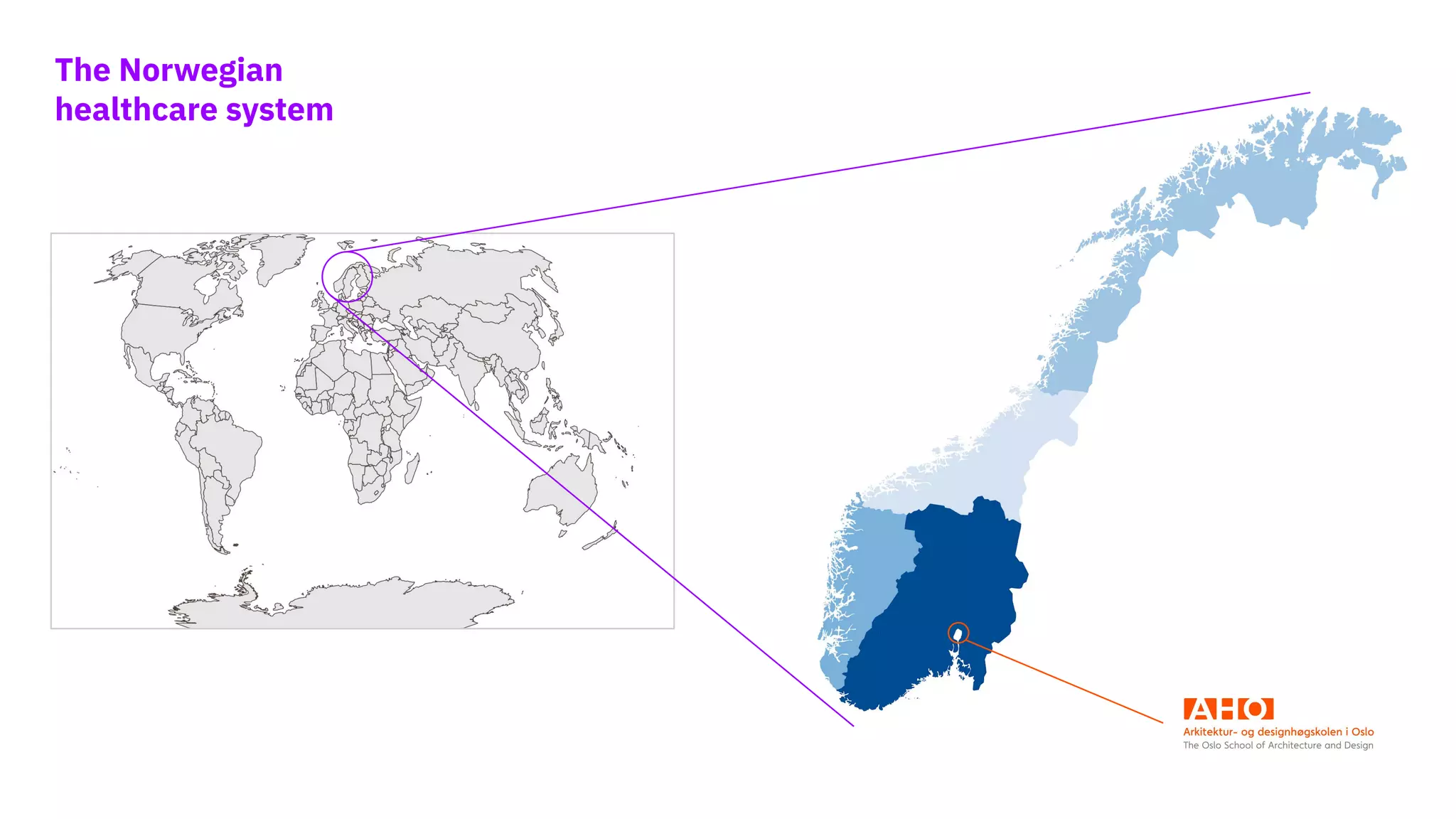
The Norwegian
healthcare system
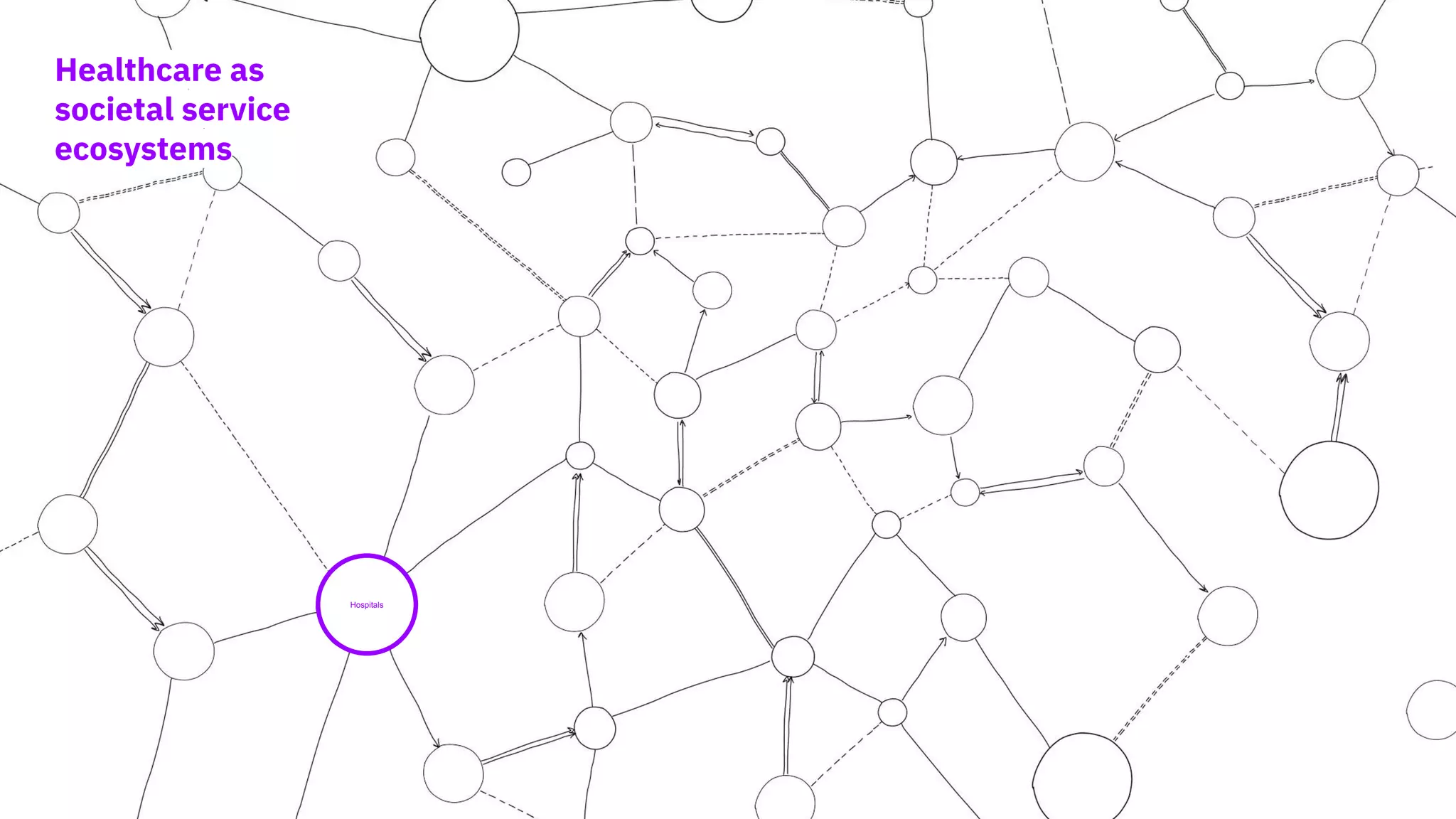
Healthcare as
societal service
ecosystems
Hospitals
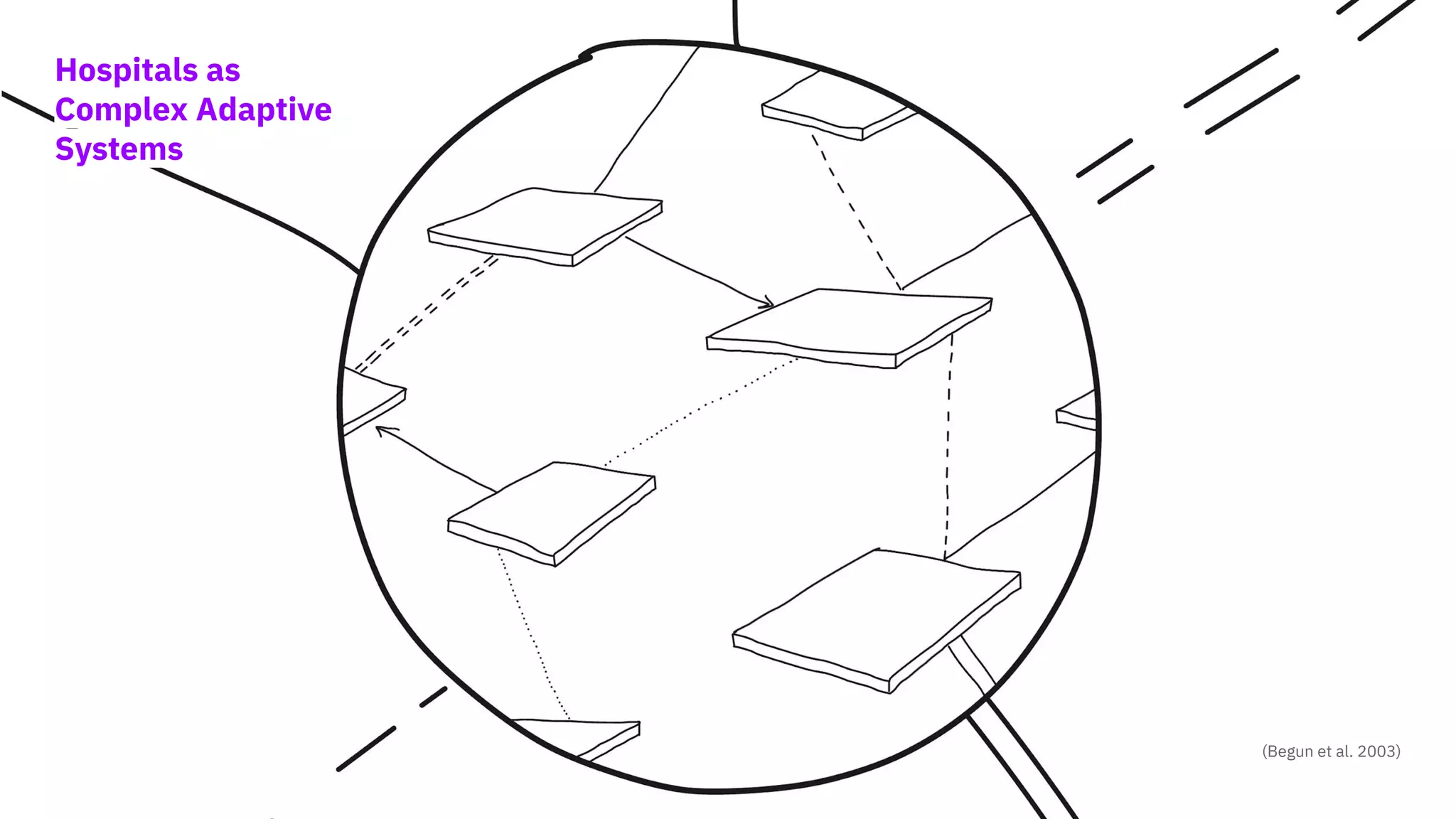
Hospitals as
Complex Adaptive
Systems
(Begun et al. 2003)
(Begun, Zimmerman,
& Dooley, 2003)
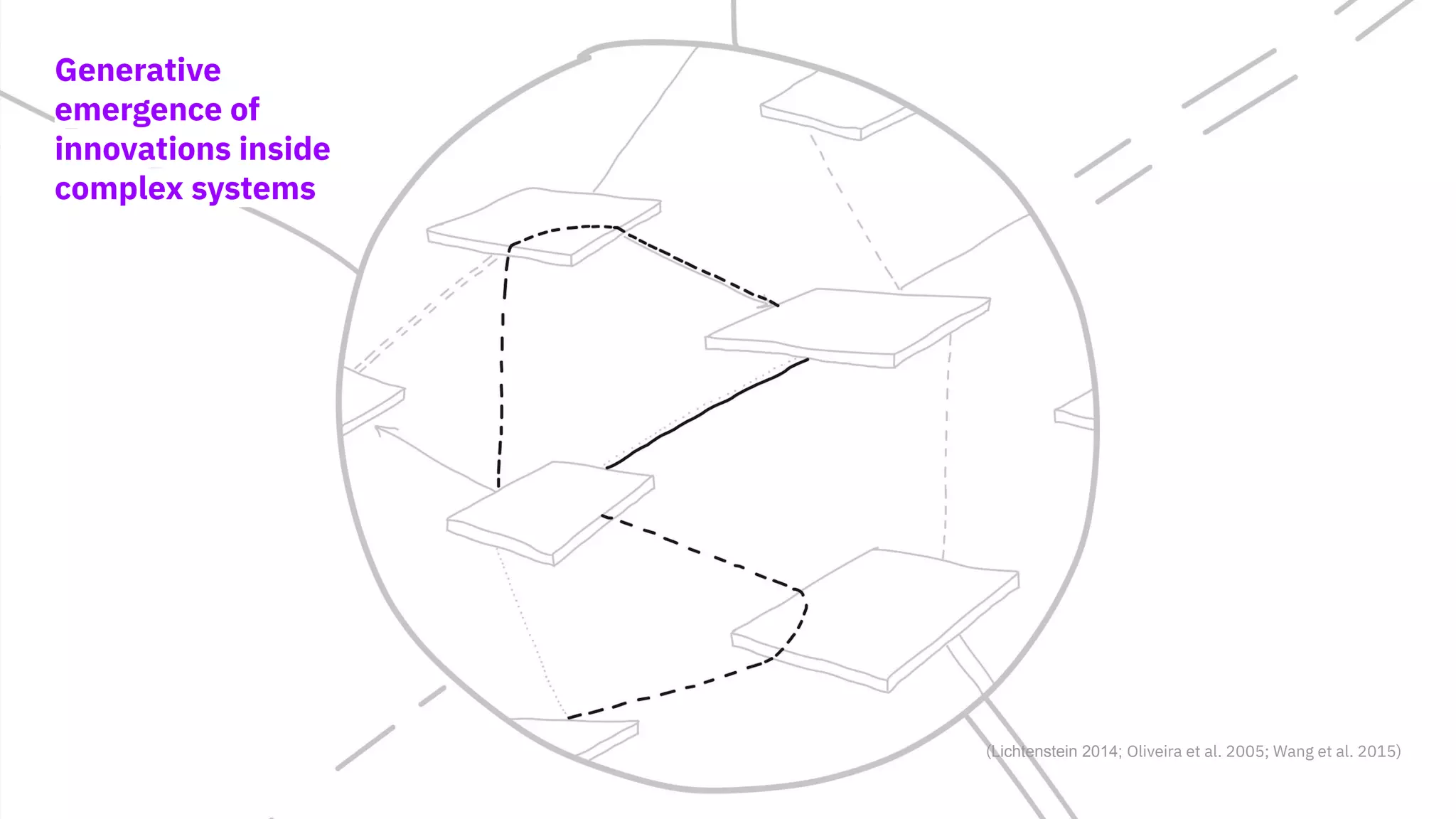
(Begun et al. 2003; Lichtenstein,2014; Oliveira et al. 2005; Wang et al. 2015)
(Lichtenstein 2014; Oliveira et al. 2005; Wang et al. 2015)
Generative
emergence of
innovations inside
complex systems
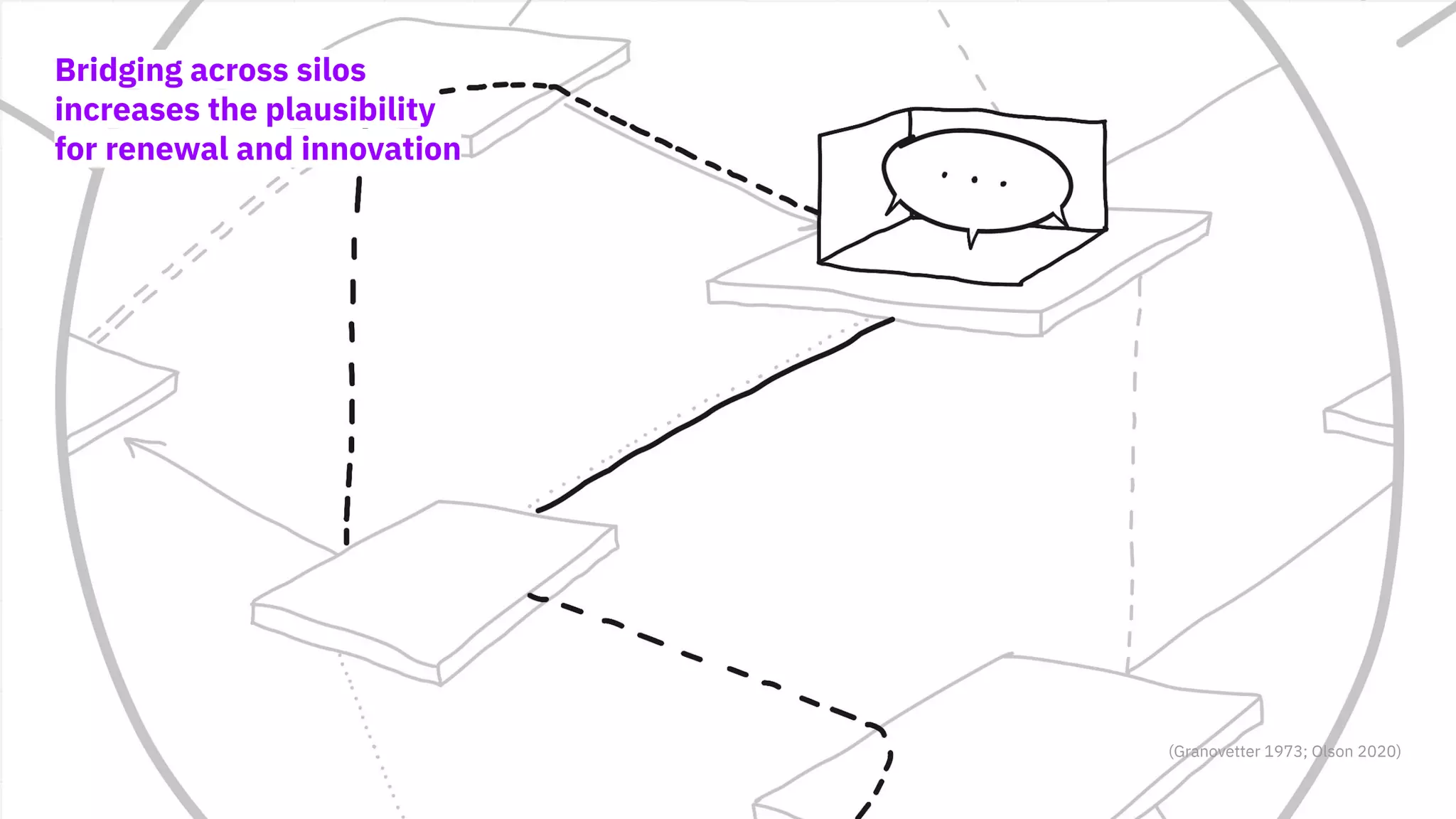
(Granovetter 1973; Olson 2020)
Bridging across silos
increases the plausibility
for renewal and innovation
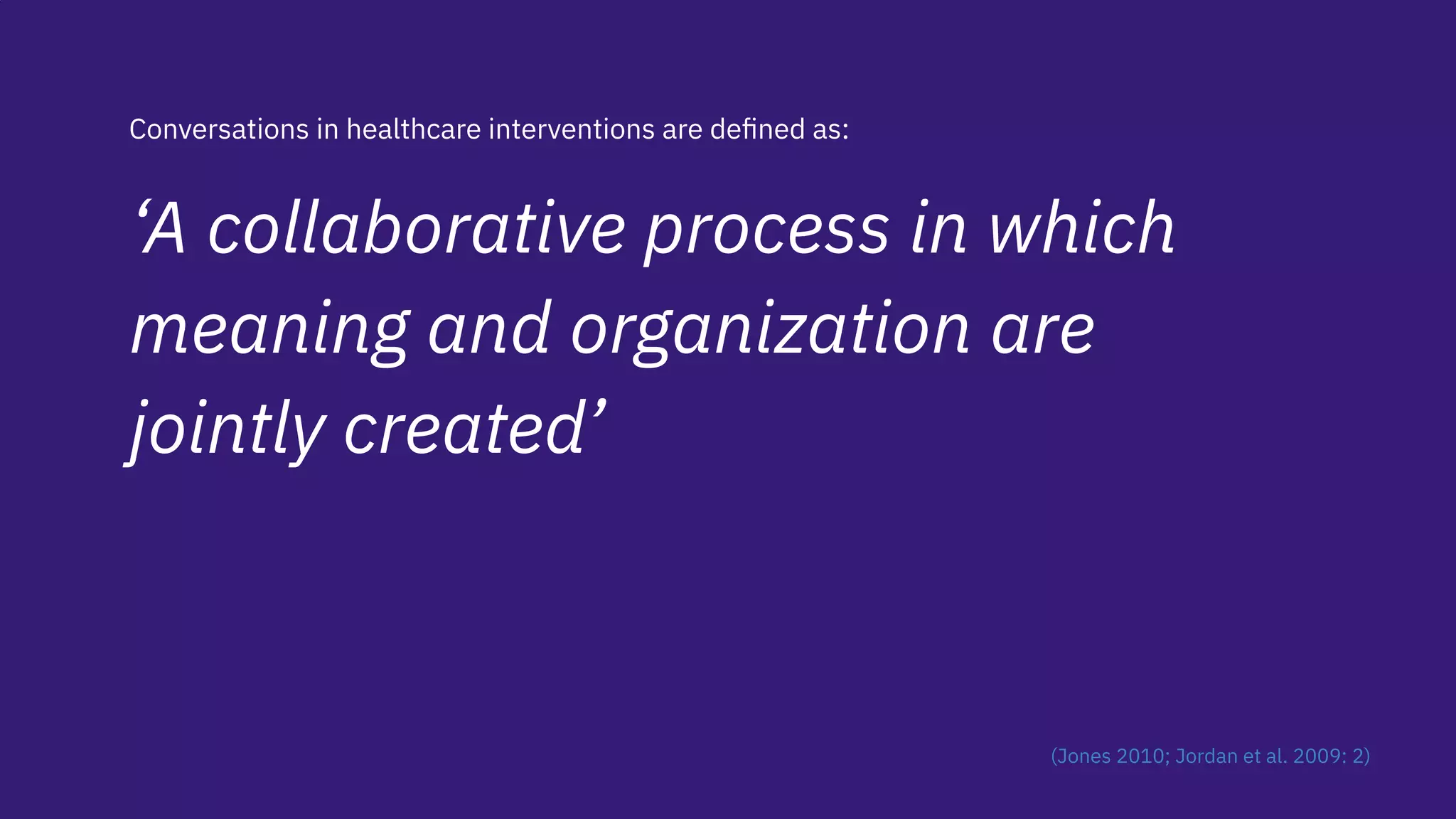
Conversations in healthcare interventions are defined as:
‘A collaborative process in which
meaning and organization are
jointly created’
(Jones 2010; Jordan et al. 2009: 2)
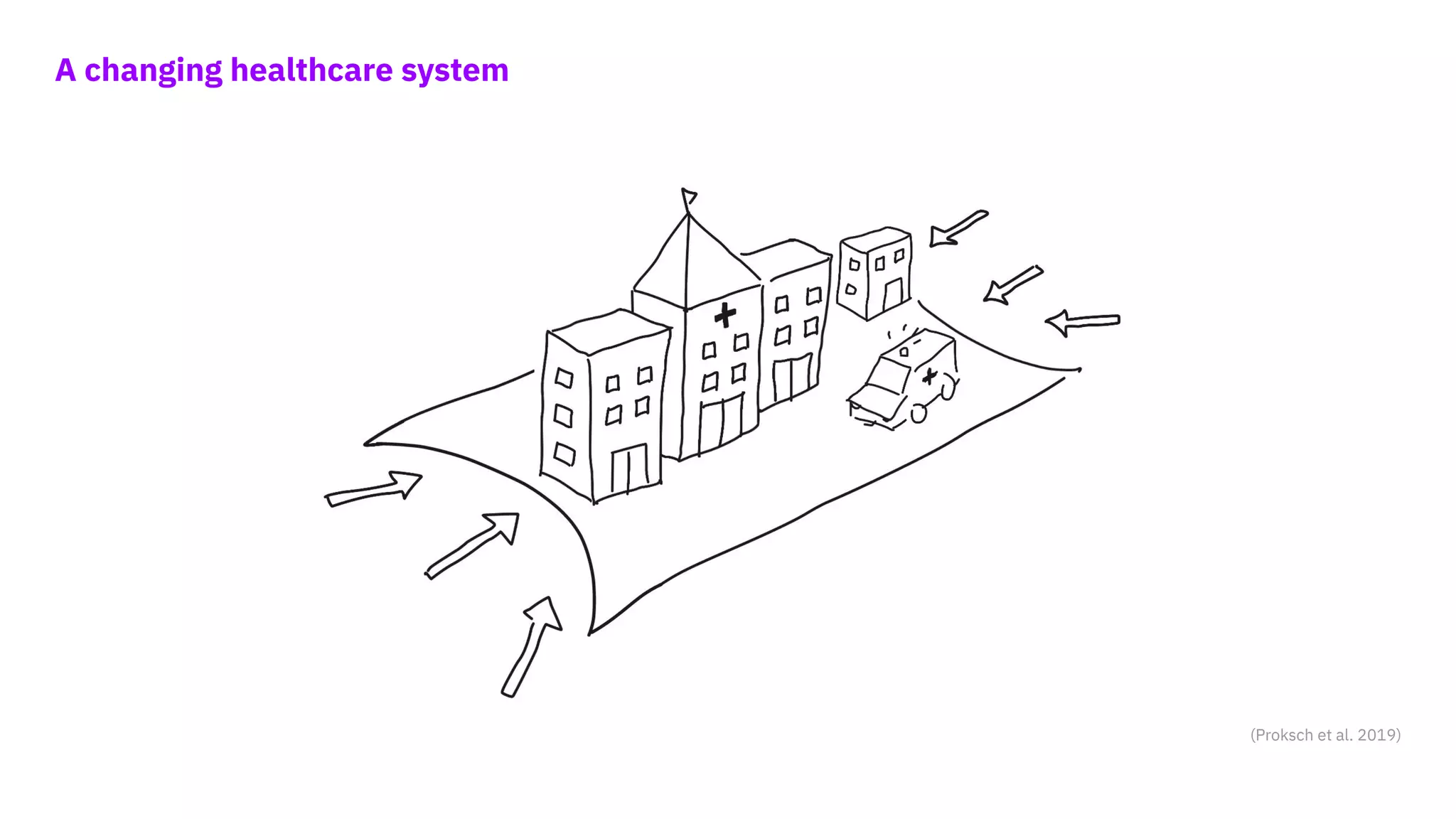
A changing healthcare system
(Proksch et al. 2019)
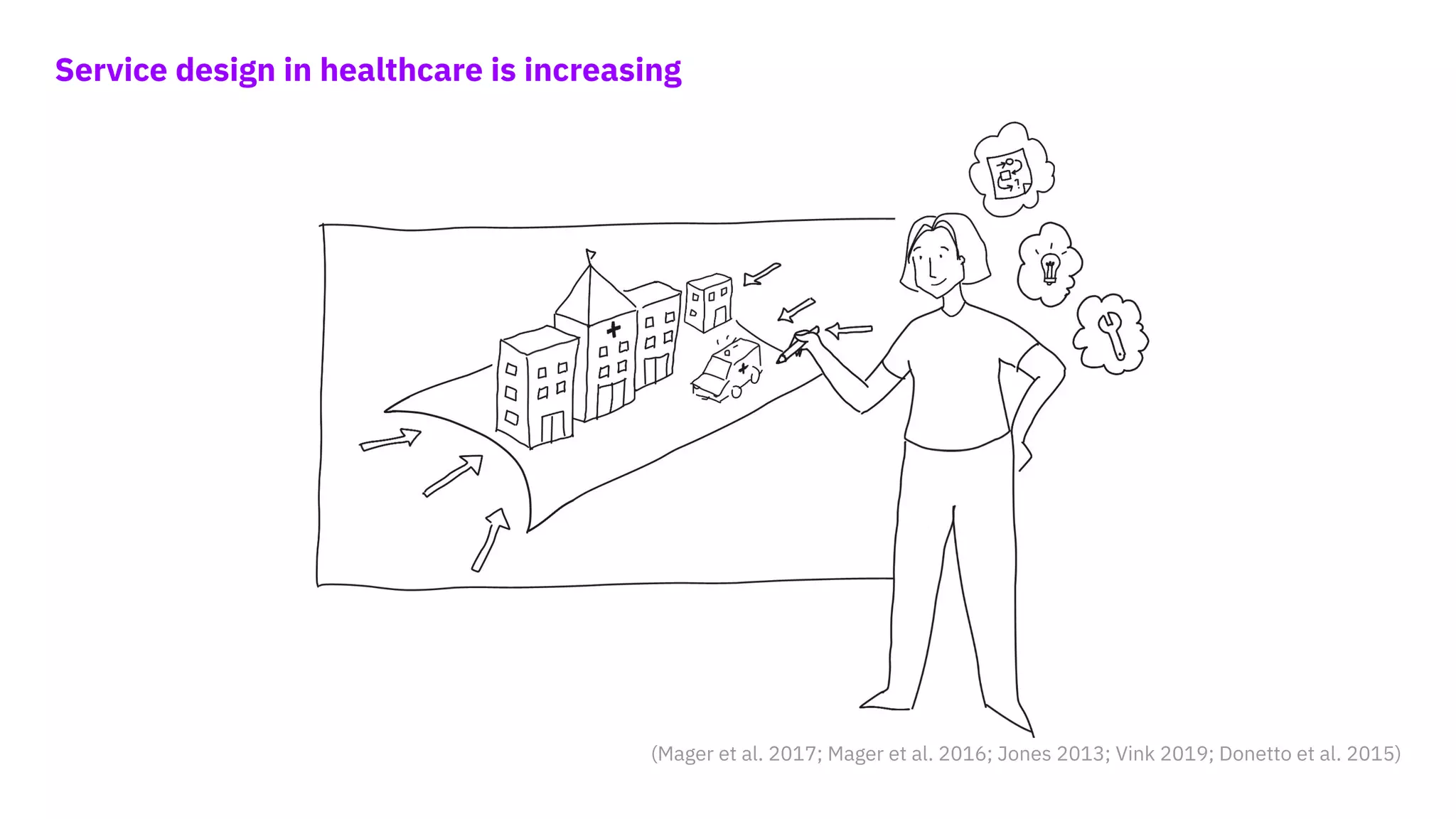
Service design in healthcare is increasing
(Mager et al. 2017; Mager et al. 2016; Jones 2013; Vink 2019; Donetto et al. 2015)
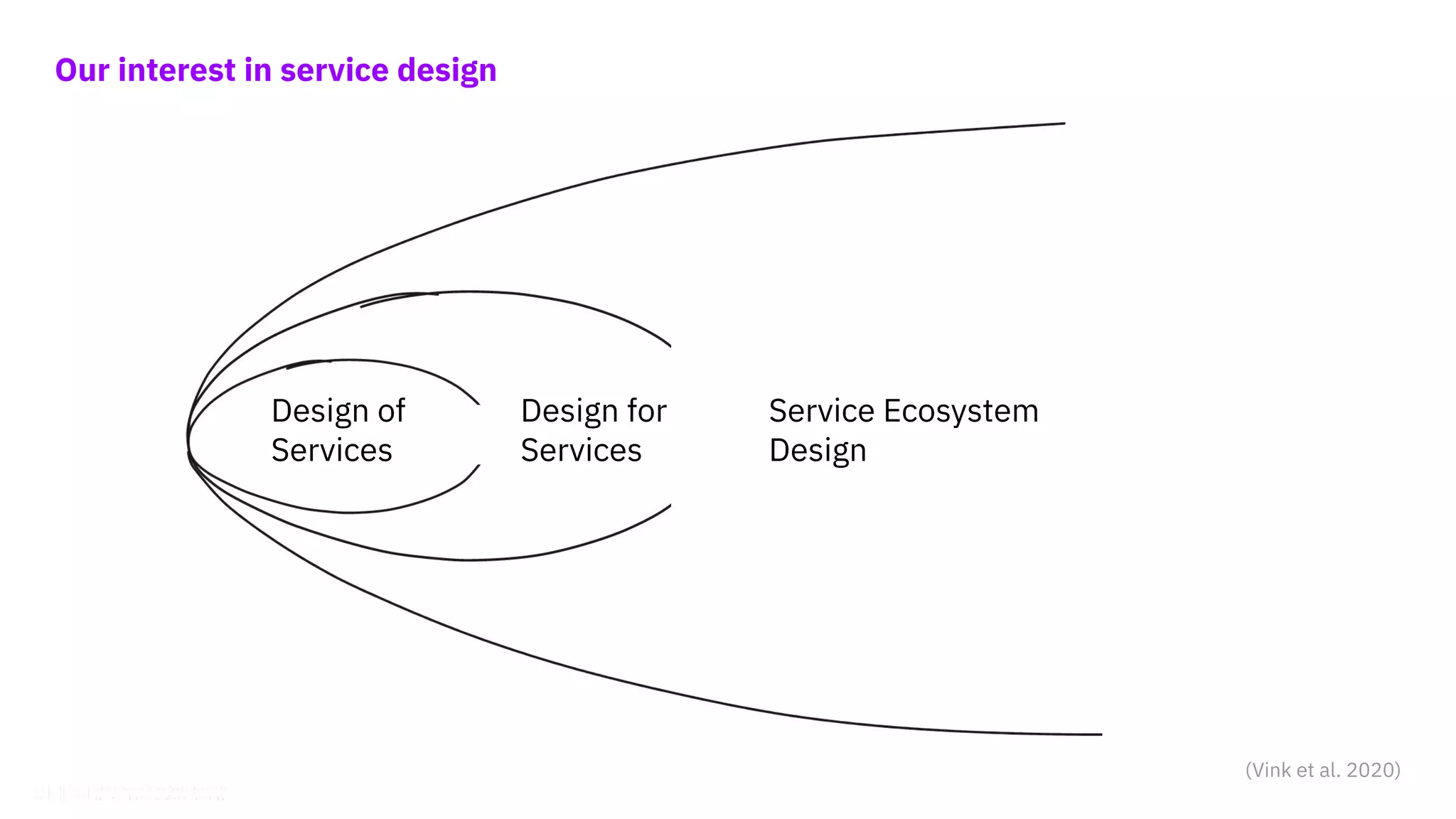
(Vink et al. 2020)
Our interest in service design
Design of
Services
Design for
Services
Service Ecosystem
Design
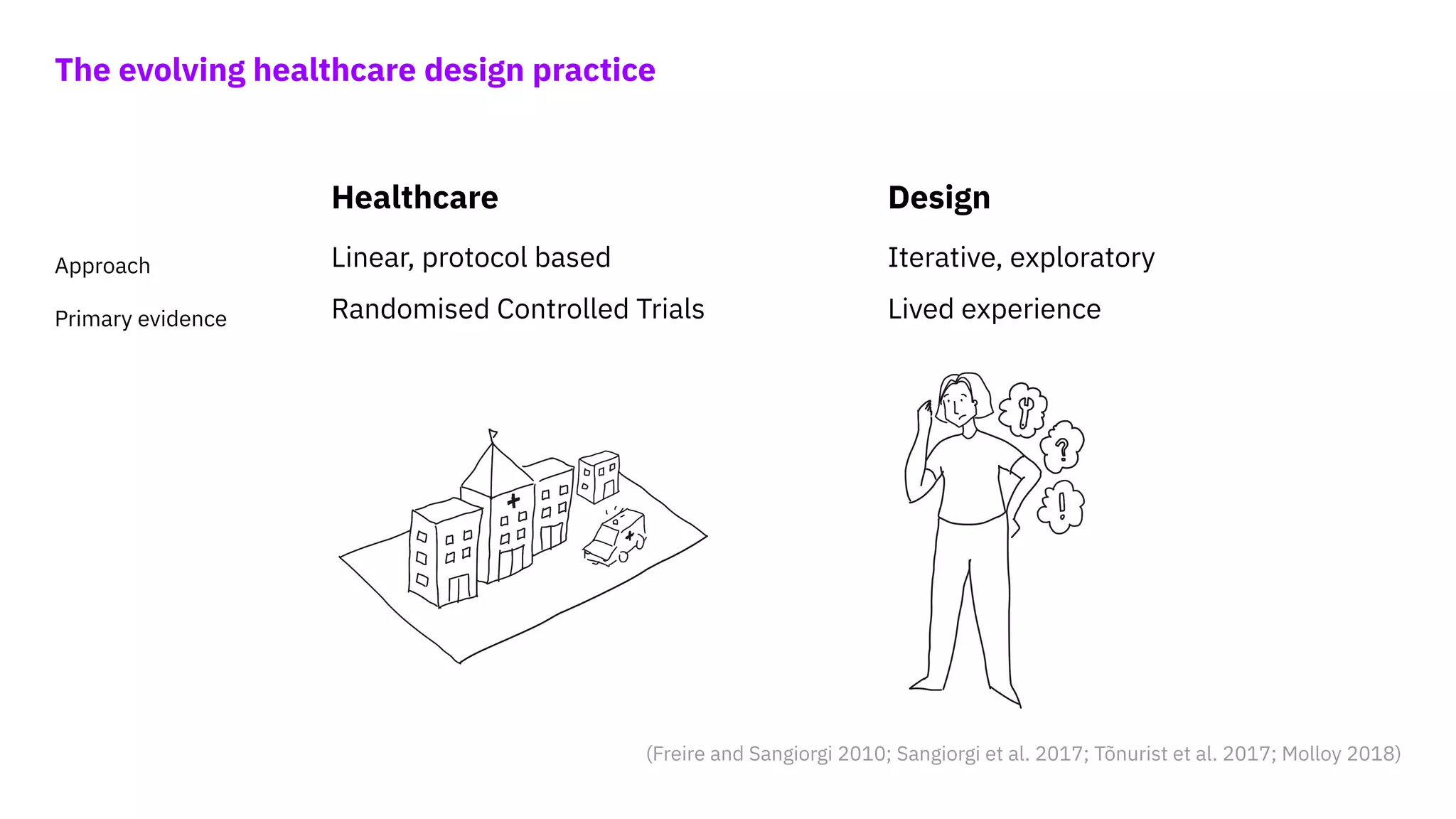
The evolving healthcare design practice
Healthcare Design
Iterative, exploratory
Lived experience
Linear, protocol based
Randomised Controlled Trials
Approach
Primary evidence
(Freire and Sangiorgi 2010; Sangiorgi et al. 2017; Tõnurist et al. 2017; Molloy 2018)
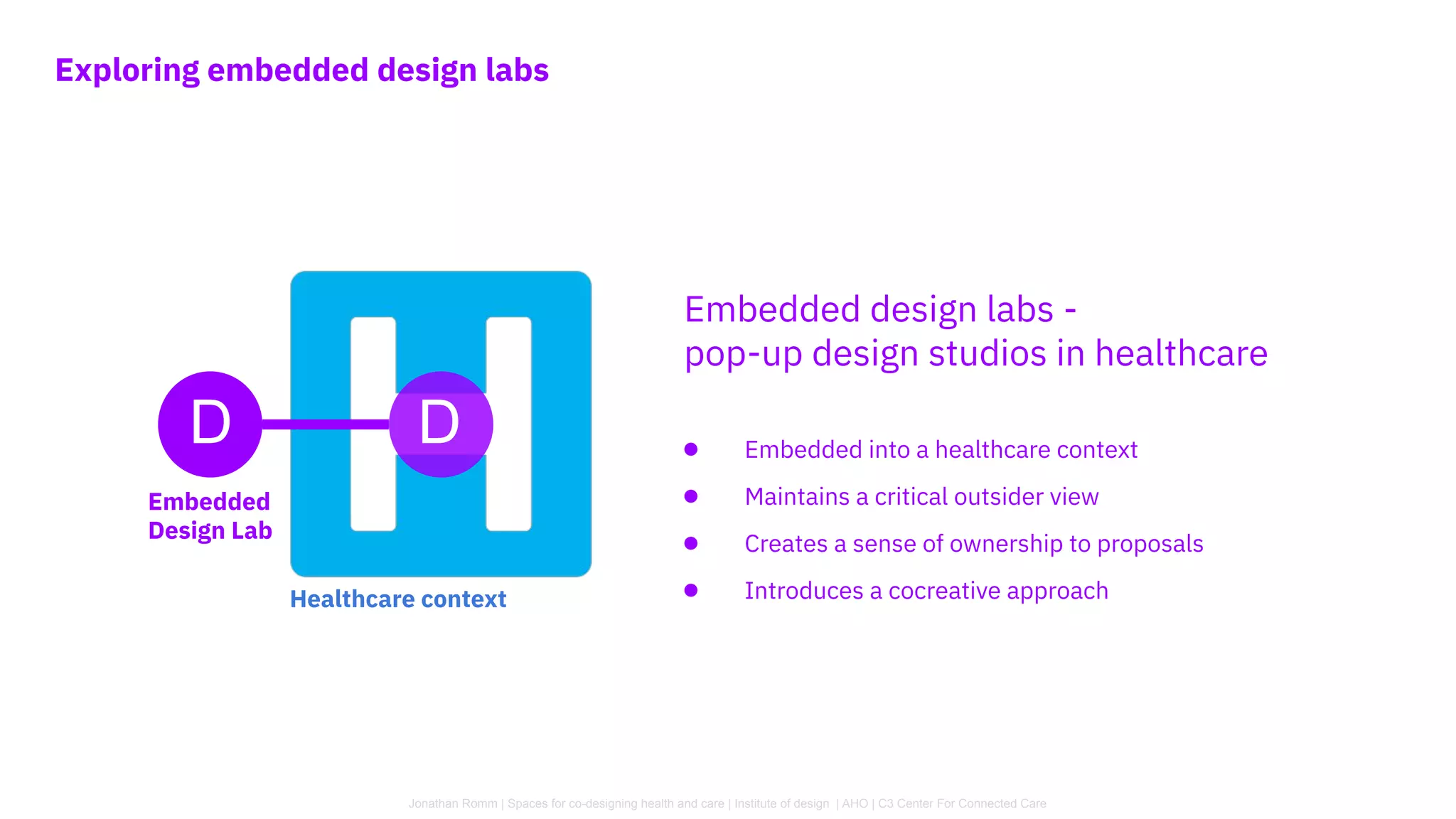
Embedded design labs -
pop-up design studios in healthcare
● Embedded into a healthcare context
● Maintains a critical outsider view
● Creates a sense of ownership to proposals
● Introduces a cocreative approach
Jonathan Romm | Spaces for co-designing health and care | Institute of design | AHO | C3 Center For Connected Care
Embedded
Design Lab
D D
Exploring embedded design labs
Healthcare context
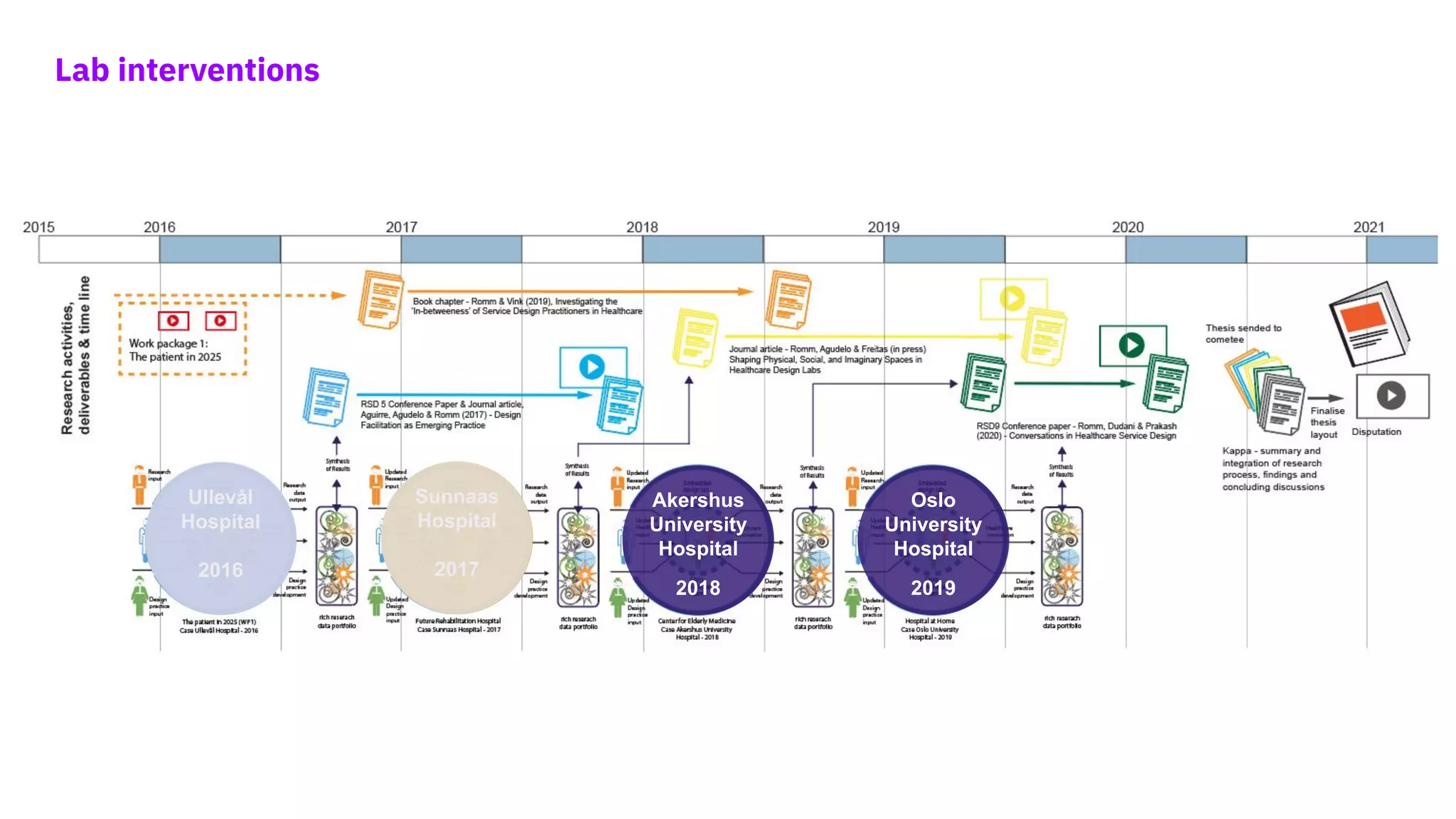
Ullevål
Hospital
2016
Sunnaas
Hospital
2017
Akershus
University
Hospital
2018
Oslo
University
Hospital
2019
Lab interventions
How do service designers in
embedded design labs help to
change the conversations inside
healthcare systems?
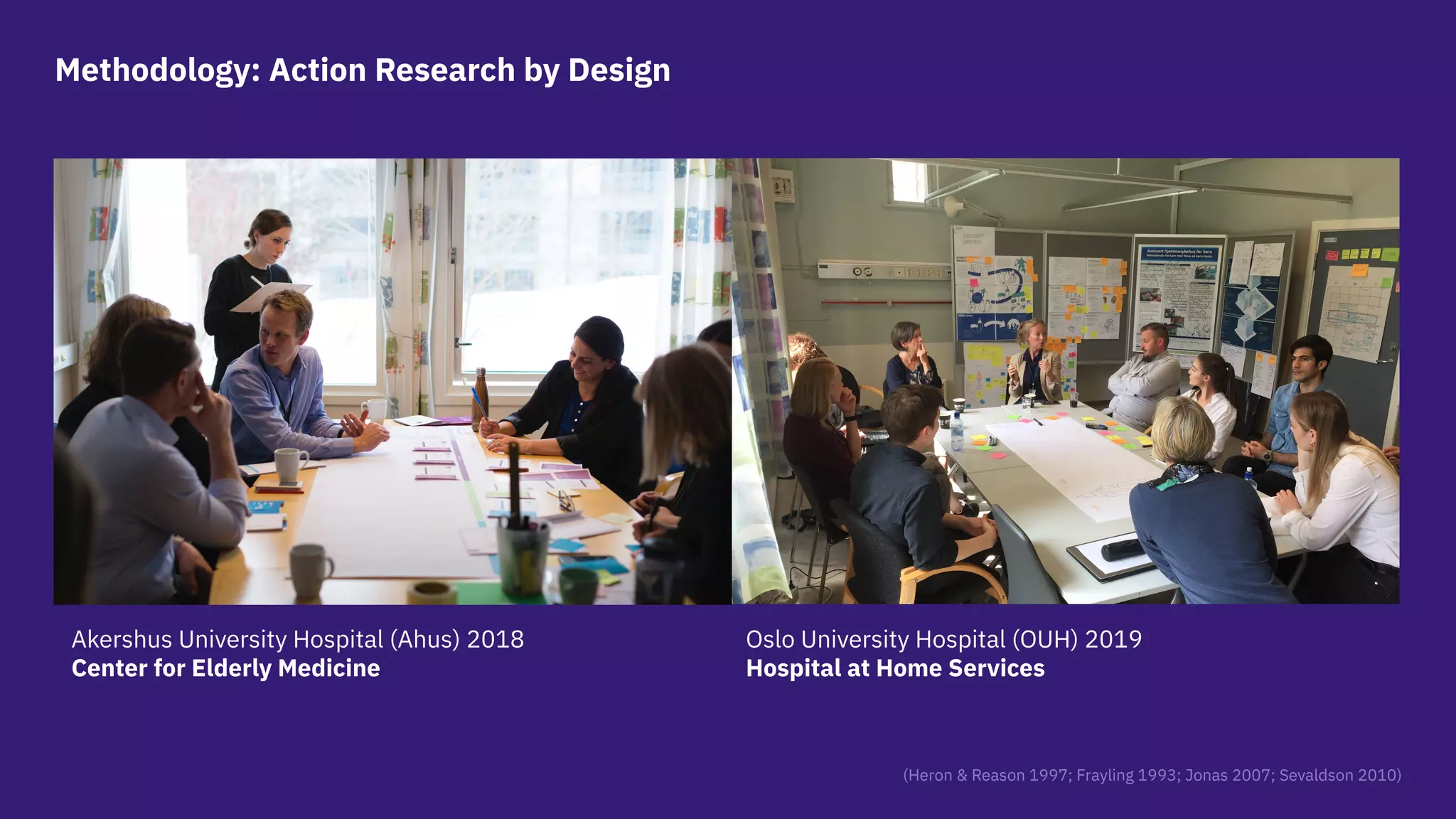
Akershus University Hospital (Ahus) 2018
Center for Elderly Medicine
Oslo University Hospital (OUH) 2019
Hospital at Home Services
Methodology: Action Research by Design
(Heron & Reason 1997; Frayling 1993; Jonas 2007; Sevaldson 2010)
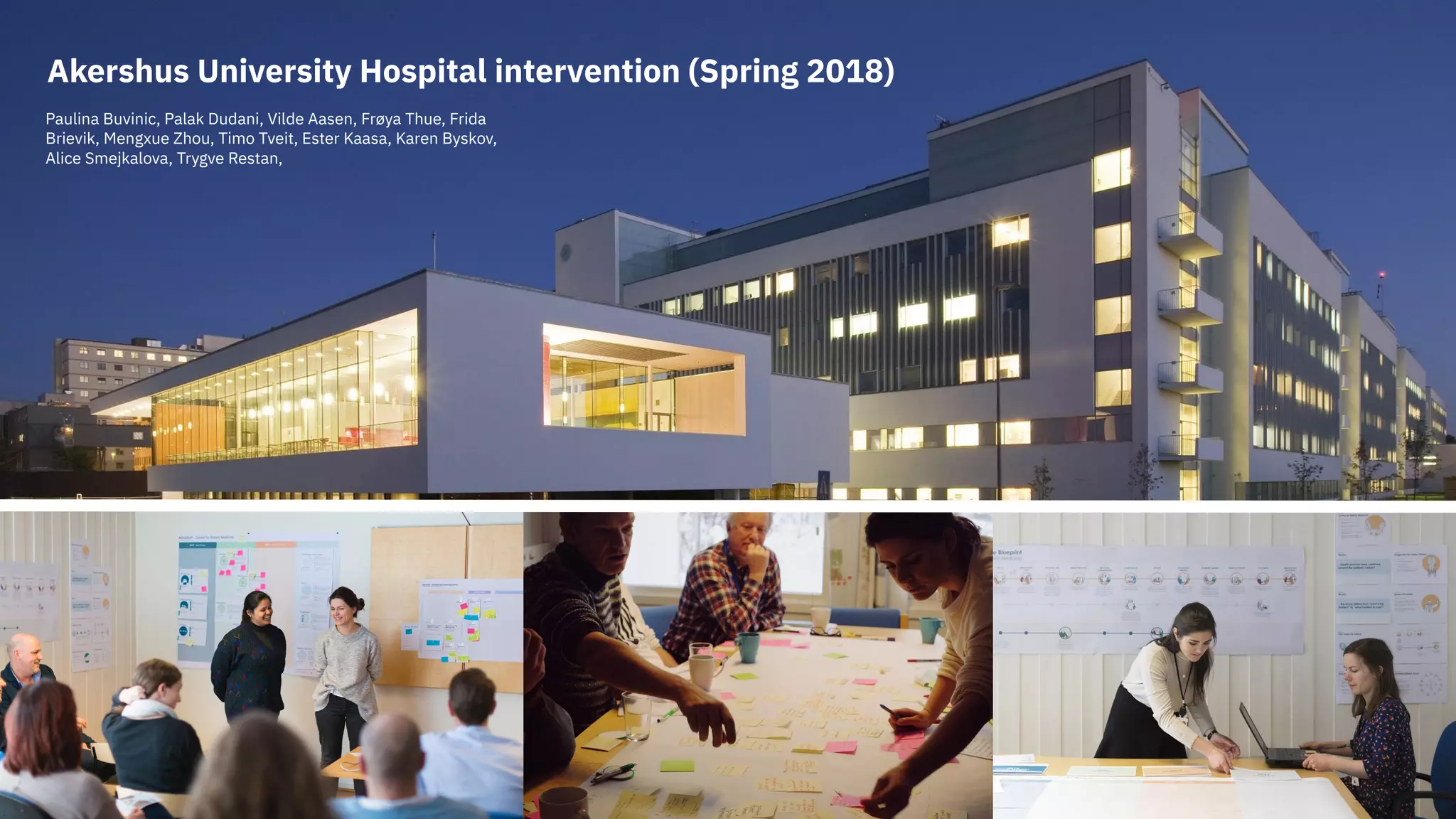
Paulina Buvinic, Palak Dudani, Vilde Aasen, Frøya Thue, Frida
Brievik, Mengxue Zhou, Timo Tveit, Ester Kaasa, Karen Byskov,
Alice Smejkalova, Trygve Restan,
Akershus University Hospital intervention (Spring 2018)
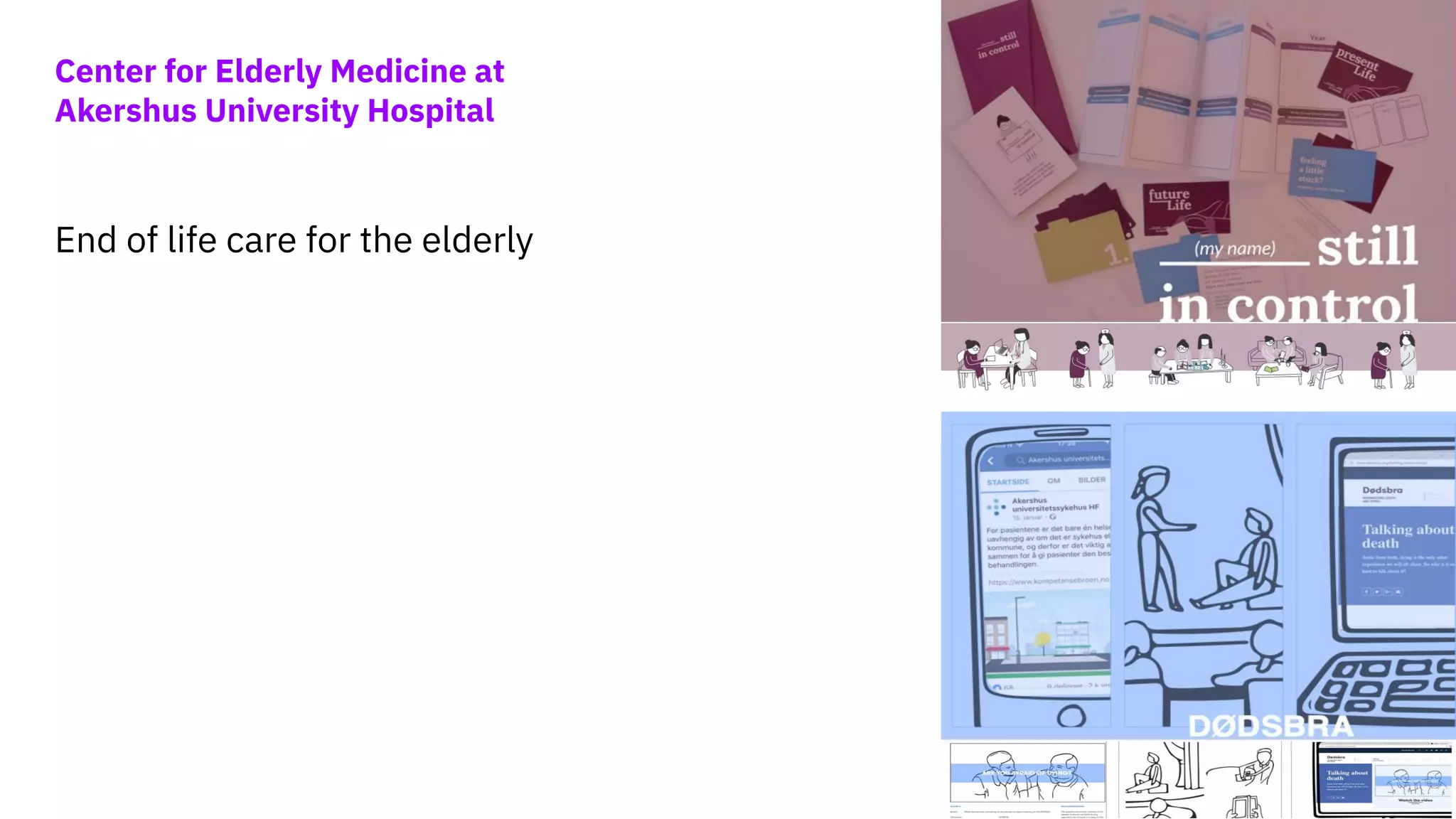
End of life care for the elderly
Center for Elderly Medicine at
Akershus University Hospital
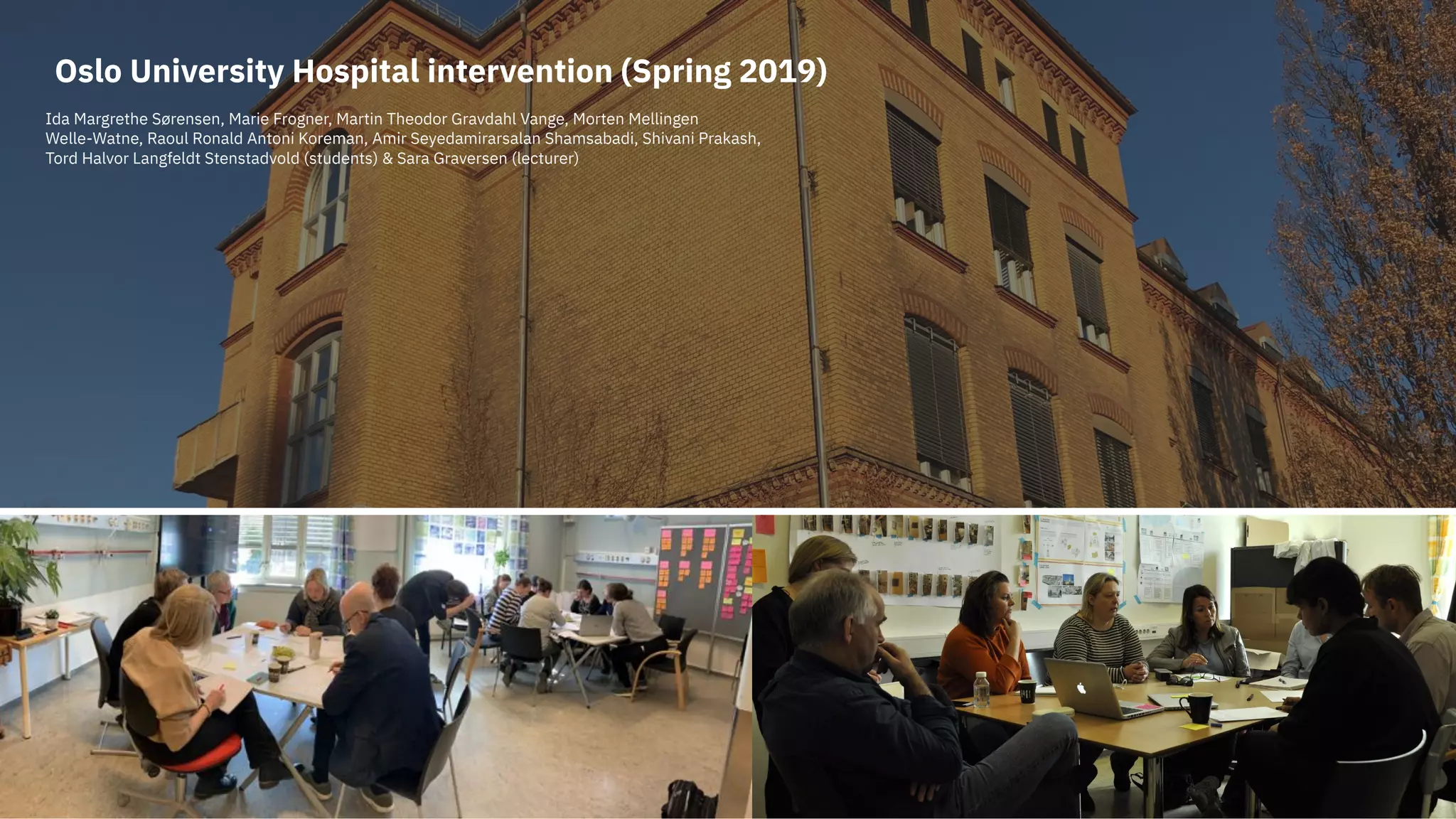
Ida Margrethe Sørensen, Marie Frogner, Martin Theodor Gravdahl Vange, Morten Mellingen
Welle-Watne, Raoul Ronald Antoni Koreman, Amir Seyedamirarsalan Shamsabadi, Shivani Prakash,
Tord Halvor Langfeldt Stenstadvold (students) & Sara Graversen (lecturer)
Oslo University Hospital intervention (Spring 2019)
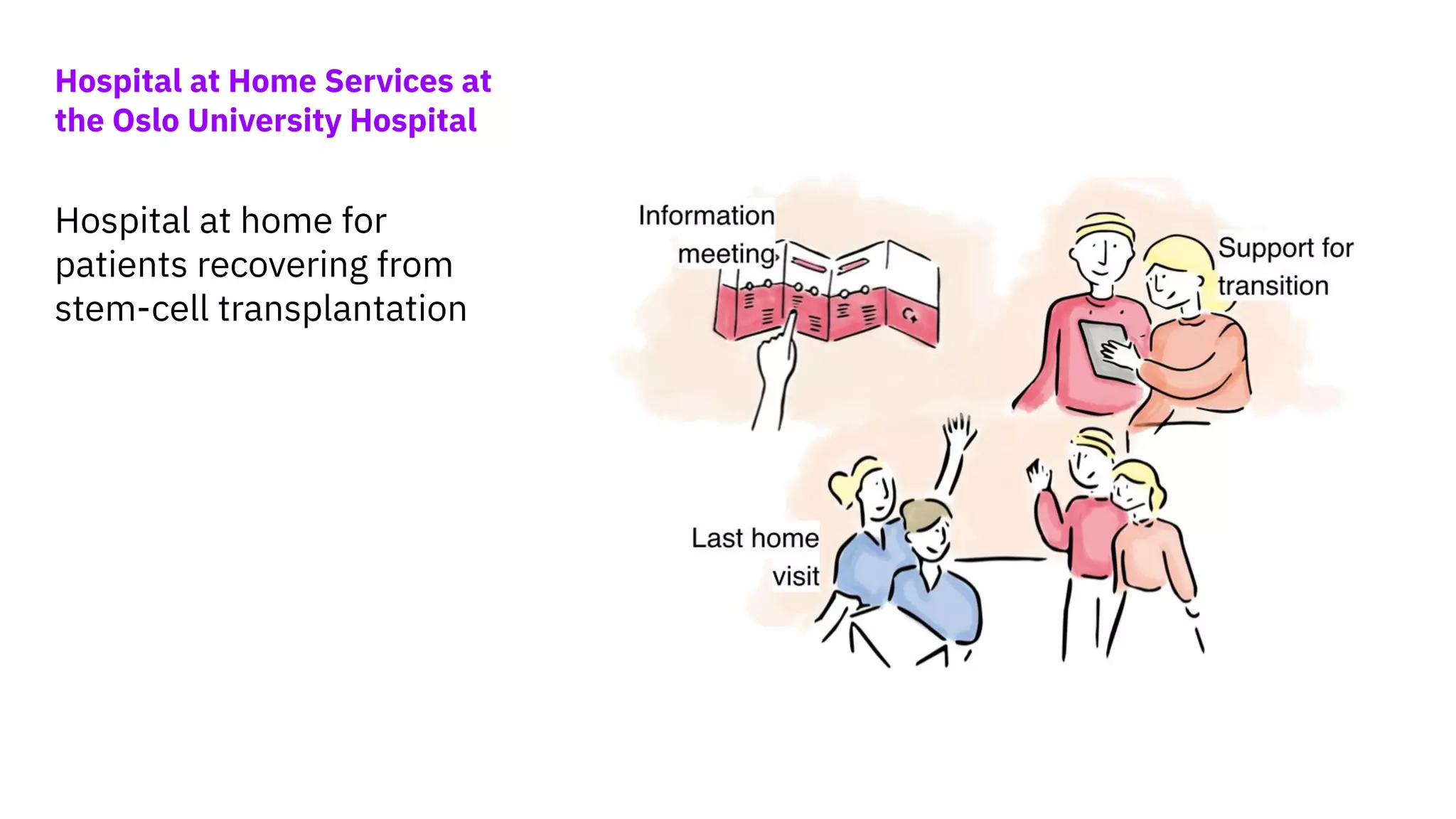
Hospital at Home Services at
the Oslo University Hospital
Hospital at home for
patients recovering from
stem-cell transplantation
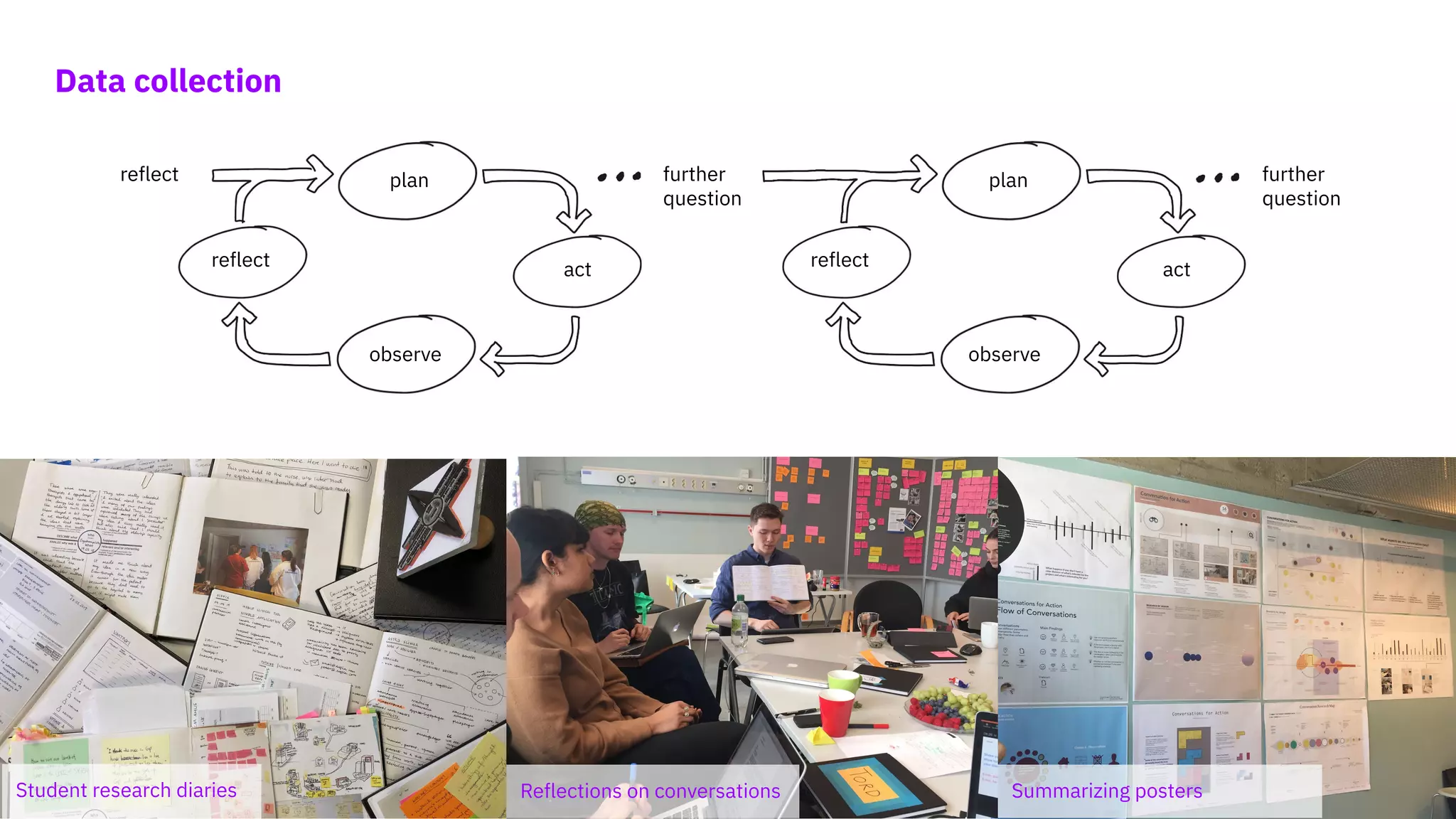
Student research diaries Reflections on conversations Summarizing posters
reflect
plan
act
observe
reflect further
question
reflect
plan
act
observe
further
question
Data collection
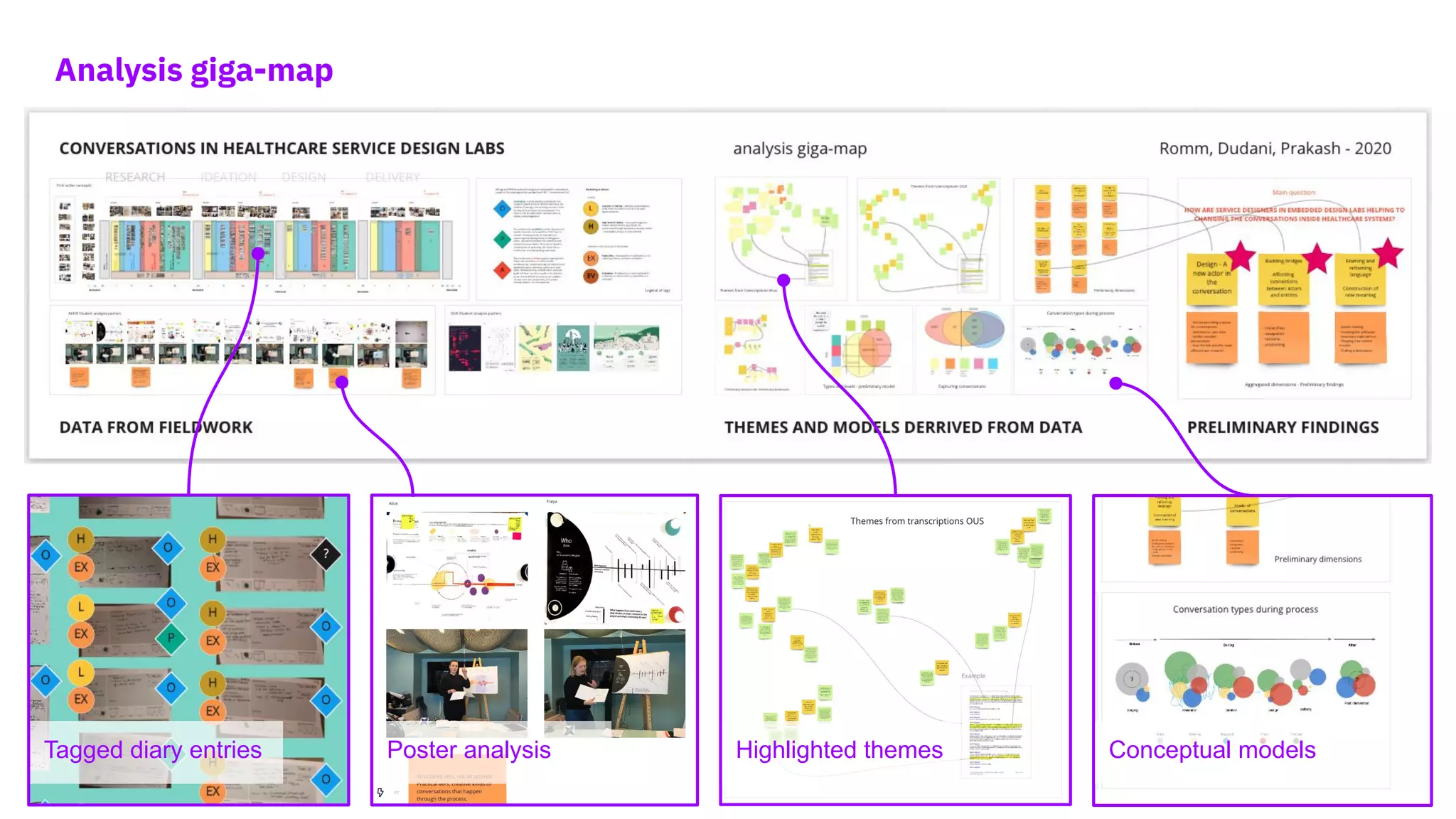
Analysis giga-map
Tagged diary entries Poster analysis Highlighted themes Conceptual models
Findings
How did the interventions help
to change the conversation?
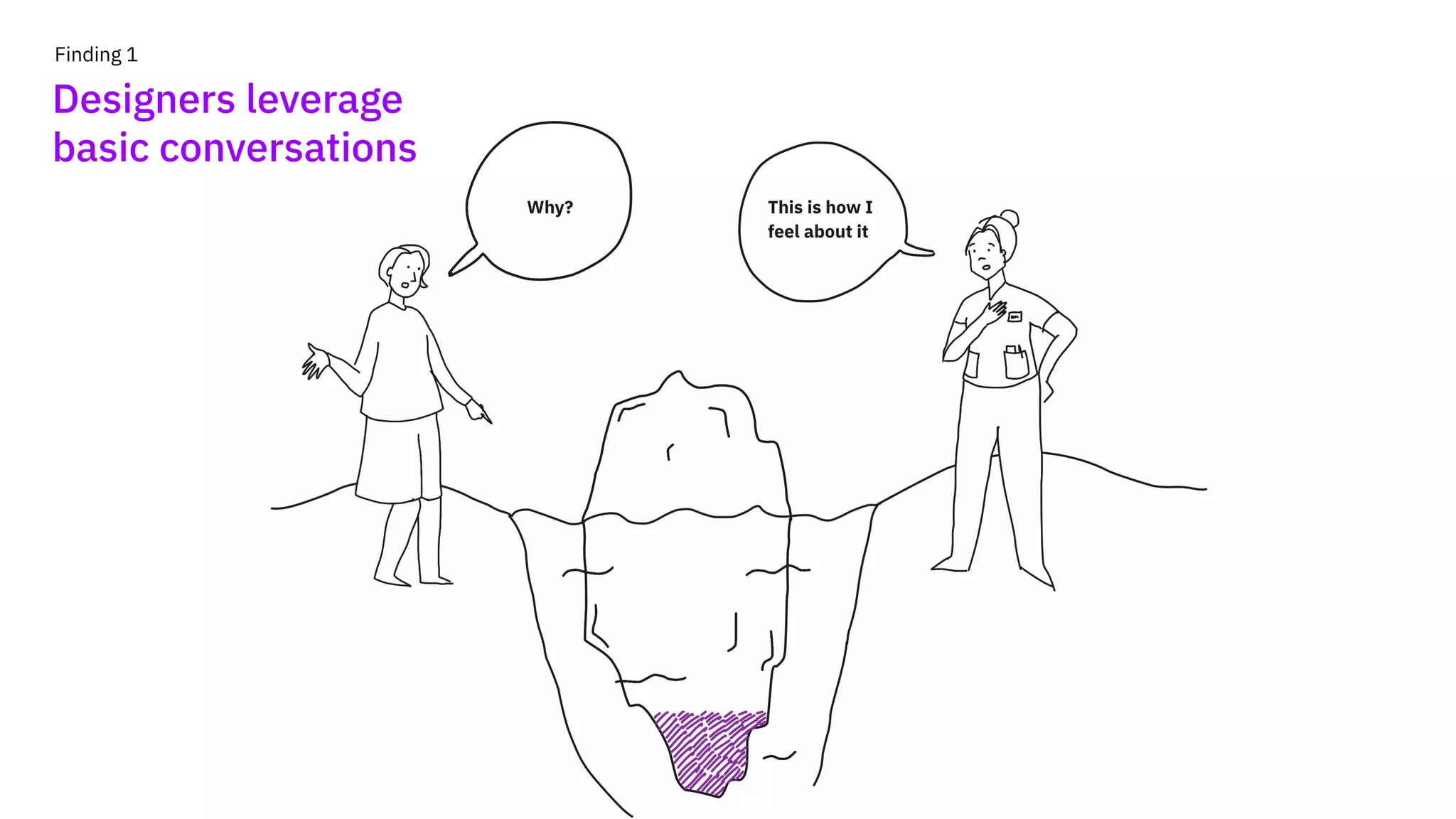
Finding 1
Designers leverage
basic conversations
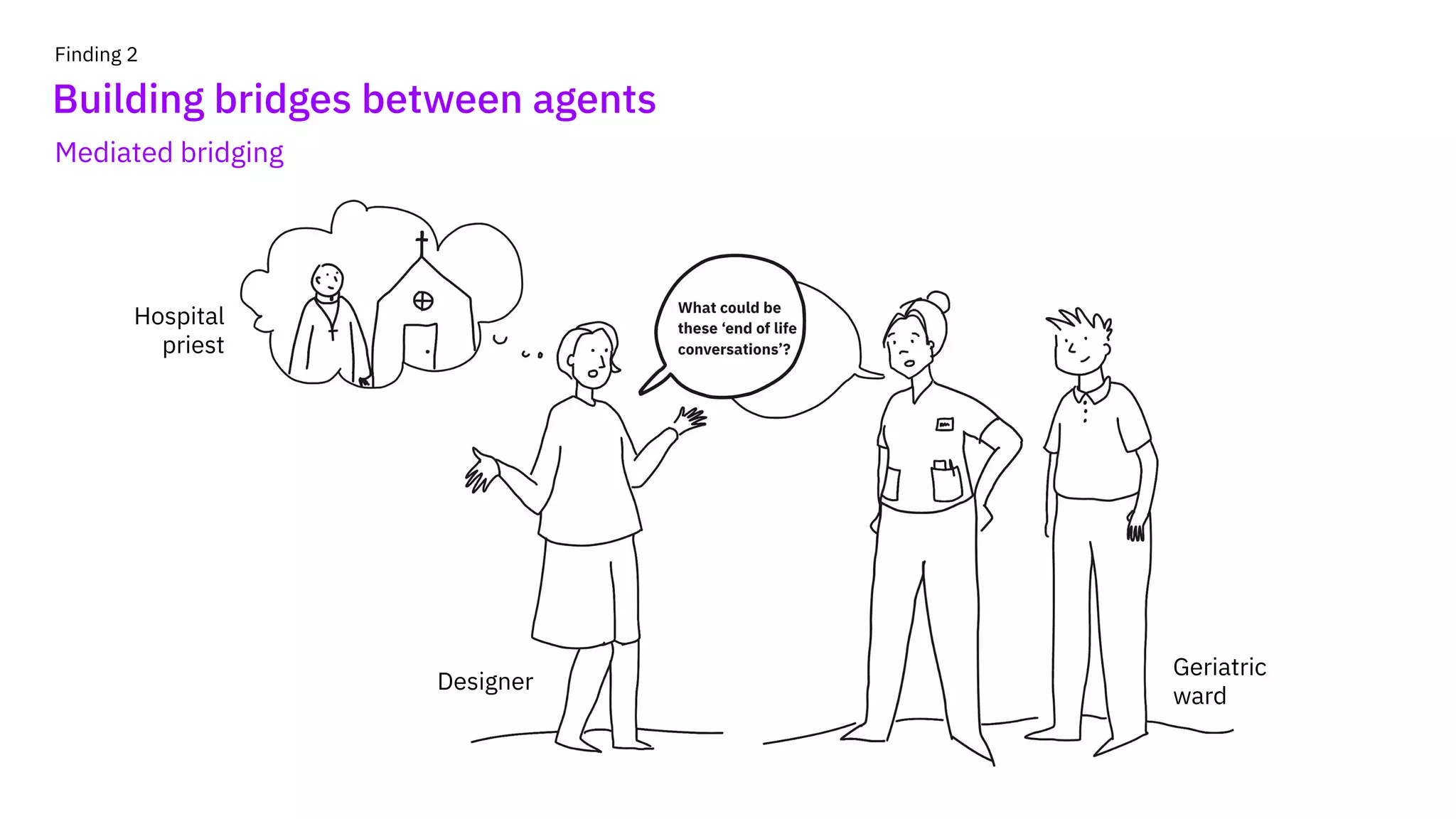
Mediated bridging
Finding 2
Building bridges between agents
Mediated bridging
Designer
Geriatric
ward
Hospital
priest
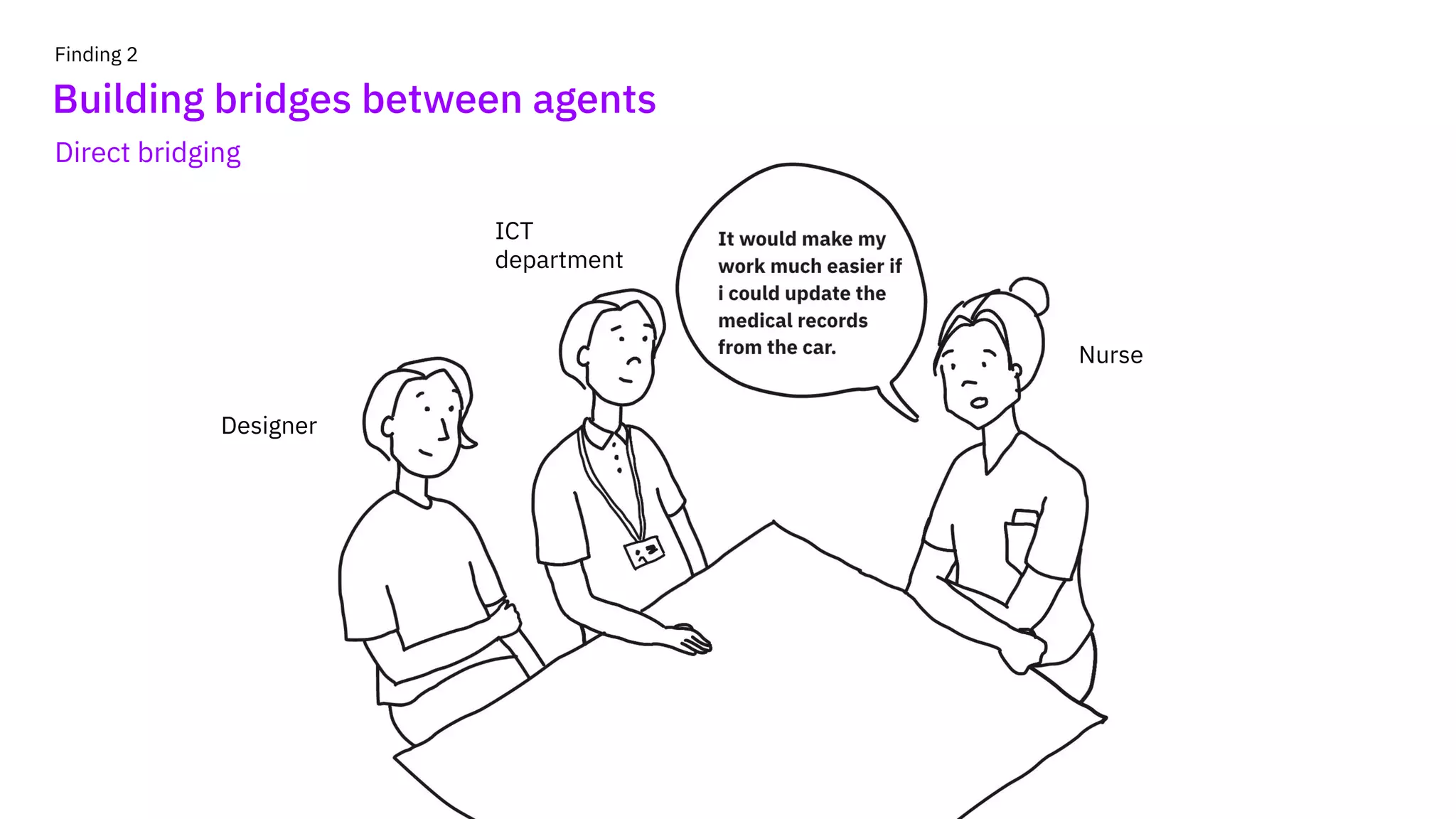
Finding 2
Building bridges between agents
Direct bridging
Designer
Nurse
ICT
department
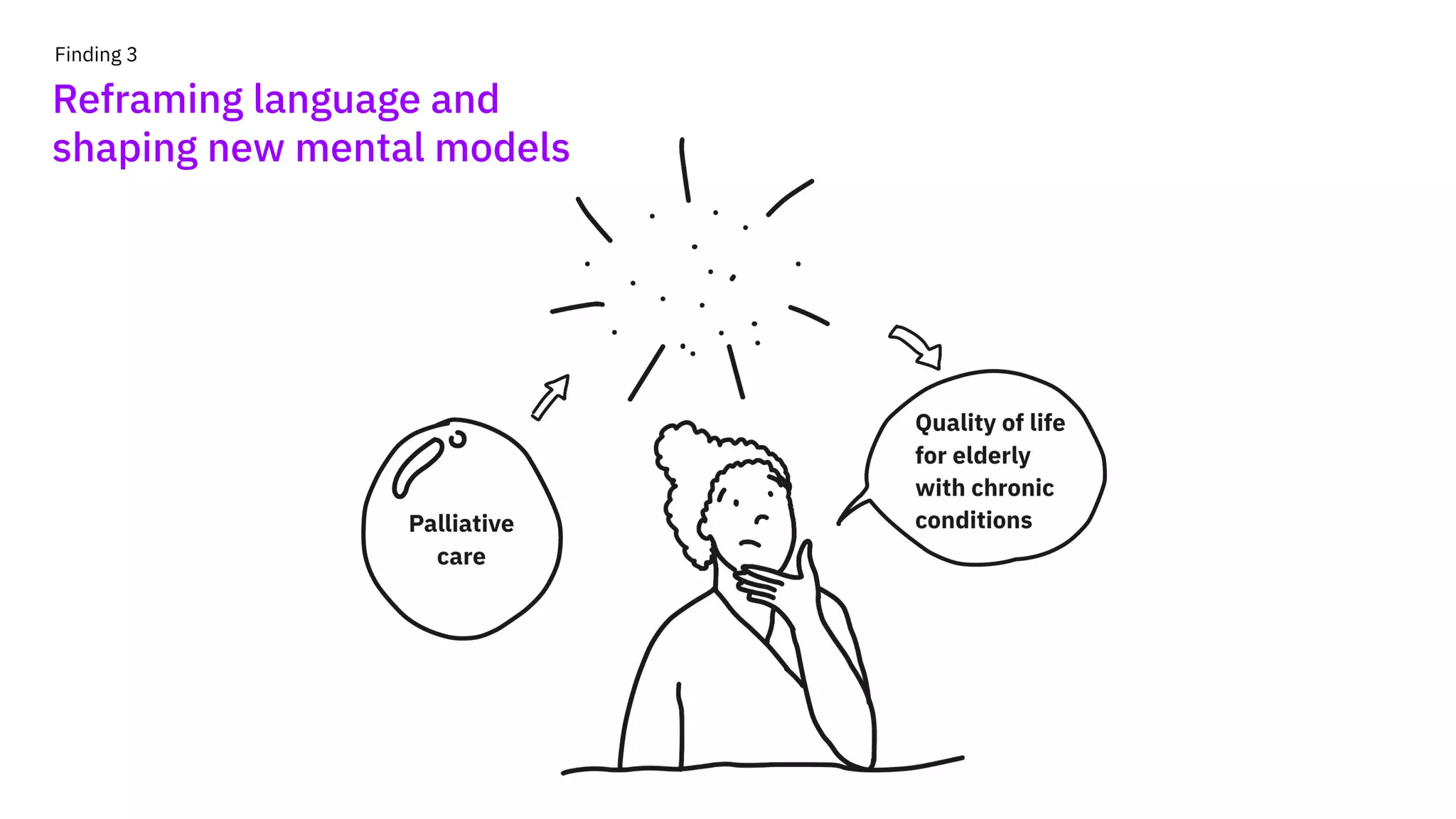
Finding 3
Reframing language and
shaping new mental models
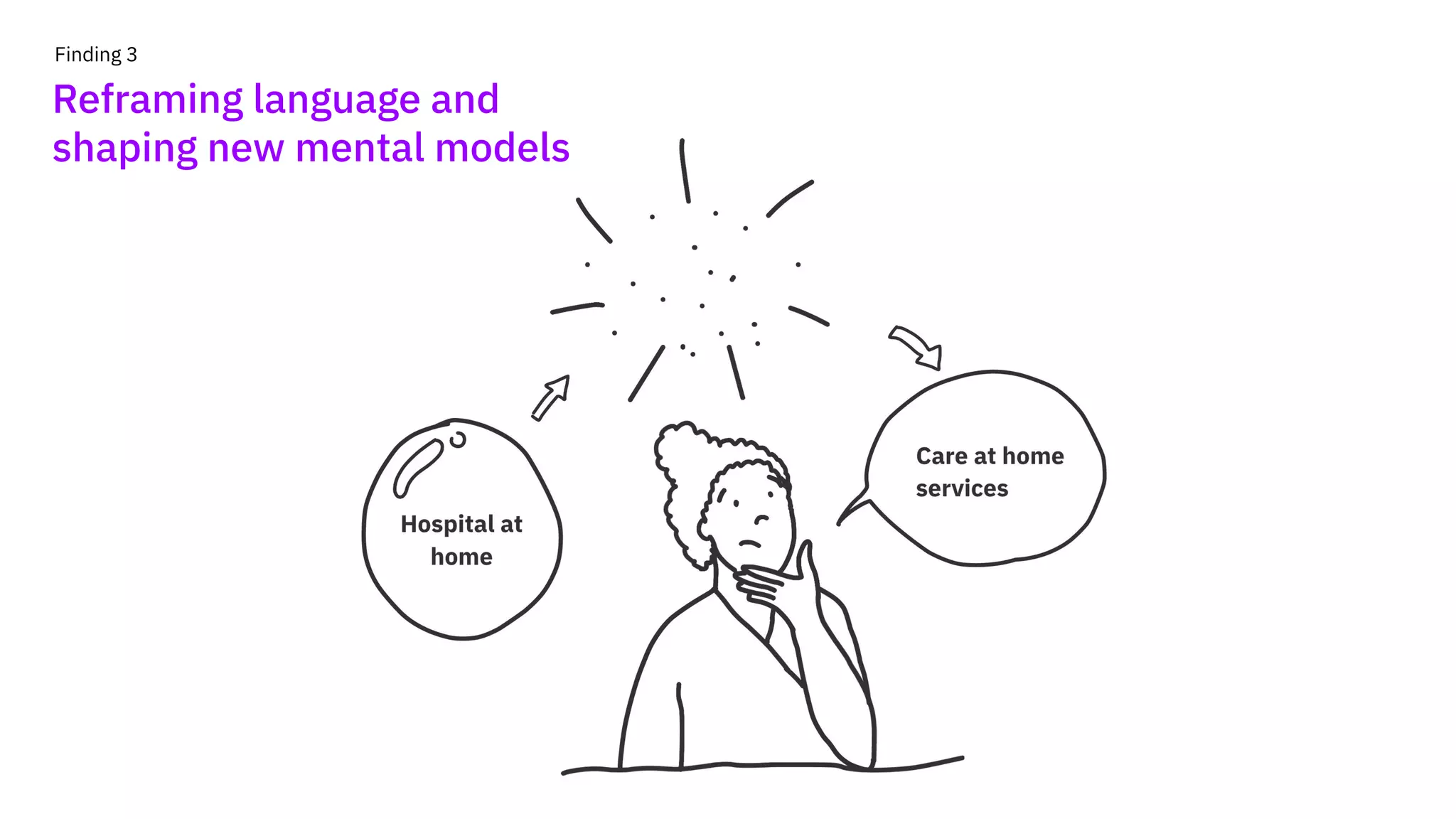
Finding 3
Reframing language and
shaping new mental models
Implications
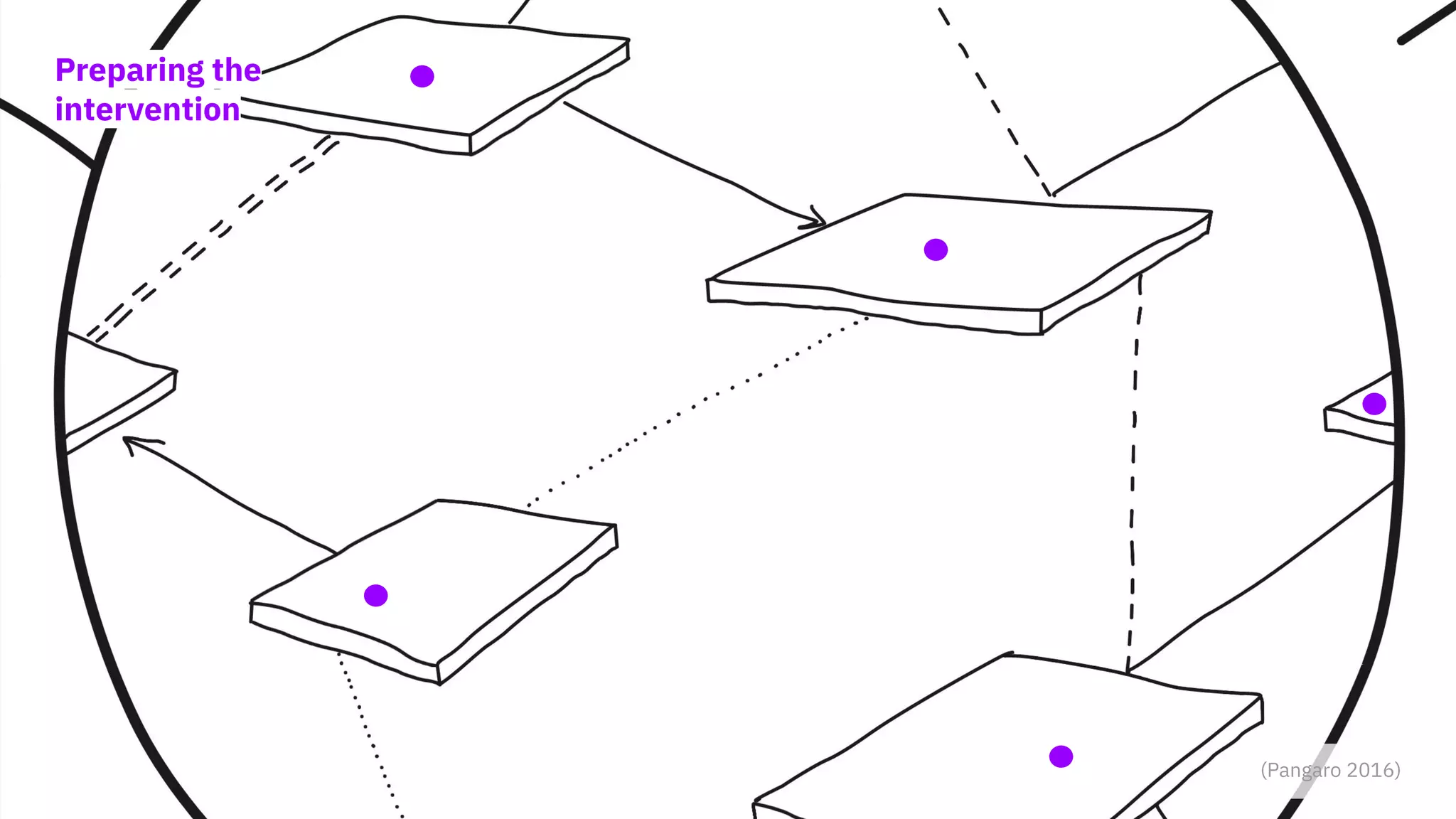
Preparing the
intervention
(Pangaro 2016)
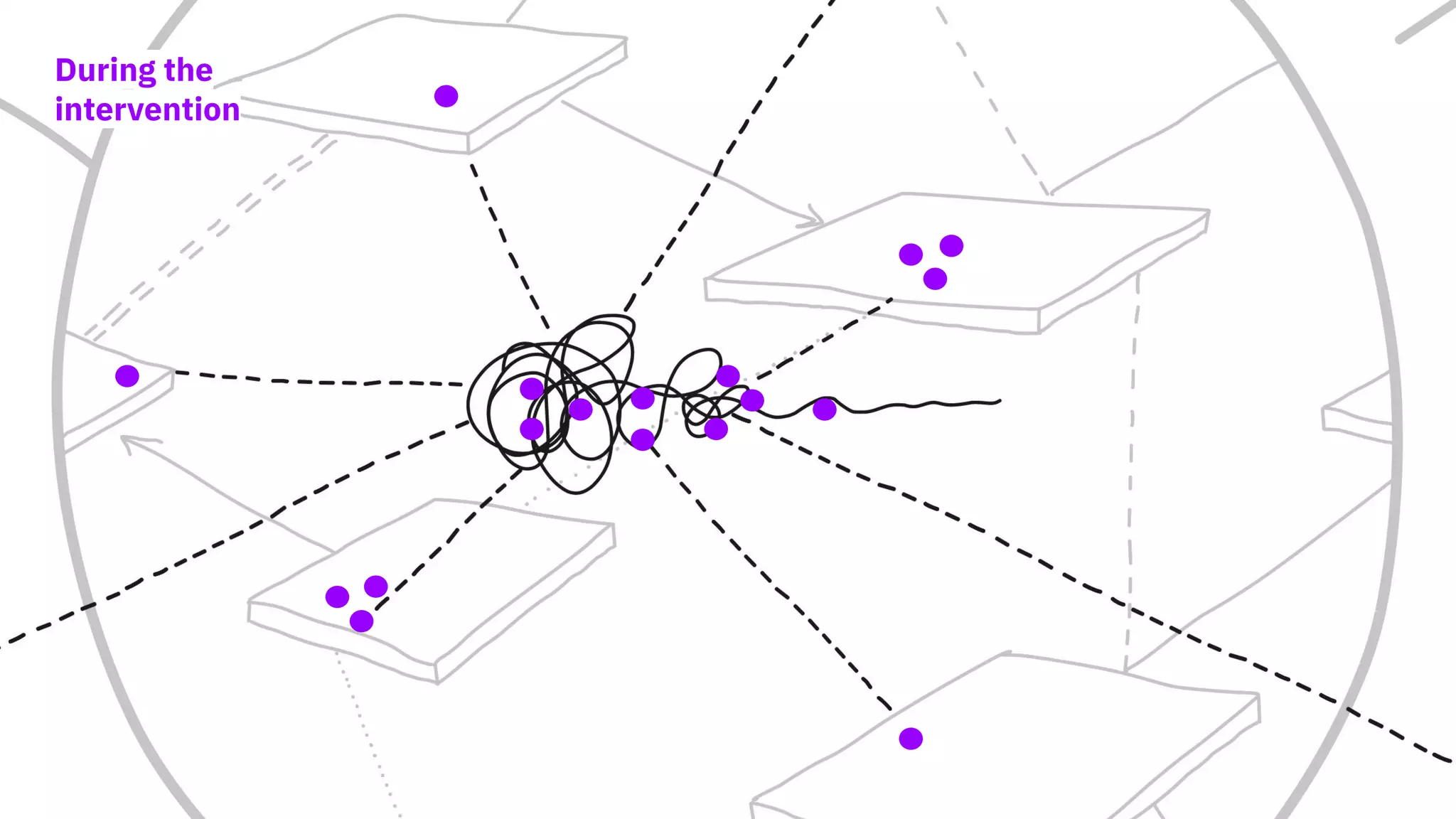
During the
intervention
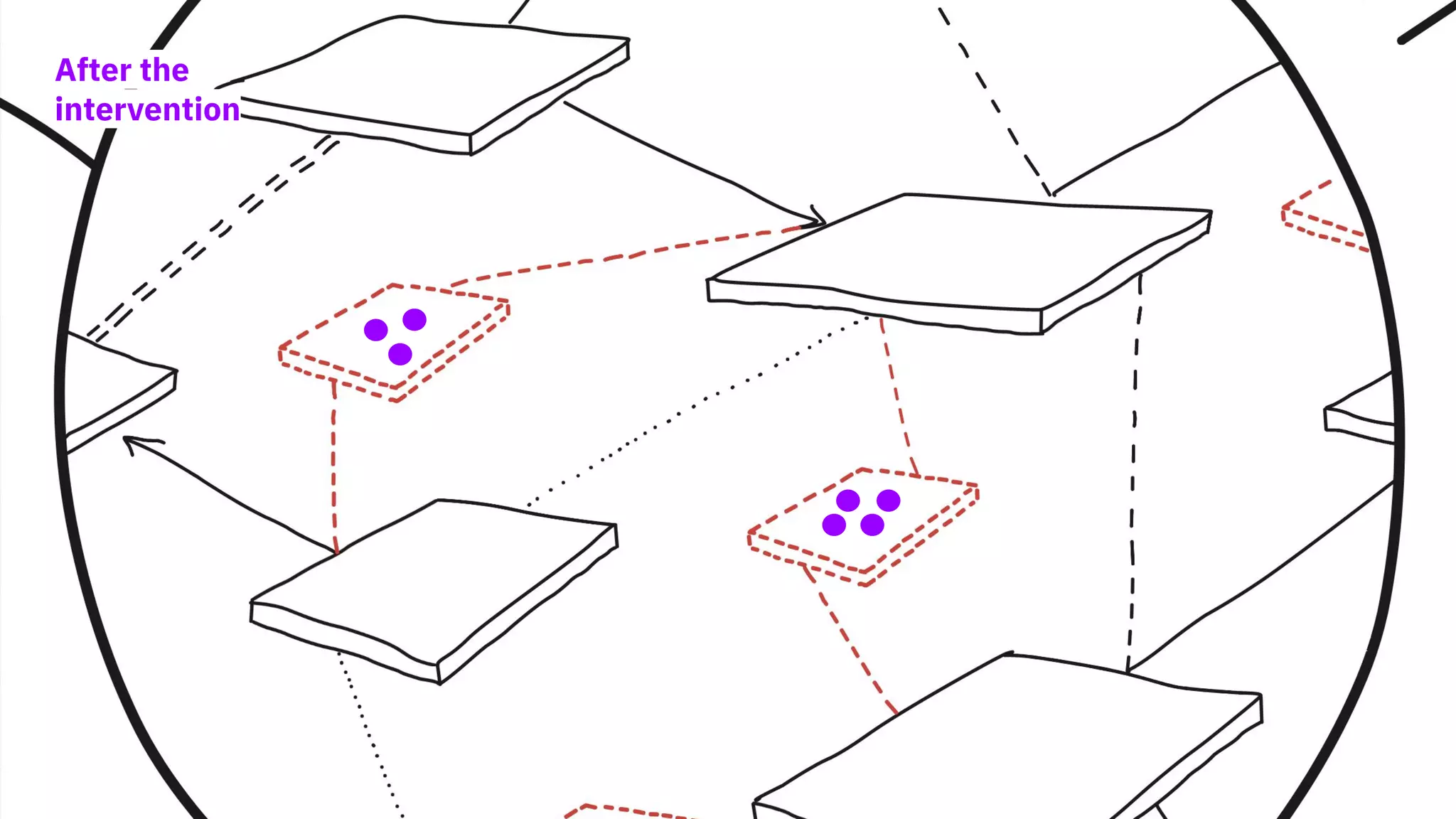
After the
intervention
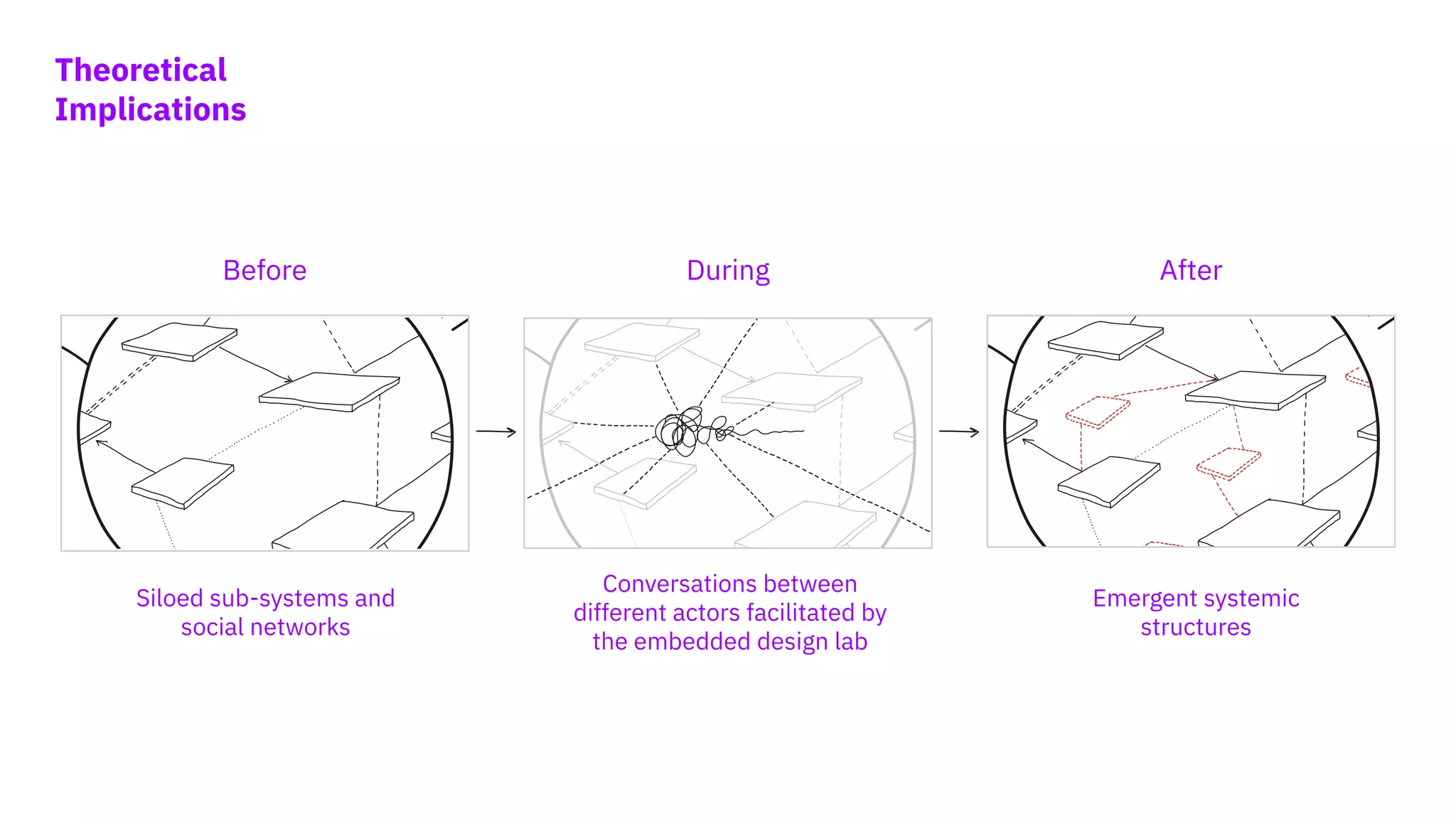
Theoretical
Implications
Before During After
Siloed sub-systems and
social networks
Conversations between
different actors facilitated by
the embedded design lab
Emergent systemic
structures
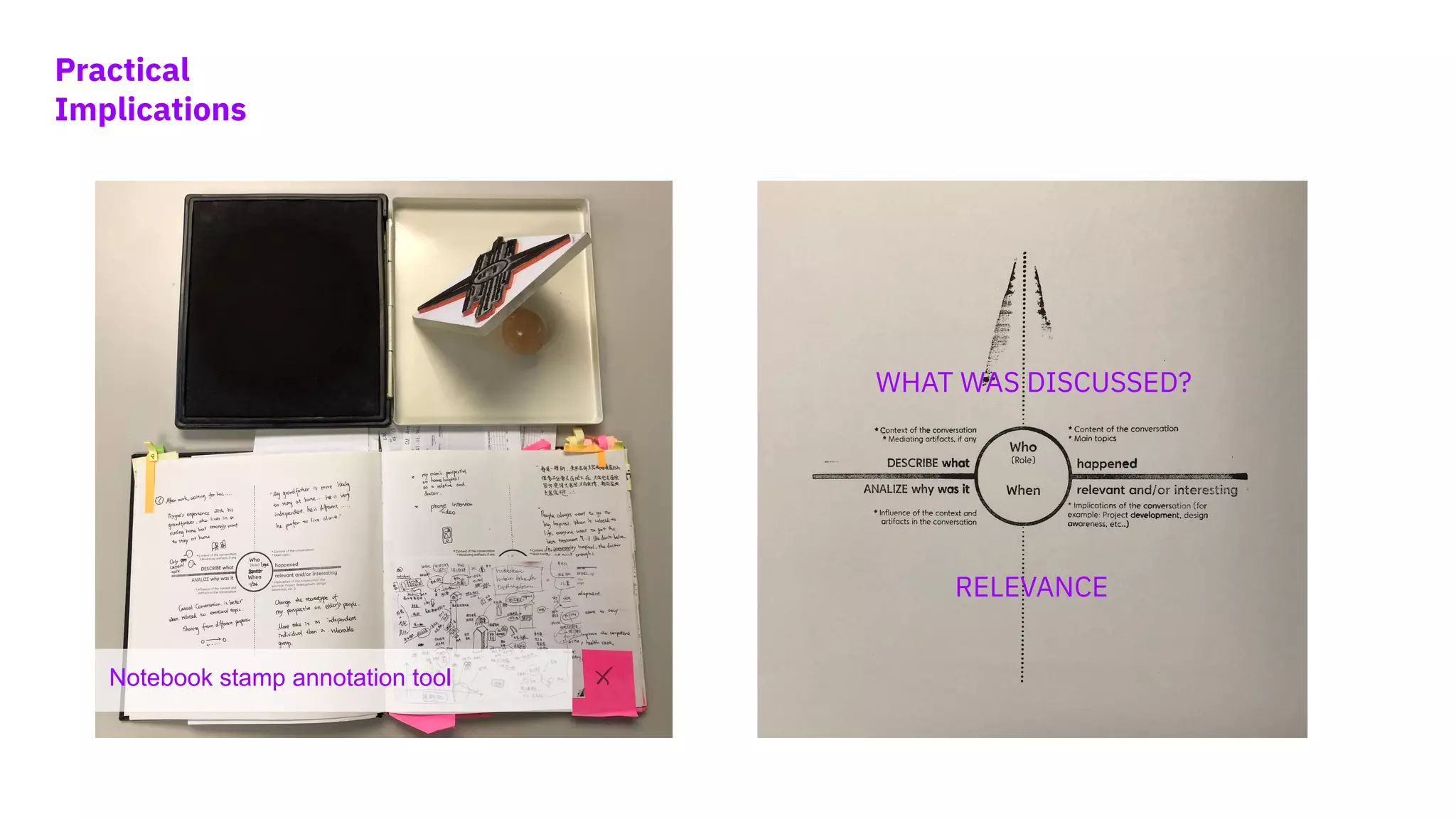
Practical
Implications
Notebook stamp annotation tool
WHAT WAS DISCUSSED?
RELEVANCE
Conclusion
To stimulate innovation in systems of
healthcare, designers need to
become conversational experts.
Thank you!
Jonathan Romm
Corresponding author:
jonathan.romm@aho.no
Palak Dudani Shivani Prakash
Acknowledgments
The funding for this research was provided by the Centre for Connected Care (C3) and the Centre for Design Research at
the Oslo School of Architecture and Design (AHO). We are grateful for the support and guidance provided by Frida
Almquist, Simon Clatworthy, Sara Hardy Graversen, Peter Jones, Andrew Morrison, and Josina Vink.
This research was done as a collaborative effort involving many people. We would like to thank all the members of the
reference group at Akershus University Hospital, coordinated by Bendik Westlund Hegna. Our warmest thanks goes to the
coresearching students from AHO’s Service Design MA Studio, Spring 2018: Pauline Buvinic, Karen Byskov, Ester Kaasa,
Alice Smejkalova, Timo Treit, Vilde Rebekka Aasen, Frida Breivik, Trygve Restan, Frøya Thune and Mengxue Zhou.
We would also like to express our gratitude to the reference group at the Oslo University Hospital, coordinated by Camilla
Stolp, Elisabeth Dreier Sørvik, Mona Helén Rønningsen, and Christian Skattum. Once again, our warmest thanks goes to
the coresearching students from AHO’s Service Design MA Studio, Spring 2019: Ida Margrethe Sørensen, Marie Frogner,
Martin Theodor Gravdahl Vange, Morten Mellingen Welle-Watne, Raoul Ronald Antoni Koreman, Amir Seyedamirarsalan
Shamsabadi, and Tord Halvor Langfeldt Stenstadvold.
References
Begun, J. W., Zimmerman, B., & Dooley, K. (2003). Health Care Organizations as Complex Adaptive Systems. In S. S. Mick &
M. E. Wyttenbach (Eds.), Advances in Health Care Organization Theory (1st ed., pp. 253–288). San Francisco:
Jossey-Bass. https://doi.org/10.1097/HCM.0000000000000284
Buchanan, R. (2001). Design and the New Rhetoric: Productive Arts in the Philosophy of Culture. Philosophy & Rhetoric, 34(3),
183–206.
Crouch, C., & Pearce, J. (2012). Doing Design Research. New York: Berg.
Donetto, S., Pierri, P., Tsianakas, V. and Robert, G. (2015), ‘Experience based co-design and healthcare improvement: Realizing
participatory design in the public sector’, Design Journal, 18: 2, pp. 227–248.
https://doi.org/10.2752/175630615X14212498964312
Dubberly, H., & Pangaro, P. (2015). Cybernetics and Design: Conversations for Action. Cybernetics and Human Knowing, 22(3),
73–82. Retrieved from https://ccsmfa.files.wordpress.com/2015/12/dubberly-pangaro-chk-journal-2015.pdf
Engin, M. (2011). Research Diary: A Tool for Scaffolding. International Journal of Qualitative Methods, 10(3), 296–306.
https://doi.org/10.1177/160940691101000308
Frayling, C. (1993). Research in Art and Design. Royal College of Art Research Papers, 1.
Freire, K. and Sangiorgi, D. (2010), ‘Service design and healthcare innovation: From consumption to co-production and
co-creation’, in Proceedings of the Second Nordic Conference on Service Design and Service Innovation (ServDes),
Linköping: Linköping University, pp. 1–11.
Gioia, D. A., Corley, K. G., & Hamilton, A. L. (2013). Seeking Qualitative Rigor in Inductive Research: Notes on the Gioia
Methodology. Organizational Research Methods, 16(1), 15–31. https://doi.org/10.1177/1094428112452151
Granovetter, M. (1973). The Strength of Weak Ties, 78(6), 1360–1380. Retrieved from https://www.jstor.org/stable/2776392
Heron, J., & Reason, P. (1997). A Participatory Inquiry Paradigm. Qualitative Inquiry, 3(3), 274–294.
https://doi.org/10.1017/CBO9781107415324.004
Jonas, W. (2007). Research through DESIGN through research: A cybernetic model of designing design foundations. Kybernetes,
36(9/10), 1362–1380. https://doi.org/10.1108/03684920710827355
Jones, P. (2010). The Language/Action Model of Conversation: Can conversation perform acts of design? Interactions, 17(1),
70–75. https://doi.org/10.1145/1649475.1649493
Jones, P. (2013). Design for Care: Innovating Healthcare Experience (p. 356). New York: Rosenfeld Media.
Jordan, M. E., Lanham, H. J., Crabtree, B. F., Nutting, P. A., Miller, W. L., Stange, K. C., & McDaniel, R. R. (2009). The role of
conversation in health care interventions: Enabling sensemaking and learning. Implementation Science, 4(15).
https://doi.org/10.1186/1748-5908-4-15
Lichtenstein, B. B. (2014). Generative Emergence: A New Discipline of Organizational, Entrepreneurial and Social Innovation.
New York: Oxford University Press.
Mager, B., Jones, M., Haynes, A., Ferguson, C., Sangiorgi, D. and Gullberg, G. (2017), Service Design Impact Report: Health
Sector, Köln Germany. https://www.service-design-network.org/books-and-reports/impact-report-health-sector
Mager, B., Nisbett, A., Siodmok, A., Katz, A., Mauldin, C., O’Sullivan, D. and Evenson, S. (2016), Service Design Impact
Report: Public Sector, Köln, Germany,
https://www.service-design-network.org/uploads/sdn-impact-report_public-sector.pdf
Molloy, S. J. (2018), ‘A review of design labs as a model for healthcare innovation’, MA thesis, Toronto: OCAD University,
http://openresearch.ocadu.ca/id/eprint/2364/13/MOLLOY_SEAN_2018_MDES_SFI_MRP.pdf
Nadin, S., & Cassell, C. (2006). The Use of a Research Diary as a Tool for Reflexive Practice: Some Reflections from
Management Research. Qualitative Research in Accounting & Management, 3(3), 208–217.
https://doi.org/10.1108/11766090610705407
Oliveira, M. D., Magone, J. M., & Pereira, J. A. (2005). Nondecision Making and Inertia in Portuguese Health Policy. Journal of
Health Politics, Policy and Law, 30(April 2005), 211–230. https://doi.org/10.1215/03616878-30-1-2-211
Olson, DaiWai M. Editor The Dangers of Echo Chambers in Healthcare, Journal of Neuroscience Nursing: April 2020 - Volume
52 - Issue 2 - p 43 doi: 10.1097/JNN.0000000000000502
Pangaro, P. (2016). Designing Conversations for Socially-Conscious Design - Opening Keynote at RSD5 Conference. Ontario
College of Art & Design Toronto, Canada. Retrieved from: https://pangaro.com/rsd5/
Proksch, D., Busch-Casler, J., Haberstroh, M. M., & Pinkwart, A. (2019). National Health Innovation Systems: Clustering the
OECD Countries by Innovative Output in Healthcare Using a Multi Indicator Approach. Research Policy, 48(1),
169–179. https://doi.org/10.1016/j.respol.2018.08.004
Sangiorgi, D., Patricio, L., & Fisk, R. (2017). Designing for interdependence, participation and emergence in complex service
systems. In D. Sangiorgi & A. Prendiville (Eds.), Designing for Service - Key Issues and New Directions (pp. 49–64).
London: Bloomsbury Academic. https://doi.org/10.5040/9781474250160.ch-004
Sevaldson, B. (2008). Rich Design Research Space. Form Akademisk, 1(1), 28–44. Retrieved from
http://journals.hioa.no/index.php/formakademisk/article/view/119/108
Sevaldson, B. (2010). Discussions & Movements in Design Research. FORMakademisk, 3(1), 8–35.
Tõnurist, P., Kattel, R. and Lember, V. (2017), ‘Innovation labs in the public sector: What they are and what they do?’, Public
Management Review, 19: 10, pp. 1455–1479. https://doi.org/10.1080/14719037.2017.1287939
Vink, J. (2019). In/Visible- Conceptualizing Service Ecosystem Design. Karlstad University. Retrieved from
http://www.diva-portal.org/smash/record.jsf?pid=diva2%3A1313628&dswid=7912
Vink, J., Koskela-huotari, K., Edvardsson, B. and Wetter-edman, K. (2020), ‘Service ecosystem design: Propositions, process
model, and future research agenda’, Journal of Service Research, 19. https://doi.org/10.1177/1094670520952537
Wang, V., Lee, S.-Y. D., & Maciejewski, M. L. (2015). Inertia in Health Care Organizations: A Case Study of Peritoneal Dialysis
Services. Health Care Management Review, 40(3), 203–213. https://doi.org/10.1097/HMR.0000000000000024
Wetter-Edman, K. (2014). Design for Service. A framework for articulating designer’s contribution as interpreters of user’s
experience. University of Gothenburg.
The Oslo School of Architecture and Design AHO
Institute of Design

Conversations in Healthcare Service Design

  • 1.
    Jonathan Romm, PalakDudani, and Shivani Prakash RSD9 Symposium - Systemic Design for Well-being: From Human to Humane Conversations in Healthcare Service Design
  • 2.
    The Oslo Schoolof Architecture and Design (AHO) - Institute of Design
  • 3.
    The Oslo Schoolof Architecture and Design AHO Institute of Design The Norwegian healthcare system
  • 4.
  • 5.
  • 6.
    (Begun, Zimmerman, & Dooley,2003) (Begun et al. 2003; Lichtenstein,2014; Oliveira et al. 2005; Wang et al. 2015) (Lichtenstein 2014; Oliveira et al. 2005; Wang et al. 2015) Generative emergence of innovations inside complex systems
  • 7.
    (Granovetter 1973; Olson2020) Bridging across silos increases the plausibility for renewal and innovation
  • 8.
    Conversations in healthcareinterventions are defined as: ‘A collaborative process in which meaning and organization are jointly created’ (Jones 2010; Jordan et al. 2009: 2)
  • 9.
    A changing healthcaresystem (Proksch et al. 2019)
  • 10.
    Service design inhealthcare is increasing (Mager et al. 2017; Mager et al. 2016; Jones 2013; Vink 2019; Donetto et al. 2015)
  • 11.
    (Vink et al.2020) Our interest in service design Design of Services Design for Services Service Ecosystem Design
  • 12.
    The evolving healthcaredesign practice Healthcare Design Iterative, exploratory Lived experience Linear, protocol based Randomised Controlled Trials Approach Primary evidence (Freire and Sangiorgi 2010; Sangiorgi et al. 2017; Tõnurist et al. 2017; Molloy 2018)
  • 13.
    Embedded design labs- pop-up design studios in healthcare ● Embedded into a healthcare context ● Maintains a critical outsider view ● Creates a sense of ownership to proposals ● Introduces a cocreative approach Jonathan Romm | Spaces for co-designing health and care | Institute of design | AHO | C3 Center For Connected Care Embedded Design Lab D D Exploring embedded design labs Healthcare context
  • 14.
  • 15.
    How do servicedesigners in embedded design labs help to change the conversations inside healthcare systems?
  • 16.
    Akershus University Hospital(Ahus) 2018 Center for Elderly Medicine Oslo University Hospital (OUH) 2019 Hospital at Home Services Methodology: Action Research by Design (Heron & Reason 1997; Frayling 1993; Jonas 2007; Sevaldson 2010)
  • 17.
    Paulina Buvinic, PalakDudani, Vilde Aasen, Frøya Thue, Frida Brievik, Mengxue Zhou, Timo Tveit, Ester Kaasa, Karen Byskov, Alice Smejkalova, Trygve Restan, Akershus University Hospital intervention (Spring 2018)
  • 18.
    End of lifecare for the elderly Center for Elderly Medicine at Akershus University Hospital
  • 19.
    Ida Margrethe Sørensen,Marie Frogner, Martin Theodor Gravdahl Vange, Morten Mellingen Welle-Watne, Raoul Ronald Antoni Koreman, Amir Seyedamirarsalan Shamsabadi, Shivani Prakash, Tord Halvor Langfeldt Stenstadvold (students) & Sara Graversen (lecturer) Oslo University Hospital intervention (Spring 2019)
  • 20.
    Hospital at HomeServices at the Oslo University Hospital Hospital at home for patients recovering from stem-cell transplantation
  • 21.
    Student research diariesReflections on conversations Summarizing posters reflect plan act observe reflect further question reflect plan act observe further question Data collection
  • 22.
    Analysis giga-map Tagged diaryentries Poster analysis Highlighted themes Conceptual models
  • 23.
    Findings How did theinterventions help to change the conversation?
  • 24.
  • 25.
    Mediated bridging Finding 2 Buildingbridges between agents Mediated bridging Designer Geriatric ward Hospital priest
  • 26.
    Finding 2 Building bridgesbetween agents Direct bridging Designer Nurse ICT department
  • 27.
    Finding 3 Reframing languageand shaping new mental models
  • 28.
    Finding 3 Reframing languageand shaping new mental models
  • 29.
  • 30.
  • 31.
  • 32.
  • 33.
    Theoretical Implications Before During After Siloedsub-systems and social networks Conversations between different actors facilitated by the embedded design lab Emergent systemic structures
  • 34.
    Practical Implications Notebook stamp annotationtool WHAT WAS DISCUSSED? RELEVANCE
  • 35.
    Conclusion To stimulate innovationin systems of healthcare, designers need to become conversational experts.
  • 36.
    Thank you! Jonathan Romm Correspondingauthor: jonathan.romm@aho.no Palak Dudani Shivani Prakash
  • 37.
    Acknowledgments The funding forthis research was provided by the Centre for Connected Care (C3) and the Centre for Design Research at the Oslo School of Architecture and Design (AHO). We are grateful for the support and guidance provided by Frida Almquist, Simon Clatworthy, Sara Hardy Graversen, Peter Jones, Andrew Morrison, and Josina Vink. This research was done as a collaborative effort involving many people. We would like to thank all the members of the reference group at Akershus University Hospital, coordinated by Bendik Westlund Hegna. Our warmest thanks goes to the coresearching students from AHO’s Service Design MA Studio, Spring 2018: Pauline Buvinic, Karen Byskov, Ester Kaasa, Alice Smejkalova, Timo Treit, Vilde Rebekka Aasen, Frida Breivik, Trygve Restan, Frøya Thune and Mengxue Zhou. We would also like to express our gratitude to the reference group at the Oslo University Hospital, coordinated by Camilla Stolp, Elisabeth Dreier Sørvik, Mona Helén Rønningsen, and Christian Skattum. Once again, our warmest thanks goes to the coresearching students from AHO’s Service Design MA Studio, Spring 2019: Ida Margrethe Sørensen, Marie Frogner, Martin Theodor Gravdahl Vange, Morten Mellingen Welle-Watne, Raoul Ronald Antoni Koreman, Amir Seyedamirarsalan Shamsabadi, and Tord Halvor Langfeldt Stenstadvold.
  • 38.
    References Begun, J. W.,Zimmerman, B., & Dooley, K. (2003). Health Care Organizations as Complex Adaptive Systems. In S. S. Mick & M. E. Wyttenbach (Eds.), Advances in Health Care Organization Theory (1st ed., pp. 253–288). San Francisco: Jossey-Bass. https://doi.org/10.1097/HCM.0000000000000284 Buchanan, R. (2001). Design and the New Rhetoric: Productive Arts in the Philosophy of Culture. Philosophy & Rhetoric, 34(3), 183–206. Crouch, C., & Pearce, J. (2012). Doing Design Research. New York: Berg. Donetto, S., Pierri, P., Tsianakas, V. and Robert, G. (2015), ‘Experience based co-design and healthcare improvement: Realizing participatory design in the public sector’, Design Journal, 18: 2, pp. 227–248. https://doi.org/10.2752/175630615X14212498964312 Dubberly, H., & Pangaro, P. (2015). Cybernetics and Design: Conversations for Action. Cybernetics and Human Knowing, 22(3), 73–82. Retrieved from https://ccsmfa.files.wordpress.com/2015/12/dubberly-pangaro-chk-journal-2015.pdf Engin, M. (2011). Research Diary: A Tool for Scaffolding. International Journal of Qualitative Methods, 10(3), 296–306. https://doi.org/10.1177/160940691101000308 Frayling, C. (1993). Research in Art and Design. Royal College of Art Research Papers, 1. Freire, K. and Sangiorgi, D. (2010), ‘Service design and healthcare innovation: From consumption to co-production and co-creation’, in Proceedings of the Second Nordic Conference on Service Design and Service Innovation (ServDes), Linköping: Linköping University, pp. 1–11. Gioia, D. A., Corley, K. G., & Hamilton, A. L. (2013). Seeking Qualitative Rigor in Inductive Research: Notes on the Gioia Methodology. Organizational Research Methods, 16(1), 15–31. https://doi.org/10.1177/1094428112452151 Granovetter, M. (1973). The Strength of Weak Ties, 78(6), 1360–1380. Retrieved from https://www.jstor.org/stable/2776392 Heron, J., & Reason, P. (1997). A Participatory Inquiry Paradigm. Qualitative Inquiry, 3(3), 274–294. https://doi.org/10.1017/CBO9781107415324.004 Jonas, W. (2007). Research through DESIGN through research: A cybernetic model of designing design foundations. Kybernetes, 36(9/10), 1362–1380. https://doi.org/10.1108/03684920710827355 Jones, P. (2010). The Language/Action Model of Conversation: Can conversation perform acts of design? Interactions, 17(1), 70–75. https://doi.org/10.1145/1649475.1649493 Jones, P. (2013). Design for Care: Innovating Healthcare Experience (p. 356). New York: Rosenfeld Media. Jordan, M. E., Lanham, H. J., Crabtree, B. F., Nutting, P. A., Miller, W. L., Stange, K. C., & McDaniel, R. R. (2009). The role of conversation in health care interventions: Enabling sensemaking and learning. Implementation Science, 4(15). https://doi.org/10.1186/1748-5908-4-15 Lichtenstein, B. B. (2014). Generative Emergence: A New Discipline of Organizational, Entrepreneurial and Social Innovation. New York: Oxford University Press. Mager, B., Jones, M., Haynes, A., Ferguson, C., Sangiorgi, D. and Gullberg, G. (2017), Service Design Impact Report: Health Sector, Köln Germany. https://www.service-design-network.org/books-and-reports/impact-report-health-sector Mager, B., Nisbett, A., Siodmok, A., Katz, A., Mauldin, C., O’Sullivan, D. and Evenson, S. (2016), Service Design Impact Report: Public Sector, Köln, Germany, https://www.service-design-network.org/uploads/sdn-impact-report_public-sector.pdf Molloy, S. J. (2018), ‘A review of design labs as a model for healthcare innovation’, MA thesis, Toronto: OCAD University, http://openresearch.ocadu.ca/id/eprint/2364/13/MOLLOY_SEAN_2018_MDES_SFI_MRP.pdf Nadin, S., & Cassell, C. (2006). The Use of a Research Diary as a Tool for Reflexive Practice: Some Reflections from Management Research. Qualitative Research in Accounting & Management, 3(3), 208–217. https://doi.org/10.1108/11766090610705407 Oliveira, M. D., Magone, J. M., & Pereira, J. A. (2005). Nondecision Making and Inertia in Portuguese Health Policy. Journal of Health Politics, Policy and Law, 30(April 2005), 211–230. https://doi.org/10.1215/03616878-30-1-2-211 Olson, DaiWai M. Editor The Dangers of Echo Chambers in Healthcare, Journal of Neuroscience Nursing: April 2020 - Volume 52 - Issue 2 - p 43 doi: 10.1097/JNN.0000000000000502 Pangaro, P. (2016). Designing Conversations for Socially-Conscious Design - Opening Keynote at RSD5 Conference. Ontario College of Art & Design Toronto, Canada. Retrieved from: https://pangaro.com/rsd5/ Proksch, D., Busch-Casler, J., Haberstroh, M. M., & Pinkwart, A. (2019). National Health Innovation Systems: Clustering the OECD Countries by Innovative Output in Healthcare Using a Multi Indicator Approach. Research Policy, 48(1), 169–179. https://doi.org/10.1016/j.respol.2018.08.004 Sangiorgi, D., Patricio, L., & Fisk, R. (2017). Designing for interdependence, participation and emergence in complex service systems. In D. Sangiorgi & A. Prendiville (Eds.), Designing for Service - Key Issues and New Directions (pp. 49–64). London: Bloomsbury Academic. https://doi.org/10.5040/9781474250160.ch-004 Sevaldson, B. (2008). Rich Design Research Space. Form Akademisk, 1(1), 28–44. Retrieved from http://journals.hioa.no/index.php/formakademisk/article/view/119/108 Sevaldson, B. (2010). Discussions & Movements in Design Research. FORMakademisk, 3(1), 8–35. Tõnurist, P., Kattel, R. and Lember, V. (2017), ‘Innovation labs in the public sector: What they are and what they do?’, Public Management Review, 19: 10, pp. 1455–1479. https://doi.org/10.1080/14719037.2017.1287939 Vink, J. (2019). In/Visible- Conceptualizing Service Ecosystem Design. Karlstad University. Retrieved from http://www.diva-portal.org/smash/record.jsf?pid=diva2%3A1313628&dswid=7912 Vink, J., Koskela-huotari, K., Edvardsson, B. and Wetter-edman, K. (2020), ‘Service ecosystem design: Propositions, process model, and future research agenda’, Journal of Service Research, 19. https://doi.org/10.1177/1094670520952537 Wang, V., Lee, S.-Y. D., & Maciejewski, M. L. (2015). Inertia in Health Care Organizations: A Case Study of Peritoneal Dialysis Services. Health Care Management Review, 40(3), 203–213. https://doi.org/10.1097/HMR.0000000000000024 Wetter-Edman, K. (2014). Design for Service. A framework for articulating designer’s contribution as interpreters of user’s experience. University of Gothenburg.
  • 39.
    The Oslo Schoolof Architecture and Design AHO Institute of Design