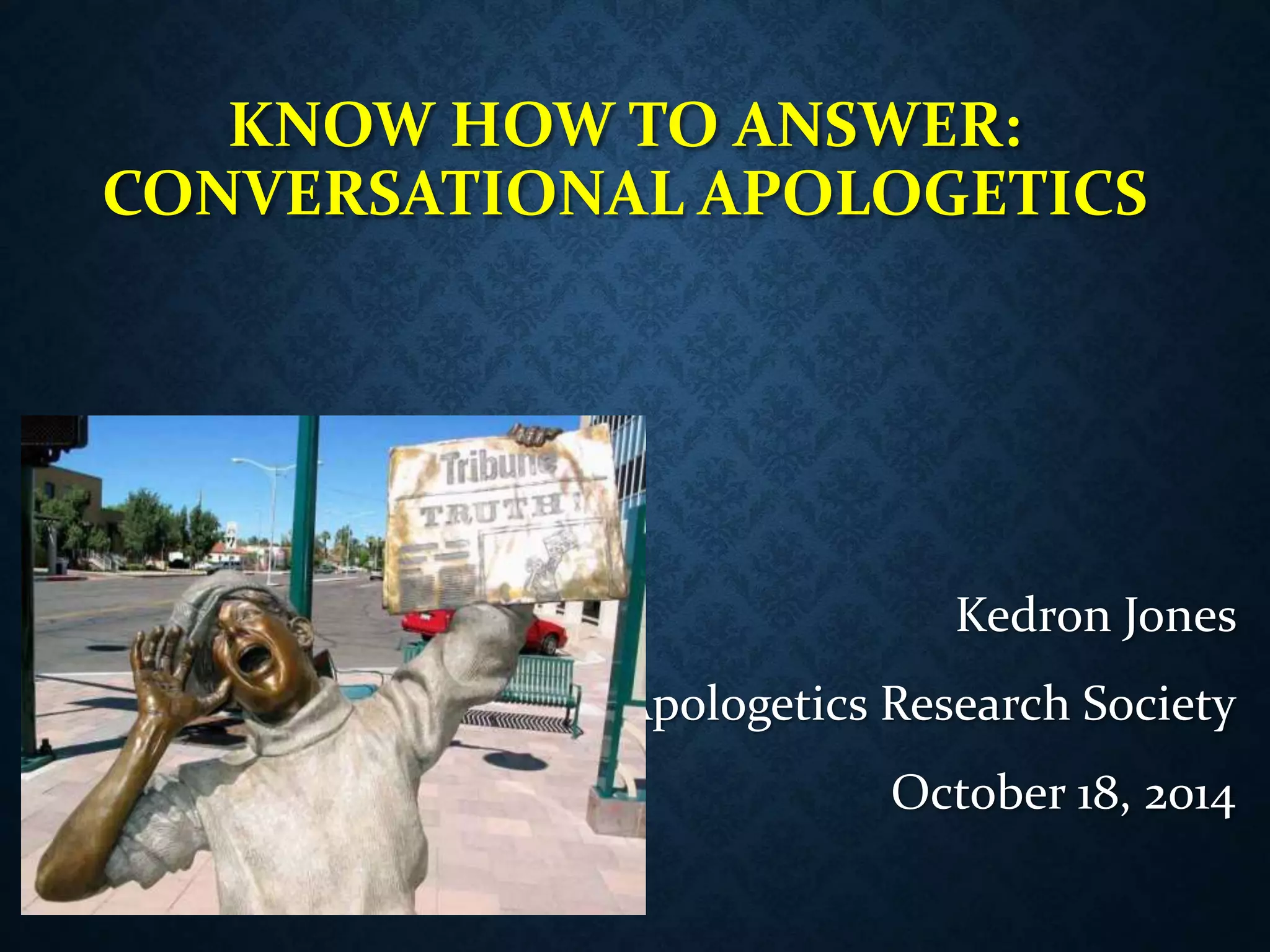
KNOW HOW TO ANSWER:
CONVERSATIONAL APOLOGETICS
Kedron Jones
Apologetics Research Society
October 18, 2014
• “But in your hearts set apart Christ as Lord. Always be
prepared to give an answer to everyone who asks you to give
the reason for the hope that you have. But do this with
gentleness and respect (1 Peter 3:15).”
• “Be wise in the way you act toward outsiders; make the most
of every opportunity. Let your conservation be always full of
grace, seasoned with salt, so that you may know how to
answer everyone (Colossians 4:5-6).”
Knowing How to Answer
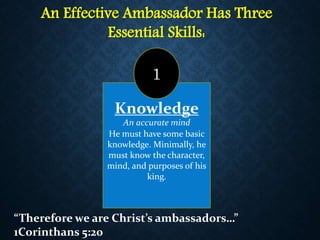
An Effective Ambassador Has Three
Essential Skills:
Knowledge
An accurate mind
He must have some basic
knowledge. Minimally, he
must know the character,
mind, and purposes of his
king.
1
“Therefore we are Christ’s ambassadors…”
1Corinthans 5:20
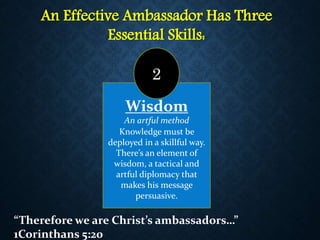
An Effective Ambassador Has Three
Essential Skills:
Wisdom
An artful method
Knowledge must be
deployed in a skillful way.
There’s an element of
wisdom, a tactical and
artful diplomacy that
makes his message
persuasive.
2
“Therefore we are Christ’s ambassadors…”
1Corinthans 5:20
An Effective Ambassador Has Three
Essential Skills:
Character
An attractive manner
Because an ambassador
brings himself along in
everything he does, his
personal maturity and
individual
3
“Therefore we are Christ’s ambassadors…”
1Corinthans 5:20
• Present the truth clearly and cleverly.
• Stop a aggressive challenger in their tracks
and turn the tables.
• Recognize someone’s bad thinking for the
purpose of guiding them to the truth, yet
remaining gracious and charitable.
The Value of Using Conversational
Apologetics
The Columbo Tactic
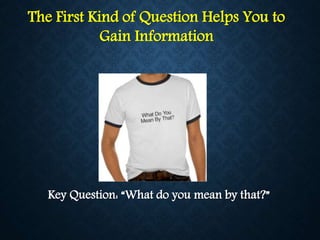
The First Kind of Question Helps You to
Gain Information
Key Question: “What do you mean by that?”
“All religions are basically the same.”
“The Bible isn’t reliable.”
“I’m pro-choice.”
“The unborn is not human, but a potential human.”
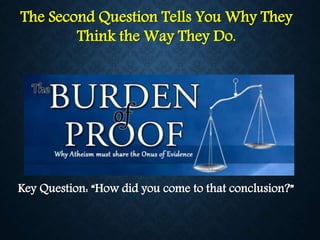
The Second Question Tells You Why They
Think the Way They Do.
Key Question: “How did you come to that conclusion?”
“The Bible has been translated and re-
translated…”
- How did you come to that conclusion?
“Jesus taught reincarnation after travelling to
India.”
- What reasons do you have for thinking that’s
true?
“Joseph Smith is a prophet of God.”
- Why should I believe that about Joseph Smith?
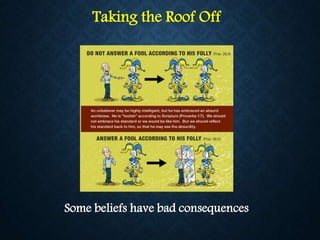
Taking the Roof Off
Some beliefs have bad consequences
Father: “Why did you start smoking?”
Daughter: “Because all my friends
were doing it.”
Father: “If all of your friends jumped
off a cliff, would you do that too?”
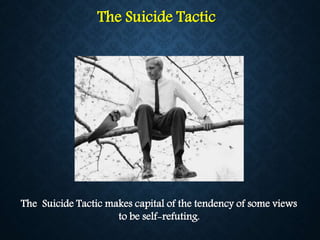
The Suicide Tactic
The Suicide Tactic makes capital of the tendency of some views
to be self-refuting.
“There is no truth.”
“You shouldn’t judge others!”
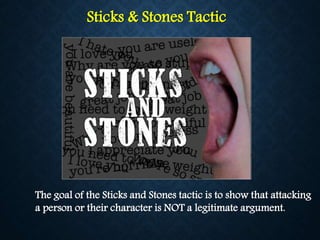
Sticks & Stones Tactic
The goal of the Sticks and Stones tactic is to show that attacking
a person or their character is NOT a legitimate argument.
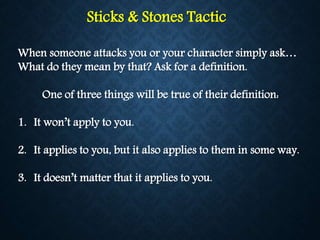
Sticks & Stones Tactic
When someone attacks you or your character simply ask…
What do they mean by that? Ask for a definition.
One of three things will be true of their definition:
1. It won’t apply to you.
2. It applies to you, but it also applies to them in some way.
3. It doesn’t matter that it applies to you.
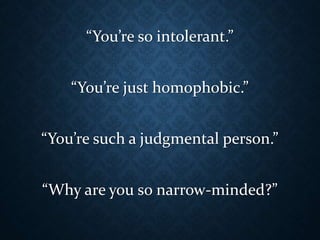
“You’re so intolerant.”
“You’re just homophobic.”
“You’re such a judgmental person.”
“Why are you so narrow-minded?”
Concluding Remarks

Conversational Apologetics: Power Point and Notes

  • 1.
    KNOW HOW TOANSWER: CONVERSATIONAL APOLOGETICS Kedron Jones Apologetics Research Society October 18, 2014
  • 2.
    • “But inyour hearts set apart Christ as Lord. Always be prepared to give an answer to everyone who asks you to give the reason for the hope that you have. But do this with gentleness and respect (1 Peter 3:15).” • “Be wise in the way you act toward outsiders; make the most of every opportunity. Let your conservation be always full of grace, seasoned with salt, so that you may know how to answer everyone (Colossians 4:5-6).” Knowing How to Answer
  • 3.
    An Effective AmbassadorHas Three Essential Skills: Knowledge An accurate mind He must have some basic knowledge. Minimally, he must know the character, mind, and purposes of his king. 1 “Therefore we are Christ’s ambassadors…” 1Corinthans 5:20
  • 4.
    An Effective AmbassadorHas Three Essential Skills: Wisdom An artful method Knowledge must be deployed in a skillful way. There’s an element of wisdom, a tactical and artful diplomacy that makes his message persuasive. 2 “Therefore we are Christ’s ambassadors…” 1Corinthans 5:20
  • 5.
    An Effective AmbassadorHas Three Essential Skills: Character An attractive manner Because an ambassador brings himself along in everything he does, his personal maturity and individual 3 “Therefore we are Christ’s ambassadors…” 1Corinthans 5:20
  • 6.
    • Present thetruth clearly and cleverly. • Stop a aggressive challenger in their tracks and turn the tables. • Recognize someone’s bad thinking for the purpose of guiding them to the truth, yet remaining gracious and charitable. The Value of Using Conversational Apologetics
  • 7.
  • 8.
    The First Kindof Question Helps You to Gain Information Key Question: “What do you mean by that?”
  • 9.
    “All religions arebasically the same.” “The Bible isn’t reliable.” “I’m pro-choice.” “The unborn is not human, but a potential human.”
  • 10.
    The Second QuestionTells You Why They Think the Way They Do. Key Question: “How did you come to that conclusion?”
  • 11.
    “The Bible hasbeen translated and re- translated…” - How did you come to that conclusion? “Jesus taught reincarnation after travelling to India.” - What reasons do you have for thinking that’s true? “Joseph Smith is a prophet of God.” - Why should I believe that about Joseph Smith?
  • 12.
    Taking the RoofOff Some beliefs have bad consequences
  • 13.
    Father: “Why didyou start smoking?” Daughter: “Because all my friends were doing it.” Father: “If all of your friends jumped off a cliff, would you do that too?”
  • 14.
    The Suicide Tactic TheSuicide Tactic makes capital of the tendency of some views to be self-refuting.
  • 15.
    “There is notruth.” “You shouldn’t judge others!”
  • 16.
    Sticks & StonesTactic The goal of the Sticks and Stones tactic is to show that attacking a person or their character is NOT a legitimate argument.
  • 17.
    Sticks & StonesTactic When someone attacks you or your character simply ask… What do they mean by that? Ask for a definition. One of three things will be true of their definition: 1. It won’t apply to you. 2. It applies to you, but it also applies to them in some way. 3. It doesn’t matter that it applies to you.
  • 18.
    “You’re so intolerant.” “You’rejust homophobic.” “You’re such a judgmental person.” “Why are you so narrow-minded?”
  • 19.