CONVERGENT PLATE
MOVEMENTS
A MOVEMENT THAT CAN DESTROY OUR LAND
What Is A ‘Convergent’ Boundary?
Aconvergentboundary,also knownas
a destructiveplate boundary, is a regionof active
deformationwhere two or more tectonicplatesor
fragments of the lithosphereare nearthe end of their
life cycle. Thisis in contrastto a constructiveplate
boundary.
As a resultof pressure,friction,and platematerial
melting in the mantle, earthquakesand volcanoesare
common neardestructiveboundaries,
where subductionzones or an area of continental
collision (dependingon the nature of the plates
involved) occurs.
What Actually Happens When
Continental Crusts Collide ?
During collisions between
two continental plates,
large mountain ranges,
such as the Himalayas are
formed. In other regions,
a divergent
boundary or transform
faults may be present.
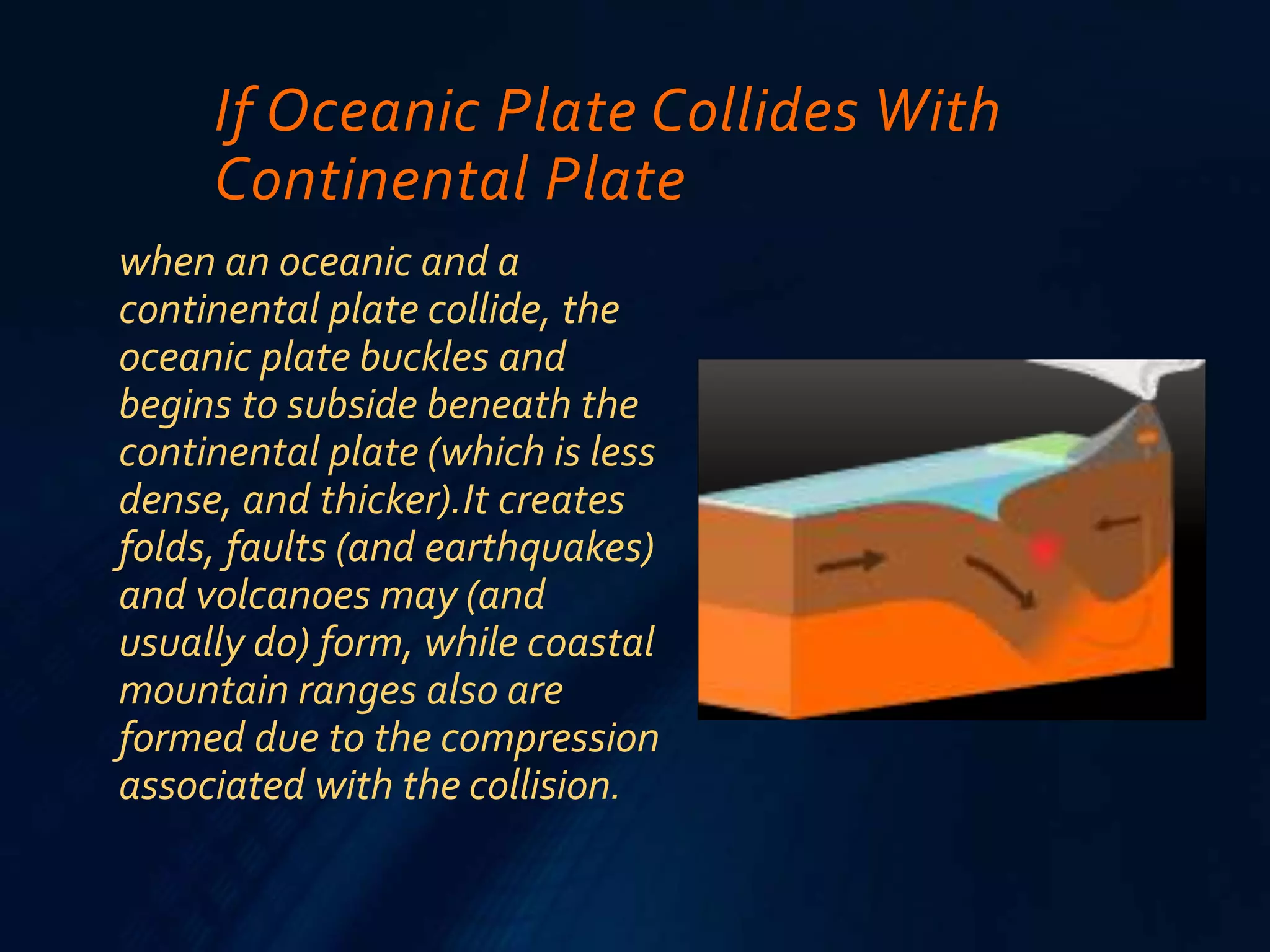
If Oceanic Plate Collides With
Continental Plate
when an oceanic and a
continental plate collide, the
oceanic plate buckles and
begins to subside beneath the
continental plate (which is less
dense, and thicker).It creates
folds, faults (and earthquakes)
and volcanoes may (and
usually do) form, while coastal
mountain ranges also are
formed due to the compression
associated with the collision.
WHAT IF TWO OCEANIC PLATES
COLLIDE??
a convergent boundary
occurs between two
oceanic plates, one of
those plates will subduct
beneath the other.
Normally the older plate
will subduct because of
its higher density.The
subducting plate is
heated as it is forced
deeper into the mantle,
and at a depth of about
100 miles (150 km) the
plate begins to melt.
The magma begins
ascending by melting
and fracturing its way
through the overlying
rock material. This
produces an island
chain.With continued
development the
islands grow larger,
merge, and an elongate
landmass is created.
EXAMPLES:
THE MID-ATLANTIC
RIDGE HIMALAYAS
Convergent plate movements

Convergent plate movements

  • 1.
    CONVERGENT PLATE MOVEMENTS A MOVEMENTTHAT CAN DESTROY OUR LAND
  • 2.
    What Is A‘Convergent’ Boundary? Aconvergentboundary,also knownas a destructiveplate boundary, is a regionof active deformationwhere two or more tectonicplatesor fragments of the lithosphereare nearthe end of their life cycle. Thisis in contrastto a constructiveplate boundary. As a resultof pressure,friction,and platematerial melting in the mantle, earthquakesand volcanoesare common neardestructiveboundaries, where subductionzones or an area of continental collision (dependingon the nature of the plates involved) occurs.
  • 3.
    What Actually HappensWhen Continental Crusts Collide ? During collisions between two continental plates, large mountain ranges, such as the Himalayas are formed. In other regions, a divergent boundary or transform faults may be present.
  • 4.
    If Oceanic PlateCollides With Continental Plate when an oceanic and a continental plate collide, the oceanic plate buckles and begins to subside beneath the continental plate (which is less dense, and thicker).It creates folds, faults (and earthquakes) and volcanoes may (and usually do) form, while coastal mountain ranges also are formed due to the compression associated with the collision.
  • 5.
    WHAT IF TWOOCEANIC PLATES COLLIDE?? a convergent boundary occurs between two oceanic plates, one of those plates will subduct beneath the other. Normally the older plate will subduct because of its higher density.The subducting plate is heated as it is forced deeper into the mantle, and at a depth of about 100 miles (150 km) the plate begins to melt. The magma begins ascending by melting and fracturing its way through the overlying rock material. This produces an island chain.With continued development the islands grow larger, merge, and an elongate landmass is created.
  • 6.