Convergence of web-based applications, radio and cellular phone: some perspectives and experiences in Africa  Hilda Munyua, Edith Adera and Mike Jensen
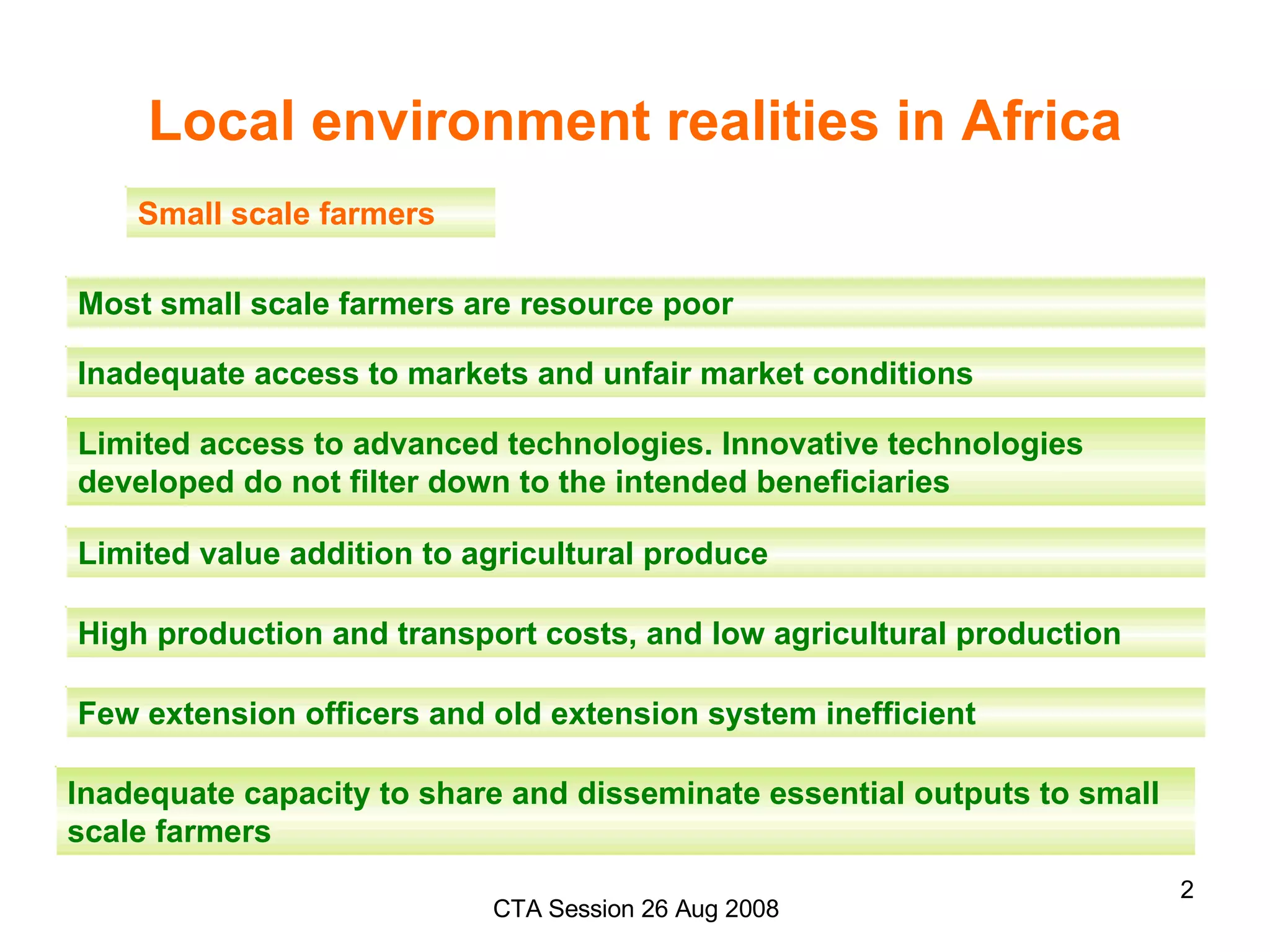
Local environment realities in Africa Few extension officers and old extension system inefficient Most small scale farmers are resource poor Limited access to advanced technologies. Innovative technologies developed do not filter down to the intended beneficiaries High production and transport costs, and low agricultural production Inadequate access to markets and unfair market conditions Small scale farmers Inadequate capacity to share and disseminate essential outputs to small scale farmers Limited value addition to agricultural produce
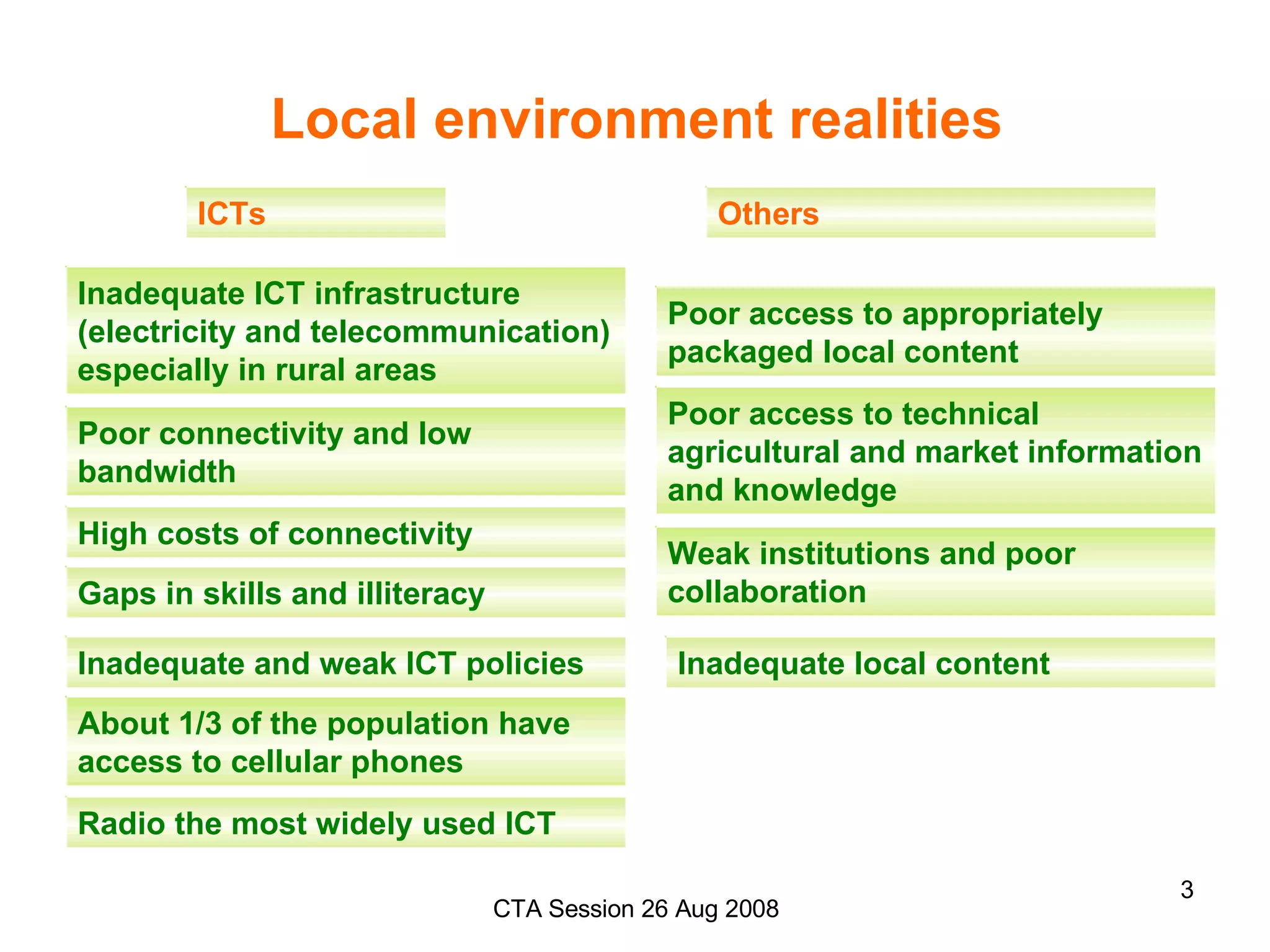
Local environment realities About 1/3 of the population have access to cellular phones Poor access to technical agricultural and market information and knowledge Inadequate ICT infrastructure (electricity and telecommunication) especially in rural areas Gaps in skills and illiteracy  High costs of connectivity Inadequate and weak ICT policies  Poor access to appropriately packaged local content Poor connectivity and low bandwidth ICTs Others Radio the most widely used ICT  Weak institutions and poor collaboration Inadequate local content
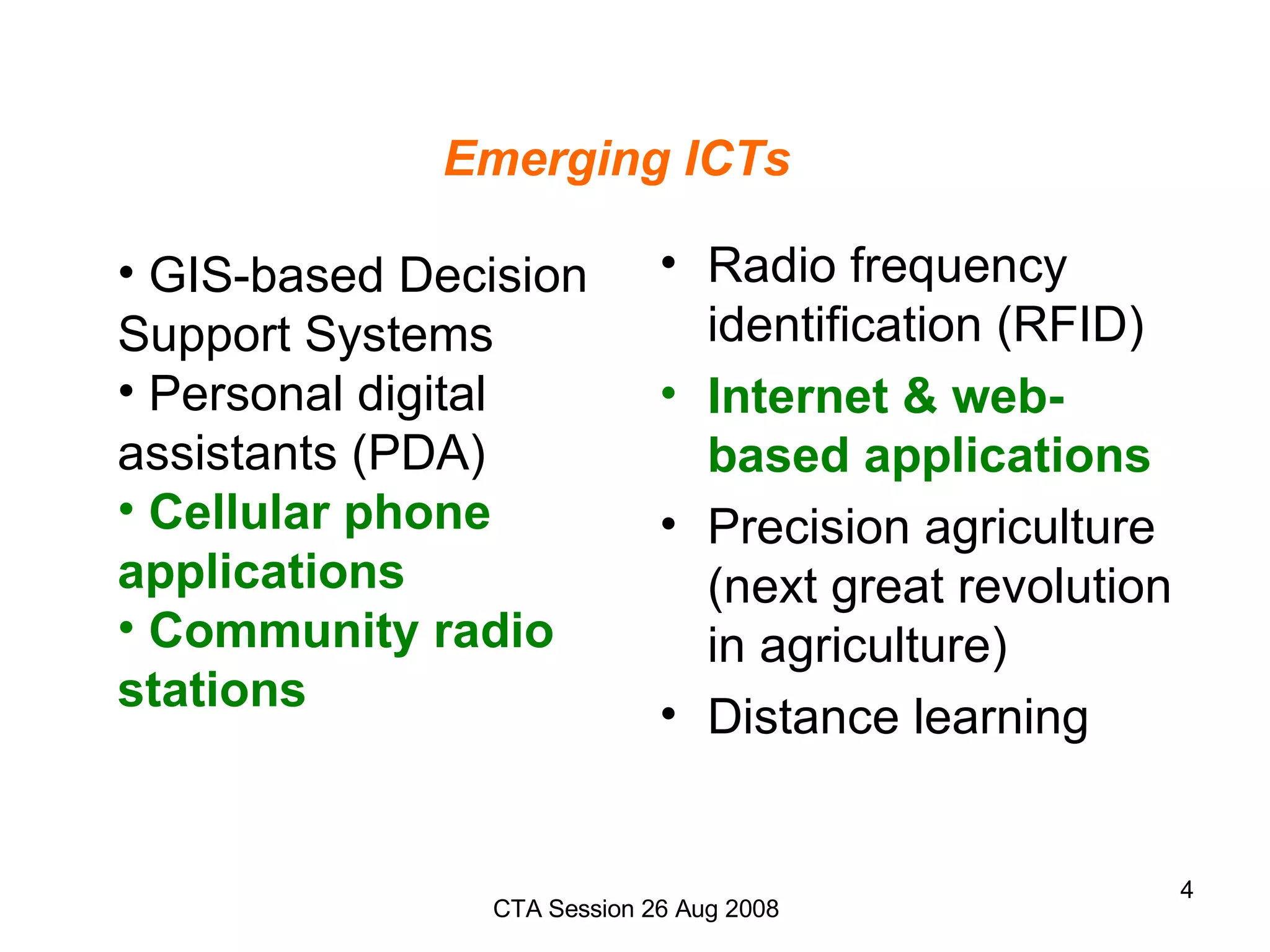
Emerging ICTs Radio frequency identification (RFID) Internet & web-based applications Precision agriculture (next great revolution in agriculture)  Distance learning GIS-based Decision Support Systems Personal digital assistants (PDA) Cellular phone applications Community radio stations
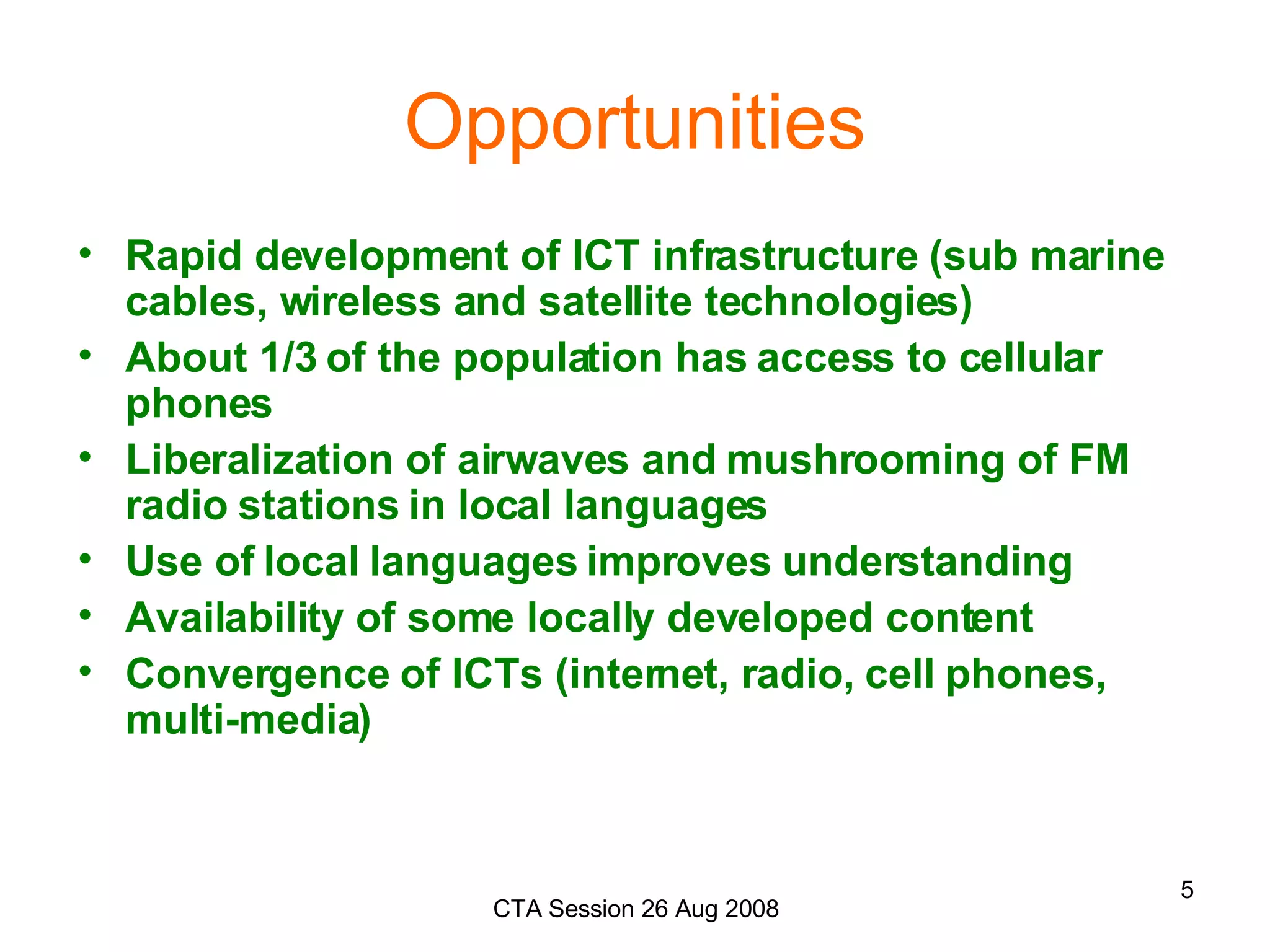
Opportunities Rapid development of ICT infrastructure (sub marine cables, wireless and satellite technologies) About 1/3 of the population has access to cellular phones Liberalization of airwaves and mushrooming of FM radio stations in local languages Use of local languages improves understanding Availability of some locally developed content Convergence of ICTs (internet, radio, cell phones, multi-media)
Some practical examples Internet and web-based applications Cellular phone applications Community radio stations
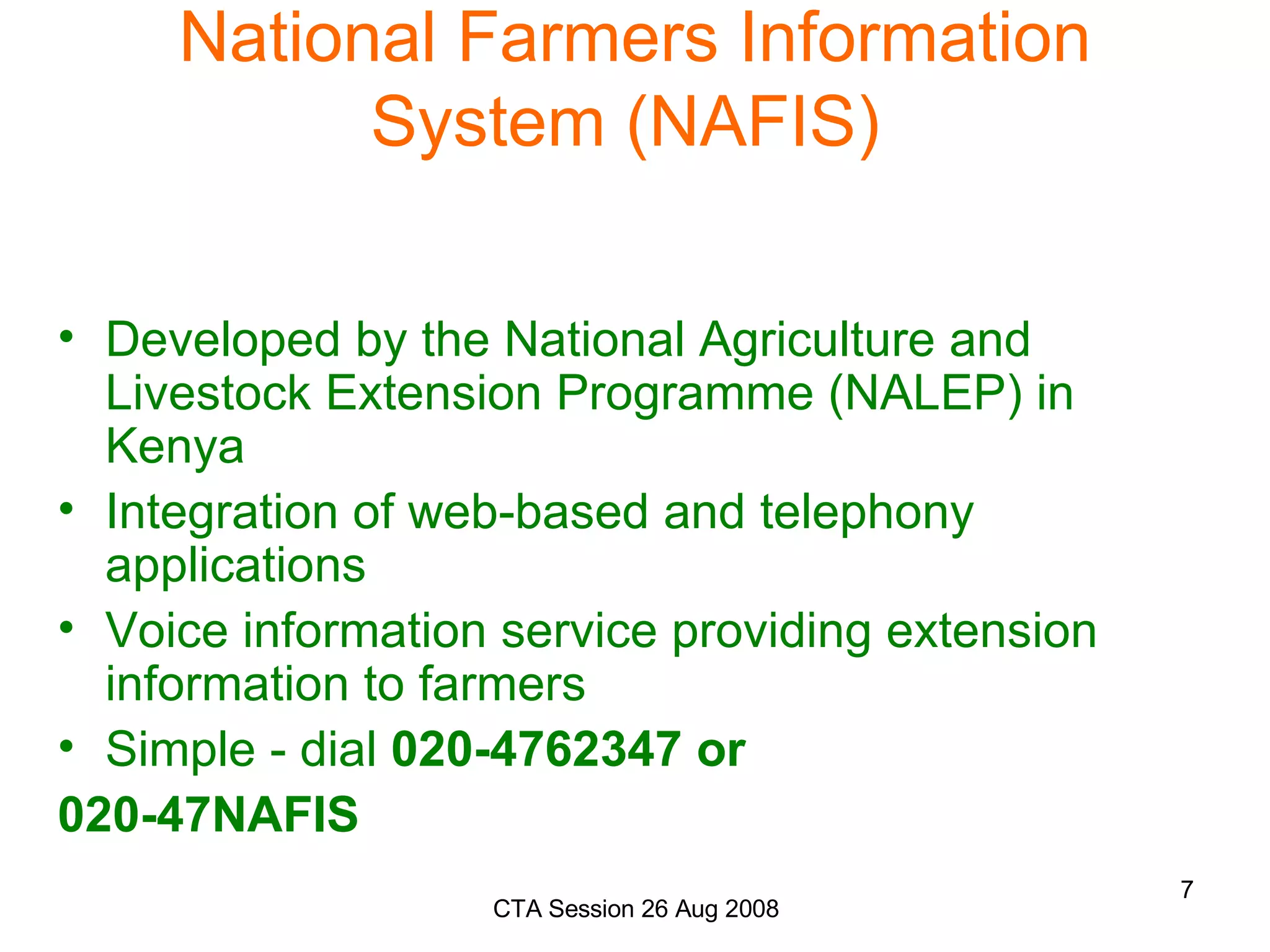
National Farmers Information System (NAFIS)  Developed by the National Agriculture and Livestock Extension Programme (NALEP) in Kenya Integration of web-based and telephony applications Voice information service providing extension information to farmers Simple - dial  020-4762347 or  020-47NAFIS
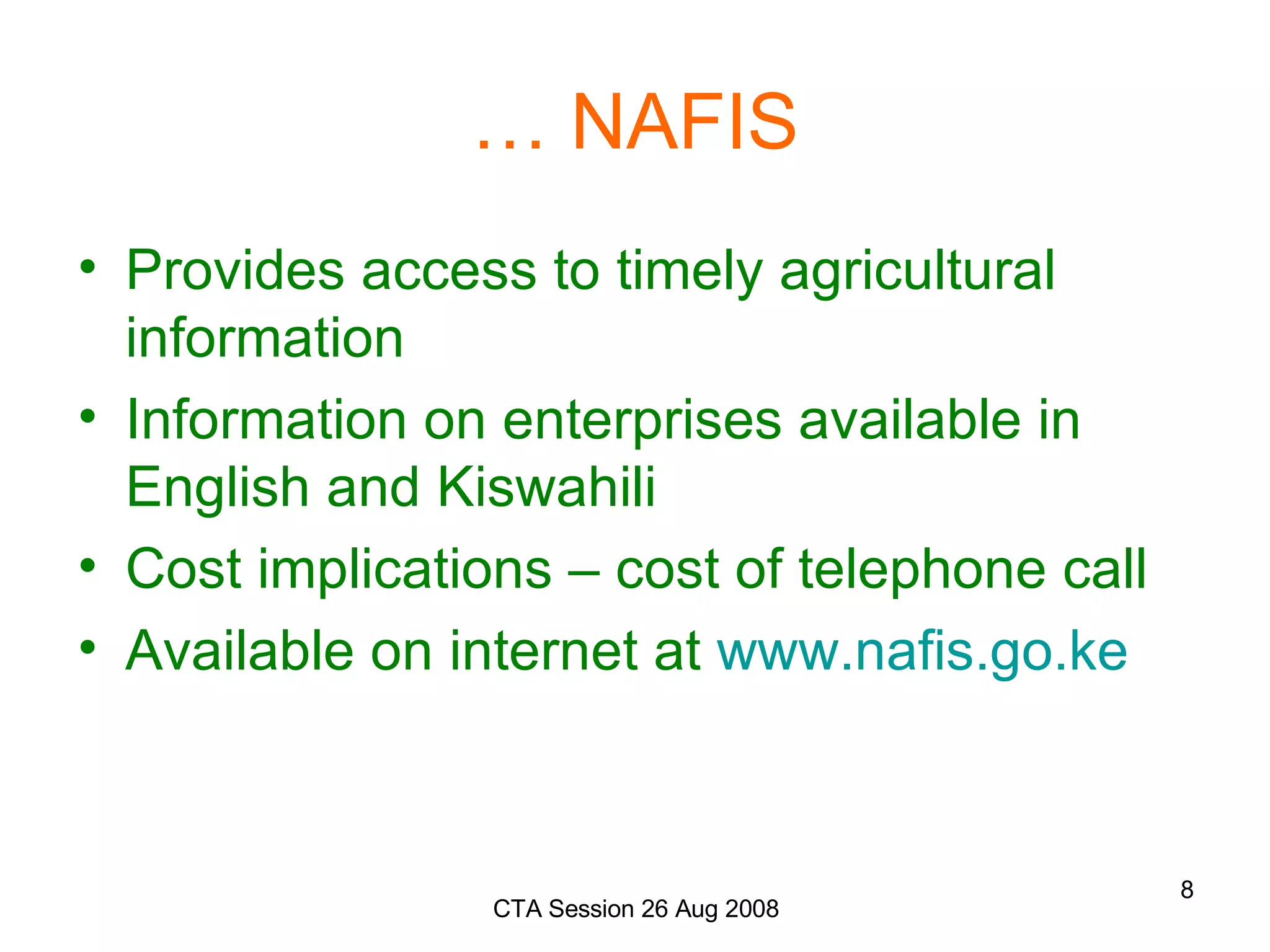
…  NAFIS Provides access to timely agricultural information Information on enterprises available in English and Kiswahili Cost implications – cost of telephone call Available on internet at  www.nafis.go.ke
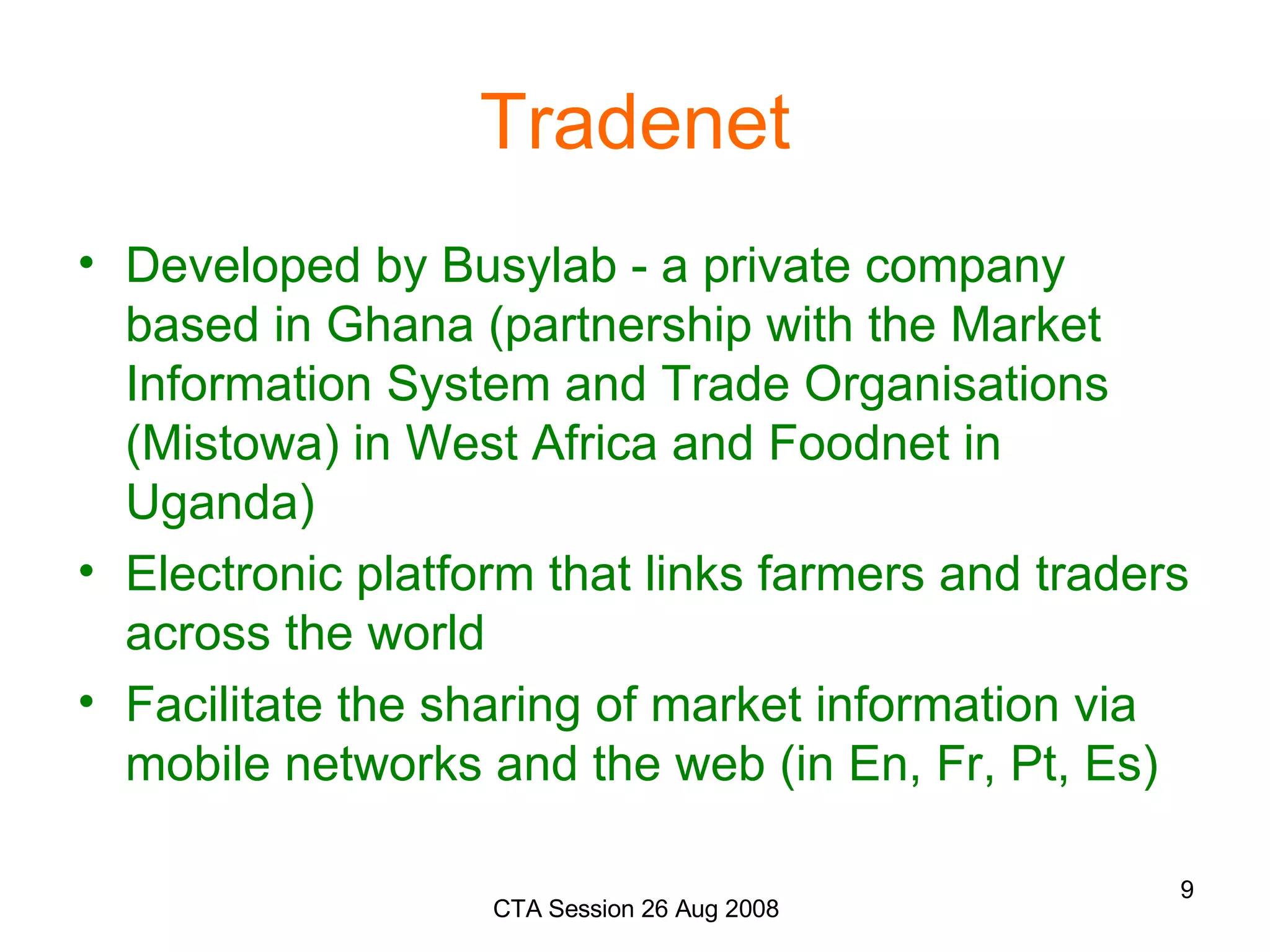
Tradenet Developed by Busylab - a private company based in Ghana (partnership with the Market Information System and Trade Organisations (Mistowa) in West Africa and Foodnet in Uganda) Electronic platform that links farmers and traders across the world Facilitate the sharing of market information via mobile networks and the web (in En, Fr, Pt, Es)
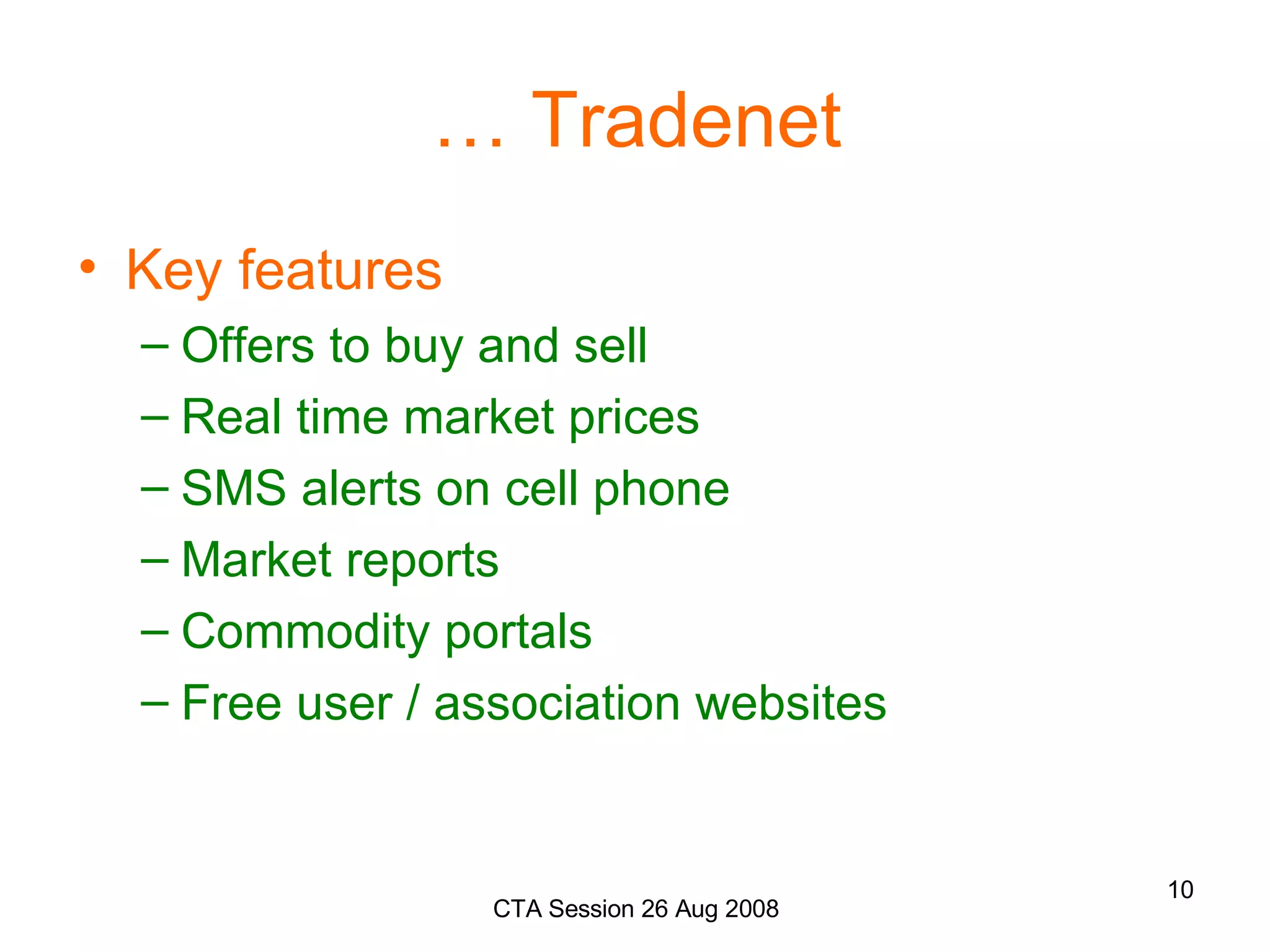
…  Tradenet Key features Offers to buy and sell Real time market prices SMS alerts on cell phone Market reports Commodity portals Free user / association websites
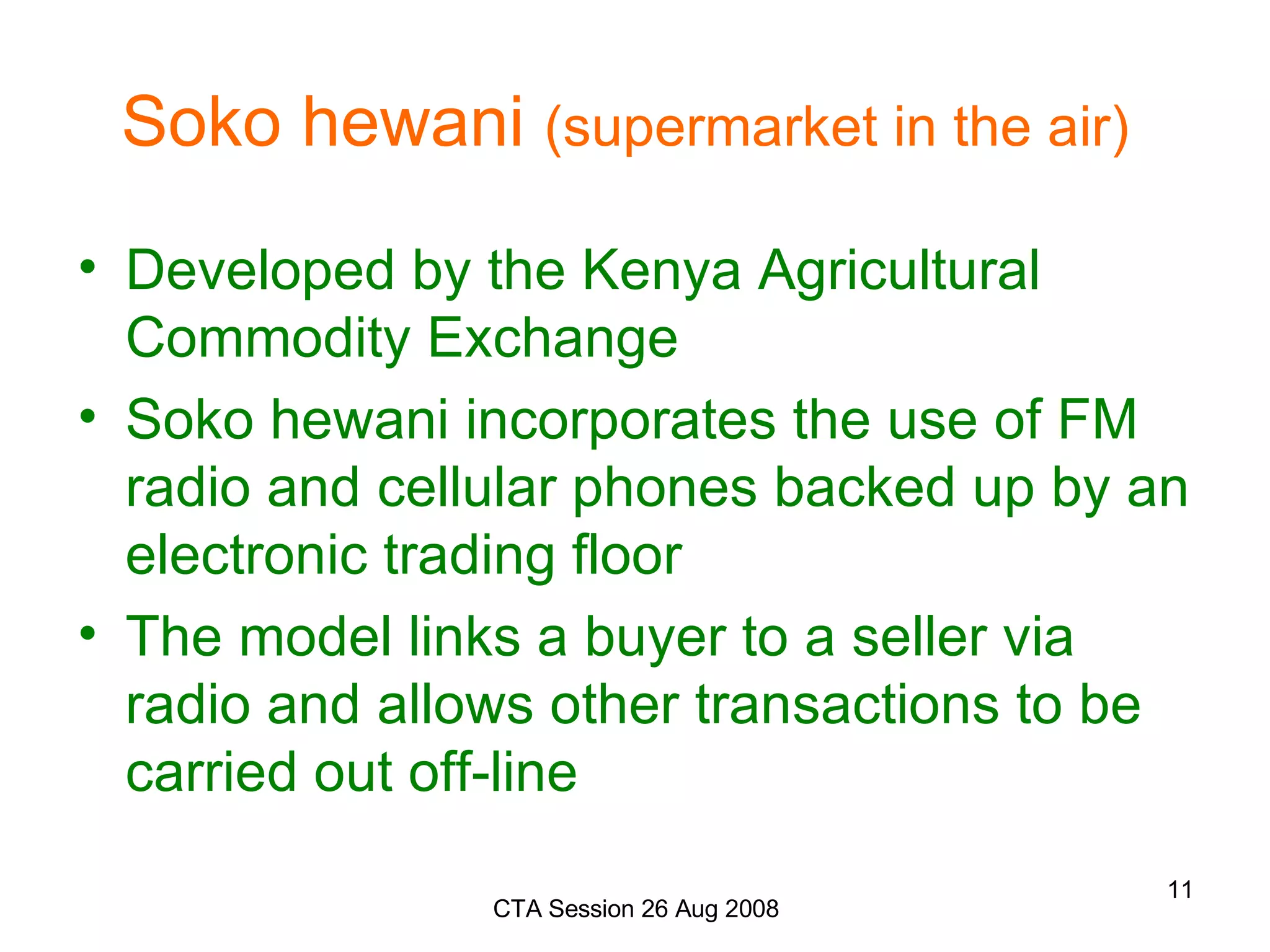
Soko hewani  (supermarket in the air)   Developed by the Kenya Agricultural Commodity Exchange Soko hewani incorporates the use of FM radio and cellular phones backed up by an electronic trading floor  The model links a buyer to a seller via radio and allows other transactions to be carried out off-line
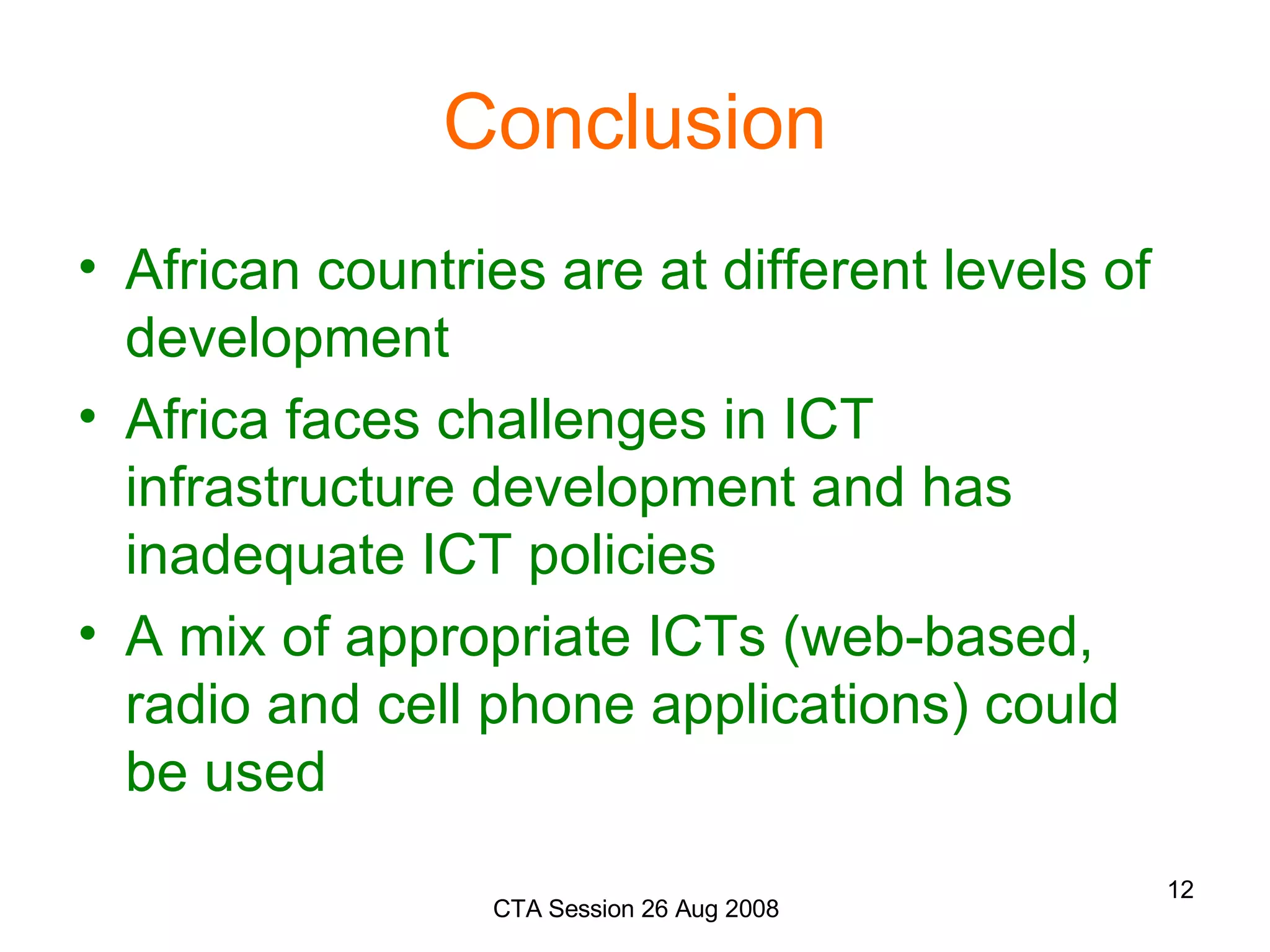
Conclusion African countries are at different levels of development Africa faces challenges in ICT infrastructure development and has inadequate ICT policies A mix of appropriate ICTs (web-based, radio and cell phone applications) could be used

Convergence of web-based applications, radio and cellular phone: some perspectives and experiences in Africa

  • 1.
    Convergence of web-basedapplications, radio and cellular phone: some perspectives and experiences in Africa Hilda Munyua, Edith Adera and Mike Jensen
  • 2.
    Local environment realitiesin Africa Few extension officers and old extension system inefficient Most small scale farmers are resource poor Limited access to advanced technologies. Innovative technologies developed do not filter down to the intended beneficiaries High production and transport costs, and low agricultural production Inadequate access to markets and unfair market conditions Small scale farmers Inadequate capacity to share and disseminate essential outputs to small scale farmers Limited value addition to agricultural produce
  • 3.
    Local environment realitiesAbout 1/3 of the population have access to cellular phones Poor access to technical agricultural and market information and knowledge Inadequate ICT infrastructure (electricity and telecommunication) especially in rural areas Gaps in skills and illiteracy High costs of connectivity Inadequate and weak ICT policies Poor access to appropriately packaged local content Poor connectivity and low bandwidth ICTs Others Radio the most widely used ICT Weak institutions and poor collaboration Inadequate local content
  • 4.
    Emerging ICTs Radiofrequency identification (RFID) Internet & web-based applications Precision agriculture (next great revolution in agriculture) Distance learning GIS-based Decision Support Systems Personal digital assistants (PDA) Cellular phone applications Community radio stations
  • 5.
    Opportunities Rapid developmentof ICT infrastructure (sub marine cables, wireless and satellite technologies) About 1/3 of the population has access to cellular phones Liberalization of airwaves and mushrooming of FM radio stations in local languages Use of local languages improves understanding Availability of some locally developed content Convergence of ICTs (internet, radio, cell phones, multi-media)
  • 6.
    Some practical examplesInternet and web-based applications Cellular phone applications Community radio stations
  • 7.
    National Farmers InformationSystem (NAFIS) Developed by the National Agriculture and Livestock Extension Programme (NALEP) in Kenya Integration of web-based and telephony applications Voice information service providing extension information to farmers Simple - dial 020-4762347 or 020-47NAFIS
  • 8.
    … NAFISProvides access to timely agricultural information Information on enterprises available in English and Kiswahili Cost implications – cost of telephone call Available on internet at www.nafis.go.ke
  • 9.
    Tradenet Developed byBusylab - a private company based in Ghana (partnership with the Market Information System and Trade Organisations (Mistowa) in West Africa and Foodnet in Uganda) Electronic platform that links farmers and traders across the world Facilitate the sharing of market information via mobile networks and the web (in En, Fr, Pt, Es)
  • 10.
    … TradenetKey features Offers to buy and sell Real time market prices SMS alerts on cell phone Market reports Commodity portals Free user / association websites
  • 11.
    Soko hewani (supermarket in the air) Developed by the Kenya Agricultural Commodity Exchange Soko hewani incorporates the use of FM radio and cellular phones backed up by an electronic trading floor The model links a buyer to a seller via radio and allows other transactions to be carried out off-line
  • 12.
    Conclusion African countriesare at different levels of development Africa faces challenges in ICT infrastructure development and has inadequate ICT policies A mix of appropriate ICTs (web-based, radio and cell phone applications) could be used