WELCOME
NISHADIVAKARAN
ASSISTANTPROFESSOR
CHILDHEALTHNURSINGDEPARTMENT
KVMCON
Continuing education
Page 3
• directed towards the personal and
professional growth of nurses and other
personnel while they are employed by a
health care agency.
• essential for the upliftment of professional
as well as administrative field.
• helps in updating the knowledge and
practice of professionals.
DEFINITIONS
Continuing education
programme - It is any
extension of
opportunities for reading,
study and training to any
person and adult
following their
completion of or
withdrawal from full time
school and / or college
programmes.
Continuing education in
nursing - It is a planned
activity directed towards
meeting the learning
needs of the nurse
following basic nursing
education, exclusive of
full time formal post
basic education.
DEFINITIONS
1.Continuing education is an educational activity,
primarily designed to keep the registered nurses
abreast of their particular field of interest and do not
lead to any formal advanced standing in the
profession.
-Nursing Thesarus of the International Index
2. Continuing education is all the learning activities that
occurs after an individual has completed his basic
education.
- Cooper
Definition
Continuing education is all the learning
activities that occur after an individual has
completed his basic education
- cooper
The education which builds a previous
education is called continues education
-Shannon
Aims of continuing education
1.Improvement of professional practice
2.To motivate the staff to seek the latest knowledge
3.To keep the nurses with the latest development of
technologies
4.It develops interest, job satisfaction and
confidence
Purpose of continuing education.
Enable a worker to move from satisfactory to
excellent performance
Provides exposure to new concepts, procedural
refinements, innovative product applications, or
acquisition of increased expertise
Ensure professional development
Increase ability in order to solve the problem in a
clinical teaching/ administrative area.
Improve the ability to communicate or participate in
research work.
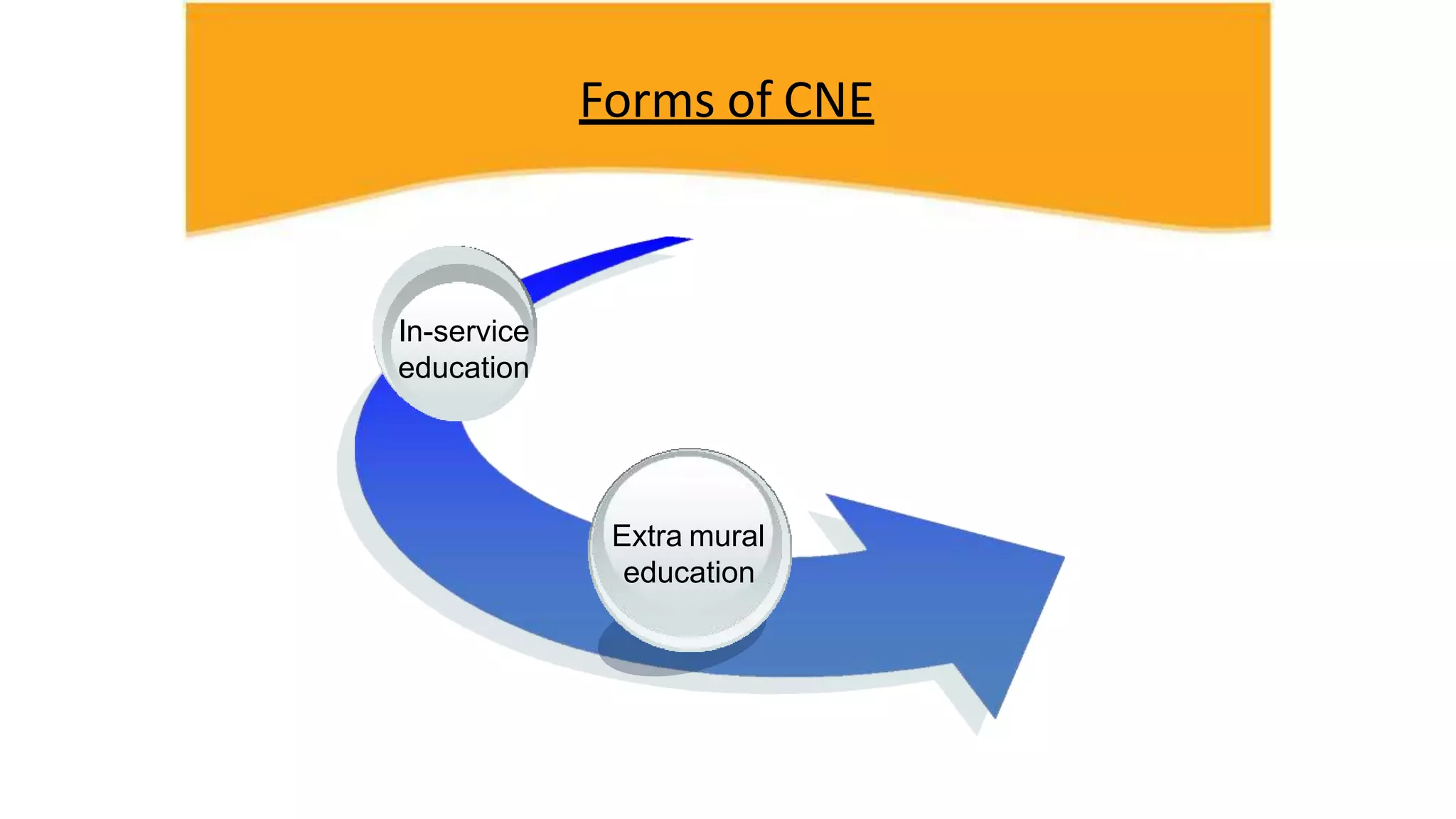
Forms of CNE
Extra mural
education
In-service
education
PRINCIPLES
Effective CNE Design Principles by American
Association of Critical Care Nurses.
Each educational activity should be developed with:
• A learning goal (purpose) and explicit measureable
educational objective for the learner that are
appropriate for the target audience;
• Gaps in knowledge, skills, practice identified based
on the needs assessment which the activity is
designed to address
• Content congruent with the activity’s learning
goal (purpose) and educational objectives
• Teaching and learning strategies congruent with
the activity’s objectives and content
• Criteria for judging successful completion of an
activity that are consistent with the learning goal
(purpose), objectives, and teaching and learning
strategies
• A method determined for verifying participation
in an activity.
PHILOSOPHY
It has been believed that the
system of higher education which
provides the basic preparation or
the members of a profession must
also provide opportunities for
practitioners to keep abreast of
advances in their field.
OBJECTIVES
• Keep up to date with new concepts
and development in the health
field.
• To increase their basis knowledge
and skills and develop positive
attitudes.
• Develop an ability to analyze
problems and to work with others.
• Meet the challenge of changes
in technology
• Maintain standards of health
care at acceptable level
• Help in setting standards of
performance
• Motivate staff for better patient
care
• Meet new needs of the
community
• To assist the nursing educator in
increasing the teaching
effectiveness.
• To develop leadership potential
in nurses
CHARACTERISTICS
•It is given within and outside the organization
•It is designed to meet the demands of the
changing needs.
•It covers:-
Extension courses
Post diploma
Post graduation courses
Field observation and experiences
Work shops
Seminars
other different educational activities
outside the organization
•Unified approach
•Relationships with other systems
•Comprehensiveness
•Accessibility for women health workers
•Integration with the management process
•Analysis of needs as a basis for learning
continuity
•Internally co-ordinated
•Relevance in planning
•Credibility & economic
•Appropriateness in implementation
NEED OF CNE
To ensure safe & effective nursing care
To meet the needs of population& should cater
to the needs of service
Development of nurses by updating their
knowledge
For career advancement
To acquire specialized skills
It provides opportunity for professional
growth
Development of nurses will occur by
updating their knowledge and preparing
them for specialization for career
advancement.
Nurses with research aptitude and
preparation are needed.
Nurse in administrative position need
to increase their understanding of
administrative process.
The demand for specialized nursing
services is increasing more rapidly.
Planned programmes
increase their competence
are needed to
as
practitioners.
ELEMENTS
Learner
Teacher/Nurse
Educator
The faculty
administrator
Motivation of learner
Involvement in the
learning process
Organized learning
experiences
The needs of society
Universalization
The leisure
Liberal education
PLANNING FOR CNE
1 2
Planning
formula
Steps in
planning
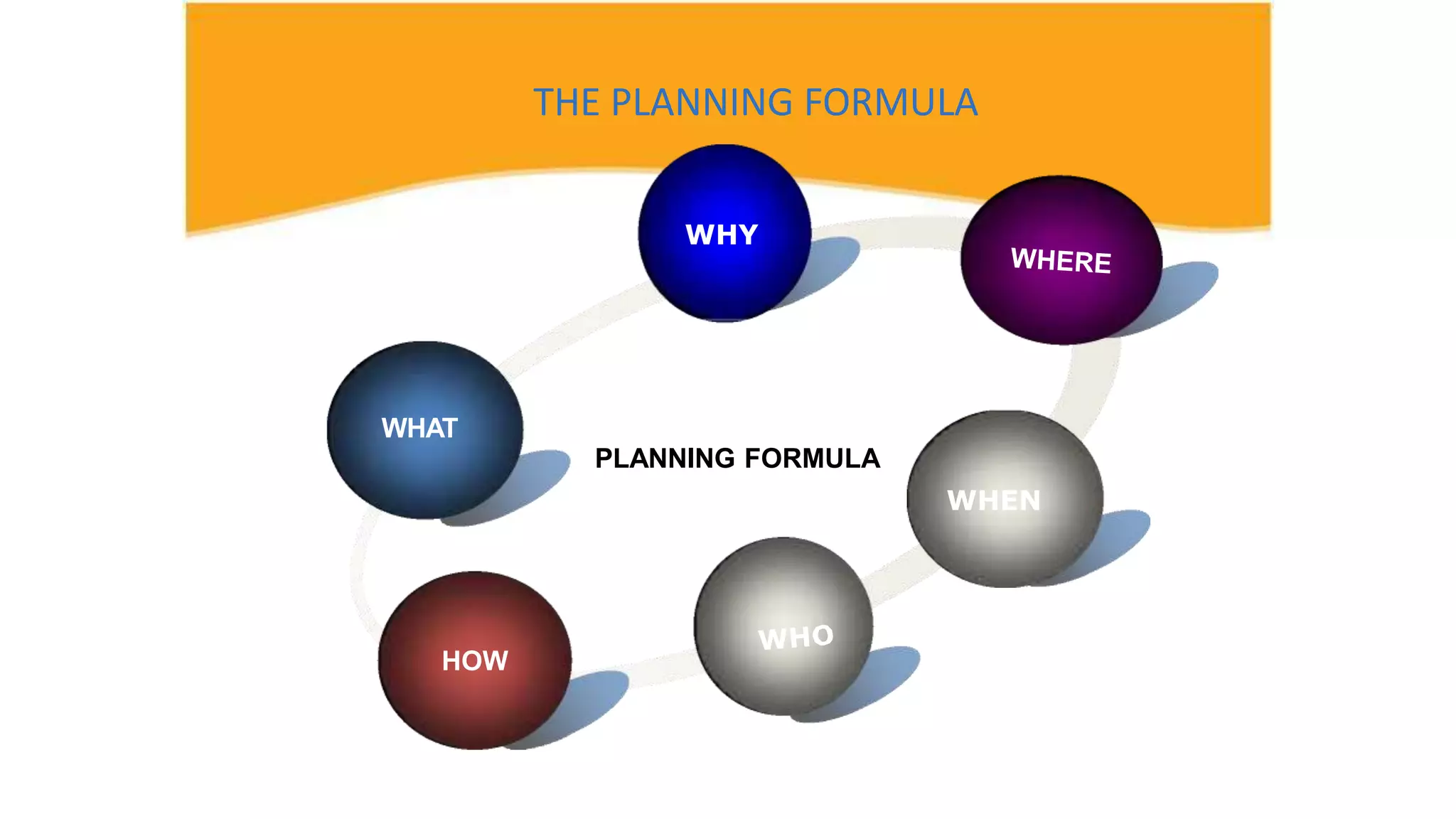
THE PLANNING FORMULA
HOW
WHY
WHAT
PLANNING FORMULA
WHEN
Steps in planning CNE:
• 1. Establishing goals compatible
with the purpose or mission of the
organization.
• 2. Deciding upon specific objectives
consistent with these goals.
• 3. Determining the course of action
required to meet the specific
objectives.
• 4. Assessing the available resources for
establishing the programme.
• 5. Establishing a workable budget,
appropriate for the programme.
• 6. Evaluating the results at stated
intervals.
• 7. Reassessing he goals and updating the
plan periodically.
•
ROLE OF NURSE IN CNE
Assessment
Planning
Implementation
Evaluation
 Applies adult learning principles when
helping nurses learn new skills or
information
 Uses teaching
nursing staff
techniques that empower
 Sensitive to the learning deficits of the
nursing staff and creatively minimize these
difficulties
 Prepare the nurses readily regarding
knowledge and skill deficits.
 Actively seeks out teaching opportunities for
nurses
 Frequently assess learning needs of the
nurses
Ensure competency1
4 Provides input in formulating policy
Ensure recourse availability2
Assume responsibility for development3
ISSUES
IN
CNE
Delivery system
Management
Control
Costs
Continuing education

Continuing education

  • 1.
  • 2.
  • 3.
    Page 3 • directedtowards the personal and professional growth of nurses and other personnel while they are employed by a health care agency. • essential for the upliftment of professional as well as administrative field. • helps in updating the knowledge and practice of professionals.
  • 4.
    DEFINITIONS Continuing education programme -It is any extension of opportunities for reading, study and training to any person and adult following their completion of or withdrawal from full time school and / or college programmes. Continuing education in nursing - It is a planned activity directed towards meeting the learning needs of the nurse following basic nursing education, exclusive of full time formal post basic education.
  • 5.
    DEFINITIONS 1.Continuing education isan educational activity, primarily designed to keep the registered nurses abreast of their particular field of interest and do not lead to any formal advanced standing in the profession. -Nursing Thesarus of the International Index 2. Continuing education is all the learning activities that occurs after an individual has completed his basic education. - Cooper
  • 6.
    Definition Continuing education isall the learning activities that occur after an individual has completed his basic education - cooper The education which builds a previous education is called continues education -Shannon
  • 7.
    Aims of continuingeducation 1.Improvement of professional practice 2.To motivate the staff to seek the latest knowledge 3.To keep the nurses with the latest development of technologies 4.It develops interest, job satisfaction and confidence
  • 8.
    Purpose of continuingeducation. Enable a worker to move from satisfactory to excellent performance Provides exposure to new concepts, procedural refinements, innovative product applications, or acquisition of increased expertise Ensure professional development Increase ability in order to solve the problem in a clinical teaching/ administrative area. Improve the ability to communicate or participate in research work.
  • 9.
    Forms of CNE Extramural education In-service education
  • 10.
    PRINCIPLES Effective CNE DesignPrinciples by American Association of Critical Care Nurses. Each educational activity should be developed with: • A learning goal (purpose) and explicit measureable educational objective for the learner that are appropriate for the target audience; • Gaps in knowledge, skills, practice identified based on the needs assessment which the activity is designed to address
  • 11.
    • Content congruentwith the activity’s learning goal (purpose) and educational objectives • Teaching and learning strategies congruent with the activity’s objectives and content • Criteria for judging successful completion of an activity that are consistent with the learning goal (purpose), objectives, and teaching and learning strategies • A method determined for verifying participation in an activity.
  • 12.
    PHILOSOPHY It has beenbelieved that the system of higher education which provides the basic preparation or the members of a profession must also provide opportunities for practitioners to keep abreast of advances in their field.
  • 13.
    OBJECTIVES • Keep upto date with new concepts and development in the health field. • To increase their basis knowledge and skills and develop positive attitudes. • Develop an ability to analyze problems and to work with others.
  • 14.
    • Meet thechallenge of changes in technology • Maintain standards of health care at acceptable level • Help in setting standards of performance
  • 15.
    • Motivate stafffor better patient care • Meet new needs of the community • To assist the nursing educator in increasing the teaching effectiveness. • To develop leadership potential in nurses
  • 16.
    CHARACTERISTICS •It is givenwithin and outside the organization •It is designed to meet the demands of the changing needs. •It covers:- Extension courses Post diploma Post graduation courses Field observation and experiences Work shops Seminars other different educational activities outside the organization
  • 17.
    •Unified approach •Relationships withother systems •Comprehensiveness •Accessibility for women health workers •Integration with the management process •Analysis of needs as a basis for learning continuity •Internally co-ordinated •Relevance in planning •Credibility & economic •Appropriateness in implementation
  • 18.
    NEED OF CNE Toensure safe & effective nursing care To meet the needs of population& should cater to the needs of service Development of nurses by updating their knowledge For career advancement
  • 19.
    To acquire specializedskills It provides opportunity for professional growth Development of nurses will occur by updating their knowledge and preparing them for specialization for career advancement.
  • 20.
    Nurses with researchaptitude and preparation are needed. Nurse in administrative position need to increase their understanding of administrative process. The demand for specialized nursing services is increasing more rapidly. Planned programmes increase their competence are needed to as practitioners.
  • 21.
    ELEMENTS Learner Teacher/Nurse Educator The faculty administrator Motivation oflearner Involvement in the learning process Organized learning experiences The needs of society Universalization The leisure Liberal education
  • 22.
    PLANNING FOR CNE 12 Planning formula Steps in planning
  • 23.
  • 24.
    Steps in planningCNE: • 1. Establishing goals compatible with the purpose or mission of the organization. • 2. Deciding upon specific objectives consistent with these goals. • 3. Determining the course of action required to meet the specific objectives.
  • 25.
    • 4. Assessingthe available resources for establishing the programme. • 5. Establishing a workable budget, appropriate for the programme. • 6. Evaluating the results at stated intervals. • 7. Reassessing he goals and updating the plan periodically. •
  • 26.
    ROLE OF NURSEIN CNE Assessment Planning Implementation Evaluation
  • 27.
     Applies adultlearning principles when helping nurses learn new skills or information  Uses teaching nursing staff techniques that empower  Sensitive to the learning deficits of the nursing staff and creatively minimize these difficulties  Prepare the nurses readily regarding knowledge and skill deficits.  Actively seeks out teaching opportunities for nurses  Frequently assess learning needs of the nurses
  • 28.
    Ensure competency1 4 Providesinput in formulating policy Ensure recourse availability2 Assume responsibility for development3
  • 29.